

What is Aptus Breakout Powder?
Aptus Breakout Powder is a highly concentrated mineral PK bloom enhancer. It supplies phosphorus and potassium alongside magnesium, sulphur and additional calcium for use during late flowering and maturation.

Commercial Products
Commercial Products
 Professional Growing Media
 Plant Nutrition
 Plant Health
 Sprayers & Protective Clothing
 Pots, Planters & Trays
 Propagation
 Baskets & Planters
 Fabrics & Netting
 Environment
 Plant Lighting
 Irrigation
 Plant Support & Tree Care
 Equipment
 Tools
Tools
 Plant Labels
 Packaging
 Lawn Care
Retail Products
Retail Products
 Growing Media
 Plant Nutrition
 Plant Health
 Pots, Planters & Tanks
 Propagation
 Baskets & Planters
 Fabrics & Netting
 Environment
 Plant Lighting
 Plant Support
 Equipment
 Tools
Tools
1977 products
1977 products
Sort by:


£36.67
Unit price per£36.67
Unit price perAngled Head Labels 720mm (Pack of 25) WHITE
Angled head plant labels make reading plant names easy at a glance, thanks to their tilted design. Available in a range of colours, they’re perfect for neatly organising beds, borders, and greenhouse displays.
8 sizes available and a huge range of colours!
£36.67
Unit price per£36.67
Unit price perAngled Head Labels 720mm (Pack of 25) YELLOW
Angled head plant labels make reading plant names easy at a glance, thanks to their tilted design. Available in a range of colours, they’re perfect for neatly organising beds, borders, and greenhouse displays.
8 sizes available and a huge range of colours!
£38.87
Unit price per£38.87
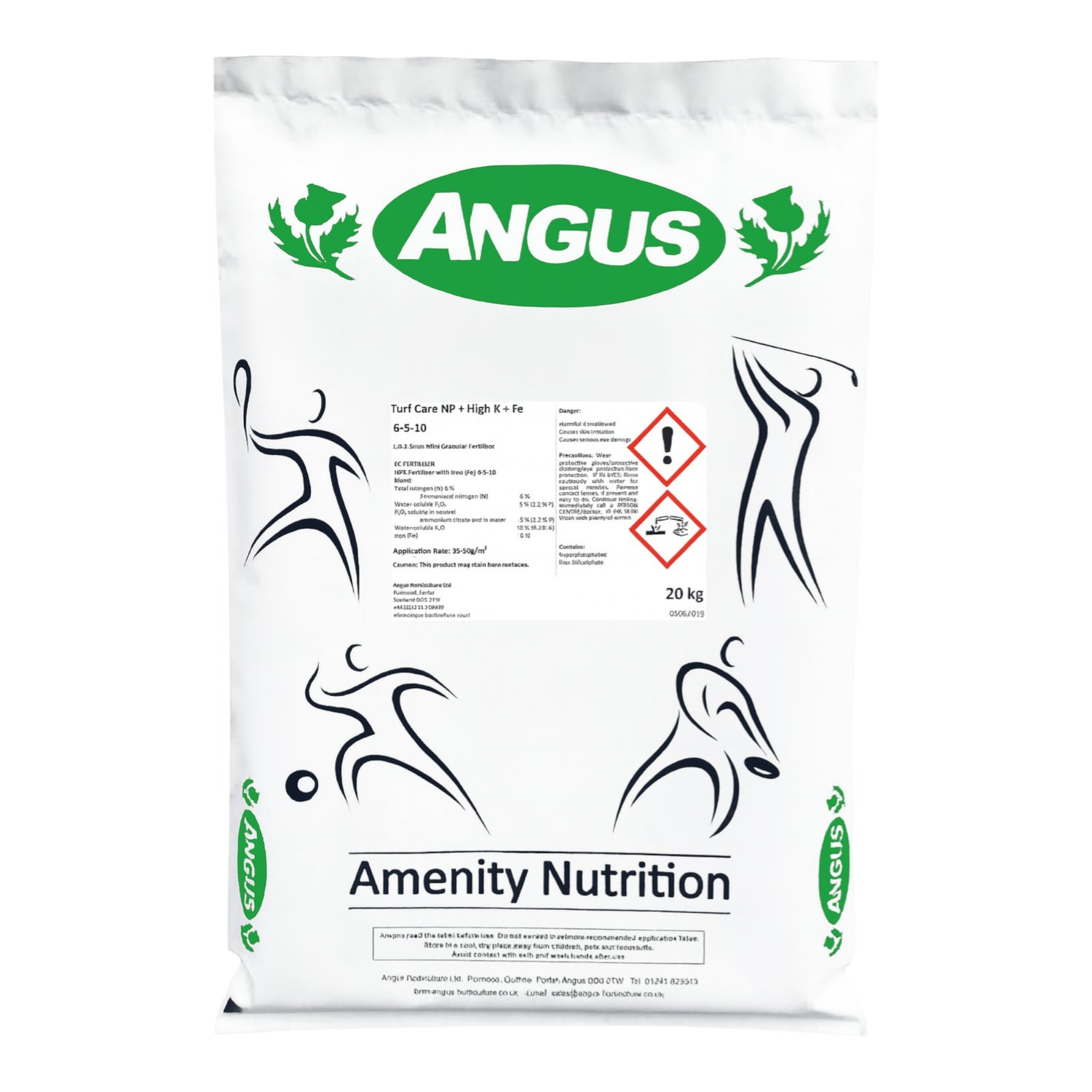
Unit price perAutumn/winter lawn feed 6-5-10 + 6Fe (1-2.5mm)
Professional-grade turf fertiliser for autumn and winter application. High in potassium and iron to strengthen turf, enhance colour, and prepare grass for colder months.
Available in trade pack sizes, this granular lawn feed is formulated for consistent, reliable results across high-traffic lawns and landscapes.
£43.20
Unit price per£43.20
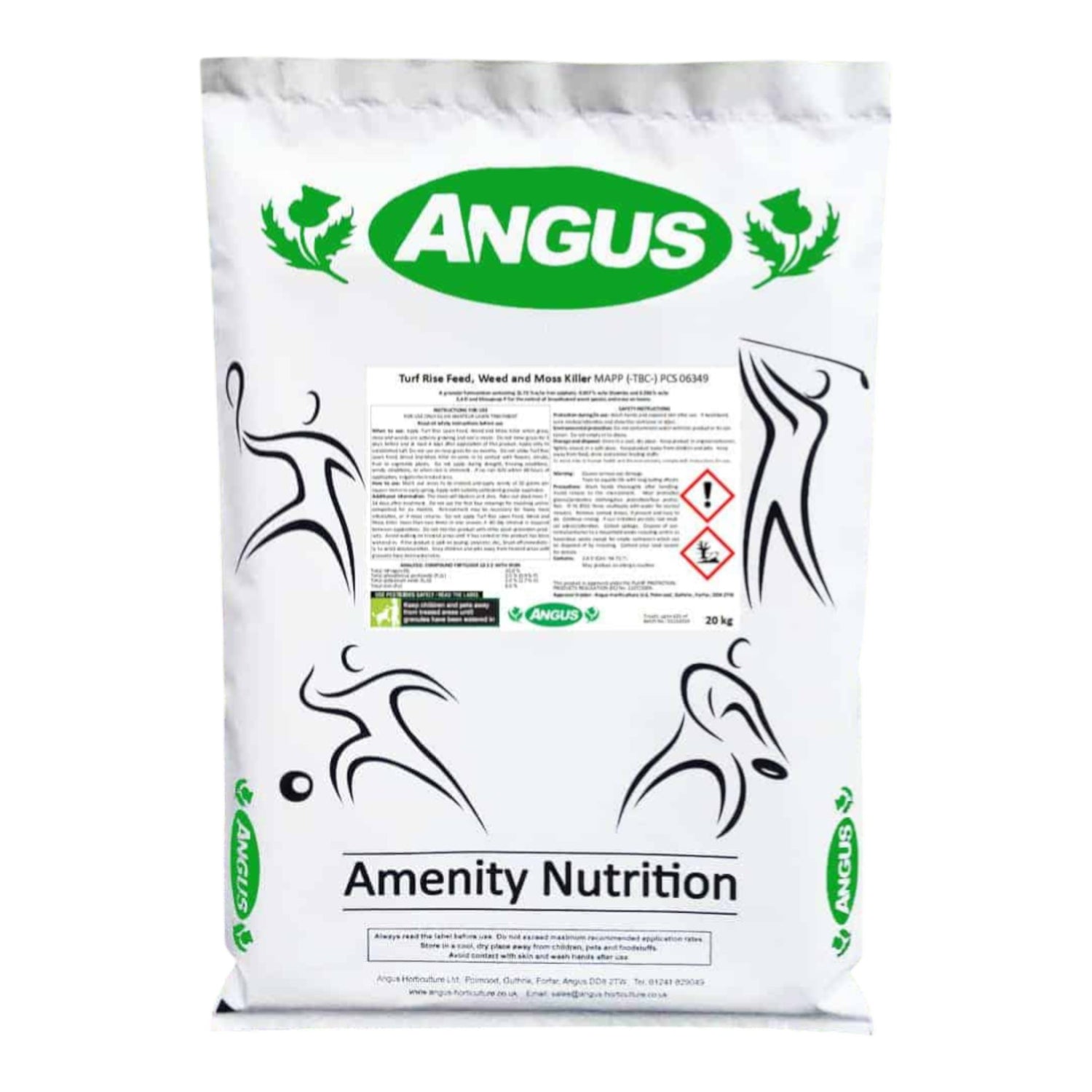
Unit price perAngus Turf Rise Feed, Weed and Moss Killer 10-2-2 + 8% Fe containing 21.73% w/w iron sulphate (1-2.5mm)
All-in-one lawn treatment with fertiliser, weed killer, and moss control. Contains nutrients plus 4 active ingredients in homogenous mini granules for even application.
Available in trade pack sizes, this granular lawn feed is formulated for consistent, reliable results across high-traffic lawns and landscapes.

Angus Lawn sand 5-0-0 + 2Fe
Available in trade pack sizes, this lawn care product is formulated for consistent, reliable A premium lawn sand formulated with high-quality graded sand, nitrogen, and iron for healthy, green growth. Offers excellent spreadability, reduced moisture, and efficient performance at lower application rates. Made in the UK and Europe to the highest standards

Angus Seaweed Meal 20kg
A 100% natural product made from Ascophyllum nodosum seaweed, harvested from the Atlantic Ocean. Angus Seaweed Meal is a premium top dressing and soil conditioner that improves turf quality, enhances soil health, and boosts microbial activity. Ideal for reducing reliance on chemical fertilisers and promoting sustainable growth.
£39.63
Unit price per£39.63
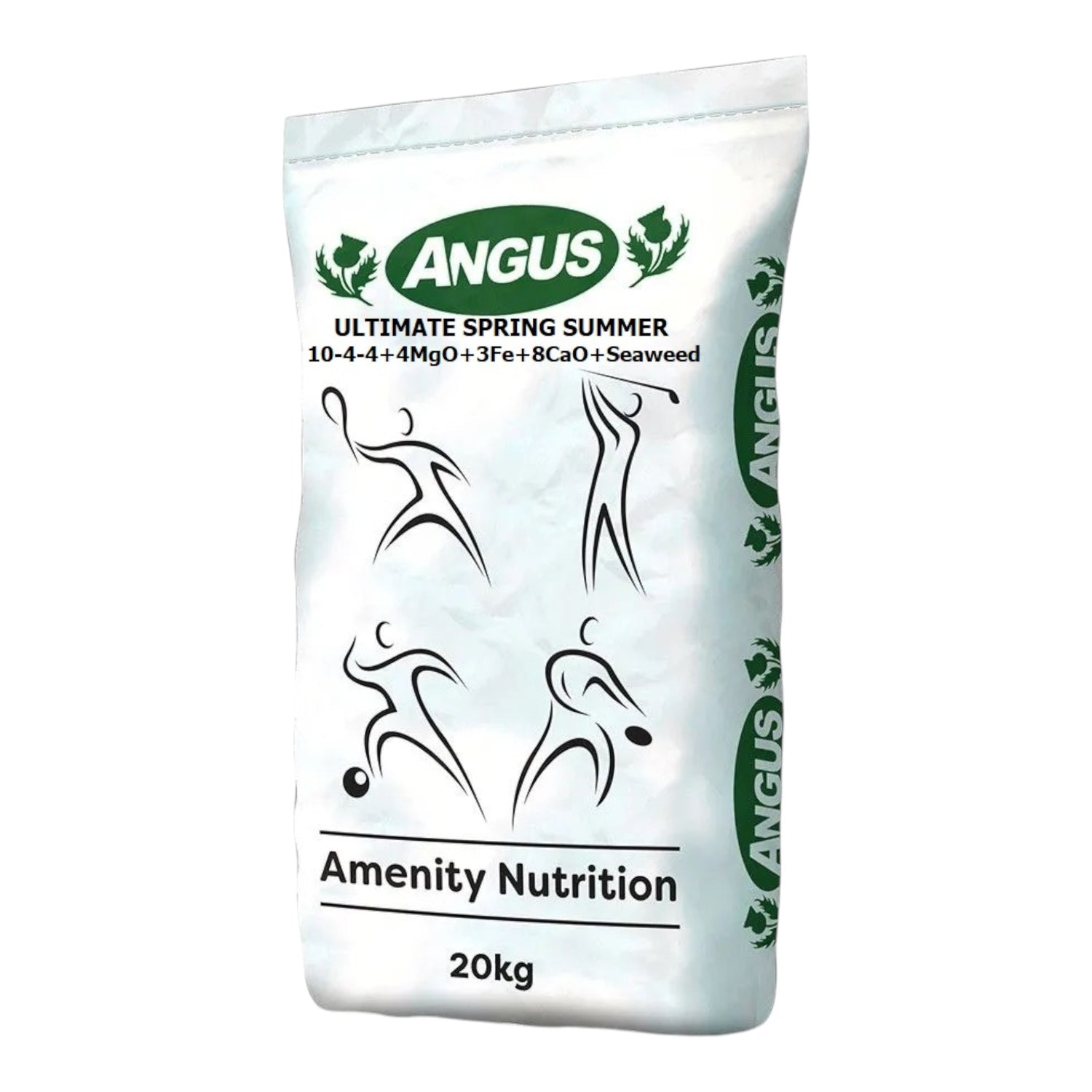
Unit price perSpring/Summer lawn feed 10-4-4 + 4MgO + 3Fe + 8CaO + seaweed (1-2.5mm)
Premium granular lawn fertiliser specially formulated for spring and summer growth. Contains nitrogen, phosphate, potassium, magnesium, iron, calcium, and seaweed.
Available in trade pack sizes, this granular lawn feed is formulated for consistent, reliable results across high-traffic lawns and landscapes.
£4.50
Unit price per£4.50
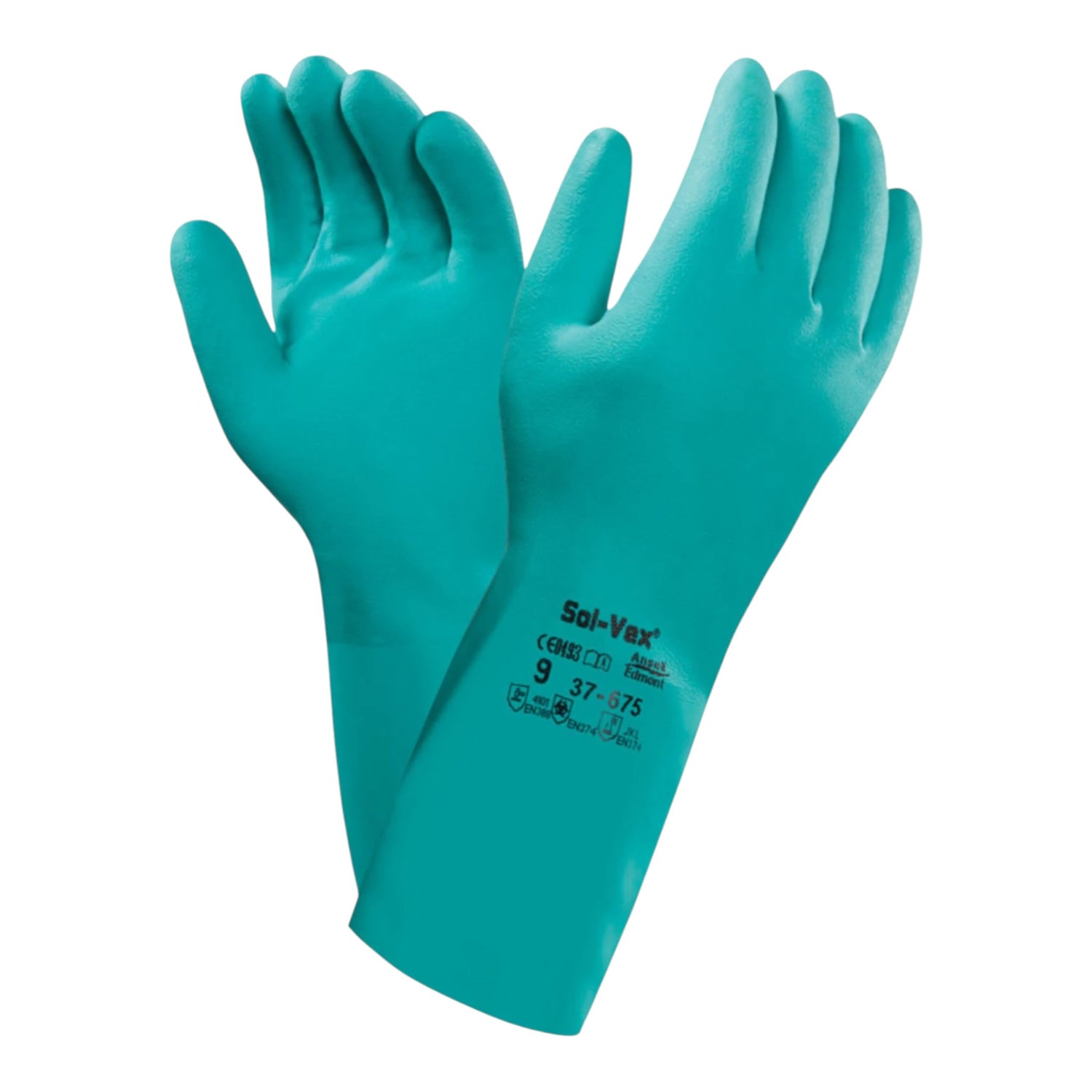
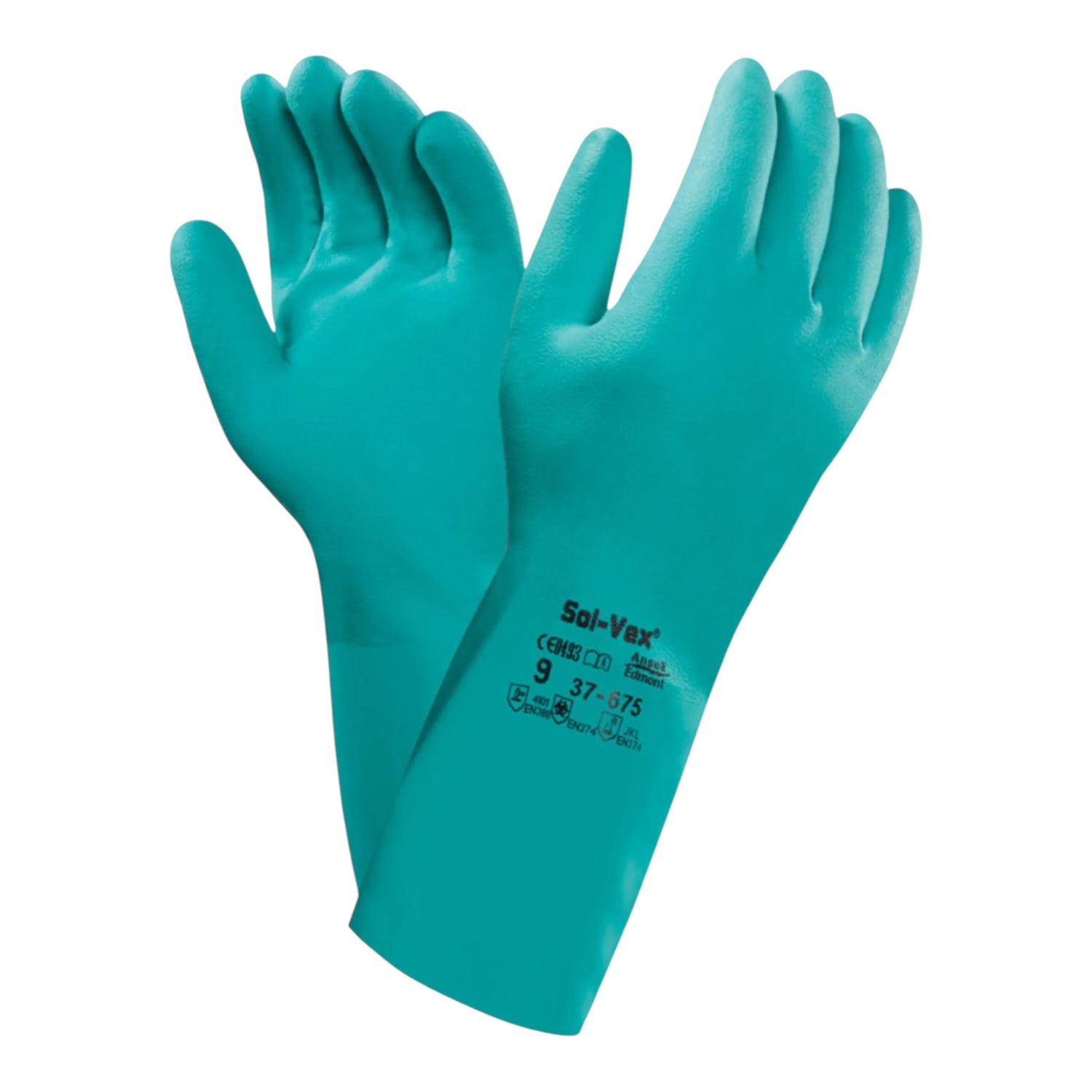
Unit price perAnsell 37-675 Solvex Chemical Resistant Gauntlet Green Nitrile Cotton Flocked Liner (SIZE 10)
Durable nitrile gauntlet with cotton-flock lining for comfort.
Supplied in trade sizes and built for tough conditions, this equipment meets the needs of growers who demand safety and efficiency.
£4.50
Unit price per£4.50
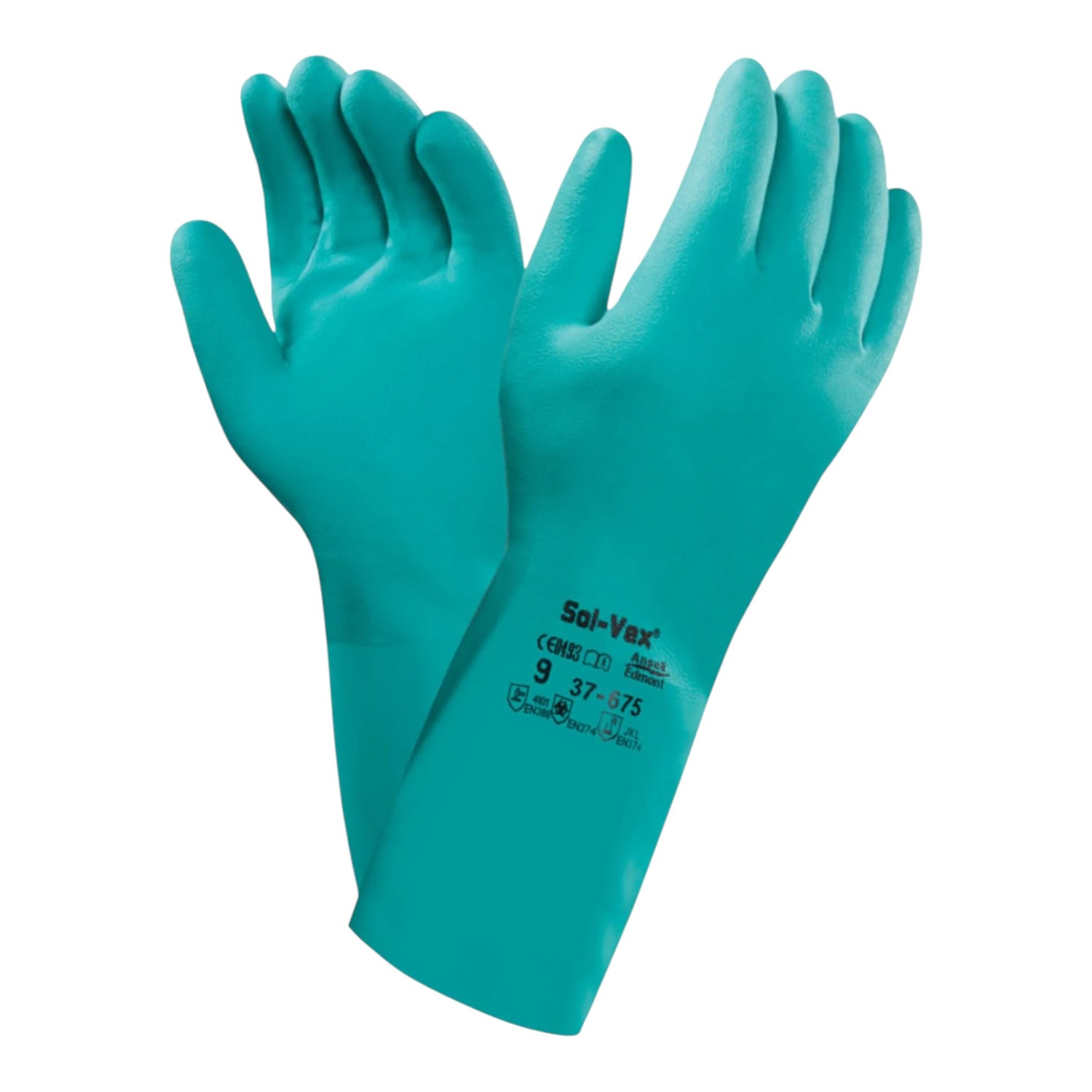
Unit price perAnsell 37-675 Solvex Chemical Resistant Gauntlet Green Nitrile Cotton Flocked Liner (SIZE 7)
Durable nitrile gauntlet with cotton-flock lining for comfort.
Supplied in trade sizes and built for tough conditions, this equipment meets the needs of growers who demand safety and efficiency.
£4.50
Unit price per£4.50
Unit price perAnsell 37-675 Solvex Chemical Resistant Gauntlet Green Nitrile Cotton Flocked Liner (SIZE 8)
Durable nitrile gauntlet with cotton-flock lining for comfort.
Supplied in trade sizes and built for tough conditions, this equipment meets the needs of growers who demand safety and efficiency.
£4.50
Unit price per£4.50
Unit price perAnsell 37-675 Solvex Chemical Resistant Gauntlet Green Nitrile Cotton Flocked Liner (SIZE 9)
Durable nitrile gauntlet with cotton-flock lining for comfort.
Supplied in trade sizes and built for tough conditions, this equipment meets the needs of growers who demand safety and efficiency.
£497.22
Unit price per£497.22
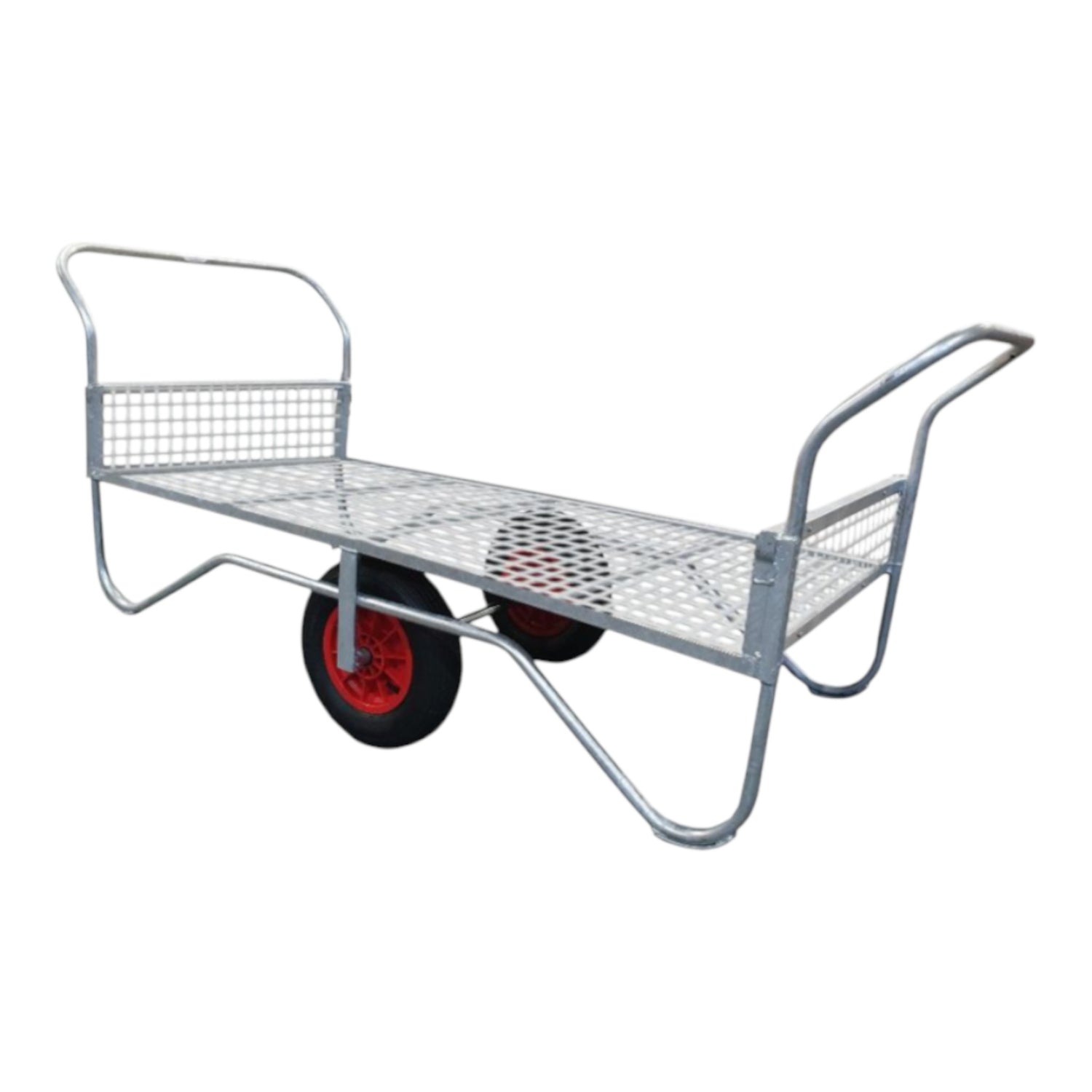
Unit price perApex E Balancing Trolley 60"x 30" Pneumatic Wheels
This Trolleys is engineered for busy growers and horticultural trade. Built with practical details in mind, it helps you move and manage stock efficiently.
Order in trade quantities or contact us for bulk pricing.
£36.76
Unit price per£36.76
Unit price perAPHIcontrol (Aphidius colemani) - Reliable aphid control for commercial growers with medium pest pressure
APHIcontrol in its 1K loose bottle format offers growers greater coverage for sustained management of peach-potato aphid and melon aphid populations. Aphidius colemani performs exceptionally in warm, enclosed cropping environments and is a mainstay in protected horticulture. This product allows precision dosing and is well-suited to mid- to large-scale operations aiming to reduce dependency on chemical sprays while protecting plant health from early-stage aphid infestations.
Delivery: All orders must be placed before Wednesday at 5pm, to guarantee delivery for the following week.
£36.16
Unit price per£36.16
Unit price perAPHIcontrol (Aphidius colemani) - Highly effective parasitoid for green peach and melon aphids
APHIcontrol contains Aphidius colemani, a cornerstone species in modern aphid management. This 500-count loose bottle gives commercial growers flexibility to dose according to pressure and crop type. Effective against Myzus persicae and Aphis gossypii, APHIcontrol supports rapid establishment and long-lasting parasitism. Ideal for protected crops including peppers, cucumbers, and ornamentals where early aphid control prevents virus transmission and growth distortion.
Delivery: All orders must be placed before Wednesday at 5pm, to guarantee delivery for the following week.
£157.50
Unit price per£157.50
Unit price perAPHIcontrol (Aphidius colemani) - Bulk-format parasitoid for scalable biological aphid control
Designed for growers who require high-volume release, this 5K APHIcontrol bottle offers cost-effective aphid suppression across large cropping areas. From salad production to ornamental cultivation, Aphidius colemani remains one of the most widely used beneficials in IPM. Introduce at the first sign of aphid activity to establish control before populations explode. A dependable tool in any low-residue production system.
Delivery: All orders must be placed before Wednesday at 5pm, to guarantee delivery for the following week.

£1.00
Unit price per£1.00
Unit price perA highly concentrated 0-35-23 PK bloom enhancer designed to supply additional phosphorus and potassium during the demanding late stages of flowering.
Aptus Breakout Powder is a concentrated mineral flowering supplement developed for crops with a high demand for phosphorus and potassium as flowering progresses towards maturation. Its 0-35-23 analysis delivers a substantial PK input alongside magnesium, sulphur and additional calcium.
Phosphorus plays an important role in flower development, photosynthesis and the production of sugars and oils. Potassium supports the movement of sugars and nutrients through plant tissues and activates enzymes involved in flower development, while magnesium and calcium support processes including chlorophyll production, phosphorus transport and strong plant structure.
Breakout Powder is fully water-soluble, including in cold water, making it straightforward to incorporate into nutrient solutions. Aptus recommends it for hydroponic systems, while the product can also be used across different growing media as part of an appropriate flowering nutrition programme.
This is a concentrated late-flowering supplement rather than a base nutrient. It is designed to provide the extra PK required as established flowers move through their final development and maturation stages.
Why choose Aptus Breakout Powder?
What is Aptus Breakout Powder suitable for?
Breakout Powder is intended for established flowering crops approaching their final stages of flower development and maturation. It provides concentrated phosphorus and potassium when demand for these elements is high, rather than being used throughout the entire crop cycle.
It is particularly useful for growers who want a concentrated mineral PK supplement that dissolves cleanly into the nutrient solution. Aptus describes the product as compatible with different cultivation systems and specifically highlights its suitability for hydroponics.
Breakout Powder can be used alongside an appropriate base nutrient. Aptus uses All-in-One Liquid as the base feed in its own Breakout Powder programme, establishing the base nutrient solution before adding the PK supplement.
Because Breakout Powder already delivers a strong concentration of flowering nutrients, Aptus advises against combining it with additional bloom stimulators. This helps avoid unnecessarily stacking several concentrated flowering products within the same nutrient programme.
How to use Aptus Breakout Powder
Breakout Powder is intended for the late flowering and maturation stages, rather than vegetative growth or the entire flowering period.
At the beginning of the late-flowering treatment period, use 100g per 100L of water. This is equivalent to 1g per litre.
As the crop moves through the subsequent late-flowering and maturation stage, Aptus increases the rate to 200g per 100L, equivalent to 2g per litre.
When following the Aptus programme, first prepare the base nutrient solution to approximately EC 1.2, then add Breakout Powder.
Mix thoroughly until the powder has completely dissolved. Breakout Powder is highly water-soluble and can dissolve even in cold water.
At the initial 1g/L rate, a 100g pouch treats 100L of nutrient solution. At the higher 2g/L late-flowering rate, a 100g pouch treats 50L.
Do not combine Breakout Powder with additional bloom stimulators. Monitor the crop and nutrient solution carefully when introducing a concentrated PK supplement, particularly where the existing base nutrition already contributes a significant EC.
Aptus Breakout Powder 100g product details
| Product | Aptus Breakout Powder |
|---|---|
| Product size | 100g |
| Product format | Concentrated water-soluble mineral powder |
| NPK | 0-35-23 |
| Magnesium (Mg) | 2% |
| Sulphur (S) | 3% |
| Also contains | Calcium |
| Primary function | PK bloom enhancement during late flowering & maturation |
| Initial late-flowering rate | 100g per 100L (1g/L) |
| Subsequent late-flowering rate | 200g per 100L (2g/L) |
| Coverage at 1g/L | Approximately 100L from 100g |
| Coverage at 2g/L | Approximately 50L from 100g |
| Aptus base EC guidance | Approximately EC 1.2 before adding Breakout Powder |
| Solubility | 100% water-soluble, including in cold water |
| Suitable stage | Late flowering & maturation |
Aptus Breakout Powder FAQs
What is Aptus Breakout Powder?
Aptus Breakout Powder is a highly concentrated mineral PK bloom enhancer. It supplies phosphorus and potassium alongside magnesium, sulphur and additional calcium for use during late flowering and maturation.
What is the NPK of Aptus Breakout Powder?
Aptus Breakout Powder has an NPK analysis of 0-35-23. It also contains 2% magnesium and 3% sulphur, with additional calcium included in the formulation.
When should I use Aptus Breakout Powder?
Breakout Powder is designed for late flowering and maturation. It is not intended as an all-cycle nutrient or vegetative growth supplement.
How much Aptus Breakout Powder should I use?
Aptus Holland recommends beginning the late-flowering treatment at 100g per 100 litres of water, equivalent to 1g/L. The rate then increases to 200g per 100 litres, or 2g/L, as the crop progresses through the subsequent late-flowering and maturation stage.
How much water does 100g of Aptus Breakout Powder treat?
At 1g/L, a 100g pouch treats approximately 100 litres of nutrient solution. At the higher 2g/L rate, the same pouch treats approximately 50 litres.
Is Aptus Breakout Powder a PK booster?
Yes. Breakout Powder is a concentrated phosphorus and potassium bloom enhancer with an NPK analysis of 0-35-23.
Does Aptus Breakout Powder contain calcium and magnesium?
Yes. Aptus states that Breakout Powder includes additional calcium and magnesium alongside its concentrated phosphorus and potassium content.
Does Aptus Breakout Powder contain sulphur?
Yes. The current Aptus Holland analysis lists sulphur at 3%, alongside 2% magnesium.
Does Aptus Breakout Powder dissolve in cold water?
Yes. Aptus describes Breakout Powder as 100% water-soluble and specifically states that it dissolves even in cold water.
Can Aptus Breakout Powder be used in hydroponics?
Yes. Aptus specifically identifies Breakout Powder as suitable for hydroponic systems, and its fully water-soluble mineral formulation makes it straightforward to incorporate into nutrient solutions.
Is Aptus Breakout Powder a base nutrient?
No. Breakout Powder is a concentrated PK bloom supplement rather than a complete base nutrient. It is intended to supplement an appropriate flowering nutrition programme during the later stages of bloom.
Can I use other bloom boosters with Aptus Breakout Powder?
Aptus advises against adding additional bloom stimulators while using Breakout Powder. The product already provides a highly concentrated flowering nutrient input.
Why does Aptus Breakout Powder contain phosphorus?
Phosphorus is involved in photosynthesis and energy transfer and plays an important role in flower development and the production of sugars and oils.
Why does Aptus Breakout Powder contain potassium?
Potassium supports the transport of sugars and nutrients through plant tissues and activates enzymes involved in flower development. It also plays an important role in carbohydrate and sugar production.
Should I check EC when using Aptus Breakout Powder?
Yes. Breakout Powder is highly concentrated. Aptus Holland bases its programme on a base nutrient solution of approximately EC 1.2 before the powder is added, so EC should be monitored when preparing the final nutrient solution.

£23.45
Unit price per£23.45
Unit price perA highly concentrated enzyme treatment that helps keep roots and growing media clean, breaks down dead organic matter and reduces the build-up of nutrient salts.
Aptus Enzym+ is a concentrated enzyme treatment developed to maintain a cleaner, more efficient root environment throughout the crop cycle. It works on dead organic material and accumulated nutrient salts within the growing medium, helping plants make better use of the nutrition already available around their roots.
The formula combines cellulase and beta-glucanase enzyme complexes with polysaccharides and manganese. Cellulase helps break down cellulose and dead plant material around the root zone, while beta-glucanase helps transform precipitated nutrient salts into forms that are available to the plant.
This enzymatic action helps keep root surfaces cleaner and supports efficient nutrient absorption. Aptus also recommends Enzym+ for helping stabilise EC within the growing medium and reducing the accumulation of nutrient salts that can contribute to nutrient lockout.
The 1L bottle is particularly practical for larger reservoirs and regular-use feeding programmes. At the standard every-watering rate of 2.5ml per 10L, one litre of Enzym+ is enough to prepare approximately 4,000 litres of solution.
Why choose Aptus Enzym+?
What is Aptus Enzym+ suitable for?
Enzym+ is designed for maintaining a cleaner and more efficient root environment throughout plant development. It is particularly useful in intensive nutrition programmes where dead organic matter and nutrient salts can gradually accumulate within the growing medium.
As roots naturally develop and age, dead root material remains within the substrate. The cellulase component of Enzym+ helps break down this cellulose-rich plant material, helping keep the area surrounding active roots cleaner.
Enzym+ also targets precipitated nutrient salts. Its beta-glucanase enzyme complex helps transform these deposits into plant-available nutrients, while the overall treatment helps stabilise EC within the growing medium.
The 1L format is well suited to larger gardens, grow rooms and commercial horticultural applications where enzyme treatments are used routinely. It provides considerably more reservoir coverage than smaller bottles while retaining the same concentrated dosing rate.
Enzym+ can also be incorporated into growing-medium management between crop cycles. Where a substrate remains healthy and suitable for reuse, Aptus recommends cleaning out old plant material and accumulated nutrient salts before replanting.
How to use Aptus Enzym+
Aptus provides two application rates depending on how frequently Enzym+ is being used.
At every watering: use 2.5ml per 10L of water. This is equivalent to 0.25ml per litre or a dilution of approximately 1:4000.
Once per week: use 5ml per 10L of water. This is equivalent to 0.5ml per litre or a dilution of approximately 1:2000.
At the every-watering rate, use 12.5ml for 50L, 25ml for 100L, 125ml for 500L or 250ml for 1,000L.
At the once-weekly rate, use 25ml for 50L, 50ml for 100L, 250ml for 500L or 500ml for 1,000L.
Shake the bottle thoroughly before measuring. Prepare the nutrient solution first and add Enzym+ last, preferably immediately before watering.
Do not leave a prepared nutrient solution containing Enzym+ standing for more than two days. For best results, prepare only the volume required for the immediate irrigation period.
Aptus Enzym+ 1L product details
| Product | Aptus Enzym+ |
|---|---|
| Product size | 1L |
| Product format | Concentrated liquid enzyme treatment |
| Enzyme complexes | Cellulase & beta-glucanase |
| Other components | Polysaccharide sugar complexes & manganese (Mn) |
| Every-watering rate | 2.5ml per 10L water (0.25ml/L) |
| Weekly rate | 5ml per 10L water (0.5ml/L) |
| Every-watering dilution | 1:4000 |
| Weekly dilution | 1:2000 |
| Coverage at 2.5ml per 10L | Approximately 4,000L from 1L |
| Coverage at 5ml per 10L | Approximately 2,000L from 1L |
| Mixing order | Add last to the prepared nutrient solution, preferably immediately before watering |
| Reservoir guidance | Do not leave mixed with nutrients for more than 2 days |
| Before use | Shake well |
| Primary functions | Root cleaning, organic residue breakdown, nutrient salt management & EC stabilisation in the growing medium |
Aptus Enzym+ FAQs
What is Aptus Enzym+?
Aptus Enzym+ is a concentrated enzyme treatment designed to keep roots and growing media cleaner. It helps break down dead plant material and accumulated nutrient salts while supporting nutrient availability and stable root-zone conditions.
What enzymes are in Aptus Enzym+?
Enzym+ contains cellulase and beta-glucanase enzyme complexes. The formulation also contains polysaccharide sugar complexes and manganese.
What does cellulase do in Aptus Enzym+?
Cellulase helps break down cellulose from dead plant and root material. This helps keep the area around active roots cleaner and supports efficient nutrient absorption.
What does beta-glucanase do in Aptus Enzym+?
Aptus uses beta-glucanase to help transform precipitated nutrient salts into forms that are available to plants, helping manage salt accumulation within the growing medium.
How much Aptus Enzym+ should I use?
Use 2.5ml per 10 litres of water when applying Enzym+ at every watering. If using it once per week instead, increase the rate to 5ml per 10 litres.
How much Aptus Enzym+ do I need for 100 litres?
Use 25ml per 100 litres at the every-watering rate, or 50ml per 100 litres for a once-weekly application.
How much Aptus Enzym+ do I need for a 1,000 litre reservoir?
Use 250ml for a 1,000 litre reservoir at the every-watering rate. For a once-weekly treatment, use 500ml per 1,000 litres.
How much water will 1L of Aptus Enzym+ treat?
A 1L bottle treats approximately 4,000 litres at the standard 2.5ml-per-10L every-watering rate. At the higher 5ml-per-10L weekly rate, it treats approximately 2,000 litres.
When should Aptus Enzym+ be added to the nutrient solution?
Prepare the nutrient solution first and add Enzym+ last. Aptus recommends adding it preferably just before watering.
Can Aptus Enzym+ be left in a nutrient reservoir?
Do not leave Enzym+ mixed with nutrients for more than two days. The enzymes act rapidly once added to the solution, so freshly prepared solution is preferable.
Does Aptus Enzym+ help with nutrient salt build-up?
Yes. Enzym+ helps transform accumulated or precipitated nutrient salts into plant-available forms and helps prevent excessive salt accumulation within the growing medium.
Does Aptus Enzym+ help stabilise EC?
Yes. Aptus identifies stabilising EC within the growing medium as one of the functions of Enzym+.
Can Aptus Enzym+ help with nutrient lockout?
Enzym+ helps manage the accumulation of nutrient salts that can contribute to nutrient lockout. Its enzyme action also helps keep root surfaces cleaner, supporting efficient nutrient absorption.
Can Aptus Enzym+ be used throughout the crop cycle?
Yes. Enzym+ is suitable for routine root-zone maintenance throughout plant development. Choose either the every-watering or once-weekly application method rather than combining both rates.
Can Aptus Enzym+ be used when reusing growing media?
Yes. Enzym+ can form part of the cleaning process for suitable growing media between crop cycles by helping break down old organic material and accumulated nutrient salts before replanting.
Should Aptus Enzym+ be shaken before use?
Yes. Shake the bottle well before measuring Enzym+ and adding it to the prepared nutrient solution.

£5.00
Unit price per£5.00
Unit price perA highly concentrated enzyme treatment that helps keep roots and growing media clean, breaks down dead organic matter and reduces the build-up of nutrient salts.
Aptus Enzym+ is a powerful blend of enzymes developed to maintain a cleaner, more efficient root environment. Rather than adding more conventional plant nutrition, it works on organic residues and accumulated nutrient salts within the root zone, helping plants make better use of the nutrition already available.
The formula combines cellulase and beta-glucanase enzyme complexes with polysaccharides and manganese. Cellulase helps break down cellulose and dead plant material that can accumulate around roots, while beta-glucanase helps transform precipitated nutrient salts into forms that are available to the plant.
Keeping this material under control helps maintain cleaner root surfaces and supports efficient nutrient absorption. Aptus also uses Enzym+ to help stabilise EC within the growing medium and reduce the nutrient salt accumulation that can contribute to nutrient lockout.
Enzym+ is suitable for routine use throughout the crop cycle and is particularly valuable for growers looking to maintain their growing media over longer periods or reuse suitable media across multiple crop cycles.
Why choose Aptus Enzym+?
What is Aptus Enzym+ suitable for?
Enzym+ is designed for maintaining a clean and efficient root environment throughout plant development. It is particularly useful in intensive feeding programmes where nutrient salts and organic residues can gradually accumulate within the growing medium.
As roots naturally develop and age, dead root material and other organic matter can remain within the substrate. The cellulase component of Enzym+ helps break down this plant material, keeping the area around active roots cleaner and supporting efficient nutrient absorption.
It is also useful where nutrient salts have accumulated or precipitated in the growing medium. Beta-glucanase helps transform these deposits into plant-available nutrients, while the overall formulation helps stabilise EC within the substrate.
Growers who reuse suitable growing media can incorporate Enzym+ into their management programme. Aptus recommends flushing the medium between crop cycles to remove dead plant material and nutrient salts, with Enzym+ helping the clean-up process.
How to use Aptus Enzym+
Aptus provides two application methods depending on how frequently Enzym+ is being used.
At every watering: use 2.5ml per 10L of water. This is equivalent to 0.25ml per litre or a dilution of approximately 1:4000.
Once per week: use 5ml per 10L of water. This is equivalent to 0.5ml per litre or a dilution of approximately 1:2000.
When using the every-watering rate, use 12.5ml for 50L, 25ml for 100L, 125ml for 500L or 250ml for 1,000L.
When using Enzym+ once weekly, use 25ml for 50L, 50ml for 100L, 250ml for 500L or 500ml for 1,000L.
Shake Enzym+ thoroughly before use. Prepare the nutrient solution first, then add Enzym+ last, preferably immediately before watering.
Do not leave a prepared reservoir containing nutrients and Enzym+ standing for more than two days. The enzymes act rapidly in solution and extended reservoir storage can affect nutrient availability.
Aptus Enzym+ 250ml product details
| Product | Aptus Enzym+ |
|---|---|
| Product size | 250ml |
| Product format | Concentrated liquid enzyme treatment |
| Enzyme complexes | Cellulase & beta-glucanase |
| Other components | Polysaccharide sugar complexes & manganese (Mn) |
| Every-watering rate | 2.5ml per 10L water (0.25ml/L) |
| Weekly rate | 5ml per 10L water (0.5ml/L) |
| Every-watering dilution | 1:4000 |
| Weekly dilution | 1:2000 |
| Coverage at 2.5ml per 10L | Approximately 1,000L from 250ml |
| Coverage at 5ml per 10L | Approximately 500L from 250ml |
| Mixing order | Add last to the prepared nutrient solution, preferably immediately before watering |
| Reservoir guidance | Do not leave mixed with nutrients for more than 2 days |
| Before use | Shake well |
| Primary functions | Root cleaning, organic residue breakdown, nutrient salt management & EC stabilisation in the growing medium |
Aptus Enzym+ FAQs
What is Aptus Enzym+?
Aptus Enzym+ is a concentrated enzyme treatment for maintaining cleaner roots and growing media. It helps break down dead organic material and accumulated nutrient salts while supporting nutrient availability and stable root-zone conditions.
What enzymes are in Aptus Enzym+?
Enzym+ contains cellulase and beta-glucanase enzyme complexes. It also contains polysaccharide sugar complexes and manganese.
What does cellulase do in Aptus Enzym+?
Cellulase breaks down cellulose from plant material that can accumulate around roots. This helps keep root surfaces cleaner and supports efficient nutrient absorption.
What does beta-glucanase do in Aptus Enzym+?
Aptus states that beta-glucanase helps transform precipitated nutrient salts into plant-available nutrients, helping manage salt accumulation within the growing medium.
How much Aptus Enzym+ should I use?
Use 2.5ml per 10 litres of water when applying Enzym+ at every watering. If using it once per week instead, use 5ml per 10 litres.
How much Aptus Enzym+ do I need for 100 litres?
Use 25ml per 100 litres at the every-watering rate, or 50ml per 100 litres when applying Enzym+ once weekly.
How much water does 250ml of Aptus Enzym+ treat?
A 250ml bottle treats approximately 1,000 litres at the 2.5ml-per-10L every-watering rate, or approximately 500 litres at the 5ml-per-10L weekly rate.
When should I add Aptus Enzym+ to my nutrient solution?
Add Enzym+ last, after preparing the rest of the nutrient solution. Aptus recommends adding it preferably just before watering.
Can I leave Aptus Enzym+ in a nutrient reservoir?
Avoid leaving Enzym+ mixed with nutrients for more than two days. The enzymes work rapidly in solution, and prolonged storage can cause nutrient degradation and affect nutrient availability.
Does Aptus Enzym+ help with nutrient salt build-up?
Yes. Enzym+ helps transform accumulated or precipitated nutrient salts into plant-available forms and helps prevent excessive salt accumulation within the growing medium.
Does Aptus Enzym+ stabilise EC?
Yes. Aptus specifically identifies stabilising EC within the growing medium as one of the functions of Enzym+.
Can Aptus Enzym+ help prevent nutrient lockout?
Enzym+ helps reduce the accumulation of excess nutrient salts within the growing medium, which can contribute to nutrient lockout. Keeping roots and the substrate cleaner also supports more efficient nutrient absorption.
Can I reuse growing media with Aptus Enzym+?
Aptus recommends Enzym+ as part of a growing-medium reuse programme where the medium has remained healthy and suitable for reuse. Between crop cycles, the medium should be flushed and cleaned of old root material and accumulated nutrient salts.
Does Aptus Enzym+ contain beneficial bacteria?
Enzym+ is an enzyme treatment rather than a microbial inoculant. Its formulation contains enzyme complexes, polysaccharides and manganese, with the latter components also helping support existing beneficial microlife in the growing medium.
Should Aptus Enzym+ be shaken before use?
Yes. Shake Enzym+ well before measuring and adding it to the nutrient solution.

£10.80
Unit price per£10.80
Unit price perA 100% organic microbial inoculant that mixes with irrigation water to establish and maintain beneficial microlife around the root zone.
Aptus Micromix Drip is a concentrated microbial powder developed for growers who want to introduce beneficial microorganisms through watering or irrigation. Unlike Micromix Soil, which is mixed directly into the growing medium, Micromix Drip dissolves in water so established plants can be inoculated without disturbing the substrate.
The formulation combines selected beneficial microorganisms with stimulants, including polysaccharides that help stimulate microbial activity. Aptus selects the microorganisms according to their function and treats them to remain stable during storage, allowing them to become active after application.
Establishing a healthy microbial population can improve conditions around the roots. Aptus explains that enzymes produced by beneficial bacteria help decompose accumulated nutrient salts, while a healthy population of beneficial microorganisms helps protect the root system from undesirable microorganisms.
Micromix Drip is mixed at 1g per litre of water and applied to the substrate by irrigation or pouring. A 100g pouch therefore prepares approximately 100 litres of microbial solution at the standard application rate.
Why choose Aptus Micromix Drip?
What is Aptus Micromix Drip suitable for?
Micromix Drip is designed for introducing and maintaining beneficial microbial populations in the growing medium through irrigation or hand watering. This makes it particularly useful once plants are already established and mixing a dry inoculant throughout the substrate is no longer practical.
It can be used with different growing substrates and is especially useful where growers want to support a biologically active root zone without disturbing established plants.
Micromix Drip can also follow an initial application of Micromix Soil. Aptus recommends Micromix Soil when preparing substrate or planting, with Micromix Drip available as the water-applied treatment for maintaining beneficial microlife later.
It is not a conventional base fertiliser. Its primary purpose is to introduce and stimulate beneficial microorganisms within the root environment, complementing the plant's normal nutrition programme rather than replacing it.
How to use Aptus Micromix Drip
Mix 1g of Aptus Micromix Drip per 1 litre of water. Stir the solution thoroughly until the powder is completely dissolved, then apply the prepared solution to the growing medium through irrigation or normal watering.
For 10L of water, use 10g. For 25L, use 25g. For 50L, use 50g. A full 100g pouch prepares approximately 100L of solution.
Aptus recommends applying Micromix Drip at the start of the microbial treatment programme and repeating approximately every 30 days where continued inoculation is required.
If Micromix Soil has already been incorporated into the growing medium at planting or transplanting, Micromix Drip can be used as a later water-applied treatment to maintain beneficial microbial activity without disturbing the substrate.
Always mix the powder thoroughly before application so that Micromix Drip is fully dispersed throughout the water.
Aptus Micromix Drip 100g product details
| Product | Aptus Micromix Drip |
|---|---|
| Product type | Beneficial microbial inoculant |
| Product size | 100g |
| Format | Water-soluble microbial powder |
| Contains | Selected microorganisms & microbial stimulants |
| Organic status | 100% organic |
| Application rate | 1g per 1L water |
| 10L solution | 10g |
| 25L solution | 25g |
| 50L solution | 50g |
| 100L solution | 100g |
| Approximate coverage | 100L of solution from a 100g pouch |
| Application method | Irrigation or pouring onto the substrate |
| Application frequency | At the start of treatment and approximately every 30 days where required |
| Primary function | Introducing & stimulating beneficial root-zone microlife |
Aptus Micromix Drip FAQs
What is Aptus Micromix Drip?
Aptus Micromix Drip is a 100% organic microbial inoculant supplied as a powder that dissolves in water. It introduces selected beneficial microorganisms and stimulants to the growing medium through irrigation or hand watering.
What does Aptus Micromix Drip do?
Micromix Drip helps establish and maintain beneficial microlife around the root zone. This supports rooting and growth while creating a healthier biological environment within the substrate.
How much Aptus Micromix Drip should I use?
Mix 1g of Micromix Drip per litre of water. Stir thoroughly until the powder is completely dissolved before applying the solution to the growing medium.
How much Micromix Drip do I need for 10 litres of water?
Use 10g of Micromix Drip for 10 litres of water.
How much Micromix Drip do I need for 50 litres?
Use 50g of Micromix Drip for 50 litres of water.
How much solution does 100g of Aptus Micromix Drip make?
At the standard rate of 1g per litre, a 100g pouch prepares approximately 100 litres of microbial solution.
How often should I use Aptus Micromix Drip?
Aptus recommends applying Micromix Drip at the start of treatment and repeating approximately every 30 days where continued microbial inoculation is required.
Can Aptus Micromix Drip be used through irrigation?
Yes. Micromix Drip is specifically designed to be mixed with water and delivered to the substrate through irrigation or normal watering.
Does Aptus Micromix Drip need to dissolve before use?
Yes. Add 1g per litre of water and stir thoroughly until the Micromix Drip powder is completely dissolved before applying the solution.
Is Aptus Micromix Drip a fertiliser?
Micromix Drip is better described as a microbial inoculant rather than a conventional base fertiliser. Its main purpose is to establish and stimulate beneficial microlife in the root zone.
Is Aptus Micromix Drip organic?
Yes. Aptus describes Micromix as 100% organic.
Does Aptus Micromix Drip help with nutrient salt build-up?
Yes. Aptus states that enzymes produced by beneficial bacteria help decompose accumulated nutrient salts within the growing medium.
What is the difference between Aptus Micromix Soil and Micromix Drip?
Micromix Soil is mixed directly through the growing medium or placed in the planting hole, making it ideal when preparing substrate or transplanting. Micromix Drip is dissolved in water and applied through irrigation or watering, making it better suited to treating established plants and maintaining beneficial microlife later.
Can Micromix Drip be used after Micromix Soil?
Yes. Micromix Drip is designed to complement the substrate-applied Micromix Soil treatment. Once plants are established, Micromix Drip provides a straightforward way to introduce further beneficial microorganisms through watering without disturbing the root zone.
What is the difference between Aptus Micromix Drip and Mycor Mix?
Micromix Drip introduces a mixture of beneficial microorganisms and stimulants through irrigation water. Mycor Mix is a different product based on beneficial mycorrhizal fungi and is applied directly around the roots at planting. They perform different but complementary biological roles within the root zone.

£10.80
Unit price per£10.80
Unit price perA 100% organic microbial inoculant designed to establish beneficial microlife in the growing medium and support a healthier, more active root zone.
Aptus Micromix Soil is a concentrated dry microbial inoculant containing a carefully selected mixture of beneficial microorganisms and stimulants. It is designed to introduce beneficial microlife directly into the growing medium, helping create better biological conditions around developing roots.
Commercial growing substrates are often processed or sterilised to remove potentially harmful organisms. While this produces a clean growing medium, it can also remove much of the beneficial microlife that would naturally occupy the root zone. Micromix Soil allows growers to deliberately reintroduce beneficial microorganisms when preparing substrate or transplanting.
Once established, these beneficial populations help create a more favourable environment around the roots. Aptus states that enzymes produced by beneficial bacteria help break down accumulated nutrient salts, while healthy populations of beneficial microorganisms help protect the root system from undesirable microorganisms.
Micromix Soil can be mixed throughout the growing medium at 0.5 – 1g per litre of substrate or applied more precisely at 1g per planting hole before planting or transplanting.
Why choose Aptus Micromix Soil?
What is Aptus Micromix Soil suitable for?
Micromix Soil is particularly useful when preparing fresh growing media or transplanting young plants. These are ideal opportunities to introduce beneficial microorganisms because the product can be distributed throughout the substrate or positioned directly around the developing root zone.
It is well suited to growers who want to establish beneficial biology in substrates that may contain relatively little active microlife. Rather than waiting for microbial populations to develop naturally, Micromix Soil provides a deliberate inoculation at the beginning of the crop.
Aptus recommends Micromix Soil during plant establishment and vegetative growth to support healthier young plants and root development. It can also be used with different types of growing substrate, making it suitable for a wide range of container and substrate-based growing programmes.
Micromix Soil and Mycor Mix perform different jobs. Mycor Mix supplies beneficial mycorrhizal fungi that establish a symbiotic relationship with roots, while Micromix Soil supplies a broader mixture of beneficial microorganisms and stimulants intended to establish healthy soil-borne microlife. The two products can therefore form complementary parts of a biologically active root-zone programme.
How to use Aptus Micromix Soil
When preparing growing media, mix 0.5 – 1g of Aptus Micromix Soil per litre of substrate. Distribute the powder evenly through the medium before planting.
At the lower rate, use 5g for 10L, 25g for 50L or 50g for 100L of substrate. At the higher rate, use 10g for 10L, 50g for 50L or 100g for 100L.
Alternatively, apply 1g directly into each planting hole before planting or transplanting. This method places the beneficial microbial inoculant immediately around the developing root zone without requiring it to be mixed through the entire volume of substrate.
When using the planting-hole method, a 100g pouch provides approximately 100 individual 1g applications.
Micromix Soil is the substrate-applied version of the Aptus Micromix system. Where further inoculation is required after establishment, Aptus recommends an optional application of Micromix Drip after approximately 21 days.
Aptus Micromix Soil 100g product details
| Product | Aptus Micromix Soil |
|---|---|
| Product type | Beneficial microbial substrate inoculant |
| Product size | 100g |
| Format | Dry powder |
| Contains | Selected microorganisms & stimulants |
| Organic status | 100% organic |
| Substrate application rate | 0.5 – 1g per 1L of substrate |
| Planting-hole application | 1g per planting hole before planting or transplanting |
| 10L substrate | 5 – 10g |
| 50L substrate | 25 – 50g |
| 100L substrate | 50 – 100g |
| Approximate planting-hole applications | 100 plants from a 100g pouch at 1g per plant |
| Optional follow-up | Micromix Drip after approximately 21 days |
| Primary functions | Establishing beneficial microlife, supporting roots & improving root-zone conditions |
Aptus Micromix Soil FAQs
What is Aptus Micromix Soil?
Aptus Micromix Soil is a 100% organic dry microbial inoculant containing selected beneficial microorganisms and stimulants. It is designed to establish beneficial microlife within the growing medium and around the root system.
What does Aptus Micromix Soil do?
Micromix Soil helps establish a healthy population of beneficial microorganisms in the root zone. Aptus states that these microorganisms support rooting and growth, help protect roots from harmful microorganisms and produce enzymes that break down accumulated nutrient salts.
How much Aptus Micromix Soil should I use?
Mix 0.5 – 1g per litre of growing substrate. Alternatively, apply 1g directly into each planting hole before planting or transplanting.
How much Micromix Soil do I need for 50 litres of substrate?
For 50 litres of substrate, use 25 – 50g of Micromix Soil depending on the chosen application rate.
How much Micromix Soil do I need for 100 litres of substrate?
Use 50 – 100g of Micromix Soil for 100 litres of growing medium.
How many plants will 100g of Aptus Micromix Soil treat?
When applying 1g directly into each planting hole, a 100g pouch provides approximately 100 plant applications.
When should I apply Aptus Micromix Soil?
Micromix Soil is particularly useful when preparing substrate and during planting or transplanting. Applying it at this stage establishes beneficial microlife close to young and developing roots.
Can Aptus Micromix Soil be mixed into growing media?
Yes. Aptus recommends mixing 0.5 – 1g per litre directly through the substrate. It can also be applied at 1g per planting hole if a more targeted application is preferred.
Is Aptus Micromix Soil organic?
Yes. Aptus describes Micromix Soil as 100% organic.
Does Aptus Micromix Soil contain beneficial bacteria?
Micromix Soil contains a selected mixture of beneficial microorganisms and stimulants. Aptus specifically describes enzymes produced by beneficial bacteria as part of the way the product works within the growing medium.
What is the difference between Aptus Micromix Soil and Micromix Drip?
Micromix Soil is designed to be mixed directly into substrate or placed in the planting hole. Micromix Drip is mixed with water and applied through irrigation or watering. Aptus recommends Micromix Drip as an optional follow-up approximately 21 days after the initial Micromix Soil treatment.
What is the difference between Aptus Micromix Soil and Mycor Mix?
Micromix Soil supplies a mixture of beneficial microorganisms and stimulants to establish healthy soil-borne microlife. Mycor Mix specifically contains beneficial endomycorrhizal fungi that establish a symbiotic relationship with plant roots. They are different biological products and perform complementary roles within the root zone.
Does Aptus Micromix Soil help with nutrient salt build-up?
Aptus states that enzymes produced by beneficial bacteria help decompose accumulated nutrient salts within the growing medium, making this one of the functions of the beneficial microbial population established by Micromix.
Can Aptus Micromix Soil help young plants establish?
Yes. Aptus recommends Micromix Soil during the growth phase to support healthier young plants and better establishment. Introducing beneficial microlife early helps create a more favourable biological environment around developing roots.
Do I put Aptus Micromix Soil in the nutrient tank?
No. Micromix Soil is the substrate-applied version. Mix it directly through the growing medium or place it in the planting hole. For a water-applied microbial treatment, Aptus produces Micromix Drip.

£15.20
Unit price per£15.20
Unit price perA 100% organic mycorrhizal root inoculant designed to establish beneficial fungi around developing roots and improve access to water and nutrients.
Aptus Mycor Mix is a concentrated blend of beneficial mycorrhizal fungi for use when planting or transplanting. Applied directly into the planting hole, the fungal spores are positioned where they can establish a close relationship with the developing root system.
Mycorrhizal fungi work in partnership with plant roots. As the relationship develops, fungal structures effectively extend the area explored by the root system, helping the plant access water and nutrients from a greater volume of growing medium.
Aptus particularly highlights improved nutrient uptake, including phosphorus uptake, as a key benefit of Mycor Mix. The manufacturer also states that established mycorrhizae can dramatically increase the effective reach of the root system.
Unlike a liquid additive that is repeatedly added to the reservoir, Mycor Mix is applied just once. Use 1g per plant directly in the planting hole so the inoculant sits close to the roots from the beginning.
Why choose Aptus Mycor Mix?
What is Aptus Mycor Mix suitable for?
Mycor Mix is intended for use when establishing plants in a suitable growing medium. It is particularly useful during planting and transplanting, when the inoculant can be placed directly beneath or around the root system.
This direct application matters because mycorrhizal fungi need access to living roots to establish their beneficial relationship with the plant. Positioning Mycor Mix in the planting hole gives the spores immediate proximity to the developing root system.
It is a strong addition to soil-based and biologically active growing programmes where growers want to establish beneficial root-zone life from the beginning. Aptus includes Mycor Mix within both its organic and commercial Super Soil programmes.
Mycor Mix is especially relevant where improved root exploration and nutrient uptake are priorities. Rather than supplying a large quantity of nutrients itself, it helps establish the biological relationship that allows the root system to access resources from a wider area of the growing medium.
How to use Aptus Mycor Mix
Apply 1g of Aptus Mycor Mix per plant. Use it once when planting or transplanting.
Prepare the planting hole and place 1g of Mycor Mix directly into the hole before positioning the plant. Place the roots so they come into close contact with the treated area, then fill around the plant with the growing medium as normal.
Direct root contact is important. Mycor Mix is designed to establish a biological relationship between the mycorrhizal fungi and the plant's root system, so placing it close to the roots is preferable to spreading it indiscriminately through a large volume of growing medium.
Mycor Mix is a one-time inoculation rather than a product that needs to be continually added throughout vegetative growth or flowering.
At the standard 1g-per-plant rate, a 100g pouch provides approximately 100 individual plant applications.
Aptus Mycor Mix 100g product details
| Product | Aptus Mycor Mix |
|---|---|
| Product type | Mycorrhizal root inoculant |
| Product size | 100g |
| Format | Dry microbial inoculant |
| Biological component | Blend of beneficial mycorrhizal fungi |
| Organic status | 100% organic |
| Application rate | 1g per plant |
| Application method | Place directly into the planting hole before planting or transplanting |
| Application frequency | Once |
| Approximate applications | 100 plants from a 100g pouch at the standard rate |
| Primary function | Root-zone inoculation & improved nutrient uptake |
| Key nutrient benefit | Supports nutrient uptake, particularly phosphorus |
| Outer case quantity | 12 x 100g |
Aptus Mycor Mix FAQs
What is Aptus Mycor Mix?
Aptus Mycor Mix is a 100% organic root inoculant containing a blend of beneficial mycorrhizal fungi. It is applied directly at planting or transplanting to establish mycorrhizae around the plant's roots.
What do mycorrhizal fungi do?
Mycorrhizal fungi form a beneficial relationship with plant roots. Their fungal structures extend into the surrounding growing medium, effectively increasing the area from which the plant can access water and nutrients.
How much Aptus Mycor Mix should I use?
Use 1g of Mycor Mix per plant. Aptus recommends placing it directly into the planting hole before planting or transplanting.
How many plants will 100g of Aptus Mycor Mix treat?
At the standard rate of 1g per plant, a 100g pouch provides approximately 100 individual plant applications.
When should I use Aptus Mycor Mix?
Use Mycor Mix when planting or transplanting. Applying it at this stage allows the fungal inoculant to make direct contact with the developing root system.
How often should I apply Aptus Mycor Mix?
Aptus specifies a single application. Apply 1g per plant directly into the planting hole rather than repeatedly adding it throughout the crop cycle.
Does Aptus Mycor Mix need to touch the roots?
Yes. Mycor Mix is intended to be placed directly in the planting hole so the beneficial fungi have immediate access to the root system. Close root contact helps the mycorrhizal relationship establish effectively.
Does Aptus Mycor Mix improve phosphorus uptake?
Yes. Improved nutrient uptake is one of the main purposes of Mycor Mix, with Aptus specifically highlighting phosphorus uptake as an important benefit.
Is Aptus Mycor Mix organic?
Yes. Aptus describes Mycor Mix as 100% organic.
Is Aptus Mycor Mix a fertiliser?
Mycor Mix is better described as a biological root inoculant rather than a conventional fertiliser. Its role is to introduce beneficial mycorrhizal fungi that work alongside the root system and improve access to nutrients already available in the growing medium.
Can Aptus Mycor Mix help root development?
Yes. Mycor Mix extends the effective reach of the root system through its beneficial fungal network, increasing the area available for water and nutrient uptake.
Can Aptus Mycor Mix be used when transplanting?
Yes. Transplanting is an ideal time to apply Mycor Mix because the inoculant can be positioned directly around the exposed root system before the plant is settled into its new growing medium.
Do I add Aptus Mycor Mix to the nutrient reservoir?
No. The standard Aptus application is 1g per plant placed directly into the planting hole. Mycor Mix is intended for direct substrate and root-zone inoculation rather than routine reservoir dosing.
What is the difference between Aptus Mycor Mix and Micromix?
Mycor Mix is focused on establishing beneficial mycorrhizal fungi around the root system. Aptus Micromix products are broader microbial inoculants intended to establish beneficial soil-borne microlife. They perform related root-zone roles but are different products with different application methods.

£5.00
Unit price per£5.00
Unit price perA concentrated organic nitrogen and L-amino acid booster developed to support vigorous, compact plant growth throughout the vegetative stage.
Aptus N-Boost is a highly concentrated growth stimulator formulated for the period when plants have their greatest demand for nitrogen. It supplies organic nitrogen alongside L-amino acids, supporting vigorous vegetative development without simply relying on higher concentrations of conventional mineral feed.
The combination is designed to support strong, compact growth while encouraging biological activity around the root zone. Aptus also highlights improved sugar content and lower nitrate levels in the finished crop among the benefits of its organic nitrogen approach.
N-Boost is fully water-soluble and leaves no residue in irrigation systems. That makes it particularly useful for drip-fed and automated irrigation systems where growers want the benefits of an organic growth stimulator without introducing a product that is prone to leaving organic deposits in the lines.
Use N-Boost throughout vegetative growth at 3 – 5ml per 10 litres of water. At these rates, a 500ml bottle prepares approximately 1,000 – 1,667 litres of nutrient solution.
Why choose Aptus N-Boost?
What is Aptus N-Boost suitable for?
N-Boost is primarily designed for plants in active vegetative growth, when nitrogen demand is high and the crop is developing new leaves, stems and structural tissue.
It can be incorporated into a wider feeding programme when additional organic nitrogen and amino-acid support is required. Rather than treating every crop as having the same fixed number of growth weeks, application should follow the actual vegetative development of the crop.
N-Boost is especially useful in drip irrigation and automated watering systems. Aptus specifically recommends replacing Startbooster with N-Boost in drip systems where growers want to minimise the possibility of organic residues contributing to blocked irrigation lines.
Because N-Boost supplies additional nitrogen, it should be considered as part of the complete nutrition programme rather than added indiscriminately on top of an already nitrogen-rich feed. Aptus specifically advises against combining N-Boost and Startbooster where doing so would make the nitrogen level in the feeding programme too high.
How to use Aptus N-Boost
Use 3 – 5ml of Aptus N-Boost per 10 litres of water throughout active vegetative growth. This is equivalent to 0.3 – 0.5ml per litre.
At the lower 3ml/10L rate, use 15ml for 50L, 30ml for 100L, 150ml for 500L or 300ml for 1,000L.
At the higher 5ml/10L rate, use 25ml for 50L, 50ml for 100L, 250ml for 500L or 500ml for 1,000L.
A 500ml bottle therefore treats approximately 1,000 litres at 5ml per 10L or approximately 1,667 litres at 3ml per 10L.
Shake the bottle thoroughly before measuring. N-Boost is fully water-soluble and can be incorporated into irrigation programmes without leaving residue in the irrigation system.
In drip irrigation systems, N-Boost can be used in place of Startbooster where a fully water-soluble growth stimulant is preferred. Avoid combining N-Boost and Startbooster where the resulting nitrogen level would be excessive for the feeding programme.
Aptus N-Boost 500ml product details
| Product | Aptus N-Boost |
|---|---|
| Product type | Organic nitrogen & vegetative growth booster |
| Product size | 500ml |
| Key components | Organic nitrogen (N) & L-amino acids |
| Primary crop stage | Vegetative growth |
| Standard application rate | 3 – 5ml per 10L water |
| Rate per litre | 0.3 – 0.5ml/L |
| 10L solution | 3 – 5ml |
| 50L solution | 15 – 25ml |
| 100L solution | 30 – 50ml |
| 500L solution | 150 – 250ml |
| 1,000L solution | 300 – 500ml |
| Approximate coverage | 1,000 – 1,667L from 500ml, depending on application rate |
| Solubility | Fully water-soluble |
| Irrigation systems | Designed to leave no residue in irrigation or drip lines |
| Before use | Shake well |
| Primary functions | Organic nitrogen supply, vegetative growth support & biostimulation |
Aptus N-Boost FAQs
What is Aptus N-Boost?
Aptus N-Boost is a concentrated organic nitrogen and L-amino acid growth booster designed to support plants during active vegetative development.
What does Aptus N-Boost contain?
N-Boost contains organic nitrogen and L-amino acids. The combination provides nitrogen for vegetative development while the amino acids contribute to plant biostimulation and beneficial biological activity.
When should I use Aptus N-Boost?
Use N-Boost during active vegetative growth, when plants have a high demand for nitrogen and are developing leaves, stems and other vegetative tissue.
How much Aptus N-Boost should I use?
Aptus recommends 3 – 5ml per 10 litres of water during the vegetative growth phase. This is equivalent to 0.3 – 0.5ml per litre.
How much Aptus N-Boost do I need for 100 litres?
Use 30 – 50ml of N-Boost for 100 litres of water, depending on the required application rate.
How much Aptus N-Boost do I need for a 500L reservoir?
Use 150 – 250ml of N-Boost for a 500L reservoir.
How much water will 500ml of Aptus N-Boost treat?
A 500ml bottle treats approximately 1,000 litres at the higher 5ml per 10L rate, or approximately 1,667 litres at the lower 3ml per 10L rate.
Is Aptus N-Boost suitable for drip irrigation?
Yes. N-Boost is fully water-soluble and is designed to leave no residue in irrigation systems, making it particularly useful for drip-fed crops.
Does Aptus N-Boost clog irrigation lines?
N-Boost is specifically formulated to be fully water-soluble and leave no residue in irrigation lines. Aptus recommends it as an alternative to Startbooster in drip systems where preventing line blockage is a priority.
Can I use Aptus N-Boost with Startbooster?
Aptus advises against combining N-Boost with Startbooster where doing so would result in excessive nitrogen within the nutrition programme. In drip systems, N-Boost can be used instead of Startbooster.
Does Aptus N-Boost contain amino acids?
Yes. N-Boost contains L-amino acids, which support growth and biostimulation while helping encourage beneficial bacterial populations in the growing environment.
Is Aptus N-Boost water-soluble?
Yes. N-Boost is fully water-soluble and is designed not to leave residues within irrigation systems.
Do I need to shake Aptus N-Boost before use?
Yes. Shake N-Boost thoroughly before measuring and adding it to the feeding solution.
Can Aptus N-Boost be used throughout flowering?
N-Boost is primarily a vegetative growth product. Its purpose is to provide additional organic nitrogen during the stage when nitrogen demand is high, rather than acting as a general flowering booster.
What is the difference between Aptus N-Boost and Startbooster?
N-Boost focuses on organic nitrogen, L-amino acids and vegetative growth while remaining fully water-soluble. Startbooster is a broader biological root and growth stimulator containing ingredients such as humic and fulvic acids and biological components. For drip systems, Aptus specifically recommends N-Boost as the alternative where avoiding organic residue and potential line blockage is important.

£5.00
Unit price per£5.00
Unit price perA fast-acting foliar fertiliser that delivers essential microelements directly through the leaves while helping correct nutrient deficiencies quickly.
Aptus NutriSpray is a concentrated foliar fertiliser designed to supply essential microelements directly through the foliage. Its formulation combines natural surfactants, plant stimulators and micronutrients, providing growers with a quick and practical way to supplement plant nutrition without relying solely on uptake through the root zone.
Once sprayed across the foliage, NutriSpray leaves an active natural coating containing microelements on the leaf surface. This layer helps feed the plant while remaining on the foliage, before naturally biodegrading within approximately 10 – 15 days.
NutriSpray can be incorporated into a planned foliar nutrition programme or used when a crop develops a nutrient deficiency. Foliar application is particularly useful where nutrient lockout or poor root-zone availability is limiting the plant's ability to access the nutrition it needs.
The standard Aptus dilution is 2ml per litre of water, giving this 150ml bottle enough concentrate to prepare approximately 75 litres of foliar spray.
Why choose Aptus NutriSpray?
What is Aptus NutriSpray suitable for?
NutriSpray is designed for foliar feeding, delivering microelements directly to the leaves rather than relying entirely on root-zone uptake. This makes it useful both for routine foliar nutrition and situations where plants need a faster nutritional response.
It is particularly valuable when nutrient lockout or restricted nutrient availability in the growing medium is affecting crop performance. Foliar application gives the plant another route for accessing essential microelements while the underlying root-zone issue is addressed.
NutriSpray can also be used proactively as part of a wider crop nutrition programme. Aptus recommends foliar applications at intervals rather than treating it as a conventional product that is added to every reservoir.
For propagation work, Aptus also recommends spraying mother plants before taking cuttings and applying NutriSpray to cuttings weekly to provide available nutrients and maintain its protective foliar layer.
How to use Aptus NutriSpray
Always dilute NutriSpray before use. Mix 2ml of Aptus NutriSpray per 1 litre of water and spray evenly across the entire leaf surface.
For 1L of foliar spray, use 2ml. For 5L, use 10ml. For 10L, use 20ml. For 25L, use 50ml. For 50L, use 100ml. A full 150ml bottle prepares approximately 75L.
Apply enough diluted solution to achieve good, even coverage across the foliage. NutriSpray should never be applied undiluted.
For indoor crops, apply NutriSpray with the grow lights switched off. Aptus recommends waiting approximately 20 – 30 minutes after spraying before switching the lights back on to help avoid foliar burning.
For outdoor crops, Aptus recommends an initial application approximately one week after planting, followed by monthly applications through the active crop cycle.
Aptus NutriSpray 150ml product details
| Product | Aptus NutriSpray |
|---|---|
| Product type | Foliar-applied liquid fertiliser |
| Product size | 150ml |
| Application method | Foliar spray |
| Standard application rate | 2ml per 1L water |
| 1L spray solution | 2ml |
| 5L spray solution | 10ml |
| 10L spray solution | 20ml |
| 25L spray solution | 50ml |
| 50L spray solution | 100ml |
| Approximate coverage from 150ml | 75L of foliar spray at the standard rate |
| Formulation | Natural surfactants, plant stimulators & microelements |
| Microelements | Manganese (Mn), sulphur (S), zinc (Zn) & iron (Fe) |
| Plant extract | Horse chestnut extract |
| Primary uses | General foliar nutrition & rapid deficiency correction |
| Foliar coating | Active microelement-containing layer that biodegrades within approximately 10 – 15 days |
| Indoor application | Apply with grow lights switched off and allow approximately 20 – 30 minutes before switching lights back on |
| Outdoor application | Approximately one week after planting, then monthly through the active crop cycle |
| Concentrate use | Always dilute with water before spraying |
Aptus NutriSpray FAQs
What is Aptus NutriSpray?
Aptus NutriSpray is a foliar-applied liquid fertiliser made with natural surfactants, plant stimulators and essential microelements. It is designed for general foliar nutrition and rapid correction of nutrient deficiencies.
What nutrients are in Aptus NutriSpray?
NutriSpray contains the microelements manganese, sulphur, zinc and iron, alongside an organic surfactant and horse chestnut extract.
How much Aptus NutriSpray should I use?
Mix 2ml of Aptus NutriSpray with every 1 litre of water and spray the diluted solution evenly across the foliage.
How much foliar spray does 150ml of NutriSpray make?
A 150ml bottle makes approximately 75 litres of foliar spray at the standard rate of 2ml per litre.
Can Aptus NutriSpray help with nutrient deficiencies?
Yes. NutriSpray is designed for rapid deficiency correction as well as routine foliar nutrition. Applying nutrients through the foliage can provide a faster response than relying solely on root uptake.
Can NutriSpray be used during nutrient lockout?
Yes. Aptus specifically recommends NutriSpray for treating deficiencies where nutrient lockout in the growing medium is limiting availability through the roots.
How long does Aptus NutriSpray remain on the leaves?
NutriSpray creates an active layer containing microelements on the foliage. Aptus states that this layer naturally biodegrades within approximately 10 – 15 days.
Does Aptus NutriSpray need to be diluted?
Yes. NutriSpray should never be applied at full strength. Always dilute it at 2ml per litre of water before foliar application.
Should I use Aptus NutriSpray with grow lights on?
No. Apply NutriSpray with the grow lights switched off. Aptus recommends waiting approximately 20 – 30 minutes after spraying before switching the lights back on.
Can Aptus NutriSpray be used outdoors?
Yes. For outdoor crops, Aptus recommends spraying approximately one week after planting and then once a month through the active crop cycle.
Can Aptus NutriSpray be used on mother plants and cuttings?
Yes. Aptus recommends spraying mother plants approximately one week before taking cuttings. Cuttings can then be sprayed weekly to provide available foliar nutrients and maintain the protective layer on the foliage.
Is Aptus NutriSpray a root feed?
No. NutriSpray is specifically formulated for foliar application, allowing its microelements to be supplied through the leaf surface.
Can Aptus NutriSpray replace a complete base nutrient?
NutriSpray is a specialist foliar fertiliser rather than a complete replacement for the crop's normal root-zone nutrition programme.

£2.00
Unit price per£2.00
Unit price perA fast-acting foliar fertiliser that delivers essential microelements directly through the leaves while helping tackle nutrient deficiencies quickly.
Aptus NutriSpray is a concentrated foliar fertiliser formulated from natural surfactants, plant stimulators and essential microelements. Applied directly to the foliage, it provides an alternative route for plant nutrition when rapid nutrient availability is required.
Once sprayed, NutriSpray leaves an active natural coating containing microelements across the leaf surface. This coating continues to feed and support the foliage before naturally biodegrading within approximately 10 – 15 days.
This makes NutriSpray useful both as part of a planned foliar nutrition programme and when correcting deficiencies, particularly where nutrient availability through the growing medium has been restricted.
The concentrate is diluted at 2ml per litre of water, giving the 50ml bottle enough product to prepare approximately 25 litres of foliar spray.
Why choose Aptus NutriSpray?
What is Aptus NutriSpray suitable for?
NutriSpray is designed for foliar feeding, where nutrients are applied directly to the leaf surface rather than delivered solely through the root zone. This provides a useful additional route for nutrition when plants need a rapid supply of microelements.
It is particularly useful for correcting common nutrient deficiencies where nutrient lockout or restricted availability within the growing medium is preventing the root system from supplying the plant effectively.
NutriSpray can also be incorporated periodically into a wider Aptus nutrition programme for general foliar nutrition rather than waiting for a visible deficiency to develop.
The Aptus UK programme uses NutriSpray as a foliar application across vegetative development and flowering where required. Application timing should follow crop development and growing conditions rather than assuming every crop follows the same fixed number of weeks.
How to use Aptus NutriSpray
Always dilute NutriSpray before application. Mix 2ml of Aptus NutriSpray per 1 litre of water and apply the diluted solution across the leaf surface.
For 1L of foliar spray, use 2ml. For 5L, use 10ml. For 10L, use 20ml. For 25L, use 50ml.
A 50ml bottle therefore prepares approximately 25 litres of foliar spray at the standard Aptus application rate.
Apply the diluted solution evenly across the foliage. Good coverage of the leaf surface is more important than applying excessive quantities of spray.
NutriSpray can be used for general foliar nutrition or as a corrective treatment when nutrient availability through the root zone is restricted. Never apply the concentrate undiluted.
For indoor growing, apply foliar sprays with the grow lights switched off. Allow the foliage time to absorb the spray before returning plants to intense lighting.
Aptus NutriSpray 50ml product details
| Product | Aptus NutriSpray |
|---|---|
| Product type | Foliar-applied liquid fertiliser |
| Product size | 50ml |
| Application method | Foliar spray |
| Standard application rate | 2ml per 1L water |
| 1L spray solution | 2ml |
| 5L spray solution | 10ml |
| 10L spray solution | 20ml |
| 25L spray solution | 50ml |
| Approximate coverage from 50ml | 25L of foliar spray at the standard rate |
| Formulation | Natural surfactants, stimulators & microelements |
| Key formulation component | Horse chestnut extract |
| Primary uses | General foliar nutrition & rapid deficiency correction |
| Foliar coating | Active microelement-containing layer that biodegrades within approximately 10 – 15 days |
| Application stages | Vegetative development & flowering as required |
| Concentrate use | Always dilute with water before spraying |
Aptus NutriSpray FAQs
What is Aptus NutriSpray?
Aptus NutriSpray is a foliar-applied liquid fertiliser made from natural surfactants, stimulators and microelements. It is designed to supply foliar nutrition and help correct nutrient deficiencies quickly.
What does Aptus NutriSpray do?
NutriSpray supplies microelements directly through the foliage. It leaves an active nutrient-containing layer on the leaf surface, providing rapid foliar nutrition while helping address common deficiencies.
How much Aptus NutriSpray should I use?
Use 2ml of NutriSpray per litre of water. Always dilute the concentrate before applying it to plant foliage.
How much NutriSpray do I need for 5 litres of water?
Use 10ml of Aptus NutriSpray to prepare 5 litres of foliar spray.
How much NutriSpray do I need for 10 litres of water?
Use 20ml of NutriSpray to prepare 10 litres of foliar solution at the standard rate.
How much foliar spray does a 50ml bottle make?
At the standard rate of 2ml per litre, a 50ml bottle prepares approximately 25 litres of foliar spray.
Can Aptus NutriSpray help with nutrient deficiencies?
Yes. NutriSpray is specifically designed for both general foliar nutrition and deficiency correction. Foliar application can be particularly useful when nutrient availability through the growing medium has been restricted.
Can NutriSpray be used during nutrient lockout?
Yes. Aptus specifically identifies nutrient lockout in the growing medium as a situation where NutriSpray can be used to supply nutrients through the foliage.
How long does Aptus NutriSpray stay on the leaves?
NutriSpray forms an active coating on the leaf surface. Aptus states that this layer fully biodegrades within approximately 10 – 15 days.
Does Aptus NutriSpray need to be diluted?
Yes. Never use NutriSpray at full strength. Dilute it with water at the standard rate of 2ml per litre before spraying the foliage.
Is Aptus NutriSpray a root feed?
NutriSpray is specifically formulated as a foliar fertiliser. The diluted solution is sprayed over the foliage so its microelements can be absorbed through the leaves.
Can Aptus NutriSpray be used during vegetative growth?
Yes. NutriSpray can be used for foliar nutrition during vegetative development where required, including as part of the wider Aptus nutrition programme.
Can Aptus NutriSpray be used during flowering?
Yes. Aptus includes NutriSpray as a foliar treatment during flowering. Application should follow crop development and the appropriate feeding programme rather than assuming every crop has the same flowering duration.
Should I spray Aptus NutriSpray with grow lights on?
No. For indoor applications, apply NutriSpray with the grow lights switched off rather than spraying foliage under intense artificial lighting.
Does Aptus NutriSpray leave a residue on leaves?
NutriSpray deliberately forms an active natural coating containing microelements on the leaf surface. Aptus states that this layer naturally biodegrades within approximately 10 – 15 days.
Can Aptus NutriSpray replace my normal base fertiliser?
NutriSpray is best treated as a foliar nutrition and deficiency-correction product rather than a replacement for the crop's complete root-zone feeding programme.

£130.05
Unit price per£130.05
Unit price perA highly concentrated mono-silicic acid plant enhancer designed to improve nutrient utilisation, strengthen plant structure and help crops cope with environmental stress.
Aptus Regulator is a concentrated nutrition manager and anti-stress plant enhancer designed to work alongside an existing feeding programme. Rather than simply increasing nutrient strength, it helps plants make more effective use of the nutrition already available to them.
Its formulation combines mono-silicic acid with boron and molybdenum. Mono-silicic acid acts as a nutrient transporter, helping improve the absorption and bioavailability of other elements. Boron supports calcium uptake and fibre production, while molybdenum plays an important role in nitrogen metabolism and movement within the plant.
Regulator also supports stronger cell structure and a tougher epidermal layer, helping plants develop thicker stems and greater structural strength. This added resilience can help crops cope with environmental pressures such as temperature stress, wind and drought, as well as salinity associated with nutrient salt build-up.
Regulator is extremely concentrated. The standard Aptus rate is just 1.5ml per 10 litres of water, meaning a 1L bottle can treat approximately 6,667 litres at the normal application rate.
Why choose Aptus Regulator?
What is Aptus Regulator suitable for?
Regulator is designed for use throughout active crop development. The Aptus UK programme uses it during vegetative growth, transition into flowering, active flowering and maturation, making it a continuous part of the feeding programme rather than a stage-specific rooting or bloom additive.
It is particularly useful for growers looking to improve nutrient efficiency and plant structure without simply increasing the concentration of the base feed. By supporting nutrient bioavailability and uptake, Regulator helps plants make better use of the elements already available in the root zone.
Crops exposed to challenging environmental conditions can also benefit. Aptus specifically identifies temperature, wind and drought among the abiotic stresses Regulator helps plants withstand, alongside improved resistance to salinity associated with nutrient salt accumulation.
Regulator can also help manage internodal spacing. Where plants are stretching excessively, its effect on structural development can encourage shorter internodal distances and more compact growth.
How to use Aptus Regulator
For standard feeding, use 1.5ml of Aptus Regulator per 10 litres of water. This is equivalent to 0.15ml/L or approximately a 1:6660 dilution.
For 10L of water, use 1.5ml. For 50L, use 7.5ml. For 100L, use 15ml. For 500L, use 75ml. For a 1,000L reservoir, use 150ml.
At the standard 0.15ml/L application rate, a 1L bottle treats approximately 6,667 litres of water.
Always add Regulator first. Fill the reservoir with clean water, add the measured amount of Regulator and mix thoroughly until it is evenly dispersed. Add base fertilisers, boosters and other compatible crop inputs afterwards.
The mixing order is important. Regulator should be fully dispersed in clean water before the rest of the nutrient programme is introduced.
Regulator is highly concentrated, so measure accurately. Use clean, dry syringes, pipettes or measuring equipment and keep water, dirt and growing-medium particles out of the concentrate bottle.
Aptus Regulator 1L product details
| Product | Aptus Regulator |
|---|---|
| Product type | Nutrition manager & anti-stress plant enhancer |
| Product size | 1L |
| Format | Highly concentrated liquid |
| Key silicon form | Mono-silicic acid |
| Other key elements | Boron (B) & molybdenum (Mo) |
| Standard application rate | 1.5ml per 10L |
| Application rate per litre | 0.15ml/L |
| Standard dilution | Approximately 1:6660 |
| Application stages | Vegetative growth, transition, flowering & maturation |
| Final flush | Not included during the flush stage in the Aptus UK feeding schedule |
| 10L solution | 1.5ml |
| 50L solution | 7.5ml |
| 100L solution | 15ml |
| 500L solution | 75ml |
| 1,000L solution | 150ml |
| Approximate coverage from 1L | 6,667L at the standard rate |
| Mixing order | Add first to clean water before fertilisers, boosters or other compatible crop inputs |
| Primary functions | Nutrient utilisation, structural support, stress tolerance & internodal management |
Aptus Regulator FAQs
What is Aptus Regulator?
Aptus Regulator is a highly concentrated nutrition manager and anti-stress plant enhancer designed to improve nutrient uptake and utilisation while supporting stronger plant structure and greater tolerance to environmental stress.
Is Aptus Regulator a silicon supplement?
Regulator contains silicon in the form of mono-silicic acid, but its function extends beyond simply supplying silicon. It is designed to support nutrient transport, plant structure and stress tolerance throughout active crop development.
What does Aptus Regulator contain?
Aptus Regulator contains mono-silicic acid as its key nutrient-transport component, together with boron and molybdenum.
What does mono-silicic acid do in Aptus Regulator?
Mono-silicic acid acts as a nutrient transporter, helping improve the absorption, bioavailability and utilisation of other nutrients while supporting stronger plant structure.
Why does Aptus Regulator contain boron?
Boron supports calcium uptake and plant fibre production, contributing to stronger structural development.
Why does Aptus Regulator contain molybdenum?
Molybdenum is involved in nitrogen metabolism and helps support the movement of nitrogen from older leaves towards developing growth when required.
How much Aptus Regulator should I use?
The standard application rate is 1.5ml per 10 litres of water, equivalent to 0.15ml/L.
How much Aptus Regulator do I need for 50 litres?
Use 7.5ml of Regulator for 50 litres of water at the standard application rate.
How much Aptus Regulator do I need for 100 litres?
Use 15ml of Regulator for 100 litres of water.
How much Aptus Regulator do I need for a 500L reservoir?
Use 75ml of Regulator for a 500L reservoir at the standard application rate.
How much Aptus Regulator do I need for a 1,000L reservoir?
Use 150ml of Regulator for 1,000 litres of water at the standard application rate.
How much water will 1L of Aptus Regulator treat?
At the standard 0.15ml/L application rate, a 1L bottle treats approximately 6,667 litres of water.
Should Aptus Regulator be added before nutrients?
Yes. Always add Regulator to a reservoir filled with clean water first and mix thoroughly. Add base nutrients, boosters and other compatible crop inputs afterwards.
When should I use Aptus Regulator?
The Aptus UK feeding programme uses Regulator throughout vegetative growth, transition, active flowering and maturation. It is not included during the final flush.
Can Aptus Regulator be used throughout flowering?
Yes. The Aptus UK programme maintains the standard Regulator rate through early flowering, active flowering and maturation before withdrawing it for the flush.
Does Aptus Regulator improve nutrient uptake?
Yes. Improving nutrient absorption, bioavailability and utilisation is one of the main functions of Regulator. This can help plants make more effective use of nutrients already present in the feeding programme.
Does Aptus Regulator help plants cope with heat and drought?
Yes. Aptus specifically identifies temperature, wind and drought among the environmental stresses Regulator is designed to help plants withstand.
Can Aptus Regulator help reduce plant stretching?
Yes. Regulator can help control excessive internodal spacing and encourage more compact plant development.
Does Aptus Regulator help with salt stress?
Yes. Regulator is designed to increase plant resistance to salinity associated with nutrient salt accumulation.
Does Aptus Regulator reduce transpiration?
Yes. Aptus lists reduced transpiration, meaning reduced moisture loss through the leaves, among the benefits of Regulator.
Can Aptus Regulator be used with other nutrients and boosters?
Yes. Regulator is designed to work as part of a wider nutrient programme. Mix Regulator thoroughly into clean water first, then add the other fertilisers and compatible boosters.

£32.17
Unit price per£32.17
Unit price perA highly concentrated mono-silicic acid plant enhancer designed to improve nutrient utilisation, strengthen plant structure and support crops through environmental stress.
Aptus Regulator is a concentrated nutrition manager and anti-stress plant enhancer designed to work alongside your existing feeding programme. Rather than simply adding more fertiliser, Regulator helps plants make more effective use of the nutrients already available to them.
Its formulation combines mono-silicic acid with boron and molybdenum. Mono-silicic acid acts as a nutrient transporter, helping improve nutrient absorption and bioavailability. Boron supports calcium uptake and fibre production, while molybdenum contributes to nitrogen metabolism within the plant.
Regulator also supports stronger cell structure and a tougher epidermal layer, helping plants develop thicker stems and greater structural strength. This makes it particularly useful where crops are exposed to environmental pressures such as temperature stress, wind, drought or nutrient salt accumulation.
A little goes a very long way. The standard Aptus dose is just 1.5ml per 10 litres of water, meaning this 250ml bottle can treat approximately 1,667 litres at the normal application rate.
Why choose Aptus Regulator?
What is Aptus Regulator suitable for?
Regulator is designed for use throughout active crop development. It can be incorporated into feeding programmes during vegetative growth, transition, active flowering and maturation, giving developing plant tissue a continuing supply as the crop progresses.
It is particularly useful for growers looking to improve nutrient efficiency and structural strength without simply increasing the concentration of the base feed. Its role as a nutrient manager makes Regulator relevant across a wide range of crop stages rather than restricting it to rooting or flowering alone.
Regulator is also useful where plants are experiencing environmental stress. Aptus specifically highlights temperature, wind and drought, along with salinity caused by nutrient salt accumulation.
Where excessive vertical growth is a problem, Regulator can also be used to help manage internodal spacing and encourage more compact development.
How to use Aptus Regulator
For standard feeding, use 1.5ml of Aptus Regulator per 10 litres of water. This is equivalent to 0.15ml/L or approximately a 1:6660 dilution.
For 10L of water, use 1.5ml. For 50L, use 7.5ml. For 100L, use 15ml. For 500L, use 75ml. For a 1,000L reservoir, use 150ml.
At the standard 0.15ml/L rate, a 250ml bottle treats approximately 1,667 litres of water.
Always add Regulator first. Fill the reservoir with clean water, measure the required amount of Regulator and mix it thoroughly until evenly dispersed. Add the base fertiliser, boosters and other compatible crop inputs afterwards.
Accurate measurement is important because Regulator is extremely concentrated. For smaller volumes, 1 litre requires just 0.15ml. Aptus gives approximately 0.05ml per drop as a small-volume guide, making the standard 1L dose approximately 3 drops.
Keep the concentrate clean and undiluted inside the bottle. Use clean, dry syringes, pipettes or measuring equipment and avoid allowing water or growing-medium particles to enter the container.
Aptus Regulator 250ml product details
| Product | Aptus Regulator |
|---|---|
| Product type | Nutrition manager & anti-stress plant enhancer |
| Product size | 250ml |
| Format | Highly concentrated liquid |
| Key silicon form | Mono-silicic acid |
| Other key elements | Boron (B) & molybdenum (Mo) |
| Standard application rate | 1.5ml per 10L |
| Application rate per litre | 0.15ml/L |
| Standard dilution | Approximately 1:6660 |
| Application stages | Vegetative growth, transition, flowering & maturation |
| Final flush | Not included during the flush stage in the Aptus UK feeding schedule |
| 10L solution | 1.5ml |
| 50L solution | 7.5ml |
| 100L solution | 15ml |
| 500L solution | 75ml |
| 1,000L solution | 150ml |
| Approximate coverage from 250ml | 1,667L at the standard rate |
| Small-volume measurement | 0.15ml per 1L, approximately 3 drops |
| Mixing order | Add first to clean water before fertilisers, boosters or other compatible crop inputs |
| Primary functions | Nutrient utilisation, structural support, stress tolerance & internodal management |
Aptus Regulator FAQs
What is Aptus Regulator?
Aptus Regulator is a highly concentrated nutrition manager and anti-stress plant enhancer. It supports nutrient uptake and utilisation while helping plants develop stronger structure and cope with environmental stress.
Is Aptus Regulator a silicon supplement?
Regulator contains silicon in the form of mono-silicic acid, but it is designed to do more than simply supply silicon. Aptus positions it as a nutrition manager that supports nutrient uptake, structural strength and plant resilience.
What does Aptus Regulator contain?
Aptus Regulator contains mono-silicic acid as its key nutrient-transport component, together with boron and molybdenum.
What does mono-silicic acid do in Aptus Regulator?
Mono-silicic acid acts as a nutrient transporter, helping improve the absorption, bioavailability and utilisation of other nutrients within the feeding programme.
How much Aptus Regulator should I use?
The standard application rate is 1.5ml per 10 litres of water, equivalent to 0.15ml/L.
How much Aptus Regulator do I need for 50 litres?
Use 7.5ml of Regulator for 50 litres of water at the standard application rate.
How much Aptus Regulator do I need for 100 litres?
Use 15ml of Regulator for 100 litres of water.
How much Aptus Regulator do I need for a 500L reservoir?
Use 75ml of Regulator for a 500L reservoir at the standard application rate.
How much water will 250ml of Aptus Regulator treat?
At the standard 0.15ml/L rate, a 250ml bottle treats approximately 1,667 litres of water.
Should Aptus Regulator be added before nutrients?
Yes. Always add Regulator to clean water first and mix thoroughly until evenly dispersed. Add base nutrients, boosters and other compatible products afterwards.
When should I use Aptus Regulator?
The Aptus UK feeding schedule uses Regulator during vegetative growth, early flowering, active flowering and maturation. It is not included during the final flush.
Does Aptus Regulator help plants cope with heat and drought?
Yes. Aptus specifically identifies temperature, wind and drought among the environmental stresses that Regulator is designed to help plants withstand.
Does Aptus Regulator improve nutrient uptake?
Yes. Improving the uptake, absorption and utilisation of nutrients is one of the main functions Aptus gives for Regulator.
Can Aptus Regulator help reduce plant stretching?
Yes. Regulator can help control excessive internodal spacing and encourage more compact plant development.
Does Aptus Regulator help with salt stress?
Yes. Aptus states that Regulator helps increase resistance to salinity associated with nutrient salt build-up.
Does Aptus Regulator reduce transpiration?
Yes. Reduced transpiration, meaning reduced moisture loss through the leaves, is one of the benefits Aptus lists for Regulator.
How do I measure Aptus Regulator for a small reservoir?
The standard rate is 0.15ml per litre. Aptus gives approximately 0.05ml per drop as a guide for small-volume measuring, making the standard dose for 1 litre approximately 3 drops. A clean syringe or pipette provides more repeatable measurement.
Can Aptus Regulator be used with other nutrients?
Yes. Regulator is designed to work alongside a wider nutrient programme. The important point is mixing order: Regulator goes into clean water first, followed by the other fertilisers and boosters.

£67.40
Unit price per£67.40
Unit price perA highly concentrated mono-silicic acid plant enhancer that improves nutrient utilisation, strengthens plant structure and helps crops cope with environmental stress at just 1.5ml per 10L.
Aptus Regulator is a concentrated nutrition manager and anti-stress plant enhancer designed to improve how efficiently plants absorb and utilise their existing nutrient programme. Rather than acting as another base fertiliser, it works alongside plant nutrition to support uptake, structural strength and more balanced crop development.
At the heart of Regulator is mono-silicic acid, combined with boron and molybdenum. Aptus describes mono-silicic acid as an efficient nutrient transporter, helping improve the absorption and bioavailability of other elements. Boron supports calcium uptake and fibre production, while molybdenum plays an important role in nitrogen metabolism and movement within the plant.
Regulator also supports stronger cell structure and a tougher epidermal layer, helping produce sturdier plants and thicker stems. This additional structural support can improve the plant's ability to cope with environmental pressures including temperature stress, wind and drought, while also increasing tolerance to salinity caused by nutrient salt build-up.
It is exceptionally concentrated. At the standard application rate of 1.5ml per 10 litres, a 500ml bottle provides enough Regulator to treat approximately 3,333 litres of water.
Why choose Aptus Regulator?
What is Aptus Regulator suitable for?
Regulator is designed for use throughout active crop development rather than being restricted to either vegetative growth or flowering. It can be used from vegetative development through transition, active flowering and maturation, with the Aptus UK programme stopping Regulator during the final flush.
It is particularly useful where growers want to improve nutrient efficiency and plant structure without simply increasing the concentration of their base fertiliser. Regulator helps make nutrients already present in the feeding programme more available for plant use.
Crops experiencing environmental pressure can also benefit from Regulator. Aptus specifically identifies temperature, wind and drought among the abiotic stresses it is designed to help plants withstand, alongside improved resistance to salinity caused by nutrient salt accumulation.
Regulator can also help manage excessive stretching. By supporting stronger cell structure and more controlled internodal development, it can encourage sturdier, more compact plants where environmental conditions or unbalanced nutrition are contributing to excessive vertical growth.
How to use Aptus Regulator
Use 1.5ml of Aptus Regulator per 10 litres of water, equivalent to 0.15ml/L or approximately a 1:6660 dilution.
For 10L of water, use 1.5ml. For 50L, use 7.5ml. For 100L, use 15ml. For a 500L reservoir, use 75ml. For 1,000L, use 150ml.
At the standard 0.15ml/L rate, a 500ml bottle treats approximately 3,333 litres.
Always add Regulator first. Fill the reservoir with clean water, add the measured quantity of Regulator and mix thoroughly until it is evenly dispersed. Add base fertilisers, boosters and other compatible crop inputs afterwards.
This mixing order matters. Aptus specifically instructs growers to mix Regulator into clean water before other fertilisers, boosters or crop-protection products so it can disperse correctly before the rest of the feeding programme is introduced.
Regulator is highly concentrated, so accurate measurement is important. Use a clean, dry syringe, pipette or measuring cup, and keep water or dirt out of the concentrate bottle.
Aptus Regulator 500ml product details
| Product | Aptus Regulator |
|---|---|
| Product type | Nutrition manager & anti-stress plant enhancer |
| Product size | 500ml |
| Format | Highly concentrated liquid |
| Key silicon form | Mono-silicic acid |
| Other key elements | Boron (B) & molybdenum (Mo) |
| Standard application rate | 1.5ml per 10L |
| Application rate per litre | 0.15ml/L |
| Standard dilution | Approximately 1:6660 |
| Application stages | Vegetative growth, transition, flowering & maturation |
| Final flush | Do not use during the flush stage in the Aptus UK feeding programme |
| 10L solution | 1.5ml |
| 50L solution | 7.5ml |
| 100L solution | 15ml |
| 500L solution | 75ml |
| 1,000L solution | 150ml |
| Approximate coverage from 500ml | 3,333L at the standard rate |
| Mixing order | Add first to a reservoir of clean water before fertilisers, boosters or other compatible crop inputs |
| Primary functions | Nutrient utilisation, plant structure, stress tolerance & controlled internodal development |
Aptus Regulator FAQs
What is Aptus Regulator?
Aptus Regulator is a highly concentrated nutrition manager and anti-stress plant enhancer. It is designed to improve nutrient uptake and utilisation while supporting stronger plant structure and greater tolerance to environmental stress.
Is Aptus Regulator a silicon supplement?
Regulator contains silicon in the form of mono-silicic acid, but its role is broader than simply supplying silicon. Aptus positions it as a nutrition manager that supports nutrient uptake, structural strength and plant resilience.
What does Aptus Regulator contain?
Regulator contains mono-silicic acid as its key nutrient-transport component, together with boron and molybdenum.
What does mono-silicic acid do?
Aptus describes mono-silicic acid as an efficient nutrient transporter. It helps improve the absorption and utilisation of other nutrients while contributing to stronger plant structure.
What does boron do in Aptus Regulator?
Boron supports calcium uptake and stimulates the production of plant fibres, helping support stronger structural development.
What does molybdenum do in Aptus Regulator?
Molybdenum is involved in nitrogen metabolism. Aptus explains that it helps move nitrogen from older lower leaves towards newer developing foliage when required.
How much Aptus Regulator should I use?
The standard rate is 1.5ml per 10 litres of water. This is equivalent to 0.15ml/L or approximately a 1:6660 dilution.
How much Aptus Regulator do I need for 50 litres?
Use 7.5ml of Regulator for 50 litres of water at the standard application rate.
How much Aptus Regulator do I need for 100 litres?
Use 15ml of Regulator for a 100L reservoir.
How much Aptus Regulator do I need for a 500L reservoir?
Use 75ml of Regulator for 500 litres of water at the standard rate.
How much Aptus Regulator do I need for 1,000 litres?
Use 150ml of Regulator for a 1,000L reservoir at the standard rate.
How much water will 500ml of Aptus Regulator treat?
At the standard 0.15ml/L application rate, a 500ml bottle treats approximately 3,333 litres of water.
Should Aptus Regulator be added before nutrients?
Yes. Add Regulator to a reservoir filled with clean water first and mix it thoroughly. Add base fertilisers, boosters and other compatible products afterwards.
When should I use Aptus Regulator?
The Aptus UK feeding programme uses Regulator throughout vegetative growth, transition, active flowering and maturation. It is withdrawn during the final flush.
Does Aptus Regulator help plants cope with heat and drought?
Yes. Aptus specifically identifies temperature, wind and drought among the environmental stresses Regulator is designed to help plants withstand.
Does Aptus Regulator help with nutrient uptake?
Yes. Improving nutrient uptake, absorption and utilisation is one of Regulator's main functions. Aptus also notes that it can help where existing nutrients are present but their bioavailability is limiting plant performance.
Can Aptus Regulator help reduce plant stretching?
Yes. Aptus identifies control of internodal spacing as one of Regulator's uses, particularly where temperature stress or unbalanced nutrition is contributing to excessive vertical growth.
Does Aptus Regulator help with salt stress?
Yes. Aptus states that Regulator increases plant resistance to salinity associated with nutrient salt build-up.
Does Aptus Regulator reduce transpiration?
Yes. Aptus lists reduced transpiration, meaning reduced moisture loss through the leaves, among the benefits of Regulator.
Can Aptus Regulator be used with other nutrients?
Yes. Regulator is designed to work alongside a wider nutrient programme. Always mix Regulator thoroughly into clean water first, then add the other fertilisers and boosters.

£8.44
Unit price per£8.44
Unit price perA highly concentrated mono-silicic acid plant enhancer that improves nutrient utilisation, strengthens plant structure and helps crops cope with environmental stress at just 1.5ml per 10L.
Aptus Regulator is a concentrated nutrition manager and anti-stress plant enhancer designed to improve the way plants absorb and utilise the nutrients already present in their feeding programme. Aptus describes it as the cornerstone of its plant nutrition system because it works alongside other nutrients rather than simply adding another conventional fertiliser to the reservoir.
The formula combines mono-silicic acid with boron and molybdenum. Mono-silicic acid acts as an efficient nutrient transporter, while boron supports calcium uptake and fibre production. Molybdenum plays an important role in nitrogen metabolism and the movement of nitrogen from older leaves towards developing growth.
Regulator also supports stronger cell structure and a tougher epidermal layer, helping produce sturdier plants and thicker stems. This structural support can help crops cope with environmental stresses including heat, wind and drought, as well as salinity caused by nutrient salt accumulation.
Because Regulator is exceptionally concentrated, only a very small amount is required. The standard rate is 1.5ml per 10 litres of water, giving a 50ml bottle enough concentrate to treat approximately 333 litres.
Why choose Aptus Regulator?
What is Aptus Regulator suitable for?
Regulator is designed to work throughout the crop cycle as part of an ongoing nutrition programme. Unlike products aimed solely at rooting or flowering, its role is to support nutrient utilisation, plant structure and stress tolerance as new plant tissue develops.
It is particularly useful where growers want stronger stems, more compact development and better control of excessive internodal stretching. Aptus also recommends Regulator where environmental conditions such as heat, wind or drought place additional stress on the crop.
Regulator can also be useful where nutrient availability is present but uptake is less efficient than expected. Rather than simply increasing fertiliser concentration, its mono-silicic acid-based formulation is designed to improve the bioavailability and utilisation of the existing nutrient programme.
Aptus recommends maintaining a continuous supply because silicon deposited into plant cell membranes remains there, while newly developing cells still require an ongoing supply as the plant continues to grow.
How to use Aptus Regulator
Use 1.5ml of Aptus Regulator per 10 litres of water, equivalent to 0.15ml/L or a dilution of approximately 1:6660.
For 10L of water, use 1.5ml. For 50L, use 7.5ml. For 100L, use 15ml. For a 250L reservoir, use 37.5ml.
At the standard 0.15ml/L rate, a 50ml bottle treats approximately 333 litres of water.
Always add Regulator first. Fill the reservoir with clean water, add the measured quantity of Regulator and mix thoroughly until it is evenly dispersed. Only then add base nutrients, boosters or other compatible crop inputs.
Accurate measurement is important because Regulator is highly concentrated. For very small reservoirs, Aptus states that one drop is approximately 0.05ml. This means a 1L solution requires approximately 0.15ml, or 3 drops, at the standard rate.
Keep the concentrate clean. Do not allow water or dirt to enter the bottle and use only clean, dry syringes, pipettes or measuring equipment when dispensing Regulator.
Aptus Regulator 50ml product details
| Product | Aptus Regulator |
|---|---|
| Product type | Nutrition manager & anti-stress plant enhancer |
| Product size | 50ml |
| Format | Highly concentrated liquid |
| Key silicon form | Mono-silicic acid |
| Other key elements | Boron (B) & molybdenum (Mo) |
| Standard application rate | 1.5ml per 10L |
| Application rate per litre | 0.15ml/L |
| Standard dilution | Approximately 1:6660 |
| Application stage | Throughout active plant development |
| 10L solution | 1.5ml |
| 50L solution | 7.5ml |
| 100L solution | 15ml |
| 250L solution | 37.5ml |
| Approximate coverage from 50ml | 333L at the standard rate |
| Small-volume measurement | Approximately 0.15ml or 3 drops per 1L |
| Mixing order | Add first to a reservoir filled with clean water, before nutrients, boosters or other compatible crop inputs |
| Primary functions | Nutrient utilisation, structural support, stress tolerance & compact plant development |
Aptus Regulator FAQs
What is Aptus Regulator?
Aptus Regulator is a highly concentrated nutrition manager and anti-stress plant enhancer. It is designed to improve nutrient uptake and utilisation while supporting stronger plant structure and greater tolerance to environmental stress.
What does Aptus Regulator contain?
Regulator contains mono-silicic acid as its key nutrient-transport component, together with boron and molybdenum.
Is Aptus Regulator a silicon supplement?
Regulator contains silicon in the form of mono-silicic acid, but its role extends beyond simply supplying silicon. Aptus positions it as a nutrition manager that supports nutrient uptake, plant structure and resistance to environmental stress.
What does mono-silicic acid do in Aptus Regulator?
Aptus describes mono-silicic acid as a nutrient transporter. It supports the absorption and utilisation of other nutrients while contributing to stronger cell structure.
Why does Aptus Regulator contain boron?
Boron supports calcium uptake and stimulates the production of plant fibres, contributing to stronger structural development.
Why does Aptus Regulator contain molybdenum?
Molybdenum plays an important role in nitrogen metabolism. Aptus explains that it supports the movement of nitrogen from older lower leaves towards newer developing foliage when required.
How much Aptus Regulator should I use?
Use 1.5ml of Regulator per 10 litres of water. This is equivalent to 0.15ml/L or approximately a 1:6660 dilution.
How much Aptus Regulator do I need for 50 litres?
Use 7.5ml of Regulator for 50 litres of water at the standard application rate.
How much Aptus Regulator do I need for 100 litres?
Use 15ml of Regulator for a 100L reservoir.
How much water will 50ml of Aptus Regulator treat?
At the standard 0.15ml/L rate, a 50ml bottle treats approximately 333 litres.
Should Aptus Regulator be added before nutrients?
Yes. This mixing order is important. Add Regulator to a reservoir filled with clean water first and mix thoroughly. Add the base fertiliser, boosters and other compatible products afterwards.
Can Aptus Regulator be used at every feeding?
Yes. Aptus recommends maintaining a continuous supply of Regulator as plants develop because silicon already deposited within cell membranes remains there, while newly formed cells still require an ongoing supply.
Does Aptus Regulator help plants cope with heat?
Yes. Aptus specifically recommends Regulator to help plants cope with environmental stresses such as excessive heat. The standard application rate is suitable for this purpose.
Can Aptus Regulator help with nutrient deficiencies?
Regulator can help where nutrients are already present but their availability or utilisation is limiting plant performance. Aptus notes that it can often help correct nutrient deficiencies by making existing nutrients more bioavailable.
Does Aptus Regulator reduce plant stretching?
Regulator can help control excessive internodal spacing and encourage more compact plant development. Aptus identifies internode management as one of the practical uses of the product.
Does Aptus Regulator help with salt stress?
Yes. Aptus identifies improved resistance to salinity caused by nutrient salt build-up as one of the benefits of Regulator.
Does Aptus Regulator reduce water loss?
Aptus states that Regulator helps reduce transpiration, which means reducing moisture loss through the leaves.
How do I measure Aptus Regulator for a small reservoir?
Because Regulator is extremely concentrated, use a clean, dry syringe or pipette for accurate measurement. Aptus also gives approximately 0.05ml per drop as a guide, so 1 litre of water requires around 3 drops at the standard rate.

£12.00
Unit price per£12.00
Unit price perA highly concentrated organic root and growth stimulator that supports vigorous root development, vegetative growth and beneficial microbial activity at just 2.5ml per 10L.
Aptus Startbooster is a 100% biological root and vegetative growth stimulator designed to help plants establish a strong, active root system and healthy vegetative structure. Its concentrated formula combines organic nitrogen chelated with L-amino acids, beneficial microlife biomass, humic acid from Leonardite and high-grade fulvic acid.
Startbooster works both around the root zone and within the plant. It encourages root and root-hair development while supporting stems and vegetative plant tissue, helping crops establish the structure they need before moving into active flowering.
The L-amino acids provide organic nitrogen and biostimulation while supporting beneficial bacterial populations. Microlife biomass helps break down nutrients around the roots, while humic acid supports water retention, root-zone conditioning and nutrient exchange.
With a standard application rate of only 2.5ml per 10 litres, Startbooster is extremely concentrated. A 250ml bottle provides enough concentrate to prepare approximately 1,000 litres of nutrient solution at the normal feeding rate.
Why choose Aptus Startbooster?
What is Aptus Startbooster suitable for?
Startbooster is primarily designed for propagation, establishment and vegetative development. These are the stages when establishing a healthy root system and strong vegetative structure is particularly important.
During normal crop feeding, use Startbooster throughout vegetative growth alongside an appropriate NPK fertiliser. The Aptus UK programme also carries Startbooster into early flowering for the first watering only, after which it is withdrawn as the crop moves into active flowering.
Startbooster also has dedicated applications for new clones and transplant establishment. Aptus specifies different concentrations for these uses, allowing the same product to support crops from propagation through established vegetative growth.
It can be incorporated into a complete Aptus feeding programme or used alongside another suitable liquid NPK base fertiliser. On pre-fertilised growing media, Aptus also allows Startbooster to be used without an additional vegetative fertiliser where sufficient base nutrition is already present.
How to use Aptus Startbooster
For normal feeding, use 2.5ml of Startbooster per 10 litres of water, equivalent to 0.25ml/L or a 1:4000 dilution. Use throughout vegetative development and for the first watering as the crop enters early flowering.
For 10L of nutrient solution, use 2.5ml. For 50L, use 12.5ml. For 100L, use 25ml. For a 500L reservoir, use 125ml. For 1,000L, use 250ml.
At the standard 0.25ml/L rate, a 250ml bottle prepares approximately 1,000 litres of nutrient solution.
When preparing the nutrient solution, add the NPK base nutrients first and measure the EC. Add Startbooster afterwards and mix thoroughly.
For new clones, Aptus recommends a separate dilution of 1ml per litre of water. This is a propagation-specific application rather than the normal reservoir feeding rate.
For transplanting, Aptus recommends dipping the roots in a solution containing 10ml per litre of water. This stronger concentration is specifically intended as a transplant root dip.
Startbooster is an organic product. Do not leave mixed Startbooster standing in a reservoir for longer than 2 – 3 days, as biological activity can contribute to organic biofilm and irrigation-line blockages.
When Startbooster is applied through drip irrigation, use Aptus System-Clean alongside it to help manage organic build-up and keep drippers and irrigation lines clear.
Aptus Startbooster 250ml product details
| Product | Aptus Startbooster |
|---|---|
| Product type | Organic root & growth stimulator |
| Product size | 250ml |
| Format | Highly concentrated liquid |
| Formulation | 100% biological with active organic ingredients |
| Standard application rate | 2.5ml per 10L |
| Standard rate per litre | 0.25ml/L |
| Standard dilution | 1:4000 |
| Main application stage | Establishment & vegetative growth |
| Early flowering | Use for the first watering in early flowering |
| Key components | Organic nitrogen chelated with L-amino acids, microlife biomass, humic acid & fulvic acid |
| Humic acid source | Leonardite |
| 10L solution | 2.5ml |
| 50L solution | 12.5ml |
| 100L solution | 25ml |
| 500L solution | 125ml |
| 1,000L solution | 250ml |
| Approximate solution from 250ml | 1,000L at the standard rate |
| New clone application | 1ml/L |
| Transplant root dip | 10ml/L |
| Mixing order | Add after the NPK nutrients & after measuring EC |
| Reservoir guidance | Do not leave mixed Startbooster in the reservoir for longer than 2 – 3 days |
| Drip irrigation | Use alongside Aptus System-Clean to help manage organic biofilm & blocked irrigation lines |
Aptus Startbooster FAQs
What is Aptus Startbooster?
Aptus Startbooster is a highly concentrated biological root and vegetative growth stimulator. It supports root development, root hairs, vegetative growth and beneficial microbial activity around the root zone.
Is Aptus Startbooster organic?
Aptus describes Startbooster as a 100% biological product made with active organic ingredients.
What is in Aptus Startbooster?
Startbooster contains organic nitrogen chelated with L-amino acids, microlife biomass from controlled fermentation of selected beneficial strains, humic acid from Leonardite and high-grade fulvic acid.
What does Aptus Startbooster do?
Startbooster encourages root and root-hair development while supporting stems and vegetative plant tissue. Its biological components also support microbial populations and nutrient availability around the root zone.
How much Aptus Startbooster should I use?
For normal feeding, use 2.5ml per 10 litres of water. This is equivalent to 0.25ml/L or a dilution of 1:4000.
How much Startbooster do I need for 50 litres?
Use 12.5ml of Aptus Startbooster for 50 litres of nutrient solution.
How much Startbooster do I need for 100 litres?
Use 25ml of Startbooster for a 100L reservoir at the standard rate.
How much Startbooster do I need for a 500L reservoir?
Use 125ml of Startbooster for a 500L reservoir at the standard application rate.
How much nutrient solution will 250ml of Aptus Startbooster make?
At the standard 0.25ml/L application rate, a 250ml bottle treats approximately 1,000 litres of nutrient solution.
When should I use Aptus Startbooster?
Use Startbooster during establishment and vegetative growth. Under the Aptus UK programme, it is also used for the first watering in early flowering before being withdrawn as the crop progresses further into bloom.
Can Aptus Startbooster be used for clones?
Yes. Aptus recommends a separate 1:1000 dilution for new clones, equivalent to 1ml of Startbooster per litre of water.
Can Aptus Startbooster be used when transplanting?
Yes. For transplanting, Aptus recommends dipping the roots in a 1:100 Startbooster solution, equivalent to 10ml per litre of water.
Is Aptus Startbooster a base nutrient?
No. Startbooster is a root and growth biostimulant. For normal crop feeding, use it alongside an appropriate NPK base fertiliser.
Can Startbooster be used with another brand of base nutrient?
Yes. The Aptus UK programme allows another suitable liquid NPK base fertiliser to be used, so Startbooster does not depend on Aptus All-in-One Liquid as the base feed.
Can Startbooster be used with pre-fertilised soil?
Yes. Aptus states that Startbooster can be used on pre-fertilised soil without an additional growth fertiliser where the growing medium already provides sufficient base nutrition.
When should Startbooster be added to the nutrient solution?
Add the NPK nutrients first and measure the EC. Add Startbooster afterwards and mix the solution thoroughly.
Can Aptus Startbooster be used in drip irrigation?
Yes, but because Startbooster is organic, Aptus recommends using System-Clean alongside it in drip irrigation systems to help manage organic build-up and blocked lines.
How long can mixed Startbooster stay in a reservoir?
Aptus recommends keeping Startbooster in a mixed reservoir for no longer than 2 – 3 days to reduce organic biofilm build-up and the risk of blocked irrigation lines.
What is the difference between Aptus Startbooster and Topbooster?
Startbooster focuses on roots, establishment and vegetative development. Topbooster is the Aptus bloom and maturation stimulator used once the crop moves further into flowering.

£20.00
Unit price per£20.00
Unit price perA highly concentrated organic root and growth stimulator that supports vigorous root development, vegetative growth and beneficial microbial activity at just 2.5ml per 10L.
Aptus Startbooster is a 100% biological root and vegetative growth stimulator developed to help plants establish a strong foundation before flowering. Its concentrated formulation combines organic nitrogen chelated with L-amino acids, beneficial microlife biomass, humic acid and high-grade fulvic acid.
Startbooster works both with the plant and around its root zone. It encourages root and root-hair development while supporting stems and vegetative plant tissue, helping crops establish the structure needed for productive later growth.
Its L-amino acids provide organic nitrogen and biostimulation while supporting beneficial bacterial populations. The microlife biomass helps break down nutrients within the growing medium, while humic acid contributes to water retention, root-zone conditioning and nutrient exchange.
Startbooster is exceptionally concentrated. The standard Aptus application rate is only 2.5ml per 10 litres of water, giving the 500ml bottle enough concentrate to prepare approximately 2,000 litres of nutrient solution.
Why choose Aptus Startbooster?
What is Aptus Startbooster suitable for?
Startbooster is primarily designed for propagation, establishment and vegetative development, when building a healthy root system and strong plant structure is a priority.
During normal crop feeding, use Startbooster throughout vegetative growth alongside an appropriate NPK fertiliser. The Aptus UK feeding programme then carries Startbooster into early flowering for the first watering only, after which it is withdrawn as the crop moves further into flowering.
Startbooster also has dedicated applications for new clones and transplant establishment. These use different concentrations from the normal reservoir rate, allowing the same product to support crops from propagation through established vegetative development.
It can be incorporated into the wider Aptus feeding programme or used alongside another suitable liquid NPK base fertiliser. On pre-fertilised growing media, Aptus also allows Startbooster to be used without an additional vegetative fertiliser where the medium already supplies sufficient base nutrition.
How to use Aptus Startbooster
For normal feeding, use 2.5ml of Startbooster per 10 litres of water, equivalent to 0.25ml/L or a 1:4000 dilution. Use throughout vegetative development and for the first watering as the crop enters early flowering.
For 10L of nutrient solution, use 2.5ml. For 50L, use 12.5ml. For 100L, use 25ml. For a 500L reservoir, use 125ml. For 1,000L, use 250ml.
At the standard 0.25ml/L rate, a 500ml bottle prepares approximately 2,000 litres of nutrient solution.
When preparing the nutrient solution, add the base NPK fertiliser first and measure the EC. Add Startbooster afterwards and mix thoroughly.
For new clones, Aptus recommends a separate dilution of 1ml per litre of water. This is a propagation-specific rate and should not be confused with the standard 0.25ml/L feeding rate.
During transplanting, Aptus recommends dipping the roots in a solution containing 10ml per litre of water. This stronger concentration is specifically for the root-dip treatment rather than routine reservoir feeding.
Startbooster is an organic product. Do not leave mixed Startbooster in a reservoir for longer than 2 – 3 days, as biological activity can contribute to organic biofilm and irrigation-line blockages.
When applying Startbooster through drip irrigation, use Aptus System-Clean alongside it to help keep drippers and irrigation lines clear.
Aptus Startbooster 500ml product details
| Product | Aptus Startbooster |
|---|---|
| Product type | Organic root & growth stimulator |
| Product size | 500ml |
| Format | Highly concentrated liquid |
| Formulation | 100% biological with active organic ingredients |
| Standard application rate | 2.5ml per 10L |
| Standard rate per litre | 0.25ml/L |
| Standard dilution | 1:4000 |
| Main application stage | Establishment & vegetative growth |
| Early flowering | Use for the first watering in early flowering |
| Key components | Organic nitrogen chelated with L-amino acids, microlife biomass, humic acid & fulvic acid |
| Humic acid source | Leonardite |
| 10L solution | 2.5ml |
| 50L solution | 12.5ml |
| 100L solution | 25ml |
| 500L solution | 125ml |
| 1,000L solution | 250ml |
| Approximate solution from 500ml | 2,000L at the standard rate |
| New clone application | 1ml/L |
| Transplant root dip | 10ml/L |
| Mixing order | Add after the NPK nutrients & after measuring EC |
| Reservoir guidance | Do not leave mixed Startbooster in the reservoir for longer than 2 – 3 days |
| Drip irrigation | Use alongside Aptus System-Clean to help manage organic biofilm & blocked irrigation lines |
Aptus Startbooster FAQs
What is Aptus Startbooster?
Aptus Startbooster is a highly concentrated biological root and vegetative growth stimulator. It is designed to encourage root development, root hairs, vegetative growth and beneficial microbial activity around the root zone.
Is Aptus Startbooster organic?
Aptus describes Startbooster as a 100% biological product containing active organic ingredients.
What is in Aptus Startbooster?
Startbooster contains organic nitrogen chelated with L-amino acids, microlife biomass produced through controlled fermentation of selected beneficial strains, humic acid from Leonardite and high-grade fulvic acid.
What does Aptus Startbooster do?
Startbooster supports root and root-hair development, stems and vegetative plant tissue while encouraging beneficial microbial activity around the root zone.
How much Aptus Startbooster should I use?
For normal feeding, use 2.5ml of Startbooster per 10 litres of water. This is equivalent to 0.25ml/L or a 1:4000 dilution.
How much Startbooster do I need for 50 litres?
Use 12.5ml of Startbooster for 50 litres of nutrient solution at the standard application rate.
How much Startbooster do I need for 100 litres?
Use 25ml of Startbooster for a 100L reservoir.
How much Startbooster do I need for a 500L reservoir?
Use 125ml of Startbooster for a 500L reservoir at the standard 0.25ml/L rate.
How much Startbooster do I need for a 1,000L reservoir?
Use 250ml of Startbooster for a 1,000L reservoir at the standard application rate.
How much nutrient solution will 500ml of Aptus Startbooster make?
At the standard 0.25ml/L application rate, a 500ml bottle treats approximately 2,000 litres of nutrient solution.
When should I use Aptus Startbooster?
Use Startbooster during establishment and vegetative development. Under the Aptus UK programme, it is also used for the first watering during early flowering before being withdrawn as the crop progresses into active flowering.
Can Aptus Startbooster be used for clones?
Yes. Aptus recommends a separate 1:1000 dilution for feeding new clones, equivalent to 1ml of Startbooster per litre of water.
Can I use Startbooster when transplanting?
Yes. Aptus recommends dipping the roots in a 1:100 solution when transplanting, equivalent to 10ml of Startbooster per litre of water.
Is Aptus Startbooster a base nutrient?
No. Startbooster is a root and growth biostimulant. For normal crop feeding it is used alongside an appropriate NPK base fertiliser.
Can Startbooster be used with another brand of base nutrient?
Yes. The Aptus UK programme permits the use of another suitable liquid NPK base fertiliser, so Startbooster does not depend on Aptus All-in-One Liquid being used as the base feed.
Can Startbooster be used with pre-fertilised soil?
Yes. Aptus states that on pre-fertilised soil, Startbooster can be used without an additional vegetative fertiliser where the growing medium already provides sufficient base nutrition.
When should Startbooster be added to the nutrient solution?
Add the NPK nutrients first and measure the EC. Add Startbooster afterwards and mix the nutrient solution thoroughly.
Can Aptus Startbooster be used in drip irrigation?
Yes, but Startbooster is organic and can increase the risk of organic build-up in drip systems. Aptus therefore instructs growers to use System-Clean alongside Startbooster in drip irrigation systems.
How long can mixed Startbooster stay in a reservoir?
Aptus recommends keeping Startbooster in a mixed reservoir for no longer than 2 – 3 days to reduce organic biofilm build-up and the risk of blocked irrigation lines.
What is the difference between Aptus Startbooster and Topbooster?
Startbooster is the Aptus root and vegetative growth stimulator, while Topbooster is the bloom and maturation stimulator used during flowering. They perform different roles at different stages of crop development.

£1.00
Unit price per£1.00
Unit price perA highly concentrated organic root and growth stimulator that supports vigorous root development, vegetative growth and beneficial microbial activity at just 2.5ml per 10L.
Aptus Startbooster is a 100% biological root and vegetative growth stimulator designed to get young plants established quickly and support strong development before flowering. Its concentrated formula combines organic nitrogen chelated with L-amino acids, beneficial microlife biomass, humic acid and high-grade fulvic acid.
Rather than simply supplying more mineral fertiliser, Startbooster works around the root zone as well as within the plant. L-amino acids provide organic nitrogen and biostimulation, while the microbial biomass helps break down nutrients and supports a healthy biological environment around developing roots.
Humic and fulvic components complement this activity around the root zone. Aptus specifically identifies improved water retention, root-zone conditioning and cation and anion exchange among the functions of the humic acid in Startbooster.
The standard dose is only 2.5ml per 10 litres of water. This means the compact 50ml bottle provides enough concentrate for approximately 200 litres of nutrient solution at the normal application rate.
Why choose Aptus Startbooster?
What is Aptus Startbooster suitable for?
Startbooster is primarily intended for the establishment and vegetative stages, when developing a healthy root system and strong plant structure is a priority. Use it throughout vegetative growth alongside an appropriate NPK feeding programme.
Aptus continues Startbooster into the beginning of flowering, but only briefly. In its UK feeding programme, Startbooster is used for the first watering during early flowering and is then withdrawn as the crop moves into active flowering.
Startbooster also has specific applications for propagation and transplant establishment. Aptus publishes a separate dilution for feeding new clones and a stronger root-dip solution for transplanting.
It can be used alongside Aptus All-in-One Liquid or another suitable NPK base fertiliser. Aptus also states that Startbooster can be used on pre-fertilised soil without an additional vegetative fertiliser where the growing medium already contains sufficient base nutrition.
How to use Aptus Startbooster
For normal feeding, use 2.5ml of Startbooster per 10 litres of water, equivalent to 0.25ml/L or a 1:4000 dilution. Use throughout vegetative development and for the first watering as the crop enters early flowering.
For 10L of nutrient solution, use 2.5ml. For 50L, use 12.5ml. For 100L, use 25ml. At this rate, a 50ml bottle prepares approximately 200 litres of nutrient solution.
When mixing a feed solution, add the base NPK nutrients first and measure the EC. Add Startbooster afterwards and mix thoroughly.
For new clones, Aptus recommends a separate dilution of 1ml per litre of water. This is a specific propagation application and should not be confused with the normal 0.25ml/L feeding rate.
For transplanting, Aptus recommends dipping the roots in a solution mixed at 10ml per litre of water. Again, this is a specific root-dip treatment rather than the normal reservoir dosage.
Startbooster is an organic product. Do not leave mixed Startbooster standing in a reservoir for longer than 2 – 3 days, as biological activity can lead to organic biofilm developing within the tank and irrigation equipment.
When Startbooster is applied through drip irrigation, use Aptus System-Clean alongside it to help reduce the risk of organic build-up and blocked drippers.
Aptus Startbooster 50ml product details
| Product | Aptus Startbooster |
|---|---|
| Product type | Organic root & growth stimulator |
| Product size | 50ml |
| Format | Highly concentrated liquid |
| Formulation | 100% biological |
| Standard application rate | 2.5ml per 10L |
| Standard rate per litre | 0.25ml/L |
| Standard dilution | 1:4000 |
| Main application stage | Establishment & vegetative growth |
| Early flowering | Use for the first watering in early flowering |
| Key components | Organic nitrogen chelated with L-amino acids, microlife biomass, humic acid & fulvic acid |
| Humic acid source | Leonardite |
| 10L solution | 2.5ml |
| 50L solution | 12.5ml |
| 100L solution | 25ml |
| Approximate solution from 50ml | 200L at the standard rate |
| New clone application | 1ml/L |
| Transplant root dip | 10ml/L |
| Mixing order | Add after the NPK base nutrients & after measuring EC |
| Reservoir guidance | Do not leave mixed Startbooster in the reservoir for longer than 2 – 3 days |
| Drip irrigation | Use alongside Aptus System-Clean to help prevent organic biofilm & blocked irrigation lines |
Aptus Startbooster FAQs
What is Aptus Startbooster?
Aptus Startbooster is a concentrated organic root and vegetative growth stimulator. It is designed to support root development, root hairs, vegetative growth and beneficial microbial activity around the root zone.
Is Aptus Startbooster organic?
Aptus describes Startbooster as a 100% biological product containing active organic ingredients.
What is in Aptus Startbooster?
Startbooster contains organic nitrogen chelated with L-amino acids, microlife biomass produced through controlled fermentation of selected strains, humic acid from Leonardite and high-grade fulvic acid.
What does Aptus Startbooster do?
Startbooster supports the development of roots, root hairs, stems and vegetative plant tissue. Its organic components also help condition the root zone and support beneficial microbial populations.
How much Aptus Startbooster should I use?
For normal feeding, use 2.5ml per 10 litres of water. This is equivalent to 0.25ml/L or a dilution of 1:4000.
How much Startbooster do I need for 50 litres?
Use 12.5ml of Aptus Startbooster for 50 litres of nutrient solution at the standard application rate.
How much Startbooster do I need for 100 litres?
Use 25ml of Startbooster for a 100L reservoir at the standard rate.
How much nutrient solution will 50ml of Aptus Startbooster make?
At the standard 0.25ml/L application rate, a 50ml bottle treats approximately 200 litres of nutrient solution.
When should I use Aptus Startbooster?
Use Startbooster during establishment and vegetative growth. The Aptus UK feeding programme also uses it for the first watering during early flowering before withdrawing it for the remainder of flowering.
Can Aptus Startbooster be used for clones?
Yes. Aptus recommends a 1:1000 dilution for feeding new clones, which is equivalent to 1ml of Startbooster per litre of water.
Can Aptus Startbooster be used when transplanting?
Yes. Aptus recommends a separate root-dip treatment for transplanting, using 10ml of Startbooster per litre of water.
Is Aptus Startbooster a base nutrient?
No. Startbooster is primarily a root and growth biostimulant. For normal cultivation, use it alongside an appropriate NPK base fertiliser.
Can Startbooster be used with another brand of base nutrient?
Yes. The Aptus UK programme allows Startbooster to be used alongside Aptus All-in-One Liquid or another suitable base NPK fertiliser.
Can Startbooster be used with pre-fertilised soil?
Yes. Aptus states that Startbooster can be used on pre-fertilised soil without an additional vegetative fertiliser where the growing medium already provides the required base nutrition.
When should Startbooster be added to the nutrient solution?
Add the base NPK fertiliser first and measure the EC. Add Startbooster afterwards and mix the solution thoroughly.
Can Aptus Startbooster be used in drip irrigation?
Yes, but Startbooster is organic and can contribute to biofilm inside irrigation equipment. Aptus therefore recommends using System-Clean alongside Startbooster in drip irrigation systems.
How long can mixed Startbooster stay in a reservoir?
Aptus recommends keeping Startbooster in a mixed reservoir for no longer than 2 – 3 days. Longer storage increases the risk of organic biofilm and blocked irrigation lines.
Why can Startbooster create biofilm in a reservoir?
Startbooster contains biological material, including spore-forming bacteria. Once mixed with water these organisms become active, and bacterial activity can produce biofilm. This biological activity is useful around the root zone but undesirable inside tanks and irrigation lines.
Can Aptus Startbooster burn young plants?
Aptus states that the organic nitrogen supplied through L-amino acids supports vegetative growth without the normal risk of fertiliser burn associated with excessive mineral nutrient concentration. The standard feeding rate should still be followed for routine use.

£10.00
Unit price per£10.00
Unit price perA highly concentrated irrigation system cleaner that helps prevent biofilm, nutrient deposits and blocked drip lines while keeping water, oxygen and nutrients moving freely through the system.
Aptus System-Clean is a concentrated irrigation cleaner developed to keep nutrient tanks, pipework, drippers and irrigation systems operating efficiently throughout the crop cycle. It is particularly useful where nutrient residues and organic additives can contribute to biofilm and deposits inside irrigation equipment.
Unabsorbed nutrients can accumulate within irrigation systems, encouraging biofilm and creating conditions in which unwanted microbial activity can develop. System-Clean acts as a powerful oxidiser to help control this build-up before it restricts water and nutrient delivery.
Keeping irrigation pathways clean also helps water, dissolved oxygen and nutrients reach the root zone more effectively. This makes System-Clean particularly valuable in drip irrigation and other systems where narrow pipework, emitters and drippers are vulnerable to gradual blockage.
The Aptus Holland UK programme uses System-Clean at just 2.5ml per 10 litres of water. At this concentration, a 1L bottle is sufficient for approximately 4,000 litres of nutrient solution.
Why use Aptus System-Clean?
What is Aptus System-Clean suitable for?
System-Clean is designed for irrigation systems where fertiliser residues, organic additives and biological deposits can gradually accumulate within tanks, pipes, drippers and other components.
It is particularly useful in drip irrigation systems. Narrow emitters can be vulnerable to organic biofilm and nutrient deposits, which can gradually restrict flow and cause uneven irrigation across a crop.
System-Clean also plays an important role when organic Aptus products are delivered through drip irrigation. Products such as Startbooster and Topbooster contain organic material, so Aptus recommends using System-Clean alongside them to help reduce the risk of organic build-up and blocked irrigation lines.
Rather than treating irrigation cleanliness as an occasional maintenance job, System-Clean allows growers to incorporate line hygiene into normal reservoir management throughout the crop cycle.
How to use Aptus System-Clean
Add 2.5ml of Aptus System-Clean per 10 litres of water, equivalent to 0.25ml/L. Aptus recommends adding it to the nutrient tank preferably just before each watering.
For 10L of nutrient solution, use 2.5ml. For 50L, use 12.5ml. For 100L, use 25ml. For a 500L reservoir, use 125ml. For 1,000L, use 250ml.
When preparing a nutrient tank, first mix the normal nutrient programme and adjust the pH. Add System-Clean last, after the pH has been adjusted.
Aptus states that System-Clean remains effective in the nutrient solution for a maximum of approximately 3 days. Where mixed nutrient solution remains in the reservoir for longer than this, add System-Clean again to the complete volume of water to continue helping minimise biofilm and residue build-up.
At the standard Aptus Holland UK rate of 2.5ml per 10L, a 1L bottle treats approximately 4,000 litres of nutrient solution.
Aptus System-Clean 1L product details
| Product | Aptus System-Clean |
|---|---|
| Product type | Irrigation system cleaner |
| Product size | 1L |
| Format | Concentrated liquid |
| Primary use | Maintaining clean irrigation lines & helping prevent biofilm, nutrient deposits & blockages |
| Standard UK application rate | 2.5ml per 10L |
| Application rate per litre | 0.25ml/L |
| When to add | Preferably just before watering |
| Mixing order | Add last to the nutrient tank after adjusting pH |
| 10L reservoir | 2.5ml |
| 50L reservoir | 12.5ml |
| 100L reservoir | 25ml |
| 500L reservoir | 125ml |
| 1,000L reservoir | 250ml |
| Approximate coverage from 1L | 4,000L at the standard UK rate |
| Nutrient solution stability | System-Clean remains active for a maximum of approximately 3 days in mixed nutrient solution |
| Drip irrigation | Particularly suitable for helping maintain clean drippers, emitters & irrigation lines |
| Aptus programme compatibility | Recommended when organic Aptus additives such as Startbooster & Topbooster are used through drip irrigation |
Aptus System-Clean FAQs
What is Aptus System-Clean?
Aptus System-Clean is a concentrated irrigation system cleaner designed to help prevent biofilm, nutrient deposits and blockages from developing inside irrigation equipment.
What does Aptus System-Clean do?
System-Clean acts as a powerful oxidiser within the irrigation system. It helps control biological and nutrient build-up so water, dissolved oxygen and nutrients can continue moving effectively through irrigation lines towards the root zone.
Is Aptus System-Clean a nutrient?
No. System-Clean is an irrigation system maintenance product rather than a base nutrient, fertiliser or plant booster.
How much Aptus System-Clean should I use?
The Aptus Holland UK programme specifies 2.5ml of System-Clean per 10 litres of water, equivalent to 0.25ml/L.
How much System-Clean do I need for 50 litres?
Use 12.5ml of System-Clean for 50 litres of nutrient solution.
How much System-Clean do I need for 100 litres?
Use 25ml of System-Clean for a 100L reservoir at the standard Aptus Holland UK rate.
How much System-Clean do I need for a 500L reservoir?
Use 125ml of System-Clean for a 500L reservoir.
How much System-Clean do I need for a 1,000L reservoir?
Use 250ml of System-Clean for a 1,000L reservoir at the standard application rate.
How much water will 1L of Aptus System-Clean treat?
At 2.5ml per 10L, a 1L bottle treats approximately 4,000 litres of nutrient solution.
When should I add System-Clean to my nutrient tank?
Aptus recommends adding System-Clean preferably just before watering. Prepare the nutrient solution and adjust the pH first, then add System-Clean last.
Should System-Clean be added before or after adjusting pH?
Add System-Clean after the nutrient solution has been mixed and the pH has been adjusted. It should be the final product added to the nutrient tank.
How long does Aptus System-Clean last in a reservoir?
Aptus states that System-Clean lasts for a maximum of approximately 3 days in nutrient solution. If the solution remains in the tank for longer, System-Clean should be added again to the complete reservoir volume.
Does Aptus System-Clean help prevent blocked drippers?
Yes. Preventing biofilm and nutrient deposits is one of the main reasons for using System-Clean, making it particularly useful for drip irrigation systems where narrow emitters are vulnerable to blockages.
Does Aptus System-Clean remove biofilm?
Yes. Aptus specifically identifies the removal and prevention of biofilm build-up within irrigation systems as one of System-Clean's core functions.
Why use System-Clean with Aptus Startbooster?
Startbooster is an organic product, and organic material can increase the risk of biofilm and blocked drip lines. Aptus therefore recommends using System-Clean when Startbooster is applied through drip irrigation.
Why use System-Clean with Aptus Topbooster?
Topbooster is also an organic product. When it is delivered through drip irrigation, System-Clean helps manage the organic and nutrient build-up that could otherwise contribute to restricted drippers and irrigation lines.
Does System-Clean affect nutrient-solution pH?
Aptus Holland states that maintaining a clean irrigation system with System-Clean allows oxygen and nutrients to reach the plant without affecting pH. The manufacturer instructs growers to adjust the nutrient solution pH before adding System-Clean.
Can Aptus System-Clean be used throughout the crop cycle?
Yes. The Aptus feeding programme incorporates System-Clean during vegetative growth and throughout flowering, making it an ongoing irrigation-maintenance product rather than something reserved only for the end of a crop.

£10.00
Unit price per£10.00
Unit price perA highly concentrated 100% organic bloom and maturation booster designed to support flowering, fruit development and final crop quality at just 2ml per 10L.
Aptus Topbooster is a concentrated flowering biostimulant developed to support plants through established flowering and maturation. It works alongside a base NPK fertiliser rather than replacing it, providing a carefully selected combination of organic compounds and trace elements during one of the most demanding stages of crop development.
The formula combines L-amino acids and polysaccharides with boron, iron and molybdenum, natural flowering stimulants and vitamin complexes produced through natural fermentation. Aptus uses this combination to support floral development and maturation while encouraging efficient nutrient uptake and beneficial microbial activity around the root zone.
Topbooster is also designed to support the natural production of fibres, resins and sugars as flowering develops, helping growers focus not simply on crop size but on the quality, appearance and natural characteristics of the finished crop.
Because the formula is highly concentrated, very little product is required. At the standard 2ml per 10L rate, a 250ml bottle provides enough concentrate to prepare approximately 1,250 litres of nutrient solution.
Why choose Aptus Topbooster?
What is Aptus Topbooster suitable for?
Aptus Topbooster is intended for flowering and fruiting crops once they have moved beyond vegetative development and into established flowering. It is used as an additive alongside an appropriate NPK base fertiliser rather than as a standalone feed.
In crop-stage terms, introduce Topbooster once the initial flowering transition has passed and flowering is becoming established. Continue through active flower or fruit development and maturation, stopping before the final flushing stage.
Topbooster can be incorporated into a complete Aptus feeding programme or used alongside another appropriate NPK base fertiliser. Its concentrated formulation makes the 250ml bottle particularly practical for smaller reservoirs and growers who want to introduce Topbooster without moving straight to a larger pack size.
How to use Aptus Topbooster
Use 2ml of Aptus Topbooster per 10 litres of water, equivalent to 0.2ml/L or a dilution of 1:5000. Introduce it once flowering is established and continue through active flowering and maturation before the final flush.
For 10L of nutrient solution, use 2ml. For 50L, use 10ml. For 100L, use 20ml. For a 500L reservoir, use 100ml. For 1,000L, use 200ml.
At the standard 2ml per 10L application rate, a 250ml bottle prepares approximately 1,250 litres of nutrient solution.
Aptus states that Topbooster can also be increased gradually for healthy, vigorous crops, from the standard 2ml up to a maximum of 4ml per 10L as flowering and maturation progress. The standard 2ml per 10L rate remains the appropriate starting point.
Topbooster is a 100% organic product. In drip irrigation systems, organic material can increase the risk of biofilm and blocked drippers, so Aptus recommends using System-Clean alongside Topbooster.
Do not leave diluted Topbooster standing in a reservoir for longer than 2 – 3 days. Prepare fresh nutrient solution regularly to reduce organic biofilm build-up within irrigation equipment.
Topbooster is a flowering additive rather than a complete base nutrient. Always use it alongside an appropriate NPK fertiliser.
Aptus Topbooster 250ml product details
| Product | Aptus Topbooster |
|---|---|
| Product type | Organic bloom & maturation booster |
| Product size | 250ml |
| Format | Highly concentrated liquid |
| Organic formulation | 100% organic |
| Standard application rate | 2ml per 10L |
| Application rate per litre | 0.2ml/L |
| Standard dilution | 1:5000 |
| Higher-intensity application | Can be progressively increased up to 4ml per 10L for healthy, vigorous crops |
| Application stage | Established flowering through active flowering & maturation |
| Key components | L-amino acids, polysaccharides, natural flowering stimulants & fermentation-derived vitamin complexes |
| Trace elements | Boron (B), iron (Fe) & molybdenum (Mo) |
| 10L solution | 2ml |
| 50L solution | 10ml |
| 100L solution | 20ml |
| 500L solution | 100ml |
| 1,000L solution | 200ml |
| Approximate solution from 250ml | 1,250L at the standard rate |
| Base nutrient requirement | Use alongside an appropriate NPK base fertiliser |
| Drip irrigation | Use alongside Aptus System-Clean to help manage organic build-up |
| Mixed reservoir guidance | Do not leave diluted Topbooster in the reservoir for more than 2 – 3 days |
Aptus Topbooster FAQs
What is Aptus Topbooster?
Aptus Topbooster is a highly concentrated organic bloom and maturation booster. It complements an NPK base fertiliser and is designed to support flowering, fruit development and maturation.
Is Aptus Topbooster organic?
Yes. Aptus describes Topbooster as a 100% organic product containing naturally derived active ingredients.
What is in Aptus Topbooster?
Topbooster contains L-amino acids, polysaccharides, boron, iron, molybdenum, natural flowering stimulants and vitamin complexes produced through natural fermentation.
What does Aptus Topbooster do?
Topbooster supports the flowering and maturation process. Its formulation is designed to assist floral development, nutrient uptake and beneficial microbial populations while encouraging the fibres, resins and sugars associated with crop development and final quality.
How much Aptus Topbooster should I use?
The standard Aptus application rate is 2ml per 10 litres of water. This is equivalent to 0.2ml/L or a 1:5000 dilution.
How much Topbooster do I need for 50 litres?
Use 10ml of Topbooster for 50 litres of nutrient solution at the standard application rate.
How much Topbooster do I need for 100 litres?
Use 20ml of Topbooster for a 100L reservoir at the standard rate.
How much Topbooster do I need for a 500L reservoir?
Use 100ml of Topbooster for a 500L reservoir at the standard 2ml per 10L application rate.
How much nutrient solution will 250ml of Aptus Topbooster make?
At the standard 0.2ml/L application rate, a 250ml bottle prepares approximately 1,250 litres of nutrient solution.
When should I start using Aptus Topbooster?
Introduce Topbooster once the initial flowering transition has passed and flowering is becoming established. Continue through active flowering and maturation before stopping for the final flush.
Can I increase the Aptus Topbooster dosage?
Yes. Aptus states that healthy, vigorous plants can receive a progressively higher dose, increasing from the standard 2ml up to 4ml per 10L as the flowering cycle progresses.
Is Aptus Topbooster a PK booster?
Topbooster is primarily a bloom and maturation biostimulant rather than Aptus's dedicated PK fertiliser. Its formulation centres on amino acids, polysaccharides, trace elements, natural flowering stimulants and vitamin complexes.
Is Aptus Topbooster a base nutrient?
No. Topbooster is an additive. Aptus specifies that it should be used alongside an appropriate NPK base fertiliser.
Can Aptus Topbooster be used with other base nutrients?
Yes. Topbooster can be incorporated alongside an appropriate NPK base fertiliser, so growers do not need to use it exclusively with an Aptus base nutrient.
Can Aptus Topbooster be used in drip irrigation?
Yes, but because Topbooster is organic, Aptus recommends using System-Clean alongside it in drip irrigation systems to help manage the risk of organic build-up and blocked lines.
How long can mixed Aptus Topbooster stay in a reservoir?
Do not leave diluted Topbooster in the reservoir for longer than 2 – 3 days. Aptus gives this guidance to reduce organic biofilm build-up and the risk of blocked irrigation lines.
Does Aptus Topbooster contain sugars?
Yes. Topbooster contains polysaccharides. Aptus explains that these sugars support nutrient uptake and beneficial microbial populations, and its FAQ states that additional sugars are not required when using Topbooster.
What is the difference between Aptus Topbooster and Super-PK?
Topbooster is an organic bloom and maturation biostimulant based around amino acids, polysaccharides, trace elements, flowering stimulants and vitamins. Super-PK is Aptus's concentrated phosphorus and potassium flowering product, so the two perform different roles within an Aptus feeding programme.

£20.00
Unit price per£20.00
Unit price perA highly concentrated 100% organic bloom and maturation booster designed to support flowering, fruit development, natural flavour and final crop quality at just 2ml per 10L.
Aptus Topbooster is a concentrated flowering biostimulant developed to support plants through the main bloom and maturation stages. Rather than acting as a base fertiliser, it is added alongside an appropriate NPK feeding programme to stimulate the natural processes involved in flower and fruit development.
Its formulation combines L-amino acids, polysaccharides, naturally derived flowering stimulants, fermentation-produced vitamin complexes and trace elements including boron, iron and molybdenum. Together, these components support flower formation and maturation while helping plants make effective use of the nutrition already available to them.
Aptus also uses Topbooster to support the transition between different stages of plant development. During flowering, its amino acids contribute to floral development and maturation, while polysaccharides support nutrient uptake and beneficial microbial populations within the growing medium.
Topbooster is exceptionally concentrated. The standard application rate is just 2ml per 10 litres of water, meaning a 500ml bottle can prepare approximately 2,500 litres of feed solution at the standard rate.
Why choose Aptus Topbooster?
What is Aptus Topbooster suitable for?
Topbooster is designed for flowering and fruiting crops that have moved beyond vegetative growth and are entering their reproductive stage. Aptus recommends using it through almost the complete bloom phase alongside an appropriate base NPK fertiliser.
In crop-stage terms, introduce Topbooster once the initial flowering transition has passed and flowering is becoming established. Continue through active flowering, fruit or flower development and maturation, stopping before the final flush.
Topbooster can be incorporated into Aptus feeding programmes or used alongside another suitable base NPK fertiliser. This makes it a flexible flowering additive for growers who want the benefits of the Aptus biostimulant programme without necessarily changing their complete base feed.
How to use Aptus Topbooster
Use 2ml of Topbooster per 10 litres of water, equivalent to 0.2ml/L or a 1:5000 dilution. Aptus recommends application through almost the complete flowering phase, beginning once flowering is established and continuing through maturation before the final flush.
For 10L of solution, use 2ml. For 50L, use 10ml. For 100L, use 20ml. For a 500L reservoir, use 100ml. For 1,000L, use 200ml.
At the standard 2ml per 10L rate, a 500ml bottle prepares approximately 2,500 litres of nutrient solution.
Aptus also publishes an advanced feeding programme in which Topbooster is progressively increased through flowering. This rises from 2.5ml per 10L during early flowering to 3ml per 10L during active flowering and 4ml per 10L during maturation. The manufacturer specifies this higher-intensity programme for healthy, vigorous plants rather than as the standard starting rate.
Topbooster is an organic product. When using it in drip irrigation, organic material can increase the risk of biofilm and blocked drippers. Aptus recommends using System-Clean alongside Topbooster in drip systems and advises against leaving diluted Topbooster in a reservoir for longer than 2 – 3 days.
Topbooster is an additive rather than a complete base nutrient. Use it alongside an appropriate NPK fertiliser throughout the recommended flowering stages.
Aptus Topbooster 500ml product details
| Product | Aptus Topbooster |
|---|---|
| Product type | Organic bloom & maturation booster |
| Product size | 500ml |
| Format | Concentrated liquid |
| Organic formulation | 100% organic |
| Standard application rate | 2ml per 10L |
| Application rate per litre | 0.2ml/L |
| Dilution | 1:5000 |
| Application stage | Established flowering through active flowering & maturation |
| Key components | L-amino acids, polysaccharides, natural flowering stimulants & fermentation-derived vitamin complexes |
| Trace elements | Boron (B), iron (Fe) & molybdenum (Mo) |
| 10L solution | 2ml |
| 50L solution | 10ml |
| 100L solution | 20ml |
| 500L solution | 100ml |
| 1,000L solution | 200ml |
| Approximate solution from 500ml | 2,500L at the standard rate |
| Base nutrient requirement | Use alongside an appropriate NPK base fertiliser |
| Drip irrigation | Use with Aptus System-Clean to help manage organic build-up |
| Reservoir guidance | Do not leave diluted Topbooster in the reservoir for more than 2 – 3 days |
Aptus Topbooster FAQs
What is Aptus Topbooster?
Aptus Topbooster is a highly concentrated organic bloom and maturation booster. It is designed to complement a base NPK fertiliser and support plants through flowering, fruit development and maturation.
Is Aptus Topbooster organic?
Yes. Aptus describes Topbooster as a 100% organic product containing naturally derived active ingredients.
What does Aptus Topbooster contain?
Topbooster contains L-amino acids, polysaccharides, natural flowering stimulants, fermentation-derived vitamin complexes and the trace elements boron, iron and molybdenum.
What does Aptus Topbooster do?
Topbooster supports the complete flowering and maturation process. Its formulation is designed to support floral development, nutrient uptake, microbial populations and the production of fibres, resins and sugars associated with crop development and final quality.
How much Aptus Topbooster should I use?
The standard Aptus rate is 2ml per 10 litres of water, equivalent to 0.2ml/L or a 1:5000 dilution.
How much Topbooster do I need for 50 litres?
At the standard rate, use 10ml of Aptus Topbooster for 50 litres of nutrient solution.
How much Topbooster do I need for 100 litres?
Use 20ml of Topbooster for a 100L reservoir at the standard 2ml per 10L application rate.
How much Topbooster do I need for a 500L reservoir?
Use 100ml of Topbooster for a 500L reservoir at the standard rate.
How much nutrient solution will 500ml of Aptus Topbooster make?
At the standard 0.2ml/L application rate, a 500ml bottle prepares approximately 2,500 litres of nutrient solution.
When should I start using Aptus Topbooster?
Introduce Topbooster once the crop has moved through its initial flowering transition and flowering is becoming established. Continue through active flowering and maturation, stopping before the final flush.
Can I increase the Topbooster dosage?
Yes. Aptus states that the dosage can be increased for healthy, vigorous plants. Its higher-intensity programme progressively increases Topbooster through flowering, reaching up to 4ml per 10L during maturation.
Is Aptus Topbooster a base nutrient?
No. Topbooster is a flowering additive and biostimulant. Use it alongside an appropriate NPK base fertiliser rather than as the plant's sole source of nutrition.
Can Aptus Topbooster be used with other base nutrients?
Yes. Aptus states that Topbooster should be used alongside a base NPK fertiliser, so it does not depend on Aptus All-in-One Liquid being the base feed.
Can Aptus Topbooster be used in drip irrigation?
Yes, but Topbooster is organic and can increase the risk of organic build-up in drip irrigation systems. Aptus recommends using System-Clean alongside Topbooster when feeding through drip lines.
How long can mixed Aptus Topbooster stay in a reservoir?
Aptus recommends not leaving diluted Topbooster in a reservoir for longer than 2 – 3 days because organic biofilm can develop and increase the risk of blocked irrigation lines.
Does Aptus Topbooster support beneficial microbes?
Yes. The polysaccharides within Topbooster are designed to support both nutrient uptake and microbial populations within the growing medium.


£69.00
Unit price per£69.00
Unit price perAqua Culture Natural Seaweed Plant Growth Stimulant – 100% Circular & Sustainable Seaweed for your plants.
Sustainably hand-collected from the Cornish shores, Aqua Culture’s seaweed fertiliser is 100% natural, perfect for all plant types.
It contains a balanced mix of over 60 core plant nutrients and a range of vital micronutrients.
Seaweed fertiliser helps promote root, shoot and soil heath whilst protecting against natural stressors such as root rot and pests.
Why growers use Aqua Culture:
Most seaweed washed ashore ends up as waste. Aqua Culture gives it purpose again, responsibly collecting cast seaweed and gently processing it into pure, natural plant nutrition with nothing artificial added.
Powered by renewable energy and produced through a carbon negative, zero waste process, Aqua Culture offers a cleaner, more sustainable way to grow healthier plants without compromise.
Product details:
Pack size: 10L Units per case: Formulation: 100% natural seaweed plant growth stimulant Application: Root drench, foliar feed, propagation soak and general plant feeding


£10.00
Unit price per£10.00
Unit price perAqua Culture Natural Seaweed Plant Growth Stimulant – 100% Circular & Sustainable Seaweed for your plants.
Sustainably hand-collected from the Cornish shores, Aqua Culture’s seaweed fertiliser is 100% natural, perfect for all plant types.
It contains a balanced mix of over 60 core plant nutrients and a range of vital micronutrients.
Seaweed fertiliser helps promote root, shoot and soil heath whilst protecting against natural stressors such as root rot and pests.
Why growers use Aqua Culture:
Most seaweed washed ashore ends up as waste. Aqua Culture gives it purpose again, responsibly collecting cast seaweed and gently processing it into pure, natural plant nutrition with nothing artificial added.
Powered by renewable energy and produced through a carbon negative, zero waste process, Aqua Culture offers a cleaner, more sustainable way to grow healthier plants without compromise.
Product details:
Pack size: 1L Units per case: 40 Formulation: 100% natural seaweed plant growth stimulant Application: Root drench, foliar feed, propagation soak and general plant feeding

AquaKing pump adaptor for connecting compatible pumps to 13mm or 25mm irrigation hose and flexible pipework.
The AquaKing 25mm to 13mm Pump Hose Adaptor provides a straightforward way to connect compatible AquaKing pumps to two commonly used irrigation pipe sizes. It is designed to accommodate 13mm or 25mm internal-diameter tubing, giving growers greater flexibility when incorporating an AquaKing pump into an irrigation or nutrient delivery system.
A useful AquaKing pump accessory for new installations, system alterations and replacement fittings, the adaptor allows the pump outlet to be connected to the required hose size without having to redesign the surrounding irrigation pipework.
Why choose the AquaKing 25mm to 13mm Pump Hose Adaptor?
What is the AquaKing 25mm to 13mm Adaptor used for?
This adaptor is used to connect compatible AquaKing water pumps to either 13mm or 25mm internal-diameter hose. It provides the transition between the pump outlet and the irrigation pipework carrying water or nutrient solution around the growing system.
It is particularly useful in hydroponic and horticultural irrigation installations where AquaKing pumps are being connected to commonly used flexible pipe sizes.
How to fit the AquaKing Pump Hose Adaptor
Fit the adaptor securely onto the compatible AquaKing pump outlet, then connect the appropriate 13mm or 25mm internal-diameter hose to the corresponding connection on the adaptor.
Make sure the adaptor and pipework are seated securely before operating the pump. Once installed, run the system and inspect the connection to make sure the hose remains securely positioned and water is being delivered correctly.
Product details
| Brand | AquaKing |
|---|---|
| Product | Pump Hose Adaptor |
| Product type | Water pump hose adaptor |
| Hose sizes | 13mm & 25mm internal diameter |
| 13mm connection | Suitable for 13mm internal-diameter hose |
| 25mm connection | Suitable for 25mm internal-diameter hose |
| Compatibility | Compatible AquaKing water pumps |
| Typical applications | Hydroponic irrigation, horticultural watering systems & nutrient delivery pipework |
| Manufacturer SKU | ES-8097 |
AquaKing 25mm to 13mm Pump Adaptor FAQs
What is the AquaKing 25mm to 13mm Adaptor used for?
The adaptor is used to connect compatible AquaKing water pumps to different sizes of irrigation hose, allowing the pump to work with 13mm or 25mm internal-diameter pipework.
What size hose does the AquaKing Pump Adaptor fit?
The adaptor is designed for use with 13mm and 25mm internal-diameter hose, giving growers a choice between two commonly used irrigation pipe sizes.
Can I connect 13mm irrigation hose to an AquaKing pump?
Yes. This adaptor allows compatible AquaKing pumps to be connected to 13mm internal-diameter hose.
Can the adaptor be used with 25mm irrigation pipe?
Yes. The adaptor also accommodates 25mm internal-diameter pipework for systems using a larger irrigation line.
Is 13mm hose the same size as standard garden hose?
13mm internal-diameter tubing corresponds to a commonly used standard garden hose size, making the adaptor useful where this size of flexible pipe is being incorporated into an irrigation system.
Is this an AquaKing pump replacement adaptor?
Yes. It can be used as a replacement AquaKing hose adaptor where the existing fitting has been lost or damaged, as well as for new irrigation installations.
Does this product include an AquaKing pump?
No. This product is the 25mm to 13mm hose adaptor only. The AquaKing water pump and irrigation hose are separate components.

Compact 2 litre handheld pressure sprayer with an adjustable nozzle for controlled plant spraying, misting and foliar applications.
The AquaKing 2L Pressure Sprayer is a handy choice for smaller spraying jobs where a full-size lance sprayer would be unnecessary. Its 2 litre capacity gives you useful working volume while keeping the sprayer compact enough to carry and operate by hand.
Pressure is built using the piston pump on top of the bottle. Once pressurised, the sprayer provides a continuous supply to the nozzle without requiring you to squeeze a conventional trigger bottle repeatedly.
The adjustable nozzle allows the spray intensity to be altered to suit the job, making the AquaKing 2L particularly useful for plant care, foliar feeding and general horticultural spraying around smaller growing areas.
Why choose the AquaKing 2L Pressure Sprayer?
Ideal for smaller plant spraying jobs
The AquaKing 2L sits neatly between a small trigger bottle and a larger shoulder-carried pressure sprayer. It provides enough capacity for treating groups of plants while remaining compact and easy to move around a grow room, greenhouse or propagation area.
It is particularly useful for foliar feeding and other compatible plant treatments where controlled coverage is required. The adjustable nozzle lets you alter the spray to suit the application rather than relying on a single fixed output.
For larger growing areas or applications that require an extended lance, the AquaKing 5L and 8L pressure sprayers provide greater capacity. For smaller jobs and regular plant care, the 2L model offers a more compact solution.
How to use the AquaKing 2L Pressure Sprayer
Add the required liquid to the bottle and securely refit the pump assembly. Use the piston on top of the sprayer to pressurise the container before spraying.
Adjust the nozzle to achieve the spray intensity required, then use the handle control to apply the solution to the target area. Repressurise the bottle with the pump as required during use.
When applying foliar feeds or plant treatment products, follow the dilution, application and safety instructions supplied with the product being used.
Once spraying is complete, release the pressure before opening the container. Empty the sprayer appropriately and rinse the bottle and nozzle thoroughly with clean water to help prevent residues building up between uses.
AquaKing 2L Pressure Sprayer specifications
| Brand | AquaKing |
|---|---|
| Product type | Handheld pressure sprayer |
| Capacity | 2 litres |
| Pressure system | Manual piston pump |
| Spray adjustment | Adjustable nozzle |
| Pressure control | Overpressure control valve |
| Typical applications | Plant spraying, foliar feeding, misting & general horticultural use |
| Outer case quantity | 15 |
AquaKing 2L Pressure Sprayer FAQs
What is the capacity of the AquaKing Pressure Sprayer?
This model has a 2 litre capacity, making it a compact option for smaller plant spraying jobs and regular horticultural use.
How does the AquaKing 2L Pressure Sprayer work?
The container is pressurised using the piston pump on top of the sprayer. Once sufficient pressure has been created, the liquid can be sprayed through the adjustable nozzle.
Does the AquaKing 2L Sprayer have an adjustable nozzle?
Yes. The spray intensity can be altered using the adjustable nozzle, allowing the output to be adapted to different plant care jobs.
Is the AquaKing 2L Sprayer suitable for foliar feeding?
Yes. Its compact size and adjustable nozzle make it useful for applying compatible foliar feeds to plants. Always follow the application and dilution instructions for the product being sprayed.
Does the AquaKing 2L Pressure Sprayer have a safety valve?
Yes. AquaKing specifies an overpressure control valve on its pressure sprayers to help prevent excessive pressure building inside the container.
What is the difference between the AquaKing 2L and 5L Pressure Sprayers?
The 2L model is a compact handheld pressure sprayer designed for smaller jobs. The 5L model provides greater capacity and uses a separate hose and application lance, making it better suited to larger growing areas and longer spraying sessions.
How should I clean the AquaKing 2L Pressure Sprayer?
Depressurise and empty the sprayer after use, then rinse the container and nozzle thoroughly with clean water. Keeping the nozzle free from dried residue will help maintain consistent spray performance.

£15.00
Unit price per£15.00
Unit price perA versatile 5 litre pressure sprayer with adjustable lance, jet-to-mist nozzle and shoulder strap for controlled foliar feeding and plant treatments.
The AquaKing 5L Pressure Sprayer is a practical all-round sprayer for growers who need more capacity than a handheld spray bottle without stepping up to a larger, heavier unit. Its 5 litre tank makes it well suited to small and medium-sized growing areas, greenhouses, nurseries and gardens.
The tank is pressurised using the built-in hand pump, giving you a steady spray through the hose and application lance. An adjustable nozzle lets you alter the output from a concentrated jet through to a fine mist, making the sprayer useful for a range of horticultural applications.
A lockable spray trigger helps make longer applications more comfortable, while the adjustable shoulder strap leaves your hands free to control the lance as you work around plants.
Why choose the AquaKing 5L Pressure Sprayer?
Ideal for foliar feeding and plant treatments
The AquaKing 5L Pressure Sprayer is particularly useful for foliar applications where even coverage across leaves is important. Adjusting the nozzle towards a fine mist helps distribute liquid across the plant canopy, while the lance makes it easier to reach around and underneath foliage.
Its 5 litre capacity makes this model a good middle ground for growers who have outgrown small trigger bottles but do not need the additional capacity of the AquaKing 8L Pressure Sprayer. It is easy to move around smaller grow rooms and propagation areas while still holding enough solution for more substantial spraying jobs.
As well as foliar feeds, the sprayer can be used to apply compatible plant treatment products and for general horticultural spraying and watering tasks.
How to use the AquaKing 5L Pressure Sprayer
Add the required liquid to the tank, using the graduated markings to help measure the volume. Secure the pump assembly firmly, then operate the hand pump to build pressure inside the sprayer.
Use the trigger on the lance to begin spraying and adjust the nozzle until you achieve the required output. The nozzle can be changed from a concentrated jet through to a fine mist, allowing the spray to be adapted to the job.
For longer applications, the trigger can be locked to maintain continuous spraying. The shoulder strap allows the tank to be carried while leaving both hands available to position and control the lance.
When using foliar feeds or plant treatment products, always follow the dilution, application and safety instructions supplied with the product being applied.
After spraying, release the remaining pressure using the pressure-release valve. Empty the tank appropriately and rinse the tank, hose, lance and nozzle thoroughly with clean water to help prevent residues and blockages.
AquaKing 5L Pressure Sprayer specifications
| Brand | AquaKing |
|---|---|
| Product type | Manual pressure sprayer |
| Tank capacity | 5 litres |
| Spray adjustment | Adjustable from concentrated jet to fine mist |
| Application lance | Yes |
| Trigger lock | Yes |
| Pressure-release valve | Yes |
| Shoulder strap | Adjustable |
| Tank markings | Graduated volume scale |
| Height | Approx. 42cm |
| Diameter | Approx. 18cm |
| Weight | Approx. 1.3kg |
| Typical applications | Foliar feeding, plant treatments, general spraying & plant watering |
| Outer case quantity | 6 |
AquaKing 5L Pressure Sprayer FAQs
What is the capacity of the AquaKing Pressure Sprayer?
This AquaKing model has a 5 litre tank, giving it more working capacity than a small handheld sprayer while remaining convenient to carry around the growing area.
Can the AquaKing 5L Pressure Sprayer produce a fine mist?
Yes. The adjustable nozzle allows the spray to be changed from a concentrated jet through to a fine mist.
Is the AquaKing 5L Sprayer suitable for foliar feeding?
Yes. Its adjustable nozzle and application lance make it particularly useful for foliar feeding, including spraying around plant canopies and reaching the undersides of leaves.
Does the AquaKing 5L Pressure Sprayer have a shoulder strap?
Yes. The 5 litre model is supplied with an adjustable shoulder strap, making it easier to carry while spraying.
Can the spray trigger be locked on?
Yes. The AquaKing 5L Pressure Sprayer has a trigger lock for continuous spraying, which is particularly useful during longer applications.
Does the AquaKing 5L Sprayer have a pressure-release valve?
Yes. A pressure-release valve is fitted so the tank can be safely depressurised after spraying.
What is the difference between the AquaKing 5L and 8L Pressure Sprayers?
The main difference is tank capacity. The 5L model is more compact at approximately 42cm high, making it a convenient choice for small and medium-sized growing areas. The larger 8L version provides three additional litres of capacity for longer spraying sessions where fewer refills are preferred.
How should I clean the AquaKing 5L Pressure Sprayer?
Release the pressure and empty the tank after use, then rinse it thoroughly with clean water. Run clean water through the hose, lance and nozzle as well to help prevent dried residues and blockages before storing the sprayer depressurised.

£17.50
Unit price per£17.50
Unit price perCover larger growing areas with fewer refills using this 8 litre pressure sprayer with application lance, adjustable spray nozzle and shoulder strap.
The AquaKing 8L Pressure Sprayer is a practical choice for growers who regularly apply foliar feeds, plant treatments or water across larger groups of plants. Its generous 8 litre tank provides plenty of working capacity while remaining portable enough to carry around greenhouses, nurseries, grow rooms and gardens.
A hand-operated pump pressurises the tank, allowing you to spray through the flexible hose and application lance without continuously pumping. The adjustable nozzle can be changed from a concentrated jet through to a fine mist, giving you control over the way liquid is applied.
An adjustable shoulder strap makes the sprayer easier to carry while working, while the lockable spray handle is particularly useful during longer applications where holding the trigger continuously would quickly become tiring.
Why choose the AquaKing 8L Pressure Sprayer?
Ideal for foliar feeding and plant treatments
With its 8 litre capacity, hose and application lance, this AquaKing pressure sprayer is particularly useful when treating more than a handful of plants. The lance lets you work around foliage and reach further into the canopy, including areas that can be awkward to cover with a small hand-held trigger sprayer.
For foliar feeding, the nozzle can be adjusted towards a fine mist to achieve controlled coverage across leaf surfaces. The adjustable output also gives the sprayer the versatility needed for general plant watering and other compatible liquid applications.
The combination of a larger tank and shoulder strap makes the 8L version particularly well suited to commercial growing areas, greenhouses and larger indoor gardens where a smaller spray bottle would require frequent refilling.
How to use the AquaKing 8L Pressure Sprayer
Add the required liquid to the tank, using the graduated markings to help measure the volume. Leave sufficient space for the tank to be pressurised and secure the pump assembly firmly before use.
Operate the pump to build pressure inside the tank. Once pressurised, use the trigger on the application lance to begin spraying and adjust the nozzle until you achieve the required spray pattern.
When applying foliar feeds or plant treatment products, always follow the application rate and safety instructions supplied with the product being used. Avoid mixing products in the sprayer unless their instructions specifically allow them to be combined.
After use, release the pressure using the pressure-release valve. Empty the sprayer appropriately and rinse the tank, hose, lance and nozzle with clean water. Running clean water through the lance helps prevent residues drying inside the nozzle and causing blockages.
AquaKing 8L Pressure Sprayer specifications
| Brand | AquaKing |
|---|---|
| Product type | Manual pressure sprayer |
| Tank capacity | 8 litres |
| Spray adjustment | Adjustable from concentrated jet to fine mist |
| Application lance | Yes |
| Trigger lock | Yes |
| Pressure-release valve | Yes |
| Shoulder strap | Adjustable |
| Tank markings | Graduated volume scale |
| Height | 57cm |
| Diameter | 18cm |
| Weight | Approx. 1.3kg |
| Typical applications | Foliar feeding, plant treatments, general spraying & plant watering |
| Outer case quantity | 6 |
AquaKing 8L Pressure Sprayer FAQs
What is the capacity of the AquaKing Pressure Sprayer?
This model has an 8 litre tank, making it particularly useful for larger growing areas where a smaller hand sprayer would need frequent refilling.
Can the AquaKing 8L Pressure Sprayer produce a fine mist?
Yes. The adjustable nozzle can be changed from a concentrated jet through to a fine mist, allowing the spray pattern to be adapted to different applications.
Is the AquaKing 8L Sprayer suitable for foliar feeding?
Yes. The adjustable nozzle and application lance make it well suited to foliar feeding, allowing spray to be directed around plant canopies and across leaf surfaces.
Does the AquaKing 8L Pressure Sprayer have a shoulder strap?
Yes. It has an adjustable shoulder strap to make the sprayer easier to carry while moving around the growing area.
Can I lock the AquaKing sprayer trigger on?
Yes. The spray handle can be locked for continuous spraying, reducing the need to hold the trigger throughout longer applications.
Does the AquaKing 8L Sprayer have a pressure-release valve?
Yes. The 8 litre model incorporates a pressure-release valve so pressure can be released from the tank after spraying.
How big is the AquaKing 8L Pressure Sprayer?
The 8 litre model measures approximately 57cm high and 18cm in diameter, with an empty weight of approximately 1.3kg.
How should I clean the AquaKing Pressure Sprayer?
Empty the sprayer after use and rinse the tank thoroughly with clean water. Run clean water through the hose, lance and nozzle as well, particularly after using foliar feeds or plant treatment products, to reduce residue build-up and nozzle blockages.

Aquaking Fogger AKF-1000 – High-Performance Fine Mist Fogger
The Aquaking Fogger AKF-1000 is a professional-grade misting unit designed for efficient foliar feeding, pesticide application, and disinfection. With a powerful 1000W motor and a 5-litre tank, it delivers consistent fine mist coverage across both small and large areas, helping growers and operators save time while achieving reliable results.
Ideal for pest control, plant treatments, and workspace disinfection, the Aquaking AKF-1000 combines power, precision, and portability. A versatile tool for commercial growers, garden centres, and facilities looking for dependable fine mist application.
£39.85
Unit price per£39.85
Unit price perAquaking Sump Pump Q2007 - 3600 l/h Including Plug Adaptor (6 per box)
Aquaking Submersible Pumps are know for their power and reliability. They move vast amounts of liquid with ease, are fully submersible and highly robust with an excellent build quality.
£41.64
Unit price per£41.64
Unit price perAquaking Sump Pump Q2503 - 5000 l / h Including Plug Adaptor (4 per box)
Aquaking Submersible Pumps are know for their power and reliability. They move vast amounts of liquid with ease, are fully submersible and highly robust with an excellent build quality.
£42.52
Unit price per£42.52
Unit price perAquaking Sump Pump Q4003 - 7000 l/h Including Adaptor (6 per box)
Aquaking Submersible Pumps are know for their power and reliability. They move vast amounts of liquid with ease, are fully submersible and highly robust with an excellent build quality.
£55.80
Unit price per£55.80
Unit price perAquaking Sump Pump Q50011 - 10000 l/h Including Adaptor (4 per box)
Aquaking Submersible Pumps are know for their power and reliability. They move vast amounts of liquid with ease, are fully submersible and highly robust with an excellent build quality.
£47.51
Unit price per£47.51
Unit price perAquaking Sump Pump Q5503 - 11000 lph Including Adaptor (4 per box)
Aquaking Submersible Pumps are know for their power and reliability. They move vast amounts of liquid with ease, are fully submersible and highly robust with an excellent build quality.

£164.95
Unit price per£164.95
Unit price perAquaking Sump Pump Q800103 - 5500lp - Including Adaptor
Aquaking Submersible Pumps are know for their power and reliability. They move vast amounts of liquid with ease, are fully submersible and highly robust with an excellent build quality.

£10.68
Unit price per£10.68
Unit price perReach plants at the back of beds, benches and grow spaces with an AquaKing watering lance that extends from 90 to 140cm.
The AquaKing Telescopic Spray Lance makes hand watering easier when plants are packed closely together or positioned beyond comfortable reach. Starting at approximately 90cm long and extending to 140cm, it gives you up to half a metre of additional reach without having to move pots or lean across growing benches.
This makes the lance particularly useful in narrow, deep growing spaces where getting a standard hose nozzle close to every plant can be difficult. The extended shaft allows the spray head to be positioned closer to the plants you want to water, giving you better access to the back of the growing area.
The lance connects to a garden hose using an Xcellent or Gardena-compatible coupling, making it a straightforward addition to an existing hand-watering setup.
Why choose the AquaKing Telescopic Spray Lance?
Water deep and difficult-to-reach growing areas
The real advantage of a telescopic watering lance becomes apparent once a growing area starts to fill out. Reaching containers at the back of a bench or behind established plants with an ordinary hose nozzle can mean moving pots, stretching across plants or watering from too far away.
Extending the AquaKing lance to as much as 140cm allows the spray head to reach further into the growing area while you remain at the front. This makes routine hand watering more practical in narrow and deep grow spaces, as well as on greenhouse and nursery benches.
It is also useful for raised beds and groups of container plants where additional reach helps you direct water where it is needed without repeatedly repositioning the hose.
How to use the AquaKing Telescopic Spray Lance
Connect the lance to a suitable garden hose using an Xcellent or Gardena-compatible coupling. With the water supply switched off, adjust the telescopic shaft to the reach required for the area you are watering.
The lance measures approximately 90cm in its standard position and can be extended to approximately 140cm. Use the additional reach to position the spray head closer to plants at the back of beds, benches or densely arranged container areas.
Keep the hose clear of plants and growing equipment as you move through the area. Working from the front of the crop and using the lance to provide the additional reach can reduce the amount of disturbance caused by repeatedly moving a hose between pots.
Once watering is complete, turn off the water supply, release the remaining water and retract the lance to make it easier to store.
AquaKing Telescopic Spray Lance specifications
| Brand | AquaKing |
|---|---|
| Product type | Telescopic watering and spray lance |
| Retracted length | Approx. 90cm |
| Maximum extended length | Approx. 140cm |
| Additional reach | Up to 50cm |
| Hose connection | Xcellent or Gardena-compatible coupling |
| Typical applications | Grow rooms, greenhouses, nurseries, growing benches, raised beds & container plants |
AquaKing Telescopic Spray Lance FAQs
How long is the AquaKing Telescopic Spray Lance?
The AquaKing Telescopic Spray Lance measures approximately 90cm in its standard position and extends to approximately 140cm, providing up to 50cm of additional reach.
What is a telescopic spray lance used for?
A telescopic spray lance makes it easier to water plants that are difficult to reach with a conventional hose nozzle. The longer shaft is particularly useful for deep growing areas, greenhouse benches and closely arranged containers.
Is the AquaKing Telescopic Spray Lance suitable for grow rooms?
Yes. The lance is particularly useful in narrow and deep grow spaces, allowing plants towards the back of the growing area to be reached without moving surrounding pots.
Can I use the AquaKing Spray Lance in a greenhouse?
Yes. Its extendable design makes it useful for greenhouse benches and groups of container plants where the extra reach makes routine hand watering easier.
What hose connection does the AquaKing Telescopic Spray Lance use?
The lance can be connected to a garden hose using an Xcellent or Gardena-compatible coupling.
How far does the AquaKing Telescopic Spray Lance extend?
It extends from approximately 90cm to 140cm, adding up to 50cm of reach when fully extended.
Why use a long watering lance instead of a standard hose nozzle?
The longer shaft lets you bring the water outlet closer to plants that would otherwise be difficult to reach. This is especially useful where plants are arranged several rows deep or access around the growing area is limited.

£1.09
Unit price per£1.09
Unit price perConnect a threaded water outlet to a snap-fit garden hose system quickly and securely with this AquaKing Tap Connector.
The AquaKing Tap Connector provides a simple connection between a compatible threaded water outlet and a standard snap-fit hose connector. Screw the threaded end onto the outlet and the opposite end provides the connection point for your hose-end fitting.
It is a useful addition to horticultural watering and irrigation setups where a hose needs to be connected and disconnected regularly. The snap-fit arrangement avoids having to unscrew the complete fitting each time the hose is removed.
Compact and straightforward to use, the connector is suitable for greenhouse, nursery, grow room and general garden watering systems using compatible snap-fit hose fittings.
Why choose the AquaKing Tap Connector?
Connect threaded outlets to snap-fit hose systems
The AquaKing Tap Connector acts as the link between a threaded water outlet and a compatible snap-fit hose-end connector. Once installed, the threaded adaptor can remain in position while the hose is connected or removed as required.
This makes it particularly convenient in growing areas where the same hose is moved between different watering points, or where hoses, spray lances and other watering equipment need to be disconnected after use.
It can form part of a straightforward hand-watering setup for nurseries, greenhouses, grow rooms and gardens, as well as other irrigation installations using compatible snap-fit connections.
How to use the AquaKing Tap Connector
Screw the threaded side of the connector onto the compatible threaded water outlet and tighten it sufficiently to create a secure connection.
Attach a compatible snap-fit hose-end connector to your garden hose, then push the hose connector onto the AquaKing Tap Connector until it is securely engaged.
Once connected, turn on the water supply and inspect the joint. The hose can then be used with compatible watering equipment such as spray lances, nozzles and other hose-connected irrigation accessories.
When the hose needs to be removed, release the snap-fit hose connector rather than unscrewing the tap adaptor. This allows the AquaKing connector to remain fitted ready for the next watering session.
AquaKing Tap Connector specifications
| Brand | AquaKing |
|---|---|
| Product type | Threaded tap to snap-fit hose connector |
| Inlet connection | Female threaded |
| Outlet connection | Male snap-fit hose connection |
| Typical applications | Garden hoses, hand watering, greenhouses, nurseries & horticultural irrigation |
AquaKing Tap Connector FAQs
What does the AquaKing Tap Connector do?
It converts a compatible threaded water outlet into a snap-fit connection for a garden hose. This allows a hose fitted with a compatible hose-end connector to be attached and removed quickly.
Does the AquaKing Tap Connector screw onto the tap?
Yes. One side of the connector has a female threaded fitting designed to screw onto a compatible male threaded water outlet.
How does a hose connect to the AquaKing Tap Connector?
The opposite end provides a male snap-fit connection. A compatible snap-fit hose-end connector fitted to the hose pushes onto this connection.
Do I need to remove the tap connector every time I disconnect the hose?
No. The threaded connector can remain attached to the water outlet while the hose is connected and disconnected using the snap-fit coupling.
Can the AquaKing Tap Connector be used for greenhouse watering?
Yes. It is suitable for connecting compatible garden hose systems used for hand watering in greenhouses, nurseries, grow rooms and other horticultural environments.
Can I connect a spray lance using this fitting?
Yes. Once a compatible hose is connected, the hose can be used with suitable snap-fit watering accessories such as spray lances and watering nozzles.

£42.50
Unit price per£42.50
Unit price perA fish-based organic liquid fertiliser with an NPK of 5-1-1, providing nitrogen-rich nutrition for healthy plant growth indoors and outdoors.
Arctic Fish Fertiliser is a concentrated liquid plant feed made from fish-derived organic matter. With an NPK ratio of 5-1-1, it provides a nitrogen-led nutrient profile that makes it particularly useful for supporting healthy vegetative growth.
Fish has a long history of use as a natural source of plant nutrition. As the organic matter in Arctic Fish breaks down within the growing medium, nutrients become available to plants while the organic material contributes to a biologically active root environment.
Suitable for a wide range of indoor and outdoor plants, Arctic Fish offers growers a straightforward way to incorporate a fish-based organic fertiliser into their regular plant feeding programme.
Why choose Arctic Fish Fertiliser?
What is Arctic Fish Fertiliser suitable for?
With an NPK of 5-1-1, Arctic Fish has considerably more nitrogen than phosphorus or potassium. That makes it particularly useful during periods when plants are actively producing leaves, stems and other vegetative growth.
It can be used with a broad range of indoor and outdoor plants, including ornamental plants, vegetable gardens, roses, trees and shrubs. This versatility makes it useful for growers who want a fish-based liquid fertiliser that can be used across several different plant types.
Arctic Fish is also well suited to soil-focused growing programmes where organic matter and biological activity form an important part of the approach to plant nutrition.
How to use Arctic Fish Fertiliser
Shake the bottle thoroughly before every use. Natural separation can occur while fish fertiliser is standing in storage, so thorough mixing helps ensure the product is evenly distributed before measuring.
Dilute Arctic Fish Fertiliser with water according to the application instructions on the product label and the requirements of the plants being grown. Mix thoroughly before applying the prepared feed.
When incorporating Arctic Fish into an existing feeding programme, take the nutrients already being supplied into account rather than treating every fertiliser as an isolated addition. Its 5-1-1 analysis means Arctic Fish makes a meaningful contribution to the nitrogen supplied to the crop.
Store the container securely with the cap firmly closed and shake thoroughly again before the next application.
Arctic Fish Fertiliser specifications
| Product | Arctic Fish Fertiliser |
|---|---|
| Product type | Fish-based organic liquid fertiliser |
| Size | 5 litres |
| NPK | 5-1-1 |
| Primary nutrient | Nitrogen |
| Form | Liquid |
| Suitable for | Indoor & outdoor plants |
| Typical applications | Vegetative plant growth, general plant feeding & soil-focused growing programmes |
| Other suitable plants | Vegetable gardens, roses, trees & shrubs |
| Preparation | Shake well before use |
Arctic Fish Fertiliser FAQs
What is Arctic Fish Fertiliser?
Arctic Fish is a fish-based organic liquid fertiliser designed to provide nutrients and organic matter to plants. It has an NPK analysis of 5-1-1.
What is the NPK of Arctic Fish Fertiliser?
Arctic Fish Fertiliser has an NPK of 5-1-1, meaning nitrogen is the most prominent of the three primary plant nutrients in its analysis.
Is Arctic Fish Fertiliser good for vegetative growth?
Its nitrogen-led 5-1-1 nutrient profile makes Arctic Fish particularly useful during periods of active vegetative growth, when plants are developing leaves and stems.
Can Arctic Fish Fertiliser be used on indoor plants?
Yes. Arctic Fish is suitable for both indoor and outdoor plants, making it a versatile option for growers working across different growing environments.
Can Arctic Fish Fertiliser be used in the garden?
Yes. Arctic Fish can be used for outdoor plant feeding and is suitable for applications including vegetable gardens, roses, trees and shrubs.
Why does Arctic Fish Fertiliser need to be shaken?
Ingredient separation can occur naturally while the product is standing in storage. Shake the bottle thoroughly before use so the contents are properly mixed before measuring and diluting the fertiliser.
Does Arctic Fish Fertiliser support soil microbes?
Fish fertiliser introduces organic matter into the growing medium. As this material breaks down, it provides a food source for microbial activity within biologically active soils and growing media.
Is Arctic Fish Fertiliser a flowering booster?
Arctic Fish is better described as a general fish-based fertiliser with a nitrogen-led NPK of 5-1-1 rather than a dedicated high-phosphorus or high-potassium flowering booster.