
What is this compost designed for?
It is intended for tubs, hanging baskets and other suitable seasonal container displays.

Commercial Products
Commercial Products
 Professional Growing Media
 Plant Nutrition
 Plant Health
 Sprayers & Protective Clothing
 Pots, Planters & Trays
 Propagation
 Baskets & Planters
 Fabrics & Netting
 Environment
 Plant Lighting
 Irrigation
 Plant Support & Tree Care
 Equipment
 Tools
 Plant Labels
 Packaging
 Lawn Care
 Clearance
Retail Products
Retail Products
 Growing Media
 Plant Nutrition
 Plant Health
 Pots, Planters & Tanks
 Propagation
 Baskets & Planters
 Fabrics & Netting
 Environment
 Plant Lighting
 Plant Support
 Equipment
 Tools
37 products
37 products
Sort by:

The Clover 75L TUB & BASKET is a tub & basket compost intended for seasonal container displays in tubs, baskets and other suitable planters.
Clover growing media are used across professional horticulture where growers need to select the substrate according to crop type, container size, irrigation practice and production stage.
Bag size: 75L.
Key benefits
Recommended applications
Use this product for seasonal container displays in tubs, baskets and other suitable planters. The exact crop response will depend on plant species, container volume, irrigation, feeding and the wider production environment.
Using professional growing media
Fill pots, trays or planting areas evenly without unnecessary compaction. After planting, irrigate according to the crop and allow the medium to settle naturally around the root system.
Monitor moisture rather than watering solely to a fixed timetable. Water demand changes with crop size, temperature, light, airflow and container volume.
Nutrition & crop management
Where a growing medium contains a starter nutrient charge, its duration will vary with crop demand and irrigation. Establish an appropriate ongoing feeding programme for longer-term production rather than assuming the original nutrient supply will last indefinitely.
For specialist crops, match pH, nutrition and irrigation to the plant's requirements and current production guidance.
Storage & handling
Store bags in a suitable area before use and protect opened material from contamination. Avoid unnecessary compaction during handling so the physical structure of the growing medium is maintained.
Clover 75L TUB & BASKET product details
| Manufacturer | Clover |
|---|---|
| Product type | Tub & basket compost |
| Bag size | 75L |
| Primary application | seasonal container displays in tubs, baskets and other suitable planters |
Clover 75L TUB & BASKET FAQs
What is this compost designed for?
It is intended for tubs, hanging baskets and other suitable seasonal container displays. Can I use it for mixed summer bedding?
Yes, where the selected plants have compatible requirements for light, moisture and feeding. Will baskets need feeding later in the season?
Container and basket crops often require supplementary feeding as plants develop; follow the crop and fertiliser guidance appropriate to the planting. How much growing medium is in the bag?
This product is supplied in a 75L bag. Should the compost be compressed firmly into pots?
Avoid excessive compaction. Fill consistently and settle the medium sufficiently to support the plant while maintaining appropriate pore space. How often should plants be watered?
Water according to crop demand and substrate moisture. Requirements vary with plant size, container volume and environmental conditions.

The Clover 75L SEED & MODULAR is a seed & modular compost intended for seed sowing and modular plant production.
Clover growing media are used across professional horticulture where growers need to select the substrate according to crop type, container size, irrigation practice and production stage.
Bag size: 75L.
Key benefits
Recommended applications
Use this product for seed sowing and modular plant production. The exact crop response will depend on plant species, container volume, irrigation, feeding and the wider production environment.
Using professional growing media
Fill pots, trays or planting areas evenly without unnecessary compaction. After planting, irrigate according to the crop and allow the medium to settle naturally around the root system.
Monitor moisture rather than watering solely to a fixed timetable. Water demand changes with crop size, temperature, light, airflow and container volume.
Nutrition & crop management
Where a growing medium contains a starter nutrient charge, its duration will vary with crop demand and irrigation. Establish an appropriate ongoing feeding programme for longer-term production rather than assuming the original nutrient supply will last indefinitely.
For specialist crops, match pH, nutrition and irrigation to the plant's requirements and current production guidance.
Storage & handling
Store bags in a suitable area before use and protect opened material from contamination. Avoid unnecessary compaction during handling so the physical structure of the growing medium is maintained.
Clover 75L SEED & MODULAR product details
| Manufacturer | Clover |
|---|---|
| Product type | Seed & modular compost |
| Bag size | 75L |
| Primary application | seed sowing and modular plant production |
Clover 75L SEED & MODULAR FAQs
What is seed and modular compost used for?
It is designed for seed sowing and modular plant production where a suitable fine, consistent propagation medium is required. Can I use it for plug or cell trays?
Yes, where the tray size and crop requirements are appropriate for the formulation. How should seedlings be watered?
Water carefully and evenly, keeping the medium appropriately moist without prolonged saturation. How much growing medium is in the bag?
This product is supplied in a 75L bag. Should the compost be compressed firmly into pots?
Avoid excessive compaction. Fill consistently and settle the medium sufficiently to support the plant while maintaining appropriate pore space. How often should plants be watered?
Water according to crop demand and substrate moisture. Requirements vary with plant size, container volume and environmental conditions.


£7.75
Unit price per£7.75
Unit price perPeat-free 5kg coco coir brick that expands to approximately 75 litres of light, versatile growing media.
Pure Harvest Coco Brick is a compressed growing medium made from 100% natural, organic coir pith. Compact and easy to store before use, each 5kg brick expands to approximately 75 litres when hydrated, making it a practical alternative to storing and handling bulky bags of loose growing media.
Naturally peat-free and nutrient-free, Pure Harvest coco provides an adaptable base for growers who want greater control over their growing media and feeding programme. Its open structure provides a useful balance between moisture retention, drainage and aeration, while the expanded coco can be used on its own or blended with other growing media components.
Why choose Pure Harvest Coco Brick?
What is Pure Harvest Coco Brick suitable for?
Pure Harvest Coco Brick is suitable for a broad range of growing applications, including indoor growing, pots, containers, balcony growing and other situations where a lightweight coco coir growing medium is required.
Because the coco is nutrient-free, growers can tailor their feeding programme to suit the crop being grown. It can also be incorporated into custom growing media mixes alongside perlite, clay balls, compost or fertiliser blends, making it useful for both straightforward potting and more tailored growing systems.
How to use Pure Harvest Coco Brick
Place the 5kg compressed brick in a suitably sized container or preparation area and add approximately 18 – 20 litres of water. Allow the coir to absorb the water and expand before breaking apart and thoroughly loosening the material.
Once fully expanded, a single brick produces approximately 75 litres of coco growing media. The hydrated coco can then be used as required or combined with other growing media components to create a mix suited to your plants and growing system.
Product details
| Brand | Pure Harvest |
|---|---|
| Product | Coco Brick |
| Product type | Compressed coco coir growing media |
| Brick weight | 5kg |
| Expanded volume | Approximately 75L |
| Material | 100% natural organic coir pith |
| Peat-free | Yes |
| Nutrient-free | Yes |
| pH balanced | Yes |
| Water required | Approximately 18 – 20L |
| Format | Compressed brick |
| Full pallet quantity | 200 |
Pure Harvest Coco Brick FAQs
How much coco does a 5kg Pure Harvest Coco Brick make?
A 5kg Pure Harvest Coco Brick expands to approximately 75 litres of coco growing media once fully hydrated.
How much water does a 5kg coco brick need?
Add approximately 18 – 20 litres of water to the Pure Harvest 5kg Coco Brick. Allow the coir time to absorb the water and expand before loosening it thoroughly for use.
Is Pure Harvest Coco Brick peat-free?
Yes. Pure Harvest Coco Brick is a peat-free growing medium made from 100% natural organic coir pith.
Does Pure Harvest Coco contain nutrients?
Pure Harvest Coco Brick is nutrient-free, allowing growers to choose and control the fertiliser or nutrient programme used with their plants.
Can Pure Harvest Coco be mixed with other growing media?
Yes. The expanded coco can be combined with materials such as perlite and clay balls or incorporated into compost and fertiliser blends to create a growing medium suited to your requirements.
What can Pure Harvest Coco Brick be used for?
Pure Harvest Coco is suitable for a range of growing applications, including indoor growing, pots, containers and balcony growing. Its compact format also makes it useful where storing large volumes of loose growing media would be inconvenient.
How many Pure Harvest Coco Bricks are on a full pallet?
A full pallet contains 200 x 5kg Pure Harvest Coco Bricks. The pallet quantity is provided for logistical and stock-planning purposes, and does not indicate that the product must be purchased by the full pallet.

The Clover 75L POTTING is a potting compost intended for general professional potting and container plant production.
Clover growing media are used across professional horticulture where growers need to select the substrate according to crop type, container size, irrigation practice and production stage.
Bag size: 75L.
Key benefits
Recommended applications
Use this product for general professional potting and container plant production. The exact crop response will depend on plant species, container volume, irrigation, feeding and the wider production environment.
Using professional growing media
Fill pots, trays or planting areas evenly without unnecessary compaction. After planting, irrigate according to the crop and allow the medium to settle naturally around the root system.
Monitor moisture rather than watering solely to a fixed timetable. Water demand changes with crop size, temperature, light, airflow and container volume.
Nutrition & crop management
Where a growing medium contains a starter nutrient charge, its duration will vary with crop demand and irrigation. Establish an appropriate ongoing feeding programme for longer-term production rather than assuming the original nutrient supply will last indefinitely.
For specialist crops, match pH, nutrition and irrigation to the plant's requirements and current production guidance.
Storage & handling
Store bags in a suitable area before use and protect opened material from contamination. Avoid unnecessary compaction during handling so the physical structure of the growing medium is maintained.
Clover 75L POTTING product details
| Manufacturer | Clover |
|---|---|
| Product type | Potting compost |
| Bag size | 75L |
| Primary application | general professional potting and container plant production |
Clover 75L POTTING FAQs
What is this growing medium designed for?
It is intended for general professional potting and container plant production. Can it be used for potting on?
Yes, where the crop and production stage are appropriate for this formulation. How should irrigation be managed?
Water according to crop demand, container size and environmental conditions, checking the growing medium rather than relying only on a fixed timetable. How much growing medium is in the bag?
This product is supplied in a 75L bag. Should the compost be compressed firmly into pots?
Avoid excessive compaction. Fill consistently and settle the medium sufficiently to support the plant while maintaining appropriate pore space. How often should plants be watered?
Water according to crop demand and substrate moisture. Requirements vary with plant size, container volume and environmental conditions.

The Clover 75L COARSE-POTTING is a coarse potting compost intended for potting and container production where a coarser growing-medium structure is required.
Clover growing media are used across professional horticulture where growers need to select the substrate according to crop type, container size, irrigation practice and production stage.
Bag size: 75L.
Key benefits
Recommended applications
Use this product for potting and container production where a coarser growing-medium structure is required. The exact crop response will depend on plant species, container volume, irrigation, feeding and the wider production environment.
Using professional growing media
Fill pots, trays or planting areas evenly without unnecessary compaction. After planting, irrigate according to the crop and allow the medium to settle naturally around the root system.
Monitor moisture rather than watering solely to a fixed timetable. Water demand changes with crop size, temperature, light, airflow and container volume.
Nutrition & crop management
Where a growing medium contains a starter nutrient charge, its duration will vary with crop demand and irrigation. Establish an appropriate ongoing feeding programme for longer-term production rather than assuming the original nutrient supply will last indefinitely.
For specialist crops, match pH, nutrition and irrigation to the plant's requirements and current production guidance.
Storage & handling
Store bags in a suitable area before use and protect opened material from contamination. Avoid unnecessary compaction during handling so the physical structure of the growing medium is maintained.
Clover 75L COARSE-POTTING product details
| Manufacturer | Clover |
|---|---|
| Product type | Coarse potting compost |
| Bag size | 75L |
| Primary application | potting and container production where a coarser growing-medium structure is required |
Clover 75L COARSE-POTTING FAQs
What is this growing medium designed for?
It is intended for potting and container production where a coarser growing-medium structure is required. Can it be used for potting on?
Yes, where the crop and production stage are appropriate for this formulation. How should irrigation be managed?
Water according to crop demand, container size and environmental conditions, checking the growing medium rather than relying only on a fixed timetable. How much growing medium is in the bag?
This product is supplied in a 75L bag. Should the compost be compressed firmly into pots?
Avoid excessive compaction. Fill consistently and settle the medium sufficiently to support the plant while maintaining appropriate pore space. How often should plants be watered?
Water according to crop demand and substrate moisture. Requirements vary with plant size, container volume and environmental conditions.

Sinclair Vermiculite Medium 100L — Medium-grade expanded vermiculite for professional seed covering, propagation and growing-medium blending.
Selected for professional horticulture, nursery production and garden or landscape applications where the product suits the crop and growing conditions.
Key benefits
How medium vermiculite works
Expanded vermiculite is a lightweight mineral with a layered structure and cation-exchange properties. In an appropriate growing-medium blend it helps buffer moisture and retain soluble nutrients, while the medium grade provides additional structure.
Seed covering and propagation
Apply an appropriate light covering over sown seed where the crop requires it. Maintain even moisture and follow the species-specific sowing depth and germination conditions; do not bury light-germinating seed unnecessarily.
Blending into growing media
Choose the inclusion rate for the crop and substrate. Vermiculite holds water, so consider the effect on the finished mix rather than assuming it will always improve drainage.
Sinclair Vermiculite Medium 100L product details
| Grade | Medium |
|---|---|
| Particle size | 2–5mm |
| Water holding (manufacturer figure) | 381ml per litre |
| Bag size | 100L |
| Manufacturer product reference | FXS1730S |
Sinclair Vermiculite Medium 100L FAQs
Is medium vermiculite suitable for covering seeds?
Yes. Sinclair identifies the medium grade for seed covering. Match the covering depth to the seed species. What is the particle size?
The manufacturer specifies 2–5mm. Does vermiculite hold nutrients?
Yes. Its layered mineral structure provides cation-exchange capacity, helping retain some soluble nutrients in a growing medium. Is it the same as perlite?
No. Vermiculite generally contributes more moisture and nutrient retention, while perlite is commonly selected primarily to increase air space. How much is supplied?
One 100L bag.

The Clover 75L POT/BEDDING is a pot & bedding compost intended for pot and bedding-plant production.
Clover growing media are used across professional horticulture where growers need to select the substrate according to crop type, container size, irrigation practice and production stage.
Bag size: 75L.
Key benefits
Recommended applications
Use this product for pot and bedding-plant production. The exact crop response will depend on plant species, container volume, irrigation, feeding and the wider production environment.
Using professional growing media
Fill pots, trays or planting areas evenly without unnecessary compaction. After planting, irrigate according to the crop and allow the medium to settle naturally around the root system.
Monitor moisture rather than watering solely to a fixed timetable. Water demand changes with crop size, temperature, light, airflow and container volume.
Nutrition & crop management
Where a growing medium contains a starter nutrient charge, its duration will vary with crop demand and irrigation. Establish an appropriate ongoing feeding programme for longer-term production rather than assuming the original nutrient supply will last indefinitely.
For specialist crops, match pH, nutrition and irrigation to the plant's requirements and current production guidance.
Storage & handling
Store bags in a suitable area before use and protect opened material from contamination. Avoid unnecessary compaction during handling so the physical structure of the growing medium is maintained.
Clover 75L POT/BEDDING product details
| Manufacturer | Clover |
|---|---|
| Product type | Pot & bedding compost |
| Bag size | 75L |
| Primary application | pot and bedding-plant production |
Clover 75L POT/BEDDING FAQs
What is this growing medium designed for?
It is intended for pot and bedding-plant production. Can it be used for potting on?
Yes, where the crop and production stage are appropriate for this formulation. How should irrigation be managed?
Water according to crop demand, container size and environmental conditions, checking the growing medium rather than relying only on a fixed timetable. How much growing medium is in the bag?
This product is supplied in a 75L bag. Should the compost be compressed firmly into pots?
Avoid excessive compaction. Fill consistently and settle the medium sufficiently to support the plant while maintaining appropriate pore space. How often should plants be watered?
Water according to crop demand and substrate moisture. Requirements vary with plant size, container volume and environmental conditions.

The Clover 75L HERBACEOUS is a herbaceous compost intended for professional production of herbaceous perennial crops.
Clover growing media are used across professional horticulture where growers need to select the substrate according to crop type, container size, irrigation practice and production stage.
Bag size: 75L.
Key benefits
Recommended applications
Use this product for professional production of herbaceous perennial crops. The exact crop response will depend on plant species, container volume, irrigation, feeding and the wider production environment.
Using professional growing media
Fill pots, trays or planting areas evenly without unnecessary compaction. After planting, irrigate according to the crop and allow the medium to settle naturally around the root system.
Monitor moisture rather than watering solely to a fixed timetable. Water demand changes with crop size, temperature, light, airflow and container volume.
Nutrition & crop management
Where a growing medium contains a starter nutrient charge, its duration will vary with crop demand and irrigation. Establish an appropriate ongoing feeding programme for longer-term production rather than assuming the original nutrient supply will last indefinitely.
For specialist crops, match pH, nutrition and irrigation to the plant's requirements and current production guidance.
Storage & handling
Store bags in a suitable area before use and protect opened material from contamination. Avoid unnecessary compaction during handling so the physical structure of the growing medium is maintained.
Clover 75L HERBACEOUS product details
| Manufacturer | Clover |
|---|---|
| Product type | Herbaceous compost |
| Bag size | 75L |
| Primary application | professional production of herbaceous perennial crops |
Clover 75L HERBACEOUS FAQs
What is herbaceous compost used for?
It is intended for professional production of herbaceous perennial crops. Can it be used for potting on perennials?
Yes, where the formulation and container size suit the crop and production stage. When should herbaceous plants be potted on?
Pot on according to root development, crop vigour and the intended production schedule. How much growing medium is in the bag?
This product is supplied in a 75L bag. Should the compost be compressed firmly into pots?
Avoid excessive compaction. Fill consistently and settle the medium sufficiently to support the plant while maintaining appropriate pore space. How often should plants be watered?
Water according to crop demand and substrate moisture. Requirements vary with plant size, container volume and environmental conditions.
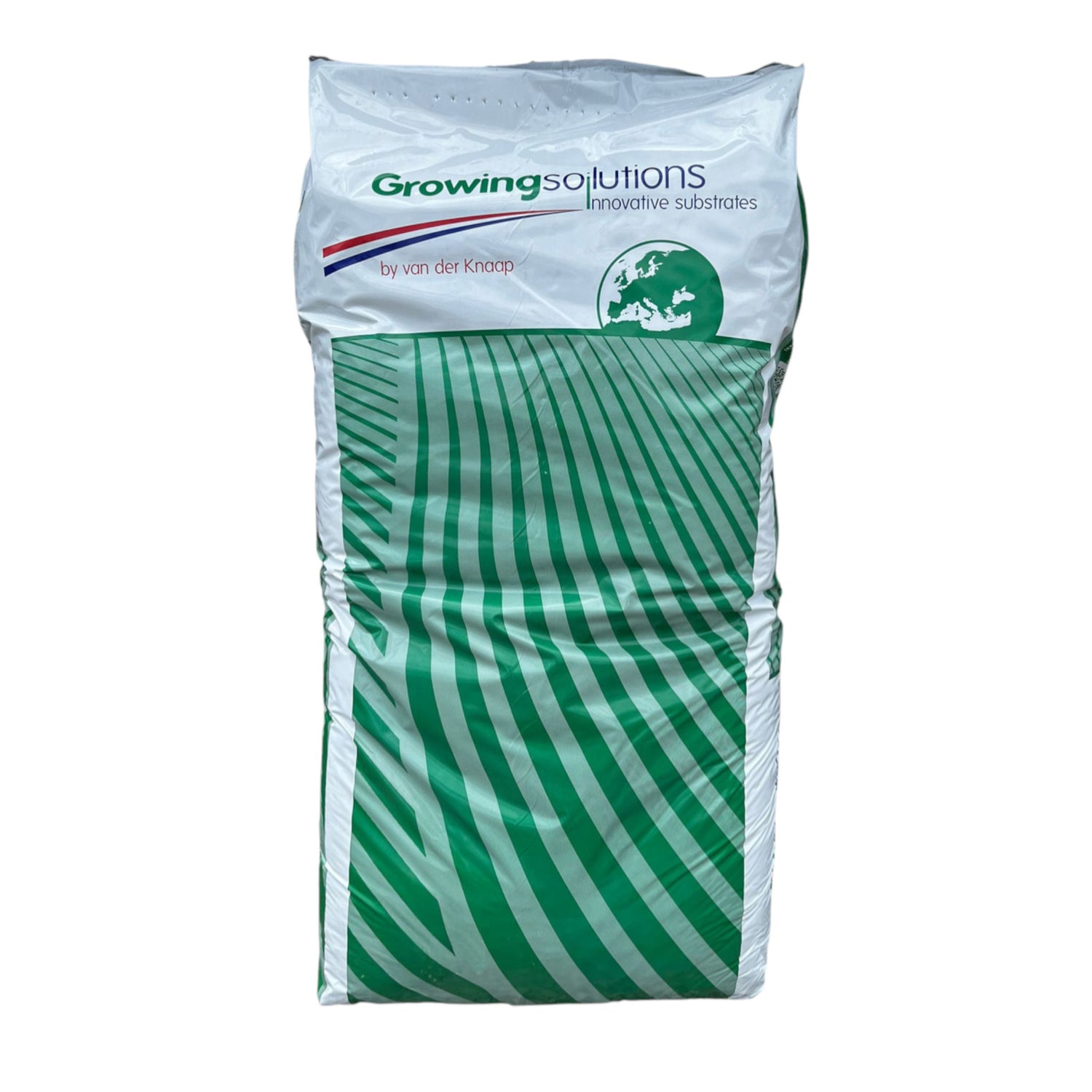
£12.73
Unit price per£12.73
Unit price perVan der Knaap Peat-Free Potting & Bedding 70L is a professional peat-free growing medium developed for container potting and bedding plant production.
A peat-free growing medium intended for potting and bedding production.
Supplied in a 70L bag, with 39 bags per full pallet.
Key benefits
Where to use this growing medium
A peat-free growing medium intended for potting and bedding production. Select the formulation to match the crop, container volume and intended production period.
Van der Knaap develops peat-reduced and peat-free growing media for professional horticulture. These categories are distinct: peat-reduced is not peat-free.
Irrigation & root-zone management
Adjust irrigation and feeding to the crop and actual substrate response, rather than automatically reusing a peat-based schedule.
Fill containers consistently without unnecessary compaction. Monitor moisture through the root zone and adjust watering according to crop size, weather, pot volume and the substrate's behaviour.
Feeding & crop management
Set nutrient inputs according to crop demand, irrigation water and the growing-medium analysis. The exact nutrient charge, pH and EC for this formulation should be checked on the current product specification before establishing a crop-specific feeding programme.
Commercial supply & handling
Supplied individually in 70L bags. A full pallet contains 39 bags. Store unopened bags appropriately and protect opened substrate from contamination.
Van der Knaap Peat-Free Potting & Bedding 70L product details
| Manufacturer | Van der Knaap |
|---|---|
| Range | Peat-Free |
| Growing-medium type | Potting & Bedding |
| Bag volume | 70L |
| Selling quantity | 1 bag |
| Pallet quantity | 39 bags |
| Primary use | container potting and bedding plant production |
Van der Knaap Peat-Free Potting & Bedding 70L FAQs
What is this blend intended for?
A peat-free growing medium intended for potting and bedding production. What is the difference between peat-free and peat-reduced?
Peat-free growing media contain no peat. Peat-reduced growing media still contain some peat, alongside other substrate components. How should I manage watering?
Adjust irrigation and feeding to the crop and actual substrate response, rather than automatically reusing a peat-based schedule. Is this the peat-free potting and bedding mix?
Yes. This is the peat-free 70L potting and bedding product, distinct from the peat-reduced version. Is this supplied by the bag or pallet?
It is sold as one 70L bag. A full pallet contains 39 bags. Will I need to adjust feeding?
Possibly. Monitor crop response and the growing medium and adjust nutrition to the crop, water quality and production stage rather than assuming one feeding programme suits every blend.

The Clover 75L PRIMULA & PANSY is a primula & pansy compost intended for professional production of primula, pansy and similar crops where the formulation is appropriate.
Clover growing media are used across professional horticulture where growers need to select the substrate according to crop type, container size, irrigation practice and production stage.
Bag size: 75L.
Key benefits
Recommended applications
Use this product for professional production of primula, pansy and similar crops where the formulation is appropriate. The exact crop response will depend on plant species, container volume, irrigation, feeding and the wider production environment.
Using professional growing media
Fill pots, trays or planting areas evenly without unnecessary compaction. After planting, irrigate according to the crop and allow the medium to settle naturally around the root system.
Monitor moisture rather than watering solely to a fixed timetable. Water demand changes with crop size, temperature, light, airflow and container volume.
Nutrition & crop management
Where a growing medium contains a starter nutrient charge, its duration will vary with crop demand and irrigation. Establish an appropriate ongoing feeding programme for longer-term production rather than assuming the original nutrient supply will last indefinitely.
For specialist crops, match pH, nutrition and irrigation to the plant's requirements and current production guidance.
Storage & handling
Store bags in a suitable area before use and protect opened material from contamination. Avoid unnecessary compaction during handling so the physical structure of the growing medium is maintained.
Clover 75L PRIMULA & PANSY product details
| Manufacturer | Clover |
|---|---|
| Product type | Primula & pansy compost |
| Bag size | 75L |
| Primary application | professional production of primula, pansy and similar crops where the formulation is appropriate |
Clover 75L PRIMULA & PANSY FAQs
What crops is this compost intended for?
It is intended for primula and pansy production where the formulation is appropriate. Can it be used for other crops?
For other crops, choose a medium whose physical and nutritional characteristics match their production requirements. How should watering be managed?
Monitor crop and substrate moisture and irrigate according to pot size, crop stage and environmental conditions. How much growing medium is in the bag?
This product is supplied in a 75L bag. Should the compost be compressed firmly into pots?
Avoid excessive compaction. Fill consistently and settle the medium sufficiently to support the plant while maintaining appropriate pore space. How often should plants be watered?
Water according to crop demand and substrate moisture. Requirements vary with plant size, container volume and environmental conditions.
Van der Knaap Peat-Free Propagation 70L is a professional peat-free growing medium developed for seedlings, cuttings and modular young-plant production.
A peat-free propagation blend intended for early crop establishment in trays, modules and small pots.
Supplied in a 70L bag, with 39 bags per full pallet.
Key benefits
Where to use this growing medium
A peat-free propagation blend intended for early crop establishment in trays, modules and small pots. Select the formulation to match the crop, container volume and intended production period.
Van der Knaap develops peat-reduced and peat-free growing media for professional horticulture. These categories are distinct: peat-reduced is not peat-free.
Irrigation & root-zone management
Peat-free media can wet and dry differently from peat-based media; check moisture throughout the propagation unit.
Fill containers consistently without unnecessary compaction. Monitor moisture through the root zone and adjust watering according to crop size, weather, pot volume and the substrate's behaviour.
Feeding & crop management
Set nutrient inputs according to crop demand, irrigation water and the growing-medium analysis. The exact nutrient charge, pH and EC for this formulation should be checked on the current product specification before establishing a crop-specific feeding programme.
Commercial supply & handling
Supplied individually in 70L bags. A full pallet contains 39 bags. Store unopened bags appropriately and protect opened substrate from contamination.
Van der Knaap Peat-Free Propagation 70L product details
| Manufacturer | Van der Knaap |
|---|---|
| Range | Peat-Free |
| Growing-medium type | Propagation |
| Bag volume | 70L |
| Selling quantity | 1 bag |
| Pallet quantity | 39 bags |
| Primary use | seedlings, cuttings and modular young-plant production |
Van der Knaap Peat-Free Propagation 70L FAQs
What is this blend intended for?
A peat-free propagation blend intended for early crop establishment in trays, modules and small pots. What is the difference between peat-free and peat-reduced?
Peat-free growing media contain no peat. Peat-reduced growing media still contain some peat, alongside other substrate components. How should I manage watering?
Peat-free media can wet and dry differently from peat-based media; check moisture throughout the propagation unit. Does this propagation medium contain peat?
No. This is the peat-free propagation version. Is this supplied by the bag or pallet?
It is sold as one 70L bag. A full pallet contains 39 bags. Will I need to adjust feeding?
Possibly. Monitor crop response and the growing medium and adjust nutrition to the crop, water quality and production stage rather than assuming one feeding programme suits every blend.

The Clover 75L MINI CHIP & FINE BARK is a mini chip & fine bark intended for mulching and growing-media preparation where a fine bark grade is required.
Clover growing media are used across professional horticulture where growers need to select the substrate according to crop type, container size, irrigation practice and production stage.
Bag size: 75L.
Key benefits
Recommended applications
Use this product for mulching and growing-media preparation where a fine bark grade is required. The exact crop response will depend on plant species, container volume, irrigation, feeding and the wider production environment.
Using professional growing media
Fill pots, trays or planting areas evenly without unnecessary compaction. After planting, irrigate according to the crop and allow the medium to settle naturally around the root system.
Monitor moisture rather than watering solely to a fixed timetable. Water demand changes with crop size, temperature, light, airflow and container volume.
Nutrition & crop management
Where a growing medium contains a starter nutrient charge, its duration will vary with crop demand and irrigation. Establish an appropriate ongoing feeding programme for longer-term production rather than assuming the original nutrient supply will last indefinitely.
For specialist crops, match pH, nutrition and irrigation to the plant's requirements and current production guidance.
Storage & handling
Store bags in a suitable area before use and protect opened material from contamination. Avoid unnecessary compaction during handling so the physical structure of the growing medium is maintained.
Clover 75L MINI CHIP & FINE BARK product details
| Manufacturer | Clover |
|---|---|
| Product type | Mini chip & fine bark |
| Bag size | 75L |
| Primary application | mulching and growing-media preparation where a fine bark grade is required |
Clover 75L MINI CHIP & FINE BARK FAQs
What is mini chip and fine bark used for?
It can be used for mulching and as a component in growing-media preparation where this bark grade is appropriate. Can it be mixed into growing media?
Yes, where the required substrate formulation calls for this grade of bark. Can it be used as a surface mulch?
Yes, mulching is an appropriate use where the grade and appearance suit the planting area. How much growing medium is in the bag?
This product is supplied in a 75L bag. Should the compost be compressed firmly into pots?
Avoid excessive compaction. Fill consistently and settle the medium sufficiently to support the plant while maintaining appropriate pore space. How often should plants be watered?
Water according to crop demand and substrate moisture. Requirements vary with plant size, container volume and environmental conditions.

The Clover 75L CONTAINER is a container compost intended for professional container nursery production.
Clover growing media are used across professional horticulture where growers need to select the substrate according to crop type, container size, irrigation practice and production stage.
Bag size: 75L.
Key benefits
Recommended applications
Use this product for professional container nursery production. The exact crop response will depend on plant species, container volume, irrigation, feeding and the wider production environment.
Using professional growing media
Fill pots, trays or planting areas evenly without unnecessary compaction. After planting, irrigate according to the crop and allow the medium to settle naturally around the root system.
Monitor moisture rather than watering solely to a fixed timetable. Water demand changes with crop size, temperature, light, airflow and container volume.
Nutrition & crop management
Where a growing medium contains a starter nutrient charge, its duration will vary with crop demand and irrigation. Establish an appropriate ongoing feeding programme for longer-term production rather than assuming the original nutrient supply will last indefinitely.
For specialist crops, match pH, nutrition and irrigation to the plant's requirements and current production guidance.
Storage & handling
Store bags in a suitable area before use and protect opened material from contamination. Avoid unnecessary compaction during handling so the physical structure of the growing medium is maintained.
Clover 75L CONTAINER product details
| Manufacturer | Clover |
|---|---|
| Product type | Container compost |
| Bag size | 75L |
| Primary application | professional container nursery production |
Clover 75L CONTAINER FAQs
What is this growing medium designed for?
It is intended for professional container nursery production. Can it be used for potting on?
Yes, where the crop and production stage are appropriate for this formulation. How should irrigation be managed?
Water according to crop demand, container size and environmental conditions, checking the growing medium rather than relying only on a fixed timetable. How much growing medium is in the bag?
This product is supplied in a 75L bag. Should the compost be compressed firmly into pots?
Avoid excessive compaction. Fill consistently and settle the medium sufficiently to support the plant while maintaining appropriate pore space. How often should plants be watered?
Water according to crop demand and substrate moisture. Requirements vary with plant size, container volume and environmental conditions.
£12.73
Unit price per£12.73
Unit price perVan der Knaap Peat-Reduced Potting & Bedding 70L is a professional peat-reduced growing medium developed for potting-on and bedding plant production.
A potting and bedding blend intended for plants moving into growing-on containers and bedding production.
Supplied in a 70L bag, with 39 bags per full pallet.
Key benefits
Where to use this growing medium
A potting and bedding blend intended for plants moving into growing-on containers and bedding production. Select the formulation to match the crop, container volume and intended production period.
Van der Knaap develops peat-reduced and peat-free growing media for professional horticulture. These categories are distinct: peat-reduced is not peat-free.
Irrigation & root-zone management
Choose pot size to match the crop and monitor the substrate moisture through the full root zone.
Fill containers consistently without unnecessary compaction. Monitor moisture through the root zone and adjust watering according to crop size, weather, pot volume and the substrate's behaviour.
Feeding & crop management
Set nutrient inputs according to crop demand, irrigation water and the growing-medium analysis. The exact nutrient charge, pH and EC for this formulation should be checked on the current product specification before establishing a crop-specific feeding programme.
Commercial supply & handling
Supplied individually in 70L bags. A full pallet contains 39 bags. Store unopened bags appropriately and protect opened substrate from contamination.
Van der Knaap Peat-Reduced Potting & Bedding 70L product details
| Manufacturer | Van der Knaap |
|---|---|
| Range | Peat-Reduced |
| Growing-medium type | Potting & Bedding |
| Bag volume | 70L |
| Selling quantity | 1 bag |
| Pallet quantity | 39 bags |
| Primary use | potting-on and bedding plant production |
Van der Knaap Peat-Reduced Potting & Bedding 70L FAQs
What is this blend intended for?
A potting and bedding blend intended for plants moving into growing-on containers and bedding production. What is the difference between peat-free and peat-reduced?
Peat-free growing media contain no peat. Peat-reduced growing media still contain some peat, alongside other substrate components. How should I manage watering?
Choose pot size to match the crop and monitor the substrate moisture through the full root zone. Is this suitable for bedding plants?
Yes. It is a potting and bedding formulation; check suitability for the particular crop and production programme. Is this supplied by the bag or pallet?
It is sold as one 70L bag. A full pallet contains 39 bags. Will I need to adjust feeding?
Possibly. Monitor crop response and the growing medium and adjust nutrition to the crop, water quality and production stage rather than assuming one feeding programme suits every blend.

£4.99
Unit price per£4.99
Unit price perVan der Knaap Peat Free Nursery Stock 70L is a professional peat-free growing medium developed for container-grown nursery stock. Designed to provide the root-zone structure and water management required by longer-term container crops, it offers commercial growers a professional substrate for peat-free nursery production.
Nursery stock places very different demands on a growing medium compared with short-cycle crops. Plants may remain in their containers for extended periods, making reliable structure, drainage, moisture management and root-zone aeration particularly important.
Van der Knaap's Nursery Stock formulation provides an open, well-structured and free-draining growing environment designed to support strong root development and healthy plant growth throughout the production cycle.
Supplied in 70L bags with 39 bags per pallet, it is suited to professional nurseries, commercial growers, landscapers and other horticultural businesses moving towards peat-free container production.
Why choose Van der Knaap Peat Free Nursery Stock?
Developed for professional nursery stock production
Container-grown nursery stock requires a substrate capable of performing over a longer production period. As roots develop and the crop increases in size, the physical characteristics of the growing medium become increasingly important.
An appropriate nursery substrate needs to provide sufficient moisture for the crop while retaining enough air-filled space around the root system and allowing excess irrigation water to drain.
Van der Knaap Peat Free Nursery Stock is formulated around these requirements, providing a structured root-zone environment for professional container production.
Professional peat-free growing media
Replacing peat in professional growing media involves considerably more than substituting one raw material for another. Different renewable materials have different physical, chemical and water-holding characteristics, which can change how a crop needs to be irrigated and fed.
Van der Knaap actively researches renewable and circular substrate materials and evaluates how changes in growing media affect crop performance. This includes assessing physical and chemical characteristics and carrying out practical cultivation trials.
The result is a professional approach to peat-free growing media that considers both the composition of the substrate and how that substrate performs within a real horticultural production system.
Root-zone structure & water management
Water and air compete for pore space within every growing medium. A substrate that remains excessively wet can restrict root-zone aeration, while one that dries too quickly can make maintaining consistent moisture difficult.
The open, free-draining structure of Van der Knaap Peat Free Nursery Stock is designed to provide an effective balance for container-grown plants, supporting root development while allowing growers to manage irrigation according to crop demand.
As with any professional peat-free substrate, irrigation should be based on the actual moisture condition within the container rather than simply following a watering programme developed for a previous peat-based growing medium.
Suitable applications
Van der Knaap Peat Free Nursery Stock is primarily intended for professional container nursery production and is particularly useful where plants require a structured growing medium for an extended crop cycle.
Managing peat-free growing media successfully
Professional peat-free substrates may require a different approach to irrigation and nutrition compared with familiar peat-based mixes. The characteristics of the substrate, crop, container size, weather and production environment should all be considered.
Growers should monitor moisture throughout the root zone and adjust irrigation frequency and volume accordingly. The surface of a growing medium does not always provide an accurate indication of moisture deeper within the container.
Nutrition should likewise be matched to the crop and production system. Where controlled-release fertiliser or liquid feeding is used, the programme should account for crop requirements, irrigation strategy, container size and intended production period.
About Van der Knaap
Van der Knaap is an international specialist in rooting and growing media for professional horticulture. The company works with growers across a wide range of crops, developing substrate solutions around crop requirements and practical cultivation conditions.
Its expertise extends across potting soils and professional substrates, rooting media, coco products and organic fertilisers. Van der Knaap works with a range of natural substrate materials and develops mixtures according to the physical and nutritional requirements of different crops and production systems.
Research and crop testing form an important part of this approach. At its own 'de Kas' innovation centre, Van der Knaap carries out cultivation trials to investigate growing media, rooting products and new raw materials under practical growing conditions.
This work is particularly relevant as professional horticulture moves towards reduced-peat and peat-free production. Van der Knaap has been researching renewable and circular substrate materials, examining characteristics such as structure, moisture behaviour, pH and nutrition alongside their effects on actual crop growth.
For professional growers, that combination of substrate manufacturing, crop knowledge, research and practical cultivation experience makes Van der Knaap a strong partner when moving towards new growing media and more sustainable production systems.
Van der Knaap Peat Free Nursery Stock product details
| Brand | Van der Knaap |
|---|---|
| Product | Peat Free Nursery Stock |
| Product type | Professional peat-free growing medium |
| Bag size | 70L |
| Peat content | 100% peat-free |
| Structure | Open, well-structured and free-draining |
| Primary application | Container-grown nursery stock |
| Container suitability | Container pots and larger decorative pots |
| Professional use | Nurseries, commercial growers and professional landscaping |
| Pallet quantity | 39 x 70L bags |
| Total nominal volume per pallet | 2,730L |
Van der Knaap Peat Free Nursery Stock FAQs
Is Van der Knaap Nursery Stock completely peat free?
Yes. This Nursery Stock growing medium is a 100% peat-free formulation intended for professional horticultural production. What is this growing medium designed for?
It is designed primarily for container-grown nursery stock where good root-zone structure, drainage and moisture management are required throughout the production cycle. Is this the same as general-purpose peat-free compost?
No. This is a professional nursery stock substrate formulated around the requirements of container-grown plants rather than a general-purpose retail compost. Why is an open substrate structure important?
An open structure helps maintain air within the root zone while allowing excess irrigation water to drain. This is particularly important for plants remaining in containers for extended periods. Is it suitable for shrubs and ornamental plants?
Yes. The formulation is intended for nursery stock and is suitable for appropriate container-grown shrubs, ornamentals and other longer-term nursery crops. Can it be used in larger plant pots?
Yes. Van der Knaap Peat Free Nursery Stock is suitable for container pots and larger decorative pots used in professional plant production. Will I need to change my irrigation when switching from peat?
Potentially. Peat-free substrates can have different moisture and drainage characteristics from peat-based growing media. Monitor the root zone and adjust irrigation according to the substrate, crop, container and growing conditions. Can controlled-release fertiliser be used with this growing medium?
Controlled-release fertiliser can form part of a nursery nutrition programme where appropriate. Product choice, rate and longevity should be matched to the crop, container, irrigation regime and intended production period. Who is Van der Knaap?
Van der Knaap is a specialist producer of professional rooting and growing media. Its expertise includes substrates, rooting products, coco products and crop-focused growing solutions for professional horticulture. Does Van der Knaap test its growing media?
Van der Knaap conducts research and cultivation trials at its 'de Kas' innovation centre, including work with new renewable and circular raw materials and peat-free rooting and growing media. How much growing medium is in each bag?
Each bag contains a nominal 70 litres of Van der Knaap Peat Free Nursery Stock growing medium. How many 70L bags are supplied on a pallet?
A full pallet contains 39 x 70L bags, equivalent to a total nominal growing media volume of 2,730 litres.

Sinclair Vermiculite Fine 100L — Fine-grade expanded vermiculite for seed sowing, propagation and growing-media moisture management.
Selected for professional horticulture, nursery production and garden or landscape applications where the product suits the crop and growing conditions.
Key benefits
Fine-grade vermiculite for propagation
The fine 1–3mm grade is suitable for fine seed-covering work and incorporation into appropriately designed propagation media. Its layered structure helps manage water and soluble nutrients around developing roots.
Using as a seed covering
Use a light, even covering where suitable for the crop. Follow seed-specific sowing depth and light requirements, and maintain moisture without saturating the propagation medium.
Choosing fine or medium
Fine vermiculite is smaller in particle size and has a higher manufacturer-stated water-holding figure than the medium grade. Choose by seed size, substrate texture and desired water management.
Sinclair Vermiculite Fine 100L product details
| Grade | Fine |
|---|---|
| Particle size | 1–3mm |
| Water holding (manufacturer figure) | 419ml per litre |
| Bag size | 100L |
| Manufacturer product reference | FXS1702S |
Sinclair Vermiculite Fine 100L FAQs
What is the difference between fine and medium vermiculite?
Fine is 1–3mm with a stated water holding of 419ml per litre; medium is 2–5mm with 381ml per litre. Can fine vermiculite be used for seed covering?
Yes, where the crop benefits from a light covering. Check whether the seed needs light for germination. Does it replace fertiliser?
No. Vermiculite can retain some dissolved nutrients but is not a complete fertiliser. Can it be mixed with propagation compost?
Yes. Choose the proportion according to the physical requirements of the crop and finished substrate. How much is supplied?
One 100L bag.

£0.00
Unit price per£0.00
Unit price perVersatile 2 – 5mm horticultural perlite for creating lighter, better-draining growing media with more air space around developing roots.
Planet Earth Horticultural Perlite is a lightweight growing media additive for improving drainage, aeration and structure in compost and potting mixes. Supplied in a convenient 10L bag, it is an easy way to open up dense growing media and create a healthier balance of air and moisture around plant roots.
The 2 – 5mm horticultural grade creates additional pore space throughout the growing medium. This helps excess water drain more freely while maintaining air spaces around the root zone, reducing the tendency of compost and other media to become dense and compacted.
Its versatility makes it useful for everything from propagation and potting-on to houseplants, container growing and general compost improvement. The manageable 10L bag is particularly practical when only a modest quantity of perlite is required.
Why choose Planet Earth Horticultural Perlite?
What is Planet Earth Perlite suitable for?
Planet Earth Perlite can be incorporated into compost and other growing media wherever additional drainage, aeration or structural openness is required.
It is particularly useful for growing mixes that tend to settle or compact over time. Adding perlite creates spaces between the finer particles of the growing medium, helping air reach the root zone while allowing excess irrigation water to drain away more readily.
The 2 – 5mm grade is well suited to propagation mixes, potting-on, container plants and general compost improvement. It can also be useful for indoor plants where a dense potting mix needs additional drainage and aeration.
Because the amount required depends on the crop and the characteristics of the existing growing medium, Planet Earth Perlite can be blended at different proportions to produce the structure and drainage needed for the application.
How to use Planet Earth Perlite
Mix Planet Earth Perlite thoroughly through your chosen compost or growing medium before planting or potting-on. Adjust the proportion according to how much additional drainage and aeration the existing mix requires.
For propagation and general potting mixes, distribute the perlite evenly rather than allowing it to collect in isolated pockets. An even blend creates consistent air spaces and drainage throughout the root zone.
When improving an existing dense growing medium, gradually incorporate perlite until the mix has the lighter, more open structure required for the plants being grown.
Perlite is very lightweight and can produce fine dust during handling. Pour and mix it carefully, preferably in a well-ventilated area, and avoid breathing airborne dust.
Planet Earth Perlite 10L product details
| Brand | Planet Earth |
|---|---|
| Product | Horticultural Perlite |
| Bag size | 10L |
| Particle size | 2 – 5mm |
| Product format | Lightweight granular growing media additive |
| Key applications | Drainage, aeration, propagation, potting mixes & growing media improvement |
| Suitable for | Propagation, potting-on, containers, houseplants & general horticultural growing media |
Planet Earth Perlite FAQs
What is horticultural perlite used for?
Horticultural perlite is mixed into compost and other growing media to increase drainage and aeration while maintaining a lighter, more open structure around plant roots.
What size is Planet Earth Perlite?
This Planet Earth Perlite is supplied in a 10L bag and has a horticultural particle size of 2 – 5mm.
Does perlite improve drainage?
Yes. Perlite creates additional pore space within the growing medium, helping excess water move through the mix more freely and reducing the tendency for dense compost to remain waterlogged.
Does perlite improve soil aeration?
Yes. The spaces created by perlite help maintain air within the growing medium, giving developing roots access to a better-aerated root environment.
Can Planet Earth Perlite be mixed with compost?
Yes. Planet Earth Perlite can be mixed thoroughly with compost and other growing media where improved drainage, aeration and structure are required.
Is 2 – 5mm perlite suitable for propagation?
Yes. A 2 – 5mm horticultural grade is suitable for incorporating into propagation mixes where an open structure, good drainage and air around developing roots are important.
Can I use Planet Earth Perlite for houseplants?
Yes. Perlite is useful for houseplant potting mixes, particularly where the existing compost is dense or where the plant benefits from improved drainage and root-zone aeration.
Can perlite help stop compost becoming compacted?
Yes. Mixing perlite through compost introduces rigid pore spaces that help maintain a lighter, more open structure as the growing medium settles.
How much perlite should I add to compost?
The amount depends on the existing growing medium and the drainage requirements of the plants being grown. Add enough to achieve the required balance of drainage, aeration and moisture retention rather than relying on one fixed ratio for every crop.
Is a 10L bag of perlite suitable for small growing projects?
Yes. The 10L format is particularly convenient for propagation, houseplants, container growing and smaller batches of customised potting mix where a large professional bag is unnecessary.
Should I wear a mask when handling perlite?
Perlite can create fine airborne dust when poured or mixed. Handle it carefully in a well-ventilated area and avoid breathing the dust. Suitable respiratory protection can be used where dust cannot otherwise be adequately controlled.

The Clover 75L ERICACEOUS (Professional) is a ericaceous compost intended for acid-loving plants including rhododendrons, azaleas, camellias and other plants requiring ericaceous growing conditions.
Clover growing media are used across professional horticulture where growers need to select the substrate according to crop type, container size, irrigation practice and production stage.
Bag size: 75L.
Key benefits
Recommended applications
Use this product for acid-loving plants including rhododendrons, azaleas, camellias and other plants requiring ericaceous growing conditions. The exact crop response will depend on plant species, container volume, irrigation, feeding and the wider production environment.
Using professional growing media
Fill pots, trays or planting areas evenly without unnecessary compaction. After planting, irrigate according to the crop and allow the medium to settle naturally around the root system.
Monitor moisture rather than watering solely to a fixed timetable. Water demand changes with crop size, temperature, light, airflow and container volume.
Nutrition & crop management
Where a growing medium contains a starter nutrient charge, its duration will vary with crop demand and irrigation. Establish an appropriate ongoing feeding programme for longer-term production rather than assuming the original nutrient supply will last indefinitely.
For specialist crops, match pH, nutrition and irrigation to the plant's requirements and current production guidance.
Storage & handling
Store bags in a suitable area before use and protect opened material from contamination. Avoid unnecessary compaction during handling so the physical structure of the growing medium is maintained.
Clover 75L ERICACEOUS (Professional) product details
| Manufacturer | Clover |
|---|---|
| Product type | Ericaceous compost |
| Bag size | 75L |
| Primary application | acid-loving plants including rhododendrons, azaleas, camellias and other plants requiring ericaceous growing conditions |
Clover 75L ERICACEOUS (Professional) FAQs
What plants is ericaceous compost for?
It is intended for acid-loving plants such as rhododendrons, azaleas and camellias, together with other crops requiring ericaceous growing conditions. Can I use it for plants that prefer neutral or alkaline conditions?
It is specifically an ericaceous formulation, so choose a different medium for plants whose pH requirements do not suit acidic growing conditions. Can it be used in containers?
Yes, where the crop is suitable and the irrigation and feeding programme are matched to the plant. How much growing medium is in the bag?
This product is supplied in a 75L bag. Should the compost be compressed firmly into pots?
Avoid excessive compaction. Fill consistently and settle the medium sufficiently to support the plant while maintaining appropriate pore space. How often should plants be watered?
Water according to crop demand and substrate moisture. Requirements vary with plant size, container volume and environmental conditions.


£17.50
Unit price per£17.50
Unit price perProfessional-grade 2 – 5mm horticultural perlite for improved drainage, aeration and healthier root development.
Growers Own Horticultural Perlite is a lightweight, pH-neutral growing media additive made from natural volcanic rock. Supplied in a generous 100L bag with a 2 – 5mm particle size, it helps create a lighter, more open growing medium with improved drainage and air space around developing roots.
Its porous structure makes Growers Own Perlite particularly useful for improving compost and potting mixes where additional aeration and drainage are required. It can help reduce compaction and maintain a more favourable root environment, making it a versatile choice for professional growers, nurseries, propagation and general horticultural use.
Why choose Growers Own Horticultural Perlite?
What is Growers Own Perlite suitable for?
Growers Own Perlite can be mixed with compost, soil and other growing media where greater drainage, aeration or structural stability is required. Its 2 – 5mm particle size makes it suitable for a wide range of horticultural applications, including potting mixes, container growing, propagation and soil conditioning.
It is particularly useful where a growing medium is prone to becoming dense or compacted. Adding perlite creates additional pore space within the mix, helping air and water move more freely around the root zone while supporting strong, healthy root development.
How to use Growers Own Perlite
Mix Growers Own Perlite thoroughly through your chosen compost, soil or growing medium according to the drainage and aeration requirements of the crop. The amount required will vary depending on the existing growing medium and the plants being grown.
The 2 – 5mm grade can be incorporated into potting and propagation mixes to improve structure, or used when conditioning heavier growing media where additional drainage and air space are needed.
Product details
| Brand | Growers Own |
|---|---|
| Product | Horticultural Perlite |
| Product type | Growing media additive |
| Bag size | 100L |
| Particle size | 2 – 5mm |
| Material | Natural volcanic rock |
| pH | Neutral |
| Key applications | Drainage, aeration, potting mixes, propagation & soil conditioning |
| Full pallet quantity | 20 |
Growers Own Perlite FAQs
What is horticultural perlite used for?
Horticultural perlite is added to compost, soil and other growing media to improve drainage, increase aeration and help maintain an open structure around plant roots.
What grade is Growers Own Perlite?
Growers Own Horticultural Perlite has a particle size of 2 – 5mm, providing a versatile grade for potting mixes, propagation and general horticultural use.
Does perlite improve soil drainage?
Yes. Adding perlite creates additional pore space within the growing medium, allowing excess water to drain more freely while increasing the amount of air available around the root zone.
Can Growers Own Perlite be mixed with compost?
Yes. Growers Own Perlite can be mixed thoroughly with compost and other growing media to create a lighter, more open structure with improved drainage and aeration.
Is Growers Own Perlite pH-neutral?
Yes. Growers Own Perlite is a pH-neutral growing media additive made from natural volcanic rock.
Is 2 – 5mm perlite suitable for propagation?
Yes. The 2 – 5mm horticultural grade can be incorporated into propagation and potting mixes where improved drainage, aeration and growing media structure are required.
How many 100L bags are on a full pallet?
A full pallet contains 20 x 100L bags of Growers Own Perlite. The pallet quantity is provided for logistical and stock-planning purposes and does not mean the product must be purchased by the full pallet.

The Clover 75L TREE PLANTING & MULCHING is a tree planting & mulching compost intended for tree and shrub planting, backfilling and mulching where this product is appropriate.
Clover growing media are used across professional horticulture where growers need to select the substrate according to crop type, container size, irrigation practice and production stage.
Bag size: 75L.
Key benefits
Recommended applications
Use this product for tree and shrub planting, backfilling and mulching where this product is appropriate. The exact crop response will depend on plant species, container volume, irrigation, feeding and the wider production environment.
Using professional growing media
Fill pots, trays or planting areas evenly without unnecessary compaction. After planting, irrigate according to the crop and allow the medium to settle naturally around the root system.
Monitor moisture rather than watering solely to a fixed timetable. Water demand changes with crop size, temperature, light, airflow and container volume.
Nutrition & crop management
Where a growing medium contains a starter nutrient charge, its duration will vary with crop demand and irrigation. Establish an appropriate ongoing feeding programme for longer-term production rather than assuming the original nutrient supply will last indefinitely.
For specialist crops, match pH, nutrition and irrigation to the plant's requirements and current production guidance.
Storage & handling
Store bags in a suitable area before use and protect opened material from contamination. Avoid unnecessary compaction during handling so the physical structure of the growing medium is maintained.
Clover 75L TREE PLANTING & MULCHING product details
| Manufacturer | Clover |
|---|---|
| Product type | Tree planting & mulching compost |
| Bag size | 75L |
| Primary application | tree and shrub planting, backfilling and mulching where this product is appropriate |
Clover 75L TREE PLANTING & MULCHING FAQs
What is this product used for?
It is intended for tree and shrub planting, backfilling and mulching where the formulation is appropriate. Can it be used as a mulch?
Yes, mulching is one of the stated applications for this product. Should newly planted trees still be watered?
Yes. Newly planted trees and shrubs require appropriate establishment watering according to soil, weather and species requirements. How much growing medium is in the bag?
This product is supplied in a 75L bag. Should the compost be compressed firmly into pots?
Avoid excessive compaction. Fill consistently and settle the medium sufficiently to support the plant while maintaining appropriate pore space. How often should plants be watered?
Water according to crop demand and substrate moisture. Requirements vary with plant size, container volume and environmental conditions.

The Clover 75L ALPINE COMPOST is a alpine compost intended for alpines and other plants requiring a suitably structured specialist growing medium.
Clover growing media are used across professional horticulture where growers need to select the substrate according to crop type, container size, irrigation practice and production stage.
Bag size: 75L.
Key benefits
Recommended applications
Use this product for alpines and other plants requiring a suitably structured specialist growing medium. The exact crop response will depend on plant species, container volume, irrigation, feeding and the wider production environment.
Using professional growing media
Fill pots, trays or planting areas evenly without unnecessary compaction. After planting, irrigate according to the crop and allow the medium to settle naturally around the root system.
Monitor moisture rather than watering solely to a fixed timetable. Water demand changes with crop size, temperature, light, airflow and container volume.
Nutrition & crop management
Where a growing medium contains a starter nutrient charge, its duration will vary with crop demand and irrigation. Establish an appropriate ongoing feeding programme for longer-term production rather than assuming the original nutrient supply will last indefinitely.
For specialist crops, match pH, nutrition and irrigation to the plant's requirements and current production guidance.
Storage & handling
Store bags in a suitable area before use and protect opened material from contamination. Avoid unnecessary compaction during handling so the physical structure of the growing medium is maintained.
Clover 75L ALPINE COMPOST product details
| Manufacturer | Clover |
|---|---|
| Product type | Alpine compost |
| Bag size | 75L |
| Primary application | alpines and other plants requiring a suitably structured specialist growing medium |
Clover 75L ALPINE COMPOST FAQs
What plants is alpine compost for?
It is intended for alpines and other suitable plants requiring a specialist growing medium. Can I use ordinary multipurpose compost instead?
Alpine crops often benefit from a medium selected specifically for their root-zone and drainage requirements, so use the formulation appropriate to the plant. How should alpine containers be watered?
Water according to the plant and weather while avoiding prolonged saturation where the crop requires freer-draining conditions. How much growing medium is in the bag?
This product is supplied in a 75L bag. Should the compost be compressed firmly into pots?
Avoid excessive compaction. Fill consistently and settle the medium sufficiently to support the plant while maintaining appropriate pore space. How often should plants be watered?
Water according to crop demand and substrate moisture. Requirements vary with plant size, container volume and environmental conditions.
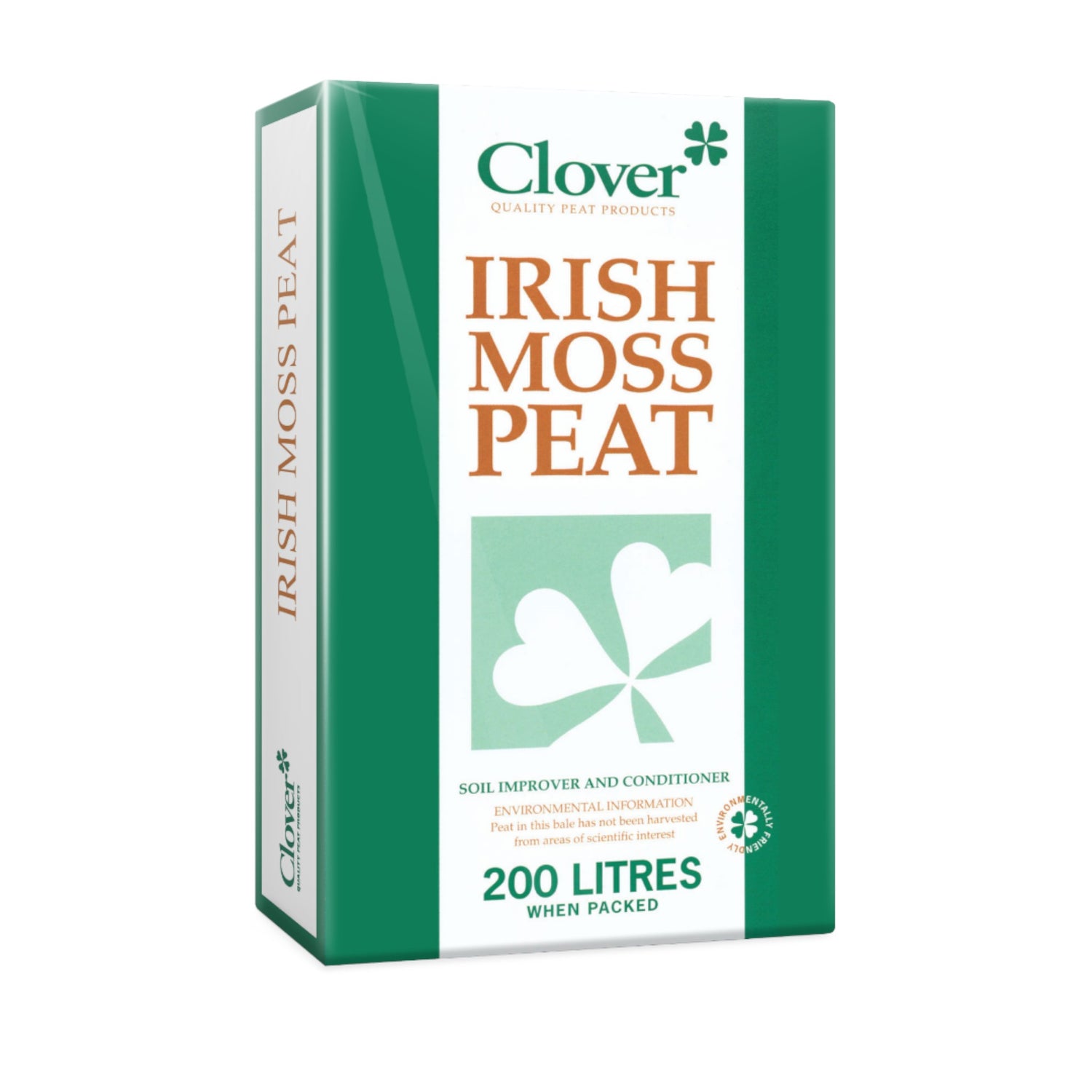
The Clover 200L GENERAL GRADE IRISH MOSS PEAT is a general grade irish moss peat intended for professional substrate blending, soil improvement and growing-media preparation.
Clover growing media are used across professional horticulture where growers need to select the substrate according to crop type, container size, irrigation practice and production stage.
Bag size: 200L.
Key benefits
Recommended applications
Use this product for professional substrate blending, soil improvement and growing-media preparation. The exact crop response will depend on plant species, container volume, irrigation, feeding and the wider production environment.
Using professional growing media
Fill pots, trays or planting areas evenly without unnecessary compaction. After planting, irrigate according to the crop and allow the medium to settle naturally around the root system.
Monitor moisture rather than watering solely to a fixed timetable. Water demand changes with crop size, temperature, light, airflow and container volume.
Nutrition & crop management
Where a growing medium contains a starter nutrient charge, its duration will vary with crop demand and irrigation. Establish an appropriate ongoing feeding programme for longer-term production rather than assuming the original nutrient supply will last indefinitely.
For specialist crops, match pH, nutrition and irrigation to the plant's requirements and current production guidance.
Storage & handling
Store bags in a suitable area before use and protect opened material from contamination. Avoid unnecessary compaction during handling so the physical structure of the growing medium is maintained.
Clover 200L GENERAL GRADE IRISH MOSS PEAT product details
| Manufacturer | Clover |
|---|---|
| Product type | General grade Irish moss peat |
| Bag size | 200L |
| Primary application | professional substrate blending, soil improvement and growing-media preparation |
Clover 200L GENERAL GRADE IRISH MOSS PEAT FAQs
What is Irish moss peat used for?
It is a raw growing-media component used for professional substrate blending, growing-media preparation and other appropriate horticultural applications. What grade is this peat?
This is the general grade version. Select the grade according to the structure required in the finished growing medium. Is this a complete ready-to-use fertilised compost?
It is sold as Irish moss peat rather than being described here as a complete crop-specific fertilised compost. Build or select the final growing medium according to the crop requirements. How much growing medium is in the bag?
This product is supplied in a 200L bag. Should the compost be compressed firmly into pots?
Avoid excessive compaction. Fill consistently and settle the medium sufficiently to support the plant while maintaining appropriate pore space. How often should plants be watered?
Water according to crop demand and substrate moisture. Requirements vary with plant size, container volume and environmental conditions.


£74.50
Unit price per£74.50
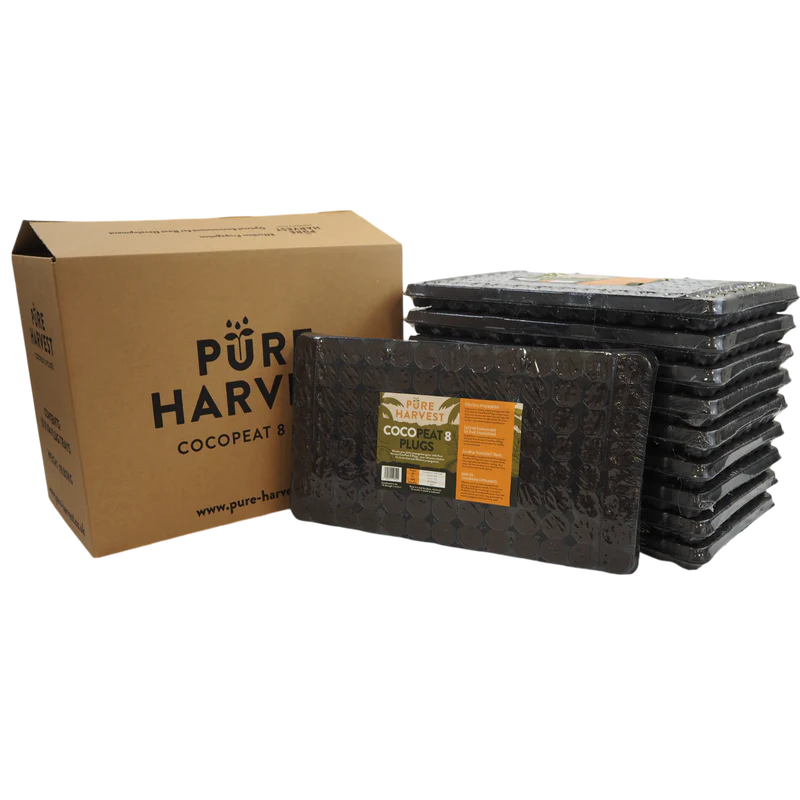
Unit price perBulk box of 1,040 coco peat propagation plugs for efficient seed, cutting and tissue culture production.
Pure Harvest CocoPeat 8 provides a practical bulk propagation solution for growers handling larger numbers of young plants. Each box contains 10 trays with 104 plugs per tray, giving you a total of 1,040 ready-to-use propagation plugs for seeds, cuttings and tissue cultures.
Made using sustainable coco peat, CocoPeat 8 plugs provide a consistent rooting environment for young plants during establishment. With a pH of 5.7 (±0.2) and EC of 0.8 (±0.2), they are designed to support reliable root development, while included nutrients provide young plants with initial nutrition for approximately the first two weeks of propagation.
Why choose Pure Harvest CocoPeat 8 plugs?
What are CocoPeat 8 propagation plugs suitable for?
Pure Harvest CocoPeat 8 plugs are suitable for propagating seeds, plant cuttings and tissue cultures. Each plug provides an individual rooting space, helping growers organise young plants efficiently while maintaining consistent propagation conditions across the tray.
The full-box format is particularly well suited to commercial nurseries, propagation units, hydroponic growers and other horticultural businesses working with larger batches of young plants. With 1,040 plugs in every box, it offers a convenient way to keep multiple propagation cycles supplied without purchasing individual trays separately.
How to use Pure Harvest CocoPeat 8 plugs
Use each CocoPeat 8 plug as an individual rooting medium for seeds, cuttings or tissue cultures. The box contains 10 trays of 104 plugs, giving a total of 1,040 propagation plugs.
Maintain the moisture, temperature, humidity and light conditions required by the crop being propagated. The plugs contain nutrients designed to support young plants for approximately the first two weeks, after which feeding can be managed according to the crop and growing system.
Product details
| Brand | Pure Harvest |
|---|---|
| Product | CocoPeat 8 |
| Product type | Coco peat propagation plugs |
| Trays per box | 10 |
| Plugs per tray | 104 |
| Total plugs | 1,040 |
| Suitable for | Seeds, cuttings & tissue cultures |
| Growing medium | Coco peat |
| pH | 5.7 (±0.2) |
| EC | 0.8 (±0.2) |
| Initial nutrition | Approximately first 2 weeks |
| Compostable | Yes – 100% |
| Pack format | 1 box of 10 trays |
Pure Harvest CocoPeat 8 FAQs
How many Pure Harvest CocoPeat 8 plugs are in a box?
Each box contains 10 trays with 104 CocoPeat 8 plugs per tray, giving a total of 1,040 propagation plugs.
How many CocoPeat 8 plugs are in each tray?
Each tray contains 104 individual Pure Harvest CocoPeat 8 propagation plugs.
What can Pure Harvest CocoPeat 8 plugs be used for?
CocoPeat 8 plugs are suitable for propagating seeds, plant cuttings and tissue cultures, providing individual rooting spaces for young plants during establishment.
What is the pH of Pure Harvest CocoPeat 8?
Pure Harvest CocoPeat 8 propagation plugs have a pH of 5.7 (±0.2).
What is the EC of Pure Harvest CocoPeat 8?
CocoPeat 8 plugs have an EC of 0.8 (±0.2), providing consistent starting conditions during propagation.
Do CocoPeat 8 plugs contain nutrients?
Yes. The plugs contain nutrients designed to support young plants through approximately the first two weeks of propagation. Feeding can then be adjusted according to the requirements of the crop and growing system.
Are Pure Harvest CocoPeat 8 plugs compostable?
Yes. Pure Harvest CocoPeat 8 plugs are 100% compostable and provide an alternative to conventional rockwool propagation media.
Can I buy Pure Harvest CocoPeat 8 as a single tray?
Yes. CocoPeat 8 is also available as a single tray containing 104 plugs. This product is the bulk box format containing 10 trays and 1,040 plugs in total.


£6.75
Unit price per£6.75
Unit price perReady-to-use tray of 104 coco peat propagation plugs for seeds, cuttings and tissue cultures.
Pure Harvest CocoPeat 8 provides 104 ready-to-use propagation plugs in a convenient tray, creating a consistent rooting medium for seeds, cuttings and tissue cultures. The plugs are made from sustainable coco peat and provide young plants with a stable environment during the important early stages of establishment.
With a pH of 5.7 (±0.2) and EC of 0.8 (±0.2), CocoPeat 8 plugs are designed to encourage fast, robust root development. They also contain nutrients to support young plants through approximately the first two weeks of propagation, helping simplify early-stage plant production for professional growers and home propagators alike.
Why choose Pure Harvest CocoPeat 8 plugs?
What are CocoPeat 8 propagation plugs suitable for?
Pure Harvest CocoPeat 8 plugs are designed for propagating seeds, plant cuttings and tissue cultures. Their consistent format makes them useful for repeatable propagation where growers want individual rooting plugs arranged neatly within a single tray.
The 104-plug format is well suited to nurseries, commercial propagation areas, hydroponic growers and other horticultural environments where multiple young plants need to be established efficiently. They are equally useful for home growers looking for a convenient way to propagate larger numbers of seedlings or cuttings.
How to use Pure Harvest CocoPeat 8 plugs
Use the individual CocoPeat 8 plugs as the rooting medium for seeds, cuttings or tissue cultures. Each tray contains 104 ready-to-use propagation plugs, allowing individual plants to establish their own root systems while remaining organised within the tray.
Maintain suitable moisture, temperature, humidity and light conditions for the crop being propagated. The plugs contain nutrients designed to support young plants for approximately the first two weeks, after which feeding can be managed according to the requirements of the plant and growing system.
Product details
| Brand | Pure Harvest |
|---|---|
| Product | CocoPeat 8 |
| Product type | Coco peat propagation plugs |
| Tray quantity | 104 plugs |
| Suitable for | Seeds, cuttings & tissue cultures |
| Growing medium | Coco peat |
| pH | 5.7 (±0.2) |
| EC | 0.8 (±0.2) |
| Initial nutrition | Approximately first 2 weeks |
| Compostable | Yes – 100% |
| Pack format | Single tray |
Pure Harvest CocoPeat 8 FAQs
How many plugs are in a Pure Harvest CocoPeat 8 tray?
Each Pure Harvest CocoPeat 8 propagation tray contains 104 individual plugs.
What can Pure Harvest CocoPeat 8 plugs be used for?
CocoPeat 8 plugs are suitable for propagating seeds, plant cuttings and tissue cultures, providing an individual growing medium in which young roots can establish.
What is the pH of Pure Harvest CocoPeat 8 plugs?
Pure Harvest CocoPeat 8 propagation plugs have a pH of 5.7 (±0.2).
What is the EC of Pure Harvest CocoPeat 8 plugs?
The plugs have an EC of 0.8 (±0.2), providing consistent starting conditions during propagation.
Do Pure Harvest CocoPeat 8 plugs contain nutrients?
Yes. The plugs contain nutrients designed to support young plants through approximately the first two weeks of propagation. Feeding can then be adjusted according to the crop and growing system.
Are Pure Harvest CocoPeat 8 plugs compostable?
Yes. Pure Harvest CocoPeat 8 plugs are 100% compostable, providing a practical alternative to conventional rockwool propagation media.
Is this one tray or a box of trays?
This product is supplied as one tray containing 104 CocoPeat 8 propagation plugs. A separate bulk option is available for customers requiring multiple trays.

The Clover 75L MEDIUM GRADE IRISH MOSS PEAT is a medium grade irish moss peat intended for professional substrate blending and growing-media preparation requiring a medium peat grade.
Clover growing media are used across professional horticulture where growers need to select the substrate according to crop type, container size, irrigation practice and production stage.
Bag size: 75L.
Key benefits
Recommended applications
Use this product for professional substrate blending and growing-media preparation requiring a medium peat grade. The exact crop response will depend on plant species, container volume, irrigation, feeding and the wider production environment.
Using professional growing media
Fill pots, trays or planting areas evenly without unnecessary compaction. After planting, irrigate according to the crop and allow the medium to settle naturally around the root system.
Monitor moisture rather than watering solely to a fixed timetable. Water demand changes with crop size, temperature, light, airflow and container volume.
Nutrition & crop management
Where a growing medium contains a starter nutrient charge, its duration will vary with crop demand and irrigation. Establish an appropriate ongoing feeding programme for longer-term production rather than assuming the original nutrient supply will last indefinitely.
For specialist crops, match pH, nutrition and irrigation to the plant's requirements and current production guidance.
Storage & handling
Store bags in a suitable area before use and protect opened material from contamination. Avoid unnecessary compaction during handling so the physical structure of the growing medium is maintained.
Clover 75L MEDIUM GRADE IRISH MOSS PEAT product details
| Manufacturer | Clover |
|---|---|
| Product type | Medium grade Irish moss peat |
| Bag size | 75L |
| Primary application | professional substrate blending and growing-media preparation requiring a medium peat grade |
Clover 75L MEDIUM GRADE IRISH MOSS PEAT FAQs
What is Irish moss peat used for?
It is a raw growing-media component used for professional substrate blending, growing-media preparation and other appropriate horticultural applications. What grade is this peat?
This is the medium grade version. Select the grade according to the structure required in the finished growing medium. Is this a complete ready-to-use fertilised compost?
It is sold as Irish moss peat rather than being described here as a complete crop-specific fertilised compost. Build or select the final growing medium according to the crop requirements. How much growing medium is in the bag?
This product is supplied in a 75L bag. Should the compost be compressed firmly into pots?
Avoid excessive compaction. Fill consistently and settle the medium sufficiently to support the plant while maintaining appropriate pore space. How often should plants be watered?
Water according to crop demand and substrate moisture. Requirements vary with plant size, container volume and environmental conditions.

The Clover 75L CYCLAMEN & POINSETTIA is a cyclamen & poinsettia compost intended for professional cyclamen and poinsettia production where this formulation is appropriate.
Clover growing media are used across professional horticulture where growers need to select the substrate according to crop type, container size, irrigation practice and production stage.
Bag size: 75L.
Key benefits
Recommended applications
Use this product for professional cyclamen and poinsettia production where this formulation is appropriate. The exact crop response will depend on plant species, container volume, irrigation, feeding and the wider production environment.
Using professional growing media
Fill pots, trays or planting areas evenly without unnecessary compaction. After planting, irrigate according to the crop and allow the medium to settle naturally around the root system.
Monitor moisture rather than watering solely to a fixed timetable. Water demand changes with crop size, temperature, light, airflow and container volume.
Nutrition & crop management
Where a growing medium contains a starter nutrient charge, its duration will vary with crop demand and irrigation. Establish an appropriate ongoing feeding programme for longer-term production rather than assuming the original nutrient supply will last indefinitely.
For specialist crops, match pH, nutrition and irrigation to the plant's requirements and current production guidance.
Storage & handling
Store bags in a suitable area before use and protect opened material from contamination. Avoid unnecessary compaction during handling so the physical structure of the growing medium is maintained.
Clover 75L CYCLAMEN & POINSETTIA product details
| Manufacturer | Clover |
|---|---|
| Product type | Cyclamen & poinsettia compost |
| Bag size | 75L |
| Primary application | professional cyclamen and poinsettia production where this formulation is appropriate |
Clover 75L CYCLAMEN & POINSETTIA FAQs
What crops is this compost intended for?
It is intended for cyclamen and poinsettia production where this formulation matches the crop programme. Can it be used for general bedding plants?
It is a crop-specific formulation; use a general pot or bedding medium where that is more appropriate. How should irrigation be managed?
Match irrigation to the crop stage, pot size and environmental conditions rather than using a fixed schedule. How much growing medium is in the bag?
This product is supplied in a 75L bag. Should the compost be compressed firmly into pots?
Avoid excessive compaction. Fill consistently and settle the medium sufficiently to support the plant while maintaining appropriate pore space. How often should plants be watered?
Water according to crop demand and substrate moisture. Requirements vary with plant size, container volume and environmental conditions.
Van der Knaap Peat-Reduced Propagation 70L is a professional peat-reduced growing medium developed for seed sowing, rooted cuttings and modular young-plant production.
A propagation blend intended for early root establishment in trays, modules and small pots.
Supplied in a 70L bag, with 39 bags per full pallet.
Key benefits
Where to use this growing medium
A propagation blend intended for early root establishment in trays, modules and small pots. Select the formulation to match the crop, container volume and intended production period.
Van der Knaap develops peat-reduced and peat-free growing media for professional horticulture. These categories are distinct: peat-reduced is not peat-free.
Irrigation & root-zone management
Monitor small-cell moisture closely; do not assume the same irrigation interval as a peat-based mix.
Fill containers consistently without unnecessary compaction. Monitor moisture through the root zone and adjust watering according to crop size, weather, pot volume and the substrate's behaviour.
Feeding & crop management
Set nutrient inputs according to crop demand, irrigation water and the growing-medium analysis. The exact nutrient charge, pH and EC for this formulation should be checked on the current product specification before establishing a crop-specific feeding programme.
Commercial supply & handling
Supplied individually in 70L bags. A full pallet contains 39 bags. Store unopened bags appropriately and protect opened substrate from contamination.
Van der Knaap Peat-Reduced Propagation 70L product details
| Manufacturer | Van der Knaap |
|---|---|
| Range | Peat-Reduced |
| Growing-medium type | Propagation |
| Bag volume | 70L |
| Selling quantity | 1 bag |
| Pallet quantity | 39 bags |
| Primary use | seed sowing, rooted cuttings and modular young-plant production |
Van der Knaap Peat-Reduced Propagation 70L FAQs
What is this blend intended for?
A propagation blend intended for early root establishment in trays, modules and small pots. What is the difference between peat-free and peat-reduced?
Peat-free growing media contain no peat. Peat-reduced growing media still contain some peat, alongside other substrate components. How should I manage watering?
Monitor small-cell moisture closely; do not assume the same irrigation interval as a peat-based mix. Can I use this in plug trays?
Yes, where the cell size and crop requirements suit the propagation blend. Is this supplied by the bag or pallet?
It is sold as one 70L bag. A full pallet contains 39 bags. Will I need to adjust feeding?
Possibly. Monitor crop response and the growing medium and adjust nutrition to the crop, water quality and production stage rather than assuming one feeding programme suits every blend.
Van der Knaap Peat-Reduced Ericaceous 70L is a professional peat-reduced growing medium developed for acid-loving plants including rhododendrons, azaleas and camellias.
An ericaceous growing medium intended for crops requiring acidic root-zone conditions.
Supplied in a 70L bag, with 39 bags per full pallet.
Key benefits
Where to use this growing medium
An ericaceous growing medium intended for crops requiring acidic root-zone conditions. Select the formulation to match the crop, container volume and intended production period.
Van der Knaap develops peat-reduced and peat-free growing media for professional horticulture. These categories are distinct: peat-reduced is not peat-free.
Irrigation & root-zone management
Monitor irrigation-water alkalinity and growing-medium pH according to the crop programme.
Fill containers consistently without unnecessary compaction. Monitor moisture through the root zone and adjust watering according to crop size, weather, pot volume and the substrate's behaviour.
Feeding & crop management
Set nutrient inputs according to crop demand, irrigation water and the growing-medium analysis. The exact nutrient charge, pH and EC for this formulation should be checked on the current product specification before establishing a crop-specific feeding programme.
Commercial supply & handling
Supplied individually in 70L bags. A full pallet contains 39 bags. Store unopened bags appropriately and protect opened substrate from contamination.
Van der Knaap Peat-Reduced Ericaceous 70L product details
| Manufacturer | Van der Knaap |
|---|---|
| Range | Peat-Reduced |
| Growing-medium type | Ericaceous |
| Bag volume | 70L |
| Selling quantity | 1 bag |
| Pallet quantity | 39 bags |
| Primary use | acid-loving plants including rhododendrons, azaleas and camellias |
Van der Knaap Peat-Reduced Ericaceous 70L FAQs
What is this blend intended for?
An ericaceous growing medium intended for crops requiring acidic root-zone conditions. What is the difference between peat-free and peat-reduced?
Peat-free growing media contain no peat. Peat-reduced growing media still contain some peat, alongside other substrate components. How should I manage watering?
Monitor irrigation-water alkalinity and growing-medium pH according to the crop programme. Is this appropriate for rhododendrons?
Yes. It is an ericaceous blend intended for acid-loving crops such as rhododendrons and azaleas. Is this supplied by the bag or pallet?
It is sold as one 70L bag. A full pallet contains 39 bags. Will I need to adjust feeding?
Possibly. Monitor crop response and the growing medium and adjust nutrition to the crop, water quality and production stage rather than assuming one feeding programme suits every blend.

£7.22
Unit price per£7.22
Unit price perA premium 100% washed and buffered coco coir growing medium with no added fertiliser and an exceptionally low EC below 0.3 mS/cm, giving growers complete control over crop nutrition from the very beginning.
Atami Washed & Buffered Cocos is a high-quality coco fibre substrate designed for growers who want to start with a clean, low-EC growing medium and manage their own nutrient programme from the outset. Unlike Atami's standard Cocos Substrate, Washed & Buffered Cocos contains no added fertiliser.
The coco fibres are thoroughly washed to help remove unwanted salts and then buffered to condition the natural exchange sites within the coco. This processing creates a stable, grow-ready substrate and helps prevent the coco from interfering unnecessarily with the calcium and magnesium supplied through the nutrient solution.
With an EC below 0.3 mS/cm, Washed & Buffered Cocos provides an excellent blank canvas for growers who want precise control over nutrient strength and composition. Because there is no starter fertiliser within the substrate, a suitable coco nutrient programme should be introduced from the beginning.
Coco fibre naturally combines excellent moisture retention with a light and airy structure. This creates a highly effective balance between water availability and oxygen around the root zone, making Atami Washed & Buffered Cocos suitable for propagation, young plants and established crops.
Why choose Atami Washed & Buffered Cocos?
What is Atami Washed & Buffered Cocos suitable for?
Atami Washed & Buffered Cocos is particularly well suited to growers who want to control crop nutrition from the very beginning rather than relying on fertiliser incorporated into the growing medium.
Its very low initial EC and lack of added fertiliser make it an excellent choice for seedlings, rooted cuttings and young plants, where precise control over nutrient strength can be particularly useful.
It can also be used as the primary growing medium throughout the complete crop cycle. As plants establish and their nutritional requirements increase, the nutrient programme can be adjusted according to crop type, development stage and environmental conditions.
Coco is widely suited to hand watering and automated irrigation systems. Its combination of moisture retention, drainage and root-zone aeration makes it particularly useful for intensive container cultivation and drip-irrigated crops.
How to use Atami Washed & Buffered Cocos
Atami Washed & Buffered Cocos is supplied ready for use. Fill the required pots or containers with the substrate and introduce an appropriate coco-specific nutrient programme from the beginning of cultivation.
Because the substrate contains no added fertiliser, plants depend on the nutrient solution for their nutritional requirements. Feed strength should therefore be appropriate for the crop and its stage of development rather than applying one fixed EC throughout the entire crop cycle.
Atami recommends monitoring both pH and EC when cultivating in coco. Their coco-growing guidance recommends maintaining the nutrient solution at approximately pH 5.5–6.2, while EC should be adjusted according to crop requirements and development stage.
Calcium and magnesium availability is particularly important in coco cultivation. Atami recommends a coco-specific feeding programme and identifies CalMag supplementation as useful where additional calcium and magnesium are required.
When watering, allow the coco to dry slightly between irrigations but do not allow the substrate to dry out completely. Irrigation frequency should be adjusted according to plant size, root development, temperature, humidity, container size and the rate at which the substrate is using water.
What does washed and buffered coco mean?
Raw coco fibre naturally contains soluble salts and has exchange sites that can interact strongly with nutrients. High-quality horticultural coco therefore requires more processing than simply drying and bagging coconut fibre.
Washing helps remove salts and residues from the coco, reducing its starting electrical conductivity and creating a cleaner growing medium.
Buffering conditions the coco's exchange sites before cultivation. During the buffering process, calcium and magnesium are used to displace naturally occurring sodium and potassium from these sites. This helps prevent untreated coco from tying up calcium and magnesium when nutrient solution is subsequently applied.
The result is a cleaner and more predictable coco substrate that is ready to receive a controlled nutrient programme.
Atami Washed & Buffered Cocos 50L product details
| Product | Atami Washed & Buffered Cocos |
|---|---|
| Product type | Premium coco coir growing medium |
| Product size | 50L |
| Composition | 100% coco fibre |
| Preparation | Washed & buffered |
| Added fertiliser | None |
| EC | <0.3 mS/cm |
| Recommended nutrient solution pH | Approximately 5.5–6.2 |
| Nutrition | Apply a suitable coco-specific nutrient programme from the beginning |
| Calcium & magnesium | Monitor availability; CalMag supplementation may be used where required |
| Suitable crop stages | Propagation, seedlings, cuttings, young plants & established crops |
| Suitable irrigation | Hand watering & automated irrigation systems including drip irrigation |
| Water management | Allow to dry slightly between irrigations but do not allow the coco to dry completely |
| Outer case quantity | 1 x 50L bag |
| Pallet quantity | 75 x 50L bags |
Atami Washed & Buffered Cocos 50L FAQs
What is Atami Washed & Buffered Cocos?
Atami Washed & Buffered Cocos is a 100% coco fibre growing medium that has been washed and buffered before use. It contains no added fertiliser and has a very low EC, allowing growers to control nutrition from the beginning.
Does Atami Washed & Buffered Cocos contain nutrients?
No. Atami specifically produces this substrate without added fertiliser. A suitable coco-specific nutrient programme should therefore be introduced from the beginning of cultivation.
What is the EC of Atami Washed & Buffered Cocos?
Atami specifies an EC below 0.3 mS/cm. This exceptionally low starting EC gives growers considerable control over the nutrient concentration supplied to the crop.
What does washed coco mean?
Washing coco helps remove naturally occurring salts and residues from the fibre. This helps reduce the starting EC and produces a cleaner growing medium for horticultural use.
What does buffered coco mean?
Buffering conditions the natural exchange sites within coco fibre. Calcium and magnesium are used during processing to displace sodium and potassium from these sites, helping to create a more stable substrate before the crop's nutrient solution is introduced.
Why is buffered coco better than untreated coco?
Proper buffering helps prevent coco from binding excessive calcium and magnesium when plants are subsequently fed. This gives growers a more predictable root-zone environment and greater control over crop nutrition.
Is Atami Washed & Buffered Cocos ready to use?
Yes. The coco has already been washed and buffered by Atami and is supplied ready for cultivation. Because it contains no added fertiliser, begin an appropriate nutrient programme when planting.
Is Atami Washed & Buffered Cocos suitable for seedlings?
Yes. Atami specifically identifies Washed & Buffered Cocos as ideal for seedlings. Its lack of added fertiliser allows the grower to control nutrient strength during early development.
Can I use Atami Washed & Buffered Cocos for cuttings?
Yes. The low-EC, non-fertilised substrate is particularly suitable for cuttings and young plants where careful control over nutrition is desirable.
Can Atami Washed & Buffered Cocos be used for the full crop cycle?
Yes. Although particularly useful for propagation and young plants, the substrate can be used throughout the complete crop cycle when paired with an appropriate coco nutrient programme.
Do I need to feed from the start when using Atami Washed & Buffered Cocos?
Yes. There is no added fertiliser in the substrate, so Atami recommends introducing the chosen nutrition from the beginning of cultivation.
Do I need CalMag with Atami Washed & Buffered Cocos?
The coco is already buffered, so it does not need to be re-buffered before use. However, calcium and magnesium remain important nutrients when growing in coco. Atami recommends monitoring crop requirements and using a suitable CalMag supplement where additional calcium and magnesium are needed.
What pH should I use with Atami coco?
Atami's coco cultivation guidance recommends keeping the nutrient solution within approximately pH 5.5–6.2. Regular monitoring is advisable because coco has less pH buffering capacity than peat-based growing media.
How often should Atami Washed & Buffered Cocos be watered?
There is no single irrigation schedule suitable for every crop. Atami recommends allowing the coco to dry slightly before watering again while never allowing it to dry out completely. Irrigation frequency should be adjusted according to crop size, container size and environmental conditions.
Should coco coir be allowed to dry out completely?
No. Atami advises against allowing coco to dry out completely. Its moisture level should be managed so that the substrate dries slightly between irrigations while maintaining moisture around the root zone.
Can Atami Washed & Buffered Cocos be used with drip irrigation?
Yes. Coco coir is particularly well suited to drip irrigation and other controlled irrigation systems because of its combination of moisture retention, drainage and root-zone aeration.
What is the difference between Atami Washed & Buffered Cocos and Atami Cocos Substrate?
The main difference is pre-fertilisation. Washed & Buffered Cocos contains no added fertiliser and has an EC below 0.3 mS/cm. Atami Cocos Substrate is lightly fertilised and has a higher specified EC, providing some initial nutrition before the grower takes over the feeding programme.
Does Atami Washed & Buffered Cocos contain peat?
No. Atami describes the substrate as being composed of 100% coco fibre.
Is Atami Washed & Buffered Cocos good for professional growers?
Yes. Its low starting EC and absence of added fertiliser make it particularly useful where precise control over irrigation and crop nutrition is required, including intensive and professional growing programmes.
How large is a bag of Atami Washed & Buffered Cocos?
Each bag contains 50 litres of washed and buffered coco coir growing medium.
How many bags of Atami Washed & Buffered Cocos are on a pallet?
A full pallet contains 75 x 50L bags. Individual 50L bags can still be ordered separately.

£8.58
Unit price per£8.58
Unit price perAtami Kilomix 50L is a heavily fertilised peat and perlite growing substrate enriched with mineral and organic nutrition, providing demanding plants with a rich growing medium and sustained nutrient availability.
Atami Kilomix is one of the most nutrient-rich growing substrates in the Atami range. It combines peat and perlite with a substantial fertiliser charge designed to provide plants with important nutrients over an extended period.
The substrate is enriched with ingredients including Atami Worm Delight, lime, guano and other organic fertilisers, alongside mineral nutrition. This combination provides both readily available nutrition and a longer-lasting nutrient contribution as the crop develops.
Unlike a lightly fertilised substrate where the grower begins introducing a complete liquid feeding programme relatively early, Kilomix provides a much richer nutritional foundation from the outset. Atami describes the professionally balanced fertiliser composition as providing a constant supply of important nutrients over a longer period.
Perlite helps maintain an aerated physical structure and effective water management around the root zone, while the peat provides the main growing medium. The result is a nutrient-rich substrate particularly suited to established and demanding plants.
Why choose Atami Kilomix?
What plants is Atami Kilomix suitable for?
Kilomix is designed for growers looking for a strongly fertilised substrate rather than a lightly charged growing medium. It is particularly useful for established plants and crops with relatively high nutritional requirements.
Because Kilomix has a significantly higher fertilisation level than Atami Janeco-Light-Mix, growers should take the existing nutrient charge into account before adding further fertiliser.
For very young seedlings, freshly rooted cuttings or particularly nutrient-sensitive varieties, a lighter substrate may offer greater control over early nutrition. Atami Janeco-Light-Mix is specifically positioned as a lightly fertilised substrate suitable for young plants and cuttings, whereas Kilomix is the richer option for more demanding growth.
Kilomix can be used for container-grown crops, indoor or protected cultivation and other soil-style growing applications where a nutrient-rich peat-based substrate is appropriate.
How to use Atami Kilomix
Fill the required container with Kilomix, allowing the substrate to remain naturally loose rather than compressing it excessively. Transplant the established plant into the substrate and water thoroughly to settle the growing medium around the root system.
Because Kilomix is already heavily fertilised, additional base fertiliser should not automatically be applied immediately after transplanting. Monitor the plants and allow their condition and stage of development to determine when additional nutrition becomes necessary.
The existing nutrient charge should also be considered when measuring the strength of any subsequent feed programme. Introducing a strong liquid fertiliser immediately into an already highly fertilised substrate can result in excessive nutrient levels.
Irrigation frequency should be adjusted according to plant size, container volume, temperature, humidity and crop water demand. Allow appropriate moisture cycling while avoiding prolonged waterlogging or allowing the root zone to become excessively dry.
Why is Kilomix more heavily fertilised?
Atami positions Kilomix above Janeco-Light-Mix in terms of fertilisation level. Its formulation combines mineral fertilisers with organic nutrient sources, giving growers a rich substrate capable of supporting crop development over an extended period.
Mineral nutrition can provide nutrients that are readily available to plants, while organic components contribute to the longer-term nutrient supply within the growing medium. Atami describes this combination as providing a constant supply of important nutrients over a prolonged period.
Kilomix includes Worm Delight, lime, guano and other organic fertilisers. Together with the peat and perlite base, these ingredients create a substantially richer environment than a lightly fertilised propagation or starter substrate.
The result is a growing medium designed for growers who want more nutrition incorporated into the substrate itself, rather than relying entirely on liquid fertilisers from the beginning of cultivation.
Peat and perlite for balanced root-zone conditions
Nutrition is only one part of a successful growing medium. Kilomix combines its substantial fertiliser charge with peat and perlite to create an effective physical environment around the roots.
Peat provides moisture retention and the main structural body of the substrate, while perlite introduces additional pore space. This helps maintain aeration and drainage within the root zone while retaining sufficient moisture for plant uptake.
Maintaining the correct balance between water and oxygen is important for healthy root development, particularly in containers where excessive compaction or saturation can restrict root-zone aeration.
Atami Kilomix 50L product details
| Product | Atami Kilomix |
|---|---|
| Product type | Heavily fertilised growing substrate |
| Bag size | 50L |
| Base growing media | Peat & perlite |
| Fertilisation level | High / heavily fertilised |
| Nutrient sources | Combination of mineral & organic fertilisers |
| Enriched with | Atami Worm Delight, lime, guano & other organic fertilisers |
| EC | 2.60-2.80 |
| Structure | Aerated peat-based substrate containing perlite |
| Nutrient availability | Formulated for sustained nutrient availability over an extended period |
| Best suited to | Established plants & crops requiring a nutrient-rich growing medium |
| Additional feeding | Monitor crop requirements before introducing additional fertiliser due to the high initial nutrient charge |
| Outer case quantity | 1 x 50L bag |
| Pallet quantity | 70 x 50L bags |
Atami Kilomix 50L FAQs
What is Atami Kilomix?
Atami Kilomix is a heavily fertilised peat and perlite growing substrate enriched with mineral and organic nutrition. It is designed to provide a nutrient-rich growing medium for established and demanding plants.
Is Atami Kilomix heavily fertilised?
Yes. Atami specifically classifies Kilomix as a heavily fertilised substrate. It contains considerably more incorporated nutrition than the lightly fertilised Janeco-Light-Mix.
What is Atami Kilomix made from?
Kilomix is based on peat and perlite and is enriched with mineral and organic nutrition. Atami identifies Worm Delight, lime and guano among the important ingredients used within the substrate.
What is the EC of Atami Kilomix?
Atami specifies an EC of 2.60-2.80 for Kilomix, reflecting its relatively high level of incorporated fertilisation.
Does Atami Kilomix contain perlite?
Yes. Perlite is incorporated into the peat-based substrate to help maintain an airy structure and improve water management around the root zone.
Does Atami Kilomix contain worm humus?
Yes. Atami lists its Worm Delight worm humus-based soil enhancer as one of the ingredients contributing to the rich Kilomix formulation.
Does Atami Kilomix contain guano?
Yes. Guano forms part of the organic nutrient package incorporated into Kilomix alongside other fertilising ingredients.
Do I need to feed plants immediately in Atami Kilomix?
Kilomix already contains a substantial nutrient charge, so growers should not automatically begin with a strong base fertiliser. Monitor crop development and introduce additional nutrition when the plants require it.
Is Atami Kilomix suitable for seedlings and cuttings?
Kilomix is considerably more heavily fertilised than a typical propagation substrate. For very young seedlings, fresh cuttings or nutrient-sensitive plants, Atami Janeco-Light-Mix provides a lighter nutrient charge and greater control over early feeding.
What is the difference between Atami Kilomix and Janeco-Light-Mix?
The main difference is fertilisation level. Janeco-Light-Mix is lightly fertilised and particularly useful for young plants and growers who want greater control over feeding. Kilomix is heavily fertilised and provides substantially more incorporated nutrition for established and demanding plants.
What is the difference between Atami Kilomix and Bi Grow Mix?
Kilomix is a heavily fertilised peat and perlite substrate. Atami Bi Grow Mix combines peat with coco fibre and has a medium level of fertilisation, positioning it between a light starter mix and the richer Kilomix.
Can Atami Kilomix be used throughout the crop cycle?
Kilomix can provide the growing medium for established plants through continued crop development. Its incorporated nutrient supply will gradually be used by the plant, so additional nutrition may eventually be required according to crop demand and growing conditions.
Is Atami Kilomix suitable for professional horticulture?
Yes. The 50L format can be used for larger container-growing operations and professional horticultural applications where a heavily fertilised peat and perlite substrate is appropriate for the crop.
How should Atami Kilomix be watered?
Water according to plant size, container volume, environmental conditions and crop demand. The aim is to maintain adequate moisture while preserving oxygen within the root zone and avoiding prolonged saturation.
How many 50L bags of Atami Kilomix are on a pallet?
A full pallet contains 70 x 50L bags of Atami Kilomix.

£6.85
Unit price per£6.85
Unit price perAtami Janeco Light Mix 50L is a lightly fertilised peat-based growing substrate with added perlite, providing an airy, well-drained root environment and greater control over crop nutrition.
Atami Janeco Light Mix is designed for growers who want a quality growing medium without the heavy nutrient charge found in more strongly fertilised substrates. Its light initial fertilisation provides plants with nutrition during early establishment while allowing the grower to take greater control of the feeding programme as the crop develops.
The substrate combines peat with perlite to provide an effective balance between moisture retention, drainage and root-zone aeration. The open structure helps oxygen remain available around developing roots while still holding sufficient moisture for plant uptake.
Janeco Light Mix is particularly useful for young plants, seedlings and cuttings, but it can also be used throughout the complete crop cycle. When used for longer-term cultivation, additional nutrition can be introduced according to plant development and crop demand.
This makes Janeco Light Mix an excellent choice for growers who prefer to determine their own nutrient strength rather than beginning with a heavily fertilised growing medium.
Why choose Atami Janeco Light Mix?
What plants is Atami Janeco Light Mix suitable for?
Janeco Light Mix is particularly suited to seedlings, rooted cuttings, young plants and recently transplanted crops where a heavily fertilised substrate may not be desirable.
The lighter nutrient charge gives the grower more control during early crop development. Rather than placing plants immediately into a nutrient-rich medium, feeding can be increased progressively as the root system becomes established and plant demand increases.
Janeco Light Mix is not limited to propagation or early growth. It can also be used as the primary growing substrate throughout the crop cycle, provided suitable additional nutrition is supplied as the initial fertiliser charge becomes depleted.
This flexibility makes it useful for growers who want a consistent peat-based substrate while retaining control over the nutritional programme from early establishment through to mature crop production.
How to use Atami Janeco Light Mix
Fill pots, trays or containers with Janeco Light Mix and avoid excessive compression of the substrate. Maintaining its naturally open structure helps preserve the air spaces created by the peat and perlite combination.
Seedlings, rooted cuttings or established plants can then be transplanted into the substrate and watered appropriately to settle the growing medium around the root system.
Janeco Light Mix contains a light initial fertiliser charge. Atami indicates that this provides nutrition for approximately the first two weeks, although actual nutrient demand will vary according to crop type, plant size, environmental conditions and irrigation.
After this initial period, introduce an appropriate nutrient programme according to plant development rather than automatically applying a strong feed. Monitor plant condition and increase nutrition progressively as required.
Watering frequency should be determined by plant size, pot volume, temperature, humidity and crop demand. The substrate should retain useful moisture while still allowing sufficient drainage and oxygen around the roots.
Why use a lightly fertilised growing medium?
A lightly fertilised substrate gives the grower significantly more control over crop nutrition. Instead of beginning with a large reserve of fertiliser already present in the growing medium, nutrients can be introduced according to the plant's actual stage of development.
This is particularly valuable for young plants and varieties that may be sensitive to high nutrient concentrations during establishment. It also allows experienced growers to build a more precisely controlled feeding programme around their chosen fertilisers.
Janeco Light Mix therefore provides a useful middle ground between an unfertilised growing medium and a heavily fertilised substrate such as Atami Kilomix.
Peat and perlite for a healthy root zone
The physical structure of a growing medium is just as important as its nutrient content. Roots require access to both water and oxygen, and maintaining an appropriate balance between the two is essential for healthy development.
Peat provides the main body of Janeco Light Mix and offers useful moisture retention. Perlite creates additional pore space throughout the substrate, helping improve drainage and maintain air around the root system.
This light, aerated structure is particularly useful in container cultivation, where excessive compaction or prolonged saturation can restrict oxygen availability around developing roots.
Atami Janeco Light Mix 50L product details
| Product | Atami Janeco Light Mix |
|---|---|
| Product type | Lightly fertilised growing substrate |
| Bag size | 50L |
| Base growing media | Peat & perlite |
| Fertilisation level | Lightly fertilised |
| Initial nutrition | Approximately 2 weeks, depending on crop and growing conditions |
| Structure | Light, aerated peat-based substrate with added perlite |
| Drainage | Perlite incorporated to support effective drainage & root-zone aeration |
| Suitable for seedlings | Yes |
| Suitable for cuttings | Yes |
| Suitable for established plants | Yes |
| Full crop cycle | Yes, with additional nutrition as required |
| Best suited to | Young plants & growers wanting greater control over crop nutrition |
| Outer case quantity | 1 x 50L bag |
| Pallet quantity | 70 x 50L bags |
Atami Janeco Light Mix 50L FAQs
What is Atami Janeco Light Mix?
Atami Janeco Light Mix is a lightly fertilised peat and perlite growing substrate designed to provide an airy root environment while giving growers greater control over their nutrient programme.
Is Atami Janeco Light Mix pre-fertilised?
Yes. Janeco Light Mix contains a light initial fertiliser charge rather than being completely unfertilised. This provides early nutrition without creating the high nutrient levels associated with a heavily fertilised substrate.
How long does the fertiliser in Janeco Light Mix last?
Atami indicates that Janeco Light Mix contains enough fertiliser for approximately the first two weeks. Actual duration varies with crop type, plant size, environmental conditions and irrigation.
Does Atami Janeco Light Mix contain perlite?
Yes. Perlite is incorporated into the peat-based growing medium to improve drainage, maintain pore space and support root-zone aeration.
Is Janeco Light Mix suitable for seedlings?
Yes. Its light nutrient charge and aerated structure make Janeco Light Mix particularly useful for young plants and seedlings where a heavily fertilised substrate may not be appropriate.
Can I use Janeco Light Mix for cuttings?
Yes. Janeco Light Mix is suitable for rooted cuttings and young plants. Its relatively low fertilisation level gives growers greater control over nutrition during early establishment.
Can Atami Janeco Light Mix be used for the full crop cycle?
Yes. Janeco Light Mix can be used throughout the crop cycle, but additional nutrition will be required as plants use the initial fertiliser charge and their nutrient demand increases.
When should I start feeding plants in Janeco Light Mix?
The substrate provides approximately two weeks of initial nutrition. Rather than feeding purely by calendar, monitor plant development and introduce an appropriate nutrient programme as the initial charge becomes depleted and crop demand increases.
What is the difference between Janeco Light Mix and Kilomix?
Janeco Light Mix is lightly fertilised and gives growers greater control over additional feeding. Kilomix is much more heavily fertilised and is designed to provide a substantial nutrient reserve for established and demanding plants.
Why choose a light mix instead of a heavily fertilised substrate?
A light mix allows the grower to control when and how additional nutrients are introduced. This can be particularly useful for young plants, nutrient-sensitive varieties and growers using a precisely managed feeding programme.
Does Janeco Light Mix provide good drainage?
Yes. Added perlite helps create an open structure that allows excess irrigation water to drain while maintaining air spaces around the root system.
Do I need to add extra perlite to Janeco Light Mix?
Janeco Light Mix already contains perlite and is formulated to provide an effective balance of aeration, drainage and moisture retention. Additional perlite is therefore not normally necessary, although growers may modify substrates for specific crop or irrigation requirements.
Is Atami Janeco Light Mix suitable for professional horticulture?
Yes. The 50L format is suitable for nurseries, professional growers and larger container-growing applications where a lightly fertilised peat and perlite substrate is required.
How should Janeco Light Mix be watered?
Irrigate according to crop size, container volume and environmental conditions. The objective is to maintain sufficient moisture for plant uptake while preserving oxygen within the root zone and avoiding prolonged saturation.
How many 50L bags of Atami Janeco Light Mix are on a pallet?
A full pallet contains 70 x 50L bags of Atami Janeco Light Mix.

£9.14
Unit price per£9.14
Unit price perAtami High Porosity Cocos 50L is a premium 70/30 coco and perlite growing medium combining aged, washed and buffered coco fibre with 30% perlite for increased drainage, aeration and oxygen availability throughout the root zone.
Designed for growers who want the benefits of high-quality coco with an even more open and free-draining structure, Atami High Porosity Cocos combines 70% coco with 30% perlite. The additional perlite increases air-filled porosity and drainage, creating an excellent environment for intensive root development.
The coco used by Atami is carefully aged, washed and buffered before use. Washing helps remove excess salts and residues, while buffering stabilises the coco's nutrient exchange characteristics before plants are introduced.
Unlike Atami Washed & Buffered Cocos, which contains no added fertiliser, High Porosity Cocos is pre-fertilised. This makes it a ready-to-use coco growing medium while still allowing growers to manage crop nutrition through a suitable coco feeding programme as the crop develops.
The 70/30 coco-perlite combination is particularly suited to growers using frequent irrigation, drip systems and intensive container cultivation where rapid drainage and high root-zone oxygen availability are desirable.
Why choose Atami High Porosity Cocos?
What is Atami High Porosity Cocos suitable for?
High Porosity Cocos is designed for crops grown using coco-based cultivation where growers want greater drainage and root-zone aeration than conventional pure coco provides.
The 30% perlite content makes the substrate particularly useful for growers using frequent irrigation or automated drip systems. The increased drainage allows irrigation events to replenish the root zone while maintaining a high proportion of air-filled pore space.
It can be used in individual pots and containers as well as larger professional growing systems. The physical characteristics make it particularly relevant to intensive cultivation where irrigation, nutrient strength and runoff are actively managed.
Growers moving from conventional coco should account for the increased drainage. Atami specifically recommends increasing watering to match the greater drainage capacity of High Porosity Cocos.
How to use Atami High Porosity Cocos
High Porosity Cocos is supplied ready for use. Fill the required pots or containers with the substrate while avoiding excessive compression, as maintaining the open structure is important to its aeration and drainage characteristics.
Transplant into the substrate and irrigate according to crop size, container volume and environmental conditions. Because the medium contains 30% perlite, it drains more rapidly than conventional coco and irrigation frequency may need to be increased accordingly.
Atami specifically advises growers to increase watering to match the increased drainage of High Porosity Cocos. This does not simply mean applying excessive water at each irrigation. The irrigation strategy should be adjusted to the crop and growing environment, with frequency and volume managed to maintain the desired moisture and air balance.
High Porosity Cocos is pre-fertilised, so its existing nutrient content should be considered when establishing the initial feeding programme. As plants develop, use an appropriate coco nutrient and monitor nutrient solution strength according to crop requirements.
As with other coco-based growing systems, monitoring irrigation, EC and crop response provides greater control than relying on a fixed watering or feeding schedule.
Why does high porosity matter?
Healthy roots require both water and oxygen. When a growing medium remains excessively saturated or compacted, the amount of air available around the roots can decrease.
Atami adds 30% perlite to High Porosity Cocos specifically to increase air availability and drainage. Perlite creates additional pore space within the coco, helping the root zone retain an open physical structure following irrigation.
Atami explains that oxygen is required by roots to process sugars into usable energy. This energy supports root expansion and the plant's ability to actively supply nutrients throughout the crop.
The combination of coco's useful moisture-holding characteristics with the increased air space provided by perlite creates a substrate suited to growers looking for a high air-to-water ratio and rapid drainage.
Why are the coco fibres washed and buffered?
Quality coco requires preparation before it becomes a reliable growing substrate. Atami ages, washes and buffers its coco to produce a cleaner and more stable root-zone environment.
Washing helps remove salts and residues that can increase the electrical conductivity of untreated coco. Buffering is a separate process that conditions the natural exchange sites within coco and helps balance elements such as calcium and magnesium before cultivation begins.
This preparation means growers receive a professionally processed coco substrate rather than untreated raw coir. High Porosity Cocos then adds 30% perlite to this prepared coco to further increase aeration and drainage.
High Porosity Cocos vs standard Atami coco
Atami High Porosity Cocos is designed for growers who specifically want additional aeration and drainage. The addition of 30% perlite gives it a more open structure than Atami's standard Cocos Substrate.
It also differs from Atami Washed & Buffered Cocos. Washed & Buffered Cocos is a 100% coco product with no added fertiliser and an exceptionally low EC, giving experienced growers a blank canvas for their own nutrition programme.
High Porosity Cocos is instead a pre-fertilised 70/30 coco-perlite medium, designed to combine processed coco with increased air space and faster drainage.
Atami High Porosity Cocos 50L product details
| Product | Atami High Porosity Cocos |
|---|---|
| Product type | High-porosity coco & perlite growing medium |
| Bag size | 50L |
| Composition | 70% coco fibre & 30% perlite |
| Coco preparation | Aged, washed & buffered |
| Fertilisation | Pre-fertilised |
| EC | <1.5 |
| Drainage | High |
| Root-zone aeration | High, with 30% perlite added to increase air-filled porosity |
| Watering requirement | Increased irrigation may be required compared with conventional coco due to greater drainage |
| Suitable for drip irrigation | Yes |
| Suitable for container cultivation | Yes |
| Best suited to | Coco growers seeking increased drainage, aeration & root-zone oxygen availability |
| Outer case quantity | 1 x 50L bag |
| Pallet quantity | 70 x 50L bags |
Atami High Porosity Cocos 50L FAQs
What is Atami High Porosity Cocos?
Atami High Porosity Cocos is a 70/30 coco and perlite growing medium made using aged, washed and buffered coco with 30% perlite. It is designed to provide increased drainage and root-zone aeration.
What is the coco to perlite ratio?
High Porosity Cocos contains 70% coco and 30% perlite. The perlite increases pore space, drainage and air availability throughout the root zone.
Is Atami High Porosity Cocos washed and buffered?
Yes. Atami uses aged, washed and buffered coco fibres. These preparation processes help create a cleaner, more stable and grow-ready coco substrate.
Is Atami High Porosity Cocos pre-fertilised?
Yes. High Porosity Cocos is pre-fertilised. This is an important difference from Atami Washed & Buffered Cocos, which contains no added fertiliser.
What is the EC of Atami High Porosity Cocos?
Atami specifies an EC of less than 1.5 for High Porosity Cocos.
Why is perlite added to coco?
Perlite creates additional air-filled pore space within the substrate. In High Porosity Cocos, the 30% perlite content increases drainage and helps maintain oxygen availability around the root system.
Does High Porosity Cocos need more frequent watering?
Potentially, yes. Atami specifically advises increasing watering to match the increased drainage of High Porosity Cocos. The actual irrigation frequency should be adjusted according to crop size, container volume and environmental conditions.
Is Atami High Porosity Cocos suitable for drip irrigation?
Yes. Its high drainage and aeration make it particularly well suited to controlled and frequent irrigation strategies, including drip-irrigated coco cultivation.
Do I need to add extra perlite?
No additional perlite is normally required. High Porosity Cocos already contains 30% perlite and has been specifically formulated to provide a high level of aeration and drainage.
What is the difference between High Porosity Cocos and Atami Cocos Substrate?
Both use processed, pre-fertilised Atami coco, but High Porosity Cocos contains 30% perlite. This gives it increased aeration and drainage compared with the standard Cocos Substrate.
What is the difference between High Porosity Cocos and Washed & Buffered Cocos?
High Porosity Cocos is a pre-fertilised 70/30 coco-perlite growing medium. Washed & Buffered Cocos is 100% coco with no added fertiliser and an EC below 0.3, making it more suitable for growers wanting complete control of nutrition from the start.
Why is oxygen important in a coco root zone?
Roots require oxygen for respiration and energy production. Maintaining an airy root zone supports root expansion and the development of root hairs involved in water and nutrient uptake.
Can High Porosity Cocos be used for professional growing?
Yes. The combination of controlled drainage, high porosity and processed coco makes it particularly useful for professional and intensive coco cultivation where irrigation and crop nutrition are actively managed.
Is Atami High Porosity Cocos ready to use?
Yes. The coco has already been aged, washed, buffered and pre-fertilised, and the perlite is incorporated into the mix. It can therefore be used directly from the bag.
How many bags of Atami High Porosity Cocos are on a pallet?
A full pallet contains 70 x 50L bags of Atami High Porosity Cocos.

The Growers Own Perlite 50L is designed for incorporating into suitable growing-media mixes to increase air-filled porosity and modify drainage.
Perlite is a lightweight mineral growing-media component commonly used to alter the physical properties of a substrate. The appropriate inclusion rate depends on the crop, base medium, container, irrigation strategy and production conditions.
Key benefits
Using perlite in growing media
Blend perlite evenly through a compatible substrate where increased aeration or a change in drainage behaviour is required. Avoid assuming one fixed percentage suits every crop: container depth, peat/coir content, irrigation frequency and crop water demand all affect the ideal physical structure.
Handle dry perlite carefully to minimise airborne dust. Lightly damping material before mixing can help where appropriate.
Root-zone management
Adding perlite changes how water and air occupy pore spaces in the growing medium. Monitor irrigation after changing a mix because a substrate with more perlite may wet and dry differently from the original formulation.
Good working practice
Keep equipment and materials clean and clearly identified. Follow the instructions for any fertiliser, additive or treatment being prepared and use appropriate PPE where required by the product label or workplace assessment.
Storage & maintenance
Store the product clean, dry and protected from damage. Electronic meters should be maintained according to their manufacturer instructions; measuring equipment should be replaced if markings or condition no longer allow reliable use.
Growers Own Perlite 50L product details
| Product | Growers Own Perlite 50L |
|---|---|
| Product type | Horticultural Perlite |
| Primary use | incorporating into suitable growing-media mixes to increase air-filled porosity and modify drainage |
| Stated size / capacity | 50L |
Growers Own Perlite 50L FAQs
What is this product used for?
Incorporating into suitable growing-media mixes to increase air-filled porosity and modify drainage. How should it be used?
Follow the product instructions and use it only for compatible horticultural applications. How should it be stored?
Keep it clean, dry and protected from physical damage or contamination. Should equipment be cleaned between uses?
Yes where appropriate, particularly when moving between different solutions or materials. Can one measurement represent every part of a crop or growing area?
Not necessarily. Use representative sampling where conditions may vary. When should the product be replaced?
Replace damaged equipment or material that can no longer be used reliably for its intended purpose. Does this replace crop-specific guidance?
No. Use measurements or growing-media components alongside the requirements of the crop and production system. What should I do if a reading or result looks wrong?
Repeat the measurement or check the equipment and method before making significant adjustments.
The Clover 200L MEDIUM GRADE IRISH MOSS PEAT is a medium grade irish moss peat intended for professional substrate blending and growing-media preparation requiring a medium peat grade.
Clover growing media are used across professional horticulture where growers need to select the substrate according to crop type, container size, irrigation practice and production stage.
Bag size: 200L.
Key benefits
Recommended applications
Use this product for professional substrate blending and growing-media preparation requiring a medium peat grade. The exact crop response will depend on plant species, container volume, irrigation, feeding and the wider production environment.
Using professional growing media
Fill pots, trays or planting areas evenly without unnecessary compaction. After planting, irrigate according to the crop and allow the medium to settle naturally around the root system.
Monitor moisture rather than watering solely to a fixed timetable. Water demand changes with crop size, temperature, light, airflow and container volume.
Nutrition & crop management
Where a growing medium contains a starter nutrient charge, its duration will vary with crop demand and irrigation. Establish an appropriate ongoing feeding programme for longer-term production rather than assuming the original nutrient supply will last indefinitely.
For specialist crops, match pH, nutrition and irrigation to the plant's requirements and current production guidance.
Storage & handling
Store bags in a suitable area before use and protect opened material from contamination. Avoid unnecessary compaction during handling so the physical structure of the growing medium is maintained.
Clover 200L MEDIUM GRADE IRISH MOSS PEAT product details
| Manufacturer | Clover |
|---|---|
| Product type | Medium grade Irish moss peat |
| Bag size | 200L |
| Primary application | professional substrate blending and growing-media preparation requiring a medium peat grade |
Clover 200L MEDIUM GRADE IRISH MOSS PEAT FAQs
What is Irish moss peat used for?
It is a raw growing-media component used for professional substrate blending, growing-media preparation and other appropriate horticultural applications. What grade is this peat?
This is the medium grade version. Select the grade according to the structure required in the finished growing medium. Is this a complete ready-to-use fertilised compost?
It is sold as Irish moss peat rather than being described here as a complete crop-specific fertilised compost. Build or select the final growing medium according to the crop requirements. How much growing medium is in the bag?
This product is supplied in a 200L bag. Should the compost be compressed firmly into pots?
Avoid excessive compaction. Fill consistently and settle the medium sufficiently to support the plant while maintaining appropriate pore space. How often should plants be watered?
Water according to crop demand and substrate moisture. Requirements vary with plant size, container volume and environmental conditions.
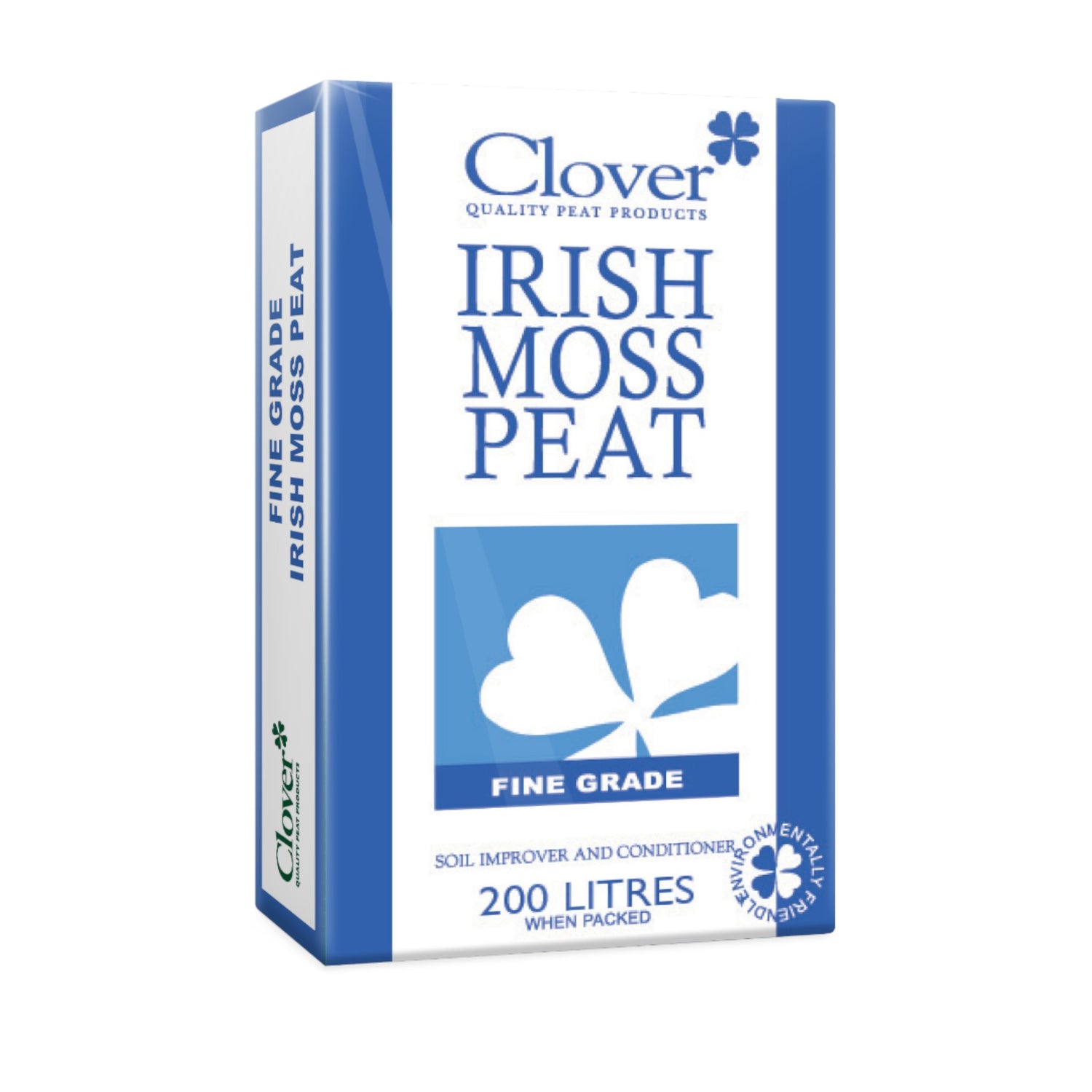
The Clover 200L FINE GRADE IRISH MOSS PEAT is a fine grade irish moss peat intended for professional substrate blending and propagation-media preparation requiring a finer peat grade.
Clover growing media are used across professional horticulture where growers need to select the substrate according to crop type, container size, irrigation practice and production stage.
Bag size: 200L.
Key benefits
Recommended applications
Use this product for professional substrate blending and propagation-media preparation requiring a finer peat grade. The exact crop response will depend on plant species, container volume, irrigation, feeding and the wider production environment.
Using professional growing media
Fill pots, trays or planting areas evenly without unnecessary compaction. After planting, irrigate according to the crop and allow the medium to settle naturally around the root system.
Monitor moisture rather than watering solely to a fixed timetable. Water demand changes with crop size, temperature, light, airflow and container volume.
Nutrition & crop management
Where a growing medium contains a starter nutrient charge, its duration will vary with crop demand and irrigation. Establish an appropriate ongoing feeding programme for longer-term production rather than assuming the original nutrient supply will last indefinitely.
For specialist crops, match pH, nutrition and irrigation to the plant's requirements and current production guidance.
Storage & handling
Store bags in a suitable area before use and protect opened material from contamination. Avoid unnecessary compaction during handling so the physical structure of the growing medium is maintained.
Clover 200L FINE GRADE IRISH MOSS PEAT product details
| Manufacturer | Clover |
|---|---|
| Product type | Fine grade Irish moss peat |
| Bag size | 200L |
| Primary application | professional substrate blending and propagation-media preparation requiring a finer peat grade |
Clover 200L FINE GRADE IRISH MOSS PEAT FAQs
What is Irish moss peat used for?
It is a raw growing-media component used for professional substrate blending, growing-media preparation and other appropriate horticultural applications. What grade is this peat?
This is the fine grade version. Select the grade according to the structure required in the finished growing medium. Is this a complete ready-to-use fertilised compost?
It is sold as Irish moss peat rather than being described here as a complete crop-specific fertilised compost. Build or select the final growing medium according to the crop requirements. How much growing medium is in the bag?
This product is supplied in a 200L bag. Should the compost be compressed firmly into pots?
Avoid excessive compaction. Fill consistently and settle the medium sufficiently to support the plant while maintaining appropriate pore space. How often should plants be watered?
Water according to crop demand and substrate moisture. Requirements vary with plant size, container volume and environmental conditions.
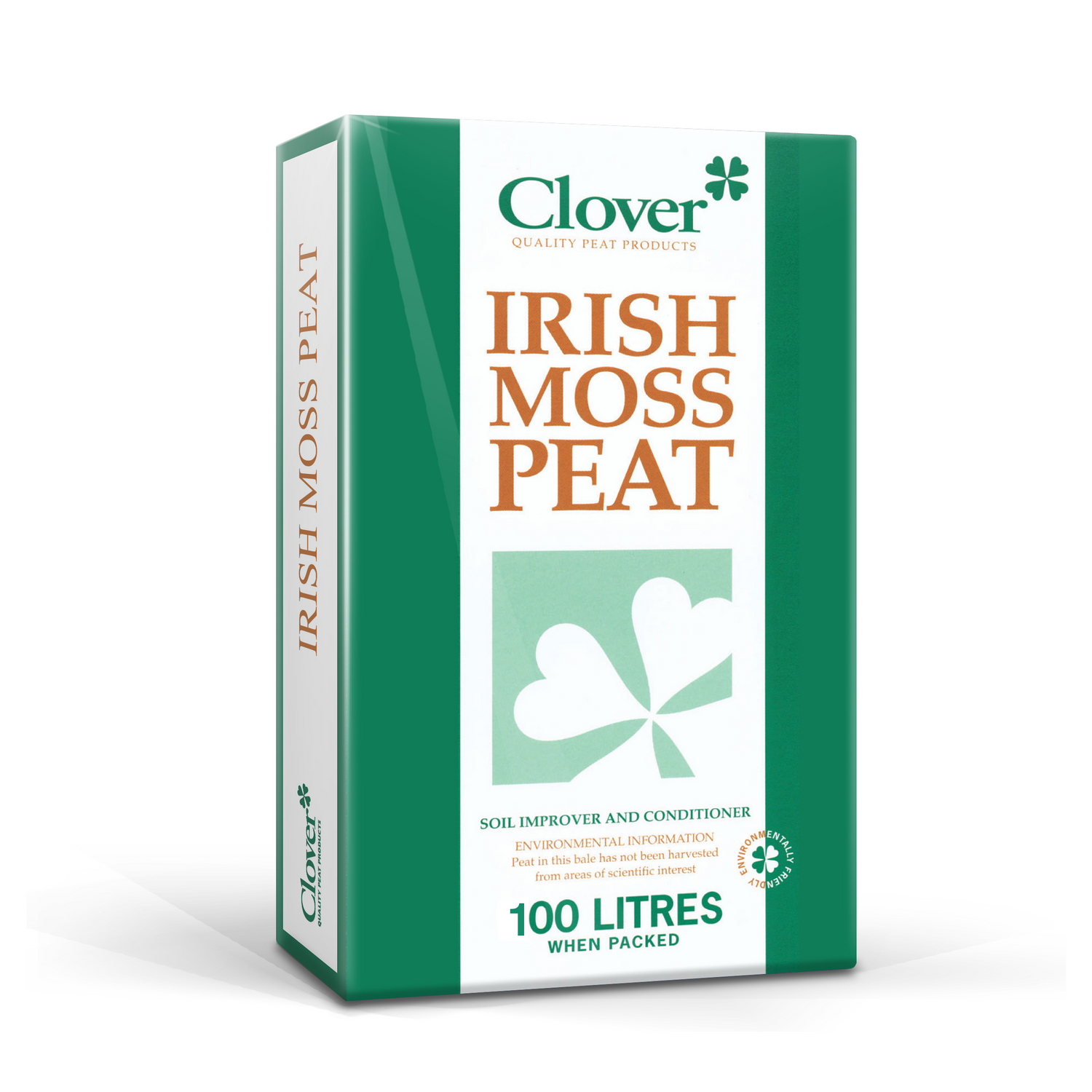
The Clover 100L GENERAL GRADE IRISH MOSS PEAT is a general grade irish moss peat intended for professional substrate blending, soil improvement and growing-media preparation.
Clover growing media are used across professional horticulture where growers need to select the substrate according to crop type, container size, irrigation practice and production stage.
Bag size: 100L.
Key benefits
Recommended applications
Use this product for professional substrate blending, soil improvement and growing-media preparation. The exact crop response will depend on plant species, container volume, irrigation, feeding and the wider production environment.
Using professional growing media
Fill pots, trays or planting areas evenly without unnecessary compaction. After planting, irrigate according to the crop and allow the medium to settle naturally around the root system.
Monitor moisture rather than watering solely to a fixed timetable. Water demand changes with crop size, temperature, light, airflow and container volume.
Nutrition & crop management
Where a growing medium contains a starter nutrient charge, its duration will vary with crop demand and irrigation. Establish an appropriate ongoing feeding programme for longer-term production rather than assuming the original nutrient supply will last indefinitely.
For specialist crops, match pH, nutrition and irrigation to the plant's requirements and current production guidance.
Storage & handling
Store bags in a suitable area before use and protect opened material from contamination. Avoid unnecessary compaction during handling so the physical structure of the growing medium is maintained.
Clover 100L GENERAL GRADE IRISH MOSS PEAT product details
| Manufacturer | Clover |
|---|---|
| Product type | General grade Irish moss peat |
| Bag size | 100L |
| Primary application | professional substrate blending, soil improvement and growing-media preparation |
Clover 100L GENERAL GRADE IRISH MOSS PEAT FAQs
What is Irish moss peat used for?
It is a raw growing-media component used for professional substrate blending, growing-media preparation and other appropriate horticultural applications. What grade is this peat?
This is the general grade version. Select the grade according to the structure required in the finished growing medium. Is this a complete ready-to-use fertilised compost?
It is sold as Irish moss peat rather than being described here as a complete crop-specific fertilised compost. Build or select the final growing medium according to the crop requirements. How much growing medium is in the bag?
This product is supplied in a 100L bag. Should the compost be compressed firmly into pots?
Avoid excessive compaction. Fill consistently and settle the medium sufficiently to support the plant while maintaining appropriate pore space. How often should plants be watered?
Water according to crop demand and substrate moisture. Requirements vary with plant size, container volume and environmental conditions.
£12.73
Unit price per£12.73
Unit price perVan der Knaap Peat-Reduced Nursery Stock 70L is a professional peat-reduced growing medium developed for container-grown shrubs, trees and herbaceous perennials.
A nursery stock growing medium for container production and growing-on of established young plants.
Supplied in a 70L bag, with 39 bags per full pallet.
Key benefits
Where to use this growing medium
A nursery stock growing medium for container production and growing-on of established young plants. Select the formulation to match the crop, container volume and intended production period.
Van der Knaap develops peat-reduced and peat-free growing media for professional horticulture. These categories are distinct: peat-reduced is not peat-free.
Irrigation & root-zone management
Longer production cycles need regular monitoring of nutrition, moisture and substrate structure.
Fill containers consistently without unnecessary compaction. Monitor moisture through the root zone and adjust watering according to crop size, weather, pot volume and the substrate's behaviour.
Feeding & crop management
Set nutrient inputs according to crop demand, irrigation water and the growing-medium analysis. The exact nutrient charge, pH and EC for this formulation should be checked on the current product specification before establishing a crop-specific feeding programme.
Commercial supply & handling
Supplied individually in 70L bags. A full pallet contains 39 bags. Store unopened bags appropriately and protect opened substrate from contamination.
Van der Knaap Peat-Reduced Nursery Stock 70L product details
| Manufacturer | Van der Knaap |
|---|---|
| Range | Peat-Reduced |
| Growing-medium type | Nursery Stock |
| Bag volume | 70L |
| Selling quantity | 1 bag |
| Pallet quantity | 39 bags |
| Primary use | container-grown shrubs, trees and herbaceous perennials |
Van der Knaap Peat-Reduced Nursery Stock 70L FAQs
What is this blend intended for?
A nursery stock growing medium for container production and growing-on of established young plants. What is the difference between peat-free and peat-reduced?
Peat-free growing media contain no peat. Peat-reduced growing media still contain some peat, alongside other substrate components. How should I manage watering?
Longer production cycles need regular monitoring of nutrition, moisture and substrate structure. Can I use it for shrubs and perennials?
Yes. It is intended for nursery stock, including suitable container-grown shrubs and perennials. Is this supplied by the bag or pallet?
It is sold as one 70L bag. A full pallet contains 39 bags. Will I need to adjust feeding?
Possibly. Monitor crop response and the growing medium and adjust nutrition to the crop, water quality and production stage rather than assuming one feeding programme suits every blend.
Reliable performance, every time you pot up.
Our range of professional growing media is curated for commercial growers who need consistency, quality and results. Whether you're raising plugs, potting on, or prepping for retail, we supply peat-free, peat-reduced and specialist blends from brands that deliver time and time again.
From propagation blends to structured composts for containers and baskets, each product is selected for its performance in real-world growing environments—tested in-house and trusted by professionals.
Available in trade-friendly volumes and formats, with dependable supply when you need it.
Key Features:
• Peat-free and traditional blends available
• Trusted brands like Clover and Pure Harvest
• Suitable for propagation, bedding, baskets, and more
• Bulk and pallet quantities available for trade customers
Apply for a trade account today and get access to premium growing media at competitive wholesale prices.