
What is this product used for?
Connecting compatible hose to a quick-coupling system.

Commercial Products
Commercial Products
 Professional Growing Media
 Plant Nutrition
 Plant Health
 Sprayers & Protective Clothing
 Pots, Planters & Trays
 Propagation
 Baskets & Planters
 Fabrics & Netting
 Environment
 Plant Lighting
 Irrigation
 Plant Support & Tree Care
 Equipment
 Tools
 Plant Labels
 Packaging
 Lawn Care
 Clearance
Retail Products
Retail Products
 Growing Media
 Plant Nutrition
 Plant Health
 Pots, Planters & Tanks
 Propagation
 Baskets & Planters
 Fabrics & Netting
 Environment
 Plant Lighting
 Plant Support
 Equipment
 Tools
364 products
364 products
Sort by:
£4.25
Unit price per£4.25
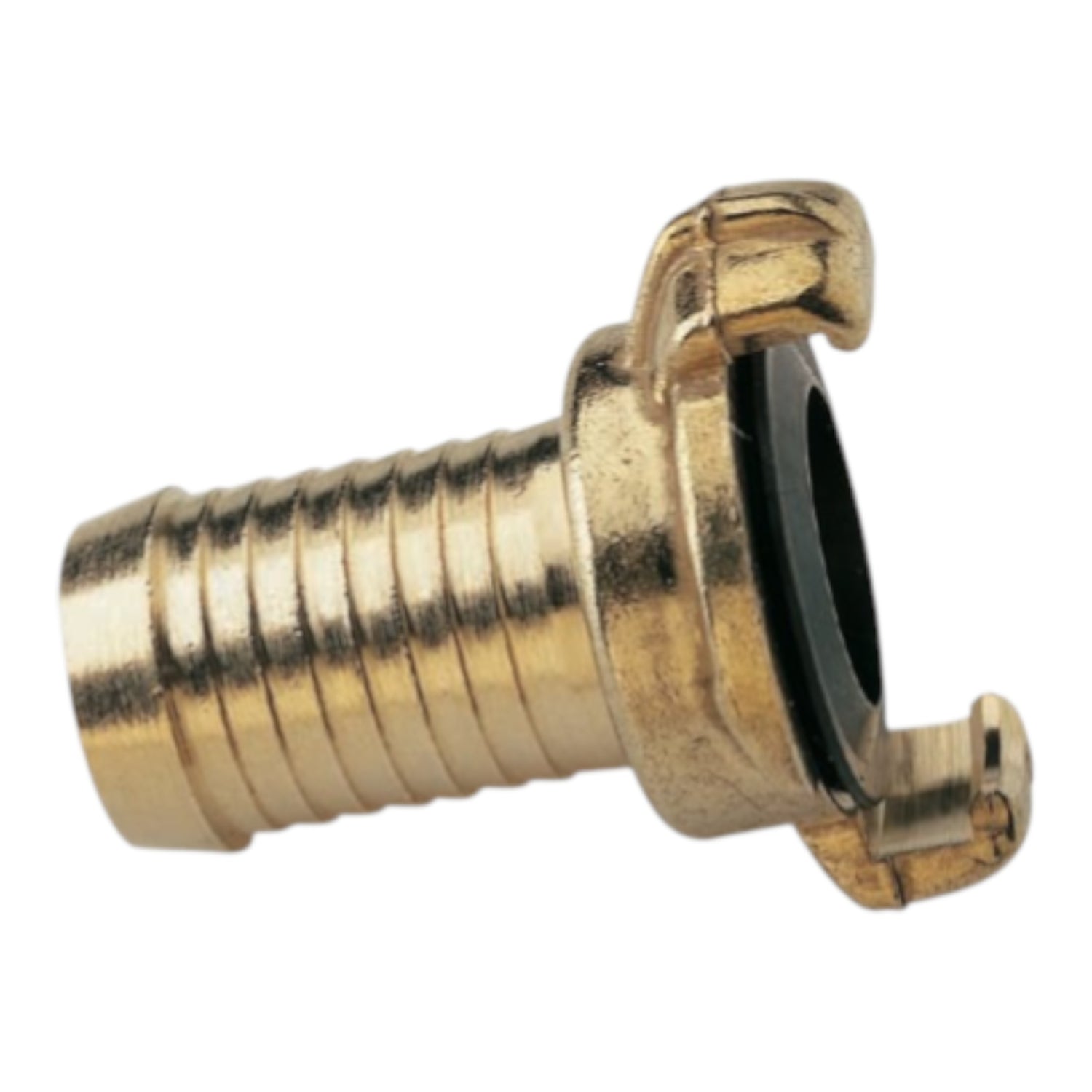
Unit price perThe Quick-Coupling Barbed Hose Fitting - Hose diameter 3/4" (19mm) is designed for connecting compatible hose to a quick-coupling system in professional horticultural, nursery, landscape and garden watering systems.
Correct hose fittings and storage equipment help keep watering systems organised, serviceable and easier to move between working areas.
Key benefits
Building serviceable hose connections
Match the fitting to the stated hose diameter and coupling system. Push barbed fittings fully into compatible hose and secure them using the appropriate method for the system.
Keep sealing faces and washers clean. If a connection leaks, inspect the seal, hose end and coupling condition rather than relying on excessive tightening.
Watering-system setup
Choose hose diameter and fittings according to the required flow, run length and available water pressure. Long hose runs and restrictive fittings can reduce pressure and flow at the watering lance or outlet.
Leak checks & maintenance
Inspect hose ends, seals, couplings and moving trolley parts periodically. Replace split hose, worn seals and damaged fittings rather than accepting persistent leakage.
Storage
Store hose and fittings clean and protected from unnecessary physical damage. Avoid leaving hose tightly kinked or under tension around fittings during storage.
Quick-Coupling Barbed Hose Fitting - Hose diameter 3/4" (19mm) product details
| Product type | Quick-Coupling Barbed Hose Fitting |
|---|---|
| Primary use | connecting compatible hose to a quick-coupling system |
| Source designation | Quick-Coupling Barbed Hose Fitting - Hose diameter 3/4" (19mm) |
| Application | Professional horticultural and garden watering systems |
Quick-Coupling Barbed Hose Fitting - Hose diameter 3/4" (19mm) FAQs
What is this product used for?
Connecting compatible hose to a quick-coupling system. How do I check compatibility?
Match the stated hose diameter, fitting type and coupling system to the equipment already in use. Can different hose diameters use the same fitting?
Not unless the fitting is specifically designed for those sizes. Use the stated compatible diameter. What should I check if a hose connection leaks?
Inspect the hose end, seal, washer and coupling surfaces and replace damaged components. Does hose length affect water delivery?
Yes. Longer runs and restrictive fittings can contribute to pressure loss and reduced flow. How should hose equipment be stored?
Keep it clean and protected and avoid severe kinks, crushing or continuous strain on fittings. Should fittings be inspected regularly?
Yes. Check seals, coupling faces and hose connections for wear or damage. Can hose trolleys be overloaded?
Use each component only within the capacity and application appropriate to the complete watering system.

The Hose Coupling Seal is designed for replacing the seal in a compatible hose coupling in professional horticultural, nursery, landscape and garden watering systems.
Correct hose fittings and storage equipment help keep watering systems organised, serviceable and easier to move between working areas.
Key benefits
Building serviceable hose connections
Match the fitting to the stated hose diameter and coupling system. Push barbed fittings fully into compatible hose and secure them using the appropriate method for the system.
Keep sealing faces and washers clean. If a connection leaks, inspect the seal, hose end and coupling condition rather than relying on excessive tightening.
Watering-system setup
Choose hose diameter and fittings according to the required flow, run length and available water pressure. Long hose runs and restrictive fittings can reduce pressure and flow at the watering lance or outlet.
Leak checks & maintenance
Inspect hose ends, seals, couplings and moving trolley parts periodically. Replace split hose, worn seals and damaged fittings rather than accepting persistent leakage.
Storage
Store hose and fittings clean and protected from unnecessary physical damage. Avoid leaving hose tightly kinked or under tension around fittings during storage.
Hose Coupling Seal product details
| Product type | Hose Coupling Seal |
|---|---|
| Primary use | replacing the seal in a compatible hose coupling |
| Source designation | Hose Coupling Seal |
| Application | Professional horticultural and garden watering systems |
Hose Coupling Seal FAQs
What is this product used for?
Replacing the seal in a compatible hose coupling. How do I check compatibility?
Match the stated hose diameter, fitting type and coupling system to the equipment already in use. Can different hose diameters use the same fitting?
Not unless the fitting is specifically designed for those sizes. Use the stated compatible diameter. What should I check if a hose connection leaks?
Inspect the hose end, seal, washer and coupling surfaces and replace damaged components. Does hose length affect water delivery?
Yes. Longer runs and restrictive fittings can contribute to pressure loss and reduced flow. How should hose equipment be stored?
Keep it clean and protected and avoid severe kinks, crushing or continuous strain on fittings. Should fittings be inspected regularly?
Yes. Check seals, coupling faces and hose connections for wear or damage. Can hose trolleys be overloaded?
Use each component only within the capacity and application appropriate to the complete watering system.
£229.60
Unit price per£229.60
Unit price perThe HydroPC 16mm Pressure Compensated Drip Line - 1.6L/h - 30cm Spacing - 400m is a 16mm pressure-compensated drip line supplied in a 400m roll, with stated emitter flow of 1.6L/h and 30cm emitter spacing.
It is designed for compatible professional nursery, greenhouse and horticultural irrigation systems where emitter spacing and flow are matched to crop layout and water demand.
Key benefits
Matching emitter spacing to the crop
This line uses 30cm emitter spacing. Select spacing according to crop layout, substrate or soil wetting pattern and the number of emitters required across the root zone.
Closer spacing increases the number of emitters operating over a given run length and therefore changes total zone flow demand.
Emitter flow & irrigation scheduling
The stated emitter flow is 1.6L/h. Irrigation duration should be based on crop demand, root-zone volume, weather and actual system output rather than a fixed run time.
Pressure compensation is intended to support more consistent emitter performance within the product operating conditions, but the complete system still needs appropriate pressure, filtration and hydraulic design.
Planning irrigation zones
Calculate the number of operating emitters or outlets and total flow demand before finalising a zone. Long runs, elevation changes and undersized supply pipework can affect pressure and irrigation uniformity.
Divide systems into manageable zones where necessary rather than exceeding the available water supply or the practical hydraulic capacity of the installation.
Filtration, flushing & commissioning
Use filtration appropriate to the water source and emitter waterways. Flush new lines before routine use where appropriate, then run the system and inspect representative outlets for expected delivery.
Maintain filters and flush lines according to water quality and system requirements. Investigate blocked emitters, leaks or damaged pipe promptly.
Installation & storage
Route lines without kinking or crushing and protect them from sharp edges and traffic. Store unused coils clean and protected from physical damage before installation.
HydroPC 16mm Pressure Compensated Drip Line - 1.6L/h - 30cm Spacing - 400m product details
| Product | HydroPC Drip Line |
|---|---|
| Pipe size | 16mm |
| Roll length | 400m |
| Stated emitter flow | 1.6L/h |
| Emitter spacing | 30cm |
| Pressure compensated | Yes |
HydroPC 16mm Pressure Compensated Drip Line - 1.6L/h - 30cm Spacing - 400m FAQs
How long is the supplied roll?
The supplied roll length is 400m. What spacing is stated?
The stated outlet/emitter spacing is 30cm. What emitter flow is stated?
The stated emitter flow is 1.6L/h. How do I know how much water the zone requires?
Calculate the number of operating emitters or outlets and their flow, then compare total demand with the available water supply and hydraulic design. Is filtration important?
Yes. Suitable filtration helps protect small emitter waterways and maintain irrigation uniformity. Should new irrigation lines be flushed?
Flush and commission lines as appropriate to the system before relying on them for crop irrigation. Can very long runs affect uniformity?
Yes. Run length, elevation, pipe size, total flow and pressure all influence system performance. How should the line be installed?
Avoid kinks, crushing and sharp edges and protect the line from traffic or other physical damage. How should irrigation performance be checked?
Inspect and, where useful, measure output at representative points across the zone and investigate meaningful differences.
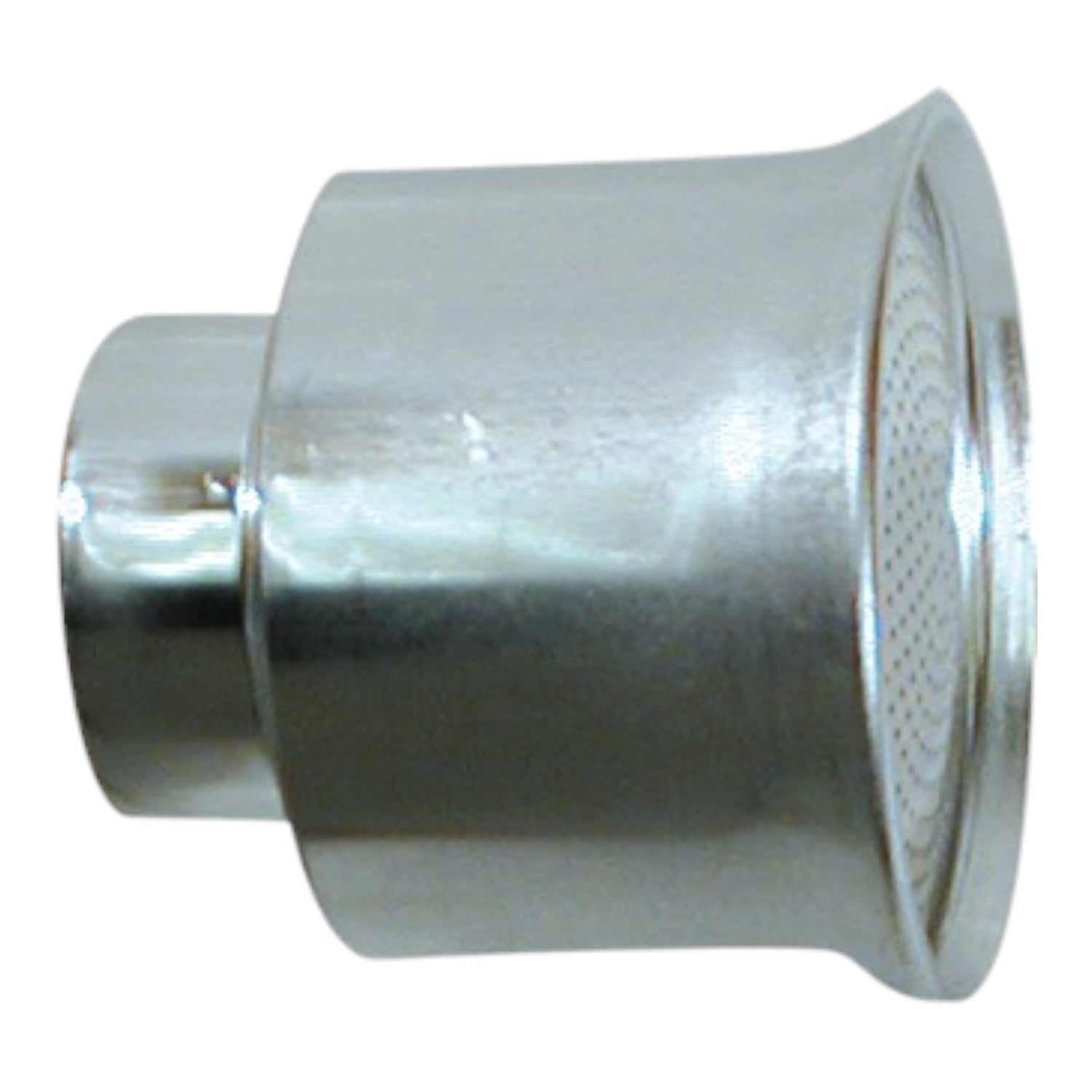
The GEKA Large Alloy Rose 3/4" Female STANDARD is a GEKA watering rose designed for producing a dispersed watering pattern from a compatible lance or 3/4-inch fitting.
Professional hand watering allows growers to direct water where it is needed and adjust technique to the crop, container size and growing environment.
Key benefits
Choosing & maintaining a watering rose
Fit the rose only to a compatible lance or fitting. Select the watering pattern to suit the crop and avoid using excessive pressure that can disturb growing media, seedlings or delicate foliage.
Keep rose openings clean and remove mineral or debris build-up if the watering pattern becomes uneven.
Watering crops effectively
Water demand changes with crop size, container volume, substrate, temperature, light and airflow. Check the crop and growing medium rather than applying the same volume automatically to every plant.
Where possible, water evenly and allow appropriate drainage, adjusting frequency and volume to the crop rather than compensating for poor irrigation uniformity with excessive water.
Care & maintenance
Keep connections, valves and rose openings clean. Inspect seals and threaded fittings periodically and replace worn parts when leakage or poor operation develops.
GEKA Large Alloy Rose 3/4" Female STANDARD product details
| Brand | GEKA |
|---|---|
| Product type | Watering rose |
| Primary use | producing a dispersed watering pattern from a compatible lance or 3/4-inch fitting |
| Connection | 3/4" |
| Rose pattern | Standard |
GEKA Large Alloy Rose 3/4" Female STANDARD FAQs
What connection size is stated?
The stated connection is 3/4". Check compatibility with your existing fittings before ordering. What is a watering rose used for?
It breaks the water stream into a broader pattern for gentler, more even hand watering. How do I stop the rose pattern becoming uneven?
Keep the openings clean and remove debris or mineral deposits when required. Should I always use maximum water pressure?
No. Use enough pressure for an even pattern without disturbing the growing medium or damaging delicate plants.

£17.50
Unit price per£17.50
Unit price perCover larger growing areas with fewer refills using this 8 litre pressure sprayer with application lance, adjustable spray nozzle and shoulder strap.
The AquaKing 8L Pressure Sprayer is a practical choice for growers who regularly apply foliar feeds, plant treatments or water across larger groups of plants. Its generous 8 litre tank provides plenty of working capacity while remaining portable enough to carry around greenhouses, nurseries, grow rooms and gardens.
A hand-operated pump pressurises the tank, allowing you to spray through the flexible hose and application lance without continuously pumping. The adjustable nozzle can be changed from a concentrated jet through to a fine mist, giving you control over the way liquid is applied.
An adjustable shoulder strap makes the sprayer easier to carry while working, while the lockable spray handle is particularly useful during longer applications where holding the trigger continuously would quickly become tiring.
Why choose the AquaKing 8L Pressure Sprayer?
Ideal for foliar feeding and plant treatments
With its 8 litre capacity, hose and application lance, this AquaKing pressure sprayer is particularly useful when treating more than a handful of plants. The lance lets you work around foliage and reach further into the canopy, including areas that can be awkward to cover with a small hand-held trigger sprayer.
For foliar feeding, the nozzle can be adjusted towards a fine mist to achieve controlled coverage across leaf surfaces. The adjustable output also gives the sprayer the versatility needed for general plant watering and other compatible liquid applications.
The combination of a larger tank and shoulder strap makes the 8L version particularly well suited to commercial growing areas, greenhouses and larger indoor gardens where a smaller spray bottle would require frequent refilling.
How to use the AquaKing 8L Pressure Sprayer
Add the required liquid to the tank, using the graduated markings to help measure the volume. Leave sufficient space for the tank to be pressurised and secure the pump assembly firmly before use.
Operate the pump to build pressure inside the tank. Once pressurised, use the trigger on the application lance to begin spraying and adjust the nozzle until you achieve the required spray pattern.
When applying foliar feeds or plant treatment products, always follow the application rate and safety instructions supplied with the product being used. Avoid mixing products in the sprayer unless their instructions specifically allow them to be combined.
After use, release the pressure using the pressure-release valve. Empty the sprayer appropriately and rinse the tank, hose, lance and nozzle with clean water. Running clean water through the lance helps prevent residues drying inside the nozzle and causing blockages.
AquaKing 8L Pressure Sprayer specifications
| Brand | AquaKing |
|---|---|
| Product type | Manual pressure sprayer |
| Tank capacity | 8 litres |
| Spray adjustment | Adjustable from concentrated jet to fine mist |
| Application lance | Yes |
| Trigger lock | Yes |
| Pressure-release valve | Yes |
| Shoulder strap | Adjustable |
| Tank markings | Graduated volume scale |
| Height | 57cm |
| Diameter | 18cm |
| Weight | Approx. 1.3kg |
| Typical applications | Foliar feeding, plant treatments, general spraying & plant watering |
| Outer case quantity | 6 |
AquaKing 8L Pressure Sprayer FAQs
What is the capacity of the AquaKing Pressure Sprayer?
This model has an 8 litre tank, making it particularly useful for larger growing areas where a smaller hand sprayer would need frequent refilling.
Can the AquaKing 8L Pressure Sprayer produce a fine mist?
Yes. The adjustable nozzle can be changed from a concentrated jet through to a fine mist, allowing the spray pattern to be adapted to different applications.
Is the AquaKing 8L Sprayer suitable for foliar feeding?
Yes. The adjustable nozzle and application lance make it well suited to foliar feeding, allowing spray to be directed around plant canopies and across leaf surfaces.
Does the AquaKing 8L Pressure Sprayer have a shoulder strap?
Yes. It has an adjustable shoulder strap to make the sprayer easier to carry while moving around the growing area.
Can I lock the AquaKing sprayer trigger on?
Yes. The spray handle can be locked for continuous spraying, reducing the need to hold the trigger throughout longer applications.
Does the AquaKing 8L Sprayer have a pressure-release valve?
Yes. The 8 litre model incorporates a pressure-release valve so pressure can be released from the tank after spraying.
How big is the AquaKing 8L Pressure Sprayer?
The 8 litre model measures approximately 57cm high and 18cm in diameter, with an empty weight of approximately 1.3kg.
How should I clean the AquaKing Pressure Sprayer?
Empty the sprayer after use and rinse the tank thoroughly with clean water. Run clean water through the hose, lance and nozzle as well, particularly after using foliar feeds or plant treatment products, to reduce residue build-up and nozzle blockages.
£0.34
Unit price per£0.34
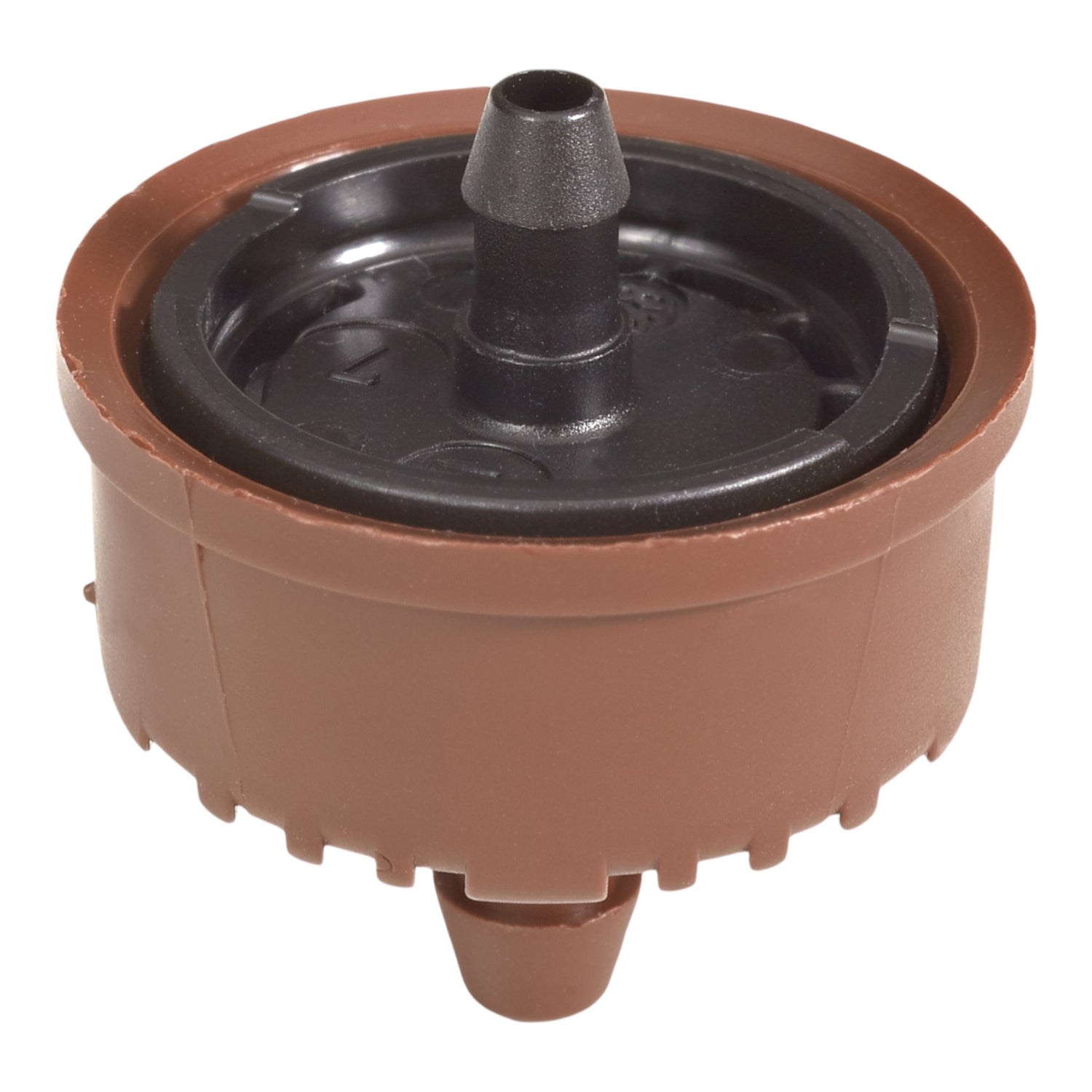
Unit price perThe Supertif Non-Drain Dripper - 7.8L/h Straight Conic Outlet is a professional irrigation dripper with a stated nominal flow of 7.8L/h and a straight conic outlet configuration.
It is intended for compatible nursery, greenhouse and container-crop irrigation systems where individual emitters are selected as part of the complete hydraulic design.
Key benefits
Selecting dripper flow rate
The stated nominal flow for this model is 7.8L/h. Select emitter flow according to crop water demand, container volume, substrate, irrigation frequency and the number of emitters serving each plant.
A higher nominal flow is not automatically better. Short irrigation events, small containers or low-retention substrates may require a different strategy from large nursery stock or longer irrigation zones.
Outlet configuration & installation
This version uses a straight conic outlet. Match the outlet to the intended microtube, stake or downstream connection and use compatible insertion tools where required. Do not force mismatched tube or fittings onto the emitter.
Route downstream tube without kinks and avoid side-loading the dripper connection. Secure stakes or outlets so water is delivered consistently to the intended root-zone position.
Non-drain irrigation behaviour
A non-drain dripper should be considered as part of the complete irrigation zone. Line drainage, elevation changes, start-up behaviour and pressure conditions can influence how quickly individual containers receive water at the beginning and end of an irrigation cycle.
Where highly uniform short pulses are required, verify actual system behaviour across representative positions rather than relying only on the emitter's nominal flow figure.
Pressure, filtration & uniformity
Emitter performance depends on suitable operating pressure and clean water. Use filtration appropriate to the water source and irrigation system and monitor pressure where necessary across longer or more complex zones.
Periodically collect and compare output from representative emitters. Differences can indicate blockage, pressure variation, damaged pipework or installation issues.
Maintenance
Flush irrigation lines according to water quality and system requirements. Inspect emitters and downstream components for blockage or damage and replace components that cannot be restored to reliable operation.
Supertif Non-Drain Dripper - 7.8L/h Straight Conic Outlet product details
| Product | Supertif Non-Drain Dripper |
|---|---|
| Nominal flow | 7.8L/h |
| Outlet | Straight Conic Outlet |
| Application | Professional nursery, greenhouse and container irrigation |
Supertif Non-Drain Dripper - 7.8L/h Straight Conic Outlet FAQs
What is the stated flow rate?
The stated nominal flow is 7.8L/h. What outlet does this version use?
This version is described as a straight conic outlet. What does non-drain mean for irrigation management?
It describes the dripper format, but actual line drainage and start/stop behaviour still depend on the complete installation, elevation and pressure conditions. Will every dripper deliver exactly the nominal flow in any system?
No. Actual delivery should be verified under the operating pressure and layout of the complete irrigation system. How do I choose the right flow rate?
Consider crop demand, container volume, substrate, irrigation frequency, zone duration and the number of emitters per plant. Is filtration important?
Yes. Suitable filtration and line maintenance help reduce emitter blockage and loss of irrigation uniformity. How can I check irrigation uniformity?
Collect and compare output from representative emitters across the zone and investigate meaningful differences. Can I use any microtube or stake with this dripper?
Confirm compatibility with the outlet configuration and downstream components before installation. What maintenance is required?
Flush lines as appropriate, inspect emitters for blockage or damage and maintain filters and upstream irrigation equipment.
£0.42
Unit price per£0.42
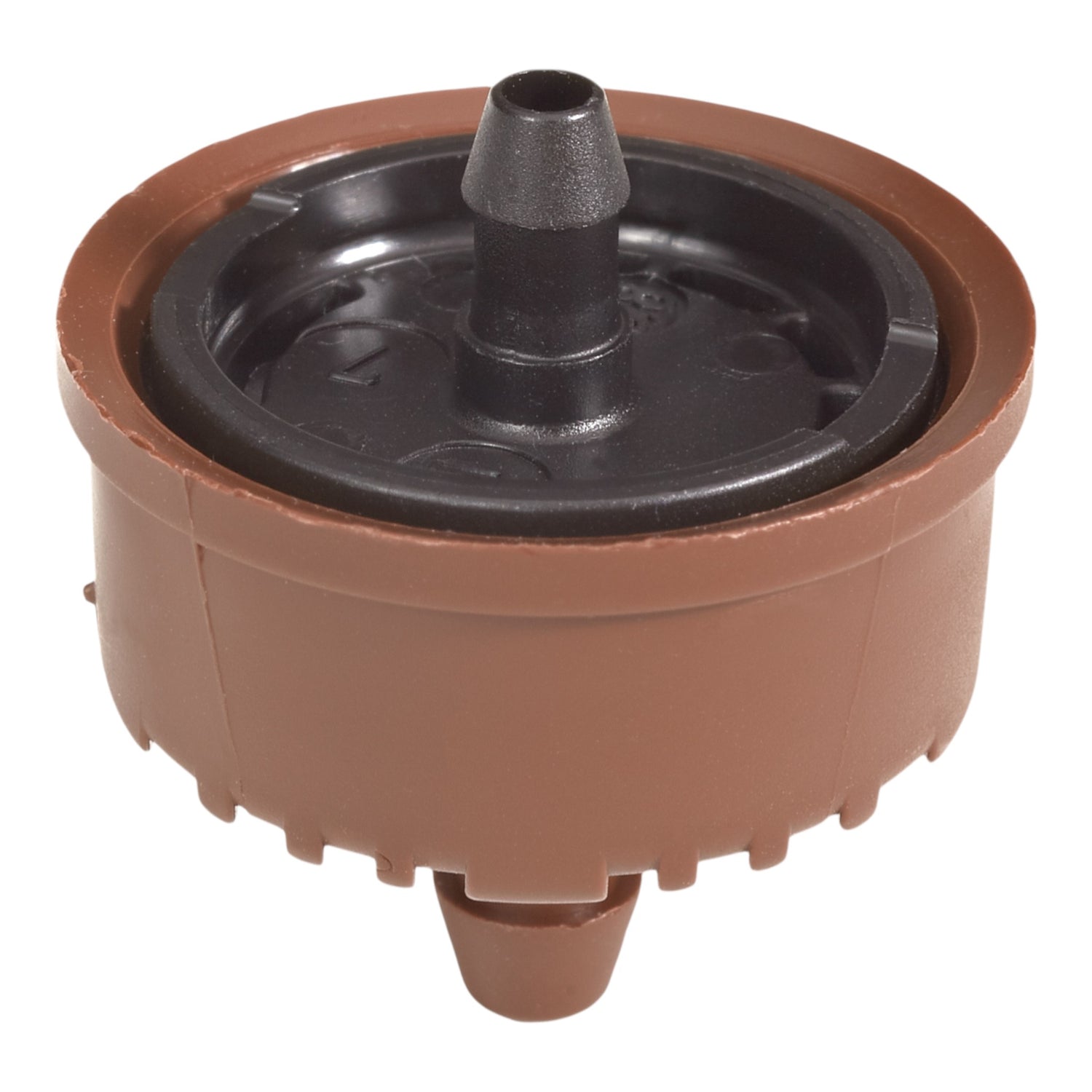
Unit price perThe Supertif Non-Drain Dripper - 3.8L/h Straight Conic Outlet is a professional irrigation dripper with a stated nominal flow of 3.8L/h and a straight conic outlet configuration.
It is intended for compatible nursery, greenhouse and container-crop irrigation systems where individual emitters are selected as part of the complete hydraulic design.
Key benefits
Selecting dripper flow rate
The stated nominal flow for this model is 3.8L/h. Select emitter flow according to crop water demand, container volume, substrate, irrigation frequency and the number of emitters serving each plant.
A higher nominal flow is not automatically better. Short irrigation events, small containers or low-retention substrates may require a different strategy from large nursery stock or longer irrigation zones.
Outlet configuration & installation
This version uses a straight conic outlet. Match the outlet to the intended microtube, stake or downstream connection and use compatible insertion tools where required. Do not force mismatched tube or fittings onto the emitter.
Route downstream tube without kinks and avoid side-loading the dripper connection. Secure stakes or outlets so water is delivered consistently to the intended root-zone position.
Non-drain irrigation behaviour
A non-drain dripper should be considered as part of the complete irrigation zone. Line drainage, elevation changes, start-up behaviour and pressure conditions can influence how quickly individual containers receive water at the beginning and end of an irrigation cycle.
Where highly uniform short pulses are required, verify actual system behaviour across representative positions rather than relying only on the emitter's nominal flow figure.
Pressure, filtration & uniformity
Emitter performance depends on suitable operating pressure and clean water. Use filtration appropriate to the water source and irrigation system and monitor pressure where necessary across longer or more complex zones.
Periodically collect and compare output from representative emitters. Differences can indicate blockage, pressure variation, damaged pipework or installation issues.
Maintenance
Flush irrigation lines according to water quality and system requirements. Inspect emitters and downstream components for blockage or damage and replace components that cannot be restored to reliable operation.
Supertif Non-Drain Dripper - 3.8L/h Straight Conic Outlet product details
| Product | Supertif Non-Drain Dripper |
|---|---|
| Nominal flow | 3.8L/h |
| Outlet | Straight Conic Outlet |
| Application | Professional nursery, greenhouse and container irrigation |
Supertif Non-Drain Dripper - 3.8L/h Straight Conic Outlet FAQs
What is the stated flow rate?
The stated nominal flow is 3.8L/h. What outlet does this version use?
This version is described as a straight conic outlet. What does non-drain mean for irrigation management?
It describes the dripper format, but actual line drainage and start/stop behaviour still depend on the complete installation, elevation and pressure conditions. Will every dripper deliver exactly the nominal flow in any system?
No. Actual delivery should be verified under the operating pressure and layout of the complete irrigation system. How do I choose the right flow rate?
Consider crop demand, container volume, substrate, irrigation frequency, zone duration and the number of emitters per plant. Is filtration important?
Yes. Suitable filtration and line maintenance help reduce emitter blockage and loss of irrigation uniformity. How can I check irrigation uniformity?
Collect and compare output from representative emitters across the zone and investigate meaningful differences. Can I use any microtube or stake with this dripper?
Confirm compatibility with the outlet configuration and downstream components before installation. What maintenance is required?
Flush lines as appropriate, inspect emitters for blockage or damage and maintain filters and upstream irrigation equipment.
£61.61
Unit price per£61.61
Unit price perThe PGV 1.5" Solenoid Irrigation Valve with Flow Control is designed for automated control of compatible professional irrigation zones.
Solenoid and pressure-regulating valves allow irrigation sections to be opened, closed or controlled as part of a correctly designed nursery, greenhouse, landscape or horticultural water system.
Key benefits
Automated irrigation-zone control
Use the valve to control a compatible irrigation zone from the appropriate controller or switching system. Size the valve and pipework for the required zone flow and available pressure, and install it in the correct flow direction.
Where flow control is provided, use it for appropriate adjustment and commissioning rather than as a substitute for correct hydraulic design.
Electrical compatibility
The stated electrical designation for this version is Controller/solenoid dependent. Confirm controller output, solenoid type and wiring requirements before connection. Do not apply an assumed voltage simply because another valve in the same irrigation system uses it.
Electrical installation in wet horticultural environments should use suitable connections and protection and should be carried out in accordance with the applicable installation requirements.
Installation & commissioning
Flush upstream pipework before final commissioning where appropriate. Install the valve with adequate access for service, support connected pipework and avoid transferring pipe strain into the valve body.
Pressurise the system gradually, check for leakage and confirm that the valve opens and closes correctly under normal controller operation.
Flow, pressure & filtration
Valve performance depends on the complete hydraulic system. Available pressure, flow demand, pipe size, elevation and downstream equipment all influence operation. Use filtration appropriate to the water source and the irrigation components being protected.
Maintenance & fault finding
If a valve fails to open, close or regulate correctly, isolate the system safely and check controller output, wiring, solenoid condition, debris, diaphragm or internal components as appropriate to the valve design. Replace damaged parts rather than forcing manual operation.
PGV 1.5" Solenoid Irrigation Valve with Flow Control product details
| Product type | PGV Solenoid Irrigation Valve |
|---|---|
| Valve size | 1.5" |
| Flow control | Yes |
| Jar-top format | No |
| Electrical designation | Controller/solenoid dependent |
| Application | Professional irrigation-zone control |
PGV 1.5" Solenoid Irrigation Valve with Flow Control FAQs
What size is this valve?
The stated valve size is 1.5". What is a solenoid irrigation valve used for?
It opens and closes an irrigation zone in response to a compatible electrical controller or switching system. Can I connect it to any irrigation controller?
No. Confirm the required solenoid voltage/type and controller output before connection. Does valve size alone determine how much water the zone can supply?
No. Available pressure, pipe sizing, valve characteristics, elevation and downstream flow demand all affect system performance. Should pipework be flushed before commissioning?
Yes where appropriate, to reduce the risk of installation debris entering the valve or downstream irrigation equipment. Is filtration important?
Yes. Suitable filtration can reduce debris-related problems in valves and downstream emitters. How should the valve be installed?
Follow the correct flow direction, support connected pipework and leave adequate access for servicing. What should I check if the valve will not open or close?
Safely check controller output, wiring, solenoid operation, water supply and internal contamination or damage as appropriate. Should the valve be leak-tested after installation?
Yes. Pressurise the system gradually and inspect the valve and connections before routine operation. Does this version include flow control?
Yes. The source product specification identifies this version as having flow control.
£3.75
Unit price per£3.75
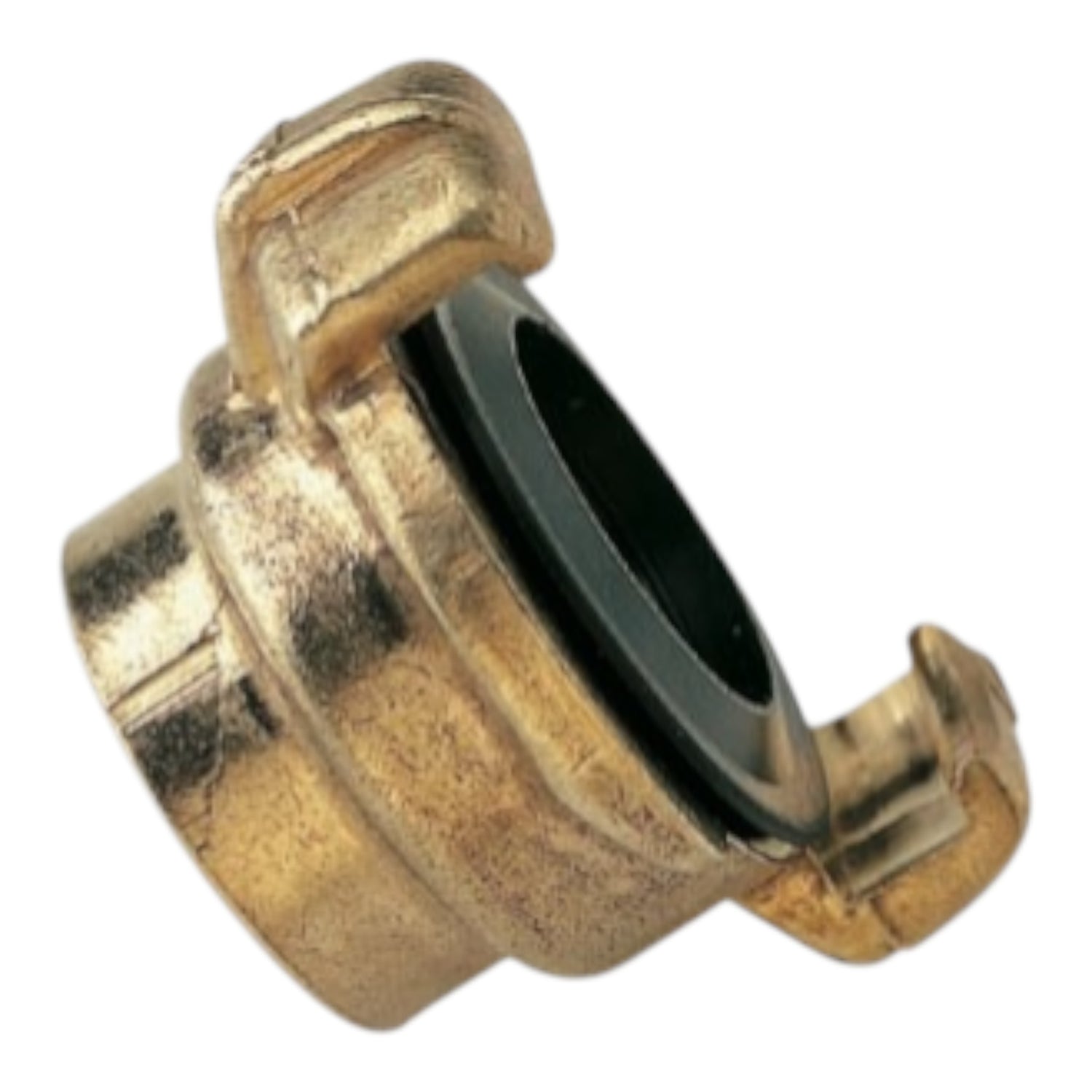
Unit price perThe Female Hose Coupling - Hose diameter 3/4" (19mm) is designed for connecting compatible hose using a female coupling in professional horticultural, nursery, landscape and garden watering systems.
Correct hose fittings and storage equipment help keep watering systems organised, serviceable and easier to move between working areas.
Key benefits
Building serviceable hose connections
Match the fitting to the stated hose diameter and coupling system. Push barbed fittings fully into compatible hose and secure them using the appropriate method for the system.
Keep sealing faces and washers clean. If a connection leaks, inspect the seal, hose end and coupling condition rather than relying on excessive tightening.
Watering-system setup
Choose hose diameter and fittings according to the required flow, run length and available water pressure. Long hose runs and restrictive fittings can reduce pressure and flow at the watering lance or outlet.
Leak checks & maintenance
Inspect hose ends, seals, couplings and moving trolley parts periodically. Replace split hose, worn seals and damaged fittings rather than accepting persistent leakage.
Storage
Store hose and fittings clean and protected from unnecessary physical damage. Avoid leaving hose tightly kinked or under tension around fittings during storage.
Female Hose Coupling - Hose diameter 3/4" (19mm) product details
| Product type | Female Hose Coupling |
|---|---|
| Primary use | connecting compatible hose using a female coupling |
| Source designation | Female Hose Coupling - Hose diameter 3/4" (19mm) |
| Application | Professional horticultural and garden watering systems |
Female Hose Coupling - Hose diameter 3/4" (19mm) FAQs
What is this product used for?
Connecting compatible hose using a female coupling. How do I check compatibility?
Match the stated hose diameter, fitting type and coupling system to the equipment already in use. Can different hose diameters use the same fitting?
Not unless the fitting is specifically designed for those sizes. Use the stated compatible diameter. What should I check if a hose connection leaks?
Inspect the hose end, seal, washer and coupling surfaces and replace damaged components. Does hose length affect water delivery?
Yes. Longer runs and restrictive fittings can contribute to pressure loss and reduced flow. How should hose equipment be stored?
Keep it clean and protected and avoid severe kinks, crushing or continuous strain on fittings. Should fittings be inspected regularly?
Yes. Check seals, coupling faces and hose connections for wear or damage. Can hose trolleys be overloaded?
Use each component only within the capacity and application appropriate to the complete watering system.
£3.83
Unit price per£3.83
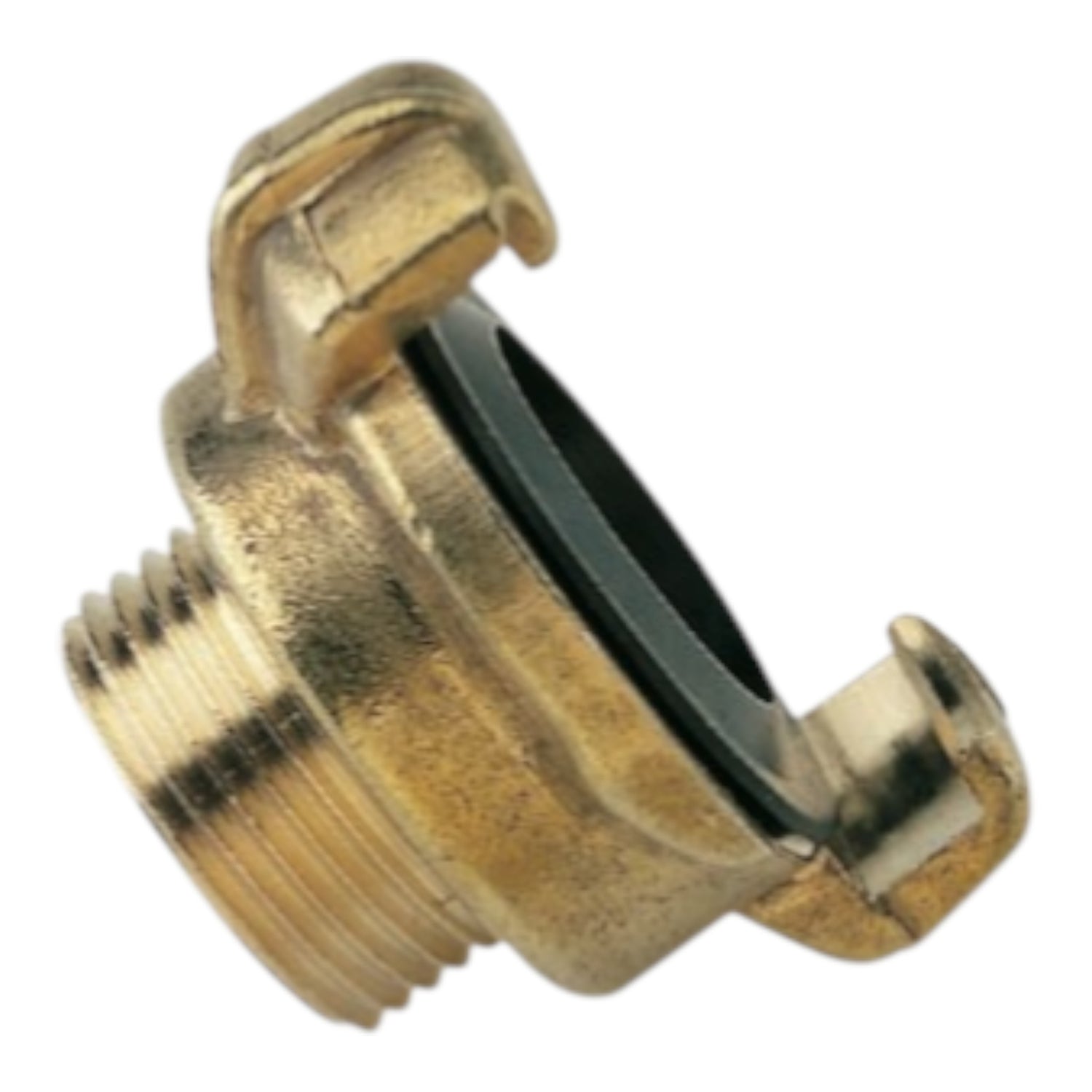
Unit price perThe Male Hose Coupling - Hose diameter 3/4" (19mm) is designed for connecting compatible hose using a male coupling in professional horticultural, nursery, landscape and garden watering systems.
Correct hose fittings and storage equipment help keep watering systems organised, serviceable and easier to move between working areas.
Key benefits
Building serviceable hose connections
Match the fitting to the stated hose diameter and coupling system. Push barbed fittings fully into compatible hose and secure them using the appropriate method for the system.
Keep sealing faces and washers clean. If a connection leaks, inspect the seal, hose end and coupling condition rather than relying on excessive tightening.
Watering-system setup
Choose hose diameter and fittings according to the required flow, run length and available water pressure. Long hose runs and restrictive fittings can reduce pressure and flow at the watering lance or outlet.
Leak checks & maintenance
Inspect hose ends, seals, couplings and moving trolley parts periodically. Replace split hose, worn seals and damaged fittings rather than accepting persistent leakage.
Storage
Store hose and fittings clean and protected from unnecessary physical damage. Avoid leaving hose tightly kinked or under tension around fittings during storage.
Male Hose Coupling - Hose diameter 3/4" (19mm) product details
| Product type | Male Hose Coupling |
|---|---|
| Primary use | connecting compatible hose using a male coupling |
| Source designation | Male Hose Coupling - Hose diameter 3/4" (19mm) |
| Application | Professional horticultural and garden watering systems |
Male Hose Coupling - Hose diameter 3/4" (19mm) FAQs
What is this product used for?
Connecting compatible hose using a male coupling. How do I check compatibility?
Match the stated hose diameter, fitting type and coupling system to the equipment already in use. Can different hose diameters use the same fitting?
Not unless the fitting is specifically designed for those sizes. Use the stated compatible diameter. What should I check if a hose connection leaks?
Inspect the hose end, seal, washer and coupling surfaces and replace damaged components. Does hose length affect water delivery?
Yes. Longer runs and restrictive fittings can contribute to pressure loss and reduced flow. How should hose equipment be stored?
Keep it clean and protected and avoid severe kinks, crushing or continuous strain on fittings. Should fittings be inspected regularly?
Yes. Check seals, coupling faces and hose connections for wear or damage. Can hose trolleys be overloaded?
Use each component only within the capacity and application appropriate to the complete watering system.
£3.70
Unit price per£3.70
Unit price perThe Male Hose Coupling - Hose diameter 1/2" (12.5mm) is designed for connecting compatible hose using a male coupling in professional horticultural, nursery, landscape and garden watering systems.
Correct hose fittings and storage equipment help keep watering systems organised, serviceable and easier to move between working areas.
Key benefits
Building serviceable hose connections
Match the fitting to the stated hose diameter and coupling system. Push barbed fittings fully into compatible hose and secure them using the appropriate method for the system.
Keep sealing faces and washers clean. If a connection leaks, inspect the seal, hose end and coupling condition rather than relying on excessive tightening.
Watering-system setup
Choose hose diameter and fittings according to the required flow, run length and available water pressure. Long hose runs and restrictive fittings can reduce pressure and flow at the watering lance or outlet.
Leak checks & maintenance
Inspect hose ends, seals, couplings and moving trolley parts periodically. Replace split hose, worn seals and damaged fittings rather than accepting persistent leakage.
Storage
Store hose and fittings clean and protected from unnecessary physical damage. Avoid leaving hose tightly kinked or under tension around fittings during storage.
Male Hose Coupling - Hose diameter 1/2" (12.5mm) product details
| Product type | Male Hose Coupling |
|---|---|
| Primary use | connecting compatible hose using a male coupling |
| Source designation | Male Hose Coupling - Hose diameter 1/2" (12.5mm) |
| Application | Professional horticultural and garden watering systems |
Male Hose Coupling - Hose diameter 1/2" (12.5mm) FAQs
What is this product used for?
Connecting compatible hose using a male coupling. How do I check compatibility?
Match the stated hose diameter, fitting type and coupling system to the equipment already in use. Can different hose diameters use the same fitting?
Not unless the fitting is specifically designed for those sizes. Use the stated compatible diameter. What should I check if a hose connection leaks?
Inspect the hose end, seal, washer and coupling surfaces and replace damaged components. Does hose length affect water delivery?
Yes. Longer runs and restrictive fittings can contribute to pressure loss and reduced flow. How should hose equipment be stored?
Keep it clean and protected and avoid severe kinks, crushing or continuous strain on fittings. Should fittings be inspected regularly?
Yes. Check seals, coupling faces and hose connections for wear or damage. Can hose trolleys be overloaded?
Use each component only within the capacity and application appropriate to the complete watering system.

£53.34
Unit price per£53.34
Unit price perThe GEKA 60cm Pro Spray Lance - 3/4" (19mm) 34 lpm is a GEKA professional watering lance designed for controlled hand watering of nursery crops, containers, beds and greenhouse plants.
Professional hand watering allows growers to direct water where it is needed and adjust technique to the crop, container size and growing environment.
Key benefits
Professional hand watering
Connect the lance to a compatible water supply and select a pressure and flow appropriate to the crop. Water the growing medium evenly while avoiding unnecessary runoff or physical disturbance.
After use, relieve pressure, inspect connections and store the lance so it is protected from accidental damage.
Watering crops effectively
Water demand changes with crop size, container volume, substrate, temperature, light and airflow. Check the crop and growing medium rather than applying the same volume automatically to every plant.
Where possible, water evenly and allow appropriate drainage, adjusting frequency and volume to the crop rather than compensating for poor irrigation uniformity with excessive water.
Care & maintenance
Keep connections, valves and rose openings clean. Inspect seals and threaded fittings periodically and replace worn parts when leakage or poor operation develops.
GEKA 60cm Pro Spray Lance - 3/4" (19mm) 34 lpm product details
| Brand | GEKA |
|---|---|
| Product type | Professional watering lance |
| Primary use | controlled hand watering of nursery crops, containers, beds and greenhouse plants |
| Length / reach | 60cm |
| Stated flow | 34 lpm |
| Connection | 3/4" |
GEKA 60cm Pro Spray Lance - 3/4" (19mm) 34 lpm FAQs
What is the stated length or reach?
The product title states 60cm. What flow rate is stated?
The stated flow is 34 lpm. Actual flow will also depend on the water supply, pressure and system configuration. What connection size is stated?
The stated connection is 3/4". Check compatibility with your existing fittings before ordering. What is a watering lance useful for?
It gives the operator controlled reach and direction when hand watering nursery crops, pots, beds and greenhouse plants. How should I choose the water flow?
Match flow and pressure to the crop and substrate, avoiding excessive runoff or disturbance. How should the lance be stored?
Relieve water pressure after use and store it where the lance, rose and fittings are protected from damage.

£44.72
Unit price per£44.72
Unit price perThe GEKA 90cm Metal Softrain Spray Lance - 3/4" (19mm) 51 lpm is a GEKA professional watering lance designed for controlled hand watering of nursery crops, containers, beds and greenhouse plants.
Professional hand watering allows growers to direct water where it is needed and adjust technique to the crop, container size and growing environment.
Key benefits
Professional hand watering
Connect the lance to a compatible water supply and select a pressure and flow appropriate to the crop. Water the growing medium evenly while avoiding unnecessary runoff or physical disturbance.
After use, relieve pressure, inspect connections and store the lance so it is protected from accidental damage.
Watering crops effectively
Water demand changes with crop size, container volume, substrate, temperature, light and airflow. Check the crop and growing medium rather than applying the same volume automatically to every plant.
Where possible, water evenly and allow appropriate drainage, adjusting frequency and volume to the crop rather than compensating for poor irrigation uniformity with excessive water.
Care & maintenance
Keep connections, valves and rose openings clean. Inspect seals and threaded fittings periodically and replace worn parts when leakage or poor operation develops.
GEKA 90cm Metal Softrain Spray Lance - 3/4" (19mm) 51 lpm product details
| Brand | GEKA |
|---|---|
| Product type | Professional watering lance |
| Primary use | controlled hand watering of nursery crops, containers, beds and greenhouse plants |
| Length / reach | 90cm |
| Stated flow | 51 lpm |
| Connection | 3/4" |
GEKA 90cm Metal Softrain Spray Lance - 3/4" (19mm) 51 lpm FAQs
What is the stated length or reach?
The product title states 90cm. What flow rate is stated?
The stated flow is 51 lpm. Actual flow will also depend on the water supply, pressure and system configuration. What connection size is stated?
The stated connection is 3/4". Check compatibility with your existing fittings before ordering. What is a watering lance useful for?
It gives the operator controlled reach and direction when hand watering nursery crops, pots, beds and greenhouse plants. How should I choose the water flow?
Match flow and pressure to the crop and substrate, avoiding excessive runoff or disturbance. How should the lance be stored?
Relieve water pressure after use and store it where the lance, rose and fittings are protected from damage.
£37.04
Unit price per£37.04
Unit price perThe GEKA 40cm Metal Softrain Spray Lance - 3/4" (19mm) 51 lpm is a GEKA professional watering lance designed for controlled hand watering of nursery crops, containers, beds and greenhouse plants.
Professional hand watering allows growers to direct water where it is needed and adjust technique to the crop, container size and growing environment.
Key benefits
Professional hand watering
Connect the lance to a compatible water supply and select a pressure and flow appropriate to the crop. Water the growing medium evenly while avoiding unnecessary runoff or physical disturbance.
After use, relieve pressure, inspect connections and store the lance so it is protected from accidental damage.
Watering crops effectively
Water demand changes with crop size, container volume, substrate, temperature, light and airflow. Check the crop and growing medium rather than applying the same volume automatically to every plant.
Where possible, water evenly and allow appropriate drainage, adjusting frequency and volume to the crop rather than compensating for poor irrigation uniformity with excessive water.
Care & maintenance
Keep connections, valves and rose openings clean. Inspect seals and threaded fittings periodically and replace worn parts when leakage or poor operation develops.
GEKA 40cm Metal Softrain Spray Lance - 3/4" (19mm) 51 lpm product details
| Brand | GEKA |
|---|---|
| Product type | Professional watering lance |
| Primary use | controlled hand watering of nursery crops, containers, beds and greenhouse plants |
| Length / reach | 40cm |
| Stated flow | 51 lpm |
| Connection | 3/4" |
GEKA 40cm Metal Softrain Spray Lance - 3/4" (19mm) 51 lpm FAQs
What is the stated length or reach?
The product title states 40cm. What flow rate is stated?
The stated flow is 51 lpm. Actual flow will also depend on the water supply, pressure and system configuration. What connection size is stated?
The stated connection is 3/4". Check compatibility with your existing fittings before ordering. What is a watering lance useful for?
It gives the operator controlled reach and direction when hand watering nursery crops, pots, beds and greenhouse plants. How should I choose the water flow?
Match flow and pressure to the crop and substrate, avoiding excessive runoff or disturbance. How should the lance be stored?
Relieve water pressure after use and store it where the lance, rose and fittings are protected from damage.
£40.78
Unit price per£40.78
Unit price perThe GEKA 120cm Metal Softrain Spray Lance - 3/4" (19mm) 51 lpm is a GEKA professional watering lance designed for controlled hand watering of nursery crops, containers, beds and greenhouse plants.
Professional hand watering allows growers to direct water where it is needed and adjust technique to the crop, container size and growing environment.
Key benefits
Professional hand watering
Connect the lance to a compatible water supply and select a pressure and flow appropriate to the crop. Water the growing medium evenly while avoiding unnecessary runoff or physical disturbance.
After use, relieve pressure, inspect connections and store the lance so it is protected from accidental damage.
Watering crops effectively
Water demand changes with crop size, container volume, substrate, temperature, light and airflow. Check the crop and growing medium rather than applying the same volume automatically to every plant.
Where possible, water evenly and allow appropriate drainage, adjusting frequency and volume to the crop rather than compensating for poor irrigation uniformity with excessive water.
Care & maintenance
Keep connections, valves and rose openings clean. Inspect seals and threaded fittings periodically and replace worn parts when leakage or poor operation develops.
GEKA 120cm Metal Softrain Spray Lance - 3/4" (19mm) 51 lpm product details
| Brand | GEKA |
|---|---|
| Product type | Professional watering lance |
| Primary use | controlled hand watering of nursery crops, containers, beds and greenhouse plants |
| Length / reach | 120cm |
| Stated flow | 51 lpm |
| Connection | 3/4" |
GEKA 120cm Metal Softrain Spray Lance - 3/4" (19mm) 51 lpm FAQs
What is the stated length or reach?
The product title states 120cm. What flow rate is stated?
The stated flow is 51 lpm. Actual flow will also depend on the water supply, pressure and system configuration. What connection size is stated?
The stated connection is 3/4". Check compatibility with your existing fittings before ordering. What is a watering lance useful for?
It gives the operator controlled reach and direction when hand watering nursery crops, pots, beds and greenhouse plants. How should I choose the water flow?
Match flow and pressure to the crop and substrate, avoiding excessive runoff or disturbance. How should the lance be stored?
Relieve water pressure after use and store it where the lance, rose and fittings are protected from damage.

£181.07
Unit price per£181.07
Unit price perThe Small Hose Trolley - Capacity 100m 1/2" (70m 3/4") is designed for storing, moving and dispensing compatible garden or horticultural hose in professional horticultural, nursery, landscape and garden watering systems.
Correct hose fittings and storage equipment help keep watering systems organised, serviceable and easier to move between working areas.
Key benefits
Hose storage & movement
A hose trolley keeps long hose runs coiled and mobile between watering areas. Do not exceed the stated hose capacity for the relevant diameter, as larger-diameter hose occupies substantially more reel space.
Wind hose evenly across the reel and avoid storing it with severe kinks or twists. Drain excess water where appropriate before long-term storage.
Watering-system setup
Choose hose diameter and fittings according to the required flow, run length and available water pressure. Long hose runs and restrictive fittings can reduce pressure and flow at the watering lance or outlet.
Leak checks & maintenance
Inspect hose ends, seals, couplings and moving trolley parts periodically. Replace split hose, worn seals and damaged fittings rather than accepting persistent leakage.
Storage
Store hose and fittings clean and protected from unnecessary physical damage. Avoid leaving hose tightly kinked or under tension around fittings during storage.
Small Hose Trolley - Capacity 100m 1/2" (70m 3/4") product details
| Product type | Hose Trolley |
|---|---|
| Primary use | storing, moving and dispensing compatible garden or horticultural hose |
| Source designation | Small Hose Trolley - Capacity 100m 1/2" (70m 3/4") |
| Application | Professional horticultural and garden watering systems |
Small Hose Trolley - Capacity 100m 1/2" (70m 3/4") FAQs
What is this product used for?
Storing, moving and dispensing compatible garden or horticultural hose. How do I check compatibility?
Match the stated hose diameter, fitting type and coupling system to the equipment already in use. Can different hose diameters use the same fitting?
Not unless the fitting is specifically designed for those sizes. Use the stated compatible diameter. What should I check if a hose connection leaks?
Inspect the hose end, seal, washer and coupling surfaces and replace damaged components. Does hose length affect water delivery?
Yes. Longer runs and restrictive fittings can contribute to pressure loss and reduced flow. How should hose equipment be stored?
Keep it clean and protected and avoid severe kinks, crushing or continuous strain on fittings. Should fittings be inspected regularly?
Yes. Check seals, coupling faces and hose connections for wear or damage. Can hose trolleys be overloaded?
No. Stay within the stated hose capacity for the relevant hose diameter.

Pre-cut 80cm length of 3mm dripper line for building, extending or replacing individual feed lines in horticultural irrigation systems.
This 3mm Dripper Line provides a convenient ready-cut length of irrigation tubing for delivering water or nutrient solution between compatible irrigation components. Supplied at 80cm long, there is no need to measure and cut tubing from a larger roll when setting up individual plant feeds.
Suitable for DIY hydroponic and drip irrigation systems, it is particularly useful when assembling new irrigation layouts or replacing existing 3mm dripper lines. The tubing can be used in conjunction with compatible 4mm manifold fittings.
Why choose 80cm Pre-Cut Dripper Line?
What is 3mm dripper line used for?
Dripper line is used within irrigation systems to carry water or nutrient solution towards individual plants or growing positions. It is commonly used as the smaller feed line between a manifold or other compatible irrigation fitting and the delivery point at the plant.
The pre-cut 80cm format is particularly useful when setting up multiple growing positions, as each feed starts with a consistent length of tubing. It can also be used as a replacement when an existing section of 3mm irrigation line becomes damaged or needs changing.
How to use 80cm Pre-Cut Dripper Line
Connect one end of the dripper line to the appropriate compatible irrigation fitting or manifold outlet, then route the tubing towards the required growing position. The other end can then be connected to the appropriate compatible irrigation component for your system.
Position the line so that it follows a clean route without unnecessary kinks or tight bends that could interfere with water movement. Once the irrigation system is assembled, run it and inspect the connections before leaving it in normal operation.
Product details
| Product | Pre-Cut Dripper Line |
|---|---|
| Product type | Irrigation dripper line / feed tubing |
| Length | 80cm |
| Internal diameter | 3mm |
| Colour | Black |
| Compatible fittings | 4mm manifold fittings |
| Typical applications | Hydroponic systems, drip irrigation, individual plant feeds & replacement dripper lines |
| Format | Single pre-cut length |
80cm Dripper Line FAQs
What size is this dripper line?
The tubing has a 3mm internal diameter and is supplied as an individual pre-cut 80cm length.
What is dripper line used for in an irrigation system?
Dripper line carries water or nutrient solution towards individual growing positions, allowing a main irrigation system to supply separate plants or containers.
Can this 80cm dripper line be used with a manifold?
Yes. The 3mm dripper line can be used in conjunction with compatible 4mm manifold fittings, making it useful for multi-outlet irrigation layouts.
Is the dripper line already cut to length?
Yes. Each piece is supplied pre-cut to 80cm, so there is no need to measure and cut the line from a larger roll before installation.
Can I use this as replacement dripper tubing?
Yes. The 80cm line is suitable for replacing an existing 3mm dripper line within a compatible irrigation system.
Is this suitable for hydroponic irrigation systems?
Yes. The 3mm dripper line is suitable for compatible DIY hydroponic irrigation systems as well as other drip irrigation layouts.
Does the 80cm dripper line include a dripper or stake?
No. This product is the pre-cut dripper line itself. Drippers, stakes, manifolds and other irrigation fittings are separate components unless otherwise stated.
The 6-Pot Dripper Kit is designed for small multi-pot irrigation setups in professional nursery, greenhouse and horticultural irrigation systems.
Reliable irrigation depends on matching emitters, stakes, pipework and installation tools correctly so water is delivered consistently and connections remain secure.
Key benefits
Simple multi-pot irrigation
The 6-pot starter kit provides a practical basis for distributing water to a small group of containers. Arrange the pipework so each pot can be reached cleanly without tight bends or stretched connections.
Before leaving the system unattended, run an irrigation cycle and check each outlet for delivery and leaks. Adjust irrigation duration to the crop, container volume and growing medium rather than assuming one timing suits every plant.
Irrigation system management
Good components cannot compensate for poor system design. Size pipework, zones and water supply for the required flow and pressure, and use suitable filtration where emitters or small waterways are vulnerable to debris.
Flush and inspect irrigation systems as appropriate to water quality and crop hygiene requirements.
Maintenance & storage
Inspect components periodically for blockage, wear, leaks or physical damage. Keep installation tools clean and dry between jobs and replace damaged components rather than relying on temporary fixes in production systems.
6-Pot Dripper Kit product details
| Product type | 6-Pot Dripper Kit |
|---|---|
| Primary use | small multi-pot irrigation setups |
| Application | Professional horticultural irrigation |
6-Pot Dripper Kit FAQs
What is this product used for?
Small multi-pot irrigation setups. Is it suitable for professional irrigation systems?
Yes, where the component is compatible with the pipework, emitters and system configuration being used. What should I check before installation?
Confirm component and pipe compatibility, inspect the parts for damage and plan the connection so pipework is not kinked or under unnecessary tension. Should the system be tested after fitting?
Yes. Pressurise or run the irrigation zone and check for leaks, secure connections and expected water delivery. How can I maintain irrigation uniformity?
Inspect representative outlets, maintain filtration and flushing as required and investigate blocked or damaged components promptly. Can one irrigation run time suit every crop?
No. Irrigation duration and frequency depend on crop size, container volume, substrate, weather and emitter output. How should spare components or tools be stored?
Keep them clean, dry and organised so sealing surfaces, cutting edges and small waterways are protected from damage and contamination.

Heavy duty 25mm barbed irrigation elbow for creating a secure 90° change of direction in flexible irrigation pipework.
This 25mm Heavy Duty Barbed Irrigation Elbow provides a simple way to route compatible 25mm pipe around corners without forcing the pipe itself into a tight bend. Its 90° configuration makes it particularly useful when building compact irrigation layouts or directing supply pipework neatly around a growing area.
Barbed connections at both ends grip compatible flexible pipe, making the elbow a practical fitting for hydroponic irrigation, horticultural watering systems and other water or air pipework using 25mm tubing.
Why choose a 25mm Heavy Duty Barbed Irrigation Elbow?
What is a 25mm barbed elbow used for?
A 25mm barbed elbow is used to connect two sections of compatible 25mm flexible pipe at a 90° angle. Instead of bending the irrigation pipe sharply around a corner, the elbow creates a defined change of direction while helping the pipework maintain its intended route.
It is particularly useful when constructing hydroponic irrigation systems, routing water or nutrient supply lines around equipment, or altering an existing 25mm irrigation layout.
How to use a 25mm Heavy Duty Barbed Elbow
Position the elbow where the 25mm pipework needs to change direction. Push one section of compatible 25mm flexible pipe securely over each barbed end, creating a 90° connection between the two pipe runs.
Once installed, run the irrigation system and inspect both connections. Make sure the pipe is seated securely on the barbed fitting and check the joint for leaks before returning the system to normal operation.
Product details
| Product | 25mm Heavy Duty Barbed Irrigation Elbow |
|---|---|
| Product type | Barbed irrigation elbow fitting |
| Pipe size | 25mm |
| Connections | 2 x 25mm |
| Connection style | Barbed |
| Configuration | 90° elbow |
| Construction | Heavy duty machine-moulded plastic |
| Colour | Black |
| Suitable media | Water & air |
| Typical applications | Hydroponic irrigation, horticultural watering systems & 25mm flexible pipework |
25mm Heavy Duty Barbed Irrigation Elbow FAQs
What is a 25mm barbed elbow?
It is a 90° irrigation fitting with a barbed connection at each end, allowing two sections of compatible 25mm flexible pipe to be joined at a right angle.
What size pipe does this elbow fit?
The elbow is designed for compatible 25mm irrigation pipe, including suitable 25mm flexible and LDPE pipework.
Does the elbow create a 90-degree bend?
Yes. The fitting creates a 90° change of direction in the pipe run, making it useful for routing irrigation lines neatly around corners.
Why use an elbow instead of bending 25mm irrigation pipe?
Using an elbow creates a defined 90° turn without forcing the pipe into a tight bend. This helps avoid kinking the pipe when routing an irrigation line around a corner.
Are both ends of the fitting barbed?
Yes. Both connections are barbed and designed to fit compatible 25mm flexible pipework.
Can this 25mm elbow be used in hydroponic irrigation systems?
Yes. The fitting is suitable for compatible hydroponic and horticultural irrigation systems using 25mm pipework.
Can the 25mm barbed elbow be used with water and air?
Yes. This heavy duty barbed plastic fitting is suitable for compatible water and air applications.
What is the difference between a barbed elbow and a straight connector?
A straight connector joins two sections of pipe in the same direction. A barbed elbow joins two sections while changing the direction of the pipework by 90°.

AquaKing pump adaptor for connecting compatible pumps to 13mm or 25mm irrigation hose and flexible pipework.
The AquaKing 25mm to 13mm Pump Hose Adaptor provides a straightforward way to connect compatible AquaKing pumps to two commonly used irrigation pipe sizes. It is designed to accommodate 13mm or 25mm internal-diameter tubing, giving growers greater flexibility when incorporating an AquaKing pump into an irrigation or nutrient delivery system.
A useful AquaKing pump accessory for new installations, system alterations and replacement fittings, the adaptor allows the pump outlet to be connected to the required hose size without having to redesign the surrounding irrigation pipework.
Why choose the AquaKing 25mm to 13mm Pump Hose Adaptor?
What is the AquaKing 25mm to 13mm Adaptor used for?
This adaptor is used to connect compatible AquaKing water pumps to either 13mm or 25mm internal-diameter hose. It provides the transition between the pump outlet and the irrigation pipework carrying water or nutrient solution around the growing system.
It is particularly useful in hydroponic and horticultural irrigation installations where AquaKing pumps are being connected to commonly used flexible pipe sizes.
How to fit the AquaKing Pump Hose Adaptor
Fit the adaptor securely onto the compatible AquaKing pump outlet, then connect the appropriate 13mm or 25mm internal-diameter hose to the corresponding connection on the adaptor.
Make sure the adaptor and pipework are seated securely before operating the pump. Once installed, run the system and inspect the connection to make sure the hose remains securely positioned and water is being delivered correctly.
Product details
| Brand | AquaKing |
|---|---|
| Product | Pump Hose Adaptor |
| Product type | Water pump hose adaptor |
| Hose sizes | 13mm & 25mm internal diameter |
| 13mm connection | Suitable for 13mm internal-diameter hose |
| 25mm connection | Suitable for 25mm internal-diameter hose |
| Compatibility | Compatible AquaKing water pumps |
| Typical applications | Hydroponic irrigation, horticultural watering systems & nutrient delivery pipework |
| Manufacturer SKU | ES-8097 |
AquaKing 25mm to 13mm Pump Adaptor FAQs
What is the AquaKing 25mm to 13mm Adaptor used for?
The adaptor is used to connect compatible AquaKing water pumps to different sizes of irrigation hose, allowing the pump to work with 13mm or 25mm internal-diameter pipework.
What size hose does the AquaKing Pump Adaptor fit?
The adaptor is designed for use with 13mm and 25mm internal-diameter hose, giving growers a choice between two commonly used irrigation pipe sizes.
Can I connect 13mm irrigation hose to an AquaKing pump?
Yes. This adaptor allows compatible AquaKing pumps to be connected to 13mm internal-diameter hose.
Can the adaptor be used with 25mm irrigation pipe?
Yes. The adaptor also accommodates 25mm internal-diameter pipework for systems using a larger irrigation line.
Is 13mm hose the same size as standard garden hose?
13mm internal-diameter tubing corresponds to a commonly used standard garden hose size, making the adaptor useful where this size of flexible pipe is being incorporated into an irrigation system.
Is this an AquaKing pump replacement adaptor?
Yes. It can be used as a replacement AquaKing hose adaptor where the existing fitting has been lost or damaged, as well as for new irrigation installations.
Does this product include an AquaKing pump?
No. This product is the 25mm to 13mm hose adaptor only. The AquaKing water pump and irrigation hose are separate components.

16mm irrigation tee with a reducing side outlet for connecting 3mm internal-diameter dripper line to a 16mm main irrigation supply.
This 16mm x 3mm Dripper Line Tee Connector provides a simple way to branch an individual dripper feed from a larger irrigation supply line. The two 16mm connections sit inline with the main pipework, while the smaller side connection accepts compatible dripper line with a 3mm internal diameter.
It is a useful fitting for building hydroponic and horticultural drip irrigation systems, allowing water or nutrient solution to travel through the main 16mm supply pipe before being directed towards individual growing positions through smaller dripper lines.
Why choose a 16mm x 3mm Dripper Line Tee Connector?
What is a 16mm x 3mm dripper line tee used for?
The tee is used to take an individual dripper feed from a 16mm main irrigation line. Water or nutrient solution continues through the larger pipework while the reducing side connection allows a smaller dripper line to branch towards an individual pot, plant or growing position.
This makes the fitting particularly useful when constructing drip irrigation layouts with a 16mm supply line and separate 3mm internal-diameter dripper lines feeding individual plants.
How to use a 16mm x 3mm Dripper Line Tee Connector
Install the tee inline with the compatible 16mm irrigation supply pipe, using the two larger connections to continue the main line through the growing area. Connect compatible 3mm internal-diameter dripper line to the smaller side outlet and route it towards the required growing position.
Position the dripper line without unnecessary kinks or tight bends. Once the irrigation system has been assembled, run the pump and inspect the connection points to make sure the pipework is securely fitted and water is reaching the required feed points.
Product details
| Product | 16mm x 3mm Dripper Line Tee Connector |
|---|---|
| Product type | Reducing irrigation tee connector |
| Main line connection | 16mm |
| Dripper line connection | For 3mm internal-diameter dripper line |
| Configuration | Inline tee with reducing dripper line outlet |
| Colour | Black |
| Typical applications | Drip irrigation, hydroponic watering systems & individual plant feed lines |
16mm x 3mm Dripper Line Tee FAQs
What is a 16mm x 3mm dripper line tee?
It is an irrigation fitting designed to sit inline with 16mm supply pipe while providing a smaller side connection for compatible dripper line with a 3mm internal diameter.
What size dripper line does this tee connector take?
The smaller side connection is intended for compatible dripper line with a 3mm internal diameter.
Does this fitting connect to 16mm irrigation pipe?
Yes. The two larger connections allow the tee to sit inline with compatible 16mm irrigation pipework.
What is the smaller outlet on the irrigation tee for?
The smaller connection allows a dripper line to branch away from the main 16mm supply pipe and carry water or nutrient solution towards an individual growing position.
Can this tee be used with the 80cm Pre-Cut Dripper Line?
Yes. The fitting is suitable for connecting compatible dripper line with a 3mm internal diameter, including the 80cm pre-cut 3mm ID dripper line used within this irrigation range.
Can this fitting be used in hydroponic irrigation systems?
Yes. It is suitable for compatible hydroponic and horticultural drip irrigation systems using a 16mm main supply line with smaller dripper feeds running to individual growing positions.
Does this tee split the 16mm pipe into three 16mm lines?
No. This is a reducing tee rather than a standard three-way 16mm tee. The main irrigation supply runs through the two 16mm connections, while the smaller side connection is used for 3mm internal-diameter dripper line.
Can I use several of these tees along one 16mm irrigation line?
Yes. Multiple tee connectors can be positioned along a compatible 16mm irrigation layout to create separate dripper feeds for multiple growing positions. The overall irrigation system still needs to be appropriately sized for the number of outlets being supplied.

16mm irrigation elbow connector for joining two sections of compatible pipe and creating a neat 90° change of direction.
This 16mm Irrigation Elbow Connector provides a simple way to route irrigation pipework around corners and changes in direction. The two barbed connections join compatible 16mm irrigation pipe, allowing the supply line to turn through approximately 90° without having to force the pipe around a tight bend.
Ideal for hydroponic and horticultural irrigation layouts, the elbow can be used when building a new watering system, altering existing pipework or replacing an existing 16mm elbow fitting.
Why choose a 16mm Irrigation Elbow Connector?
What is a 16mm irrigation elbow used for?
A 16mm irrigation elbow is used to connect two sections of compatible 16mm irrigation pipe while changing the direction of the supply line. Rather than bending flexible pipe tightly around a corner, the elbow creates a defined turn in the irrigation layout.
It is useful for routing supply pipe around growing areas, reservoirs, benches and other equipment, as well as creating tidy irrigation layouts where the direction of the main line needs to change.
How to use a 16mm Irrigation Elbow Connector
Position the elbow where the 16mm irrigation line needs to change direction. Connect one section of compatible 16mm pipe to each barbed end, pushing the pipe securely onto the fitting to create the required elbow in the supply line.
Once the irrigation layout has been assembled, run the system and inspect both connections to make sure the pipework remains securely positioned and there are no leaks around the fitting.
Product details
| Product | 16mm Irrigation Elbow Connector |
|---|---|
| Product type | Irrigation elbow fitting |
| Pipe size | 16mm |
| Connections | 2 x 16mm |
| Connection style | Barbed |
| Configuration | 90° elbow |
| Colour | Black |
| Typical applications | Hydroponic irrigation, horticultural watering systems & 16mm supply pipework |
16mm Irrigation Elbow Connector FAQs
What is a 16mm irrigation elbow used for?
A 16mm irrigation elbow joins two sections of compatible 16mm irrigation pipe while allowing the pipework to change direction through approximately 90°.
What size pipe does this irrigation elbow fit?
Both ends of the connector are designed for compatible 16mm irrigation pipework.
Does the 16mm elbow create a 90° bend?
Yes. The elbow configuration allows the irrigation line to change direction through approximately 90°, making it useful when routing pipework around corners.
Why use an elbow instead of bending 16mm irrigation pipe?
An elbow provides a defined change of direction without requiring the irrigation pipe itself to be forced around a tight bend. This helps create a neater pipe layout and reduces the risk of restricting the line through an excessively tight bend.
Does the 16mm Irrigation Elbow have barbed connections?
Yes. The fitting has barbed ends designed to connect to compatible flexible 16mm irrigation pipe.
Can this elbow be used in hydroponic irrigation systems?
Yes. The connector is suitable for compatible hydroponic and horticultural irrigation layouts that use 16mm pipework.
Can I use several 16mm elbows in one irrigation system?
Yes. Multiple elbow connectors can be incorporated where the 16mm irrigation line needs to change direction at different points around the growing area.
Is this the same as a 16mm tee connector?
No. A 16mm elbow connects two sections of pipe and changes the direction of the line. A tee connector creates an additional branch from the irrigation supply.

16mm straight irrigation connector for joining, extending or repairing compatible 16mm supply pipework.
This 16mm Irrigation Straight Connector provides a simple way to join two lengths of compatible 16mm irrigation pipe in a continuous straight run. Its double-barbed design creates a connection point between the two sections of pipe, making it a useful fitting for both new irrigation installations and existing systems.
Use it to extend a 16mm supply line, connect separate lengths of pipe or replace a damaged section without having to replace a longer run of irrigation tubing. It is a straightforward component for hydroponic, greenhouse and general horticultural watering systems using compatible 16mm pipework.
Why choose a 16mm Irrigation Straight Connector?
What is a 16mm irrigation straight connector used for?
A 16mm straight connector, sometimes called a 16mm coupling or joiner, is used to connect two lengths of compatible 16mm irrigation pipe. Unlike an elbow or tee, it keeps the pipework running in the same direction without creating a bend or additional branch.
This makes it useful for extending irrigation supply lines, joining separate lengths of pipe and carrying out straightforward repairs. If a section of 16mm pipe becomes damaged, the affected area can be removed and a straight connector used as part of the repair.
How to use a 16mm Irrigation Straight Connector
Position the connector between the two lengths of compatible 16mm irrigation pipe that need to be joined. Push one pipe securely onto each barbed end so that the two sections form a continuous straight irrigation line.
Once the system is assembled, run the irrigation supply and inspect both sides of the connection. Make sure the pipework remains securely seated on the fitting and check for leaks before returning the system to normal operation.
Product details
| Product | 16mm Irrigation Straight Connector |
|---|---|
| Alternative names | 16mm coupling / 16mm straight joiner |
| Product type | Straight irrigation pipe connector |
| Pipe size | 16mm |
| Connections | 2 x 16mm |
| Connection style | Double barbed |
| Configuration | Straight |
| Colour | Black |
| Typical applications | Joining, extending & repairing compatible 16mm irrigation pipework |
16mm Irrigation Straight Connector FAQs
What is a 16mm irrigation straight connector?
It is a straight fitting used to join two lengths of compatible 16mm irrigation pipe together, creating a continuous run of pipework.
Is a 16mm straight connector the same as a 16mm coupling?
Yes. In horticultural irrigation, the terms straight connector, coupling and straight joiner are commonly used for fittings that connect two sections of irrigation pipe in a straight line.
What size pipe does this connector fit?
The connector is designed to join two sections of compatible 16mm irrigation pipework.
Can I use a 16mm straight connector to extend irrigation pipe?
Yes. Extending a 16mm irrigation line is one of the main uses for a straight connector. It allows another section of compatible 16mm pipe to be joined to the existing run.
Can a 16mm coupling be used to repair irrigation pipe?
Yes. Where an appropriate damaged section can be removed, a straight connector can be used to reconnect compatible 16mm pipework as part of the repair.
Does this 16mm connector have barbed ends?
Yes. The connector has a barbed connection at each end for joining compatible flexible 16mm irrigation pipe.
Can this connector be used in hydroponic irrigation systems?
Yes. It is suitable for compatible hydroponic and horticultural irrigation systems that use 16mm supply pipework.
What is the difference between a 16mm coupling, elbow and tee?
A straight coupling joins two lengths of 16mm pipe in the same direction. An elbow changes the direction of the pipework, while a tee creates an additional branch in the irrigation line.

Three-way 16mm irrigation tee connector for branching compatible 16mm supply pipework around hydroponic and horticultural watering systems.
This 16mm Irrigation Tee Connector joins three sections of compatible 16mm irrigation pipe, allowing a single supply line to split into two directions. With three equal barbed connections, it provides a simple way to create branches within an irrigation layout while keeping the same pipe size throughout.
Use it when building a new irrigation system, extending existing pipework or introducing an additional 16mm branch to supply another section of the growing area. It is a useful core fitting for hydroponic, greenhouse and general horticultural irrigation systems using 16mm pipework.
Why choose a 16mm Irrigation Tee Connector?
What is a 16mm irrigation tee used for?
A 16mm irrigation tee is used when a 16mm supply line needs to branch in another direction. Three equal connections allow compatible 16mm pipe to enter the fitting and continue through two separate outlets, creating a T-shaped junction within the irrigation system.
This makes the fitting useful for distributing water or nutrient solution around larger growing areas, connecting different sections of an irrigation layout and adding additional 16mm supply lines without changing pipe size.
How to use a 16mm Irrigation Tee Connector
Position the tee at the point where the 16mm irrigation pipework needs to branch. Connect compatible 16mm pipe to each required barbed connection, pushing the pipe securely onto the fitting.
Route the two outgoing pipe runs towards the required areas of the irrigation system. Once everything is assembled, run the system and inspect all three connections to make sure the pipework remains securely fitted and there are no leaks.
Product details
| Product | 16mm Irrigation Tee Connector |
|---|---|
| Product type | Three-way irrigation tee fitting |
| Pipe size | 16mm |
| Connections | 3 x 16mm |
| Connection style | Barbed |
| Configuration | Equal three-way tee |
| Colour | Black |
| Typical applications | Branching hydroponic, horticultural & drip irrigation supply pipework |
16mm Irrigation Tee Connector FAQs
What is a 16mm irrigation tee connector?
It is a three-way irrigation fitting used to join three sections of compatible 16mm pipe and create a branch within the supply line.
Are all three connections 16mm?
Yes. This is an equal tee with three 16mm connections, so the same compatible 16mm irrigation pipe can be used on each side of the fitting.
What size irrigation pipe does this tee fit?
The tee is designed for compatible 16mm irrigation pipework, with a 16mm connection on all three sides.
Can I use a 16mm tee to split an irrigation line?
Yes. That is the main purpose of the fitting. It allows one 16mm irrigation line to branch into two separate 16mm pipe runs.
Does this irrigation tee have barbed connections?
Yes. All three connections are barbed for use with compatible flexible 16mm irrigation pipe.
Can this tee be used in hydroponic irrigation systems?
Yes. It is suitable for compatible hydroponic and horticultural irrigation systems using 16mm supply pipework.
What is the difference between this tee and the 16mm x 3mm Dripper Line Tee?
This fitting has three equal 16mm connections and is designed to branch the main 16mm supply pipe. The 16mm x 3mm Dripper Line Tee has a smaller side connection designed for compatible dripper line with a 3mm internal diameter.
What is the difference between a 16mm tee and a straight connector?
A 16mm straight connector joins two lengths of pipe in one continuous run. A 16mm tee has three connections and introduces an additional branch into the irrigation layout.
Can I use multiple 16mm tees in one irrigation system?
Yes. Multiple tees can be used to create additional 16mm branches where required. The pump, pipework and overall irrigation layout should be appropriately sized for the number of outlets and branches being supplied.

13mm (½") female threaded tap connector for adding a male quick-connect hose outlet to compatible irrigation and watering fittings.
This 13mm Female Threaded Tap Connector provides a convenient connection between compatible female-threaded watering points and standard quick-connect hose fittings. The threaded end screws onto a corresponding male connection, while the opposite end provides a male click-on outlet for a compatible female hose connector.
Compact and easy to incorporate into a watering setup, it is a useful irrigation accessory for connecting hose systems to compatible threaded outlets, fittings and other water-supply components.
Why choose a 13mm Female Threaded Tap Connector?
What is a 13mm female threaded tap connector used for?
This connector is used where a female threaded fitting is required on one side and a male quick-connect hose outlet is needed on the other. Once fitted to a compatible male threaded connection, a corresponding female click-on hose connector can be attached to the outlet.
It is particularly useful for horticultural irrigation and general watering setups where threaded components need to interface with convenient quick-connect hose fittings.
How to use a 13mm Female Threaded Tap Connector
Screw the female threaded end onto the corresponding compatible male threaded connection and secure it appropriately. The male quick-connect outlet can then be connected to a compatible female click-on hose fitting.
Once installed, turn on the water supply and inspect the threaded and quick-connect joints to make sure they are securely fitted and operating without leaks.
Product details
| Product | Female Threaded Tap Connector |
|---|---|
| Product type | Threaded irrigation & hose adaptor |
| Thread size | 13mm (½") |
| Thread connection | Female |
| Outlet connection | Male quick-connect |
| Configuration | Female thread to male quick-connect |
| Colour | Green |
| Typical applications | Horticultural irrigation, watering systems & quick-connect hose setups |
13mm Female Threaded Tap Connector FAQs
What is a female threaded tap connector?
It is an adaptor that screws onto a compatible male threaded fitting and provides a male quick-connect outlet for connecting compatible hose fittings.
What size is this threaded hose connector?
This version is the 13mm (½") size.
Is the threaded connection male or female?
The threaded side of this connector is female, so it is designed to screw onto a corresponding compatible male threaded connection.
What is the connection on the other end?
The opposite end provides a male quick-connect outlet designed to accept a compatible female click-on hose connector.
Does 13mm mean this connector takes 13mm hose directly?
No. On this fitting, 13mm refers to the threaded connection size rather than a barbed connection for inserting directly into 13mm hose. The opposite end is a male quick-connect hose fitting.
Can this connector be used for horticultural irrigation?
Yes. It is useful in compatible horticultural irrigation and watering systems where a threaded fitting needs to connect to quick-connect hose equipment.
Can I leave the threaded adaptor fitted and disconnect the hose?
Yes. The quick-connect end allows a compatible female hose connector to be disconnected while the threaded adaptor remains fitted to the water or irrigation connection.
Is this the same as a 13mm barbed hose connector?
No. A 13mm barbed connector is designed to connect directly to compatible hose or irrigation pipe. This fitting combines a female threaded connection with a male quick-connect hose outlet.

Five-way IWS Pro dripper manifold for branching individual dripper lines from a 13mm irrigation supply pipe.
The IWS Pro 5-Way Dripper Manifold 13mm provides five separate outlets from a 13mm irrigation supply, making it easy to distribute water or nutrient solution to multiple growing positions from one main line.
Designed for use with 13mm flexi pipe, the manifold is a practical component for IWS Pro dripper systems as well as compatible horticultural irrigation layouts. It can be used when building a new dripper setup, expanding an existing irrigation system or replacing a manifold already in service.
Why choose the IWS Pro 5-Way Dripper Manifold?
What is the IWS Pro 5-Way Dripper Manifold used for?
The manifold is used to divide the water or nutrient supply from a 13mm irrigation line into five separate dripper feeds. Each outlet can supply an individual dripper line, allowing the main irrigation supply to be distributed across multiple pots or growing positions.
This makes the manifold particularly useful when constructing multi-pot drip irrigation systems where a larger supply pipe carries the feed around the growing area and smaller dripper lines complete the final run to each plant.
How to use the IWS Pro 5-Way Dripper Manifold
Connect the manifold to compatible 13mm flexi pipe at the required point in the irrigation layout. Connect the individual dripper lines to the five manifold outlets and route each line towards its required growing position.
Once the pipework and drippers are installed, run the irrigation system and inspect the manifold and connected lines. Make sure each connection remains securely fitted and that water or nutrient solution is reaching the required dripper positions.
Product details
| Brand / range | IWS Pro |
|---|---|
| Product | 5-Way Dripper Manifold |
| Product type | Multi-outlet irrigation manifold |
| Main pipe size | 13mm |
| Dripper outlets | 5 |
| Main pipe compatibility | 13mm flexi irrigation pipe |
| Typical applications | IWS Pro dripper systems, hydroponic irrigation & multi-pot watering systems |
IWS Pro 5-Way Dripper Manifold FAQs
What does the IWS Pro 5-Way Dripper Manifold do?
The manifold takes the irrigation supply from a compatible 13mm main line and provides five separate outlets for dripper lines, allowing the supply to be distributed to multiple growing positions.
How many dripper outlets does the manifold have?
It has five dripper outlets, allowing up to five individual dripper lines to be connected to the manifold.
What size main irrigation pipe does the manifold use?
The manifold is designed for use with compatible 13mm flexi irrigation pipe.
Can I use the manifold in an IWS Pro dripper system?
Yes. This is an IWS Pro dripper manifold and is designed for use within compatible IWS Pro irrigation layouts.
Does the manifold come with drippers?
No. This product is the five-way manifold fitting itself. Dripper lines, drippers and the other irrigation components are separate parts of the system.
Where does the dripper manifold go in the irrigation system?
The manifold connects to the 13mm supply pipe at the required point in the irrigation layout. The individual dripper lines then run from the manifold outlets towards the pots or growing positions being supplied.
Can the IWS Pro 5-Way Manifold be used for automated watering?
Yes. It can form part of a compatible pump-fed irrigation setup, distributing water or nutrient solution from the main supply line to individual dripper feeds.
What is the difference between a 4-way and 5-way dripper manifold?
The difference is the number of dripper outlets. A 5-way manifold provides five individual outlets, while the 4-way version provides four.
Can I use more than one dripper manifold in an irrigation system?
Yes. Multiple manifolds can be incorporated into a suitably designed irrigation system to create additional dripper feeds across more growing positions.

Barbed irrigation reducer for joining 25mm and 19mm pipe in one straightforward inline connection.
This 25mm to 19mm Barbed Irrigation Reducer provides a simple way to change between two commonly used irrigation pipe sizes. With a 25mm connection at one end and a 19mm connection at the other, it allows different diameter pipework to be joined within the same irrigation system.
The straight inline design makes it useful when stepping a larger 25mm supply line down to 19mm pipework. Barbed connections provide a secure push-fit connection with compatible irrigation pipe, making the reducer suitable for new installations, system alterations and replacement work.
Why choose a 25mm to 19mm Barbed Irrigation Reducer?
What is a 25mm to 19mm irrigation reducer used for?
A 25mm to 19mm reducer is used where two different irrigation pipe sizes need to be connected. It creates a direct transition between compatible 25mm and 19mm pipework while keeping the irrigation line running in the same direction.
This is particularly useful when a larger 25mm main supply needs to transition to 19mm distribution pipework elsewhere in a hydroponic, greenhouse or horticultural irrigation system.
How to use a 25mm to 19mm Barbed Irrigation Reducer
Position the reducer where the irrigation pipe needs to change size. Connect the compatible 25mm pipe to the larger barbed end and the compatible 19mm pipe to the smaller barbed end, pushing each section securely onto the fitting.
Once installed, run the irrigation system and inspect both connections. Make sure the pipework remains securely seated on the fitting and check for leaks before returning the system to normal operation.
Product details
| Product | 25mm to 19mm Barbed Irrigation Reducer |
|---|---|
| Alternative name | Reducer joiner |
| Product type | Straight irrigation reducing connector |
| Large connection | 25mm |
| Small connection | 19mm |
| Connection style | Barbed |
| Configuration | Straight inline reducer |
| Typical applications | Hydroponic irrigation, horticultural watering systems & reducing 25mm pipework to 19mm |
25mm to 19mm Barbed Irrigation Reducer FAQs
What does a 25mm to 19mm irrigation reducer do?
It joins compatible 25mm and 19mm irrigation pipe, allowing the pipe diameter to change within the same irrigation run.
Which end connects to 25mm irrigation pipe?
The larger barbed end is the 25mm connection, while the smaller barbed end is designed for compatible 19mm irrigation pipe.
Can I use this fitting to reduce a 25mm irrigation line to 19mm?
Yes. This is the primary purpose of the fitting, providing a direct transition from compatible 25mm pipework to 19mm pipework.
Is this a straight or angled reducer?
It is a straight inline reducer, so the pipework continues in the same direction while changing from one diameter to the other.
Are both ends of the reducer barbed?
Yes. It uses different-sized barbed connections at either end for compatible 25mm and 19mm irrigation pipe.
Can this reducer be used in hydroponic irrigation systems?
Yes. It is suitable for compatible hydroponic and horticultural irrigation layouts using 25mm and 19mm pipework.
What is the difference between a reducer and a reducing tee?
This reducer joins 25mm and 19mm pipe in one continuous straight run. A reducing tee creates an additional branch, allowing another section of pipework to leave the main irrigation line.
Can the reducer be installed in either direction?
The fitting simply connects compatible 25mm pipework to 19mm pipework, so it can be used wherever those two pipe sizes need to meet within the irrigation layout.
£4.74
Unit price per£4.74
Unit price perMedusa Multi-Pot stand and tray designed for the larger IWS bucket configuration.
The Medusa Multi-Pot Stand / Tray provides the supporting base for the larger IWS bucket version of the Medusa growing system. It is a dedicated system component for growers building, expanding or maintaining a compatible Medusa Multi-Pot setup.
Use it as a replacement for an existing stand or when adding further growing positions to a compatible system. Its purpose-built design gives the larger bucket a dedicated supporting platform while keeping the installation consistent with the rest of the Medusa layout.
Why choose the Medusa Multi-Pot Stand / Tray?
What is the Medusa Multi-Pot Stand / Tray used for?
This stand and tray forms the supporting base for the larger IWS bucket version used within a compatible Medusa Multi-Pot system. It is intended for growers who need a replacement base or are adding another compatible growing position to their existing setup.
Using the correct stand is particularly important when expanding a modular irrigation system, as it keeps each growing position set up in the intended configuration.
How to use the Medusa Multi-Pot Stand / Tray
Position the stand on a stable, level surface at the required growing position, then seat the compatible larger IWS bucket correctly on the stand.
When adding the stand to an existing Medusa Multi-Pot installation, position it in line with the other growing modules before completing the associated irrigation connections.
Product details
| Range | Medusa Multi-Pot |
|---|---|
| Product | Stand / Tray |
| Product type | Hydroponic pot stand / tray |
| Version | Larger IWS bucket version |
| Application | Supporting a compatible growing bucket within a Medusa Multi-Pot system |
| Typical use | Replacement component, system maintenance & expansion |
Medusa Multi-Pot Stand / Tray FAQs
What is the Medusa Multi-Pot Stand / Tray?
It is the supporting stand and tray used beneath a compatible growing bucket within the Medusa Multi-Pot system.
Which version is this Medusa stand for?
This is the version designed for the larger IWS bucket configuration used with a compatible Medusa Multi-Pot setup.
Is this an IWS XL Pot Stand?
No. This product is the Medusa Multi-Pot version designed around the larger IWS bucket format.
Can I use it as a replacement Medusa stand?
Yes. It can be used as a replacement for the corresponding stand / tray in a compatible Medusa Multi-Pot installation.
Can I use the stand to expand a Medusa Multi-Pot system?
Yes. It can be used when adding another compatible growing position to an appropriate Medusa Multi-Pot layout.
Does the Medusa stand include the growing bucket?
No. This product is the stand / tray component. The compatible growing bucket and other system components are supplied separately.

£7.83
Unit price per£7.83
Unit price perLarge Medusa Baseline Booster Tray designed to collect and manage plant runoff while helping maintain effective drainage across uneven grow-room floors.
The Medusa Baseline Large Booster Run Off Tray provides a practical way to manage excess water and nutrient solution beneath larger growing containers. With a 38 x 43cm internal growing area, the Large tray can accommodate RootMASS fabric pots up to 78 litres.
The Booster version raises the tray to help compensate for uneven floors and improve the flow of runoff through the drainage system. This makes it particularly useful when building larger multi-pot run-to-waste installations where reliable drainage between growing positions matters.
Baseline trays can be connected together using flexible drainage pipe and compatible irrigation fittings, allowing runoff to be directed away by gravity or incorporated into a Medusa runoff removal system.
Why choose the Medusa Baseline Large Booster Tray?
What is the Medusa Baseline Large Booster Tray suitable for?
This Large Booster Tray is designed for hydroponic and horticultural growing setups where runoff needs to be collected beneath individual pots and directed away from the growing area.
Its larger 38 x 43cm internal area makes it particularly suitable for substantial growing containers, including RootMASS fabric pots up to 78L. The Booster configuration is useful where floor levels make gravity drainage more difficult, as the additional elevation helps create a more effective runoff route.
How to use the Medusa Baseline Large Booster Tray
Position one tray beneath each growing container and connect the required drainage fittings and flexible pipework. The tray includes a 25mm connection hole together with three 75mm openings that provide different options for routing pipework, including beneath the trays.
On a suitable level floor, runoff can be carried away using gravity. Where the installation is uneven or runoff needs to be actively removed, the Baseline system can be configured with a compatible runoff removal Brain to pump excess solution towards a drain or collection tank.
Product details
| Brand / range | Medusa Baseline |
|---|---|
| Product | Large Booster Run Off Tray |
| Product type | Hydroponic runoff / drainage tray |
| Internal growing area | 38 x 43cm |
| Tray depth | 30mm |
| Maximum RootMASS pot size | Up to 78L |
| Drainage connection hole | 25mm |
| Pipe routing holes | 3 x 75mm |
| Version | Booster |
| Typical applications | Run-to-waste irrigation, runoff collection & multi-pot growing systems |
Medusa Baseline Large Booster Tray FAQs
What is a Medusa Baseline Booster Tray?
It is a raised runoff tray designed to sit beneath a growing container, collect excess irrigation solution and help direct that runoff into connected drainage pipework.
What size is the Large Medusa Baseline Booster Tray?
The Large version provides a 38 x 43cm internal growing area and is designed for larger plant containers.
What size pot fits the Large Medusa Baseline Tray?
The Large tray can accommodate RootMASS fabric pots up to 78 litres.
What is the difference between a standard Baseline Tray and a Booster Tray?
The Booster version provides additional elevation, helping compensate for uneven floors and improving runoff flow where additional fall is required within the drainage layout.
Can several Medusa Baseline trays be connected together?
Yes. Baseline trays are designed as modular components and can be linked with suitable flexible pipework and irrigation fittings to manage runoff from multiple growing positions.
Can the Large Booster Tray be used for run-to-waste irrigation?
Yes. Runoff can be carried away from the trays towards an appropriate waste or collection point, making them well suited to run-to-waste growing systems.
Do I need a Medusa Baseline Brain?
Not necessarily. On a suitable level installation, runoff can be removed by gravity. A compatible Baseline Brain can be used where excess solution needs to be actively pumped away.
Does this product include a plant pot?
No. This product is the Medusa Baseline Large Booster Tray. Pots, drainage fittings, pipework and other system components are supplied separately.

£1.25
Unit price per£1.25
Unit price per8 way plastic airline manifold for splitting one air supply into eight separate 4mm airline feeds.
This 8 Way Plastic Airline Manifold provides a simple way to distribute air from a single larger air pump or compressor to multiple air stones, air curtains or aeration points.
The manifold features one larger 8mm inlet and eight smaller 4mm outlets, allowing a single incoming air supply to be divided across several individual airline runs.
It is particularly useful in hydroponic systems, nutrient reservoirs and other growing setups where several pots, tanks or air stones need to be supplied from the same air pump.
Why use an 8 Way Airline Manifold?
What is an 8 way airline manifold used for?
An airline manifold takes the output from one air pump or compressor and divides it into several smaller airline feeds. This allows multiple air stones, air curtains or aeration points to operate from the same main air supply.
The eight 4mm outlets make it particularly useful for larger hydroponic or irrigation setups where several reservoirs, tanks or growing positions require aeration at the same time.
How to use the 8 Way Plastic Airline Manifold
Connect the 8mm inlet to a suitable airline running from your air pump or compressor. Attach individual 4mm airline lengths to the eight outlet connections, then route each line to the required air stone, air curtain or aeration point.
Position the manifold where the airline runs can be kept tidy and as direct as possible. Keeping individual outlet lines reasonably similar in length can also help create a more balanced aeration layout.
The amount of air reaching each outlet will depend on the performance of the air pump, the number of outlets being used, airline length and the resistance created by the connected air stones or diffusers.
Product details
| Product type | Airline distribution manifold |
|---|---|
| Number of outlets | 8 |
| Inlet size | 8mm |
| Outlet size | 4mm |
| Configuration | 1 inlet to 8 outlets |
| Construction | Plastic |
| Typical applications | Air pumps, air stones, air curtains, reservoirs & hydroponic aeration systems |
8 Way Plastic Airline Manifold FAQs
What does an 8 way airline manifold do?
It divides one larger air supply into eight smaller airline feeds, allowing several air stones, air curtains or other aeration points to run from the same air pump.
What size airline fits the manifold?
The manifold has an 8mm inlet for the main air supply and eight 4mm outlets for individual airline runs.
Can I use this manifold with air stones?
Yes. The 4mm outlets are suitable for running standard airline to compatible air stones and other aeration accessories.
Can I use this manifold in a hydroponic system?
Yes. It is well suited to hydroponic systems where one air pump needs to supply several reservoirs, pots or air stones.
How many air stones can one manifold run?
The manifold provides eight separate outlets, so it can supply up to eight individual airline runs. The number of air stones that can be operated effectively will depend on the output of the connected air pump and the resistance within the system.
Do I need a powerful air pump for an 8 way manifold?
The air pump needs to provide enough output for the number and type of aeration devices connected. Larger air stones, longer airline runs and multiple outlets will all increase the demand on the pump.
Can I use fewer than eight outlets?
Yes. You can run fewer than eight airline feeds if required. Any unused connections should be managed so that air is not unnecessarily lost from the system.
What can the 4mm outlets be connected to?
The 4mm outlets can be used with compatible airline feeding air stones, air curtains and other aeration accessories commonly used in hydroponic growing systems.
£1.10
Unit price per£1.10
Unit price per6 way plastic airline manifold for splitting one 8mm air supply into six separate 4mm airline feeds.
This 6 Way Plastic Airline Manifold provides a simple way to distribute air from one larger air pump or compressor across multiple air stones, diffusers or aeration points.
A single 8mm inlet feeds six 4mm outlets, allowing you to run several standard airline connections from one central point. It is a straightforward way to create a cleaner, more organised aeration setup without needing a separate pump outlet for every air stone.
Ideal for hydroponic reservoirs, DWC systems and other growing setups where several aeration points need to operate from the same air supply.
Why use a 6 Way Airline Manifold?
What is a 6 way airline manifold used for?
An airline manifold divides the output from one larger air supply into several smaller feeds. With six 4mm outlets available, this manifold makes it possible to supply multiple air stones or other aeration devices from one suitable air pump or compressor.
It is particularly useful when aerating larger nutrient reservoirs or when one air pump needs to serve several pots, tanks or growing positions.
How to use the 6 Way Plastic Airline Manifold
Connect the 8mm inlet to the main airline from a suitable air pump or compressor. Attach individual 4mm airline runs to the six smaller outlets, then route each line to the required air stone, diffuser or aeration point.
Keep the airline runs tidy and avoid unnecessary bends or restrictions. The amount of air delivered through each outlet will depend on the output of the connected pump, the number of outlets in use, airline length and the resistance created by the connected air stones or diffusers.
This type of manifold can also be used for distributing nutrient solution in suitable NFT installations where its connection sizes and flow characteristics are appropriate for the system.
Product details
| Product type | Air / nutrient distribution manifold |
|---|---|
| Number of outlets | 6 |
| Inlet size | 8mm |
| Outlet size | 4mm |
| Configuration | 1 inlet to 6 outlets |
| Construction | Plastic |
| Primary application | Splitting airline from an air pump or compressor |
| Typical uses | Air stones, aeration systems, hydroponic reservoirs & suitable NFT systems |
6 Way Plastic Airline Manifold FAQs
What does a 6 way airline manifold do?
It takes one larger air supply and divides it between six smaller airline connections, making it possible to operate multiple aeration points from one suitable air pump or compressor.
What size connections does the manifold have?
The manifold has one 8mm inlet and six 4mm outlets.
How many air stones can I connect?
There are six individual outlets, allowing up to six separate airline runs to be connected. How many air stones can be operated effectively will depend on the output and pressure of the air pump being used.
Can I use this manifold with a hydroponic air pump?
Yes. It is designed for splitting airline from a suitable larger air pump or compressor and is well suited to hydroponic aeration systems.
What size airline connects to the outlets?
The six outlets are 4mm, making them suitable for compatible 4mm airline used with hydroponic air stones and aeration accessories.
Can the manifold be used in a DWC system?
Yes. It can be used to distribute air to multiple air stones in DWC and other hydroponic systems where additional nutrient solution aeration is required.
Can this manifold distribute nutrient solution as well as air?
Yes. Although commonly used as an airline splitter, this manifold can also be used to distribute nutrient solution in suitable NFT systems.
Does the manifold control the airflow to each outlet?
No. This plastic manifold acts as a simple distributor and does not have individual airflow control valves on each outlet.
20 way plastic airline manifold for distributing one larger air supply across multiple air stones, air curtains and aeration points.
This 20 Way Plastic Airline Manifold provides a straightforward way to divide the output from a larger air pump or compressor across multiple airline runs. With 20 separate outlets available, it is particularly useful for larger hydroponic systems where numerous reservoirs, pots or air stones require aeration.
Bringing multiple airline feeds together at one central manifold helps keep larger aeration systems organised and avoids the need for a separate pump outlet for every air stone.
The manifold can be used with compatible 4mm airline to supply air stones and air curtains throughout a growing system. It can also be used to distribute nutrient solution in suitable NFT installations.
Why use a 20 Way Airline Manifold?
What is a 20 way airline manifold used for?
A 20 way manifold is designed for larger systems where a single high-output air pump or compressor needs to supply numerous aeration points. The incoming supply enters the manifold and is divided between 20 individual outlets.
Individual airline runs can then be routed to air stones, air curtains or other compatible aeration equipment positioned throughout the growing system.
This makes the manifold particularly useful for multi-pot hydroponic installations, larger nutrient reservoirs and systems containing several separate tanks or growing modules.
How to use the 20 Way Plastic Airline Manifold
Connect the manifold inlet to a suitable main supply from your air pump or compressor. Attach compatible 4mm airline to the required outlets and route each line to its air stone, air curtain or other aeration device.
When running a large number of outlets, the connected air pump needs sufficient output to supply the complete system. Air delivery at each point will depend on pump performance, the number of outlets being used, airline length and the resistance created by the connected air stones or diffusers.
Keep airline routes as tidy and direct as practical, avoiding unnecessary kinks or restrictions that could reduce airflow.
Product details
| Product type | Air / nutrient distribution manifold |
|---|---|
| Number of outlets | 20 |
| Outlet size | 4mm |
| Configuration | 20 way distribution manifold |
| Construction | Plastic |
| Primary application | Splitting airline from a larger air pump or compressor |
| Suitable accessories | Compatible airline, air stones & air curtains |
| Typical uses | Hydroponic aeration, reservoirs, multi-pot systems, DWC & suitable NFT systems |
20 Way Plastic Airline Manifold FAQs
What does a 20 way airline manifold do?
It divides one larger air supply between up to 20 individual airline runs, allowing multiple air stones or other aeration devices to operate from a suitable air pump or compressor.
How many air stones can I connect to the manifold?
The manifold provides 20 outlets, allowing up to 20 individual airline runs. The number of air stones that can operate effectively will depend on the output of the connected air pump and the requirements of the aeration equipment.
What size airline fits the outlets?
The manifold uses 4mm outlets for connecting compatible airline to air stones, air curtains and other aeration accessories.
Can I use this manifold with a hydroponic air pump?
Yes. It is designed to split the supply from a suitable larger air pump or compressor across multiple airline feeds.
Can the manifold be used with air stones and air curtains?
Yes. It can distribute air through individual airline runs to compatible air stones, air curtains and similar aeration equipment.
Is a 20 way manifold suitable for DWC?
Yes. It is particularly useful for larger DWC installations where one suitably sized air pump needs to supply multiple buckets, reservoirs or air stones.
Can this manifold distribute nutrient solution?
Yes. This style of plastic manifold can also be used to distribute nutrient solution in suitable NFT systems.
Does the manifold have individual airflow controls?
No. This is a simple plastic distribution manifold rather than a valved manifold, so the individual outlets do not have built-in airflow adjustment controls.
Do I need a larger air pump for a 20 way manifold?
A pump needs sufficient output for the number of outlets and aeration devices being operated. Running 20 air stones will require considerably more air than using only a few outlets, so the pump should be sized for the complete installation.
£1.45
Unit price per£1.45
Unit price per10 way plastic airline manifold for splitting one 8mm air supply into ten separate 4mm airline feeds.
This 10 Way Plastic Airline Manifold makes it easy to distribute air from a single larger air pump or compressor across multiple air stones, air curtains or other aeration points.
The manifold has one 8mm inlet and ten 4mm outlets, allowing a larger incoming airline to be divided into ten individual feeds. It is a simple way to build an organised multi-point aeration system without requiring a separate pump outlet for every air stone.
Particularly useful for hydroponic reservoirs and multi-pot systems, the manifold can also be used to distribute nutrient solution in suitable NFT installations.
Why use a 10 Way Airline Manifold?
What is a 10 way airline manifold used for?
An airline manifold divides the output from one larger air pump or compressor into several smaller feeds. This 10 way version provides ten 4mm outlets, making it particularly useful where several air stones or aeration devices need to operate from the same main air supply.
It can be used to aerate nutrient reservoirs, DWC systems and other hydroponic setups where oxygenation is required at multiple points.
The manifold can also be incorporated into suitable NFT systems to divide nutrient solution between multiple feeds.
How to use the 10 Way Plastic Airline Manifold
Connect the 8mm inlet to the main airline from a suitably sized air pump or compressor. Attach 4mm airline to the required outlets, then route each individual line to its air stone, air curtain or other compatible aeration device.
Keep airline runs tidy and avoid unnecessary kinks or restrictions. The airflow available at each outlet will depend on the total output of the air pump, the number of outlets being used, airline length and the resistance created by the connected air stones or diffusers.
For a larger multi-point setup, choosing an air pump with sufficient capacity is important because the pump's total air output is shared across the connected outlets.
Product details
| Product type | Air / nutrient distribution manifold |
|---|---|
| Number of outlets | 10 |
| Inlet size | 8mm |
| Outlet size | 4mm |
| Configuration | 1 inlet to 10 outlets |
| Construction | Plastic |
| Primary application | Splitting airline from an air pump or compressor |
| Typical applications | Air stones, hydroponic aeration, nutrient reservoirs, DWC & suitable NFT systems |
10 Way Plastic Airline Manifold FAQs
What does a 10 way airline manifold do?
It divides one larger air supply into ten smaller feeds, allowing multiple air stones or other aeration devices to operate from a suitable air pump or compressor.
What size connections does the 10 way manifold have?
It has one 8mm inlet and ten 4mm outlets.
What size airline fits the outlets?
The ten outlets are designed for compatible 4mm airline commonly used with hydroponic air stones and aeration equipment.
How many air stones can I connect?
The manifold provides ten individual outlets, so it can supply up to ten separate airline runs. Effective performance will depend on the output of the air pump and the resistance created by the connected equipment.
Can I use this manifold with a hydroponic air pump?
Yes. Its primary purpose is to divide the output from a suitable larger air pump or compressor between multiple airline feeds.
Is the 10 way manifold suitable for DWC?
Yes. It is useful for DWC and other hydroponic systems where a suitably sized air pump needs to supply air to several buckets, reservoirs or air stones.
Can this manifold distribute nutrient solution?
Yes. As well as dividing airline, this style of manifold can be used to distribute nutrient solution in suitable NFT systems.
Does the manifold control the airflow to each outlet?
No. This is a simple distribution manifold without individual airflow control valves.
Do I need to use all ten outlets?
No. The number of outlets used can be matched to the system, but unused outlets need to be closed off appropriately to prevent unnecessary loss of air.

Compact 50mm golf ball air stone for adding a steady stream of bubbles and extra aeration to hydroponic nutrient solutions.
The 50mm Golf Ball Air Stone is a simple and effective way to aerate nutrient solutions and water reservoirs. Connect it to a suitable air pump using 4mm airline and the porous stone disperses the incoming air as bubbles throughout the solution.
Increasing aeration helps keep nutrient solution moving and supplies additional oxygen to the water around the root zone. Its compact golf ball shape makes this a useful choice for individual reservoirs, DWC buckets, bubbler systems and other hydroponic setups where space is limited.
For larger growing systems, several air stones can be operated from a suitably sized air pump using an airline manifold, allowing aeration to be distributed across multiple pots or reservoirs.
Why use a 50mm Golf Ball Air Stone?
What is a golf ball air stone used for?
A golf ball air stone is submerged in water or nutrient solution and connected to an external air pump. Air passes through the porous body of the stone and is dispersed into the surrounding solution as bubbles.
In hydroponic growing systems, air stones are commonly used in nutrient reservoirs and DWC systems to increase aeration around the root zone. They can also help keep the solution moving rather than allowing it to remain completely still.
How to use the 50mm Golf Ball Air Stone
Connect a length of compatible 4mm airline to the air stone inlet, then connect the other end to a suitable air pump or air manifold. Place the air stone below the surface of the water or nutrient solution and switch on the air pump.
Positioning the air stone towards the bottom of the reservoir allows the bubbles to travel through more of the solution before reaching the surface, helping circulate and aerate the surrounding water.
When running several air stones from one pump, make sure the pump provides sufficient airflow for the complete setup. A manifold can be used to divide the main air supply between individual 4mm airline runs.
Product details
| Product type | Air stone / air diffuser |
|---|---|
| Style | Golf ball |
| Diameter | 50mm |
| Airline connection | 4mm |
| Operation | Connects to a suitable external air pump |
| Typical applications | Hydroponic reservoirs, nutrient tanks, DWC & bubbler systems |
| Air pump included | No |
| Airline included | No |
50mm Golf Ball Air Stone FAQs
What does a golf ball air stone do?
An air stone takes air supplied by an external pump and disperses it as bubbles through water or nutrient solution, helping increase aeration and circulation.
What size is this air stone?
The golf ball air stone measures 50mm in diameter.
What size airline does the 50mm air stone use?
It has a 4mm connection for compatible airline.
Do I need an air pump to use this air stone?
Yes. The air stone needs to be connected by airline to a suitable external air pump or compressor to produce bubbles.
Can I use this air stone in a hydroponic nutrient reservoir?
Yes. The 50mm golf ball air stone is well suited to aerating nutrient solution in hydroponic reservoirs and tanks.
Is a 50mm golf ball air stone suitable for DWC?
Yes. Golf ball air stones are commonly used in deep water culture and bubbler systems to provide continuous aeration within the nutrient solution.
Where should I position the air stone?
Place the air stone below the surface of the solution, preferably towards the bottom of the reservoir or bucket so the bubbles can rise through the water.
Can I run several air stones from one air pump?
Yes. A suitably sized air pump can supply multiple air stones. An airline manifold can be used to split the main air supply into several individual airline feeds.
Does the air stone come with airline?
No. The air stone is supplied separately, so compatible 4mm airline and a suitable air pump are required to create a working aeration setup.

£0.50
Unit price per£0.50
Unit price perHigh-output 70mm cylindrical air stone for increasing aeration and circulation in hydroponic nutrient reservoirs and DWC systems.
The 70mm Coke Can Air Stone is designed to disperse air throughout water or nutrient solution, helping growers maintain a well-aerated root environment. Its cylindrical shape provides a larger diffusing surface than smaller ball-style air stones, making it a useful choice for hydroponic reservoirs and systems requiring a stronger level of aeration.
Connect the air stone to a suitably powerful external air pump and submerge it in the reservoir. Air is forced through the porous body, creating a continuous spread of bubbles that helps increase dissolved oxygen and keeps the surrounding nutrient solution moving.
Coke can air stones are particularly well suited to DWC, bubbler systems and nutrient reservoirs. Several can also be run from a larger air pump using a suitable airline manifold for multi-pot or multi-reservoir installations.
Why choose a 70mm Coke Can Air Stone?
What is a Coke Can Air Stone used for?
A Coke Can Air Stone is a porous diffuser used to introduce air into water or hydroponic nutrient solution. Unlike an open airline that releases air from a single point, the porous surface breaks the incoming airflow into a continuous spread of bubbles.
In hydroponics, this makes it particularly useful for aerating nutrient reservoirs and systems where plant roots remain in or have regular contact with nutrient solution. The moving bubbles increase gas exchange and help prevent the water immediately around the diffuser from remaining stagnant.
Ideal for DWC and hydroponic reservoirs
The larger cylindrical design makes this air stone particularly useful in deep water culture systems and nutrient tanks where stronger aeration is required. It can be positioned towards the bottom of the reservoir so bubbles rise through the nutrient solution before reaching the surface.
For multi-pot systems, several air stones can be connected to a suitably sized air pump. An airline manifold can divide the main air supply into individual feeds for each reservoir or growing position.
How to use the 70mm Coke Can Air Stone
Connect the air stone to compatible airline running from a suitable external air pump or compressor. Submerge the complete porous section of the air stone in the water or nutrient solution, ideally positioning it towards the bottom of the reservoir.
Switch on the air pump and check that bubbles are being produced across the diffuser. This 70mm Coke Can Air Stone is designed for relatively high airflow and is listed for approximately 5 – 10 litres of air per minute, so the connected pump should be appropriately sized.
If bubble production reduces over time, inspect the airline and air stone for restrictions or mineral deposits. Keeping the diffuser clean helps maintain consistent airflow through its porous surface.
Product details
| Product type | Air stone / air diffuser |
|---|---|
| Style | Coke can / cylindrical |
| Height | 70mm |
| Diameter | 30mm |
| Recommended airflow | 5 – 10 litres per minute |
| Operation | Connects to a suitable external air pump or compressor |
| Typical applications | Hydroponic reservoirs, nutrient tanks, DWC & bubbler systems |
| Air pump included | No |
| Airline included | No |
70mm Coke Can Air Stone FAQs
What does a Coke Can Air Stone do?
It takes air supplied by an external air pump and disperses it as bubbles through water or nutrient solution. This increases aeration and encourages movement within the reservoir.
What size is the 70mm Coke Can Air Stone?
This version measures approximately 70mm high and 30mm in diameter.
How much airflow does the 70mm Coke Can Air Stone need?
This Coke Can Air Stone is designed for approximately 5 – 10 litres of airflow per minute, so it should be paired with a suitably sized air pump.
Is a Coke Can Air Stone suitable for DWC?
Yes. Its cylindrical diffusing surface makes it particularly useful for aerating nutrient solution in DWC buckets and other deep water culture systems.
Can I use this air stone in a nutrient reservoir?
Yes. It can be submerged in a hydroponic nutrient reservoir to provide continuous aeration and help keep the solution moving.
Where should I position a Coke Can Air Stone?
Position it below the surface of the solution, preferably towards the bottom of the reservoir. This gives the bubbles more opportunity to travel through the water before reaching the surface.
Can I run several Coke Can Air Stones from one pump?
Yes, provided the air pump has sufficient output. A suitable manifold can be used to divide the main air supply between several individual air stones.
Why has my air stone started producing fewer bubbles?
Reduced bubbling can be caused by restricted airline, insufficient pump output or deposits building up within the porous diffuser. Inspecting the airline and cleaning the air stone can help restore airflow.
Does the Coke Can Air Stone include an air pump?
No. The air stone is supplied separately and requires a compatible airline and suitably sized external air pump or compressor.
£0.50
Unit price per£0.50
Unit price perLarge 100mm cylindrical air stone for powerful aeration and circulation in hydroponic nutrient reservoirs and DWC systems.
The 100mm Coke Can Air Stone is a large porous air diffuser designed to introduce a continuous supply of bubbles into water or hydroponic nutrient solution. Its substantial cylindrical surface provides plenty of area for dispersing air, making it particularly useful in larger reservoirs and systems that need vigorous aeration.
Connect the air stone to a suitably powerful external air pump and position it below the surface of the nutrient solution. Air passes through the porous diffuser and emerges as bubbles, increasing aeration while helping to keep the surrounding solution moving.
The 100mm version measures approximately 100mm high by 50mm in diameter, giving it a larger diffusing body than the 70mm Coke Can Air Stone. It is a useful choice for DWC systems, bubbler systems and larger hydroponic nutrient reservoirs.
Why choose a 100mm Coke Can Air Stone?
What is a 100mm Coke Can Air Stone used for?
A Coke Can Air Stone is submerged in water or nutrient solution and supplied with air from an external pump. The porous body breaks the incoming airflow into bubbles rather than releasing air from a single open airline.
This makes the 100mm version particularly useful for hydroponic nutrient tanks and DWC systems where continuous aeration is needed around submerged roots. Its larger cylindrical body also makes it a practical option for bigger reservoirs where a small air stone may not provide the desired spread of bubbles.
Ideal for larger hydroponic reservoirs
At approximately 100mm high and 50mm in diameter, this is a sizeable air diffuser designed for use with a suitable high-output air pump. Positioning the air stone towards the bottom of a reservoir allows bubbles to rise through more of the nutrient solution before reaching the surface.
Several Coke Can Air Stones can also be incorporated into a larger aeration system. A suitable airline manifold allows one sufficiently powerful air pump or compressor to supply individual air stones across several reservoirs or growing positions.
How to use the 100mm Coke Can Air Stone
Connect the air stone to compatible airline running from a suitable external air pump or compressor. Place the air stone in the nutrient tank or reservoir, keeping the porous diffuser submerged and preferably positioned towards the bottom.
Switch on the air pump and check that bubbles are being produced through the diffuser. Coke Can Air Stones require a substantial air supply, with current UK hydroponic listings specifying approximately 5 – 10 litres of air per minute, so use a pump capable of providing the required airflow.
If the air stone is being used as part of a multi-outlet system, remember that the pump's total output is shared between all connected diffusers. The air pump therefore needs to be sized for the complete aeration setup rather than for a single air stone.
Over time, deposits can restrict the porous surface and reduce bubble production. Keeping the diffuser clean and checking the airline for kinks or blockages will help maintain consistent performance.
Product details
| Product type | Air stone / air diffuser |
|---|---|
| Style | Coke can / cylindrical |
| Height | 100mm |
| Diameter | 50mm |
| Recommended airflow | Approximately 5 – 10 litres per minute |
| Operation | Connects to a suitable external air pump or compressor |
| Typical applications | Hydroponic reservoirs, nutrient tanks, DWC & bubbler systems |
| Air pump included | No |
| Airline included | No |
100mm Coke Can Air Stone FAQs
What size is the 100mm Coke Can Air Stone?
This larger Coke Can Air Stone measures approximately 100mm high and 50mm in diameter.
What does a Coke Can Air Stone do?
It takes air supplied by an external pump and disperses it through its porous surface as bubbles, helping to aerate and circulate water or hydroponic nutrient solution.
How much airflow does a Coke Can Air Stone need?
Current UK hydroponic listings specify approximately 5 – 10 litres of air per minute for Coke Can Air Stones. A suitably sized air pump should therefore be used to achieve effective aeration.
Is the 100mm Coke Can Air Stone suitable for DWC?
Yes. Its large cylindrical diffusing surface makes it particularly useful for aerating nutrient solution in deep water culture systems.
Can I use this air stone in a large nutrient reservoir?
Yes. The 100mm Coke Can Air Stone is well suited to larger hydroponic nutrient tanks and reservoirs where a substantial diffusing surface is useful.
Where should I position the air stone?
Position the air stone below the surface of the nutrient solution, preferably towards the bottom of the reservoir. This allows the bubbles to rise through more of the solution before reaching the surface.
Can I run several 100mm Coke Can Air Stones from one pump?
Yes, provided the air pump has enough total output for all of the connected air stones. A suitable airline manifold can be used to divide the main air supply between several diffusers.
Why is my air stone producing fewer bubbles?
Reduced bubble production can be caused by insufficient pump output, restricted airline or deposits building up within the porous diffuser. Check the airline and pump first, then clean the air stone if its surface has become restricted.
Does the 100mm Coke Can Air Stone include a pump or airline?
No. The air stone is supplied separately and requires compatible airline and a suitably sized external air pump or compressor.

£50.00
Unit price per£50.00
Unit price per50m roll of porous 4mm bubbler tubing for creating custom-length air diffusers and an even wall of bubbles in hydroponic reservoirs.
This 4mm Bubbler Tubing gives growers a flexible alternative to conventional air stones. Instead of carrying air to a separate diffuser, the porous tubing releases air through its surface, producing bubbles along the length of the tube.
Supplied as a 50m roll, it can be cut and arranged to suit different reservoir shapes and aeration layouts. This makes it particularly useful for custom hydroponic systems, larger nutrient tanks and applications where you want to spread aeration across a wider area rather than concentrate it around a single air stone.
The tubing has a 4mm internal diameter and approximately 9mm external diameter. Connect it to a suitable air supply, close the far end and position the porous section within the reservoir to create your own air diffuser.
Why choose 4mm Bubbler Tubing?
What is bubbler tubing used for?
Bubbler tubing is a porous air diffuser supplied in flexible tube form. When connected to an air pump, air passes through the walls of the submerged tubing and creates a fine, even spread of bubbles.
Because the tubing itself acts as the diffuser, growers can create aeration layouts that follow the shape of a reservoir or cover a wider area than a small individual air stone. It is particularly useful for DIY hydroponic systems and custom reservoir setups.
Bubbler tubing or an air stone?
A conventional air stone concentrates aeration around a fixed diffuser. Bubbler tubing allows the diffusing area to be extended along a chosen length, giving you more freedom over where bubbles are produced within the reservoir.
This makes bubbler tubing a useful option for long tanks, larger reservoirs and unusual layouts where several fixed air stones would otherwise be needed to spread aeration across the available space.
How to use 4mm Bubbler Tubing
Cut the bubbler tubing to the required length for your reservoir or aeration layout. Connect one end to a compatible airline supply from a suitably sized air pump, using the appropriate connector where required.
Seal the opposite end with a compatible stop end so that the incoming air is forced through the porous wall of the tubing. Position the bubbler tubing below the surface of the water or nutrient solution, then switch on the air pump and check that bubbles are being produced along the required section.
Longer lengths of bubbler tubing place greater demand on the air supply, so the connected pump should be sized for the amount of tubing being operated and the level of aeration required.
Product details
| Product type | Porous bubbler tubing / flexible air diffuser |
|---|---|
| Roll length | 50m |
| Internal diameter | 4mm |
| External diameter | Approximately 9mm |
| Diffuser type | Porous tubing |
| Operation | Air is dispersed through the porous wall of the tubing |
| Typical applications | Hydroponic reservoirs, nutrient tanks, DWC & custom aeration systems |
| Air pump included | No |
4mm Bubbler Tubing FAQs
What is bubbler tubing?
Bubbler tubing is porous tubing designed to act as an air diffuser. When connected to an air pump and submerged, air escapes through the tubing wall to create bubbles along its length.
Does bubbler tubing replace an air stone?
Yes, it can. The porous tubing itself acts as the diffuser, so a separate air stone is not required at the end of the bubbler section.
What size is this bubbler tubing?
The tubing has a 4mm internal diameter and approximately 9mm external diameter. This product is supplied as a 50m roll.
Can I cut bubbler tubing to length?
Yes. One of the main advantages of bubbler tubing is that it can be cut to create an aeration section suited to the reservoir or hydroponic system being built.
Do I need to seal the end of bubbler tubing?
Yes. The far end should be closed with a compatible stop end so that the supplied air is forced through the porous tubing rather than escaping freely from the open end.
Can I use bubbler tubing in a hydroponic reservoir?
Yes. It is particularly useful for hydroponic reservoirs because the tubing can be positioned to distribute bubbles across a wider area of nutrient solution.
Is bubbler tubing suitable for DWC?
Yes. Bubbler tubing can be used as a diffuser in DWC systems where continuous nutrient solution aeration is required.
What air pump do I need for bubbler tubing?
The required pump capacity depends on the length of bubbler tubing being operated and the aeration required. Longer diffuser runs need a greater air supply than short sections, so the pump should be sized for the complete setup.
Can I make a custom-shaped air diffuser with bubbler tubing?
Yes. Its flexible format makes bubbler tubing useful for creating custom aeration layouts within reservoirs where a conventional fixed air stone may not provide the desired coverage.

200m roll of clear 4mm airline tubing for connecting air pumps and manifolds to air stones, diffusers and hydroponic aeration equipment.
This 4mm Clear Airline Tubing provides the link between your air pump and the equipment doing the aerating. Supplied on a generous 200m roll, it is ideal for building larger hydroponic aeration systems, replacing old airline or cutting multiple individual runs for pots and reservoirs.
Use it to carry air from a compatible air pump directly to an air stone, or connect it to the outlets of an airline manifold when one larger pump is supplying several aeration points.
The long 200m roll is particularly useful for commercial grow rooms, propagation areas and multi-pot hydroponic installations where numerous lengths of airline are needed from one central supply.
Why choose 4mm Clear Airline Tubing?
What is 4mm airline tubing used for?
Airline tubing carries air from an external air pump to an air stone, diffuser or other aeration accessory. In hydroponic systems, this allows growers to position the pump away from the reservoir while delivering air directly to the submerged diffuser.
It can also be used with compatible airline manifolds. A larger incoming air supply is divided at the manifold, with individual lengths of 4mm airline then running to separate air stones or aeration points.
This makes a 200m roll particularly practical for DWC systems, nutrient reservoirs, propagation setups and larger multi-pot installations where many separate airline runs are required.
How to use 4mm Airline Tubing
Cut the airline to the length required for your installation. Push one end securely onto the compatible outlet of your air pump or manifold and connect the other end to an air stone, diffuser or other suitable aeration accessory.
Route the tubing neatly between the air supply and reservoir, avoiding sharp bends, crushing or kinks that could restrict airflow. For multi-pot installations, cut individual runs from the roll and connect them to the corresponding outlets on the manifold.
When planning a larger system, remember that longer airline runs and multiple air stones increase the demand placed on the pump. The air pump should therefore provide enough total airflow for the complete installation.
Product details
| Product type | Airline tubing |
|---|---|
| Airline size | 4mm |
| Roll length | 200m |
| Colour | Clear |
| Primary use | Carrying air between compatible air pumps, manifolds, air stones & diffusers |
| Typical applications | Hydroponic aeration, DWC, nutrient reservoirs, propagation systems & multi-pot installations |
| Supplied as | 200m roll |
4mm Clear Airline Tubing FAQs
What is 4mm airline tubing used for?
It is used to carry air from a compatible air pump or manifold to air stones, diffusers and other aeration equipment.
How much airline is supplied?
This product is supplied as a 200m roll, making it particularly useful for larger systems and installations requiring numerous separate airline runs.
Can I cut the airline tubing to length?
Yes. The 200m roll can be cut into individual lengths to suit the layout of your aeration system.
Can I use this airline with air stones?
Yes. The tubing is designed for carrying air from a compatible pump or manifold to air stones and other suitable aeration diffusers.
Can I use 4mm airline with a manifold?
Yes. It can be connected to compatible 4mm manifold outlets to create individual air feeds for several air stones or reservoirs.
Is this airline suitable for hydroponics?
Yes. It is well suited to hydroponic aeration systems, including DWC setups, nutrient reservoirs and multi-pot installations.
Is this the same as porous bubbler tubing?
No. Standard airline carries air to a separate air stone or diffuser. Porous bubbler tubing acts as the diffuser itself and releases bubbles through the wall of the tubing.
Can one air pump supply several lengths of airline?
Yes. A suitable manifold can divide the output from a sufficiently powerful air pump between several individual 4mm airline runs.
How should I route airline tubing?
Keep runs as direct and tidy as practical and avoid sharp bends, crushing or kinks that could restrict the flow of air to the connected diffuser.

£3.49
Unit price per£3.49
Unit price per150mm flat ceramic air stone for producing a wide spread of fine bubbles across hydroponic nutrient reservoirs and DWC systems.
The 150mm Round Flat Ceramic Air Stone provides a simple way to increase aeration and movement throughout a hydroponic nutrient solution. Its broad, porous ceramic surface releases air as many small bubbles, spreading aeration over a much wider area than a compact ball-style air stone.
At 150mm or 6 inches in diameter, the disc sits flat at the bottom of a reservoir or tank. Connect the 4mm inlet to a suitable air pump using compatible airline and the incoming air is distributed through the porous ceramic body.
It is particularly useful for DWC systems, hydroponic nutrient reservoirs and other growing systems where continuous aeration helps keep the solution moving around the root zone.
Why choose a 150mm Flat Ceramic Air Stone?
What is a flat ceramic air stone used for?
A flat ceramic air stone is a submerged diffuser that takes air from an external pump and distributes it through thousands of small pores. Instead of releasing air from a single open airline, the ceramic surface produces a broad spread of bubbles across the reservoir.
The 150mm disc format is particularly useful where you want aeration distributed across a wider area. Its low, flat shape allows the air stone to sit at the bottom of the tank while bubbles rise through the nutrient solution above it.
Ideal for DWC and nutrient reservoirs
In deep water culture systems, roots spend extended periods in nutrient solution, making active aeration an important part of the setup. A flat air stone positioned beneath the root zone creates a continuous stream of bubbles while helping keep the nutrient solution moving.
The 150mm size is also well suited to standalone nutrient reservoirs and other hydroponic tanks where a broader diffusing surface is preferred to a small individual air stone.
How to use the 150mm Ceramic Air Stone
Connect compatible 4mm airline to the inlet on the side of the air stone, then connect the other end to a suitably sized external air pump. Place the ceramic disc flat at the bottom of the reservoir and keep the porous section submerged.
Once the pump is switched on, air passes through the ceramic body and bubbles rise through the surrounding water or nutrient solution.
Keep the airline free from kinks and restrictions. For added protection against water travelling back towards the pump when it is switched off, the air pump can be positioned above the water level or a suitable non-return valve can be incorporated into the airline.
Product details
| Product type | Ceramic air stone / air diffuser |
|---|---|
| Shape | Round flat disc |
| Diameter | 150mm / 6" |
| Airline inlet | 4mm |
| Diffuser material | Porous ceramic |
| Position | Sits flat in the bottom of a reservoir or tank |
| Typical applications | Hydroponic nutrient reservoirs, DWC systems & aerated water tanks |
| Outer case quantity | 30 |
| Air pump included | No |
| Airline included | No |
150mm Ceramic Air Stone FAQs
What size is this ceramic air stone?
The air stone is 150mm, or approximately 6 inches, in diameter and has a flat circular design.
What size airline does the 150mm air stone use?
This 150mm version has a 4mm inlet for connecting compatible airline to a suitable air pump.
What does a ceramic air stone do?
Air supplied by an external pump passes through the porous ceramic body and is released as many small bubbles, helping aerate and circulate the surrounding water or nutrient solution.
Is the 150mm air stone suitable for DWC?
Yes. Its broad diffusing surface makes it particularly useful for aerating nutrient solution in deep water culture systems.
Where should I position a flat air stone?
Place it flat towards the bottom of the reservoir or tank. This allows bubbles to rise through the nutrient solution from a low position in the system.
Does this air stone need an air pump?
Yes. The ceramic air stone is a diffuser and requires a suitable external air pump to supply the airflow.
Is an air pump or airline included?
No. The air stone is supplied separately, so a suitable air pump and compatible 4mm airline are required to create a complete aeration setup.
Can I use more than one 150mm air stone?
Yes. Multiple air stones can be incorporated into a larger aeration system provided the connected air pump has sufficient output. A suitable manifold can be used to divide the air supply between separate airline runs.
Why use a flat air stone instead of a small ball air stone?
The larger flat ceramic surface spreads bubbles across a wider area, making it useful when you want broader aeration across the bottom of a nutrient reservoir rather than a concentrated stream from a smaller diffuser.
100mm flat ceramic air stone for creating a wide spread of fine bubbles in hydroponic nutrient reservoirs and DWC systems.
The 100mm Round Flat Ceramic Air Stone provides effective aeration without taking up unnecessary space in the bottom of a reservoir. Its broad porous surface disperses air as many small bubbles, helping oxygenate the nutrient solution while creating useful movement within the tank.
Measuring 100mm, or approximately 4 inches, across, this compact ceramic disc sits flat on the bottom of a reservoir. Connect it to a suitable external air pump using compatible airline and air is forced through the porous stone before bubbling through the surrounding solution.
It is a practical choice for DWC buckets, hydroponic nutrient reservoirs and other systems where continuous aeration is required around the root zone.
Why choose a 100mm Flat Ceramic Air Stone?
What is a flat ceramic air stone used for?
A flat ceramic air stone acts as a submerged diffuser. Air supplied by an external pump is forced through the many pores in the ceramic body, creating a spread of small bubbles rather than releasing the air from one open airline.
As those bubbles rise through the reservoir they create movement in the nutrient solution and increase aeration. The flat disc design also keeps the diffuser low in the tank, allowing bubbles to rise through the water from near the bottom of the reservoir.
Ideal for DWC and hydroponic reservoirs
The 100mm size is particularly useful for DWC buckets and individual nutrient reservoirs where a compact diffuser with a broad bubbling surface is required.
For larger hydroponic installations, several ceramic air stones can be positioned in separate pots or reservoirs. A suitably sized air pump and manifold can then distribute air between the individual diffuser lines.
How to use the 100mm Ceramic Air Stone
Connect suitable flexible airline between the ceramic air stone and an appropriately sized external air pump. Place the air stone flat at the bottom of the reservoir, keeping the porous ceramic section submerged.
Switch on the pump and air will pass through the porous surface, producing bubbles throughout the surrounding nutrient solution. Positioning the diffuser low in the reservoir gives those bubbles more distance to travel before reaching the surface.
Keep airline runs free from kinks and restrictions that could reduce airflow. Positioning the air pump above the water level helps protect it against water siphoning back through the airline if the power is switched off.
Product details
| Product type | Ceramic air stone / air diffuser |
|---|---|
| Shape | Round flat disc |
| Diameter | 100mm / 4" |
| Diffuser material | Porous ceramic |
| Compatible airline | 4mm or 8mm internal diameter flexible airline |
| Position | Sits flat at the bottom of a reservoir or tank |
| Typical applications | Hydroponic nutrient reservoirs, DWC systems & aerated water tanks |
| Outer case quantity | 30 |
| Air pump included | No |
| Airline included | No |
100mm Ceramic Air Stone FAQs
What size is this ceramic air stone?
The round ceramic air stone measures 100mm, or approximately 4 inches, in diameter.
What does a flat ceramic air stone do?
Air from an external pump is forced through the porous ceramic surface and released into the surrounding water or nutrient solution as many small bubbles.
What size airline can I use with the 100mm air stone?
The 100mm flat ceramic air stone can accept compatible 4mm or 8mm internal-diameter flexible airline.
Is a 100mm air stone suitable for DWC?
Yes. The compact flat design is particularly useful in DWC buckets and reservoirs where continuous nutrient solution aeration is required.
Where should I position a flat air stone?
Position it flat at the bottom of the reservoir or tank. This keeps the diffuser low in the solution and allows bubbles to rise through the water above it.
Does the ceramic air stone need an air pump?
Yes. The air stone is a diffuser rather than an air source, so it needs to be connected to a suitable external air pump.
Can I use several 100mm air stones from one air pump?
Yes. Multiple air stones can be operated from one sufficiently powerful air pump. A suitable manifold can be used to divide the pump output between the individual airline runs.
What is the difference between a 100mm and 150mm ceramic air stone?
The 100mm version has a more compact 4-inch diffusing surface, making it useful for individual buckets and smaller reservoirs. The 150mm version provides a larger 6-inch diffusing area for broader bubble distribution in bigger reservoirs.
Are the air pump and airline included?
No. The ceramic air stone is supplied separately, allowing the air pump and airline to be selected to suit the aeration system.

£220.00
Unit price per£220.00
Unit price per150L hydroponic nutrient chiller with digital temperature control for keeping reservoir temperatures stable when growing conditions heat up.
The Hailea HC-150A Nutrient Chiller gives growers active control over the temperature of recirculating water and nutrient solution. Rather than allowing reservoir temperatures to rise with the surrounding grow room, solution is pumped through the chiller, cooled and returned to the system.
Designed for systems with a nominal water refrigeration capacity of 150 litres, the HC-150A operates with a recommended flow range of 250 – 1,200 litres per hour. Its digital controller lets you set the required temperature, while the integrated refrigeration system automatically cools the circulating solution as needed.
The HC-150A is particularly useful for DWC and other recirculating hydroponic systems during warmer conditions. Keeping nutrient solution temperatures under control helps maintain a more stable root-zone environment when grow room and ambient temperatures begin to climb.
Why choose the Hailea HC-150A Nutrient Chiller?
Why control hydroponic nutrient temperature?
Reservoir temperature can rise quickly in warm grow rooms, particularly during summer or when pumps, lighting and other equipment are adding heat to the growing environment. A nutrient chiller gives you a controlled way to remove that heat instead of relying solely on the ambient room temperature.
Water also holds less dissolved oxygen as its temperature increases. Keeping the root-zone solution within an appropriate temperature range therefore helps growers maintain conditions that are more favourable for oxygen availability and healthy root development.
For hydroponic systems where roots spend significant time in nutrient solution, including DWC and recirculating DWC, that extra control can become particularly valuable during prolonged periods of warm weather.
What systems can the Hailea HC-150A be used with?
The HC-150A can be incorporated into hydroponic systems and standalone reservoirs where nutrient solution can be continuously circulated through the chiller.
Typical applications include DWC and recirculating DWC systems, nutrient tanks and other active hydroponic systems where a circulation pump can move solution from the reservoir through the chiller and back again.
How the Hailea HC-150A works
A separate water pump draws nutrient solution from the reservoir and sends it through the inlet of the HC-150A. The solution passes through the chiller, where heat is removed, before returning through the outlet to the reservoir or recirculating system.
The HC-150A should receive a water flow of approximately 250 – 1,200 litres per hour. Correct circulation is important because the refrigeration performance of the unit is affected by water flow as well as reservoir volume, ambient temperature and other sources of heat within the installation.
The chiller itself releases the heat removed from the nutrient solution into the surrounding air, so it should be installed in a well-ventilated position with sufficient space for heat to dissipate.
A circulation pump and connecting pipework are required to create a complete installation and are supplied separately.
Hailea HC-150A specifications
| Manufacturer | Hailea |
|---|---|
| Model | HC-150A |
| Product type | Nutrient solution / water chiller |
| Nominal water capacity | 150 litres |
| Water flow rate | 250 – 1,200 litres per hour |
| Power | 1/10HP |
| Rated voltage | 220 – 240V |
| Rated frequency | 50Hz |
| Refrigerant | R134a |
| Evaporator | Anti-corrosive titanium |
| Temperature control | Electronic digital controller |
| Dimensions | 420 x 248 x 365mm |
| Weight | 15kg |
| Circulation pump included | No |
| Pipework included | No |
Hailea HC-150A Nutrient Chiller FAQs
What size reservoir is the Hailea HC-150A designed for?
The HC-150A has a nominal water refrigeration capacity of 150 litres. Actual cooling performance is also influenced by ambient temperature, water flow, pumps, lighting and other sources of heat within the installation.
What flow rate does the Hailea HC-150A need?
Hailea specifies a water flow range of 250 – 1,200 litres per hour for the HC-150A. A suitable separate circulation pump is required to move nutrient solution through the chiller.
Does the Hailea HC-150A include a water pump?
No. The HC-150A is the refrigeration unit itself. A suitable circulation pump and connecting pipework are required to move nutrient solution from the reservoir through the chiller and back into the system.
Is the Hailea HC-150A suitable for DWC?
Yes. The HC-150A is well suited to DWC and recirculating DWC installations where nutrient solution temperature needs to be actively controlled.
Can the HC-150A be used with a standalone nutrient reservoir?
Yes. A pump can circulate solution from the reservoir through the chiller before returning the cooled solution to the tank.
Why use a nutrient chiller in hydroponics?
A nutrient chiller allows the temperature of the root-zone solution to be controlled independently of warmer ambient conditions. This is particularly useful during summer and in indoor growing environments where equipment can add heat to the reservoir.
Does warmer nutrient solution contain less dissolved oxygen?
Yes. The amount of dissolved oxygen that water can hold decreases as water temperature rises. Managing reservoir temperature therefore forms an important part of maintaining a well-aerated hydroponic root zone.
Does the HC-150A need ventilation?
Yes. The chiller removes heat from the circulating solution and releases that heat into the surrounding environment. It should therefore be positioned where there is adequate airflow around the unit rather than enclosed in a poorly ventilated space.
What are the dimensions of the Hailea HC-150A?
The HC-150A measures approximately 420 x 248 x 365mm and weighs 15kg.

£11.82
Unit price per£11.82
Unit price perCompact 400L/hr submersible water pump with adjustable flow for circulating nutrient solution and water in hydroponic systems and reservoirs.
The Maxi-Jet New-Jet 400 is a small but capable submersible water pump designed for applications where dependable circulation is needed without taking up much room in the reservoir. With a maximum flow rate of 400 litres per hour, it is well suited to smaller hydroponic systems, nutrient tanks and water circulation duties.
Flow can be adjusted directly at the pump, allowing the output to be reduced when the full 400L/hr is not required. Its compact dimensions also make the New-Jet 400 useful in reservoirs where available space is limited.
Four suction cups provide secure positioning inside the tank, while the removable outlet allows the pump to be incorporated into a suitable pipe or hose arrangement.
Why choose the Maxi-Jet New-Jet 400?
What is the New-Jet 400 suitable for?
The New-Jet 400 is designed for moving and circulating water, making it a useful pump for smaller hydroponic reservoirs and active irrigation systems. It can be used wherever nutrient solution needs to be moved from a tank through suitable pipework or kept circulating within a reservoir.
Its relatively small physical size makes it particularly useful where a larger pump would occupy too much reservoir space. The adjustable flow also gives growers more control when working with systems that do not need the pump's full 400L/hr output.
How to use the Maxi-Jet New-Jet 400
Position the pump in the reservoir and use the four suction cups to hold it securely in place. Connect suitable pipe or hose to the outlet where required, then make sure the pump is correctly submerged before switching it on.
Once running, use the integrated flow adjustment to increase or decrease the water output to suit the system. Avoid allowing the pump to operate without sufficient water around it.
As with any hydroponic water pump, periodically inspect the inlet and rotor area and remove accumulated debris or nutrient deposits. Keeping the pump clean helps maintain reliable water flow and reduces unnecessary strain on the motor.
Maxi-Jet New-Jet 400 specifications
| Model | New-Jet 400 / NJ400 |
|---|---|
| Product type | Submersible water pump |
| Maximum flow rate | 400 litres per hour |
| Flow control | Adjustable |
| Power consumption | 5.5W |
| Voltage | 220 – 240V |
| Frequency | 50Hz |
| IP rating | IP68 |
| Dimensions | 62.4 x 51.4 x 45mm |
| Mounting | 4 suction cups |
| Installation | Submersible |
| Typical applications | Hydroponic systems, nutrient reservoirs, irrigation & water circulation |
Maxi-Jet New-Jet 400 FAQs
What is the flow rate of the New-Jet 400?
The New-Jet 400 has a maximum flow rate of 400 litres per hour. The flow can also be adjusted at the pump when a lower output is required.
Is the New-Jet 400 suitable for hydroponics?
Yes. Its compact size and adjustable water flow make it useful for circulating nutrient solution and supplying smaller hydroponic systems.
Is the New-Jet 400 a submersible pump?
Yes. The New-Jet 400 is an IP68-rated submersible water pump designed to operate while positioned in water or nutrient solution.
Can I adjust the flow of the New-Jet 400?
Yes. The pump has adjustable flow control, allowing the output to be reduced when the full 400L/hr flow rate is not required.
How powerful is the New-Jet 400?
The pump is rated at 5.5W and provides a maximum water flow of 400 litres per hour.
How big is the New-Jet 400 pump?
The pump measures approximately 62.4 x 51.4 x 45mm, giving it a compact footprint for installation inside smaller tanks and reservoirs.
How does the New-Jet 400 stay in position?
Four suction cups allow the pump to be secured to a suitable smooth surface inside the reservoir.
Can the New-Jet 400 be used to circulate a nutrient reservoir?
Yes. The pump can be used to keep nutrient solution moving within a reservoir or as part of a suitable pumped hydroponic or irrigation setup.
Does the New-Jet 400 need regular cleaning?
Periodic cleaning is recommended, particularly when the pump is being used with nutrient solution. Keeping the inlet and rotor area free from debris and deposits helps maintain consistent water flow.

£23.73
Unit price per£23.73
Unit price perAdjustable water pump delivering up to 1,200L/hr for circulating nutrient solution through hydroponic systems and reservoirs.
The Maxi-Jet New-Jet 1200 is a versatile water circulation pump for hydroponic systems that need more flow than the smaller New-Jet models. With an adjustable output of up to 1,200 litres per hour and a maximum pumping head of 1.45 metres, it is well suited to nutrient circulation, irrigation and reservoir duties.
An integrated flow control lets you reduce the output when the full 1,200L/hr is not required, giving you greater control when matching the pump to different systems. The outlet assembly is removable, allowing the pump to be connected to suitable flexible or rigid pipework.
Four suction cups help keep the pump securely positioned, while built-in thermal protection protects the motor if operating conditions cause it to overheat.
Why choose the Maxi-Jet New-Jet 1200?
What is the New-Jet 1200 suitable for?
The New-Jet 1200 is designed for water circulation, making it a useful pump for hydroponic irrigation systems, nutrient reservoirs and recirculating setups.
Its combination of adjustable flow and a 1.45m maximum pumping head gives growers flexibility when moving nutrient solution between different parts of a system. It can also be used simply to keep solution moving within a reservoir.
Because the maximum output can be reduced, the New-Jet 1200 does not have to run at full flow in every installation. This makes it easier to tailor circulation to the requirements of the system rather than relying on a fixed pump output.
How to use the Maxi-Jet New-Jet 1200
Position the pump securely and connect suitable pipe or hose to the outlet where required. The outlet assembly can be removed or configured to suit the pipework being used within the installation.
Once the pump is operating, use the integrated flow adjustment to set the required water output. The maximum rated flow is 1,200 litres per hour, with actual delivered flow reducing as pumping height and system resistance increase.
When used submerged, make sure the pump remains covered by sufficient water or nutrient solution during operation. The pump should not be allowed to run dry.
Periodically inspect and clean the pump, particularly when it is being used with hydroponic nutrients. Removing accumulated deposits and debris from the inlet and rotor area helps maintain consistent flow and reliable operation.
Maxi-Jet New-Jet 1200 specifications
| Model | New-Jet 1200 / NJ1200 |
|---|---|
| Product type | Water circulation pump |
| Maximum flow rate | 1,200 litres per hour |
| Flow control | Adjustable |
| Maximum head | 1.45m |
| Voltage | 220 – 240V |
| Frequency | 50Hz |
| IP rating | IP68 |
| Thermal protection | Yes |
| Mounting | 4 suction cups |
| Typical applications | Hydroponic systems, nutrient reservoirs, irrigation & water circulation |
Maxi-Jet New-Jet 1200 FAQs
What is the flow rate of the New-Jet 1200?
The New-Jet 1200 delivers up to 1,200 litres of water per hour. Its output is adjustable, so the flow can be reduced when the maximum rate is not required.
What is the maximum pumping height of the New-Jet 1200?
The New-Jet 1200 has a maximum head of 1.45 metres. Flow decreases as pumping height and resistance within the connected pipework increase.
Is the New-Jet 1200 suitable for hydroponics?
Yes. It can be used for moving and circulating nutrient solution in hydroponic reservoirs, irrigation systems and other recirculating growing setups.
Can I adjust the flow of the New-Jet 1200?
Yes. The New-Jet 1200 has integrated flow adjustment, allowing its output to be reduced to suit the system.
Can the New-Jet 1200 circulate a nutrient reservoir?
Yes. The pump can be used to keep nutrient solution moving within a reservoir or to move it through suitable connected pipework as part of a hydroponic system.
Does the New-Jet 1200 have overheating protection?
Yes. The pump incorporates thermal protection designed to protect the motor if it overheats.
Can the New-Jet 1200 run dry?
No. When installed as a submersible pump, it should remain adequately covered by water or nutrient solution while operating.
Does pumping height affect the flow rate?
Yes. The 1,200L/hr figure is the pump's maximum rated flow. The amount delivered at the outlet reduces as the vertical pumping height and resistance through pipework increase.
How should I maintain the New-Jet 1200?
Inspect the pump periodically and clean away debris or nutrient deposits around the inlet and rotor. Regular cleaning helps maintain water flow and reliable operation.

£52.20
Unit price per£52.20
Unit price perHigh-output 40L/min air pump for powerful, continuous aeration of hydroponic reservoirs, DWC systems and multiple air stones.
The Charles Austen Enviro ET40 Air Pump delivers a substantial 40 litres of air per minute, making it a step up from smaller aquarium-style air pumps when you need to aerate larger reservoirs or supply several air stones from one central pump.
Designed to provide high airflow at low pressure, the ET40 is particularly well suited to hydroponic aeration. Connect it to a suitable air manifold and the output can be divided between multiple airline runs, allowing one pump to supply several air stones or diffusers around a growing system.
The ET40 combines a robust, compact and weatherproof housing with Charles Austen's energy-efficient Green Drive technology. It can be used for continuous-duty applications, making it a practical choice for DWC systems and nutrient reservoirs where reliable aeration is required around the clock.
Why choose the Enviro ET40 Air Pump?
What is the Enviro ET40 suitable for?
The ET40 is particularly useful when a standard small air pump no longer provides enough airflow for the system. Its 40L/min output makes it suitable for larger hydroponic reservoirs, DWC and recirculating DWC systems, bubbler systems and installations using multiple air stones.
Rather than using a separate pump for every air stone, the ET40 can supply a compatible manifold. The manifold divides the incoming air into individual outlets, with airline then carrying the air to separate diffusers around the system.
This approach makes the ET40 a practical central air supply for larger grow rooms and multi-pot systems where reliable aeration needs to be distributed across several points.
How to use the Charles Austen ET40
Position the ET40 in a stable, well-ventilated location and connect its air outlet to suitable air distribution equipment. The pump has a 14mm connection and is supplied with an elbow connector for straightforward installation.
For multi-air-stone hydroponic systems, connect the main pump outlet to a compatible air manifold. Individual lengths of airline can then be run from the manifold outlets to air stones or diffusers positioned within the nutrient reservoir or individual DWC pots.
Keep airline runs as direct as practical and avoid kinks or restrictions that could reduce airflow. Where several diffusers are being operated together, distributing the air evenly helps maintain consistent aeration throughout the system.
Charles Austen recommends servicing Enviro pumps at least every 18 months. ET-series service kits are available to replace the appropriate service components and help keep the pump performing reliably.
Charles Austen Enviro ET40 specifications
| Manufacturer | Charles Austen Pumps |
|---|---|
| Range | Enviro ET Series |
| Model | ET40 |
| Product type | Linear diaphragm air pump |
| Airflow | 40L/min at 0.12 bar |
| Power consumption | 30W |
| Connection size | 14mm |
| Dimensions | 218 x 156 x 182mm |
| Construction | Robust, compact & weatherproof housing |
| Duty | Suitable for continuous or intermittent operation |
| Typical applications | Hydroponic aeration, DWC, bubbler systems, nutrient reservoirs & multi-air-stone installations |
| Elbow connector included | Yes |
Charles Austen Enviro ET40 FAQs
How much air does the Enviro ET40 pump produce?
The ET40 delivers 40 litres of air per minute at 0.12 bar, providing considerably more airflow than a small single-outlet air pump.
Is the ET40 suitable for hydroponics?
Yes. The ET Series is used for hydroponic aeration and the ET40 is particularly useful for DWC, bubbler systems and nutrient reservoirs requiring a substantial continuous air supply.
Can the ET40 run several air stones?
Yes. A suitable air manifold can divide the ET40's output between several individual airline runs, allowing one pump to supply multiple air stones or diffusers.
How many air stones can the ET40 run?
The number depends on the airflow requirement and resistance of the air stones, airline and manifold being used. As a useful guide, UK hydroponic suppliers commonly rate the ET40 for around 12 standard air stones or approximately eight larger disc air stones.
What size connection does the ET40 have?
The ET40 has a 14mm pump connection and is supplied with an elbow connector.
Can the Enviro ET40 run continuously?
Yes. The ET Series is suitable for continuous-duty as well as intermittent applications, making the ET40 well suited to hydroponic systems requiring aeration around the clock.
Can the ET40 be installed outdoors?
The ET Series has a robust weatherproof housing and is designed for both indoor and outdoor applications.
How much power does the ET40 use?
The ET40 has a rated power consumption of 30W.
Does the Enviro ET40 require servicing?
Yes. Charles Austen recommends servicing Enviro pumps at least every 18 months, with dedicated service kits available for ongoing maintenance.

£19.00
Unit price per£19.00
Unit price perAdjustable 8 way hydroponic air pump delivering up to 16L/min for aerating multiple DWC pots, air stones and nutrient reservoirs.
The Hailea ACO-9630 is a powerful multi-outlet air pump designed for growers who need to distribute aeration across several points from a single unit. With eight individual 4mm outlets and a maximum combined airflow of 16 litres per minute, it can supply multiple air stones without the need for a separate external manifold.
A rotary control on top of the pump lets you adjust the overall air output to suit your setup. This makes the ACO-9630 particularly useful for DWC systems, nutrient reservoirs and other hydroponic installations where aeration requirements can vary between systems.
Hailea uses a multilevel muffler and vibration-damping design to keep operating noise down, while the oil-free diaphragm system provides a clean air supply for continuous aeration.
Why choose the Hailea ACO-9630 Air Pump?
Ideal for multi-pot DWC and reservoir aeration
The ACO-9630 comes into its own when several air stones need to be supplied from one central pump. Its eight outlets allow separate lengths of airline to be run directly to individual DWC pots, reservoirs or diffusers.
For an eight-pot DWC installation, for example, each outlet can supply its own airline and air stone. Alternatively, fewer outlets can be used where the system requires a smaller number of aeration points.
The adjustable output gives growers additional control over the amount of air being supplied, making the pump useful for both multi-pot hydroponic systems and larger nutrient reservoirs.
How to use the Hailea ACO-9630
Position the air pump on a firm, level surface above the water level of the reservoir. Connect compatible 4mm airline to the required outlets at the front of the pump, then connect an air stone or suitable diffuser to the opposite end of each airline.
Place the air stones in the nutrient solution and switch on the pump. The rotary control on top of the ACO-9630 can then be used to adjust the overall airflow to suit the system.
Keep airline runs free from kinks and unnecessary restrictions. Where the pump cannot be positioned above water level, suitable non-return valves should be installed in the airline to help prevent water travelling back towards the pump when it is switched off.
Periodically inspect the pump, airline and diffusers to make sure airflow remains consistent. The ACO-9630 uses replaceable diaphragms, allowing the pump to be serviced as these components wear over time.
Hailea ACO-9630 specifications
| Manufacturer | Hailea |
|---|---|
| Model | ACO-9630 |
| Product type | Adjustable diaphragm air pump |
| Maximum airflow | 16L/min / 960L/hr |
| Adjustable airflow range | 2.3 – 16L/min |
| Number of outlets | 8 |
| Outlet size | 4mm |
| Power consumption | 15W |
| Noise level | <45dB |
| Pressure | 0.15 bar |
| Dimensions | 248 x 176 x 137mm |
| Weight | 2.7kg |
| Air output control | Adjustable rotary control |
| Typical applications | DWC systems, hydroponic reservoirs, air stones & multi-point aeration |
Hailea ACO-9630 Air Pump FAQs
How much air does the Hailea ACO-9630 produce?
The ACO-9630 delivers up to 16 litres of air per minute, equivalent to 960 litres per hour. Its output can be adjusted down when the full airflow is not required.
How many outlets does the ACO-9630 have?
The Hailea ACO-9630 has eight individual 4mm air outlets, allowing multiple airline runs to be connected directly to the pump.
Is the Hailea ACO-9630 suitable for DWC?
Yes. Its high airflow and eight separate outlets make it particularly useful for DWC and multi-pot hydroponic systems where several air stones need to run continuously.
Can I adjust the airflow of the ACO-9630?
Yes. The rotary control on top of the pump adjusts the overall air output, with a specified range of approximately 2.3 – 16 litres per minute.
Do I need an air manifold with the ACO-9630?
Not for a standard eight-line setup. The pump already has eight individual outlets, so compatible airline can be connected directly to each outlet.
What size airline does the ACO-9630 use?
The pump has eight 4mm outlets designed for connection to compatible airline.
How noisy is the Hailea ACO-9630?
The ACO-9630 is designed for low-noise operation and is rated below 45dB. Its construction includes a multilevel muffler and vibration-damping features to reduce operating noise.
How much electricity does the ACO-9630 use?
The Hailea ACO-9630 has a rated power consumption of 15W.
Can the ACO-9630 run continuously?
Yes. The ACO-9630 is designed for continuous operation, making it suitable for hydroponic systems that require aeration 24 hours a day.
Where should I position the air pump?
Position the pump on a stable surface above the reservoir water level. This reduces the risk of water siphoning back through the airline towards the pump if power is interrupted.

£19.96
Unit price per£19.96
Unit price perAdjustable 6 way air pump delivering up to 14L/min for aerating multiple DWC pots, air stones and hydroponic nutrient reservoirs.
The Hailea ACO-9620 is a powerful multi-outlet air pump designed to supply several aeration points from one compact unit. Six individual outlets allow separate airline runs to be connected directly to the pump, making it particularly useful for multi-pot hydroponic systems.
With a maximum airflow of 14 litres per minute and an adjustable output control on top of the unit, the ACO-9620 gives growers plenty of flexibility when setting up DWC systems, nutrient reservoirs and other actively aerated growing systems.
Hailea combines an oil-free diaphragm system with multilevel sound suppression and vibration damping to provide steady airflow while keeping operating noise below 45dB.
Why choose the Hailea ACO-9620 Air Pump?
Ideal for DWC and multi-pot hydroponic systems
The ACO-9620 is particularly useful when several air stones need to operate from one pump. Each of its six outlets can supply a separate airline, allowing aeration to be distributed between individual DWC pots, different positions within a reservoir or several separate nutrient tanks.
This built-in multi-outlet arrangement keeps the aeration setup straightforward. For a six-pot DWC system, for example, individual airline runs can be taken directly from the pump to six separate air stones.
The adjustable output also means you are not restricted to running the pump at maximum airflow. Air delivery can be reduced to better suit the number and type of diffusers connected.
How to use the Hailea ACO-9620
Place the ACO-9620 on a firm, level surface above the water level of the reservoir. Connect compatible airline to the required outlets, then attach an air stone or suitable diffuser to the opposite end of each airline run.
Position the air stones in the nutrient solution before switching on the pump. Once running, use the rotary control on top of the ACO-9620 to adjust the overall airflow until the required level of aeration is achieved.
Keep airline runs free from sharp bends and kinks that could restrict airflow. Where the pump has to be positioned below the water level, suitable non-return valves should be fitted to the airline to help prevent water siphoning back towards the pump if power is interrupted.
Air stones and airline should be inspected periodically for restrictions, while the pump itself can be serviced as its diaphragm components wear over time.
Hailea ACO-9620 specifications
| Manufacturer | Hailea |
|---|---|
| Model | ACO-9620 |
| Product type | Adjustable diaphragm air pump |
| Maximum airflow | 14L/min / 840L/hr |
| Adjustable airflow range | 1.8 – 14L/min |
| Number of outlets | 6 |
| Outlet size | 4mm |
| Power consumption | 12W |
| Noise level | <45dB |
| Pressure | >0.015MPa |
| Voltage | 220 – 240V |
| Frequency | 50/60Hz |
| Dimensions | 224 x 163 x 126mm |
| Weight | 2.1kg |
| Air output control | Adjustable rotary control |
| Typical applications | DWC systems, hydroponic reservoirs, air stones & multi-point aeration |
Hailea ACO-9620 Air Pump FAQs
How much air does the Hailea ACO-9620 produce?
The ACO-9620 delivers up to 14 litres of air per minute, equivalent to a maximum airflow of 840 litres per hour.
How many outlets does the ACO-9620 have?
The Hailea ACO-9620 has six individual air outlets, allowing separate airline runs to be connected directly to the pump.
Is the Hailea ACO-9620 suitable for DWC?
Yes. Its six outlets and high combined airflow make it particularly useful for DWC and multi-pot hydroponic systems where several air stones need to operate continuously.
Can I adjust the airflow of the ACO-9620?
Yes. The rotary control on top of the pump allows the overall air output to be adjusted, with a specified range of approximately 1.8 – 14 litres per minute.
Do I need an air manifold with the ACO-9620?
Not for a standard six-line installation. The ACO-9620 already has six individual outlets, so separate airline runs can be connected directly to the pump.
What size airline does the ACO-9620 use?
The pump has six outlets designed for connection to compatible 4mm airline commonly used with hydroponic air stones and diffusers.
How noisy is the Hailea ACO-9620?
Hailea rates the ACO-9620 at below 45dB. The pump uses multilevel sound suppression and vibration damping to reduce operating noise.
How much power does the ACO-9620 use?
The Hailea ACO-9620 has a rated power consumption of 12W.
Can the ACO-9620 be used continuously?
Yes. The ACO-9620 is designed for continuous operation, making it suitable for hydroponic systems where nutrient solution needs aerating around the clock.
What is the difference between the ACO-9620 and ACO-9630?
The ACO-9620 provides six outlets and up to 14L/min airflow, while the larger ACO-9630 provides eight outlets and up to 16L/min. The ACO-9620 is therefore a strong choice where six individual aeration lines are sufficient.

£13.50
Unit price per£13.50
Unit price perAdjustable 4 way air pump delivering up to 10L/min for reliable aeration of DWC systems, air stones and hydroponic nutrient reservoirs.
The Hailea ACO-9610 is a compact multi-outlet air pump designed to provide steady aeration across several points from one unit. Four individual outlets allow separate airline runs to be connected directly to the pump, making it a practical choice for smaller multi-pot hydroponic systems and nutrient reservoirs.
With a maximum airflow of 10 litres per minute and an adjustable control on top of the unit, the ACO-9610 gives you greater control over the amount of air being delivered to your system.
Hailea combines an oil-free air compression system with multilevel sound suppression and vibration damping to maintain consistent airflow while keeping operating noise below 45dB.
Why choose the Hailea ACO-9610 Air Pump?
Ideal for DWC and hydroponic reservoir aeration
The ACO-9610 is particularly useful when several air stones need to be supplied without moving up to a larger six or eight-outlet pump. Its four outlets can each feed an individual airline, allowing air to be distributed between separate DWC pots or different areas of a nutrient reservoir.
For a four-pot DWC setup, each outlet can be connected to its own airline and air stone. The same arrangement works well when several diffusers are positioned around a larger reservoir to spread aeration more evenly.
The adjustable output means the pump does not have to operate at maximum airflow all the time. Air delivery can be reduced to better suit the number of outlets and diffusers in use.
How to use the Hailea ACO-9610
Position the pump on a firm, level surface above the water level of the reservoir. Connect compatible 4mm airline to the required outlets and attach an air stone or suitable diffuser to the opposite end of each airline.
Place the air stones in the nutrient solution before switching the pump on. Once running, use the rotary control on top of the ACO-9610 to adjust the airflow until the required level of aeration is achieved.
Keep airline runs free from sharp bends and kinks that could restrict airflow. If the pump needs to be installed below water level, fit suitable non-return valves to the airline to help prevent water siphoning back towards the pump if it stops.
Check the airline and air stones periodically for restrictions or deposits. The pump uses replaceable diaphragm components, allowing it to be serviced as these parts wear through regular use.
Hailea ACO-9610 specifications
| Manufacturer | Hailea |
|---|---|
| Model | ACO-9610 |
| Product type | Adjustable diaphragm air pump |
| Maximum airflow | 10L/min / 600L/hr |
| Adjustable airflow range | 1.6 – 10L/min |
| Number of outlets | 4 |
| Outlet size | 4mm |
| Power consumption | 10W |
| Noise level | <45dB |
| Pressure | >0.015MPa |
| Voltage | 220 – 240V |
| Frequency | 50/60Hz |
| Dimensions | 187 x 145 x 95mm |
| Weight | 1.6kg |
| Air output control | Adjustable rotary control |
| Typical applications | DWC systems, nutrient reservoirs, air stones & multi-point hydroponic aeration |
Hailea ACO-9610 Air Pump FAQs
How much air does the Hailea ACO-9610 produce?
The ACO-9610 delivers up to 10 litres of air per minute, equivalent to a maximum airflow of 600 litres per hour.
How many outlets does the ACO-9610 have?
The Hailea ACO-9610 has four individual 4mm air outlets, allowing four separate airline runs to be connected directly to the pump.
Is the Hailea ACO-9610 suitable for DWC?
Yes. Its four outlets and adjustable airflow make it well suited to smaller multi-pot DWC systems and hydroponic nutrient reservoirs using air stones or diffusers.
Can I adjust the airflow of the ACO-9610?
Yes. The rotary control on top of the pump allows the overall output to be adjusted from approximately 1.6 – 10 litres per minute.
Do I need an air manifold with the ACO-9610?
Not for a standard four-line installation. The pump already has four individual outlets, allowing compatible airline to be connected directly to the unit.
What size airline does the ACO-9610 use?
The ACO-9610 has four 4mm outlets designed for connection to compatible airline commonly used with hydroponic air stones and diffusers.
How noisy is the Hailea ACO-9610?
Hailea rates the ACO-9610 at below 45dB. Its design incorporates multilevel sound suppression and vibration damping to reduce operating noise.
How much power does the ACO-9610 use?
The Hailea ACO-9610 has a rated power consumption of 10W.
What is the difference between the ACO-9610, ACO-9620 and ACO-9630?
The ACO-9610 provides four outlets and up to 10L/min airflow. The larger ACO-9620 provides six outlets and up to 14L/min, while the ACO-9630 provides eight outlets and up to 16L/min. This makes the ACO-9610 the natural choice when four aeration lines provide enough capacity for the system.

£6.95
Unit price per£6.95
Unit price perCompact 2 way adjustable air pump delivering up to 7.2L/min for aerating hydroponic nutrient reservoirs, DWC systems and two air stones.
The Hailea ACO-9602 is a compact twin-outlet air pump designed for growers who need reliable aeration without moving up to a larger multi-outlet unit. With two individual air outlets and a combined maximum airflow of 7.2 litres per minute, it is ideal for running a pair of air stones or providing aeration at two points within a hydroponic system.
A variable flow control on top of the pump allows the overall output to be adjusted to suit your setup. This makes the ACO-9602 a flexible option for smaller DWC systems, propagation setups and nutrient reservoirs where the required airflow can vary.
The pump uses an oil-free diaphragm design together with multilevel sound suppression and vibration damping. With a rated noise level below 40dB and power consumption of just 5W, it provides efficient continuous aeration without the size or power demand of a larger air pump.
Why choose the Hailea ACO-9602 Air Pump?
Ideal for two air stones and smaller hydroponic systems
The ACO-9602 is particularly well suited to growers who want to operate two air stones from one pump. Each outlet can feed a separate airline, allowing aeration to be divided between two DWC pots or two positions within a nutrient reservoir.
It can also be used where a single reservoir benefits from having two diffusers positioned apart from one another, helping distribute aeration across a wider area rather than concentrating it in one position.
With adjustable airflow from approximately 0.8 – 7.2 litres per minute, the output can be reduced when maximum airflow is not required.
How to use the Hailea ACO-9602
Position the pump on a firm, dry and level surface above the water level of your reservoir. Connect compatible 4mm airline to one or both outlets, then attach an air stone or suitable diffuser to the opposite end of each airline.
Place the air stones into the nutrient solution before switching on the pump. Once running, use the control on top of the ACO-9602 to adjust the overall airflow until you achieve the required level of aeration.
Keep the airline free from kinks, tight bends and other restrictions that could reduce airflow. If the pump has to be positioned below the water level, fit suitable non-return valves in the airline to help prevent water siphoning back towards the pump when it is switched off.
Check your airline and air stones periodically and clean or replace components when deposits begin to restrict airflow. Keeping the air path clear helps the pump maintain consistent performance.
Hailea ACO-9602 specifications
| Manufacturer | Hailea |
|---|---|
| Model | ACO-9602 |
| Product type | Adjustable diaphragm air pump |
| Maximum airflow | 7.2L/min / 432L/hr |
| Adjustable airflow range | 0.8 – 7.2L/min |
| Number of outlets | 2 |
| Outlet size | 4mm |
| Power consumption | 5W |
| Noise level | <40dB |
| Pressure | >0.012MPa |
| Frequency | 50/60Hz |
| Dimensions | 162 x 100 x 87mm |
| Weight | Approx. 0.53 – 0.6kg |
| Air output control | Adjustable |
| Typical applications | DWC systems, nutrient reservoirs, propagation systems, air stones & hydroponic aeration |
Hailea ACO-9602 Air Pump FAQs
How much air does the Hailea ACO-9602 produce?
The ACO-9602 delivers up to 7.2 litres of air per minute, equivalent to a maximum combined airflow of 432 litres per hour.
How many outlets does the ACO-9602 have?
The Hailea ACO-9602 has two individual 4mm air outlets, allowing two separate airline runs to be connected directly to the pump.
Can the ACO-9602 run two air stones?
Yes. The twin-outlet design is ideal for supplying two compatible air stones or diffusers from a single pump.
Is the Hailea ACO-9602 suitable for hydroponics?
Yes. It is well suited to oxygenating nutrient reservoirs, smaller DWC systems and other hydroponic setups where one or two aeration points are required.
Can I adjust the airflow of the ACO-9602?
Yes. The ACO-9602 has adjustable airflow, with a specified range of approximately 0.8 – 7.2 litres per minute.
What size airline does the ACO-9602 use?
The pump has two 4mm outlets designed for connection to compatible airline commonly used with hydroponic air stones and diffusers.
How noisy is the Hailea ACO-9602?
The ACO-9602 is rated below 40dB. Its design incorporates multilevel sound suppression and vibration damping to help reduce operating noise.
How much power does the ACO-9602 use?
The Hailea ACO-9602 has a rated power consumption of just 5W.
What is the difference between the ACO-9602 and ACO-9610?
The ACO-9602 provides two outlets and up to 7.2L/min airflow. The larger ACO-9610 provides four outlets and up to 10L/min, making the ACO-9602 the better fit when only one or two aeration lines are required.

£46.50
Unit price per£46.50
Unit price perHigh-output 60L/min air pump supplied with a 10-way manifold for powerful aeration across DWC systems, nutrient reservoirs and multiple air stones.
The Hailea ACO-9820 is a high-capacity diaphragm air pump designed for hydroponic systems that need serious amounts of aeration. Producing up to 60 litres of air per minute, equivalent to 3,600 litres per hour, it provides a central air supply for larger reservoirs and multi-pot growing systems.
Unlike the smaller ACO-96 series pumps with individual outlets built into the casing, the ACO-9820 has a high-output main connection and is supplied with a 10-way manifold. This divides the pump's airflow between multiple airline runs, making it straightforward to operate a bank of air stones from one pump.
Hailea's Super Silent design combines double damping, noise absorption and anti-vibration features to reduce operating noise. The oil-free diaphragm system provides clean compressed air, making the ACO-9820 particularly well suited to hydroponic nutrient aeration.
Why choose the Hailea ACO-9820 Air Pump?
High-output aeration for DWC, RDWC and nutrient reservoirs
The ACO-9820 is designed for systems where several aeration points need to operate from one powerful central air pump. Its 60L/min output makes it particularly useful for larger DWC and recirculating DWC installations, commercial propagation systems and sizeable nutrient reservoirs.
The supplied 10-way manifold allows the total pump output to be divided between multiple airline runs. Individual lines can then feed separate air stones positioned in DWC pots or at different points around a reservoir.
Airflow is shared between the connected outlets rather than 60L/min being delivered through every outlet. The actual airflow reaching each air stone will also depend on factors such as airline length, water depth and the resistance created by the diffuser.
How to use the Hailea ACO-9820
Position the ACO-9820 on a firm, stable surface above the water level of the reservoir. Connect the supplied manifold to the main pump outlet, then connect the required lengths of compatible airline to the manifold.
Attach suitable air stones or diffusers to the opposite ends of the airline and position them in the nutrient solution. Keeping airline runs reasonably direct and free from kinks helps minimise unnecessary resistance and maintain good airflow.
The 60L/min rating is the pump's total maximum airflow. When using the 10-way manifold, this air supply is distributed between the outlets being used. The number and type of air stones, depth of nutrient solution and resistance through the system will determine how that airflow is divided in practice.
Periodically inspect the pump, manifold, airline and air stones. Diffusers that become blocked with deposits can increase resistance and reduce effective airflow, so regular cleaning or replacement helps maintain consistent aeration.
Hailea ACO-9820 specifications
| Manufacturer | Hailea |
|---|---|
| Model | ACO-9820 |
| Product type | High-output diaphragm air pump |
| Maximum airflow | 60L/min / 3,600L/hr |
| Pressure | >0.03MPa |
| Power consumption | 35W |
| Noise level | <40dB |
| Frequency | 50/60Hz |
| Dimensions | 243 x 186 x 201mm |
| Air distribution | 10-way manifold supplied |
| Manifold airline size | For standard 4mm internal diameter airline |
| Pump design | Oil-free diaphragm |
| Typical applications | DWC, RDWC, nutrient reservoirs, hydroponic systems & multi-air-stone aeration |
Hailea ACO-9820 Air Pump FAQs
How much air does the Hailea ACO-9820 produce?
The ACO-9820 produces up to 60 litres of air per minute, equivalent to a maximum airflow of 3,600 litres per hour.
How many outlets does the Hailea ACO-9820 have?
The pump has a main high-output air connection and is supplied with a 10-way manifold. This allows the airflow to be distributed between up to ten individual airline runs.
Does the ACO-9820 come with a manifold?
Yes. The Hailea ACO-9820 is supplied with a 10-way air manifold for distributing the pump's output between multiple air stones or diffusers.
Is the Hailea ACO-9820 suitable for DWC and RDWC?
Yes. Its 60L/min output and multi-way air distribution make it particularly well suited to larger DWC and RDWC systems where several pots or air stones require continuous aeration.
Does each ACO-9820 outlet produce 60L/min?
No. The 60L/min figure is the maximum total output of the pump. When the supplied manifold is used, that airflow is shared between the connected airline runs.
What size airline does the ACO-9820 manifold use?
The supplied multi-way manifold is designed for standard 4mm internal diameter airline commonly used with hydroponic air stones.
How noisy is the Hailea ACO-9820?
The ACO-9820 is rated below 40dB. Hailea uses double damping and noise-absorbing features to reduce the vibration and operating noise associated with a high-output diaphragm pump.
How much power does the ACO-9820 use?
The Hailea ACO-9820 has a rated power consumption of 35W while delivering up to 60L/min of airflow.
What is the difference between the ACO-9810 and ACO-9820?
The ACO-9810 produces up to 30L/min and is commonly supplied with a 6-way manifold. The larger ACO-9820 doubles the maximum airflow to 60L/min and is supplied with a 10-way manifold, making it better suited to larger multi-pot systems and higher aeration demands.

£36.50
Unit price per£36.50
Unit price perHigh-output 30L/min air pump supplied with a 6-way manifold for powerful, reliable aeration across DWC systems, nutrient reservoirs and multiple air stones.
The Hailea ACO-9810 is a high-output diaphragm air pump designed for hydroponic systems that need considerably more aeration than a standard multi-outlet aquarium-style pump. Delivering up to 30 litres of air per minute, equivalent to 1,800 litres per hour, it provides a strong central air supply for larger reservoirs and multi-pot growing systems.
The ACO-9810 is supplied with a 6-way manifold, allowing its main air supply to be divided between several separate airline runs. This makes it particularly useful for DWC and RDWC systems where multiple pots or air stones need to be aerated from a single pump.
Hailea uses a double air chamber, oil-free diaphragm system together with vibration and sound-reducing features. The result is substantial airflow and pressure while maintaining a rated operating noise level below 40dB.
Why choose the Hailea ACO-9810 Air Pump?
High-output aeration for DWC, RDWC and nutrient reservoirs
The ACO-9810 is a strong choice when one central air pump needs to supply several aeration points. The supplied 6-way manifold allows separate airline runs to feed individual DWC pots, air stones or diffusers positioned throughout a larger nutrient reservoir.
Its 30L/min capacity also makes it useful for applications where smaller multi-outlet pumps do not provide enough airflow. Alongside hydroponic nutrient aeration, it can be used for propagation systems and other horticultural setups requiring a dependable continuous air supply.
The 30L/min rating is the maximum total airflow from the pump. When several manifold outlets are used, this airflow is shared between the connected lines rather than each outlet independently producing 30L/min.
How to use the Hailea ACO-9810
Place the pump on a firm, stable surface above the water level of your reservoir. Connect the supplied manifold to the main pump outlet using the connecting hose, then attach compatible airline to the manifold outlets you intend to use.
Connect suitable air stones or diffusers to the opposite ends of the airline and position them in the nutrient solution. Keep airline runs as direct as practical and avoid sharp bends or kinks that could restrict airflow.
Airflow from the pump is divided between the connected manifold outlets. Airline length, water depth and the resistance created by individual air stones will all influence the amount of air reaching each diffuser.
Inspect the manifold, airline and air stones periodically. Mineral deposits and other blockages in an air stone can increase resistance and reduce aeration, so cleaning or replacing restricted diffusers will help maintain consistent performance.
Hailea ACO-9810 specifications
| Manufacturer | Hailea |
|---|---|
| Model | ACO-9810 |
| Product type | High-output diaphragm air pump |
| Maximum airflow | 30L/min / 1,800L/hr |
| Pressure | >0.025MPa |
| Power consumption | 25W |
| Noise level | <40dB |
| Voltage | 220 – 240V |
| Frequency | 50/60Hz |
| Dimensions | 208 x 160 x 166mm |
| Weight | 4kg |
| Air distribution | 6-way manifold supplied |
| Manifold airline size | For standard 4mm internal diameter airline |
| Pump design | Oil-free diaphragm with double air chamber |
| Typical applications | DWC, RDWC, nutrient reservoirs, hydroponic systems & multi-air-stone aeration |
Hailea ACO-9810 Air Pump FAQs
How much air does the Hailea ACO-9810 produce?
The ACO-9810 delivers up to 30 litres of air per minute, equivalent to a maximum airflow of 1,800 litres per hour.
How many outlets does the Hailea ACO-9810 have?
The pump has a main high-output air connection and is supplied with a 6-way manifold, allowing the airflow to be distributed between up to six separate airline runs.
Does the ACO-9810 come with a manifold?
Yes. The Hailea ACO-9810 is supplied with a 6-way manifold for distributing its air supply between multiple air stones or diffusers.
Is the Hailea ACO-9810 suitable for DWC and RDWC?
Yes. Its 30L/min maximum airflow and multi-way distribution make it particularly useful for DWC and RDWC systems where several pots or air stones require continuous aeration.
Does each manifold outlet deliver 30L/min?
No. The 30L/min figure is the maximum total airflow produced by the pump. That airflow is shared between the manifold outlets being used.
What size airline does the ACO-9810 manifold use?
The supplied manifold has outlets designed for standard 4mm internal diameter airline commonly used with hydroponic air stones and diffusers.
How noisy is the Hailea ACO-9810?
Hailea rates the ACO-9810 at below 40dB. Its double damping and sound-reducing design helps control vibration and operating noise despite its high airflow.
How much power does the ACO-9810 use?
The Hailea ACO-9810 has a rated power consumption of 25W.
What is the difference between the ACO-9810 and ACO-9820?
The ACO-9810 delivers up to 30L/min and is supplied with a 6-way manifold. The larger ACO-9820 delivers up to 60L/min and is supplied with a 10-way manifold, providing greater capacity for larger reservoirs and systems with more aeration points.
The Irrigation collection provides complete water management solutions for professional horticulture and landscaping. Efficient irrigation supports plant health, reduces water waste and improves operational control across growing environments.
Supplied through specialist horticultural distributors, this category supports system design, installation and maintenance for nurseries and landscapers. It is essential for modern, efficient plant production.