
What is this product designed for?
High-volume local air circulation from floor level.

Commercial Products
Commercial Products
 Professional Growing Media
 Plant Nutrition
 Plant Health
 Sprayers & Protective Clothing
 Pots, Planters & Trays
 Propagation
 Baskets & Planters
 Fabrics & Netting
 Environment
 Plant Lighting
 Irrigation
 Plant Support & Tree Care
 Equipment
 Tools
 Plant Labels
 Packaging
 Lawn Care
 Clearance
Retail Products
Retail Products
 Growing Media
 Plant Nutrition
 Plant Health
 Pots, Planters & Tanks
 Propagation
 Baskets & Planters
 Fabrics & Netting
 Environment
 Plant Lighting
 Plant Support
 Equipment
 Tools
117 products
117 products
Sort by:
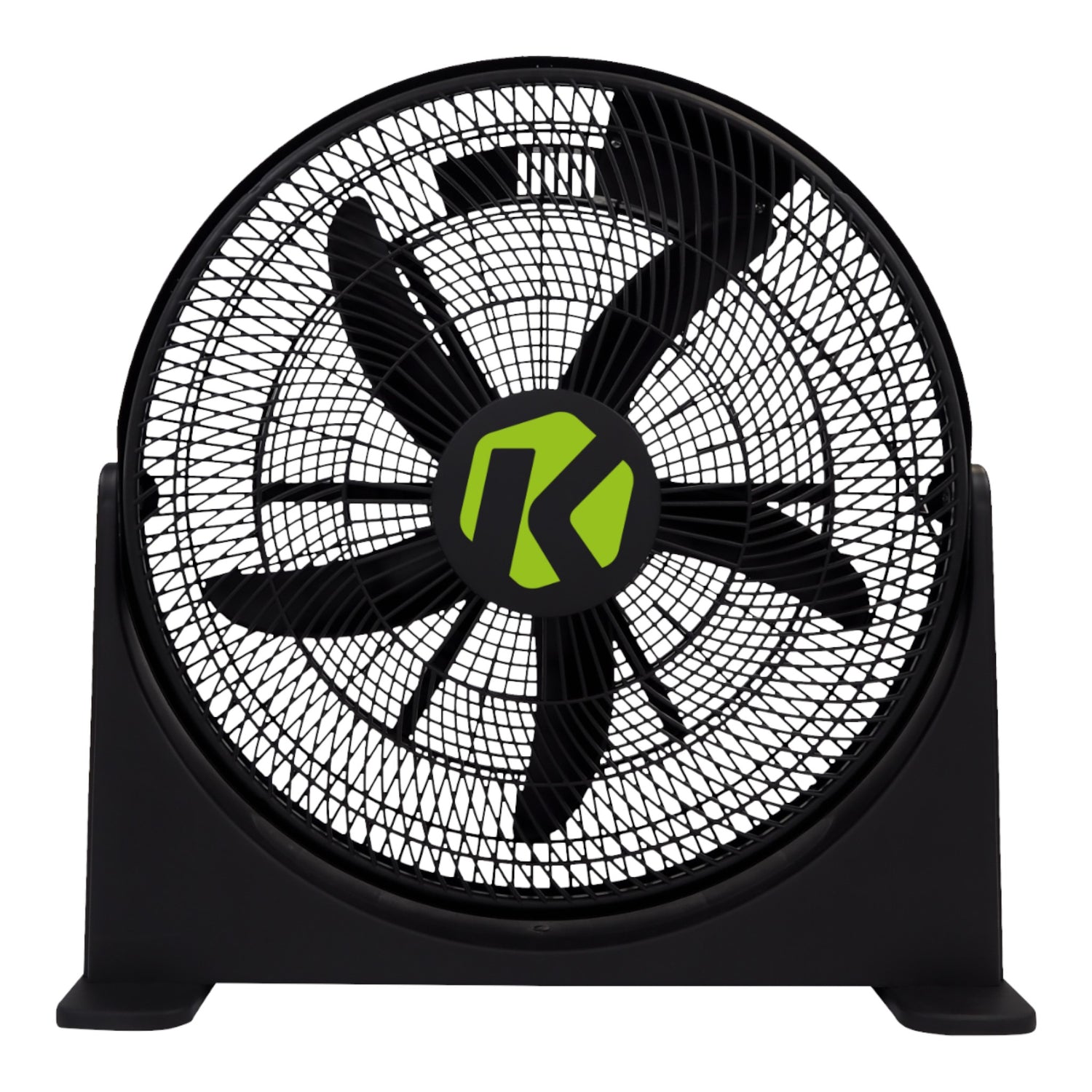
The Krystal Power House 20" Floor Fan is designed for high-volume local air circulation from floor level.
Krystal air-movement products are suited to professional indoor horticultural, warehouse, workshop and commercial environments where correctly positioned air circulation or filtration forms part of the wider ventilation strategy.
Sold individually. Commercial logistics: 56 per pallet.
Key benefits
Improving local air circulation
Position the fan to move air through the working or growing area without creating an unnecessarily harsh continuous blast at one point. Multiple circulation paths can be more effective than relying on a single fan for a large or obstructed space.
Oscillating or adjustable models can help distribute air across a wider area where their mounting and operating clearances are suitable.
Positioning & airflow
Keep air inlets and outlets clear and allow adequate space around the product. Do not obstruct guards or position electrical equipment where it can be exposed to irrigation water or unsafe moisture.
Air-circulation fans move air within a space; they do not by themselves replace correctly sized fresh-air intake, extraction, heating, cooling or humidity control where those are required.
Electrical & operational safety
Use the product only with a suitable electrical supply and follow the manufacturer's operating instructions. Isolate electrical equipment before cleaning, adjustment or maintenance and keep cables protected from damage and wet working areas.
Cleaning & maintenance
Dust and debris can accumulate on guards, blades and filter surfaces. Inspect and clean equipment appropriately and replace damaged electrical, mounting or filtration components rather than continuing to operate compromised equipment.
Krystal Power House 20" Floor Fan product details
| Brand | Krystal |
|---|---|
| Product type | Industrial Floor Fan |
| Primary use | high-volume local air circulation from floor level |
| Selling quantity | 1 unit |
| Commercial logistics | 56 per pallet |
Krystal Power House 20" Floor Fan FAQs
What is this product designed for?
High-volume local air circulation from floor level. Is it sold individually?
Yes. The selling unit is one unit. Does a circulation fan replace extraction?
No. Internal air movement and air exchange perform different roles in environmental management. Where should the product be positioned?
Position it with clear airflow and suitable operating clearance, protected from irrigation water and unsafe moisture. Can airflow be reduced by the installation?
Yes. Obstructions, ducting, filters and poor positioning can all affect actual air movement. How should it be cleaned?
Isolate electrical equipment first and clean guards, blades or accessible surfaces according to the manufacturer's instructions. Should damaged equipment remain in use?
No. Remove damaged electrical, mounting or moving components from service until properly repaired or replaced. How do I choose the right fan or filter?
Consider the space, required air movement, mounting method and the performance of the complete ventilation system. What is the commercial logistics quantity?
The source commercial quantity is 56 per pallet; the product itself is sold individually.
£13.80
Unit price per£13.80
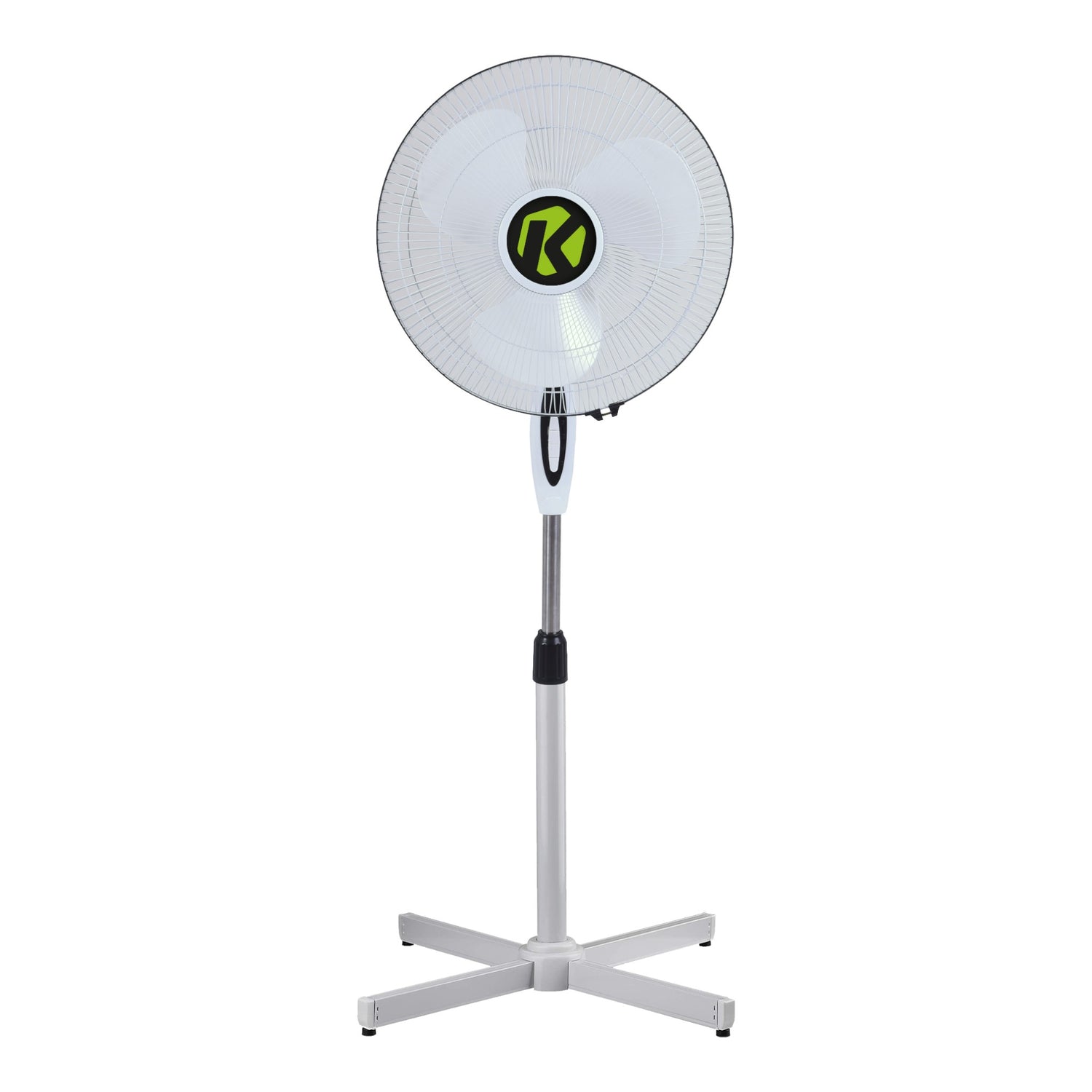
Unit price perThe Krystal 16” Oscillating Pedestal Fan (Cross X Base) is designed for portable air circulation at adjustable floor-standing height.
Krystal air-movement products are suited to professional indoor horticultural, warehouse, workshop and commercial environments where correctly positioned air circulation or filtration forms part of the wider ventilation strategy.
Key benefits
Improving local air circulation
Position the fan to move air through the working or growing area without creating an unnecessarily harsh continuous blast at one point. Multiple circulation paths can be more effective than relying on a single fan for a large or obstructed space.
Oscillating or adjustable models can help distribute air across a wider area where their mounting and operating clearances are suitable.
Positioning & airflow
Keep air inlets and outlets clear and allow adequate space around the product. Do not obstruct guards or position electrical equipment where it can be exposed to irrigation water or unsafe moisture.
Air-circulation fans move air within a space; they do not by themselves replace correctly sized fresh-air intake, extraction, heating, cooling or humidity control where those are required.
Electrical & operational safety
Use the product only with a suitable electrical supply and follow the manufacturer's operating instructions. Isolate electrical equipment before cleaning, adjustment or maintenance and keep cables protected from damage and wet working areas.
Cleaning & maintenance
Dust and debris can accumulate on guards, blades and filter surfaces. Inspect and clean equipment appropriately and replace damaged electrical, mounting or filtration components rather than continuing to operate compromised equipment.
Krystal 16” Oscillating Pedestal Fan (Cross X Base) product details
| Brand | Krystal |
|---|---|
| Product type | Oscillating Pedestal Fan |
| Primary use | portable air circulation at adjustable floor-standing height |
| Selling quantity | 1 unit |
Krystal 16” Oscillating Pedestal Fan (Cross X Base) FAQs
What is this product designed for?
Portable air circulation at adjustable floor-standing height. Is it sold individually?
Yes. The selling unit is one unit. Does a circulation fan replace extraction?
No. Internal air movement and air exchange perform different roles in environmental management. Where should the product be positioned?
Position it with clear airflow and suitable operating clearance, protected from irrigation water and unsafe moisture. Can airflow be reduced by the installation?
Yes. Obstructions, ducting, filters and poor positioning can all affect actual air movement. How should it be cleaned?
Isolate electrical equipment first and clean guards, blades or accessible surfaces according to the manufacturer's instructions. Should damaged equipment remain in use?
No. Remove damaged electrical, mounting or moving components from service until properly repaired or replaced. How do I choose the right fan or filter?
Consider the space, required air movement, mounting method and the performance of the complete ventilation system.

£21.80
Unit price per£21.80
Unit price per254mm (10") x 5m Mute Silent Ducting is an acoustically insulated flexible ventilation duct designed to help reduce fan and airflow noise in powerful extraction and intake systems.
High-capacity ventilation equipment can generate significant noise from the fan itself and from fast-moving air travelling through the ductwork. This insulated ducting provides a practical solution where quieter ventilation is required without sacrificing the flexibility of conventional flexible duct.
The flexible inner airflow duct is surrounded by an acoustic insulation layer that helps absorb sound transmitted along the ventilation system. It is particularly useful in grow rooms and indoor horticultural environments where extraction equipment may operate for extended periods.
Supplied in a 5 metre length with a nominal 254mm / 10" diameter, it is suitable for compatible 10-inch fans, carbon filters and ventilation fittings and can be cut to the required length during installation.
Why choose 254mm acoustic silent ducting?
How does acoustic ducting reduce ventilation noise?
Noise from an extraction system does not only come directly from the fan. Fan noise, vibration and turbulent airflow can travel along ordinary ductwork, allowing sound to become noticeable elsewhere in the installation.
Acoustic ducting surrounds the flexible inner air passage with an insulating layer designed to absorb transmitted sound. This helps reduce the amount of fan and airflow noise travelling through the duct run.
It can be particularly effective when used immediately before or after an extraction fan, between a fan and carbon filter, or along duct runs where ventilation noise needs to be controlled.
Acoustic ducting is intended to reduce transmitted noise rather than make an extraction system completely silent. Fan type, speed, vibration, airflow velocity and installation quality will all influence the final sound level.
Ideal for 10-inch grow room ventilation systems
Larger grow rooms and indoor horticultural environments often require powerful ventilation to remove excess heat and humidity and maintain regular air exchange. As fan capacity increases, controlling ventilation noise becomes increasingly important.
The 254mm / 10" diameter makes this ducting suitable for compatible high-volume extraction and intake equipment, while its insulated construction helps reduce the sound transmitted through the ductwork.
It can be used as part of a complete ventilation system incorporating an inline fan, carbon filter, metal duct fittings, reducers and other appropriately sized components.
Getting the best airflow from flexible ducting
Good duct installation is important for maintaining the performance of an extraction fan. Every length of ducting, bend and fitting introduces some resistance to airflow.
Extend the duct sufficiently rather than leaving unnecessary sections heavily compressed. This provides a smoother internal airflow path and helps reduce avoidable resistance.
Keep the ventilation route as short and direct as practical and avoid crushing the duct or creating unnecessarily tight bends. Gradual changes in direction are preferable to sharp turns.
The supplied 5m length does not need to be used in full. Cutting it to the length actually required can help create a cleaner and more efficient installation.
Installing 254mm Mute Silent Ducting
Before installation, check that the fan, carbon filter and other fittings are compatible with the nominal 254mm / 10" duct size.
Fit the flexible inner duct securely around the ventilation connection and fasten it using a suitably sized duct clamp or fixing. HVAC foil tape can also be used where additional sealing is required.
Arrange the acoustic insulation and outer covering neatly around the completed connection so that the insulating layer remains as continuous as practical.
Longer sections should be supported appropriately along the route. Avoid allowing the full weight of the ducting to hang directly from an extraction fan, carbon filter or other ventilation component.
Compatible ventilation equipment
254mm acoustic ducting can be incorporated into appropriately sized ventilation systems using components such as:
Always check the actual connection diameter of individual components before installation, as dimensions can vary slightly between different ventilation equipment manufacturers.
254mm (10") x 5m Mute Silent Ducting product details
| Product type | Acoustic insulated flexible ventilation ducting |
|---|---|
| Nominal diameter | 254mm / 10" |
| Length | 5m |
| Duct type | Flexible |
| Construction | Insulated acoustic ducting |
| Primary purpose | Ventilation with reduced transmission of fan and airflow noise |
| Suitable airflow | Extraction & intake |
| Compatible system size | Nominal 254mm / 10" round ventilation systems |
| Suitable applications | Grow rooms, indoor horticulture & other compatible ventilation installations |
254mm (10") Mute Silent Ducting FAQs
What is acoustic ducting?
Acoustic ducting is flexible ventilation duct surrounded by insulation designed to help reduce sound transmitted through a ventilation system. What size is this ducting?
This version has a nominal diameter of 254mm, equivalent to 10 inches, and is supplied in a 5 metre length. Is this suitable for a 10-inch extraction fan?
Yes, provided the fan has a compatible nominal 254mm / 10" connection. Always check the fan connection dimensions before installation. Can I connect it to a 10-inch carbon filter?
Yes. It can be used with a compatible 254mm / 10" carbon filter as part of a correctly sized extraction system. Does acoustic ducting make a fan silent?
No. It helps reduce noise transmitted through the ductwork but cannot completely eliminate fan motor noise, vibration or airflow noise. Is acoustic ducting quieter than standard flexible ducting?
Its insulated construction is specifically intended to reduce transmitted ventilation noise compared with basic uninsulated flexible ducting. Can it be used for both extraction and intake?
Yes. The ducting can be incorporated into compatible extraction or fresh-air intake systems. Can the 5m duct be cut into shorter sections?
Yes. It can be cut to suit the required installation, allowing one length to be divided into several sections if necessary. Should I use the entire 5m length?
Only if required. Keeping duct runs reasonably short and direct generally helps reduce resistance and maintain ventilation performance. Does long ducting reduce fan airflow?
Every duct run introduces resistance. Longer routes, tight bends and additional fittings can increase this resistance and reduce the effective airflow delivered by the system. Do bends in flexible ducting affect airflow?
Yes. Sharp bends increase resistance, so gradual changes in direction are preferable wherever the installation allows. Should acoustic ducting be stretched out?
It should be extended sufficiently for the installation rather than left heavily compressed, helping provide a smoother path for airflow. Where should acoustic ducting be positioned?
It can be used throughout a compatible ventilation route. Sections close to powerful extraction fans can be particularly useful for reducing sound transmitted into the duct system. Does 10-inch acoustic ducting need supporting?
Long runs should be adequately supported so the weight of the duct is not carried entirely by the fan, filter or connecting fittings. How else can I make a grow room extraction system quieter?
Good duct routing, correctly sized ventilation equipment, vibration isolation, suitable fan-speed control and ventilation silencers can all help reduce overall system noise.

The Krystal 20" Industrial Metal Floor Fan is designed for high-volume local air circulation from floor level.
Krystal air-movement products are suited to professional indoor horticultural, warehouse, workshop and commercial environments where correctly positioned air circulation or filtration forms part of the wider ventilation strategy.
Key benefits
Improving local air circulation
Position the fan to move air through the working or growing area without creating an unnecessarily harsh continuous blast at one point. Multiple circulation paths can be more effective than relying on a single fan for a large or obstructed space.
Oscillating or adjustable models can help distribute air across a wider area where their mounting and operating clearances are suitable.
Positioning & airflow
Keep air inlets and outlets clear and allow adequate space around the product. Do not obstruct guards or position electrical equipment where it can be exposed to irrigation water or unsafe moisture.
Air-circulation fans move air within a space; they do not by themselves replace correctly sized fresh-air intake, extraction, heating, cooling or humidity control where those are required.
Electrical & operational safety
Use the product only with a suitable electrical supply and follow the manufacturer's operating instructions. Isolate electrical equipment before cleaning, adjustment or maintenance and keep cables protected from damage and wet working areas.
Cleaning & maintenance
Dust and debris can accumulate on guards, blades and filter surfaces. Inspect and clean equipment appropriately and replace damaged electrical, mounting or filtration components rather than continuing to operate compromised equipment.
Krystal 20" Industrial Metal Floor Fan product details
| Brand | Krystal |
|---|---|
| Product type | Industrial Floor Fan |
| Primary use | high-volume local air circulation from floor level |
| Selling quantity | 1 unit |
Krystal 20" Industrial Metal Floor Fan FAQs
What is this product designed for?
High-volume local air circulation from floor level. Is it sold individually?
Yes. The selling unit is one unit. Does a circulation fan replace extraction?
No. Internal air movement and air exchange perform different roles in environmental management. Where should the product be positioned?
Position it with clear airflow and suitable operating clearance, protected from irrigation water and unsafe moisture. Can airflow be reduced by the installation?
Yes. Obstructions, ducting, filters and poor positioning can all affect actual air movement. How should it be cleaned?
Isolate electrical equipment first and clean guards, blades or accessible surfaces according to the manufacturer's instructions. Should damaged equipment remain in use?
No. Remove damaged electrical, mounting or moving components from service until properly repaired or replaced. How do I choose the right fan or filter?
Consider the space, required air movement, mounting method and the performance of the complete ventilation system.

The Krystal 16" Industrial Metal Floor Fan is designed for high-volume local air circulation from floor level.
Krystal air-movement products are suited to professional indoor horticultural, warehouse, workshop and commercial environments where correctly positioned air circulation or filtration forms part of the wider ventilation strategy.
Key benefits
Improving local air circulation
Position the fan to move air through the working or growing area without creating an unnecessarily harsh continuous blast at one point. Multiple circulation paths can be more effective than relying on a single fan for a large or obstructed space.
Oscillating or adjustable models can help distribute air across a wider area where their mounting and operating clearances are suitable.
Positioning & airflow
Keep air inlets and outlets clear and allow adequate space around the product. Do not obstruct guards or position electrical equipment where it can be exposed to irrigation water or unsafe moisture.
Air-circulation fans move air within a space; they do not by themselves replace correctly sized fresh-air intake, extraction, heating, cooling or humidity control where those are required.
Electrical & operational safety
Use the product only with a suitable electrical supply and follow the manufacturer's operating instructions. Isolate electrical equipment before cleaning, adjustment or maintenance and keep cables protected from damage and wet working areas.
Cleaning & maintenance
Dust and debris can accumulate on guards, blades and filter surfaces. Inspect and clean equipment appropriately and replace damaged electrical, mounting or filtration components rather than continuing to operate compromised equipment.
Krystal 16" Industrial Metal Floor Fan product details
| Brand | Krystal |
|---|---|
| Product type | Industrial Floor Fan |
| Primary use | high-volume local air circulation from floor level |
| Selling quantity | 1 unit |
Krystal 16" Industrial Metal Floor Fan FAQs
What is this product designed for?
High-volume local air circulation from floor level. Is it sold individually?
Yes. The selling unit is one unit. Does a circulation fan replace extraction?
No. Internal air movement and air exchange perform different roles in environmental management. Where should the product be positioned?
Position it with clear airflow and suitable operating clearance, protected from irrigation water and unsafe moisture. Can airflow be reduced by the installation?
Yes. Obstructions, ducting, filters and poor positioning can all affect actual air movement. How should it be cleaned?
Isolate electrical equipment first and clean guards, blades or accessible surfaces according to the manufacturer's instructions. Should damaged equipment remain in use?
No. Remove damaged electrical, mounting or moving components from service until properly repaired or replaced. How do I choose the right fan or filter?
Consider the space, required air movement, mounting method and the performance of the complete ventilation system.
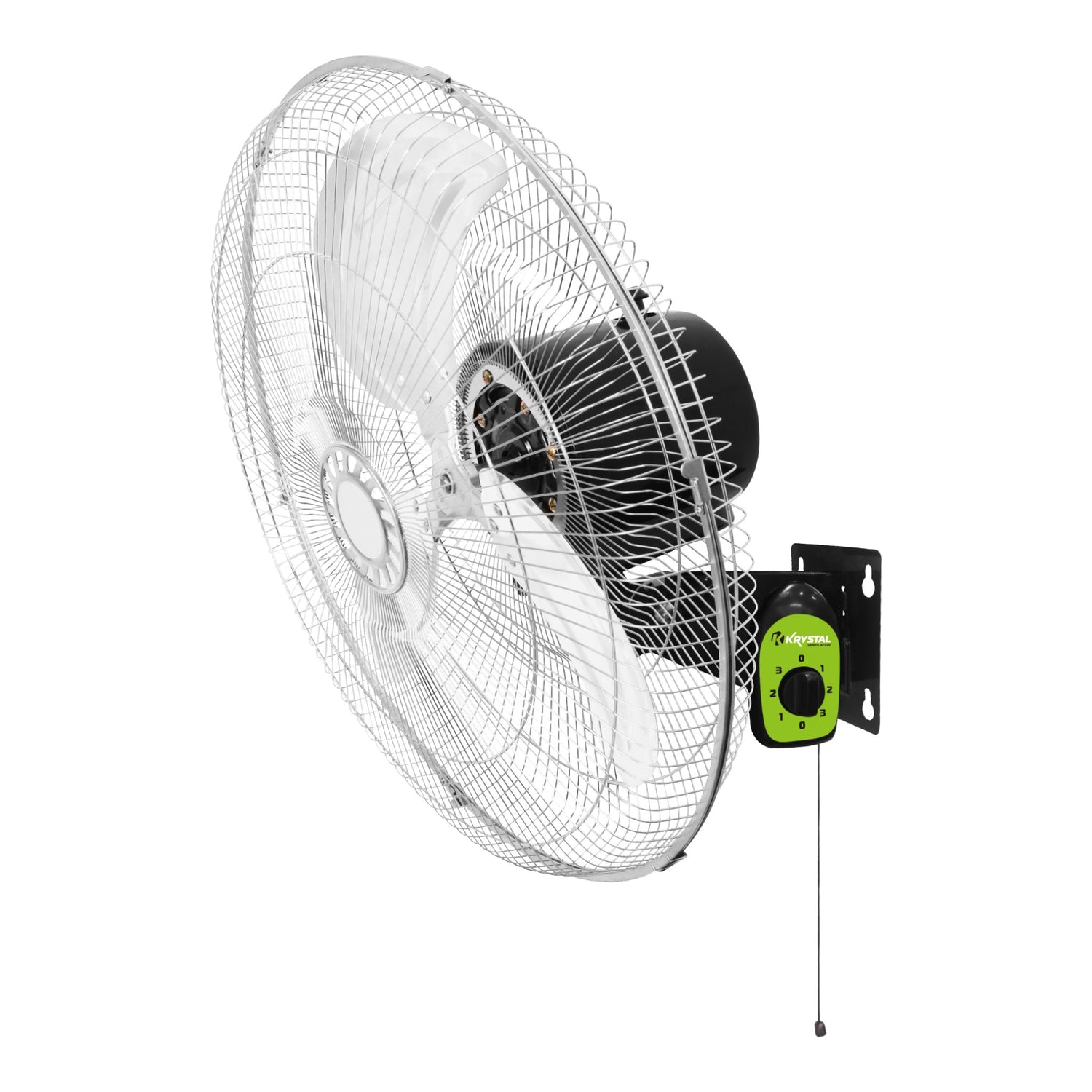
The Krystal 18" Metal Wall Fan 3 Speed is designed for moving air around indoor horticultural, commercial or workspace areas.
Krystal air-movement products are suited to professional indoor horticultural, warehouse, workshop and commercial environments where correctly positioned air circulation or filtration forms part of the wider ventilation strategy.
Sold individually. Commercial logistics: 48 per pallet.
Key benefits
Improving local air circulation
Position the fan to move air through the working or growing area without creating an unnecessarily harsh continuous blast at one point. Multiple circulation paths can be more effective than relying on a single fan for a large or obstructed space.
Oscillating or adjustable models can help distribute air across a wider area where their mounting and operating clearances are suitable.
Positioning & airflow
Keep air inlets and outlets clear and allow adequate space around the product. Do not obstruct guards or position electrical equipment where it can be exposed to irrigation water or unsafe moisture.
Air-circulation fans move air within a space; they do not by themselves replace correctly sized fresh-air intake, extraction, heating, cooling or humidity control where those are required.
Electrical & operational safety
Use the product only with a suitable electrical supply and follow the manufacturer's operating instructions. Isolate electrical equipment before cleaning, adjustment or maintenance and keep cables protected from damage and wet working areas.
Cleaning & maintenance
Dust and debris can accumulate on guards, blades and filter surfaces. Inspect and clean equipment appropriately and replace damaged electrical, mounting or filtration components rather than continuing to operate compromised equipment.
Krystal 18" Metal Wall Fan 3 Speed product details
| Brand | Krystal |
|---|---|
| Product type | Wall-Mounted Circulation Fan |
| Primary use | moving air around indoor horticultural, commercial or workspace areas |
| Selling quantity | 1 unit |
| Commercial logistics | 48 per pallet |
Krystal 18" Metal Wall Fan 3 Speed FAQs
What is this product designed for?
Moving air around indoor horticultural, commercial or workspace areas. Is it sold individually?
Yes. The selling unit is one unit. Does a circulation fan replace extraction?
No. Internal air movement and air exchange perform different roles in environmental management. Where should the product be positioned?
Position it with clear airflow and suitable operating clearance, protected from irrigation water and unsafe moisture. Can airflow be reduced by the installation?
Yes. Obstructions, ducting, filters and poor positioning can all affect actual air movement. How should it be cleaned?
Isolate electrical equipment first and clean guards, blades or accessible surfaces according to the manufacturer's instructions. Should damaged equipment remain in use?
No. Remove damaged electrical, mounting or moving components from service until properly repaired or replaced. How do I choose the right fan or filter?
Consider the space, required air movement, mounting method and the performance of the complete ventilation system. What is the commercial logistics quantity?
The source commercial quantity is 48 per pallet; the product itself is sold individually.


The Hot Stuff 2000W Oil Filled Radiator is designed for providing local electric radiant/convection heating in suitable indoor working or horticultural spaces.
Heating and circulation equipment should be selected as part of the wider environmental strategy, taking account of space volume, heat loss, ventilation, crop requirements and safe electrical installation.
Key benefits
Local electric heating
Use electric heating to supplement the wider temperature-control strategy where the unit and electrical installation are suitable for the environment. Heating demand depends on structure size, insulation, external temperature, ventilation and the target internal temperature.
Do not cover heaters or obstruct required airflow and clearance around the unit.
Positioning & environmental control
Keep equipment clear of irrigation water, standing water and unsafe moisture exposure. Allow the clearances required by the manufacturer and position units where airflow or heat can distribute effectively.
Use appropriate thermostatic or environmental controls where required rather than relying solely on manual switching for temperature-sensitive crops.
Electrical safety
Use only with a suitable electrical supply and protection for the installation environment. Cables, plugs and connections should be protected from water and mechanical damage. Isolate equipment before cleaning or maintenance.
Cleaning & maintenance
Inspect guards, fan inlets, heating surfaces, cables and controls periodically. Remove dust and debris according to the manufacturer's instructions and take damaged electrical equipment out of service until properly repaired or replaced.
Hot Stuff 2000W Oil Filled Radiator product details
| Brand | Hot Stuff |
|---|---|
| Product type | Hot Stuff Oil-Filled Radiator |
| Primary use | providing local electric radiant/convection heating in suitable indoor working or horticultural spaces |
| Stated power | 2000W |
Hot Stuff 2000W Oil Filled Radiator FAQs
What is this product designed for?
Providing local electric radiant/convection heating in suitable indoor working or horticultural spaces. Does a circulation fan replace ventilation?
Heating equipment does not replace appropriate ventilation or humidity management. How do I choose the right equipment size?
Consider structure volume, heat loss, crop requirements, ventilation and the performance of the complete environmental-control system. Where should the unit be positioned?
Position it for effective air or heat distribution while maintaining required clearances and protection from irrigation water. Can it be used in wet conditions?
Only within the environmental and electrical conditions specified by the manufacturer; protect electrical equipment from irrigation water and unsafe moisture. Should environmental controls be used?
Where temperature or climate needs to be maintained accurately, suitable thermostatic or environmental control is recommended. How should it be maintained?
Inspect and clean the unit according to the manufacturer's instructions and keep air passages or heating surfaces free from excessive debris. What should I do if the cable or unit is damaged?
Take damaged electrical equipment out of service until it has been properly inspected, repaired or replaced.

£204.68
Unit price per£204.68
Unit price perPortable Bluelab meter for measuring pH, EC and temperature, complete with the reinforced Leap pH Probe for direct root-zone and nutrient solution testing.
The Bluelab Combo Meter with Leap pH Probe gives growers a practical way to monitor three of the most important growing parameters from one portable meter. Measure pH directly in soil and growing media with the reinforced Leap probe, while the separate conductivity and temperature probe measures nutrient strength and solution temperature.
Unlike a conventional glass pH probe intended primarily for liquids, the Bluelab Leap pH Probe features a reinforced spear tip designed for direct root-zone measurements. It can be used in soil, coco coir, stone wool, potting mixes and other substrates, as well as nutrient solutions.
The meter also measures conductivity in EC, CF, ppm 500 or ppm 700 and temperature in °C or °F. Automatic temperature compensation and a clear backlit display make it a versatile option for routine crop monitoring across hydroponic, substrate and soil-based growing systems.
Why choose the Bluelab Combo Meter with Leap pH Probe?
What can the Bluelab Combo Meter with Leap Probe measure?
The Combo Meter measures pH, conductivity and temperature. The Leap pH Probe is designed for pH measurements directly in the root zone and can also be submerged in nutrient solution.
Conductivity and temperature are measured using the separate conductivity/temperature probe. This makes it possible to monitor nutrient solution strength and temperature alongside root-zone or solution pH using the same handheld meter.
Which growing media can the Leap pH Probe be used in?
The reinforced Bluelab Leap pH Probe is suitable for direct pH measurements in soil, coco coir blends, stone wool, potting mixes and other suitable substrates. It can also be used for pH testing in nutrient solutions.
This makes the Combo Meter with Leap pH Probe particularly useful for growers who want to investigate conditions around the root zone rather than relying solely on reservoir or runoff measurements.
How to use the Bluelab Combo Meter with Leap pH Probe
Before first use, connect the Leap pH Probe to the meter using its BNC connection. Precondition the probe by inserting the tip several times into substrate and then rinsing it before completing the required pH calibration.
For direct substrate measurements, the growing media should contain sufficient moisture for a reliable reading. Create an insertion hole with the supplied dibber where required, then carefully insert the Leap probe so the sensing area makes good contact with the root-zone media. Switch the meter on and allow the pH reading to stabilise.
To measure nutrient solution conductivity and temperature, place the conductivity/temperature probe into the solution and allow the displayed measurement to stabilise. Conductivity can be displayed as EC, CF, ppm 500 or ppm 700.
Rinse the probes with fresh tap water after use. Keep the Leap pH Probe stored in its cap with sufficient Bluelab KCl Storage Solution to keep the sensor hydrated.
Product details
| Brand | Bluelab |
|---|---|
| Product | Combo Meter with Leap pH Probe |
| Product type | Portable pH, conductivity & temperature meter |
| Measurements | pH, conductivity (EC) & temperature |
| pH range | 0.0 – 14.0 pH |
| pH resolution | 0.1 pH |
| pH accuracy | ±0.1 at 25°C |
| EC range | 0.0 – 9.9 EC |
| EC resolution | 0.1 EC |
| EC accuracy | ±0.1 at 25°C |
| Conductivity scales | EC, CF, ppm 500 (TDS) & ppm 700 |
| Temperature range | 0 – 50°C / 32 – 122°F |
| Temperature resolution | 1°C / 1°F |
| Temperature accuracy | ±1°C / ±2°F |
| Temperature compensation | Automatic |
| pH probe | Bluelab Leap reinforced spear-tip, double-junction pH Probe |
| pH probe connection | BNC |
| Probe cable length | 2m |
| Power | 2 x AAA alkaline batteries |
| Typical applications | Soil, coco coir, stone wool, potting mixes, substrates & nutrient solutions |
What's included?
| Meter | 1 x Bluelab Combo Meter |
|---|---|
| pH probe | 1 x Bluelab Leap pH Probe |
| EC / temperature probe | 1 x Bluelab Conductivity / Temperature Probe |
| Dibber | 1 x substrate dibber / auger |
| Calibration solution | 1 x pH 7.0 Calibration Solution sachet |
| Calibration solution | 1 x pH 4.0 Calibration Solution sachet |
| Storage solution | 1 x Bluelab KCl Storage Solution sachet |
Bluelab Combo Meter with Leap pH Probe FAQs
What does the Bluelab Combo Meter with Leap Probe measure?
It measures pH, electrical conductivity and temperature. The Leap pH Probe can measure directly in suitable growing media and nutrient solutions, while the separate conductivity/temperature probe measures EC and temperature in solution.
Can the Bluelab Leap pH Probe measure directly in soil?
Yes. Its reinforced spear tip is specifically designed to allow direct root-zone pH measurements in suitable soil and growing media.
Can I use the Leap pH Probe in coco coir?
Yes. The Leap pH Probe is suitable for direct measurements in coco coir blends as well as soil, stone wool, potting mixes and other suitable substrates.
Can the Leap pH Probe measure nutrient solution?
Yes. Although it is designed for direct substrate measurements, the Leap pH Probe can also be submerged in nutrient solution for liquid pH testing.
Does the Bluelab Combo Meter measure EC?
Yes. The supplied conductivity probe measures from 0.0 to 9.9 EC. Readings can also be displayed as CF, ppm 500 (TDS) or ppm 700.
Does the EC probe need calibrating?
No. The Bluelab conductivity probe is factory calibrated and does not require routine calibration. It should still be cleaned regularly to maintain dependable measurements.
Does the Leap pH Probe need calibrating?
Yes. The Leap pH Probe should be calibrated before first use and regularly thereafter. Bluelab recommends regular cleaning and calibration to maintain reliable pH measurements.
How should I store the Bluelab Leap pH Probe?
Keep the probe in its storage cap with sufficient Bluelab KCl Storage Solution to keep the pH sensor hydrated. Never store or soak the probe in RO, distilled or de-ionised water.
Can the Leap pH Probe be replaced?
Yes. The Leap pH Probe uses a standard BNC connection and is replaceable separately from the Combo Meter.
What is the difference between the standard Bluelab Combo Meter and this version?
The key difference is the pH probe. This version includes the reinforced Bluelab Leap pH Probe, allowing direct pH measurements in soil and growing substrates as well as nutrient solutions.

£9.99
Unit price per£9.99
Unit price perThe Neutralizer Road Kit is a compact vehicle odour neutralising system designed for cars, saloons and standard-size SUVs. Rather than operating as a conventional fragranced car air freshener, the system uses an Electronic Molecule Evaporator (EME-320) together with a replaceable 20ml essential-oil cartridge to tackle unwanted odours inside the vehicle.
Developed specifically for vehicle use, the Road Kit has a much faster activation time than the larger Neutralizer systems. Natural accelerants within the Road Kit formulation allow the system to begin working in approximately 5 minutes.
The supplied 20ml Road Kit Cartridge contains The Neutralizer's blend of essential oils derived from plant materials including flowers, fruits, roots and other botanical sources.
The system is particularly useful where persistent smells build up inside an enclosed vehicle and a conventional hanging air freshener or fragrance spray simply masks the problem.
Why choose The Neutralizer Road Kit?
What's included in The Neutralizer Road Kit?
Once the original cartridge has been used, replacement 20ml Road Kit cartridges can be fitted without replacing the EME-320 unit.
How does The Neutralizer Road Kit work?
At the centre of the system is the EME-320 Electronic Molecule Evaporator. The device is designed to control the evaporation of the essential-oil formulation so that volatile components are dispersed through the vehicle interior.
The Road Kit formulation incorporates natural accelerants to reduce the activation period to approximately five minutes. This makes it better suited to vehicle use, where a long warm-up period would be impractical.
The manufacturer describes The Neutralizer as an odour-neutralising system rather than a conventional masking fragrance. This distinction makes the Road Kit particularly useful for persistent smells in enclosed vehicle interiors.
Using The Neutralizer Road Kit in your car
Fit the Road Kit cartridge to the EME-320 in accordance with the manufacturer's instructions and position the assembled unit securely inside the vehicle using the supplied foam cup-holder adaptor.
The Road Kit is designed to connect to the vehicle's 12V electrical socket. Once powered, allow approximately five minutes for the unit and formulation to activate.
The system is designed to provide coverage for a standard-size saloon or SUV. Cartridge life will depend primarily on the amount of time the unit is operated.
Always position the unit securely so that it cannot interfere with the driver, pedals, controls or safe operation of the vehicle.
How long does a Road Kit cartridge last?
The supplied cartridge contains 20ml of The Neutralizer Road Kit formulation.
According to the manufacturer, one cartridge can last for up to 45 days when operated for approximately 2 hours per day.
When operated continuously, manufacturer guidance gives a total service life of approximately 80-92 hours. Actual cartridge life will therefore depend on the operating pattern.
Replacement Road Kit cartridges allow the EME-320 electronic unit to be reused once the original refill has been exhausted.
Suitable for persistent vehicle odours
Vehicle interiors contain upholstery, carpets, headlining and other materials that can retain unwanted smells. The Neutralizer Road Kit is designed for situations where these persistent odours require more than a conventional fragranced car air freshener.
Potential applications include vehicles affected by persistent:
Where the underlying source of an odour is contamination, damp, mould, spilled material or another physical problem, the source should also be identified and properly cleaned or corrected.
Replaceable 20ml Road Kit cartridges
The Road Kit is a refillable system rather than a single-use vehicle air freshener. Once the supplied 20ml cartridge has reached the end of its service life, it can be replaced with the dedicated RKC-20 Road Kit Cartridge.
Road Kit cartridges are specifically intended for the vehicle system, so use the correct replacement cartridge rather than cartridges intended for the Neutralizer Compact or Pro systems.
The Neutralizer Road Kit product details
| Product | The Neutralizer Road Kit |
|---|---|
| Product type | Electronic vehicle odour neutralising system |
| Electronic unit | EME-320 Electronic Molecule Evaporator |
| Cartridge | RKC-20 Road Kit Cartridge |
| Cartridge volume | 20ml |
| Formulation | Essential-oil based botanical formulation with natural accelerants |
| Application | Vehicle interior odour neutralisation |
| Recommended vehicle size | Standard-size saloon/SUV |
| Activation time | Approximately 5 minutes |
| Typical cartridge life | Up to 45 days at approximately 2 hours use per day |
| Continuous cartridge life | Approximately 80-92 hours |
| Power source | Vehicle 12V socket |
| Replaceable cartridge | Yes |
| Installation accessory | Foam cup-holder adaptor included |
| Kit contents | 1 x EME-320, 1 x 20ml RKC-20 Road Kit Cartridge, 1 x foam cup-holder adaptor |
The Neutralizer Road Kit FAQs
What is The Neutralizer Road Kit?
It is a compact electronic odour-neutralising system developed specifically for vehicle interiors. The kit combines an EME-320 Electronic Molecule Evaporator with a replaceable essential-oil cartridge. Does The Neutralizer Road Kit simply mask smells?
The manufacturer describes the system as an odour neutraliser rather than a conventional fragrance designed simply to overpower unwanted smells. How quickly does The Neutralizer Road Kit work?
The Road Kit has an activation time of approximately five minutes, making it considerably faster to activate than the larger Neutralizer systems. What size vehicle is the Road Kit designed for?
The manufacturer specifies the Road Kit for a standard-size saloon or SUV. How long does the 20ml cartridge last?
The cartridge can last for up to approximately 45 days when the unit is operated for around two hours per day. How long will it last if left running continuously?
Manufacturer guidance gives approximately 80-92 hours of cartridge life when the Road Kit is operated continuously. Can I replace the cartridge?
Yes. The EME-320 is reusable and accepts dedicated replacement Road Kit cartridges. How much liquid is in the Road Kit cartridge?
The supplied RKC-20 cartridge contains 20ml of The Neutralizer Road Kit essential-oil formulation. How is the Road Kit powered?
The Road Kit is designed to connect to a vehicle's 12V electrical socket. Where does the unit go in the car?
The kit includes a foam adaptor designed to help position the unit inside a vehicle cup holder. It should always be positioned where it cannot interfere with driving controls or safe vehicle operation. Can The Neutralizer Road Kit help with smoke smells?
It is designed to tackle persistent unwanted vehicle odours, including smoke-related smells. Physical contamination responsible for an odour should still be cleaned wherever possible. Can it be used for pet and food odours?
Yes. The system can be used to tackle a range of persistent unwanted smells within vehicle interiors, including pet and food-related odours. Is this the same as The Neutralizer Compact Kit?
No. The Road Kit is specifically designed for vehicles and has an approximately five-minute activation time. The Compact Kit is intended for larger enclosed spaces and uses a different cartridge and electronic unit. Does the Road Kit include a refill?
Yes. The complete kit includes one 20ml RKC-20 Road Kit Cartridge together with the EME-320 electronic unit. Do I need to replace the complete unit when the oil runs out?
No. The electronic EME-320 unit can be retained and fitted with a new compatible Road Kit cartridge.

£22.00
Unit price per£22.00
Unit price perGOD Genuine Odour Destroyer Gel 5L in Lemon Sherbet is a powerful passive odour-control gel designed for long-lasting background odour management in grow rooms, horticultural environments, workshops, garages, storage areas and other enclosed spaces.
The 5L format provides substantially more capacity than the compact 1L tub while remaining easy to position within a room. Once opened, the gel works passively as its odour-control formulation and fragrance are gradually released into the surrounding air.
No electricity, batteries or powered dispenser are required. This makes GOD Gel particularly useful where continuous, low-maintenance odour control is required.
Lemon Sherbet combines a bright citrus-style fragrance with a sweeter sherbet character, providing a fresh alternative to the sweeter Bubblegum and Cherry Bomb fragrances or the clean scent of Fresh Linen.
Why choose GOD Gel 5L Lemon Sherbet?
Where can GOD Gel 5L be used?
The 5L format is suited to environments where a larger volume of passive odour-control gel is preferable to several smaller tubs.
How to use GOD Gel
Position the container securely on a stable surface in the area requiring odour control. Open the container to expose the gel to the surrounding air.
Normal room airflow helps distribute the fragrance and odour-control effect throughout the surrounding space. Positioning can therefore influence performance.
Temperature, airflow and the amount of gel exposed can affect the release rate. Warmer conditions and stronger airflow generally increase evaporation and fragrance intensity, but may also shorten the overall working life of the gel.
Odour control for grow rooms & indoor horticulture
Indoor horticultural environments can produce noticeable ambient smells from plants, growing media, organic fertilisers and other inputs. GOD Gel provides a simple way to add passive background odour control without installing additional powered equipment.
The 5L container is particularly useful where a 1L tub does not provide sufficient capacity but the bulk 22L format is unnecessary.
For environments mechanically exhausting substantial quantities of odorous air, passive gel should be used alongside correctly designed ventilation and appropriate filtration rather than as a replacement for them.
Lemon Sherbet fragrance
Lemon Sherbet provides a bright citrus-led fragrance with a sweet sherbet character. It is a good choice where a fresh fragrance is preferred without moving completely towards the laundry-style scent of Fresh Linen.
Other GOD Gel fragrance options include Bubblegum, Cherry Bomb and Fresh Linen.
Which GOD Gel size should I choose?
| 1L | Compact format for smaller spaces, localised applications or distributing several tubs around an area. |
|---|---|
| 5L | Mid-size option providing greater capacity for larger rooms and more demanding applications. |
| 22L | Bulk format for large spaces, commercial environments and high-demand applications. |
GOD Gel 5L Lemon Sherbet product details
| Brand | GOD - Genuine Odour Destroyer |
|---|---|
| Product | GOD Genuine Odour Destroyer Gel |
| Size | 5L |
| Fragrance | Lemon Sherbet |
| Product type | Passive odour-control gel |
| Electricity required | No |
| Suitable environments | Grow rooms, horticultural areas, workshops, garages, storage areas and other suitable enclosed spaces |
| Other gel sizes available | 1L & 22L |
| Other gel fragrances | Bubblegum, Cherry Bomb & Fresh Linen |
| Country of manufacture | United Kingdom |
GOD Gel 5L Lemon Sherbet FAQs
What does GOD stand for?
GOD stands for Genuine Odour Destroyer. What does Lemon Sherbet GOD Gel smell like?
It has a bright citrus-style fragrance combined with a sweeter sherbet character. Does GOD Gel require electricity?
No. The gel works passively and does not require electricity, batteries or a powered dispenser. Is GOD Gel suitable for grow rooms?
Yes. GOD Gel can be used for passive background odour control in grow rooms and other indoor horticultural environments. How do I use GOD Gel 5L?
Position the container securely in the area requiring treatment and expose the gel to the surrounding air. How long does a 5L tub last?
Working life varies according to temperature, airflow and the amount of gel exposed. Higher temperatures and stronger airflow generally increase the release rate. Does GOD Gel replace ventilation or carbon filtration?
No. In applications where odorous air is mechanically exhausted, appropriate ventilation and filtration may still be required. GOD Gel can be used as an additional layer of odour management. What GOD Gel sizes are available?
The range includes 1L, 5L and 22L gel formats. What other GOD Gel fragrances are available?
The range also includes Bubblegum, Cherry Bomb and Fresh Linen. Is GOD Gel made in the UK?
Yes. GOD Genuine Odour Destroyer Gel is made in the UK.


£22.00
Unit price per£22.00
Unit price perGOD Genuine Odour Destroyer Gel 5L in Fresh Linen is a powerful passive odour-control gel designed for long-lasting background odour management in grow rooms, horticultural environments, workshops, garages, storage areas and other enclosed spaces.
The 5L format provides substantially more capacity than the compact 1L tub while remaining convenient to position within a room. Once opened, the gel works passively as its odour-control formulation and fragrance are gradually released into the surrounding air.
No electricity, batteries or powered dispenser are required, making GOD Gel a simple, low-maintenance option for environments where ongoing odour control is required.
Fresh Linen provides a clean, crisp laundry-inspired fragrance. It is particularly well suited to users wanting a fresh and neutral-smelling environment rather than the sweeter Bubblegum, Cherry Bomb or Lemon Sherbet fragrance profiles.
Why choose GOD Gel 5L Fresh Linen?
Where can GOD Gel 5L be used?
The 5L container provides a useful balance between capacity and physical size, making it suitable for a wide range of horticultural, commercial and general-purpose odour-control applications.
How to use GOD Gel 5L
Position the container securely on a stable surface in the area requiring odour control. Open the container to expose the gel to the surrounding air and allow it to work passively.
Positioning the container where normal room airflow can pass around it can help distribute its effect through the surrounding space. Avoid locations where the tub may be knocked over, contaminated or exposed unnecessarily to excessive heat.
Temperature, airflow and the amount of gel exposed can influence the release rate. Warmer conditions and greater airflow generally increase fragrance intensity and evaporation, but can also reduce the overall working life of the gel.
Odour control for grow rooms & indoor horticulture
Indoor horticultural environments can develop noticeable ambient smells from plants, growing media, organic fertilisers and other horticultural inputs. GOD Gel provides a straightforward way to introduce passive background odour control without adding another powered appliance.
The 5L size is particularly useful for medium to larger grow rooms where the compact 1L format may require more frequent replacement or multiple tubs.
For environments mechanically exhausting substantial quantities of odorous air, passive gel should be used alongside correctly designed ventilation and appropriate filtration rather than as a replacement for them.
Fresh Linen fragrance
Fresh Linen provides a clean, crisp fragrance inspired by freshly washed laundry. Compared with the sweeter scents in the GOD Gel range, it provides a more neutral fresh-room character.
This makes Fresh Linen particularly useful in workspaces, storage areas, commercial environments and grow rooms where a clean fragrance is preferred over a fruit or confectionery-style scent.
Other GOD Gel fragrance options include Bubblegum, Cherry Bomb and Lemon Sherbet.
Getting the best from passive odour-control gel
Passive gel relies on exposure to the surrounding air, so positioning is important. A location with normal air movement will generally distribute the fragrance more effectively than an isolated corner with very little airflow.
In larger or divided environments, several smaller tubs can be positioned around individual odour sources. Alternatively, the larger 5L or 22L formats can provide greater capacity from a single container.
Where possible, the underlying source of unwanted smells should also be identified and managed. Cleaning spills, removing waste and correcting damp or stagnant conditions will improve overall odour management.
Which GOD Gel size should I choose?
| 1L GOD Gel | Compact option for smaller spaces, localised odour control or distributing several tubs around an area. |
|---|---|
| 5L GOD Gel | Mid-size option providing greater capacity for larger rooms and more demanding applications. |
| 22L GOD Gel | Bulk format for large spaces, commercial environments and higher-demand odour-control applications. |
GOD Gel 5L Fresh Linen product details
| Brand | GOD - Genuine Odour Destroyer |
|---|---|
| Product | GOD Genuine Odour Destroyer Gel |
| Size | 5L |
| Fragrance | Fresh Linen |
| Product type | Passive odour-control gel |
| Operation | Passive evaporation |
| Electricity required | No |
| Suitable environments | Grow rooms, horticultural areas, workshops, garages, storage areas and other suitable enclosed spaces |
| Other gel sizes available | 1L & 22L |
| Other gel fragrances | Bubblegum, Cherry Bomb & Lemon Sherbet |
| Country of manufacture | United Kingdom |
GOD Gel 5L Fresh Linen FAQs
What does GOD stand for?
GOD stands for Genuine Odour Destroyer. What does Fresh Linen GOD Gel smell like?
Fresh Linen has a clean, crisp laundry-inspired fragrance designed to leave the surrounding environment with a fresh scent. Does GOD Gel require electricity?
No. GOD Gel works passively and does not require electricity, batteries, a fan or an automatic dispenser. Is GOD Gel suitable for grow rooms?
Yes. It can be used for passive background odour control in grow rooms and other indoor horticultural environments. How do I use GOD Gel 5L?
Position the container securely in the area requiring treatment and expose the gel to the surrounding air. Normal room airflow will help distribute its effect. How long does GOD Gel 5L last?
Working life varies according to temperature, airflow and how much gel is exposed. Greater airflow and warmer temperatures generally increase the release rate. Can I use GOD Gel in a workshop or garage?
Yes. The 5L format is suitable for workshops, garages, storage areas and similar enclosed spaces requiring ongoing background odour management. Does GOD Gel replace a carbon filter?
No. Where odorous air is being mechanically exhausted, suitable ventilation and filtration may still be required. GOD Gel can provide an additional layer of background odour control. Can I use more than one GOD Gel container?
Yes. Multiple containers can be positioned around larger or divided spaces where distributing the gel closer to individual odour sources is beneficial. Should I choose the 1L, 5L or 22L GOD Gel?
The 1L size is suited to smaller or localised applications, 5L provides greater capacity for medium to larger spaces, and 22L is the bulk option for larger commercial or high-demand applications. What other GOD Gel fragrances are available?
The GOD Gel range also includes Bubblegum, Cherry Bomb and Lemon Sherbet. Is GOD Gel made in the UK?
Yes. GOD Genuine Odour Destroyer Gel is made in the UK.


£22.00
Unit price per£22.00
Unit price perGOD Genuine Odour Destroyer Gel 5L in Cherry Bomb is a powerful passive odour-control gel designed for long-lasting background odour management in grow rooms, horticultural environments, workshops, garages, storage areas and other enclosed spaces.
The 5 litre format provides substantially more capacity than the compact 1L tub while remaining convenient to position within a room. It is a practical choice for medium to larger spaces where ongoing odour control is required without moving up to the bulk 22L format.
Once opened, GOD Gel works passively as its odour-control formulation and fragrance are gradually released into the surrounding air. No electricity, batteries, fan or automatic dispenser are required.
Cherry Bomb provides a bold, sweet and fruity cherry fragrance. It is particularly suited to users who prefer a strong fruit-led scent rather than the cleaner Fresh Linen, citrus-style Lemon Sherbet or confectionery-inspired Bubblegum fragrance profiles.
Why choose GOD Gel 5L Cherry Bomb?
Where can GOD Gel 5L be used?
The 5L container provides a useful balance between capacity and physical size, making it suitable for a wide range of horticultural, commercial and general-purpose odour-control applications.
How to use GOD Gel 5L
Position the container securely on a stable surface in the area requiring odour control. Open the container to expose the gel to the surrounding air and allow it to work passively.
Positioning the container where normal room airflow can pass around it can help distribute the fragrance and odour-control effect through the surrounding space. Keep the container somewhere secure where it is unlikely to be knocked over or contaminated.
Temperature, airflow and the amount of gel exposed can influence the release rate. Warmer conditions, stronger airflow and greater exposure will generally increase intensity, but can also increase the rate at which the gel is consumed.
Odour control for grow rooms & indoor horticulture
Indoor horticultural environments can develop noticeable ambient smells from plants, growing media, organic fertilisers and other horticultural inputs. GOD Gel provides a straightforward way to introduce passive background odour control without adding another powered appliance.
The 5L size is particularly useful for medium to larger grow rooms where the compact 1L format may require multiple tubs or more frequent replacement.
Where substantial quantities of odorous air are being mechanically exhausted, passive gel should not be considered a replacement for correctly designed ventilation and appropriate filtration. GOD Gel can instead be used as an additional layer within a wider odour-management setup.
Cherry Bomb fragrance
Cherry Bomb delivers a bold fruit-led fragrance with a sweet cherry character. It is designed for users who prefer a noticeably fruity scent alongside the ongoing odour-control action of GOD Gel.
Within the GOD Gel range, Cherry Bomb provides the fruit-led option alongside clean Fresh Linen, citrus-style Lemon Sherbet and sweet Bubblegum.
Getting the best from passive odour-control gel
Passive gel relies on exposure to the surrounding air, so positioning is important. A location with normal air movement will generally distribute the fragrance more effectively than an isolated corner with very little airflow.
Avoid positioning the container where it can easily be knocked over, contaminated or exposed to unnecessary sources of heat. Increased temperature and airflow can accelerate evaporation.
In larger or divided environments, several smaller tubs can be positioned around individual odour sources. Alternatively, the larger 5L or 22L formats can provide greater capacity from a single container.
Managing persistent unwanted odours
GOD stands for Genuine Odour Destroyer and is designed for applications where strong or persistent smells require ongoing management.
Wherever possible, the physical source of an unwanted smell should also be addressed. Waste, spills, stagnant water, damp materials and other contamination should be removed or cleaned rather than relying solely on fragrance.
GOD Gel can then provide ongoing background odour control within the surrounding environment.
Which GOD Gel size should I choose?
| 1L GOD Gel | Compact option for smaller spaces, localised odour control or distributing several tubs around an area. |
|---|---|
| 5L GOD Gel | Mid-size option providing greater capacity for larger rooms and more demanding applications. |
| 22L GOD Gel | Bulk format for large spaces, commercial environments and higher-demand odour-control applications. |
GOD Gel 5L Cherry Bomb product details
| Brand | GOD - Genuine Odour Destroyer |
|---|---|
| Product | GOD Genuine Odour Destroyer Gel |
| Size | 5L |
| Fragrance | Cherry Bomb |
| Product type | Passive odour-control gel |
| Operation | Passive evaporation |
| Electricity required | No |
| Suitable environments | Grow rooms, horticultural areas, workshops, garages, storage areas and other suitable enclosed spaces |
| Other gel sizes available | 1L & 22L |
| Other gel fragrances | Bubblegum, Fresh Linen & Lemon Sherbet |
| Country of manufacture | United Kingdom |
GOD Gel 5L Cherry Bomb FAQs
What does GOD stand for?
GOD stands for Genuine Odour Destroyer. What does Cherry Bomb GOD Gel smell like?
Cherry Bomb has a bold, sweet and fruity cherry-style fragrance and is the fruit-led option within the GOD Gel range. Does GOD Gel require electricity?
No. GOD Gel works passively and does not require electricity, batteries, a fan or an automatic dispenser. Is GOD Gel suitable for grow rooms?
Yes. It can be used for passive background odour control in grow rooms and other indoor horticultural environments. How do I use GOD Gel 5L?
Position the container securely in the area requiring treatment and expose the gel to the surrounding air. Normal room airflow can help distribute its effect. How long does GOD Gel 5L last?
Working life varies according to temperature, airflow and the amount of gel exposed. Greater airflow and warmer temperatures generally increase the release rate. Can GOD Gel 5L be used in workshops and garages?
Yes. The 5L format is suitable for workshops, garages, storage areas and other suitable enclosed environments requiring ongoing background odour management. Does GOD Gel replace a carbon filter?
No. Where odorous air is being mechanically exhausted, appropriate ventilation and filtration may still be required. GOD Gel can be used as an additional layer of odour management. Can I use more than one GOD Gel container?
Yes. Multiple containers can be positioned around larger or divided environments where more than one odour-control point is beneficial. Can I adjust the intensity of GOD Gel?
The amount of gel exposed and the airflow around the container influence its release rate. Greater exposure and stronger airflow generally increase intensity but may also increase consumption. Should I choose the 1L, 5L or 22L GOD Gel?
The 1L size is suited to smaller or localised applications, 5L provides greater capacity for medium to larger spaces, and 22L is the bulk option for large commercial or high-demand applications. What other GOD Gel fragrances are available?
The GOD Gel range also includes Bubblegum, Fresh Linen and Lemon Sherbet. Is GOD Gel made in the UK?
Yes. GOD Genuine Odour Destroyer Gel is made in the UK.


£22.00
Unit price per£22.00
Unit price perGOD Genuine Odour Destroyer Gel 5L in Bubblegum is a powerful passive odour-control gel designed for long-lasting background odour management in grow rooms, horticultural environments, workshops, garages, storage areas and other enclosed spaces.
The 5 litre format provides substantially more capacity than the compact 1L tub while remaining convenient to position within a room. It is a practical choice for medium to larger spaces where ongoing odour control is required without moving up to the bulk 22L format.
Once opened, GOD Gel works passively as its odour-control formulation and fragrance are gradually released into the surrounding air. No electricity, batteries, fan or automatic dispenser are required.
Bubblegum delivers a bold, sweet confectionery-style fragrance inspired by classic bubblegum. It is ideal for users looking for a distinctive sweet scent rather than the clean character of Fresh Linen, citrus-style Lemon Sherbet or fruit-led Cherry Bomb.
Why choose GOD Gel 5L Bubblegum?
Where can GOD Gel 5L be used?
The 5L container provides a useful balance between capacity and physical size, making it suitable for a wide range of horticultural, commercial and general-purpose odour-control applications.
How to use GOD Gel 5L
Position the container securely on a stable surface in the area requiring odour control. Open the container to expose the gel to the surrounding air and allow it to work passively.
Positioning the container where normal room airflow can pass around it can help distribute the fragrance and odour-control effect through the surrounding space. Keep the container somewhere secure where it is unlikely to be knocked over or contaminated.
Temperature, airflow and the amount of gel exposed can influence the release rate. Warmer conditions, stronger airflow and greater exposure will generally increase intensity, but can also increase the rate at which the gel is consumed.
Odour control for grow rooms & indoor horticulture
Indoor horticultural environments can develop noticeable ambient smells from plants, growing media, organic fertilisers and other horticultural inputs. GOD Gel provides a straightforward way to introduce passive background odour control without adding another powered appliance.
The 5L size is particularly useful for medium to larger grow rooms where the compact 1L format may require multiple tubs or more frequent replacement.
Where substantial quantities of odorous air are being mechanically exhausted, passive gel should not be considered a replacement for correctly designed ventilation and appropriate filtration. GOD Gel can instead be used as an additional layer within a wider odour-management setup.
Bubblegum fragrance
Bubblegum provides one of the sweetest fragrance profiles in the GOD range, with a distinctive confectionery-style scent inspired by classic bubblegum.
It is a good option for environments where a noticeable sweet fragrance is preferred. Within the GOD Gel range, Bubblegum sits alongside fruit-led Cherry Bomb, citrus-style Lemon Sherbet and clean Fresh Linen.
Getting the best from passive odour-control gel
Passive gel relies on exposure to the surrounding air, so positioning is important. A location with normal air movement will generally distribute the fragrance more effectively than an isolated corner with very little airflow.
Avoid positioning the container where it can easily be knocked over, contaminated or exposed to unnecessary sources of heat. Increased temperature and airflow can accelerate evaporation.
In larger or divided environments, several smaller tubs can be positioned around individual odour sources. Alternatively, the larger 5L or 22L formats can provide greater capacity from a single container.
Managing persistent unwanted odours
GOD stands for Genuine Odour Destroyer and is designed for applications where strong or persistent smells require ongoing management.
Wherever possible, the physical source of an unwanted smell should also be addressed. Waste, spills, stagnant water, damp materials and other contamination should be removed or cleaned rather than relying solely on fragrance.
GOD Gel can then provide ongoing background odour control within the surrounding environment.
Which GOD Gel size should I choose?
| 1L GOD Gel | Compact option for smaller spaces, localised odour control or distributing several tubs around an area. |
|---|---|
| 5L GOD Gel | Mid-size option providing greater capacity for larger rooms and more demanding applications. |
| 22L GOD Gel | Bulk format for large spaces, commercial environments and higher-demand odour-control applications. |
GOD Gel 5L Bubblegum product details
| Brand | GOD - Genuine Odour Destroyer |
|---|---|
| Product | GOD Genuine Odour Destroyer Gel |
| Size | 5L |
| Fragrance | Bubblegum |
| Product type | Passive odour-control gel |
| Operation | Passive evaporation |
| Electricity required | No |
| Suitable environments | Grow rooms, horticultural areas, workshops, garages, storage areas and other suitable enclosed spaces |
| Other gel sizes available | 1L & 22L |
| Other gel fragrances | Cherry Bomb, Fresh Linen & Lemon Sherbet |
| Country of manufacture | United Kingdom |
GOD Gel 5L Bubblegum FAQs
What does GOD stand for?
GOD stands for Genuine Odour Destroyer. What does Bubblegum GOD Gel smell like?
Bubblegum has a bold, sweet confectionery-style fragrance inspired by classic bubblegum. Does GOD Gel require electricity?
No. GOD Gel works passively and does not require electricity, batteries, a fan or an automatic dispenser. Is GOD Gel suitable for grow rooms?
Yes. It can be used for passive background odour control in grow rooms and other indoor horticultural environments. How do I use GOD Gel 5L?
Position the container securely in the area requiring treatment and expose the gel to the surrounding air. Normal room airflow can help distribute its effect. How long does GOD Gel 5L last?
Working life varies according to temperature, airflow and the amount of gel exposed. Greater airflow and warmer temperatures generally increase the release rate. Can GOD Gel 5L be used in workshops and garages?
Yes. The 5L format is suitable for workshops, garages, storage areas and other suitable enclosed environments requiring ongoing background odour management. Does GOD Gel replace a carbon filter?
No. Where odorous air is being mechanically exhausted, appropriate ventilation and filtration may still be required. GOD Gel can be used as an additional layer of odour management. Can I use more than one GOD Gel container?
Yes. Multiple containers can be positioned around larger or divided environments where more than one odour-control point is beneficial. Can I adjust the intensity of GOD Gel?
The amount of gel exposed and the airflow around the container influence its release rate. Greater exposure and stronger airflow generally increase intensity but may also increase consumption. Should I choose the 1L, 5L or 22L GOD Gel?
The 1L size is suited to smaller or localised applications, 5L provides greater capacity for medium to larger spaces, and 22L is the bulk option for large commercial or high-demand applications. What other GOD Gel fragrances are available?
The GOD Gel range also includes Cherry Bomb, Fresh Linen and Lemon Sherbet. Is GOD Gel made in the UK?
Yes. GOD Genuine Odour Destroyer Gel is made in the UK.

£65.00
Unit price per£65.00
Unit price perGOD Genuine Odour Destroyer Gel 22L in Lemon Sherbet is a high-capacity passive odour-control gel designed for long-lasting background odour management in large grow rooms, commercial horticultural environments, warehouses, workshops, storage areas and other substantial enclosed spaces.
At 22 litres, this is the largest GOD Gel format and is intended for applications where a substantial quantity of odour-control gel is required. It provides considerably more capacity than the 1L and 5L formats, making it particularly useful for larger spaces and higher-demand applications.
Once opened, GOD Gel works passively as its odour-control formulation and fragrance are gradually released into the surrounding air. No electricity, batteries, fan or automatic dispenser are required.
Lemon Sherbet combines a bright citrus-style fragrance with a sweeter sherbet character, providing a fresh alternative to the sweeter Bubblegum and Cherry Bomb options or the cleaner fragrance of Fresh Linen.
Why choose GOD Gel 22L Lemon Sherbet?
Where can GOD Gel 22L be used?
The 22L container is the bulk format within the GOD Gel range and is particularly suited to larger-scale applications where greater capacity from a single container is desirable.
How to use GOD Gel 22L
Position the container securely on a stable, level surface in the area requiring odour control. Open the container to expose the gel to the surrounding air and allow it to work passively.
Because the 22L format is a substantial container, choose its position carefully before use. Locate it somewhere secure where it will not obstruct normal working areas and is unlikely to be knocked over or contaminated.
Normal air movement around the container can help distribute the fragrance and odour-control effect through the surrounding environment.
Temperature, airflow and the amount of gel exposed can influence the release rate. Warmer conditions, stronger airflow and greater exposure will generally increase intensity, but can also increase the rate at which the gel is consumed.
High-capacity odour control for larger spaces
The key advantage of the 22L GOD Gel is its capacity. Where ongoing odour control is required in a large environment, the bulk format provides considerably more gel in a single container than either the 1L or 5L versions.
This can be particularly useful for commercial and horticultural users who want a straightforward passive product that can remain in position without electrical installation, automatic dispensing equipment or repeated aerosol spraying.
In very large, divided or unusually shaped spaces, positioning can be just as important as total product volume. Multiple odour-control points may provide more even distribution where airflow between different parts of the building is limited.
Odour control for grow rooms & commercial horticulture
Indoor growing environments can produce noticeable ambient smells from plants, growing media, organic fertilisers and other horticultural inputs. Larger commercial or intensive growing areas can make ongoing odour management particularly important.
GOD Gel provides passive background odour control without requiring another powered appliance. The 22L format is particularly relevant where high capacity is preferable to positioning or replacing multiple smaller tubs.
Where substantial quantities of odorous air are being mechanically exhausted, passive gel should not be considered a replacement for correctly designed ventilation and appropriate filtration. GOD Gel can instead be used as an additional layer within a wider odour-management setup.
Lemon Sherbet fragrance
Lemon Sherbet provides a bright citrus-led fragrance with a distinctive sweet sherbet character. It is a good choice for environments where a fresh citrus-style fragrance is preferred.
Within the GOD Gel range, Lemon Sherbet sits alongside clean Fresh Linen, sweet Bubblegum and fruit-led Cherry Bomb.
Positioning GOD Gel for effective odour control
Passive gel relies on exposure to the surrounding air, making positioning an important part of its use. Placing the container where normal room airflow can pass around it will generally provide better distribution than positioning it in a completely isolated corner.
Avoid unnecessary heat, as higher temperatures can increase evaporation and shorten the useful life of the gel. The container should also remain on a stable surface where it cannot easily be knocked over.
Where possible, also address the source of persistent unwanted smells. Removing waste, cleaning spills and correcting damp or stagnant conditions will improve overall odour management.
Which GOD Gel size should I choose?
| 1L GOD Gel | Compact option for smaller spaces, localised odour control or distributing several tubs around an area. |
|---|---|
| 5L GOD Gel | Mid-size option providing greater capacity for medium to larger rooms and more demanding applications. |
| 22L GOD Gel | High-capacity bulk format for large spaces, commercial environments and demanding applications. |
GOD Gel 22L Lemon Sherbet product details
| Brand | GOD - Genuine Odour Destroyer |
|---|---|
| Product | GOD Genuine Odour Destroyer Gel |
| Size | 22L |
| Fragrance | Lemon Sherbet |
| Product type | Passive odour-control gel |
| Operation | Passive evaporation |
| Electricity required | No |
| Suitable environments | Large grow rooms, horticultural facilities, warehouses, workshops, storage areas and other suitable enclosed spaces |
| Other gel sizes available | 1L & 5L |
| Other gel fragrances | Bubblegum, Cherry Bomb & Fresh Linen |
| Country of manufacture | United Kingdom |
GOD Gel 22L Lemon Sherbet FAQs
What does GOD stand for?
GOD stands for Genuine Odour Destroyer. What does Lemon Sherbet GOD Gel smell like?
Lemon Sherbet has a bright citrus-style fragrance combined with a distinctive sweet sherbet character. What is the 22L GOD Gel designed for?
The 22L format is the largest GOD Gel size and is intended for larger spaces and demanding applications where greater capacity from a single container is useful. Does GOD Gel require electricity?
No. GOD Gel works passively and does not require electricity, batteries, a fan or an automatic dispenser. Is GOD Gel 22L suitable for large grow rooms?
Yes. The 22L format is particularly suited to larger grow rooms and commercial indoor horticultural environments requiring additional passive background odour control. How do I use GOD Gel 22L?
Position the container securely on a stable surface in the area requiring treatment and expose the gel to the surrounding air. Normal room airflow can help distribute its effect. How long does GOD Gel 22L last?
Working life varies according to temperature, airflow and the amount of gel exposed. Greater airflow and warmer temperatures generally increase the release rate. Can GOD Gel 22L be used in warehouses and workshops?
Yes. Its large capacity makes it suitable for warehouses, workshops, storage areas and other substantial enclosed environments requiring ongoing background odour management. Does GOD Gel replace a carbon filter?
No. Where odorous air is being mechanically exhausted, suitable ventilation and filtration may still be required. GOD Gel can be used as an additional layer of odour management. Can I adjust the intensity of GOD Gel?
The amount of gel exposed and the airflow around the container influence its release rate. Greater exposure and stronger airflow generally increase intensity but may also increase consumption. Should I choose the 5L or 22L GOD Gel?
The 5L format provides a practical balance of capacity and size for medium to larger spaces, while the 22L format provides substantially greater capacity for large and higher-demand applications. What other GOD Gel fragrances are available?
The GOD Gel range also includes Bubblegum, Cherry Bomb and Fresh Linen. Is GOD Gel made in the UK?
Yes. GOD Genuine Odour Destroyer Gel is made in the UK.

£65.00
Unit price per£65.00
Unit price perGOD Genuine Odour Destroyer Gel 22L in Fresh Linen is a high-capacity passive odour-control gel designed for long-lasting background odour management in large grow rooms, commercial horticultural environments, warehouses, workshops, storage areas and other substantial enclosed spaces.
At 22 litres, this is the largest GOD Gel format and is intended for applications where a substantial quantity of odour-control gel is required. It provides considerably more capacity than the 1L and 5L formats, making it particularly useful for larger spaces and higher-demand applications.
Once opened, GOD Gel works passively as its odour-control formulation and fragrance are gradually released into the surrounding air. No electricity, batteries, fan or automatic dispenser are required, making it a straightforward option for continuous background odour control.
Fresh Linen provides a clean, crisp laundry-inspired fragrance. It is particularly well suited to environments where a fresh, clean scent is preferred over the sweeter Bubblegum, Cherry Bomb or Lemon Sherbet fragrance profiles.
Why choose GOD Gel 22L Fresh Linen?
Where can GOD Gel 22L be used?
The 22L container is the bulk format within the GOD Gel range and is particularly suited to larger-scale applications where greater capacity from a single container is desirable.
How to use GOD Gel 22L
Position the container securely on a stable, level surface in the area requiring odour control. Open the container to expose the gel to the surrounding air and allow it to work passively.
Because the 22L format is a substantial container, choose its position carefully before use. Locate it somewhere secure where it will not obstruct normal working areas and is unlikely to be knocked over or contaminated.
Normal air movement around the container can help distribute the fragrance and odour-control effect through the surrounding environment.
Temperature, airflow and the amount of gel exposed can influence the release rate. Warmer conditions, stronger airflow and greater exposure will generally increase intensity, but can also increase the rate at which the gel is consumed.
High-capacity odour control for larger spaces
The key advantage of the 22L GOD Gel is its capacity. Where ongoing odour control is required in a large environment, the bulk format provides considerably more gel in a single container than either the 1L or 5L versions.
This can be particularly useful for commercial and horticultural users who want a straightforward passive product that can remain in position without electrical installation, automatic dispensing equipment or repeated aerosol spraying.
In very large, divided or unusually shaped spaces, positioning can be just as important as total product volume. Multiple odour-control points may provide more even distribution where airflow between different parts of the building is limited.
Odour control for grow rooms & commercial horticulture
Indoor growing environments can produce noticeable ambient smells from plants, growing media, organic fertilisers and other horticultural inputs. Larger commercial or intensive growing areas can make ongoing odour management particularly important.
GOD Gel provides passive background odour control without requiring another powered appliance. The 22L format is particularly relevant where high capacity is preferable to positioning or replacing multiple smaller tubs.
Where substantial quantities of odorous air are being mechanically exhausted, passive gel should not be considered a replacement for correctly designed ventilation and appropriate filtration. GOD Gel can instead be used as an additional layer within a wider odour-management setup.
Fresh Linen fragrance
Fresh Linen provides a clean, crisp fragrance inspired by freshly washed fabrics. Compared with the sweeter fragrances in the GOD Gel range, it provides a cleaner and more neutral fresh-room character.
This makes Fresh Linen particularly suitable for commercial premises, workspaces, storage areas and growing environments where a clean fragrance is preferred over a fruit or confectionery-style scent.
Other GOD Gel fragrance options include Bubblegum, Cherry Bomb and Lemon Sherbet.
Positioning GOD Gel for effective odour control
Passive gel relies on exposure to the surrounding air, making positioning an important part of its use. Placing the container where normal room airflow can pass around it will generally provide better distribution than positioning it in a completely isolated corner.
Avoid unnecessary heat, as higher temperatures can increase evaporation and shorten the useful life of the gel. The container should also remain on a stable surface where it cannot easily be knocked over.
Where possible, also address the source of persistent unwanted smells. Removing waste, cleaning spills and correcting damp or stagnant conditions will improve overall odour management.
Which GOD Gel size should I choose?
| 1L GOD Gel | Compact option for smaller spaces, localised odour control or distributing several tubs around an area. |
|---|---|
| 5L GOD Gel | Mid-size option providing greater capacity for medium to larger rooms and more demanding applications. |
| 22L GOD Gel | High-capacity bulk format for large spaces, commercial environments and demanding applications. |
GOD Gel 22L Fresh Linen product details
| Brand | GOD - Genuine Odour Destroyer |
|---|---|
| Product | GOD Genuine Odour Destroyer Gel |
| Size | 22L |
| Fragrance | Fresh Linen |
| Product type | Passive odour-control gel |
| Operation | Passive evaporation |
| Electricity required | No |
| Suitable environments | Large grow rooms, horticultural facilities, warehouses, workshops, storage areas and other suitable enclosed spaces |
| Other gel sizes available | 1L & 5L |
| Other gel fragrances | Bubblegum, Cherry Bomb & Lemon Sherbet |
| Country of manufacture | United Kingdom |
GOD Gel 22L Fresh Linen FAQs
What does GOD stand for?
GOD stands for Genuine Odour Destroyer. What does Fresh Linen GOD Gel smell like?
Fresh Linen has a clean, crisp laundry-inspired fragrance designed to leave the surrounding environment with a fresh scent. What is the 22L GOD Gel designed for?
The 22L format is the largest GOD Gel size and is intended for larger spaces and demanding applications where greater capacity from a single container is useful. Does GOD Gel require electricity?
No. GOD Gel works passively and does not require electricity, batteries, a fan or an automatic dispenser. Is GOD Gel 22L suitable for large grow rooms?
Yes. The 22L format is particularly suited to larger grow rooms and commercial indoor horticultural environments requiring additional passive background odour control. How do I use GOD Gel 22L?
Position the container securely on a stable surface in the area requiring treatment and expose the gel to the surrounding air. Normal room airflow can help distribute its effect. How long does GOD Gel 22L last?
Working life varies according to temperature, airflow and the amount of gel exposed. Greater airflow and warmer temperatures generally increase the release rate. Can GOD Gel 22L be used in warehouses and workshops?
Yes. Its large capacity makes it suitable for warehouses, workshops, storage areas and other substantial enclosed environments requiring ongoing background odour management. Does GOD Gel replace a carbon filter?
No. Where odorous air is being mechanically exhausted, suitable ventilation and filtration may still be required. GOD Gel can be used as an additional layer of odour management. Can I adjust the intensity of GOD Gel?
The amount of gel exposed and the airflow around the container influence its release rate. Greater exposure and stronger airflow generally increase intensity but may also increase consumption. Should I choose the 5L or 22L GOD Gel?
The 5L format provides a practical balance of capacity and size for medium to larger spaces, while the 22L format provides substantially greater capacity for large and higher-demand applications. What other GOD Gel fragrances are available?
The GOD Gel range also includes Bubblegum, Cherry Bomb and Lemon Sherbet. Is GOD Gel made in the UK?
Yes. GOD Genuine Odour Destroyer Gel is made in the UK.


£65.00
Unit price per£65.00
Unit price perGOD Genuine Odour Destroyer Gel 22L in Cherry Bomb is a high-capacity passive odour-control gel designed for long-lasting background odour management in large grow rooms, commercial horticultural environments, warehouses, workshops, storage areas and other substantial enclosed spaces.
At 22 litres, this is the largest GOD Gel format and is intended for applications where a substantial quantity of odour-control gel is required. It provides considerably more capacity than the 1L and 5L formats, making it particularly useful for larger spaces and higher-demand applications.
Once opened, GOD Gel works passively as its odour-control formulation and fragrance are gradually released into the surrounding air. No electricity, batteries, fan or automatic dispenser are required.
Cherry Bomb delivers a bold, sweet and fruity cherry-style fragrance. It provides the fruit-led option within the GOD Gel range, alongside sweet Bubblegum, citrus-style Lemon Sherbet and clean Fresh Linen.
Why choose GOD Gel 22L Cherry Bomb?
Where can GOD Gel 22L be used?
The 22L container is the bulk format within the GOD Gel range and is particularly suited to larger-scale applications where greater capacity from a single container is desirable.
How to use GOD Gel 22L
Position the container securely on a stable, level surface in the area requiring odour control. Open the container to expose the gel to the surrounding air and allow it to work passively.
Because the 22L format is a substantial container, choose its position carefully before use. Locate it somewhere secure where it will not obstruct normal working areas and is unlikely to be knocked over or contaminated.
Normal air movement around the container can help distribute the fragrance and odour-control effect through the surrounding environment.
Temperature, airflow and the amount of gel exposed can influence the release rate. Warmer conditions, stronger airflow and greater exposure will generally increase intensity, but can also increase the rate at which the gel is consumed.
High-capacity odour control for larger spaces
The key advantage of the 22L GOD Gel is its capacity. Where ongoing odour control is required in a large environment, the bulk format provides considerably more gel in a single container than either the 1L or 5L versions.
This can be particularly useful for commercial and horticultural users who want a straightforward passive product that can remain in position without electrical installation, automatic dispensing equipment or repeated aerosol spraying.
In very large, divided or unusually shaped spaces, positioning can be just as important as total product volume. Multiple odour-control points may provide more even distribution where airflow between different parts of the building is limited.
Odour control for grow rooms & commercial horticulture
Indoor growing environments can produce noticeable ambient smells from plants, growing media, organic fertilisers and other horticultural inputs. Larger commercial or intensive growing areas can make ongoing odour management particularly important.
GOD Gel provides passive background odour control without requiring another powered appliance. The 22L format is particularly relevant where high capacity is preferable to positioning or replacing multiple smaller tubs.
Where substantial quantities of odorous air are being mechanically exhausted, passive gel should not be considered a replacement for correctly designed ventilation and appropriate filtration. GOD Gel can instead be used as an additional layer within a wider odour-management setup.
Cherry Bomb fragrance
Cherry Bomb delivers a bold fruit-led fragrance with a sweet cherry character. It is designed for environments where a noticeably fruity fragrance is preferred alongside the ongoing odour-control action of GOD Gel.
Within the GOD Gel range, Cherry Bomb provides the fruit-led option alongside clean Fresh Linen, citrus-style Lemon Sherbet and sweet Bubblegum.
Positioning GOD Gel for effective odour control
Passive gel relies on exposure to the surrounding air, making positioning an important part of its use. Placing the container where normal room airflow can pass around it will generally provide better distribution than positioning it in a completely isolated corner.
Avoid unnecessary heat, as higher temperatures can increase evaporation and shorten the useful life of the gel. The container should also remain on a stable surface where it cannot easily be knocked over.
Where possible, also address the source of persistent unwanted smells. Removing waste, cleaning spills and correcting damp or stagnant conditions will improve overall odour management.
Which GOD Gel size should I choose?
| 1L GOD Gel | Compact option for smaller spaces, localised odour control or distributing several tubs around an area. |
|---|---|
| 5L GOD Gel | Mid-size option providing greater capacity for medium to larger rooms and more demanding applications. |
| 22L GOD Gel | High-capacity bulk format for large spaces, commercial environments and demanding applications. |
GOD Gel 22L Cherry Bomb product details
| Brand | GOD - Genuine Odour Destroyer |
|---|---|
| Product | GOD Genuine Odour Destroyer Gel |
| Size | 22L |
| Fragrance | Cherry Bomb |
| Product type | Passive odour-control gel |
| Operation | Passive evaporation |
| Electricity required | No |
| Suitable environments | Large grow rooms, horticultural facilities, warehouses, workshops, storage areas and other suitable enclosed spaces |
| Other gel sizes available | 1L & 5L |
| Other gel fragrances | Bubblegum, Fresh Linen & Lemon Sherbet |
| Country of manufacture | United Kingdom |
GOD Gel 22L Cherry Bomb FAQs
What does GOD stand for?
GOD stands for Genuine Odour Destroyer. What does Cherry Bomb GOD Gel smell like?
Cherry Bomb has a bold, sweet and fruity cherry-style fragrance and is the fruit-led fragrance within the GOD Gel range. What is the 22L GOD Gel designed for?
The 22L format is the largest GOD Gel size and is intended for larger spaces and demanding applications where greater capacity from a single container is useful. Does GOD Gel require electricity?
No. GOD Gel works passively and does not require electricity, batteries, a fan or an automatic dispenser. Is GOD Gel 22L suitable for large grow rooms?
Yes. The 22L format is particularly suited to larger grow rooms and commercial indoor horticultural environments requiring additional passive background odour control. How do I use GOD Gel 22L?
Position the container securely on a stable surface in the area requiring treatment and expose the gel to the surrounding air. Normal room airflow can help distribute its effect. How long does GOD Gel 22L last?
Working life varies according to temperature, airflow and the amount of gel exposed. Greater airflow and warmer temperatures generally increase the release rate. Can GOD Gel 22L be used in warehouses and workshops?
Yes. Its large capacity makes it suitable for warehouses, workshops, storage areas and other substantial enclosed environments requiring ongoing background odour management. Does GOD Gel replace a carbon filter?
No. Where odorous air is being mechanically exhausted, suitable ventilation and filtration may still be required. GOD Gel can be used as an additional layer of odour management. Can I adjust the intensity of GOD Gel?
The amount of gel exposed and the airflow around the container influence its release rate. Greater exposure and stronger airflow generally increase intensity but may also increase consumption. Should I choose the 5L or 22L GOD Gel?
The 5L format provides a practical balance of capacity and size for medium to larger spaces, while the 22L format provides substantially greater capacity for large and higher-demand applications. What other GOD Gel fragrances are available?
The GOD Gel range also includes Bubblegum, Fresh Linen and Lemon Sherbet. Is GOD Gel made in the UK?
Yes. GOD Genuine Odour Destroyer Gel is made in the UK.

£65.00
Unit price per£65.00
Unit price perGOD Genuine Odour Destroyer Gel 22L in Bubblegum is a high-capacity passive odour-control gel designed for long-lasting background odour management in large grow rooms, commercial horticultural environments, warehouses, workshops, storage areas and other substantial enclosed spaces.
At 22 litres, this is the largest GOD Gel format and is intended for applications where a substantial quantity of odour-control gel is required. It provides considerably more capacity than the 1L and 5L formats, making it particularly useful for larger spaces and higher-demand applications.
Once opened, GOD Gel works passively as its odour-control formulation and fragrance are gradually released into the surrounding air. No electricity, batteries, fan or automatic dispenser are required.
Bubblegum provides a bold, sweet confectionery-style fragrance inspired by classic bubblegum. It is the distinctly sweet option within the GOD Gel range, alongside Cherry Bomb, Lemon Sherbet and Fresh Linen.
Why choose GOD Gel 22L Bubblegum?
Where can GOD Gel 22L be used?
The 22L container is the bulk format within the GOD Gel range and is particularly suited to larger-scale applications where greater capacity from a single container is desirable.
How to use GOD Gel 22L
Position the container securely on a stable, level surface in the area requiring odour control. Open the container to expose the gel to the surrounding air and allow it to work passively.
Because the 22L format is a substantial container, choose its position carefully before use. Locate it somewhere secure where it will not obstruct normal working areas and is unlikely to be knocked over or contaminated.
Normal air movement around the container can help distribute the fragrance and odour-control effect through the surrounding environment.
Temperature, airflow and the amount of gel exposed can influence the release rate. Warmer conditions, stronger airflow and greater exposure will generally increase intensity, but can also increase the rate at which the gel is consumed.
High-capacity odour control for larger spaces
The key advantage of the 22L GOD Gel is its capacity. Where ongoing odour control is required in a large environment, the bulk format provides considerably more gel in a single container than either the 1L or 5L versions.
This can be particularly useful for commercial and horticultural users who want a straightforward passive product that can remain in position without electrical installation, automatic dispensing equipment or repeated aerosol spraying.
In very large, divided or unusually shaped spaces, positioning can be just as important as total product volume. Multiple odour-control points may provide more even distribution where airflow between different parts of the building is limited.
Odour control for grow rooms & commercial horticulture
Indoor growing environments can produce noticeable ambient smells from plants, growing media, organic fertilisers and other horticultural inputs. Larger commercial or intensive growing areas can make ongoing odour management particularly important.
GOD Gel provides passive background odour control without requiring another powered appliance. The 22L format is particularly relevant where high capacity is preferable to positioning or replacing multiple smaller tubs.
Where substantial quantities of odorous air are being mechanically exhausted, passive gel should not be considered a replacement for correctly designed ventilation and appropriate filtration. GOD Gel can instead be used as an additional layer within a wider odour-management setup.
Bubblegum fragrance
Bubblegum provides one of the sweetest fragrance profiles in the GOD range, with a distinctive confectionery-style scent inspired by classic bubblegum.
It is a good option for larger environments where a noticeable sweet fragrance is preferred. Within the GOD Gel range, Bubblegum sits alongside fruit-led Cherry Bomb, citrus-style Lemon Sherbet and clean Fresh Linen.
Positioning GOD Gel for effective odour control
Passive gel relies on exposure to the surrounding air, making positioning an important part of its use. Placing the container where normal room airflow can pass around it will generally provide better distribution than positioning it in a completely isolated corner.
Avoid unnecessary heat, as higher temperatures can increase evaporation and shorten the useful life of the gel. The container should also remain on a stable surface where it cannot easily be knocked over.
Where possible, also address the source of persistent unwanted smells. Removing waste, cleaning spills and correcting damp or stagnant conditions will improve overall odour management.
Which GOD Gel size should I choose?
| 1L GOD Gel | Compact option for smaller spaces, localised odour control or distributing several tubs around an area. |
|---|---|
| 5L GOD Gel | Mid-size option providing greater capacity for medium to larger rooms and more demanding applications. |
| 22L GOD Gel | High-capacity bulk format for large spaces, commercial environments and demanding applications. |
GOD Gel 22L Bubblegum product details
| Brand | GOD - Genuine Odour Destroyer |
|---|---|
| Product | GOD Genuine Odour Destroyer Gel |
| Size | 22L |
| Fragrance | Bubblegum |
| Product type | Passive odour-control gel |
| Operation | Passive evaporation |
| Electricity required | No |
| Suitable environments | Large grow rooms, horticultural facilities, warehouses, workshops, storage areas and other suitable enclosed spaces |
| Other gel sizes available | 1L & 5L |
| Other gel fragrances | Cherry Bomb, Fresh Linen & Lemon Sherbet |
| Country of manufacture | United Kingdom |
GOD Gel 22L Bubblegum FAQs
What does GOD stand for?
GOD stands for Genuine Odour Destroyer. What does Bubblegum GOD Gel smell like?
Bubblegum has a bold, sweet confectionery-style fragrance inspired by classic bubblegum. What is the 22L GOD Gel designed for?
The 22L format is the largest GOD Gel size and is intended for larger spaces and demanding applications where greater capacity from a single container is useful. Does GOD Gel require electricity?
No. GOD Gel works passively and does not require electricity, batteries, a fan or an automatic dispenser. Is GOD Gel 22L suitable for large grow rooms?
Yes. The 22L format is particularly suited to larger grow rooms and commercial indoor horticultural environments requiring additional passive background odour control. How do I use GOD Gel 22L?
Position the container securely on a stable surface in the area requiring treatment and expose the gel to the surrounding air. Normal room airflow can help distribute its effect. How long does GOD Gel 22L last?
Working life varies according to temperature, airflow and the amount of gel exposed. Greater airflow and warmer temperatures generally increase the release rate. Can GOD Gel 22L be used in warehouses and workshops?
Yes. Its large capacity makes it suitable for warehouses, workshops, storage areas and other substantial enclosed environments requiring ongoing background odour management. Does GOD Gel replace a carbon filter?
No. Where odorous air is being mechanically exhausted, suitable ventilation and filtration may still be required. GOD Gel can be used as an additional layer of odour management. Can I adjust the intensity of GOD Gel?
The amount of gel exposed and the airflow around the container influence its release rate. Greater exposure and stronger airflow generally increase intensity but may also increase consumption. Should I choose the 5L or 22L GOD Gel?
The 5L format provides a practical balance of capacity and size for medium to larger spaces, while the 22L format provides substantially greater capacity for large and higher-demand applications. What other GOD Gel fragrances are available?
The GOD Gel range also includes Cherry Bomb, Fresh Linen and Lemon Sherbet. Is GOD Gel made in the UK?
Yes. GOD Genuine Odour Destroyer Gel is made in the UK.

£8.50
Unit price per£8.50
Unit price perGOD Genuine Odour Destroyer Gel 1L in Lemon Sherbet is a compact passive odour-control gel designed for long-lasting background odour management in grow rooms, grow tents, workshops, garages, storage areas and other enclosed spaces.
The 1 litre format is the most compact GOD Gel size, making it easy to position close to problem areas or distribute several tubs around a larger environment. It is particularly useful where flexibility of placement is more important than the bulk capacity provided by the 5L and 22L versions.
Once opened, GOD Gel works passively as its odour-control formulation and fragrance are gradually released into the surrounding air. No electricity, batteries, fan or automatic dispenser are required.
Lemon Sherbet combines a bright citrus-style fragrance with a sweeter sherbet character, providing a fresh alternative to Bubblegum, Cherry Bomb and Fresh Linen.
Why choose GOD Gel 1L Lemon Sherbet?
Where can GOD Gel 1L be used?
The compact 1L tub is suited to smaller spaces and localised applications, but can also be used as part of a multi-point odour-control setup in larger environments.
How to use GOD Gel 1L
Position the tub securely on a stable surface in the area requiring odour control. Open the container to expose the gel to the surrounding air and allow it to work passively.
The smaller 1L format makes positioning particularly flexible. It can be placed closer to a specific problem area or several tubs can be distributed around a larger room where multiple odour-control points are useful.
Normal air movement around the container can help distribute the fragrance through the surrounding space. Keep the tub somewhere secure where it is unlikely to be knocked over or contaminated.
Temperature, airflow and the amount of gel exposed can influence the release rate. Warmer conditions and stronger airflow generally increase intensity, but can also increase the rate at which the gel is consumed.
Odour control for grow rooms & grow tents
Indoor horticultural environments can develop noticeable ambient smells from plants, growing media, organic fertilisers and other horticultural inputs. GOD Gel provides a simple way to add passive background odour control without installing another powered appliance.
The 1L format is particularly useful in smaller grow rooms and grow tents or where several tubs are positioned at different points around a larger growing area.
Where substantial quantities of odorous air are being mechanically exhausted, passive gel should not be considered a replacement for correctly designed ventilation and appropriate filtration. GOD Gel can instead provide an additional layer of background odour management.
Lemon Sherbet fragrance
Lemon Sherbet provides a bright citrus-led fragrance with a distinctive sweet sherbet character. It is a good option for environments where a fresh citrus-style fragrance is preferred.
Within the GOD Gel range, Lemon Sherbet sits alongside clean Fresh Linen, sweet Bubblegum and fruit-led Cherry Bomb.
Flexible odour control with the 1L format
One of the main advantages of the 1L GOD Gel is its compact size. Rather than relying on one large container, several 1L tubs can be positioned around a room or building where unwanted smells originate from different areas.
Passive gel relies on exposure to the surrounding air, so a location with normal air movement will generally distribute the fragrance more effectively than an isolated corner with very little airflow.
Avoid unnecessary heat, as higher temperatures can increase evaporation. Where possible, the underlying source of persistent unwanted smells should also be identified, cleaned or removed as part of effective overall odour management.
Which GOD Gel size should I choose?
| 1L GOD Gel | Compact option for smaller spaces, localised odour control or distributing several tubs around an area. |
|---|---|
| 5L GOD Gel | Mid-size option providing greater capacity for medium to larger rooms and more demanding applications. |
| 22L GOD Gel | High-capacity bulk format for large spaces, commercial environments and demanding applications. |
GOD Gel 1L Lemon Sherbet product details
| Brand | GOD - Genuine Odour Destroyer |
|---|---|
| Product | GOD Genuine Odour Destroyer Gel |
| Size | 1L |
| Fragrance | Lemon Sherbet |
| Product type | Passive odour-control gel |
| Operation | Passive evaporation |
| Electricity required | No |
| Suitable environments | Grow rooms, grow tents, horticultural areas, workshops, garages, storage areas and other suitable enclosed spaces |
| Outer case quantity | 8 x 1L tubs |
| Total case volume | 8L |
| Other gel sizes available | 5L & 22L |
| Other gel fragrances | Bubblegum, Cherry Bomb & Fresh Linen |
| Country of manufacture | United Kingdom |
GOD Gel 1L Lemon Sherbet FAQs
What does GOD stand for?
GOD stands for Genuine Odour Destroyer. What does Lemon Sherbet GOD Gel smell like?
Lemon Sherbet has a bright citrus-style fragrance combined with a distinctive sweet sherbet character. What is the 1L GOD Gel best suited to?
The compact 1L format is particularly useful for smaller spaces, localised odour control and applications where several tubs need to be positioned around a larger environment. Does GOD Gel require electricity?
No. GOD Gel works passively and does not require electricity, batteries, a fan or an automatic dispenser. Is GOD Gel suitable for grow rooms and grow tents?
Yes. The compact 1L format is well suited to passive background odour control in grow rooms, grow tents and other indoor horticultural environments. How do I use GOD Gel 1L?
Position the tub securely in the area requiring treatment and expose the gel to the surrounding air. Normal room airflow can help distribute its effect. How long does GOD Gel 1L last?
Working life varies according to temperature, airflow and the amount of gel exposed. Greater airflow and warmer temperatures generally increase the release rate. Can I use several 1L GOD Gel tubs in one room?
Yes. One advantage of the compact 1L size is the ability to distribute several tubs around larger or divided spaces where multiple odour-control points are useful. Does GOD Gel replace a carbon filter?
No. Where odorous air is being mechanically exhausted, suitable ventilation and filtration may still be required. GOD Gel can be used as an additional layer of odour management. Can GOD Gel be used in workshops and garages?
Yes. GOD Gel can be used for passive background odour control in workshops, garages, storage areas and other suitable enclosed spaces. Should I choose the 1L, 5L or 22L GOD Gel?
The 1L size offers maximum positioning flexibility, 5L provides greater capacity for medium to larger spaces, and 22L is the high-capacity option for larger commercial or demanding applications. How many 1L GOD Gel tubs are in an outer case?
An outer case contains 8 x 1L tubs, giving a total gel volume of 8 litres. What other GOD Gel fragrances are available?
The GOD Gel range also includes Bubblegum, Cherry Bomb and Fresh Linen. Is GOD Gel made in the UK?
Yes. GOD Genuine Odour Destroyer Gel is made in the UK.

£8.50
Unit price per£8.50
Unit price perGOD Genuine Odour Destroyer Gel 1L in Fresh Linen is a compact passive odour-control gel designed for long-lasting background odour management in grow rooms, grow tents, workshops, garages, storage areas and other enclosed spaces.
The 1 litre format is the most compact GOD Gel size, making it easy to position close to problem areas or distribute several tubs around a larger environment. It is particularly useful where flexibility of placement is more important than the bulk capacity provided by the 5L and 22L versions.
Once opened, GOD Gel works passively as its odour-control formulation and fragrance are gradually released into the surrounding air. No electricity, batteries, fan or automatic dispenser are required.
Fresh Linen provides a clean, crisp laundry-inspired fragrance. It is particularly well suited to environments where a fresh, clean scent is preferred over the sweeter Bubblegum, Cherry Bomb or Lemon Sherbet fragrance profiles.
Why choose GOD Gel 1L Fresh Linen?
Where can GOD Gel 1L be used?
The compact 1L tub is suited to smaller spaces and localised applications, but can also be used as part of a multi-point odour-control setup in larger environments.
How to use GOD Gel 1L
Position the tub securely on a stable surface in the area requiring odour control. Open the container to expose the gel to the surrounding air and allow it to work passively.
The smaller 1L format makes positioning particularly flexible. It can be placed closer to a specific problem area or several tubs can be distributed around a larger room where multiple odour-control points are useful.
Normal air movement around the container can help distribute the fragrance through the surrounding space. Keep the tub somewhere secure where it is unlikely to be knocked over or contaminated.
Temperature, airflow and the amount of gel exposed can influence the release rate. Warmer conditions and stronger airflow generally increase intensity, but can also increase the rate at which the gel is consumed.
Odour control for grow rooms & grow tents
Indoor horticultural environments can develop noticeable ambient smells from plants, growing media, organic fertilisers and other horticultural inputs. GOD Gel provides a simple way to add passive background odour control without installing another powered appliance.
The 1L format is particularly useful in smaller grow rooms and grow tents or where several tubs are positioned at different points around a larger growing area.
Where substantial quantities of odorous air are being mechanically exhausted, passive gel should not be considered a replacement for correctly designed ventilation and appropriate filtration. GOD Gel can instead provide an additional layer of background odour management.
Fresh Linen fragrance
Fresh Linen provides a clean, crisp fragrance inspired by freshly washed fabrics. Compared with the sweeter fragrances in the GOD Gel range, it provides a cleaner and more neutral fresh-room character.
This makes Fresh Linen particularly suitable for workspaces, storage areas and growing environments where a clean fragrance is preferred over a fruit or confectionery-style scent.
Flexible odour control with the 1L format
One of the main advantages of the 1L GOD Gel is its compact size. Rather than relying on one large container, several 1L tubs can be positioned around a room or building where unwanted smells originate from different areas.
Passive gel relies on exposure to the surrounding air, so a location with normal air movement will generally distribute the fragrance more effectively than an isolated corner with very little airflow.
Avoid unnecessary heat, as higher temperatures can increase evaporation. Where possible, the underlying source of persistent unwanted smells should also be identified, cleaned or removed as part of effective overall odour management.
Which GOD Gel size should I choose?
| 1L GOD Gel | Compact option for smaller spaces, localised odour control or distributing several tubs around an area. |
|---|---|
| 5L GOD Gel | Mid-size option providing greater capacity for medium to larger rooms and more demanding applications. |
| 22L GOD Gel | High-capacity bulk format for large spaces, commercial environments and demanding applications. |
GOD Gel 1L Fresh Linen product details
| Brand | GOD - Genuine Odour Destroyer |
|---|---|
| Product | GOD Genuine Odour Destroyer Gel |
| Size | 1L |
| Fragrance | Fresh Linen |
| Product type | Passive odour-control gel |
| Operation | Passive evaporation |
| Electricity required | No |
| Suitable environments | Grow rooms, grow tents, horticultural areas, workshops, garages, storage areas and other suitable enclosed spaces |
| Outer case quantity | 8 x 1L tubs |
| Total case volume | 8L |
| Other gel sizes available | 5L & 22L |
| Other gel fragrances | Bubblegum, Cherry Bomb & Lemon Sherbet |
| Country of manufacture | United Kingdom |
GOD Gel 1L Fresh Linen FAQs
What does GOD stand for?
GOD stands for Genuine Odour Destroyer. What does Fresh Linen GOD Gel smell like?
Fresh Linen has a clean, crisp laundry-inspired fragrance designed to leave the surrounding environment with a fresh scent. What is the 1L GOD Gel best suited to?
The compact 1L format is particularly useful for smaller spaces, localised odour control and applications where several tubs need to be positioned around a larger environment. Does GOD Gel require electricity?
No. GOD Gel works passively and does not require electricity, batteries, a fan or an automatic dispenser. Is GOD Gel suitable for grow rooms and grow tents?
Yes. The compact 1L format is well suited to passive background odour control in grow rooms, grow tents and other indoor horticultural environments. How do I use GOD Gel 1L?
Position the tub securely in the area requiring treatment and expose the gel to the surrounding air. Normal room airflow can help distribute its effect. How long does GOD Gel 1L last?
Working life varies according to temperature, airflow and the amount of gel exposed. Greater airflow and warmer temperatures generally increase the release rate. Can I use several 1L GOD Gel tubs in one room?
Yes. One advantage of the compact 1L size is the ability to distribute several tubs around larger or divided spaces where multiple odour-control points are useful. Does GOD Gel replace a carbon filter?
No. Where odorous air is being mechanically exhausted, suitable ventilation and filtration may still be required. GOD Gel can be used as an additional layer of odour management. Can GOD Gel be used in workshops and garages?
Yes. GOD Gel can be used for passive background odour control in workshops, garages, storage areas and other suitable enclosed spaces. Should I choose the 1L, 5L or 22L GOD Gel?
The 1L size offers maximum positioning flexibility, 5L provides greater capacity for medium to larger spaces, and 22L is the high-capacity option for larger commercial or demanding applications. How many 1L GOD Gel tubs are in an outer case?
An outer case contains 8 x 1L tubs, giving a total gel volume of 8 litres. What other GOD Gel fragrances are available?
The GOD Gel range also includes Bubblegum, Cherry Bomb and Lemon Sherbet. Is GOD Gel made in the UK?
Yes. GOD Genuine Odour Destroyer Gel is made in the UK.


£8.50
Unit price per£8.50
Unit price perGOD Genuine Odour Destroyer Gel 1L in Cherry Bomb is a compact passive odour-control gel designed for long-lasting background odour management in grow rooms, grow tents, workshops, garages, storage areas and other enclosed spaces.
The 1 litre format is the most compact GOD Gel size, making it easy to position close to problem areas or distribute several tubs around a larger environment. It is particularly useful where flexibility of placement is more important than the bulk capacity provided by the 5L and 22L versions.
Once opened, GOD Gel works passively as its odour-control formulation and fragrance are gradually released into the surrounding air. No electricity, batteries, fan or automatic dispenser are required.
Cherry Bomb delivers a bold, sweet and fruity cherry-style fragrance. It provides the fruit-led option within the GOD Gel range, alongside sweet Bubblegum, citrus-style Lemon Sherbet and clean Fresh Linen.
Why choose GOD Gel 1L Cherry Bomb?
Where can GOD Gel 1L be used?
The compact 1L tub is suited to smaller spaces and localised applications, but can also be used as part of a multi-point odour-control setup in larger environments.
How to use GOD Gel 1L
Position the tub securely on a stable surface in the area requiring odour control. Open the container to expose the gel to the surrounding air and allow it to work passively.
The smaller 1L format makes positioning particularly flexible. It can be placed closer to a specific problem area or several tubs can be distributed around a larger room where multiple odour-control points are useful.
Normal air movement around the container can help distribute the fragrance through the surrounding space. Keep the tub somewhere secure where it is unlikely to be knocked over or contaminated.
Temperature, airflow and the amount of gel exposed can influence the release rate. Warmer conditions and stronger airflow generally increase intensity, but can also increase the rate at which the gel is consumed.
Odour control for grow rooms & grow tents
Indoor horticultural environments can develop noticeable ambient smells from plants, growing media, organic fertilisers and other horticultural inputs. GOD Gel provides a simple way to add passive background odour control without installing another powered appliance.
The 1L format is particularly useful in smaller grow rooms and grow tents or where several tubs are positioned at different points around a larger growing area.
Where substantial quantities of odorous air are being mechanically exhausted, passive gel should not be considered a replacement for correctly designed ventilation and appropriate filtration. GOD Gel can instead provide an additional layer of background odour management.
Cherry Bomb fragrance
Cherry Bomb provides a bold fruit-led fragrance with a sweet cherry character. It is a good choice for environments where a noticeably fruity fragrance is preferred.
Within the GOD Gel range, Cherry Bomb sits alongside sweet Bubblegum, citrus-style Lemon Sherbet and clean Fresh Linen.
Flexible odour control with the 1L format
One of the main advantages of the 1L GOD Gel is its compact size. Rather than relying on one large container, several 1L tubs can be positioned around a room or building where unwanted smells originate from different areas.
Passive gel relies on exposure to the surrounding air, so a location with normal air movement will generally distribute the fragrance more effectively than an isolated corner with very little airflow.
Avoid unnecessary heat, as higher temperatures can increase evaporation. Where possible, the underlying source of persistent unwanted smells should also be identified, cleaned or removed as part of effective overall odour management.
Which GOD Gel size should I choose?
| 1L GOD Gel | Compact option for smaller spaces, localised odour control or distributing several tubs around an area. |
|---|---|
| 5L GOD Gel | Mid-size option providing greater capacity for medium to larger rooms and more demanding applications. |
| 22L GOD Gel | High-capacity bulk format for large spaces, commercial environments and demanding applications. |
GOD Gel 1L Cherry Bomb product details
| Brand | GOD - Genuine Odour Destroyer |
|---|---|
| Product | GOD Genuine Odour Destroyer Gel |
| Size | 1L |
| Fragrance | Cherry Bomb |
| Product type | Passive odour-control gel |
| Operation | Passive evaporation |
| Electricity required | No |
| Suitable environments | Grow rooms, grow tents, horticultural areas, workshops, garages, storage areas and other suitable enclosed spaces |
| Outer case quantity | 8 x 1L tubs |
| Total case volume | 8L |
| Other gel sizes available | 5L & 22L |
| Other gel fragrances | Bubblegum, Fresh Linen & Lemon Sherbet |
| Country of manufacture | United Kingdom |
GOD Gel 1L Cherry Bomb FAQs
What does GOD stand for?
GOD stands for Genuine Odour Destroyer. What does Cherry Bomb GOD Gel smell like?
Cherry Bomb has a bold, sweet and fruity cherry-style fragrance. What is the 1L GOD Gel best suited to?
The compact 1L format is particularly useful for smaller spaces, localised odour control and applications where several tubs need to be positioned around a larger environment. Does GOD Gel require electricity?
No. GOD Gel works passively and does not require electricity, batteries, a fan or an automatic dispenser. Is GOD Gel suitable for grow rooms and grow tents?
Yes. The compact 1L format is well suited to passive background odour control in grow rooms, grow tents and other indoor horticultural environments. How do I use GOD Gel 1L?
Position the tub securely in the area requiring treatment and expose the gel to the surrounding air. Normal room airflow can help distribute its effect. How long does GOD Gel 1L last?
Working life varies according to temperature, airflow and the amount of gel exposed. Greater airflow and warmer temperatures generally increase the release rate. Can I use several 1L GOD Gel tubs in one room?
Yes. One advantage of the compact 1L size is the ability to distribute several tubs around larger or divided spaces where multiple odour-control points are useful. Does GOD Gel replace a carbon filter?
No. Where odorous air is being mechanically exhausted, suitable ventilation and filtration may still be required. GOD Gel can be used as an additional layer of odour management. Can GOD Gel be used in workshops and garages?
Yes. GOD Gel can be used for passive background odour control in workshops, garages, storage areas and other suitable enclosed spaces. Should I choose the 1L, 5L or 22L GOD Gel?
The 1L size offers maximum positioning flexibility, 5L provides greater capacity for medium to larger spaces, and 22L is the high-capacity option for larger commercial or demanding applications. How many 1L GOD Gel tubs are in an outer case?
An outer case contains 8 x 1L tubs, giving a total gel volume of 8 litres. What other GOD Gel fragrances are available?
The GOD Gel range also includes Bubblegum, Fresh Linen and Lemon Sherbet. Is GOD Gel made in the UK?
Yes. GOD Genuine Odour Destroyer Gel is made in the UK.


£8.50
Unit price per£8.50
Unit price perGOD Genuine Odour Destroyer Gel 1L in Bubblegum is a compact passive odour-control gel designed for long-lasting background odour management in grow rooms, grow tents, workshops, garages, storage areas and other enclosed spaces.
The 1 litre format is the most compact GOD Gel size, making it easy to position close to problem areas or distribute several tubs around a larger environment. It is particularly useful where flexibility of placement is more important than the bulk capacity provided by the 5L and 22L versions.
Once opened, GOD Gel works passively as its odour-control formulation and fragrance are gradually released into the surrounding air. No electricity, batteries, fan or automatic dispenser are required.
Bubblegum provides a bold, sweet confectionery-style fragrance inspired by classic bubblegum. It is the distinctly sweet option within the GOD Gel range, alongside Cherry Bomb, Lemon Sherbet and Fresh Linen.
Why choose GOD Gel 1L Bubblegum?
Where can GOD Gel 1L be used?
The compact 1L tub is suited to smaller spaces and localised applications, but can also be used as part of a multi-point odour-control setup in larger environments.
How to use GOD Gel 1L
Position the tub securely on a stable surface in the area requiring odour control. Open the container to expose the gel to the surrounding air and allow it to work passively.
The smaller 1L format makes positioning particularly flexible. It can be placed closer to a specific problem area or several tubs can be distributed around a larger room where multiple odour-control points are useful.
Normal air movement around the container can help distribute the fragrance through the surrounding space. Keep the tub somewhere secure where it is unlikely to be knocked over or contaminated.
Temperature, airflow and the amount of gel exposed can influence the release rate. Warmer conditions and stronger airflow generally increase intensity, but can also increase the rate at which the gel is consumed.
Odour control for grow rooms & grow tents
Indoor horticultural environments can develop noticeable ambient smells from plants, growing media, organic fertilisers and other horticultural inputs. GOD Gel provides a simple way to add passive background odour control without installing another powered appliance.
The 1L format is particularly useful in smaller grow rooms and grow tents or where several tubs are positioned at different points around a larger growing area.
Where substantial quantities of odorous air are being mechanically exhausted, passive gel should not be considered a replacement for correctly designed ventilation and appropriate filtration. GOD Gel can instead provide an additional layer of background odour management.
Bubblegum fragrance
Bubblegum provides one of the sweetest fragrance profiles in the GOD range, with a distinctive confectionery-style scent inspired by classic bubblegum.
It is a good option for environments where a noticeable sweet fragrance is preferred. Within the GOD Gel range, Bubblegum sits alongside fruit-led Cherry Bomb, citrus-style Lemon Sherbet and clean Fresh Linen.
Flexible odour control with the 1L format
One of the main advantages of the 1L GOD Gel is its compact size. Rather than relying on one large container, several 1L tubs can be positioned around a room or building where unwanted smells originate from different areas.
Passive gel relies on exposure to the surrounding air, so a location with normal air movement will generally distribute the fragrance more effectively than an isolated corner with very little airflow.
Avoid unnecessary heat, as higher temperatures can increase evaporation. Where possible, the underlying source of persistent unwanted smells should also be identified, cleaned or removed as part of effective overall odour management.
Which GOD Gel size should I choose?
| 1L GOD Gel | Compact option for smaller spaces, localised odour control or distributing several tubs around an area. |
|---|---|
| 5L GOD Gel | Mid-size option providing greater capacity for medium to larger rooms and more demanding applications. |
| 22L GOD Gel | High-capacity bulk format for large spaces, commercial environments and demanding applications. |
GOD Gel 1L Bubblegum product details
| Brand | GOD - Genuine Odour Destroyer |
|---|---|
| Product | GOD Genuine Odour Destroyer Gel |
| Size | 1L |
| Fragrance | Bubblegum |
| Product type | Passive odour-control gel |
| Operation | Passive evaporation |
| Electricity required | No |
| Suitable environments | Grow rooms, grow tents, horticultural areas, workshops, garages, storage areas and other suitable enclosed spaces |
| Outer case quantity | 8 x 1L tubs |
| Total case volume | 8L |
| Other gel sizes available | 5L & 22L |
| Other gel fragrances | Cherry Bomb, Fresh Linen & Lemon Sherbet |
| Country of manufacture | United Kingdom |
GOD Gel 1L Bubblegum FAQs
What does GOD stand for?
GOD stands for Genuine Odour Destroyer. What does Bubblegum GOD Gel smell like?
Bubblegum has a bold, sweet confectionery-style fragrance inspired by classic bubblegum. What is the 1L GOD Gel best suited to?
The compact 1L format is particularly useful for smaller spaces, localised odour control and applications where several tubs need to be positioned around a larger environment. Does GOD Gel require electricity?
No. GOD Gel works passively and does not require electricity, batteries, a fan or an automatic dispenser. Is GOD Gel suitable for grow rooms and grow tents?
Yes. The compact 1L format is well suited to passive background odour control in grow rooms, grow tents and other indoor horticultural environments. How do I use GOD Gel 1L?
Position the tub securely in the area requiring treatment and expose the gel to the surrounding air. Normal room airflow can help distribute its effect. How long does GOD Gel 1L last?
Working life varies according to temperature, airflow and the amount of gel exposed. Greater airflow and warmer temperatures generally increase the release rate. Can I use several 1L GOD Gel tubs in one room?
Yes. One advantage of the compact 1L size is the ability to distribute several tubs around larger or divided spaces where multiple odour-control points are useful. Does GOD Gel replace a carbon filter?
No. Where odorous air is being mechanically exhausted, suitable ventilation and filtration may still be required. GOD Gel can be used as an additional layer of odour management. Can GOD Gel be used in workshops and garages?
Yes. GOD Gel can be used for passive background odour control in workshops, garages, storage areas and other suitable enclosed spaces. Should I choose the 1L, 5L or 22L GOD Gel?
The 1L size offers maximum positioning flexibility, 5L provides greater capacity for medium to larger spaces, and 22L is the high-capacity option for larger commercial or demanding applications. How many 1L GOD Gel tubs are in an outer case?
An outer case contains 8 x 1L tubs, giving a total gel volume of 8 litres. What other GOD Gel fragrances are available?
The GOD Gel range also includes Cherry Bomb, Fresh Linen and Lemon Sherbet. Is GOD Gel made in the UK?
Yes. GOD Genuine Odour Destroyer Gel is made in the UK.


£4.09
Unit price per£4.09
Unit price perGOD Blast Aerosol 750ml in Lemon Sherbet is an extra-strong, fast-acting odour neutraliser spray designed to tackle unwanted smells quickly in grow rooms, grow tents, garages, workshops, utility areas, vehicles and other enclosed indoor spaces.
Unlike the passive GOD Gel range, GOD Blast is an aerosol designed for rapid, on-demand odour control. A quick application disperses the product into the surrounding air, making it ideal when an unwanted smell needs dealing with immediately rather than relying solely on continuous passive odour control.
The generous 750ml aerosol provides a substantial volume for repeated use, while the Lemon Sherbet fragrance delivers a bright citrus character with a distinctive sweet sherbet finish.
GOD stands for Genuine Odour Destroyer. The range is made in the UK and is designed specifically for strong, persistent odours where an ordinary room fragrance may not be enough.
Why choose GOD Blast 750ml Lemon Sherbet?
Where can GOD Blast Aerosol be used?
GOD Blast is designed for situations where rapid treatment of an unwanted smell is required. Its aerosol format makes it particularly useful for spot treatment and freshening enclosed indoor environments.
How to use GOD Blast 750ml
Shake the aerosol before use. Spray into the surrounding air in the area requiring odour treatment, keeping the aerosol directed away from the face and following all safety and application instructions shown on the product label.
GOD Blast is intended for on-demand treatment, so the amount and frequency of application can be adjusted according to the size of the space and the intensity of the unwanted odour.
As with any aerosol product, use in an appropriately ventilated environment, avoid unnecessary inhalation and keep away from ignition sources. Always follow the precautions printed on the can.
Fast-acting odour control when you need it
Passive odour-control products are useful for ongoing background treatment, but there are times when a faster response is required. GOD Blast is designed specifically for these situations.
The aerosol format disperses quickly through the surrounding air, making it useful after an odour-producing activity, when opening an enclosed space, before visitors arrive or whenever additional odour control is required.
This makes GOD Blast particularly useful as a complementary product alongside continuous passive odour-control methods.
GOD Blast for grow rooms & indoor horticulture
Indoor horticultural environments can develop noticeable smells from plants, growing media, organic fertilisers and other horticultural inputs. GOD Blast provides a convenient way to tackle residual or temporary odours quickly.
For continuous control, GOD Gel can be positioned within the surrounding environment, while GOD Blast provides additional rapid treatment whenever it is needed.
Where odorous air is being mechanically exhausted from a grow room, an aerosol should not be considered a replacement for correctly designed ventilation and appropriate filtration. It is best used as an additional odour-management product.
Lemon Sherbet fragrance
Lemon Sherbet provides a bright citrus-led fragrance with a sweet sherbet character. The combination gives the aerosol a fresh profile particularly suited to spaces where a crisp citrus-style fragrance is preferred.
GOD Blast Aerosol is also available in Bubblegum and Allure, allowing the fragrance to be selected to suit the environment and personal preference.
GOD Blast Aerosol or GOD Gel?
| GOD Blast Aerosol | Fast, on-demand application for quickly treating unwanted odours when required. |
|---|---|
| GOD Gel | Passive odour-control format designed to remain positioned within an area for ongoing background treatment. |
| Using both | GOD Gel can provide continuous background control while GOD Blast is kept available for additional rapid treatment when required. |
GOD Blast 750ml Lemon Sherbet product details
| Brand | GOD - Genuine Odour Destroyer |
|---|---|
| Product | GOD Blast Aerosol |
| Size | 750ml |
| Fragrance | Lemon Sherbet |
| Product type | Aerosol odour neutraliser spray |
| Application | Fast, on-demand aerosol treatment |
| Suitable environments | Grow rooms, grow tents, horticultural areas, workshops, garages, utility areas, vehicles and other suitable enclosed indoor spaces |
| Outer case quantity | 12 x 750ml aerosols |
| Total case volume | 9L |
| Other aerosol fragrances | Bubblegum & Allure |
| Country of manufacture | United Kingdom |
GOD Blast 750ml Lemon Sherbet FAQs
What does GOD stand for?
GOD stands for Genuine Odour Destroyer. What is GOD Blast?
GOD Blast is a 750ml aerosol odour neutraliser designed for fast, on-demand treatment of unwanted smells in suitable indoor environments. What does Lemon Sherbet GOD Blast smell like?
Lemon Sherbet combines a bright citrus-style fragrance with a distinctive sweet sherbet character. Is GOD Blast suitable for grow rooms?
Yes. GOD Blast can be used for additional odour control in grow rooms, grow tents and other indoor horticultural environments. How is GOD Blast different from GOD Gel?
GOD Blast is an aerosol for rapid, on-demand application. GOD Gel is a passive product that remains positioned within an area to provide ongoing background odour control. Can GOD Blast and GOD Gel be used together?
Yes. The two formats complement each other well, with GOD Gel providing passive background control and GOD Blast available when additional rapid treatment is required. Does GOD Blast replace a carbon filter?
No. Where odorous air is being mechanically exhausted, appropriate ventilation and filtration may still be required. GOD Blast is best considered an additional odour-management product. Can GOD Blast be used in garages and workshops?
Yes. It is suitable for rapid odour treatment in garages, workshops, utility areas, storage spaces and other appropriate enclosed environments. Can GOD Blast be used in vehicles?
It can be used for odour treatment in suitable vehicle interiors. Follow the product label directions and allow appropriate ventilation after application. How often should I use GOD Blast?
GOD Blast is intended for on-demand use, so application frequency depends on the environment and intensity of the unwanted odour. Follow the directions and safety information provided on the aerosol. What other GOD Blast fragrances are available?
GOD Blast Aerosol is also available in Bubblegum and Allure. How many GOD Blast aerosols are in an outer case?
An outer case contains 12 x 750ml aerosols, giving a total product volume of 9 litres. Is GOD Blast made in the UK?
Yes. GOD Genuine Odour Destroyer products are made in the UK.

£4.09
Unit price per£4.09
Unit price perGOD Blast Aerosol 750ml in Bubblegum is an extra-strong, fast-acting odour neutraliser spray designed to tackle unwanted smells quickly in grow rooms, grow tents, garages, workshops, utility areas, vehicles and other enclosed indoor spaces.
Unlike the passive GOD Gel range, GOD Blast is an aerosol designed for rapid, on-demand odour control. A quick application disperses the product into the surrounding air, making it ideal when an unwanted smell needs dealing with immediately rather than relying solely on continuous passive odour control.
The generous 750ml aerosol provides a substantial volume for repeated use, while the Bubblegum fragrance delivers a bold, sweet confectionery-style scent inspired by classic bubblegum.
GOD stands for Genuine Odour Destroyer. The range is made in the UK and is designed specifically for strong, persistent odours where an ordinary room fragrance may not be enough.
Why choose GOD Blast 750ml Bubblegum?
Where can GOD Blast Aerosol be used?
GOD Blast is designed for situations where rapid treatment of an unwanted smell is required. Its aerosol format makes it particularly useful for spot treatment and freshening enclosed indoor environments.
How to use GOD Blast 750ml
Shake the aerosol before use. Spray into the surrounding air in the area requiring odour treatment, keeping the aerosol directed away from the face and following all safety and application instructions shown on the product label.
GOD Blast is intended for on-demand treatment, so the amount and frequency of application can be adjusted according to the size of the space and the intensity of the unwanted odour.
As with any aerosol product, use in an appropriately ventilated environment, avoid unnecessary inhalation and keep away from ignition sources. Always follow the precautions printed on the can.
Fast-acting odour control when you need it
Passive odour-control products are useful for ongoing background treatment, but there are times when a faster response is required. GOD Blast is designed specifically for these situations.
The aerosol format disperses quickly through the surrounding air, making it useful after an odour-producing activity, when opening an enclosed space, before visitors arrive or whenever additional odour control is required.
This makes GOD Blast particularly useful as a complementary product alongside continuous passive odour-control methods.
GOD Blast for grow rooms & indoor horticulture
Indoor horticultural environments can develop noticeable smells from plants, growing media, organic fertilisers and other horticultural inputs. GOD Blast provides a convenient way to tackle residual or temporary odours quickly.
For continuous control, GOD Gel can be positioned within the surrounding environment, while GOD Blast provides additional rapid treatment whenever it is needed.
Where odorous air is being mechanically exhausted from a grow room, an aerosol should not be considered a replacement for correctly designed ventilation and appropriate filtration. It is best used as an additional odour-management product.
Bubblegum fragrance
Bubblegum provides a bold, sweet fragrance inspired by classic bubblegum and confectionery. It is the distinctly sweet fragrance option within the GOD Blast aerosol range.
For users who prefer a different fragrance profile, GOD Blast is also available in citrus-style Lemon Sherbet and Allure.
GOD Blast Aerosol or GOD Gel?
| GOD Blast Aerosol | Fast, on-demand application for quickly treating unwanted odours when required. |
|---|---|
| GOD Gel | Passive odour-control format designed to remain positioned within an area for ongoing background treatment. |
| Using both | GOD Gel can provide continuous background control while GOD Blast is kept available for additional rapid treatment when required. |
GOD Blast 750ml Bubblegum product details
| Brand | GOD - Genuine Odour Destroyer |
|---|---|
| Product | GOD Blast Aerosol |
| Size | 750ml |
| Fragrance | Bubblegum |
| Product type | Aerosol odour neutraliser spray |
| Application | Fast, on-demand aerosol treatment |
| Suitable environments | Grow rooms, grow tents, horticultural areas, workshops, garages, utility areas, vehicles and other suitable enclosed indoor spaces |
| Outer case quantity | 12 x 750ml aerosols |
| Total case volume | 9L |
| Other aerosol fragrances | Lemon Sherbet & Allure |
| Country of manufacture | United Kingdom |
GOD Blast 750ml Bubblegum FAQs
What does GOD stand for?
GOD stands for Genuine Odour Destroyer. What is GOD Blast?
GOD Blast is a 750ml aerosol odour neutraliser designed for fast, on-demand treatment of unwanted smells in suitable indoor environments. What does Bubblegum GOD Blast smell like?
Bubblegum has a bold, sweet confectionery-style fragrance inspired by classic bubblegum. Is GOD Blast suitable for grow rooms?
Yes. GOD Blast can be used for additional odour control in grow rooms, grow tents and other indoor horticultural environments. How is GOD Blast different from GOD Gel?
GOD Blast is an aerosol for rapid, on-demand application. GOD Gel is a passive product that remains positioned within an area to provide ongoing background odour control. Can GOD Blast and GOD Gel be used together?
Yes. The two formats complement each other well, with GOD Gel providing passive background control and GOD Blast available when additional rapid treatment is required. Does GOD Blast replace a carbon filter?
No. Where odorous air is being mechanically exhausted, appropriate ventilation and filtration may still be required. GOD Blast is best considered an additional odour-management product. Can GOD Blast be used in garages and workshops?
Yes. It is suitable for rapid odour treatment in garages, workshops, utility areas, storage spaces and other appropriate enclosed environments. Can GOD Blast be used in vehicles?
It can be used for odour treatment in suitable vehicle interiors. Follow the product label directions and allow appropriate ventilation after application. How often should I use GOD Blast?
GOD Blast is intended for on-demand use, so application frequency depends on the environment and intensity of the unwanted odour. Follow the directions and safety information provided on the aerosol. What other GOD Blast fragrances are available?
GOD Blast Aerosol is also available in Lemon Sherbet and Allure. How many GOD Blast aerosols are in an outer case?
An outer case contains 12 x 750ml aerosols, giving a total product volume of 9 litres. Is GOD Blast made in the UK?
Yes. GOD Genuine Odour Destroyer products are made in the UK.

£4.29
Unit price per£4.29
Unit price perGOD Blast Aerosol 750ml in Allure is an extra-strong, fast-acting odour neutraliser spray designed to tackle unwanted smells quickly in grow rooms, grow tents, garages, workshops, utility areas, vehicles and other enclosed indoor spaces.
Unlike the passive GOD Gel range, GOD Blast is an aerosol designed for rapid, on-demand odour control. A quick application disperses the product into the surrounding air, making it ideal when an unwanted smell needs dealing with immediately rather than relying solely on continuous passive odour control.
The generous 750ml aerosol provides a substantial volume for repeated use. Allure offers a smooth, fresh fragrance profile and provides a more refined alternative to the sweeter Bubblegum and citrus-led Lemon Sherbet options in the GOD Blast range.
GOD stands for Genuine Odour Destroyer. The range is made in the UK and is designed for strong, persistent odours where an ordinary room fragrance may not be enough.
Why choose GOD Blast 750ml Allure?
Where can GOD Blast Aerosol be used?
GOD Blast is designed for situations where rapid treatment of an unwanted smell is required. Its aerosol format makes it particularly useful for spot treatment and freshening enclosed indoor environments.
How to use GOD Blast 750ml
Shake the aerosol before use. Spray into the surrounding air in the area requiring odour treatment, keeping the aerosol directed away from the face and following all safety and application instructions shown on the product label.
GOD Blast is intended for on-demand treatment, so the amount and frequency of application can be adjusted according to the size of the space and the intensity of the unwanted odour.
As with any aerosol product, use in an appropriately ventilated environment, avoid unnecessary inhalation and keep away from ignition sources. Always follow the precautions printed on the can.
Fast-acting odour control when you need it
Passive odour-control products are useful for ongoing background treatment, but there are times when a faster response is required. GOD Blast is designed specifically for these situations.
The aerosol format disperses quickly through the surrounding air, making it useful after an odour-producing activity, when opening an enclosed space, before visitors arrive or whenever additional odour control is required.
This makes GOD Blast particularly useful as a complementary product alongside continuous passive odour-control methods.
GOD Blast for grow rooms & indoor horticulture
Indoor horticultural environments can develop noticeable smells from plants, growing media, organic fertilisers and other horticultural inputs. GOD Blast provides a convenient way to tackle residual or temporary odours quickly.
For continuous control, GOD Gel can be positioned within the surrounding environment, while GOD Blast provides additional rapid treatment whenever it is needed.
Where odorous air is being mechanically exhausted from a grow room, an aerosol should not be considered a replacement for correctly designed ventilation and appropriate filtration. It is best used as an additional odour-management product.
Allure fragrance
Allure provides a smooth and fresh fragrance profile designed for users who want something different from traditional fruit, citrus or confectionery-style scents.
It offers the more refined fragrance option within the GOD Blast range, while Bubblegum provides a distinctly sweet profile and Lemon Sherbet delivers a bright citrus-style alternative.
GOD Blast Aerosol or GOD Gel?
| GOD Blast Aerosol | Fast, on-demand application for quickly treating unwanted odours when required. |
|---|---|
| GOD Gel | Passive odour-control format designed to remain positioned within an area for ongoing background treatment. |
| Using both | GOD Gel can provide continuous background control while GOD Blast is kept available for additional rapid treatment when required. |
GOD Blast 750ml Allure product details
| Brand | GOD - Genuine Odour Destroyer |
|---|---|
| Product | GOD Blast Aerosol |
| Size | 750ml |
| Fragrance | Allure |
| Product type | Aerosol odour neutraliser spray |
| Application | Fast, on-demand aerosol treatment |
| Suitable environments | Grow rooms, grow tents, horticultural areas, workshops, garages, utility areas, vehicles and other suitable enclosed indoor spaces |
| Outer case quantity | 12 x 750ml aerosols |
| Total case volume | 9L |
| Other aerosol fragrances | Bubblegum & Lemon Sherbet |
| Country of manufacture | United Kingdom |
GOD Blast 750ml Allure FAQs
What does GOD stand for?
GOD stands for Genuine Odour Destroyer. What is GOD Blast?
GOD Blast is a 750ml aerosol odour neutraliser designed for fast, on-demand treatment of unwanted smells in suitable indoor environments. What does Allure GOD Blast smell like?
Allure has a smooth, fresh fragrance profile and provides an alternative to the sweeter Bubblegum and citrus-style Lemon Sherbet fragrances. Is GOD Blast suitable for grow rooms?
Yes. GOD Blast can be used for additional odour control in grow rooms, grow tents and other indoor horticultural environments. How is GOD Blast different from GOD Gel?
GOD Blast is an aerosol for rapid, on-demand application. GOD Gel is a passive product that remains positioned within an area to provide ongoing background odour control. Can GOD Blast and GOD Gel be used together?
Yes. The two formats complement each other, with GOD Gel providing passive background control and GOD Blast available when additional rapid treatment is required. Does GOD Blast replace a carbon filter?
No. Where odorous air is being mechanically exhausted, appropriate ventilation and filtration may still be required. GOD Blast is best considered an additional odour-management product. Can GOD Blast be used in garages and workshops?
Yes. It is suitable for rapid odour treatment in garages, workshops, utility areas, storage spaces and other appropriate enclosed environments. Can GOD Blast be used in vehicles?
It can be used for odour treatment in suitable vehicle interiors. Follow the product label directions and allow appropriate ventilation after application. How often should I use GOD Blast?
GOD Blast is intended for on-demand use, so application frequency depends on the environment and intensity of the unwanted odour. Follow the directions and safety information provided on the aerosol. What other GOD Blast fragrances are available?
GOD Blast Aerosol is also available in Bubblegum and Lemon Sherbet. How many GOD Blast aerosols are in an outer case?
An outer case contains 12 x 750ml aerosols, giving a total product volume of 9 litres. Is GOD Blast made in the UK?
Yes. GOD Genuine Odour Destroyer products are made in the UK.


£2.00
Unit price per£2.00
Unit price perThe Garden King Hanging CO2 Bag is a simple passive carbon dioxide generator designed to supplement CO2 around plants in indoor grow rooms and other suitable controlled growing environments, without gas cylinders, regulators, controllers or electrical equipment.
Plants use carbon dioxide during photosynthesis, combining CO2 with light and water to produce the energy required for growth. In an enclosed growing environment with strong lighting and actively growing plants, available CO2 can become depleted if air exchange is limited.
The Garden King Hanging CO2 Bag offers a straightforward way to provide an additional source of carbon dioxide. Once activated, the bag generates CO2 passively and is suspended above the plant canopy, allowing the released carbon dioxide to move down through the growing area.
No electricity or bottled gas is required. Garden King's instructions recommend introducing the bag approximately 2-3 weeks after seeding and using it in temperatures above approximately 18°C.
Why use a Garden King Hanging CO2 Bag?
How does a hanging CO2 bag work?
The contents of the Garden King bag naturally generate carbon dioxide after the bag has been activated. The CO2 is gradually released through openings at the top of the bag into the surrounding grow-room air.
Because carbon dioxide is denser than normal air, the bag is designed to be suspended above the crop rather than placed on the floor. Normal air movement within the growing environment then helps distribute the released CO2 around the plant canopy.
This is a passive system rather than a precision CO2 controller. The bag continuously generates CO2 under suitable conditions rather than maintaining a user-selected parts-per-million concentration.
How to use the Garden King Hanging CO2 Bag
Garden King's recommended method is straightforward:
Always follow the instructions supplied with the product when activating and positioning the bag.
Where should a CO2 bag be positioned?
Position the Garden King CO2 Bag above the plant canopy. This takes advantage of the fact that carbon dioxide is denser than the surrounding air and allows it to move down through the crop.
Air circulation is also important. Gentle movement from circulation fans can help mix the released CO2 throughout the growing area rather than allowing it to remain concentrated immediately around the bag.
Avoid positioning the bag where an extraction system will immediately pull the released CO2 directly out of the growing environment. In highly ventilated rooms, the effectiveness of passive CO2 supplementation can be reduced because additional CO2 may be removed before plants have an opportunity to use it.
Temperature & grow-room environment
The Garden King Hanging CO2 Bag is designed to generate carbon dioxide at temperatures above approximately 18°C (64°F). This makes normal actively lit indoor growing temperatures suitable for operation.
CO2 supplementation should be considered part of the overall growing environment rather than a substitute for good environmental management. Light intensity, temperature, humidity, nutrition, irrigation and air movement all influence plant performance.
Plants use CO2 for photosynthesis when suitable light is available. For that reason, carbon dioxide supplementation is primarily relevant during the illuminated part of the growing cycle.
How long does the Garden King CO2 Bag last?
Current product guidance gives the Garden King Hanging CO2 Bag an approximate 3-4 week active lifespan once opened.
Before activation, keep the sealed bag in a cool, dry location until it is required. Do not create the activation holes until you are ready to put the bag into use.
Passive CO2 bag vs controlled CO2 injection
A passive CO2 bag and a bottled CO2 system serve different types of grow room. The Garden King bag is designed to provide a simple supplementary source of carbon dioxide without specialist equipment.
| Garden King CO2 Bag | Passive generation, simple installation, no electricity, gas cylinder, regulator or controller required. |
|---|---|
| Controlled CO2 System | Uses dedicated equipment to measure and regulate CO2 concentration, making precise environmental control possible. |
Growers requiring a specific CO2 concentration should use appropriate monitoring and controlled dosing equipment. A passive bag should not be expected to maintain an exact ppm target.
Garden King Hanging CO2 Bag product details
| Brand | Garden King |
|---|---|
| Product | Hanging CO2 Bag |
| Product type | Passive carbon dioxide generator |
| Primary application | Supplementary CO2 for indoor growing environments |
| Position | Hang above the plant canopy |
| Activation | Create six holes at the top of the bag |
| Recommended introduction | Approximately 2-3 weeks after seeding |
| Operating temperature | Designed to generate CO2 above approximately 18°C (64°F) |
| Approximate active lifespan | 3-4 weeks once opened |
| Electricity required | No |
| Gas cylinder required | No |
| Storage before use | Keep sealed in a cool, dry location |
Garden King Hanging CO2 Bag FAQs
What is the Garden King Hanging CO2 Bag?
It is a passive carbon dioxide generator designed to provide supplementary CO2 in suitable indoor growing environments without requiring bottled gas or electrical equipment. Why do plants need carbon dioxide?
Carbon dioxide is an essential part of photosynthesis. Plants use CO2 together with light and water as part of the process that supports growth. When should I start using the Garden King CO2 Bag?
Garden King recommends introducing the bag approximately 2-3 weeks after seeding. How do I activate the Garden King Hanging CO2 Bag?
Create six holes at the top of the bag as directed and then suspend it securely above the plants. Where should I hang a CO2 bag?
Hang it above the plant canopy so the released carbon dioxide can move down through the growing area. In larger spaces, bags can be positioned above appropriate crop areas or aisles. What temperature does the Garden King CO2 Bag need?
The bag is designed to generate carbon dioxide at temperatures above approximately 18°C (64°F). How long does the Garden King Hanging CO2 Bag last?
Current product guidance gives an approximate active lifespan of 3-4 weeks once the bag has been opened and activated. Does the CO2 bag need electricity?
No. Carbon dioxide is generated passively, so the bag requires no electrical connection. Do I need a CO2 regulator or controller?
No regulator or controller is required to operate the bag. However, a CO2 monitor is required if you want to know the actual carbon dioxide concentration within the growing environment. Can a hanging CO2 bag maintain an exact CO2 ppm?
No. It is a passive supplementary CO2 source rather than a precision dosing system. Growers who need to maintain a specific ppm should use appropriate monitoring and controlled CO2 equipment. Will extraction fans remove the additional CO2?
Strong air extraction can remove supplementary carbon dioxide from the grow room. Positioning and overall ventilation strategy therefore affect how useful passive CO2 supplementation will be. Should I use circulation fans with a CO2 bag?
Normal gentle air circulation can help distribute carbon dioxide through the plant canopy rather than allowing it to remain concentrated around one area. How should an unused Garden King CO2 Bag be stored?
Keep the bag sealed in a cool, dry location until you are ready to activate and use it. Is a passive CO2 bag the same as bottled CO2 injection?
No. A passive bag provides supplementary CO2 without precision control, while a properly controlled bottled CO2 system can regulate carbon dioxide concentration to a defined target.

£209.40
Unit price per£209.40
Unit price perThe Control Freak 7A Frequency Controller is an advanced digital AC fan speed and temperature controller designed to provide exceptionally smooth, quiet and efficient ventilation control in grow rooms, grow tents and other temperature-controlled environments.
Rather than using a basic controller that reduces fan speed by crudely altering the incoming AC waveform, the Control Freak uses dynamic frequency control. By changing the frequency supplied to compatible AC fans, it can regulate their speed smoothly while avoiding the characteristic humming and buzzing associated with many conventional electronic fan controllers.
The 7A model features two power outlets, allowing intake and extraction fans, or other suitable fan combinations, to be managed from a single controller while remaining within the unit's electrical load limits.
Automatic temperature control, configurable minimum and maximum fan speeds, adjustable bandwidth, a remote temperature sensor and manual fan-speed control make the Control Freak suitable for growers who want much finer control over their ventilation system than a basic plug-in speed controller can provide.
Why choose the Control Freak 7A Frequency Controller?
What makes frequency control different?
Standard UK mains electricity operates at approximately 50Hz. Many basic AC fan controllers attempt to slow a fan by modifying or chopping the electrical waveform supplied to the motor.
Although this can reduce fan speed, certain AC fan motors can respond with an audible hum or buzz. Poorly matched control methods can also result in inefficient and less refined operation.
The Control Freak takes a different approach. Its dynamic frequency technology alters the frequency supplied to the compatible AC fan, allowing the motor speed to be changed smoothly.
The result is much finer fan-speed control with substantially reduced motor buzz, making it particularly attractive in grow rooms where both environmental stability and noise are important.
Automatic temperature-controlled fan speed
In automatic mode, the Control Freak uses its remote temperature sensor to monitor the grow-room environment. The grower sets the desired temperature and operating parameters, and the controller adjusts fan speed in response to changing conditions.
As heat builds, ventilation can increase. As the room moves back towards the selected temperature, fan speed can reduce rather than simply switching the ventilation system fully on and off.
This variable-speed approach helps maintain a more stable environment while reducing unnecessary fan noise and power consumption during periods when maximum extraction is not required.
Minimum speed, maximum speed & bandwidth control
The Control Freak gives the grower control over more than just a target temperature. Minimum and maximum fan speeds can be configured to determine the range within which the controller operates.
A minimum speed can be used to maintain continuous background ventilation rather than allowing compatible fans to stop completely, while the maximum setting can limit the highest fan speed where full output is unnecessary.
The adjustable bandwidth, sometimes referred to as hysteresis, determines the temperature range over which the controller changes fan speed. A tighter bandwidth provides more responsive temperature control, while a wider setting allows fan speed to change more gradually.
Manual fan speed control
Automatic operation is not compulsory. The Control Freak also provides a manual mode for applications where the grower wants to select and maintain a fixed fan speed.
Fan output can be adjusted from approximately 10-100%, with 90 available speed settings providing considerably finer adjustment than conventional multi-position fan controllers.
Manual mode is particularly useful when commissioning a ventilation system, balancing airflow or where a consistent fixed extraction rate is preferred.
Control intake & extraction fans
The 7A Control Freak incorporates two sprung-covered power sockets. This allows two suitable AC fan loads to be connected to the controller, subject to the electrical rating of the unit and connected equipment.
A common configuration is to use one outlet for extraction and the other for intake, allowing both parts of the ventilation system to respond together.
Always check the electrical rating and compatibility of the fans before connection. The total connected load must remain within the controller's specified limits.
Reduce fan noise & unnecessary energy use
Grow-room extraction fans rarely need to operate at maximum speed every minute of the day. Automatically reducing fan speed when environmental demand is lower can substantially reduce noise and unnecessary electricity consumption.
Frequency-based control also avoids the prominent motor buzz that can occur when certain AC fans are paired with basic electronic speed controllers.
This combination of automatic temperature management, variable speed and smooth motor operation makes the Control Freak particularly useful for indoor growing environments where ventilation runs for long periods.
Setting up the Control Freak 7A
Connect compatible AC ventilation fans to the controller's outlets and position the remote temperature sensor in a representative part of the growing environment.
Avoid placing the temperature sensor directly in front of an intake, immediately beneath a grow light or against a surface that does not accurately represent general room temperature.
Select either automatic temperature control or manual operation. In automatic mode, configure the desired temperature, minimum and maximum fan speeds and bandwidth to suit the room.
After setup, monitor the environment and fine-tune the settings until the ventilation system maintains the required balance between temperature, airflow and noise.
Control Freak 7A Frequency Controller specifications
| Brand | Control Freak |
|---|---|
| Product | Dynamic Frequency Controller |
| Model | 7A |
| Product type | Digital AC fan speed & temperature controller |
| Control technology | Dynamic frequency-based fan speed control |
| Fan adjustment | 10-100% |
| Speed settings | 90 selectable speed settings |
| Operating modes | Automatic temperature control & manual fixed-speed control |
| Power outlets | 2 sprung-covered sockets |
| Temperature monitoring | Remote temperature sensor / thermostat |
| Adjustable parameters | Minimum fan speed, maximum fan speed, desired temperature & temperature bandwidth |
| Display | Large LCD display |
| Primary application | AC ventilation fan control for grow rooms, grow tents & controlled indoor environments |
Control Freak 7A Frequency Controller FAQs
What does the Control Freak 7A Frequency Controller do?
It controls the speed of compatible AC ventilation fans and can automatically vary their output according to grow-room temperature or operate at a manually selected fixed speed. Why is it called a frequency controller?
Rather than relying on basic waveform clipping to reduce fan speed, the Control Freak changes the electrical frequency supplied to compatible AC fans, allowing smoother motor-speed control. Does the Control Freak stop AC fans buzzing?
The frequency-control system is specifically designed to provide smooth AC fan operation without the motor buzzing commonly associated with some conventional electronic speed controllers. Can the Control Freak 7A control two fans?
Yes. The controller has two power outlets and can operate suitable intake and extraction fans, or another compatible fan combination, provided the connected electrical load remains within the unit's rating. Can it automatically control grow-room temperature?
Yes. In automatic mode, the remote temperature sensor monitors room conditions and the controller adjusts fan speed in response to the configured temperature settings. Can I set a minimum fan speed?
Yes. Minimum and maximum fan speeds can be configured, allowing the ventilation system to operate within a defined range. What is the bandwidth setting?
Bandwidth determines the temperature range over which fan speed changes. A tighter bandwidth gives more responsive temperature control, while a wider bandwidth produces more gradual changes in fan speed. Can I use the Control Freak manually?
Yes. Manual mode allows a fixed fan speed to be selected when automatic temperature control is not required. How much fan-speed adjustment does it provide?
The Control Freak provides adjustment from approximately 10-100%, with 90 selectable speed settings for fine control. Does reducing fan speed save electricity?
Reducing fan output when maximum ventilation is unnecessary can reduce energy consumption compared with continuously operating the fan at full speed. Where should I position the temperature sensor?
Position it where it can measure a representative room temperature. Avoid placing it directly in an intake airflow, immediately beneath a grow light or against a surface that may distort the reading. Is the Control Freak 7A suitable for grow tents?
Yes. It can be used to manage compatible AC ventilation fans in grow tents as well as larger indoor grow rooms and other controlled environments. Can I connect any fan to the Control Freak?
No. The connected fan must be electrically compatible with frequency-based AC speed control and the total connected load must remain within the controller's specified rating. Always check the fan specifications before connection. What is the advantage over a basic plug-in fan controller?
The Control Freak provides automatic temperature control, fine 10-100% speed adjustment, minimum and maximum speed settings, bandwidth adjustment, two outlets and frequency-based control designed for smoother and quieter AC fan operation.

£169.55
Unit price per£169.55
Unit price perThe Control Freak 3A Frequency Controller is an advanced digital AC fan speed and temperature controller designed to provide exceptionally smooth, quiet and efficient ventilation control in grow rooms, grow tents and other temperature-controlled environments.
Unlike basic AC fan controllers that reduce speed by crudely altering the incoming electrical waveform, the Control Freak uses dynamic frequency control. By altering the frequency supplied to compatible AC fans, it can regulate fan speed smoothly while avoiding the characteristic humming and buzzing associated with many conventional electronic fan controllers.
The 3A model is suited to smaller and medium-sized ventilation systems where the connected fan load falls within its electrical capacity. It features two sprung-covered power outlets, allowing suitable intake and extraction fans to be controlled together from a single unit.
Automatic temperature control, configurable minimum and maximum fan speeds, adjustable bandwidth, a remote temperature sensor and manual fan-speed operation give growers considerably more control over their ventilation system than a conventional plug-in speed controller.
Why choose the Control Freak 3A Frequency Controller?
What is frequency-based fan control?
Standard UK mains electricity operates at approximately 50Hz. Many inexpensive AC fan controllers reduce motor speed by modifying or chopping the electrical waveform rather than changing its frequency.
While this can reduce speed, some AC fan motors respond with a noticeable electrical hum or buzz. It can also result in less refined motor operation.
The Control Freak uses a different approach. Its dynamic frequency technology alters the frequency supplied to a compatible AC fan, allowing motor speed to be controlled much more smoothly.
The result is smooth, linear fan-speed adjustment without the intrusive buzzing associated with many conventional AC fan controllers.
Automatic grow-room temperature control
In automatic mode, the Control Freak uses its remote thermostat to monitor the temperature inside the growing environment. The controller then varies fan speed according to the grower's selected temperature and ventilation settings.
As room temperature rises, extraction can increase automatically. When conditions move back towards the selected temperature, fan speed can reduce rather than the ventilation system simply switching fully on and off.
This variable-speed approach can help maintain a more stable environment while reducing unnecessary noise and power consumption during periods when maximum airflow is not required.
Adjustable minimum & maximum fan speeds
The Control Freak allows minimum and maximum fan speeds to be configured, giving the grower control over the operating range available to the automatic temperature-control system.
A minimum fan speed can maintain continuous background air exchange even when the room is cool, while the maximum setting can prevent the ventilation system operating faster than necessary.
These settings are particularly useful when balancing extraction and intake, maintaining negative pressure or reducing unnecessary ventilation noise.
Adjustable temperature bandwidth
The controller's adjustable bandwidth determines the temperature range over which fan speed changes.
A tighter setting provides a more responsive reaction to changing temperature, while a wider bandwidth allows the controller to alter fan speed more gradually.
This gives growers the flexibility to tune the ventilation response to the behaviour of their individual room rather than relying on a fixed factory control strategy.
Manual fan speed control
Automatic temperature regulation is not compulsory. Manual mode allows the Control Freak to operate as a highly adjustable fixed-speed fan controller.
Fan output can be adjusted from approximately 10-100%, with 90 available speed settings providing precise adjustment.
Manual mode is useful when commissioning a ventilation system, balancing airflow, testing equipment or where a consistent extraction rate is preferred.
Two fan outlets for flexible ventilation control
The Control Freak 3A features two sprung-covered power sockets, allowing two suitable AC fan loads to be connected to one controller.
This makes it possible to run compatible intake and extraction fans together, provided the combined electrical load remains within the controller's specified 3A capacity.
Always check the electrical rating and speed-control compatibility of the connected fans before use. The combined load of all connected equipment must remain within the controller's specified limits.
Quieter & more efficient ventilation
An extraction fan does not necessarily need to operate at maximum output continuously. During cooler periods, reducing airflow can lower both fan noise and electricity consumption while still maintaining the required background ventilation.
Automatic control allows the system to increase airflow when additional cooling is required and reduce it again as conditions stabilise.
Combined with frequency-based motor control, this provides a considerably more refined approach than running fans permanently at full speed or controlling them with a simple fixed-speed device.
Setting up the Control Freak 3A
Connect compatible AC ventilation fans to the controller's power outlets and position the remote temperature sensor in a representative part of the growing environment.
Avoid placing the sensor directly in front of an air inlet, immediately beneath a grow light or against a warm or cold surface, as this may produce a reading that does not accurately represent general room conditions.
Select automatic or manual operation. For automatic temperature control, configure the desired room temperature together with the minimum fan speed, maximum fan speed and temperature bandwidth.
Monitor the environment after installation and fine-tune the settings to achieve the required balance between temperature, airflow, negative pressure and noise.
Control Freak 3A or 7A?
Both versions use the same frequency-control principle and are designed to provide smooth AC fan-speed and temperature control. The key difference is their electrical load capacity.
| Control Freak 3A | Designed for compatible ventilation systems with a total connected load within the 3A controller rating. |
|---|---|
| Control Freak 7A | Higher-capacity version for larger compatible fans or ventilation systems requiring greater electrical load capacity. |
Select the controller according to the electrical requirements of the fans rather than simply the physical size of the grow room. Always check the fan ratings before connection.
Control Freak 3A Frequency Controller specifications
| Brand | Control Freak |
|---|---|
| Product | Dynamic Frequency Controller |
| Model | 3A |
| Controller rating | 3A |
| Product type | Digital AC fan speed & temperature controller |
| Control technology | Dynamic frequency-based fan speed control |
| Fan adjustment | 10-100% |
| Speed settings | 90 selectable speed settings |
| Operating modes | Automatic temperature control & manual fixed-speed control |
| Power outlets | 2 sprung-covered sockets |
| Temperature monitoring | Remote temperature sensor / thermostat |
| Adjustable parameters | Minimum fan speed, maximum fan speed, desired temperature & temperature bandwidth |
| Display | Large LCD display |
| Primary application | AC ventilation fan control for grow rooms, grow tents & controlled indoor environments |
Control Freak 3A Frequency Controller FAQs
What does the Control Freak 3A Frequency Controller do?
It controls the speed of compatible AC ventilation fans and can automatically vary their output according to grow-room temperature or operate at a manually selected fixed speed. Why is it called a frequency controller?
The Control Freak alters the electrical frequency supplied to compatible AC fans to regulate motor speed, rather than relying solely on the waveform-altering methods used by many basic fan controllers. Does the Control Freak stop AC fan buzzing?
The frequency-control system is designed to provide smooth AC fan operation without the motor buzzing commonly associated with some conventional electronic speed controllers. What is the difference between the Control Freak 3A and 7A?
The principal difference is electrical load capacity. The 3A model is intended for compatible fan loads within its 3A rating, while the 7A version provides greater capacity for larger ventilation systems. Can the Control Freak 3A control two fans?
Yes. It has two power outlets, allowing suitable intake and extraction fans or another compatible combination to be controlled together, provided the combined load remains within the controller's rating. Can it automatically control grow-room temperature?
Yes. The remote temperature sensor monitors conditions and the controller automatically adjusts fan speed according to the configured temperature settings. Can I set minimum and maximum fan speeds?
Yes. Both minimum and maximum fan speeds can be configured to define the range within which the automatic control system operates. What is the temperature bandwidth setting?
Bandwidth determines the temperature range over which the controller changes fan speed. This allows the response to be adjusted to suit the behaviour of the individual grow room. Can the Control Freak 3A be used manually?
Yes. Manual mode allows a fixed fan speed to be selected when automatic temperature regulation is not required. How much fan-speed adjustment is available?
The controller provides approximately 10-100% adjustment with 90 selectable speed settings for fine control. Does reducing fan speed save electricity?
Reducing fan output when maximum ventilation is unnecessary can lower energy consumption compared with continuously operating compatible fans at full speed. Where should I position the temperature sensor?
Position it where it can measure a representative room temperature. Avoid direct intake airflow, intense radiant heat from lighting and surfaces that may distort the reading. Is the Control Freak 3A suitable for grow tents?
Yes. Its 3A capacity makes it particularly suitable for compatible ventilation systems used in many grow tents and smaller to medium-sized indoor growing environments. Can I connect any AC fan?
No. The fan must be electrically compatible with frequency-based speed control and the combined connected load must remain within the controller's specified rating. Always check the fan specifications before connection.

£2.95
Unit price per£2.95
Unit price perThe Garden King Digital Hygrometer Without Probe is a simple and effective temperature and humidity monitor for grow rooms, grow tents, propagation areas, greenhouses and other controlled growing environments.
Temperature and relative humidity are two of the most important environmental measurements for indoor growers. This compact digital thermo-hygrometer displays both, giving you an immediate overview of conditions around your plants without requiring separate instruments.
In addition to current readings, the Garden King Hygrometer records minimum and maximum temperature and humidity. This is particularly useful in grow rooms because conditions can change significantly while the grower is away, during the dark period or as ventilation and heating equipment cycles.
This version is the without-probe model, so measurements are taken at the position of the main unit. This makes it a straightforward choice for monitoring general room or grow-tent conditions.
Why choose the Garden King Digital Hygrometer?
Monitor temperature & humidity together
Temperature and humidity are closely linked. As temperature changes, relative humidity can also change significantly, which is why monitoring both measurements together gives a much better picture of the growing environment than using a thermometer alone.
High temperatures can increase plant water demand, while excessively high humidity can reduce transpiration and encourage condensation. Very dry air can increase moisture loss from plants, particularly during propagation and early establishment.
A digital thermo-hygrometer gives growers the information needed to make informed adjustments to extraction, circulation, heating, humidification or dehumidification equipment.
Why min/max memory matters
A single current reading only tells you what the environment is doing at that particular moment. The minimum and maximum memory function provides additional information about what happened between checks.
For example, a grow room may appear perfectly comfortable when checked during the day but become considerably cooler and more humid after the lights switch off. Alternatively, temperatures may peak during the warmest part of the lighting period while nobody is present.
Reviewing the recorded minimum and maximum values makes these fluctuations much easier to identify.
Where should I position a grow room hygrometer?
For general crop monitoring, position the Garden King Hygrometer in a representative part of the growing environment, ideally around plant canopy height.
Avoid placing the unit directly in front of an intake fan, immediately beside a humidifier or dehumidifier, directly beneath intense lighting or against a particularly hot or cold surface. These locations can produce readings that do not accurately represent conditions experienced by the majority of the crop.
In larger rooms, environmental conditions may vary considerably from one area to another. Using more than one hygrometer can help identify warmer, cooler, wetter or drier zones.
With probe or without probe?
Garden King offers versions of its digital min/max thermo-hygrometer with and without an external probe. This product is the without-probe version.
| Without Probe | Simple all-in-one monitoring of temperature and humidity at the location of the main display unit. |
|---|---|
| With Probe | Adds an external temperature probe, useful where temperature needs to be measured at a separate position from the main display. |
If you simply need to monitor general grow-room or grow-tent temperature and humidity, the probe-free model provides a straightforward and economical solution.
Ideal for grow rooms & grow tents
Environmental monitoring is one of the simplest ways to improve consistency in an indoor growing setup. Without temperature and humidity measurements, ventilation and climate adjustments are largely guesswork.
The Garden King Hygrometer provides an inexpensive way to monitor both values continuously. Checking the display and reviewing minimum and maximum readings regularly can help identify environmental problems before they become persistent.
It can be used alongside extraction fans, circulation fans, heaters, humidifiers and dehumidifiers to help assess whether environmental equipment is achieving the intended conditions.
Useful from propagation through to mature plants
Temperature and humidity remain important throughout the growing cycle, although the preferred environment can change as plants develop.
Young plants and cuttings generally require closer attention to moisture loss, while mature crops can produce considerable amounts of water vapour through transpiration. Monitoring relative humidity becomes particularly useful as plant density and canopy size increase.
Because the Garden King unit displays both temperature and humidity, the same monitor can remain useful throughout different stages of plant development.
Garden King Digital Hygrometer product details
| Brand | Garden King |
|---|---|
| Product | Digital Min/Max Hygrometer Without Probe |
| Product type | Digital thermometer & hygrometer |
| Temperature monitoring | Yes |
| Relative humidity monitoring | Yes |
| Minimum memory | Yes |
| Maximum memory | Yes |
| Display | Digital LCD |
| External probe | No |
| Suitable environments | Grow rooms, grow tents, propagation areas, greenhouses & other controlled growing environments |
| Outer case quantity | 25 units |
Garden King Digital Hygrometer FAQs
What does the Garden King Hygrometer measure?
It monitors both temperature and relative humidity, allowing the two main grow-room climate measurements to be checked from a single digital display. Does this Garden King Hygrometer have a probe?
No. This is the without-probe version, so environmental measurements are taken at the position of the main unit. Does it record minimum and maximum readings?
Yes. The unit records minimum and maximum values, making it easier to identify environmental changes that occur between checks. Why do I need a hygrometer in a grow room?
A hygrometer allows you to monitor relative humidity rather than estimating it. This helps when adjusting ventilation, heating, humidification and dehumidification equipment. Where should I put the hygrometer in a grow tent?
For general crop monitoring, position it around canopy height in a location that represents the wider growing environment rather than directly beside environmental equipment. Should I put the hygrometer next to my intake fan?
Usually not. Air directly entering the grow space may be warmer, cooler, wetter or drier than the general room environment and can therefore distort the reading. Why are minimum and maximum temperature readings useful?
They can reveal temperature peaks and overnight lows that may occur while the grow room is unattended. Why are minimum and maximum humidity readings useful?
They help identify periods of unexpectedly high or low relative humidity, including changes that occur when lighting, extraction or heating cycles change. Can I use this hygrometer in a greenhouse?
It can be used to monitor suitable indoor and protected growing environments, provided the unit is kept within the conditions specified for the product and protected from direct water exposure. Can I use more than one hygrometer in a grow room?
Yes. Multiple monitors can be useful in larger environments because temperature and humidity may differ between different parts of the room. Does a hygrometer control humidity?
No. A hygrometer measures humidity. Equipment such as extraction fans, humidifiers and dehumidifiers is used to change the environment. What is the difference between a thermometer and a hygrometer?
A thermometer measures temperature, while a hygrometer measures relative humidity. This Garden King unit combines both measurements in one display. Is this suitable for propagation?
Yes. Monitoring temperature and humidity is particularly useful during propagation and early plant establishment, when environmental conditions can have a significant effect on moisture loss. How many Garden King Hygrometers are in an outer case?
An outer case contains 25 units.

£3.89
Unit price per£3.89
Unit price perThe Garden King Digital Hygrometer with Probe is a practical temperature and humidity monitor for grow rooms, grow tents, propagation areas, greenhouses and other controlled growing environments, with an external temperature probe for monitoring a second location.
Temperature and relative humidity are two of the most important environmental measurements for indoor growers. This digital thermo-hygrometer provides an easy-to-read display of current conditions while also recording minimum and maximum readings, helping growers understand how their environment changes between checks.
Unlike the standard Garden King Hygrometer, this model includes a wired external temperature probe. This allows the main display to remain in one position while temperature is measured at another, making it particularly useful for comparing different parts of a grow room or monitoring an area that is difficult to view directly.
The combination of temperature, relative humidity and min/max memory makes this a simple but valuable tool for checking the performance of extraction fans, heaters, humidifiers, dehumidifiers and other environmental-control equipment.
Why choose the Garden King Hygrometer with Probe?
What does the external probe do?
The external probe provides an additional temperature measurement away from the main hygrometer. This makes the probe version particularly useful where temperature needs to be checked at a specific location while the display remains somewhere convenient and easy to read.
For example, the main unit can be positioned where it measures general room conditions while the probe is placed at canopy level, in a propagation area or another location where temperature is particularly important.
It is important to note that the external probe is used for temperature measurement. Relative humidity is measured by the main hygrometer unit.
Monitor temperature & humidity together
Temperature and relative humidity interact continuously within a growing environment. As temperature changes, relative humidity can change even when the actual amount of moisture in the air remains similar.
Monitoring both measurements therefore gives growers a much clearer picture of environmental conditions than temperature monitoring alone.
This information can be used when adjusting extraction, circulation, heating, humidification and dehumidification equipment, helping maintain a more consistent environment around the crop.
Min/max memory reveals what happens when you are away
A current temperature or humidity reading only shows conditions at the exact moment you check the display. The minimum and maximum memory function provides additional information about environmental extremes that occurred since the readings were last reset.
This is especially valuable in grow rooms because environmental conditions can change substantially between the light and dark periods.
Temperatures may climb during peak lighting periods, while humidity can increase as the room cools after lights-out. Reviewing the recorded minimum and maximum readings makes these changes much easier to identify.
Where should I position the hygrometer?
Position the main Garden King Hygrometer where it can measure representative conditions within the growing environment. For crop monitoring, a position around plant canopy height is generally useful.
Avoid placing the main unit directly in front of an intake, immediately beside a humidifier or dehumidifier, directly beneath intense lighting or against a hot or cold surface. These positions can produce readings that do not accurately represent the wider growing environment.
The external probe can then be positioned at a second point where additional temperature information is useful.
Useful applications for the external temperature probe
The addition of a remote probe makes this model more flexible than a basic all-in-one thermo-hygrometer.
Garden King Hygrometer with probe or without probe?
| With Probe | Includes an external temperature probe, allowing temperature to be monitored at a second position away from the main display. |
|---|---|
| Without Probe | Simple all-in-one monitoring of temperature and relative humidity at the location of the main unit. |
For straightforward room monitoring, either version can provide the essential temperature and humidity information growers need. Choose the probe version when the additional remote temperature measurement would be useful.
Ideal for grow rooms & grow tents
Environmental monitoring removes much of the guesswork from indoor growing. Without reliable temperature and humidity measurements, it can be difficult to know whether extraction, heating or humidity-control equipment is actually maintaining the intended conditions.
The Garden King Hygrometer provides immediate information from the digital display, while the min/max memory helps identify environmental changes that occurred when the grow room was unattended.
The external temperature probe adds another useful data point, allowing growers to compare temperatures at different positions and identify potential environmental inconsistencies.
Useful from propagation to flowering
Temperature and humidity remain important throughout the growing cycle, although the preferred conditions and environmental challenges change as plants develop.
Young plants and cuttings can be particularly sensitive to moisture loss, while larger established crops can release considerable quantities of water vapour through transpiration.
Monitoring environmental conditions throughout the crop cycle allows ventilation, heating and humidity-control equipment to be adjusted as plant size and environmental demand change.
Garden King Digital Hygrometer with Probe product details
| Brand | Garden King |
|---|---|
| Product | Digital Min/Max Hygrometer with Probe |
| Product type | Digital thermometer & hygrometer |
| Temperature monitoring | Yes |
| Relative humidity monitoring | Yes |
| External probe | Yes, wired temperature probe |
| Probe measurement | Temperature |
| Minimum memory | Yes |
| Maximum memory | Yes |
| Display | Digital LCD |
| Suitable environments | Grow rooms, grow tents, propagation areas, greenhouses & other controlled growing environments |
| Outer case quantity | 25 units |
Garden King Digital Hygrometer with Probe FAQs
What does the Garden King Hygrometer measure?
The main unit monitors temperature and relative humidity, while the wired external probe provides an additional temperature measurement. Does this Garden King Hygrometer come with a probe?
Yes. This version includes a wired external temperature probe. Does the external probe measure humidity?
No. The external probe is for temperature measurement. Relative humidity is measured by the main hygrometer unit. Does it record minimum and maximum readings?
Yes. Min/max memory helps identify environmental extremes that occur between checks. Why do I need a hygrometer in a grow room?
A hygrometer allows you to measure relative humidity rather than estimating it, while the temperature readings help assess the overall growing environment. Where should I put the hygrometer in a grow tent?
For general crop monitoring, position the main unit in a representative location around canopy height and away from direct intake airflow or intense radiant heat. Where should I put the external temperature probe?
Place the probe where a second temperature measurement would be useful, such as another part of the canopy, a propagation area or a suspected hot or cold spot. Can I compare two temperatures with this hygrometer?
Yes. The probe version allows temperature at the main unit and temperature at the external probe position to be monitored, making it useful for comparing different areas. Why are minimum and maximum readings important?
They reveal temperature and humidity extremes that may occur while the grow room is unattended, including changes between light and dark periods. Can I use this hygrometer for propagation?
Yes. Monitoring temperature and humidity is particularly useful during propagation and early plant establishment. Can it be used in a greenhouse?
It can be used in suitable indoor and protected growing environments provided the unit is kept within its intended operating conditions and protected from direct water exposure. Does this hygrometer control temperature or humidity?
No. It is a monitoring instrument. Fans, heaters, humidifiers and dehumidifiers are used to change environmental conditions. What is the difference between the probe and non-probe Garden King Hygrometers?
The probe model includes an additional wired temperature sensor for measuring temperature away from the main display. The non-probe model measures conditions only at the main unit. How many Garden King Hygrometers with Probe are in an outer case?
An outer case contains 25 units.

£5.00
Unit price per£5.00
Unit price perThe Garden King Ozone Generator is a compact plug-in unit designed for air and odour treatment in small to medium-sized unoccupied spaces. Its simple plug-in design provides a low-maintenance option for treating persistent airborne odours without fragrance gels, aerosol sprays or replaceable carbon filters.
Ozone, or O3, is a highly reactive form of oxygen. Ozone generators use this reactivity to oxidise odour-causing compounds in the surrounding environment, which is why ozone technology is used for specialist odour treatment.
The Garden King unit is compact, almost silent in operation and straightforward to use. It plugs directly into a suitable mains socket, making it convenient where a permanently installed odour-control system is unnecessary.
Why choose the Garden King Ozone Generator?
How does an ozone generator work?
Normal atmospheric oxygen is predominantly O2. An ozone generator converts a proportion of this oxygen into ozone, O3.
Ozone is highly reactive and readily participates in oxidation reactions. When it encounters certain odour-causing compounds, it can chemically alter them, which can reduce or remove the associated smell.
This is fundamentally different from a conventional air freshener. A fragrance product primarily introduces another scent into the environment, while ozone treatment relies on oxidation.
Ozone safety - please read before use
Ozone is not ordinary oxygen and should not be deliberately inhaled. Exposure to elevated ozone concentrations can irritate and damage the respiratory system.
Where can the Garden King Ozone Generator be used?
The unit is intended for odour treatment in appropriate unoccupied spaces. Its compact size makes it particularly useful where a large commercial ozone generator would be unnecessary.
Potential applications include suitable storage areas, utility spaces, garages, workshops and other enclosed environments requiring periodic odour treatment.
Because ozone can be harmful to people and animals, the suitability of the application should always be assessed before use. The manufacturer's operating instructions and all applicable safety precautions take priority.
Odour treatment without masking fragrances
One of the main differences between ozone treatment and conventional air freshening is that ozone does not depend on adding a fragrance to cover an unwanted smell.
Ozone reacts with certain airborne compounds through oxidation. This can make it useful where the objective is treatment of the source compounds responsible for an odour rather than simply introducing a stronger fragrance.
Ozone is not appropriate for every situation, however. For continuously occupied environments, other methods of ventilation, filtration and odour control should be selected instead.
Using ozone around horticultural environments
Ozone generators have historically been used in horticultural applications for odour management, but careful positioning and operation are essential.
Ozone should not be treated as a substitute for correctly designed grow-room ventilation and filtration. Where strong odours are continuously exhausted from an indoor growing area, appropriate extraction and carbon filtration are generally the primary methods of control.
Excessive ozone can also damage plant tissue. Avoid exposing living plants to elevated ozone concentrations and always use the unit in accordance with its supplied instructions.
Ozone generator, carbon filter or odour neutraliser?
| Ozone Generator | Uses reactive ozone for specialist odour treatment. Requires strict safety precautions and should not be used around people or animals at unsafe concentrations. |
|---|---|
| Carbon Filtration | Captures many odorous compounds from an airflow and is commonly used with mechanical extraction systems. |
| Odour Neutraliser | Available in passive or spray formats for convenient supplementary background or on-demand odour management. |
Garden King Ozone Generator product details
| Brand | Garden King |
|---|---|
| Product | Ozone Generator |
| Product type | Compact plug-in ozone generator |
| Primary application | Air & odour treatment in appropriate unoccupied spaces |
| Technology | Ozone generation |
| Installation | Plug-in |
| Operation | Almost silent |
| Recommended environment | Appropriate small to medium-sized unoccupied areas |
| Fragrance required | No |
| Important safety requirement | Do not expose people or pets to unsafe ozone concentrations. Ventilate treated areas thoroughly before re-entry and follow the supplied instructions. |
| Outer case quantity | 80 units |
Garden King Ozone Generator FAQs
What does an ozone generator do?
An ozone generator produces ozone, or O3, which is highly reactive and can oxidise certain compounds responsible for unwanted odours. Does ozone simply cover smells?
No. Unlike a fragranced air freshener, ozone treatment relies on oxidation rather than masking an unwanted smell with another fragrance. Is ozone safe to breathe?
No. Elevated concentrations of ozone are harmful to the respiratory system. People and pets should not be exposed to unsafe ozone concentrations. Can I stay in the room while the ozone generator is operating?
The unit should not be used in a way that exposes occupants to elevated ozone concentrations. Follow the manufacturer's safety instructions and keep people and pets away from the treatment area as required. Should I ventilate a room after ozone treatment?
Yes. Allow the ozone to dissipate and ventilate the treated area thoroughly before people or animals re-enter. Is the Garden King Ozone Generator noisy?
The Garden King unit is designed for almost silent operation. Does the Garden King Ozone Generator require chemicals?
It generates ozone electrically from oxygen in the surrounding air rather than requiring bottled treatment chemicals or fragrances. Is this suitable for large commercial buildings?
This compact Garden King unit is intended for appropriate small to medium-sized areas rather than large-scale commercial ozone treatment. Can ozone replace a carbon filter in a grow room?
Ozone should not be considered a direct replacement for a correctly designed ventilation and carbon-filtration system. The technologies work differently and have different safety considerations. Can ozone damage plants?
Yes. Excessive ozone exposure can damage plant tissue, so living plants should not be exposed to elevated ozone concentrations. Can I use the Garden King Ozone Generator around pets?
Do not expose pets or other animals to elevated ozone concentrations. Animals should be kept away from an area undergoing ozone treatment. Does an ozone generator need replacement filters?
Ozone treatment does not rely on a conventional replaceable carbon filter. Follow the manufacturer's maintenance instructions for the unit itself. What is the smell associated with ozone?
Ozone has a distinctive sharp smell that can sometimes be detected at relatively low concentrations. Smell should never be relied upon as a safety measurement. How many Garden King Ozone Generators are in an outer case?
An outer case contains 80 units.

£2.50
Unit price per£2.50
Unit price perThe Garden King Fan Speed Controller is a simple plug-in variable speed controller for compatible AC extraction and intake fans, giving growers manual control over ventilation without complicated wiring or installation.
Designed for indoor growing and ventilation applications, the controller sits directly between a suitable mains socket and fan. Simply plug the controller into the socket, connect the fan and use the rotary dial to adjust airflow to the required level.
With a maximum specified fan load of 1.3A / 300W, the Garden King controller is suitable for a range of compatible AC inline fans. Reducing fan speed can be particularly useful when full extraction is unnecessary, allowing airflow and ventilation noise to be adjusted to suit the environment.
This is a straightforward manual fan controller. It does not use a temperature or humidity sensor and does not automatically change fan speed, making it ideal where simple, inexpensive manual airflow adjustment is required.
Why choose the Garden King Fan Speed Controller?
Simple plug-in fan speed control
The Garden King controller is designed to make manual ventilation adjustment as straightforward as possible.
Connect the controller to a suitable mains socket, plug a compatible fan into the controller and use the rotary dial to increase or decrease fan output.
There is no separate thermostat, temperature probe or control cable to install. This makes it particularly useful for straightforward ventilation systems where automatic environmental control is unnecessary.
Fine-tune grow room airflow
An extraction fan running permanently at full output can sometimes move considerably more air than a growing environment requires. This may increase noise, remove heat too quickly or make it more difficult to maintain the desired environmental conditions.
Adding manual speed control allows the grower to reduce fan output until the required balance between extraction, temperature and air exchange is achieved.
The controller can also be used with a compatible intake fan where manual control of incoming airflow is required.
Fan compatibility & maximum load
The Garden King Fan Speed Controller is specified for compatible fans with a maximum load of 1.3A / 300W. Always check the electrical specifications of the fan before connecting it.
It is commonly used with compatible AC inline ventilation fans, including suitable RVK-type fans. However, not every fan motor is designed to operate correctly with this type of manual speed controller.
The controller is also not recommended for some very small or low-powered AC fans where only a small part of the controller's adjustment range may be usable. If fan compatibility is uncertain, check the fan manufacturer's speed-control requirements before use.
Will this fan controller make an AC fan hum?
Some AC fan motors can produce an audible hum or buzz when their speed is reduced using a basic electronic fan controller. This is a characteristic of the interaction between certain motor designs and this type of speed control rather than necessarily a fault with the controller.
Lowering fan speed can still reduce the sound generated by moving air, but this controller should not be described as a silent fan controller.
Where eliminating motor hum is particularly important, a compatible transformer, variac or frequency-based controller may be a more appropriate option.
Manual control without unnecessary complexity
Not every ventilation system requires an automatic climate controller. For smaller grow tents and straightforward extraction systems, a manual controller can provide all the adjustment required at a considerably lower cost.
Once the required fan speed has been established, the dial can simply be left at that setting. Adjustments can then be made manually as environmental conditions or ventilation requirements change.
How to use the Garden King Fan Speed Controller
Manual fan controller or automatic climate controller?
| Garden King Fan Speed Controller | Simple manual rotary control for setting the speed of one compatible AC fan. |
|---|---|
| Temperature Fan Controller | Uses a temperature sensor to automatically change ventilation according to environmental conditions. |
| Frequency / Transformer Controller | More sophisticated fan-control technology, often selected where smoother AC motor operation and reduced motor hum are priorities. |
| EC Fan Controller | Designed specifically to control compatible electronically commutated fans through their dedicated control interface. |
Garden King Fan Speed Controller product details
| Brand | Garden King |
|---|---|
| Product | Fan Speed Controller |
| Product type | Manual plug-in variable fan speed controller |
| Control | Rotary variable-speed dial |
| Maximum specified load | 1.3A |
| Maximum specified power | 300W |
| Installation | Plug-in, no wiring required |
| Fan application | Compatible AC intake or extraction fans |
| Automatic temperature control | No |
| Temperature probe | No |
| Suitable environments | Grow rooms, grow tents & compatible indoor ventilation systems |
| Outer case quantity | 48 units |
Garden King Fan Speed Controller FAQs
What does the Garden King Fan Speed Controller do?
It provides manual variable-speed control for a compatible AC ventilation fan, allowing airflow to be increased or reduced using the rotary dial. What is the maximum load of the Garden King Fan Speed Controller?
The controller is specified for a maximum fan load of 1.3A or 300W. Always check the connected fan's electrical specifications before use. Does the Garden King Fan Controller need wiring?
No. It is a plug-in controller designed to connect directly between a suitable UK mains socket and compatible fan. Can I use it with an extraction fan?
Yes, provided the extraction fan is compatible with this type of speed control and remains within the controller's 1.3A / 300W maximum load. Can it control an intake fan?
Yes. It can be used with a compatible intake or extraction fan within its electrical rating. Can I use this controller with an RVK fan?
It is suitable for a range of compatible RVK-type fans, but fan size alone does not confirm compatibility. Check the fan's electrical load and speed-control requirements before connection. Is it suitable for a 4-inch RVK fan?
This controller is not recommended for some small or low-powered RVK-type fans because only a limited portion of the adjustment range may be usable. Check the exact fan model before purchasing. Will this fan speed controller make my fan hum?
Some AC motors can produce an audible hum when their speed is reduced using this type of electronic controller. If silent motor operation is essential, consider a compatible transformer, variac or frequency-based controller. Does it automatically control temperature?
No. This is a manual speed controller and does not include a thermostat or temperature probe. Can reducing fan speed reduce noise?
Reducing airflow can lower the noise produced by moving air and ducting, although some compatible AC motors may produce electrical hum when electronically speed controlled. Can reducing fan speed save electricity?
A compatible fan operating at reduced output may consume less power than when running continuously at full output, although the exact reduction depends on the fan and control method. Can I use this with an EC fan?
EC fans normally use a dedicated low-voltage or digital speed-control interface. Use the controller specified by the EC fan manufacturer rather than assuming a mains-side AC controller is suitable. Is this suitable for grow tents?
Yes. It provides a simple way to manually adjust compatible ventilation fans in grow tents, grow rooms and other indoor growing environments. How many Garden King Fan Speed Controllers are in an outer case?
An outer case contains 48 units.


£17.40
Unit price per£17.40
Unit price perThe 315mm Galvanised Steel Tee Piece is a rigid round ducting fitting designed to create a 90-degree branch in 315mm ventilation and air-extraction systems.
A tee piece allows one main duct run to be divided into two directions or two duct runs to be connected into a common line. Its three 315mm circular connections make it particularly useful when building larger extraction, intake and air-distribution systems.
Manufactured from galvanised steel, the fitting provides a strong and durable alternative to improvised flexible-duct junctions. The rigid construction helps maintain the shape of the airflow path while providing secure connection points for compatible 315mm ducting and ventilation components.
The large 315mm diameter makes this fitting particularly suited to high-airflow ventilation installations, including commercial horticulture, larger grow rooms, warehouses, workshops and other environments using 315mm round ductwork.
Why choose a 315mm galvanised tee piece?
What is a ventilation tee piece used for?
A tee piece creates a three-way junction within a ventilation system. Air can travel along the main straight section while the perpendicular connection creates an additional branch.
Depending on the system design and direction of airflow, this can be used to divide one airflow into two duct runs or bring airflow from separate branches into a common duct.
This makes tee pieces useful when one extraction system needs to serve multiple areas, when air needs to be distributed to different locations or when several ventilation components need to connect into a larger duct network.
315mm ducting for grow rooms & horticulture
Larger indoor growing environments can require substantial airflow to remove heat, manage humidity and maintain effective air exchange. A 315mm ducting system provides considerably more cross-sectional area than smaller domestic-style duct sizes, making it suitable for high-capacity ventilation installations.
The 315mm tee can be used when dividing an extraction line between different sections of a grow room, combining suitable duct runs or constructing a more complex air-distribution system.
When designing a branched ventilation system, remember that airflow will not necessarily divide equally between branches. Duct length, bends, filters, silencers, restrictions and pressure differences all affect the final airflow through each route.
Why use rigid galvanised steel duct fittings?
Flexible ducting is convenient for connecting equipment and negotiating awkward spaces, but rigid fittings provide much greater structural stability at junctions and direction changes.
A galvanised steel tee maintains its shape under normal ventilation-system pressure and provides defined connection points for the three duct runs.
Combining rigid fittings with carefully installed ducting can also produce a tidier, more professional ventilation installation.
Installing a 315mm ducting tee
Plan the duct route before installation and determine whether the tee is being used to divide or combine airflow. Position the fitting so the connected duct runs can reach each opening without unnecessary bends or compression.
Connect compatible 315mm ducting or fittings to each connection and secure them using an appropriate method for the type of duct being installed. Flexible ducting is commonly secured with suitable duct clips or clamps, while rigid systems may use appropriate connectors and sealing methods.
For installations where air leakage needs to be minimised, seal the joints using suitable HVAC foil tape or another appropriate ventilation-system sealing method.
Plan branch airflow carefully
Adding a tee changes the resistance and pressure characteristics of a ventilation system. If one branch is considerably shorter or less restrictive than another, more air may naturally travel through that route.
Where controlled airflow distribution is important, the system may require suitable dampers or other balancing components.
Fans should also be selected according to the total resistance of the completed duct system rather than duct diameter alone. Carbon filters, silencers, long duct runs and multiple fittings can all reduce delivered airflow.
Compatible 315mm ventilation equipment
This tee piece can form part of a complete 315mm round ventilation system and can be used alongside appropriately sized equipment such as:
Always check the actual connection dimensions and fitting method of adjoining components before installation.
315mm Galvanised Tee Piece product details
| Product | Round Ventilation Tee Piece |
|---|---|
| Nominal diameter | 315mm |
| Number of connections | 3 |
| Branch angle | 90 degrees |
| Material | Galvanised steel |
| Shape | Round |
| Fitting type | Tee / three-way duct junction |
| Primary use | Branching, combining or distributing airflow in round ventilation systems |
| Suitable applications | Grow rooms, commercial horticulture, workshops, warehouses & other ventilation installations |
| Suitable airflow | Extraction & intake ventilation systems |
315mm Galvanised Tee Piece FAQs
What is a 315mm ducting tee used for?
It creates a three-way junction in a 315mm round ventilation system, allowing airflow to be divided between branches or combined into a common duct run. What size ducting fits this tee piece?
The fitting is designed for nominal 315mm round ventilation systems. Always check the connection method and actual dimensions of adjoining equipment before installation. Is the branch at 90 degrees?
Yes. The side branch is positioned perpendicular to the main straight duct path, creating a conventional tee configuration. What is the tee piece made from?
It is manufactured from galvanised steel, providing a strong and rigid fitting for ventilation installations. Can I connect flexible ducting to it?
Yes, compatible 315mm flexible ventilation ducting can be connected and secured using suitable clamps or clips, subject to the dimensions and construction of the duct being used. Can it be used with rigid ducting?
Yes. It is designed as a rigid ventilation fitting and can be incorporated into compatible 315mm rigid duct systems using the appropriate connection method. Can I use this tee on an extraction system?
Yes. It can be used to divide or combine duct routes within a correctly designed extraction system. Can it be used for intake ventilation?
Yes. The same fitting can be used in suitable air-supply and intake duct systems. Will airflow split equally through both branches?
Not necessarily. Airflow distribution depends on the resistance of each duct route, including its length, bends, filters, silencers and other restrictions. Do I need to seal the duct connections?
Where minimising air leakage is important, joints should be secured and sealed using suitable ventilation-system clamps, foil tape or another appropriate method. Can I use this with a 315mm carbon filter?
It can form part of a ventilation system containing a 315mm carbon filter, provided the overall system is correctly designed and the adjoining components are dimensionally compatible. Can I use a tee to connect two grow-room extraction points?
Yes, a tee can be used to combine suitable duct runs, but the fan capacity, pressure losses and airflow balance of the complete system should be considered. Is 315mm ducting suitable for high-airflow systems?
315mm is a relatively large ventilation duct diameter and is commonly selected for systems designed to move substantial volumes of air. Actual airflow depends on the fan and resistance of the complete installation. Do I need a damper with a tee piece?
Not always. However, dampers can be useful where airflow needs to be balanced between branches rather than allowing it to divide according to the natural resistance of each duct route.
£11.60
Unit price per£11.60
Unit price perThe 250mm Galvanised Steel Tee Piece is a rigid round ducting fitting designed to create a 90-degree branch within 250mm ventilation, extraction and air-distribution systems.
Featuring three 250mm circular connections, this tee fitting provides a straightforward way to divide a main duct run into two routes or combine separate duct runs into a common ventilation line.
Its galvanised steel construction provides a strong, rigid junction for permanent and semi-permanent ventilation installations. Compared with trying to create a branch using flexible ducting alone, a purpose-made metal tee maintains a defined airflow path and provides secure connection points for adjoining ductwork.
The 250mm diameter makes this fitting well suited to medium and high-airflow ventilation systems used in grow rooms, commercial horticulture, workshops, warehouses and other indoor environments.
Why choose a 250mm galvanised tee piece?
What is a 250mm ducting tee used for?
A ventilation tee creates a three-way junction in a round ducting system. The straight section continues the main duct route while the side connection creates an additional 90-degree branch.
Depending on the direction of airflow and system design, the tee can be used to divide airflow between two duct runs or combine airflow from separate branches into one main duct.
This makes it useful for multi-zone extraction systems, air-distribution installations and ventilation layouts where several components or areas need to connect to a shared duct run.
250mm ducting for grow rooms & horticulture
Environmental control in larger indoor growing spaces often requires substantial airflow to remove excess heat and humidity while maintaining regular air exchange.
A 250mm ventilation system can accommodate considerably more airflow than smaller duct sizes when matched with appropriately sized fans and other equipment.
This tee piece can be used to create separate extraction or intake branches, combine suitable duct runs or build a more comprehensive ventilation network serving different parts of a growing area.
When branching a system, remember that airflow will not automatically divide equally. The length and resistance of each branch will influence how much air travels through it.
Rigid galvanised steel construction
Flexible ventilation ducting is useful for connecting equipment and routing air through difficult spaces, but junctions benefit from the additional stability provided by rigid fittings.
The galvanised steel construction allows the tee to retain its shape while providing defined circular connections for adjoining ductwork.
This makes it suitable for creating a tidy, robust and professional ventilation installation, particularly where ducting may need to be supported over longer distances.
Installing a 250mm ventilation tee
Plan the complete duct route before installation and decide whether the tee will divide one airflow into two branches or combine separate branches into a single line.
Connect compatible 250mm ducting or ventilation fittings to each opening and secure them using a suitable connection method. Flexible ducting can typically be secured using appropriately sized duct clips or clamps.
Where air leakage needs to be minimised, joints can also be sealed using suitable HVAC foil tape or another appropriate ventilation-system sealing product.
Support the surrounding ductwork correctly so that excessive weight is not transferred to the tee or adjoining equipment.
Understanding airflow through a tee junction
Installing a tee changes the pressure characteristics of a ventilation system. Air naturally follows the route offering the least resistance, so two branches connected to the same tee may carry different amounts of air.
A short, straight branch will generally present less resistance than a longer route containing several bends, a filter or other restrictive components.
Where airflow needs to be distributed accurately between different branches, suitable balancing dampers or other airflow-control components may be required.
Designing an efficient 250mm ventilation system
Duct diameter is only one part of ventilation-system design. The actual airflow delivered by a fan is affected by the total resistance of the complete installation.
Carbon filters, silencers, long duct runs, tight bends, reducers and junctions all introduce resistance. Keeping duct routes as short and direct as practical can help reduce unnecessary pressure losses.
When several branches are being connected to one extraction fan, ensure that the fan has sufficient capacity for the complete system rather than sizing it for an individual duct run.
Compatible 250mm ventilation equipment
The tee piece can form part of a complete 250mm round ventilation system and can be used alongside appropriately sized equipment including:
Always check the actual connection dimensions and fitting method of adjoining equipment before installation.
250mm Galvanised Tee Piece product details
| Product | Round Ventilation Tee Piece |
|---|---|
| Nominal diameter | 250mm |
| Number of connections | 3 |
| Branch angle | 90 degrees |
| Material | Galvanised steel |
| Shape | Round |
| Fitting type | Tee / three-way duct junction |
| Primary use | Branching, combining or distributing airflow in round ventilation systems |
| Airflow application | Extraction & intake ventilation systems |
| Suitable applications | Grow rooms, horticultural environments, workshops, warehouses & general ventilation installations |
250mm Galvanised Tee Piece FAQs
What is a 250mm ducting tee used for?
It creates a three-way junction within a 250mm round ventilation system, allowing duct runs to be divided or combined. What size ducting fits this tee piece?
It is designed for nominal 250mm round ventilation systems. Check the dimensions and connection style of adjoining equipment before installation. Is the side branch at 90 degrees?
Yes. The branch is positioned perpendicular to the main straight duct path to form a conventional tee junction. What is the tee piece made from?
It is manufactured from galvanised steel, providing a strong and rigid fitting for ventilation ductwork. Can I connect 250mm flexible ducting to it?
Yes. Compatible 250mm flexible ducting can be connected and secured using appropriately sized duct clips or clamps. Can it be used with rigid ventilation ducting?
Yes. The tee can form part of a compatible rigid 250mm round ducting system using the appropriate connectors and installation method. Can a 250mm tee be used for extraction?
Yes. It can be incorporated into a correctly designed extraction system to divide or combine duct routes. Can it be used for intake ventilation?
Yes. The fitting can also be used in suitable air-intake and supply-air systems. Will airflow divide equally through both branches?
Not necessarily. Airflow through each branch depends on its resistance, including duct length, bends, filters, silencers and other components. Can I use a damper with the tee?
Yes. Dampers can be useful where airflow needs to be balanced between different branches of a ventilation system. Should the duct joints be sealed?
Where minimising air leakage is important, joints should be secured and sealed using suitable ventilation clamps, HVAC foil tape or another appropriate method. Can this be used with a 250mm carbon filter?
Yes. It can form part of a system containing a 250mm carbon filter, provided the complete ventilation system is correctly sized and the adjoining connections are compatible. Can one extraction fan serve two duct branches?
Potentially, yes. The fan must have sufficient capacity to overcome the combined resistance of the complete system, and airflow may need to be balanced between the branches. Is 250mm ducting suitable for high-airflow grow rooms?
250mm is a substantial ventilation duct size commonly used in medium and high-airflow systems. Actual airflow capacity depends on the fan, duct layout and resistance of the complete installation.
£13.50
Unit price per£13.50
Unit price perThe 200mm Galvanised Steel Tee Piece is a rigid round ducting fitting designed to create a 90-degree branch within 200mm ventilation, extraction and air-distribution systems.
Featuring three 200mm circular connections, the tee provides a simple way to split a main ventilation duct into two routes or combine separate duct runs into a common line.
Its galvanised steel construction creates a strong and stable junction within the duct system. Unlike an improvised flexible-duct connection, the rigid tee maintains a defined airflow path while providing secure connection points for adjoining 200mm ductwork.
The 200mm diameter makes this fitting particularly useful for medium to high-airflow systems in grow rooms, horticultural environments, workshops, warehouses and general ventilation installations.
Why choose a 200mm galvanised tee piece?
What is a 200mm ventilation tee used for?
A tee piece creates a three-way junction within a round ventilation system. The straight section continues the main duct run while the perpendicular connection introduces an additional branch.
Depending on the direction of airflow, this allows one main airflow to be divided between two duct routes or separate branches to be combined into a common duct.
This makes a 200mm tee useful when one ventilation system needs to serve different areas, when several extraction points need to be connected or when air needs to be distributed through multiple duct routes.
200mm ducting for grow rooms & horticulture
Indoor growing environments require effective air exchange to help remove excess heat and humidity. Larger grow rooms and higher-output ventilation systems often use larger diameter ductwork to accommodate the required airflow.
A 200mm tee can be incorporated into these systems to create separate intake or extraction branches, connect multiple ventilation points or build a more comprehensive air-distribution network.
It can be used alongside compatible 200mm inline fans, carbon filters, silencers and ducting to construct a complete ventilation system.
Rigid galvanised steel construction
Flexible ducting is convenient for routing air between ventilation components, but rigid metal fittings are particularly useful at junctions and direction changes.
The galvanised steel body maintains its shape and provides defined circular connection points for adjoining ductwork. This helps create a stable and tidy junction within the ventilation system.
Rigid fittings are particularly useful in permanent and semi-permanent installations where ductwork needs to be securely supported and connected.
Installing a 200mm ducting tee
Plan the complete duct route before installation and determine whether the tee will be used to divide one airflow into two branches or combine multiple branches into a single line.
Connect compatible 200mm ducting or fittings to each opening and secure the connections using a suitable method. Flexible ducting can typically be held in position with appropriately sized duct clips or clamps.
Where air leakage needs to be minimised, seal the connections using suitable HVAC foil tape or another appropriate ventilation sealing product.
Ensure surrounding ductwork is adequately supported so that excessive weight is not transferred to the tee or connected ventilation equipment.
Understanding airflow through a tee piece
Airflow does not necessarily divide equally when a ventilation system is branched. Air naturally follows the route presenting the least resistance.
A short and relatively straight branch may therefore carry more airflow than a longer branch containing several bends, a carbon filter, silencer or other restrictive components.
Where balanced airflow is important, suitable dampers can be installed within the branches to provide additional control.
Building an efficient 200mm ventilation system
The airflow delivered by a ventilation fan is affected by the resistance of the complete system. Duct length, bends, filters, silencers, reducers and junctions can all reduce the airflow achieved compared with the fan's unrestricted rating.
Keeping duct runs reasonably short and avoiding unnecessary bends can help reduce pressure losses. Where several branches are connected to one fan, the fan should be selected according to the requirements of the complete system.
A correctly planned system can provide effective air movement while avoiding unnecessary restrictions and excessive fan loading.
Compatible 200mm ventilation equipment
The tee piece can form part of a complete 200mm round ventilation system and can be used alongside appropriately sized components including:
Always check the actual connection dimensions and fitting method of adjoining components before installation.
200mm Galvanised Tee Piece product details
| Product | Round Ventilation Tee Piece |
|---|---|
| Nominal diameter | 200mm |
| Number of connections | 3 |
| Branch angle | 90 degrees |
| Material | Galvanised steel |
| Shape | Round |
| Fitting type | Tee / three-way duct junction |
| Primary use | Branching, combining or distributing airflow in round ventilation systems |
| Airflow application | Extraction & intake ventilation systems |
| Suitable applications | Grow rooms, horticultural environments, workshops, warehouses & general ventilation installations |
200mm Galvanised Tee Piece FAQs
What is a 200mm ducting tee used for?
It creates a three-way junction within a 200mm round ventilation system, allowing airflow to be divided between branches or combined into a common duct run. What size ducting fits this tee piece?
It is designed for nominal 200mm round ventilation systems. Check the dimensions and connection style of adjoining equipment before installation. Is the branch at 90 degrees?
Yes. The side branch is positioned perpendicular to the main straight duct path to create a conventional tee junction. What is the 200mm tee piece made from?
It is manufactured from galvanised steel, providing a rigid and durable fitting for ventilation ductwork. Can I connect flexible ducting to the tee?
Yes. Compatible 200mm flexible ventilation ducting can be connected and secured using suitable duct clips or clamps. Can I use it with rigid ducting?
Yes. The fitting can be incorporated into a compatible 200mm rigid round ducting system using the appropriate connection method. Can this tee be used with an extraction fan?
Yes. It can be used to create branches or combine duct runs within a correctly designed 200mm extraction system. Can the tee be used for air intake?
Yes. It is also suitable for compatible air-intake and supply-air ducting systems. Will both branches receive the same airflow?
Not necessarily. The airflow through each branch depends on its resistance, including duct length, bends, filters, silencers and other components. Can I balance airflow between the branches?
Yes. Suitable ventilation dampers can be added where more precise control of airflow through individual branches is required. Should I seal the connections?
Where reducing air leakage is important, secure the joints correctly and seal them using suitable HVAC foil tape or another appropriate ventilation sealing method. Can this tee be used with a 200mm carbon filter?
Yes. It can form part of a ventilation system containing a compatible 200mm carbon filter, provided the overall system is correctly designed. Can one fan extract through two branches?
Yes, provided the fan has sufficient capacity for the resistance and airflow requirements of the complete branched system. Airflow balancing may also be required. Is 200mm ducting suitable for grow rooms?
Yes. 200mm ducting is commonly used in medium and larger indoor ventilation systems where higher airflow is required than smaller duct diameters can conveniently provide.


£3.93
Unit price per£3.93
Unit price perThe 315mm Galvanised Steel Straight Connector is a rigid round duct coupler designed for joining compatible 315mm ventilation ducting and components in a straight line.
Sometimes referred to as a 315mm duct connector, coupler, joiner or male connector, this simple metal fitting provides a secure connection point between two sections of compatible round ductwork.
Its galvanised steel construction provides a strong and rigid alternative to improvised duct joints, while the compact straight-through design introduces minimal unnecessary complexity into the airflow path.
The large 315mm nominal diameter makes this connector particularly useful in high-airflow extraction and intake systems used in larger grow rooms, commercial horticulture, workshops, warehouses and other ventilation installations.
Why choose a 315mm straight duct connector?
What is a 315mm straight duct connector used for?
A straight connector is one of the simplest components in a round ventilation system. Its purpose is to provide a connection point between two compatible sections while maintaining the same nominal duct diameter.
It is particularly useful when joining lengths of flexible ducting, extending an existing duct run or connecting compatible components where a short straight coupling is required.
Unlike a reducer, bend or tee piece, the connector does not intentionally change the duct diameter, airflow direction or number of branches.
315mm ventilation for grow rooms & horticulture
Larger indoor growing environments often require substantial ventilation capacity to remove heat and humidity and maintain regular air exchange.
A 315mm round ventilation system provides a large cross-sectional area for moving air and is commonly paired with appropriately sized extraction fans, carbon filters and silencers in high-airflow installations.
Straight connectors allow longer duct routes to be assembled from separate sections while retaining the same nominal 315mm diameter throughout the connection.
Joining 315mm flexible ducting
When joining compatible flexible ventilation duct, position the end of each duct section over the appropriate side of the connector and secure it using suitable 315mm duct clamps or clips.
Where reducing air leakage is important, the joint can additionally be sealed using suitable HVAC foil tape or another appropriate ventilation-system sealing method.
Avoid crushing or excessively deforming flexible duct around the connection, as this can reduce the effective airflow area and create unnecessary resistance.
Maintain a smooth 315mm duct run
Straight duct routes generally create less resistance than installations containing unnecessary bends, reductions and compressed flexible ducting.
A purpose-made straight connector allows two compatible sections to be joined while maintaining a direct airflow path through the joint.
For the most efficient installation, keep duct runs as short and straight as practical and support the duct correctly to prevent sagging or excessive compression.
Why use a galvanised steel duct connector?
Ventilation joints need to remain secure while air is continuously moved through the system. A rigid galvanised steel connector provides a stable surface onto which compatible ducting can be secured.
Galvanised steel is widely used for ventilation fittings because it combines structural rigidity with a protective zinc-coated surface.
The result is a straightforward fitting suitable for both permanent and semi-permanent ventilation installations.
Compatible 315mm ventilation equipment
The straight connector can be incorporated into a wider 315mm round ventilation system containing appropriately sized components such as:
Ventilation components described as the same nominal diameter can use different male and female connection arrangements. Always check the actual connection dimensions and fitting style of adjoining components before installation.
315mm Galvanised Straight Connector product details
| Product | Straight Round Ventilation Connector |
|---|---|
| Nominal diameter | 315mm |
| Material | Galvanised steel |
| Shape | Round |
| Fitting type | Straight duct connector / coupler |
| Number of connections | 2 |
| Diameter change | None - 315mm nominal diameter throughout |
| Primary use | Joining compatible sections of 315mm round ventilation ducting |
| Airflow application | Extraction & intake ventilation systems |
| Suitable applications | Grow rooms, commercial horticulture, workshops, warehouses & general ventilation installations |
315mm Galvanised Straight Connector FAQs
What is a 315mm straight duct connector?
It is a rigid round fitting used to join two compatible sections of 315mm ventilation ducting in a straight line. Is a straight connector the same as a duct coupler?
The terms straight connector, duct coupler and duct joiner are commonly used for fittings designed to connect sections of round ventilation ductwork. Always check the required male or female connection arrangement when matching specific components. What size ducting is this connector designed for?
It is designed for nominal 315mm round ventilation systems. What is the connector made from?
It is manufactured from galvanised steel, providing a rigid connection point within the ventilation system. Can I use it to join two pieces of flexible ducting?
Yes. A straight connector is commonly used to provide a solid joining point between compatible sections of flexible ventilation duct. How do I secure flexible ducting to the connector?
Compatible flexible ducting can be secured using appropriately sized duct clamps or clips. The joint can also be sealed with suitable HVAC foil tape where required. Can it be used with rigid ducting?
Yes, provided the adjoining rigid duct components use a compatible connection arrangement and dimensions. Can this connector be used for extraction?
Yes. It is suitable for compatible 315mm extraction ducting systems. Can it be used for air intake?
Yes. The fitting can also be incorporated into compatible intake and supply-air ventilation systems. Does this fitting reduce from 315mm to another size?
No. This is a straight 315mm connector intended to maintain the same nominal duct diameter through the joint. Will a straight connector restrict airflow?
Any joint can introduce some resistance, but a correctly installed straight connector maintains a direct airflow path and avoids the larger directional changes associated with bends and junctions. Should I seal the connection?
Where minimising air leakage is important, secure the duct correctly and seal the joint using suitable HVAC foil tape or another appropriate ventilation sealing method. Can I use this with a 315mm carbon filter?
It can form part of a ventilation system containing a compatible 315mm carbon filter, although the exact connection arrangement of the filter and adjoining ductwork should be checked first. Is 315mm ducting suitable for high-airflow ventilation?
315mm is a large ventilation duct diameter commonly used in higher-airflow systems. Actual airflow depends on the fan, duct layout, filters and overall resistance of the installation.


£3.91
Unit price per£3.91
Unit price perThe 250mm to 200mm Galvanised Steel Reducer is a rigid round ventilation adapter designed to connect 250mm ducting or ventilation equipment to a 200mm duct system.
Also known as a duct reducer, duct adapter or size converter, this fitting provides a neat transition between two different round ventilation diameters without the need to improvise a connection using compressed flexible ducting.
The reducer transitions from a 250mm nominal connection to a 200mm nominal connection, making it useful when fans, carbon filters, silencers or sections of ductwork have different connection sizes.
Manufactured from galvanised steel, the fitting provides a strong and rigid connection suitable for extraction and intake systems in grow rooms, horticultural environments, workshops, warehouses and general ventilation installations.
Why choose a 250mm to 200mm duct reducer?
What is a ventilation duct reducer used for?
Ventilation components are available with many different connection diameters. A reducer allows two otherwise incompatible nominal duct sizes to be incorporated into the same system.
This 250mm to 200mm reducer provides the transition required where one side of the installation uses 250mm round ducting and the adjoining section uses 200mm.
Common applications include adapting ducting to a differently sized fan, connecting a carbon filter or silencer with a different flange diameter, or changing duct diameter at a particular point within a ventilation run.
Reducer or enlarger?
Although commonly called a reducer, the fitting itself is not limited to one physical orientation. It simply connects a nominal 250mm round connection to a 200mm round connection.
Depending on the direction of airflow, it can therefore function as a reduction from 250mm to 200mm or as a transition from 200mm up to 250mm.
The effect on the ventilation system will depend on the direction of airflow, fan characteristics and resistance of the complete installation.
250mm to 200mm reducer for grow room ventilation
Indoor growing systems often combine extraction fans, carbon filters, silencers and ducting from different product ranges. Connection diameters do not always match, particularly when an existing ventilation system is being upgraded or modified.
A metal reducer provides a straightforward way to connect suitable 250mm and 200mm components while maintaining a secure, purpose-made airflow path.
It can be particularly useful when replacing an extraction fan, changing filter size or integrating existing ductwork with new ventilation equipment.
How does reducing duct diameter affect airflow?
Reducing a ventilation system from 250mm to 200mm decreases the available cross-sectional area through which the air can travel. This can increase air velocity and introduce additional resistance into the system.
The effect is particularly important in high-airflow installations. A ventilation system that has been designed around 250mm ducting may not deliver the same airflow if a significant part of the duct run is reduced to 200mm.
When selecting fans and ducting, consider the resistance of the complete installation, including reducers, bends, carbon filters, silencers and the total length of ductwork.
Installing a 250mm to 200mm duct adapter
Identify the 250mm and 200mm sides of the installation and check that the adjoining ducting or ventilation equipment uses a compatible connection arrangement.
Connect each side of the reducer to the corresponding nominal duct size. Flexible ducting can typically be secured using appropriately sized duct clamps or clips.
Where minimising air leakage is important, seal the connections using suitable HVAC foil tape or another appropriate ventilation-system sealing method.
Support the surrounding ductwork correctly so that the reducer is not carrying unnecessary weight from long sections of ducting or heavy ventilation equipment.
Plan duct reductions carefully
A reducer is an extremely useful component when different connection sizes need to be joined, but it should not automatically be used to make an undersized duct system compatible with a larger fan.
Long runs of smaller-diameter ducting can create considerably more resistance than an appropriately sized larger duct. Where possible, maintain the larger duct diameter through as much of the system as practical and introduce a size transition only where required.
This is particularly important with high-capacity extraction systems where unnecessary restrictions can significantly reduce delivered airflow.
Compatible ventilation equipment
The 250mm to 200mm reducer can be used when connecting compatible components such as:
Nominal diameter alone does not always confirm that two components will connect directly. Check the actual fitting dimensions and male or female connection arrangement of adjoining equipment before installation.
250mm to 200mm Galvanised Reducer product details
| Product | Round Ventilation Duct Reducer |
|---|---|
| Large connection | 250mm nominal diameter |
| Small connection | 200mm nominal diameter |
| Size transition | 250mm to 200mm |
| Material | Galvanised steel |
| Shape | Round |
| Fitting type | Duct reducer / ventilation adapter |
| Number of connections | 2 |
| Primary use | Connecting compatible 250mm and 200mm round ventilation components |
| Airflow application | Extraction & intake ventilation systems |
| Suitable applications | Grow rooms, horticultural environments, workshops, warehouses & general ventilation installations |
250mm to 200mm Galvanised Reducer FAQs
What does a 250mm to 200mm duct reducer do?
It provides a transition between compatible 250mm and 200mm round ventilation components, allowing different nominal duct sizes to be connected. What is this ventilation reducer made from?
It is manufactured from galvanised steel, providing a strong and rigid connection within a ventilation system. Can I use it from 200mm to 250mm?
The fitting physically connects the two nominal diameters and can therefore be installed in either orientation where appropriate. The airflow implications of increasing or decreasing duct size should still be considered. Can I connect flexible ducting to this reducer?
Yes. Compatible 250mm and 200mm flexible ducting can be connected using appropriately sized clamps or clips. Can it be used with rigid ducting?
Yes, provided the adjoining rigid duct components have compatible dimensions and connection arrangements. Can I use this reducer with an extraction fan?
Yes. It can be used where a compatible extraction fan connection and the adjoining ductwork are different nominal sizes. Can I use it with a carbon filter?
Yes. A reducer can be used to connect a compatible carbon filter to differently sized ducting or ventilation equipment, provided the complete system is correctly designed. Will reducing from 250mm to 200mm reduce airflow?
A reduction in duct diameter introduces additional resistance and reduces the available cross-sectional area. The actual effect on airflow depends on the fan and the resistance of the complete ventilation system. Should I run the whole system in 200mm after the reducer?
That depends on the required airflow and fan specification. For higher-airflow systems, maintaining the larger duct diameter for as much of the run as practical can help minimise unnecessary resistance. Does the reducer need to be sealed?
Where minimising air leakage is important, connections should be secured and sealed using suitable duct clamps, HVAC foil tape or another appropriate ventilation sealing method. Can this reducer be used on an intake system?
Yes. It can be incorporated into compatible intake and supply-air systems as well as extraction systems. Is this suitable for grow room ventilation?
Yes. It is useful when connecting differently sized fans, filters, silencers and ductwork within grow room and indoor horticultural ventilation systems. Is a duct reducer the same as a duct adapter?
In ventilation systems, both terms are commonly used for fittings that connect two different duct diameters. This fitting transitions between nominal 250mm and 200mm round connections. Do I need to check the actual fitting dimensions?
Yes. Nominal duct diameter does not always describe the exact physical diameter or male/female connection arrangement, so adjoining components should be checked before installation.


£13.90
Unit price per£13.90
Unit price perThe 315mm Galvanised Steel 90° Elbow is a rigid round ventilation bend designed to change the direction of 315mm ducting through approximately 90 degrees while maintaining the full nominal duct diameter.
Also known as a 315mm duct bend, ventilation elbow or 90-degree duct elbow, this fitting provides a purpose-made solution when a large-diameter ventilation run needs to turn around walls, ceilings, equipment or other obstacles.
The curved, segmented construction creates a smoother transition than attempting to force flexible ducting through a tight bend. This helps maintain a more consistent internal airflow path while producing a stronger and more professional installation.
Manufactured from galvanised steel, the elbow is suitable for 315mm extraction and intake systems used in larger grow rooms, commercial horticulture, warehouses, workshops and other high-airflow ventilation applications.
Why choose a 315mm galvanised duct elbow?
What is a 315mm ducting elbow used for?
A ventilation elbow changes the direction of a duct run without changing its nominal diameter. This allows a 315mm ventilation system to be routed around structural features, equipment and other obstacles while retaining a purpose-made airflow path.
Typical applications include taking ducting from a horizontal to a vertical run, routing extraction around a corner, turning ductwork towards an external vent or positioning ducting correctly between a fan, filter, silencer and outlet.
Because both connections remain at a nominal 315mm diameter, no separate reducer is required when the adjoining system also uses compatible 315mm components.
A better alternative to crushing flexible duct around corners
Flexible ventilation ducting can be bent around corners, but excessively tight bends can compress or deform the duct. This reduces the effective internal area and can create additional resistance and turbulence.
A rigid 315mm elbow maintains a defined internal passage through the change of direction, making it particularly useful where the duct route requires a substantial turn.
The result is also a neater installation, with the adjoining duct sections able to approach and leave the bend in the intended direction.
315mm elbow for grow room ventilation
Larger indoor horticultural environments often require substantial airflow to remove excess heat and humidity and maintain effective air exchange.
Large 315mm ventilation systems may include extraction fans, carbon filters, silencers and extensive duct runs. A rigid elbow allows these components to be connected even where the available space prevents the ductwork from continuing in a straight line.
This makes the fitting useful in grow rooms, propagation facilities, indoor horticultural spaces and other environments where high-capacity ventilation equipment needs to be installed efficiently.
Installing a 315mm ventilation elbow
Plan the duct route before installation and position the elbow where the system needs to change direction. Ensure there is sufficient space around the bend for the adjoining ductwork and any required clamps or supports.
Connect compatible 315mm ducting or ventilation components to each end. Flexible ducting can typically be secured using appropriately sized duct clamps or clips.
Where reducing air leakage is important, seal the joints using suitable HVAC foil tape or another appropriate ventilation-system sealing method.
Large-diameter ducting should be properly supported so that its weight is not transferred unnecessarily to the elbow, fan, carbon filter or other connected equipment.
How bends affect ventilation performance
Every change of direction introduces some additional resistance into a ventilation system. A 90-degree elbow will therefore create more resistance than an equivalent length of straight duct.
When designing a high-airflow system, consider the complete duct route rather than fan capacity alone. Carbon filters, silencers, reducers, tees, long duct runs and multiple bends all contribute to total system resistance.
Keeping the number of bends to a practical minimum and avoiding unnecessary changes in direction can help maintain airflow through the system.
Compatible 315mm ventilation equipment
The 315mm elbow can form part of a complete round ventilation system using appropriately sized components such as:
Nominal duct size does not always describe the exact male or female connection arrangement. Check the actual dimensions and fitting style of adjoining equipment before installation.
315mm Galvanised Steel Elbow product details
| Product | Round Ventilation Duct Elbow |
|---|---|
| Nominal diameter | 315mm |
| Nominal bend angle | 90° |
| Material | Galvanised steel |
| Shape | Round |
| Fitting type | Ventilation elbow / duct bend |
| Number of connections | 2 |
| Nominal diameter change | None - 315mm at both ends |
| Primary use | Changing the direction of 315mm round ventilation ducting |
| Airflow application | Extraction & intake ventilation systems |
| Suitable applications | Grow rooms, commercial horticulture, workshops, warehouses & general ventilation installations |
315mm Galvanised Steel Elbow FAQs
What is a 315mm duct elbow used for?
It is used to change the direction of compatible 315mm round ventilation ductwork while maintaining the same nominal duct diameter. What angle is this ventilation elbow?
It is a nominal 90-degree elbow, designed for substantial direction changes within a ventilation duct run. What is the elbow made from?
It is manufactured from galvanised steel, providing a strong and rigid fitting for ventilation installations. Does the elbow reduce the duct diameter?
No. Both ends are designed around the same nominal 315mm duct size. A separate reducer is required where another diameter needs to be connected. Can I connect flexible ducting to the elbow?
Yes. Compatible 315mm flexible ventilation ducting can be connected and secured using appropriately sized clamps or clips. Can the elbow be used with rigid ducting?
Yes, provided the adjoining rigid duct components use compatible connection dimensions and fitting arrangements. Can this 315mm elbow be used for extraction?
Yes. It is suitable for use within compatible 315mm extraction and exhaust-air systems. Can it be used for intake ventilation?
Yes. The elbow can also be incorporated into compatible intake and supply-air ventilation systems. Is a rigid elbow better than sharply bending flexible ducting?
A rigid elbow maintains a defined airflow path and avoids the crushing and deformation that can occur when flexible duct is forced around a tight corner. Does a 90-degree elbow reduce airflow?
Any substantial change in airflow direction introduces additional system resistance. The actual effect depends on the fan, duct layout and other components in the installation. Should I avoid using too many elbows?
Where practical, yes. Keeping duct routes relatively direct and minimising unnecessary bends can help reduce resistance within the ventilation system. Should the connections be sealed?
Where minimising air leakage is important, secure the connections correctly and seal them using suitable HVAC foil tape or another appropriate ventilation sealing method. Can this elbow be used with a 315mm carbon filter?
Yes. It can form part of a ventilation system containing a compatible 315mm carbon filter, fan or silencer. Is a 315mm elbow suitable for grow room ventilation?
Yes. It is particularly useful in larger grow room and horticultural ventilation systems where high-capacity 315mm ductwork needs to change direction. Do I need to support the ductwork around the elbow?
Yes. Large-diameter ductwork should be adequately supported so that excessive weight is not placed on the elbow or adjoining ventilation equipment.


£8.47
Unit price per£8.47
Unit price perThe 250mm Galvanised Steel 90° Elbow is a rigid round ventilation bend designed to change the direction of 250mm ducting through approximately 90 degrees while maintaining the full nominal duct diameter.
Also known as a 250mm duct bend, ventilation elbow or 90-degree duct elbow, this fitting provides a purpose-made solution when a ventilation run needs to turn around walls, ceilings, equipment or other obstacles.
Its curved, segmented construction creates a controlled change of direction without requiring flexible ducting to be crushed or folded tightly around a corner. This helps maintain a more consistent airflow path while creating a stronger and neater ventilation installation.
Manufactured from galvanised steel, the elbow is suitable for 250mm extraction and intake systems used in grow rooms, commercial horticulture, workshops, warehouses and other medium to high-airflow ventilation applications.
Why choose a 250mm galvanised duct elbow?
What is a 250mm ducting elbow used for?
A ventilation elbow allows a round duct run to change direction while retaining the same nominal diameter. This is useful wherever a straight duct route is not practical.
Typical applications include changing from horizontal to vertical ducting, routing an extraction system around a corner, directing ductwork towards an external outlet or positioning ducting correctly between fans, filters and silencers.
Because the fitting remains at a nominal 250mm diameter at both ends, it can be incorporated into a compatible 250mm system without intentionally reducing the duct size.
250mm duct elbow for grow room ventilation
Effective environmental control in an indoor growing area depends on moving sufficient air through the space. Extraction systems help remove heat and humidity while fresh-air intake contributes to regular air exchange.
Larger grow rooms frequently use 250mm ventilation equipment where substantial airflow is required. A rigid elbow allows the ductwork to change direction cleanly where the layout of the room prevents a straight run.
The fitting can be used as part of systems containing compatible 250mm inline fans, carbon filters, acoustic silencers and flexible or rigid ducting.
Avoid crushing flexible ducting around corners
Flexible ducting can negotiate gradual changes in direction, but forcing it through a very tight bend can compress the duct and reduce its effective internal area.
A rigid metal elbow provides a defined route through the corner, helping prevent the severe deformation that can occur when flexible duct is folded or crushed.
This can be particularly useful with larger 250mm ducting, where maintaining the shape of the ventilation route becomes increasingly important.
How does a 90° elbow affect airflow?
Any significant change in airflow direction introduces additional resistance into a ventilation system. A 90-degree elbow therefore creates more resistance than an equivalent straight section of duct.
The complete system should be considered when selecting a fan. Carbon filters, silencers, reducers, tee pieces, duct length and bends all contribute to the overall resistance the fan must overcome.
Keeping duct runs as short and direct as practical and avoiding unnecessary bends can help maintain airflow and improve the overall efficiency of the ventilation system.
Installing a 250mm ventilation elbow
Position the elbow at the required change of direction and ensure sufficient space is available for the fitting, adjoining ductwork and any clamps or supports.
Connect compatible 250mm ducting or ventilation components to each end. Flexible ducting can typically be secured using appropriately sized duct clamps or clips.
Where minimising air leakage is important, joints can additionally be sealed using suitable HVAC foil tape or another appropriate ventilation-system sealing method.
Support larger duct runs correctly so that unnecessary weight is not transferred to the elbow, fan, carbon filter or other connected equipment.
Building an efficient 250mm ventilation system
When designing a 250mm extraction or intake system, consider the complete airflow route rather than individual components in isolation.
A high-capacity fan connected to restrictive ductwork may deliver significantly less airflow than its unrestricted specification suggests. Keeping the correct duct diameter and reducing unnecessary bends, restrictions and excessively long runs can help preserve system performance.
Where a direction change is unavoidable, a purpose-made rigid elbow provides a controlled and repeatable way to route the ductwork around the obstacle.
Compatible 250mm ventilation equipment
The 250mm elbow can form part of a complete round ventilation system using appropriately sized components including:
Nominal duct diameter does not always confirm the exact male or female connection arrangement. Check the physical dimensions and fitting style of adjoining components before installation.
250mm Galvanised Steel Elbow product details
| Product | Round Ventilation Duct Elbow |
|---|---|
| Nominal diameter | 250mm |
| Nominal bend angle | 90° |
| Material | Galvanised steel |
| Shape | Round |
| Fitting type | Ventilation elbow / duct bend |
| Number of connections | 2 |
| Nominal diameter change | None - 250mm at both ends |
| Primary use | Changing the direction of 250mm round ventilation ducting |
| Airflow application | Extraction & intake ventilation systems |
| Suitable applications | Grow rooms, commercial horticulture, workshops, warehouses & general ventilation installations |
250mm Galvanised Steel Elbow FAQs
What is a 250mm duct elbow used for?
It allows compatible 250mm round ventilation ductwork to change direction while maintaining the same nominal duct diameter. What angle is this ducting elbow?
It is a nominal 90-degree ventilation elbow designed for substantial changes in the direction of a duct run. What is the elbow made from?
It is manufactured from galvanised steel, providing a rigid and durable fitting for ventilation installations. Does this elbow reduce the duct size?
No. The fitting maintains a nominal 250mm diameter at both connections. A separate reducer is required if the system needs to transition to another duct size. Can I connect 250mm flexible ducting to it?
Yes. Compatible 250mm flexible ducting can be connected and secured using appropriately sized duct clamps or clips. Can it be used with rigid ducting?
Yes, provided the adjoining rigid ductwork has compatible dimensions and connection arrangements. Can the elbow be used for extraction?
Yes. It is suitable for use in compatible 250mm extraction and exhaust-air ventilation systems. Can it be used on an intake system?
Yes. The elbow can also be incorporated into compatible intake and supply-air ventilation systems. Is a rigid elbow better than bending flexible duct?
A rigid elbow is particularly useful for tight direction changes because it avoids the severe crushing or deformation that can occur when flexible ducting is forced around a corner. Does a 90-degree duct bend restrict airflow?
Any substantial direction change adds resistance to a ventilation system. The overall effect depends on the fan, duct layout and other components installed in the system. Should I minimise the number of bends in my ducting?
Where practical, yes. Shorter, straighter duct routes generally create less resistance than systems containing numerous bends and other restrictions. Should the elbow connections be sealed?
Where reducing air leakage is important, secure the joints correctly and seal them using suitable HVAC foil tape or another appropriate ventilation sealing method. Can this be used with a 250mm carbon filter?
Yes. The elbow can form part of a ventilation system containing a compatible 250mm carbon filter, fan or acoustic silencer. Is a 250mm elbow suitable for grow room ventilation?
Yes. It is suitable for medium and larger indoor horticultural ventilation systems where 250mm ductwork needs to change direction. Does 250mm ductwork need supporting?
Yes. Larger duct runs should be properly supported so that excessive weight is not transferred to the elbow or adjoining fans, filters and other equipment.
£27.50
Unit price per£27.50
Unit price per203mm (8") x 10m Mute Silent Ducting is an acoustically insulated flexible ventilation duct designed to help reduce the noise transmitted through extraction and intake systems.
Ventilation fans create more than just motor noise. Air movement, turbulence and vibration can all travel through standard ducting, making an otherwise effective extraction system noticeably louder. Acoustic ducting helps tackle this by surrounding the inner airflow path with an insulating layer that absorbs and reduces transmitted sound.
With a 203mm (8") internal duct diameter and 10m length, this ducting is particularly suited to medium and high-airflow ventilation systems used in grow rooms, indoor horticulture, workshops and other environments where reducing ventilation noise is important.
Its flexible construction also makes installation considerably easier than rigid ductwork where the ventilation route needs to negotiate equipment, corners or structural obstacles.
Why choose 203mm acoustic silent ducting?
How does acoustic ducting reduce noise?
A ventilation system can transmit sound along the same route used to move air. Fan noise and turbulence can travel through ordinary thin-walled ducting and emerge from the opposite end of the system.
Acoustic ducting is constructed differently. An inner flexible airflow duct is surrounded by sound-absorbing insulation and an outer protective layer. The insulation helps absorb some of the sound energy travelling through the duct rather than allowing it to transmit as readily along the ventilation run.
This makes insulated ducting particularly useful immediately before or after an extraction fan, between a fan and carbon filter, or along sections of ductwork where ventilation noise would otherwise be noticeable.
Reducing grow room extraction noise
For the quietest practical ventilation system, noise control should be considered throughout the complete installation rather than relying on one component alone.
Acoustic ducting can help reduce noise transmitted through the ductwork, while fan speed control, acoustic silencers, correctly sized ducting and vibration isolation can address other sources of sound.
Using adequately sized ducting is particularly important. Forcing a large volume of air through undersized ductwork increases air velocity and turbulence, which can make the ventilation system considerably noisier.
Ideal for grow rooms & indoor horticulture
Extraction is essential in many indoor growing environments, but larger fans can create significant noise when operating continuously.
203mm acoustic ducting provides a practical option for installations where 8-inch ventilation equipment is required but keeping the system quieter is also a priority.
It can be used with compatible extraction fans, carbon filters, silencers and other 203mm ventilation components to create a complete air-management system.
Installing 203mm silent ducting
Route the ducting as directly as practical between the ventilation components. Avoid unnecessary tight bends, excessive compression and long sections of heavily sagging duct, as these can increase resistance and turbulence.
When connecting the ducting to a fan, filter, silencer or metal fitting, secure the inner duct correctly to the connection and use a suitable duct clamp or clip. The outer insulated section can then be positioned neatly around the joint.
Where minimising air leakage is important, suitable HVAC foil tape can be used as part of the connection and sealing process.
Support longer duct runs at suitable intervals rather than allowing the weight of the ducting to hang directly from the fan, filter or other ventilation equipment.
Get the best airflow from flexible ducting
Flexible ducting works best when it is installed with unnecessary compression kept to a minimum. Extending the duct sufficiently helps reduce deep internal folds that can increase resistance to airflow.
Keep the route as short and straight as the installation allows. Every bend, restriction and additional length of duct contributes to the resistance the extraction fan must overcome.
Where a sharp 90-degree direction change is required, a compatible rigid metal elbow may provide a cleaner airflow route than forcing flexible ducting around an extremely tight corner.
Compatible 203mm / 8" ventilation equipment
The ducting is intended for compatible nominal 203mm (8") round ventilation systems and can be used alongside appropriately sized components such as:
Always check the actual connection diameter of adjoining equipment before installation, particularly where equipment is described using both metric and imperial sizes.
203mm (8") x 10m Mute Silent Ducting product details
| Product type | Acoustic insulated flexible ventilation ducting |
|---|---|
| Nominal diameter | 203mm / 8" |
| Length | 10m |
| Duct type | Flexible |
| Construction | Insulated acoustic ducting |
| Primary purpose | Ventilation with reduced transmission of fan and airflow noise |
| Suitable airflow | Extraction & intake |
| Compatible system size | Nominal 203mm / 8" round ventilation systems |
| Suitable applications | Grow rooms, indoor horticulture, workshops & general ventilation installations |
203mm (8") Mute Silent Ducting FAQs
What is silent ducting?
Silent or acoustic ducting is flexible ventilation duct surrounded by an insulating layer designed to help absorb and reduce noise transmitted through the duct system. What size is this acoustic ducting?
It has a nominal internal duct diameter of 203mm, equivalent to approximately 8 inches, and is supplied in a 10m length. Will acoustic ducting make my extraction fan silent?
No. It is designed to reduce noise transmitted through the ductwork, but it cannot eliminate all fan, airflow or vibration noise. A quieter system may also require suitable fan control, vibration isolation and acoustic silencers. Is acoustic ducting quieter than standard flexible ducting?
Its insulated construction is specifically intended to reduce sound transmission through the duct compared with basic uninsulated flexible ventilation ducting. Can I use this with an 8-inch extraction fan?
Yes, provided the fan has a compatible nominal 203mm / 8" connection. Can I connect it to a carbon filter?
Yes. It can be used with a compatible 203mm / 8" carbon filter as part of an extraction system. Can silent ducting be used with an acoustic silencer?
Yes. Acoustic ducting and a compatible ventilation silencer can be used together as part of a system designed to reduce transmitted ventilation noise. Can I cut the 10m ducting to shorter lengths?
Yes. Flexible ducting can be cut to the length required for the installation using suitable tools, taking care to deal correctly with the internal reinforcement and insulation. Can this ducting be used for intake air?
Yes. It can be incorporated into compatible air-intake systems as well as extraction installations. Does acoustic ducting reduce airflow?
All ductwork creates some resistance. Flexible ducting should be installed without unnecessary compression, excessive length or tight bends to help minimise additional pressure loss. Should flexible ducting be fully stretched out?
It should generally be extended sufficiently to avoid excessive internal corrugation while using only the length needed for the installation. Unnecessary excess duct should not be left heavily compressed. Can I bend the ducting around corners?
Yes, its flexible construction allows direction changes. Avoid very tight bends that crush the internal duct, as these can increase airflow resistance and noise. How should I attach acoustic ducting to a fan?
Secure the inner duct to the compatible fan connection using a suitable duct clamp or clip, then arrange the insulation and outer covering neatly around the connection. Is 203mm acoustic ducting suitable for grow rooms?
Yes. It is particularly useful for indoor horticultural ventilation systems where 203mm extraction equipment is required and reducing fan and airflow noise is desirable. What else can I do to make a ventilation system quieter?
Use correctly sized ducting, minimise unnecessary bends, isolate fan vibration, avoid excessive air velocity and consider compatible fan-speed control and acoustic silencers where appropriate.
£12.92
Unit price per£12.92
Unit price per152mm (6") x 5m Mute Silent Ducting is an acoustically insulated flexible ventilation duct designed to help reduce the transmission of fan and airflow noise through extraction and intake systems.
Ventilation systems can transmit a surprising amount of sound through standard ducting. Noise from the fan itself, together with turbulence and fast-moving air, can travel along the duct run and become audible at the inlet or outlet.
This acoustic ducting uses an insulated construction around the flexible inner airflow duct to help absorb transmitted sound. It provides a practical upgrade from standard uninsulated flexible ducting where quieter ventilation is required.
With a 152mm (6") nominal internal diameter and 5m length, it is particularly well suited to grow rooms, indoor horticulture, workshops and other ventilation installations using compatible 6-inch fans, carbon filters and duct fittings.
Why choose 152mm acoustic silent ducting?
How does acoustic ducting work?
Standard flexible ducting provides an airflow route but offers relatively little acoustic isolation. Sound generated by the extraction fan and moving air can therefore travel along the duct run.
Acoustic ducting adds a layer of sound-absorbing insulation around the inner flexible duct. This helps reduce the amount of sound transmitted through and along the ventilation run.
It is particularly useful on sections immediately before or after an extraction fan, between a carbon filter and fan, or wherever ventilation noise needs to be reduced.
Acoustic ducting should be considered a noise-reduction component rather than a complete silencing solution. Fan vibration, motor noise, airflow velocity and other parts of the installation can also contribute to the overall sound level.
Quieter 6-inch grow room ventilation
150mm and 152mm-class extraction systems are widely used where considerably more airflow is required than smaller ventilation systems can provide. As fan capacity increases, however, ventilation noise can become more noticeable.
Using acoustic ducting helps reduce sound transmitted along the ductwork while retaining the flexibility required to route the ventilation system around a grow room or indoor horticultural space.
It can be combined with compatible fans, carbon filters, acoustic silencers and fan-speed controllers as part of a complete ventilation and noise-management system.
How to make an extraction system quieter
Acoustic ducting works best as part of a correctly designed ventilation system. Noise can originate from the fan motor, fan vibration, turbulent airflow and air moving rapidly through undersized or restrictive ductwork.
For a quieter installation, use appropriately sized ducting, keep the ventilation route as direct as practical and avoid crushing the duct around tight corners.
Fan-speed control, vibration isolation and compatible acoustic silencers can also be considered where further noise reduction is required.
Maintaining airflow through flexible ducting
Flexible ducting should be installed carefully to avoid creating unnecessary resistance. Leaving large amounts of duct compressed together creates deeper internal corrugations and can make the airflow path more restrictive.
Extend the duct sufficiently for the required run, remove unnecessary excess length and avoid excessively tight bends. The straighter and smoother the route, the easier it is for the fan to move air through the system.
Where a sharp direction change is unavoidable, using an appropriately sized rigid metal elbow can provide a cleaner turn than forcing the flexible duct through an extremely tight bend.
Installing 152mm acoustic ducting
Measure the required ventilation route and cut the ducting to the appropriate length. Take care when cutting through the flexible inner duct, reinforcement and surrounding insulation.
When connecting to a fan, carbon filter, silencer or rigid fitting, secure the inner duct to the compatible connection using an appropriately sized duct clamp or clip.
Arrange the insulation and outer covering neatly around the joint. Where minimising air leakage is important, suitable HVAC foil tape can also be used as part of the sealing process.
Longer runs should be adequately supported so that the weight of the insulated ducting is not left hanging directly from the fan, filter or other ventilation equipment.
Compatible 152mm / 6" ventilation equipment
This ducting is designed for nominal 152mm (6") ventilation installations and can be used with appropriately sized components including:
Always check the actual connection diameter of the equipment being installed. Metric and imperial ventilation sizes are commonly used together in product descriptions, but actual connection dimensions can vary slightly between manufacturers.
152mm (6") x 5m Mute Silent Ducting product details
| Product type | Acoustic insulated flexible ventilation ducting |
|---|---|
| Nominal diameter | 152mm / 6" |
| Length | 5m |
| Duct type | Flexible |
| Construction | Insulated acoustic ducting |
| Primary purpose | Ventilation with reduced transmission of fan and airflow noise |
| Suitable airflow | Extraction & intake |
| Compatible system size | Nominal 152mm / 6" round ventilation systems |
| Suitable applications | Grow rooms, indoor horticulture, workshops & general ventilation installations |
152mm (6") Mute Silent Ducting FAQs
What is acoustic ducting?
Acoustic ducting is flexible ventilation ducting surrounded by an insulating layer designed to help reduce sound transmitted through the ventilation system. What size is this silent ducting?
It has a nominal internal duct diameter of 152mm, approximately 6 inches, and is supplied in a 5m length. Is this suitable for a 6-inch extraction fan?
Yes, provided the fan has a compatible nominal 152mm / 6" connection. Will acoustic ducting completely silence my fan?
No. It helps reduce noise transmitted through the ductwork but cannot eliminate every source of sound from a ventilation system. Is acoustic ducting quieter than normal flexible ducting?
Its insulated construction is specifically intended to reduce sound transmission compared with basic uninsulated flexible ventilation ducting. Can I use this ducting with a carbon filter?
Yes. It can connect compatible 152mm / 6" carbon filters and extraction equipment. Can acoustic ducting be used with a silencer?
Yes. Acoustic ducting and a compatible ventilation silencer can be used together where further reduction of transmitted ventilation noise is required. Can I cut the 5m length?
Yes. The ducting can be cut to suit the installation using appropriate tools, taking care when cutting the inner reinforcement and insulation. Can this ducting be used for intake ventilation?
Yes. It can be incorporated into compatible air-intake systems as well as extraction installations. Does flexible acoustic ducting affect airflow?
All ductwork creates some resistance. Keeping flexible duct reasonably extended and avoiding excessive length, compression and tight bends helps minimise additional pressure loss. Should I stretch acoustic ducting out during installation?
Extend it sufficiently for the required run rather than leaving unnecessary sections heavily compressed. This helps create a less restrictive internal airflow path. Can I bend this ducting around corners?
Yes. Its flexible construction allows it to follow changes in direction, but extremely tight bends that crush the inner duct should be avoided. How do I secure acoustic ducting?
The inner duct can be secured to compatible ventilation connections using an appropriately sized duct clamp or clip, with suitable HVAC foil tape used where additional sealing is required. Is 152mm silent ducting suitable for grow rooms?
Yes. It is particularly useful for indoor horticultural installations where 6-inch extraction equipment is used and reducing ventilation noise is desirable. What else can reduce grow room fan noise?
Correctly sized ducting, smooth airflow routes, fan-speed control, vibration isolation and compatible acoustic silencers can all contribute to a quieter ventilation installation.
£25.99
Unit price per£25.99
Unit price per152mm (6") x 10m Mute Silent Ducting is an acoustically insulated flexible ventilation duct designed to help reduce the transmission of fan and airflow noise through extraction and intake systems.
Ventilation systems can transmit a considerable amount of sound through standard ducting. Noise generated by the fan, together with turbulence and fast-moving air, can travel along the duct run and become audible at the inlet or outlet.
This acoustic ducting uses an insulated construction around the flexible inner airflow duct to help absorb transmitted sound. It provides a practical upgrade from standard uninsulated flexible ducting where quieter ventilation is required.
With a 152mm (6") nominal internal diameter and generous 10m length, it is particularly useful for larger installations, longer duct runs or projects requiring several shorter sections of acoustic ducting.
Why choose 152mm acoustic silent ducting?
How does acoustic ducting reduce ventilation noise?
Standard flexible ducting provides an effective route for moving air but offers relatively little acoustic isolation. Sound produced by an extraction fan and turbulent airflow can therefore travel along the same route.
Acoustic ducting adds a layer of sound-absorbing insulation around the inner flexible duct. This helps reduce the amount of noise transmitted through and along the ventilation system.
It can be particularly effective on duct sections immediately before or after an extraction fan, between a carbon filter and fan, or along longer duct runs where ventilation noise would otherwise be noticeable.
Acoustic ducting should be regarded as a noise-reduction component rather than a complete silencing solution. Fan vibration, motor noise, airflow velocity and other components can also contribute to the overall sound produced by an extraction system.
Quieter 6-inch grow room ventilation
152mm-class ventilation equipment is widely used in indoor horticulture where substantial airflow is required for managing heat, humidity and air exchange.
As extraction capacity increases, fan and airflow noise can become more noticeable. Acoustic ducting helps reduce sound transmitted through the ductwork while retaining the flexibility required to route the system around the growing environment.
The 10m length makes this version particularly useful for larger grow rooms, longer extraction routes and installations where the fan or exhaust point is positioned some distance from the growing area.
Building a quieter extraction system
The best results are achieved by considering noise throughout the complete ventilation installation. Sound can originate from the fan motor, vibration, turbulent airflow and air travelling at high velocity through restrictive ductwork.
Acoustic ducting addresses sound transmitted through the duct run, while correctly sized fans and ducting help prevent excessive airflow velocity and resistance.
Where additional noise reduction is required, acoustic ducting can be combined with compatible ventilation silencers, suitable fan-speed control and vibration-isolating mounting methods.
Maintaining airflow through a 10m duct run
Longer duct runs create more resistance than short runs, so installation becomes particularly important when using a substantial length of flexible ducting.
Use only the length required and extend the flexible inner duct sufficiently to avoid unnecessary compression. Excessive internal corrugation, tight bends and crushed sections all increase resistance to airflow.
Keep the route as straight as the installation allows. Where a substantial direction change is required, an appropriately sized rigid metal elbow can provide a cleaner airflow route than forcing the flexible duct around an extremely tight corner.
When planning a long extraction run, remember that carbon filters, silencers, bends, reducers and other fittings also contribute to the total resistance the fan must overcome.
Installing 152mm acoustic ducting
Measure the required route before cutting the duct. The 10m length can be used as a longer continuous run or divided into shorter sections depending on the ventilation layout.
When connecting the ducting to a fan, carbon filter, silencer or rigid fitting, secure the inner duct to the compatible connection using an appropriately sized duct clamp or clip.
Arrange the insulation and outer covering neatly around the joint. Where minimising air leakage is important, suitable HVAC foil tape can also be used as part of the connection and sealing process.
Longer insulated duct runs should be supported at suitable intervals. Avoid allowing the entire weight of the duct to hang directly from an extraction fan, carbon filter or other ventilation component.
Compatible 152mm / 6" ventilation equipment
This ducting is designed for nominal 152mm (6") ventilation installations and can be used alongside appropriately sized components including:
Always check the actual connection diameter of adjoining equipment before installation. Metric and imperial ventilation sizes are frequently used together in product descriptions, but exact connection dimensions can vary slightly between manufacturers.
152mm (6") x 10m Mute Silent Ducting product details
| Product type | Acoustic insulated flexible ventilation ducting |
|---|---|
| Nominal diameter | 152mm / 6" |
| Length | 10m |
| Duct type | Flexible |
| Construction | Insulated acoustic ducting |
| Primary purpose | Ventilation with reduced transmission of fan and airflow noise |
| Suitable airflow | Extraction & intake |
| Compatible system size | Nominal 152mm / 6" round ventilation systems |
| Suitable applications | Grow rooms, indoor horticulture, workshops & general ventilation installations |
152mm (6") Mute Silent Ducting FAQs
What is acoustic ducting?
Acoustic ducting is flexible ventilation ducting surrounded by an insulating layer designed to help reduce sound transmitted through the ventilation system. What size is this silent ducting?
It has a nominal internal duct diameter of 152mm, approximately 6 inches, and is supplied in a 10m length. Is this suitable for a 6-inch extraction fan?
Yes, provided the fan has a compatible nominal 152mm / 6" connection. Will acoustic ducting completely silence my extraction fan?
No. It helps reduce noise transmitted through the ductwork, but fan motor noise, vibration and airflow can still be audible. Is acoustic ducting quieter than standard flexible ducting?
Its insulated construction is specifically intended to reduce sound transmission compared with basic uninsulated flexible ventilation ducting. Can I use it with a carbon filter?
Yes. It can be used with a compatible 152mm / 6" carbon filter as part of an extraction system. Can acoustic ducting be used with a ventilation silencer?
Yes. Acoustic ducting and a compatible silencer can be used together where additional reduction of transmitted ventilation noise is required. Can the 10m duct be cut into shorter lengths?
Yes. The ducting can be cut to suit the installation using suitable tools, taking care when cutting the flexible inner duct, reinforcement and insulation. Can I use this ducting for air intake?
Yes. It can be incorporated into compatible intake systems as well as extraction installations. Does a 10m duct run reduce airflow?
Longer duct runs introduce more resistance than shorter runs. The actual effect depends on the fan, installation, bends and other components, so unnecessary excess ducting should be avoided. Should acoustic ducting be stretched out?
It should be extended sufficiently for the required run rather than left heavily compressed. This helps reduce excessive internal corrugation and unnecessary airflow resistance. Can I bend the ducting around corners?
Yes. Its flexible construction allows changes in direction, but very tight bends that crush the inner duct should be avoided. How should acoustic ducting be secured?
The inner duct can be secured to compatible ventilation connections using appropriately sized duct clamps or clips, with suitable HVAC foil tape used where additional sealing is required. Is 152mm silent ducting suitable for grow rooms?
Yes. It is particularly useful for indoor horticultural installations where 6-inch extraction equipment is used and reducing ventilation noise is desirable. What else can I do to reduce grow room extraction noise?
Use correctly sized ducting, minimise unnecessary bends, isolate fan vibration and consider compatible fan-speed control and acoustic silencers where appropriate.
£11.50
Unit price per£11.50
Unit price per127mm (5") x 5m Mute Silent Ducting is an acoustically insulated flexible ventilation duct designed to help reduce fan and airflow noise transmitted through extraction and intake systems.
Standard flexible ducting moves air effectively, but it can also provide a direct route for sound generated by an extraction fan and turbulent airflow. This can make ventilation equipment considerably more noticeable, particularly in enclosed indoor growing environments.
Mute Silent Ducting surrounds the flexible inner airflow duct with acoustic insulation designed to absorb transmitted sound. It is a practical upgrade from standard uninsulated ducting where quieter ventilation is a priority.
With a 127mm (5") nominal diameter and 5m length, it is ideal for compatible 5-inch fans, carbon filters and ventilation equipment used in grow rooms, propagation areas, indoor horticulture, workshops and other ventilation installations.
Why choose 127mm acoustic silent ducting?
How does acoustic ducting work?
Noise within a ventilation system does not come solely from the fan motor. Air moving through the fan, ductwork, filters and fittings can also generate sound, while the duct itself can carry noise from one part of the installation to another.
Acoustic ducting uses an insulating layer around the flexible inner duct to help absorb this transmitted sound. This makes it particularly useful on duct sections immediately before or after an extraction fan and on routes carrying exhaust air away from the growing area.
It can also be used alongside compatible acoustic silencers and suitable fan-speed controllers where a greater level of ventilation noise management is required.
Acoustic ducting reduces transmitted noise rather than making a ventilation system completely silent. Fan motor noise, vibration, airflow velocity and the overall installation all influence the final sound level.
Quieter 5-inch grow room ventilation
Extraction is essential for controlling temperature, humidity and air exchange in indoor growing environments, but continuously operating fans can become one of the most noticeable sources of background noise.
Replacing standard flexible ducting with insulated acoustic ducting helps reduce sound transmitted along the ventilation route while retaining the flexibility needed to install ductwork around grow room equipment.
The 127mm size is suited to compatible 5-inch ventilation systems and provides a useful balance between airflow capacity and physical size for smaller and medium-sized indoor horticultural installations.
Maintaining good airflow
Any ducting system creates some resistance to airflow, and flexible ducting should be installed carefully to avoid adding unnecessary restriction.
Extend the duct sufficiently for the required route rather than leaving large sections heavily compressed. This reduces excessive internal corrugation and provides a smoother route for moving air.
Keep duct runs as short and direct as practical and avoid crushing the duct or creating extremely tight bends. Where a sharp change in direction is required, a compatible rigid metal elbow can provide a cleaner turn.
Carbon filters, silencers, reducers, bends and long duct runs all add resistance to a ventilation system, so the complete installation should be considered when selecting an extraction fan.
Installing 127mm Mute Silent Ducting
Measure the required ventilation route before cutting the ducting. The 5m length can be used as a continuous run or divided into shorter sections depending on the installation.
When connecting to a compatible fan, carbon filter, silencer or rigid fitting, secure the inner duct over the connection using an appropriately sized duct clamp or clip.
Arrange the surrounding insulation and outer covering neatly around the joint. Suitable HVAC foil tape can also be used where additional sealing is required.
Support longer sections of insulated ducting adequately rather than allowing their full weight to hang from a fan, carbon filter or other ventilation component.
Compatible 127mm / 5" ventilation equipment
This ducting is intended for nominal 127mm (5") round ventilation installations and can be used with appropriately sized components including:
Always check the actual connection diameter of the equipment before installation. Nominal metric and imperial ventilation sizes are commonly used together, but exact dimensions can vary slightly between manufacturers.
127mm (5") x 5m Mute Silent Ducting product details
| Product type | Acoustic insulated flexible ventilation ducting |
|---|---|
| Nominal diameter | 127mm / 5" |
| Length | 5m |
| Duct type | Flexible |
| Construction | Insulated acoustic ducting |
| Primary purpose | Ventilation with reduced transmission of fan and airflow noise |
| Suitable airflow | Extraction & intake |
| Compatible system size | Nominal 127mm / 5" round ventilation systems |
| Suitable applications | Grow rooms, indoor horticulture, propagation areas, workshops & general ventilation installations |
127mm (5") Mute Silent Ducting FAQs
What is acoustic ducting?
Acoustic ducting is flexible ventilation ducting surrounded by insulation designed to help reduce sound transmitted through the ventilation system. What size is this silent ducting?
It has a nominal diameter of 127mm, approximately 5 inches, and is supplied in a 5m length. Is this suitable for a 5-inch extraction fan?
Yes, provided the fan uses a compatible nominal 127mm / 5" connection. Will acoustic ducting completely silence my fan?
No. It helps reduce noise transmitted through the ductwork, but fan motor noise, vibration and airflow can still contribute to the overall sound level. Is acoustic ducting quieter than normal flexible ducting?
Its insulated construction is specifically designed to reduce transmitted sound compared with basic uninsulated flexible ducting. Can I connect it to a carbon filter?
Yes. It can be used to connect compatible 127mm / 5" carbon filters, fans and other ventilation equipment. Can I use acoustic ducting with a silencer?
Yes. Acoustic ducting can be combined with a compatible ventilation silencer where additional noise reduction is required. Can I cut the 5m length?
Yes. The ducting can be cut to the required length using suitable tools, taking care when cutting the inner duct, reinforcement and insulation. Can this ducting be used for air intake?
Yes. It can be incorporated into compatible intake systems as well as extraction installations. Does flexible ducting reduce airflow?
All ductwork introduces some resistance. Keeping the duct reasonably extended and avoiding unnecessary length, compression and tight bends helps minimise additional pressure loss. Should acoustic ducting be stretched out?
Extend it sufficiently for the required run rather than leaving unnecessary sections heavily compressed. This creates a less restrictive internal airflow path. Can I bend it around corners?
Yes. Its flexible construction allows it to follow changes in direction, although excessively tight bends that crush or significantly restrict the inner duct should be avoided. How should the ducting be secured?
Use an appropriately sized duct clamp or clip to secure the inner duct to compatible fittings. Suitable HVAC foil tape can be added where further sealing is required. Is 127mm acoustic ducting suitable for grow rooms?
Yes. It is particularly useful for indoor horticultural installations using compatible 5-inch extraction equipment where reducing ventilation noise is desirable. How else can I reduce extraction fan noise?
Correctly sized ducting, smooth airflow routes, vibration isolation, suitable fan-speed control and compatible acoustic silencers can all help create a quieter ventilation system.
£21.75
Unit price per£21.75
Unit price per127mm (5") x 10m Mute Silent Ducting is an acoustically insulated flexible ventilation duct designed to help reduce fan and airflow noise transmitted through extraction and intake systems.
Ventilation fans are essential for controlling temperature, humidity and air exchange, but the noise they generate can travel through standard ducting. Air movement and turbulence within the duct can also contribute to the overall sound of an extraction system.
Mute Silent Ducting uses an insulated construction around the flexible inner airflow duct to help absorb transmitted sound. It provides a practical alternative to standard uninsulated flexible ducting where quieter ventilation is required.
With a 127mm (5") nominal diameter and 10m length, this version is particularly useful for longer ventilation runs, larger installations or projects requiring several shorter sections of acoustic ducting.
Why choose 127mm acoustic silent ducting?
How does acoustic ducting reduce ventilation noise?
Standard flexible ducting provides an effective route for moving air, but it can also carry sound generated by the fan and turbulent airflow. That sound can travel along the duct and become audible at other points in the ventilation system.
Acoustic ducting surrounds the flexible inner duct with an insulating layer designed to help absorb transmitted sound. This can reduce the amount of fan and airflow noise carried along the duct run.
It is particularly useful on duct sections immediately before or after an extraction fan, between compatible ventilation components and on longer exhaust routes where transmitted noise may otherwise be noticeable.
Acoustic ducting is a noise-reduction component rather than a complete silencing solution. Fan motor noise, vibration, airflow velocity and the design of the overall ventilation system can all influence the final sound level.
Quieter 5-inch grow room ventilation
A correctly designed extraction system helps remove excess heat and humidity while maintaining regular air exchange within an indoor growing environment.
Where the extraction system operates continuously or for extended periods, fan and airflow noise can become particularly noticeable. Using acoustic ducting helps reduce sound transmitted through the ductwork while retaining the flexibility needed for practical grow room installations.
The 10m length is especially useful where the extraction point is positioned some distance from the growing area or where several sections of 127mm acoustic ducting are required within the same installation.
Maintaining airflow through a 10m duct run
Longer duct runs create more airflow resistance than short, direct installations. For this reason, careful routing becomes increasingly important when using a substantial length of flexible ducting.
Use only the length required and extend the duct sufficiently rather than leaving unnecessary sections heavily compressed. This helps reduce excessive internal corrugation and provides a less restrictive path for moving air.
Avoid crushed sections and very tight bends wherever possible. Where a significant change in direction is required, an appropriately sized rigid elbow can provide a cleaner airflow route than forcing flexible ducting around an extremely tight corner.
Carbon filters, silencers, reducers, bends and other fittings also add resistance. The complete duct route should therefore be considered when selecting and setting up an extraction fan.
Installing 127mm Mute Silent Ducting
Measure the required route before cutting the ducting. The full 10m length can be used for a longer continuous run or divided into shorter sections depending on the ventilation layout.
When connecting to a compatible fan, carbon filter, silencer or rigid fitting, secure the inner duct to the connection using an appropriately sized duct clamp or clip.
Arrange the insulation and outer covering neatly around the connection. Suitable HVAC foil tape can also be used where additional sealing is required.
Longer insulated duct runs should be supported at suitable intervals. Avoid allowing the full weight of the ducting to hang directly from a fan, carbon filter or other ventilation component.
Compatible 127mm / 5" ventilation equipment
This ducting is intended for nominal 127mm (5") round ventilation installations and can be used with appropriately sized components including:
Always check the actual connection diameter of adjoining equipment before installation. Nominal metric and imperial ventilation sizes are frequently used together, but exact connection dimensions can vary slightly between manufacturers.
127mm (5") x 10m Mute Silent Ducting product details
| Product type | Acoustic insulated flexible ventilation ducting |
|---|---|
| Nominal diameter | 127mm / 5" |
| Length | 10m |
| Duct type | Flexible |
| Construction | Insulated acoustic ducting |
| Primary purpose | Ventilation with reduced transmission of fan and airflow noise |
| Suitable airflow | Extraction & intake |
| Compatible system size | Nominal 127mm / 5" round ventilation systems |
| Suitable applications | Grow rooms, indoor horticulture, propagation areas, workshops & general ventilation installations |
127mm (5") Mute Silent Ducting FAQs
What is acoustic ducting?
Acoustic ducting is flexible ventilation ducting surrounded by insulation designed to help reduce sound transmitted through the ventilation system. What size is this ducting?
It has a nominal diameter of 127mm, approximately 5 inches, and is supplied in a 10m length. Is this suitable for a 5-inch extraction fan?
Yes, provided the fan has a compatible nominal 127mm / 5" connection. Will acoustic ducting completely silence an extraction fan?
No. It helps reduce noise transmitted through the ductwork, but fan motor noise, vibration and airflow can still contribute to the overall sound level. Is acoustic ducting quieter than standard flexible ducting?
Its insulated construction is specifically intended to reduce transmitted sound compared with basic uninsulated flexible ventilation ducting. Can I connect this ducting to a carbon filter?
Yes. It can be used with compatible 127mm / 5" carbon filters, extraction fans and other appropriately sized ventilation components. Can it be used with an acoustic silencer?
Yes. Acoustic ducting and a compatible ventilation silencer can be used together where further reduction of transmitted ventilation noise is required. Can I cut the 10m duct into shorter sections?
Yes. The ducting can be cut to suit the installation using suitable tools, taking care when cutting the flexible inner duct, reinforcement and surrounding insulation. Can this ducting be used for air intake?
Yes. It can be incorporated into compatible intake systems as well as extraction installations. Does a 10m duct run affect airflow?
Longer duct runs create more resistance than short runs. The actual effect depends on the fan, bends, filters and other components, so unnecessary excess ducting should be avoided. Should acoustic ducting be fully extended?
It should be extended sufficiently for the required route rather than left heavily compressed. This helps reduce excessive internal corrugation and unnecessary airflow resistance. Can I bend the ducting around corners?
Yes. Its flexible construction allows changes in direction, although very tight bends that crush or significantly restrict the inner duct should be avoided. How should the ducting be secured?
Secure the inner duct to compatible fittings using an appropriately sized duct clamp or clip. Suitable HVAC foil tape can be added where further sealing is required. Is 127mm acoustic ducting suitable for grow rooms?
Yes. It is particularly useful for indoor horticultural installations using compatible 5-inch extraction equipment where reducing ventilation noise is desirable. How else can I reduce grow room extraction noise?
Use correctly sized ducting, minimise unnecessary bends, isolate fan vibration and consider suitable fan-speed control and compatible acoustic silencers where appropriate.
£10.45
Unit price per£10.45
Unit price per102mm (4") x 5m Mute Silent Ducting is an acoustically insulated flexible ventilation duct designed to help reduce fan and airflow noise transmitted through extraction and intake systems.
Standard flexible ducting provides a convenient route for moving air, but it can also transmit noise generated by an extraction fan and turbulent airflow. In smaller indoor growing environments, where ventilation equipment is often positioned relatively close to the growing area, this noise can be particularly noticeable.
Mute Silent Ducting uses an insulated construction around the flexible inner airflow duct to help absorb transmitted sound. It provides a practical upgrade from standard uninsulated ducting where quieter ventilation is required.
With a 102mm (4") nominal diameter and 5m length, this version is ideal for compatible 4-inch extraction fans, carbon filters and ventilation equipment used in smaller grow rooms, grow tents, propagation areas and other indoor ventilation installations.
Why choose 102mm acoustic silent ducting?
How does acoustic ducting reduce noise?
Ventilation noise can originate from several sources. The fan motor itself produces sound, while the movement of air through the fan, ducting, filters and fittings can create additional turbulence and noise.
Standard ducting can carry this sound along the ventilation route. Acoustic ducting adds an insulating layer around the flexible inner duct to help absorb transmitted noise before it travels through the system.
This makes it particularly useful immediately before or after an extraction fan, between compatible ventilation components and along exhaust routes where sound from the ventilation system would otherwise be noticeable.
Acoustic ducting is designed to reduce transmitted noise rather than make an extraction system completely silent. Fan vibration, motor noise, airflow velocity and the overall system design can still influence the final sound level.
Quieter 4-inch grow room and grow tent ventilation
102mm-class ventilation equipment is commonly used in smaller indoor horticultural installations where heat, humidity and stale air need to be removed without installing unnecessarily large extraction equipment.
In a compact grow tent or propagation area, the fan and ducting are often located relatively close to the growing space. This can make ventilation noise more apparent than it would be in a larger installation.
Using acoustic ducting helps reduce sound transmitted along the ventilation route while retaining the flexibility required to route ductwork through tent ports, around equipment and towards the extraction point.
Maintaining good airflow
Good duct installation is important for maintaining the performance of any extraction system. Flexible ducting should be routed as directly as practical and unnecessary restrictions should be avoided.
Extend the duct sufficiently for the required route rather than leaving large sections heavily compressed. This reduces excessive internal corrugation and provides a smoother route for moving air.
Avoid crushing the duct and minimise very tight bends. Every bend, carbon filter, silencer, reducer and length of duct adds resistance to the system, so keeping the airflow path straightforward helps the fan operate effectively.
This is particularly relevant with 102mm systems, where restrictive routing can have a noticeable effect on the airflow available from a smaller extraction fan.
Installing 102mm Mute Silent Ducting
Measure the required ventilation route before cutting. The 5m length can be installed as one continuous run or divided into shorter sections depending on the layout.
When connecting to a compatible fan, carbon filter, silencer or rigid fitting, secure the inner duct over the connection using an appropriately sized duct clamp or clip.
Arrange the surrounding insulation and outer covering neatly around the connection. Suitable HVAC foil tape can also be used where additional sealing is required.
Support longer sections of insulated ducting rather than allowing their full weight to hang directly from the extraction fan, carbon filter or another ventilation component.
Compatible 102mm / 4" ventilation equipment
This ducting is intended for nominal 102mm (4") round ventilation systems and can be used with appropriately sized components including:
Always check the actual connection diameter of adjoining equipment before installation. Nominal metric and imperial ventilation sizes are commonly used together, but exact connection dimensions can vary slightly between manufacturers.
102mm (4") x 5m Mute Silent Ducting product details
| Product type | Acoustic insulated flexible ventilation ducting |
|---|---|
| Nominal diameter | 102mm / 4" |
| Length | 5m |
| Duct type | Flexible |
| Construction | Insulated acoustic ducting |
| Primary purpose | Ventilation with reduced transmission of fan and airflow noise |
| Suitable airflow | Extraction & intake |
| Compatible system size | Nominal 102mm / 4" round ventilation systems |
| Suitable applications | Grow tents, grow rooms, propagation areas, indoor horticulture & general ventilation installations |
102mm (4") Mute Silent Ducting FAQs
What is acoustic ducting?
Acoustic ducting is flexible ventilation ducting surrounded by insulation designed to help reduce sound transmitted through the ventilation system. What size is this silent ducting?
It has a nominal diameter of 102mm, approximately 4 inches, and is supplied in a 5m length. Is this suitable for a 4-inch extraction fan?
Yes, provided the fan has a compatible nominal 102mm / 4" connection. Is this suitable for a grow tent?
Yes. Its 102mm nominal diameter makes it particularly useful with compatible 4-inch ventilation equipment used in smaller grow tents and indoor growing environments. Will acoustic ducting completely silence my extraction fan?
No. It helps reduce sound transmitted through the ductwork, but motor noise, vibration and airflow can still contribute to the overall noise produced by the system. Is acoustic ducting quieter than standard flexible ducting?
Its insulated construction is specifically intended to reduce transmitted sound compared with basic uninsulated flexible ventilation ducting. Can I connect it to a carbon filter?
Yes. It can be used with compatible 102mm / 4" carbon filters, extraction fans and other appropriately sized ventilation equipment. Can acoustic ducting be used with a silencer?
Yes. It can be combined with a compatible ventilation silencer where additional reduction of transmitted ventilation noise is required. Can the 5m duct be cut into shorter sections?
Yes. The ducting can be cut to suit the installation using suitable tools, taking care when cutting the inner duct, reinforcement and surrounding insulation. Can this ducting be used for air intake?
Yes. It can be incorporated into compatible intake systems as well as extraction installations. Does flexible ducting reduce airflow?
All ductwork introduces some resistance. Keeping the duct reasonably extended and avoiding unnecessary length, compression and tight bends helps minimise additional pressure loss. Should acoustic ducting be stretched out?
It should be extended sufficiently for the required route rather than left heavily compressed. This helps provide a less restrictive internal airflow path. Can I bend it around corners?
Yes. Its flexible construction allows changes in direction, although very tight bends that crush or significantly restrict the inner duct should be avoided. How should 4-inch acoustic ducting be secured?
Secure the inner duct to compatible fittings using an appropriately sized duct clamp or clip. Suitable HVAC foil tape can be used where additional sealing is required. What else can help reduce grow room extraction noise?
Correctly sized ducting, smooth airflow routes, vibration isolation, suitable fan-speed control and compatible acoustic silencers can all contribute to a quieter ventilation system.
£19.25
Unit price per£19.25
Unit price per102mm (4") x 10m Mute Silent Ducting is an acoustically insulated flexible ventilation duct designed to help reduce fan and airflow noise transmitted through extraction and intake systems.
Ventilation is essential for controlling temperature, humidity and air quality, but conventional flexible ducting can transmit noise generated by extraction fans and fast-moving air. This insulated ducting provides a practical solution for installations where quieter ventilation is required.
The flexible inner airflow duct is surrounded by an acoustic insulation layer that helps absorb transmitted sound. This makes it particularly useful in grow rooms, grow tents and other indoor horticultural environments where extraction equipment may operate for extended periods.
Supplied as a generous 10 metre length, this 102mm version can be used as a continuous duct run or cut into shorter sections to suit the ventilation layout. It is designed for use with compatible 4-inch extraction fans, carbon filters and ventilation fittings.
Why choose 102mm acoustic silent ducting?
How does acoustic ducting help reduce noise?
An extraction system can produce noise from the fan motor, vibration and the movement of air through filters, ducting and fittings. Some of this sound can travel along ordinary ductwork and become noticeable at the intake or exhaust end of the system.
Acoustic ducting surrounds the flexible inner air passage with insulation. This layer helps absorb sound transmitted through the duct rather than allowing it to travel as freely along the ventilation route.
It can be particularly useful on duct runs immediately before or after an extraction fan, between compatible ventilation components and along exhaust routes where reducing transmitted ventilation noise is desirable.
Acoustic ducting is designed to reduce transmitted noise rather than make a ventilation system completely silent. Fan design, airflow velocity, vibration, duct routing and the overall extraction system will all affect the final noise level.
Quieter grow room and grow tent ventilation
In an indoor growing environment, extraction systems may run for long periods to manage heat and humidity and maintain a regular exchange of air. This can make ventilation noise one of the most noticeable parts of the environmental control system.
Acoustic ducting is a straightforward way of addressing noise transmitted through the ductwork without changing the basic operation of the extraction system.
The 102mm / 4" diameter is particularly suited to compatible smaller ventilation installations, while the 10m length provides additional flexibility for longer routes or installations requiring several individual sections of duct.
Getting the best airflow from flexible ducting
Correct installation is important because every length of ducting and every bend adds resistance to the ventilation system. The more resistance the fan has to overcome, the lower its effective airflow can become.
Extend flexible ducting sufficiently for the required route rather than leaving large sections heavily compressed. This reduces unnecessary internal corrugation and creates a smoother path for moving air.
Keep the route as direct as practical and avoid crushing the duct or introducing unnecessary tight bends. Where a major change in direction is required, a smooth bend generally provides a better airflow path than sharply folding the flexible duct.
A 10m roll does not need to be used in its entirety. If the installation only requires a shorter route, cutting the duct to the appropriate length can help avoid unnecessary resistance.
Installing 102mm Mute Silent Ducting
Plan the ventilation route before installation and determine how much ducting is actually required. The 10m roll can then be cut into the appropriate lengths for the system.
When connecting the duct to a compatible fan, carbon filter or rigid fitting, secure the inner flexible duct around the connection using an appropriately sized duct clamp or clip.
Arrange the insulation and outer covering neatly around the completed connection. Suitable HVAC foil tape can also be used where additional sealing is required.
Longer sections should be adequately supported. Avoid allowing the full weight of a long insulated duct run to hang directly from the extraction fan, carbon filter or another ventilation component.
Compatible 102mm / 4" ventilation equipment
This ducting can be incorporated into appropriately sized ventilation systems using components such as:
Always check the actual connection diameter of adjoining equipment before installation. Nominal metric and imperial ventilation sizes are commonly used together, but exact connection dimensions can vary slightly between products.
102mm (4") x 10m Mute Silent Ducting product details
| Product type | Acoustic insulated flexible ventilation ducting |
|---|---|
| Nominal diameter | 102mm / 4" |
| Length | 10m |
| Duct type | Flexible |
| Construction | Insulated acoustic ducting |
| Primary purpose | Ventilation with reduced transmission of fan and airflow noise |
| Suitable airflow | Extraction & intake |
| Compatible system size | Nominal 102mm / 4" round ventilation systems |
| Suitable applications | Grow tents, grow rooms, propagation areas, indoor horticulture & general ventilation installations |
102mm (4") Mute Silent Ducting FAQs
What is acoustic ducting?
Acoustic ducting is flexible ventilation ducting surrounded by insulation designed to help reduce sound transmitted through the ductwork. What size is this ducting?
This version has a nominal diameter of 102mm, approximately 4 inches, and is supplied in a 10m length. Is it suitable for a 4-inch extraction fan?
Yes, provided the extraction fan has a compatible nominal 102mm / 4" duct connection. Can I use this with a 4-inch carbon filter?
Yes. It can be connected to compatible 102mm / 4" carbon filters as part of an appropriately designed extraction system. Is acoustic ducting suitable for grow tents?
Yes. It is particularly useful where reducing the amount of ventilation noise transmitted through grow tent ducting is important. Will it make my extraction fan silent?
No. Acoustic ducting helps reduce sound transmitted through the ductwork, but it cannot eliminate fan motor noise, vibration or all airflow noise. Is acoustic ducting quieter than standard flexible ducting?
Its insulated construction is specifically intended to reduce transmitted ventilation sound compared with basic uninsulated flexible ducting. Can I cut the 10m roll into shorter lengths?
Yes. The duct can be cut to suit the individual ventilation layout, making a 10m roll useful for either a longer route or several shorter sections. Can this ducting be used for intake air?
Yes. It can be used in compatible air-intake installations as well as extraction systems. Can it be used with a ventilation silencer?
Yes. Acoustic ducting can be combined with a compatible silencer where additional control of transmitted ventilation noise is required. Does flexible ducting affect airflow?
All ductwork creates some airflow resistance. Excessive length, tight bends and heavily compressed flexible ducting can increase that resistance, so a direct and properly extended installation is preferable. Should I use the full 10 metres?
Only if the installation requires it. Using the shortest practical duct route generally helps minimise airflow resistance. Can the ducting be bent around obstacles?
Yes. The flexible construction allows it to be routed around equipment, although sharp bends and crushed sections should be avoided. How should the ducting be attached to ventilation equipment?
The inner duct should be secured to the compatible connection using an appropriately sized duct clamp or clip. Suitable HVAC foil tape can be used where additional sealing is required. How else can I reduce extraction-system noise?
Good duct routing, vibration isolation, appropriately sized fans, suitable fan-speed control and compatible ventilation silencers can all help reduce overall system noise.
£25.65
Unit price per£25.65
Unit price per317mm (12.5") x 5m Mute Silent Ducting is a large-diameter acoustically insulated flexible ventilation duct designed to help reduce fan and airflow noise transmitted through high-volume extraction and intake systems.
Large extraction systems can move substantial volumes of air, but increased airflow can also make ventilation noise more noticeable. This insulated ducting provides a practical way to reduce sound transmission through the ductwork while maintaining the flexibility required for installation around fans, filters and other ventilation equipment.
The flexible inner airflow duct is surrounded by an acoustic insulation layer that helps absorb transmitted sound. This makes it particularly useful for larger grow rooms, horticultural facilities and other controlled environments where powerful ventilation equipment may operate for extended periods.
Supplied as a 5 metre length with a nominal 317mm / 12.5" diameter, it can be used as a continuous duct run or cut into shorter sections to suit the ventilation layout.
Why choose 317mm acoustic silent ducting?
How does acoustic ducting reduce ventilation noise?
Ventilation noise can originate from several sources, including the extraction fan itself, vibration and turbulent air moving through filters, bends and ductwork. Some of this sound can travel through ordinary flexible ducting and become noticeable elsewhere in the ventilation system.
Acoustic ducting surrounds the flexible inner air passage with insulation designed to absorb transmitted sound. This helps limit the amount of fan and airflow noise travelling along the duct route.
It is particularly useful immediately before or after extraction fans, between compatible ventilation components and along exhaust routes where reducing transmitted noise is desirable.
Acoustic ducting is designed to reduce noise rather than make an extraction system completely silent. Fan design, airflow velocity, vibration, duct length, bends and installation quality all influence the final sound level.
Large-diameter ducting for grow room ventilation
Larger indoor growing environments can require substantial airflow to remove excess heat and humidity and maintain a regular exchange of air. High-capacity extraction fans and carbon filters therefore commonly require larger-diameter ductwork.
The generous 317mm diameter allows this ducting to be paired with compatible large ventilation equipment while the acoustic insulation helps control noise travelling through the system.
It can be used for both extraction and intake routes, making it suitable for building complete ventilation systems in grow rooms and other indoor horticultural environments.
Maintaining efficient airflow
Correct duct installation is particularly important with high-volume ventilation systems. Every metre of duct, bend and fitting creates resistance that the extraction fan must overcome.
Extend flexible ducting sufficiently rather than leaving long sections heavily compressed. A properly extended duct creates a smoother internal airflow path and reduces unnecessary resistance.
Keep the route as short and direct as practical. Avoid crushing the duct, creating excessively tight bends or leaving unnecessary lengths coiled within the installation.
If the full 5m length is not required, the ducting can be cut to the appropriate length for the installation.
Installing 317mm Mute Silent Ducting
Plan the complete ventilation route before cutting or installing the duct. Check that the fan, filter and any connectors or fittings are compatible with the nominal 317mm / 12.5" duct size.
Connect the inner flexible duct securely around the equipment connection using a suitably sized duct clamp or fixing. Suitable HVAC foil tape can be used where additional sealing is required.
Arrange the insulation and outer covering neatly around the completed connection to maintain the acoustic layer as effectively as possible.
Because large-diameter insulated ducting can become relatively bulky over longer runs, provide suitable support rather than allowing its full weight to hang directly from a fan, carbon filter or other ventilation component.
Compatible ventilation equipment
The ducting can be incorporated into appropriately sized ventilation systems using components such as:
Always check the actual connection diameter of adjoining equipment before installation. Nominal ventilation sizes and the exact outside diameter of individual fittings can vary slightly between manufacturers.
317mm (12.5") x 5m Mute Silent Ducting product details
| Product type | Acoustic insulated flexible ventilation ducting |
|---|---|
| Nominal diameter | 317mm / 12.5" |
| Length | 5m |
| Duct type | Flexible |
| Construction | Insulated acoustic ducting |
| Primary purpose | Ventilation with reduced transmission of fan and airflow noise |
| Suitable airflow | Extraction & intake |
| Compatible system size | Nominal 317mm / 12.5" round ventilation systems |
| Suitable applications | Grow rooms, indoor horticulture & other compatible ventilation installations |
317mm (12.5") Mute Silent Ducting FAQs
What is acoustic ducting?
Acoustic ducting is flexible ventilation ducting surrounded by insulation designed to help reduce sound transmitted through the ductwork. What size is this ducting?
This version has a nominal diameter of 317mm, approximately 12.5 inches, and is supplied in a 5m length. What is 317mm ducting used for?
Its large diameter makes it suitable for compatible high-volume ventilation systems used in larger grow rooms and other environments requiring substantial extraction or intake airflow. Does acoustic ducting make an extraction system silent?
No. It helps reduce sound transmitted through the ductwork but cannot completely eliminate fan motor noise, vibration or airflow noise. Is it quieter than standard flexible ducting?
Its insulated construction is specifically intended to reduce transmitted ventilation noise compared with basic uninsulated flexible ducting. Can I connect it to a carbon filter?
Yes, provided the carbon filter connection is compatible with the nominal 317mm / 12.5" duct size. Can I use it with an extraction fan?
Yes. It is designed for use as part of a compatible ventilation system and can be connected to appropriately sized extraction equipment. Can this ducting be used for air intake?
Yes. It can be used for compatible intake systems as well as extraction ductwork. Can the 5m duct be cut?
Yes. It can be cut into the length or individual sections required for the ventilation installation. Does the length of ducting affect airflow?
Yes. Longer duct runs create additional resistance, so using the shortest practical route can help maintain effective airflow. Do bends in ducting reduce airflow?
Bends increase resistance, particularly when they are sharp or tightly compressed. Smooth, gradual changes in direction are preferable wherever possible. Should flexible ducting be fully stretched?
It should be sufficiently extended for the required route rather than left heavily compressed, as excessive internal corrugation can increase airflow resistance. How should large acoustic ducting be supported?
Use suitable supports along the duct route so that the weight of the ducting is not carried entirely by the extraction fan, filter or connecting fittings. Can acoustic ducting be used with a ventilation silencer?
Yes. Combining acoustic ducting with a compatible ventilation silencer can provide additional control of sound transmitted through an extraction system. What else can help reduce grow room extraction noise?
Good duct routing, suitable fan sizing, vibration isolation, appropriate fan-speed control and compatible silencers can all contribute to a quieter ventilation installation.
£57.50
Unit price per£57.50
Unit price per317mm (12.5") x 10m Mute Silent Ducting is a large-diameter acoustically insulated flexible ventilation duct designed to help reduce fan and airflow noise transmitted through high-volume extraction and intake systems.
Large ventilation systems can move substantial volumes of air, but powerful extraction fans and high airflow rates can also generate noticeable noise. This insulated ducting provides a practical way to reduce sound transmission through the ductwork while retaining the flexibility required for routing around fans, filters and other ventilation equipment.
The flexible inner airflow duct is surrounded by an acoustic insulation layer that helps absorb transmitted sound. This makes it particularly useful for larger grow rooms, indoor horticultural facilities and other controlled environments where high-capacity ventilation equipment may operate for extended periods.
Supplied as a generous 10 metre length with a nominal 317mm / 12.5" diameter, it is well suited to longer ventilation routes and can also be cut into shorter sections where required.
Why choose 317mm acoustic silent ducting?
How does acoustic ducting help reduce noise?
Ventilation noise can originate from the extraction fan, vibration and turbulent air moving through filters, fittings and ductwork. Some of this sound can travel along ordinary flexible ducting and become noticeable at other points in the ventilation system.
Acoustic ducting surrounds the flexible inner air passage with insulation designed to absorb transmitted sound. This helps reduce the amount of fan and airflow noise travelling along the duct route.
It can be particularly useful immediately before or after powerful extraction fans, between compatible ventilation components and along exhaust routes where controlling transmitted sound is important.
Acoustic ducting is designed to reduce transmitted ventilation noise rather than make a system completely silent. Fan design, airflow velocity, vibration, duct routing and installation quality all influence the final sound level.
Large-diameter ducting for high-volume grow room ventilation
Larger indoor growing environments can require substantial airflow to remove excess heat and humidity and maintain a regular exchange of air. High-capacity extraction systems therefore commonly use larger fans, filters and ductwork.
The 317mm / 12.5" diameter makes this ducting suitable for compatible large-scale ventilation installations, while the acoustic insulation helps control the noise transmitted through the ductwork.
The 10m length is particularly useful for larger rooms, longer exhaust routes and installations where several sections of acoustic ducting are required.
Maintaining efficient airflow
Correct duct installation is important in any extraction system, particularly where large volumes of air are being moved. Every metre of ducting, bend and fitting creates resistance that the ventilation fan must overcome.
Extend flexible ducting sufficiently rather than leaving large sections heavily compressed. A properly extended duct provides a smoother internal airflow path and reduces unnecessary resistance.
Keep the route as short and direct as the installation allows. Avoid crushing the duct, creating excessively tight bends or leaving unnecessary lengths coiled within the ventilation system.
Although this product provides 10m of ducting, there is no requirement to use the complete length in a single run. Cutting the duct to the required length can help keep the system efficient.
Installing 317mm Mute Silent Ducting
Plan the ventilation route before cutting the duct and check that the fan, filter and any connectors or fittings are compatible with the nominal 317mm / 12.5" size.
Connect the inner flexible duct securely around the compatible ventilation connection using a suitably sized duct clamp or fixing. Suitable HVAC foil tape can be used where additional sealing is required.
Arrange the insulation and outer covering neatly around the completed connection so the acoustic layer remains as continuous as practical.
Large-diameter insulated ducting can become relatively bulky over a long run. Provide suitable support along the route rather than allowing the entire weight of the duct to hang directly from the extraction fan, carbon filter or another ventilation component.
Compatible ventilation equipment
This ducting can be incorporated into appropriately sized ventilation systems using components such as:
Always check the actual connection diameter of adjoining equipment before installation. Nominal ventilation sizes and the exact outside diameter of individual fittings can vary slightly between manufacturers.
317mm (12.5") x 10m Mute Silent Ducting product details
| Product type | Acoustic insulated flexible ventilation ducting |
|---|---|
| Nominal diameter | 317mm / 12.5" |
| Length | 10m |
| Duct type | Flexible |
| Construction | Insulated acoustic ducting |
| Primary purpose | Ventilation with reduced transmission of fan and airflow noise |
| Suitable airflow | Extraction & intake |
| Compatible system size | Nominal 317mm / 12.5" round ventilation systems |
| Suitable applications | Grow rooms, indoor horticulture & other compatible high-volume ventilation installations |
317mm (12.5") Mute Silent Ducting FAQs
What is acoustic ducting?
Acoustic ducting is flexible ventilation ducting surrounded by insulation designed to help reduce sound transmitted through the ductwork. What size is this ducting?
This version has a nominal diameter of 317mm, approximately 12.5 inches, and is supplied in a 10m length. What is 317mm ducting used for?
Its large diameter makes it suitable for compatible high-volume ventilation systems used in larger grow rooms and other environments requiring substantial extraction or intake airflow. Does acoustic ducting make an extraction system silent?
No. It helps reduce sound transmitted through the ductwork but cannot completely eliminate fan motor noise, vibration or airflow noise. Is acoustic ducting quieter than standard flexible ducting?
Its insulated construction is specifically intended to reduce transmitted ventilation noise compared with basic uninsulated flexible ducting. Can I connect it to a carbon filter?
Yes, provided the carbon filter connection is compatible with the nominal 317mm / 12.5" duct size. Can I use it with an extraction fan?
Yes. It can be connected to appropriately sized extraction equipment as part of a compatible ventilation system. Can this ducting be used for air intake?
Yes. It can be used for compatible intake systems as well as extraction ductwork. Can I cut the 10m roll into shorter lengths?
Yes. The duct can be cut to suit the installation, allowing the roll to be used for one long ventilation route or several shorter sections. Should I use the entire 10m length?
Only where the installation requires it. Using the shortest practical duct route generally helps minimise airflow resistance. Does duct length affect extraction performance?
Yes. Longer duct runs create additional resistance, particularly when combined with multiple bends and fittings. Do bends in ducting reduce airflow?
Bends increase resistance, especially when they are sharp or tightly compressed. Smooth, gradual changes in direction are preferable wherever possible. Should flexible ducting be fully extended?
It should be sufficiently extended for the required route rather than left heavily compressed, as excessive internal corrugation can increase airflow resistance. How should a long run of acoustic ducting be supported?
Use suitable supports along the route so that the weight of the ducting is not carried entirely by the extraction fan, carbon filter or connecting fittings. What else can help reduce extraction-system noise?
Good duct routing, suitable fan sizing, vibration isolation, appropriate fan-speed control and compatible ventilation silencers can all contribute to a quieter ventilation installation.
£47.50
Unit price per£47.50
Unit price per254mm (10") x 10m Mute Silent Ducting is an acoustically insulated flexible ventilation duct designed to help reduce fan and airflow noise in high-capacity extraction and intake systems.
Powerful ventilation equipment can generate considerable noise from both the fan and the movement of air through the ductwork. This insulated ducting provides a practical way to reduce sound transmission while retaining the flexibility and straightforward installation of conventional flexible duct.
The flexible inner airflow duct is surrounded by an acoustic insulation layer that helps absorb sound travelling along the ventilation system. This makes it particularly useful in grow rooms and indoor horticultural environments where extraction equipment may operate for extended periods.
Supplied in a generous 10 metre length with a nominal 254mm / 10" diameter, the duct can be used as one extended run or cut into shorter sections to suit the installation.
Why choose 254mm acoustic silent ducting?
How does acoustic ducting reduce ventilation noise?
Ventilation noise does not only originate directly from an extraction fan. Fan sound, vibration and turbulent airflow can travel through ordinary ductwork and become audible at other points in the ventilation route.
Acoustic ducting surrounds the flexible inner air passage with an insulating layer designed to absorb transmitted sound. This helps reduce the amount of fan and airflow noise travelling along the duct run.
It can be particularly useful immediately before or after an extraction fan, between a fan and carbon filter, or along longer ventilation routes where transmitted sound needs to be controlled.
Acoustic ducting is designed to reduce ventilation noise rather than make an extraction system completely silent. Fan design, fan speed, airflow velocity, vibration, duct routing and installation quality will all influence the final noise level.
Designed for high-capacity grow room ventilation
Larger grow rooms and controlled horticultural environments can require substantial air movement to manage heat, humidity and general air exchange. As ventilation capacity increases, controlling the associated noise becomes increasingly important.
The 254mm / 10" diameter is suitable for compatible high-volume extraction equipment, while the insulated construction helps reduce sound transmitted through the ducting.
It can be incorporated into complete ventilation systems using compatible inline fans, carbon filters, metal duct fittings, reducers, bends and other appropriately sized components.
Maintaining good airflow through flexible ducting
Correct installation is important because every length of duct, bend and fitting introduces resistance to airflow. This becomes especially relevant with longer ventilation runs.
Extend the duct sufficiently rather than leaving unnecessary sections heavily compressed. A more fully extended inner duct provides a smoother airflow path and can help reduce avoidable turbulence and resistance.
Keep the route as short and direct as the installation allows. Avoid crushing the duct and minimise tight bends, with gradual changes in direction preferable wherever possible.
Although this product provides 10 metres of ducting, there is no requirement to use the full length. Cutting each section to the amount actually required can help create a cleaner and more efficient ventilation installation.
Installing 254mm Mute Silent Ducting
Check that the fan, carbon filter and other ventilation fittings have compatible nominal 254mm / 10" connections before installation.
Fit the flexible inner duct securely over the ventilation connection and fasten it using an appropriately sized duct clamp or suitable fixing. HVAC foil tape can be used where additional sealing is required.
Arrange the acoustic insulation and outer covering neatly around the completed joint so that the insulating layer remains as continuous as practical.
Long duct runs should be supported at suitable intervals. Avoid allowing the full weight of a long section of ducting to hang directly from the extraction fan, carbon filter or another ventilation component.
Compatible ventilation equipment
Always check the actual connection dimensions of individual components before installation, as nominal sizes and connection details can vary between ventilation equipment manufacturers.
254mm (10") x 10m Mute Silent Ducting product details
| Product type | Acoustic insulated flexible ventilation ducting |
|---|---|
| Nominal diameter | 254mm / 10" |
| Length | 10m |
| Duct type | Flexible |
| Construction | Insulated acoustic ducting |
| Primary purpose | Ventilation with reduced transmission of fan and airflow noise |
| Suitable airflow | Extraction & intake |
| Compatible system size | Nominal 254mm / 10" round ventilation systems |
| Suitable applications | Grow rooms, indoor horticulture & other compatible ventilation installations |
254mm (10") Mute Silent Ducting FAQs
What is acoustic ducting?
Acoustic ducting is flexible ventilation duct surrounded by insulation designed to help reduce sound transmitted through a ventilation system. What size is this ducting?
This version has a nominal diameter of 254mm, equivalent to 10 inches, and is supplied in a 10 metre length. Is this suitable for a 10-inch extraction fan?
Yes, provided the fan has a compatible nominal 254mm / 10" connection. Check the fan connection dimensions before installation. Can it be connected to a 10-inch carbon filter?
Yes. It can be used with a compatible 254mm / 10" carbon filter as part of an appropriately sized extraction system. Does acoustic ducting make an extraction fan silent?
No. Acoustic ducting helps reduce noise transmitted through the ductwork, but it cannot completely eliminate fan motor noise, vibration or the sound created by moving air. Is acoustic ducting quieter than standard flexible ducting?
Its insulated construction is specifically intended to reduce transmitted ventilation noise compared with basic uninsulated flexible ducting. Can this ducting be used for intake as well as extraction?
Yes. It can be incorporated into compatible fresh-air intake systems as well as extraction systems. Can I cut the 10m duct into shorter lengths?
Yes. The ducting can be cut to suit the installation, making the 10m version useful when several individual duct sections are required. Do I need to use the entire 10 metre length?
No. Use only the amount required. Keeping ventilation routes reasonably short and direct generally helps minimise unnecessary resistance. Does a longer duct run reduce airflow?
Longer duct runs introduce additional resistance. Bends, fittings and compressed flexible duct can add further resistance, so ventilation systems should be planned with the total duct route in mind. Do bends in the duct affect extraction performance?
Yes. Tight bends can increase airflow resistance, so smooth and gradual changes in direction are preferable where the installation allows. Should flexible acoustic ducting be fully extended?
It should be extended sufficiently for the required run rather than left unnecessarily compressed. This helps provide a smoother internal path for airflow. Where is the best place to use acoustic ducting?
It can be used throughout a compatible ventilation route. Sections immediately around powerful extraction fans can be particularly useful where reducing transmitted fan noise is a priority. Does a 10m run need supporting?
Yes. Longer duct runs should be supported appropriately rather than allowing their weight to hang entirely from the fan, filter or connecting fittings. How can I make a grow room extraction system quieter?
Acoustic ducting can form part of a quieter installation alongside sensible duct routing, correctly sized fans and filters, vibration isolation, suitable fan-speed control and ventilation silencers.

£8.95
Unit price per£8.95
Unit price per203mm (8") x 5m Acoustic Ducting is an insulated flexible ventilation duct designed to help reduce noise transmission while moving air through horticultural extraction and intake systems.
Ventilation fans generate both mechanical noise and sound from the movement of air. Standard uninsulated ducting can allow this noise to travel along the ventilation route, while acoustic ducting uses an insulating layer around the inner duct to help absorb transmitted sound.
This makes acoustic ducting particularly useful for indoor horticulture and controlled growing environments where extraction equipment may operate for long periods and keeping fan and airflow noise under control is important.
Supplied in a 5 metre length with a nominal 203mm / 8" diameter, it can be used with compatible fans, carbon filters and 8-inch ventilation fittings. The flexible construction allows it to be routed around equipment and cut to the required length during installation.
Why choose 203mm acoustic ducting?
How does acoustic ducting work?
A horticultural ventilation system can produce noise from several sources. The fan motor itself creates sound, while fast-moving air can generate additional noise and turbulence as it passes through the ducting.
Acoustic ducting incorporates an insulating layer around the flexible inner air passage. This insulation helps absorb sound energy that would otherwise travel along the ductwork, reducing the amount of ventilation noise transmitted through the system.
It can be particularly useful close to an extraction fan, between a fan and carbon filter, and along sections of duct where transmitted noise would otherwise be noticeable.
Acoustic ducting is designed to reduce noise rather than make a ventilation system completely silent. Fan design, fan speed, airflow, vibration and the layout of the ductwork will all affect the overall noise level.
Ideal for horticultural extraction systems
Effective ventilation is essential for managing temperature, humidity and air exchange in indoor horticultural environments. However, moving large quantities of air can make extraction systems one of the main sources of environmental-control noise.
Replacing basic uninsulated ducting with acoustic ducting can help control the amount of sound transmitted through the ventilation route while still providing a flexible connection between compatible components.
The 203mm / 8" size is suitable for appropriately sized medium to high-capacity ventilation systems using compatible inline fans, carbon filters and duct fittings.
Getting the best airflow from acoustic ducting
Correct duct installation is important for maintaining ventilation performance. Flexible ducting should be extended sufficiently rather than left heavily compressed, as excessive compression creates a less efficient internal airflow path.
Keep the duct route as short and direct as practical. Tight bends, crushed sections and unnecessary changes in direction increase resistance and can reduce the effective airflow delivered by the extraction fan.
Where a change of direction is required, use a gradual bend wherever possible. The 5m duct can also be cut down so that only the length actually required is installed.
Installing 203mm acoustic ducting
Before installation, confirm that the fan, carbon filter and other ventilation components have compatible nominal 203mm / 8" connections.
Fit the flexible inner duct securely over the connection and fasten it using a suitable duct clamp or fixing. HVAC foil tape can also be used where additional sealing is required.
Arrange the surrounding insulation and outer covering neatly around the joint so that the acoustic layer remains as continuous as practical.
Support longer sections of ducting appropriately rather than allowing their full weight to hang directly from a fan, carbon filter or other ventilation component.
Compatible ventilation equipment
Check the actual connection diameter of individual ventilation components before installation, as dimensions can vary slightly between manufacturers.
203mm (8") x 5m Acoustic Ducting product details
| Product type | Insulated acoustic flexible ducting |
|---|---|
| Nominal diameter | 203mm / 8" |
| Length | 5m |
| Duct type | Flexible |
| Construction | Acoustically insulated flexible ventilation duct |
| Primary purpose | Air movement with reduced transmission of ventilation noise |
| Suitable airflow | Extraction & intake |
| Compatible system size | Nominal 203mm / 8" round ventilation systems |
| Suitable applications | Indoor horticulture, propagation areas, controlled growing environments & compatible ventilation installations |
203mm (8") Acoustic Ducting FAQs
What is acoustic ducting?
Acoustic ducting is insulated flexible ventilation duct designed to help absorb and reduce sound transmitted through an extraction or intake system. What size is this acoustic duct?
This version has a nominal 203mm / 8" diameter and is supplied in a 5 metre length. Is this suitable for an 8-inch extraction fan?
Yes, provided the fan has a compatible nominal 203mm / 8" duct connection. Can I use it with an 8-inch carbon filter?
Yes. It can be used to connect compatible 203mm / 8" carbon filters and extraction fans as part of an appropriately sized ventilation system. Does acoustic ducting reduce fan noise?
It helps reduce fan and airflow sound transmitted along the ductwork. It does not eliminate noise produced directly by the fan itself. Is acoustic ducting quieter than ordinary ducting?
Its insulating layer is specifically intended to absorb transmitted sound, making it useful where noise reduction is a priority. Can acoustic ducting be used for horticultural extraction?
Yes. It is well suited to indoor horticultural extraction systems where temperature, humidity and air exchange need to be managed while keeping ventilation noise under control. Can it also be used for air intake?
Yes. Acoustic ducting can be incorporated into compatible intake as well as extraction systems. Can I cut the 5m length?
Yes. The duct can be cut to suit the required ventilation route or divided into shorter sections. Should flexible acoustic ducting be fully extended?
It should be extended sufficiently for the installation rather than left unnecessarily compressed. This helps create a smoother internal path for airflow. Do bends reduce airflow?
Yes. Tight bends increase resistance and turbulence, so gradual changes in direction are preferable wherever possible. Does longer ducting affect extraction performance?
Every length of duct introduces some resistance. Longer runs, multiple bends and additional fittings can therefore reduce the effective airflow of a ventilation system. Where should acoustic ducting be installed?
It can be used throughout a compatible ventilation route. Sections around the extraction fan are particularly useful where transmitted fan noise is a concern. How should acoustic ducting be secured?
Use appropriately sized duct clamps or suitable ventilation fixings, with HVAC foil tape where additional sealing is required. How can horticultural ventilation noise be reduced further?
Correct fan sizing, sensible duct routing, vibration isolation, suitable fan-speed control and ventilation silencers can be combined with acoustic ducting to create a quieter overall system.
£16.99
Unit price per£16.99
Unit price per203mm (8") x 10m Acoustic Ducting is an insulated flexible ventilation duct designed to help reduce noise transmission while moving air through extraction and intake systems.
Ventilation fans generate both mechanical noise and sound from the movement of air. Standard uninsulated ducting can allow this noise to travel along the ventilation route, while acoustic ducting uses an insulating layer around the inner duct to help absorb transmitted sound.
This makes acoustic ducting particularly useful for indoor horticulture and controlled growing environments where extraction equipment may operate for long periods and keeping fan and airflow noise under control is important.
Supplied in a generous 10 metre length with a nominal 203mm / 8" diameter, it can be used with compatible fans, carbon filters and ventilation fittings. The flexible construction allows it to be routed around equipment and cut into the exact lengths required for the installation.
Why choose 203mm acoustic ducting?
How does acoustic ducting work?
A ventilation system can produce noise from several sources. The fan motor itself creates sound, while fast-moving air can generate additional noise and turbulence as it passes through the ducting.
Acoustic ducting incorporates an insulating layer around the flexible inner air passage. This insulation helps absorb sound energy that would otherwise travel along the ductwork, reducing the amount of ventilation noise transmitted through the system.
It can be particularly useful close to an extraction fan, between a fan and carbon filter, and along longer sections of duct where transmitted noise would otherwise be noticeable.
Acoustic ducting is designed to reduce noise rather than make a ventilation system completely silent. Fan design, fan speed, airflow, vibration and the layout of the ductwork will all affect the overall noise level.
Ideal for horticultural extraction systems
Effective ventilation is essential for managing temperature, humidity and air exchange in indoor horticultural environments. However, moving large quantities of air can make extraction systems one of the main sources of environmental-control noise.
Replacing basic uninsulated ducting with acoustic ducting can help control the amount of sound transmitted through the ventilation route while still providing a flexible connection between compatible components.
The 203mm / 8" size is suitable for appropriately sized medium to high-capacity ventilation systems using compatible inline fans, carbon filters and duct fittings.
The 10m length is particularly useful for larger growing areas, longer ventilation routes or installations requiring several individual sections of acoustic ducting.
Getting the best airflow from acoustic ducting
Correct duct installation is important for maintaining ventilation performance. Flexible ducting should be extended sufficiently rather than left heavily compressed, as excessive compression creates a less efficient internal airflow path.
Keep the duct route as short and direct as practical. Tight bends, crushed sections and unnecessary changes in direction increase resistance and can reduce the effective airflow delivered by the extraction fan.
Where a change of direction is required, use a gradual bend wherever possible. Although 10 metres of ducting is supplied, there is no requirement to use the complete length in one continuous run.
Cutting each section to the length actually required can help minimise unnecessary airflow resistance while leaving the remaining duct available for other parts of the ventilation installation.
Installing 203mm acoustic ducting
Before installation, confirm that the fan, carbon filter and other ventilation components have compatible nominal 203mm / 8" connections.
Fit the flexible inner duct securely over the connection and fasten it using a suitable duct clamp or fixing. HVAC foil tape can also be used where additional sealing is required.
Arrange the surrounding insulation and outer covering neatly around the joint so that the acoustic layer remains as continuous as practical.
Longer sections of ducting should be supported appropriately rather than allowing their full weight to hang directly from a fan, carbon filter or other ventilation component.
Compatible ventilation equipment
Check the actual connection diameter of individual ventilation components before installation, as dimensions can vary slightly between manufacturers.
203mm (8") x 10m Acoustic Ducting product details
| Product type | Insulated acoustic flexible ducting |
|---|---|
| Nominal diameter | 203mm / 8" |
| Length | 10m |
| Duct type | Flexible |
| Construction | Acoustically insulated flexible ventilation duct |
| Primary purpose | Air movement with reduced transmission of ventilation noise |
| Suitable airflow | Extraction & intake |
| Compatible system size | Nominal 203mm / 8" round ventilation systems |
| Suitable applications | Indoor horticulture, propagation areas, controlled growing environments & compatible ventilation installations |
203mm (8") Acoustic Ducting FAQs
What is acoustic ducting?
Acoustic ducting is insulated flexible ventilation duct designed to help absorb and reduce sound transmitted through an extraction or intake system. What size is this acoustic duct?
This version has a nominal 203mm / 8" diameter and is supplied in a 10 metre length. Is this suitable for an 8-inch extraction fan?
Yes, provided the fan has a compatible nominal 203mm / 8" duct connection. Can I use it with an 8-inch carbon filter?
Yes. It can be used to connect compatible 203mm / 8" carbon filters and extraction fans as part of an appropriately sized ventilation system. Does acoustic ducting reduce fan noise?
It helps reduce fan and airflow sound transmitted along the ductwork. It does not eliminate noise produced directly by the fan itself. Is acoustic ducting quieter than ordinary ducting?
Its insulating layer is specifically intended to absorb transmitted sound, making it useful where noise reduction is a priority. Can acoustic ducting be used for horticultural extraction?
Yes. It is well suited to indoor horticultural extraction systems where temperature, humidity and air exchange need to be managed while keeping ventilation noise under control. Can it also be used for air intake?
Yes. Acoustic ducting can be incorporated into compatible intake as well as extraction systems. Can I cut the 10m length?
Yes. The duct can be cut to suit the required ventilation route or divided into several shorter sections. Do I need to use the full 10 metres?
No. Use only the amount required for the installation. Keeping duct routes reasonably short and direct generally helps minimise unnecessary airflow resistance. Should flexible acoustic ducting be fully extended?
It should be extended sufficiently for the installation rather than left unnecessarily compressed. This helps create a smoother internal path for airflow. Do bends reduce airflow?
Yes. Tight bends increase resistance and turbulence, so gradual changes in direction are preferable wherever possible. Does a longer duct run affect extraction performance?
Every length of duct introduces some resistance. Longer runs, multiple bends and additional fittings can therefore reduce the effective airflow of a ventilation system. How should a long run of acoustic ducting be supported?
Longer runs should be supported at suitable intervals so that the weight of the duct is not carried entirely by the fan, filter or connecting fittings. How can horticultural ventilation noise be reduced further?
Correct fan sizing, sensible duct routing, vibration isolation, suitable fan-speed control and ventilation silencers can be combined with acoustic ducting to create a quieter overall system.
The Horticultural Environment collection supports the management of temperature, airflow and growing conditions within professional horticultural spaces. Environmental control is critical to plant health, influencing growth rates, disease pressure and crop quality.
These products help commercial growers and plant nurseries maintain consistent, optimised conditions across changing seasons, improving crop reliability and overall production efficiency.