
What is included with the Garland Deep Root Success Kit?
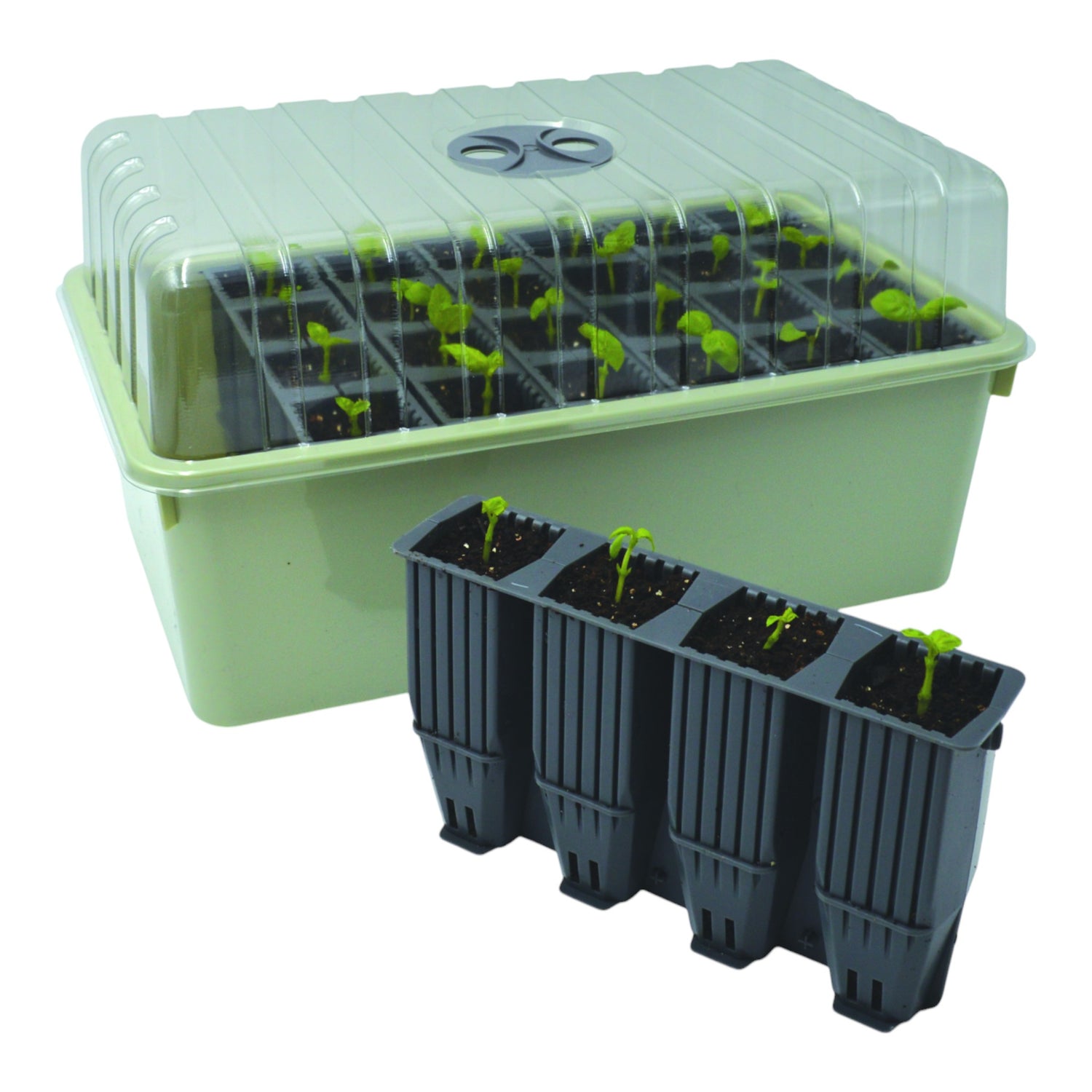
The complete kit includes a base tray, 28 reusable deep split growing cells and a clear propagator lid with adjustable ventilation.

Commercial Products
Commercial Products
 Professional Growing Media
 Plant Nutrition
 Plant Health
 Sprayers & Protective Clothing
 Pots, Planters & Trays
 Propagation
 Baskets & Planters
 Fabrics & Netting
 Environment
 Plant Lighting
 Irrigation
 Plant Support & Tree Care
 Equipment
 Tools
 Plant Labels
 Packaging
 Lawn Care
 Clearance
Retail Products
Retail Products
 Growing Media
 Plant Nutrition
 Plant Health
 Pots, Planters & Tanks
 Propagation
 Baskets & Planters
 Fabrics & Netting
 Environment
 Plant Lighting
 Plant Support
 Equipment
 Tools

2 products
2 products
Sort by:


£9.95
Unit price per£9.95
Unit price perThe Garland 28 Cell Deep Root Success Kit is a complete propagation system designed for raising plants that benefit from deep, well-developed root systems. Combining 28 reusable split growing cells with a base tray and clear ventilated propagator lid, it provides a practical all-in-one system for sowing, growing and transplanting young plants.
The distinctive deep cells provide considerably more vertical rooting space than a conventional shallow seed tray. Their ribbed internal design encourages developing roots downwards, while the open-bottomed construction provides drainage and exposure to air at the base of each cell.
When plants are ready to move on, the individual cells open along their hinged side. This allows the root ball to be removed with less disturbance than pulling a plant from a conventional rigid pot, helping to preserve the established root structure during transplanting.
Fully assembled, the kit measures approximately 38 x 23.5 x 20cm, providing a compact propagation system capable of raising up to 28 individual plants at a time.
Why choose the Garland Deep Root Success Kit?
Designed to encourage strong root development
The defining feature of the Garland Deep Root Success Kit is the shape of its individual propagation cells. Rather than using shallow cavities, each plant receives its own tall growing compartment.
This is particularly useful when raising plants that naturally produce vigorous or deeper root systems. Giving roots additional vertical growing space during propagation can allow plants to establish for longer before they need to be transplanted into larger containers or their final growing position.
The internal profile of the cells helps direct roots downwards. At the bottom, the open design allows excess water to drain and exposes roots that reach the base to the surrounding air.
This approach is intended to discourage the dense root circling that can develop when young plants remain in conventional smooth-sided pots for too long.
Split cells for easier transplanting
Transplanting is where the Garland system differs significantly from conventional plug trays. Instead of pushing a root ball through a small opening or pulling the plant from a rigid cell, the individual Deep Root cells are designed to open.
When a plant is ready for transplanting, the cell can be removed from the tray and opened along its split side. The established root ball can then be accessed directly.
This reduces the need to squeeze the container or pull on the plant, helping to keep the growing medium and root system together during transfer.
The split-cell design is also useful when checking root development. Growers can inspect an individual plant before deciding whether the batch is ready to transplant.
Complete covered propagation system
The Deep Root Success Kit includes a clear propagator lid that sits over the base tray and growing cells. The cover creates a more protected environment around newly sown seeds and young seedlings during their early development.
A dial ventilator in the lid allows airflow to be adjusted as plants establish. Ventilation can be progressively increased as seedlings develop and become better able to cope with the surrounding growing environment.
The transparent cover allows light to reach the plants while making it easy to monitor development without repeatedly removing the lid.
As seedlings grow, monitor temperature, humidity and ventilation carefully. The propagator lid should not be treated as a substitute for appropriate crop management, and young plants should be acclimatised to their growing environment as they develop.
What can you grow in a deep root trainer?
Deep propagation cells are particularly useful for plants where establishing a substantial root system before transplanting is beneficial.
| Application | Why deep cells are useful |
|---|---|
| Sweet peas | Provide additional depth for vigorous young root systems during early growth. |
| Beans | Allow seedlings to establish individually before being moved to their final growing position. |
| Peas | Useful for starting individual plants under protected conditions before transplanting. |
| Young trees | Deep cells provide greater vertical rooting space than a conventional shallow seed tray. |
| Shrubs | Suitable for suitable seed-raised or propagated plants that benefit from deeper early root development. |
| General propagation | Useful for other plants that benefit from being raised individually in deeper cells before transplanting. |
How to use the Garland Deep Root Success Kit
Fill the cells
Fill each cell with an appropriate propagation growing medium, settling it gently without excessive compaction. The growing medium should provide the moisture retention, aeration and drainage required by the crop being raised.
Sow or insert plant material
Sow seeds at the depth and rate recommended for the chosen species. Water carefully after sowing and allow excess water to drain.
Fit the propagator lid
Place the clear lid over the tray where covered propagation is appropriate. Adjust the ventilation according to the requirements of the crop and growing environment.
Manage moisture carefully
The narrow, deep cells should be monitored to ensure the growing medium remains appropriately moist throughout the root zone. Avoid allowing the medium to become excessively saturated.
Transplant when established
When the plant has developed sufficiently, remove its cell from the tray and carefully open the split cell. Transfer the intact root ball into a larger container or final planting position as appropriate.
Garland 28 Cell Deep Root Success Kit product details
| Manufacturer | Garland |
|---|---|
| Product type | Deep root trainer & covered propagation kit |
| Number of growing cells | 28 |
| Cell design | Deep, reusable split propagation cells |
| Cell base | Open for drainage & root exposure to air |
| Assembled dimensions | 38 x 23.5 x 20cm |
| Propagator lid | Clear lid included |
| Lid height | Approximately 8cm |
| Ventilation | Adjustable dial ventilator |
| Reusable | Yes |
| Kit includes | Base tray, 28 split growing cells & clear ventilated propagator lid |
| Outer case quantity | 4 kits |
| Typical applications | Deep-rooted seedlings, vegetables, flowers, young trees, shrubs & general propagation |
Garland 28 Cell Deep Root Success Kit FAQs
What is included with the Garland Deep Root Success Kit?
The complete kit includes a base tray, 28 reusable deep split growing cells and a clear propagator lid with adjustable ventilation. How many plants can I grow at once?
The system contains 28 individual cells, allowing up to 28 plants to be raised separately at one time. What size is the assembled propagator?
The assembled kit measures approximately 38cm long x 23.5cm wide x 20cm high. Why are the cells deeper than normal seed tray cells?
The extra depth provides more vertical space for root development, making the system particularly useful for plants that benefit from establishing deeper or more vigorous root systems before transplanting. What is the purpose of the ribs inside the cells?
The ribbed cell profile helps guide developing roots down the cell rather than allowing them simply to follow the sides of a smooth container. Why are the bottoms of the cells open?
The open bases allow excess irrigation water to drain and expose roots reaching the bottom of the cells to air. How do I remove a plant without damaging its roots?
Remove the individual cell from the tray and carefully open its split side. This provides access to the root ball without having to pull the plant from a rigid pot or force it through the bottom of a plug tray. Can the Deep Root cells be reused?
Yes. The cells are designed for reuse. After transplanting, remove remaining growing media and root material, clean the components and allow them to dry before the next propagation cycle. Does the kit include a propagator lid?
Yes. A clear propagator lid is supplied as part of the complete kit. The lid is approximately 8cm high and incorporates an adjustable dial ventilator. When should I open the propagator vent?
Ventilation should be adjusted according to the crop and growing conditions. As seedlings establish, increasing airflow can help acclimatise them to the surrounding environment and manage excess humidity. What plants are suitable for the Garland Deep Root Success Kit?
The system is particularly useful for crops that benefit from deeper early root development, including sweet peas, peas, beans and suitable young trees and shrubs. It can also be used for other plants where individual deep-cell propagation is advantageous. How many kits are supplied in an outer case?
The outer case quantity is 4 complete Deep Root Success Kits.
£5.78
Unit price per£5.78
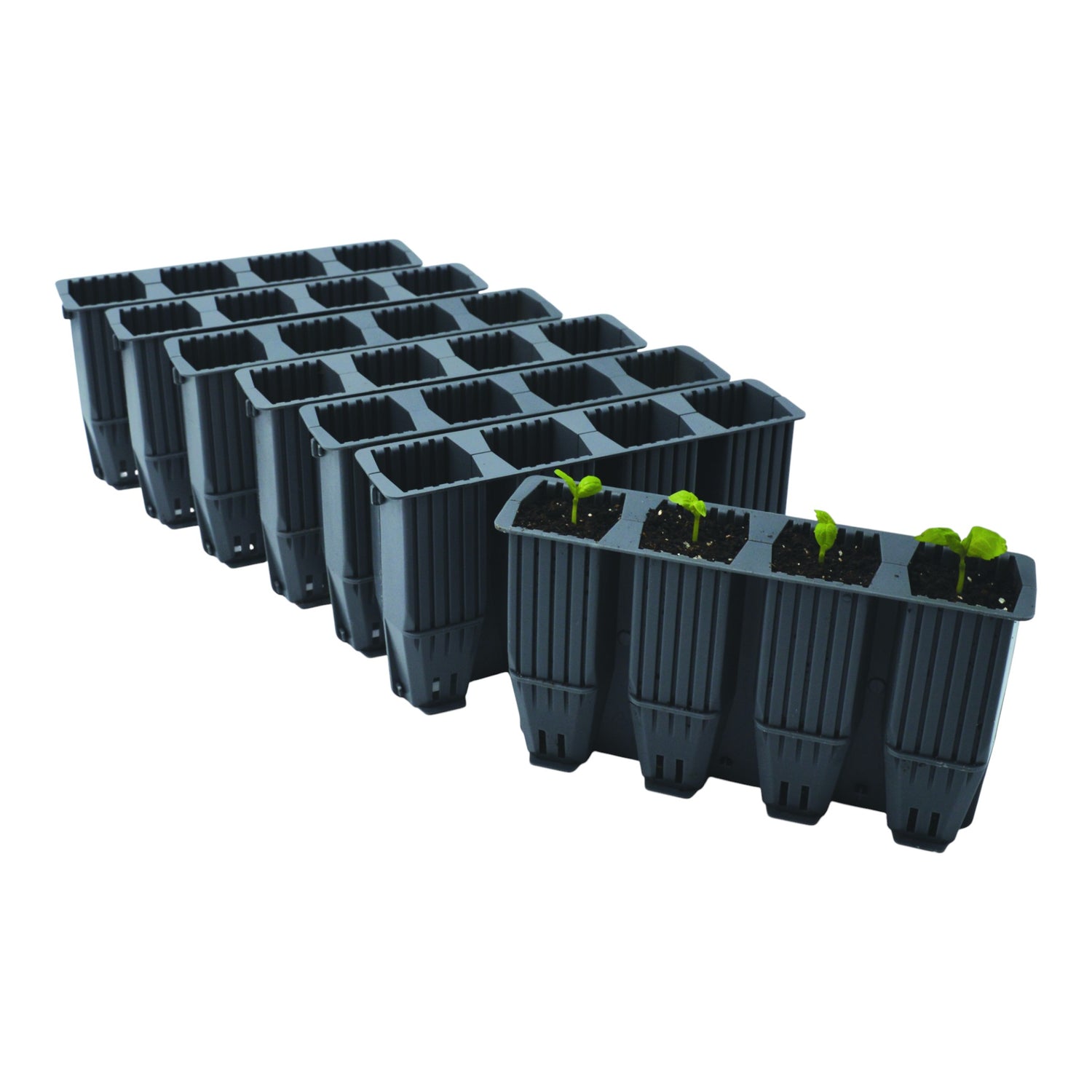
Unit price perThe Garland 28 Cell Deep Root Plant Cells are reusable deep propagation cells designed to encourage strong downward root development while making transplanting easier. Supplied as seven strips of four cells, the set provides 28 individual growing positions for seedlings, young plants and other crops that benefit from additional rooting depth.
Each strip measures approximately 21 x 5 x 12cm, giving plants considerably more vertical rooting space than a conventional shallow seed tray. The individual cells feature a ribbed internal profile and an open base, helping to guide developing roots downwards while providing drainage and exposure to air at the bottom of the cell.
The cells are also designed to open along their split sides. When plants are ready to move on, the root system can be inspected and the cell opened to release the root ball rather than pulling the plant from a rigid pot. This makes the system particularly useful where preserving a well-developed root structure during transplanting is important.
Why choose Garland Deep Root Plant Cells?
Deep cells for better root development
Young plants can quickly become restricted in shallow propagation cells, particularly species that naturally develop vigorous or deeper root systems. The Garland Deep Root Plant Cells provide approximately 12cm of cell depth, allowing roots more vertical growing space during propagation.
The internal ribs are designed to encourage roots to follow a downward path through the cell rather than simply circling around smooth container walls. This helps create a root structure suited to subsequent transplanting into a larger container or final growing position.
The open base performs two functions. It allows excess irrigation water to drain freely from the growing medium, while roots reaching the bottom of the cell are exposed to air rather than continuing to grow around an enclosed container base.
As with any propagation system, results depend on appropriate crop selection, growing medium, irrigation, nutrition and environmental conditions.
Split cells for easier transplanting
The opening cell design is particularly useful when it is time to transplant young plants. Removing an established seedling from a conventional rigid pot can require squeezing the container or pulling the root ball from the top. Both methods can disturb delicate roots and growing media.
With the Garland system, the individual cell can instead be opened around the root ball. This exposes the growing medium and roots, allowing the established plant to be removed with less manipulation.
The same feature also provides a useful way to inspect root development before transplanting. A cell can be carefully opened to check how thoroughly the growing medium has been colonised by roots, helping growers judge whether a plant is ready to move on.
After transplanting, the reusable cells can be cleaned and prepared for another propagation cycle.
Seven manageable strips of four cells
The 28 cells are arranged as seven separate strips, with four deep cells per strip. Each strip measures approximately 21cm long x 5cm wide x 12cm high.
This modular arrangement makes it easier to work with smaller batches of plants. Rather than handling all 28 growing positions as one fixed tray, individual strips can be moved, inspected and transplanted as required.
For growers raising several varieties at the same time, separate strips can also make it easier to keep different batches organised.
What can you grow in Garland Deep Root Plant Cells?
The cells are particularly useful for plants that benefit from more rooting depth during propagation than a conventional shallow module provides.
| Application | Why deep cells can help |
|---|---|
| Sweet peas | Provide additional depth for vigorous young root systems before planting out. |
| Peas | Allow individual seedlings to establish in deep cells before transplanting. |
| Beans | Provide individual growing positions and useful rooting depth during early development. |
| Young trees | Deep cells provide more vertical rooting space than conventional shallow propagation trays. |
| Shrubs | Useful for suitable young plants where a deeper propagation container is preferred. |
| General propagation | Suitable for other crops that benefit from individual deep-cell propagation before potting on or planting out. |
How to use Garland Deep Root Plant Cells
Fill with propagation growing media
Fill the cells with an appropriate seed or propagation growing medium. Settle the medium gently into each deep cell without excessive compaction so that an appropriate balance of moisture retention, aeration and drainage can be maintained.
Sow the crop
Sow seeds according to the requirements of the selected species. Each cell provides an individual growing position, helping prevent neighbouring seedlings from becoming intertwined within one large root mass.
Water carefully
Water thoroughly enough to moisten the growing medium throughout the depth of the cell and allow excess water to drain from the open base. Monitor moisture carefully, as requirements will vary with crop, growing medium and environmental conditions.
Monitor root development
As plants establish, the split-cell construction allows the root system to be inspected when necessary. Handle young roots carefully and close the cell again if the plant requires additional growing time.
Open the cell for transplanting
When the plant is ready to move on, remove the relevant strip and carefully open the cell around the root ball. Transfer the plant into a larger container or its final growing position as appropriate for the crop.
Part of the Garland Deep Root propagation system
These 28 Deep Root Plant Cells are the growing-cell component used within Garland's Deep Root propagation system.
For growers looking for a complete covered propagation setup, the Garland 28 Cell Deep Root Success Kit combines 28 deep cells with a supporting base tray and a clear ventilated propagator lid.
This standalone set is useful for growers who already have a suitable Deep Root setup, want additional cells for crop rotation or simply want to use the deep cell strips independently within an appropriate propagation arrangement.
Garland 28 Cell Deep Root Plant Cells product details
| Manufacturer | Garland |
|---|---|
| Product type | Reusable deep root trainer plant cells |
| Total growing cells | 28 |
| Configuration | 7 strips of 4 cells |
| Dimensions per strip | 21 x 5 x 12cm |
| Cell design | Deep, ribbed split propagation cells |
| Cell base | Open for drainage & root exposure to air |
| Reusable | Yes |
| Number supplied | 28 plant cells |
| Outer case quantity | 6 sets |
| Typical applications | Deep-rooted seedlings, vegetables, flowers, young trees, shrubs & general propagation |
Garland 28 Cell Deep Root Plant Cells FAQs
How many Deep Root Plant Cells are included?
The set provides 28 individual growing cells, arranged as seven strips containing four cells each. What size is each strip?
Each four-cell strip measures approximately 21cm long x 5cm wide x 12cm high. Why are the Garland cells so deep?
The 12cm depth provides additional vertical growing space for root development, making the cells particularly useful for plants that benefit from deeper propagation containers. Why are there ribs inside the cells?
The internal ribs help guide developing roots down through the cell rather than encouraging them to follow the sides of a smooth container. Why are the bottoms of the cells open?
The open bases allow excess irrigation water to drain and expose roots reaching the bottom of the cells to air. How do the split cells make transplanting easier?
The cells can be opened around the established root ball, reducing the need to squeeze the container or pull the plant from a rigid cell during transplanting. Can I inspect the roots before transplanting?
Yes. The split-cell design allows an individual cell to be carefully opened so root development can be inspected before deciding whether the plant is ready to transplant. Are Garland Deep Root Plant Cells reusable?
Yes. After transplanting, remove remaining growing media and roots, clean the cells and allow them to dry before using them for another propagation cycle. Do these cells include the base tray and propagator lid?
No. This product contains the 28 Deep Root Plant Cells only. The complete Garland Deep Root Success Kit includes the cells together with a base tray and clear ventilated propagator lid. What plants can I grow in Deep Root cells?
They are particularly useful for crops that benefit from additional rooting depth during propagation, including sweet peas, peas, beans and suitable young trees and shrubs, as well as other plants suited to deep-cell propagation. Can I use only some of the cells at a time?
Yes. Because the 28 cells are arranged in seven separate four-cell strips, growers can work with individual strips rather than using all 28 positions at once. How many sets are supplied in an outer case?
The outer case quantity is 6 sets. Each set contains 28 Deep Root Plant Cells.
The Root Trainers collection is designed to encourage deep, healthy root development during early plant growth stages. These systems promote air pruning and reduced root spiralling, resulting in stronger, more resilient plants.
Widely supplied through horticultural distributors, root trainers are used by professional nurseries focused on high-quality propagation outcomes. This range supports improved plant establishment and long-term performance in commercial growing environments.