
What does the TrolMaster WCS-3 measure?
The WCS-3 measures Volumetric Water Content (VWC), providing a percentage reading representing the moisture level within the growing medium.

Commercial Products
Commercial Products
 Professional Growing Media
 Plant Nutrition
 Plant Health
 Sprayers & Protective Clothing
 Pots, Planters & Trays
 Propagation
 Baskets & Planters
 Fabrics & Netting
 Environment
 Plant Lighting
 Irrigation
 Plant Support & Tree Care
 Equipment
 Tools
 Plant Labels
 Packaging
 Lawn Care
 Clearance
Retail Products
Retail Products
 Growing Media
 Plant Nutrition
 Plant Health
 Pots, Planters & Tanks
 Propagation
 Baskets & Planters
 Fabrics & Netting
 Environment
 Plant Lighting
 Plant Support
 Equipment
 Tools
1993 products
1993 products
Sort by:

£60.00
Unit price per£60.00
Unit price perThe TrolMaster WCS-3 Water Content Sensor is a three-prong Volumetric Water Content (VWC) sensor designed to provide real-time measurement of the moisture level within growing media.
Inserted directly into the growing medium, the WCS-3 measures water content from 0-100% and provides growers with live substrate moisture information. This makes it easier to understand irrigation performance, monitor dry-back between irrigation events and make informed adjustments to watering strategy.
The WCS-3 is suitable for use in growing media including coco coir, soil and rock wool. Rather than relying solely on irrigation timings or judging moisture from the surface of the substrate, growers can monitor changes in actual volumetric water content over time.
A built-in tap-to-wake LCD allows the current VWC percentage to be viewed directly at the sensor. When connected to a compatible TrolMaster controller, readings can also be monitored through the control system, with compatible connected systems providing historical data, alarm functions and mobile monitoring.
Why choose the TrolMaster WCS-3?
Monitor substrate dry-back & irrigation response
Knowing when irrigation has taken place is only part of understanding a crop's water management. The WCS-3 allows growers to see how the water content of the substrate changes following each irrigation event and how quickly that moisture level subsequently declines.
This dry-back information can help identify whether irrigation events are too frequent, too widely spaced or need adjustment as plant demand and environmental conditions change.
When readings are recorded through a compatible TrolMaster system, growers can observe moisture trends rather than relying on a single measurement. This is particularly useful when developing more precise irrigation and crop steering strategies.
Suitable growing media
The three-prong WCS-3 probe is inserted directly into the substrate being monitored. TrolMaster specifies the sensor for growing media including:
Sensor placement is important. Position the probe in a representative part of the root zone and use consistent placement when comparing multiple plants or growing areas.
Water content monitoring for crop steering
The WCS-3 is designed to support crop steering irrigation strategies by giving growers visibility of the substrate's response to irrigation.
Instead of working from irrigation duration and frequency alone, VWC data provides another layer of information showing how much the substrate water content increases following irrigation and how it declines during the subsequent dry-back period.
This information can be used alongside plant stage, environmental conditions and other crop data when refining irrigation schedules.
Built-in tap-to-wake LCD display
The WCS-3 incorporates an LCD directly into the sensor body. The display can be activated by tapping or disturbing the sensor and shows the current VWC percentage at the measurement point.
This allows quick local checks without needing to return to the main controller. The same water-content information can also be viewed through a compatible connected TrolMaster control system.
TrolMaster controller compatibility
The WCS-3 is compatible with a range of TrolMaster control platforms and supports multiple sensors on compatible systems.
| Aqua-X NFS-1 | Up to 8 WCS-3 sensors |
|---|---|
| Aqua-X Plus NFS-3 | Up to 20 WCS-3 sensors |
| Aqua-X Pro NFS-2 | Up to 50 WCS-3 sensors |
| Hydro-X Pro HCS-2 | Up to 50 WCS-3 sensors |
| Tent-X TCS-1 | 1 WCS-3 sensor |
TrolMaster WCS-3 product details
| Brand | TrolMaster |
|---|---|
| Model | WCS-3 |
| Product type | Volumetric Water Content substrate sensor |
| Measurement | Substrate water content / VWC |
| Water content range | 0-100% |
| Probe | Three-prong substrate probe |
| Display | Built-in tap-to-wake LCD |
| Input voltage | 12V DC |
| Maximum input current | 0.1A |
| Operating temperature | 0-50°C / 32-122°F |
| Operating humidity | Up to 90% RH |
| Suitable media | Coco coir, soil, rock wool & compatible growing media |
| Typical applications | Substrate moisture monitoring, irrigation analysis, dry-back monitoring & crop steering |
| Package dimensions | 170 x 90 x 54mm |
What's included?
| Sensor | 1 x TrolMaster WCS-3 Water Content Sensor 3 |
|---|---|
| Connection cable | 1 x 4ft M12 cable |
| Splitter | 1 x M12 T-Splitter |
TrolMaster WCS-3 Water Content Sensor FAQs
What does the TrolMaster WCS-3 measure?
The WCS-3 measures Volumetric Water Content (VWC), providing a percentage reading representing the moisture level within the growing medium. What is VWC?
VWC stands for Volumetric Water Content. It provides a way of monitoring how the water content of a growing medium changes as irrigation is applied and as the substrate subsequently dries. What is the measurement range of the WCS-3?
The WCS-3 has a specified water-content measurement range of 0-100%. Does the WCS-3 measure EC?
No. The WCS-3 is specifically a water-content sensor. If substrate EC and temperature measurement are also required, TrolMaster offers other sensor options designed for those additional measurements. Can I use the WCS-3 in coco?
Yes. TrolMaster specifically lists coco coir as a suitable growing medium for the WCS-3. Can I use the WCS-3 in soil?
Yes. The three-prong probe can be inserted into suitable soil and potting media to monitor changes in water content. Can the WCS-3 be used in rock wool?
Yes. TrolMaster lists rock wool as one of the growing media suitable for WCS-3 water-content measurement. Can the WCS-3 help with crop steering?
Yes. TrolMaster describes the WCS-3 as crop-steering irrigation compatible. Monitoring changes in VWC can help growers understand irrigation response and substrate dry-back when developing a crop steering strategy. Can I see the moisture reading on the sensor?
Yes. The WCS-3 has a built-in LCD that can be activated locally to display the current VWC percentage. Can I monitor WCS-3 readings remotely?
When connected to a compatible TrolMaster controller with the appropriate network and app configuration, WCS-3 readings can be monitored through the TrolMaster system, including historical information and configured alerts. Can the WCS-3 alert me if the substrate becomes too dry?
Compatible TrolMaster systems allow high and low water-content alarm settings to be configured, helping identify when readings move outside the desired range. Can I connect multiple WCS-3 sensors?
Yes. The WCS-3 is designed for daisy-chain installation, with the number of supported sensors depending on the TrolMaster controller being used. How many WCS-3 sensors can I connect to an Aqua-X?
The Aqua-X NFS-1 supports up to eight WCS-3 sensors. Other compatible TrolMaster controllers support different quantities, including up to 20 on the Aqua-X Plus NFS-3 and up to 50 on the Aqua-X Pro NFS-2. Where should I position the WCS-3?
Insert the three-prong probe into a representative part of the growing medium and root zone. Consistent sensor positioning is particularly important when comparing readings between multiple plants, containers or growing areas. What's included with the WCS-3?
The package includes one WCS-3 Water Content Sensor 3, one 4ft M12 cable and one M12 T-Splitter.

£25.00
Unit price per£25.00
Unit price perThe TrolMaster WD-1 Water Detector & Touch Spot is designed for use with the Aqua-X Irrigation Control System, providing both water leak detection and irrigation confirmation from a single sensor system.
The WD-1 can be configured in two different ways. In its standard leak detection mode, the Touch Spot is positioned where unwanted water is likely to collect, allowing the Aqua-X system to identify a leak and generate an alert.
Alternatively, the WD-1 can be assigned to an irrigation output and used as a watering verification sensor. When the associated pump or solenoid is activated, the system expects the WD-1 to detect water within the configured delay period. If water is not detected, Aqua-X can alert the user to a potential irrigation failure.
This provides an important additional layer of monitoring for automated irrigation. A controller may successfully switch an output on, but that alone cannot confirm that water actually reached the intended area. The WD-1 allows the system to verify the physical presence of water.
Why use the TrolMaster WD-1?
Watering confirmation for automated irrigation
Automated irrigation normally relies on the controller successfully switching pumps or solenoid valves. A switched output, however, does not necessarily mean that water has reached the crop. Pump failure, valve problems or other faults elsewhere in the irrigation system can prevent the expected watering event.
The WD-1 provides an additional physical confirmation point. It can be assigned to a controlled irrigation output and positioned where runoff accumulates or where water is expected to arrive.
When the assigned pump or solenoid operates, the Aqua-X expects the WD-1 to detect water within an adjustable delay period. If the expected water is not detected, the system can issue an irrigation failure alert.
This makes the WD-1 particularly valuable in automated irrigation systems where a missed watering event could otherwise remain unnoticed.
Water leak detection
The WD-1 can also operate as a conventional leak detector. Position the Touch Spot in an area where water should not normally be present, such as around a reservoir, nutrient tank, irrigation equipment or other potential leak point.
When water is detected, the WD-1 communicates the event to the Aqua-X system so the user can be alerted and investigate the cause.
This provides useful protection around irrigation equipment and water storage areas where unnoticed leaks could result in water damage, wasted nutrient solution or loss of reservoir contents.
Installation & Aqua-X integration
Mount the WD-1 Water Detector in a suitable location near the area being monitored. Connect the detector to the Aqua-X system using the supplied RJ12 connection and position the Touch Spot at the required detection point.
For leak detection, place the Touch Spot where leaking water is likely to reach it. For irrigation confirmation, position it where irrigation water or runoff will reliably reach the sensor during a normal watering event.
The WD-1 can then be addressed within the Aqua-X system and configured either as a leak sensor or assigned to the appropriate irrigation output for watering confirmation.
Important information about RO water
The WD-1 detects water through its electrical properties. Municipal water, well water and nutrient solution can normally be detected, but extremely pure reverse osmosis water may contain too few dissolved solids for reliable detection.
If the irrigation system uses very low-EC RO water, confirm reliable detection under the actual operating conditions before depending on the WD-1 for leak or watering confirmation.
TrolMaster WD-1 product details
| Brand | TrolMaster |
|---|---|
| Model | WD-1 |
| Product type | Water detector & irrigation confirmation sensor |
| Control system | TrolMaster Aqua-X Irrigation Control System |
| Operating modes | Water leak detection & irrigation/watering confirmation |
| Display | LCD |
| Water detection | Remote Touch Spot |
| Working temperature | 32-122°F / approximately 0-50°C |
| Working humidity | Up to 90% |
| Package dimensions | 160 x 86 x 86mm |
| Typical applications | Reservoir leak detection, irrigation monitoring & watering confirmation |
What's included?
| Water Detector | 1 x TrolMaster WD-1 |
|---|---|
| Water sensor | 1 x Touch Spot |
| Splitter | 1 x RJ12 T-Splitter |
| Connection cable | 1 x 16ft RJ12 cable |
TrolMaster WD-1 Water Detector FAQs
What does the TrolMaster WD-1 do?
The WD-1 detects the presence of water and can be configured either to monitor for unwanted leaks or to confirm that water has arrived following an irrigation event. What is watering confirmation?
Watering confirmation allows the control system to check for the physical presence of water after an assigned pump or solenoid has been activated. This provides additional verification that the irrigation event actually occurred. Can the WD-1 detect an irrigation failure?
Yes. When configured for watering confirmation, the WD-1 can be assigned to an irrigation output. If the expected water is not detected within the configured delay period, the Aqua-X system can generate an irrigation failure alert. Can the WD-1 be used purely as a leak detector?
Yes. Leak detection is one of its primary functions. The Touch Spot can be positioned where unwanted water is likely to collect. Where should I position the Touch Spot?
For leak monitoring, place it where leaking water is likely to accumulate. For watering confirmation, position it where irrigation water or runoff will reliably reach the sensor during a normal irrigation event. Does the WD-1 work with the TrolMaster Aqua-X?
Yes. The WD-1 is designed as a water detection accessory for the TrolMaster Aqua-X Irrigation Control System. Can the WD-1 send an alert to my phone?
When used with a correctly configured and connected Aqua-X system, water detection and irrigation failure events can be communicated through the TrolMaster monitoring system and app. Can I use more than one WD-1?
Yes. The Aqua-X system supports multiple WD-1 detectors, allowing different areas or irrigation outputs to be monitored independently. Can one WD-1 monitor a specific pump or solenoid?
Yes. In watering confirmation mode, a WD-1 can be assigned to a controlled irrigation output so the system can check that water is detected when that output operates. Will the WD-1 detect reverse osmosis water?
Not necessarily. Very pure RO water can have extremely low dissolved solids and may not be detected reliably. Detection should be tested under the actual water conditions being used. Does the WD-1 measure substrate moisture?
No. The WD-1 detects the presence of water. It is not a volumetric water content or substrate moisture sensor. Does the WD-1 measure EC or pH?
No. Its purpose is water detection and watering confirmation. EC and pH monitoring require the appropriate TrolMaster sensors and system components. Is the Touch Spot included?
Yes. The WD-1 package includes one Water Detector, one Touch Spot, one RJ12 T-Splitter and one 16ft RJ12 cable. Why use watering confirmation if the controller already operates the pump?
Switching a pump or solenoid confirms that the controller issued the command, but it does not by itself prove that water reached the intended area. The WD-1 adds a physical water-detection point to help identify failures that could otherwise go unnoticed.
£6.60
Unit price per£6.60
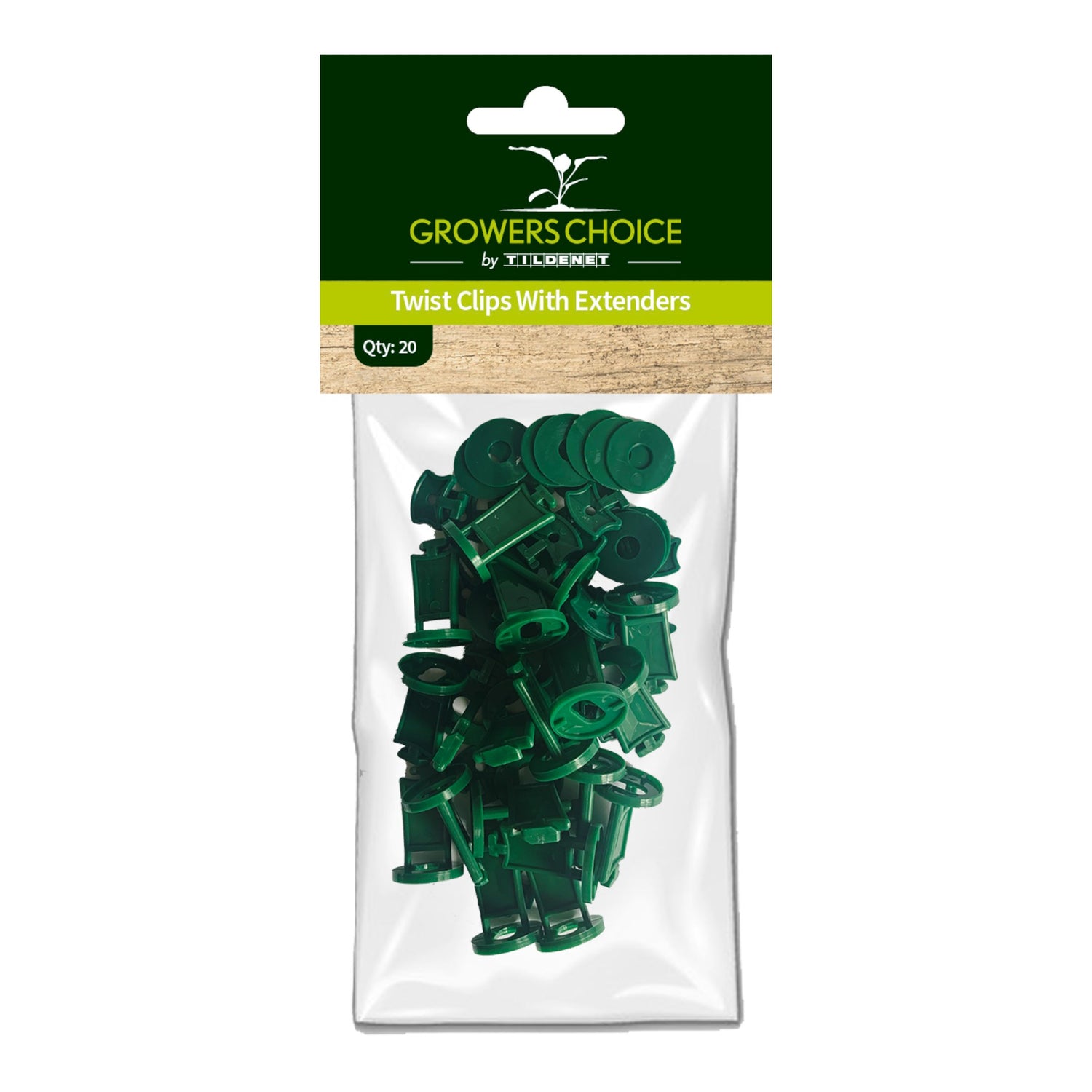
Unit price perThe Twist Clips with Extenders - 33mm x 24mm (pack of 20) is a practical plant support clip designed for supporting and organising plant stems.
It is suited to routine horticultural work in nurseries, greenhouses, garden centres and gardens where a straightforward accessory is required.
Key benefits
How to use it
Use this product for supporting and organising plant stems. Select the size and format to suit the plant, container or growing area and check its position periodically as plants develop.
When supporting stems, avoid fastening so tightly that growth is restricted. Check ties and supports during the season and adjust them as stems thicken.
For professional & garden use
This accessory can be used for individual plants and displays or incorporated into larger nursery, landscaping and retail programmes.
Twist Clips with Extenders - 33mm x 24mm (pack of 20) product details
| Supplier | Creation Horticulture |
|---|---|
| Product type | Plant support clip |
| Stated size | 33mm x 24mm |
| Primary use | supporting and organising plant stems |
Twist Clips with Extenders - 33mm x 24mm (pack of 20) FAQs
What size is this product?
The stated size is 33mm x 24mm. What is this product used for?
It is designed for supporting and organising plant stems. Can it be used on young plants?
Yes, where the size and support method are appropriate. Leave enough room for stems to expand and check the support as the plant grows. How tightly should plants be secured?
Secure plants firmly enough for support but not so tightly that stems are pinched or restricted. Should supports be checked during the season?
Yes. Adjust ties, clips and supports as plants grow and replace anything that has become damaged or restrictive.
£28.55
Unit price per£28.55
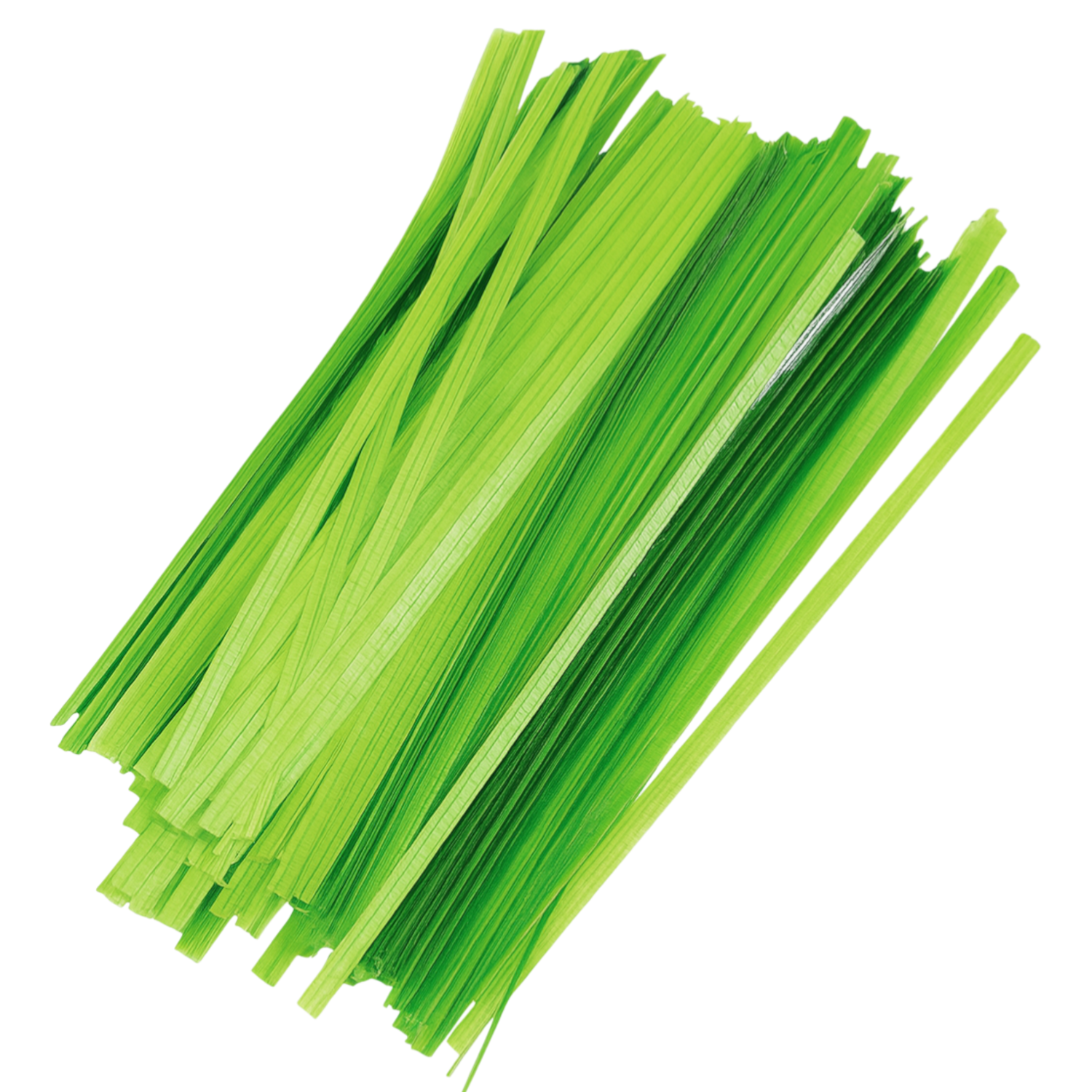
Unit price perThe Twist-it Stem Tie - Paper Twist Ties 10cm (4") - GREEN (Box of 5000) is a paper twist stem tie designed for light-duty tying and training of suitable plants.
It is suited to professional landscaping, nursery and establishment work where the product's size and format match the planting or site requirements.
Supplied as: box of 5000.
Key benefits
Plant tying & training
Twist the tie around the plant and support firmly enough to hold the stem without pinching it. Leave room for growth and check ties regularly during the growing season.
Professional establishment & maintenance
Successful landscape establishment depends on more than the protection product alone. Check plant stability, watering, weed competition and general plant condition regularly during the establishment period.
Twist-it Stem Tie - Paper Twist Ties 10cm (4") - GREEN (Box of 5000) product details
| Brand | Rainbow |
|---|---|
| Product type | Paper twist stem tie |
| Primary use | light-duty tying and training of suitable plants |
| Stated size | 10cm (4") |
| Box quantity | 5000 |
Twist-it Stem Tie - Paper Twist Ties 10cm (4") - GREEN (Box of 5000) FAQs
What size is this product?
The stated size is 10cm (4"). How many are supplied?
This product is supplied in a box of 5000. What are paper twist ties used for?
They are used for light-duty plant tying and training where the tie size is appropriate. How tight should the tie be?
Secure it firmly enough for support while leaving room for stem growth and movement. Should plant ties be checked later?
Yes. Recheck them during active growth and remove or adjust any tie that becomes restrictive.
£35.50
Unit price per£35.50
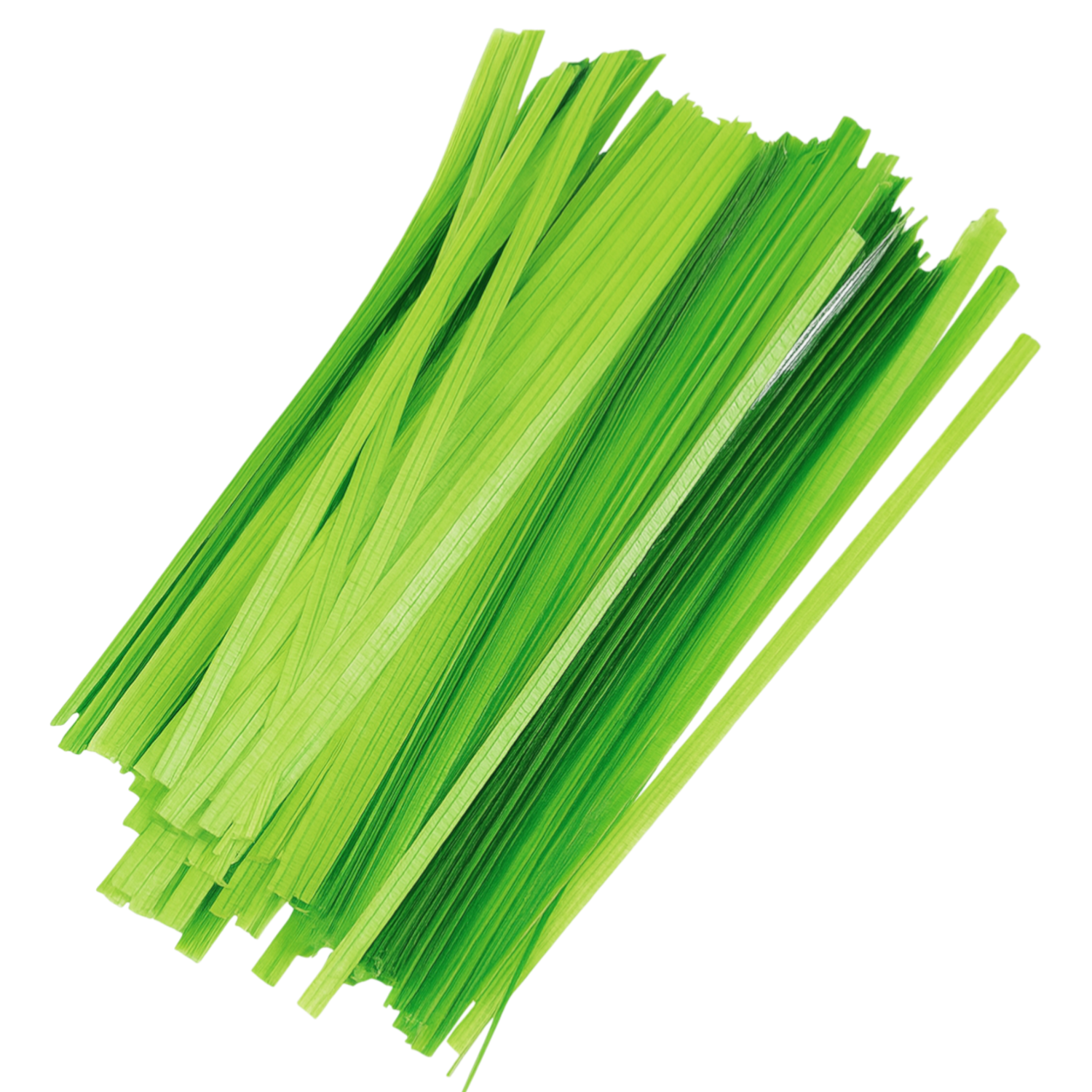
Unit price perThe Twist-it Stem Tie - Paper Twist Ties 12.5cm (5") - GREEN (Box of 5000) is a paper twist stem tie designed for light-duty tying and training of suitable plants.
It is suited to professional landscaping, nursery and establishment work where the product's size and format match the planting or site requirements.
Supplied as: box of 5000.
Key benefits
Plant tying & training
Twist the tie around the plant and support firmly enough to hold the stem without pinching it. Leave room for growth and check ties regularly during the growing season.
Professional establishment & maintenance
Successful landscape establishment depends on more than the protection product alone. Check plant stability, watering, weed competition and general plant condition regularly during the establishment period.
Twist-it Stem Tie - Paper Twist Ties 12.5cm (5") - GREEN (Box of 5000) product details
| Brand | Rainbow |
|---|---|
| Product type | Paper twist stem tie |
| Primary use | light-duty tying and training of suitable plants |
| Stated size | 12.5cm (5") |
| Box quantity | 5000 |
Twist-it Stem Tie - Paper Twist Ties 12.5cm (5") - GREEN (Box of 5000) FAQs
What size is this product?
The stated size is 12.5cm (5"). How many are supplied?
This product is supplied in a box of 5000. What are paper twist ties used for?
They are used for light-duty plant tying and training where the tie size is appropriate. How tight should the tie be?
Secure it firmly enough for support while leaving room for stem growth and movement. Should plant ties be checked later?
Yes. Recheck them during active growth and remove or adjust any tie that becomes restrictive.
£42.81
Unit price per£42.81
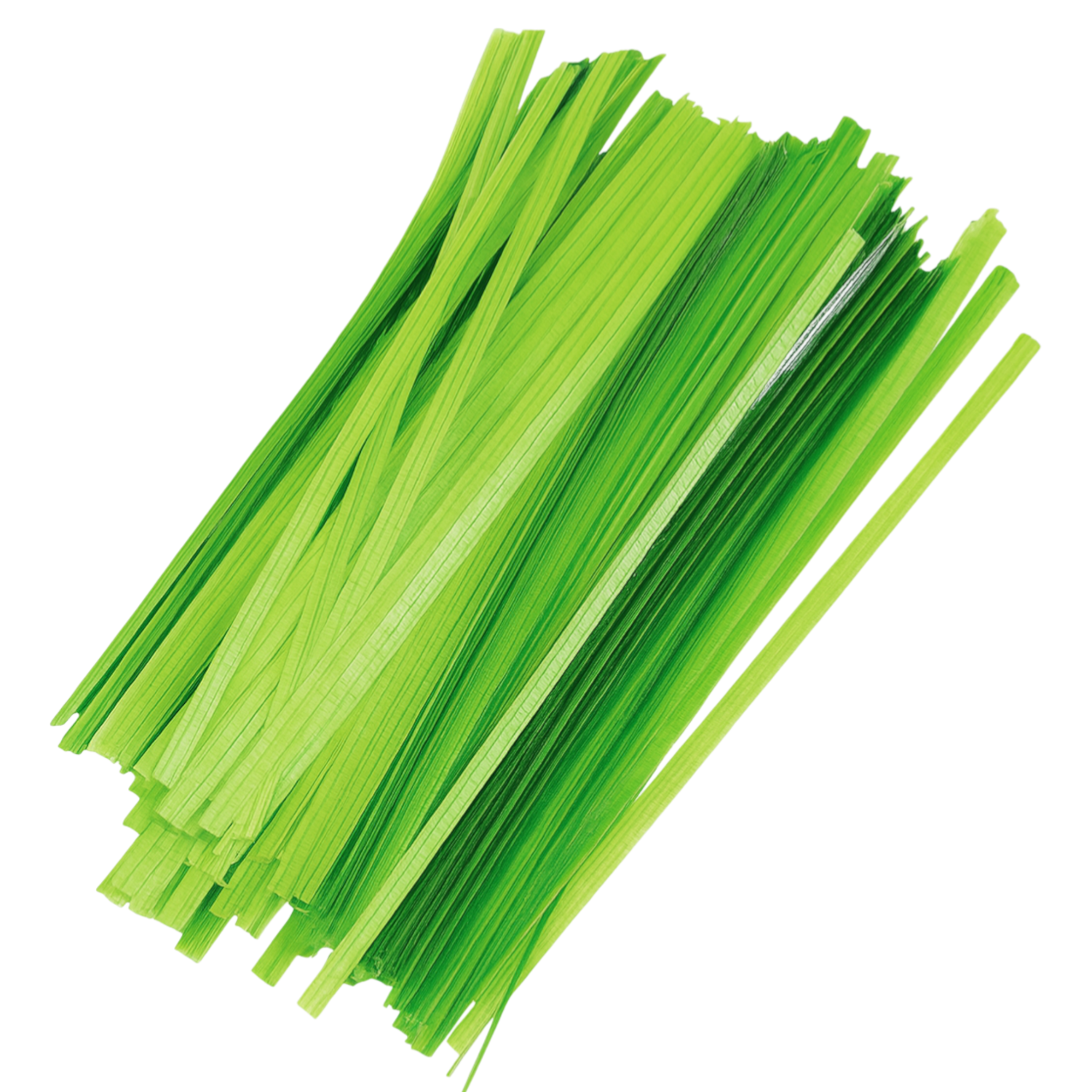
Unit price perThe Twist-it Stem Tie - Paper Twist Ties 15cm (6") - GREEN (Box of 5000) is a paper twist stem tie designed for light-duty tying and training of suitable plants.
It is suited to professional landscaping, nursery and establishment work where the product's size and format match the planting or site requirements.
Supplied as: box of 5000.
Key benefits
Plant tying & training
Twist the tie around the plant and support firmly enough to hold the stem without pinching it. Leave room for growth and check ties regularly during the growing season.
Professional establishment & maintenance
Successful landscape establishment depends on more than the protection product alone. Check plant stability, watering, weed competition and general plant condition regularly during the establishment period.
Twist-it Stem Tie - Paper Twist Ties 15cm (6") - GREEN (Box of 5000) product details
| Brand | Rainbow |
|---|---|
| Product type | Paper twist stem tie |
| Primary use | light-duty tying and training of suitable plants |
| Stated size | 15cm (6") |
| Box quantity | 5000 |
Twist-it Stem Tie - Paper Twist Ties 15cm (6") - GREEN (Box of 5000) FAQs
What size is this product?
The stated size is 15cm (6"). How many are supplied?
This product is supplied in a box of 5000. What are paper twist ties used for?
They are used for light-duty plant tying and training where the tie size is appropriate. How tight should the tie be?
Secure it firmly enough for support while leaving room for stem growth and movement. Should plant ties be checked later?
Yes. Recheck them during active growth and remove or adjust any tie that becomes restrictive.
£56.95
Unit price per£56.95
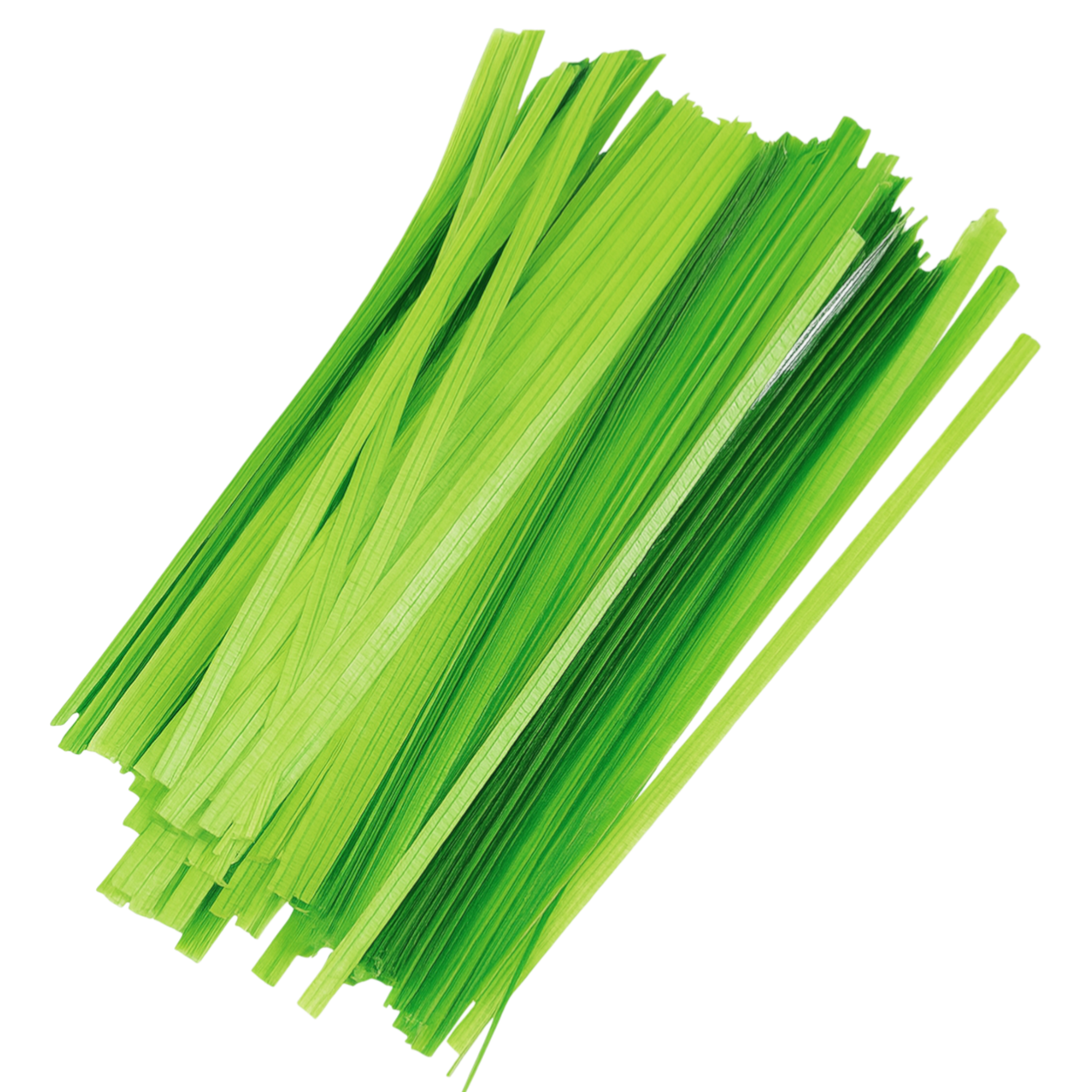
Unit price perThe Twist-it Stem Tie - Paper Twist Ties 20cm (8") - GREEN (Box of 5000) is a paper twist stem tie designed for light-duty tying and training of suitable plants.
It is suited to professional landscaping, nursery and establishment work where the product's size and format match the planting or site requirements.
Supplied as: box of 5000.
Key benefits
Plant tying & training
Twist the tie around the plant and support firmly enough to hold the stem without pinching it. Leave room for growth and check ties regularly during the growing season.
Professional establishment & maintenance
Successful landscape establishment depends on more than the protection product alone. Check plant stability, watering, weed competition and general plant condition regularly during the establishment period.
Twist-it Stem Tie - Paper Twist Ties 20cm (8") - GREEN (Box of 5000) product details
| Brand | Rainbow |
|---|---|
| Product type | Paper twist stem tie |
| Primary use | light-duty tying and training of suitable plants |
| Stated size | 20cm (8") |
| Box quantity | 5000 |
Twist-it Stem Tie - Paper Twist Ties 20cm (8") - GREEN (Box of 5000) FAQs
What size is this product?
The stated size is 20cm (8"). How many are supplied?
This product is supplied in a box of 5000. What are paper twist ties used for?
They are used for light-duty plant tying and training where the tie size is appropriate. How tight should the tie be?
Secure it firmly enough for support while leaving room for stem growth and movement. Should plant ties be checked later?
Yes. Recheck them during active growth and remove or adjust any tie that becomes restrictive.
£71.25
Unit price per£71.25
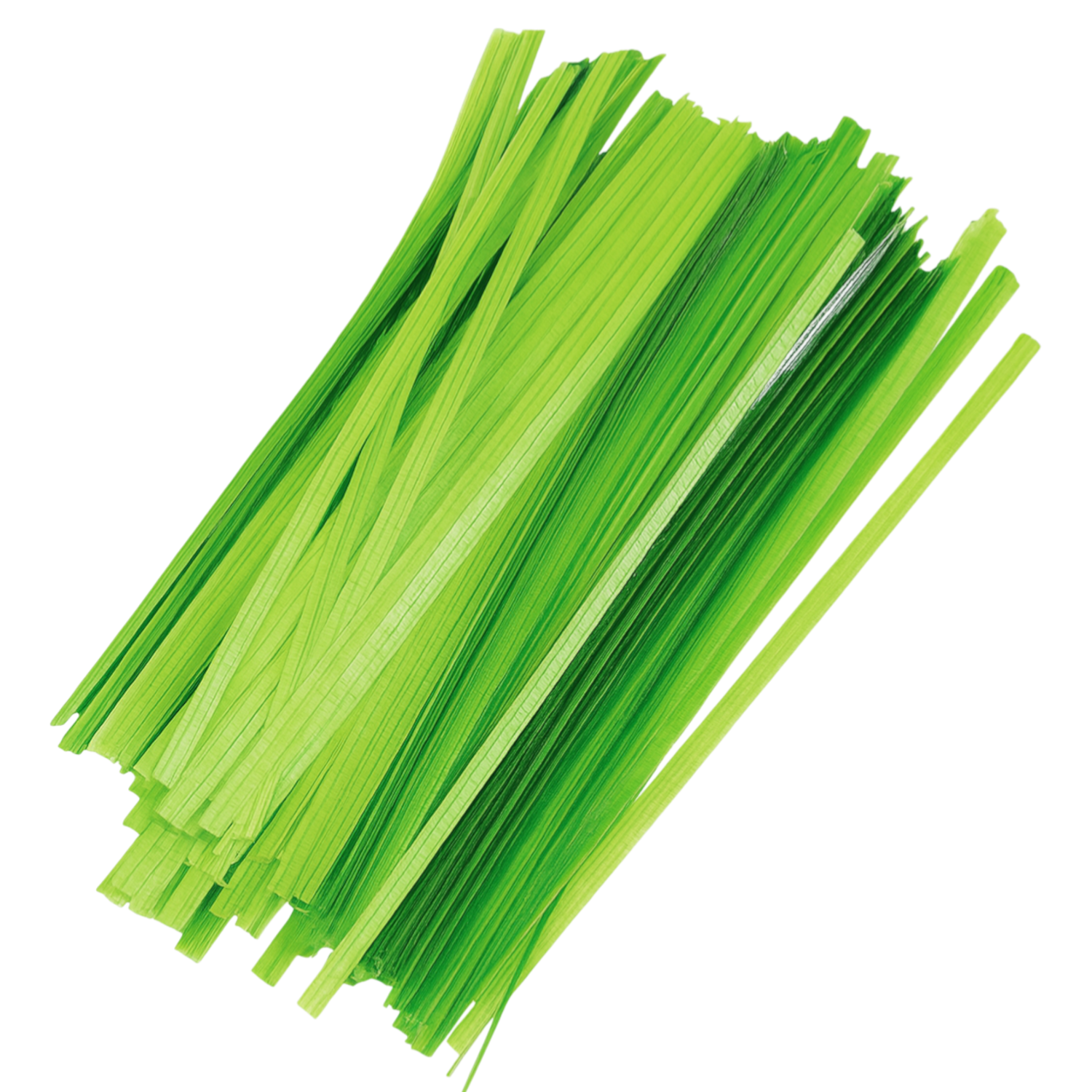
Unit price perThe Twist-it" Stem Tie - Paper Twist Ties 25cm (10") - GREEN (Box of 5000) is a paper twist stem tie designed for light-duty tying and training of suitable plants.
It is suited to professional landscaping, nursery and establishment work where the product's size and format match the planting or site requirements.
Supplied as: box of 5000.
Key benefits
Plant tying & training
Twist the tie around the plant and support firmly enough to hold the stem without pinching it. Leave room for growth and check ties regularly during the growing season.
Professional establishment & maintenance
Successful landscape establishment depends on more than the protection product alone. Check plant stability, watering, weed competition and general plant condition regularly during the establishment period.
Twist-it" Stem Tie - Paper Twist Ties 25cm (10") - GREEN (Box of 5000) product details
| Brand | Rainbow |
|---|---|
| Product type | Paper twist stem tie |
| Primary use | light-duty tying and training of suitable plants |
| Stated size | 25cm (10") |
| Box quantity | 5000 |
Twist-it" Stem Tie - Paper Twist Ties 25cm (10") - GREEN (Box of 5000) FAQs
What size is this product?
The stated size is 25cm (10"). How many are supplied?
This product is supplied in a box of 5000. What are paper twist ties used for?
They are used for light-duty plant tying and training where the tie size is appropriate. How tight should the tie be?
Secure it firmly enough for support while leaving room for stem growth and movement. Should plant ties be checked later?
Yes. Recheck them during active growth and remove or adjust any tie that becomes restrictive.


£119.00
Unit price per£119.00
Unit price perThe U-GO 10" 250mm EC Extraction Fan delivers up to 1840m³/h of airflow using a 9-pole digital EC brushless motor, with a detachable digital thermostatic controller included for fully variable fan-speed and temperature-responsive ventilation control.
Designed for high-capacity ventilation systems, the U-GO combines a 250mm / 10" connection with 1840m³/h maximum airflow. Its EC motor technology provides efficient variable-speed operation together with strong static-pressure performance for installations containing carbon filters, ducting and other airflow restrictions.
A detachable digital controller is included, providing both variable fan-speed adjustment and thermostatic control. This allows ventilation to be matched more closely to changing environmental conditions instead of operating the fan continuously at maximum output.
The fan features a sturdy steel housing and ABEC 7 ball bearings. It is also compatible with external 0-10V control via RJ9 or RJ11 connection, providing additional flexibility for integration with suitable environmental-control equipment.
Why choose the U-GO 10" EC Extraction Fan?
9-pole digital EC brushless motor
The U-GO uses a 9-pole digital EC brushless motor. EC, or electronically commutated, technology combines a brushless motor with electronic control to provide efficient variable-speed operation.
Variable-speed capability is particularly useful in controlled environments because maximum ventilation is not required continuously. Temperature and air-exchange requirements can change considerably throughout the day.
U-GO states a fan efficiency of 7.85 CFM per watt, with the fan designed to provide strong linear airflow together with useful static-pressure performance.
Static pressure is especially important once a fan is installed in a real ventilation system. Carbon filters, long duct runs, bends and other components all create resistance that the fan must overcome to maintain airflow.
Digital thermostatic controller included
The U-GO 250mm EC Fan is supplied with its own detachable digital controller, allowing fan speed and temperature-responsive ventilation to be managed without purchasing a separate basic speed controller.
Fully variable speed control allows the airflow to be reduced when maximum extraction is unnecessary and increased as ventilation demand rises.
Thermostatic control adds another level of automation by allowing ventilation to respond to environmental temperature.
Operating the fan only as hard as necessary can help reduce unnecessary energy consumption, airflow noise and excessive air exchange while maintaining the required environmental conditions.
1840m³/h high-capacity airflow
With a maximum airflow of 1840 cubic metres per hour, this 10" U-GO is designed for larger ventilation applications requiring substantial air movement.
Maximum airflow is not the same as the airflow that will necessarily be achieved once the fan is installed. Every component added to the system introduces some degree of resistance.
Carbon filters, silencers, duct length, bends, reducers and compressed flexible ducting can all lower the actual airflow delivered by the complete installation.
Keeping ductwork correctly sized, reasonably straight and free from unnecessary restrictions allows the fan to make better use of its available airflow and pressure capability.
250mm / 10" ventilation connection
The fan uses a nominal 250mm / 10" connection for integration with compatible high-airflow ducting, carbon filters and ventilation fittings.
Maintaining the 250mm diameter throughout as much of the system as practical helps minimise unnecessary static pressure and excessive air velocity.
Reducing immediately into substantially smaller ducting can restrict airflow and increase turbulence and noise, limiting the performance available from a high-capacity fan.
0-10V environmental controller compatibility
In addition to the supplied digital controller, the U-GO supports 0-10V external control via RJ9 or RJ11 connection.
A compatible 0-10V controller can regulate the EC fan through a low-voltage control signal rather than attempting to regulate fan speed by altering its mains power supply.
This provides additional options for integrating the U-GO into compatible environmental-control systems where centralised or automated fan-speed control is required.
Always confirm controller compatibility, cable configuration and control-signal requirements before connecting third-party equipment.
Excellent choice for carbon-filtered extraction
High-capacity carbon filters create significant resistance as air is drawn through the activated carbon bed. The extraction fan therefore needs both sufficient airflow and useful static-pressure capability.
The U-GO's combination of 1840m³/h maximum airflow, EC speed control and strong static-pressure performance makes it well suited to larger filtered extraction systems.
Ideally, use a carbon filter with a matching 250mm connection and an airflow rating appropriate to the fan's operating airflow.
Because the U-GO is fully variable, its output can be adjusted to match the carbon filter and environmental requirement rather than simply operating continuously at maximum speed.
Getting the best performance from the U-GO 250mm Fan
A properly designed ventilation system allows the fan to provide the required air exchange at the lowest practical operating speed, helping balance airflow, environmental stability, energy use and noise.
U-GO 10" 250mm EC Fan product details
| Brand | U-GO |
|---|---|
| Product type | Digital EC inline extraction fan |
| Nominal connection | 10" / 250mm |
| Maximum airflow | 1840m³/h |
| Motor technology | 9-pole digital EC brushless motor |
| Stated fan efficiency | 7.85 CFM per watt |
| Speed control | Fully variable |
| Digital controller | Included |
| Temperature control | Thermostatic control via supplied digital controller |
| External control | 0-10V compatible |
| Control connection | RJ9 or RJ11 |
| Housing | Steel |
| Bearings | ABEC 7 ball bearings |
| Typical applications | Extraction, intake, carbon-filtered ventilation & controlled-environment air movement |
U-GO 10" 250mm EC Extraction Fan FAQs
What is the airflow of the U-GO 10" fan?
The 250mm / 10" U-GO EC Fan has a maximum airflow rating of 1840m³/h. Does the U-GO 250mm fan include a controller?
Yes. A detachable digital thermostatic controller is included with the fan. Can I vary the fan speed?
Yes. The supplied digital controller provides fully variable fan-speed adjustment, allowing airflow to be matched to the requirements of the environment. Does the controller automatically respond to temperature?
Yes. The supplied controller provides thermostatic temperature control as well as variable fan-speed adjustment. What does EC mean?
EC stands for electronically commutated. The U-GO uses a 9-pole digital EC brushless motor designed for efficient, variable-speed ventilation. How efficient is the U-GO fan?
U-GO states a fan efficiency of 7.85 CFM per watt for this EC fan design. Can the U-GO be controlled by a 0-10V controller?
Yes. The fan supports 0-10V control via an appropriate RJ9 or RJ11 connection. Compatibility and cable configuration should be confirmed before connecting third-party control equipment. Can I use the U-GO 10" fan with a carbon filter?
Yes. Its airflow and static-pressure capability make it suitable for filtered extraction when paired with an appropriately sized carbon filter. What size carbon filter should I use?
A 250mm / 10" filter provides the most straightforward connection. Its airflow capacity should also be suitable for the actual operating airflow of the fan. Will a carbon filter reduce the 1840m³/h airflow?
Yes. Carbon filters create airflow resistance, so actual installed airflow will normally be lower than the fan's unrestricted maximum airflow rating. What size ducting does the U-GO 250mm fan require?
The fan has a nominal 250mm / 10" connection, so matching 250mm ducting and fittings should be used wherever practical. Can I reduce the fan into smaller ducting?
A reducer can be used where necessary, but reducing duct diameter increases resistance and air velocity and can reduce the airflow available from the system. Why is static pressure important?
Static-pressure capability helps the fan maintain useful airflow when resistance is added by carbon filters, ducting, bends and other ventilation components. What are ABEC 7 ball bearings?
The U-GO motor assembly uses ABEC 7 ball bearings, providing a precision bearing system for smooth fan operation. Can the U-GO 250mm fan be used for intake as well as extraction?
Yes. The fan can be incorporated into appropriately designed intake or extraction ventilation systems.


£92.50
Unit price per£92.50
Unit price perThe U-GO 8" 200mm EC Extraction Fan delivers up to 1230m³/h of airflow using an efficient 9-pole digital EC brushless motor, with a detachable digital thermostatic controller included as standard for variable-speed and temperature-responsive ventilation control.
Designed for powerful but controllable air movement, the U-GO combines a 200mm / 8" connection with 1230m³/h maximum airflow. Its EC motor technology provides efficient variable-speed operation while producing the static pressure required to work effectively within real ventilation systems containing ducting, bends and carbon filters.
Unlike a basic fixed-speed extraction fan, the U-GO is supplied with its own detachable digital controller. This provides fully variable fan-speed control together with thermostatic temperature control, allowing ventilation to respond more closely to changing environmental conditions.
The fan is built around a sturdy steel housing with ABEC 7 ball bearings and is also compatible with external 0-10V control via RJ9 or RJ11 connection, providing additional options when integrating it into a more advanced environmental-control system.
Why choose the U-GO 8" EC Extraction Fan?
9-pole digital EC brushless motor
At the centre of the U-GO is a 9-pole digital EC brushless motor. EC stands for electronically commutated, combining a brushless motor design with electronic control.
This technology is particularly well suited to environmental ventilation because fan speed can be varied efficiently rather than relying solely on full-power operation.
U-GO states a fan efficiency of 7.85 CFM per watt, with the design intended to provide both strong linear airflow and static-pressure performance.
Static pressure becomes particularly important once a fan is connected to real ventilation equipment. Carbon filters, ducting, bends and other components all resist airflow, so a fan's ability to maintain useful airflow against resistance matters as much as its unrestricted maximum airflow figure.
Digital thermostatic controller included
Every U-GO fan is supplied with a detachable digital controller, giving the user direct control over fan operation without needing to purchase a separate basic speed controller.
The controller provides fully variable speed adjustment and thermostatic temperature control. This allows ventilation to be configured around the required environment rather than simply running the extraction fan at maximum speed continuously.
When environmental demand is lower, reducing fan speed can decrease unnecessary airflow, electrical consumption and ventilation noise. As additional cooling or air exchange becomes necessary, fan output can be increased.
This makes the U-GO particularly useful where ventilation requirements vary as lighting load, external temperature and other environmental conditions change.
1230m³/h high-airflow ventilation
The 8" U-GO provides a maximum airflow of 1230 cubic metres per hour, making it suitable for substantial intake or extraction applications.
Maximum airflow figures describe fan performance under defined conditions and should not be confused with the airflow that will necessarily be achieved after installation.
Carbon filters, long duct runs, tight bends, reducers, silencers and compressed flexible ducting all introduce resistance and can reduce actual system airflow.
Keeping the ventilation route short, correctly sized and as direct as practical helps the U-GO make better use of its available airflow and static-pressure capability.
0-10V environmental controller compatibility
In addition to its supplied digital controller, the U-GO supports 0-10V external control via RJ9 or RJ11 connection.
A 0-10V control signal allows compatible environmental-control equipment to regulate EC fan speed without controlling the fan by simply reducing its mains supply.
This provides scope for integrating the fan into more advanced ventilation strategies where compatible equipment is being used.
Always confirm the connection, control signal and cable requirements of the external controller before connecting third-party environmental-control equipment.
Ideal for carbon-filtered extraction
The U-GO's combination of high airflow and static-pressure performance makes it well suited to carbon-filtered extraction systems.
A carbon filter naturally creates resistance as air is pulled through the activated carbon bed. The fan therefore needs enough pressure capability to maintain the required ventilation rate once the filter is installed.
For best results, match the fan with a carbon filter of suitable airflow capacity and connection diameter. A variable-speed EC fan is particularly useful because airflow can then be adjusted to suit both the filter and the environmental requirement.
Getting the best performance from the U-GO 200mm Fan
Correct ventilation design allows the fan to provide the required air exchange at the lowest practical operating speed, helping balance environmental control, energy use and noise.
U-GO 8" 200mm EC Fan product details
| Brand | U-GO |
|---|---|
| Product type | Digital EC inline extraction fan |
| Nominal connection | 8" / 200mm |
| Maximum airflow | 1230m³/h |
| Motor technology | 9-pole digital EC brushless motor |
| Stated fan efficiency | 7.85 CFM per watt |
| Speed control | Fully variable |
| Digital controller | Included |
| Temperature control | Thermostatic control via supplied digital controller |
| External control | 0-10V compatible |
| Control connection | RJ9 or RJ11 |
| Housing | Steel |
| Bearings | ABEC 7 ball bearings |
| Typical applications | Extraction, intake, carbon-filtered ventilation & controlled-environment air movement |
U-GO 8" 200mm EC Extraction Fan FAQs
What is the airflow of the U-GO 8" fan?
The 200mm / 8" U-GO EC Fan has a maximum airflow rating of 1230m³/h. Does the U-GO fan include a controller?
Yes. A detachable digital thermostatic fan controller is included with the fan as standard. Can I vary the speed of the U-GO fan?
Yes. The supplied controller provides fully variable fan-speed control, allowing airflow to be adjusted to the requirements of the ventilation system. Does the controller respond to temperature?
Yes. The supplied digital controller provides thermostatic temperature control as well as variable fan-speed adjustment. What does EC mean?
EC stands for electronically commutated. The U-GO uses a 9-pole digital EC brushless motor designed for efficient and controllable fan operation. How efficient is the U-GO EC fan?
U-GO states fan efficiency at 7.85 CFM per watt for this EC fan range. Can I use an external 0-10V controller?
Yes. The U-GO is compatible with 0-10V control via an appropriate RJ9 or RJ11 connection. Always check the requirements of the external controller and cable before connection. Can I connect the U-GO to a carbon filter?
Yes. Its airflow and static-pressure capability make it suitable for carbon-filtered extraction when paired with an appropriately sized filter. What size carbon filter should I use?
Ideally use a 200mm / 8" carbon filter with airflow capacity appropriate to the fan and required ventilation rate. Filter resistance should also be considered when sizing the complete system. Will a carbon filter reduce the fan's 1230m³/h airflow?
Yes. A carbon filter creates resistance, so actual installed airflow will normally be lower than the fan's unrestricted maximum airflow rating. What size ducting does the U-GO 8" fan require?
The fan has a nominal 200mm / 8" connection, so matching 200mm ducting and fittings should be used wherever practical. Can I reduce the U-GO fan into smaller ducting?
A reducer can be used where necessary, but reducing duct diameter increases system resistance and air velocity and can reduce overall airflow. What are ABEC 7 ball bearings?
The U-GO motor assembly uses ABEC 7 ball bearings, providing a precision bearing system for smooth fan operation. Can the U-GO be used as an intake fan?
Yes. The fan can be incorporated into appropriately designed intake or extraction ventilation systems. How can I get the best airflow from the U-GO fan?
Use correctly sized 200mm ducting, minimise tight bends and restrictions, avoid compressed flexible ducting and ensure filters and other ventilation components are appropriately sized for the required airflow.


£97.50
Unit price per£97.50
Unit price perThe U-GO Carbon Filter 10" 250mm x 600mm is a high-capacity activated carbon air filter built around carefully selected Pro Grade 4/8 carbon, combining effective odour adsorption with strong airflow and low restriction.
Activated carbon is a natural material, so its quality, particle characteristics and adsorption performance can vary from batch to batch. U-GO takes a selective approach to the carbon used within its filters, stating that it purchases only the premium 20% of carbon produced.
The carbon is independently batch tested, de-dusted and selected before use. U-GO specifies Pro Grade 4/8 activated carbon, with material that is excessively fine, dusty or fails its required air-stream testing rejected rather than used within the finished filter.
With a 250mm / 10" connection and 600mm filter body, this model is designed for larger extraction systems where effective odour filtration needs to be combined with efficient movement of air.
Why choose the U-GO 10" Carbon Filter?
Premium selected Pro Grade 4/8 activated carbon
Carbon quality has a major influence on the performance of an activated carbon filter. Natural carbon can vary in particle size, dust content and adsorption capability, which is why U-GO places particular emphasis on selecting the material used within its filters.
U-GO states that it purchases only the premium 20% of carbon produced. The selected carbon is independently batch tested, de-dusted and checked before being used within the finished filter.
The filter uses Pro Grade 4/8 activated carbon. Particle characteristics are important because the carbon bed needs to provide extensive adsorptive surface area while still allowing substantial volumes of air to pass through efficiently.
Carbon that is excessively fine or dusty can create unnecessary airflow resistance. U-GO's selected 4/8 grade is intended to provide an effective balance between odour filtration and airflow.
Independently batch tested carbon
U-GO states that its activated carbon is independently batch tested rather than assuming every batch of natural carbon will provide identical performance.
The selection process assesses the carbon for characteristics required for effective air filtration, with U-GO specifying a minimum 20% butane adsorption requirement.
Carbon that is too small, excessively dusty or does not meet the required air-stream testing standard is rejected rather than being used within the finished filter.
This quality-control process is intended to provide more consistent filtration and airflow performance throughout the U-GO carbon filter range.
How activated carbon removes unwanted odours
Activated carbon contains an enormous network of microscopic pores. This creates a very large internal surface area relative to the physical volume of carbon within the filter.
As odour-bearing air passes through the carbon bed, suitable gaseous compounds adhere to the carbon surface through a process known as adsorption.
Carbon quality, airflow, contact time, environmental conditions and contaminant concentration all influence the effectiveness of this process.
The U-GO filter is therefore primarily designed to treat suitable gaseous odour compounds carried within extracted air rather than simply acting as a dust or particulate filter.
Designed for high airflow with low restriction
Every carbon filter introduces some airflow resistance because the extraction fan must draw air through a packed carbon bed.
U-GO's use of selected Pro Grade 4/8 carbon is intended to provide the particle characteristics required for effective adsorption without creating unnecessary restriction.
This is particularly important in larger 250mm ventilation systems, where maintaining duct diameter and minimising system resistance helps preserve the airflow available from the extraction fan.
Actual airflow will depend on the complete installation. Carbon filtration, duct length, bends, silencers, reducers and other ventilation components can all increase static pressure and reduce the airflow delivered by the fan.
250mm / 10" connection with 600mm filter body
This U-GO Carbon Filter combines a nominal 250mm / 10" connection with a 600mm filter body.
The large connection diameter makes it suitable for substantial ventilation systems while the 600mm body provides significant activated carbon filtration capacity.
Using matching 250mm fans, ducting and ventilation fittings wherever practical helps maintain a consistent airflow path through the system.
Where reducers are required, remember that reducing duct diameter increases air velocity and resistance and may reduce overall system airflow.
Installing the U-GO 250mm Carbon Filter
In a typical filtered extraction arrangement, environmental air is drawn through the carbon filter before entering the extraction fan. The treated air then continues through the exhaust ductwork.
Fan and filter performance should be considered together. The extraction fan needs sufficient airflow and static-pressure capability to overcome resistance from the carbon filter and duct system while maintaining the required ventilation rate.
Carbon filter life & replacement
Activated carbon has a finite adsorption capacity. As contaminated air passes through the filter, gaseous compounds progressively occupy the available adsorption sites within the carbon.
U-GO's selected carbon and low-restriction design are intended to provide effective filtration and a longer expected operating life, but actual service life depends on the installation and operating conditions.
Operating hours, airflow, contaminant concentration and environmental conditions can all influence how quickly the activated carbon becomes saturated.
If unwanted odours begin passing through despite suitable airflow, correct installation and secure connections, the carbon may be approaching the end of its effective adsorption capacity.
U-GO 10" 250mm x 600mm Carbon Filter product details
| Brand | U-GO |
|---|---|
| Product type | Activated carbon air filter |
| Nominal connection | 10" / 250mm |
| Filter length | 600mm |
| Carbon grade | Pro Grade 4/8 activated carbon |
| Carbon selection | Premium 20% selected carbon |
| Carbon preparation | Batch tested, selected & de-dusted |
| Stated carbon test requirement | Minimum 20% butane adsorption |
| Filtration method | Activated carbon adsorption |
| Primary function | Odour filtration from extracted air |
| Design priority | High-airflow filtration with reduced restriction |
| Recommended nominal duct size | 250mm / 10" |
U-GO 10" 250mm x 600mm Carbon Filter FAQs
What size is this U-GO Carbon Filter?
This model has a nominal 250mm / 10" connection and a 600mm filter body. What type of activated carbon does U-GO use?
U-GO specifies selected Pro Grade 4/8 activated carbon for its carbon filter range. What does Pro Grade 4/8 carbon mean?
It refers to the selected particle grade used within the filter. Particle characteristics influence both adsorption performance and resistance to airflow through the carbon bed. Why does U-GO select only part of its carbon supply?
Activated carbon is a natural material and its characteristics can vary between batches. U-GO states that it selects only the premium 20% of carbon produced for use within its filters. Is U-GO activated carbon batch tested?
Yes. U-GO states that its carbon is independently batch tested, de-dusted and selected before use. What is the minimum 20% butane adsorption specification?
U-GO specifies a minimum 20% butane adsorption requirement as part of its carbon quality testing, with material that fails the required standard rejected. Why does activated carbon particle size matter?
Particle characteristics affect both adsorption and airflow. Excessively fine or dusty carbon can create additional resistance through the filter. Does U-GO de-dust its activated carbon?
Yes. De-dusting forms part of U-GO's stated carbon selection and preparation process. What size ducting should I use?
This filter has a nominal 250mm / 10" connection, so matching 250mm ducting and fittings should be used wherever practical. Can I use this with a 250mm extraction fan?
Yes. It is designed for integration into a 250mm ventilation system. The fan should also be appropriately matched to the filter and resistance of the complete installation. Will the carbon filter reduce extraction airflow?
Yes. Every carbon filter creates some resistance. U-GO's selected carbon grade and low-restriction design are intended to maintain strong airflow while providing effective filtration. Can I reduce the 250mm connection into smaller ducting?
A suitable reducer can be used where necessary, but reducing duct diameter increases air velocity and resistance and can reduce overall airflow. How does activated carbon remove unwanted odours?
Odour-bearing air passes through the activated carbon bed, where suitable gaseous compounds adsorb onto the enormous internal surface area of the carbon. How long does a U-GO Carbon Filter last?
Service life depends on operating hours, airflow, contaminant concentration and environmental conditions, so there is no single replacement interval suitable for every installation. How do I know when the carbon filter needs replacing?
If unwanted odours begin passing through despite correct ventilation operation and secure connections, the activated carbon may be approaching the end of its effective adsorption capacity.
£159.50
Unit price per£159.50
Unit price perThe U-GO Carbon Filter 12.5" 315mm x 1000mm is a high-capacity activated carbon air filter designed for large-volume extraction systems, combining selected Pro Grade 4/8 carbon with a substantial 1000mm filter body and a low-restriction design.
Activated carbon is a natural material, so its quality, particle characteristics and adsorption performance can vary from batch to batch. U-GO takes a selective approach to its filtration media, stating that it purchases only the premium 20% of carbon produced.
The carbon is independently batch tested, de-dusted and selected before use. U-GO specifies Pro Grade 4/8 activated carbon, with material that is excessively fine, dusty or fails its required air-stream testing rejected rather than used within the finished filter.
With a 315mm / 12.5" connection and 1000mm filter body, this model is designed for demanding high-airflow installations where effective odour management needs to be achieved without introducing unnecessary restriction into the ventilation system.
Why choose the U-GO 315mm x 1000mm Carbon Filter?
Premium selected Pro Grade 4/8 activated carbon
Carbon quality is fundamental to the performance of an activated carbon filter. Natural carbon can vary significantly in particle size, dust content and adsorption characteristics, all of which can affect filtration and airflow.
U-GO states that it purchases only the premium 20% of carbon produced. The selected material is independently batch tested, de-dusted and checked before being used within its filters.
The U-GO range uses Pro Grade 4/8 activated carbon. Particle characteristics matter because the carbon bed must provide extensive adsorptive surface area while still allowing the extraction fan to move air efficiently through the filter.
Carbon that is excessively fine or dusty can create unnecessary resistance. U-GO's selected 4/8 grade is intended to achieve an effective balance between odour adsorption and airflow.
Independently batch tested carbon
U-GO states that its activated carbon is independently batch tested rather than assuming every batch of natural carbon will provide identical performance.
The selection process assesses the carbon for the characteristics required for effective air filtration, with U-GO specifying a minimum 20% butane adsorption requirement.
Carbon that is too small, excessively dusty or does not meet the required air-stream testing standard is rejected rather than being used within the finished filter.
This quality-control process is intended to provide more consistent carbon quality, reduced dust and dependable filtration performance across the U-GO range.
How activated carbon removes unwanted odours
Activated carbon contains an enormous network of microscopic pores. This gives the carbon a very large internal surface area relative to its physical volume.
As odour-bearing air is drawn through the filter, suitable gaseous compounds adhere to the surface of the activated carbon through a process known as adsorption.
Carbon quality, airflow, contact time, contaminant concentration and environmental conditions all influence the effectiveness of this process.
The U-GO filter is therefore primarily intended to treat suitable gaseous odour compounds carried within the extraction airstream rather than simply trapping visible dust or particles.
High-airflow, low-restriction filtration
Carbon filtration inevitably creates some resistance because the extraction fan must draw air through a packed bed of activated carbon. In a large-volume ventilation system, keeping that resistance under control is particularly important.
U-GO's selected Pro Grade 4/8 carbon is intended to provide the particle characteristics required for effective adsorption while avoiding unnecessary airflow restriction.
The filter's large 315mm / 12.5" connection also allows it to form part of a substantial ventilation system without immediately forcing the airflow through a smaller-diameter connection.
Actual system airflow will depend on the complete installation. The carbon filter, duct length, bends, silencers, reducers and other components all contribute to static pressure and can reduce the airflow delivered by the extraction fan.
315mm connection with a 1000mm filter body
This U-GO Carbon Filter combines a nominal 315mm / 12.5" connection with a 1000mm filter body.
The large connection diameter is particularly suited to high-volume ventilation installations where reducing the system to smaller ducting could create excessive air velocity and resistance.
The extended 1000mm body provides substantial activated carbon filtration capacity while retaining direct compatibility with appropriately sized 315mm ventilation equipment.
Using matching 315mm fans, ducting and fittings wherever practical helps maintain a consistent airflow path and minimises unnecessary system resistance.
Installing the U-GO 315mm x 1000mm Carbon Filter
In a typical filtered extraction arrangement, environmental air is drawn through the carbon filter before entering the extraction fan. The treated air then continues through the exhaust ductwork.
Fan and filter performance should be considered together. The extraction fan needs sufficient airflow and static-pressure capability to overcome resistance from the carbon bed and the remainder of the ventilation system while maintaining the required air-exchange rate.
Carbon filter life & replacement
Activated carbon has a finite adsorption capacity. As contaminated air passes through the filter, gaseous compounds progressively occupy the available adsorption sites within the carbon.
U-GO's selected carbon and low-restriction design are intended to provide effective filtration with a longer expected operating life, but actual service life depends heavily on the application and operating conditions.
Operating hours, airflow, contaminant concentration and environmental conditions can all influence how quickly the activated carbon becomes saturated.
If unwanted odours begin passing through despite suitable airflow, correct installation and secure duct connections, the activated carbon may be approaching the end of its effective adsorption capacity.
U-GO 12.5" 315mm x 1000mm Carbon Filter product details
| Brand | U-GO |
|---|---|
| Product type | Activated carbon air filter |
| Nominal connection | 12.5" / 315mm |
| Filter length | 1000mm |
| Carbon grade | Pro Grade 4/8 activated carbon |
| Carbon selection | Premium 20% selected carbon |
| Carbon preparation | Batch tested, selected & de-dusted |
| Stated carbon test requirement | Minimum 20% butane adsorption |
| Filtration method | Activated carbon adsorption |
| Primary function | Odour filtration from extracted air |
| Design priority | High-volume filtration with reduced airflow restriction |
| Recommended nominal duct size | 315mm / 12.5" |
U-GO 12.5" 315mm x 1000mm Carbon Filter FAQs
What size is this U-GO Carbon Filter?
This model has a nominal 315mm / 12.5" connection and a 1000mm-long filter body. What type of activated carbon does U-GO use?
U-GO specifies selected Pro Grade 4/8 activated carbon for its carbon filter range. What does Pro Grade 4/8 carbon mean?
It refers to the selected particle grade used within the filter. Particle characteristics influence both adsorption performance and resistance to airflow through the carbon bed. Why does U-GO select only part of its carbon supply?
Activated carbon is a natural material and its characteristics can vary between batches. U-GO states that it selects only the premium 20% of carbon produced for use within its filters. Is U-GO activated carbon batch tested?
Yes. U-GO states that its carbon is independently batch tested, de-dusted and selected before being used within its filters. What is the minimum 20% butane adsorption specification?
U-GO specifies a minimum 20% butane adsorption requirement as part of its carbon quality testing, with material that fails the required standard rejected. Why does activated carbon particle size matter?
Particle characteristics affect both adsorption and airflow. Excessively fine or dusty carbon can increase resistance through the filter. Does U-GO de-dust its activated carbon?
Yes. De-dusting forms part of U-GO's stated carbon selection and preparation process. What size ducting should I use?
The filter has a nominal 315mm / 12.5" connection, so matching 315mm ducting and fittings should be used wherever practical. Can I use this with a 315mm extraction fan?
Yes. It is designed for integration into a 315mm ventilation system. The fan should also be appropriately matched to the filter and the resistance of the complete installation. What is the advantage of the 1000mm filter body?
The extended filter body provides substantial activated carbon filtration capacity for larger ventilation systems while retaining a 315mm connection. Will a carbon filter reduce extraction airflow?
Yes. Every carbon filter creates some resistance. U-GO's selected carbon grade and low-restriction design are intended to maintain strong airflow while providing effective filtration. Can I reduce the 315mm connection into smaller ducting?
A suitable reducer can be used where necessary, but reducing duct diameter increases air velocity and resistance and can significantly reduce airflow in a high-volume system. How does activated carbon remove unwanted odours?
Odour-bearing air passes through the activated carbon bed, where suitable gaseous compounds adsorb onto the enormous internal surface area of the carbon. How do I know when the carbon filter needs replacing?
If unwanted odours begin passing through despite correct ventilation operation and secure connections, the activated carbon may be approaching the end of its effective adsorption capacity.
£173.50
Unit price per£173.50
Unit price perThe U-GO Carbon Filter 12.5" 315mm x 1200mm is a high-capacity activated carbon air filter designed for large-volume extraction systems, combining selected Pro Grade 4/8 carbon with a substantial 1200mm filter body and airflow capacity of up to 4000m³/h.
Activated carbon is a natural material, so its quality, particle characteristics and adsorption performance can vary from batch to batch. U-GO takes a selective approach to its filtration media, stating that it purchases only the premium 20% of carbon produced.
The carbon is independently batch tested, de-dusted and selected before use. U-GO specifies Pro Grade 4/8 activated carbon, with material that is excessively fine, dusty or fails its required air-stream testing rejected rather than used within the finished filter.
With its 315mm / 12.5" connection, 1200mm filter body and up to 4000m³/h airflow capacity, this is a serious high-volume filter for larger controlled environments where effective odour management and low airflow restriction are both essential.
Why choose the U-GO 315mm x 1200mm Carbon Filter?
Premium selected Pro Grade 4/8 activated carbon
The quality of the activated carbon has a major influence on both filtration performance and airflow resistance. Natural carbon can vary significantly in particle size, dust content and adsorption characteristics.
U-GO states that it purchases only the premium 20% of carbon produced. The selected material is independently batch tested, de-dusted and checked before being used within its filters.
The range uses Pro Grade 4/8 activated carbon. The particle characteristics of the carbon are important because the filter needs to expose contaminated air to a large adsorptive surface without creating excessive resistance to the extraction fan.
Carbon that is excessively fine or dusty can restrict airflow. U-GO's selected 4/8 grade is intended to provide the balance required between effective odour adsorption and efficient air movement.
Independently batch tested carbon
U-GO states that its carbon is independently batch tested rather than assuming that every batch of natural activated carbon will provide identical performance.
The selection process assesses the carbon for the characteristics required for effective air filtration, with U-GO specifying a minimum 20% butane adsorption requirement.
Carbon that is too small, excessively dusty or does not meet the required air-stream testing standard is rejected.
This selection and testing process is designed to provide more consistent carbon quality, reduced dust and dependable filtration performance.
How activated carbon removes unwanted odours
Activated carbon contains an enormous network of microscopic pores. This gives the carbon an exceptionally large internal surface area relative to its physical volume.
As odour-bearing air is drawn through the filter, suitable gaseous compounds adhere to the surface of the activated carbon through a process known as adsorption.
Carbon quality, airflow, contact time, contaminant concentration and environmental conditions all influence the effectiveness of this process.
The filter is therefore primarily intended to treat suitable gaseous odour compounds carried within the extraction airstream rather than simply trapping visible dust or particles.
Up to 4000m³/h high-airflow filtration
This 315mm x 1200mm U-GO Carbon Filter is specified for airflow of up to 4000m³/h, making it suitable for high-capacity ventilation installations.
Carbon filtration inevitably creates some resistance because the extraction fan must pull air through a packed carbon bed. At high airflow rates, keeping this resistance under control becomes particularly important.
U-GO's selected Pro Grade 4/8 carbon and low-restriction filter design are intended to maintain strong airflow while still providing the carbon contact required for effective odour adsorption.
The filter should still be considered as part of the complete ventilation system. Duct length, bends, silencers, reducers and other components can all increase static pressure and reduce the actual airflow delivered.
315mm connection with a 1200mm filter body
The combination of a 315mm / 12.5" connection and 1200mm filter body makes this one of the larger U-GO filtration options.
The 315mm connection allows large volumes of air to move through the system without immediately being forced through a smaller duct diameter, while the extended 1200mm body provides substantial carbon filtration capacity.
Using matching 315mm fans, ducting and fittings wherever practical helps maintain a consistent airflow path and reduces unnecessary system resistance.
Where reducers are unavoidable, remember that reducing duct diameter increases air velocity and resistance and can significantly affect the performance of a high-airflow system.
Installing the U-GO 315mm x 1200mm Carbon Filter
In a typical filtered extraction arrangement, environmental air is drawn through the carbon filter before entering the extraction fan. The treated air then continues through the exhaust ductwork.
Fan and filter performance should be considered together. For a filter capable of handling up to 4000m³/h, the extraction fan needs sufficient airflow and static-pressure capability to overcome resistance from the carbon bed and the remainder of the ventilation system.
Carbon filter life & replacement
Activated carbon has a finite adsorption capacity. As contaminated air passes through the filter, gaseous compounds progressively occupy the available adsorption sites within the carbon.
U-GO's selected carbon and low-restriction design are intended to provide effective filtration with a longer expected operating life, but actual service life varies according to the application.
Operating hours, airflow, contaminant concentration and environmental conditions can all influence how quickly the activated carbon becomes saturated.
If unwanted odours begin passing through despite suitable airflow, correct installation and secure duct connections, the carbon may be approaching the end of its effective adsorption capacity.
U-GO 12.5" 315mm x 1200mm Carbon Filter product details
| Brand | U-GO |
|---|---|
| Product type | Activated carbon air filter |
| Nominal connection | 12.5" / 315mm |
| Filter length | 1200mm |
| Airflow capacity | Up to 4000m³/h |
| Carbon grade | Pro Grade 4/8 activated carbon |
| Carbon selection | Premium 20% selected carbon |
| Carbon preparation | Batch tested, selected & de-dusted |
| Stated carbon test requirement | Minimum 20% butane adsorption |
| Filtration method | Activated carbon adsorption |
| Primary function | Odour filtration from extracted air |
| Recommended nominal duct size | 315mm / 12.5" |
U-GO 12.5" 315mm x 1200mm Carbon Filter FAQs
What size is this U-GO Carbon Filter?
This model has a nominal 315mm / 12.5" connection and a 1200mm-long filter body. What airflow is the U-GO 315mm x 1200mm filter designed for?
This model is specified for airflow of up to 4000m³/h. What type of activated carbon does U-GO use?
U-GO specifies selected Pro Grade 4/8 activated carbon for its carbon filter range. What does Pro Grade 4/8 carbon mean?
It refers to the selected particle grade used within the filter. Particle characteristics influence both adsorption performance and resistance to airflow through the carbon bed. Why does U-GO select only part of its carbon supply?
Activated carbon is a natural material and its characteristics vary between batches. U-GO states that it selects only the premium 20% of carbon produced for use within its filters. Is the activated carbon batch tested?
Yes. U-GO states that its carbon is independently batch tested, de-dusted and selected before use. What is the minimum 20% butane adsorption specification?
U-GO specifies a minimum 20% butane adsorption requirement as part of its carbon testing, with material that fails the required standard rejected. Why does carbon particle size matter?
Particle characteristics affect both adsorption and airflow. Excessively fine or dusty carbon can increase resistance through the filter. What size ducting should I use?
The filter has a nominal 315mm / 12.5" connection, so matching 315mm ducting and fittings should be used wherever practical. Can I use this with a 315mm extraction fan?
Yes. It is designed for 315mm ventilation systems. The fan should also be appropriately matched to the filter's airflow requirement and the resistance of the complete duct system. Does a carbon filter reduce extraction airflow?
Yes. Every carbon filter creates some resistance. U-GO's selected carbon grade and low-restriction design are intended to maintain strong airflow while providing effective filtration. Can I reduce the 315mm connection into smaller ducting?
A suitable reducer can be used where necessary, but reducing duct diameter increases air velocity and resistance and can significantly reduce airflow in a high-volume system. How does activated carbon remove unwanted odours?
Odour-bearing air passes through the activated carbon bed, where suitable gaseous compounds adsorb onto the enormous internal surface area of the carbon. How long does a U-GO Carbon Filter last?
Service life depends on operating hours, airflow, contaminant concentration and environmental conditions, so there is no single replacement interval suitable for every installation. How do I know when the carbon filter needs replacing?
If unwanted odours begin passing through despite correct ventilation operation and secure connections, the activated carbon may be approaching the end of its effective adsorption capacity.
£121.50
Unit price per£121.50
Unit price perThe U-GO Carbon Filter 12.5" 315mm x 600mm is a large-diameter activated carbon air filter built around carefully selected Pro Grade 4/8 carbon, combining effective odour adsorption with high airflow and low restriction.
Activated carbon is a natural material, which means its quality, particle characteristics and adsorption performance can vary from batch to batch. U-GO takes a selective approach to the carbon used inside its filters, stating that it purchases only the premium 20% of carbon produced.
The carbon is independently batch tested, de-dusted and selected before use. U-GO specifies Pro Grade 4/8 activated carbon, with material that is excessively fine, dusty or fails its required air-stream testing rejected rather than used within the finished filter.
With a substantial 315mm / 12.5" connection and 600mm filter body, this model is designed for high-airflow extraction systems where effective odour control needs to be combined with minimal unnecessary airflow restriction.
Why choose the U-GO 12.5" Carbon Filter?
Premium selected Pro Grade 4/8 carbon
Carbon quality has a major influence on the performance of an activated carbon filter. Natural carbon can vary in particle size, dust content and adsorption capability, so U-GO places particular emphasis on selecting the material used inside its filters.
U-GO states that it purchases only the premium 20% of carbon produced. The selected carbon is independently batch tested, de-dusted and checked before being used within the finished filter.
The U-GO range uses Pro Grade 4/8 activated carbon. Particle characteristics are important because the carbon bed needs to provide extensive adsorptive surface area while still allowing large volumes of air to travel through efficiently.
Carbon that is excessively fine or dusty can create unnecessary resistance. U-GO's selected 4/8 grade is intended to achieve an effective balance between odour filtration and airflow.
Independently batch tested carbon
U-GO states that its activated carbon is independently batch tested rather than assuming every batch of natural carbon will perform to the same standard.
The selection process assesses the carbon for characteristics required for effective air filtration, with U-GO specifying a minimum 20% butane adsorption requirement.
Carbon that is too small, excessively dusty or does not meet the required air-stream testing standard is rejected rather than being used within the finished filter.
This quality-control approach is intended to provide more consistent filtration and airflow performance throughout the U-GO carbon filter range.
How activated carbon removes unwanted odours
Activated carbon contains an enormous network of microscopic pores. These create a very large internal surface area relative to the physical volume of carbon inside the filter.
As odour-bearing air passes through the carbon bed, suitable gaseous compounds adhere to the carbon surface through a process known as adsorption.
Carbon quality, airflow, contact time, environmental conditions and contaminant concentration all influence the effectiveness of this process.
The U-GO filter is therefore primarily designed to treat gaseous odour compounds carried within extracted air rather than simply acting as a dust or particulate filter.
Designed for high airflow with low restriction
Airflow resistance becomes particularly important in a large 315mm ventilation system. Even a powerful extraction fan can lose significant airflow when resistance is introduced by a carbon filter, long duct runs, bends, silencers and other components.
U-GO's use of selected Pro Grade 4/8 carbon is intended to provide effective adsorption without unnecessarily restricting the movement of air through the carbon bed.
The filter's large 315mm / 12.5" connection also allows it to form part of a high-volume ventilation system without immediately forcing the airflow through a smaller-diameter connection.
Maintaining the 315mm diameter through as much of the ventilation system as practical helps minimise additional resistance and allows the extraction equipment to operate more efficiently.
315mm / 12.5" connection with 600mm body
This U-GO Carbon Filter combines a nominal 315mm / 12.5" connection with a 600mm filter body.
The large diameter makes it particularly suited to high-airflow ventilation installations where smaller duct sizes would create excessive air velocity and resistance.
Using matching 315mm ducting, fans and fittings wherever practical provides the most direct airflow path through the system.
If reducers are required, they should be considered carefully because a significant reduction in duct diameter can increase resistance, turbulence and airflow noise while reducing overall system performance.
Installing the U-GO 315mm Carbon Filter
In a typical filtered extraction system, environmental air is drawn through the carbon filter before entering the extraction fan. The treated air then continues through the exhaust ductwork.
Fan and filter performance should be considered together. A high-capacity extraction fan needs sufficient static-pressure capability to overcome resistance from the carbon bed and the remainder of the duct system while maintaining the required airflow.
Carbon filter life & replacement
Activated carbon has a finite adsorption capacity. As contaminated air passes through the filter, gaseous compounds progressively occupy the available adsorption sites within the carbon.
U-GO's selected carbon and low-restriction design are intended to provide effective filtration and a longer expected operating life, but actual service life depends heavily on operating conditions.
Operating hours, airflow, environmental conditions and the concentration of odour compounds being treated can all affect how quickly the activated carbon becomes saturated.
If unwanted odours begin passing through despite suitable airflow, correct installation and secure connections, the carbon may be approaching the end of its effective adsorption capacity.
U-GO 12.5" 315mm x 600mm Carbon Filter product details
| Brand | U-GO |
|---|---|
| Product type | Activated carbon air filter |
| Nominal connection | 12.5" / 315mm |
| Filter length | 600mm |
| Carbon grade | Pro Grade 4/8 activated carbon |
| Carbon selection | Premium 20% selected carbon |
| Carbon preparation | Batch tested, selected & de-dusted |
| Stated carbon test requirement | Minimum 20% butane adsorption |
| Filtration method | Activated carbon adsorption |
| Primary function | Odour filtration from extracted air |
| Design priority | High-airflow filtration with reduced restriction |
| Recommended nominal duct size | 315mm / 12.5" |
U-GO 12.5" 315mm x 600mm Carbon Filter FAQs
What size is this U-GO Carbon Filter?
This model has a nominal 315mm / 12.5" connection and a 600mm filter body. What type of activated carbon does U-GO use?
U-GO specifies selected Pro Grade 4/8 activated carbon for its carbon filter range. What does Pro Grade 4/8 carbon mean?
It refers to the selected particle grade used inside the filter. Carbon particle characteristics influence both adsorption performance and resistance to airflow through the carbon bed. Why does U-GO select only part of its carbon supply?
Activated carbon is a natural material and its characteristics can vary between batches. U-GO states that it selects only the premium 20% of carbon produced for use within its filters. Is U-GO activated carbon batch tested?
Yes. U-GO states that its carbon is independently batch tested, de-dusted and selected before being used in its filters. What is the minimum 20% butane adsorption specification?
U-GO specifies a minimum 20% butane adsorption requirement as part of its carbon quality testing, with material that fails the required standard rejected. Why does activated carbon particle size matter?
Particle characteristics influence both adsorption and airflow through the carbon bed. Excessively fine or dusty carbon can create unnecessary airflow resistance. Does U-GO de-dust its carbon?
Yes. De-dusting forms part of U-GO's stated carbon selection and preparation process. What size ducting should I use?
This filter has a nominal 315mm / 12.5" connection, so matching 315mm ducting and fittings should be used wherever practical. Can I use this filter with a 315mm extraction fan?
Yes. It is designed for integration into a 315mm ventilation system. The fan and filter should also be appropriately matched for the required airflow and resistance of the complete system. Will a carbon filter reduce extraction airflow?
Yes. Every carbon filter creates some resistance. U-GO's selected carbon grade is intended to maintain strong airflow while providing effective activated carbon filtration. Can I reduce the 315mm connection into smaller ducting?
A suitable reducer can be used where necessary, but reducing duct diameter increases air velocity and system resistance and can reduce overall airflow. How does the U-GO Carbon Filter remove unwanted odours?
Odour-bearing air passes through the activated carbon bed, where suitable gaseous compounds adsorb onto the enormous internal surface area of the carbon. How long does a U-GO Carbon Filter last?
Service life depends on operating hours, airflow, contaminant concentration and environmental conditions, so there is no single replacement interval suitable for every installation. How do I know when the carbon filter needs replacing?
If unwanted odours begin passing through despite correct ventilation operation and secure connections, the activated carbon may be approaching the end of its effective adsorption capacity.
£31.25
Unit price per£31.25
Unit price perThe U-GO Carbon Filter 4" 100mm x 300mm is a compact activated carbon air filter built around carefully selected Pro Grade 4/8 carbon, combining effective odour adsorption with high airflow and low restriction.
Activated carbon is a natural material, so its quality and particle characteristics can vary from batch to batch. U-GO takes a selective approach to the carbon used in its filters, stating that it purchases only the premium 20% of carbon produced.
The carbon is independently batch tested, de-dusted and selected before use. U-GO specifies Pro Grade 4/8 activated carbon, with material that is excessively fine, dusty or fails its required air-stream testing rejected rather than used within the finished filter.
With a 100mm / 4" connection and compact 300mm filter body, this model provides the U-GO filtration approach in a space-efficient format for smaller 100mm extraction systems.
Why choose the U-GO 4" Carbon Filter?
Premium selected Pro Grade 4/8 carbon
Carbon quality has a major influence on the performance of an activated carbon filter. Natural carbon can vary in particle size, dust content and adsorption performance, which is why U-GO places particular emphasis on the material selected for its filters.
U-GO states that it purchases only the premium 20% of carbon produced. The selected material is independently batch tested, de-dusted and checked before being used within the finished filter.
The filter uses Pro Grade 4/8 activated carbon. Particle characteristics are important because the carbon bed needs to provide extensive adsorptive surface area while still allowing air to travel through efficiently.
Carbon that is excessively fine or dusty can create unnecessary airflow resistance. U-GO's selected 4/8 grade is intended to provide an effective balance between odour filtration and airflow.
Independently batch tested carbon
Rather than assuming every batch of activated carbon has identical characteristics, U-GO states that its carbon is independently batch tested before selection.
The process assesses the carbon for characteristics required for effective air filtration, with U-GO specifying a minimum 20% butane adsorption requirement.
Carbon that is too small, excessively dusty or does not meet the required air-stream testing standard is rejected rather than being used within the finished filter.
This quality-control process is intended to provide more consistent filtration and airflow performance throughout the U-GO carbon filter range.
How activated carbon removes unwanted odours
Activated carbon contains a vast network of microscopic pores. This creates an extremely large internal surface area relative to the physical amount of carbon inside the filter.
As odour-bearing air passes through the carbon bed, suitable gaseous compounds adhere to the carbon surface through a process known as adsorption.
Carbon quality, airflow, contact time and contaminant concentration all influence the effectiveness of this process.
The U-GO filter is therefore primarily designed to treat gaseous odour compounds carried within extracted air rather than simply acting as a dust or particulate filter.
Designed for airflow with low restriction
Every activated carbon filter introduces some resistance because the extraction fan has to draw air through a packed carbon bed.
U-GO's use of selected Pro Grade 4/8 carbon is intended to provide the particle characteristics needed for effective adsorption without creating unnecessary restriction.
This becomes important when designing a complete ventilation system. An extraction fan's maximum airflow will normally reduce once a carbon filter, ducting, bends and other ventilation components are connected.
A low-restriction carbon filter helps preserve more of the fan's available airflow while still providing the activated carbon required for effective odour filtration.
Compact 100mm x 300mm format
This model combines a nominal 100mm / 4" connection with a 300mm filter body, making it the compact option for smaller-diameter ventilation systems.
Its short body is particularly useful where available installation space is restricted and a larger carbon filter would be difficult to accommodate.
Using matching 100mm ducting, fans and ventilation fittings wherever practical helps maintain a consistent airflow path without introducing unnecessary reducers.
Filter selection should take into account the extraction fan, required airflow, available space and resistance of the complete ventilation system rather than connection diameter alone.
Installing the U-GO 100mm Carbon Filter
In a typical filtered extraction system, environmental air is drawn through the carbon filter before entering the extraction fan. The treated air then continues through the exhaust ductwork.
Fan and filter performance should be considered together. The fan needs sufficient pressure capability to overcome resistance from the carbon filter and ductwork while maintaining the required ventilation rate.
Carbon filter life & replacement
Activated carbon has a finite adsorption capacity. As contaminated air passes through the filter, gaseous compounds progressively occupy available adsorption sites within the carbon.
U-GO's selected carbon and low-restriction design are intended to provide effective filtration and a longer expected operating life, but actual service life depends on the installation and operating conditions.
Operating hours, airflow, contaminant concentration and environmental conditions can all influence how quickly the activated carbon becomes saturated.
If unwanted odours begin passing through despite correct ventilation operation and secure connections, the carbon may be approaching the end of its effective adsorption capacity.
U-GO 4" 100mm x 300mm Carbon Filter product details
| Brand | U-GO |
|---|---|
| Product type | Activated carbon air filter |
| Nominal connection | 4" / 100mm |
| Filter length | 300mm |
| Carbon grade | Pro Grade 4/8 activated carbon |
| Carbon selection | Premium 20% selected carbon |
| Carbon preparation | Batch tested, selected & de-dusted |
| Stated carbon test requirement | Minimum 20% butane adsorption |
| Filtration method | Activated carbon adsorption |
| Primary function | Odour filtration from extracted air |
| Design priority | Effective filtration with low airflow restriction |
| Recommended nominal duct size | 100mm / 4" |
U-GO 4" 100mm x 300mm Carbon Filter FAQs
What size is this U-GO Carbon Filter?
This compact model has a nominal 100mm / 4" connection and a 300mm filter body. What type of activated carbon does U-GO use?
U-GO specifies selected Pro Grade 4/8 activated carbon for its carbon filter range. What does Pro Grade 4/8 carbon mean?
It refers to the selected particle grade used within the filter. Particle characteristics influence both adsorption performance and resistance to airflow through the carbon bed. Why does U-GO select only part of its carbon supply?
Activated carbon is a natural material and quality varies between batches. U-GO states that it purchases only the premium 20% of carbon produced for use within its filters. Is U-GO activated carbon batch tested?
Yes. U-GO states that its carbon is independently batch tested, de-dusted and selected before use. What is the minimum 20% butane adsorption specification?
U-GO specifies a minimum 20% butane adsorption requirement as part of its carbon quality testing, with material that fails the required standard rejected. Why does activated carbon particle size matter?
Particle characteristics influence both adsorption and airflow. Excessively fine or dusty carbon can create additional resistance through the filter. Does U-GO de-dust its activated carbon?
Yes. De-dusting forms part of U-GO's stated carbon selection and preparation process. What size ducting should I use?
This filter has a nominal 100mm / 4" connection, so matching 100mm ducting and fittings should be used wherever practical. What is the advantage of the compact 300mm filter?
The shorter 300mm body requires less installation space, making it particularly useful for compact ventilation systems. Can I use this filter with a 100mm extraction fan?
Yes. It is designed for integration into a 100mm ventilation system, although fan and filter performance should also be appropriately matched for the required airflow. Will a carbon filter reduce extraction fan airflow?
Yes. Every carbon filter creates some airflow resistance. U-GO's selected carbon grade is intended to maintain good airflow while providing effective carbon filtration. How does the filter remove unwanted odours?
Odour-bearing air passes through the activated carbon bed, where suitable gaseous compounds adsorb onto the enormous internal surface area of the carbon. How long does a U-GO Carbon Filter last?
Service life depends on operating hours, airflow, contaminant concentration and environmental conditions, so there is no single replacement interval suitable for every installation. How do I know when the carbon filter needs replacing?
If unwanted odours begin passing through despite correct ventilation operation and secure connections, the activated carbon may be approaching the end of its effective adsorption capacity.
£35.50
Unit price per£35.50
Unit price perThe U-GO Carbon Filter 5" 125mm x 300mm is a compact activated carbon air filter built around carefully selected Pro Grade 4/8 carbon, combining effective odour adsorption with high airflow and low restriction.
Activated carbon is a natural material, so its quality and particle characteristics can vary from batch to batch. U-GO takes a selective approach to the carbon used in its filters, stating that it purchases only the premium 20% of carbon produced.
The carbon is independently batch tested, de-dusted and selected before use. U-GO specifies Pro Grade 4/8 activated carbon, with material that is excessively fine, dusty or fails its required air-stream testing rejected rather than used within the finished filter.
With a 125mm / 5" connection and compact 300mm filter body, this model provides effective carbon filtration for smaller extraction systems while keeping the overall installation footprint manageable.
Why choose the U-GO 5" Carbon Filter?
Premium selected Pro Grade 4/8 carbon
Carbon quality has a major influence on the performance of an activated carbon filter. Natural carbon can vary in particle size, dust content and adsorption performance, which is why U-GO places particular emphasis on the material selected for its filters.
U-GO states that it purchases only the premium 20% of carbon produced. The selected carbon is independently batch tested, de-dusted and checked before being used within the finished filter.
The filter uses Pro Grade 4/8 activated carbon. Particle characteristics are important because the carbon bed needs to provide extensive adsorptive surface area while still allowing air to pass through efficiently.
Carbon that is excessively fine or dusty can create unnecessary airflow resistance. U-GO's selected 4/8 grade is intended to provide an effective balance between odour filtration and airflow.
Independently batch tested carbon
Rather than assuming every batch of activated carbon has identical characteristics, U-GO states that its carbon is independently batch tested before selection.
The process assesses the carbon for characteristics required for effective air filtration, with U-GO specifying a minimum 20% butane adsorption requirement.
Carbon that is too small, excessively dusty or does not meet the required air-stream testing standard is rejected rather than being used within the finished filter.
This selection process is intended to provide more consistent filtration and airflow performance from one filter to another.
How activated carbon removes unwanted odours
Activated carbon contains an enormous network of microscopic pores. This creates a very large internal surface area relative to the physical amount of carbon inside the filter.
As odour-bearing air passes through the carbon bed, suitable gaseous compounds adhere to the carbon surface through a process known as adsorption.
Carbon quality, airflow, contact time and contaminant concentration all influence the effectiveness of this process.
The U-GO filter is therefore primarily designed to remove suitable gaseous odour compounds from extracted air rather than simply functioning as a particulate or dust filter.
Designed for airflow with low restriction
Every carbon filter introduces some resistance because the extraction fan has to pull air through a packed bed of activated carbon.
U-GO's use of selected Pro Grade 4/8 carbon is intended to provide the particle characteristics required for effective adsorption without creating unnecessary restriction.
This is important because an extraction fan's maximum airflow figure will normally fall once a carbon filter, ducting, bends and other ventilation components are connected.
A lower-restriction carbon filter helps preserve more of the fan's available airflow while still providing the carbon bed required for effective odour filtration.
Compact 125mm x 300mm format
This model combines a nominal 125mm / 5" connection with a 300mm filter body.
Its compact dimensions make it particularly useful in smaller ventilation installations or where available space for the filter is limited.
Using matching 125mm ducting, fans and ventilation fittings wherever practical helps maintain a consistent airflow path and avoids unnecessary reductions.
Filter size should be selected according to the extraction fan, required airflow, available installation space and overall ventilation design rather than connection diameter alone.
Installing the U-GO 125mm Carbon Filter
In a typical filtered extraction system, environmental air is drawn through the carbon filter before entering the extraction fan. The treated air then continues through the exhaust ductwork.
Fan and filter performance should be considered together. The fan needs sufficient pressure capability to overcome resistance from the carbon filter and ductwork while maintaining the required ventilation rate.
Carbon filter life & replacement
Activated carbon has a finite adsorption capacity. As contaminated air passes through the filter, gaseous compounds progressively occupy available adsorption sites within the carbon.
U-GO's selected carbon and low-restriction design are intended to provide effective filtration and a longer expected operating life, but actual service life depends on the installation and operating conditions.
Operating hours, airflow, contaminant concentration and environmental conditions can all affect how quickly the activated carbon becomes saturated.
If unwanted odours begin passing through despite correct ventilation operation and secure connections, the carbon may be approaching the end of its effective adsorption capacity.
U-GO 5" 125mm x 300mm Carbon Filter product details
| Brand | U-GO |
|---|---|
| Product type | Activated carbon air filter |
| Nominal connection | 5" / 125mm |
| Filter length | 300mm |
| Carbon grade | Pro Grade 4/8 activated carbon |
| Carbon selection | Premium 20% selected carbon |
| Carbon preparation | Batch tested, selected & de-dusted |
| Stated carbon test requirement | Minimum 20% butane adsorption |
| Filtration method | Activated carbon adsorption |
| Primary function | Odour filtration from extracted air |
| Design priority | Effective filtration with low airflow restriction |
| Recommended nominal duct size | 125mm / 5" |
U-GO 5" 125mm x 300mm Carbon Filter FAQs
What size is this U-GO Carbon Filter?
This compact model has a nominal 125mm / 5" connection and a 300mm filter body. What type of activated carbon does U-GO use?
U-GO specifies selected Pro Grade 4/8 activated carbon for its carbon filter range. What does Pro Grade 4/8 carbon mean?
It refers to the selected particle grade used within the filter. Particle characteristics influence both adsorption performance and resistance to airflow through the carbon bed. Why does U-GO select only part of the available carbon?
Activated carbon is a natural material and its quality can vary between batches. U-GO states that it selects only the premium 20% of carbon produced for use within its filters. Is the U-GO activated carbon batch tested?
Yes. U-GO states that its carbon is independently batch tested, de-dusted and selected before being used in its filters. What is the minimum 20% butane adsorption specification?
U-GO specifies a minimum 20% butane adsorption requirement as part of its carbon quality testing, with material that fails the required standard rejected. Why does activated carbon particle size matter?
Particle characteristics influence both adsorption and airflow. Excessively fine or dusty carbon can create additional resistance through the filter. Does U-GO de-dust its carbon?
Yes. De-dusting forms part of U-GO's stated carbon selection and preparation process. What size ducting should I use?
This filter has a nominal 125mm / 5" connection, so matching 125mm ducting and fittings should be used wherever practical. What is the advantage of the 300mm filter body?
The compact 300mm body requires less installation space than a longer filter, making it useful where available room is restricted. Can I use this filter with a 125mm extraction fan?
Yes. It is designed for integration into a 125mm ventilation system, although the fan and filter should also be appropriately matched for the required airflow. Will a carbon filter reduce extraction airflow?
Yes. Every carbon filter creates some airflow resistance. U-GO's selected carbon grade is intended to maintain good airflow while providing effective carbon filtration. How does the filter remove unwanted odours?
Odour-bearing air passes through the activated carbon bed, where suitable gaseous compounds adsorb onto the enormous internal surface area of the carbon. How long does a U-GO Carbon Filter last?
Service life depends on operating hours, airflow, contaminant concentration and environmental conditions, so there is no single replacement interval suitable for every installation. How do I know when the carbon filter needs replacing?
If unwanted odours begin passing through despite correct ventilation operation and secure connections, the activated carbon may be approaching the end of its effective adsorption capacity.
£43.50
Unit price per£43.50
Unit price perThe U-GO Carbon Filter 6" 150mm x 300mm is a compact activated carbon air filter built around carefully selected Pro Grade 4/8 carbon, combining effective odour adsorption with high airflow and low restriction.
Activated carbon is a natural material, so its quality and particle characteristics can vary from batch to batch. U-GO takes a selective approach to the carbon used in its filters, stating that it purchases only the premium 20% of carbon produced.
The carbon is independently batch tested, de-dusted and selected before use. U-GO specifies Pro Grade 4/8 activated carbon, with material that is excessively fine, dusty or fails its required air-stream testing rejected.
With a 150mm / 6" connection and compact 300mm filter body, this version provides the U-GO filtration approach in a shorter format for 150mm extraction systems where installation space is more limited.
Why choose the U-GO 6" x 300mm Carbon Filter?
Premium selected Pro Grade 4/8 carbon
Carbon quality is one of the most important factors in an activated carbon filter. Natural carbon can vary in particle size, dust content and adsorption performance, so U-GO places particular emphasis on selecting the material used inside its filters.
U-GO states that it purchases only the premium 20% of carbon produced. The selected carbon is independently batch tested, de-dusted and checked before being used within the finished filter.
The range uses Pro Grade 4/8 activated carbon. Carbon particle characteristics matter because the filter needs to provide a substantial adsorptive surface while still allowing air to travel through the carbon bed efficiently.
Material that is excessively fine or dusty can create unnecessary resistance. U-GO's selected 4/8 grade is intended to provide an effective balance between odour filtration and airflow.
Independently batch tested carbon
U-GO states that its activated carbon is independently batch tested rather than assuming every batch of natural carbon will perform identically.
The selection process checks the carbon for the characteristics required for air filtration, including a stated minimum 20% butane adsorption requirement.
Carbon that is too small, excessively dusty or does not meet the required air-stream test is rejected rather than being used within the finished filter.
This quality-control process is intended to provide more consistent filtration and airflow performance across the U-GO carbon filter range.
How activated carbon removes unwanted odours
Activated carbon has an extremely porous internal structure. Its network of microscopic pores creates an enormous internal surface area relative to the physical amount of carbon inside the filter.
As odour-bearing air passes through the carbon bed, suitable gaseous compounds adhere to this surface through a process known as adsorption.
The effectiveness of carbon filtration is influenced by carbon quality, airflow, contact time, environmental conditions and the concentration of the compounds being treated.
The U-GO filter is therefore primarily designed to treat gaseous odour compounds carried in the extraction airstream rather than functioning simply as a particulate filter.
Designed for airflow with low restriction
Every carbon filter introduces some airflow resistance because the extraction fan has to draw air through a packed bed of activated carbon.
U-GO's use of selected Pro Grade 4/8 carbon is intended to provide the particle characteristics needed for effective adsorption without creating unnecessary restriction.
This matters when designing a complete ventilation system. Once a carbon filter, ducting, bends and other components are connected, the actual airflow delivered by an extraction fan will normally be lower than its unrestricted maximum airflow figure.
A low-restriction carbon filter helps preserve more of the fan's available airflow while still providing the activated carbon required for odour filtration.
Compact 150mm x 300mm format
This model combines a nominal 150mm / 6" connection with a 300mm filter body.
Its shorter format makes it particularly useful where available installation space is restricted, while retaining compatibility with appropriately sized 150mm ventilation equipment.
For systems where space permits and greater carbon capacity is required, longer U-GO filters are also available. The correct filter should be selected according to the fan, required airflow, available space and overall ventilation design.
Installing the U-GO 150mm Carbon Filter
A typical filtered extraction system draws environmental air through the carbon filter before it reaches the extraction fan. The treated air then continues through the exhaust ductwork.
Fan and filter selection should be considered together. The extraction fan needs sufficient performance to overcome resistance from the filter and duct system while maintaining the required ventilation rate.
Carbon filter life & replacement
Activated carbon has a finite adsorption capacity. As the filter operates, gaseous compounds progressively occupy available adsorption sites within the carbon.
U-GO's selected carbon and low-restriction design are intended to provide effective filtration with a longer expected operating life, but actual service life will depend on the conditions in which the filter is used.
Operating hours, airflow, contaminant concentration and environmental conditions can all influence how quickly the activated carbon becomes saturated.
If unwanted odours begin passing through the extraction system despite suitable airflow and secure connections, the carbon may be approaching the end of its effective adsorption capacity.
U-GO 6" 150mm x 300mm Carbon Filter product details
| Brand | U-GO |
|---|---|
| Product type | Activated carbon air filter |
| Nominal connection | 6" / 150mm |
| Filter length | 300mm |
| Carbon grade | Pro Grade 4/8 activated carbon |
| Carbon selection | Premium 20% selected carbon |
| Carbon preparation | Batch tested, selected & de-dusted |
| Stated carbon test requirement | Minimum 20% butane adsorption |
| Filtration method | Activated carbon adsorption |
| Primary function | Odour filtration from extracted air |
| Design priority | Effective filtration with low airflow restriction |
| Recommended nominal duct size | 150mm / 6" |
U-GO 6" 150mm x 300mm Carbon Filter FAQs
What size is this U-GO Carbon Filter?
This compact model has a nominal 150mm / 6" connection and a 300mm filter body. What type of activated carbon does U-GO use?
U-GO specifies selected Pro Grade 4/8 activated carbon for its carbon filter range. What does Pro Grade 4/8 carbon mean?
It refers to the selected particle grade used inside the filter. Carbon particle characteristics influence both adsorption performance and resistance to airflow. Why does U-GO select only part of its carbon supply?
Activated carbon is a natural material and quality varies between batches. U-GO states that it purchases only the premium 20% of carbon produced for use within its filters. Is U-GO activated carbon batch tested?
Yes. U-GO states that its carbon is independently batch tested, de-dusted and selected before being used in its filters. What is the minimum 20% butane adsorption specification?
U-GO specifies a minimum 20% butane adsorption requirement as part of its carbon testing, with material that fails its required standard rejected. Why does carbon particle size matter?
Particle characteristics affect both adsorption and airflow through the carbon bed. Excessively fine or dusty carbon can create unnecessary restriction. Does U-GO de-dust its carbon?
Yes. De-dusting forms part of U-GO's stated carbon selection and preparation process. What size ducting should I use?
This filter has a nominal 150mm / 6" connection, so matching 150mm ducting and fittings should be used wherever practical. What is the advantage of the shorter 300mm filter?
The compact 300mm body requires less installation space, making it useful where a longer 150mm carbon filter cannot easily be accommodated. Can I use this with a 150mm extraction fan?
Yes. It is designed for integration into a 150mm ventilation system, although the fan and filter should also be appropriately matched for the required airflow. Will the carbon filter reduce extraction airflow?
Yes. Every carbon filter introduces some resistance. U-GO's selected carbon grade is intended to maintain good airflow while providing effective carbon filtration. How does the filter remove unwanted odours?
Odour-bearing air passes through the activated carbon bed, where suitable gaseous compounds adsorb onto the enormous internal surface area of the carbon. How long will the U-GO Carbon Filter last?
Service life depends on operating hours, airflow, contaminant concentration and environmental conditions, so there is no single replacement interval suitable for every installation. How do I know when the carbon filter needs replacing?
If unwanted odours begin passing through despite correct ventilation operation and secure connections, the activated carbon may be approaching the end of its effective adsorption capacity.
£69.50
Unit price per£69.50
Unit price perThe U-GO Carbon Filter 6" 150mm x 600mm is a premium activated carbon air filter designed around carefully selected Pro Grade 4/8 carbon, combining effective odour adsorption with high airflow and low restriction.
Activated carbon is a natural material, so its quality, particle characteristics and adsorption performance can vary between production batches. U-GO takes a selective approach, stating that only the premium 20% of carbon produced is purchased for use within its carbon filters.
The carbon is independently batch tested, de-dusted and selected to provide the particle characteristics required for effective filtration and airflow. U-GO specifies Pro Grade 4/8 activated carbon, rejecting material that is excessively fine, dusty or fails its required air-stream testing.
With a 150mm / 6" connection and 600mm filter body, this model provides substantial carbon filtration capacity while integrating directly into appropriately sized 150mm extraction systems.
Why choose the U-GO 6" Carbon Filter?
Premium selected Pro Grade 4/8 carbon
The activated carbon inside a filter has a major influence on both odour adsorption and airflow resistance. Natural carbon can vary significantly between batches, which is why U-GO places particular emphasis on carbon selection.
U-GO states that it selects only the premium 20% of carbon produced. The carbon is independently batch tested, de-dusted and selected before being used within the finished filter.
The filter uses Pro Grade 4/8 carbon. Particle size is important because the carbon bed must provide extensive adsorptive surface area without becoming unnecessarily restrictive to airflow.
Material that is too fine or excessively dusty can increase resistance. U-GO's selected carbon grade is designed to achieve an effective balance between carbon filtration and the free movement of air through the filter.
Independently batch tested carbon
Rather than assuming every batch of activated carbon has identical characteristics, U-GO states that its carbon is independently batch tested before selection.
The process assesses the carbon for the characteristics required for effective air filtration, with U-GO specifying a minimum 20% butane adsorption requirement.
Carbon that is too small, excessively dusty or does not meet the required air-stream testing standard is rejected.
This selective approach is intended to provide more consistent filtration and airflow performance between filters.
How the U-GO Carbon Filter removes odours
Activated carbon is extremely porous. Its microscopic internal pore structure creates an enormous surface area relative to the physical volume of carbon inside the filter.
As odour-bearing air passes through the carbon bed, suitable gaseous compounds adhere to the carbon surface through a process known as adsorption.
Carbon quality, contact time, airflow and contaminant concentration all influence how effectively this process works.
The purpose of the U-GO filter is therefore different from simply trapping visible dust or particles. Its primary role is removing suitable gaseous odour compounds from the extraction airstream.
Designed for high airflow with low restriction
A carbon filter inevitably creates some resistance because the extraction fan must draw air through a packed carbon bed.
U-GO's use of selected Pro Grade 4/8 carbon is intended to provide the particle characteristics required for effective adsorption without introducing unnecessary restriction.
This is important because an extraction fan's maximum airflow figure does not represent the airflow it will necessarily deliver once connected to a carbon filter and ductwork.
Carbon filters, duct length, bends, silencers, reducers and other ventilation components all add resistance. A low-restriction filter helps preserve more of the fan's available airflow within the completed system.
150mm / 6" connection with 600mm filter body
This U-GO Carbon Filter has a nominal 150mm / 6" connection and a 600mm-long filter body.
Using matching 150mm ducting, fans and ventilation fittings wherever practical helps maintain a consistent airflow path and avoids unnecessary restrictions.
Where a reduction in duct diameter is unavoidable, remember that smaller ducting increases air velocity and resistance and may reduce the airflow delivered by the complete ventilation system.
Installing the U-GO 150mm Carbon Filter
In a typical filtered extraction system, environmental air is drawn through the carbon filter before entering the extraction fan. The filtered air then continues through the exhaust ductwork.
Fan and filter selection should be considered together. The extraction fan needs sufficient pressure capability to overcome resistance from the carbon filter and duct system while maintaining the required ventilation rate.
Carbon filter life & replacement
Activated carbon does not last indefinitely. As the filter processes contaminated air, compounds progressively occupy available adsorption sites within the carbon.
U-GO's selected carbon and low-restriction design are intended to provide effective filtration and a longer expected operating life, but actual service life depends heavily on how and where the filter is used.
Operating hours, airflow, environmental conditions and the concentration of odour compounds all influence how quickly the activated carbon becomes saturated.
If unwanted odours begin passing through the extraction system despite suitable airflow and secure connections, the carbon may be approaching the end of its effective adsorption capacity.
U-GO 6" 150mm x 600mm Carbon Filter product details
| Brand | U-GO |
|---|---|
| Product type | Activated carbon air filter |
| Nominal connection | 6" / 150mm |
| Filter length | 600mm |
| Carbon grade | Pro Grade 4/8 activated carbon |
| Carbon selection | Premium 20% selected carbon |
| Carbon preparation | Batch tested, selected & de-dusted |
| Stated carbon test requirement | Minimum 20% butane adsorption |
| Filtration method | Activated carbon adsorption |
| Primary function | Odour filtration from extracted air |
| Design priority | High airflow with reduced filter restriction |
| Recommended nominal duct size | 150mm / 6" |
U-GO 6" 150mm x 600mm Carbon Filter FAQs
What size is this U-GO Carbon Filter?
This model has a nominal 150mm / 6" connection and a 600mm filter body. What carbon does the U-GO filter use?
U-GO specifies selected Pro Grade 4/8 activated carbon for its carbon filter range. What does Pro Grade 4/8 carbon mean?
It identifies the selected particle grade used inside the filter. Particle characteristics influence both adsorption performance and resistance to airflow through the carbon bed. Why does U-GO select only the premium carbon?
Activated carbon is a natural material and quality varies between batches. U-GO states that it selects only the premium 20% of carbon produced for use within its filters. Is the activated carbon batch tested?
Yes. U-GO states that its carbon is independently batch tested, de-dusted and selected before use. What is the 20% butane adsorption specification?
U-GO specifies a minimum 20% butane adsorption requirement as part of its carbon quality testing, with material that fails the required standard rejected. Why does activated carbon particle size matter?
Particle size affects the way air travels through the carbon bed. U-GO selects Pro Grade 4/8 carbon to balance effective adsorption with good airflow. Does U-GO de-dust its activated carbon?
Yes. De-dusting is part of U-GO's stated carbon preparation and selection process. What size ducting should I use?
The filter has a nominal 150mm / 6" connection, so matching 150mm ducting and fittings should be used wherever practical. Can I use this filter with a 150mm extraction fan?
Yes. It is designed for integration into a 150mm ventilation system. Fan performance should also be appropriately matched to the filter and required system airflow. Will the carbon filter reduce extraction fan airflow?
Yes. All carbon filters create some resistance. U-GO's carbon selection and filter design place particular emphasis on maintaining good airflow while providing effective filtration. Can I use a duct reducer with this filter?
Yes, where required, but reducing duct diameter increases airflow resistance and can reduce the overall performance of the ventilation system. How does activated carbon remove unwanted odours?
Odour-bearing air passes through the activated carbon bed, where suitable gaseous compounds adsorb onto the enormous internal surface area of the carbon. How long does a U-GO Carbon Filter last?
Service life varies according to operating hours, airflow, contaminant concentration and environmental conditions, so there is no single replacement interval suitable for every installation. How do I know when the carbon filter needs replacing?
If unwanted odours begin passing through despite correct airflow and secure ventilation connections, the activated carbon may be approaching the end of its effective adsorption capacity.
£65.50
Unit price per£65.50
Unit price perThe U-GO Carbon Filter 8" 200mm x 600mm is a premium activated carbon air filter engineered around carefully selected Pro Grade 4/8 carbon, with an emphasis on high airflow, low restriction and dependable odour filtration.
U-GO takes a particularly selective approach to the carbon used inside its filters. Because activated carbon is a natural material and its quality can vary between production batches, U-GO states that it selects only the premium 20% of the carbon produced for use within its filtration range.
The carbon is independently batch tested, de-dusted and selected to provide the particle characteristics required for effective airflow. U-GO uses Pro Grade 4/8 carbon, with material that fails its quality and air-stream testing rejected rather than used within the filter.
The result is a 200mm carbon filter designed to combine effective odour adsorption with reduced airflow restriction, helping a correctly matched extraction fan maintain useful ventilation performance once the filter is installed.
Why choose the U-GO 8" Carbon Filter?
Premium selected Pro Grade 4/8 carbon
Not all activated carbon performs identically. Carbon is a natural material, so particle size, dust content and adsorption performance can vary between batches.
U-GO's approach is to grade the carbon before it reaches the finished filter. The brand states that it purchases only the premium 20% of available carbon, with the material independently batch tested, de-dusted and selected before use.
The filters use Pro Grade 4/8 carbon. Selecting a suitable carbon particle size is important because the carbon bed needs to provide a large adsorptive surface without creating excessive resistance to airflow.
Carbon that is too fine or excessively dusty can increase resistance. U-GO's carbon specification is intended to provide a balance between effective adsorption and the free movement of air through the filter.
Batch tested for carbon quality
U-GO states that its carbon is independently batch tested rather than assuming every batch of natural activated carbon will perform to the same standard.
The selection process includes assessment of carbon particle characteristics and air-stream performance, with a stated minimum 20% butane adsorption requirement.
Material that is too small, excessively dusty or does not meet the required testing standard is rejected rather than being used in the finished U-GO filter.
This quality-control approach is intended to provide more consistent filtration performance from one production batch to another.
How activated carbon removes odours
Activated carbon contains a huge network of microscopic pores. These pores give the carbon an extremely large internal surface area relative to its physical size.
As odour-bearing air passes through the carbon bed, suitable gaseous compounds adhere to the carbon surface through a process known as adsorption.
The effectiveness of the process depends on carbon quality, the amount of carbon available, airflow, contact time and the concentration of compounds being treated.
Carbon filtration is therefore different from simply trapping visible dust. Its main role is treating gaseous odour compounds carried within the extraction airstream.
Designed for high airflow with low restriction
Every carbon filter introduces some resistance because the air must travel through a bed of activated carbon before reaching the extraction fan.
U-GO places particular emphasis on reducing unnecessary restriction. Its selected Pro Grade 4/8 carbon is intended to provide the particle characteristics required for good airflow without compromising the filter's ability to adsorb odour compounds.
This matters because the airflow quoted for an extraction fan is generally its maximum performance under defined conditions. Once a carbon filter, ducting, bends and other components are added, the actual airflow delivered by the system will be lower.
A lower-restriction filter helps preserve more of the fan's available airflow while still providing the carbon bed required for odour filtration.
200mm / 8" connection with 600mm body
This U-GO Carbon Filter has a nominal 200mm / 8" connection and a 600mm filter body.
Using matching 200mm ducting, fans and fittings wherever practical helps maintain an efficient airflow path through the ventilation system.
Reducing the duct diameter increases air velocity and system resistance, so unnecessary reductions should be avoided where maximum airflow performance is required.
Installing the U-GO Carbon Filter
In a typical filtered extraction system, air is drawn through the carbon filter before entering the extraction fan. The treated air then travels through the exhaust ductwork.
Fan and filter performance should be considered together. The fan needs sufficient pressure capability to overcome the resistance of the filter and duct system while remaining appropriately matched to the filter.
Carbon filter service life
Activated carbon has a finite adsorption capacity. As the filter processes contaminated air, compounds gradually occupy more of the available adsorption sites within the carbon.
U-GO's selected carbon and low-restriction filter design are intended to support effective filtration and a longer expected operating life, but actual service life will always depend on the installation.
Operating hours, airflow, environmental conditions and the concentration of compounds being removed can all affect how quickly a carbon filter becomes saturated.
If unwanted odours begin passing through despite correct ventilation operation and secure connections, the carbon filter may be approaching the end of its effective service life.
U-GO 8" 200mm x 600mm Carbon Filter product details
| Brand | U-GO |
|---|---|
| Product type | Activated carbon air filter |
| Nominal connection | 8" / 200mm |
| Filter length | 600mm |
| Carbon grade | Pro Grade 4/8 activated carbon |
| Carbon selection | Premium 20% selected carbon |
| Carbon preparation | Batch tested, selected & de-dusted |
| Stated carbon test requirement | Minimum 20% butane adsorption |
| Filtration method | Activated carbon adsorption |
| Primary function | Odour filtration from extracted air |
| Design priority | High airflow with reduced filter restriction |
| Recommended nominal duct size | 200mm / 8" |
U-GO 8" 200mm x 600mm Carbon Filter FAQs
What size is this U-GO Carbon Filter?
This model has a nominal 200mm / 8" connection and a 600mm filter body. What type of carbon does U-GO use?
U-GO specifies selected Pro Grade 4/8 activated carbon for its carbon filter range. What does Pro Grade 4/8 carbon mean?
It refers to the selected particle grade used within the filter. Carbon particle characteristics affect both adsorption and the resistance created as air passes through the carbon bed. Why does U-GO select only part of each carbon supply?
Activated carbon is a natural material and its characteristics can vary between batches. U-GO states that it selects the premium 20% of carbon produced for use in its filters. Is U-GO carbon batch tested?
Yes. U-GO states that its carbon is independently batch tested, de-dusted and selected before being used in its filters. What is the 20% butane adsorption specification?
U-GO specifies a minimum 20% butane adsorption requirement as part of its carbon quality testing, with material that fails its required standard rejected. Why does carbon particle size matter?
Particle characteristics influence both the available carbon surface and resistance to airflow. U-GO selects its Pro Grade 4/8 carbon to provide a balance between filtration and airflow. Does U-GO de-dust its carbon?
Yes. De-dusting forms part of the stated U-GO carbon selection process and helps reduce unnecessary fine carbon material within the filter. What size ducting should I use?
This model has a nominal 200mm / 8" connection, so matching 200mm ducting and fittings should be used wherever practical. Can I use this with a 200mm extraction fan?
Yes. It is designed for integration into a 200mm ventilation system. Fan performance should also be matched to the airflow requirements and resistance of the complete installation. Will a carbon filter reduce fan airflow?
Yes. All carbon beds introduce some resistance. U-GO's carbon selection and filter design place particular emphasis on maintaining airflow while still providing effective carbon filtration. Can I reduce the filter into smaller ducting?
A suitable reducer can be used where required, but reducing duct diameter increases system resistance and may reduce available airflow. How does the U-GO Carbon Filter remove odours?
Odour-bearing air passes through the activated carbon bed, where suitable gaseous compounds adsorb onto the enormous internal surface area of the carbon. How long does a U-GO Carbon Filter last?
Actual service life depends on operating hours, airflow, contaminant concentration and environmental conditions, so a single replacement interval cannot accurately apply to every installation. How do I know when the carbon filter needs replacing?
If unwanted odours begin passing through despite suitable airflow, secure connections and correct ventilation operation, the activated carbon may be approaching the end of its effective adsorption capacity.
£87.50
Unit price per£87.50
Unit price perThe U-GO Carbon Filter 8" 200mm x 600mm is a premium activated carbon air filter engineered around carefully selected Pro Grade 4/8 carbon, with an emphasis on high airflow, low restriction and dependable odour filtration.
U-GO takes a particularly selective approach to the carbon used inside its filters. Because activated carbon is a natural material and its quality can vary between production batches, U-GO states that it selects only the premium 20% of the carbon produced for use within its filtration range.
The carbon is independently batch tested, de-dusted and selected to provide the particle characteristics required for effective airflow. U-GO uses Pro Grade 4/8 carbon, with material that fails its quality and air-stream testing rejected rather than used within the filter.
The result is a 200mm carbon filter designed to combine effective odour adsorption with reduced airflow restriction, helping a correctly matched extraction fan maintain useful ventilation performance once the filter is installed.
Why choose the U-GO 8" Carbon Filter?
Premium selected Pro Grade 4/8 carbon
Not all activated carbon performs identically. Carbon is a natural material, so particle size, dust content and adsorption performance can vary between batches.
U-GO's approach is to grade the carbon before it reaches the finished filter. The brand states that it purchases only the premium 20% of available carbon, with the material independently batch tested, de-dusted and selected before use.
The filters use Pro Grade 4/8 carbon. Selecting a suitable carbon particle size is important because the carbon bed needs to provide a large adsorptive surface without creating excessive resistance to airflow.
Carbon that is too fine or excessively dusty can increase resistance. U-GO's carbon specification is intended to provide a balance between effective adsorption and the free movement of air through the filter.
Batch tested for carbon quality
U-GO states that its carbon is independently batch tested rather than assuming every batch of natural activated carbon will perform to the same standard.
The selection process includes assessment of carbon particle characteristics and air-stream performance, with a stated minimum 20% butane adsorption requirement.
Material that is too small, excessively dusty or does not meet the required testing standard is rejected rather than being used in the finished U-GO filter.
This quality-control approach is intended to provide more consistent filtration performance from one production batch to another.
How activated carbon removes odours
Activated carbon contains a huge network of microscopic pores. These pores give the carbon an extremely large internal surface area relative to its physical size.
As odour-bearing air passes through the carbon bed, suitable gaseous compounds adhere to the carbon surface through a process known as adsorption.
The effectiveness of the process depends on carbon quality, the amount of carbon available, airflow, contact time and the concentration of compounds being treated.
Carbon filtration is therefore different from simply trapping visible dust. Its main role is treating gaseous odour compounds carried within the extraction airstream.
Designed for high airflow with low restriction
Every carbon filter introduces some resistance because the air must travel through a bed of activated carbon before reaching the extraction fan.
U-GO places particular emphasis on reducing unnecessary restriction. Its selected Pro Grade 4/8 carbon is intended to provide the particle characteristics required for good airflow without compromising the filter's ability to adsorb odour compounds.
This matters because the airflow quoted for an extraction fan is generally its maximum performance under defined conditions. Once a carbon filter, ducting, bends and other components are added, the actual airflow delivered by the system will be lower.
A lower-restriction filter helps preserve more of the fan's available airflow while still providing the carbon bed required for odour filtration.
200mm / 8" connection with 600mm body
This U-GO Carbon Filter has a nominal 200mm / 8" connection and a 600mm filter body.
Using matching 200mm ducting, fans and fittings wherever practical helps maintain an efficient airflow path through the ventilation system.
Reducing the duct diameter increases air velocity and system resistance, so unnecessary reductions should be avoided where maximum airflow performance is required.
Installing the U-GO Carbon Filter
In a typical filtered extraction system, air is drawn through the carbon filter before entering the extraction fan. The treated air then travels through the exhaust ductwork.
Fan and filter performance should be considered together. The fan needs sufficient pressure capability to overcome the resistance of the filter and duct system while remaining appropriately matched to the filter.
Carbon filter service life
Activated carbon has a finite adsorption capacity. As the filter processes contaminated air, compounds gradually occupy more of the available adsorption sites within the carbon.
U-GO's selected carbon and low-restriction filter design are intended to support effective filtration and a longer expected operating life, but actual service life will always depend on the installation.
Operating hours, airflow, environmental conditions and the concentration of compounds being removed can all affect how quickly a carbon filter becomes saturated.
If unwanted odours begin passing through despite correct ventilation operation and secure connections, the carbon filter may be approaching the end of its effective service life.
U-GO 8" 200mm x 600mm Carbon Filter product details
| Brand | U-GO |
|---|---|
| Product type | Activated carbon air filter |
| Nominal connection | 8" / 200mm |
| Filter length | 600mm |
| Carbon grade | Pro Grade 4/8 activated carbon |
| Carbon selection | Premium 20% selected carbon |
| Carbon preparation | Batch tested, selected & de-dusted |
| Stated carbon test requirement | Minimum 20% butane adsorption |
| Filtration method | Activated carbon adsorption |
| Primary function | Odour filtration from extracted air |
| Design priority | High airflow with reduced filter restriction |
| Recommended nominal duct size | 200mm / 8" |
U-GO 8" 200mm x 600mm Carbon Filter FAQs
What size is this U-GO Carbon Filter?
This model has a nominal 200mm / 8" connection and a 600mm filter body. What type of carbon does U-GO use?
U-GO specifies selected Pro Grade 4/8 activated carbon for its carbon filter range. What does Pro Grade 4/8 carbon mean?
It refers to the selected particle grade used within the filter. Carbon particle characteristics affect both adsorption and the resistance created as air passes through the carbon bed. Why does U-GO select only part of each carbon supply?
Activated carbon is a natural material and its characteristics can vary between batches. U-GO states that it selects the premium 20% of carbon produced for use in its filters. Is U-GO carbon batch tested?
Yes. U-GO states that its carbon is independently batch tested, de-dusted and selected before being used in its filters. What is the 20% butane adsorption specification?
U-GO specifies a minimum 20% butane adsorption requirement as part of its carbon quality testing, with material that fails its required standard rejected. Why does carbon particle size matter?
Particle characteristics influence both the available carbon surface and resistance to airflow. U-GO selects its Pro Grade 4/8 carbon to provide a balance between filtration and airflow. Does U-GO de-dust its carbon?
Yes. De-dusting forms part of the stated U-GO carbon selection process and helps reduce unnecessary fine carbon material within the filter. What size ducting should I use?
This model has a nominal 200mm / 8" connection, so matching 200mm ducting and fittings should be used wherever practical. Can I use this with a 200mm extraction fan?
Yes. It is designed for integration into a 200mm ventilation system. Fan performance should also be matched to the airflow requirements and resistance of the complete installation. Will a carbon filter reduce fan airflow?
Yes. All carbon beds introduce some resistance. U-GO's carbon selection and filter design place particular emphasis on maintaining airflow while still providing effective carbon filtration. Can I reduce the filter into smaller ducting?
A suitable reducer can be used where required, but reducing duct diameter increases system resistance and may reduce available airflow. How does the U-GO Carbon Filter remove odours?
Odour-bearing air passes through the activated carbon bed, where suitable gaseous compounds adsorb onto the enormous internal surface area of the carbon. How long does a U-GO Carbon Filter last?
Actual service life depends on operating hours, airflow, contaminant concentration and environmental conditions, so a single replacement interval cannot accurately apply to every installation. How do I know when the carbon filter needs replacing?
If unwanted odours begin passing through despite suitable airflow, secure connections and correct ventilation operation, the activated carbon may be approaching the end of its effective adsorption capacity.

£4.99
Unit price per£4.99
Unit price perVan der Knaap Peat Free Nursery Stock 70L is a professional peat-free growing medium developed for container-grown nursery stock. Designed to provide the root-zone structure and water management required by longer-term container crops, it offers commercial growers a professional substrate for peat-free nursery production.
Nursery stock places very different demands on a growing medium compared with short-cycle crops. Plants may remain in their containers for extended periods, making reliable structure, drainage, moisture management and root-zone aeration particularly important.
Van der Knaap's Nursery Stock formulation provides an open, well-structured and free-draining growing environment designed to support strong root development and healthy plant growth throughout the production cycle.
Supplied in 70L bags with 39 bags per pallet, it is suited to professional nurseries, commercial growers, landscapers and other horticultural businesses moving towards peat-free container production.
Why choose Van der Knaap Peat Free Nursery Stock?
Developed for professional nursery stock production
Container-grown nursery stock requires a substrate capable of performing over a longer production period. As roots develop and the crop increases in size, the physical characteristics of the growing medium become increasingly important.
An appropriate nursery substrate needs to provide sufficient moisture for the crop while retaining enough air-filled space around the root system and allowing excess irrigation water to drain.
Van der Knaap Peat Free Nursery Stock is formulated around these requirements, providing a structured root-zone environment for professional container production.
Professional peat-free growing media
Replacing peat in professional growing media involves considerably more than substituting one raw material for another. Different renewable materials have different physical, chemical and water-holding characteristics, which can change how a crop needs to be irrigated and fed.
Van der Knaap actively researches renewable and circular substrate materials and evaluates how changes in growing media affect crop performance. This includes assessing physical and chemical characteristics and carrying out practical cultivation trials.
The result is a professional approach to peat-free growing media that considers both the composition of the substrate and how that substrate performs within a real horticultural production system.
Root-zone structure & water management
Water and air compete for pore space within every growing medium. A substrate that remains excessively wet can restrict root-zone aeration, while one that dries too quickly can make maintaining consistent moisture difficult.
The open, free-draining structure of Van der Knaap Peat Free Nursery Stock is designed to provide an effective balance for container-grown plants, supporting root development while allowing growers to manage irrigation according to crop demand.
As with any professional peat-free substrate, irrigation should be based on the actual moisture condition within the container rather than simply following a watering programme developed for a previous peat-based growing medium.
Suitable applications
Van der Knaap Peat Free Nursery Stock is primarily intended for professional container nursery production and is particularly useful where plants require a structured growing medium for an extended crop cycle.
Managing peat-free growing media successfully
Professional peat-free substrates may require a different approach to irrigation and nutrition compared with familiar peat-based mixes. The characteristics of the substrate, crop, container size, weather and production environment should all be considered.
Growers should monitor moisture throughout the root zone and adjust irrigation frequency and volume accordingly. The surface of a growing medium does not always provide an accurate indication of moisture deeper within the container.
Nutrition should likewise be matched to the crop and production system. Where controlled-release fertiliser or liquid feeding is used, the programme should account for crop requirements, irrigation strategy, container size and intended production period.
About Van der Knaap
Van der Knaap is an international specialist in rooting and growing media for professional horticulture. The company works with growers across a wide range of crops, developing substrate solutions around crop requirements and practical cultivation conditions.
Its expertise extends across potting soils and professional substrates, rooting media, coco products and organic fertilisers. Van der Knaap works with a range of natural substrate materials and develops mixtures according to the physical and nutritional requirements of different crops and production systems.
Research and crop testing form an important part of this approach. At its own 'de Kas' innovation centre, Van der Knaap carries out cultivation trials to investigate growing media, rooting products and new raw materials under practical growing conditions.
This work is particularly relevant as professional horticulture moves towards reduced-peat and peat-free production. Van der Knaap has been researching renewable and circular substrate materials, examining characteristics such as structure, moisture behaviour, pH and nutrition alongside their effects on actual crop growth.
For professional growers, that combination of substrate manufacturing, crop knowledge, research and practical cultivation experience makes Van der Knaap a strong partner when moving towards new growing media and more sustainable production systems.
Van der Knaap Peat Free Nursery Stock product details
| Brand | Van der Knaap |
|---|---|
| Product | Peat Free Nursery Stock |
| Product type | Professional peat-free growing medium |
| Bag size | 70L |
| Peat content | 100% peat-free |
| Structure | Open, well-structured and free-draining |
| Primary application | Container-grown nursery stock |
| Container suitability | Container pots and larger decorative pots |
| Professional use | Nurseries, commercial growers and professional landscaping |
| Pallet quantity | 39 x 70L bags |
| Total nominal volume per pallet | 2,730L |
Van der Knaap Peat Free Nursery Stock FAQs
Is Van der Knaap Nursery Stock completely peat free?
Yes. This Nursery Stock growing medium is a 100% peat-free formulation intended for professional horticultural production. What is this growing medium designed for?
It is designed primarily for container-grown nursery stock where good root-zone structure, drainage and moisture management are required throughout the production cycle. Is this the same as general-purpose peat-free compost?
No. This is a professional nursery stock substrate formulated around the requirements of container-grown plants rather than a general-purpose retail compost. Why is an open substrate structure important?
An open structure helps maintain air within the root zone while allowing excess irrigation water to drain. This is particularly important for plants remaining in containers for extended periods. Is it suitable for shrubs and ornamental plants?
Yes. The formulation is intended for nursery stock and is suitable for appropriate container-grown shrubs, ornamentals and other longer-term nursery crops. Can it be used in larger plant pots?
Yes. Van der Knaap Peat Free Nursery Stock is suitable for container pots and larger decorative pots used in professional plant production. Will I need to change my irrigation when switching from peat?
Potentially. Peat-free substrates can have different moisture and drainage characteristics from peat-based growing media. Monitor the root zone and adjust irrigation according to the substrate, crop, container and growing conditions. Can controlled-release fertiliser be used with this growing medium?
Controlled-release fertiliser can form part of a nursery nutrition programme where appropriate. Product choice, rate and longevity should be matched to the crop, container, irrigation regime and intended production period. Who is Van der Knaap?
Van der Knaap is a specialist producer of professional rooting and growing media. Its expertise includes substrates, rooting products, coco products and crop-focused growing solutions for professional horticulture. Does Van der Knaap test its growing media?
Van der Knaap conducts research and cultivation trials at its 'de Kas' innovation centre, including work with new renewable and circular raw materials and peat-free rooting and growing media. How much growing medium is in each bag?
Each bag contains a nominal 70 litres of Van der Knaap Peat Free Nursery Stock growing medium. How many 70L bags are supplied on a pallet?
A full pallet contains 39 x 70L bags, equivalent to a total nominal growing media volume of 2,730 litres.
£12.73
Unit price per£12.73
Unit price perVan der Knaap Peat-Free Potting & Bedding 70L is a professional peat-free growing medium developed for container potting and bedding plant production.
A peat-free growing medium intended for potting and bedding production.
Supplied in a 70L bag, with 39 bags per full pallet.
Key benefits
Where to use this growing medium
A peat-free growing medium intended for potting and bedding production. Select the formulation to match the crop, container volume and intended production period.
Van der Knaap develops peat-reduced and peat-free growing media for professional horticulture. These categories are distinct: peat-reduced is not peat-free.
Irrigation & root-zone management
Adjust irrigation and feeding to the crop and actual substrate response, rather than automatically reusing a peat-based schedule.
Fill containers consistently without unnecessary compaction. Monitor moisture through the root zone and adjust watering according to crop size, weather, pot volume and the substrate's behaviour.
Feeding & crop management
Set nutrient inputs according to crop demand, irrigation water and the growing-medium analysis. The exact nutrient charge, pH and EC for this formulation should be checked on the current product specification before establishing a crop-specific feeding programme.
Commercial supply & handling
Supplied individually in 70L bags. A full pallet contains 39 bags. Store unopened bags appropriately and protect opened substrate from contamination.
Van der Knaap Peat-Free Potting & Bedding 70L product details
| Manufacturer | Van der Knaap |
|---|---|
| Range | Peat-Free |
| Growing-medium type | Potting & Bedding |
| Bag volume | 70L |
| Selling quantity | 1 bag |
| Pallet quantity | 39 bags |
| Primary use | container potting and bedding plant production |
Van der Knaap Peat-Free Potting & Bedding 70L FAQs
What is this blend intended for?
A peat-free growing medium intended for potting and bedding production. What is the difference between peat-free and peat-reduced?
Peat-free growing media contain no peat. Peat-reduced growing media still contain some peat, alongside other substrate components. How should I manage watering?
Adjust irrigation and feeding to the crop and actual substrate response, rather than automatically reusing a peat-based schedule. Is this the peat-free potting and bedding mix?
Yes. This is the peat-free 70L potting and bedding product, distinct from the peat-reduced version. Is this supplied by the bag or pallet?
It is sold as one 70L bag. A full pallet contains 39 bags. Will I need to adjust feeding?
Possibly. Monitor crop response and the growing medium and adjust nutrition to the crop, water quality and production stage rather than assuming one feeding programme suits every blend.
Van der Knaap Peat-Free Propagation 70L is a professional peat-free growing medium developed for seedlings, cuttings and modular young-plant production.
A peat-free propagation blend intended for early crop establishment in trays, modules and small pots.
Supplied in a 70L bag, with 39 bags per full pallet.
Key benefits
Where to use this growing medium
A peat-free propagation blend intended for early crop establishment in trays, modules and small pots. Select the formulation to match the crop, container volume and intended production period.
Van der Knaap develops peat-reduced and peat-free growing media for professional horticulture. These categories are distinct: peat-reduced is not peat-free.
Irrigation & root-zone management
Peat-free media can wet and dry differently from peat-based media; check moisture throughout the propagation unit.
Fill containers consistently without unnecessary compaction. Monitor moisture through the root zone and adjust watering according to crop size, weather, pot volume and the substrate's behaviour.
Feeding & crop management
Set nutrient inputs according to crop demand, irrigation water and the growing-medium analysis. The exact nutrient charge, pH and EC for this formulation should be checked on the current product specification before establishing a crop-specific feeding programme.
Commercial supply & handling
Supplied individually in 70L bags. A full pallet contains 39 bags. Store unopened bags appropriately and protect opened substrate from contamination.
Van der Knaap Peat-Free Propagation 70L product details
| Manufacturer | Van der Knaap |
|---|---|
| Range | Peat-Free |
| Growing-medium type | Propagation |
| Bag volume | 70L |
| Selling quantity | 1 bag |
| Pallet quantity | 39 bags |
| Primary use | seedlings, cuttings and modular young-plant production |
Van der Knaap Peat-Free Propagation 70L FAQs
What is this blend intended for?
A peat-free propagation blend intended for early crop establishment in trays, modules and small pots. What is the difference between peat-free and peat-reduced?
Peat-free growing media contain no peat. Peat-reduced growing media still contain some peat, alongside other substrate components. How should I manage watering?
Peat-free media can wet and dry differently from peat-based media; check moisture throughout the propagation unit. Does this propagation medium contain peat?
No. This is the peat-free propagation version. Is this supplied by the bag or pallet?
It is sold as one 70L bag. A full pallet contains 39 bags. Will I need to adjust feeding?
Possibly. Monitor crop response and the growing medium and adjust nutrition to the crop, water quality and production stage rather than assuming one feeding programme suits every blend.
Van der Knaap Peat-Reduced Ericaceous 70L is a professional peat-reduced growing medium developed for acid-loving plants including rhododendrons, azaleas and camellias.
An ericaceous growing medium intended for crops requiring acidic root-zone conditions.
Supplied in a 70L bag, with 39 bags per full pallet.
Key benefits
Where to use this growing medium
An ericaceous growing medium intended for crops requiring acidic root-zone conditions. Select the formulation to match the crop, container volume and intended production period.
Van der Knaap develops peat-reduced and peat-free growing media for professional horticulture. These categories are distinct: peat-reduced is not peat-free.
Irrigation & root-zone management
Monitor irrigation-water alkalinity and growing-medium pH according to the crop programme.
Fill containers consistently without unnecessary compaction. Monitor moisture through the root zone and adjust watering according to crop size, weather, pot volume and the substrate's behaviour.
Feeding & crop management
Set nutrient inputs according to crop demand, irrigation water and the growing-medium analysis. The exact nutrient charge, pH and EC for this formulation should be checked on the current product specification before establishing a crop-specific feeding programme.
Commercial supply & handling
Supplied individually in 70L bags. A full pallet contains 39 bags. Store unopened bags appropriately and protect opened substrate from contamination.
Van der Knaap Peat-Reduced Ericaceous 70L product details
| Manufacturer | Van der Knaap |
|---|---|
| Range | Peat-Reduced |
| Growing-medium type | Ericaceous |
| Bag volume | 70L |
| Selling quantity | 1 bag |
| Pallet quantity | 39 bags |
| Primary use | acid-loving plants including rhododendrons, azaleas and camellias |
Van der Knaap Peat-Reduced Ericaceous 70L FAQs
What is this blend intended for?
An ericaceous growing medium intended for crops requiring acidic root-zone conditions. What is the difference between peat-free and peat-reduced?
Peat-free growing media contain no peat. Peat-reduced growing media still contain some peat, alongside other substrate components. How should I manage watering?
Monitor irrigation-water alkalinity and growing-medium pH according to the crop programme. Is this appropriate for rhododendrons?
Yes. It is an ericaceous blend intended for acid-loving crops such as rhododendrons and azaleas. Is this supplied by the bag or pallet?
It is sold as one 70L bag. A full pallet contains 39 bags. Will I need to adjust feeding?
Possibly. Monitor crop response and the growing medium and adjust nutrition to the crop, water quality and production stage rather than assuming one feeding programme suits every blend.
£12.73
Unit price per£12.73
Unit price perVan der Knaap Peat-Reduced Nursery Stock 70L is a professional peat-reduced growing medium developed for container-grown shrubs, trees and herbaceous perennials.
A nursery stock growing medium for container production and growing-on of established young plants.
Supplied in a 70L bag, with 39 bags per full pallet.
Key benefits
Where to use this growing medium
A nursery stock growing medium for container production and growing-on of established young plants. Select the formulation to match the crop, container volume and intended production period.
Van der Knaap develops peat-reduced and peat-free growing media for professional horticulture. These categories are distinct: peat-reduced is not peat-free.
Irrigation & root-zone management
Longer production cycles need regular monitoring of nutrition, moisture and substrate structure.
Fill containers consistently without unnecessary compaction. Monitor moisture through the root zone and adjust watering according to crop size, weather, pot volume and the substrate's behaviour.
Feeding & crop management
Set nutrient inputs according to crop demand, irrigation water and the growing-medium analysis. The exact nutrient charge, pH and EC for this formulation should be checked on the current product specification before establishing a crop-specific feeding programme.
Commercial supply & handling
Supplied individually in 70L bags. A full pallet contains 39 bags. Store unopened bags appropriately and protect opened substrate from contamination.
Van der Knaap Peat-Reduced Nursery Stock 70L product details
| Manufacturer | Van der Knaap |
|---|---|
| Range | Peat-Reduced |
| Growing-medium type | Nursery Stock |
| Bag volume | 70L |
| Selling quantity | 1 bag |
| Pallet quantity | 39 bags |
| Primary use | container-grown shrubs, trees and herbaceous perennials |
Van der Knaap Peat-Reduced Nursery Stock 70L FAQs
What is this blend intended for?
A nursery stock growing medium for container production and growing-on of established young plants. What is the difference between peat-free and peat-reduced?
Peat-free growing media contain no peat. Peat-reduced growing media still contain some peat, alongside other substrate components. How should I manage watering?
Longer production cycles need regular monitoring of nutrition, moisture and substrate structure. Can I use it for shrubs and perennials?
Yes. It is intended for nursery stock, including suitable container-grown shrubs and perennials. Is this supplied by the bag or pallet?
It is sold as one 70L bag. A full pallet contains 39 bags. Will I need to adjust feeding?
Possibly. Monitor crop response and the growing medium and adjust nutrition to the crop, water quality and production stage rather than assuming one feeding programme suits every blend.
£12.73
Unit price per£12.73
Unit price perVan der Knaap Peat-Reduced Potting & Bedding 70L is a professional peat-reduced growing medium developed for potting-on and bedding plant production.
A potting and bedding blend intended for plants moving into growing-on containers and bedding production.
Supplied in a 70L bag, with 39 bags per full pallet.
Key benefits
Where to use this growing medium
A potting and bedding blend intended for plants moving into growing-on containers and bedding production. Select the formulation to match the crop, container volume and intended production period.
Van der Knaap develops peat-reduced and peat-free growing media for professional horticulture. These categories are distinct: peat-reduced is not peat-free.
Irrigation & root-zone management
Choose pot size to match the crop and monitor the substrate moisture through the full root zone.
Fill containers consistently without unnecessary compaction. Monitor moisture through the root zone and adjust watering according to crop size, weather, pot volume and the substrate's behaviour.
Feeding & crop management
Set nutrient inputs according to crop demand, irrigation water and the growing-medium analysis. The exact nutrient charge, pH and EC for this formulation should be checked on the current product specification before establishing a crop-specific feeding programme.
Commercial supply & handling
Supplied individually in 70L bags. A full pallet contains 39 bags. Store unopened bags appropriately and protect opened substrate from contamination.
Van der Knaap Peat-Reduced Potting & Bedding 70L product details
| Manufacturer | Van der Knaap |
|---|---|
| Range | Peat-Reduced |
| Growing-medium type | Potting & Bedding |
| Bag volume | 70L |
| Selling quantity | 1 bag |
| Pallet quantity | 39 bags |
| Primary use | potting-on and bedding plant production |
Van der Knaap Peat-Reduced Potting & Bedding 70L FAQs
What is this blend intended for?
A potting and bedding blend intended for plants moving into growing-on containers and bedding production. What is the difference between peat-free and peat-reduced?
Peat-free growing media contain no peat. Peat-reduced growing media still contain some peat, alongside other substrate components. How should I manage watering?
Choose pot size to match the crop and monitor the substrate moisture through the full root zone. Is this suitable for bedding plants?
Yes. It is a potting and bedding formulation; check suitability for the particular crop and production programme. Is this supplied by the bag or pallet?
It is sold as one 70L bag. A full pallet contains 39 bags. Will I need to adjust feeding?
Possibly. Monitor crop response and the growing medium and adjust nutrition to the crop, water quality and production stage rather than assuming one feeding programme suits every blend.
Van der Knaap Peat-Reduced Propagation 70L is a professional peat-reduced growing medium developed for seed sowing, rooted cuttings and modular young-plant production.
A propagation blend intended for early root establishment in trays, modules and small pots.
Supplied in a 70L bag, with 39 bags per full pallet.
Key benefits
Where to use this growing medium
A propagation blend intended for early root establishment in trays, modules and small pots. Select the formulation to match the crop, container volume and intended production period.
Van der Knaap develops peat-reduced and peat-free growing media for professional horticulture. These categories are distinct: peat-reduced is not peat-free.
Irrigation & root-zone management
Monitor small-cell moisture closely; do not assume the same irrigation interval as a peat-based mix.
Fill containers consistently without unnecessary compaction. Monitor moisture through the root zone and adjust watering according to crop size, weather, pot volume and the substrate's behaviour.
Feeding & crop management
Set nutrient inputs according to crop demand, irrigation water and the growing-medium analysis. The exact nutrient charge, pH and EC for this formulation should be checked on the current product specification before establishing a crop-specific feeding programme.
Commercial supply & handling
Supplied individually in 70L bags. A full pallet contains 39 bags. Store unopened bags appropriately and protect opened substrate from contamination.
Van der Knaap Peat-Reduced Propagation 70L product details
| Manufacturer | Van der Knaap |
|---|---|
| Range | Peat-Reduced |
| Growing-medium type | Propagation |
| Bag volume | 70L |
| Selling quantity | 1 bag |
| Pallet quantity | 39 bags |
| Primary use | seed sowing, rooted cuttings and modular young-plant production |
Van der Knaap Peat-Reduced Propagation 70L FAQs
What is this blend intended for?
A propagation blend intended for early root establishment in trays, modules and small pots. What is the difference between peat-free and peat-reduced?
Peat-free growing media contain no peat. Peat-reduced growing media still contain some peat, alongside other substrate components. How should I manage watering?
Monitor small-cell moisture closely; do not assume the same irrigation interval as a peat-based mix. Can I use this in plug trays?
Yes, where the cell size and crop requirements suit the propagation blend. Is this supplied by the bag or pallet?
It is sold as one 70L bag. A full pallet contains 39 bags. Will I need to adjust feeding?
Possibly. Monitor crop response and the growing medium and adjust nutrition to the crop, water quality and production stage rather than assuming one feeding programme suits every blend.

The Vegetable Sack Jute Fibre 40cm x 70cm is designed for packing, storing or presenting suitable harvested produce in professional horticultural, nursery, landscaping or warehouse applications.
Use the material according to the site, crop and installation requirements, and match fixing methods to the expected load and exposure.
Key benefits
Natural-fibre horticultural material
Jute is a natural fibre and should be kept dry before use. Match the product to the intended task and inspect it during extended outdoor use as natural fibres can weather and lose strength over time.
Installation & site conditions
Plan fixing points, overlaps and support before installation. Outdoor materials may be exposed to wind, UV, rain and mechanical damage, so inspect them periodically and repair or replace damaged sections.
Storage & reuse
Store unused material clean and dry and protect rolls, fabrics and fixings from crushing or contamination. Reuse only where the product remains serviceable and appropriate hygiene requirements can be met.
Vegetable Sack Jute Fibre 40cm x 70cm product details
| Product type | Jute Vegetable Sack |
|---|---|
| Primary use | packing, storing or presenting suitable harvested produce |
| Source designation | Vegetable Sack Jute Fibre 40cm x 70cm |
| Application | Professional horticulture, landscaping or warehouse use |
Vegetable Sack Jute Fibre 40cm x 70cm FAQs
What is this product used for?
Packing, storing or presenting suitable harvested produce. Are the dimensions in the title the supplied size?
Yes. The dimensions and pack information shown are retained from the source product specification. How should it be installed?
Use fixing and support methods appropriate to the material, site and expected load or exposure. Can outdoor conditions affect the product?
Yes. Wind, weather, UV exposure and physical contact can affect materials over time. Should the installation be inspected?
Yes. Check fixings and material condition periodically and repair or replace damaged sections. How should unused material be stored?
Keep it clean, dry and protected from crushing, contamination and unnecessary weather exposure. Can it be reused?
Where it remains serviceable, reuse may be possible subject to the application and appropriate hygiene requirements. Does the product replace good site or crop management?
No. It should be used as one part of an appropriate horticultural, landscape or packing system.

The Victorinox All-Purpose Cutter is a Victorinox all-purpose cutter designed for general horticultural and workshop cutting tasks appropriate to the tool.
A sharp, controllable horticultural knife is useful for precise nursery, propagation, pruning and floristry work where a clean manual cut is required.
Key benefits
Controlled horticultural cutting
Use the cutter only for materials appropriate to the tool. Keep the supporting hand clear of the cutting path and avoid forcing the blade through material that requires a heavier-duty tool.
Blade care & hygiene
Keep the blade clean, dry and sharp. Remove sap or resin before it hardens, and clean or disinfect the tool between plants where crop-hygiene protocols require it.
Inspect the blade and handle before use. Do not continue using a damaged, loose or poorly functioning cutting tool.
Safe handling
Cut away from the body and supporting hand, maintain a stable grip and store the knife safely when not in use. These are sharp cutting tools and should be kept away from children and unauthorised users.
Victorinox All-Purpose Cutter product details
| Brand | Victorinox |
|---|---|
| Product type | All-purpose cutter |
| Primary use | general horticultural and workshop cutting tasks appropriate to the tool |
Victorinox All-Purpose Cutter FAQs
What is this knife designed for?
General horticultural and workshop cutting tasks appropriate to the tool. How should the blade be maintained?
Keep it clean, dry and sharp, removing plant sap and residue after use. Should the knife be cleaned between plants?
Where crop hygiene matters, clean or disinfect the blade between plants or propagation batches using a method suitable for the tool. Can it replace secateurs or a pruning saw?
No. Use a tool appropriate to the size and toughness of the material rather than forcing a knife through material better suited to secateurs, loppers or a saw. How should it be stored?
Store it safely with the cutting edge protected or the blade closed where the model allows, and keep it away from children and unauthorised users.
£29.03
Unit price per£29.03
Unit price perThe Victorinox Budding and Pruning Knife 3, Red is a Victorinox budding & pruning knife designed for budding, graft preparation and detailed pruning work.
A sharp, controllable horticultural knife is useful for precise nursery, propagation, pruning and floristry work where a clean manual cut is required.
Key benefits
Budding & grafting work
Use a clean, sharp blade for controlled budding and graft-preparation cuts. Work away from the supporting hand and keep fingers clear of the blade path.
Clean the blade between plants where crop hygiene is important, particularly when moving between propagation batches or mother stock.
Blade care & hygiene
Keep the blade clean, dry and sharp. Remove sap or resin before it hardens, and clean or disinfect the tool between plants where crop-hygiene protocols require it.
Inspect the blade and handle before use. Do not continue using a damaged, loose or poorly functioning cutting tool.
Safe handling
Cut away from the body and supporting hand, maintain a stable grip and store the knife safely when not in use. These are sharp cutting tools and should be kept away from children and unauthorised users.
Victorinox Budding and Pruning Knife 3, Red product details
| Brand | Victorinox |
|---|---|
| Product type | Budding & pruning knife |
| Primary use | budding, graft preparation and detailed pruning work |
Victorinox Budding and Pruning Knife 3, Red FAQs
What is this knife designed for?
Budding, graft preparation and detailed pruning work. How should the blade be maintained?
Keep it clean, dry and sharp, removing plant sap and residue after use. Should the knife be cleaned between plants?
Where crop hygiene matters, clean or disinfect the blade between plants or propagation batches using a method suitable for the tool. Can it replace secateurs or a pruning saw?
No. Use a tool appropriate to the size and toughness of the material rather than forcing a knife through material better suited to secateurs, loppers or a saw. How should it be stored?
Store it safely with the cutting edge protected or the blade closed where the model allows, and keep it away from children and unauthorised users.

The Victorinox Budding Knife 2, Red is a Victorinox budding knife designed for budding and grafting preparation.
A sharp, controllable horticultural knife is useful for precise nursery, propagation, pruning and floristry work where a clean manual cut is required.
Key benefits
Budding & grafting work
Use a clean, sharp blade for controlled budding and graft-preparation cuts. Work away from the supporting hand and keep fingers clear of the blade path.
Clean the blade between plants where crop hygiene is important, particularly when moving between propagation batches or mother stock.
Blade care & hygiene
Keep the blade clean, dry and sharp. Remove sap or resin before it hardens, and clean or disinfect the tool between plants where crop-hygiene protocols require it.
Inspect the blade and handle before use. Do not continue using a damaged, loose or poorly functioning cutting tool.
Safe handling
Cut away from the body and supporting hand, maintain a stable grip and store the knife safely when not in use. These are sharp cutting tools and should be kept away from children and unauthorised users.
Victorinox Budding Knife 2, Red product details
| Brand | Victorinox |
|---|---|
| Product type | Budding knife |
| Primary use | budding and grafting preparation |
Victorinox Budding Knife 2, Red FAQs
What is this knife designed for?
Budding and grafting preparation. How should the blade be maintained?
Keep it clean, dry and sharp, removing plant sap and residue after use. Should the knife be cleaned between plants?
Where crop hygiene matters, clean or disinfect the blade between plants or propagation batches using a method suitable for the tool. Can it replace secateurs or a pruning saw?
No. Use a tool appropriate to the size and toughness of the material rather than forcing a knife through material better suited to secateurs, loppers or a saw. How should it be stored?
Store it safely with the cutting edge protected or the blade closed where the model allows, and keep it away from children and unauthorised users.

The Victorinox Budding Knife Combi 2, Red is a Victorinox budding knife designed for budding and grafting preparation.
A sharp, controllable horticultural knife is useful for precise nursery, propagation, pruning and floristry work where a clean manual cut is required.
Key benefits
Budding & grafting work
Use a clean, sharp blade for controlled budding and graft-preparation cuts. Work away from the supporting hand and keep fingers clear of the blade path.
Clean the blade between plants where crop hygiene is important, particularly when moving between propagation batches or mother stock.
Blade care & hygiene
Keep the blade clean, dry and sharp. Remove sap or resin before it hardens, and clean or disinfect the tool between plants where crop-hygiene protocols require it.
Inspect the blade and handle before use. Do not continue using a damaged, loose or poorly functioning cutting tool.
Safe handling
Cut away from the body and supporting hand, maintain a stable grip and store the knife safely when not in use. These are sharp cutting tools and should be kept away from children and unauthorised users.
Victorinox Budding Knife Combi 2, Red product details
| Brand | Victorinox |
|---|---|
| Product type | Budding knife |
| Primary use | budding and grafting preparation |
Victorinox Budding Knife Combi 2, Red FAQs
What is this knife designed for?
Budding and grafting preparation. How should the blade be maintained?
Keep it clean, dry and sharp, removing plant sap and residue after use. Should the knife be cleaned between plants?
Where crop hygiene matters, clean or disinfect the blade between plants or propagation batches using a method suitable for the tool. Can it replace secateurs or a pruning saw?
No. Use a tool appropriate to the size and toughness of the material rather than forcing a knife through material better suited to secateurs, loppers or a saw. How should it be stored?
Store it safely with the cutting edge protected or the blade closed where the model allows, and keep it away from children and unauthorised users.

The Victorinox Budding Knife Combi S, Red is a Victorinox budding knife designed for budding and grafting preparation.
A sharp, controllable horticultural knife is useful for precise nursery, propagation, pruning and floristry work where a clean manual cut is required.
Key benefits
Budding & grafting work
Use a clean, sharp blade for controlled budding and graft-preparation cuts. Work away from the supporting hand and keep fingers clear of the blade path.
Clean the blade between plants where crop hygiene is important, particularly when moving between propagation batches or mother stock.
Blade care & hygiene
Keep the blade clean, dry and sharp. Remove sap or resin before it hardens, and clean or disinfect the tool between plants where crop-hygiene protocols require it.
Inspect the blade and handle before use. Do not continue using a damaged, loose or poorly functioning cutting tool.
Safe handling
Cut away from the body and supporting hand, maintain a stable grip and store the knife safely when not in use. These are sharp cutting tools and should be kept away from children and unauthorised users.
Victorinox Budding Knife Combi S, Red product details
| Brand | Victorinox |
|---|---|
| Product type | Budding knife |
| Primary use | budding and grafting preparation |
Victorinox Budding Knife Combi S, Red FAQs
What is this knife designed for?
Budding and grafting preparation. How should the blade be maintained?
Keep it clean, dry and sharp, removing plant sap and residue after use. Should the knife be cleaned between plants?
Where crop hygiene matters, clean or disinfect the blade between plants or propagation batches using a method suitable for the tool. Can it replace secateurs or a pruning saw?
No. Use a tool appropriate to the size and toughness of the material rather than forcing a knife through material better suited to secateurs, loppers or a saw. How should it be stored?
Store it safely with the cutting edge protected or the blade closed where the model allows, and keep it away from children and unauthorised users.

The Victorinox Budding Knife Combi, Red is a Victorinox budding knife designed for budding and grafting preparation.
A sharp, controllable horticultural knife is useful for precise nursery, propagation, pruning and floristry work where a clean manual cut is required.
Key benefits
Budding & grafting work
Use a clean, sharp blade for controlled budding and graft-preparation cuts. Work away from the supporting hand and keep fingers clear of the blade path.
Clean the blade between plants where crop hygiene is important, particularly when moving between propagation batches or mother stock.
Blade care & hygiene
Keep the blade clean, dry and sharp. Remove sap or resin before it hardens, and clean or disinfect the tool between plants where crop-hygiene protocols require it.
Inspect the blade and handle before use. Do not continue using a damaged, loose or poorly functioning cutting tool.
Safe handling
Cut away from the body and supporting hand, maintain a stable grip and store the knife safely when not in use. These are sharp cutting tools and should be kept away from children and unauthorised users.
Victorinox Budding Knife Combi, Red product details
| Brand | Victorinox |
|---|---|
| Product type | Budding knife |
| Primary use | budding and grafting preparation |
Victorinox Budding Knife Combi, Red FAQs
What is this knife designed for?
Budding and grafting preparation. How should the blade be maintained?
Keep it clean, dry and sharp, removing plant sap and residue after use. Should the knife be cleaned between plants?
Where crop hygiene matters, clean or disinfect the blade between plants or propagation batches using a method suitable for the tool. Can it replace secateurs or a pruning saw?
No. Use a tool appropriate to the size and toughness of the material rather than forcing a knife through material better suited to secateurs, loppers or a saw. How should it be stored?
Store it safely with the cutting edge protected or the blade closed where the model allows, and keep it away from children and unauthorised users.

The Victorinox Floral Knife left-handed, Red is a Victorinox floral knife designed for cutting and preparing flowers, stems and floristry materials.
A sharp, controllable horticultural knife is useful for precise nursery, propagation, pruning and floristry work where a clean manual cut is required.
Key benefits
Flower & stem preparation
Use controlled cuts when preparing flower stems and floristry materials, always cutting away from the supporting hand. Keep the blade clean so repeated stem preparation remains precise.
Blade care & hygiene
Keep the blade clean, dry and sharp. Remove sap or resin before it hardens, and clean or disinfect the tool between plants where crop-hygiene protocols require it.
Inspect the blade and handle before use. Do not continue using a damaged, loose or poorly functioning cutting tool.
Safe handling
Cut away from the body and supporting hand, maintain a stable grip and store the knife safely when not in use. These are sharp cutting tools and should be kept away from children and unauthorised users.
Victorinox Floral Knife left-handed, Red product details
| Brand | Victorinox |
|---|---|
| Product type | Floral knife |
| Primary use | cutting and preparing flowers, stems and floristry materials |
| Hand orientation | Left-handed |
Victorinox Floral Knife left-handed, Red FAQs
What is this knife designed for?
Cutting and preparing flowers, stems and floristry materials. Is this the left-handed version?
Yes. The product title identifies this model as the left-handed version. How should the blade be maintained?
Keep it clean, dry and sharp, removing plant sap and residue after use. Should the knife be cleaned between plants?
Where crop hygiene matters, clean or disinfect the blade between plants or propagation batches using a method suitable for the tool. Can it replace secateurs or a pruning saw?
No. Use a tool appropriate to the size and toughness of the material rather than forcing a knife through material better suited to secateurs, loppers or a saw. How should it be stored?
Store it safely with the cutting edge protected or the blade closed where the model allows, and keep it away from children and unauthorised users.

The Victorinox Floral knife, Red is a Victorinox floral knife designed for cutting and preparing flowers, stems and floristry materials.
A sharp, controllable horticultural knife is useful for precise nursery, propagation, pruning and floristry work where a clean manual cut is required.
Key benefits
Flower & stem preparation
Use controlled cuts when preparing flower stems and floristry materials, always cutting away from the supporting hand. Keep the blade clean so repeated stem preparation remains precise.
Blade care & hygiene
Keep the blade clean, dry and sharp. Remove sap or resin before it hardens, and clean or disinfect the tool between plants where crop-hygiene protocols require it.
Inspect the blade and handle before use. Do not continue using a damaged, loose or poorly functioning cutting tool.
Safe handling
Cut away from the body and supporting hand, maintain a stable grip and store the knife safely when not in use. These are sharp cutting tools and should be kept away from children and unauthorised users.
Victorinox Floral knife, Red product details
| Brand | Victorinox |
|---|---|
| Product type | Floral knife |
| Primary use | cutting and preparing flowers, stems and floristry materials |
Victorinox Floral knife, Red FAQs
What is this knife designed for?
Cutting and preparing flowers, stems and floristry materials. How should the blade be maintained?
Keep it clean, dry and sharp, removing plant sap and residue after use. Should the knife be cleaned between plants?
Where crop hygiene matters, clean or disinfect the blade between plants or propagation batches using a method suitable for the tool. Can it replace secateurs or a pruning saw?
No. Use a tool appropriate to the size and toughness of the material rather than forcing a knife through material better suited to secateurs, loppers or a saw. How should it be stored?
Store it safely with the cutting edge protected or the blade closed where the model allows, and keep it away from children and unauthorised users.

The Victorinox Pruning Knife M, Red is a Victorinox pruning knife designed for detailed pruning and horticultural cutting.
A sharp, controllable horticultural knife is useful for precise nursery, propagation, pruning and floristry work where a clean manual cut is required.
Key benefits
Detailed pruning
Use controlled slicing cuts on suitable plant material rather than twisting or forcing the blade. For branches or stems beyond the practical capacity of a knife, use secateurs, loppers or a pruning saw.
Clean sap and plant residue from the blade after use and maintain a sharp cutting edge.
Blade care & hygiene
Keep the blade clean, dry and sharp. Remove sap or resin before it hardens, and clean or disinfect the tool between plants where crop-hygiene protocols require it.
Inspect the blade and handle before use. Do not continue using a damaged, loose or poorly functioning cutting tool.
Safe handling
Cut away from the body and supporting hand, maintain a stable grip and store the knife safely when not in use. These are sharp cutting tools and should be kept away from children and unauthorised users.
Victorinox Pruning Knife M, Red product details
| Brand | Victorinox |
|---|---|
| Product type | Pruning knife |
| Primary use | detailed pruning and horticultural cutting |
Victorinox Pruning Knife M, Red FAQs
What is this knife designed for?
Detailed pruning and horticultural cutting. How should the blade be maintained?
Keep it clean, dry and sharp, removing plant sap and residue after use. Should the knife be cleaned between plants?
Where crop hygiene matters, clean or disinfect the blade between plants or propagation batches using a method suitable for the tool. Can it replace secateurs or a pruning saw?
No. Use a tool appropriate to the size and toughness of the material rather than forcing a knife through material better suited to secateurs, loppers or a saw. How should it be stored?
Store it safely with the cutting edge protected or the blade closed where the model allows, and keep it away from children and unauthorised users.

The Victorinox Pruning Knife XS, Red is a Victorinox pruning knife designed for detailed pruning and horticultural cutting.
A sharp, controllable horticultural knife is useful for precise nursery, propagation, pruning and floristry work where a clean manual cut is required.
Key benefits
Detailed pruning
Use controlled slicing cuts on suitable plant material rather than twisting or forcing the blade. For branches or stems beyond the practical capacity of a knife, use secateurs, loppers or a pruning saw.
Clean sap and plant residue from the blade after use and maintain a sharp cutting edge.
Blade care & hygiene
Keep the blade clean, dry and sharp. Remove sap or resin before it hardens, and clean or disinfect the tool between plants where crop-hygiene protocols require it.
Inspect the blade and handle before use. Do not continue using a damaged, loose or poorly functioning cutting tool.
Safe handling
Cut away from the body and supporting hand, maintain a stable grip and store the knife safely when not in use. These are sharp cutting tools and should be kept away from children and unauthorised users.
Victorinox Pruning Knife XS, Red product details
| Brand | Victorinox |
|---|---|
| Product type | Pruning knife |
| Primary use | detailed pruning and horticultural cutting |
Victorinox Pruning Knife XS, Red FAQs
What is this knife designed for?
Detailed pruning and horticultural cutting. How should the blade be maintained?
Keep it clean, dry and sharp, removing plant sap and residue after use. Should the knife be cleaned between plants?
Where crop hygiene matters, clean or disinfect the blade between plants or propagation batches using a method suitable for the tool. Can it replace secateurs or a pruning saw?
No. Use a tool appropriate to the size and toughness of the material rather than forcing a knife through material better suited to secateurs, loppers or a saw. How should it be stored?
Store it safely with the cutting edge protected or the blade closed where the model allows, and keep it away from children and unauthorised users.

The Water Butt Tap 16mm is designed for controlling water discharge from a compatible water butt or storage container in professional horticultural, nursery, landscape and garden watering systems.
Correct hose fittings and storage equipment help keep watering systems organised, serviceable and easier to move between working areas.
Key benefits
Water-storage outlet control
Use the tap only with a compatible water-butt outlet or fitting. Ensure the connection is properly sealed and supported, then check for leakage after filling the container.
Watering-system setup
Choose hose diameter and fittings according to the required flow, run length and available water pressure. Long hose runs and restrictive fittings can reduce pressure and flow at the watering lance or outlet.
Leak checks & maintenance
Inspect hose ends, seals, couplings and moving trolley parts periodically. Replace split hose, worn seals and damaged fittings rather than accepting persistent leakage.
Storage
Store hose and fittings clean and protected from unnecessary physical damage. Avoid leaving hose tightly kinked or under tension around fittings during storage.
Water Butt Tap 16mm product details
| Product type | 16mm Water Butt Tap |
|---|---|
| Primary use | controlling water discharge from a compatible water butt or storage container |
| Source designation | Water Butt Tap 16mm |
| Application | Professional horticultural and garden watering systems |
Water Butt Tap 16mm FAQs
What is this product used for?
Controlling water discharge from a compatible water butt or storage container. How do I check compatibility?
Match the stated hose diameter, fitting type and coupling system to the equipment already in use. Can different hose diameters use the same fitting?
Not unless the fitting is specifically designed for those sizes. Use the stated compatible diameter. What should I check if a hose connection leaks?
Inspect the hose end, seal, washer and coupling surfaces and replace damaged components. Does hose length affect water delivery?
Yes. Longer runs and restrictive fittings can contribute to pressure loss and reduced flow. How should hose equipment be stored?
Keep it clean and protected and avoid severe kinks, crushing or continuous strain on fittings. Should fittings be inspected regularly?
Yes. Check seals, coupling faces and hose connections for wear or damage. Can hose trolleys be overloaded?
Use each component only within the capacity and application appropriate to the complete watering system.
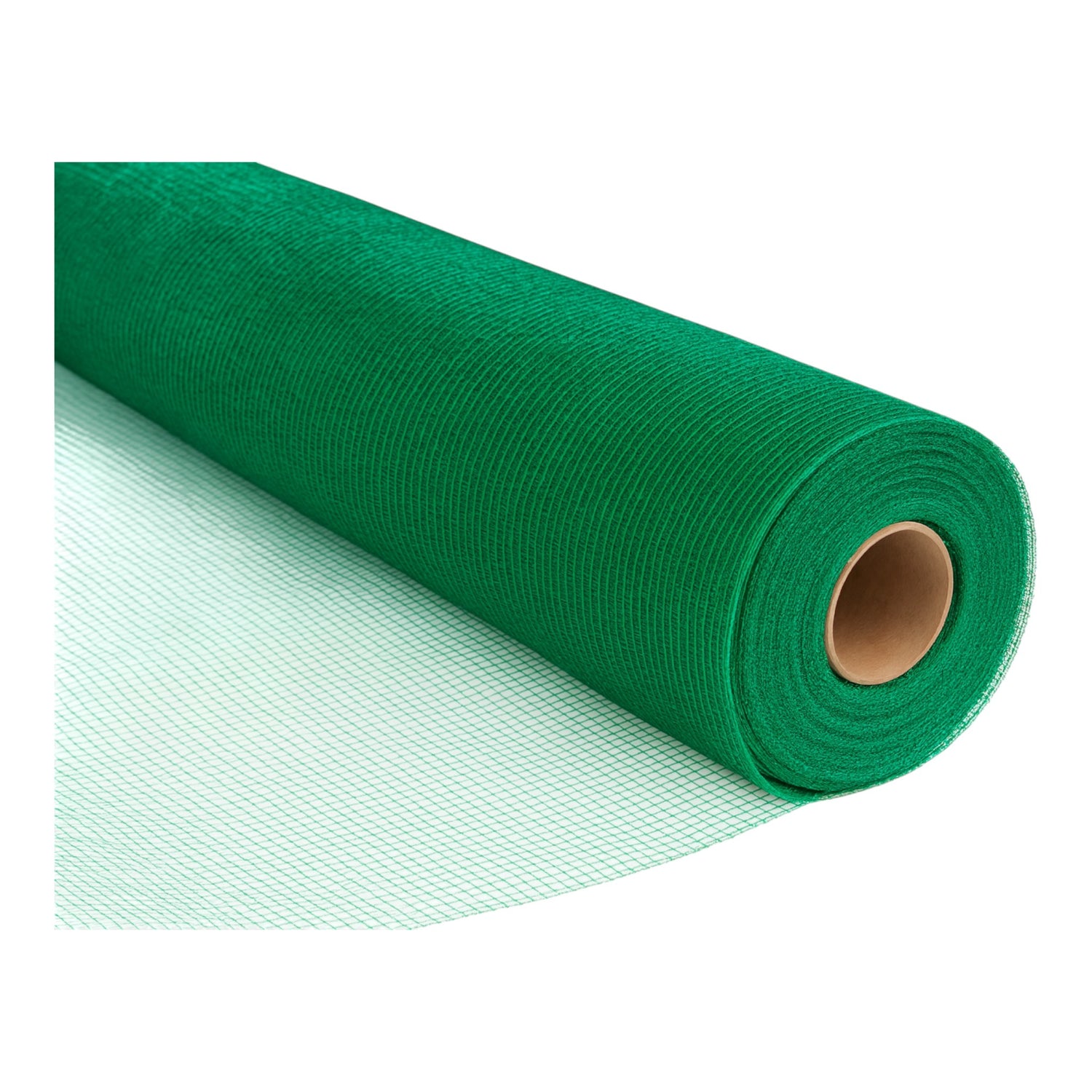
£0.00
Unit price per£0.00
Unit price perThe Windbreak (40%) & Shade (50%) Netting - 1M x 100M is a practical horticultural netting designed for crop support or protection according to the mesh format.
It is suited to routine horticultural work in nurseries, greenhouses, garden centres and gardens where a straightforward accessory is required.
Key benefits
How to use it
Use this product for crop support or protection according to the mesh format. Select the size and format to suit the plant, container or growing area and check its position periodically as plants develop.
For professional & garden use
This accessory can be used for individual plants and displays or incorporated into larger nursery, landscaping and retail programmes.
Windbreak (40%) & Shade (50%) Netting - 1M x 100M product details
| Supplier | Creation Horticulture |
|---|---|
| Product type | Horticultural netting |
| Stated size | 1M x 100M |
| Primary use | crop support or protection according to the mesh format |
Windbreak (40%) & Shade (50%) Netting - 1M x 100M FAQs
What size is this product?
The stated size is 1M x 100M. What is this product used for?
It is designed for crop support or protection according to the mesh format. Who is it suitable for?
It is suitable for professional growers, nurseries, garden centres and gardeners where its size and function match the task. How do I choose the right size?
Check the stated dimensions against the plant, container or working area before ordering. Can it be reused?
Reuse depends on the product material, condition and hygiene requirements. Inspect and clean it as appropriate before reuse.
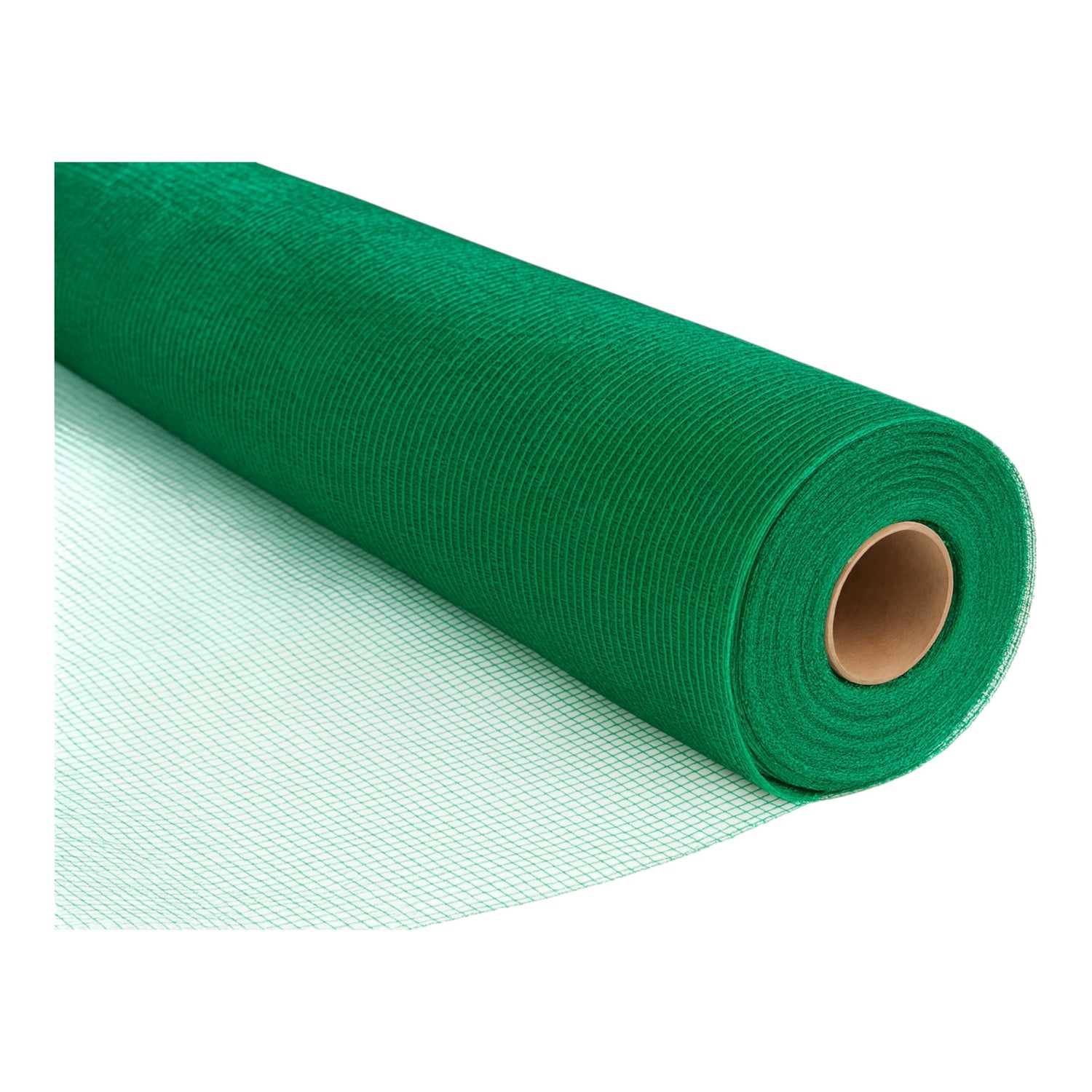
£109.00
Unit price per£109.00
Unit price perThe Windbreak (40%) & Shade (50%) Netting - 2M x 100M (Folded) is a practical horticultural netting designed for crop support or protection according to the mesh format.
It is suited to routine horticultural work in nurseries, greenhouses, garden centres and gardens where a straightforward accessory is required.
Key benefits
How to use it
Use this product for crop support or protection according to the mesh format. Select the size and format to suit the plant, container or growing area and check its position periodically as plants develop.
For professional & garden use
This accessory can be used for individual plants and displays or incorporated into larger nursery, landscaping and retail programmes.
Windbreak (40%) & Shade (50%) Netting - 2M x 100M (Folded) product details
| Supplier | Creation Horticulture |
|---|---|
| Product type | Horticultural netting |
| Stated size | 2M x 100M |
| Primary use | crop support or protection according to the mesh format |
Windbreak (40%) & Shade (50%) Netting - 2M x 100M (Folded) FAQs
What size is this product?
The stated size is 2M x 100M. What is this product used for?
It is designed for crop support or protection according to the mesh format. Who is it suitable for?
It is suitable for professional growers, nurseries, garden centres and gardeners where its size and function match the task. How do I choose the right size?
Check the stated dimensions against the plant, container or working area before ordering. Can it be reused?
Reuse depends on the product material, condition and hygiene requirements. Inspect and clean it as appropriate before reuse.

The Wire Spring Clips (pack of 50) is a practical plant support clip designed for supporting and organising plant stems.
It is suited to routine horticultural work in nurseries, greenhouses, garden centres and gardens where a straightforward accessory is required.
Key benefits
How to use it
Use this product for supporting and organising plant stems. Select the size and format to suit the plant, container or growing area and check its position periodically as plants develop.
When supporting stems, avoid fastening so tightly that growth is restricted. Check ties and supports during the season and adjust them as stems thicken.
For professional & garden use
This accessory can be used for individual plants and displays or incorporated into larger nursery, landscaping and retail programmes.
Wire Spring Clips (pack of 50) product details
| Supplier | Creation Horticulture |
|---|---|
| Product type | Plant support clip |
| Primary use | supporting and organising plant stems |
Wire Spring Clips (pack of 50) FAQs
What is this product used for?
It is designed for supporting and organising plant stems. Can it be used on young plants?
Yes, where the size and support method are appropriate. Leave enough room for stems to expand and check the support as the plant grows. How tightly should plants be secured?
Secure plants firmly enough for support but not so tightly that stems are pinched or restricted. Should supports be checked during the season?
Yes. Adjust ties, clips and supports as plants grow and replace anything that has become damaged or restrictive.
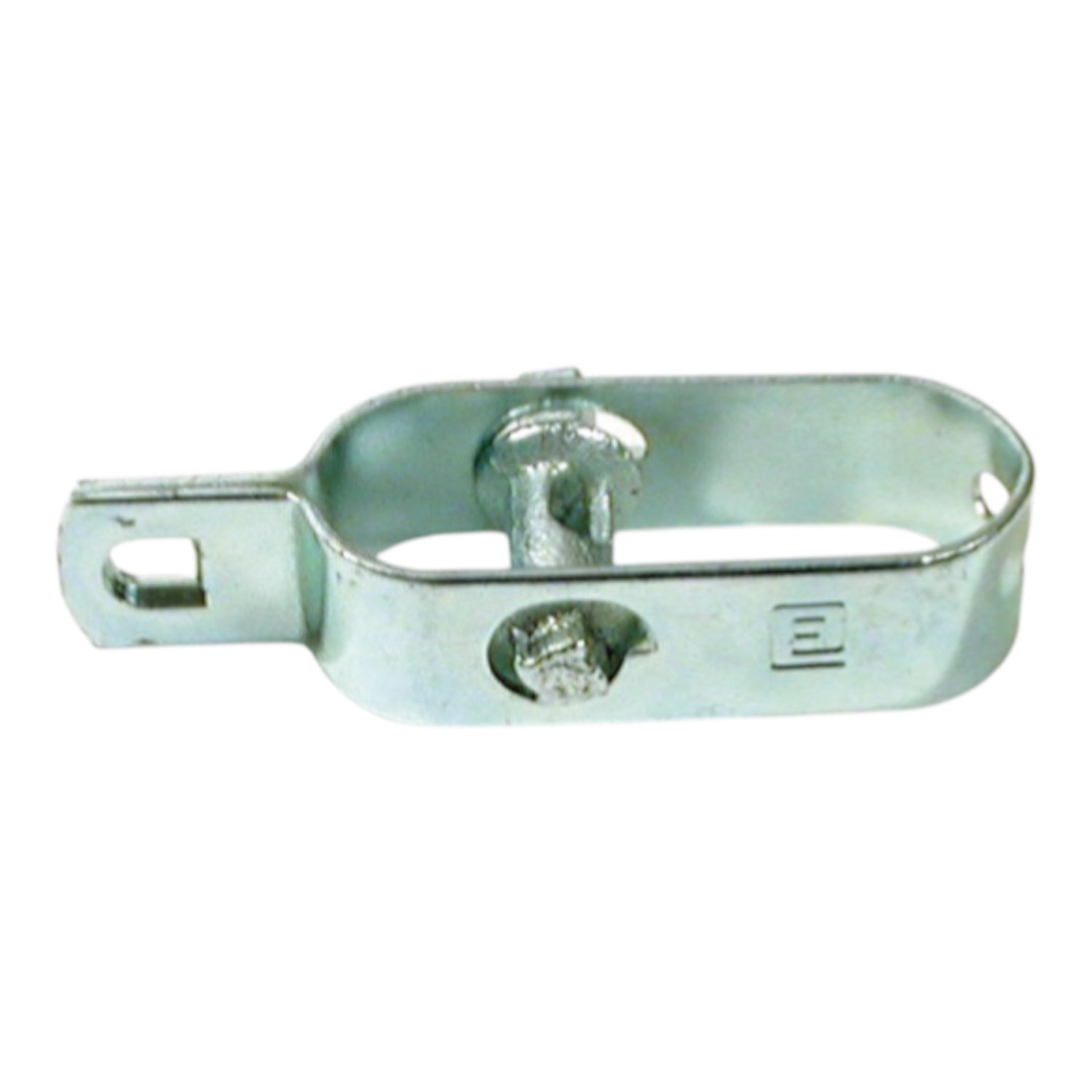
The Wire Strainer is a practical horticultural wire designed for plant training and support.
It is suited to routine horticultural work in nurseries, greenhouses, garden centres and gardens where a straightforward accessory is required.
Key benefits
How to use it
Use this product for plant training and support. Select the size and format to suit the plant, container or growing area and check its position periodically as plants develop.
When supporting stems, avoid fastening so tightly that growth is restricted. Check ties and supports during the season and adjust them as stems thicken.
For professional & garden use
This accessory can be used for individual plants and displays or incorporated into larger nursery, landscaping and retail programmes.
Wire Strainer product details
| Supplier | Creation Horticulture |
|---|---|
| Product type | Horticultural wire |
| Primary use | plant training and support |
Wire Strainer FAQs
What is this product used for?
It is designed for plant training and support. Can it be used on young plants?
Yes, where the size and support method are appropriate. Leave enough room for stems to expand and check the support as the plant grows. How tightly should plants be secured?
Secure plants firmly enough for support but not so tightly that stems are pinched or restricted. Should supports be checked during the season?
Yes. Adjust ties, clips and supports as plants grow and replace anything that has become damaged or restrictive.