
What is this product used for?
Creating a more enclosed propagation environment for seeds and cuttings.

Commercial Products
Commercial Products
 Professional Growing Media
 Plant Nutrition
 Plant Health
 Sprayers & Protective Clothing
 Pots, Planters & Trays
 Propagation
 Baskets & Planters
 Fabrics & Netting
 Environment
 Plant Lighting
 Irrigation
 Plant Support & Tree Care
 Equipment
 Tools
 Plant Labels
 Packaging
 Lawn Care
 Clearance
Retail Products
Retail Products
 Growing Media
 Plant Nutrition
 Plant Health
 Pots, Planters & Tanks
 Propagation
 Baskets & Planters
 Fabrics & Netting
 Environment
 Plant Lighting
 Plant Support
 Equipment
 Tools
1993 products
1993 products
Sort by:

The Large Budget Propagator - 58 x 39 x 23cm is designed for creating a more enclosed propagation environment for seeds and cuttings.
This product is intended for practical professional horticultural, nursery, greenhouse, landscaping or garden use according to its specific application.
Key benefits
Seed & cutting propagation
Use the propagator to create a more enclosed environment around suitable seeds or cuttings. Growing medium, temperature, light, ventilation and moisture still need to be managed according to the crop.
High humidity can reduce water loss but excessive condensation and stagnant conditions can also create problems, so ventilate and monitor the crop as it develops.
Use & maintenance
Keep the product clean and inspect it periodically for wear, damage or contamination appropriate to its application. Store it in conditions that protect it from unnecessary weather, crushing or physical damage.
Choosing the right product
Check dimensions, capacity, connection type or intended application before ordering. Similar-looking horticultural products may not be interchangeable where technical compatibility matters.
Large Budget Propagator - 58 x 39 x 23cm product details
| Product type | Budget Propagator |
|---|---|
| Primary use | creating a more enclosed propagation environment for seeds and cuttings |
| Source designation | Large Budget Propagator - 58 x 39 x 23cm |
| Application | Professional horticulture, nursery, greenhouse, landscaping or garden use |
Large Budget Propagator - 58 x 39 x 23cm FAQs
What is this product used for?
Creating a more enclosed propagation environment for seeds and cuttings. Who is it suitable for?
Professional growers, nurseries, landscapers, garden centres or gardeners where the product matches the intended task. Are the dimensions and technical details retained?
Yes. The product title retains the relevant source dimensions or technical designation. How should it be maintained?
Keep it clean, inspect it for damage and follow maintenance appropriate to the product type. How should it be stored?
Store it clean and protected from unnecessary weather, contamination or physical damage. How do I check compatibility?
Check dimensions, connection type, capacity and intended application before ordering. Can it be used outside its intended application?
Use it only where its design and specification are suitable for the task. Should it be inspected before use?
Yes. Check condition and suitability before putting the product into service.

£68.11
Unit price per£68.11
Unit price perThe Large Double Adjustable Tie for Shrubs and Trees 12.5” 320mm GREEN (Box of 250) is a adjustable shrub and tree tie intended for supporting shrubs and young trees against suitable supports.
Correct tree and shrub support helps newly planted or container-grown stock establish while reducing excessive movement at the root zone. Supports should hold the plant securely without creating unnecessary pressure on the stem or trunk.
Supplied as: box of 250.
Key benefits
Tree & shrub support
Use this product for supporting shrubs and young trees against suitable supports. Select stakes, ties and support components according to the size of the plant, exposure of the site and the support system being used.
A correctly installed support should reduce damaging movement without holding the trunk completely rigid. Some natural movement helps the plant develop as it establishes.
Installation & ongoing checks
Position ties and support components so they do not rub, cut into or constrict the bark. Avoid over-tightening and inspect the installation regularly as the trunk or stems increase in diameter.
Adjust or remove supports once they are no longer required. Leaving a tie in place for too long can cause restriction or damage as the plant grows.
For nurseries, landscapers & tree planting
Tree-support products are useful for nursery stock, landscape planting, public-realm schemes and garden installations where newly planted trees or shrubs need temporary stabilisation.
Large Double Adjustable Tie for Shrubs and Trees 12.5” 320mm GREEN (Box of 250) product details
| Product type | Adjustable shrub and tree tie |
|---|---|
| Primary use | supporting shrubs and young trees against suitable supports |
| Colour | Green |
| Box quantity | 250 |
Large Double Adjustable Tie for Shrubs and Trees 12.5” 320mm GREEN (Box of 250) FAQs
How many are supplied?
This product is supplied in a box of 250. How tight should a tree tie be?
It should support the plant without constricting the trunk or rubbing the bark. Leave appropriate room for movement and growth. How often should tree ties be checked?
Inspect supports regularly, particularly during active growth, and loosen or reposition them before they become restrictive. How long should a tree remain staked?
Only for as long as support is genuinely required. Establishment time varies with plant size, species, root system and site exposure. Can the same support be used for every tree?
No. Match the tie, stake and support arrangement to the trunk size, plant form and site conditions.

£1,128.90
Unit price per£1,128.90
Unit price perLARGE Kew Potting Bench - Std 2.4 x 1m deep 160mm Castors - ORDER ONLY is a potting bench for potting and preparation work.
The larger worktop provides room for filling pots, sorting plants and keeping materials within reach.
Select handling equipment to suit the site, available routes and the size and stability of the items being moved.
Key benefits
Professional applications
The larger worktop provides room for filling pots, sorting plants and keeping materials within reach.
Use it for potting and preparation work where the available space, surfaces and load requirements are appropriate.
Practical use and care
Arrange compost, pots and plants to minimise unnecessary lifting and reaching. Lock or otherwise secure mobile equipment before starting work where the castor arrangement permits. Keep the working surface clean between batches where crop hygiene requires it.
Follow applicable manual-handling procedures and confirm the equipment is suitable for the weight being moved. Do not assume a load rating where one is not specified.
Product specifications
| Brand | Castlefield |
|---|---|
| Product type | Potting bench |
| Primary application | potting and preparation work |
| Worktop dimensions | 2.4m x 1m |
| Castor size | 160mm |
| Frame | Fully welded tubular steel |
| Finish | Hot-dip galvanised |
| Top | Galvanised sheet |
Frequently asked questions
What is the stated worktop or plate size?
The stated size is 2.4m x 1m. What is this bench suitable for?
Potting, plant preparation and sorting work in nurseries, greenhouses and garden centres. Can it be moved around the nursery?
The original listing specifies castors. Check the working surface and castor condition before moving the bench. What should I check before positioning it?
Confirm there is enough space for the bench, operator access and safe movement of materials. Is this a stocked item?
The existing product title identifies this model as order only. Please check current lead time before planning delivery.

The Liquid Chalk Pen (2 pack) is a liquid chalk pen designed for writing on compatible blackboard-style plant labels and display surfaces.
Clear, consistent plant identification helps nurseries, garden centres and growers keep varieties, batches and retail information organised from production through to display.
Key benefits
Plant identification in professional horticulture
Labels can carry variety names, sowing or potting dates, batch references, pricing, care information or other details needed by the growing or retail operation.
Using a consistent colour and label format can also help visually separate crop groups or production batches.
Using the label
Use on a compatible writable surface and allow the marking to dry before handling. Test on a small area first where surface compatibility or removability is important.
Choose a suitable permanent, weather-resistant or removable marking method according to the label material, growing environment and length of time the information needs to remain legible.
Liquid Chalk Pen (2 pack) product details
| Product type | Liquid chalk pen |
|---|
Liquid Chalk Pen (2 pack) FAQs
What is this product used for?
Writing on compatible blackboard-style plant labels and display surfaces. Who is it suitable for?
It is suitable for nurseries, growers, garden centres and other horticultural users requiring clear plant identification. How should it be used?
Use it with the compatible labelling system and follow the normal handling guidance for the surface or label material.

£1.00
Unit price per£1.00
Unit price perThe Loadstar 250W Dual Spectrum Lamp is a high-pressure sodium plant lamp designed to provide a broader spectrum for both vegetative growth and flowering, making it a versatile choice for smaller HID lighting systems.
Unlike a conventional flowering-focused HPS lamp, a dual spectrum lamp supplements the strong red and orange output associated with sodium lighting with additional light in the blue region of the spectrum. This creates a more balanced output for use across multiple stages of plant development.
At 250W, the Loadstar offers a lower-power alternative to larger 400W and 600W HID systems. It is particularly useful where a compact lighting footprint is required or where the heat and power consumption of a larger HID lamp would be unnecessary.
The lamp requires a compatible 250W ballast and suitable HID reflector. It is not a self-ballasted lamp and must not be connected directly to the mains supply.
Why choose the Loadstar 250W Dual Spectrum Lamp?
Dual spectrum light for vegetative growth & flowering
Traditional high-pressure sodium lamps are particularly strong in the red, orange and yellow regions of the spectrum. This makes them highly effective during flowering and fruiting, but less balanced than some other light sources for vegetative development.
The Loadstar Dual Spectrum lamp broadens this output by providing additional blue light alongside the characteristic red-rich HPS spectrum.
The result is a more versatile lamp that can remain in use as plants move from vegetative development into flowering, rather than requiring a separate metal halide or blue-spectrum lamp for the earlier growth stage.
Where is a 250W dual spectrum lamp useful?
A 250W HID system occupies a useful position between lower-output propagation lighting and substantially more powerful 400W, 600W and 1000W systems.
Requires a compatible 250W ballast
The Loadstar 250W Dual Spectrum Lamp is an HID discharge lamp and therefore requires suitable control gear to start the lamp and regulate its electrical operation.
A compatible 250W ballast must be installed between the mains supply and lamp. The lamp must not be connected directly to the mains.
Loadstar produces a 250W magnetic ballast, while suitable multi-wattage digital ballasts may also support 250W sodium and dual spectrum lamps. Always confirm compatibility with the specific ballast before installation.
Pair with a suitable HID reflector
The reflector has a major influence on how effectively the lamp's output is distributed across the crop. A suitable reflector directs light that would otherwise travel upwards or sideways back towards the plant canopy.
Reflector shape, mounting height and positioning all affect the resulting lighting footprint. For the most uniform coverage, position the fixture centrally over the intended area and adjust its height according to crop response and environmental conditions.
Heat management & lamp positioning
Although a 250W HPS lamp produces less heat than higher-powered HID lamps, it still operates at a very high temperature and requires appropriate ventilation and clearance.
Lamp-to-canopy distance should be selected according to the reflector, environmental temperature, crop stage and plant response. Avoid positioning the lamp so close that foliage experiences excessive heat or light stress.
The lamp and reflector become extremely hot during operation. Always switch off the ballast and allow the system to cool fully before handling or carrying out maintenance.
Loadstar 250W Dual Spectrum Lamp product details
| Brand | Loadstar |
|---|---|
| Product type | Dual spectrum HID plant lamp |
| Lamp technology | High-pressure sodium (HPS) |
| Power | 250W |
| Spectrum | Dual spectrum |
| Primary spectral characteristics | Red-rich HPS output with additional blue-spectrum light |
| Suitable crop stages | Vegetative growth, flowering and fruiting |
| Ballast required | Yes - compatible 250W control gear required |
| Direct mains operation | No |
| Typical application | Full-cycle and supplementary plant lighting |
Loadstar 250W Dual Spectrum Lamp FAQs
What does dual spectrum mean?
A dual spectrum lamp combines the strong red-rich output associated with HPS lighting with additional blue light, creating a broader spectrum suitable for more than one stage of plant development. Can the Loadstar 250W Dual Spectrum Lamp be used for vegetative growth?
Yes. The additional blue component makes a dual spectrum lamp more suitable for vegetative development than a conventional flowering-focused HPS lamp. Is the lamp suitable for flowering?
Yes. The lamp retains the strong red, orange and yellow output characteristic of HPS technology, making flowering and fruiting key applications. Does this lamp need a separate ballast?
Yes. The Loadstar 250W Dual Spectrum Lamp requires compatible 250W control gear. It is not self-ballasted and must not be connected directly to the mains supply. Can it be used with a digital ballast?
Yes, provided the digital ballast is specifically compatible with 250W sodium or dual spectrum lamps. Some multi-wattage digital ballasts include a dedicated 250W setting. Can I use the same lamp from vegetative growth through flowering?
Yes. Full-cycle use is one of the main reasons for choosing a dual spectrum lamp, as it removes the need to change between separate vegetative and flowering lamps. Why choose 250W instead of a 600W HPS lamp?
A 250W system is better suited to smaller lighting areas or installations where the additional light output, electrical demand and heat generated by a 600W system are unnecessary. Can the lamp be used without a reflector?
A compatible reflector is normally recommended because it redirects otherwise wasted light towards the crop and helps create a more useful lighting footprint. Does a 250W HPS lamp produce much heat?
Yes. It produces less total heat than higher-powered HID lamps, but the lamp itself still operates at a very high temperature. Suitable ventilation, clearance and safe handling remain essential. How do I know when an HPS lamp needs replacing?
HID lamps gradually lose useful light output as they accumulate operating hours. Replacement is best based on operating time, visible lamp condition and measured lighting performance rather than waiting for complete lamp failure. Can a 250W lamp be run at a higher ballast setting?
Only operate the lamp at settings specifically approved for the lamp and ballast combination. Do not run a 250W lamp at a higher output simply because a multi-wattage ballast offers higher settings. How should a used HPS lamp be disposed of?
HID lamps should be sent through an appropriate lamp recycling or WEEE waste route rather than being disposed of with general waste.

£2.50
Unit price per£2.50
Unit price perThe Loadstar 300W Dual Spectrum CFL is a high-output compact fluorescent plant lamp designed to provide a mixed light spectrum suitable for use across vegetative growth and flowering.
Rather than using a spectrum focused primarily on one stage of plant development, the dual spectrum output combines light suited to both vegetative and flowering growth. This makes the lamp a practical option where one CFL is required for use throughout the crop cycle.
The lamp uses a large E40 screw fitting and incorporates its operating electronics within the lamp assembly, so it does not require the separate HID ballast used with conventional HPS or metal halide lamps.
At 300W, this is one of the higher-powered CFL options in the Loadstar range and is suited to propagation, vegetative growth, supplementary lighting and smaller-scale full-cycle plant lighting where CFL technology is preferred.
Why choose the Loadstar 300W Dual Spectrum CFL?
Dual spectrum light for growth & flowering
Plant lighting requirements change as a crop develops. Blue-weighted light is commonly associated with compact vegetative development, while increased red light is particularly useful during flowering and fruiting.
A dual spectrum CFL combines these requirements into one lamp rather than concentrating almost entirely on either a blue growth spectrum or a red flowering spectrum.
This makes the Loadstar 300W Dual Spectrum CFL particularly convenient where the same lamp is intended to remain in use as plants move from propagation and vegetative development into flowering.
It can also be used as supplementary lighting alongside another suitable primary light source where additional mixed-spectrum light is required.
Self-ballasted CFL technology
The Loadstar 300W is a compact fluorescent lamp with integrated operating electronics. Unlike a conventional HPS or metal halide lamp, it does not require a separate external HID ballast to operate.
This simplifies the lighting arrangement considerably. When fitted to an electrically suitable E40 CFL lamp holder or compatible reflector, the lamp can operate from the appropriate mains-powered holder without a separate ballast positioned elsewhere in the installation.
This distinction is important when selecting equipment. An E40 fitting describes the physical lamp base, but does not mean that every E40 lamp and holder combination is automatically compatible. Always use a holder designed for the electrical requirements and weight of the lamp.
Where can a 300W CFL be used?
The 300W output gives this Loadstar lamp considerably more lighting capacity than smaller propagation CFLs, making it useful across several types of plant-lighting application.
Positioning a 300W CFL lamp
CFL lamps generally produce less intense radiant heat than traditional HID lamps, allowing them to be used effectively in applications where managing heat is important.
However, a 300W CFL still produces heat and requires suitable clearance and airflow. Lamp-to-canopy distance should therefore be determined by observing plant response, light coverage and temperature rather than assuming the lamp can be positioned extremely close to foliage.
When used with a reflector, position the lamp to achieve an even spread across the intended plant area. When used as supplementary lighting, the lamp can be positioned to increase illumination in areas that receive less light from the primary fixture.
Installation & lamp handling
Loadstar 300W Dual Spectrum CFL product details
| Brand | Loadstar |
|---|---|
| Product type | Compact fluorescent plant lamp |
| Power | 300W |
| Spectrum | Dual spectrum |
| Lamp fitting | E40 screw fitting |
| Ballast arrangement | Self-ballasted / integrated operating electronics |
| Suitable crop stages | Propagation, vegetative growth and flowering |
| Typical applications | Full-cycle and supplementary plant lighting |
| Outer case quantity | 10 lamps |
Loadstar 300W Dual Spectrum CFL FAQs
What does dual spectrum mean on a CFL lamp?
Dual spectrum means the lamp combines light suited to vegetative development with light suited to flowering, allowing one lamp to be used across different stages of plant growth. Does the Loadstar 300W CFL need a separate ballast?
No separate HID ballast is required. The CFL incorporates its operating electronics into the lamp assembly and should be fitted to a suitable E40 CFL lamp holder. What lamp fitting does the 300W Loadstar CFL use?
It uses an E40 large Edison screw fitting. Check that the lamp holder is designed for a high-output CFL of this type before installation. Can I use the same lamp for vegetative growth and flowering?
Yes. That is the main advantage of the dual spectrum version. Its mixed output allows the same lamp to remain in use as plants progress from vegetative development into flowering. How is this different from the Loadstar Blue Spectrum CFL?
A blue-spectrum CFL is primarily intended for propagation and vegetative development. The dual spectrum version provides a broader balance suited to both vegetative and flowering stages. Can this lamp be used for supplementary plant lighting?
Yes. A CFL can be positioned to supplement an existing lighting system, particularly where additional light is required around the edges or lower-intensity areas of the main lighting footprint. Can I use the 300W CFL with a reflector?
Yes, provided the reflector has a suitable E40 lamp holder and is designed to accommodate the physical size, weight and electrical requirements of the lamp. Can it be used with a hanging E40 CFL lamp holder?
Yes, where the holder is electrically suitable for the lamp and provides secure mechanical support. The lamp should never be suspended by the electrical cable itself. Does a 300W CFL still produce heat?
Yes. Although CFL technology generally produces less intense radiant heat than traditional HID lighting, a 300W lamp still generates significant heat and requires suitable clearance and airflow. How close should a 300W CFL be to plants?
There is no single correct distance for every installation. Positioning depends on the reflector or holder, plant stage, environmental temperature and plant response. Adjust the height to achieve useful light coverage without causing heat or light stress. How should a used CFL lamp be disposed of?
Fluorescent lamps require appropriate disposal because they contain materials that should not be placed in normal household or commercial general waste. Use an appropriate lamp recycling or WEEE disposal route. How many Loadstar 300W Dual Spectrum CFL lamps are in an outer case?
The outer case quantity is 10 lamps.

£19.50
Unit price per£19.50
Unit price perThe Loadstar 4 Way Timer Contactor is a heavy-duty lighting controller designed to safely automate the switching of up to 4 x 600W lighting systems. Combining a built-in segmental timer with a heavy-duty contactor, four individually switchable output sockets and a robust metal enclosure, it provides a convenient central control point for multi-light installations.
High-powered lighting places significantly greater switching demands on a timer than ordinary low-load electrical equipment. A contactor separates the timer from the main switching load, allowing the timer to control the contactor rather than carrying the full lighting load itself.
This makes the Loadstar 4 Way Timer Contactor particularly useful for installations where several compatible lighting systems need to switch on and off together according to a repeatable daily schedule.
Why choose the Loadstar 4 Way Timer Contactor?
Why use a contactor for high-powered lighting?
The important difference between a standard timer and a timer contactor is the way the electrical load is switched.
High-powered lighting equipment can produce a significant electrical demand during start-up. Repeatedly switching this type of load directly through a standard timer can place considerable stress on the timer's internal switching contacts.
A contactor is designed to handle the main switching operation. The timer controls the contactor, while the contactor switches the connected lighting load. This arrangement is particularly useful when several lighting systems need to operate simultaneously.
Built-in segmental timer
The integrated segmental timer allows the connected lighting schedule to be automated directly from the Loadstar controller. Once the required on and off periods have been set, the timer repeats the programme each day.
This provides a simple mechanical approach to lighting automation without relying on a separate external timer for the four connected outputs.
The analogue format also makes the programmed lighting period easy to see at a glance, which can be useful when checking or adjusting a lighting schedule.
Four-way lighting control
The Loadstar controller provides four output sockets, allowing up to four compatible lighting systems to be controlled from the same timer programme.
Loadstar specifies the 4 Way Timer Contactor for handling up to 4 x 600W lights. This makes it a convenient option for installations where several lights need to follow the same operating schedule.
Each socket is switchable and incorporates a power indicator, providing straightforward local control and visual confirmation at the controller.
Robust wall-mountable design
The controller is housed in a robust metal enclosure and incorporates wall mounting hooks. Mounting the controller securely in a suitable location helps keep the electrical installation organised and keeps the unit away from areas where it could be knocked or exposed to water.
As with all mains-powered lighting equipment, the controller should be installed and operated in accordance with its supplied instructions and within the specified electrical limits. Keep electrical connections dry and do not exceed the stated lighting capacity.
Loadstar 4 Way Timer Contactor product details
| Brand | Loadstar |
|---|---|
| Product type | Timer contactor / lighting controller |
| Number of output sockets | 4 |
| Lighting capacity | Up to 4 x 600W lights |
| Timer | Built-in segmental timer |
| Socket control | Individually switchable outputs |
| Power indication | Socket power indicators |
| Enclosure | Robust metal housing |
| Mounting | Wall mounting hooks |
| Primary application | Automatic switching of compatible high-powered lighting systems |
| Warranty | 2 years |
| Outer case quantity | 8 units |
Loadstar 4 Way Timer Contactor FAQs
How many lights can the Loadstar 4 Way Timer Contactor control?
The Loadstar 4 Way model is specified to control up to 4 x 600W lighting systems. Does the Loadstar 4 Way Contactor have a timer built in?
Yes. This model incorporates a segmental timer, allowing the connected lights to be automatically switched according to the programmed daily schedule. Why do I need a contactor instead of an ordinary timer?
A contactor is designed to perform the main switching operation for higher electrical loads. The timer controls the contactor rather than directly switching the full lighting load, reducing the switching demand placed on the timer itself. Do all four sockets follow the same timer programme?
Yes. The unit is designed to provide centralised timed control for lighting systems that need to follow the same operating schedule. Can the individual sockets be switched?
Yes. The Loadstar unit features switchable output sockets, allowing individual outputs to be controlled locally at the contactor. Can the Loadstar 4 Way Timer Contactor be wall mounted?
Yes. Wall mounting hooks are incorporated into the unit, allowing it to be securely positioned in a suitable location. Does it have a plastic or metal enclosure?
The Loadstar 4 Way Timer Contactor uses a robust metal housing designed to protect the internal switching components. Can I exceed four 600W lights if the sockets are available?
No. The stated capacity of the 4 Way model is up to four 600W lights. Do not exceed the manufacturer's specified electrical loading, regardless of the number of available sockets. Where should the timer contactor be installed?
Install the controller securely in a suitable dry location, away from irrigation, standing water and excessive moisture, and follow the supplied electrical and installation instructions. How many Loadstar 4 Way Timer Contactors are in an outer case?
The outer case quantity for this product is 8 units.

£4.00
Unit price per£4.00
Unit price perThe Loadstar Euro Reflector is a simple, reliable and cost-effective open-ended HID reflector, manufactured from highly reflective anodised aluminium and supplied with a generous 5m cable.
Designed to direct more of a lamp's output down towards the plant canopy, the Euro Reflector provides a broad spread of light without the complexity or cost of larger enclosed reflector systems.
Its open-ended design allows heat generated by the lamp to escape naturally from around the reflector, while the shaped aluminium surface redirects light that would otherwise travel upwards and away from the crop.
Electrical connections at the rear of the reflector are contained within a sturdy junction box, while the supplied 5m cable provides useful flexibility when positioning the reflector in relation to compatible HID control gear.
Why choose the Loadstar Euro Reflector?
Wide-spread open reflector design
A bare HID lamp emits light in multiple directions. Without a reflector, a significant proportion of that output travels upwards or sideways rather than towards the crop.
The Loadstar Euro Reflector uses its shaped reflective surface to redirect more of this otherwise wasted light down towards the plant canopy. Its relatively open geometry creates a broad spread rather than concentrating the lamp output into a narrow footprint.
This straightforward approach has made Euro-style reflectors a popular choice for conventional HID lighting installations where simplicity, affordability and broad coverage are priorities.
Reflective anodised aluminium
The reflector body is manufactured from anodised aluminium, providing a bright reflective surface for redirecting light from the lamp.
Aluminium also keeps the reflector relatively lightweight, making it easier to suspend and reposition compared with heavier lighting assemblies.
To maintain reflective performance, keep the surface clean and free from accumulated dust. Avoid aggressive or abrasive cleaning methods that could mark or dull the reflective finish.
Supplied with a 5m cable
The included 5 metre cable provides useful separation between the reflector and compatible ballast or control gear.
This makes it easier to position the lighting fixture where required while locating the ballast in a suitable accessible position. Excess cable should be routed safely and kept clear of hot lamps, sharp edges, standing water and areas where it could be damaged.
Designed for conventional HID lighting
The Loadstar Euro Reflector is intended to form part of a conventional single-ended HID lighting system using a compatible lamp and ballast.
High-pressure sodium and metal halide lamps require suitable control gear and must not be connected directly to the mains supply. Lamp wattage and type should always be matched correctly to the ballast and reflector installation.
The reflector itself does not replace the ballast. A complete system requires the reflector, a compatible HID lamp and appropriate control gear.
Positioning the Euro Reflector
Suspend the reflector securely above the crop using appropriate hangers or suspension equipment. Keeping the reflector level helps maintain an even lighting footprint across the intended area.
Mounting height will depend on the lamp wattage, crop stage, environmental temperature and required light intensity. Higher-powered HID lamps generally require greater clearance from the canopy than lower-powered lamps.
Adjustable suspension equipment can make it easier to alter reflector height as plants develop.
Ventilation & heat management
HID lamps operate at very high temperatures. The Euro Reflector's open-ended construction allows heat to move away naturally, but appropriate environmental ventilation is still required.
Maintain suitable clearance between the lamp, plants and surrounding materials. The reflector and lamp should be positioned where accidental contact is unlikely, and the electrical components should be protected from irrigation water and excessive moisture.
Always switch the lighting system off and allow the lamp and reflector to cool fully before adjustment, cleaning or maintenance.
Loadstar Euro Reflector product details
| Brand | Loadstar |
|---|---|
| Product type | Open-ended HID lamp reflector |
| Reflector material | Anodised aluminium |
| Reflector design | Open-ended, wide-spread design |
| Cable length | 5m |
| Wiring enclosure | Rear junction box |
| Typical application | Single-ended HID plant lighting |
| Ballast included | No |
| Lamp included | No |
| Outer case quantity | 8 reflectors |
Loadstar Euro Reflector FAQs
What does a Euro reflector do?
It redirects light that would otherwise travel upwards and sideways back towards the crop, creating a more useful lighting footprint from a compatible HID lamp. What is the Loadstar Euro Reflector made from?
The reflector is manufactured from highly reflective anodised aluminium, providing a lightweight reflective surface for distributing lamp output. Does the Loadstar Euro Reflector include a cable?
Yes. It is supplied with a 5m cable, giving useful flexibility when positioning the reflector in relation to compatible control gear. Is a lamp included?
No. The lamp is sold separately, allowing the reflector to be paired with an appropriate compatible HID lamp and ballast. Does the reflector include a ballast?
No. A compatible ballast or other appropriate HID control gear is required separately. Why is the reflector open at the ends?
The open-ended construction keeps the design simple and allows heat generated by the HID lamp to escape naturally from around the reflector. Can I use a double-ended DE lamp in this reflector?
No. Double-ended HID lamps require a dedicated DE fixture with electrical connections at both ends. The Euro Reflector is intended for conventional single-ended lighting systems. How should I clean the reflective surface?
Allow the reflector to cool completely, disconnect the lighting system and remove loose dust carefully. Avoid abrasive cleaners or materials that could scratch or dull the anodised reflective surface. Can the reflector height be adjusted?
The reflector can be suspended from suitable adjustable hangers, allowing its height to be altered as the crop develops. Suspension equipment is separate from the reflector itself. How high should the reflector be above plants?
The correct height depends on lamp wattage, light intensity, crop stage and environmental temperature. Higher-output HID lamps normally require more clearance, so positioning should be adjusted according to the complete lighting system and plant response. Why is the wiring housed in a junction box?
The rear junction box provides a sturdy enclosure for the reflector's electrical connections and keeps the wiring assembly together at the back of the fixture. How many Loadstar Euro Reflectors are in an outer case?
The outer case quantity is 8 reflectors.

£3.75
Unit price per£3.75
Unit price perThe Loadstar Heavy Duty Lighting Timer is a 24-hour segmental mechanical timer designed to handle the high starting load produced by a single compatible 600W HID lighting ballast.
Purpose-built for lighting control, the Loadstar timer provides a straightforward way to automate daily light and dark periods without requiring a separate contactor when operating 1 x 600W HID ballast.
The mechanical dial operates over a repeating 24-hour cycle and is divided into 15-minute timing intervals. This provides 96 individual switching segments across each day, allowing the required lighting period to be set quickly and easily.
Once configured, the selected schedule repeats every 24 hours, making the Loadstar Heavy Duty Timer a practical solution for single-light installations requiring consistent automatic control.
Why choose the Loadstar Heavy Duty Lighting Timer?
Automatic 24-hour lighting control
Consistent light and dark periods are an important part of managing many crops under artificial lighting. The Loadstar Heavy Duty Timer automates this process, removing the need to manually switch the lighting system at the beginning and end of each cycle.
The timer dial represents a complete 24-hour period and is divided into 15-minute segments. These segments are used to select when the connected lighting system should operate.
Once the current time and required operating periods have been set, the timer progresses through the programme and repeats the same schedule each day.
Designed for the demands of HID lighting
HID lighting places particular demands on switching equipment. When an HID ballast starts, its electrical characteristics can place considerably more stress on timer contacts than would be expected from looking at running wattage alone.
For this reason, a standard household timer should not automatically be assumed suitable for controlling an HID ballast simply because its stated wattage rating appears high enough.
The Loadstar Heavy Duty Lighting Timer is specifically designed to control a single compatible 600W HID ballast, allowing the ballast to be switched directly without requiring a separate contactor for this specified application.
Ideal for single 600W HID lighting systems
The Loadstar timer is particularly suited to installations where one compatible 600W HID lighting system needs to operate on a consistent daily schedule.
It provides a compact and straightforward alternative to a larger multi-way lighting control system where only one ballast needs to be controlled.
For installations using several HID ballasts, an appropriately rated multi-way lighting contactor or dedicated lighting controller should be used instead of attempting to switch multiple ballasts through a single timer.
Simple 15-minute segment programming
The mechanical dial is divided into 96 individual 15-minute segments. These segments allow the required operating periods to be selected directly on the timer.
This makes it suitable for commonly used daily lighting schedules as well as custom programmes that operate in quarter-hour increments.
Mechanical programming also makes the timer easy to check at a glance. The selected operating periods are visible directly around the dial without needing to navigate menus or access a separate controller.
Setting up the Loadstar Heavy Duty Timer
Always follow the instructions supplied with the timer and the electrical requirements specified by the manufacturer of the connected ballast and lighting equipment.
Lighting timer safety & load management
The Loadstar Heavy Duty Lighting Timer is specified for one compatible 600W HID ballast. Its suitability for this application should not be interpreted as approval for multiple ballasts or other high-load electrical equipment.
Loadstar Heavy Duty Lighting Timer product details
| Brand | Loadstar |
|---|---|
| Product type | Heavy-duty segmental mechanical lighting timer |
| Timer cycle | 24 hours |
| Timing interval | 15 minutes |
| Switching segments | 96 per 24-hour cycle |
| Specified HID capacity | 1 x 600W HID ballast |
| Separate contactor required | No, when controlling the specified single compatible 600W HID ballast |
| Control type | Mechanical segmental timer |
| Schedule type | Repeating 24-hour programme |
| Manufacturer warranty | 12 months |
| Outer case quantity | 50 timers |
Loadstar Heavy Duty Lighting Timer FAQs
What is a heavy-duty lighting timer?
A heavy-duty lighting timer is designed to switch electrical loads that can place greater stress on timer contacts than ordinary household appliances. This Loadstar model is specifically designed for controlling a single compatible 600W HID ballast. What is the maximum HID lighting load for this timer?
The Loadstar Heavy Duty Lighting Timer is designed to control 1 x 600W HID ballast. Larger or multi-light installations should use appropriately rated lighting control equipment. How accurately can I set the lighting times?
The mechanical dial is divided into 15-minute intervals, allowing switching times to be adjusted in quarter-hour increments across the 24-hour period. Can I set more than one on and off period during the day?
Yes. The segmental dial allows multiple operating periods to be selected within the same 24-hour cycle, provided the required switching times follow the timer's 15-minute intervals. Does the timer need programming every day?
No. Once the current time and required operating segments have been set, the mechanical programme repeats on a 24-hour cycle. Will the timer keep the correct time during a power cut?
The mechanical clock relies on the mains supply to advance, so a power interruption can leave the timer behind the actual time. Check and correct the dial following a power cut where necessary. Can I use this instead of a lighting contactor?
For the specified application of controlling a single compatible 600W HID ballast, the timer is designed to operate without a separate contactor. Multi-light installations require appropriately rated control equipment. Can I use the timer for an 18/6 or 12/12 lighting schedule?
Yes. The 24-hour segmental dial can be configured for commonly used daily schedules such as 18 hours on / 6 hours off or 12 hours on / 12 hours off. What is the advantage of a mechanical timer over a digital timer?
A mechanical timer is particularly straightforward where the same schedule is required every day. Switching periods are set directly on the dial, making the programme easy to view and adjust without navigating digital menus. Where should the Loadstar timer be installed?
Install the timer in a suitable dry location where it and its electrical connections are protected from water, irrigation spray and excessive moisture while remaining accessible for inspection. Should I check a mechanical lighting timer regularly?
Yes. Periodically check that the dial shows the correct current time, the required segments remain correctly set and the timer, plug and socket show no signs of damage or overheating. How many Loadstar Heavy Duty Lighting Timers are in an outer case?
The outer case quantity is 50 timers.

£5.00
Unit price per£5.00
Unit price perThe Loadstar Pro 1000W SE HPS Lamp is a high-output single-ended high-pressure sodium lamp designed primarily for the flowering and fruiting stages of plant development.
Producing the predominantly red and yellow light associated with traditional HPS technology, this 1000W lamp is designed for applications where powerful flowering illumination and a large usable lighting footprint are required.
The single-ended (SE) format is designed for compatible 1000W SE reflectors and lighting systems, distinguishing it from the Loadstar Pro 1000W DE lamp used in double-ended fixtures.
As a high-intensity discharge lamp, the Loadstar Pro requires a compatible 1000W ballast to operate and cannot be connected directly to the mains supply.
Why choose the Loadstar Pro 1000W SE HPS Lamp?
Red-rich HPS spectrum for flowering & fruiting
The Loadstar Pro 1000W SE produces the predominantly red and yellow spectral output characteristic of high-pressure sodium lighting.
This spectral balance makes the lamp particularly suited to flowering and fruiting applications, where high-intensity red-rich lighting can support strong reproductive growth.
The lamp can also form part of a broader crop-lighting strategy where HPS is combined with natural daylight or other artificial light sources.
High-output 1000W plant lighting
At 1000W, the Loadstar Pro is intended for significantly larger and higher-intensity applications than conventional 250W, 400W or 600W HPS systems.
The increased power allows a suitable reflector to distribute substantial light across a larger crop area, although actual canopy intensity depends on the reflector, mounting height, spacing and surrounding environment.
Higher wattage should not automatically be treated as better for every installation. A 1000W HPS lamp is most effective where the available area, mounting height, ventilation and environmental control are appropriate for its output.
What does SE mean?
SE stands for single-ended. The lamp's electrical and mechanical connection is located at one end, allowing it to fit a compatible single-ended reflector or lamp holder.
This is different from a DE or double-ended HPS lamp, which is supported and connected at both ends and requires a completely different type of fixture.
The Loadstar Pro 1000W SE should therefore only be used with equipment specifically suitable for a 1000W single-ended HPS lamp.
Requires a compatible 1000W ballast
High-pressure sodium lamps require dedicated control gear to start the lamp and regulate its operation. The Loadstar Pro 1000W SE therefore cannot be connected directly to the mains supply.
Use a compatible 1000W ballast designed to operate single-ended HPS lamps. Loadstar also produces a 1000W SE digital ballast specifically intended for single-ended 1000W lighting systems.
Where a ballast provides adjustable output settings, follow the ballast and lamp manufacturers' operating requirements. Do not assume that every ballast carrying a 1000W rating is automatically compatible with every 1000W lamp.
Heat management & positioning
A 1000W HPS lamp produces a substantial amount of heat as well as high-intensity light. Appropriate ventilation and environmental management are therefore essential.
Mounting height should be selected according to the reflector, crop, environmental temperature and measured or observed light intensity. Adequate clearance should always be maintained between the lamp, reflector, plants and surrounding materials.
The lamp and reflector become extremely hot during operation. Always switch the lighting system off and allow sufficient cooling time before handling, servicing or replacing the lamp.
Loadstar Pro 1000W SE HPS Lamp product details
| Brand | Loadstar |
|---|---|
| Range | Loadstar Pro |
| Product type | High-pressure sodium horticultural lamp |
| Lamp power | 1000W |
| Lamp format | Single-ended (SE) |
| Light spectrum | Predominantly red and yellow |
| Primary crop stage | Flowering and fruiting |
| Control gear | Compatible 1000W SE HPS ballast required |
| Direct mains operation | No |
| Fixture requirement | Compatible single-ended 1000W reflector / lamp holder |
| Typical application | High-intensity flowering, fruiting and supplementary crop lighting |
Loadstar Pro 1000W SE HPS Lamp FAQs
What is the Loadstar Pro 1000W SE HPS lamp primarily designed for?
Its predominantly red and yellow HPS spectrum makes it particularly suited to high-intensity flowering and fruiting applications. What does SE mean on the Loadstar 1000W lamp?
SE means single-ended. The lamp connects to the lighting fixture at one end, unlike a double-ended lamp that is supported and electrically connected at both ends. Is this the same as the Loadstar Pro 1000W DE lamp?
No. The SE and DE versions use different lamp and fixture formats. This product is the single-ended version and requires compatible SE equipment. Does the Loadstar 1000W SE lamp need a ballast?
Yes. HPS lamps require suitable control gear for starting and operation. This lamp requires a compatible 1000W ballast designed for single-ended HPS lighting. Can I plug the lamp directly into the mains?
No. The lamp must be operated through suitable HPS control gear and a compatible reflector or lamp holder. It must not be connected directly to the mains supply. Can I use it with the Loadstar 1000W SE digital ballast?
The Loadstar 1000W SE digital ballast is designed to operate single-ended 1000W lamps, making it the corresponding type of control gear for an SE lighting system. Always confirm the complete lamp, ballast and reflector configuration before installation. Is this a dual spectrum lamp?
This particular Loadstar Pro 1000W SE lamp is described as producing predominantly red and yellow light and is primarily positioned as a flowering HPS lamp, rather than the separate Loadstar dual spectrum lamp range. Can a 1000W HPS lamp cover more area than a 600W lamp?
A 1000W system provides substantially greater lamp power and can be used for larger high-intensity lighting footprints. Actual coverage depends on the reflector, mounting height, layout and required canopy light level rather than wattage alone. Does a 1000W HPS lamp produce a lot of heat?
Yes. A 1000W HPS lighting system produces substantial heat, so adequate ventilation, clearance and environmental control should form part of the installation design. Can I put this lamp into a double-ended reflector?
No. Single-ended and double-ended lamps use different mounting systems. This lamp requires a compatible single-ended reflector and lamp holder. How should the lamp be handled after use?
Switch off the lighting system and allow the lamp and reflector to cool fully before touching or servicing them. HID lamps operate at very high temperatures during use. How should an old HPS lamp be disposed of?
HID lamps should be handled through an appropriate lamp recycling or WEEE waste route rather than being placed in general waste.

The Loadstar Pro 600W Dual Spectrum Lamp is a high-pressure sodium (HPS) grow lamp designed to provide useful light for both vegetative growth and flowering from a single 600W lamp. Its dual spectrum output combines the predominantly red/orange output associated with HPS lighting with additional blue-spectrum light, allowing growers to use one lamp throughout the crop cycle.
Designed as a cost-effective replacement lamp for compatible 600W HID lighting systems, the Loadstar Pro uses a standard E40 screw fitting and is intended to operate with a suitable 600W ballast and reflector.
Dual spectrum technology makes the lamp particularly convenient for growers who want to avoid changing between separate vegetative and flowering lamps. It can remain in the lighting system as plants move from vegetative development into flowering and fruiting.
Why choose the Loadstar Pro 600W Dual Spectrum Lamp?
Dual spectrum lighting for vegetative growth & flowering
Traditional HPS lamps produce a spectrum heavily weighted towards the warmer red and orange wavelengths commonly associated with flowering. Dual spectrum HPS lamps modify this output by introducing additional blue-spectrum light.
This broader output makes the Loadstar Pro suitable for vegetative growth as well as flowering, providing growers with a straightforward full-cycle lighting option without having to change between separate metal halide and HPS lamps.
The lamp remains particularly well suited to flowering applications while the additional blue component makes it more versatile for earlier stages of established plant growth.
Proven 600W HPS technology
High-pressure sodium lighting has been widely used in controlled-environment horticulture for many years. A 600W HPS system produces intense light from a relatively compact lamp and can be paired with a suitable reflector to distribute that light across the crop area.
HID lamps generate considerable heat during operation. Appropriate ventilation, reflector positioning and plant-to-lamp distance are therefore important parts of any 600W HPS installation.
E40 fitting for compatible 600W lighting systems
The Loadstar Pro 600W Dual Spectrum Lamp uses an E40 screw base, the common large-format lamp fitting used across many single-ended horticultural HID reflectors.
The lamp requires a compatible 600W HPS ballast. The ballast regulates the electrical supply required to start and operate the lamp and should always be correctly matched to the lamp wattage and type.
Before replacing an existing lamp, isolate the lighting system from the mains supply and allow the old lamp and reflector to cool completely.
Ideal as a replacement 600W grow lamp
HID lamps gradually lose light output through use even when they continue to illuminate normally. Replacing ageing lamps can therefore be an important part of maintaining the performance of an existing HID lighting installation.
The Loadstar Pro provides a straightforward replacement option for suitable 600W HPS systems, particularly where a dual spectrum lamp is preferred for both vegetative and flowering use.
Loadstar Pro 600W Dual Spectrum Lamp product details
| Brand | Loadstar |
|---|---|
| Range | Loadstar Pro |
| Product type | Dual spectrum HPS grow lamp |
| Power | 600W |
| Lamp technology | High Pressure Sodium (HPS) |
| Spectrum | Dual spectrum |
| Lamp fitting | E40 screw base |
| Growth stages | Vegetative growth & flowering |
| Ballast required | Yes - compatible 600W HPS ballast |
| Reflector required | Suitable E40 HID reflector / lamp holder |
| Suitable for | Full-cycle plant lighting & replacement in compatible 600W HPS systems |
Loadstar Pro 600W Dual Spectrum Lamp FAQs
Is the Loadstar Pro 600W an HPS lamp?
Yes. It is a 600W high-pressure sodium grow lamp with a dual spectrum output. What does dual spectrum mean?
Dual spectrum HPS lamps supplement the predominantly warm red/orange output of conventional HPS lighting with additional blue-spectrum light, making the lamp more versatile across different plant growth stages. Can I use the Loadstar 600W lamp for vegetative growth?
Yes. The dual spectrum output is designed to make the lamp suitable for vegetative growth as well as flowering. Can I use the same lamp for flowering?
Yes. Flowering is a core application for HPS lighting, and the Loadstar Pro can remain in use as plants move from vegetative growth into the flowering stage. What fitting does the Loadstar Pro 600W use?
It uses an E40 screw fitting, commonly found on single-ended HID horticultural reflectors and lamp holders. Does this lamp need a ballast?
Yes. The lamp must be operated with a suitable ballast designed for a 600W HPS lamp. It must not be connected directly to the mains supply. Can I fit it into an LED fixture?
No. This is a replaceable HID lamp intended for a compatible 600W HPS ballast and E40 reflector system. It is not an LED replacement component. Does a 600W HPS lamp produce much heat?
Yes. HID lighting converts a significant amount of electrical energy into heat as well as light, so suitable ventilation and safe clearance around the lamp and reflector are important. Should I touch the glass when fitting the lamp?
It is good practice to handle HID lamps carefully and avoid unnecessary contact with the glass. Always install or replace the lamp with the lighting system isolated from the mains and completely cool. Is this a good replacement for an old 600W dual spectrum bulb?
It is suitable as a replacement where the existing lighting system uses a compatible 600W HPS ballast and E40 lamp holder. Always check the ballast and reflector specifications before installation.

£6.85
Unit price per£6.85
Unit price perThe Loadstar Pro 600W Dual Spectrum HPS Lamp is a cost-effective high-intensity discharge lamp designed to provide useful light for both vegetative growth and flowering from a single 600W bulb.
Unlike a conventional flowering-focused HPS lamp, the Loadstar Pro uses a dual-spectrum output that supplements the characteristic red and orange HPS spectrum with additional blue light. This gives plants a broader spectrum and allows the same lamp to be used throughout the main growth and flowering stages.
The Loadstar Pro is designed for use with compatible 600W HID lighting equipment and is suitable as a replacement lamp for existing 600W HPS systems or as part of a new 600W lighting installation.
It provides a straightforward option for growers who want the proven intensity of 600W HID lighting without changing between separate vegetative and flowering lamps.
Why choose the Loadstar Pro 600W Dual Spectrum Lamp?
Dual spectrum for growth & flowering
Standard high-pressure sodium lamps are particularly strong in the warmer red and orange areas of the spectrum. This makes HPS technology particularly useful during flowering and fruiting, but a conventional HPS spectrum is less balanced towards blue wavelengths.
A dual-spectrum HPS lamp introduces additional blue light while retaining the strong warm-spectrum characteristics of HPS. The result is a more versatile lamp that can support vegetative development as well as flowering and fruiting.
For growers who prefer to run one type of HID lamp throughout the crop cycle, this avoids the need to swap between a separate metal halide growth lamp and HPS flowering lamp.
Suitable applications
Using the Loadstar Pro 600W lamp
The Loadstar Pro must be operated with a suitable 600W HID ballast and compatible reflector or lamp holder. The ballast regulates the electrical supply required to start and operate the HID lamp correctly.
Always switch off and isolate the lighting system before fitting, removing or inspecting the lamp. Allow the lamp and reflector to cool fully before handling, as HID lamps and surrounding lighting equipment can become extremely hot during operation.
Ensure the lamp is securely fitted and use only equipment rated for the lamp type and wattage. HID lamps should not be connected directly to the mains without the appropriate ballast.
Replacing older HPS lamps
HID lamps gradually lose useful light output as they age, even when the lamp continues to illuminate normally. This means an older lamp can appear to be working while providing less effective light than when it was new.
Replacing ageing lamps is therefore an important part of maintaining an established HID lighting installation. The Loadstar Pro provides a cost-effective replacement for compatible 600W systems while retaining dual-spectrum operation across both vegetative and flowering stages.
Loadstar Pro 600W product details
| Brand | Loadstar |
|---|---|
| Range | Loadstar Pro |
| Product type | Dual-spectrum HPS lamp |
| Lamp technology | High Pressure Sodium (HPS) |
| Power | 600W |
| Spectrum | Dual spectrum |
| Suitable crop stages | Vegetative growth, flowering & fruiting |
| Ballast required | Yes - compatible 600W HID ballast required |
| Typical use | Plant lighting, controlled-environment horticulture & replacement lamp for compatible 600W HPS systems |
| Outer case quantity | 25 lamps |
Loadstar Pro 600W Dual Spectrum Lamp FAQs
What type of lamp is the Loadstar Pro 600W?
It is a 600W dual-spectrum High Pressure Sodium (HPS) lamp designed for plant lighting applications. What does dual spectrum mean?
A dual-spectrum HPS lamp supplements the strong red and orange output associated with HPS technology with additional blue light, producing a more versatile spectrum for different stages of plant development. Can I use the Loadstar Pro 600W for vegetative growth?
Yes. The additional blue component of its dual-spectrum output makes the lamp suitable for vegetative growth as well as later crop stages. Can I use it for flowering and fruiting?
Yes. The Loadstar Pro retains the strong warm-spectrum output associated with HPS lighting and is suitable for flowering and fruiting crops. Can I use the same lamp throughout the crop cycle?
Yes. One of the main advantages of a dual-spectrum HPS lamp is its ability to provide useful light for both vegetative and flowering stages without changing between separate growth and bloom lamps. Does the Loadstar Pro 600W need a ballast?
Yes. This is an HID lamp and requires a compatible 600W ballast to start and regulate the lamp correctly. Can I connect this 600W HPS bulb directly to the mains?
No. A suitable HID ballast and compatible lighting equipment are required. Never connect an HID lamp directly to a mains electrical supply. Will it work with a 600W digital ballast?
It is designed for compatible 600W HPS lighting systems. Always confirm that the individual ballast is rated for the lamp type and 600W operating power before use. Can it replace an existing 600W HPS lamp?
Yes, provided the existing ballast, reflector and lamp holder are compatible with this type of 600W HPS lamp. Is this a metal halide lamp?
No. The Loadstar Pro is a dual-spectrum HPS lamp. Its spectrum contains an additional blue component for improved versatility, but it is not a metal halide lamp. Does an HPS lamp lose output as it gets older?
Yes. HID lamps gradually lose useful light output with operating time, so an older lamp can continue illuminating while producing less effective plant light than it did when new. Does a 600W HPS lamp produce heat?
Yes. HID lighting produces substantial heat during operation. Appropriate ventilation, clearance and temperature management should be considered when designing the lighting installation. Is the Loadstar Pro supplied as a complete lighting system?
No. This product is the 600W dual-spectrum lamp. A compatible ballast, reflector, lamp holder and associated electrical equipment are required to form a complete lighting system. How many Loadstar Pro 600W lamps are in an outer case?
The outer case quantity for this SKU is 25 lamps.

£50.00
Unit price per£50.00
Unit price per
£5.00
Unit price per£5.00
Unit price perThe Lumatek Daisy Chain 5m Control Cable is the genuine control link cable for connecting compatible Lumatek controllable LED fixtures together in series, allowing multiple lights to receive a stable and precise control signal.
Designed specifically for Lumatek's controllable LED lighting platform, the cable connects the Signal Out port of one compatible fixture to the Signal In port of the next. This allows a row or group of fixtures to be daisy-chained rather than requiring a separate controller connection to every light.
The cable uses M12 self-locking male and female connectors to provide a secure connection between fixtures and has a generous 5 metre length, providing flexibility when positioning lights across larger propagation, nursery and controlled-environment installations.
This is Lumatek product code LUMM0015 and is IP65 rated for additional protection in demanding growing environments.
Why choose the Lumatek 5m Daisy Chain Control Cable?
Connect Lumatek LED fixtures in series
The Daisy Chain Control Cable is used between compatible Lumatek LED fixtures once the first fixture has been connected to the appropriate lighting controller.
Simply connect the M12 self-locking male plug to the Signal Out connection on the first LED fixture, then connect the M12 self-locking female plug to the Signal In connection on the next fixture.
Additional compatible fixtures can then be linked in sequence using additional LUMM0015 cables, creating an organised control network across a multi-light installation.
Centralised Lumatek lighting control
Daisy-chaining is particularly useful in larger lighting installations because it allows multiple compatible fixtures to receive their control signal through a single linked network.
When used with the appropriate Lumatek controller and compatible LED fixtures, this arrangement allows supported lighting-control functions to be applied across groups of connected lights without individually wiring every fixture directly back to the controller.
Lumatek's Control Panel Plus 2.0 system can control up to 100 compatible fixtures across two zones, with up to 50 fixtures per zone. The exact controller cable and configuration required depends on the version of the Lumatek fixtures and controller being used.
How to install the Lumatek Daisy Chain Cable
Control cable, not a driver extension cable
The LUMM0015 should not be confused with Lumatek's LED driver extension cables. This product is specifically designed to link the control signal between compatible LED fixtures.
If the objective is to position a Lumatek LED driver remotely from its fixture, a different Lumatek extension cable is required. Likewise, the cable used between the lighting controller and the first fixture can differ according to the controller and fixture generation.
Check the model and connection ports on existing Lumatek equipment before ordering accessories for older installations.
Built for professional lighting installations
Lumatek specifies the LUMM0015 using UL 2464 3 x 22AWG cable with an IP65 rating. The cable has been designed to maintain a reliable control connection in environments where lighting equipment may operate for long periods under demanding conditions.
The self-locking M12 connectors also provide a more secure connection than a loose push-fit control plug, particularly where multiple fixtures and cables are installed overhead.
Lumatek Daisy Chain 5m Control Cable product details
| Brand | Lumatek |
|---|---|
| Product | Daisy Chain Control Cable |
| Product code | LUMM0015 |
| Application | Linking compatible Lumatek controllable LED fixtures in series |
| Cable length | 5m |
| Connection | M12 self-locking male to M12 self-locking female |
| Fixture connection | Signal Out to Signal In |
| Cable specification | UL 2464 3 x 22AWG |
| Temperature resistance | 80°C |
| Specified working temperature | -20°C to 105°C |
| Specified storage temperature | -25°C to 105°C |
| Ingress protection | IP65 |
| Compliance | RoHS compliant |
| Contents | 1 x Lumatek 5m Daisy Chain Control Cable |
Lumatek Daisy Chain 5m Control Cable FAQs
What is the Lumatek 5m Daisy Chain Cable used for?
It links compatible Lumatek controllable LED fixtures together so the control signal can pass from one fixture to the next within a multi-light installation. What is the Lumatek product code?
The official Lumatek product code for the 5m Daisy Chain Control Cable is LUMM0015. How long is the cable?
The cable is 5 metres long, allowing useful spacing between compatible fixtures in professional lighting installations. What connectors does the cable use?
The LUMM0015 uses M12 self-locking male and female connectors. The cable connects the Signal Out port of one compatible fixture to the Signal In port of the next. Is this a power cable?
No. This is a control link cable used for communication between compatible Lumatek LED fixtures. It does not replace the fixture's mains power connection. Is this the cable for connecting the driver remotely?
No. Lumatek uses a different extension-cable accessory when the LED driver needs to be positioned remotely from the fixture. LUMM0015 is specifically the daisy-chain control cable between compatible fixtures. How many cables do I need?
For a conventional daisy-chain arrangement, one LUMM0015 cable is required between each additional compatible fixture after the first. For example, linking two fixtures together requires one daisy-chain cable between them. Is the cable IP rated?
Yes. Lumatek specifies the LUMM0015 Daisy Chain Control Cable as IP65 rated. Can it be used with the Lumatek Control Panel Plus 2.0?
Yes, as part of a compatible Lumatek LED control installation. The cable between the controller and the first fixture is a separate controller cable, while LUMM0015 links subsequent compatible fixtures together. How many fixtures can a Lumatek Control Panel Plus 2.0 manage?
Lumatek specifies control of up to 100 compatible fixtures across two independent zones, with up to 50 fixtures in each zone. The correct cables and compatible fixture versions must be used. How do I know whether my Lumatek LED is compatible?
Check the fixture for compatible Signal In and Signal Out connections and confirm its model and generation against Lumatek's current accessory guidance. This is particularly important with older versions of Lumatek LED equipment. Can several 5m cables be used in the same installation?
Yes. Additional LUMM0015 cables are used to continue the daisy chain from one compatible fixture to the next.

£5.00
Unit price per£5.00
Unit price perThe Lumatek UV LED Daisy Chain Cable 1.5m is the dedicated linking cable for connecting multiple Lumatek 30W UV Supplemental LED Bars together in series. It allows additional UV bars to receive power through the preceding fixture, creating a cleaner multi-bar installation without requiring an individual mains power cable for every UV bar.
Lumatek's 30W UV Supplemental LED Bar features both an input and output connection specifically to support daisy-chain operation. The first UV bar is connected to the mains using the separately available Lumatek UV power cable, with additional bars then linked using these 1.5m daisy chain cables.
Lumatek specifies a maximum daisy-chain capacity of 30 x 30W UV Supplemental LED Bars from one power source, making the cable suitable for anything from a simple two-bar installation through to larger professional supplemental lighting layouts.
Why choose the Lumatek UV Daisy Chain Cable?
How the Lumatek UV daisy-chain system works
A Lumatek 30W UV Supplemental LED Bar can either receive power directly through its input connection or receive power from the output of another UV bar in the chain.
The first fixture requires the appropriate Lumatek UV LED Bar power cable. A 1.5m daisy chain cable is then connected from the power output of the first UV bar to the power input of the second. Further bars can be added using an additional daisy chain cable between each fixture.
This means a two-bar arrangement requires one daisy chain cable, a three-bar arrangement requires two, and so on. The power cable and daisy chain cables are separate accessories.
Designed for the Lumatek 30W UV Supplemental LED Bar
This 1.5m cable is specifically intended for Lumatek's 30W UV Supplemental LED Light Bar. The UV fixture incorporates dedicated input and output sockets that allow several bars to be connected together in series.
Lumatek specifies a maximum of 30 compatible UV bars in a single daisy-chain arrangement. Always stay within the manufacturer's stated maximum and use the correct Lumatek power and connection cables for the system.
Simple connection between UV bars
Before connecting the fixtures, ensure that mains power is switched off. Align the connector on the daisy chain cable with the output connection of the first UV bar and push it into place until securely locked. Connect the opposite end to the input of the next UV bar.
Repeat the process for any additional fixtures, using one daisy chain cable for each additional UV bar in the series.
Lumatek specifically advises that UV fixtures should not be connected or disconnected while under load. Always switch off the mains supply before adding, removing or disconnecting fixtures or cables.
How many daisy chain cables do I need?
| Number of UV bars | Daisy chain cables required |
|---|---|
| 1 UV bar | None - use the appropriate Lumatek power cable |
| 2 UV bars | 1 daisy chain cable |
| 3 UV bars | 2 daisy chain cables |
| 4 UV bars | 3 daisy chain cables |
| 5 UV bars | 4 daisy chain cables |
As a simple rule, a daisy-chained installation requires one fewer daisy chain cable than the number of UV bars. The first bar also requires the appropriate Lumatek power cable to connect the chain to its power source.
Lumatek UV LED Daisy Chain Cable product details
| Brand | Lumatek |
|---|---|
| Product type | UV LED bar daisy chain / link cable |
| Cable length | 1.5m |
| Primary compatibility | Lumatek 30W UV Supplemental LED Light Bar |
| Function | Connects compatible Lumatek UV LED bars together in series |
| Connection | UV bar output to next UV bar input |
| Maximum UV daisy chain | Up to 30 compatible 30W UV bars from one power source |
| Power cable | Required for the first UV bar and sold separately |
| Installation | Connect and disconnect only with mains power switched off |
Lumatek UV LED Daisy Chain Cable FAQs
What is the Lumatek 1.5m UV Daisy Chain Cable used for?
It is used to connect compatible Lumatek 30W UV Supplemental LED Bars together in series, linking the output of one UV fixture to the input of the next. How long is the cable?
The Lumatek UV Daisy Chain Cable is 1.5 metres long. Can I connect two Lumatek UV bars together?
Yes. Connect the first UV bar to the appropriate power cable and use one 1.5m daisy chain cable to link the first bar to the second. How many Lumatek UV bars can be daisy chained?
Lumatek specifies a maximum of 30 x 30W UV Supplemental LED Bars in a daisy-chain arrangement from one power source. Does this cable replace the Lumatek UV power cable?
No. The first UV bar still requires the appropriate Lumatek power cable. The 1.5m daisy chain cable is then used to connect each additional UV bar to the preceding fixture. How many cables do I need for three UV bars?
Three UV bars require two daisy chain cables, plus the appropriate power cable for the first bar. Is the 1.5m daisy chain cable supplied with the UV bar?
No. Lumatek lists the UV bar power cable and the 1.5m UV daisy chain cable as separate accessories. Can I connect or disconnect the cable while the UV bars are switched on?
No. Lumatek instructs users not to connect or disconnect the UV fixtures under load. Switch off the mains power before connecting, disconnecting or altering the daisy chain. Is this a Lumatek-specific accessory?
Yes. It is designed for the connection system used by compatible Lumatek supplemental UV LED bars. Compatibility should be confirmed before attempting to use it with any other equipment.
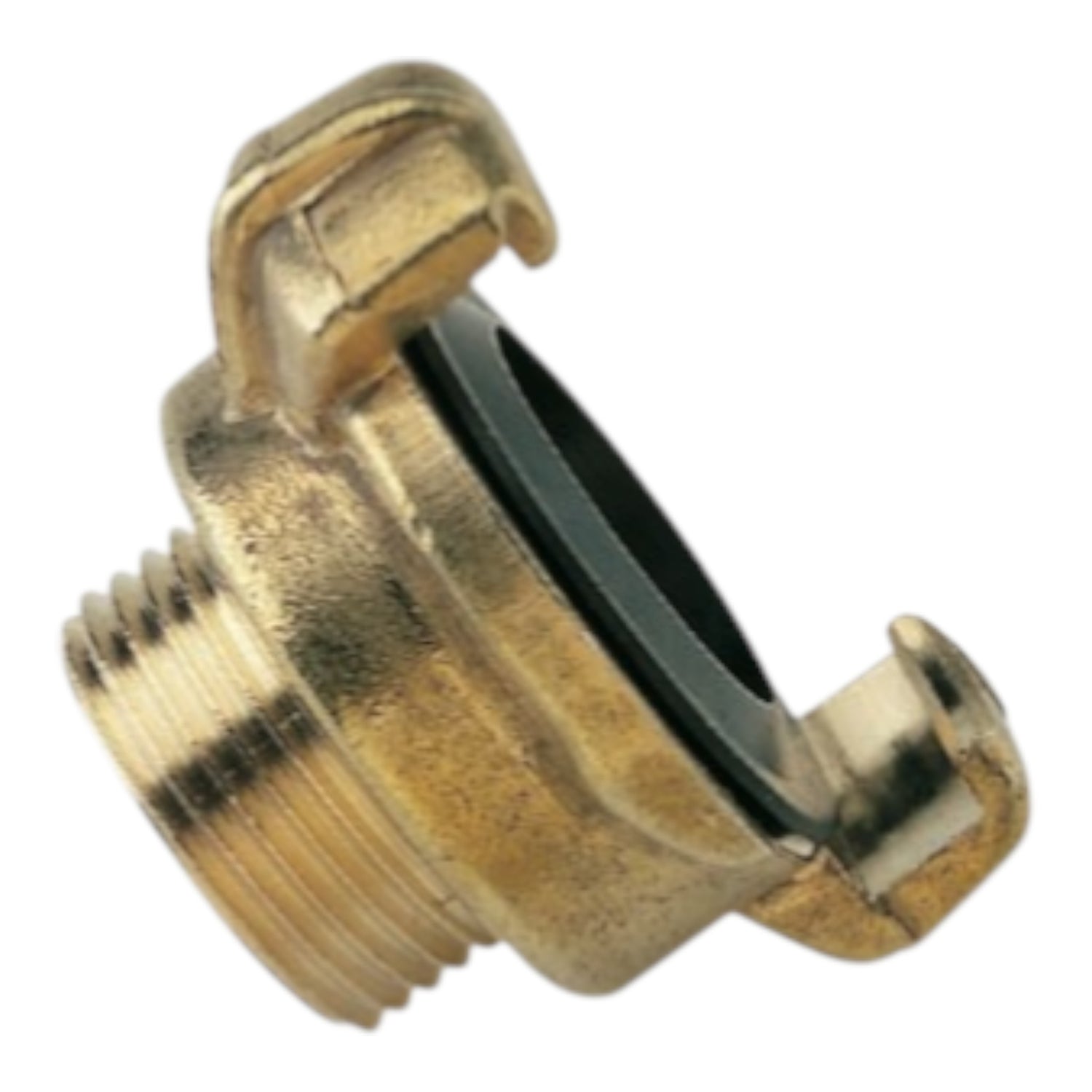
The Male Hose Coupling - Hose diameter 1" (25mm) is designed for connecting compatible hose using a male coupling in professional horticultural, nursery, landscape and garden watering systems.
Correct hose fittings and storage equipment help keep watering systems organised, serviceable and easier to move between working areas.
Key benefits
Building serviceable hose connections
Match the fitting to the stated hose diameter and coupling system. Push barbed fittings fully into compatible hose and secure them using the appropriate method for the system.
Keep sealing faces and washers clean. If a connection leaks, inspect the seal, hose end and coupling condition rather than relying on excessive tightening.
Watering-system setup
Choose hose diameter and fittings according to the required flow, run length and available water pressure. Long hose runs and restrictive fittings can reduce pressure and flow at the watering lance or outlet.
Leak checks & maintenance
Inspect hose ends, seals, couplings and moving trolley parts periodically. Replace split hose, worn seals and damaged fittings rather than accepting persistent leakage.
Storage
Store hose and fittings clean and protected from unnecessary physical damage. Avoid leaving hose tightly kinked or under tension around fittings during storage.
Male Hose Coupling - Hose diameter 1" (25mm) product details
| Product type | Male Hose Coupling |
|---|---|
| Primary use | connecting compatible hose using a male coupling |
| Source designation | Male Hose Coupling - Hose diameter 1" (25mm) |
| Application | Professional horticultural and garden watering systems |
Male Hose Coupling - Hose diameter 1" (25mm) FAQs
What is this product used for?
Connecting compatible hose using a male coupling. How do I check compatibility?
Match the stated hose diameter, fitting type and coupling system to the equipment already in use. Can different hose diameters use the same fitting?
Not unless the fitting is specifically designed for those sizes. Use the stated compatible diameter. What should I check if a hose connection leaks?
Inspect the hose end, seal, washer and coupling surfaces and replace damaged components. Does hose length affect water delivery?
Yes. Longer runs and restrictive fittings can contribute to pressure loss and reduced flow. How should hose equipment be stored?
Keep it clean and protected and avoid severe kinks, crushing or continuous strain on fittings. Should fittings be inspected regularly?
Yes. Check seals, coupling faces and hose connections for wear or damage. Can hose trolleys be overloaded?
Use each component only within the capacity and application appropriate to the complete watering system.
£3.70
Unit price per£3.70
Unit price perThe Male Hose Coupling - Hose diameter 1/2" (12.5mm) is designed for connecting compatible hose using a male coupling in professional horticultural, nursery, landscape and garden watering systems.
Correct hose fittings and storage equipment help keep watering systems organised, serviceable and easier to move between working areas.
Key benefits
Building serviceable hose connections
Match the fitting to the stated hose diameter and coupling system. Push barbed fittings fully into compatible hose and secure them using the appropriate method for the system.
Keep sealing faces and washers clean. If a connection leaks, inspect the seal, hose end and coupling condition rather than relying on excessive tightening.
Watering-system setup
Choose hose diameter and fittings according to the required flow, run length and available water pressure. Long hose runs and restrictive fittings can reduce pressure and flow at the watering lance or outlet.
Leak checks & maintenance
Inspect hose ends, seals, couplings and moving trolley parts periodically. Replace split hose, worn seals and damaged fittings rather than accepting persistent leakage.
Storage
Store hose and fittings clean and protected from unnecessary physical damage. Avoid leaving hose tightly kinked or under tension around fittings during storage.
Male Hose Coupling - Hose diameter 1/2" (12.5mm) product details
| Product type | Male Hose Coupling |
|---|---|
| Primary use | connecting compatible hose using a male coupling |
| Source designation | Male Hose Coupling - Hose diameter 1/2" (12.5mm) |
| Application | Professional horticultural and garden watering systems |
Male Hose Coupling - Hose diameter 1/2" (12.5mm) FAQs
What is this product used for?
Connecting compatible hose using a male coupling. How do I check compatibility?
Match the stated hose diameter, fitting type and coupling system to the equipment already in use. Can different hose diameters use the same fitting?
Not unless the fitting is specifically designed for those sizes. Use the stated compatible diameter. What should I check if a hose connection leaks?
Inspect the hose end, seal, washer and coupling surfaces and replace damaged components. Does hose length affect water delivery?
Yes. Longer runs and restrictive fittings can contribute to pressure loss and reduced flow. How should hose equipment be stored?
Keep it clean and protected and avoid severe kinks, crushing or continuous strain on fittings. Should fittings be inspected regularly?
Yes. Check seals, coupling faces and hose connections for wear or damage. Can hose trolleys be overloaded?
Use each component only within the capacity and application appropriate to the complete watering system.
£3.83
Unit price per£3.83
Unit price perThe Male Hose Coupling - Hose diameter 3/4" (19mm) is designed for connecting compatible hose using a male coupling in professional horticultural, nursery, landscape and garden watering systems.
Correct hose fittings and storage equipment help keep watering systems organised, serviceable and easier to move between working areas.
Key benefits
Building serviceable hose connections
Match the fitting to the stated hose diameter and coupling system. Push barbed fittings fully into compatible hose and secure them using the appropriate method for the system.
Keep sealing faces and washers clean. If a connection leaks, inspect the seal, hose end and coupling condition rather than relying on excessive tightening.
Watering-system setup
Choose hose diameter and fittings according to the required flow, run length and available water pressure. Long hose runs and restrictive fittings can reduce pressure and flow at the watering lance or outlet.
Leak checks & maintenance
Inspect hose ends, seals, couplings and moving trolley parts periodically. Replace split hose, worn seals and damaged fittings rather than accepting persistent leakage.
Storage
Store hose and fittings clean and protected from unnecessary physical damage. Avoid leaving hose tightly kinked or under tension around fittings during storage.
Male Hose Coupling - Hose diameter 3/4" (19mm) product details
| Product type | Male Hose Coupling |
|---|---|
| Primary use | connecting compatible hose using a male coupling |
| Source designation | Male Hose Coupling - Hose diameter 3/4" (19mm) |
| Application | Professional horticultural and garden watering systems |
Male Hose Coupling - Hose diameter 3/4" (19mm) FAQs
What is this product used for?
Connecting compatible hose using a male coupling. How do I check compatibility?
Match the stated hose diameter, fitting type and coupling system to the equipment already in use. Can different hose diameters use the same fitting?
Not unless the fitting is specifically designed for those sizes. Use the stated compatible diameter. What should I check if a hose connection leaks?
Inspect the hose end, seal, washer and coupling surfaces and replace damaged components. Does hose length affect water delivery?
Yes. Longer runs and restrictive fittings can contribute to pressure loss and reduced flow. How should hose equipment be stored?
Keep it clean and protected and avoid severe kinks, crushing or continuous strain on fittings. Should fittings be inspected regularly?
Yes. Check seals, coupling faces and hose connections for wear or damage. Can hose trolleys be overloaded?
Use each component only within the capacity and application appropriate to the complete watering system.

£1.00
Unit price per£1.00
Unit price perReady-to-use plant pest controller and antifeedant spray for tackling aphids, whiteflies, thrips, spider mites and other common plant pests.
Maven SKRAM MIST is a ready-to-use plant pest controller designed for direct foliar application, with no dilution or mixing required. It provides contact control of common insect and mite pests while discouraging further feeding on treated plants.
SKRAM MIST is particularly effective against aphids, whiteflies, thrips and spider mites, while also providing control of mealybugs, leafhoppers, psyllids, suckers and scale insects. It acts on contact, so thorough coverage of the plant and target pests is important.
Developed for use within professional plant growing programmes, SKRAM MIST fits alongside Integrated Pest Management (IPM), Integrated Crop Management (ICM) and biological control programmes. It has minimal impact on bees, pollinators and beneficial arthropods when used as directed, making it a versatile option for growers taking an integrated approach to pest management.
Why choose Maven SKRAM MIST?
What pests does SKRAM MIST control?
SKRAM MIST is designed to provide effective contact control of aphids, whiteflies, thrips and spider mites. It can also be used against mealybugs, leafhoppers, psyllids, suckers and scale insects.
Because SKRAM MIST acts through contact, good spray coverage matters. Particular attention should be given to areas where pests are hiding or feeding, including the undersides of leaves and dense areas of foliage.
How to use Maven SKRAM MIST
SKRAM MIST 500ml is supplied ready to use, so there is no need to dilute the product. Apply to fully hydrated plants, spraying the foliage and target pests evenly until complete coverage and slight run-off are achieved.
Make sure both sides of the leaves are treated, particularly where mites, aphids, whiteflies or other pests are present. Avoid application during extreme heat or periods of high light intensity.
Always follow the product label and Maven's application instructions for the crop, pest and growing situation being treated.
Product details
| Brand | Maven |
|---|---|
| Product | SKRAM MIST |
| Product type | Ready-to-use plant pest controller & antifeedant spray |
| Volume | 500ml |
| Formulation | Ready to use (RTU) |
| Application | Contact foliar spray |
| Key target pests | Aphids, whiteflies, thrips & spider mites |
| Other target pests | Mealybugs, leafhoppers, psyllids, suckers & scale insects |
| Suitable plants | Edible crops & ornamental plants |
| Growing programmes | Suitable for IPM, ICM & biological control programmes |
| Outer case quantity | 12 bottles |
Maven SKRAM MIST FAQs
What is Maven SKRAM MIST?
SKRAM MIST is Maven's ready-to-use plant pest controller and antifeedant spray. It is designed for direct application to plants to control common insect and mite pests while discouraging further feeding.
Do I need to dilute SKRAM MIST?
No. SKRAM MIST is supplied ready to use and does not need to be diluted or mixed before application.
Does SKRAM MIST kill spider mites?
SKRAM MIST is designed to provide effective contact control of spider mites. Thorough coverage of the foliage, including both sides of the leaves, is important when treating mite populations.
Can SKRAM MIST be used for aphids?
Yes. Aphids are one of the principal pests targeted by SKRAM MIST, alongside whiteflies, thrips and spider mites.
Can SKRAM MIST be used on edible plants?
Yes. Maven states that SKRAM has no residual activity and is suitable for use on edible crops as well as ornamental plants when used according to the product instructions.
Can SKRAM MIST be used with biological pest control?
Yes. SKRAM MIST is designed to fit alongside Integrated Pest Management, Integrated Crop Management and biological control programmes, with minimal impact on beneficial arthropods when used as directed.
How should I spray SKRAM MIST?
Apply the ready-to-use spray evenly to fully hydrated plants, ensuring thorough coverage of the foliage and target pests. Pay particular attention to the undersides of leaves and aim for slight run-off.
When should I avoid spraying SKRAM MIST?
Avoid applying SKRAM MIST during extreme heat or high light intensity. Plants should be fully hydrated before treatment.
Is SKRAM MIST the same as SKRAM Concentrate?
No. SKRAM MIST is the ready-to-use version and can be sprayed without dilution. Maven also produces SKRAM Concentrate, which must be diluted according to its separate application instructions.


£55.00
Unit price per£55.00
Unit price per


The Maxi Jet Micro 140 - 400 Water Pump is a water pump intended for compatible water-circulation and transfer applications.
Select a pump by the required flow, lift/head, water characteristics and installation rather than model name alone. Actual flow normally falls as head and system resistance increase.
Key benefits
Choosing a pump for the system
Start with the flow required at the actual delivery height, not simply the headline free-flow figure. Vertical lift, hose or pipe diameter, bends, valves, filters and fittings all add resistance and can reduce delivered flow.
Confirm the pump is suitable for the water type, solids content, temperature and duty required. Do not assume every water pump is suitable for dirty water, continuous duty or nutrient solutions unless the manufacturer specifies it.
Pipework & flow
Use adequately sized hose or pipe and avoid unnecessary restrictions. Undersized pipework can waste pump capacity through friction loss. Secure connections and support pipework so the pump outlet is not carrying avoidable mechanical load.
Electrical safety
Water and electricity require appropriate protection. Use a suitable supply, RCD protection and connections appropriate to the environment, following the manufacturer's instructions. Isolate the pump before handling, cleaning or servicing.
Maintenance
Inspect the inlet, impeller area, cable and connections periodically. Remove debris according to the manufacturer's instructions and investigate reduced flow before assuming the pump itself has failed.
Maxi Jet Micro 140 - 400 Water Pump product details
| Brand | Maxi Jet |
|---|---|
| Product type | Water Pump |
| Primary application | Compatible water circulation or transfer |
| Selling quantity | 1 pump |
Maxi Jet Micro 140 - 400 Water Pump FAQs
What should I consider when choosing a pump?
Required flow at the actual head, pipework resistance, water type, duty and electrical installation. Does the headline flow stay the same at every height?
No. Delivered flow normally reduces as vertical lift and system resistance increase. Can I use any hose size?
Use a hose or pipe size suitable for the pump and required flow; restrictive pipework can significantly reduce performance. Can the pump run dry?
Do not assume so. Follow the manufacturer's instructions for the exact model. Is it suitable for dirty water or nutrient solution?
Only where the manufacturer confirms compatibility with the liquid and solids content involved. What electrical precautions are needed?
Use a suitable protected supply and installation for the wet environment and isolate power before handling or servicing. What should I check if flow drops?
Inspect the inlet, pipework, filters, fittings and impeller area for restriction or blockage. How should the pump be maintained?
Follow the manufacturer's cleaning and servicing instructions and inspect cables and connections regularly.

The Maxi Jet MJ1000 Pump is a water pump intended for compatible water-circulation and transfer applications.
Select a pump by the required flow, lift/head, water characteristics and installation rather than model name alone. Actual flow normally falls as head and system resistance increase.
Key benefits
Choosing a pump for the system
Start with the flow required at the actual delivery height, not simply the headline free-flow figure. Vertical lift, hose or pipe diameter, bends, valves, filters and fittings all add resistance and can reduce delivered flow.
Confirm the pump is suitable for the water type, solids content, temperature and duty required. Do not assume every water pump is suitable for dirty water, continuous duty or nutrient solutions unless the manufacturer specifies it.
Pipework & flow
Use adequately sized hose or pipe and avoid unnecessary restrictions. Undersized pipework can waste pump capacity through friction loss. Secure connections and support pipework so the pump outlet is not carrying avoidable mechanical load.
Electrical safety
Water and electricity require appropriate protection. Use a suitable supply, RCD protection and connections appropriate to the environment, following the manufacturer's instructions. Isolate the pump before handling, cleaning or servicing.
Maintenance
Inspect the inlet, impeller area, cable and connections periodically. Remove debris according to the manufacturer's instructions and investigate reduced flow before assuming the pump itself has failed.
Maxi Jet MJ1000 Pump product details
| Brand | Maxi Jet |
|---|---|
| Product type | Water Pump |
| Primary application | Compatible water circulation or transfer |
| Selling quantity | 1 pump |
Maxi Jet MJ1000 Pump FAQs
What should I consider when choosing a pump?
Required flow at the actual head, pipework resistance, water type, duty and electrical installation. Does the headline flow stay the same at every height?
No. Delivered flow normally reduces as vertical lift and system resistance increase. Can I use any hose size?
Use a hose or pipe size suitable for the pump and required flow; restrictive pipework can significantly reduce performance. Can the pump run dry?
Do not assume so. Follow the manufacturer's instructions for the exact model. Is it suitable for dirty water or nutrient solution?
Only where the manufacturer confirms compatibility with the liquid and solids content involved. What electrical precautions are needed?
Use a suitable protected supply and installation for the wet environment and isolate power before handling or servicing. What should I check if flow drops?
Inspect the inlet, pipework, filters, fittings and impeller area for restriction or blockage. How should the pump be maintained?
Follow the manufacturer's cleaning and servicing instructions and inspect cables and connections regularly.

The Maxi Jet MJ500 Pump is a water pump intended for compatible water-circulation and transfer applications.
Select a pump by the required flow, lift/head, water characteristics and installation rather than model name alone. Actual flow normally falls as head and system resistance increase.
Key benefits
Choosing a pump for the system
Start with the flow required at the actual delivery height, not simply the headline free-flow figure. Vertical lift, hose or pipe diameter, bends, valves, filters and fittings all add resistance and can reduce delivered flow.
Confirm the pump is suitable for the water type, solids content, temperature and duty required. Do not assume every water pump is suitable for dirty water, continuous duty or nutrient solutions unless the manufacturer specifies it.
Pipework & flow
Use adequately sized hose or pipe and avoid unnecessary restrictions. Undersized pipework can waste pump capacity through friction loss. Secure connections and support pipework so the pump outlet is not carrying avoidable mechanical load.
Electrical safety
Water and electricity require appropriate protection. Use a suitable supply, RCD protection and connections appropriate to the environment, following the manufacturer's instructions. Isolate the pump before handling, cleaning or servicing.
Maintenance
Inspect the inlet, impeller area, cable and connections periodically. Remove debris according to the manufacturer's instructions and investigate reduced flow before assuming the pump itself has failed.
Maxi Jet MJ500 Pump product details
| Brand | Maxi Jet |
|---|---|
| Product type | Water Pump |
| Primary application | Compatible water circulation or transfer |
| Selling quantity | 1 pump |
Maxi Jet MJ500 Pump FAQs
What should I consider when choosing a pump?
Required flow at the actual head, pipework resistance, water type, duty and electrical installation. Does the headline flow stay the same at every height?
No. Delivered flow normally reduces as vertical lift and system resistance increase. Can I use any hose size?
Use a hose or pipe size suitable for the pump and required flow; restrictive pipework can significantly reduce performance. Can the pump run dry?
Do not assume so. Follow the manufacturer's instructions for the exact model. Is it suitable for dirty water or nutrient solution?
Only where the manufacturer confirms compatibility with the liquid and solids content involved. What electrical precautions are needed?
Use a suitable protected supply and installation for the wet environment and isolate power before handling or servicing. What should I check if flow drops?
Inspect the inlet, pipework, filters, fittings and impeller area for restriction or blockage. How should the pump be maintained?
Follow the manufacturer's cleaning and servicing instructions and inspect cables and connections regularly.

£23.73
Unit price per£23.73
Unit price perAdjustable water pump delivering up to 1,200L/hr for circulating nutrient solution through hydroponic systems and reservoirs.
The Maxi-Jet New-Jet 1200 is a versatile water circulation pump for hydroponic systems that need more flow than the smaller New-Jet models. With an adjustable output of up to 1,200 litres per hour and a maximum pumping head of 1.45 metres, it is well suited to nutrient circulation, irrigation and reservoir duties.
An integrated flow control lets you reduce the output when the full 1,200L/hr is not required, giving you greater control when matching the pump to different systems. The outlet assembly is removable, allowing the pump to be connected to suitable flexible or rigid pipework.
Four suction cups help keep the pump securely positioned, while built-in thermal protection protects the motor if operating conditions cause it to overheat.
Why choose the Maxi-Jet New-Jet 1200?
What is the New-Jet 1200 suitable for?
The New-Jet 1200 is designed for water circulation, making it a useful pump for hydroponic irrigation systems, nutrient reservoirs and recirculating setups.
Its combination of adjustable flow and a 1.45m maximum pumping head gives growers flexibility when moving nutrient solution between different parts of a system. It can also be used simply to keep solution moving within a reservoir.
Because the maximum output can be reduced, the New-Jet 1200 does not have to run at full flow in every installation. This makes it easier to tailor circulation to the requirements of the system rather than relying on a fixed pump output.
How to use the Maxi-Jet New-Jet 1200
Position the pump securely and connect suitable pipe or hose to the outlet where required. The outlet assembly can be removed or configured to suit the pipework being used within the installation.
Once the pump is operating, use the integrated flow adjustment to set the required water output. The maximum rated flow is 1,200 litres per hour, with actual delivered flow reducing as pumping height and system resistance increase.
When used submerged, make sure the pump remains covered by sufficient water or nutrient solution during operation. The pump should not be allowed to run dry.
Periodically inspect and clean the pump, particularly when it is being used with hydroponic nutrients. Removing accumulated deposits and debris from the inlet and rotor area helps maintain consistent flow and reliable operation.
Maxi-Jet New-Jet 1200 specifications
| Model | New-Jet 1200 / NJ1200 |
|---|---|
| Product type | Water circulation pump |
| Maximum flow rate | 1,200 litres per hour |
| Flow control | Adjustable |
| Maximum head | 1.45m |
| Voltage | 220 – 240V |
| Frequency | 50Hz |
| IP rating | IP68 |
| Thermal protection | Yes |
| Mounting | 4 suction cups |
| Typical applications | Hydroponic systems, nutrient reservoirs, irrigation & water circulation |
Maxi-Jet New-Jet 1200 FAQs
What is the flow rate of the New-Jet 1200?
The New-Jet 1200 delivers up to 1,200 litres of water per hour. Its output is adjustable, so the flow can be reduced when the maximum rate is not required.
What is the maximum pumping height of the New-Jet 1200?
The New-Jet 1200 has a maximum head of 1.45 metres. Flow decreases as pumping height and resistance within the connected pipework increase.
Is the New-Jet 1200 suitable for hydroponics?
Yes. It can be used for moving and circulating nutrient solution in hydroponic reservoirs, irrigation systems and other recirculating growing setups.
Can I adjust the flow of the New-Jet 1200?
Yes. The New-Jet 1200 has integrated flow adjustment, allowing its output to be reduced to suit the system.
Can the New-Jet 1200 circulate a nutrient reservoir?
Yes. The pump can be used to keep nutrient solution moving within a reservoir or to move it through suitable connected pipework as part of a hydroponic system.
Does the New-Jet 1200 have overheating protection?
Yes. The pump incorporates thermal protection designed to protect the motor if it overheats.
Can the New-Jet 1200 run dry?
No. When installed as a submersible pump, it should remain adequately covered by water or nutrient solution while operating.
Does pumping height affect the flow rate?
Yes. The 1,200L/hr figure is the pump's maximum rated flow. The amount delivered at the outlet reduces as the vertical pumping height and resistance through pipework increase.
How should I maintain the New-Jet 1200?
Inspect the pump periodically and clean away debris or nutrient deposits around the inlet and rotor. Regular cleaning helps maintain water flow and reliable operation.

£11.82
Unit price per£11.82
Unit price perCompact 400L/hr submersible water pump with adjustable flow for circulating nutrient solution and water in hydroponic systems and reservoirs.
The Maxi-Jet New-Jet 400 is a small but capable submersible water pump designed for applications where dependable circulation is needed without taking up much room in the reservoir. With a maximum flow rate of 400 litres per hour, it is well suited to smaller hydroponic systems, nutrient tanks and water circulation duties.
Flow can be adjusted directly at the pump, allowing the output to be reduced when the full 400L/hr is not required. Its compact dimensions also make the New-Jet 400 useful in reservoirs where available space is limited.
Four suction cups provide secure positioning inside the tank, while the removable outlet allows the pump to be incorporated into a suitable pipe or hose arrangement.
Why choose the Maxi-Jet New-Jet 400?
What is the New-Jet 400 suitable for?
The New-Jet 400 is designed for moving and circulating water, making it a useful pump for smaller hydroponic reservoirs and active irrigation systems. It can be used wherever nutrient solution needs to be moved from a tank through suitable pipework or kept circulating within a reservoir.
Its relatively small physical size makes it particularly useful where a larger pump would occupy too much reservoir space. The adjustable flow also gives growers more control when working with systems that do not need the pump's full 400L/hr output.
How to use the Maxi-Jet New-Jet 400
Position the pump in the reservoir and use the four suction cups to hold it securely in place. Connect suitable pipe or hose to the outlet where required, then make sure the pump is correctly submerged before switching it on.
Once running, use the integrated flow adjustment to increase or decrease the water output to suit the system. Avoid allowing the pump to operate without sufficient water around it.
As with any hydroponic water pump, periodically inspect the inlet and rotor area and remove accumulated debris or nutrient deposits. Keeping the pump clean helps maintain reliable water flow and reduces unnecessary strain on the motor.
Maxi-Jet New-Jet 400 specifications
| Model | New-Jet 400 / NJ400 |
|---|---|
| Product type | Submersible water pump |
| Maximum flow rate | 400 litres per hour |
| Flow control | Adjustable |
| Power consumption | 5.5W |
| Voltage | 220 – 240V |
| Frequency | 50Hz |
| IP rating | IP68 |
| Dimensions | 62.4 x 51.4 x 45mm |
| Mounting | 4 suction cups |
| Installation | Submersible |
| Typical applications | Hydroponic systems, nutrient reservoirs, irrigation & water circulation |
Maxi-Jet New-Jet 400 FAQs
What is the flow rate of the New-Jet 400?
The New-Jet 400 has a maximum flow rate of 400 litres per hour. The flow can also be adjusted at the pump when a lower output is required.
Is the New-Jet 400 suitable for hydroponics?
Yes. Its compact size and adjustable water flow make it useful for circulating nutrient solution and supplying smaller hydroponic systems.
Is the New-Jet 400 a submersible pump?
Yes. The New-Jet 400 is an IP68-rated submersible water pump designed to operate while positioned in water or nutrient solution.
Can I adjust the flow of the New-Jet 400?
Yes. The pump has adjustable flow control, allowing the output to be reduced when the full 400L/hr flow rate is not required.
How powerful is the New-Jet 400?
The pump is rated at 5.5W and provides a maximum water flow of 400 litres per hour.
How big is the New-Jet 400 pump?
The pump measures approximately 62.4 x 51.4 x 45mm, giving it a compact footprint for installation inside smaller tanks and reservoirs.
How does the New-Jet 400 stay in position?
Four suction cups allow the pump to be secured to a suitable smooth surface inside the reservoir.
Can the New-Jet 400 be used to circulate a nutrient reservoir?
Yes. The pump can be used to keep nutrient solution moving within a reservoir or as part of a suitable pumped hydroponic or irrigation setup.
Does the New-Jet 400 need regular cleaning?
Periodic cleaning is recommended, particularly when the pump is being used with nutrient solution. Keeping the inlet and rotor area free from debris and deposits helps maintain consistent water flow.
The Maxima - On stake - End Line 0-90lph is a practical horticultural accessory designed for general horticultural work.
It is suited to routine horticultural work in nurseries, greenhouses, garden centres and gardens where a straightforward accessory is required.
Key benefits
How to use it
Use this product for general horticultural work. Select the size and format to suit the plant, container or growing area and check its position periodically as plants develop.
For professional & garden use
This accessory can be used for individual plants and displays or incorporated into larger nursery, landscaping and retail programmes.
Maxima - On stake - End Line 0-90lph product details
| Supplier | Creation Horticulture |
|---|---|
| Product type | Horticultural accessory |
| Primary use | general horticultural work |
Maxima - On stake - End Line 0-90lph FAQs
What is this product used for?
It is designed for general horticultural work. Who is it suitable for?
It is suitable for professional growers, nurseries, garden centres and gardeners where its size and function match the task. How do I choose the right size?
Check the stated dimensions against the plant, container or working area before ordering. Can it be reused?
Reuse depends on the product material, condition and hygiene requirements. Inspect and clean it as appropriate before reuse.

£184.22
Unit price per£184.22
Unit price perThe Medium Hose Trolley - Capacity 100m 3/4" (150m 1/2") is designed for storing, moving and dispensing compatible garden or horticultural hose in professional horticultural, nursery, landscape and garden watering systems.
Correct hose fittings and storage equipment help keep watering systems organised, serviceable and easier to move between working areas.
Key benefits
Hose storage & movement
A hose trolley keeps long hose runs coiled and mobile between watering areas. Do not exceed the stated hose capacity for the relevant diameter, as larger-diameter hose occupies substantially more reel space.
Wind hose evenly across the reel and avoid storing it with severe kinks or twists. Drain excess water where appropriate before long-term storage.
Watering-system setup
Choose hose diameter and fittings according to the required flow, run length and available water pressure. Long hose runs and restrictive fittings can reduce pressure and flow at the watering lance or outlet.
Leak checks & maintenance
Inspect hose ends, seals, couplings and moving trolley parts periodically. Replace split hose, worn seals and damaged fittings rather than accepting persistent leakage.
Storage
Store hose and fittings clean and protected from unnecessary physical damage. Avoid leaving hose tightly kinked or under tension around fittings during storage.
Medium Hose Trolley - Capacity 100m 3/4" (150m 1/2") product details
| Product type | Hose Trolley |
|---|---|
| Primary use | storing, moving and dispensing compatible garden or horticultural hose |
| Source designation | Medium Hose Trolley - Capacity 100m 3/4" (150m 1/2") |
| Application | Professional horticultural and garden watering systems |
Medium Hose Trolley - Capacity 100m 3/4" (150m 1/2") FAQs
What is this product used for?
Storing, moving and dispensing compatible garden or horticultural hose. How do I check compatibility?
Match the stated hose diameter, fitting type and coupling system to the equipment already in use. Can different hose diameters use the same fitting?
Not unless the fitting is specifically designed for those sizes. Use the stated compatible diameter. What should I check if a hose connection leaks?
Inspect the hose end, seal, washer and coupling surfaces and replace damaged components. Does hose length affect water delivery?
Yes. Longer runs and restrictive fittings can contribute to pressure loss and reduced flow. How should hose equipment be stored?
Keep it clean and protected and avoid severe kinks, crushing or continuous strain on fittings. Should fittings be inspected regularly?
Yes. Check seals, coupling faces and hose connections for wear or damage. Can hose trolleys be overloaded?
No. Stay within the stated hose capacity for the relevant hose diameter.

£7.83
Unit price per£7.83
Unit price perLarge Medusa Baseline Booster Tray designed to collect and manage plant runoff while helping maintain effective drainage across uneven grow-room floors.
The Medusa Baseline Large Booster Run Off Tray provides a practical way to manage excess water and nutrient solution beneath larger growing containers. With a 38 x 43cm internal growing area, the Large tray can accommodate RootMASS fabric pots up to 78 litres.
The Booster version raises the tray to help compensate for uneven floors and improve the flow of runoff through the drainage system. This makes it particularly useful when building larger multi-pot run-to-waste installations where reliable drainage between growing positions matters.
Baseline trays can be connected together using flexible drainage pipe and compatible irrigation fittings, allowing runoff to be directed away by gravity or incorporated into a Medusa runoff removal system.
Why choose the Medusa Baseline Large Booster Tray?
What is the Medusa Baseline Large Booster Tray suitable for?
This Large Booster Tray is designed for hydroponic and horticultural growing setups where runoff needs to be collected beneath individual pots and directed away from the growing area.
Its larger 38 x 43cm internal area makes it particularly suitable for substantial growing containers, including RootMASS fabric pots up to 78L. The Booster configuration is useful where floor levels make gravity drainage more difficult, as the additional elevation helps create a more effective runoff route.
How to use the Medusa Baseline Large Booster Tray
Position one tray beneath each growing container and connect the required drainage fittings and flexible pipework. The tray includes a 25mm connection hole together with three 75mm openings that provide different options for routing pipework, including beneath the trays.
On a suitable level floor, runoff can be carried away using gravity. Where the installation is uneven or runoff needs to be actively removed, the Baseline system can be configured with a compatible runoff removal Brain to pump excess solution towards a drain or collection tank.
Product details
| Brand / range | Medusa Baseline |
|---|---|
| Product | Large Booster Run Off Tray |
| Product type | Hydroponic runoff / drainage tray |
| Internal growing area | 38 x 43cm |
| Tray depth | 30mm |
| Maximum RootMASS pot size | Up to 78L |
| Drainage connection hole | 25mm |
| Pipe routing holes | 3 x 75mm |
| Version | Booster |
| Typical applications | Run-to-waste irrigation, runoff collection & multi-pot growing systems |
Medusa Baseline Large Booster Tray FAQs
What is a Medusa Baseline Booster Tray?
It is a raised runoff tray designed to sit beneath a growing container, collect excess irrigation solution and help direct that runoff into connected drainage pipework.
What size is the Large Medusa Baseline Booster Tray?
The Large version provides a 38 x 43cm internal growing area and is designed for larger plant containers.
What size pot fits the Large Medusa Baseline Tray?
The Large tray can accommodate RootMASS fabric pots up to 78 litres.
What is the difference between a standard Baseline Tray and a Booster Tray?
The Booster version provides additional elevation, helping compensate for uneven floors and improving runoff flow where additional fall is required within the drainage layout.
Can several Medusa Baseline trays be connected together?
Yes. Baseline trays are designed as modular components and can be linked with suitable flexible pipework and irrigation fittings to manage runoff from multiple growing positions.
Can the Large Booster Tray be used for run-to-waste irrigation?
Yes. Runoff can be carried away from the trays towards an appropriate waste or collection point, making them well suited to run-to-waste growing systems.
Do I need a Medusa Baseline Brain?
Not necessarily. On a suitable level installation, runoff can be removed by gravity. A compatible Baseline Brain can be used where excess solution needs to be actively pumped away.
Does this product include a plant pot?
No. This product is the Medusa Baseline Large Booster Tray. Pots, drainage fittings, pipework and other system components are supplied separately.
£4.74
Unit price per£4.74
Unit price perMedusa Multi-Pot stand and tray designed for the larger IWS bucket configuration.
The Medusa Multi-Pot Stand / Tray provides the supporting base for the larger IWS bucket version of the Medusa growing system. It is a dedicated system component for growers building, expanding or maintaining a compatible Medusa Multi-Pot setup.
Use it as a replacement for an existing stand or when adding further growing positions to a compatible system. Its purpose-built design gives the larger bucket a dedicated supporting platform while keeping the installation consistent with the rest of the Medusa layout.
Why choose the Medusa Multi-Pot Stand / Tray?
What is the Medusa Multi-Pot Stand / Tray used for?
This stand and tray forms the supporting base for the larger IWS bucket version used within a compatible Medusa Multi-Pot system. It is intended for growers who need a replacement base or are adding another compatible growing position to their existing setup.
Using the correct stand is particularly important when expanding a modular irrigation system, as it keeps each growing position set up in the intended configuration.
How to use the Medusa Multi-Pot Stand / Tray
Position the stand on a stable, level surface at the required growing position, then seat the compatible larger IWS bucket correctly on the stand.
When adding the stand to an existing Medusa Multi-Pot installation, position it in line with the other growing modules before completing the associated irrigation connections.
Product details
| Range | Medusa Multi-Pot |
|---|---|
| Product | Stand / Tray |
| Product type | Hydroponic pot stand / tray |
| Version | Larger IWS bucket version |
| Application | Supporting a compatible growing bucket within a Medusa Multi-Pot system |
| Typical use | Replacement component, system maintenance & expansion |
Medusa Multi-Pot Stand / Tray FAQs
What is the Medusa Multi-Pot Stand / Tray?
It is the supporting stand and tray used beneath a compatible growing bucket within the Medusa Multi-Pot system.
Which version is this Medusa stand for?
This is the version designed for the larger IWS bucket configuration used with a compatible Medusa Multi-Pot setup.
Is this an IWS XL Pot Stand?
No. This product is the Medusa Multi-Pot version designed around the larger IWS bucket format.
Can I use it as a replacement Medusa stand?
Yes. It can be used as a replacement for the corresponding stand / tray in a compatible Medusa Multi-Pot installation.
Can I use the stand to expand a Medusa Multi-Pot system?
Yes. It can be used when adding another compatible growing position to an appropriate Medusa Multi-Pot layout.
Does the Medusa stand include the growing bucket?
No. This product is the stand / tray component. The compatible growing bucket and other system components are supplied separately.

Melrose Mk II Trolley w/ Pneumatic Wheel is a four-wheel nursery trolley for moving plants and horticultural stock.
A four-wheel trolley with a reinforced lower basket and extended frame for moving nursery stock on suitable surfaces.
Select handling equipment to suit the site, available routes and the size and stability of the items being moved.
Key benefits
Professional applications
A four-wheel trolley with a reinforced lower basket and extended frame for moving nursery stock on suitable surfaces.
Use it for moving plants and horticultural stock where the available space, surfaces and load requirements are appropriate.
Practical use and care
Place heavier items low and distribute the load evenly. Check wheel condition and route clearance before movement, and avoid using the trolley on slopes or surfaces outside its intended use. Inspect handles, basket and fasteners regularly.
Follow applicable manual-handling procedures and confirm the equipment is suitable for the weight being moved. Do not assume a load rating where one is not specified.
Product specifications
| Brand | Castlefield |
|---|---|
| Product type | Four-wheel nursery trolley |
| Primary application | moving plants and horticultural stock |
| Basket dimensions | 1040 x 630mm |
| Overall dimensions | 1160 x 630 x 1020mm |
| Top basket | Optional, not included unless confirmed |
Frequently asked questions
What are the overall dimensions?
The original product information lists 1160 x 630 x 1020mm. What is this trolley intended for?
It is intended for moving plants and horticultural stock. Are pneumatic wheels suitable for outdoor use?
Pneumatic wheels can help movement on appropriate outdoor surfaces, but the route must still be firm, safe and suitable for the loaded trolley. Can I add a second basket or shelf?
Only if the exact model supports a compatible accessory; optional components are not assumed to be included.

The Midi Hose Trolley - Capacity 80m 3/4" is designed for storing, moving and dispensing compatible garden or horticultural hose in professional horticultural, nursery, landscape and garden watering systems.
Correct hose fittings and storage equipment help keep watering systems organised, serviceable and easier to move between working areas.
Key benefits
Hose storage & movement
A hose trolley keeps long hose runs coiled and mobile between watering areas. Do not exceed the stated hose capacity for the relevant diameter, as larger-diameter hose occupies substantially more reel space.
Wind hose evenly across the reel and avoid storing it with severe kinks or twists. Drain excess water where appropriate before long-term storage.
Watering-system setup
Choose hose diameter and fittings according to the required flow, run length and available water pressure. Long hose runs and restrictive fittings can reduce pressure and flow at the watering lance or outlet.
Leak checks & maintenance
Inspect hose ends, seals, couplings and moving trolley parts periodically. Replace split hose, worn seals and damaged fittings rather than accepting persistent leakage.
Storage
Store hose and fittings clean and protected from unnecessary physical damage. Avoid leaving hose tightly kinked or under tension around fittings during storage.
Midi Hose Trolley - Capacity 80m 3/4" product details
| Product type | Hose Trolley |
|---|---|
| Primary use | storing, moving and dispensing compatible garden or horticultural hose |
| Source designation | Midi Hose Trolley - Capacity 80m 3/4" |
| Application | Professional horticultural and garden watering systems |
Midi Hose Trolley - Capacity 80m 3/4" FAQs
What is this product used for?
Storing, moving and dispensing compatible garden or horticultural hose. How do I check compatibility?
Match the stated hose diameter, fitting type and coupling system to the equipment already in use. Can different hose diameters use the same fitting?
Not unless the fitting is specifically designed for those sizes. Use the stated compatible diameter. What should I check if a hose connection leaks?
Inspect the hose end, seal, washer and coupling surfaces and replace damaged components. Does hose length affect water delivery?
Yes. Longer runs and restrictive fittings can contribute to pressure loss and reduced flow. How should hose equipment be stored?
Keep it clean and protected and avoid severe kinks, crushing or continuous strain on fittings. Should fittings be inspected regularly?
Yes. Check seals, coupling faces and hose connections for wear or damage. Can hose trolleys be overloaded?
No. Stay within the stated hose capacity for the relevant hose diameter.

£1.65
Unit price per£1.65
Unit price perThe Modiform 1413 PRISTINE Propagation Tray is a professional 240-cell plug tray designed for high-density seed propagation and early-stage young plant production. Featuring 240 individual cells with a volume of 7.5cc each, it provides an efficient solution for commercial nurseries and growers looking to maximise propagation capacity within a limited growing area.
Measuring 49cm long x 29cm wide x 3cm high, the Modiform 1413 combines a compact professional tray footprint with a regular 12 x 20 cell arrangement. Each cell provides a separate growing position for a seedling or young plant, allowing growers to establish large batches before transplanting into larger propagation cells or pots.
Manufactured from thermoformed polystyrene (PS), the tray incorporates 7mm bottom drainage holes to help manage excess irrigation water. Its PRISTINE designation identifies Modiform's undyed recycled material concept, which avoids adding colour solely to achieve a uniform cosmetic finish.
The 1413 is particularly suited to professional propagation programmes where efficient use of greenhouse bench space, consistent plant spacing and straightforward batch handling are important.
Why choose the Modiform 1413 Propagation Tray?
High-density propagation with 240 individual cells
The Modiform 1413 is designed for growers who need to establish large numbers of plants efficiently during the earliest stages of production.
Its 240 cells are arranged in 12 rows of 20, providing a consistent layout across the tray. This makes it straightforward to organise seed sowing, monitor germination and manage young plants as a complete production batch.
Modiform specifies a planting density of approximately 1,689 cells per square metre for this format. This is particularly useful when planning propagation capacity in commercial greenhouses and nurseries where heated bench space can be valuable.
The high cell count makes the 1413 most appropriate for crops that can be established in small propagation volumes before being transplanted into a larger growing format.
7.5cc cells for early-stage root development
Each cell provides approximately 7.5cc (7.5ml) of growing volume. This compact volume is intended for the early development of seedlings and small plugs rather than extended production of established plants.
Small propagation cells allow growers to raise a high number of plants within a relatively small area. However, the limited growing-medium volume means that irrigation, nutrition and transplant timing require careful management.
Once the developing root system has sufficiently established within the plug, plants can be moved into larger cells, pots or other suitable growing containers.
The ideal transplanting stage depends on the crop species, root development, growing medium and intended production programme.
7mm bottom drainage holes
Each propagation cell incorporates a 7mm bottom drainage opening, providing a route for excess water to leave the growing medium.
This is particularly important in small-cell propagation, where maintaining the correct balance between moisture and aeration is essential for healthy root development.
The tray can be used with an appropriate professional nursery irrigation arrangement. Watering frequency and application volume should be adjusted according to the substrate, crop requirements and environmental conditions.
Growers should avoid allowing small plugs to dry excessively while also ensuring that the growing medium does not remain unnecessarily saturated.
Choosing between 240-cell and 360-cell propagation trays
Modiform produces several high-density propagation trays, including the 1413 with 240 cells and the 1426 with 360 cells.
Although both models share a 49 x 29cm footprint, they provide different growing volumes:
| Specification | Modiform 1413 | Modiform 1426 |
|---|---|---|
| Number of cells | 240 | 360 |
| Cell volume | 7.5cc | 5cc |
| Tray height | 3cm | 2.4cm |
| Bottom drainage hole | 7mm | 6mm |
| Cells per m² | 1,689 | 2,533 |
The Modiform 1413 provides 50% more growing volume per cell than the 1426, while the 1426 accommodates 50% more plants per tray.
The most appropriate option depends on whether the priority is maximum plant density or providing additional substrate volume to each developing plug.
Modiform PRISTINE material concept
The Modiform 1413 is supplied in the manufacturer's PRISTINE format.
PRISTINE products are produced without adding colour dye purely to achieve a uniform appearance. Instead, the recycled raw material determines the finished colour of the tray.
As a result, some natural colour variation may occur between production batches. This is a characteristic of the PRISTINE material concept rather than a manufacturing defect.
Modiform's approach forms part of its wider work towards more resource-conscious horticultural packaging and growing products.
Professional propagation applications
| Seed propagation | Provides 240 individual growing positions for establishing compatible crops from seed. |
|---|---|
| High-density plug production | 7.5cc cells allow large batches of small plugs to be raised within a compact area. |
| Commercial nurseries | Regular cell spacing supports organised propagation and efficient handling of young plant batches. |
| Greenhouse propagation | High cell density makes efficient use of valuable greenhouse and propagation bench space. |
| Young plant production | Suitable for early-stage production before plants are transplanted into larger cells or pots. |
Modiform 1413 PRISTINE Propagation Tray product details
| Manufacturer | Modiform |
|---|---|
| Modiform product code | 1413 |
| Product type | Propagation tray / plug tray |
| Range | PRISTINE |
| Number of cells | 240 |
| Cell arrangement | 12 x 20 |
| Cell volume | 7.5cc (7.5ml) |
| Cells per m² | 1,689 |
| Tray dimensions | 49 x 29 x 3cm |
| Bottom drainage hole | 7mm |
| Material | Thermoformed PS (polystyrene) |
| Push-out plate reference | 6260 |
| PRISTINE finish | Recycled material without additional colour dye |
| Pallet quantity | 2,250 trays |
| Primary applications | Seed propagation, high-density plug production & professional young plant production |
Modiform 1413 PRISTINE Propagation Tray FAQs
How many cells does the Modiform 1413 have?
The Modiform 1413 contains 240 individual propagation cells, arranged in a regular 12 x 20 configuration. What is the volume of each propagation cell?
Each cell provides 7.5cc (7.5ml) of growing volume, making the tray suitable for early-stage plug production. What are the dimensions of the Modiform 1413?
The tray measures 49cm long x 29cm wide x 3cm high. Does the Modiform 1413 have drainage holes?
Yes. Each cell incorporates a 7mm bottom drainage hole to allow excess irrigation water to leave the growing medium. Is the Modiform 1413 suitable for growing plants from seed?
Yes. It is designed for professional propagation and can be used to establish compatible crops from seed before transplanting or potting on. When should plants be transplanted from a 240-cell tray?
Plants should be transplanted when they have developed sufficiently established plugs and require additional growing space. The correct timing depends on the crop, root development and growing conditions. What is the difference between the Modiform 1413 and 1426?
The 1413 has 240 cells with a volume of 7.5cc each, while the 1426 has 360 smaller cells with a volume of 5cc each. Both trays measure 49 x 29cm, but the 1413 provides more growing volume per plant. What does Modiform PRISTINE mean?
PRISTINE is Modiform's material concept in which additional colour dye is not used. The recycled raw material determines the finished appearance of the tray. Can PRISTINE trays vary in colour?
Yes. Some colour variation is normal because the appearance is determined by the recycled raw material rather than added colour dye. What material is the Modiform 1413 made from?
The tray is manufactured from thermoformed PS (polystyrene). What is the push-out plate reference for the Modiform 1413?
Modiform specifies 6260 as the push-out plate reference for this propagation tray. How many Modiform 1413 trays are supplied per pallet?
The pallet quantity is 2,250 trays.

£1.65
Unit price per£1.65
Unit price perThe Modiform 1426 PRISTINE Propagation Tray is a professional 360-cell tray designed for high-density propagation and efficient production of small plugs and young plants. Measuring 49 x 29cm with a height of just 2.4cm, it provides a very high number of individual growing positions within a compact nursery tray.
With 360 separate cells, the 1426 is particularly suited to the early stages of professional plant production where maximising the number of plants within the available propagation area is important. Each seedling or young plant occupies its own cell while the complete crop can be handled as a single tray.
The tray is manufactured from thermoformed PS and supplied in Modiform's PRISTINE format. PRISTINE products are made without adding colour purely to create a uniform appearance, allowing the recycled raw material to determine the finished colour of the tray.
Why choose the Modiform 1426 Propagation Tray?
High-density 360-cell propagation
The defining feature of the Modiform 1426 is its 360-cell configuration. Compared with lower cell-count trays, this format significantly increases the number of individual plants that can be established within the same general propagation area.
This makes the tray particularly useful during early-stage production, when seedlings or young plants require individual growing positions but do not yet need the substrate volume provided by larger plug cells or pots.
For commercial growers, a high-density format can make more efficient use of heated propagation areas, greenhouse benches and other valuable nursery space during the earliest stages of a crop.
Designed for early-stage young plant production
With a tray height of only 2.4cm, the Modiform 1426 should be considered a specialist high-density propagation format rather than a tray intended for holding established plants for extended periods.
The appropriate production period will depend on the crop and growing conditions. Plants should be monitored and transplanted into a larger plug, cell or pot format when they reach the required developmental stage.
Selecting the right propagation tray is therefore a balance between plant density and the growing volume available to each individual plant. The 1426 prioritises maximum propagation density, while Modiform's lower cell-count trays provide progressively greater space for each plant.
Irrigation in high-density propagation
Small propagation cells contain a relatively limited quantity of growing medium, so irrigation management is particularly important. A suitable fine propagation substrate should be selected for the crop, and moisture levels should be monitored regularly during establishment.
Watering frequency will depend on the plant species, substrate, temperature, humidity, airflow and stage of development. The aim is to maintain the moisture conditions required by the crop without leaving the growing medium unnecessarily saturated.
Modiform PRISTINE material concept
The Modiform 1426 is supplied in the PRISTINE format. Modiform uses recycled raw material without adding colour solely to produce a consistent cosmetic finish. The material itself therefore determines the final appearance of the tray.
This means some variation in colour between PRISTINE production batches is normal. The variation is characteristic of the material concept and does not affect the tray's intended propagation function.
Professional propagation applications
| High-density plug production | Provides 360 separate growing positions within a compact professional propagation tray. |
|---|---|
| Seed propagation | Suitable for compatible crops requiring individually separated positions during early establishment. |
| Young plant production | Designed for early production stages before plants are transplanted or potted on into a larger format. |
| Commercial nurseries | High cell count helps make efficient use of valuable nursery and propagation bench space. |
| Greenhouse propagation | Useful where a large number of small young plants need to be organised and handled efficiently. |
Modiform 1426 PRISTINE Propagation Tray product details
| Manufacturer | Modiform |
|---|---|
| Modiform product code | 1426 |
| Product type | High-density propagation / plug tray |
| Range | PRISTINE |
| Number of cells | 360 |
| Tray dimensions | 49 x 29 x 2.4cm |
| Material | Thermoformed PS (polystyrene) |
| PRISTINE finish | No additional colour dye - recycled raw material determines the finished appearance |
| Pallet quantity | 1,920 trays |
| Primary applications | High-density plug propagation & early-stage young plant production |
Modiform 1426 PRISTINE Propagation Tray FAQs
How many cells does the Modiform 1426 have?
The Modiform 1426 contains 360 individual propagation cells, making it one of the higher-density formats for professional plug production. What are the dimensions of the Modiform 1426?
The tray measures 49cm long x 29cm wide x 2.4cm high. What is a 360-cell tray used for?
A 360-cell tray is designed for high-density early-stage propagation. It allows a large number of seedlings or young plants to be established individually before they are transplanted into a larger growing format. Why choose 360 cells instead of a lower cell-count tray?
The main advantage is propagation density. A 360-cell format allows considerably more plants to be raised within a given bench area, while a lower cell-count tray provides greater individual growing-medium and root volume. Is the Modiform 1426 suitable for long-term growing?
It is primarily an early-stage propagation tray. Plants should be transplanted or potted on when they reach the appropriate stage for the crop rather than being retained indefinitely in the small propagation cells. What growing medium should be used?
Use a fine, consistent propagation substrate appropriate for the crop and cell size. Moisture retention, drainage and aeration should all be considered when selecting the growing medium. Does a high-density tray need careful watering?
Yes. Small cells contain relatively little growing medium, so moisture levels can change quickly. Irrigation should be monitored and adjusted to the crop, environment and stage of development. What does PRISTINE mean?
PRISTINE is Modiform's material concept in which additional colour dye is not used purely to create a uniform appearance. The recycled raw material determines the finished colour of the tray. Can PRISTINE trays vary in colour?
Yes. Some colour variation between production batches is normal because the appearance is determined by the recycled raw material. What material is the Modiform 1426 made from?
The tray is manufactured from thermoformed PS, or polystyrene. Is the Modiform 1426 suitable for professional nurseries?
Yes. Its 360-cell layout is designed for efficient professional propagation where high plant density and economical use of bench space are important. How many Modiform 1426 trays are supplied per pallet?
The pallet quantity is 1,920 trays.

£1.35
Unit price per£1.35
Unit price perThe Modiform 1531 PRISTINE Multitray is a professional 51-cell propagation tray designed for efficient production of plugs and young plants. Each cell provides 90cc of growing volume, giving growers a useful balance between plant density and individual root space for commercial nursery and propagation work.
Measuring 52.5 x 31.5cm with a height of 5.3cm, the 1531 provides 51 individual growing positions within a practical professional tray format. The cells are arranged in alternating rows of eight and nine, allowing efficient use of the available tray area.
The tray is thermoformed from PS and incorporates a 12mm bottom hole in each cell for drainage. It is supplied in Modiform's PRISTINE format, which avoids the addition of colour dye and allows the recycled raw material to determine the finished appearance of the tray.
Why choose the Modiform 1531 Multitray?
90cc cells for young plant production
Cell count and cell volume are both important when selecting a professional propagation tray. The Modiform 1531 combines 51 growing positions with a 90cc volume per cell, placing it between high-density small-cell plug trays and lower-density trays intended for larger young plants.
The additional growing-medium volume available to each plant can provide useful root space during establishment while still allowing 51 plants to be produced within a relatively compact tray footprint.
This makes the 1531 suitable for compatible crops that require more room than a very small plug but do not yet need an individual pot. Plants can subsequently be transplanted or potted on once they have reached the appropriate stage for the crop.
Efficient 51-cell tray layout
The cells are arranged in alternating rows of 8 and 9 cells. This configuration allows Modiform to accommodate 51 individual growing positions efficiently within the 52.5 x 31.5cm tray.
Modiform specifies a density of approximately 319 cells per square metre for this format. For commercial growers, this provides a useful way to plan propagation capacity and compare the 1531 with alternative cell counts.
Each plant remains within an individual cell, keeping its growing medium and developing root system separated from neighbouring plants while the entire crop can still be moved and managed as a single tray.
12mm bottom holes for drainage
Each cell incorporates a 12mm bottom hole. This provides a route for excess irrigation water to drain from the growing medium when the tray is used with an appropriate nursery watering system.
Correct irrigation remains dependent on the crop, substrate, temperature and growing environment. A professional propagation substrate appropriate to the plant being produced should be used, with watering adjusted throughout the crop cycle as root systems develop.
Modiform PRISTINE material concept
The Modiform 1531 is supplied in the PRISTINE format. Rather than adding colour dye to the recycled plastic purely to produce a consistent cosmetic colour, the raw material itself determines the appearance of the finished tray.
As a result, some variation in colour between PRISTINE production batches is normal. This is characteristic of the material concept and does not affect the tray's intended propagation function.
Professional propagation applications
| Young plant production | 51 individually separated cells allow batches of young plants to be raised within one professional tray. |
|---|---|
| Plug propagation | 90cc cell volume provides more growing space than very high-density small-cell plug formats. |
| Seed propagation | Suitable for compatible crops raised individually before transplanting or potting on. |
| Nursery production | Useful for professional growers requiring repeatable cell spacing and efficient tray handling. |
| Greenhouse propagation | Professional tray dimensions make efficient use of propagation and nursery bench space. |
Modiform 1531 PRISTINE Multitray product details
| Manufacturer | Modiform |
|---|---|
| Modiform product code | 1531 |
| Product type | Multitray / propagation tray |
| Range | PRISTINE |
| Number of cells | 51 |
| Cell arrangement | Alternating rows of 8 and 9 cells |
| Cell volume | 90cc |
| Cells per m² | 319 |
| Tray dimensions | 52.5 x 31.5 x 5.3cm |
| Bottom hole | 12mm |
| Material | Thermoformed PS (polystyrene) |
| Push-out plate reference | 6239 |
| PRISTINE finish | No additional colour dye - recycled raw material determines the finished appearance |
| Pallet quantity | 1,680 trays |
| Primary applications | Propagation, plug production & professional young plant production |
Modiform 1531 PRISTINE Multitray FAQs
How many cells does the Modiform 1531 have?
The Modiform 1531 contains 51 individual propagation cells. What is the volume of each cell?
Each cell provides 90cc of growing volume, giving young plants more individual growing-medium volume than many higher-density plug formats. What are the dimensions of the Modiform 1531?
The tray measures 52.5cm long x 31.5cm wide x 5.3cm high. How are the 51 cells arranged?
The cells are arranged in alternating rows of 8 and 9 cells, creating 51 individual growing positions across the tray. Does the Modiform 1531 have bottom drainage holes?
Yes. Each cell incorporates a 12mm bottom hole to allow excess irrigation water to drain from the growing medium. How many growing cells does the tray provide per square metre?
Modiform specifies approximately 319 cells per m² for the 1531 format. What does PRISTINE mean?
PRISTINE is Modiform's material concept in which additional colour dye is not used. The recycled raw material determines the finished appearance of the tray. Can PRISTINE trays vary in colour?
Yes. Some variation is normal because the recycled raw material determines the finished colour rather than additional dye being used to create a uniform appearance. What material is the Modiform 1531 made from?
The tray is manufactured from thermoformed PS, or polystyrene. Is the 1531 suitable for professional nurseries?
Yes. It is designed as a professional propagation Multitray and provides an efficient way to produce and handle batches of 51 individually separated young plants. What is the push-out plate reference for the Modiform 1531?
Modiform specifies 6239 as the compatible push-out plate reference for this tray. How many Modiform 1531 trays are supplied per pallet?
The pallet quantity is 1,680 trays.

£1.35
Unit price per£1.35
Unit price perThe Modiform 1562 PRISTINE Multitray is a professional 104-cell propagation tray designed for efficient production of plugs and young plants. Measuring 52.5 x 30.5cm with a height of 4.5cm, it combines a high plant count with the consistent cell layout required for commercial nursery and propagation work.
With 104 separate cells within a compact professional tray format, the Modiform 1562 allows growers to establish a large number of young plants while making efficient use of valuable propagation and bench space. Each plant develops within its own individual cell, simplifying handling and helping maintain separation between neighbouring root systems.
The 1562 is a thermoformed PS tray supplied in Modiform's PRISTINE material concept. PRISTINE products are manufactured without additional colour dye, allowing the recycled raw material to determine the finished appearance of the tray.
Why choose the Modiform 1562 Multitray?
High-density propagation with 104 cells
The Modiform 1562 is designed for situations where efficient use of propagation space is important. Its 104-cell layout allows a substantial number of young plants to be established within a single 52.5 x 30.5cm tray.
High-density propagation can be particularly useful during the early stages of crop production, when plants require individual rooting space but do not yet need the larger substrate volume associated with pots or lower-density propagation trays.
Once plants have reached the appropriate stage, they can be transplanted or potted on into a larger growing format according to the requirements of the crop.
Efficient young plant production
Professional propagation involves balancing the needs of the individual plant with efficient use of greenhouse, nursery and bench space. The Modiform 1562 provides 104 individual growing positions while retaining the convenience of handling the crop as a complete tray.
This makes it useful for repeat production where consistent plant spacing and efficient handling are important. Trays can be filled with a suitable propagation substrate before sowing seed, inserting compatible cuttings or transplanting young material according to the crop production method.
Irrigation should be adjusted to suit the crop, substrate and growing environment. High-density propagation trays can dry differently from larger pots, so moisture levels should be monitored throughout establishment.
When should you choose a 104-cell propagation tray?
Cell count is an important consideration when selecting a propagation tray. Higher cell counts allow more plants to be produced within the same general bench area, while lower cell-count trays provide greater individual rooting volume.
The 104-cell Modiform 1562 is therefore particularly appropriate where crop density and efficient early-stage production are priorities. For plants requiring substantially greater root volume or a longer period before potting on, a lower-density tray with larger individual cells may be more appropriate.
Modiform PRISTINE material concept
The Modiform 1562 is supplied in the PRISTINE format. Modiform's PRISTINE concept avoids adding colour dye purely to create a uniform cosmetic appearance. Instead, the recycled raw material determines the finished colour of the tray.
Because of this approach, PRISTINE products can display some natural colour variation between production batches. This variation is characteristic of the material concept and does not change the intended horticultural function of the tray.
Professional propagation applications
| Plug production | 104 individual growing positions provide a high-density format for producing young plants. |
|---|---|
| Seed propagation | Suitable for compatible crops that are raised individually before transplanting or potting on. |
| Young plant production | Provides individual cells while allowing the complete crop batch to be handled as one tray. |
| Commercial nurseries | Useful where efficient bench utilisation and consistent propagation layouts are important. |
| Greenhouse propagation | Compact professional format suitable for organised propagation and young plant areas. |
Modiform 1562 PRISTINE Multitray product details
| Manufacturer | Modiform |
|---|---|
| Modiform product code | 1562 |
| Product type | Multitray / propagation tray |
| Range | PRISTINE |
| Number of cells | 104 |
| Tray dimensions | 52.5 x 30.5 x 4.5cm |
| Approximate tray footprint | 0.16m² |
| Material | Thermoformed PS (polystyrene) |
| PRISTINE finish | No additional colour dye - recycled raw material determines the finished appearance |
| Pallet quantity | 1,568 trays |
| Primary applications | Plug production, propagation & professional young plant production |
Modiform 1562 PRISTINE Multitray FAQs
How many cells does the Modiform 1562 have?
The Modiform 1562 contains 104 individual propagation cells. What are the dimensions of the Modiform 1562?
The tray measures approximately 52.5cm long x 30.5cm wide x 4.5cm high. What is a Modiform Multitray used for?
Multitrays are designed for professional propagation and young plant production, allowing multiple individually separated plants to be raised and handled within a single tray. Is the 1562 suitable for plug production?
Yes. Its 104-cell configuration provides a high-density format for producing compatible plug and young plant crops before transplanting or potting on. Why choose 104 cells rather than a lower cell-count tray?
A higher cell count allows more young plants to be propagated within a given bench area. A lower cell-count tray may be preferable when individual plants require greater growing-medium volume or additional rooting space. Can it be used for seed propagation?
Yes, for plant species suited to the cell format. Select an appropriate propagation substrate and manage moisture according to the requirements of the crop. What does PRISTINE mean?
PRISTINE is Modiform's material concept in which additional colour dye is not used. The recycled raw material itself determines the finished appearance of the tray. Can PRISTINE trays vary in colour?
Yes. Some colour variation can occur because the recycled raw material determines the finished appearance rather than additional colour dye being used to create a uniform finish. What material is the Modiform 1562 made from?
The Modiform 1562 is a thermoformed PS, or polystyrene, propagation tray. Is the Modiform 1562 suitable for commercial nurseries?
Yes. It is a professional propagation tray designed for efficient handling and production of large batches of young plants. How many Modiform 1562 trays are supplied per pallet?
The pallet quantity is 1,568 trays.

£0.90
Unit price per£0.90
Unit price perThe Modiform 1731 is a professional low shuttle tray designed to carry 18 compatible 9cm pots. Measuring 56 x 31.5cm with a 7cm overall height, it provides a practical transport and handling format for commercial growers, nurseries, plant wholesalers and garden centres.
The tray groups 18 individual 9cm low pots into one manageable unit, helping simplify plant movement through production, grading, order preparation and distribution. Its formed pot positions keep individual containers organised while allowing the complete group to be handled together.
Modiform product code 1731 identifies this specific low 18-pot shuttle tray. It is manufactured from thermoformed PS and supplied in Modiform's PRISTINE material specification, using 100% recycled polystyrene without dye additives.
Why choose the Modiform 1731 Shuttle Tray?
Efficient handling for 18 x 9cm low pots
Shuttle trays provide a practical way to organise individual nursery pots during production and distribution. Instead of moving 18 pots separately, the Modiform 1731 allows a complete group of compatible 9cm low pots to be handled together.
This is particularly useful in commercial nurseries where plants may pass through several stages before reaching the customer. Trays can help keep batches organised while plants move between growing areas, grading, order assembly, dispatch and onward distribution.
| Commercial growers | Groups 18 compatible 9cm low pots into one practical handling unit. |
|---|---|
| Nurseries | Useful for moving plant batches between production areas, grading and order preparation. |
| Plant wholesalers | Provides an organised format for moving smaller container-grown plants through distribution. |
| Dispatch operations | Helps keep individual pots grouped during order assembly and transport preparation. |
| Garden centres | Convenient for receiving and handling batches of compatible 9cm plants. |
What is a Modiform shuttle tray?
A shuttle tray is designed to carry individual pots within dedicated formed positions. Unlike a multi-cell growing tray where plants are produced directly within the tray itself, the Modiform 1731 is intended to hold separate compatible pots.
This means individual plants remain in their own containers while the shuttle tray provides a convenient way to organise and move them as a batch. It is particularly useful where individual pots need to remain removable for grading, selection, merchandising or sale.
Designed for compatible 9cm low pots
The Modiform 1731 is specifically identified for 18 x 9cm low pots. Using the correct shuttle tray is important because nominal pot diameter alone does not guarantee compatibility between different container profiles.
The exact shape and dimensions of a pot can affect how it sits within the tray. Where the 1731 is being purchased to match an existing pot range, checking the relevant Modiform pot and tray references is recommended.
PRISTINE recycled PS construction
This version of the Modiform 1731 is supplied in the manufacturer's PRISTINE material specification. It is manufactured from 100% recycled polystyrene without dye additives.
The thermoformed construction creates defined positions for each individual pot while keeping the overall tray lightweight for repeated handling throughout professional horticultural operations.
Modiform's use of recycled material within its horticultural packaging range helps reduce reliance on virgin raw materials while maintaining practical formats for commercial plant production and logistics.
Modiform 1731 product details & manufacturer codes
| Manufacturer | Modiform |
|---|---|
| Modiform product code | 1731 |
| Product type | Low thermoformed shuttle tray |
| Material specification | PRISTINE |
| Number of pot positions | 18 |
| Compatible pot size | 9cm low pots |
| Tray dimensions | 56 x 31.5cm |
| Tray height | 7cm |
| Material | PS - polystyrene |
| Recycled content | 100% recycled PS |
| Dye additives | None |
| Pallet quantity | 1,440 trays |
| Primary application | Professional plant production, handling, transport & distribution |
Modiform 1731 Shuttle Tray FAQs
What is the Modiform product code for this shuttle tray?
The manufacturer's product code is 1731. How many pots does the Modiform 1731 hold?
The tray has 18 individual pot positions. What size pots fit the Modiform 1731?
The tray is designed for compatible 9cm low pots. Pot profile should also be checked when matching the tray to an existing container range. What are the dimensions of the Modiform 1731?
The tray measures 56cm long x 31.5cm wide x 7cm high. Is the Modiform 1731 a transport tray or a growing tray?
It is a shuttle tray designed to hold separate compatible pots. Plants remain in their individual pots rather than being grown directly within cells formed into the tray. What does the low specification mean?
This version is designed around compatible 9cm low-format pots. It is important to match the tray to the correct pot profile rather than relying only on nominal pot diameter. What material is the Modiform 1731 made from?
The tray is manufactured from thermoformed PS polystyrene. This PRISTINE version uses 100% recycled PS without dye additives. What does PRISTINE mean on this Modiform tray?
PRISTINE identifies the material specification used for this version of the tray. It is manufactured from 100% recycled PS without added dye. How many Modiform 1731 trays are supplied per pallet?
The pallet quantity for this SKU is 1,440 trays. Who is the Modiform 1731 designed for?
It is designed for professional horticultural operations including commercial growers, nurseries, plant wholesalers, distributors and garden centres using compatible 9cm low pots.

£0.90
Unit price per£0.90
Unit price perThe Modiform 1732 is a professional high shuttle tray designed to carry 18 compatible 9cm high pots. Measuring 56 x 31.5cm with an overall height of 9cm, it provides a practical handling and transport format for commercial growers, nurseries, plant wholesalers, distributors and garden centres.
The tray groups 18 individual 9cm high pots into a single handling unit, helping plants move efficiently through production, grading, order preparation, dispatch and distribution. Each pot remains in its own container while the formed tray positions keep the batch organised during handling.
Modiform product code 1732 identifies this specific high-format 18-pot shuttle tray. It is manufactured from thermoformed PS and supplied in Modiform's PRISTINE material specification, using 100% recycled polystyrene without dye additives.
Why choose the Modiform 1732 Shuttle Tray?
Efficient handling for 18 x 9cm high pots
Shuttle trays are widely used in professional horticulture because they allow individually potted plants to be handled in organised groups. The Modiform 1732 provides 18 positions for compatible 9cm high pots, allowing an entire batch to be lifted, moved and organised together.
This can simplify plant movement throughout a nursery or growing operation. Plants can remain in their individual pots while the tray provides a convenient handling format for moving batches between growing areas, grading stations, order assembly and dispatch.
| Commercial growers | Groups 18 compatible 9cm high pots into a practical handling unit. |
|---|---|
| Nurseries | Useful for moving batches between production areas, grading, order preparation and dispatch. |
| Plant wholesalers | Provides an organised format for moving smaller container-grown plants through distribution. |
| Order preparation | Individual plants remain in removable pots while being grouped together within the tray. |
| Garden centres | Convenient for receiving and handling batches of compatible 9cm high pots. |
Professional shuttle tray for individually potted plants
The Modiform 1732 is a shuttle tray rather than a multi-cell growing tray. Each position is designed to accommodate a separate compatible pot, so individual plants remain removable while the tray provides a convenient way to handle the complete group.
This is useful throughout commercial production and distribution because individual plants can still be removed for grading, selection, replacement, merchandising or sale without disturbing the remaining plants in the tray.
High format for compatible 9cm pots
The 1732 is the high-format version of this 18-pot Modiform shuttle tray. Its overall height is 9cm and it is designed for compatible 9cm high pots.
This distinction is important when selecting a shuttle tray. Two pots can share the same nominal top diameter while having different heights and profiles, so the correct tray should be matched to the specific pot being used.
Where a lower 9cm pot format is required, Modiform product code 1731 is the corresponding low-format shuttle tray. Checking the exact Modiform product reference helps prevent compatibility problems when ordering replacement trays.
PRISTINE recycled PS construction
This Modiform 1732 is supplied in the manufacturer's PRISTINE material specification. It is manufactured from 100% recycled polystyrene without dye additives.
The thermoformed construction creates the defined pot positions required to organise individual containers while retaining a lightweight format suitable for high-volume commercial horticultural handling.
Modiform's use of recycled raw material within its horticultural packaging programme reduces the requirement for virgin plastic while providing practical tray formats for professional plant production, transport and distribution.
Modiform 1732 product details & manufacturer codes
| Manufacturer | Modiform |
|---|---|
| Modiform product code | 1732 |
| Product type | High thermoformed shuttle tray |
| Material specification | PRISTINE |
| Number of pot positions | 18 |
| Compatible pot size | 9cm high pots |
| Tray dimensions | 56 x 31.5cm |
| Tray height | 9cm |
| Material | PS - polystyrene |
| Recycled content | 100% recycled PS |
| Dye additives | None |
| Pallet quantity | 1,440 trays |
| Primary application | Professional plant production, handling, transport & distribution |
Modiform 1732 Shuttle Tray FAQs
What is the Modiform product code for this shuttle tray?
The manufacturer's product code is 1732. How many pots does the Modiform 1732 hold?
The tray provides 18 individual pot positions for compatible 9cm high pots. What size pots fit the Modiform 1732?
The 1732 is designed for compatible 9cm high pots. The exact pot profile should be checked when matching the tray to an existing container range. What are the dimensions of the Modiform 1732?
The tray measures 56cm long x 31.5cm wide x 9cm high. What is the difference between Modiform 1731 and 1732?
Both are 18-position shuttle trays for compatible 9cm pots, but they are designed around different pot profiles. The 1731 is the low version at 7cm high, while the 1732 is the high version at 9cm. Is the Modiform 1732 a growing tray?
No. It is a shuttle tray designed to carry separate compatible pots. Plants remain in their individual containers rather than being planted directly into cells within the tray. What material is the Modiform 1732 made from?
The tray is manufactured from thermoformed PS polystyrene. This PRISTINE version uses 100% recycled PS without dye additives. What does PRISTINE mean on this Modiform tray?
PRISTINE identifies the material specification for this version of the tray. It is produced from 100% recycled PS without added dye. How many Modiform 1732 trays are supplied per pallet?
The pallet quantity for this SKU is 1,440 trays. Who is the Modiform 1732 designed for?
It is intended for professional horticultural operations including commercial growers, nurseries, plant wholesalers, distributors and garden centres using compatible 9cm high pots.

£0.90
Unit price per£0.90
Unit price perThe Modiform 1742 is a professional low shuttle tray designed to carry 15 compatible 10.5cm low pots. Measuring 56 x 31.5cm with an overall height of 8cm, it provides a practical handling format for commercial growers, nurseries, plant wholesalers, distributors and garden centres.
Each tray groups 15 individual 10.5cm low pots into a single handling unit. Plants remain in their own removable containers while the formed positions within the shuttle tray keep the batch organised during production, grading, order preparation, dispatch and distribution.
Modiform product code 1742 identifies this specific low-format 15-pot shuttle tray. It is manufactured from thermoformed PS and supplied in Modiform's PRISTINE material specification, produced from 100% recycled polystyrene without dye additives.
Why choose the Modiform 1742 Shuttle Tray?
Efficient handling for 15 x 10.5cm low pots
Shuttle trays are designed to simplify the handling of individually potted plants. The Modiform 1742 provides 15 defined positions for compatible 10.5cm low pots, allowing a complete group of plants to be moved and organised together.
This can improve handling throughout commercial plant production. Instead of moving individual containers separately, nursery staff can work with complete trays during routine plant movements, grading, order picking and dispatch preparation.
| Commercial growers | Groups 15 compatible 10.5cm low pots into a practical handling unit. |
|---|---|
| Nurseries | Useful for moving plant batches between production, grading and order preparation. |
| Plant wholesalers | Provides an organised format for handling individually potted plants during distribution. |
| Order preparation | Plants remain individually removable while being grouped together within the shuttle tray. |
| Garden centres | Convenient for receiving and handling batches of compatible 10.5cm plants. |
Professional shuttle tray for individually potted plants
The Modiform 1742 is a shuttle tray rather than a multi-cell growing tray. Each formed position accommodates a separate compatible pot, allowing plants to remain in their individual containers while the tray provides a convenient method of handling them as a group.
Individual plants can therefore be removed for grading, selection, replacement, merchandising or sale without disturbing the remaining pots in the tray. This makes shuttle trays particularly useful in commercial production systems where plants need to remain individually manageable.
Low format for compatible 10.5cm pots
The Modiform 1742 is specifically designed for 10.5cm low-format pots. The 8cm tray height reflects the profile required to accommodate this lower pot configuration while keeping individual containers organised during handling.
Matching the correct pot profile is important when selecting a shuttle tray. Pots with the same nominal top diameter can differ in height, taper and overall shape, so a tray designed for one 10.5cm pot format may not necessarily be suitable for another.
Using Modiform product code 1742 when ordering helps identify the exact low-format tray and reduces the risk of confusing it with visually similar shuttle tray configurations.
PRISTINE recycled PS construction
This version of the Modiform 1742 is supplied in the manufacturer's PRISTINE material specification and is manufactured from 100% recycled polystyrene without dye additives.
The thermoformed construction creates defined positions for each individual pot while keeping the tray lightweight for handling in commercial nurseries and plant distribution operations.
Modiform's use of recycled material within its professional horticultural packaging programme helps reduce reliance on virgin raw material while providing practical formats for plant production, handling and distribution.
Modiform 1742 product details & manufacturer codes
| Manufacturer | Modiform |
|---|---|
| Modiform product code | 1742 |
| Product type | Low thermoformed shuttle tray |
| Material specification | PRISTINE |
| Number of pot positions | 15 |
| Compatible pot size | 10.5cm low pots |
| Tray dimensions | 56 x 31.5cm |
| Tray height | 8cm |
| Material | PS - polystyrene |
| Recycled content | 100% recycled PS |
| Dye additives | None |
| Pallet quantity | 1,440 trays |
| Primary application | Professional plant production, handling, transport & distribution |
Modiform 1742 Shuttle Tray FAQs
What is the Modiform product code for this shuttle tray?
The manufacturer's product code is 1742. How many pots does the Modiform 1742 hold?
The tray provides 15 individual pot positions. What size pots fit the Modiform 1742?
The 1742 is designed for compatible 10.5cm low pots. The exact pot profile should also be checked when matching the tray to an existing container range. What are the dimensions of the Modiform 1742?
The tray measures 56cm long x 31.5cm wide x 8cm high. What does the low specification mean?
It identifies this tray as the version intended for compatible low-profile 10.5cm pots. This distinction is important because pots with the same nominal diameter can have different heights and profiles. Is the Modiform 1742 a growing tray?
No. It is a shuttle tray designed to carry separate compatible pots. Plants remain in their individual containers rather than being planted directly into the tray. Can individual pots be removed from the tray?
Yes. Each plant remains in its own pot, allowing individual containers to be removed for grading, order picking, merchandising or sale as required. What material is the Modiform 1742 made from?
The tray is manufactured from thermoformed PS polystyrene. This PRISTINE version uses 100% recycled PS without dye additives. What does PRISTINE mean on this Modiform tray?
PRISTINE identifies the material specification for this version of the tray. It is manufactured from 100% recycled PS without added dye. How many Modiform 1742 trays are supplied per pallet?
The pallet quantity for this SKU is 1,440 trays.

£1.45
Unit price per£1.45
Unit price perThe Modiform 2045 UBP Carry Tray Black is a professional thermoformed PET carrier designed to accommodate six compatible Modiform Universal Bedding Packs. Measuring 53.4 x 40.4 x 5.7cm, it provides a practical handling and transport solution for commercial bedding plant production, nursery distribution and retail presentation.
The tray is specifically designed for the Modiform UBP 7104, 7106, 7109 and 7112 bedding pack range. Each carrier accommodates six compatible packs, allowing growers to combine individual multipacks into a single organised handling unit.
This universal compatibility is particularly useful for nurseries producing several bedding pack formats. Whether growing four, six, nine or twelve plants per pack, the same carrier can be used to organise and transport the different UBP configurations.
The Modiform 2045 is designed around professional horticultural logistics, with three carriers fitting per Danish trolley shelf and two per Euro shelf. This allows up to 18 individual UBP bedding packs to be accommodated on a Danish shelf.
Manufactured from thermoformed PET, the black carrier features moulded support positions and an open construction that allows drainage water to pass through.
A full pallet contains 1,600 carry trays.
Why choose the Modiform 2045 UBP Carry Tray?
Compatible with Modiform Universal Bedding Packs
The Modiform 2045 has been developed specifically for the manufacturer's Universal Bedding Pack system. Its six-position layout accommodates compatible packs from four different UBP configurations.
| Modiform 7104 | UBP 4 Pack - four individual growing cells per pack. |
|---|---|
| Modiform 7106 | UBP 6 Pack - six individual growing cells per pack. |
| Modiform 7109 | UBP 9 Pack - nine individual growing cells per pack. |
| Modiform 7112 | UBP 12 Pack - twelve individual growing cells per pack. |
All four UBP formats share the same nominal external footprint of 20.2 x 17.8cm, allowing growers to use the same 2045 carrier regardless of the number of cells within each individual pack.
This is particularly valuable for commercial nurseries producing multiple varieties and pack configurations, as it reduces the need to maintain separate carrier formats for each UBP product.
18 bedding packs per Danish trolley shelf
Modiform specifies three 2045 carriers per Danish trolley shelf. With six UBP bedding packs in each carrier, this provides capacity for 18 individual bedding packs per shelf.
The number of individual plants represented depends on the UBP configuration being transported.
| UBP 4 Pack | 18 packs per shelf, providing up to 72 individual plants. |
|---|---|
| UBP 6 Pack | 18 packs per shelf, providing up to 108 individual plants. |
| UBP 9 Pack | 18 packs per shelf, providing up to 162 individual plants. |
| UBP 12 Pack | 18 packs per shelf, providing up to 216 individual plants. |
These quantities assume every carrier and bedding pack is fully populated. Actual trolley loading arrangements should also account for crop height, foliage spread and the spacing required between shelves.
Efficient handling from nursery to retail
Bedding plants frequently pass through several handling stages before reaching the customer. Packs may be moved from production benches into growing areas, transferred for grading, assembled into customer orders and subsequently loaded for distribution.
The Modiform 2045 allows six compatible UBP packs to be grouped into one carrier, reducing the need to handle every bedding pack separately during suitable nursery operations.
This also provides a convenient counting unit. Ten fully loaded carriers represent 60 bedding packs, while 100 carriers represent 600 packs.
Carriers can be allocated to particular crops, cultivars, colours or customer orders, helping maintain organised batches through picking and dispatch.
Open construction for nursery irrigation
The Modiform 2045 incorporates drainage openings within its moulded carrier structure, allowing water to pass through rather than collecting in a sealed tray.
Modiform specifies 60 drainage openings measuring 12.7mm for this carrier format.
This design is useful where compatible bedding packs remain grouped during suitable nursery irrigation operations.
The carrier is intended for supporting and transporting bedding packs rather than retaining irrigation water. Where run-off needs to be collected, an appropriate drainage or water-retaining system should be used beneath the carrier.
Designed for professional horticultural logistics
| Commercial growers | Group six compatible UBP bedding packs into one convenient handling unit. |
|---|---|
| Bedding plant nurseries | Use one carrier format across the Modiform UBP 4, 6, 9 and 12 pack range. |
| Crop management | Keep varieties, colours and production batches organised during nursery operations. |
| Danish trolleys | Three carriers per shelf, accommodating 18 compatible bedding packs. |
| Euro shelves | Two carriers per shelf, accommodating 12 compatible bedding packs. |
| Plant wholesalers | Useful for order assembly, stock checking and organised distribution. |
| Garden centres | Convenient for receiving, handling and presenting compatible bedding plant packs. |
Commercial nursery handling at scale
The Modiform 2045 provides a standardised carrier format for growers producing substantial quantities of bedding plants.
Using the same carrier for four different UBP configurations can simplify stock management, particularly where several bedding pack formats are used within the same production programme.
The known loading quantities also support practical transport planning. Three carriers fit on a Danish shelf, while two fit on a Euro shelf.
A full pallet contains 1,600 Modiform 2045 carriers, providing capacity for up to 9,600 compatible UBP bedding packs when every carrier is fully loaded.
Where carriers remain clean, undamaged and suitable for further use, they can be retained within the nursery for subsequent plant handling operations.
Modiform 2045 UBP Carry Tray product details
| Manufacturer | Modiform |
|---|---|
| Modiform product code | 2045 |
| Product type | Universal Bedding Pack carry tray |
| Construction | Thermoformed |
| Material | PET |
| Colour | Black |
| Tray dimensions | 53.4 x 40.4cm |
| Tray height | 5.7cm |
| Compatible Modiform packs | 7104, 7106, 7109 and 7112 |
| Compatible pack capacity | 6 UBP bedding packs per carrier |
| Drainage openings | 60 x 12.7mm |
| Quantity per Danish shelf | 3 carriers |
| Bedding packs per Danish shelf | 18 packs |
| Quantity per Euro shelf | 2 carriers |
| Bedding packs per Euro shelf | 12 packs |
| Primary application | Professional bedding pack handling, transport and distribution |
| Suitable users | Commercial growers, nurseries, plant wholesalers and garden centres |
| Pallet quantity | 1,600 trays |
Modiform 2045 UBP Carry Tray FAQs
What is the Modiform 2045 used for?
The Modiform 2045 is a professional carry tray designed to support and transport compatible Modiform Universal Bedding Packs during nursery production, handling and distribution. How many bedding packs does the Modiform 2045 hold?
Each carrier accommodates six compatible UBP bedding packs. Which Modiform bedding packs fit the 2045 carrier?
The carrier is designed for Modiform product codes 7104, 7106, 7109 and 7112, covering the UBP 4, 6, 9 and 12 pack formats. Can different UBP pack formats use the same carrier?
Yes. The four compatible UBP formats share the same external footprint, allowing growers to use the 2045 carrier across different bedding pack configurations. What are the dimensions of the Modiform 2045?
The tray measures 53.4cm long x 40.4cm wide x 5.7cm high. How many Modiform 2045 carriers fit on a Danish trolley shelf?
Modiform specifies three carriers per Danish shelf, accommodating a total of 18 compatible UBP bedding packs. How many carriers fit on a Euro shelf?
The manufacturer specifies two carriers per Euro shelf, providing capacity for 12 compatible bedding packs. Does the Modiform 2045 have drainage holes?
Yes. The manufacturer specifies 60 openings measuring 12.7mm, allowing water to pass through the carrier. What material is the Modiform 2045 made from?
The carrier is manufactured from thermoformed PET. Can the Modiform 2045 be reused?
The carrier may be suitable for further handling operations where it remains clean, undamaged and fit for purpose. Inspect trays before reuse and follow appropriate nursery hygiene procedures. How many Modiform 2045 trays are supplied per pallet?
A full pallet contains 1,600 carriers. How many bedding packs can a full pallet of carriers accommodate?
With six UBP packs per carrier and 1,600 carriers per pallet, a full pallet provides carrying capacity for up to 9,600 compatible bedding packs.


£0.00
Unit price per£0.00
Unit price perThe Modiform 2320 Transplant 40 is a professional 40-cell propagation tray designed for the efficient production of young plants, seedlings and rooted cuttings in commercial nurseries and propagation facilities.
Arranged in a practical 5 x 8 configuration, the tray provides 40 individual growing cells, each with an 83cc volume. This provides useful root volume for young plants while maintaining an efficient plant density across the tray.
The tray measures 52.5 x 30.5cm and is manufactured from polystyrene (PS). Its rigid construction provides the stability required during filling, planting, watering, handling and movement through a professional propagation operation.
Modiform specifically designs the 2320 for young plant propagation. It can be used with different growing media, including conventional loose substrate and compatible Growcoon propagation systems, making it a versatile option for nurseries producing a wide range of crops.
Why choose the Modiform 2320 Transplant Tray?
Designed specifically for young plant propagation
The Modiform Transplant range is designed around the requirements of professional young plant production. With 40 defined cells, the 2320 keeps individual root systems separated while allowing a substantial number of plants to be managed as a single tray.
This makes the format useful for both seed-raised and vegetatively propagated material. Plants can establish within their individual cells before being transplanted into larger pots, containers or their final production system.
The consistent cell format also helps growers standardise substrate volume, irrigation and crop handling across each propagation batch.
40 cells with 83cc of growing volume
Each of the 40 cells provides approximately 83cc of growing volume. The tray therefore offers a useful balance between propagation density and individual root-zone volume.
Compared with very high-density plug trays, the larger individual cells give young plants additional space for root development before transplanting. This can be particularly useful where crops need to remain in the propagation tray for longer or where a more developed transplant is required.
Modiform specifies a density of approximately 250 cells per square metre for the 2320 format.
Suitable for loose substrate & Growcoon systems
Modiform confirms that the 2320 Transplant Tray can be used with several growing-media systems, including conventional loose growing media and compatible Growcoon propagation products.
With loose substrate, the individual cells can be filled with an appropriate propagation mix selected for the crop and irrigation system. The defined cell volume makes it easier to maintain consistent filling across a production batch.
Compatibility with alternative propagation systems also makes the 2320 useful for growers looking to integrate the tray into more specialised young plant production methods.
Built for commercial nursery workflows
At 52.5 x 30.5cm, the 2320 is designed as a professional production tray rather than a small domestic seed tray. Its rigid PS construction helps it maintain shape during routine handling and movement around the nursery.
The regular 5 x 8 layout also makes visual crop assessment straightforward. Individual cells can be inspected systematically for germination, rooting, irrigation consistency and general plant development.
Modiform's 2320 tray is also used within automated commercial propagation environments, making it suitable for growers developing efficient, repeatable young plant production systems.
From propagation to potting-on
Once the young plants have developed an adequately established root system, they can be transplanted from the 2320 into their next production stage.
Avoid leaving vigorous crops in the tray substantially beyond the point at which the available root volume is fully occupied. The correct transplanting stage will depend on the crop, propagation method, growing medium, temperature, irrigation and intended next container size.
For best results, transplant while the root ball is sufficiently established to hold the growing medium together but before plants become excessively root-bound.
Modiform 2320 Transplant Tray product details
| Brand | Modiform |
|---|---|
| Product | Transplant 40 |
| Product number | 2320 |
| Tray format | 5 x 8 |
| Number of cells | 40 |
| Tray dimensions | 52.5 x 30.5cm |
| Tray depth | 4.7cm |
| Cell volume | 83cc |
| Cell density | Approximately 250 cells/m² |
| Drainage opening | 16mm |
| Material | Polystyrene (PS) |
| Growing media compatibility | Suitable for loose substrate and compatible Growcoon propagation systems |
| Primary application | Young plant, seedling and cutting propagation |
| Pallet quantity | 1,792 trays |
Modiform 2320 Transplant Tray FAQs
How many cells does the Modiform 2320 have?
The Modiform 2320 has 40 individual propagation cells arranged in a 5 x 8 layout. What is the volume of each cell?
Each cell has an approximate growing volume of 83cc, providing a useful amount of substrate for young plant development before transplanting. What are the dimensions of the Modiform 2320 tray?
The complete tray measures approximately 52.5 x 30.5cm and has a depth of approximately 4.7cm. What is the Modiform 2320 made from?
The 2320 Transplant Tray is manufactured from polystyrene, commonly abbreviated to PS. Is this tray designed for seedlings or cuttings?
It can be used for young plant production from both seed and vegetative propagation, provided the selected growing medium and propagation method are appropriate for the crop. Can I use loose compost or substrate in the tray?
Yes. Modiform specifically identifies loose growing media as one of the growing-medium options suitable for the 2320. Can the Modiform 2320 be used with Growcoon?
Yes. Modiform identifies the 2320 as suitable for use with compatible Growcoon propagation systems as well as loose growing media. What crops can be propagated in a 40-cell tray?
The 40-cell format can suit a broad range of ornamental, nursery, vegetable and other young plant crops. Suitability depends on the plant's growth rate, required transplant size and propagation period. When should plants be transplanted from the tray?
Transplant when the young plant has developed a sufficiently established root system to hold its root ball together but before it becomes excessively root-bound. The exact timing varies considerably between crops and growing conditions. How does a 40-cell tray compare with a higher-density plug tray?
A 40-cell tray provides more growing volume per plant than many high-density plug formats. This can allow plants to develop further before potting-on, although fewer plants are produced within the same tray area. Is the Modiform 2320 suitable for commercial nurseries?
Yes. The 2320 is a professional Modiform propagation tray designed for young plant production and is suitable for high-volume nursery and propagation operations. How many Modiform 2320 trays are supplied on a pallet?
A full pallet contains 1,792 Modiform 2320 Transplant Trays.

£1.82
Unit price per£1.82
Unit price perThe Modiform 2520 PRISTINE Tree Tray is a professional 28-cell deep propagation tray developed for tree seedlings, shrubs and other nursery crops that require generous rooting volume. Its 53 x 30cm footprint combines 28 substantial cells with a 15cm tray depth, providing considerably more growing space per plant than a high-density plug tray.
Each cell provides approximately 390ml of growing volume, giving young plants space to establish a more substantial root system before transplanting or potting on. The deep, tapered cell profile makes the 2520 particularly relevant to professional tree, forestry and woody plant propagation.
The tray is thermoformed from PS and forms part of Modiform's PRISTINE range. PRISTINE products are produced without additional colour dye, allowing the recycled raw material itself to determine the finished appearance of the tray.
Why choose the Modiform 2520 Tree Tray?
Large 390ml cells for stronger young plants
The Modiform 2520 is designed around a relatively low cell count of 28 cells per tray. This gives each plant substantially more growing volume than would be available in a higher-density plug tray of similar overall dimensions.
Each cell holds approximately 390ml of growing medium. The combination of this generous volume and the 15cm tray depth makes the 2520 particularly useful for crops that need to remain in propagation long enough to develop a substantial young root system.
For professional growers, this provides a useful intermediate production format between small plug propagation and individual pots. Plants remain separated into individual cells while the complete batch can still be handled as a single tray.
Designed for tree & woody plant propagation
Young trees and many woody nursery crops can benefit from a deeper propagation container. The 15cm-deep cell profile provides greater vertical rooting space than a conventional shallow plug tray while retaining the production efficiency of a multi-cell format.
This makes the 2520 suitable for applications including tree seedlings, shrubs and other compatible nursery stock. The exact propagation period will depend on species, growing conditions, substrate, irrigation and the required size of the finished young plant.
28 cells for greater individual growing volume
When selecting a propagation tray, cell count should be considered alongside the volume available to each plant. A higher cell count increases the number of plants that can be propagated in a given tray area, while a lower cell count generally allows more substrate and rooting space per plant.
With 28 cells and approximately 390ml per cell, the Modiform 2520 prioritises individual plant volume. This makes it a strong choice where plant development and root space are more important than maximising the number of plugs per square metre.
Modiform PRISTINE material concept
The Modiform 2520 is supplied in the PRISTINE format. Rather than adding colour dye to create a uniform cosmetic finish, Modiform allows the recycled raw material to determine the appearance of the finished product.
As a result, PRISTINE trays can show natural colour variation between production batches. This variation is a characteristic of the material concept rather than a fault with the tray.
Professional nursery applications
| Tree seedlings | Deep individual cells provide useful rooting volume for establishing young trees. |
|---|---|
| Shrubs & woody plants | Suitable for compatible nursery crops requiring more growing volume than a conventional small plug. |
| Forestry propagation | 28-cell format allows batches of young plants to be handled efficiently during nursery production. |
| Young plant production | Approximately 390ml of growing volume per cell provides useful space for developing plants. |
| Professional nurseries | Suitable for repetitive propagation where consistent cell spacing and efficient tray handling are important. |
Modiform 2520 PRISTINE Tree Tray product details
| Manufacturer | Modiform |
|---|---|
| Modiform product code | 2520 |
| Product type | Tree propagation tray |
| Range | PRISTINE |
| Number of cells | 28 |
| Cell volume | Approximately 390ml |
| Tray dimensions | 53 x 30 x 15cm |
| Material | Thermoformed PS (polystyrene) |
| PRISTINE finish | No additional colour dye - recycled raw material determines the finished appearance |
| Pallet quantity | 980 trays |
| Primary applications | Tree seedlings, shrubs, woody plants & professional nursery propagation |
Modiform 2520 PRISTINE Tree Tray FAQs
How many cells does the Modiform 2520 have?
The Modiform 2520 contains 28 individual propagation cells. What are the dimensions of the Modiform 2520?
The tray measures approximately 53cm long x 30cm wide x 15cm high. What is the volume of each cell?
Each cell provides approximately 390ml of growing volume. What is the advantage of having only 28 cells?
The lower cell count allows substantially more growing medium and rooting space to be provided to each plant than in a high-density plug tray of a similar overall size. Is the Modiform 2520 suitable for tree seedlings?
Yes. It is a Modiform Tree Tray designed for professional propagation applications where young trees and other compatible plants benefit from deep individual cells. Can the tray be used for shrubs and other woody plants?
Yes. Its deep cells and generous individual growing volume also make it suitable for compatible shrubs and other woody nursery crops. What does PRISTINE mean?
PRISTINE is Modiform's material concept in which additional colour dye is not used. Instead, the recycled raw material determines the finished appearance of the tray. Can the colour of PRISTINE trays vary?
Yes. Because additional colour dye is not used, some variation in appearance can occur between production batches. What material is the Modiform 2520 made from?
The 2520 is a thermoformed PS, or polystyrene, propagation tray. What growing medium should be used?
Use a professional propagation substrate appropriate for the plant species and irrigation system. The substrate should provide the balance of moisture retention, drainage and aeration required by the crop. Is the Modiform 2520 suitable for commercial nurseries?
Yes. The tray is designed for professional propagation and provides a practical way to handle 28 individually separated young plants as one production unit. How many Modiform 2520 trays are supplied per pallet?
The pallet quantity is 980 trays.

£1.82
Unit price per£1.82
Unit price perThe Modiform 2545 PRISTINE Tree Tray is a professional 45-cell deep propagation tray designed for raising tree seedlings, shrubs and other plants that benefit from a generous rooting depth. Each of its 45 individual cells provides approximately 233ml of growing volume within a compact 53 x 30cm nursery tray.
At 15.7cm high, the 2545 is considerably deeper than a conventional shallow propagation tray. Its long individual cells provide developing plants with substantial vertical rooting space, making the tray particularly useful for woody plants, forestry seedlings and nursery stock that will remain in propagation for longer periods.
The tray forms part of Modiform's professional Tree Tray range and is produced in PRISTINE material. PRISTINE products are manufactured without colour dye additives, allowing the recycled material itself to determine the finished colour of the tray.
Why choose the Modiform 2545 Tree Tray?
Deep cells for tree & woody plant propagation
The defining feature of the Modiform 2545 is its 15.7cm cell depth. Tree seedlings and many woody plants can benefit from a deeper propagation container because the additional vertical growing space allows a larger volume of growing medium around the developing root system.
Each cell has a volume of approximately 233ml. This makes the 2545 particularly useful where plants need more rooting space than is available in high-density shallow plug trays, while still retaining the handling and space efficiencies of a multi-cell propagation tray.
The 45-cell configuration also provides a useful balance between plant density and individual cell volume for nursery crops that require a more substantial propagation unit.
45 cells in a 5 x 9 configuration
The Modiform 2545 contains 45 individual cells arranged 5 x 9 across the 53 x 30cm tray. Each cell has an opening of approximately 5.3 x 5.3cm before extending down through the deep tapered profile.
This regular layout makes it straightforward to sow, organise and monitor batches of young plants. Individual cells keep each plant's growing medium and developing root system separated while allowing 45 plants to be handled as a single nursery unit.
Bottom drainage for professional propagation
Each cell incorporates a 15mm bottom opening. This provides a route for excess irrigation water to leave the growing medium, helping growers manage moisture levels when the tray is used with an appropriate nursery irrigation system.
Correct irrigation will depend on the crop, growing medium, environmental conditions and stage of propagation. The deep cell format should be filled with a suitable propagation substrate and watering adjusted to maintain the required balance between moisture and drainage for the plants being produced.
What does Modiform PRISTINE mean?
Modiform's PRISTINE concept removes the need to add colour dye to the plastic. Instead, the recycled raw material determines the finished appearance of the tray. As a result, some natural variation in colour can occur between production batches.
For professional growers, this provides the same practical propagation format without adding colour purely for cosmetic purposes. It is part of Modiform's wider approach to reducing the environmental impact of horticultural packaging and growing products.
Professional nursery applications
| Tree seedlings | Deep individual cells provide useful rooting volume for young trees during propagation. |
|---|---|
| Shrubs & woody plants | Suitable for nursery crops that benefit from greater cell depth than a conventional shallow plug tray. |
| Forestry propagation | The 45-cell format allows batches of young plants to be managed efficiently within a professional nursery system. |
| Nursery production | Suitable for commercial propagation where consistent cell spacing and efficient tray handling are important. |
| Young plant production | Useful for compatible crops requiring approximately 233ml of growing medium per plant. |
Modiform 2545 PRISTINE Tree Tray product details
| Manufacturer | Modiform |
|---|---|
| Modiform product code | 2545 |
| Product type | Tree propagation tray |
| Range | PRISTINE |
| Number of cells | 45 |
| Cell configuration | 5 x 9 |
| Cell volume | Approximately 233ml |
| Approximate cell opening | 5.3 x 5.3cm |
| Tray dimensions | 53 x 30 x 15.7cm |
| Bottom opening | 15mm |
| Material | Thermoformed PS (polystyrene) |
| PRISTINE finish | No colour dye added - recycled material determines the finished colour |
| Pallet quantity | 880 trays |
| Primary applications | Tree seedlings, shrubs, woody plants & professional nursery propagation |
Modiform 2545 PRISTINE Tree Tray FAQs
How many cells does the Modiform 2545 have?
The Modiform 2545 contains 45 individual propagation cells, arranged in a 5 x 9 configuration. What are the dimensions of the Modiform 2545?
The tray measures approximately 53cm long x 30cm wide x 15.7cm high. How large is each cell?
Each cell provides approximately 233ml of growing volume with an opening of approximately 5.3 x 5.3cm. Why is the Modiform 2545 so deep?
The 15.7cm depth provides additional vertical rooting space compared with conventional shallow plug trays. This makes the tray particularly useful for tree seedlings, shrubs and other young plants requiring a deeper propagation cell. Does each cell have a drainage hole?
Yes. The cells incorporate a 15mm bottom opening to allow drainage from the growing medium. What does PRISTINE mean?
PRISTINE is Modiform's designation for products manufactured without additional colour dye. The recycled raw material itself determines the finished colour of the tray. Will every PRISTINE tray be exactly the same colour?
Not necessarily. Because colour dye is not added, the appearance of PRISTINE products can vary according to the recycled material used in production. What is the Modiform 2545 made from?
The tray is a thermoformed PS, or polystyrene, propagation tray. Is the Modiform 2545 suitable for professional nurseries?
Yes. The 2545 forms part of Modiform's professional propagation range and is particularly suited to commercial production of tree seedlings, shrubs and other compatible young plants. What growing medium should I use?
Use a propagation substrate appropriate for the plant species and irrigation system. The growing medium should provide the moisture retention, drainage and aeration required by the crop. How many Modiform 2545 trays are supplied per pallet?
The pallet quantity is 880 trays.

£1.82
Unit price per£1.82
Unit price perThe Modiform 2550 thermoformed PS Tree tray 60 Pristine is a tree propagation tray designed for raising tree seedlings and other suitable young plants.
It is suited to practical horticultural use in nurseries, propagation areas, garden centres and gardens where its format matches the intended crop or task.
Key benefits
Using the tree propagation tray
Use this product for raising tree seedlings and other suitable young plants. Check dimensions and compatibility with the crop, tray, container or growing system before use.
Commercial information
Pallet quantity: 770 units
Modiform 2550 thermoformed PS Tree tray 60 Pristine product details
| Brand | Modiform |
|---|---|
| Product type | Tree propagation tray |
| Primary use | raising tree seedlings and other suitable young plants |
| Material | PS |
| Colour | Pristine |
| Pallet quantity | 770 units |
Modiform 2550 thermoformed PS Tree tray 60 Pristine FAQs
What is this tray designed for?
It is intended for raising tree seedlings and other suitable young plants in a structured propagation format. What growing medium should I use?
Choose a propagation medium appropriate to the crop, with suitable drainage, aeration and moisture retention. How should seedlings be watered?
Water evenly and monitor individual cells so the growing medium remains appropriate for the species without prolonged saturation. Can the tray be reused?
Reuse depends on condition and hygiene requirements. Clean and disinfect reusable propagation equipment where appropriate. What is the pallet quantity?
The confirmed pallet quantity is 770 units.

£0.78
Unit price per£0.78
Unit price perThe Modiform 3306 NORMPACK 306 is a professional thermoformed transport tray designed for six 17cm pots. Part of Modiform's standardised 300 Series, the tray measures 56.2 x 31.5cm and is configured for four trays per Danish trolley shelf, making it ideal for efficient handling and distribution of larger container-grown plants.
Each tray provides six individual pot positions for compatible 17cm pots, including typical pots around the 2 litre size. Its 8cm depth provides support around the lower section of the pots while they are being moved through nursery, wholesale and retail environments.
Modiform's NORMPACK system uses standardised tray formats to simplify professional plant logistics. The 3306 combines the familiar 300 Series footprint with six larger pot positions and four 16mm bottom holes.
Why choose the Modiform 3306 Transport Tray?
Designed for larger 17cm pots
Larger container-grown plants require a transport tray that provides suitable spacing and support while still making efficient use of trolley space. The Modiform 3306 groups six compatible 17cm pots into one convenient handling unit.
This makes it easier to move batches of plants between growing areas, prepare wholesale orders, load Danish trolleys and handle plants through the retail supply chain.
| Commercial nurseries | Group six compatible 17cm pots into a convenient transport and handling unit. |
|---|---|
| Professional growers | Useful for moving larger container-grown plants between production, order preparation and dispatch areas. |
| Plant wholesalers | Standardised tray dimensions make trolley loading and order assembly more predictable. |
| Danish trolleys | Four trays fit per shelf, providing capacity for up to 24 compatible pots. |
| Garden centres | Convenient for receiving, handling and moving groups of larger potted plants. |
Modiform NORMPACK 306
Modiform identifies this tray format as NORMPACK 306. Within this format, the manufacturer's 3306 product code identifies the version incorporating bottom holes.
The 300 Series uses a standard 56.2 x 31.5cm external footprint across multiple pot configurations. This allows professional growers and plant distributors to work with different pot sizes while retaining a consistent transport format.
The NORMPACK 306 configuration provides six positions for 17cm pots and an 8cm tray depth, making it one of the larger-pot formats within the series.
Efficient Danish trolley loading
The Modiform 3306 is configured at four trays per Danish trolley shelf. Each tray holds six compatible pots, giving a total capacity of up to 24 x 17cm pots per Danish shelf.
Modiform also specifies two NORMPACK 306 trays per Euro shelf. These standard loading quantities help growers, wholesalers and plant retailers plan trolley and shelf capacity when assembling larger plant orders.
Professional thermoformed PS transport tray
The 3306 is manufactured from thermoformed polystyrene (PS). Modiform's transport tray range is developed around efficient professional plant handling, with the manufacturer using recycled material extensively throughout its tray portfolio.
Thermoformed construction keeps the tray relatively lightweight while providing the shaped pot positions required to organise and support plants during handling and distribution.
Modiform 3306 product details & manufacturer codes
| Manufacturer | Modiform |
|---|---|
| Modiform product code | 3306 |
| Modiform range | 300 Series |
| Modiform format code | NORMPACK 306 |
| Product type | Thermoformed transport tray |
| Number of pot positions | 6 |
| Pot size | 17cm |
| Typical compatible pot volume | Approximately 2L, depending on individual pot profile |
| Tray dimensions | 56.2 x 31.5cm |
| Tray depth | 8cm |
| Material | PS - polystyrene |
| Bottom holes | 4 x 16mm |
| Quantity per Danish shelf | 4 trays |
| Pot capacity per Danish shelf | 24 pots |
| Quantity per Euro shelf | 2 trays |
| Pallet quantity | 1,200 trays |
| Primary application | Professional plant transport, handling & distribution |
Modiform 3306 Transport Tray FAQs
What is the Modiform code for this tray?
The manufacturer's product code is 3306, while the Modiform format is identified as NORMPACK 306. How many pots does the Modiform 3306 hold?
The tray contains six pot positions designed for compatible 17cm pots. What are the dimensions of the Modiform 3306?
The tray measures 56.2cm long x 31.5cm wide x 8cm deep. How many 3306 trays fit on a Danish trolley shelf?
Modiform specifies four trays per Danish shelf. With six pots per tray, this provides capacity for up to 24 compatible pots per shelf. How many fit on a Euro shelf?
Modiform specifies two NORMPACK 306 trays per Euro shelf. Does product code 3306 have bottom holes?
Yes. Modiform specifies the 3306 with four 16mm bottom holes. What material is the Modiform 3306 made from?
The 3306 is manufactured as a thermoformed PS polystyrene transport tray. What is the pallet quantity?
Your current stock specification is 1,200 trays per pallet. Who is the Modiform 3306 designed for?
It is designed for professional plant handling and transport, including commercial growers, nurseries, plant wholesalers, distributors and garden centres.

£0.78
Unit price per£0.78
Unit price perThe Modiform 3308 NORMPACK 308 is a professional thermoformed transport tray designed for eight 13cm pots. Part of Modiform's established 300 Series, it combines a standardised 56.2 x 31.5cm format with efficient Danish trolley loading, making it a practical choice for growers, nurseries, wholesalers and plant retailers.
Each tray holds eight compatible 13cm pots and measures 56.2cm long x 31.5cm wide x 7.5cm deep. The format allows four trays to be positioned on a Danish trolley shelf, giving capacity for up to 32 pots per shelf.
This version is manufactured in thermoformed polystyrene and features three 12.7mm bottom holes. Modiform's 300 Series is designed around consistent, standardised transport formats widely used throughout professional horticulture.
Why choose the Modiform 3308 Transport Tray?
Professional plant transport & handling
Modiform transport trays are designed to simplify the movement of potted plants throughout the horticultural supply chain. Instead of handling individual pots separately, eight compatible 13cm pots can be grouped together in a single tray for easier movement, order preparation and distribution.
The 3308's standardised dimensions make it particularly suitable for businesses using Danish trolleys. Four trays fit on each Danish shelf, allowing a predictable 32-pot configuration when all eight positions in each tray are occupied.
| Commercial growers | Group compatible 13cm pots into practical eight-pot handling units. |
|---|---|
| Nurseries | Suitable for internal plant movement, order preparation and dispatch. |
| Plant wholesalers | Standardised tray dimensions support organised trolley loading and distribution. |
| Garden centres | Convenient for receiving and moving batches of container-grown plants. |
| Danish trolley logistics | Four trays per shelf, providing capacity for up to 32 compatible pots. |
Modiform NORMPACK 308 format
Modiform identifies this tray format as NORMPACK 308. The manufacturer's product code for the version with bottom holes is 3308.
Modiform's 300 Series uses a standardised 56.2 x 31.5cm footprint across a range of different pot configurations. This enables growers and plant distributors to select the appropriate tray for the pot size being handled while retaining a familiar transport footprint.
For the 3308, eight 13cm pot positions are incorporated into the tray, with a finished tray depth of 7.5cm.
Efficient Danish trolley loading
Danish trolleys are widely used for plant transport throughout commercial horticulture, making efficient shelf utilisation an important consideration for growers and distributors.
Modiform specifies four 3308 trays per Danish shelf. At eight pots per tray, this provides a straightforward capacity of 32 x 13cm pots per shelf.
Modiform also specifies two trays per Euro shelf, giving businesses a clear and predictable format when planning plant movements and transport loads.
Thermoformed polystyrene construction
The Modiform 3308 is manufactured as a thermoformed polystyrene transport tray. Modiform's current catalogue describes its professional transport tray range as being mainly produced from recycled material, supporting more efficient use of plastic resources within horticultural packaging.
The lightweight thermoformed construction is particularly suited to high-volume professional applications where large quantities of trays are handled throughout growing, order preparation and distribution.
Modiform 3308 product details & manufacturer codes
| Manufacturer | Modiform |
|---|---|
| Modiform product code | 3308 |
| Modiform range | 300 Series |
| Modiform format | NORMPACK 308 |
| Product type | Thermoformed transport tray |
| Number of pot positions | 8 |
| Pot size | 13cm |
| Tray dimensions | 56.2 x 31.5cm |
| Tray depth | 7.5cm |
| Material | PS - polystyrene |
| Bottom holes | 3 x 12.7mm |
| Quantity per Danish shelf | 4 trays |
| Pot capacity per Danish shelf | 32 pots |
| Quantity per Euro shelf | 2 trays |
| Pallet quantity | 1,200 trays |
| Primary application | Professional plant transport, handling & distribution |
Modiform 3308 Transport Tray FAQs
What is the Modiform product code for this tray?
The manufacturer's product code is 3308. Modiform identifies the tray format as NORMPACK 308. How many pots does the Modiform 3308 hold?
The tray contains eight positions designed for compatible 13cm pots. What size is the Modiform 3308?
The manufacturer's dimensions are 56.2cm long x 31.5cm wide x 7.5cm deep. How many 3308 trays fit on a Danish trolley shelf?
Modiform specifies four trays per Danish shelf. With eight pots in each tray, this gives capacity for up to 32 compatible pots per shelf. How many trays fit on a Euro shelf?
Modiform specifies two 3308 trays per Euro shelf. Does the Modiform 3308 have bottom holes?
Yes. Product code 3308 is specified with three 12.7mm bottom holes. What material is the Modiform 3308 made from?
The 3308 is a thermoformed PS polystyrene transport tray. What is the pallet quantity?
Your current stock specification is 1,200 trays per pallet. Who is the Modiform 3308 intended for?
It is designed for professional horticultural handling and transport, including use by commercial growers, nurseries, plant wholesalers, distributors and garden centres.