
What size is this label?
The stated size is 200mm x 19mm.

Commercial Products
Commercial Products
 Professional Growing Media
 Plant Nutrition
 Plant Health
 Sprayers & Protective Clothing
 Pots, Planters & Trays
 Propagation
 Baskets & Planters
 Fabrics & Netting
 Environment
 Plant Lighting
 Irrigation
 Plant Support & Tree Care
 Equipment
 Tools
 Plant Labels
 Packaging
 Lawn Care
 Clearance
Retail Products
Retail Products
 Growing Media
 Plant Nutrition
 Plant Health
 Pots, Planters & Tanks
 Propagation
 Baskets & Planters
 Fabrics & Netting
 Environment
 Plant Lighting
 Plant Support
 Equipment
 Tools
1993 products
1993 products
Sort by:


£39.22
Unit price per£39.22
Unit price perThe Heavy Duty Pot Labels with Hole 200mm x 19mm (Box of 500) GREEN is a heavy-duty pot label with hole designed for writing plant names, varieties, batch references, prices or other crop information.
Clear, consistent plant identification helps nurseries, garden centres and growers keep varieties, batches and retail information organised from production through to display.
Supplied as: Box of 500.
Key benefits
Plant identification in professional horticulture
Labels can carry variety names, sowing or potting dates, batch references, pricing, care information or other details needed by the growing or retail operation.
Using a consistent colour and label format can also help visually separate crop groups or production batches.
Using the label
Insert the label securely into the growing medium or compatible holder so the writing area remains visible without interfering with the plant. Position it where it can be read during crop handling and retail display.
Choose a suitable permanent, weather-resistant or removable marking method according to the label material, growing environment and length of time the information needs to remain legible.
Heavy Duty Pot Labels with Hole 200mm x 19mm (Box of 500) GREEN product details
| Product type | Heavy-duty pot label with hole |
|---|---|
| Stated dimensions | 200mm x 19mm |
| Colour | Green |
| Selling quantity | Box of 500 |
Heavy Duty Pot Labels with Hole 200mm x 19mm (Box of 500) GREEN FAQs
What size is this label?
The stated size is 200mm x 19mm. How many are supplied?
This product is supplied as a Box of 500. What colour is this version?
This version is Green. What can I write on the label?
Typical information includes variety, crop batch, sowing or potting date, price and care information. Where should the label be positioned?
Place it where it remains visible and legible without interfering with plant growth or routine crop handling. What should I use to write on it?
Choose a marker appropriate to the label material and growing environment. Test compatibility where permanence or removability matters.

£37.89
Unit price per£37.89
Unit price perThe Heavy Duty Pot Labels with Hole 200mm x 19mm (Box of 500) WHITE is a heavy-duty pot label with hole designed for writing plant names, varieties, batch references, prices or other crop information.
Clear, consistent plant identification helps nurseries, garden centres and growers keep varieties, batches and retail information organised from production through to display.
Supplied as: Box of 500.
Key benefits
Plant identification in professional horticulture
Labels can carry variety names, sowing or potting dates, batch references, pricing, care information or other details needed by the growing or retail operation.
Using a consistent colour and label format can also help visually separate crop groups or production batches.
Using the label
Insert the label securely into the growing medium or compatible holder so the writing area remains visible without interfering with the plant. Position it where it can be read during crop handling and retail display.
Choose a suitable permanent, weather-resistant or removable marking method according to the label material, growing environment and length of time the information needs to remain legible.
Heavy Duty Pot Labels with Hole 200mm x 19mm (Box of 500) WHITE product details
| Product type | Heavy-duty pot label with hole |
|---|---|
| Stated dimensions | 200mm x 19mm |
| Colour | White |
| Selling quantity | Box of 500 |
Heavy Duty Pot Labels with Hole 200mm x 19mm (Box of 500) WHITE FAQs
What size is this label?
The stated size is 200mm x 19mm. How many are supplied?
This product is supplied as a Box of 500. What colour is this version?
This version is White. What can I write on the label?
Typical information includes variety, crop batch, sowing or potting date, price and care information. Where should the label be positioned?
Place it where it remains visible and legible without interfering with plant growth or routine crop handling. What should I use to write on it?
Choose a marker appropriate to the label material and growing environment. Test compatibility where permanence or removability matters.

£39.22
Unit price per£39.22
Unit price perThe Heavy Duty Pot Labels with Hole 200mm x 19mm (Box of 500) YELLOW is a heavy-duty pot label with hole designed for writing plant names, varieties, batch references, prices or other crop information.
Clear, consistent plant identification helps nurseries, garden centres and growers keep varieties, batches and retail information organised from production through to display.
Supplied as: Box of 500.
Key benefits
Plant identification in professional horticulture
Labels can carry variety names, sowing or potting dates, batch references, pricing, care information or other details needed by the growing or retail operation.
Using a consistent colour and label format can also help visually separate crop groups or production batches.
Using the label
Insert the label securely into the growing medium or compatible holder so the writing area remains visible without interfering with the plant. Position it where it can be read during crop handling and retail display.
Choose a suitable permanent, weather-resistant or removable marking method according to the label material, growing environment and length of time the information needs to remain legible.
Heavy Duty Pot Labels with Hole 200mm x 19mm (Box of 500) YELLOW product details
| Product type | Heavy-duty pot label with hole |
|---|---|
| Stated dimensions | 200mm x 19mm |
| Colour | Yellow |
| Selling quantity | Box of 500 |
Heavy Duty Pot Labels with Hole 200mm x 19mm (Box of 500) YELLOW FAQs
What size is this label?
The stated size is 200mm x 19mm. How many are supplied?
This product is supplied as a Box of 500. What colour is this version?
This version is Yellow. What can I write on the label?
Typical information includes variety, crop batch, sowing or potting date, price and care information. Where should the label be positioned?
Place it where it remains visible and legible without interfering with plant growth or routine crop handling. What should I use to write on it?
Choose a marker appropriate to the label material and growing environment. Test compatibility where permanence or removability matters.

£40.44
Unit price per£40.44
Unit price perThe Heavy Duty Pot Labels with Hole 250mm x 25mm WHITE (Box of 50) is a heavy-duty pot label with hole designed for writing plant names, varieties, batch references, prices or other crop information.
Clear, consistent plant identification helps nurseries, garden centres and growers keep varieties, batches and retail information organised from production through to display.
Supplied as: Box of 50.
Key benefits
Plant identification in professional horticulture
Labels can carry variety names, sowing or potting dates, batch references, pricing, care information or other details needed by the growing or retail operation.
Using a consistent colour and label format can also help visually separate crop groups or production batches.
Using the label
Insert the label securely into the growing medium or compatible holder so the writing area remains visible without interfering with the plant. Position it where it can be read during crop handling and retail display.
Choose a suitable permanent, weather-resistant or removable marking method according to the label material, growing environment and length of time the information needs to remain legible.
Heavy Duty Pot Labels with Hole 250mm x 25mm WHITE (Box of 50) product details
| Product type | Heavy-duty pot label with hole |
|---|---|
| Stated dimensions | 250mm x 25mm |
| Colour | White |
| Selling quantity | Box of 50 |
Heavy Duty Pot Labels with Hole 250mm x 25mm WHITE (Box of 50) FAQs
What size is this label?
The stated size is 250mm x 25mm. How many are supplied?
This product is supplied as a Box of 50. What colour is this version?
This version is White. What can I write on the label?
Typical information includes variety, crop batch, sowing or potting date, price and care information. Where should the label be positioned?
Place it where it remains visible and legible without interfering with plant growth or routine crop handling. What should I use to write on it?
Choose a marker appropriate to the label material and growing environment. Test compatibility where permanence or removability matters.

£23.89
Unit price per£23.89
Unit price perThe Heavy Duty Pot Labels with Hole 300mm x 38mm WHITE (Box of 50) is a heavy-duty pot label with hole designed for writing plant names, varieties, batch references, prices or other crop information.
Clear, consistent plant identification helps nurseries, garden centres and growers keep varieties, batches and retail information organised from production through to display.
Supplied as: Box of 50.
Key benefits
Plant identification in professional horticulture
Labels can carry variety names, sowing or potting dates, batch references, pricing, care information or other details needed by the growing or retail operation.
Using a consistent colour and label format can also help visually separate crop groups or production batches.
Using the label
Insert the label securely into the growing medium or compatible holder so the writing area remains visible without interfering with the plant. Position it where it can be read during crop handling and retail display.
Choose a suitable permanent, weather-resistant or removable marking method according to the label material, growing environment and length of time the information needs to remain legible.
Heavy Duty Pot Labels with Hole 300mm x 38mm WHITE (Box of 50) product details
| Product type | Heavy-duty pot label with hole |
|---|---|
| Stated dimensions | 300mm x 38mm |
| Colour | White |
| Selling quantity | Box of 50 |
Heavy Duty Pot Labels with Hole 300mm x 38mm WHITE (Box of 50) FAQs
What size is this label?
The stated size is 300mm x 38mm. How many are supplied?
This product is supplied as a Box of 50. What colour is this version?
This version is White. What can I write on the label?
Typical information includes variety, crop batch, sowing or potting date, price and care information. Where should the label be positioned?
Place it where it remains visible and legible without interfering with plant growth or routine crop handling. What should I use to write on it?
Choose a marker appropriate to the label material and growing environment. Test compatibility where permanence or removability matters.

£34.33
Unit price per£34.33
Unit price perThe Heavy Duty Pot Labels with Hole 400mm x 38mm WHITE (Box of 50) is a heavy-duty pot label with hole designed for writing plant names, varieties, batch references, prices or other crop information.
Clear, consistent plant identification helps nurseries, garden centres and growers keep varieties, batches and retail information organised from production through to display.
Supplied as: Box of 50.
Key benefits
Plant identification in professional horticulture
Labels can carry variety names, sowing or potting dates, batch references, pricing, care information or other details needed by the growing or retail operation.
Using a consistent colour and label format can also help visually separate crop groups or production batches.
Using the label
Insert the label securely into the growing medium or compatible holder so the writing area remains visible without interfering with the plant. Position it where it can be read during crop handling and retail display.
Choose a suitable permanent, weather-resistant or removable marking method according to the label material, growing environment and length of time the information needs to remain legible.
Heavy Duty Pot Labels with Hole 400mm x 38mm WHITE (Box of 50) product details
| Product type | Heavy-duty pot label with hole |
|---|---|
| Stated dimensions | 400mm x 38mm |
| Colour | White |
| Selling quantity | Box of 50 |
Heavy Duty Pot Labels with Hole 400mm x 38mm WHITE (Box of 50) FAQs
What size is this label?
The stated size is 400mm x 38mm. How many are supplied?
This product is supplied as a Box of 50. What colour is this version?
This version is White. What can I write on the label?
Typical information includes variety, crop batch, sowing or potting date, price and care information. Where should the label be positioned?
Place it where it remains visible and legible without interfering with plant growth or routine crop handling. What should I use to write on it?
Choose a marker appropriate to the label material and growing environment. Test compatibility where permanence or removability matters.

£42.78
Unit price per£42.78
Unit price perThe Heavy Duty Pot Labels with Hole 500mm x 38mm WHITE (Box of 50) is a heavy-duty pot label with hole designed for writing plant names, varieties, batch references, prices or other crop information.
Clear, consistent plant identification helps nurseries, garden centres and growers keep varieties, batches and retail information organised from production through to display.
Supplied as: Box of 50.
Key benefits
Plant identification in professional horticulture
Labels can carry variety names, sowing or potting dates, batch references, pricing, care information or other details needed by the growing or retail operation.
Using a consistent colour and label format can also help visually separate crop groups or production batches.
Using the label
Insert the label securely into the growing medium or compatible holder so the writing area remains visible without interfering with the plant. Position it where it can be read during crop handling and retail display.
Choose a suitable permanent, weather-resistant or removable marking method according to the label material, growing environment and length of time the information needs to remain legible.
Heavy Duty Pot Labels with Hole 500mm x 38mm WHITE (Box of 50) product details
| Product type | Heavy-duty pot label with hole |
|---|---|
| Stated dimensions | 500mm x 38mm |
| Colour | White |
| Selling quantity | Box of 50 |
Heavy Duty Pot Labels with Hole 500mm x 38mm WHITE (Box of 50) FAQs
What size is this label?
The stated size is 500mm x 38mm. How many are supplied?
This product is supplied as a Box of 50. What colour is this version?
This version is White. What can I write on the label?
Typical information includes variety, crop batch, sowing or potting date, price and care information. Where should the label be positioned?
Place it where it remains visible and legible without interfering with plant growth or routine crop handling. What should I use to write on it?
Choose a marker appropriate to the label material and growing environment. Test compatibility where permanence or removability matters.

£47.00
Unit price per£47.00
Unit price perThe Heavy Duty Pot Labels with Hole 600mm x 38mm WHITE (Box of 50) is a heavy-duty pot label with hole designed for writing plant names, varieties, batch references, prices or other crop information.
Clear, consistent plant identification helps nurseries, garden centres and growers keep varieties, batches and retail information organised from production through to display.
Supplied as: Box of 50.
Key benefits
Plant identification in professional horticulture
Labels can carry variety names, sowing or potting dates, batch references, pricing, care information or other details needed by the growing or retail operation.
Using a consistent colour and label format can also help visually separate crop groups or production batches.
Using the label
Insert the label securely into the growing medium or compatible holder so the writing area remains visible without interfering with the plant. Position it where it can be read during crop handling and retail display.
Choose a suitable permanent, weather-resistant or removable marking method according to the label material, growing environment and length of time the information needs to remain legible.
Heavy Duty Pot Labels with Hole 600mm x 38mm WHITE (Box of 50) product details
| Product type | Heavy-duty pot label with hole |
|---|---|
| Stated dimensions | 600mm x 38mm |
| Colour | White |
| Selling quantity | Box of 50 |
Heavy Duty Pot Labels with Hole 600mm x 38mm WHITE (Box of 50) FAQs
What size is this label?
The stated size is 600mm x 38mm. How many are supplied?
This product is supplied as a Box of 50. What colour is this version?
This version is White. What can I write on the label?
Typical information includes variety, crop batch, sowing or potting date, price and care information. Where should the label be positioned?
Place it where it remains visible and legible without interfering with plant growth or routine crop handling. What should I use to write on it?
Choose a marker appropriate to the label material and growing environment. Test compatibility where permanence or removability matters.
£117.33
Unit price per£117.33
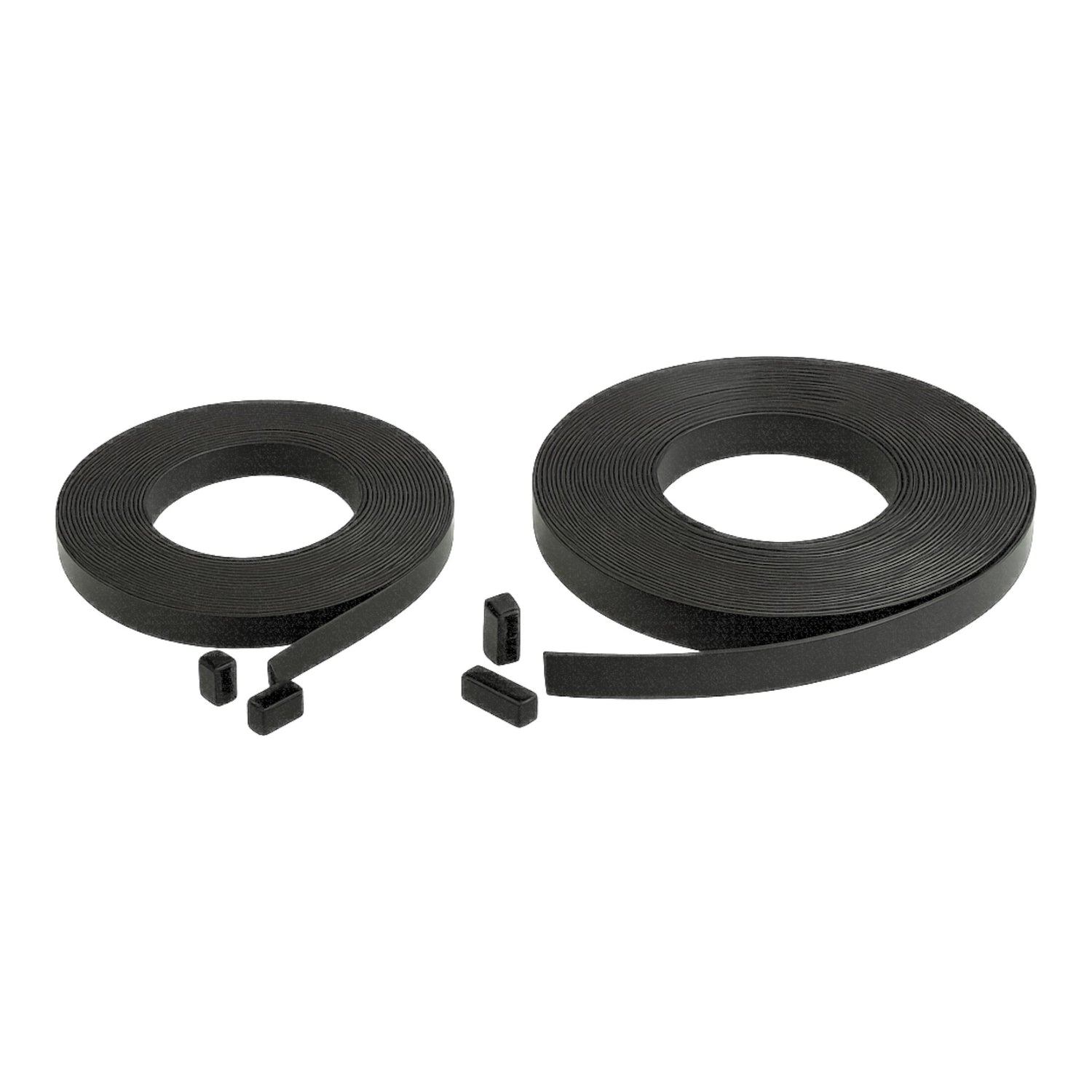
Unit price perThe Heavy Duty Soft Strapping 2.5cm x 25m Coil BLACK (Box of 5) is a tree support strapping intended for securing trees and shrubs to suitable stakes or supports.
Correct tree and shrub support helps newly planted or container-grown stock establish while reducing excessive movement at the root zone. Supports should hold the plant securely without creating unnecessary pressure on the stem or trunk.
Supplied as: box of 5.
Key benefits
Tree & shrub support
Use this product for securing trees and shrubs to suitable stakes or supports. Select stakes, ties and support components according to the size of the plant, exposure of the site and the support system being used.
A correctly installed support should reduce damaging movement without holding the trunk completely rigid. Some natural movement helps the plant develop as it establishes.
Installation & ongoing checks
Position ties and support components so they do not rub, cut into or constrict the bark. Avoid over-tightening and inspect the installation regularly as the trunk or stems increase in diameter.
Adjust or remove supports once they are no longer required. Leaving a tie in place for too long can cause restriction or damage as the plant grows.
For nurseries, landscapers & tree planting
Tree-support products are useful for nursery stock, landscape planting, public-realm schemes and garden installations where newly planted trees or shrubs need temporary stabilisation.
Heavy Duty Soft Strapping 2.5cm x 25m Coil BLACK (Box of 5) product details
| Product type | Tree support strapping |
|---|---|
| Primary use | securing trees and shrubs to suitable stakes or supports |
| Stated size | 2.5cm x 25m |
| Colour | Black |
| Box quantity | 5 |
Heavy Duty Soft Strapping 2.5cm x 25m Coil BLACK (Box of 5) FAQs
What size is this product?
The stated size is 2.5cm x 25m. How many are supplied?
This product is supplied in a box of 5. How tight should a tree tie be?
It should support the plant without constricting the trunk or rubbing the bark. Leave appropriate room for movement and growth. How often should tree ties be checked?
Inspect supports regularly, particularly during active growth, and loosen or reposition them before they become restrictive. How long should a tree remain staked?
Only for as long as support is genuinely required. Establishment time varies with plant size, species, root system and site exposure. Can the same support be used for every tree?
No. Match the tie, stake and support arrangement to the trunk size, plant form and site conditions.
£146.44
Unit price per£146.44
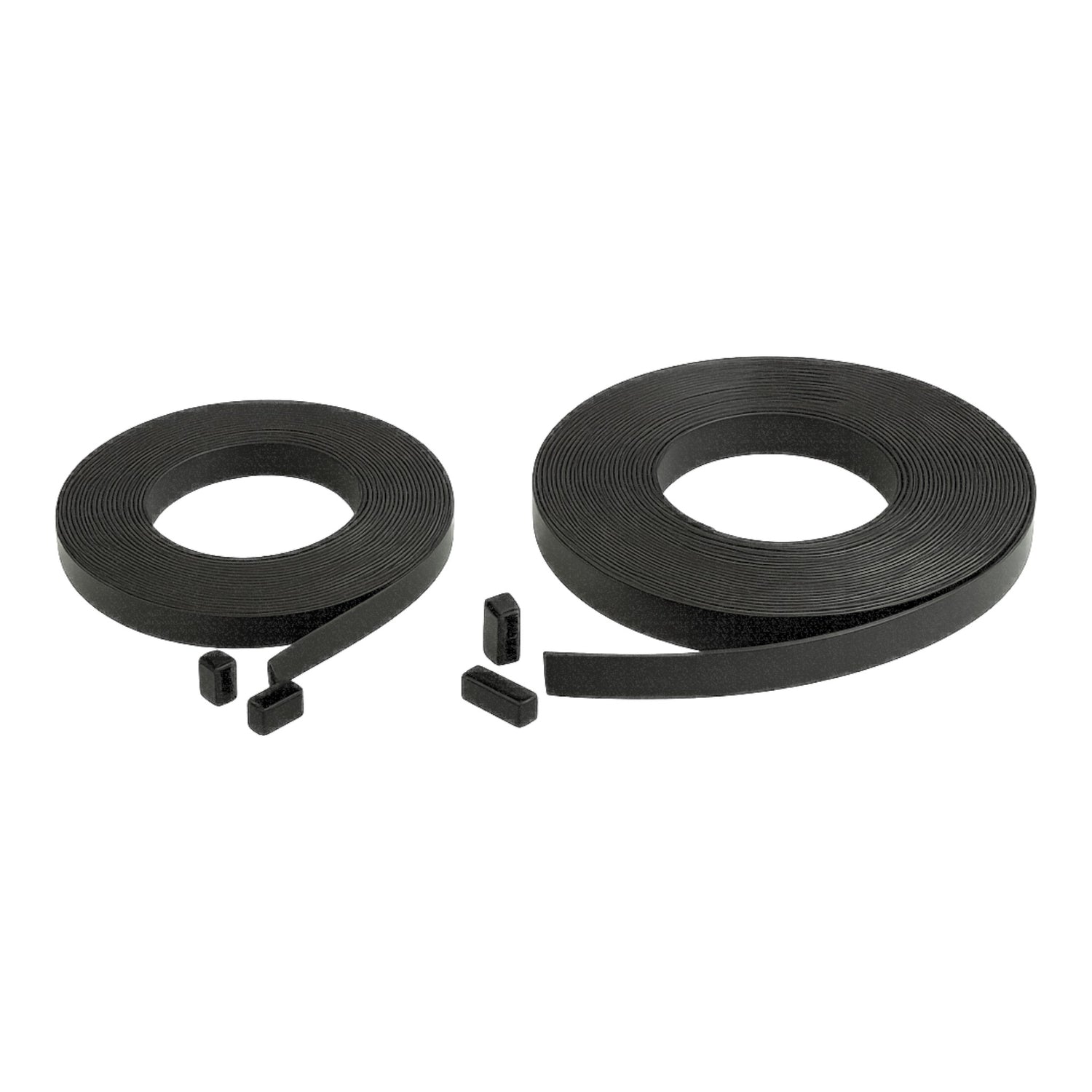
Unit price perThe Heavy Duty Soft Strapping 3.8cm x 25m Coil BLACK (Box of 5) is a tree support strapping intended for securing trees and shrubs to suitable stakes or supports.
Correct tree and shrub support helps newly planted or container-grown stock establish while reducing excessive movement at the root zone. Supports should hold the plant securely without creating unnecessary pressure on the stem or trunk.
Supplied as: box of 5.
Key benefits
Tree & shrub support
Use this product for securing trees and shrubs to suitable stakes or supports. Select stakes, ties and support components according to the size of the plant, exposure of the site and the support system being used.
A correctly installed support should reduce damaging movement without holding the trunk completely rigid. Some natural movement helps the plant develop as it establishes.
Installation & ongoing checks
Position ties and support components so they do not rub, cut into or constrict the bark. Avoid over-tightening and inspect the installation regularly as the trunk or stems increase in diameter.
Adjust or remove supports once they are no longer required. Leaving a tie in place for too long can cause restriction or damage as the plant grows.
For nurseries, landscapers & tree planting
Tree-support products are useful for nursery stock, landscape planting, public-realm schemes and garden installations where newly planted trees or shrubs need temporary stabilisation.
Heavy Duty Soft Strapping 3.8cm x 25m Coil BLACK (Box of 5) product details
| Product type | Tree support strapping |
|---|---|
| Primary use | securing trees and shrubs to suitable stakes or supports |
| Stated size | 3.8cm x 25m |
| Colour | Black |
| Box quantity | 5 |
Heavy Duty Soft Strapping 3.8cm x 25m Coil BLACK (Box of 5) FAQs
What size is this product?
The stated size is 3.8cm x 25m. How many are supplied?
This product is supplied in a box of 5. How tight should a tree tie be?
It should support the plant without constricting the trunk or rubbing the bark. Leave appropriate room for movement and growth. How often should tree ties be checked?
Inspect supports regularly, particularly during active growth, and loosen or reposition them before they become restrictive. How long should a tree remain staked?
Only for as long as support is genuinely required. Establishment time varies with plant size, species, root system and site exposure. Can the same support be used for every tree?
No. Match the tie, stake and support arrangement to the trunk size, plant form and site conditions.
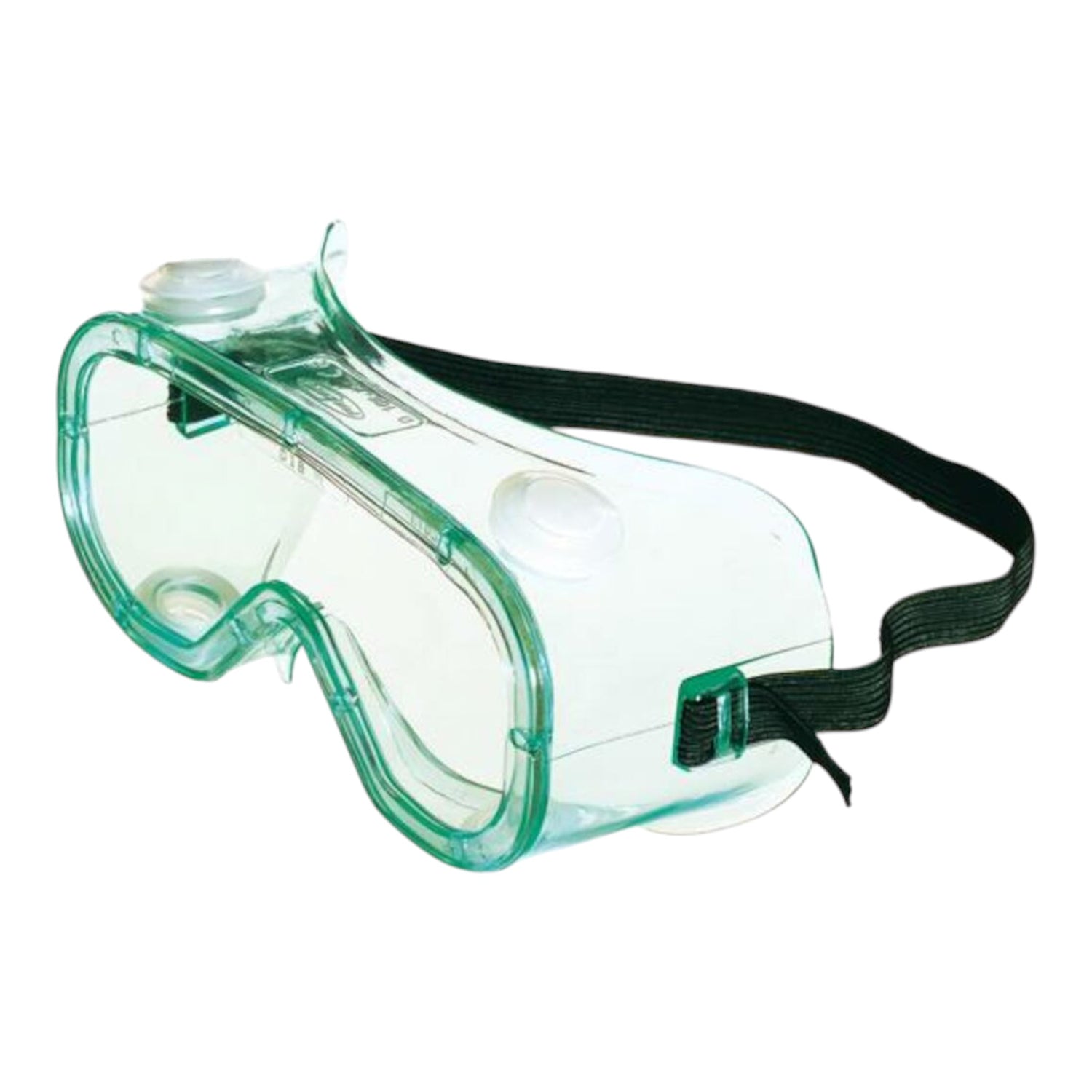
The Honeywell LG20 Clear Safety Goggles is personal protective equipment intended for eye protection in suitable workplace tasks subject to the product's certified protection.
PPE must be selected from a workplace risk assessment. The correct protection depends on the specific substance or hazard, concentration, exposure route, task, duration and the current certified performance of the complete PPE system.
Key considerations
Eye protection
Safety goggles should be selected according to the impact, splash, dust or other eye hazard identified by the workplace risk assessment. Clear lenses can support general visibility, while indirect ventilation and anti-mist features may help in suitable working conditions.
Check the current Honeywell markings and certification to confirm suitability for the specific hazard.
Inspection before use
Check PPE for damage, contamination, deterioration and correct assembly before every use. Do not use damaged lenses, seals, straps, filters, closures or garment material where protective performance may be compromised.
Cleaning, storage & replacement
Follow the manufacturer's instructions for cleaning reusable PPE and for storing filters and masks away from contamination. Disposable items should not be reused unless the manufacturer specifically permits it and safe reuse can be assured.
Workplace controls
PPE is normally the final layer of protection rather than a substitute for elimination, substitution, engineering controls, ventilation or safe working procedures. Follow the relevant COSHH assessment and workplace controls for hazardous substances.
Honeywell LG20 Clear Safety Goggles product details
| Brand | Honeywell |
|---|---|
| Product type | Safety Goggles |
| Primary use | eye protection in suitable workplace tasks subject to the product's certified protection |
| Selection requirement | Workplace risk assessment and current manufacturer instructions |
Honeywell LG20 Clear Safety Goggles FAQs
How do I know if this PPE is suitable?
Use the workplace risk assessment and current manufacturer technical information for the exact hazard and task. Does one PPE product protect against every chemical or hazard?
No. Protection depends on the product's certification, hazard type, concentration, exposure route and conditions of use. Should PPE be inspected before use?
Yes. Check for damage, contamination, deterioration and correct assembly before every use. Can damaged PPE still be used briefly?
No. Replace or remove compromised PPE from service where protective performance may be affected. How should PPE be stored?
Follow manufacturer instructions and protect it from contamination, damage, excessive heat, sunlight or other harmful storage conditions. Does PPE replace ventilation or other controls?
No. PPE is normally used alongside appropriate engineering and procedural controls identified by the risk assessment. Where should I check certification and protection levels?
Use the current manufacturer documentation and markings for the exact product. Can disposable PPE always be reused?
No. Follow the manufacturer's instructions and workplace contamination procedures.

The Hoop Collar 2.5cm BLACK (Box of 100) is a tree support hoop collar intended for forming part of a compatible tree-support installation.
Correct tree and shrub support helps newly planted or container-grown stock establish while reducing excessive movement at the root zone. Supports should hold the plant securely without creating unnecessary pressure on the stem or trunk.
Supplied as: box of 100.
Key benefits
Tree & shrub support
Use this product for forming part of a compatible tree-support installation. Select stakes, ties and support components according to the size of the plant, exposure of the site and the support system being used.
A correctly installed support should reduce damaging movement without holding the trunk completely rigid. Some natural movement helps the plant develop as it establishes.
Installation & ongoing checks
Position ties and support components so they do not rub, cut into or constrict the bark. Avoid over-tightening and inspect the installation regularly as the trunk or stems increase in diameter.
Adjust or remove supports once they are no longer required. Leaving a tie in place for too long can cause restriction or damage as the plant grows.
For nurseries, landscapers & tree planting
Tree-support products are useful for nursery stock, landscape planting, public-realm schemes and garden installations where newly planted trees or shrubs need temporary stabilisation.
Hoop Collar 2.5cm BLACK (Box of 100) product details
| Product type | Tree support hoop collar |
|---|---|
| Primary use | forming part of a compatible tree-support installation |
| Stated size | 2.5cm |
| Colour | Black |
| Box quantity | 100 |
Hoop Collar 2.5cm BLACK (Box of 100) FAQs
What size is this product?
The stated size is 2.5cm. How many are supplied?
This product is supplied in a box of 100. How tight should a tree tie be?
It should support the plant without constricting the trunk or rubbing the bark. Leave appropriate room for movement and growth. How often should tree ties be checked?
Inspect supports regularly, particularly during active growth, and loosen or reposition them before they become restrictive. How long should a tree remain staked?
Only for as long as support is genuinely required. Establishment time varies with plant size, species, root system and site exposure. Can the same support be used for every tree?
No. Match the tie, stake and support arrangement to the trunk size, plant form and site conditions.

The Hoop Collar 3.8cm BLACK (Box of 100) is a tree support hoop collar intended for forming part of a compatible tree-support installation.
Correct tree and shrub support helps newly planted or container-grown stock establish while reducing excessive movement at the root zone. Supports should hold the plant securely without creating unnecessary pressure on the stem or trunk.
Supplied as: box of 100.
Key benefits
Tree & shrub support
Use this product for forming part of a compatible tree-support installation. Select stakes, ties and support components according to the size of the plant, exposure of the site and the support system being used.
A correctly installed support should reduce damaging movement without holding the trunk completely rigid. Some natural movement helps the plant develop as it establishes.
Installation & ongoing checks
Position ties and support components so they do not rub, cut into or constrict the bark. Avoid over-tightening and inspect the installation regularly as the trunk or stems increase in diameter.
Adjust or remove supports once they are no longer required. Leaving a tie in place for too long can cause restriction or damage as the plant grows.
For nurseries, landscapers & tree planting
Tree-support products are useful for nursery stock, landscape planting, public-realm schemes and garden installations where newly planted trees or shrubs need temporary stabilisation.
Hoop Collar 3.8cm BLACK (Box of 100) product details
| Product type | Tree support hoop collar |
|---|---|
| Primary use | forming part of a compatible tree-support installation |
| Stated size | 3.8cm |
| Colour | Black |
| Box quantity | 100 |
Hoop Collar 3.8cm BLACK (Box of 100) FAQs
What size is this product?
The stated size is 3.8cm. How many are supplied?
This product is supplied in a box of 100. How tight should a tree tie be?
It should support the plant without constricting the trunk or rubbing the bark. Leave appropriate room for movement and growth. How often should tree ties be checked?
Inspect supports regularly, particularly during active growth, and loosen or reposition them before they become restrictive. How long should a tree remain staked?
Only for as long as support is genuinely required. Establishment time varies with plant size, species, root system and site exposure. Can the same support be used for every tree?
No. Match the tie, stake and support arrangement to the trunk size, plant form and site conditions.

The Hose Coupling Blanking Cap is designed for closing a compatible hose-coupling connection in professional horticultural, nursery, landscape and garden watering systems.
Correct hose fittings and storage equipment help keep watering systems organised, serviceable and easier to move between working areas.
Key benefits
Building serviceable hose connections
Match the fitting to the stated hose diameter and coupling system. Push barbed fittings fully into compatible hose and secure them using the appropriate method for the system.
Keep sealing faces and washers clean. If a connection leaks, inspect the seal, hose end and coupling condition rather than relying on excessive tightening.
Watering-system setup
Choose hose diameter and fittings according to the required flow, run length and available water pressure. Long hose runs and restrictive fittings can reduce pressure and flow at the watering lance or outlet.
Leak checks & maintenance
Inspect hose ends, seals, couplings and moving trolley parts periodically. Replace split hose, worn seals and damaged fittings rather than accepting persistent leakage.
Storage
Store hose and fittings clean and protected from unnecessary physical damage. Avoid leaving hose tightly kinked or under tension around fittings during storage.
Hose Coupling Blanking Cap product details
| Product type | Hose Coupling Blanking Cap |
|---|---|
| Primary use | closing a compatible hose-coupling connection |
| Source designation | Hose Coupling Blanking Cap |
| Application | Professional horticultural and garden watering systems |
Hose Coupling Blanking Cap FAQs
What is this product used for?
Closing a compatible hose-coupling connection. How do I check compatibility?
Match the stated hose diameter, fitting type and coupling system to the equipment already in use. Can different hose diameters use the same fitting?
Not unless the fitting is specifically designed for those sizes. Use the stated compatible diameter. What should I check if a hose connection leaks?
Inspect the hose end, seal, washer and coupling surfaces and replace damaged components. Does hose length affect water delivery?
Yes. Longer runs and restrictive fittings can contribute to pressure loss and reduced flow. How should hose equipment be stored?
Keep it clean and protected and avoid severe kinks, crushing or continuous strain on fittings. Should fittings be inspected regularly?
Yes. Check seals, coupling faces and hose connections for wear or damage. Can hose trolleys be overloaded?
Use each component only within the capacity and application appropriate to the complete watering system.

The Hose Coupling Seal is designed for replacing the seal in a compatible hose coupling in professional horticultural, nursery, landscape and garden watering systems.
Correct hose fittings and storage equipment help keep watering systems organised, serviceable and easier to move between working areas.
Key benefits
Building serviceable hose connections
Match the fitting to the stated hose diameter and coupling system. Push barbed fittings fully into compatible hose and secure them using the appropriate method for the system.
Keep sealing faces and washers clean. If a connection leaks, inspect the seal, hose end and coupling condition rather than relying on excessive tightening.
Watering-system setup
Choose hose diameter and fittings according to the required flow, run length and available water pressure. Long hose runs and restrictive fittings can reduce pressure and flow at the watering lance or outlet.
Leak checks & maintenance
Inspect hose ends, seals, couplings and moving trolley parts periodically. Replace split hose, worn seals and damaged fittings rather than accepting persistent leakage.
Storage
Store hose and fittings clean and protected from unnecessary physical damage. Avoid leaving hose tightly kinked or under tension around fittings during storage.
Hose Coupling Seal product details
| Product type | Hose Coupling Seal |
|---|---|
| Primary use | replacing the seal in a compatible hose coupling |
| Source designation | Hose Coupling Seal |
| Application | Professional horticultural and garden watering systems |
Hose Coupling Seal FAQs
What is this product used for?
Replacing the seal in a compatible hose coupling. How do I check compatibility?
Match the stated hose diameter, fitting type and coupling system to the equipment already in use. Can different hose diameters use the same fitting?
Not unless the fitting is specifically designed for those sizes. Use the stated compatible diameter. What should I check if a hose connection leaks?
Inspect the hose end, seal, washer and coupling surfaces and replace damaged components. Does hose length affect water delivery?
Yes. Longer runs and restrictive fittings can contribute to pressure loss and reduced flow. How should hose equipment be stored?
Keep it clean and protected and avoid severe kinks, crushing or continuous strain on fittings. Should fittings be inspected regularly?
Yes. Check seals, coupling faces and hose connections for wear or damage. Can hose trolleys be overloaded?
Use each component only within the capacity and application appropriate to the complete watering system.


The Hot Stuff 1000W Oil Filled Radiator is designed for providing local electric radiant/convection heating in suitable indoor working or horticultural spaces.
Heating and circulation equipment should be selected as part of the wider environmental strategy, taking account of space volume, heat loss, ventilation, crop requirements and safe electrical installation.
Key benefits
Local electric heating
Use electric heating to supplement the wider temperature-control strategy where the unit and electrical installation are suitable for the environment. Heating demand depends on structure size, insulation, external temperature, ventilation and the target internal temperature.
Do not cover heaters or obstruct required airflow and clearance around the unit.
Positioning & environmental control
Keep equipment clear of irrigation water, standing water and unsafe moisture exposure. Allow the clearances required by the manufacturer and position units where airflow or heat can distribute effectively.
Use appropriate thermostatic or environmental controls where required rather than relying solely on manual switching for temperature-sensitive crops.
Electrical safety
Use only with a suitable electrical supply and protection for the installation environment. Cables, plugs and connections should be protected from water and mechanical damage. Isolate equipment before cleaning or maintenance.
Cleaning & maintenance
Inspect guards, fan inlets, heating surfaces, cables and controls periodically. Remove dust and debris according to the manufacturer's instructions and take damaged electrical equipment out of service until properly repaired or replaced.
Hot Stuff 1000W Oil Filled Radiator product details
| Brand | Hot Stuff |
|---|---|
| Product type | Hot Stuff Oil-Filled Radiator |
| Primary use | providing local electric radiant/convection heating in suitable indoor working or horticultural spaces |
| Stated power | 1000W |
Hot Stuff 1000W Oil Filled Radiator FAQs
What is this product designed for?
Providing local electric radiant/convection heating in suitable indoor working or horticultural spaces. Does a circulation fan replace ventilation?
Heating equipment does not replace appropriate ventilation or humidity management. How do I choose the right equipment size?
Consider structure volume, heat loss, crop requirements, ventilation and the performance of the complete environmental-control system. Where should the unit be positioned?
Position it for effective air or heat distribution while maintaining required clearances and protection from irrigation water. Can it be used in wet conditions?
Only within the environmental and electrical conditions specified by the manufacturer; protect electrical equipment from irrigation water and unsafe moisture. Should environmental controls be used?
Where temperature or climate needs to be maintained accurately, suitable thermostatic or environmental control is recommended. How should it be maintained?
Inspect and clean the unit according to the manufacturer's instructions and keep air passages or heating surfaces free from excessive debris. What should I do if the cable or unit is damaged?
Take damaged electrical equipment out of service until it has been properly inspected, repaired or replaced.


The Hot Stuff 2000W Oil Filled Radiator is designed for providing local electric radiant/convection heating in suitable indoor working or horticultural spaces.
Heating and circulation equipment should be selected as part of the wider environmental strategy, taking account of space volume, heat loss, ventilation, crop requirements and safe electrical installation.
Key benefits
Local electric heating
Use electric heating to supplement the wider temperature-control strategy where the unit and electrical installation are suitable for the environment. Heating demand depends on structure size, insulation, external temperature, ventilation and the target internal temperature.
Do not cover heaters or obstruct required airflow and clearance around the unit.
Positioning & environmental control
Keep equipment clear of irrigation water, standing water and unsafe moisture exposure. Allow the clearances required by the manufacturer and position units where airflow or heat can distribute effectively.
Use appropriate thermostatic or environmental controls where required rather than relying solely on manual switching for temperature-sensitive crops.
Electrical safety
Use only with a suitable electrical supply and protection for the installation environment. Cables, plugs and connections should be protected from water and mechanical damage. Isolate equipment before cleaning or maintenance.
Cleaning & maintenance
Inspect guards, fan inlets, heating surfaces, cables and controls periodically. Remove dust and debris according to the manufacturer's instructions and take damaged electrical equipment out of service until properly repaired or replaced.
Hot Stuff 2000W Oil Filled Radiator product details
| Brand | Hot Stuff |
|---|---|
| Product type | Hot Stuff Oil-Filled Radiator |
| Primary use | providing local electric radiant/convection heating in suitable indoor working or horticultural spaces |
| Stated power | 2000W |
Hot Stuff 2000W Oil Filled Radiator FAQs
What is this product designed for?
Providing local electric radiant/convection heating in suitable indoor working or horticultural spaces. Does a circulation fan replace ventilation?
Heating equipment does not replace appropriate ventilation or humidity management. How do I choose the right equipment size?
Consider structure volume, heat loss, crop requirements, ventilation and the performance of the complete environmental-control system. Where should the unit be positioned?
Position it for effective air or heat distribution while maintaining required clearances and protection from irrigation water. Can it be used in wet conditions?
Only within the environmental and electrical conditions specified by the manufacturer; protect electrical equipment from irrigation water and unsafe moisture. Should environmental controls be used?
Where temperature or climate needs to be maintained accurately, suitable thermostatic or environmental control is recommended. How should it be maintained?
Inspect and clean the unit according to the manufacturer's instructions and keep air passages or heating surfaces free from excessive debris. What should I do if the cable or unit is damaged?
Take damaged electrical equipment out of service until it has been properly inspected, repaired or replaced.
£296.76
Unit price per£296.76
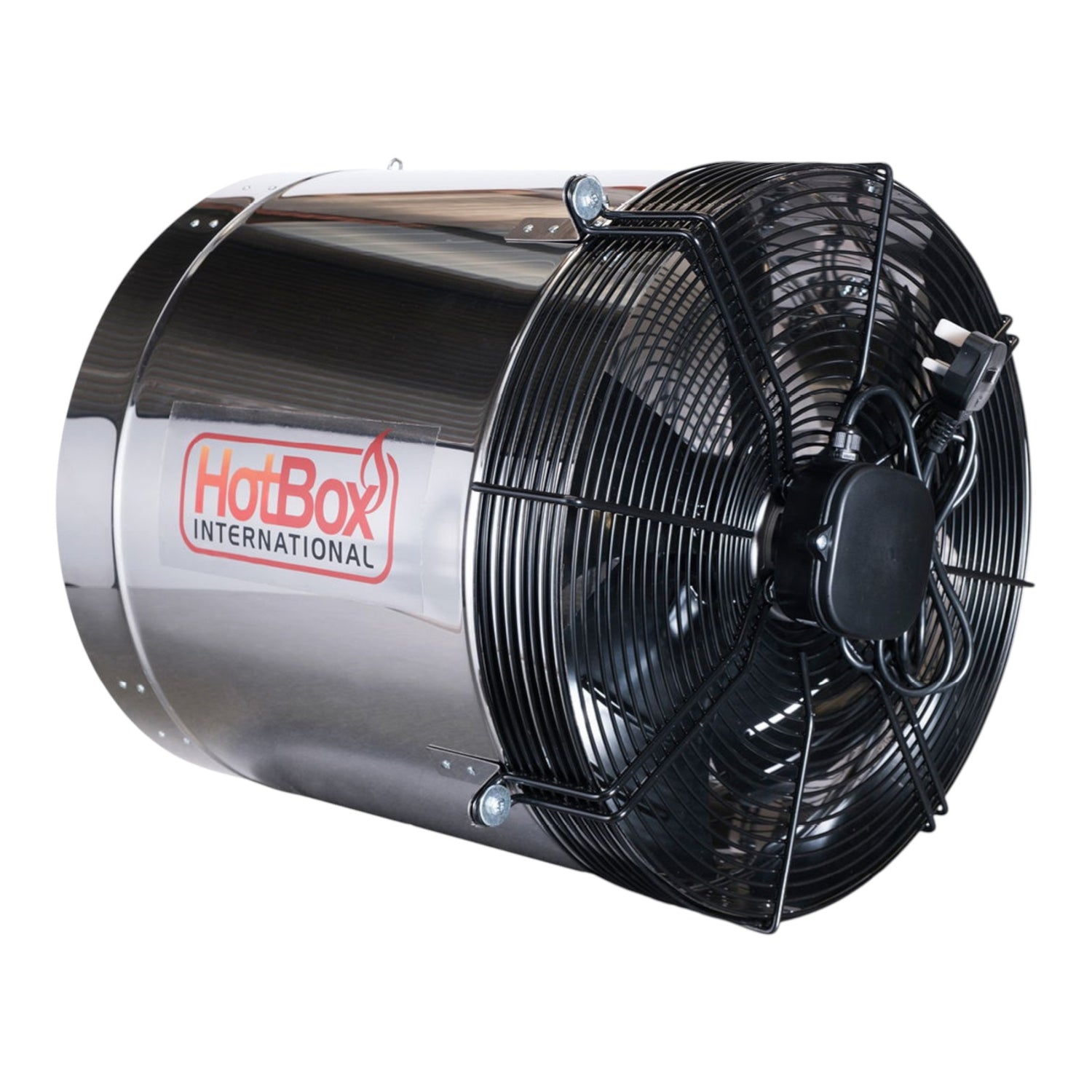
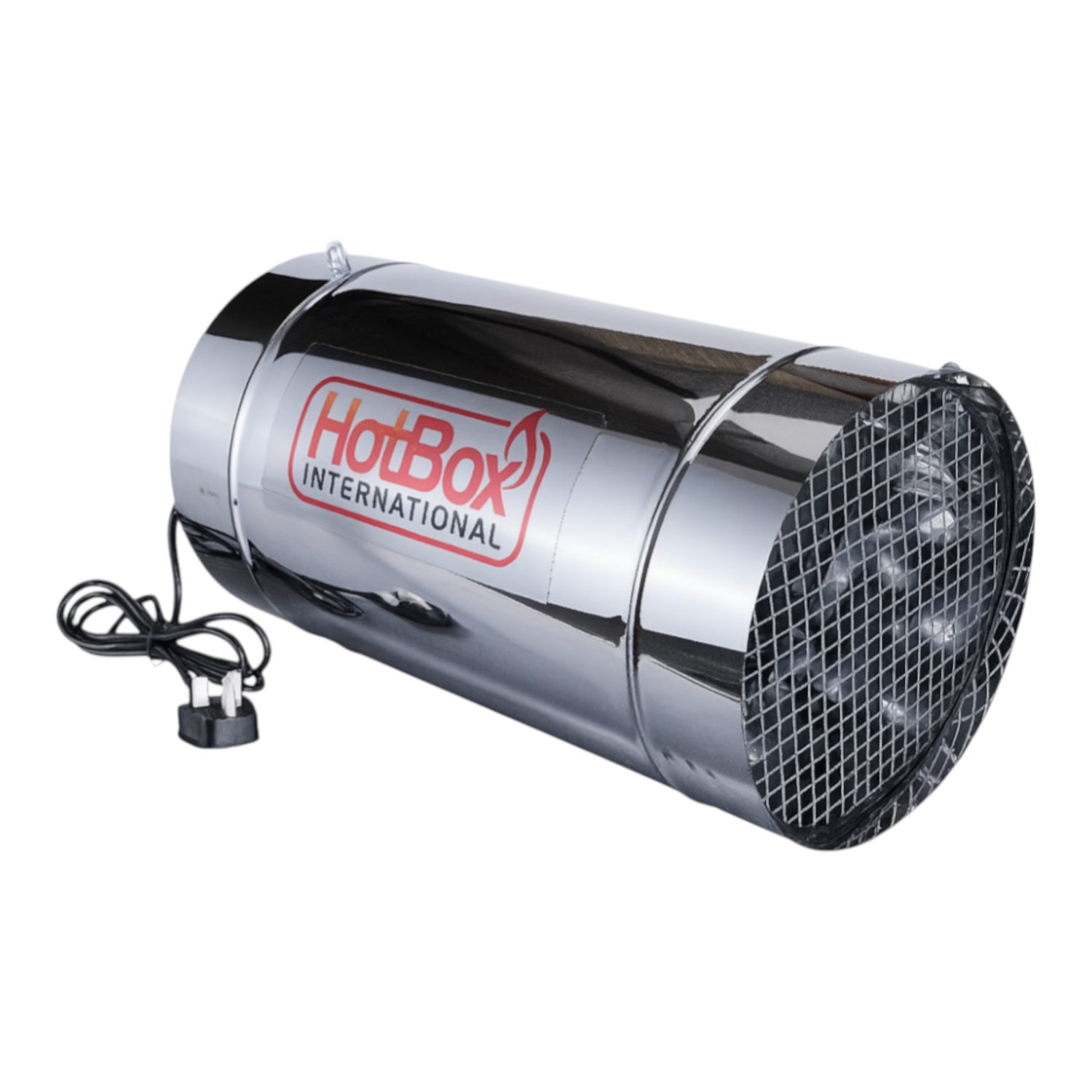
Unit price perThe Hotbox Mistraal Model 24 Air Circulation Fan - 4000m³/h is designed for circulating air through greenhouse, nursery and indoor horticultural spaces.
Heating and circulation equipment should be selected as part of the wider environmental strategy, taking account of space volume, heat loss, ventilation, crop requirements and safe electrical installation.
Key benefits
Air movement through the growing area
Position circulation fans to reduce stagnant pockets and encourage air movement through and around the crop canopy without directing an unnecessarily harsh continuous blast at sensitive plants.
Circulation fans move existing air within the structure; they do not replace fresh-air ventilation, extraction, heating or humidity control where those functions are required.
Positioning & environmental control
Keep equipment clear of irrigation water, standing water and unsafe moisture exposure. Allow the clearances required by the manufacturer and position units where airflow or heat can distribute effectively.
Use appropriate thermostatic or environmental controls where required rather than relying solely on manual switching for temperature-sensitive crops.
Electrical safety
Use only with a suitable electrical supply and protection for the installation environment. Cables, plugs and connections should be protected from water and mechanical damage. Isolate equipment before cleaning or maintenance.
Cleaning & maintenance
Inspect guards, fan inlets, heating surfaces, cables and controls periodically. Remove dust and debris according to the manufacturer's instructions and take damaged electrical equipment out of service until properly repaired or replaced.
Hotbox Mistraal Model 24 Air Circulation Fan - 4000m³/h product details
| Brand | Hotbox |
|---|---|
| Product type | Hotbox Mistraal Air Circulation Fan |
| Primary use | circulating air through greenhouse, nursery and indoor horticultural spaces |
| Stated airflow | 4000m³/h |
Hotbox Mistraal Model 24 Air Circulation Fan - 4000m³/h FAQs
What is this product designed for?
Circulating air through greenhouse, nursery and indoor horticultural spaces. Does a circulation fan replace ventilation?
No. Air circulation and air exchange perform different functions. How do I choose the right equipment size?
Consider structure volume, heat loss, crop requirements, ventilation and the performance of the complete environmental-control system. Where should the unit be positioned?
Position it for effective air or heat distribution while maintaining required clearances and protection from irrigation water. Can it be used in wet conditions?
Only within the environmental and electrical conditions specified by the manufacturer; protect electrical equipment from irrigation water and unsafe moisture. Should environmental controls be used?
Where temperature or climate needs to be maintained accurately, suitable thermostatic or environmental control is recommended. How should it be maintained?
Inspect and clean the unit according to the manufacturer's instructions and keep air passages or heating surfaces free from excessive debris. What should I do if the cable or unit is damaged?
Take damaged electrical equipment out of service until it has been properly inspected, repaired or replaced.
£173.50
Unit price per£173.50
Unit price perThe Hotbox Mistraal Model 5 Air Circulation Fan 900m³/h is designed for circulating air through greenhouse, nursery and indoor horticultural spaces.
Heating and circulation equipment should be selected as part of the wider environmental strategy, taking account of space volume, heat loss, ventilation, crop requirements and safe electrical installation.
Key benefits
Air movement through the growing area
Position circulation fans to reduce stagnant pockets and encourage air movement through and around the crop canopy without directing an unnecessarily harsh continuous blast at sensitive plants.
Circulation fans move existing air within the structure; they do not replace fresh-air ventilation, extraction, heating or humidity control where those functions are required.
Positioning & environmental control
Keep equipment clear of irrigation water, standing water and unsafe moisture exposure. Allow the clearances required by the manufacturer and position units where airflow or heat can distribute effectively.
Use appropriate thermostatic or environmental controls where required rather than relying solely on manual switching for temperature-sensitive crops.
Electrical safety
Use only with a suitable electrical supply and protection for the installation environment. Cables, plugs and connections should be protected from water and mechanical damage. Isolate equipment before cleaning or maintenance.
Cleaning & maintenance
Inspect guards, fan inlets, heating surfaces, cables and controls periodically. Remove dust and debris according to the manufacturer's instructions and take damaged electrical equipment out of service until properly repaired or replaced.
Hotbox Mistraal Model 5 Air Circulation Fan 900m³/h product details
| Brand | Hotbox |
|---|---|
| Product type | Hotbox Mistraal Air Circulation Fan |
| Primary use | circulating air through greenhouse, nursery and indoor horticultural spaces |
| Stated airflow | 900m³/h |
Hotbox Mistraal Model 5 Air Circulation Fan 900m³/h FAQs
What is this product designed for?
Circulating air through greenhouse, nursery and indoor horticultural spaces. Does a circulation fan replace ventilation?
No. Air circulation and air exchange perform different functions. How do I choose the right equipment size?
Consider structure volume, heat loss, crop requirements, ventilation and the performance of the complete environmental-control system. Where should the unit be positioned?
Position it for effective air or heat distribution while maintaining required clearances and protection from irrigation water. Can it be used in wet conditions?
Only within the environmental and electrical conditions specified by the manufacturer; protect electrical equipment from irrigation water and unsafe moisture. Should environmental controls be used?
Where temperature or climate needs to be maintained accurately, suitable thermostatic or environmental control is recommended. How should it be maintained?
Inspect and clean the unit according to the manufacturer's instructions and keep air passages or heating surfaces free from excessive debris. What should I do if the cable or unit is damaged?
Take damaged electrical equipment out of service until it has been properly inspected, repaired or replaced.
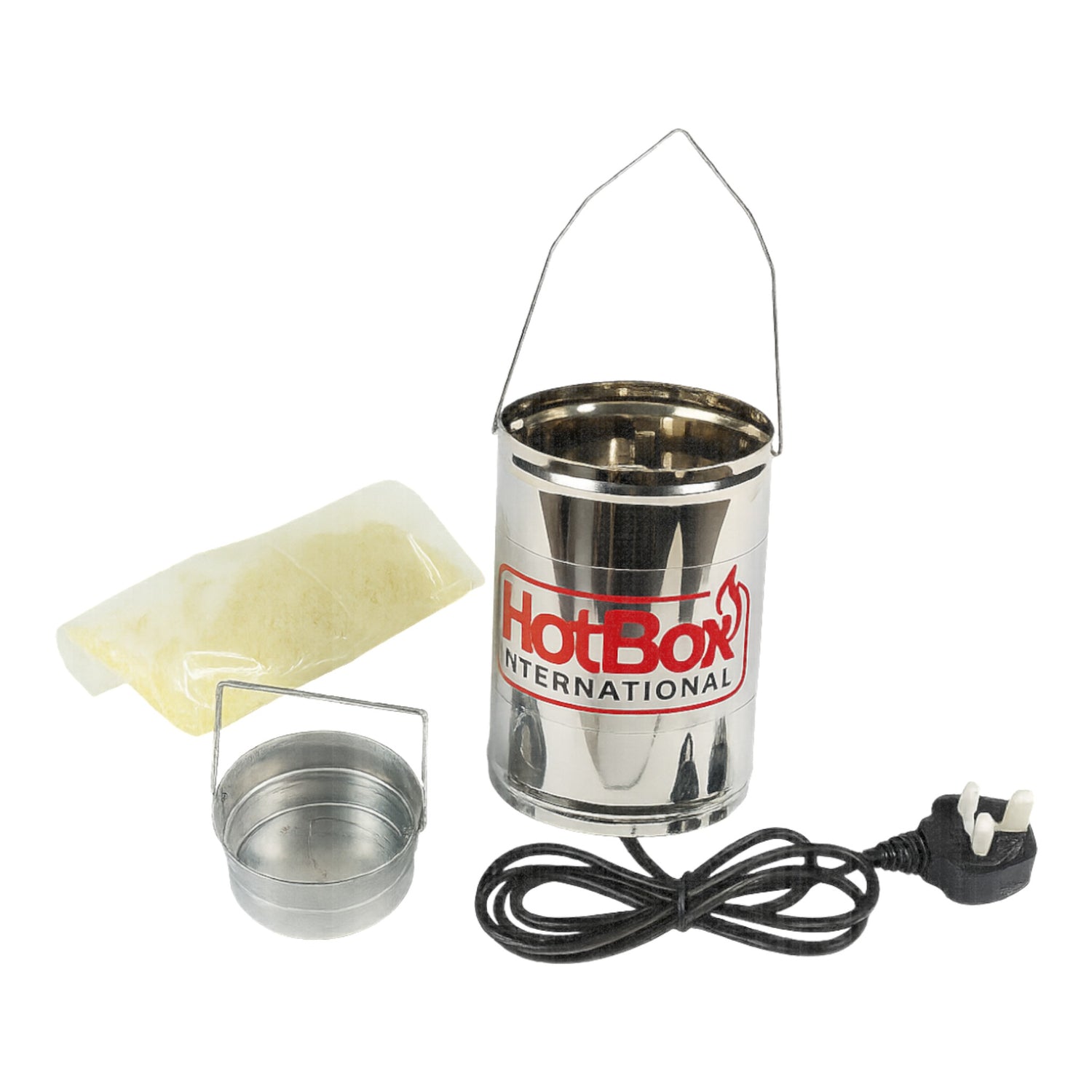
Hotbox Sulfume Sulphur Vapouriser is a professional greenhouse sulphur vapouriser using a regulated heating element.
Verified technical data
Installation
Hotbox instructs users to hang the unit securely and straight, at least 1m below the greenhouse ceiling, and ensure it is correctly earthed.
Sulphur use
Use chemicals strictly in accordance with national regulations and manufacturer instructions.
Hotbox Sulfume Sulphur Vapouriser FAQs
What area does one unit cover?
Up to 100m², crop dependent. Where should it be hung?
At least 1m below the ceiling, securely upright. How much sulphur does it vaporise?
Hotbox states less than 1g per hour. Does it need earthing?
Yes.
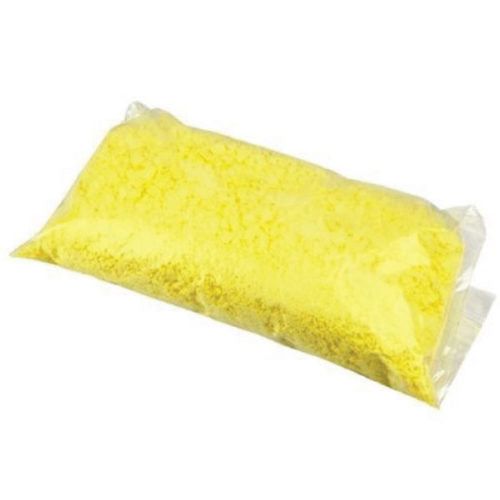
Hotbox Sulphur Refill - 2kg is a 2kg sulphur refill for compatible greenhouse sulphur-vapourising equipment.
Use sulphur only in accordance with the current chemical label, national regulations and the instructions for the vapouriser.
Use & storage
Do not overfill vapouriser cups. Follow current equipment instructions and chemical safety information. Store in original labelled packaging.
£309.82
Unit price per£309.82
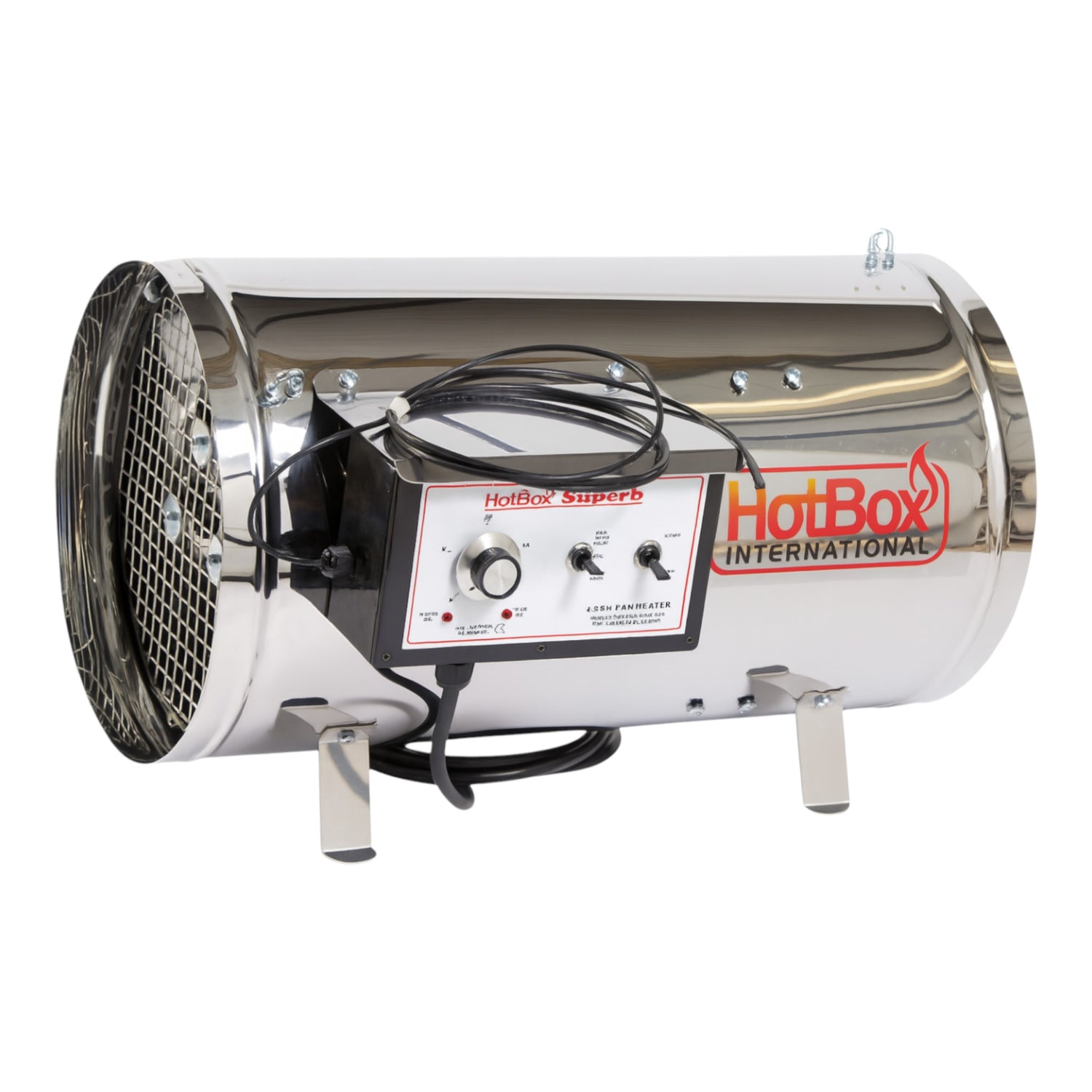
Unit price perThe Hotbox Superb Output Fan Heater 450m³/h 270mm x 500mm is designed for providing local forced-air heating in suitable greenhouse and horticultural environments.
Heating and circulation equipment should be selected as part of the wider environmental strategy, taking account of space volume, heat loss, ventilation, crop requirements and safe electrical installation.
Key benefits
Local electric heating
Use electric heating to supplement the wider temperature-control strategy where the unit and electrical installation are suitable for the environment. Heating demand depends on structure size, insulation, external temperature, ventilation and the target internal temperature.
Do not cover heaters or obstruct required airflow and clearance around the unit.
Positioning & environmental control
Keep equipment clear of irrigation water, standing water and unsafe moisture exposure. Allow the clearances required by the manufacturer and position units where airflow or heat can distribute effectively.
Use appropriate thermostatic or environmental controls where required rather than relying solely on manual switching for temperature-sensitive crops.
Electrical safety
Use only with a suitable electrical supply and protection for the installation environment. Cables, plugs and connections should be protected from water and mechanical damage. Isolate equipment before cleaning or maintenance.
Cleaning & maintenance
Inspect guards, fan inlets, heating surfaces, cables and controls periodically. Remove dust and debris according to the manufacturer's instructions and take damaged electrical equipment out of service until properly repaired or replaced.
Hotbox Superb Output Fan Heater 450m³/h 270mm x 500mm product details
| Brand | Hotbox |
|---|---|
| Product type | Hotbox Superb Output Fan Heater |
| Primary use | providing local forced-air heating in suitable greenhouse and horticultural environments |
| Stated airflow | 450m³/h |
Hotbox Superb Output Fan Heater 450m³/h 270mm x 500mm FAQs
What is this product designed for?
Providing local forced-air heating in suitable greenhouse and horticultural environments. Does a circulation fan replace ventilation?
Heating equipment does not replace appropriate ventilation or humidity management. How do I choose the right equipment size?
Consider structure volume, heat loss, crop requirements, ventilation and the performance of the complete environmental-control system. Where should the unit be positioned?
Position it for effective air or heat distribution while maintaining required clearances and protection from irrigation water. Can it be used in wet conditions?
Only within the environmental and electrical conditions specified by the manufacturer; protect electrical equipment from irrigation water and unsafe moisture. Should environmental controls be used?
Where temperature or climate needs to be maintained accurately, suitable thermostatic or environmental control is recommended. How should it be maintained?
Inspect and clean the unit according to the manufacturer's instructions and keep air passages or heating surfaces free from excessive debris. What should I do if the cable or unit is damaged?
Take damaged electrical equipment out of service until it has been properly inspected, repaired or replaced.
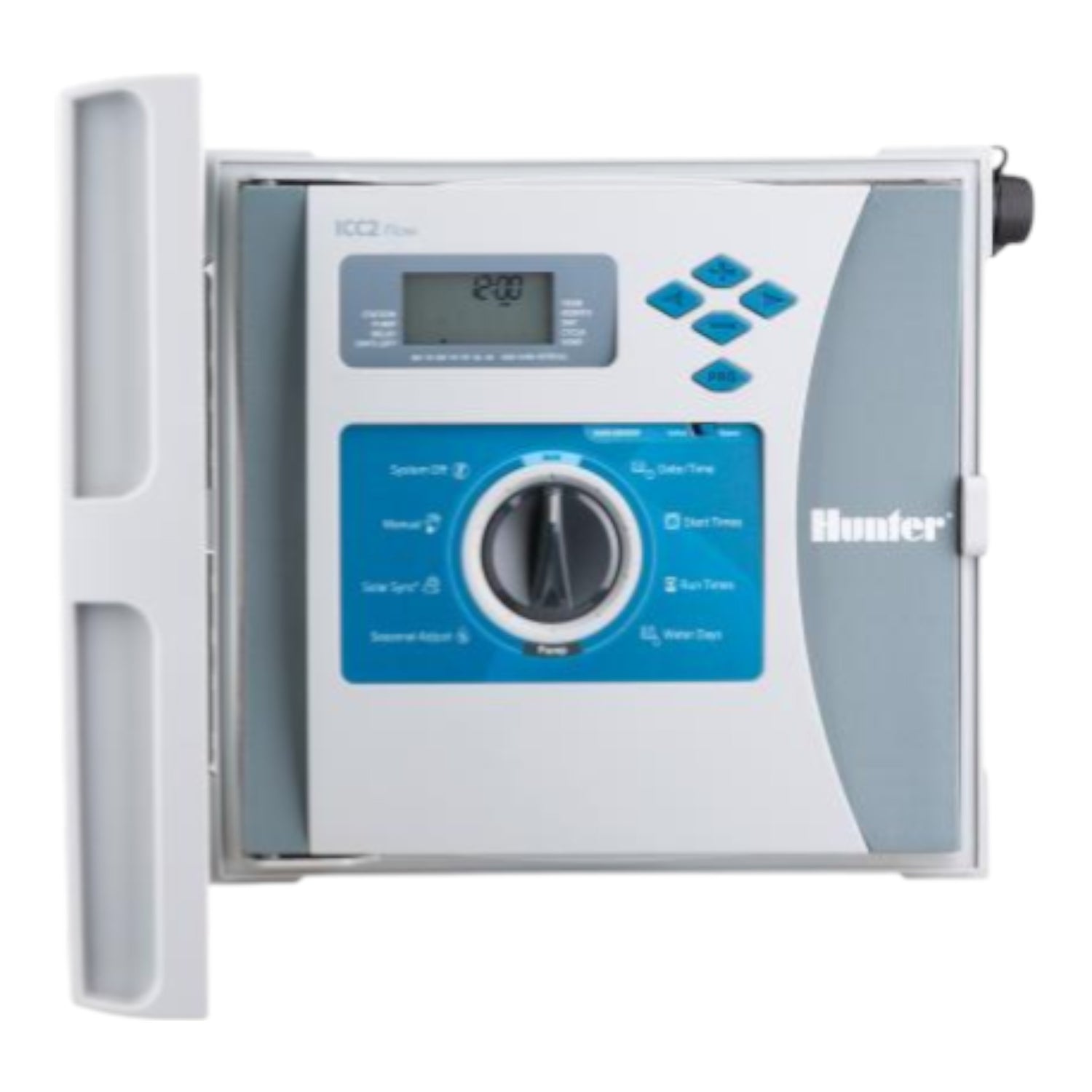
The Hunter 22 Station Plug-in Module - ICC2 is a Hunter controller expansion module designed for adding irrigation stations to a compatible Hunter controller.
Professional irrigation control allows watering programmes to be divided into zones and scheduled according to crop, landscape, soil and environmental requirements.
Key benefits
Expanding irrigation capacity
Use this module only with the compatible Hunter controller family. Isolate the controller as required by the manufacturer's instructions before installing or removing modules.
After installation, confirm the additional stations are recognised and test each connected irrigation zone before relying on the expanded programme.
Managing irrigation effectively
Controller programming should reflect actual water demand rather than simply repeating the same schedule year-round. Review run times as weather, crop size and seasonal conditions change.
Inspect valves, sprinklers, drippers and pipework periodically because a controller cannot compensate for blocked emitters, leaks or poor irrigation uniformity.
Installation & compatibility
Confirm controller, module and accessory compatibility before installation. Follow Hunter documentation for wiring, power supply, enclosure location and commissioning. Do not assume modules from different controller families are interchangeable.
Hunter 22 Station Plug-in Module - ICC2 product details
| Brand | Hunter |
|---|---|
| Product type | Controller expansion module |
| Controller family | ICC2 |
| Stations | 22 |
| Primary use | adding irrigation stations to a compatible Hunter controller |
Hunter 22 Station Plug-in Module - ICC2 FAQs
How many stations does this product support or add?
The product title states 22 stations. Which Hunter controller family is this associated with?
This product is identified with the ICC2 family. Check exact compatibility before installation. Can this module be fitted to any Hunter controller?
No. Expansion modules are controller-family specific; confirm exact compatibility before ordering or installation. What should I do after fitting an expansion module?
Confirm the controller recognises the new stations and test each connected zone. Do I need to isolate power before installation?
Follow Hunter's instructions for the specific controller and make the equipment safe before fitting or removing modules. Does adding stations increase water supply capacity?
No. Additional controller stations increase control capacity; hydraulic supply, pipework and zone design must still be adequate.
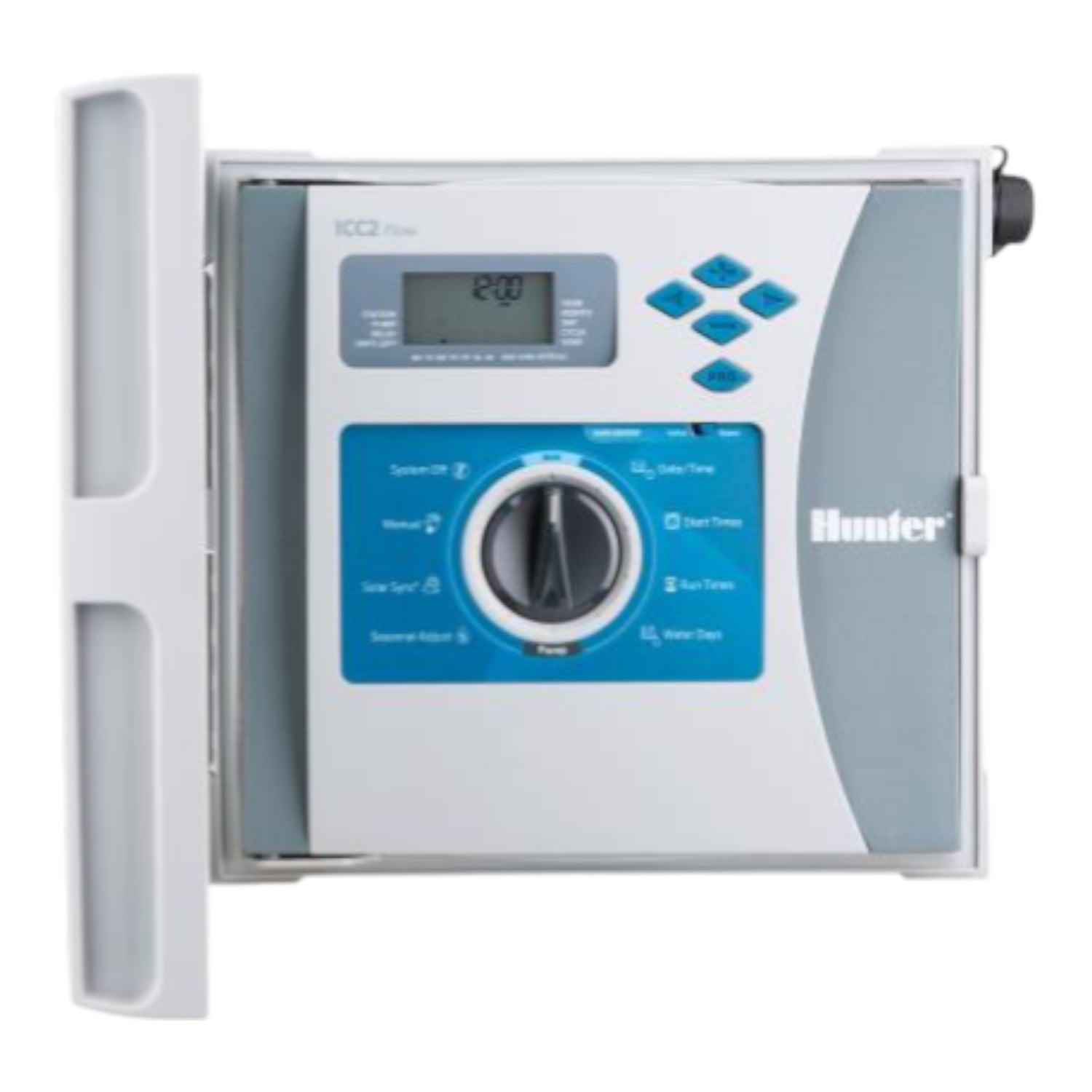
The Hunter 4 Station Plug-in Module - ICC2 is a Hunter controller expansion module designed for adding irrigation stations to a compatible Hunter controller.
Professional irrigation control allows watering programmes to be divided into zones and scheduled according to crop, landscape, soil and environmental requirements.
Key benefits
Expanding irrigation capacity
Use this module only with the compatible Hunter controller family. Isolate the controller as required by the manufacturer's instructions before installing or removing modules.
After installation, confirm the additional stations are recognised and test each connected irrigation zone before relying on the expanded programme.
Managing irrigation effectively
Controller programming should reflect actual water demand rather than simply repeating the same schedule year-round. Review run times as weather, crop size and seasonal conditions change.
Inspect valves, sprinklers, drippers and pipework periodically because a controller cannot compensate for blocked emitters, leaks or poor irrigation uniformity.
Installation & compatibility
Confirm controller, module and accessory compatibility before installation. Follow Hunter documentation for wiring, power supply, enclosure location and commissioning. Do not assume modules from different controller families are interchangeable.
Hunter 4 Station Plug-in Module - ICC2 product details
| Brand | Hunter |
|---|---|
| Product type | Controller expansion module |
| Controller family | ICC2 |
| Stations | 4 |
| Primary use | adding irrigation stations to a compatible Hunter controller |
Hunter 4 Station Plug-in Module - ICC2 FAQs
How many stations does this product support or add?
The product title states 4 stations. Which Hunter controller family is this associated with?
This product is identified with the ICC2 family. Check exact compatibility before installation. Can this module be fitted to any Hunter controller?
No. Expansion modules are controller-family specific; confirm exact compatibility before ordering or installation. What should I do after fitting an expansion module?
Confirm the controller recognises the new stations and test each connected zone. Do I need to isolate power before installation?
Follow Hunter's instructions for the specific controller and make the equipment safe before fitting or removing modules. Does adding stations increase water supply capacity?
No. Additional controller stations increase control capacity; hydraulic supply, pipework and zone design must still be adequate.
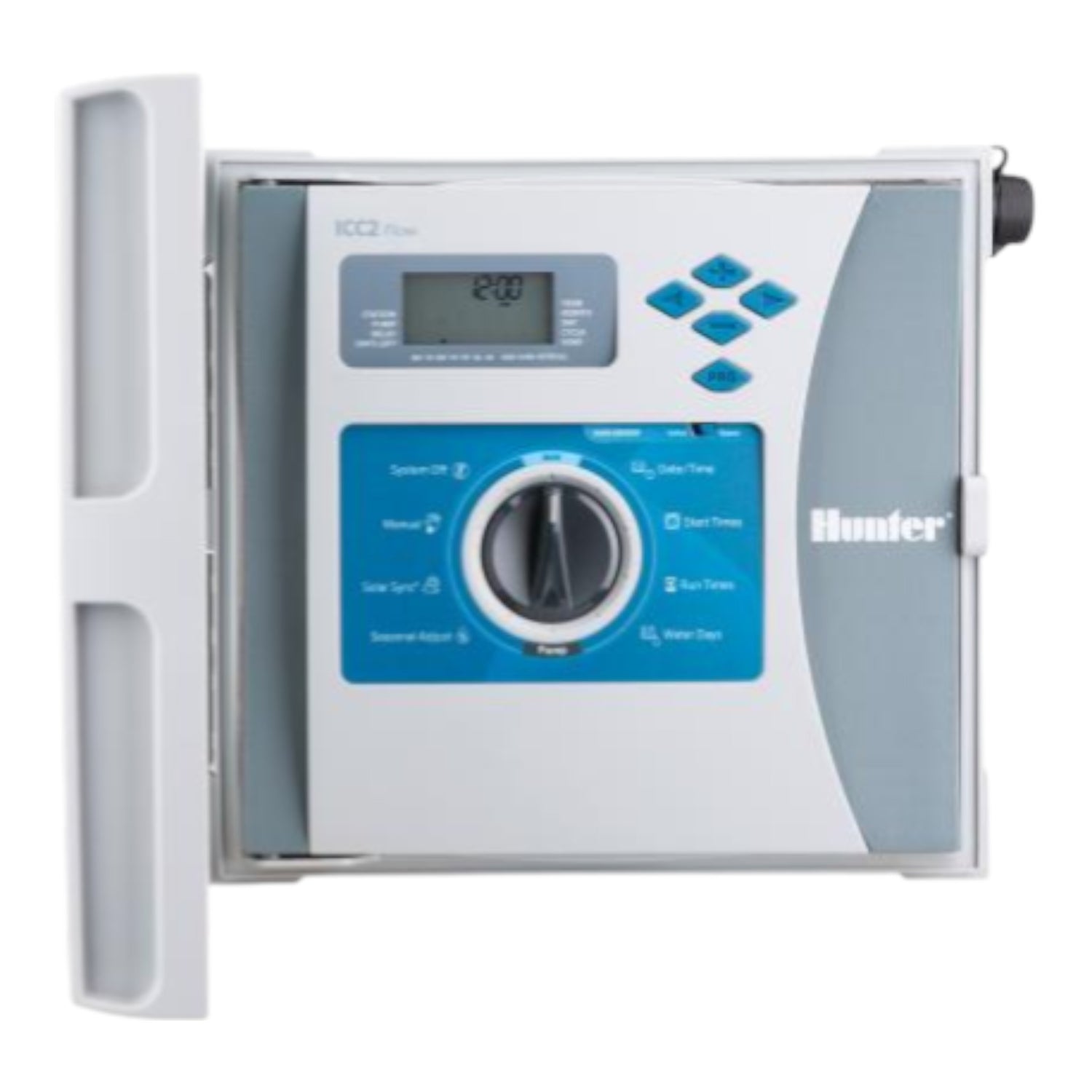
The Hunter 8 Station Plug-in Module - ICC2 is a Hunter controller expansion module designed for adding irrigation stations to a compatible Hunter controller.
Professional irrigation control allows watering programmes to be divided into zones and scheduled according to crop, landscape, soil and environmental requirements.
Key benefits
Expanding irrigation capacity
Use this module only with the compatible Hunter controller family. Isolate the controller as required by the manufacturer's instructions before installing or removing modules.
After installation, confirm the additional stations are recognised and test each connected irrigation zone before relying on the expanded programme.
Managing irrigation effectively
Controller programming should reflect actual water demand rather than simply repeating the same schedule year-round. Review run times as weather, crop size and seasonal conditions change.
Inspect valves, sprinklers, drippers and pipework periodically because a controller cannot compensate for blocked emitters, leaks or poor irrigation uniformity.
Installation & compatibility
Confirm controller, module and accessory compatibility before installation. Follow Hunter documentation for wiring, power supply, enclosure location and commissioning. Do not assume modules from different controller families are interchangeable.
Hunter 8 Station Plug-in Module - ICC2 product details
| Brand | Hunter |
|---|---|
| Product type | Controller expansion module |
| Controller family | ICC2 |
| Stations | 8 |
| Primary use | adding irrigation stations to a compatible Hunter controller |
Hunter 8 Station Plug-in Module - ICC2 FAQs
How many stations does this product support or add?
The product title states 8 stations. Which Hunter controller family is this associated with?
This product is identified with the ICC2 family. Check exact compatibility before installation. Can this module be fitted to any Hunter controller?
No. Expansion modules are controller-family specific; confirm exact compatibility before ordering or installation. What should I do after fitting an expansion module?
Confirm the controller recognises the new stations and test each connected zone. Do I need to isolate power before installation?
Follow Hunter's instructions for the specific controller and make the equipment safe before fitting or removing modules. Does adding stations increase water supply capacity?
No. Additional controller stations increase control capacity; hydraulic supply, pipework and zone design must still be adequate.
£402.75
Unit price per£402.75
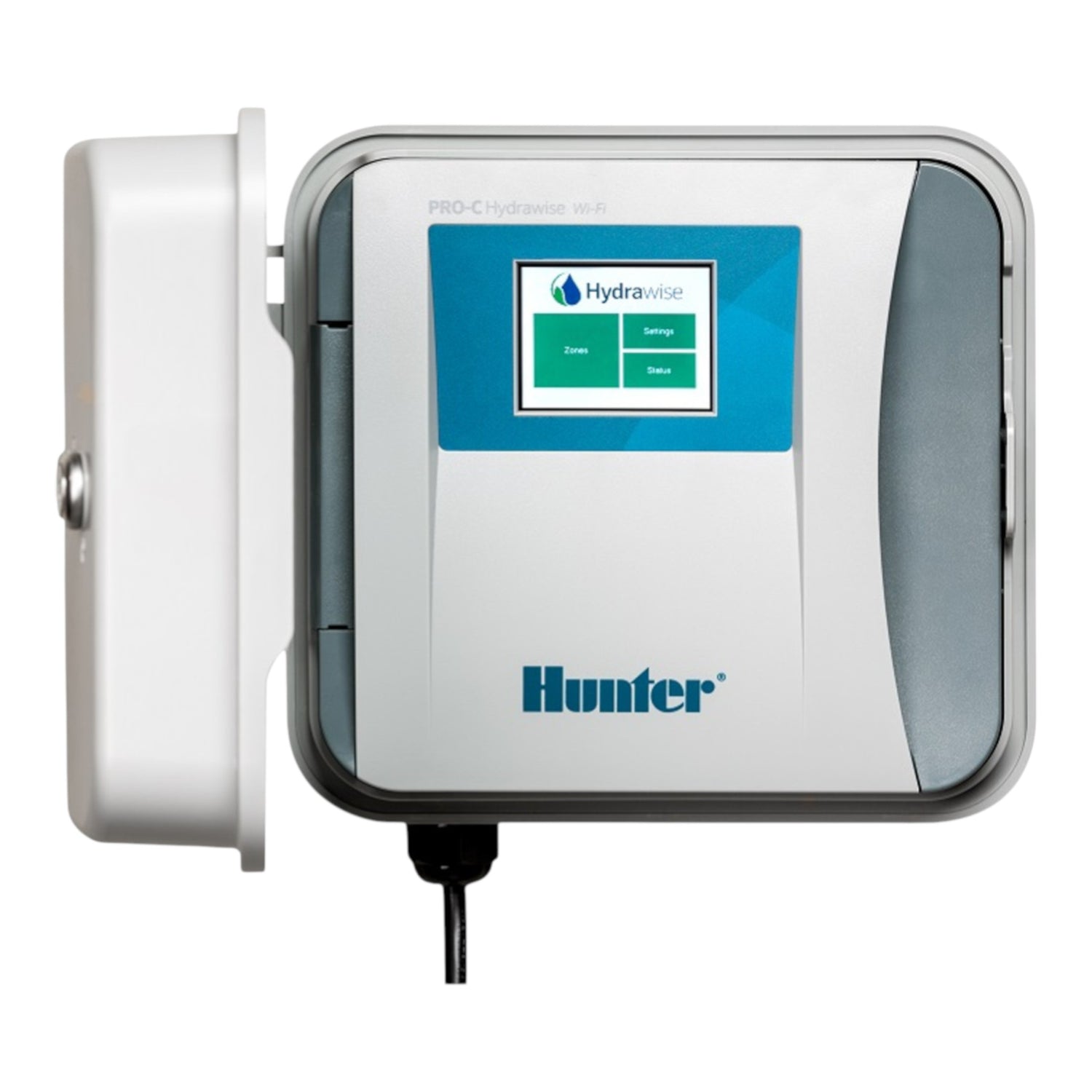
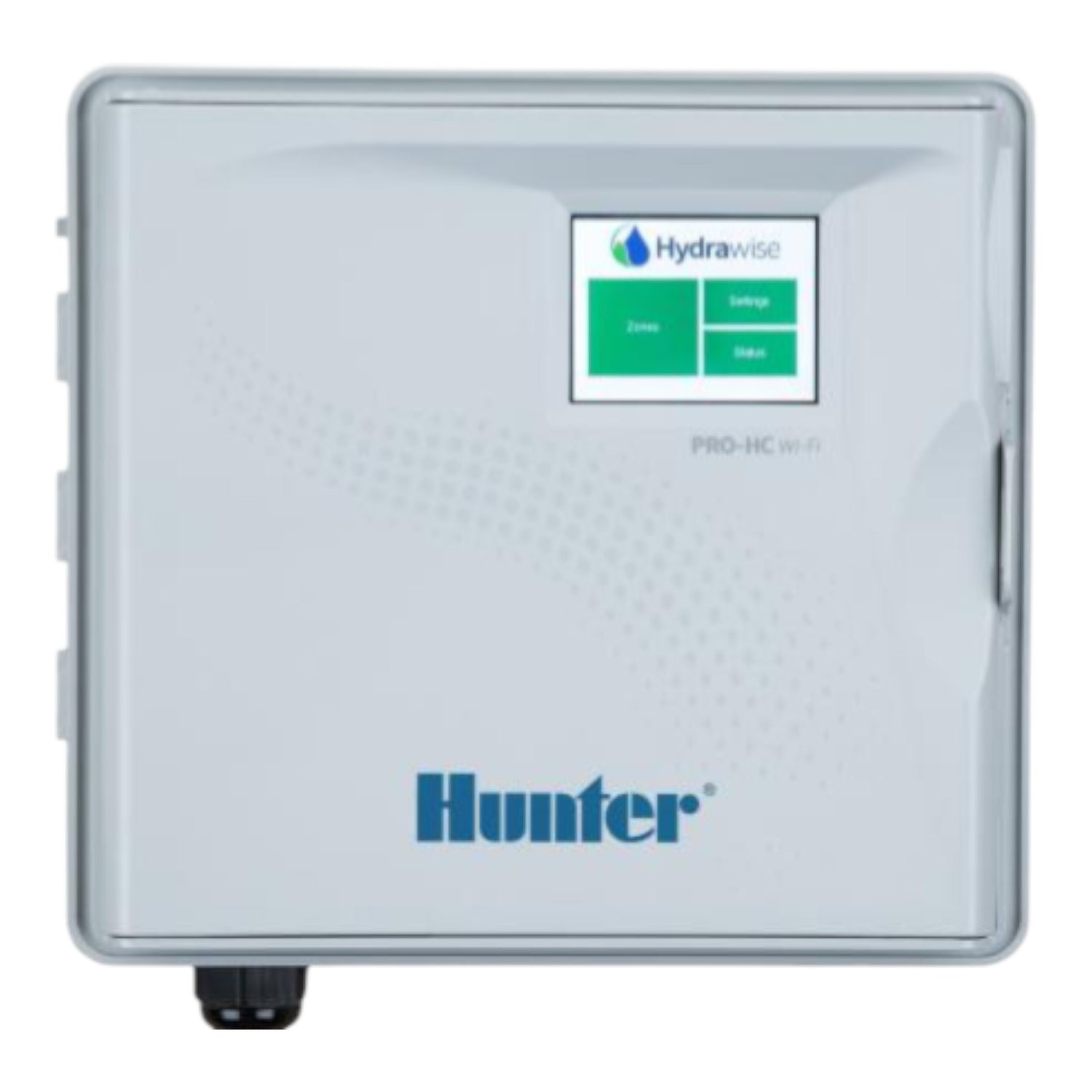
Unit price perThe Hunter HC Hydrawise 12 Station Indoor Controller is a Hunter irrigation controller designed for automated scheduling and control of compatible irrigation zones.
Professional irrigation control allows watering programmes to be divided into zones and scheduled according to crop, landscape, soil and environmental requirements.
Key benefits
Irrigation scheduling & zone control
Plan irrigation zones around areas with similar watering requirements. Programme run times and frequency according to the emitters, crop or landscape, soil/substrate and seasonal demand.
Electrical installation and field wiring should be carried out in accordance with Hunter instructions and applicable electrical requirements. Test each station after commissioning and check that valves operate as intended.
Managing irrigation effectively
Controller programming should reflect actual water demand rather than simply repeating the same schedule year-round. Review run times as weather, crop size and seasonal conditions change.
Inspect valves, sprinklers, drippers and pipework periodically because a controller cannot compensate for blocked emitters, leaks or poor irrigation uniformity.
Installation & compatibility
Confirm controller, module and accessory compatibility before installation. Follow Hunter documentation for wiring, power supply, enclosure location and commissioning. Do not assume modules from different controller families are interchangeable.
Hunter HC Hydrawise 12 Station Indoor Controller product details
| Brand | Hunter |
|---|---|
| Product type | Irrigation controller |
| Controller family | HC |
| Stations | 12 |
| Installation | Indoor |
| Connectivity | Hydrawise |
| Primary use | automated scheduling and control of compatible irrigation zones |
Hunter HC Hydrawise 12 Station Indoor Controller FAQs
How many stations does this product support or add?
The product title states 12 stations. Which Hunter controller family is this associated with?
This product is identified with the HC family. Check exact compatibility before installation. What does an irrigation controller do?
It automatically operates compatible irrigation zones according to programmed schedules. Should every irrigation zone use the same run time?
No. Group zones according to similar water requirements and adjust run time for the crop, emitter type, soil or substrate and exposure. Can a controller detect blocked drippers or leaks by itself?
Do not rely on the controller alone for system condition. Inspect irrigation zones physically and repair blocked emitters, leaks or failed valves. Who should install the controller?
Follow Hunter's installation requirements and applicable electrical rules. Use a suitably competent installer where mains power or fixed electrical work is involved.
£435.49
Unit price per£435.49
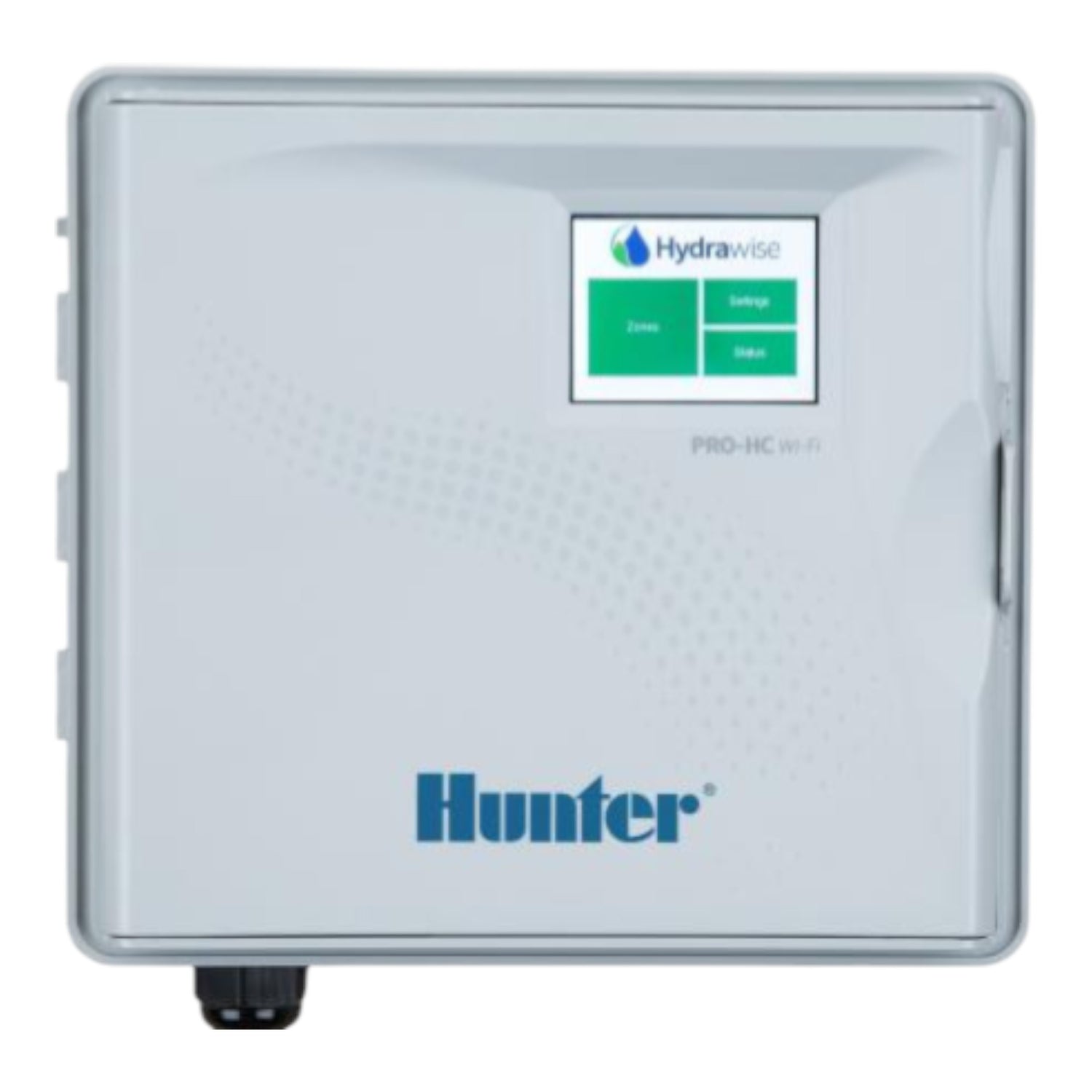
Unit price perThe Hunter HC PRO 12 Station Outdoor Controller is a Hunter irrigation controller designed for automated scheduling and control of compatible irrigation zones.
Professional irrigation control allows watering programmes to be divided into zones and scheduled according to crop, landscape, soil and environmental requirements.
Key benefits
Irrigation scheduling & zone control
Plan irrigation zones around areas with similar watering requirements. Programme run times and frequency according to the emitters, crop or landscape, soil/substrate and seasonal demand.
Electrical installation and field wiring should be carried out in accordance with Hunter instructions and applicable electrical requirements. Test each station after commissioning and check that valves operate as intended.
Managing irrigation effectively
Controller programming should reflect actual water demand rather than simply repeating the same schedule year-round. Review run times as weather, crop size and seasonal conditions change.
Inspect valves, sprinklers, drippers and pipework periodically because a controller cannot compensate for blocked emitters, leaks or poor irrigation uniformity.
Installation & compatibility
Confirm controller, module and accessory compatibility before installation. Follow Hunter documentation for wiring, power supply, enclosure location and commissioning. Do not assume modules from different controller families are interchangeable.
Hunter HC PRO 12 Station Outdoor Controller product details
| Brand | Hunter |
|---|---|
| Product type | Irrigation controller |
| Controller family | HC PRO |
| Stations | 12 |
| Installation | Outdoor |
| Primary use | automated scheduling and control of compatible irrigation zones |
Hunter HC PRO 12 Station Outdoor Controller FAQs
How many stations does this product support or add?
The product title states 12 stations. Which Hunter controller family is this associated with?
This product is identified with the HC PRO family. Check exact compatibility before installation. What does an irrigation controller do?
It automatically operates compatible irrigation zones according to programmed schedules. Should every irrigation zone use the same run time?
No. Group zones according to similar water requirements and adjust run time for the crop, emitter type, soil or substrate and exposure. Can a controller detect blocked drippers or leaks by itself?
Do not rely on the controller alone for system condition. Inspect irrigation zones physically and repair blocked emitters, leaks or failed valves. Who should install the controller?
Follow Hunter's installation requirements and applicable electrical rules. Use a suitably competent installer where mains power or fixed electrical work is involved.
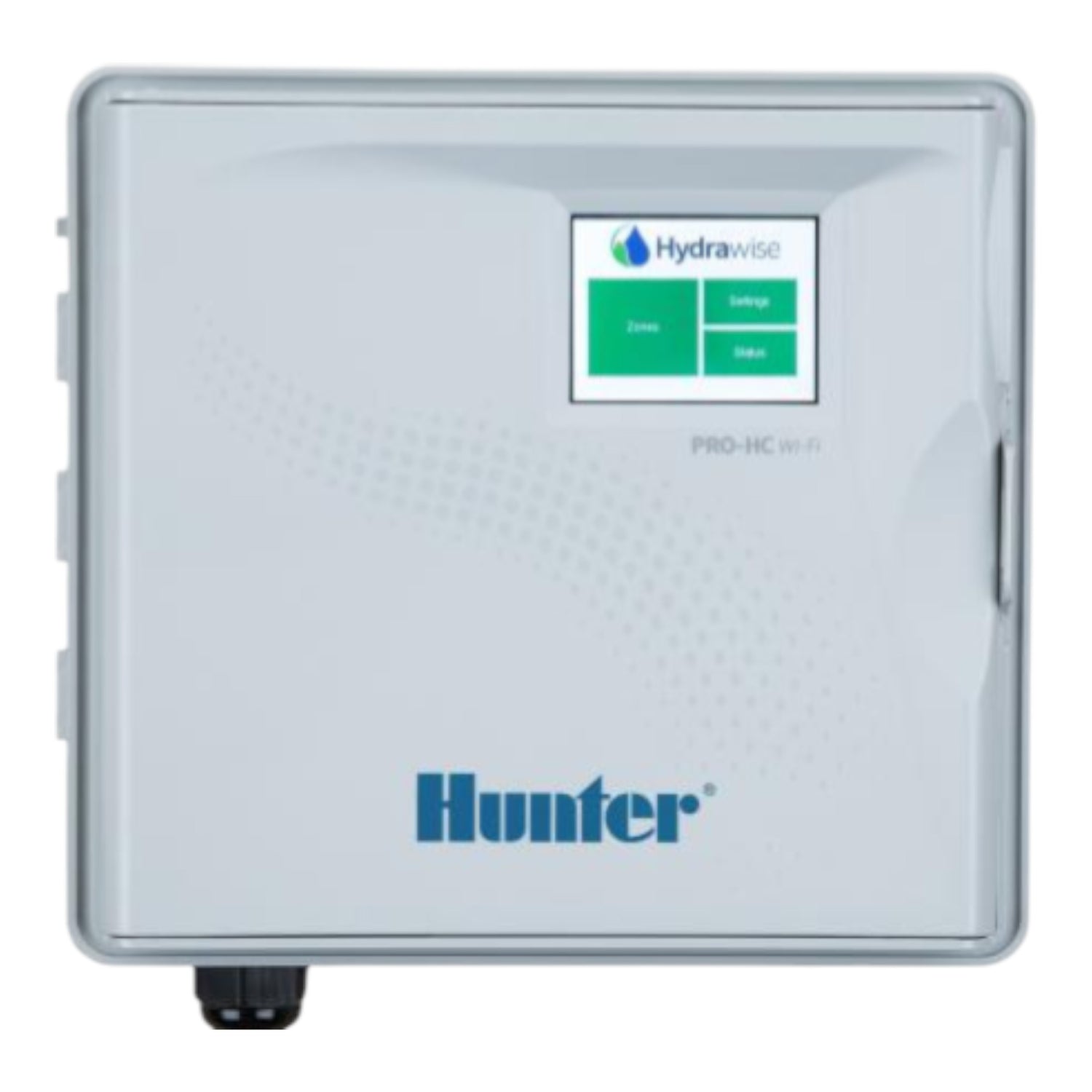
The Hunter HC PRO 24 Station Outdoor Controller is a Hunter irrigation controller designed for automated scheduling and control of compatible irrigation zones.
Professional irrigation control allows watering programmes to be divided into zones and scheduled according to crop, landscape, soil and environmental requirements.
Key benefits
Irrigation scheduling & zone control
Plan irrigation zones around areas with similar watering requirements. Programme run times and frequency according to the emitters, crop or landscape, soil/substrate and seasonal demand.
Electrical installation and field wiring should be carried out in accordance with Hunter instructions and applicable electrical requirements. Test each station after commissioning and check that valves operate as intended.
Managing irrigation effectively
Controller programming should reflect actual water demand rather than simply repeating the same schedule year-round. Review run times as weather, crop size and seasonal conditions change.
Inspect valves, sprinklers, drippers and pipework periodically because a controller cannot compensate for blocked emitters, leaks or poor irrigation uniformity.
Installation & compatibility
Confirm controller, module and accessory compatibility before installation. Follow Hunter documentation for wiring, power supply, enclosure location and commissioning. Do not assume modules from different controller families are interchangeable.
Hunter HC PRO 24 Station Outdoor Controller product details
| Brand | Hunter |
|---|---|
| Product type | Irrigation controller |
| Controller family | HC PRO |
| Stations | 24 |
| Installation | Outdoor |
| Primary use | automated scheduling and control of compatible irrigation zones |
Hunter HC PRO 24 Station Outdoor Controller FAQs
How many stations does this product support or add?
The product title states 24 stations. Which Hunter controller family is this associated with?
This product is identified with the HC PRO family. Check exact compatibility before installation. What does an irrigation controller do?
It automatically operates compatible irrigation zones according to programmed schedules. Should every irrigation zone use the same run time?
No. Group zones according to similar water requirements and adjust run time for the crop, emitter type, soil or substrate and exposure. Can a controller detect blocked drippers or leaks by itself?
Do not rely on the controller alone for system condition. Inspect irrigation zones physically and repair blocked emitters, leaks or failed valves. Who should install the controller?
Follow Hunter's installation requirements and applicable electrical rules. Use a suitably competent installer where mains power or fixed electrical work is involved.
£371.36
Unit price per£371.36
Unit price perThe Hunter HC PRO 6 Station Outdoor Controller is a Hunter irrigation controller designed for automated scheduling and control of compatible irrigation zones.
Professional irrigation control allows watering programmes to be divided into zones and scheduled according to crop, landscape, soil and environmental requirements.
Key benefits
Irrigation scheduling & zone control
Plan irrigation zones around areas with similar watering requirements. Programme run times and frequency according to the emitters, crop or landscape, soil/substrate and seasonal demand.
Electrical installation and field wiring should be carried out in accordance with Hunter instructions and applicable electrical requirements. Test each station after commissioning and check that valves operate as intended.
Managing irrigation effectively
Controller programming should reflect actual water demand rather than simply repeating the same schedule year-round. Review run times as weather, crop size and seasonal conditions change.
Inspect valves, sprinklers, drippers and pipework periodically because a controller cannot compensate for blocked emitters, leaks or poor irrigation uniformity.
Installation & compatibility
Confirm controller, module and accessory compatibility before installation. Follow Hunter documentation for wiring, power supply, enclosure location and commissioning. Do not assume modules from different controller families are interchangeable.
Hunter HC PRO 6 Station Outdoor Controller product details
| Brand | Hunter |
|---|---|
| Product type | Irrigation controller |
| Controller family | HC PRO |
| Stations | 6 |
| Installation | Outdoor |
| Primary use | automated scheduling and control of compatible irrigation zones |
Hunter HC PRO 6 Station Outdoor Controller FAQs
How many stations does this product support or add?
The product title states 6 stations. Which Hunter controller family is this associated with?
This product is identified with the HC PRO family. Check exact compatibility before installation. What does an irrigation controller do?
It automatically operates compatible irrigation zones according to programmed schedules. Should every irrigation zone use the same run time?
No. Group zones according to similar water requirements and adjust run time for the crop, emitter type, soil or substrate and exposure. Can a controller detect blocked drippers or leaks by itself?
Do not rely on the controller alone for system condition. Inspect irrigation zones physically and repair blocked emitters, leaks or failed valves. Who should install the controller?
Follow Hunter's installation requirements and applicable electrical rules. Use a suitably competent installer where mains power or fixed electrical work is involved.
£0.00
Unit price per£0.00
Unit price perThe Hunter HCC Controller Plastic Wall Mount - 8 Station is a Hunter irrigation controller designed for automated scheduling and control of compatible irrigation zones.
Professional irrigation control allows watering programmes to be divided into zones and scheduled according to crop, landscape, soil and environmental requirements.
Key benefits
Irrigation scheduling & zone control
Plan irrigation zones around areas with similar watering requirements. Programme run times and frequency according to the emitters, crop or landscape, soil/substrate and seasonal demand.
Electrical installation and field wiring should be carried out in accordance with Hunter instructions and applicable electrical requirements. Test each station after commissioning and check that valves operate as intended.
Managing irrigation effectively
Controller programming should reflect actual water demand rather than simply repeating the same schedule year-round. Review run times as weather, crop size and seasonal conditions change.
Inspect valves, sprinklers, drippers and pipework periodically because a controller cannot compensate for blocked emitters, leaks or poor irrigation uniformity.
Installation & compatibility
Confirm controller, module and accessory compatibility before installation. Follow Hunter documentation for wiring, power supply, enclosure location and commissioning. Do not assume modules from different controller families are interchangeable.
Hunter HCC Controller Plastic Wall Mount - 8 Station product details
| Brand | Hunter |
|---|---|
| Product type | Irrigation controller |
| Controller family | HCC |
| Stations | 8 |
| Primary use | automated scheduling and control of compatible irrigation zones |
Hunter HCC Controller Plastic Wall Mount - 8 Station FAQs
How many stations does this product support or add?
The product title states 8 stations. Which Hunter controller family is this associated with?
This product is identified with the HCC family. Check exact compatibility before installation. What does an irrigation controller do?
It automatically operates compatible irrigation zones according to programmed schedules. Should every irrigation zone use the same run time?
No. Group zones according to similar water requirements and adjust run time for the crop, emitter type, soil or substrate and exposure. Can a controller detect blocked drippers or leaks by itself?
Do not rely on the controller alone for system condition. Inspect irrigation zones physically and repair blocked emitters, leaks or failed valves. Who should install the controller?
Follow Hunter's installation requirements and applicable electrical rules. Use a suitably competent installer where mains power or fixed electrical work is involved.
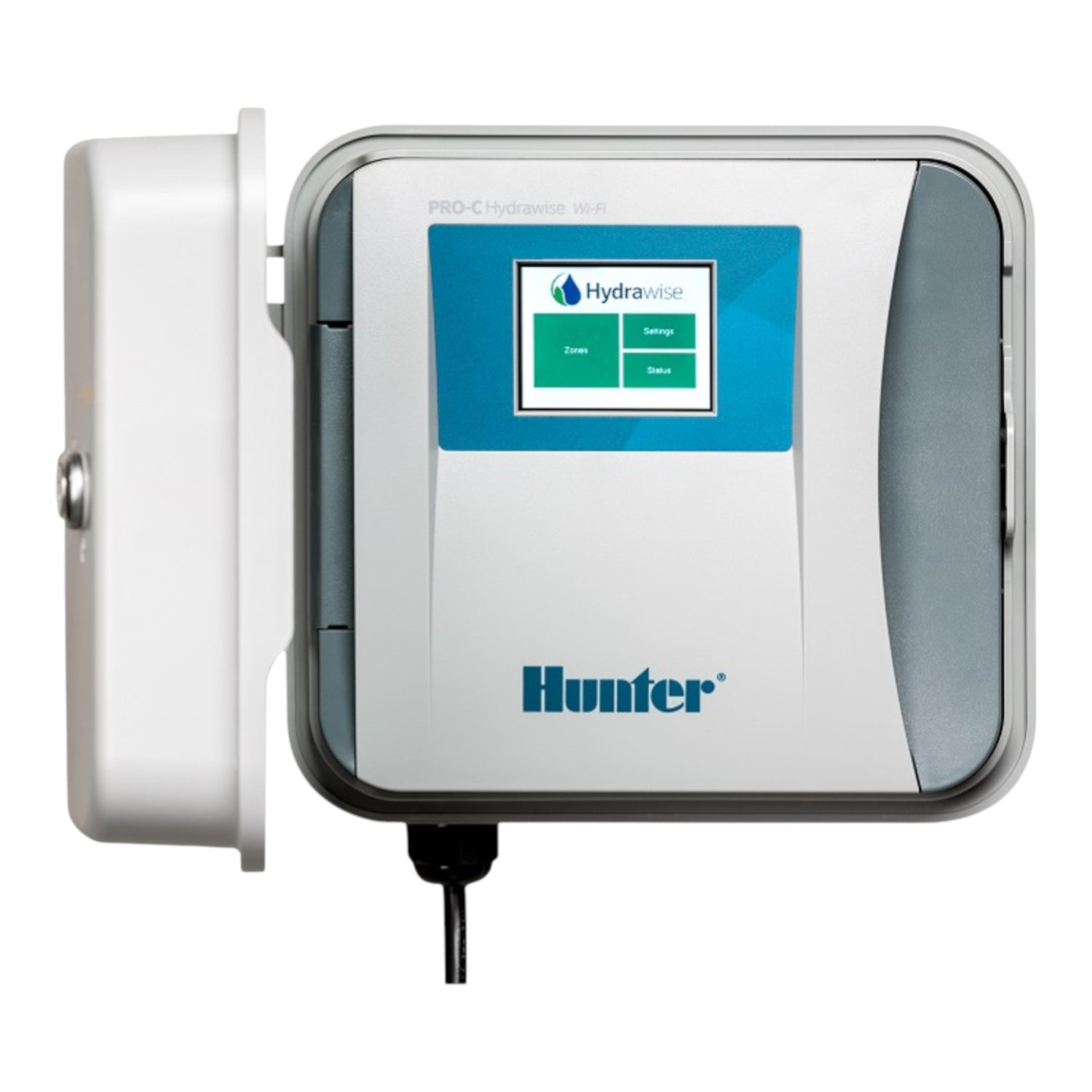
£262.42
Unit price per£262.42
Unit price perThe Hunter Hunter PRO-C Hydrawise Outdoor Controller is a Hunter irrigation controller designed for automated scheduling and control of compatible irrigation zones.
Professional irrigation control allows watering programmes to be divided into zones and scheduled according to crop, landscape, soil and environmental requirements.
Key benefits
Irrigation scheduling & zone control
Plan irrigation zones around areas with similar watering requirements. Programme run times and frequency according to the emitters, crop or landscape, soil/substrate and seasonal demand.
Electrical installation and field wiring should be carried out in accordance with Hunter instructions and applicable electrical requirements. Test each station after commissioning and check that valves operate as intended.
Managing irrigation effectively
Controller programming should reflect actual water demand rather than simply repeating the same schedule year-round. Review run times as weather, crop size and seasonal conditions change.
Inspect valves, sprinklers, drippers and pipework periodically because a controller cannot compensate for blocked emitters, leaks or poor irrigation uniformity.
Installation & compatibility
Confirm controller, module and accessory compatibility before installation. Follow Hunter documentation for wiring, power supply, enclosure location and commissioning. Do not assume modules from different controller families are interchangeable.
Hunter Hunter PRO-C Hydrawise Outdoor Controller product details
| Brand | Hunter |
|---|---|
| Product type | Irrigation controller |
| Controller family | PRO-C |
| Installation | Outdoor |
| Connectivity | Hydrawise |
| Primary use | automated scheduling and control of compatible irrigation zones |
Hunter Hunter PRO-C Hydrawise Outdoor Controller FAQs
Which Hunter controller family is this associated with?
This product is identified with the PRO-C family. Check exact compatibility before installation. What does an irrigation controller do?
It automatically operates compatible irrigation zones according to programmed schedules. Should every irrigation zone use the same run time?
No. Group zones according to similar water requirements and adjust run time for the crop, emitter type, soil or substrate and exposure. Can a controller detect blocked drippers or leaks by itself?
Do not rely on the controller alone for system condition. Inspect irrigation zones physically and repair blocked emitters, leaks or failed valves. Who should install the controller?
Follow Hunter's installation requirements and applicable electrical rules. Use a suitably competent installer where mains power or fixed electrical work is involved.
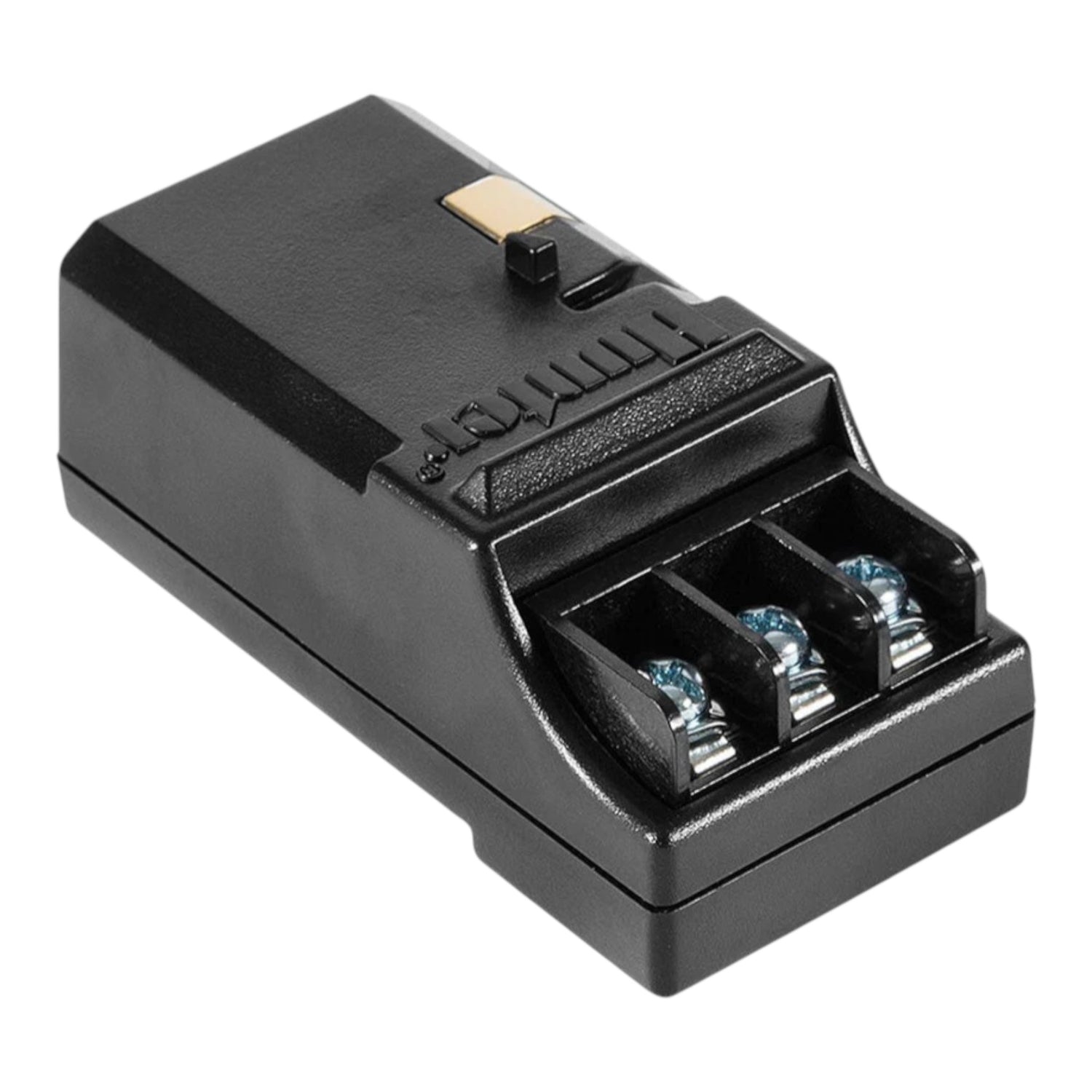
The Hunter PRO-C Expansion Module 3 Station is a Hunter controller expansion module designed for adding irrigation stations to a compatible Hunter controller.
Professional irrigation control allows watering programmes to be divided into zones and scheduled according to crop, landscape, soil and environmental requirements.
Key benefits
Expanding irrigation capacity
Use this module only with the compatible Hunter controller family. Isolate the controller as required by the manufacturer's instructions before installing or removing modules.
After installation, confirm the additional stations are recognised and test each connected irrigation zone before relying on the expanded programme.
Managing irrigation effectively
Controller programming should reflect actual water demand rather than simply repeating the same schedule year-round. Review run times as weather, crop size and seasonal conditions change.
Inspect valves, sprinklers, drippers and pipework periodically because a controller cannot compensate for blocked emitters, leaks or poor irrigation uniformity.
Installation & compatibility
Confirm controller, module and accessory compatibility before installation. Follow Hunter documentation for wiring, power supply, enclosure location and commissioning. Do not assume modules from different controller families are interchangeable.
Hunter PRO-C Expansion Module 3 Station product details
| Brand | Hunter |
|---|---|
| Product type | Controller expansion module |
| Controller family | PRO-C |
| Stations | 3 |
| Primary use | adding irrigation stations to a compatible Hunter controller |
Hunter PRO-C Expansion Module 3 Station FAQs
How many stations does this product support or add?
The product title states 3 stations. Which Hunter controller family is this associated with?
This product is identified with the PRO-C family. Check exact compatibility before installation. Can this module be fitted to any Hunter controller?
No. Expansion modules are controller-family specific; confirm exact compatibility before ordering or installation. What should I do after fitting an expansion module?
Confirm the controller recognises the new stations and test each connected zone. Do I need to isolate power before installation?
Follow Hunter's instructions for the specific controller and make the equipment safe before fitting or removing modules. Does adding stations increase water supply capacity?
No. Additional controller stations increase control capacity; hydraulic supply, pipework and zone design must still be adequate.
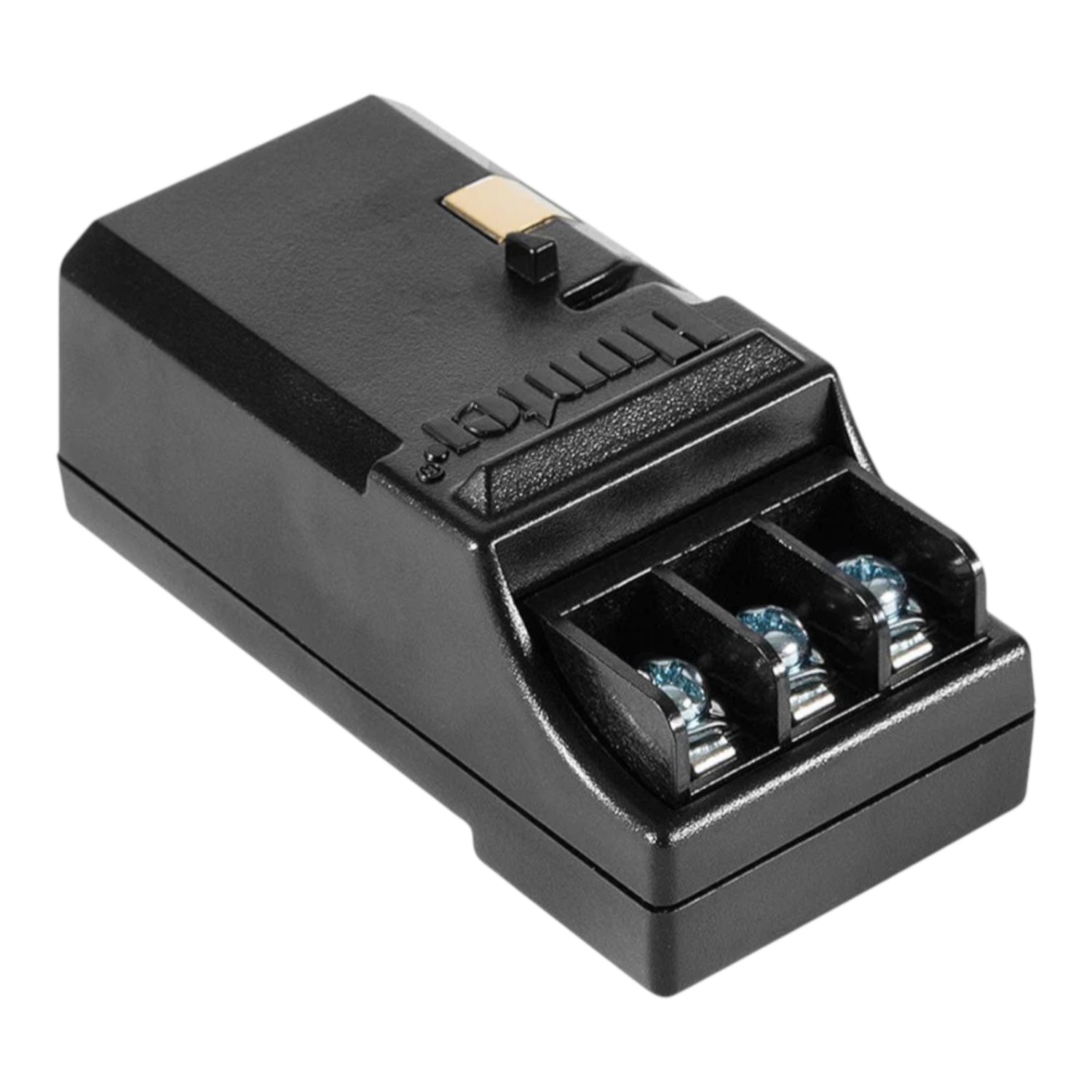
The Hunter PRO-C Expansion Module 9 Station is a Hunter controller expansion module designed for adding irrigation stations to a compatible Hunter controller.
Professional irrigation control allows watering programmes to be divided into zones and scheduled according to crop, landscape, soil and environmental requirements.
Key benefits
Expanding irrigation capacity
Use this module only with the compatible Hunter controller family. Isolate the controller as required by the manufacturer's instructions before installing or removing modules.
After installation, confirm the additional stations are recognised and test each connected irrigation zone before relying on the expanded programme.
Managing irrigation effectively
Controller programming should reflect actual water demand rather than simply repeating the same schedule year-round. Review run times as weather, crop size and seasonal conditions change.
Inspect valves, sprinklers, drippers and pipework periodically because a controller cannot compensate for blocked emitters, leaks or poor irrigation uniformity.
Installation & compatibility
Confirm controller, module and accessory compatibility before installation. Follow Hunter documentation for wiring, power supply, enclosure location and commissioning. Do not assume modules from different controller families are interchangeable.
Hunter PRO-C Expansion Module 9 Station product details
| Brand | Hunter |
|---|---|
| Product type | Controller expansion module |
| Controller family | PRO-C |
| Stations | 9 |
| Primary use | adding irrigation stations to a compatible Hunter controller |
Hunter PRO-C Expansion Module 9 Station FAQs
How many stations does this product support or add?
The product title states 9 stations. Which Hunter controller family is this associated with?
This product is identified with the PRO-C family. Check exact compatibility before installation. Can this module be fitted to any Hunter controller?
No. Expansion modules are controller-family specific; confirm exact compatibility before ordering or installation. What should I do after fitting an expansion module?
Confirm the controller recognises the new stations and test each connected zone. Do I need to isolate power before installation?
Follow Hunter's instructions for the specific controller and make the equipment safe before fitting or removing modules. Does adding stations increase water supply capacity?
No. Additional controller stations increase control capacity; hydraulic supply, pipework and zone design must still be adequate.
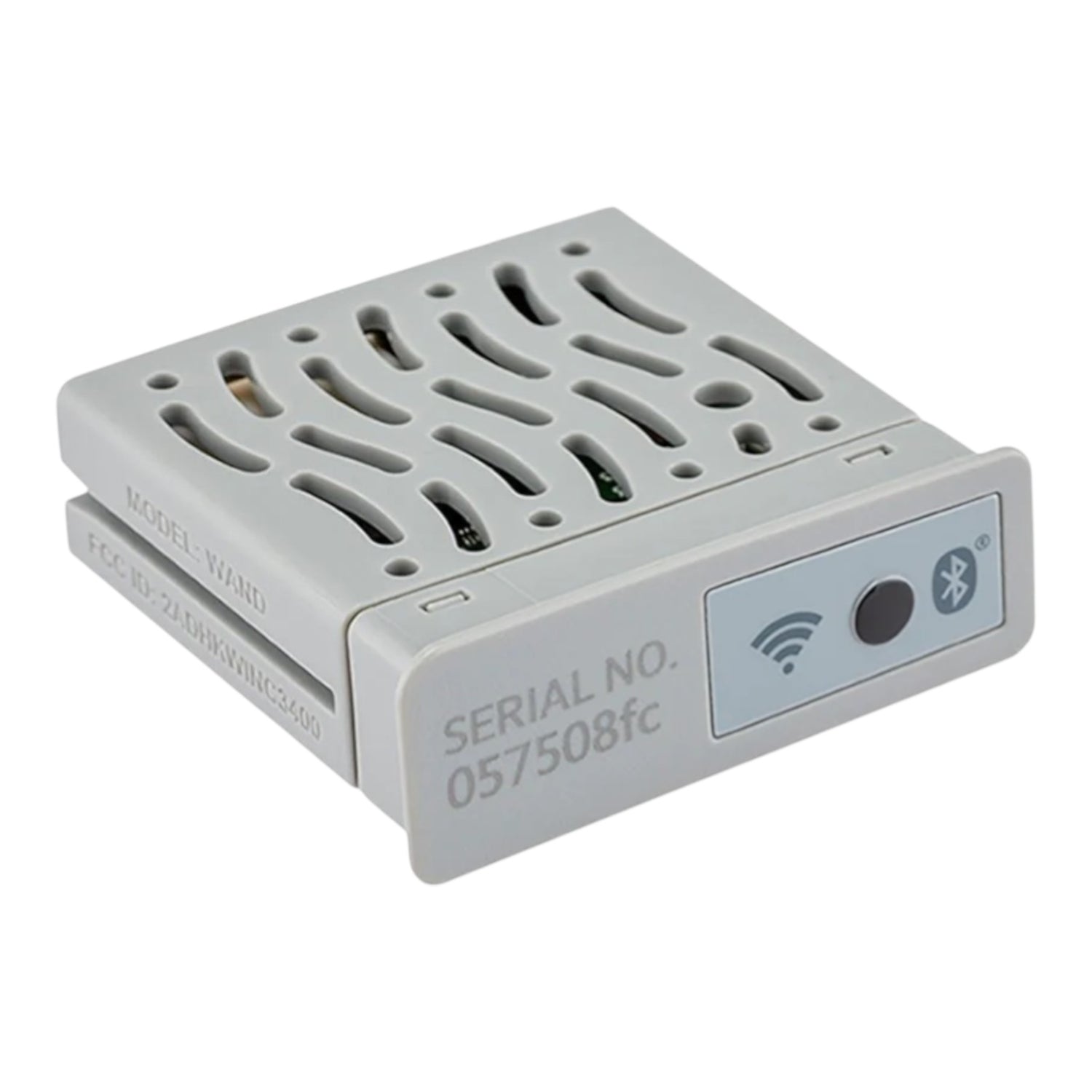
£130.15
Unit price per£130.15
Unit price perThe Hunter Wand Wi-Fi Module for Hydrawise Connectivity is a Hunter wi-fi connectivity module designed for adding compatible Hydrawise Wi-Fi connectivity to supported Hunter controllers.
Professional irrigation control allows watering programmes to be divided into zones and scheduled according to crop, landscape, soil and environmental requirements.
Key benefits
Adding connected irrigation control
Install the module only in a supported Hunter controller and follow Hunter's setup process for network connection and Hydrawise configuration.
Reliable Wi-Fi coverage at the controller location is important for connected features. Confirm network access before final commissioning.
Managing irrigation effectively
Controller programming should reflect actual water demand rather than simply repeating the same schedule year-round. Review run times as weather, crop size and seasonal conditions change.
Inspect valves, sprinklers, drippers and pipework periodically because a controller cannot compensate for blocked emitters, leaks or poor irrigation uniformity.
Installation & compatibility
Confirm controller, module and accessory compatibility before installation. Follow Hunter documentation for wiring, power supply, enclosure location and commissioning. Do not assume modules from different controller families are interchangeable.
Hunter Wand Wi-Fi Module for Hydrawise Connectivity product details
| Brand | Hunter |
|---|---|
| Product type | Wi-Fi connectivity module |
| Connectivity | Hydrawise |
| Primary use | adding compatible Hydrawise Wi-Fi connectivity to supported Hunter controllers |
Hunter Wand Wi-Fi Module for Hydrawise Connectivity FAQs
What does the WAND module add?
It adds compatible Wi-Fi/Hydrawise connectivity to supported Hunter controller models. Does it need Wi-Fi coverage?
Yes, connected features require suitable network coverage at the controller location. Will it work with every Hunter controller?
No. Confirm that the controller model supports the WAND module before ordering. What should I check before setup?
Confirm controller compatibility, Wi-Fi availability and the current Hunter setup requirements.

The Hunter X2 14 Station Controller is a Hunter irrigation controller designed for automated scheduling and control of compatible irrigation zones.
Professional irrigation control allows watering programmes to be divided into zones and scheduled according to crop, landscape, soil and environmental requirements.
Key benefits
Irrigation scheduling & zone control
Plan irrigation zones around areas with similar watering requirements. Programme run times and frequency according to the emitters, crop or landscape, soil/substrate and seasonal demand.
Electrical installation and field wiring should be carried out in accordance with Hunter instructions and applicable electrical requirements. Test each station after commissioning and check that valves operate as intended.
Managing irrigation effectively
Controller programming should reflect actual water demand rather than simply repeating the same schedule year-round. Review run times as weather, crop size and seasonal conditions change.
Inspect valves, sprinklers, drippers and pipework periodically because a controller cannot compensate for blocked emitters, leaks or poor irrigation uniformity.
Installation & compatibility
Confirm controller, module and accessory compatibility before installation. Follow Hunter documentation for wiring, power supply, enclosure location and commissioning. Do not assume modules from different controller families are interchangeable.
Hunter X2 14 Station Controller product details
| Brand | Hunter |
|---|---|
| Product type | Irrigation controller |
| Controller family | X2 |
| Stations | 14 |
| Primary use | automated scheduling and control of compatible irrigation zones |
Hunter X2 14 Station Controller FAQs
How many stations does this product support or add?
The product title states 14 stations. Which Hunter controller family is this associated with?
This product is identified with the X2 family. Check exact compatibility before installation. What does an irrigation controller do?
It automatically operates compatible irrigation zones according to programmed schedules. Should every irrigation zone use the same run time?
No. Group zones according to similar water requirements and adjust run time for the crop, emitter type, soil or substrate and exposure. Can a controller detect blocked drippers or leaks by itself?
Do not rely on the controller alone for system condition. Inspect irrigation zones physically and repair blocked emitters, leaks or failed valves. Who should install the controller?
Follow Hunter's installation requirements and applicable electrical rules. Use a suitably competent installer where mains power or fixed electrical work is involved.
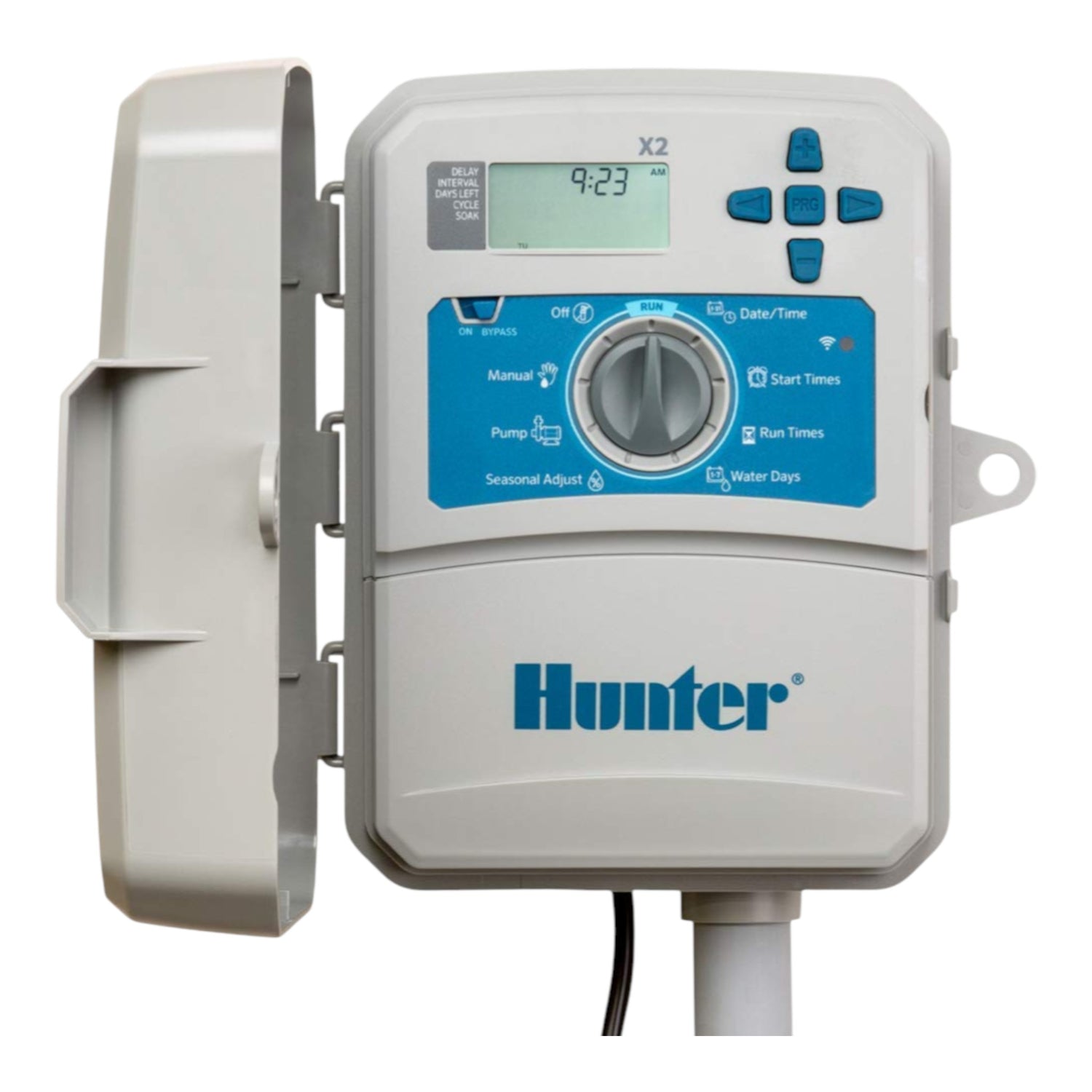
The Hunter X2 4 Station Controller is a Hunter irrigation controller designed for automated scheduling and control of compatible irrigation zones.
Professional irrigation control allows watering programmes to be divided into zones and scheduled according to crop, landscape, soil and environmental requirements.
Key benefits
Irrigation scheduling & zone control
Plan irrigation zones around areas with similar watering requirements. Programme run times and frequency according to the emitters, crop or landscape, soil/substrate and seasonal demand.
Electrical installation and field wiring should be carried out in accordance with Hunter instructions and applicable electrical requirements. Test each station after commissioning and check that valves operate as intended.
Managing irrigation effectively
Controller programming should reflect actual water demand rather than simply repeating the same schedule year-round. Review run times as weather, crop size and seasonal conditions change.
Inspect valves, sprinklers, drippers and pipework periodically because a controller cannot compensate for blocked emitters, leaks or poor irrigation uniformity.
Installation & compatibility
Confirm controller, module and accessory compatibility before installation. Follow Hunter documentation for wiring, power supply, enclosure location and commissioning. Do not assume modules from different controller families are interchangeable.
Hunter X2 4 Station Controller product details
| Brand | Hunter |
|---|---|
| Product type | Irrigation controller |
| Controller family | X2 |
| Stations | 4 |
| Primary use | automated scheduling and control of compatible irrigation zones |
Hunter X2 4 Station Controller FAQs
How many stations does this product support or add?
The product title states 4 stations. Which Hunter controller family is this associated with?
This product is identified with the X2 family. Check exact compatibility before installation. What does an irrigation controller do?
It automatically operates compatible irrigation zones according to programmed schedules. Should every irrigation zone use the same run time?
No. Group zones according to similar water requirements and adjust run time for the crop, emitter type, soil or substrate and exposure. Can a controller detect blocked drippers or leaks by itself?
Do not rely on the controller alone for system condition. Inspect irrigation zones physically and repair blocked emitters, leaks or failed valves. Who should install the controller?
Follow Hunter's installation requirements and applicable electrical rules. Use a suitably competent installer where mains power or fixed electrical work is involved.
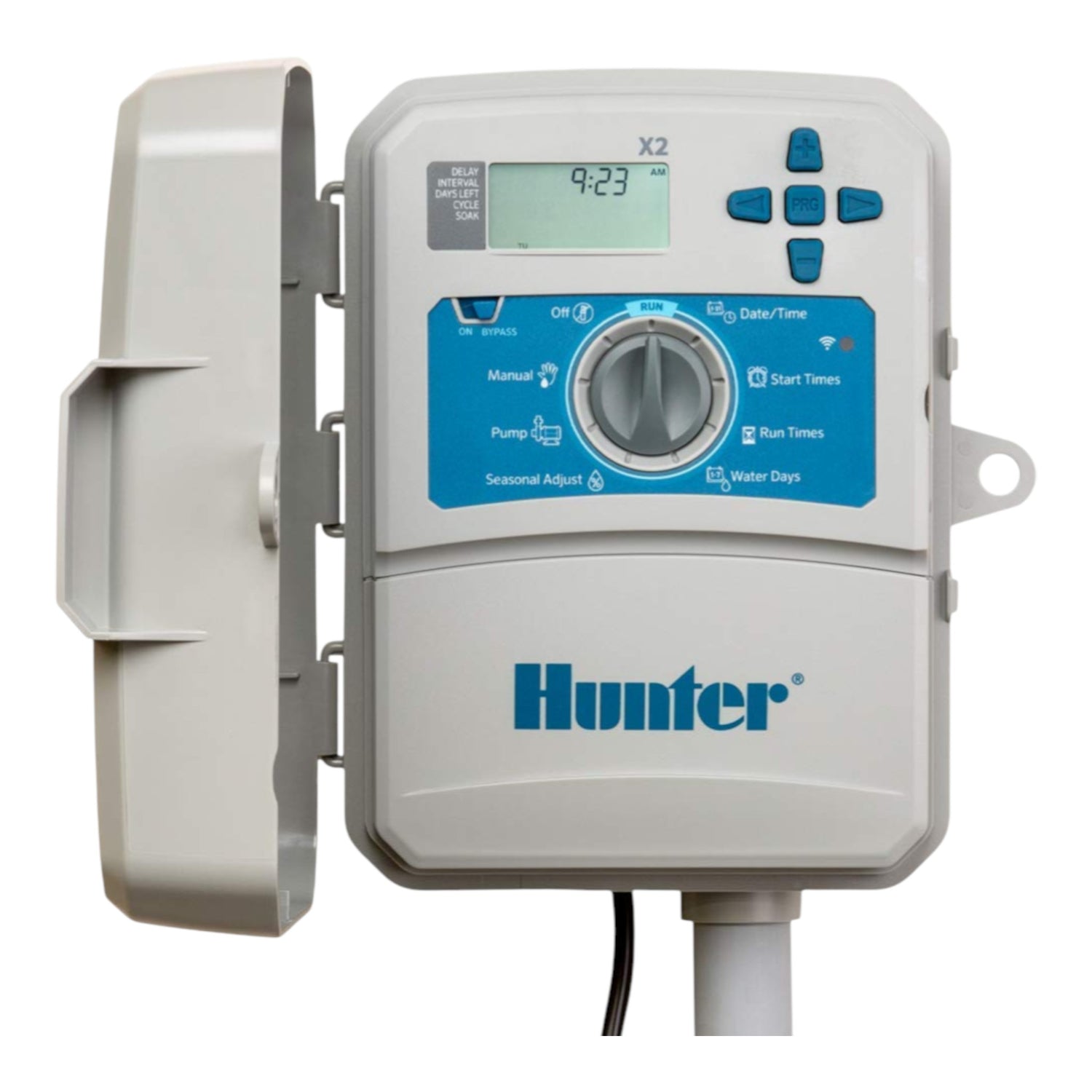
The Hunter X2 6 Station Controller is a Hunter irrigation controller designed for automated scheduling and control of compatible irrigation zones.
Professional irrigation control allows watering programmes to be divided into zones and scheduled according to crop, landscape, soil and environmental requirements.
Key benefits
Irrigation scheduling & zone control
Plan irrigation zones around areas with similar watering requirements. Programme run times and frequency according to the emitters, crop or landscape, soil/substrate and seasonal demand.
Electrical installation and field wiring should be carried out in accordance with Hunter instructions and applicable electrical requirements. Test each station after commissioning and check that valves operate as intended.
Managing irrigation effectively
Controller programming should reflect actual water demand rather than simply repeating the same schedule year-round. Review run times as weather, crop size and seasonal conditions change.
Inspect valves, sprinklers, drippers and pipework periodically because a controller cannot compensate for blocked emitters, leaks or poor irrigation uniformity.
Installation & compatibility
Confirm controller, module and accessory compatibility before installation. Follow Hunter documentation for wiring, power supply, enclosure location and commissioning. Do not assume modules from different controller families are interchangeable.
Hunter X2 6 Station Controller product details
| Brand | Hunter |
|---|---|
| Product type | Irrigation controller |
| Controller family | X2 |
| Stations | 6 |
| Primary use | automated scheduling and control of compatible irrigation zones |
Hunter X2 6 Station Controller FAQs
How many stations does this product support or add?
The product title states 6 stations. Which Hunter controller family is this associated with?
This product is identified with the X2 family. Check exact compatibility before installation. What does an irrigation controller do?
It automatically operates compatible irrigation zones according to programmed schedules. Should every irrigation zone use the same run time?
No. Group zones according to similar water requirements and adjust run time for the crop, emitter type, soil or substrate and exposure. Can a controller detect blocked drippers or leaks by itself?
Do not rely on the controller alone for system condition. Inspect irrigation zones physically and repair blocked emitters, leaks or failed valves. Who should install the controller?
Follow Hunter's installation requirements and applicable electrical rules. Use a suitably competent installer where mains power or fixed electrical work is involved.
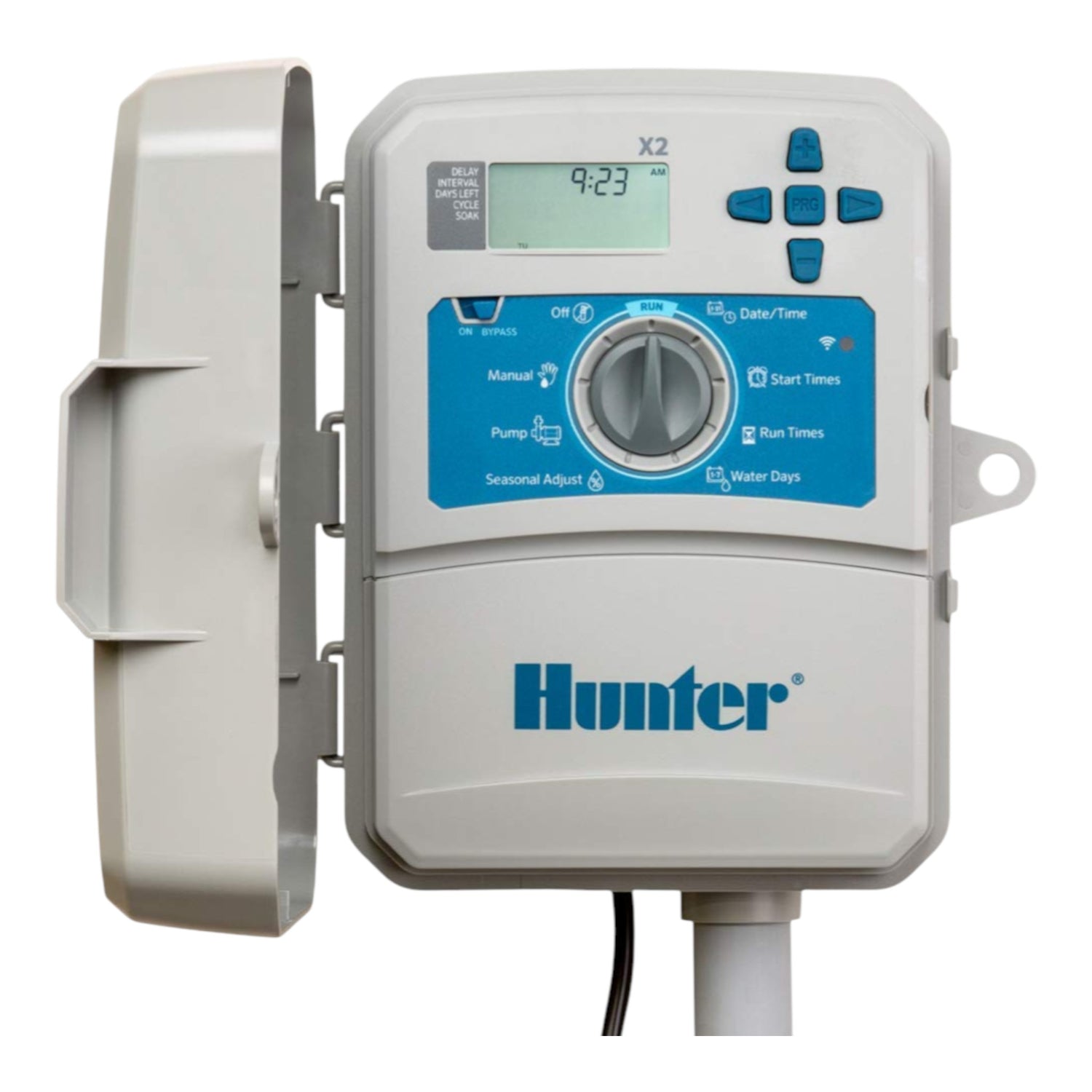
The Hunter X2 8 Station Controller is a Hunter irrigation controller designed for automated scheduling and control of compatible irrigation zones.
Professional irrigation control allows watering programmes to be divided into zones and scheduled according to crop, landscape, soil and environmental requirements.
Key benefits
Irrigation scheduling & zone control
Plan irrigation zones around areas with similar watering requirements. Programme run times and frequency according to the emitters, crop or landscape, soil/substrate and seasonal demand.
Electrical installation and field wiring should be carried out in accordance with Hunter instructions and applicable electrical requirements. Test each station after commissioning and check that valves operate as intended.
Managing irrigation effectively
Controller programming should reflect actual water demand rather than simply repeating the same schedule year-round. Review run times as weather, crop size and seasonal conditions change.
Inspect valves, sprinklers, drippers and pipework periodically because a controller cannot compensate for blocked emitters, leaks or poor irrigation uniformity.
Installation & compatibility
Confirm controller, module and accessory compatibility before installation. Follow Hunter documentation for wiring, power supply, enclosure location and commissioning. Do not assume modules from different controller families are interchangeable.
Hunter X2 8 Station Controller product details
| Brand | Hunter |
|---|---|
| Product type | Irrigation controller |
| Controller family | X2 |
| Stations | 8 |
| Primary use | automated scheduling and control of compatible irrigation zones |
Hunter X2 8 Station Controller FAQs
How many stations does this product support or add?
The product title states 8 stations. Which Hunter controller family is this associated with?
This product is identified with the X2 family. Check exact compatibility before installation. What does an irrigation controller do?
It automatically operates compatible irrigation zones according to programmed schedules. Should every irrigation zone use the same run time?
No. Group zones according to similar water requirements and adjust run time for the crop, emitter type, soil or substrate and exposure. Can a controller detect blocked drippers or leaks by itself?
Do not rely on the controller alone for system condition. Inspect irrigation zones physically and repair blocked emitters, leaks or failed valves. Who should install the controller?
Follow Hunter's installation requirements and applicable electrical rules. Use a suitably competent installer where mains power or fixed electrical work is involved.
£432.92
Unit price per£432.92
Unit price perThe HydroPC 16mm Pressure Compensated Drip Line - 1.6L/h - 20cm Spacing - 400m is a 16mm pressure-compensated drip line supplied in a 400m roll, with stated emitter flow of 1.6L/h and 20cm emitter spacing.
It is designed for compatible professional nursery, greenhouse and horticultural irrigation systems where emitter spacing and flow are matched to crop layout and water demand.
Key benefits
Matching emitter spacing to the crop
This line uses 20cm emitter spacing. Select spacing according to crop layout, substrate or soil wetting pattern and the number of emitters required across the root zone.
Closer spacing increases the number of emitters operating over a given run length and therefore changes total zone flow demand.
Emitter flow & irrigation scheduling
The stated emitter flow is 1.6L/h. Irrigation duration should be based on crop demand, root-zone volume, weather and actual system output rather than a fixed run time.
Pressure compensation is intended to support more consistent emitter performance within the product operating conditions, but the complete system still needs appropriate pressure, filtration and hydraulic design.
Planning irrigation zones
Calculate the number of operating emitters or outlets and total flow demand before finalising a zone. Long runs, elevation changes and undersized supply pipework can affect pressure and irrigation uniformity.
Divide systems into manageable zones where necessary rather than exceeding the available water supply or the practical hydraulic capacity of the installation.
Filtration, flushing & commissioning
Use filtration appropriate to the water source and emitter waterways. Flush new lines before routine use where appropriate, then run the system and inspect representative outlets for expected delivery.
Maintain filters and flush lines according to water quality and system requirements. Investigate blocked emitters, leaks or damaged pipe promptly.
Installation & storage
Route lines without kinking or crushing and protect them from sharp edges and traffic. Store unused coils clean and protected from physical damage before installation.
HydroPC 16mm Pressure Compensated Drip Line - 1.6L/h - 20cm Spacing - 400m product details
| Product | HydroPC Drip Line |
|---|---|
| Pipe size | 16mm |
| Roll length | 400m |
| Stated emitter flow | 1.6L/h |
| Emitter spacing | 20cm |
| Pressure compensated | Yes |
HydroPC 16mm Pressure Compensated Drip Line - 1.6L/h - 20cm Spacing - 400m FAQs
How long is the supplied roll?
The supplied roll length is 400m. What spacing is stated?
The stated outlet/emitter spacing is 20cm. What emitter flow is stated?
The stated emitter flow is 1.6L/h. How do I know how much water the zone requires?
Calculate the number of operating emitters or outlets and their flow, then compare total demand with the available water supply and hydraulic design. Is filtration important?
Yes. Suitable filtration helps protect small emitter waterways and maintain irrigation uniformity. Should new irrigation lines be flushed?
Flush and commission lines as appropriate to the system before relying on them for crop irrigation. Can very long runs affect uniformity?
Yes. Run length, elevation, pipe size, total flow and pressure all influence system performance. How should the line be installed?
Avoid kinks, crushing and sharp edges and protect the line from traffic or other physical damage. How should irrigation performance be checked?
Inspect and, where useful, measure output at representative points across the zone and investigate meaningful differences.
£229.60
Unit price per£229.60
Unit price perThe HydroPC 16mm Pressure Compensated Drip Line - 1.6L/h - 30cm Spacing - 400m is a 16mm pressure-compensated drip line supplied in a 400m roll, with stated emitter flow of 1.6L/h and 30cm emitter spacing.
It is designed for compatible professional nursery, greenhouse and horticultural irrigation systems where emitter spacing and flow are matched to crop layout and water demand.
Key benefits
Matching emitter spacing to the crop
This line uses 30cm emitter spacing. Select spacing according to crop layout, substrate or soil wetting pattern and the number of emitters required across the root zone.
Closer spacing increases the number of emitters operating over a given run length and therefore changes total zone flow demand.
Emitter flow & irrigation scheduling
The stated emitter flow is 1.6L/h. Irrigation duration should be based on crop demand, root-zone volume, weather and actual system output rather than a fixed run time.
Pressure compensation is intended to support more consistent emitter performance within the product operating conditions, but the complete system still needs appropriate pressure, filtration and hydraulic design.
Planning irrigation zones
Calculate the number of operating emitters or outlets and total flow demand before finalising a zone. Long runs, elevation changes and undersized supply pipework can affect pressure and irrigation uniformity.
Divide systems into manageable zones where necessary rather than exceeding the available water supply or the practical hydraulic capacity of the installation.
Filtration, flushing & commissioning
Use filtration appropriate to the water source and emitter waterways. Flush new lines before routine use where appropriate, then run the system and inspect representative outlets for expected delivery.
Maintain filters and flush lines according to water quality and system requirements. Investigate blocked emitters, leaks or damaged pipe promptly.
Installation & storage
Route lines without kinking or crushing and protect them from sharp edges and traffic. Store unused coils clean and protected from physical damage before installation.
HydroPC 16mm Pressure Compensated Drip Line - 1.6L/h - 30cm Spacing - 400m product details
| Product | HydroPC Drip Line |
|---|---|
| Pipe size | 16mm |
| Roll length | 400m |
| Stated emitter flow | 1.6L/h |
| Emitter spacing | 30cm |
| Pressure compensated | Yes |
HydroPC 16mm Pressure Compensated Drip Line - 1.6L/h - 30cm Spacing - 400m FAQs
How long is the supplied roll?
The supplied roll length is 400m. What spacing is stated?
The stated outlet/emitter spacing is 30cm. What emitter flow is stated?
The stated emitter flow is 1.6L/h. How do I know how much water the zone requires?
Calculate the number of operating emitters or outlets and their flow, then compare total demand with the available water supply and hydraulic design. Is filtration important?
Yes. Suitable filtration helps protect small emitter waterways and maintain irrigation uniformity. Should new irrigation lines be flushed?
Flush and commission lines as appropriate to the system before relying on them for crop irrigation. Can very long runs affect uniformity?
Yes. Run length, elevation, pipe size, total flow and pressure all influence system performance. How should the line be installed?
Avoid kinks, crushing and sharp edges and protect the line from traffic or other physical damage. How should irrigation performance be checked?
Inspect and, where useful, measure output at representative points across the zone and investigate meaningful differences.
£279.13
Unit price per£279.13
Unit price perThe HydroPC 16mm Pressure Compensated Drip Line - 1.6L/h - 50cm Spacing - 400m is a 16mm pressure-compensated drip line supplied in a 400m roll, with stated emitter flow of 1.6L/h and 50cm emitter spacing.
It is designed for compatible professional nursery, greenhouse and horticultural irrigation systems where emitter spacing and flow are matched to crop layout and water demand.
Key benefits
Matching emitter spacing to the crop
This line uses 50cm emitter spacing. Select spacing according to crop layout, substrate or soil wetting pattern and the number of emitters required across the root zone.
Closer spacing increases the number of emitters operating over a given run length and therefore changes total zone flow demand.
Emitter flow & irrigation scheduling
The stated emitter flow is 1.6L/h. Irrigation duration should be based on crop demand, root-zone volume, weather and actual system output rather than a fixed run time.
Pressure compensation is intended to support more consistent emitter performance within the product operating conditions, but the complete system still needs appropriate pressure, filtration and hydraulic design.
Planning irrigation zones
Calculate the number of operating emitters or outlets and total flow demand before finalising a zone. Long runs, elevation changes and undersized supply pipework can affect pressure and irrigation uniformity.
Divide systems into manageable zones where necessary rather than exceeding the available water supply or the practical hydraulic capacity of the installation.
Filtration, flushing & commissioning
Use filtration appropriate to the water source and emitter waterways. Flush new lines before routine use where appropriate, then run the system and inspect representative outlets for expected delivery.
Maintain filters and flush lines according to water quality and system requirements. Investigate blocked emitters, leaks or damaged pipe promptly.
Installation & storage
Route lines without kinking or crushing and protect them from sharp edges and traffic. Store unused coils clean and protected from physical damage before installation.
HydroPC 16mm Pressure Compensated Drip Line - 1.6L/h - 50cm Spacing - 400m product details
| Product | HydroPC Drip Line |
|---|---|
| Pipe size | 16mm |
| Roll length | 400m |
| Stated emitter flow | 1.6L/h |
| Emitter spacing | 50cm |
| Pressure compensated | Yes |
HydroPC 16mm Pressure Compensated Drip Line - 1.6L/h - 50cm Spacing - 400m FAQs
How long is the supplied roll?
The supplied roll length is 400m. What spacing is stated?
The stated outlet/emitter spacing is 50cm. What emitter flow is stated?
The stated emitter flow is 1.6L/h. How do I know how much water the zone requires?
Calculate the number of operating emitters or outlets and their flow, then compare total demand with the available water supply and hydraulic design. Is filtration important?
Yes. Suitable filtration helps protect small emitter waterways and maintain irrigation uniformity. Should new irrigation lines be flushed?
Flush and commission lines as appropriate to the system before relying on them for crop irrigation. Can very long runs affect uniformity?
Yes. Run length, elevation, pipe size, total flow and pressure all influence system performance. How should the line be installed?
Avoid kinks, crushing and sharp edges and protect the line from traffic or other physical damage. How should irrigation performance be checked?
Inspect and, where useful, measure output at representative points across the zone and investigate meaningful differences.
£0.00
Unit price per£0.00
Unit price perThe HydroPC 16mm Pressure Compensated Drip Line - 2L/h - 30cm Spacing - 400m is a 16mm pressure-compensated drip line supplied in a 400m roll, with stated emitter flow of 2L/h and 30cm emitter spacing.
It is designed for compatible professional nursery, greenhouse and horticultural irrigation systems where emitter spacing and flow are matched to crop layout and water demand.
Key benefits
Matching emitter spacing to the crop
This line uses 30cm emitter spacing. Select spacing according to crop layout, substrate or soil wetting pattern and the number of emitters required across the root zone.
Closer spacing increases the number of emitters operating over a given run length and therefore changes total zone flow demand.
Emitter flow & irrigation scheduling
The stated emitter flow is 2L/h. Irrigation duration should be based on crop demand, root-zone volume, weather and actual system output rather than a fixed run time.
Pressure compensation is intended to support more consistent emitter performance within the product operating conditions, but the complete system still needs appropriate pressure, filtration and hydraulic design.
Planning irrigation zones
Calculate the number of operating emitters or outlets and total flow demand before finalising a zone. Long runs, elevation changes and undersized supply pipework can affect pressure and irrigation uniformity.
Divide systems into manageable zones where necessary rather than exceeding the available water supply or the practical hydraulic capacity of the installation.
Filtration, flushing & commissioning
Use filtration appropriate to the water source and emitter waterways. Flush new lines before routine use where appropriate, then run the system and inspect representative outlets for expected delivery.
Maintain filters and flush lines according to water quality and system requirements. Investigate blocked emitters, leaks or damaged pipe promptly.
Installation & storage
Route lines without kinking or crushing and protect them from sharp edges and traffic. Store unused coils clean and protected from physical damage before installation.
HydroPC 16mm Pressure Compensated Drip Line - 2L/h - 30cm Spacing - 400m product details
| Product | HydroPC Drip Line |
|---|---|
| Pipe size | 16mm |
| Roll length | 400m |
| Stated emitter flow | 2L/h |
| Emitter spacing | 30cm |
| Pressure compensated | Yes |
HydroPC 16mm Pressure Compensated Drip Line - 2L/h - 30cm Spacing - 400m FAQs
How long is the supplied roll?
The supplied roll length is 400m. What spacing is stated?
The stated outlet/emitter spacing is 30cm. What emitter flow is stated?
The stated emitter flow is 2L/h. How do I know how much water the zone requires?
Calculate the number of operating emitters or outlets and their flow, then compare total demand with the available water supply and hydraulic design. Is filtration important?
Yes. Suitable filtration helps protect small emitter waterways and maintain irrigation uniformity. Should new irrigation lines be flushed?
Flush and commission lines as appropriate to the system before relying on them for crop irrigation. Can very long runs affect uniformity?
Yes. Run length, elevation, pipe size, total flow and pressure all influence system performance. How should the line be installed?
Avoid kinks, crushing and sharp edges and protect the line from traffic or other physical damage. How should irrigation performance be checked?
Inspect and, where useful, measure output at representative points across the zone and investigate meaningful differences.
£0.00
Unit price per£0.00
Unit price perThe HydroPC 16mm Pressure Compensated Drip Line - 2L/h - 50cm Spacing - 400m is a 16mm pressure-compensated drip line supplied in a 400m roll, with stated emitter flow of 2L/h and 50cm emitter spacing.
It is designed for compatible professional nursery, greenhouse and horticultural irrigation systems where emitter spacing and flow are matched to crop layout and water demand.
Key benefits
Matching emitter spacing to the crop
This line uses 50cm emitter spacing. Select spacing according to crop layout, substrate or soil wetting pattern and the number of emitters required across the root zone.
Closer spacing increases the number of emitters operating over a given run length and therefore changes total zone flow demand.
Emitter flow & irrigation scheduling
The stated emitter flow is 2L/h. Irrigation duration should be based on crop demand, root-zone volume, weather and actual system output rather than a fixed run time.
Pressure compensation is intended to support more consistent emitter performance within the product operating conditions, but the complete system still needs appropriate pressure, filtration and hydraulic design.
Planning irrigation zones
Calculate the number of operating emitters or outlets and total flow demand before finalising a zone. Long runs, elevation changes and undersized supply pipework can affect pressure and irrigation uniformity.
Divide systems into manageable zones where necessary rather than exceeding the available water supply or the practical hydraulic capacity of the installation.
Filtration, flushing & commissioning
Use filtration appropriate to the water source and emitter waterways. Flush new lines before routine use where appropriate, then run the system and inspect representative outlets for expected delivery.
Maintain filters and flush lines according to water quality and system requirements. Investigate blocked emitters, leaks or damaged pipe promptly.
Installation & storage
Route lines without kinking or crushing and protect them from sharp edges and traffic. Store unused coils clean and protected from physical damage before installation.
HydroPC 16mm Pressure Compensated Drip Line - 2L/h - 50cm Spacing - 400m product details
| Product | HydroPC Drip Line |
|---|---|
| Pipe size | 16mm |
| Roll length | 400m |
| Stated emitter flow | 2L/h |
| Emitter spacing | 50cm |
| Pressure compensated | Yes |
HydroPC 16mm Pressure Compensated Drip Line - 2L/h - 50cm Spacing - 400m FAQs
How long is the supplied roll?
The supplied roll length is 400m. What spacing is stated?
The stated outlet/emitter spacing is 50cm. What emitter flow is stated?
The stated emitter flow is 2L/h. How do I know how much water the zone requires?
Calculate the number of operating emitters or outlets and their flow, then compare total demand with the available water supply and hydraulic design. Is filtration important?
Yes. Suitable filtration helps protect small emitter waterways and maintain irrigation uniformity. Should new irrigation lines be flushed?
Flush and commission lines as appropriate to the system before relying on them for crop irrigation. Can very long runs affect uniformity?
Yes. Run length, elevation, pipe size, total flow and pressure all influence system performance. How should the line be installed?
Avoid kinks, crushing and sharp edges and protect the line from traffic or other physical damage. How should irrigation performance be checked?
Inspect and, where useful, measure output at representative points across the zone and investigate meaningful differences.
£218.83
Unit price per£218.83
Unit price perThe HydroTif 16mm Drip Line - 2L/h - 30cm Spacing - 400m is a 16mm drip line supplied in a 400m roll, with stated emitter flow of 2L/h and 30cm emitter spacing.
It is designed for compatible professional nursery, greenhouse and horticultural irrigation systems where emitter spacing and flow are matched to crop layout and water demand.
Key benefits
Matching emitter spacing to the crop
This line uses 30cm emitter spacing. Select spacing according to crop layout, substrate or soil wetting pattern and the number of emitters required across the root zone.
Closer spacing increases the number of emitters operating over a given run length and therefore changes total zone flow demand.
Emitter flow & irrigation scheduling
The stated emitter flow is 2L/h. Irrigation duration should be based on crop demand, root-zone volume, weather and actual system output rather than a fixed run time.
Actual emitter delivery still depends on the operating conditions and hydraulic design of the complete system.
Planning irrigation zones
Calculate the number of operating emitters or outlets and total flow demand before finalising a zone. Long runs, elevation changes and undersized supply pipework can affect pressure and irrigation uniformity.
Divide systems into manageable zones where necessary rather than exceeding the available water supply or the practical hydraulic capacity of the installation.
Filtration, flushing & commissioning
Use filtration appropriate to the water source and emitter waterways. Flush new lines before routine use where appropriate, then run the system and inspect representative outlets for expected delivery.
Maintain filters and flush lines according to water quality and system requirements. Investigate blocked emitters, leaks or damaged pipe promptly.
Installation & storage
Route lines without kinking or crushing and protect them from sharp edges and traffic. Store unused coils clean and protected from physical damage before installation.
HydroTif 16mm Drip Line - 2L/h - 30cm Spacing - 400m product details
| Product | HydroTif Drip Line |
|---|---|
| Pipe size | 16mm |
| Roll length | 400m |
| Stated emitter flow | 2L/h |
| Emitter spacing | 30cm |
| Pressure compensated | Not stated |
HydroTif 16mm Drip Line - 2L/h - 30cm Spacing - 400m FAQs
How long is the supplied roll?
The supplied roll length is 400m. What spacing is stated?
The stated outlet/emitter spacing is 30cm. What emitter flow is stated?
The stated emitter flow is 2L/h. How do I know how much water the zone requires?
Calculate the number of operating emitters or outlets and their flow, then compare total demand with the available water supply and hydraulic design. Is filtration important?
Yes. Suitable filtration helps protect small emitter waterways and maintain irrigation uniformity. Should new irrigation lines be flushed?
Flush and commission lines as appropriate to the system before relying on them for crop irrigation. Can very long runs affect uniformity?
Yes. Run length, elevation, pipe size, total flow and pressure all influence system performance. How should the line be installed?
Avoid kinks, crushing and sharp edges and protect the line from traffic or other physical damage. How should irrigation performance be checked?
Inspect and, where useful, measure output at representative points across the zone and investigate meaningful differences.
£194.70
Unit price per£194.70
Unit price perThe HydroTif 16mm Drip Line - 2L/h - 50cm Spacing - 400m is a 16mm drip line supplied in a 400m roll, with stated emitter flow of 2L/h and 50cm emitter spacing.
It is designed for compatible professional nursery, greenhouse and horticultural irrigation systems where emitter spacing and flow are matched to crop layout and water demand.
Key benefits
Matching emitter spacing to the crop
This line uses 50cm emitter spacing. Select spacing according to crop layout, substrate or soil wetting pattern and the number of emitters required across the root zone.
Closer spacing increases the number of emitters operating over a given run length and therefore changes total zone flow demand.
Emitter flow & irrigation scheduling
The stated emitter flow is 2L/h. Irrigation duration should be based on crop demand, root-zone volume, weather and actual system output rather than a fixed run time.
Actual emitter delivery still depends on the operating conditions and hydraulic design of the complete system.
Planning irrigation zones
Calculate the number of operating emitters or outlets and total flow demand before finalising a zone. Long runs, elevation changes and undersized supply pipework can affect pressure and irrigation uniformity.
Divide systems into manageable zones where necessary rather than exceeding the available water supply or the practical hydraulic capacity of the installation.
Filtration, flushing & commissioning
Use filtration appropriate to the water source and emitter waterways. Flush new lines before routine use where appropriate, then run the system and inspect representative outlets for expected delivery.
Maintain filters and flush lines according to water quality and system requirements. Investigate blocked emitters, leaks or damaged pipe promptly.
Installation & storage
Route lines without kinking or crushing and protect them from sharp edges and traffic. Store unused coils clean and protected from physical damage before installation.
HydroTif 16mm Drip Line - 2L/h - 50cm Spacing - 400m product details
| Product | HydroTif Drip Line |
|---|---|
| Pipe size | 16mm |
| Roll length | 400m |
| Stated emitter flow | 2L/h |
| Emitter spacing | 50cm |
| Pressure compensated | Not stated |
HydroTif 16mm Drip Line - 2L/h - 50cm Spacing - 400m FAQs
How long is the supplied roll?
The supplied roll length is 400m. What spacing is stated?
The stated outlet/emitter spacing is 50cm. What emitter flow is stated?
The stated emitter flow is 2L/h. How do I know how much water the zone requires?
Calculate the number of operating emitters or outlets and their flow, then compare total demand with the available water supply and hydraulic design. Is filtration important?
Yes. Suitable filtration helps protect small emitter waterways and maintain irrigation uniformity. Should new irrigation lines be flushed?
Flush and commission lines as appropriate to the system before relying on them for crop irrigation. Can very long runs affect uniformity?
Yes. Run length, elevation, pipe size, total flow and pressure all influence system performance. How should the line be installed?
Avoid kinks, crushing and sharp edges and protect the line from traffic or other physical damage. How should irrigation performance be checked?
Inspect and, where useful, measure output at representative points across the zone and investigate meaningful differences.
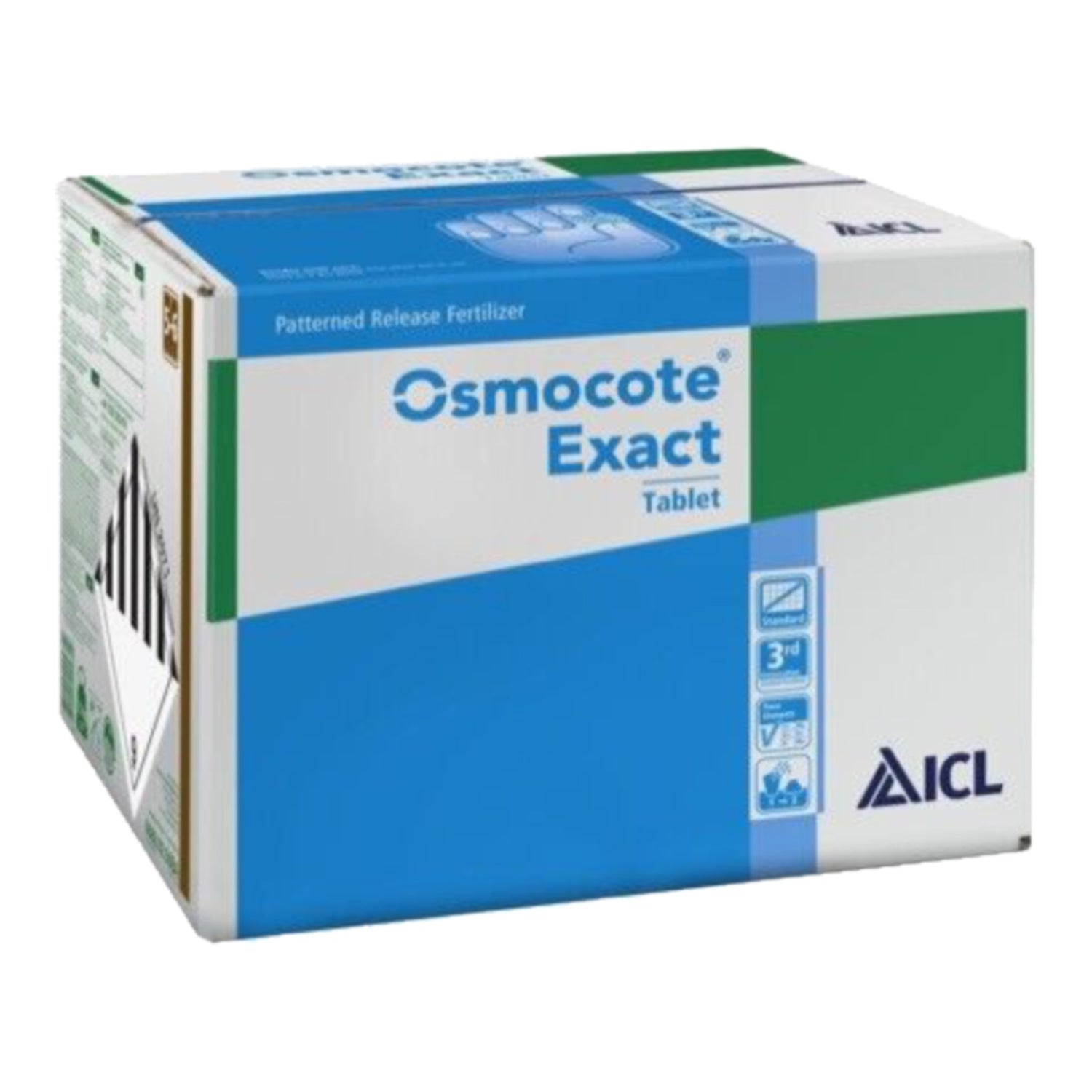
£126.69
Unit price per£126.69
Unit price perICL Osmocote Exact Tablet 5-6 Months 14-8-11 2MgO+TE 5.0g 7.5kg is a professional Osmocote Exact controlled-release fertiliser tablet formulated for precise nutrition dosing of individual pots, containers and hanging baskets.
Its resin-coated nutrients provide a measured supply over a nominal 5–6-month period at 21°C, helping growers match fertiliser longevity to their crop cycle.
Key benefits
Professional applications
Suitable for precise nutrition dosing of individual pots, containers and hanging baskets. Plan nutrition around crop demand, irrigation water, substrate properties and any supplementary feeding.
How to apply
Push tablets fully into the growing medium. In hanging baskets, position tablets around the plant; under drip irrigation, ICL recommends positioning beneath the dripper. The water-soluble adhesive breaks down after watering.
Application rates & nutrient management
Container nursery stock and pot plants: 3–4 g/L; hanging baskets: 3–5 g/L (manufacturer guidance for unfertilised substrates).
Manufacturer rates are general recommendations for unfertilised substrates. Adjust to local growing conditions and other nutrient inputs. Trial programme changes on a small scale before wider adoption.
Storage & handling
Keep partly used bags sealed and store in dry conditions. Follow current ICL product information and safety guidance.
Technical specifications
| Manufacturer | ICL Growing Solutions |
|---|---|
| Range | Osmocote Exact controlled-release fertiliser tablet |
| NPK (oxide basis) | 14-8-11 |
| Magnesium | 2% MgO |
| Trace elements | Included |
| Nominal longevity | 5–6 months at 21°C |
| Pack size | 7.5 kg |
| Tablet size | 5 g |
| Typical application | precise nutrition dosing of individual pots, containers and hanging baskets |
| Manufacturer guidance | Container nursery stock and pot plants: 3–4 g/L; hanging baskets: 3–5 g/L (manufacturer guidance for unfertilised substrates). |
Frequently asked questions
What is this fertiliser used for?
It is designed for precise nutrition dosing of individual pots, containers and hanging baskets. What does the stated longevity mean?
ICL rates this product at 5–6 months at a growing-medium temperature of 21°C. Higher temperatures generally shorten the release period; lower temperatures extend it. Can it be combined with liquid feeding?
Yes, where the crop programme calls for it. Reduce the controlled-release fertiliser rate appropriately when adding water-soluble nutrients to avoid excessive total feeding. How should unused product be stored?
Reseal opened bags and store in dry conditions, following the manufacturer’s storage instructions. How do I select a rate?
Choose a rate according to crop demand, growing medium, container volume, season and any additional feeding. The published rates are general starting points for unfertilised substrates; trial changes on a small scale. How are the tablets applied?
Push the tablets fully into the growing medium. For drip-irrigated pots, position beneath the dripper. How many tablets should be used per pot?
Calculate the total grams required for the pot volume and crop, then select a whole number of 5 g tablets that matches the feeding plan. ICL provides a 3 L pot example using three 5 g tablets for a 15 g total.
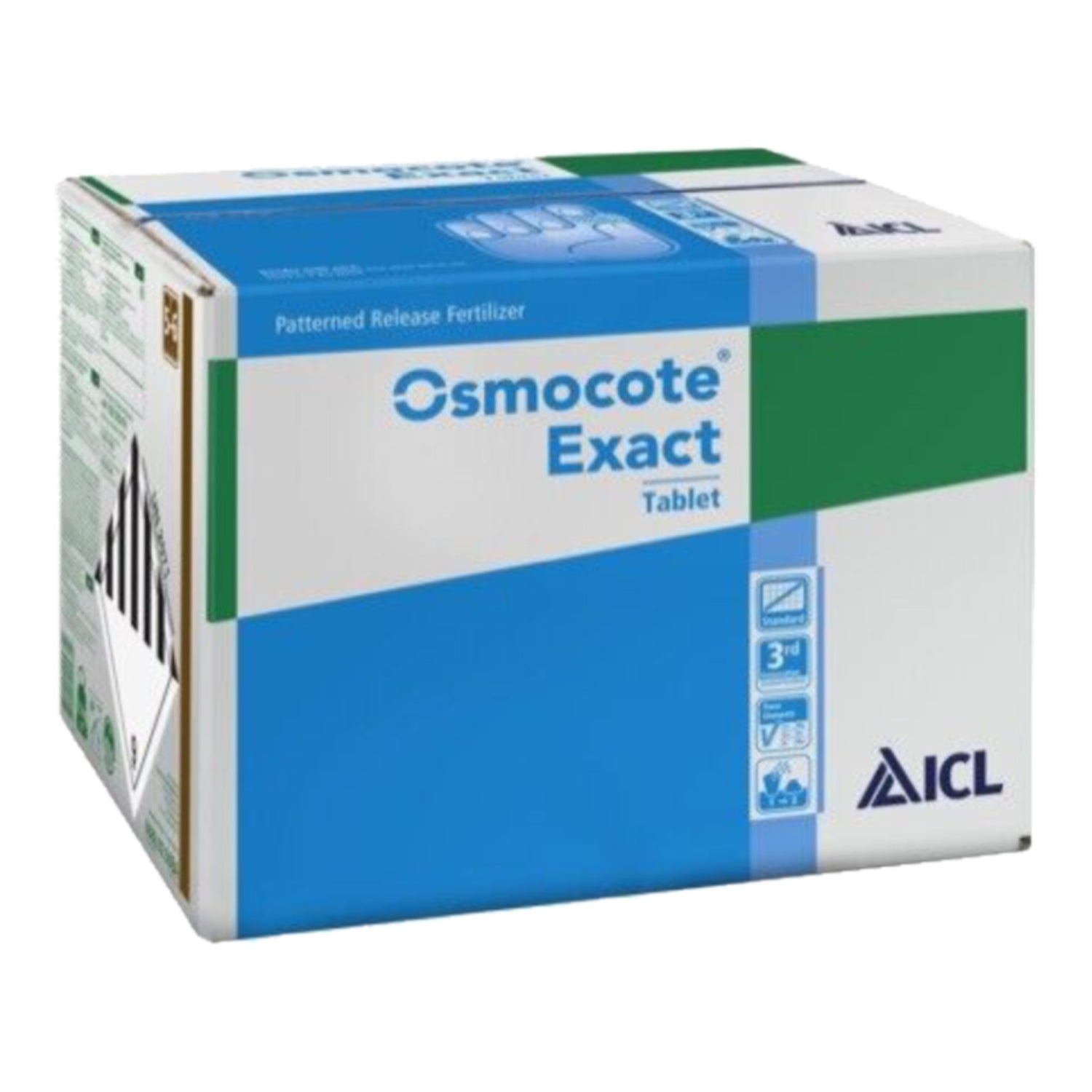
£129.05
Unit price per£129.05
Unit price perICL Osmocote Exact Tablet 8-9 Months 14-8-11 2MgO+TE 5.0g 7.5kg is a professional Osmocote Exact controlled-release fertiliser tablet formulated for precise nutrition dosing of individual pots, containers and hanging baskets.
Its resin-coated nutrients provide a measured supply over a nominal 8–9-month period at 21°C, helping growers match fertiliser longevity to their crop cycle.
Key benefits
Professional applications
Suitable for precise nutrition dosing of individual pots, containers and hanging baskets. Plan nutrition around crop demand, irrigation water, substrate properties and any supplementary feeding.
How to apply
Push tablets fully into the growing medium. In hanging baskets, position tablets around the plant; under drip irrigation, ICL recommends positioning beneath the dripper. The water-soluble adhesive breaks down after watering.
Application rates & nutrient management
Container nursery stock and pot plants: 4–5 g/L; hanging baskets: 4–6 g/L (manufacturer guidance for unfertilised substrates).
Manufacturer rates are general recommendations for unfertilised substrates. Adjust to local growing conditions and other nutrient inputs. Trial programme changes on a small scale before wider adoption.
Storage & handling
Keep partly used bags sealed and store in dry conditions. Follow current ICL product information and safety guidance.
Technical specifications
| Manufacturer | ICL Growing Solutions |
|---|---|
| Range | Osmocote Exact controlled-release fertiliser tablet |
| NPK (oxide basis) | 14-8-11 |
| Magnesium | 2% MgO |
| Trace elements | Included |
| Nominal longevity | 8–9 months at 21°C |
| Pack size | 7.5 kg |
| Tablet size | 5 g |
| Typical application | precise nutrition dosing of individual pots, containers and hanging baskets |
| Manufacturer guidance | Container nursery stock and pot plants: 4–5 g/L; hanging baskets: 4–6 g/L (manufacturer guidance for unfertilised substrates). |
Frequently asked questions
What is this fertiliser used for?
It is designed for precise nutrition dosing of individual pots, containers and hanging baskets. What does the stated longevity mean?
ICL rates this product at 8–9 months at a growing-medium temperature of 21°C. Higher temperatures generally shorten the release period; lower temperatures extend it. Can it be combined with liquid feeding?
Yes, where the crop programme calls for it. Reduce the controlled-release fertiliser rate appropriately when adding water-soluble nutrients to avoid excessive total feeding. How should unused product be stored?
Reseal opened bags and store in dry conditions, following the manufacturer’s storage instructions. How do I select a rate?
Choose a rate according to crop demand, growing medium, container volume, season and any additional feeding. The published rates are general starting points for unfertilised substrates; trial changes on a small scale. How are the tablets applied?
Push the tablets fully into the growing medium. For drip-irrigated pots, position beneath the dripper. How many tablets should be used per pot?
Calculate the total grams required for the pot volume and crop, then select a whole number of 5 g tablets that matches the feeding plan. ICL provides a 3 L pot example using three 5 g tablets for a 15 g total.

£144.76
Unit price per£144.76
Unit price perICL Osmocote Pro 12-14 Months 18-9-10 2MgO+TE 25kg is a professional Osmocote Pro controlled-release fertiliser formulated for incorporation into growing media for container nursery stock.
Its resin-coated nutrients provide a measured supply over a nominal 12–14-month period at 21°C, helping growers match fertiliser longevity to their crop cycle.
Key benefits
Professional applications
Suitable for incorporation into growing media for container nursery stock. Plan nutrition around crop demand, irrigation water, substrate properties and any supplementary feeding.
How to apply
Mix granules evenly through the growing medium before potting, following the current manufacturer instructions. ICL advises against dibbling for the short-duration Pro variants; check the current instructions for the exact product before choosing any alternative application method.
Application rates & nutrient management
Container nursery stock: 3–4 g/L (light), 4–5 g/L (normal), 5–6 g/L (heavy).
Manufacturer rates are general recommendations for unfertilised substrates. Adjust to local growing conditions and other nutrient inputs. Trial programme changes on a small scale before wider adoption.
Storage & handling
Keep partly used bags sealed and store in dry conditions. Follow current ICL product information and safety guidance.
Technical specifications
| Manufacturer | ICL Growing Solutions |
|---|---|
| Range | Osmocote Pro controlled-release fertiliser |
| NPK (oxide basis) | 18-9-10 |
| Magnesium | 2% MgO |
| Trace elements | Included |
| Nominal longevity | 12–14 months at 21°C |
| Pack size | 25 kg |
| Typical application | incorporation into growing media for container nursery stock |
| Manufacturer guidance | Container nursery stock: 3–4 g/L (light), 4–5 g/L (normal), 5–6 g/L (heavy). |
Frequently asked questions
What is this fertiliser used for?
It is designed for incorporation into growing media for container nursery stock. What does the stated longevity mean?
ICL rates this product at 12–14 months at a growing-medium temperature of 21°C. Higher temperatures generally shorten the release period; lower temperatures extend it. Can it be combined with liquid feeding?
Yes, where the crop programme calls for it. Reduce the controlled-release fertiliser rate appropriately when adding water-soluble nutrients to avoid excessive total feeding. How should unused product be stored?
Reseal opened bags and store in dry conditions, following the manufacturer’s storage instructions. How do I select a rate?
Choose a rate according to crop demand, growing medium, container volume, season and any additional feeding. The published rates are general starting points for unfertilised substrates; trial changes on a small scale. Is this suitable for every crop?
No. Match the formulation and longevity to the crop, growing period and feeding requirements. How does temperature affect nutrient release?
Nutrient release generally speeds up at higher growing-medium temperatures and slows at lower temperatures.

£132.06
Unit price per£132.06
Unit price perICL Osmocote Pro 3–4M is a professional controlled-release fertiliser with an NPK analysis of 19-9-10, 2% MgO and trace elements, supplied in a 25kg bag.
Its fully coated nutrient granules are designed to provide sustained nutrition over a predefined 3–4 months longevity period, making this version suited to professional container production where the crop cycle matches the stated release period.
Key benefits
Verified nutrient analysis
The current ICL product information states 19% total nitrogen, 9% P₂O₅, 10% K₂O and 2% MgO, together with trace elements. This page uses the current 19-9-10 analysis rather than relying on older or market-specific product information.
For shorter crop cycles
ICL describes Osmocote Pro 3–4M as a controlled-release fertiliser for short crop cycles and rapidly growing plant material. Its 3–4 month longevity can make it appropriate where the production period is relatively short and a longer-duration fertiliser would extend beyond the intended crop cycle.
Using controlled-release fertiliser
Choose the product longevity and application rate according to crop species, container size, production period, growing-medium fertility, irrigation regime and supplementary feeding programme. Controlled-release fertiliser should be distributed consistently through or applied to the growing medium using a method appropriate to the crop and production system.
Avoid damaging coated granules during mechanical handling or application, as damage to the coating can alter nutrient release.
Temperature & nutrient release
Controlled-release fertiliser performance is influenced by growing conditions, particularly temperature. Crop nutrient demand also changes with growth rate, irrigation and season, so monitor crop response rather than assuming the stated longevity alone guarantees the correct nutrition programme.
Integrating with irrigation & water-soluble feeding
Account for nutrients already supplied by irrigation water, growing media and any supplementary fertiliser. Where water-soluble feeds are also used, adjust the overall programme to avoid unnecessary nutrient loading.
Storage & handling
Store fertiliser dry and protected from contamination and physical damage. Follow the current ICL product information and safety data sheet for handling, application and storage requirements.
ICL Osmocote Pro 3–4M 19-9-10 + 2MgO + TE - 25kg product details
| Brand | ICL |
|---|---|
| Range | Osmocote Pro |
| Product type | Controlled-release fertiliser |
| Longevity | 3–4 months |
| NPK | 19-9-10 |
| Magnesium | 2% MgO |
| Trace elements | Yes |
| Pack size | 25kg |
ICL Osmocote Pro 3–4M 19-9-10 + 2MgO + TE - 25kg FAQs
What is the stated longevity?
This version has a stated controlled-release longevity of 3–4 months. What is the NPK analysis?
The current ICL product information states 19-9-10. Does it contain magnesium?
Yes. The stated analysis includes 2% MgO. Does Osmocote Pro contain trace elements?
Yes. This formulation includes trace elements. Is the 25kg bag the selling unit?
Yes. This product is supplied as one 25kg bag. How do I choose an application rate?
Base the rate on the crop, container, growing medium, production period and wider feeding programme, following current ICL guidance. Does temperature affect nutrient release?
Yes. Controlled-release fertiliser performance is influenced by growing conditions, including temperature. Can it be used alongside water-soluble fertiliser?
It can form part of a wider nutrition programme, but account for all nutrient sources and avoid unnecessary overfeeding. Can coated granules be damaged?
Yes. Avoid crushing or damaging the coating during handling or application because this can affect nutrient release. Where should I check current technical guidance?
Use the current ICL product information and safety data sheet for the exact product and intended crop.

£136.36
Unit price per£136.36
Unit price perICL Osmocote Pro 5–6M is a professional controlled-release fertiliser with an NPK analysis of 19-9-10, 2% MgO and trace elements, supplied in a 25kg bag.
Its fully coated nutrient granules are designed to provide sustained nutrition over a predefined 5–6 months longevity period, making this version suited to professional container production where the crop cycle matches the stated release period.
Key benefits
Verified nutrient analysis
The current ICL product information states 19% total nitrogen, 9% P₂O₅, 10% K₂O and 2% MgO, together with trace elements. This page uses the current 19-9-10 analysis rather than relying on older or market-specific product information.
For medium-duration container production
ICL specifies a 5–6 month longevity for this Osmocote Pro formulation. This makes it suitable for professional container crops where sustained nutrition is required across a medium-duration production cycle, subject to crop requirements and growing conditions.
Using controlled-release fertiliser
Choose the product longevity and application rate according to crop species, container size, production period, growing-medium fertility, irrigation regime and supplementary feeding programme. Controlled-release fertiliser should be distributed consistently through or applied to the growing medium using a method appropriate to the crop and production system.
Avoid damaging coated granules during mechanical handling or application, as damage to the coating can alter nutrient release.
Temperature & nutrient release
Controlled-release fertiliser performance is influenced by growing conditions, particularly temperature. Crop nutrient demand also changes with growth rate, irrigation and season, so monitor crop response rather than assuming the stated longevity alone guarantees the correct nutrition programme.
Integrating with irrigation & water-soluble feeding
Account for nutrients already supplied by irrigation water, growing media and any supplementary fertiliser. Where water-soluble feeds are also used, adjust the overall programme to avoid unnecessary nutrient loading.
Storage & handling
Store fertiliser dry and protected from contamination and physical damage. Follow the current ICL product information and safety data sheet for handling, application and storage requirements.
ICL Osmocote Pro 5–6M 19-9-10 + 2MgO + TE - 25kg product details
| Brand | ICL |
|---|---|
| Range | Osmocote Pro |
| Product type | Controlled-release fertiliser |
| Longevity | 5–6 months |
| NPK | 19-9-10 |
| Magnesium | 2% MgO |
| Trace elements | Yes |
| Pack size | 25kg |
ICL Osmocote Pro 5–6M 19-9-10 + 2MgO + TE - 25kg FAQs
What is the stated longevity?
This version has a stated controlled-release longevity of 5–6 months. What is the NPK analysis?
The current ICL product information states 19-9-10. Does it contain magnesium?
Yes. The stated analysis includes 2% MgO. Does Osmocote Pro contain trace elements?
Yes. This formulation includes trace elements. Is the 25kg bag the selling unit?
Yes. This product is supplied as one 25kg bag. How do I choose an application rate?
Base the rate on the crop, container, growing medium, production period and wider feeding programme, following current ICL guidance. Does temperature affect nutrient release?
Yes. Controlled-release fertiliser performance is influenced by growing conditions, including temperature. Can it be used alongside water-soluble fertiliser?
It can form part of a wider nutrition programme, but account for all nutrient sources and avoid unnecessary overfeeding. Can coated granules be damaged?
Yes. Avoid crushing or damaging the coating during handling or application because this can affect nutrient release. Where should I check current technical guidance?
Use the current ICL product information and safety data sheet for the exact product and intended crop.