
What is the telescopic reach?
The stated adjustable reach is 0.5-1m.

Commercial Products
Commercial Products
 Professional Growing Media
 Plant Nutrition
 Plant Health
 Sprayers & Protective Clothing
 Pots, Planters & Trays
 Propagation
 Baskets & Planters
 Fabrics & Netting
 Environment
 Plant Lighting
 Irrigation
 Plant Support & Tree Care
 Equipment
 Tools
 Plant Labels
 Packaging
 Lawn Care
 Clearance
Retail Products
Retail Products
 Growing Media
 Plant Nutrition
 Plant Health
 Pots, Planters & Tanks
 Propagation
 Baskets & Planters
 Fabrics & Netting
 Environment
 Plant Lighting
 Plant Support
 Equipment
 Tools
1993 products
1993 products
Sort by:
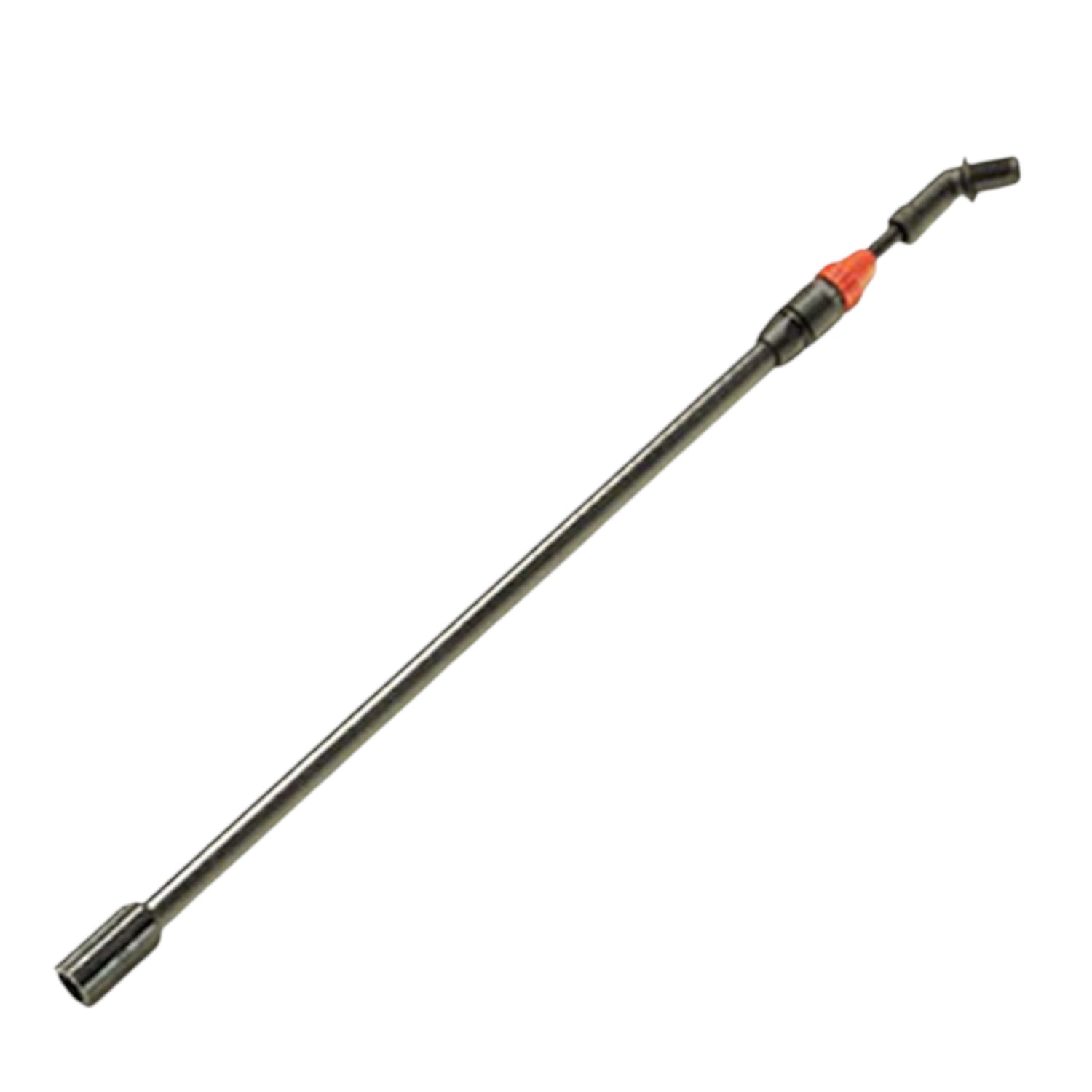
£61.80
Unit price per£61.80
Unit price perThe Cooper Pegler Telescopic Spray Lance 0.5-1M is a Cooper Pegler telescopic spray lance designed for extending spray reach with a compatible Cooper Pegler sprayer.
Reliable spray equipment helps operators apply compatible products consistently when the sprayer, nozzle, pressure and application technique are matched to the job.
Key benefits
Using the telescopic lance
Fit the lance only to a compatible Cooper Pegler sprayer. Set the required reach before spraying and check connections for leaks before pressurising the system.
Use the extended reach to improve access rather than overstretching, and keep the nozzle directed away from people and non-target areas.
Application safety
Where plant-protection products or other regulated liquids are being applied, always follow the current product label and applicable workplace requirements. Wear the specified PPE and prevent spray drift, spills and contamination of watercourses or non-target areas.
Cleaning & maintenance
Depressurise equipment safely after use and clean the tank, lance, hose and nozzle according to the instructions for the product applied. Inspect seals and wear parts regularly and replace damaged components before further use.
Cooper Pegler Telescopic Spray Lance 0.5-1M product details
| Brand | Cooper Pegler |
|---|---|
| Product type | Telescopic spray lance |
| Primary use | extending spray reach with a compatible Cooper Pegler sprayer |
| Telescopic reach | 0.5-1m |
Cooper Pegler Telescopic Spray Lance 0.5-1M FAQs
What is the telescopic reach?
The stated adjustable reach is 0.5-1m. Is this a complete sprayer?
No. This is a telescopic lance for use with a compatible Cooper Pegler sprayer. Why use a telescopic lance?
It extends reach for areas that are difficult to access safely with a standard lance. Should the sprayer be recalibrated after changing the lance setup?
Check application output whenever the spray setup changes, particularly if nozzle, pressure or operating technique also changes. What should I check before use?
Confirm compatibility, secure all connections and check for leaks before pressurising the system.

The Cooper Pegler Telescopic Spray Lance 1-2M is a Cooper Pegler telescopic spray lance designed for extending spray reach with a compatible Cooper Pegler sprayer.
Reliable spray equipment helps operators apply compatible products consistently when the sprayer, nozzle, pressure and application technique are matched to the job.
Key benefits
Using the telescopic lance
Fit the lance only to a compatible Cooper Pegler sprayer. Set the required reach before spraying and check connections for leaks before pressurising the system.
Use the extended reach to improve access rather than overstretching, and keep the nozzle directed away from people and non-target areas.
Application safety
Where plant-protection products or other regulated liquids are being applied, always follow the current product label and applicable workplace requirements. Wear the specified PPE and prevent spray drift, spills and contamination of watercourses or non-target areas.
Cleaning & maintenance
Depressurise equipment safely after use and clean the tank, lance, hose and nozzle according to the instructions for the product applied. Inspect seals and wear parts regularly and replace damaged components before further use.
Cooper Pegler Telescopic Spray Lance 1-2M product details
| Brand | Cooper Pegler |
|---|---|
| Product type | Telescopic spray lance |
| Primary use | extending spray reach with a compatible Cooper Pegler sprayer |
| Telescopic reach | 1-2m |
Cooper Pegler Telescopic Spray Lance 1-2M FAQs
What is the telescopic reach?
The stated adjustable reach is 1-2m. Is this a complete sprayer?
No. This is a telescopic lance for use with a compatible Cooper Pegler sprayer. Why use a telescopic lance?
It extends reach for areas that are difficult to access safely with a standard lance. Should the sprayer be recalibrated after changing the lance setup?
Check application output whenever the spray setup changes, particularly if nozzle, pressure or operating technique also changes. What should I check before use?
Confirm compatibility, secure all connections and check for leaks before pressurising the system.

Creation Horticulture Product Brochure provides an overview of our professional horticultural range for growers, nurseries, garden centres, landscapers and trade customers.
Use it as a convenient range reference. For current pricing, availability and the latest product information, refer to the Creation Horticulture website or contact the sales team.

The Creation Pro 25mm Elbow is a 25mm irrigation component designed for creating a 90-degree change of direction in compatible 25mm irrigation pipework.
Creation Pro fittings are intended for building and maintaining organised horticultural water-distribution pipework where compatible components are assembled correctly and checked under operating pressure.
Key benefits
Changing pipe direction cleanly
Use the elbow to route compatible 25mm pipework through a right-angle change of direction without forcing the pipe into an excessively tight bend. This can help create tidier irrigation layouts around benches, beds and fixed structures.
Allow enough pipe length on both sides of the elbow so the connection can seat fully without tension.
Installing 25mm irrigation fittings
Use clean, compatible 25mm pipe and cut ends squarely with an appropriate pipe cutter. Remove dirt and damaged material from the connection area and assemble all components in the correct order.
Route pipework to avoid unnecessary tension, sharp bends and unsupported weight at fittings. Where lines cross working areas, protect them from vehicle, trolley or foot traffic.
Commissioning & leak checks
After assembly, pressurise the irrigation system gradually and inspect every new joint. Check for visible leakage, pipe movement and correct downstream water delivery before putting the zone into routine crop use.
A leak should be investigated by safely depressurising and inspecting the joint; repeated overtightening can damage components rather than solve an assembly problem.
System design & maintenance
Pipe size and fittings are only part of irrigation design. Available pressure, total flow demand, run length, elevation and downstream emitters all influence system performance. Expansion of an existing system should take these factors into account.
Inspect fittings periodically and replace cracked, distorted or damaged components. Keep spare washers, nuts and fittings clean so sealing surfaces are not contaminated before installation.
Creation Pro 25mm Elbow product details
| Range | Creation Pro |
|---|---|
| Product type | Elbow fitting |
| Nominal size | 25mm |
| Primary use | creating a 90-degree change of direction in compatible 25mm irrigation pipework |
| Application | Professional horticultural irrigation |
Creation Pro 25mm Elbow FAQs
What size is this fitting?
It is a 25mm Creation Pro irrigation component. What is it used for?
Creating a 90-degree change of direction in compatible 25mm irrigation pipework. Can it be used with any 25mm pipe?
Confirm pipe and fitting compatibility before installation; the same nominal diameter does not by itself guarantee that every product range uses the same connection system. How should irrigation pipe be prepared?
Cut it squarely with a suitable pipe cutter and make sure the connection area is clean and undamaged. Should the joint be tested after assembly?
Yes. Pressurise the system gradually and check the completed connection for leaks and movement. What should I do if a fitting leaks?
Depressurise the system and inspect pipe insertion, sealing components and fitting condition rather than simply applying more force. Can I add branches without checking system capacity?
No. Additional branches and outlets increase flow demand, so consider water supply, pressure, pipe sizing and the complete irrigation layout. How should spare fittings be stored?
Keep them clean and protected so threads, sealing surfaces and small components are not damaged or contaminated.

The Creation Pro 25mm Nut is a 25mm irrigation component designed for securing a compatible Creation Pro 25mm fitting assembly.
Creation Pro fittings are intended for building and maintaining organised horticultural water-distribution pipework where compatible components are assembled correctly and checked under operating pressure.
Key benefits
Securing a compatible fitting assembly
The nut is used as part of a compatible Creation Pro 25mm fitting. Start threads or retaining features squarely and tighten the assembly according to the fitting design rather than using excessive force.
If a joint leaks, depressurise it and inspect pipe insertion, sealing components and fitting condition instead of simply overtightening the nut.
Installing 25mm irrigation fittings
Use clean, compatible 25mm pipe and cut ends squarely with an appropriate pipe cutter. Remove dirt and damaged material from the connection area and assemble all components in the correct order.
Route pipework to avoid unnecessary tension, sharp bends and unsupported weight at fittings. Where lines cross working areas, protect them from vehicle, trolley or foot traffic.
Commissioning & leak checks
After assembly, pressurise the irrigation system gradually and inspect every new joint. Check for visible leakage, pipe movement and correct downstream water delivery before putting the zone into routine crop use.
A leak should be investigated by safely depressurising and inspecting the joint; repeated overtightening can damage components rather than solve an assembly problem.
System design & maintenance
Pipe size and fittings are only part of irrigation design. Available pressure, total flow demand, run length, elevation and downstream emitters all influence system performance. Expansion of an existing system should take these factors into account.
Inspect fittings periodically and replace cracked, distorted or damaged components. Keep spare washers, nuts and fittings clean so sealing surfaces are not contaminated before installation.
Creation Pro 25mm Nut product details
| Range | Creation Pro |
|---|---|
| Product type | Compression/retaining nut |
| Nominal size | 25mm |
| Primary use | securing a compatible Creation Pro 25mm fitting assembly |
| Application | Professional horticultural irrigation |
Creation Pro 25mm Nut FAQs
What size is this fitting?
It is a 25mm Creation Pro irrigation component. What is it used for?
Securing a compatible creation pro 25mm fitting assembly. Can it be used with any 25mm pipe?
Confirm pipe and fitting compatibility before installation; the same nominal diameter does not by itself guarantee that every product range uses the same connection system. How should irrigation pipe be prepared?
Cut it squarely with a suitable pipe cutter and make sure the connection area is clean and undamaged. Should the joint be tested after assembly?
Yes. Pressurise the system gradually and check the completed connection for leaks and movement. What should I do if a fitting leaks?
Depressurise the system and inspect pipe insertion, sealing components and fitting condition rather than simply applying more force. Can I add branches without checking system capacity?
No. Additional branches and outlets increase flow demand, so consider water supply, pressure, pipe sizing and the complete irrigation layout. How should spare fittings be stored?
Keep them clean and protected so threads, sealing surfaces and small components are not damaged or contaminated.

The Creation Pro 25mm Straight Connector is a 25mm irrigation component designed for joining two compatible 25mm irrigation pipe sections in a straight run.
Creation Pro fittings are intended for building and maintaining organised horticultural water-distribution pipework where compatible components are assembled correctly and checked under operating pressure.
Key benefits
Joining straight pipe runs
Use the straight connector where two compatible 25mm pipe sections need to continue on the same alignment. Cut pipe ends squarely, remove obvious damage or debris and insert the pipe fully into the fitting before securing the assembly.
A straight joint should not be used to compensate for poor pipe alignment or a forced bend; support the pipework so the connection is not under constant side load.
Installing 25mm irrigation fittings
Use clean, compatible 25mm pipe and cut ends squarely with an appropriate pipe cutter. Remove dirt and damaged material from the connection area and assemble all components in the correct order.
Route pipework to avoid unnecessary tension, sharp bends and unsupported weight at fittings. Where lines cross working areas, protect them from vehicle, trolley or foot traffic.
Commissioning & leak checks
After assembly, pressurise the irrigation system gradually and inspect every new joint. Check for visible leakage, pipe movement and correct downstream water delivery before putting the zone into routine crop use.
A leak should be investigated by safely depressurising and inspecting the joint; repeated overtightening can damage components rather than solve an assembly problem.
System design & maintenance
Pipe size and fittings are only part of irrigation design. Available pressure, total flow demand, run length, elevation and downstream emitters all influence system performance. Expansion of an existing system should take these factors into account.
Inspect fittings periodically and replace cracked, distorted or damaged components. Keep spare washers, nuts and fittings clean so sealing surfaces are not contaminated before installation.
Creation Pro 25mm Straight Connector product details
| Range | Creation Pro |
|---|---|
| Product type | Straight connector |
| Nominal size | 25mm |
| Primary use | joining two compatible 25mm irrigation pipe sections in a straight run |
| Application | Professional horticultural irrigation |
Creation Pro 25mm Straight Connector FAQs
What size is this fitting?
It is a 25mm Creation Pro irrigation component. What is it used for?
Joining two compatible 25mm irrigation pipe sections in a straight run. Can it be used with any 25mm pipe?
Confirm pipe and fitting compatibility before installation; the same nominal diameter does not by itself guarantee that every product range uses the same connection system. How should irrigation pipe be prepared?
Cut it squarely with a suitable pipe cutter and make sure the connection area is clean and undamaged. Should the joint be tested after assembly?
Yes. Pressurise the system gradually and check the completed connection for leaks and movement. What should I do if a fitting leaks?
Depressurise the system and inspect pipe insertion, sealing components and fitting condition rather than simply applying more force. Can I add branches without checking system capacity?
No. Additional branches and outlets increase flow demand, so consider water supply, pressure, pipe sizing and the complete irrigation layout. How should spare fittings be stored?
Keep them clean and protected so threads, sealing surfaces and small components are not damaged or contaminated.

The Creation Pro 25mm Tee is a 25mm irrigation component designed for creating a branch connection in compatible 25mm irrigation pipework.
Creation Pro fittings are intended for building and maintaining organised horticultural water-distribution pipework where compatible components are assembled correctly and checked under operating pressure.
Key benefits
Creating a branch in the irrigation line
Use the tee to divide a compatible 25mm pipe run into a branch. When adding a branch, consider the additional downstream flow demand rather than assuming the existing supply and pipework can support any number of new outlets.
Plan the tee position so all three connected pipe sections are supported and can be serviced without excessive strain.
Installing 25mm irrigation fittings
Use clean, compatible 25mm pipe and cut ends squarely with an appropriate pipe cutter. Remove dirt and damaged material from the connection area and assemble all components in the correct order.
Route pipework to avoid unnecessary tension, sharp bends and unsupported weight at fittings. Where lines cross working areas, protect them from vehicle, trolley or foot traffic.
Commissioning & leak checks
After assembly, pressurise the irrigation system gradually and inspect every new joint. Check for visible leakage, pipe movement and correct downstream water delivery before putting the zone into routine crop use.
A leak should be investigated by safely depressurising and inspecting the joint; repeated overtightening can damage components rather than solve an assembly problem.
System design & maintenance
Pipe size and fittings are only part of irrigation design. Available pressure, total flow demand, run length, elevation and downstream emitters all influence system performance. Expansion of an existing system should take these factors into account.
Inspect fittings periodically and replace cracked, distorted or damaged components. Keep spare washers, nuts and fittings clean so sealing surfaces are not contaminated before installation.
Creation Pro 25mm Tee product details
| Range | Creation Pro |
|---|---|
| Product type | Tee fitting |
| Nominal size | 25mm |
| Primary use | creating a branch connection in compatible 25mm irrigation pipework |
| Application | Professional horticultural irrigation |
Creation Pro 25mm Tee FAQs
What size is this fitting?
It is a 25mm Creation Pro irrigation component. What is it used for?
Creating a branch connection in compatible 25mm irrigation pipework. Can it be used with any 25mm pipe?
Confirm pipe and fitting compatibility before installation; the same nominal diameter does not by itself guarantee that every product range uses the same connection system. How should irrigation pipe be prepared?
Cut it squarely with a suitable pipe cutter and make sure the connection area is clean and undamaged. Should the joint be tested after assembly?
Yes. Pressurise the system gradually and check the completed connection for leaks and movement. What should I do if a fitting leaks?
Depressurise the system and inspect pipe insertion, sealing components and fitting condition rather than simply applying more force. Can I add branches without checking system capacity?
No. Additional branches and outlets increase flow demand, so consider water supply, pressure, pipe sizing and the complete irrigation layout. How should spare fittings be stored?
Keep them clean and protected so threads, sealing surfaces and small components are not damaged or contaminated.

The Creation Pro 25mm Washer is a 25mm irrigation component designed for sealing a compatible Creation Pro 25mm fitting assembly.
Creation Pro fittings are intended for building and maintaining organised horticultural water-distribution pipework where compatible components are assembled correctly and checked under operating pressure.
Key benefits
Maintaining a reliable fitting seal
The washer forms part of a compatible Creation Pro fitting assembly and should be clean, correctly seated and free from damage before the joint is tightened. A distorted, contaminated or worn sealing component can contribute to leakage.
When servicing an existing fitting, inspect the mating surfaces as well as the washer rather than automatically tightening the joint further.
Installing 25mm irrigation fittings
Use clean, compatible 25mm pipe and cut ends squarely with an appropriate pipe cutter. Remove dirt and damaged material from the connection area and assemble all components in the correct order.
Route pipework to avoid unnecessary tension, sharp bends and unsupported weight at fittings. Where lines cross working areas, protect them from vehicle, trolley or foot traffic.
Commissioning & leak checks
After assembly, pressurise the irrigation system gradually and inspect every new joint. Check for visible leakage, pipe movement and correct downstream water delivery before putting the zone into routine crop use.
A leak should be investigated by safely depressurising and inspecting the joint; repeated overtightening can damage components rather than solve an assembly problem.
System design & maintenance
Pipe size and fittings are only part of irrigation design. Available pressure, total flow demand, run length, elevation and downstream emitters all influence system performance. Expansion of an existing system should take these factors into account.
Inspect fittings periodically and replace cracked, distorted or damaged components. Keep spare washers, nuts and fittings clean so sealing surfaces are not contaminated before installation.
Creation Pro 25mm Washer product details
| Range | Creation Pro |
|---|---|
| Product type | Sealing washer |
| Nominal size | 25mm |
| Primary use | sealing a compatible Creation Pro 25mm fitting assembly |
| Application | Professional horticultural irrigation |
Creation Pro 25mm Washer FAQs
What size is this fitting?
It is a 25mm Creation Pro irrigation component. What is it used for?
Sealing a compatible creation pro 25mm fitting assembly. Can it be used with any 25mm pipe?
Confirm pipe and fitting compatibility before installation; the same nominal diameter does not by itself guarantee that every product range uses the same connection system. How should irrigation pipe be prepared?
Cut it squarely with a suitable pipe cutter and make sure the connection area is clean and undamaged. Should the joint be tested after assembly?
Yes. Pressurise the system gradually and check the completed connection for leaks and movement. What should I do if a fitting leaks?
Depressurise the system and inspect pipe insertion, sealing components and fitting condition rather than simply applying more force. Can I add branches without checking system capacity?
No. Additional branches and outlets increase flow demand, so consider water supply, pressure, pipe sizing and the complete irrigation layout. How should spare fittings be stored?
Keep them clean and protected so threads, sealing surfaces and small components are not damaged or contaminated.
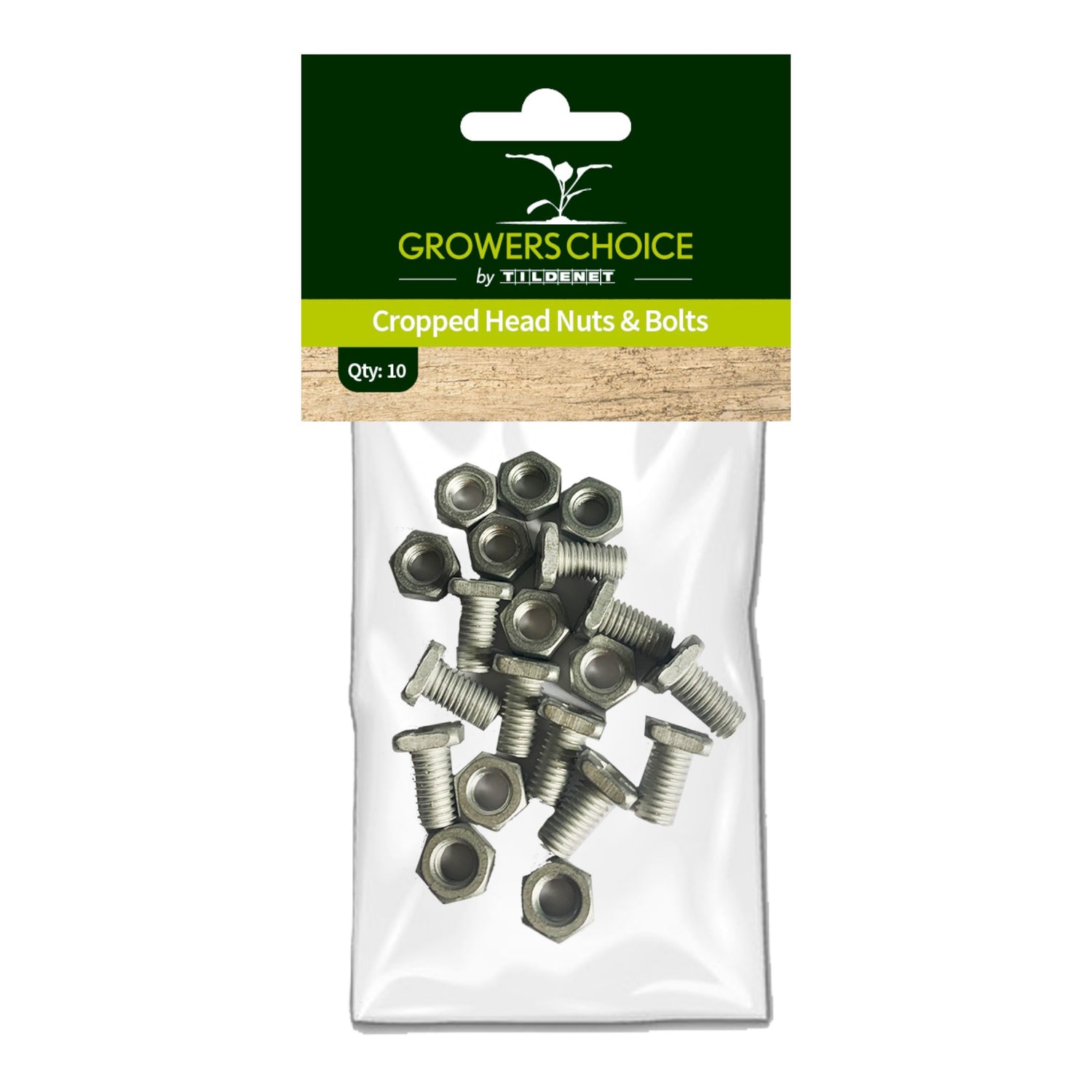
£3.80
Unit price per£3.80
Unit price perThe Cropped-Head Nuts & Bolts 6mm x 11mm (Pack of 10) is designed for securing compatible horticultural or structural components in professional horticultural, nursery, landscaping or warehouse applications.
Use the material according to the site, crop and installation requirements, and match fixing methods to the expected load and exposure.
Key benefits
Practical installation & handling
Use the product only for a compatible application and avoid overloading or forcing fixings. Position components so they do not create sharp projections or avoidable hazards in working areas.
Installation & site conditions
Plan fixing points, overlaps and support before installation. Outdoor materials may be exposed to wind, UV, rain and mechanical damage, so inspect them periodically and repair or replace damaged sections.
Storage & reuse
Store unused material clean and dry and protect rolls, fabrics and fixings from crushing or contamination. Reuse only where the product remains serviceable and appropriate hygiene requirements can be met.
Cropped-Head Nuts & Bolts 6mm x 11mm (Pack of 10) product details
| Product type | Cropped-Head Nuts & Bolts |
|---|---|
| Primary use | securing compatible horticultural or structural components |
| Source designation | Cropped-Head Nuts & Bolts 6mm x 11mm (Pack of 10) |
| Application | Professional horticulture, landscaping or warehouse use |
Cropped-Head Nuts & Bolts 6mm x 11mm (Pack of 10) FAQs
What is this product used for?
Securing compatible horticultural or structural components. Are the dimensions in the title the supplied size?
Yes. The dimensions and pack information shown are retained from the source product specification. How should it be installed?
Use fixing and support methods appropriate to the material, site and expected load or exposure. Can outdoor conditions affect the product?
Yes. Wind, weather, UV exposure and physical contact can affect materials over time. Should the installation be inspected?
Yes. Check fixings and material condition periodically and repair or replace damaged sections. How should unused material be stored?
Keep it clean, dry and protected from crushing, contamination and unnecessary weather exposure. Can it be reused?
Where it remains serviceable, reuse may be possible subject to the application and appropriate hygiene requirements. Does the product replace good site or crop management?
No. It should be used as one part of an appropriate horticultural, landscape or packing system.
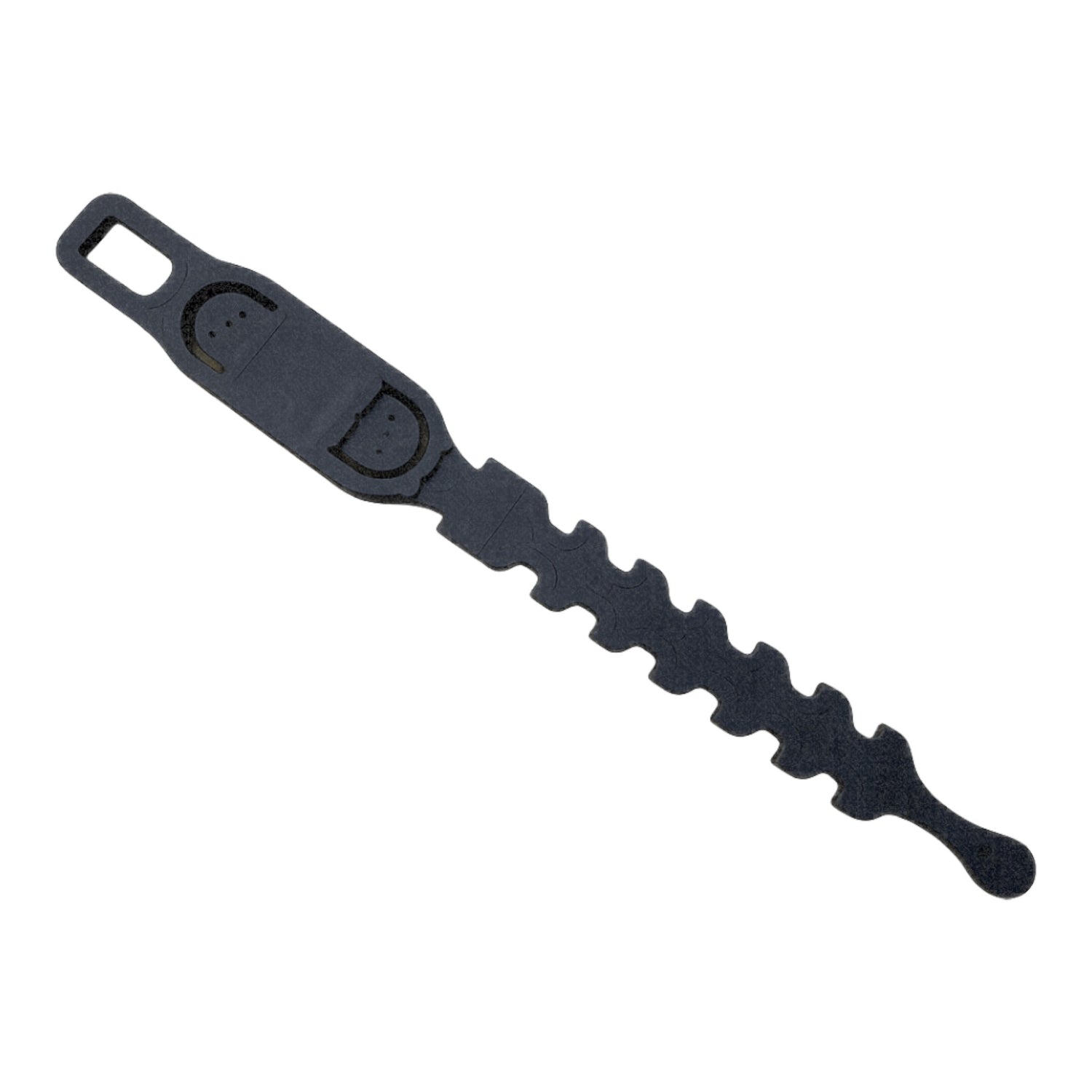
£48.00
Unit price per£48.00
Unit price perThe Cross Bar Tree Tie for Trees Diameter 1/2 Inch 50mm x 330mm BLACK (Box of 50) is a tree tie intended for supporting trees against suitable stakes while allowing appropriate movement.
Correct tree and shrub support helps newly planted or container-grown stock establish while reducing excessive movement at the root zone. Supports should hold the plant securely without creating unnecessary pressure on the stem or trunk.
Supplied as: box of 50.
Key benefits
Tree & shrub support
Use this product for supporting trees against suitable stakes while allowing appropriate movement. Select stakes, ties and support components according to the size of the plant, exposure of the site and the support system being used.
A correctly installed support should reduce damaging movement without holding the trunk completely rigid. Some natural movement helps the plant develop as it establishes.
Installation & ongoing checks
Position ties and support components so they do not rub, cut into or constrict the bark. Avoid over-tightening and inspect the installation regularly as the trunk or stems increase in diameter.
Adjust or remove supports once they are no longer required. Leaving a tie in place for too long can cause restriction or damage as the plant grows.
For nurseries, landscapers & tree planting
Tree-support products are useful for nursery stock, landscape planting, public-realm schemes and garden installations where newly planted trees or shrubs need temporary stabilisation.
Cross Bar Tree Tie for Trees Diameter 1/2 Inch 50mm x 330mm BLACK (Box of 50) product details
| Product type | Tree tie |
|---|---|
| Primary use | supporting trees against suitable stakes while allowing appropriate movement |
| Stated size | 50mm x 330mm |
| Colour | Black |
| Box quantity | 50 |
Cross Bar Tree Tie for Trees Diameter 1/2 Inch 50mm x 330mm BLACK (Box of 50) FAQs
What size is this product?
The stated size is 50mm x 330mm. How many are supplied?
This product is supplied in a box of 50. How tight should a tree tie be?
It should support the plant without constricting the trunk or rubbing the bark. Leave appropriate room for movement and growth. How often should tree ties be checked?
Inspect supports regularly, particularly during active growth, and loosen or reposition them before they become restrictive. How long should a tree remain staked?
Only for as long as support is genuinely required. Establishment time varies with plant size, species, root system and site exposure. Can the same support be used for every tree?
No. Match the tie, stake and support arrangement to the trunk size, plant form and site conditions.
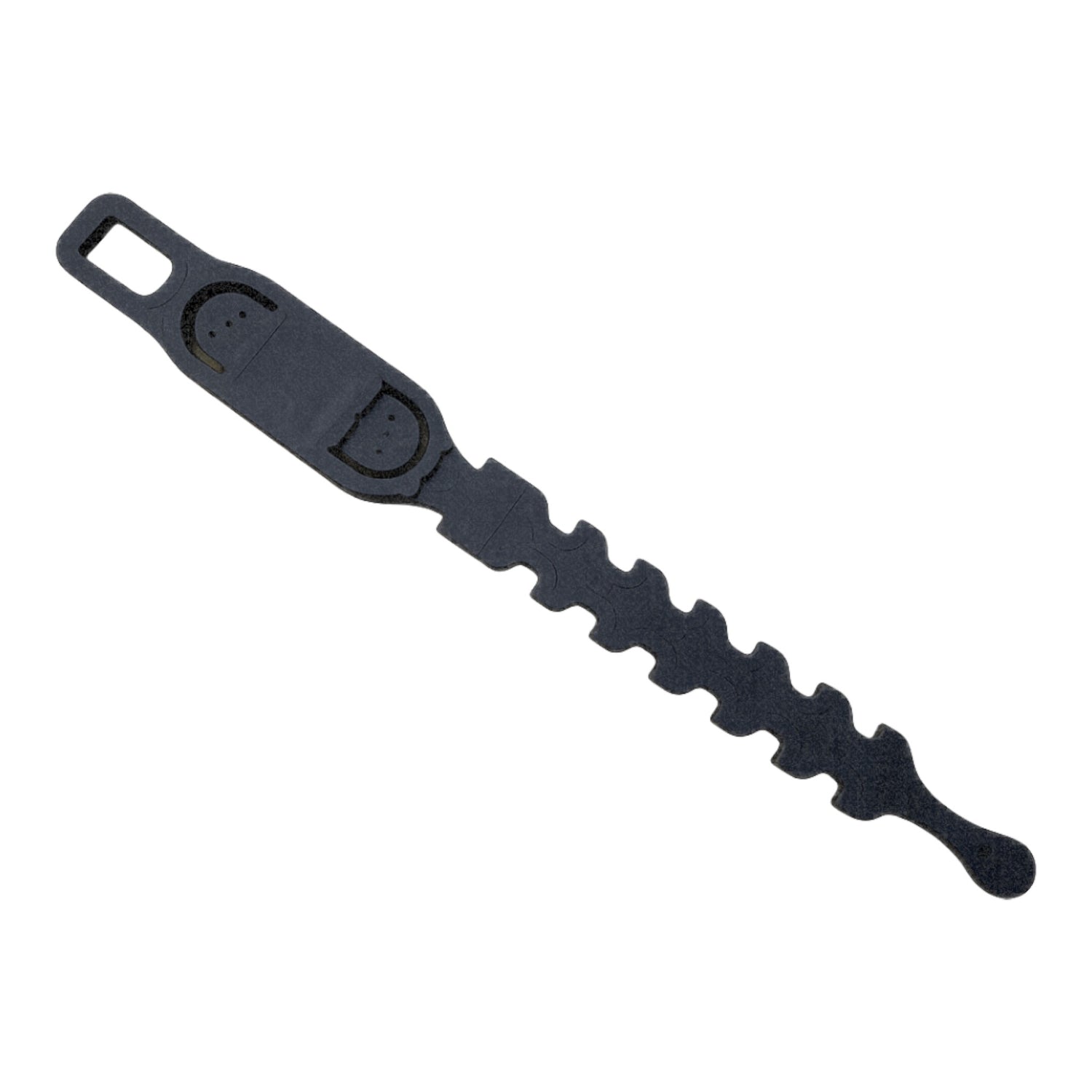
£93.89
Unit price per£93.89
Unit price perThe Cross Bar Tree Tie for Trees Diameter 2/3 Inch 80mm x 550mm BLACK (Box of 50) is a tree tie intended for supporting trees against suitable stakes while allowing appropriate movement.
Correct tree and shrub support helps newly planted or container-grown stock establish while reducing excessive movement at the root zone. Supports should hold the plant securely without creating unnecessary pressure on the stem or trunk.
Supplied as: box of 50.
Key benefits
Tree & shrub support
Use this product for supporting trees against suitable stakes while allowing appropriate movement. Select stakes, ties and support components according to the size of the plant, exposure of the site and the support system being used.
A correctly installed support should reduce damaging movement without holding the trunk completely rigid. Some natural movement helps the plant develop as it establishes.
Installation & ongoing checks
Position ties and support components so they do not rub, cut into or constrict the bark. Avoid over-tightening and inspect the installation regularly as the trunk or stems increase in diameter.
Adjust or remove supports once they are no longer required. Leaving a tie in place for too long can cause restriction or damage as the plant grows.
For nurseries, landscapers & tree planting
Tree-support products are useful for nursery stock, landscape planting, public-realm schemes and garden installations where newly planted trees or shrubs need temporary stabilisation.
Cross Bar Tree Tie for Trees Diameter 2/3 Inch 80mm x 550mm BLACK (Box of 50) product details
| Product type | Tree tie |
|---|---|
| Primary use | supporting trees against suitable stakes while allowing appropriate movement |
| Stated size | 80mm x 550mm |
| Colour | Black |
| Box quantity | 50 |
Cross Bar Tree Tie for Trees Diameter 2/3 Inch 80mm x 550mm BLACK (Box of 50) FAQs
What size is this product?
The stated size is 80mm x 550mm. How many are supplied?
This product is supplied in a box of 50. How tight should a tree tie be?
It should support the plant without constricting the trunk or rubbing the bark. Leave appropriate room for movement and growth. How often should tree ties be checked?
Inspect supports regularly, particularly during active growth, and loosen or reposition them before they become restrictive. How long should a tree remain staked?
Only for as long as support is genuinely required. Establishment time varies with plant size, species, root system and site exposure. Can the same support be used for every tree?
No. Match the tie, stake and support arrangement to the trunk size, plant form and site conditions.

The DAB AquaJet 132 M-G is a DAB automatic pressure / booster pump system intended for pressurised water supply for compatible irrigation and water-distribution systems.
Selecting a pump requires matching the water source, required flow, delivery head, pipework and control arrangement to the installation rather than choosing on model name alone.
Key benefits
Pressurised water supply
Use the booster system where a compatible water supply requires controlled pressure for downstream irrigation or distribution. Size pipework and demand so the system can operate within the manufacturer's performance envelope.
Check pressure settings, vessel/system condition and downstream demand during commissioning.
Selecting the correct pump
Confirm the required duty point before selecting a pump. Flow and pressure/head are linked, so maximum figures should never be treated as simultaneously available unless the manufacturer's pump curve shows that operating point.
Also consider water quality, suction conditions, pipe diameter, elevation, control method and how the irrigation system behaves as zones open and close.
Electrical installation & commissioning
Follow DAB installation instructions and applicable electrical requirements. Fixed electrical work should be carried out by a suitably competent person. Protect the pump and controls using the arrangements specified for the installation.
After commissioning, check for leaks, abnormal noise, cycling, loss of prime and correct operation across the expected irrigation demand.
Maintenance
Inspect strainers, water source, pipework and connections periodically. Investigate changes in flow, pressure, noise or cycling rather than continuing to run a pump that is operating abnormally.
DAB AquaJet 132 M-G product details
| Brand | DAB |
|---|---|
| Product type | Automatic pressure / booster pump system |
| Primary use | pressurised water supply for compatible irrigation and water-distribution systems |
Manufacturer technical data
These are reference figures for the named pump family or hydraulic curve, not a confirmed specification for every suffix or control-package variant. Manufacturer figures are quoted at the stated flow points; maximum head and maximum flow do not occur together. For models with a different suffix or bundled control, verify the exact product code/nameplate before specifying an installation.
| Expansion vessel | 20 L |
|---|---|
| Maximum system operating pressure | 8 bar |
| Head at zero flow (AquaJet 132 M curve) | 48.3 m |
| Head at 40 L/min (AquaJet 132 M curve) | 37.6 m |
| Head at 80 L/min (AquaJet 132 M curve) | 27.2 m |
Manufacturer technical reference: DAB technical documentation.
DAB AquaJet 132 M-G FAQs
What is this pump intended for?
Pressurised water supply for compatible irrigation and water-distribution systems. How do I know whether this pump is large enough?
Determine the required flow and total head for the installation, then compare that duty point with the current DAB pump curve for the exact model. Can I choose a pump using maximum flow alone?
No. Pump flow changes with head and system resistance. Select against the required operating point rather than a single maximum figure. What pipe size should I use?
Size pipework for the required flow, run length and acceptable friction loss, while following the pump connection and installation requirements. Who should carry out the electrical installation?
Follow DAB instructions and applicable electrical requirements. Fixed electrical work should be completed by a suitably competent person. What should I check if pump performance drops?
Check the water source, intake or strainer, suction conditions where applicable, pipework, leaks and system demand before assuming the pump itself has failed.

The DAB Aquajet 82 MG IE2 is a DAB automatic pressure / booster pump system intended for pressurised water supply for compatible irrigation and water-distribution systems.
Selecting a pump requires matching the water source, required flow, delivery head, pipework and control arrangement to the installation rather than choosing on model name alone.
Key benefits
Pressurised water supply
Use the booster system where a compatible water supply requires controlled pressure for downstream irrigation or distribution. Size pipework and demand so the system can operate within the manufacturer's performance envelope.
Check pressure settings, vessel/system condition and downstream demand during commissioning.
Selecting the correct pump
Confirm the required duty point before selecting a pump. Flow and pressure/head are linked, so maximum figures should never be treated as simultaneously available unless the manufacturer's pump curve shows that operating point.
Also consider water quality, suction conditions, pipe diameter, elevation, control method and how the irrigation system behaves as zones open and close.
Electrical installation & commissioning
Follow DAB installation instructions and applicable electrical requirements. Fixed electrical work should be carried out by a suitably competent person. Protect the pump and controls using the arrangements specified for the installation.
After commissioning, check for leaks, abnormal noise, cycling, loss of prime and correct operation across the expected irrigation demand.
Maintenance
Inspect strainers, water source, pipework and connections periodically. Investigate changes in flow, pressure, noise or cycling rather than continuing to run a pump that is operating abnormally.
DAB Aquajet 82 MG IE2 product details
| Brand | DAB |
|---|---|
| Product type | Automatic pressure / booster pump system |
| Primary use | pressurised water supply for compatible irrigation and water-distribution systems |
| Motor designation | IE2 |
Manufacturer technical data
These are reference figures for the named pump family or hydraulic curve, not a confirmed specification for every suffix or control-package variant. Manufacturer figures are quoted at the stated flow points; maximum head and maximum flow do not occur together. For models with a different suffix or bundled control, verify the exact product code/nameplate before specifying an installation.
| Expansion vessel | 20 L |
|---|---|
| Maximum system operating pressure | 8 bar |
| Head at zero flow (AquaJet 82 M curve) | 47 m |
| Head at 30 L/min (AquaJet 82 M curve) | 30 m |
| Head at 60 L/min (AquaJet 82 M curve) | 20.3 m |
Manufacturer technical reference: DAB technical documentation.
DAB Aquajet 82 MG IE2 FAQs
What is this pump intended for?
Pressurised water supply for compatible irrigation and water-distribution systems. How do I know whether this pump is large enough?
Determine the required flow and total head for the installation, then compare that duty point with the current DAB pump curve for the exact model. Can I choose a pump using maximum flow alone?
No. Pump flow changes with head and system resistance. Select against the required operating point rather than a single maximum figure. What pipe size should I use?
Size pipework for the required flow, run length and acceptable friction loss, while following the pump connection and installation requirements. Who should carry out the electrical installation?
Follow DAB instructions and applicable electrical requirements. Fixed electrical work should be completed by a suitably competent person. What should I check if pump performance drops?
Check the water source, intake or strainer, suction conditions where applicable, pipework, leaks and system demand before assuming the pump itself has failed.

The DAB Divertron 900 is a DAB submersible water pump intended for pumping clean water from suitable tanks, wells or water-storage applications.
Selecting a pump requires matching the water source, required flow, delivery head, pipework and control arrangement to the installation rather than choosing on model name alone.
Key benefits
Submersible water pumping
Install the pump only in a water source and configuration suitable for the model. Keep intake areas clear of debris and ensure the pump remains within the manufacturer's permitted operating conditions.
Check water level and installation requirements before operation; a submersible pump should not be assumed suitable for every water quality or dry-running condition.
Selecting the correct pump
Confirm the required duty point before selecting a pump. Flow and pressure/head are linked, so maximum figures should never be treated as simultaneously available unless the manufacturer's pump curve shows that operating point.
Also consider water quality, suction conditions, pipe diameter, elevation, control method and how the irrigation system behaves as zones open and close.
Electrical installation & commissioning
Follow DAB installation instructions and applicable electrical requirements. Fixed electrical work should be carried out by a suitably competent person. Protect the pump and controls using the arrangements specified for the installation.
After commissioning, check for leaks, abnormal noise, cycling, loss of prime and correct operation across the expected irrigation demand.
Maintenance
Inspect strainers, water source, pipework and connections periodically. Investigate changes in flow, pressure, noise or cycling rather than continuing to run a pump that is operating abnormally.
DAB Divertron 900 product details
| Brand | DAB |
|---|---|
| Product type | Submersible water pump |
| Primary use | pumping clean water from suitable tanks, wells or water-storage applications |
Manufacturer technical data
These are reference figures for the named pump family or hydraulic curve, not a confirmed specification for every suffix or control-package variant. Manufacturer figures are quoted at the stated flow points; maximum head and maximum flow do not occur together. For models with a different suffix or bundled control, verify the exact product code/nameplate before specifying an installation.
| Supply | 230 V, 50 Hz, single phase |
|---|---|
| Maximum head at zero flow | 45.8 m |
| Head at 40 L/min | 35.6 m |
| Head at 60 L/min | 25.2 m |
| Head at 80 L/min | 11.9 m |
| Maximum input power (range) | Up to 920 W (Divertron family) |
| Discharge connection | 1 inch |
| Pump diameter | 160 mm |
| Protection rating | IP68 |
| Power cable | 15 m with plug |
Manufacturer technical reference: DAB technical documentation.
DAB Divertron 900 FAQs
What is this pump intended for?
Pumping clean water from suitable tanks, wells or water-storage applications. How do I know whether this pump is large enough?
Determine the required flow and total head for the installation, then compare that duty point with the current DAB pump curve for the exact model. Can I choose a pump using maximum flow alone?
No. Pump flow changes with head and system resistance. Select against the required operating point rather than a single maximum figure. What pipe size should I use?
Size pipework for the required flow, run length and acceptable friction loss, while following the pump connection and installation requirements. Who should carry out the electrical installation?
Follow DAB instructions and applicable electrical requirements. Fixed electrical work should be completed by a suitably competent person. What should I check if pump performance drops?
Check the water source, intake or strainer, suction conditions where applicable, pipework, leaks and system demand before assuming the pump itself has failed.

The DAB Jet 102 M with Control D IE2 is a DAB self-priming centrifugal pump intended for clean-water transfer and compatible irrigation or pressure applications.
Selecting a pump requires matching the water source, required flow, delivery head, pipework and control arrangement to the installation rather than choosing on model name alone.
Key benefits
Pump installation & system design
Provide a suitable clean-water supply to the pump and install suction and delivery pipework to minimise unnecessary restriction and air ingress. Prime the pump where required by the model before operation.
System design should account for required flow and total head, including elevation and pipe/friction losses.
Selecting the correct pump
Confirm the required duty point before selecting a pump. Flow and pressure/head are linked, so maximum figures should never be treated as simultaneously available unless the manufacturer's pump curve shows that operating point.
Also consider water quality, suction conditions, pipe diameter, elevation, control method and how the irrigation system behaves as zones open and close.
Electrical installation & commissioning
Follow DAB installation instructions and applicable electrical requirements. Fixed electrical work should be carried out by a suitably competent person. Protect the pump and controls using the arrangements specified for the installation.
After commissioning, check for leaks, abnormal noise, cycling, loss of prime and correct operation across the expected irrigation demand.
Maintenance
Inspect strainers, water source, pipework and connections periodically. Investigate changes in flow, pressure, noise or cycling rather than continuing to run a pump that is operating abnormally.
DAB Jet 102 M with Control D IE2 product details
| Brand | DAB |
|---|---|
| Product type | Self-priming centrifugal pump |
| Primary use | clean-water transfer and compatible irrigation or pressure applications |
| Control | Control D |
| Motor designation | IE2 |
Manufacturer technical data
These are reference figures for the named pump family or hydraulic curve, not a confirmed specification for every suffix or control-package variant. Manufacturer figures are quoted at the stated flow points; maximum head and maximum flow do not occur together. For models with a different suffix or bundled control, verify the exact product code/nameplate before specifying an installation.
| Head at zero flow (JET 102 M-P curve) | 53.8 m |
|---|---|
| Head at 30 L/min (JET 102 M-P curve) | 36.3 m |
| Head at 60 L/min (JET 102 M-P curve) | 25.8 m |
Manufacturer technical reference: DAB technical documentation.
DAB Jet 102 M with Control D IE2 FAQs
What is this pump intended for?
Clean-water transfer and compatible irrigation or pressure applications. How do I know whether this pump is large enough?
Determine the required flow and total head for the installation, then compare that duty point with the current DAB pump curve for the exact model. Can I choose a pump using maximum flow alone?
No. Pump flow changes with head and system resistance. Select against the required operating point rather than a single maximum figure. What pipe size should I use?
Size pipework for the required flow, run length and acceptable friction loss, while following the pump connection and installation requirements. Who should carry out the electrical installation?
Follow DAB instructions and applicable electrical requirements. Fixed electrical work should be completed by a suitably competent person. What should I check if pump performance drops?
Check the water source, intake or strainer, suction conditions where applicable, pipework, leaks and system demand before assuming the pump itself has failed.

The DAB Jet 132 M with Control D IE2 is a DAB self-priming centrifugal pump intended for clean-water transfer and compatible irrigation or pressure applications.
Selecting a pump requires matching the water source, required flow, delivery head, pipework and control arrangement to the installation rather than choosing on model name alone.
Key benefits
Pump installation & system design
Provide a suitable clean-water supply to the pump and install suction and delivery pipework to minimise unnecessary restriction and air ingress. Prime the pump where required by the model before operation.
System design should account for required flow and total head, including elevation and pipe/friction losses.
Selecting the correct pump
Confirm the required duty point before selecting a pump. Flow and pressure/head are linked, so maximum figures should never be treated as simultaneously available unless the manufacturer's pump curve shows that operating point.
Also consider water quality, suction conditions, pipe diameter, elevation, control method and how the irrigation system behaves as zones open and close.
Electrical installation & commissioning
Follow DAB installation instructions and applicable electrical requirements. Fixed electrical work should be carried out by a suitably competent person. Protect the pump and controls using the arrangements specified for the installation.
After commissioning, check for leaks, abnormal noise, cycling, loss of prime and correct operation across the expected irrigation demand.
Maintenance
Inspect strainers, water source, pipework and connections periodically. Investigate changes in flow, pressure, noise or cycling rather than continuing to run a pump that is operating abnormally.
DAB Jet 132 M with Control D IE2 product details
| Brand | DAB |
|---|---|
| Product type | Self-priming centrifugal pump |
| Primary use | clean-water transfer and compatible irrigation or pressure applications |
| Control | Control D |
| Motor designation | IE2 |
Manufacturer technical data
These are reference figures for the named pump family or hydraulic curve, not a confirmed specification for every suffix or control-package variant. Manufacturer figures are quoted at the stated flow points; maximum head and maximum flow do not occur together. For models with a different suffix or bundled control, verify the exact product code/nameplate before specifying an installation.
| Head at zero flow (JET 132 M-P curve) | 48.3 m |
|---|---|
| Head at 40 L/min (JET 132 M-P curve) | 37.6 m |
| Head at 80 L/min (JET 132 M-P curve) | 27.2 m |
Manufacturer technical reference: DAB technical documentation.
DAB Jet 132 M with Control D IE2 FAQs
What is this pump intended for?
Clean-water transfer and compatible irrigation or pressure applications. How do I know whether this pump is large enough?
Determine the required flow and total head for the installation, then compare that duty point with the current DAB pump curve for the exact model. Can I choose a pump using maximum flow alone?
No. Pump flow changes with head and system resistance. Select against the required operating point rather than a single maximum figure. What pipe size should I use?
Size pipework for the required flow, run length and acceptable friction loss, while following the pump connection and installation requirements. Who should carry out the electrical installation?
Follow DAB instructions and applicable electrical requirements. Fixed electrical work should be completed by a suitably competent person. What should I check if pump performance drops?
Check the water source, intake or strainer, suction conditions where applicable, pipework, leaks and system demand before assuming the pump itself has failed.

The DAB Jet 251 M-P IE2 is a DAB self-priming centrifugal pump intended for clean-water transfer and compatible irrigation or pressure applications.
Selecting a pump requires matching the water source, required flow, delivery head, pipework and control arrangement to the installation rather than choosing on model name alone.
Key benefits
Pump installation & system design
Provide a suitable clean-water supply to the pump and install suction and delivery pipework to minimise unnecessary restriction and air ingress. Prime the pump where required by the model before operation.
System design should account for required flow and total head, including elevation and pipe/friction losses.
Selecting the correct pump
Confirm the required duty point before selecting a pump. Flow and pressure/head are linked, so maximum figures should never be treated as simultaneously available unless the manufacturer's pump curve shows that operating point.
Also consider water quality, suction conditions, pipe diameter, elevation, control method and how the irrigation system behaves as zones open and close.
Electrical installation & commissioning
Follow DAB installation instructions and applicable electrical requirements. Fixed electrical work should be carried out by a suitably competent person. Protect the pump and controls using the arrangements specified for the installation.
After commissioning, check for leaks, abnormal noise, cycling, loss of prime and correct operation across the expected irrigation demand.
Maintenance
Inspect strainers, water source, pipework and connections periodically. Investigate changes in flow, pressure, noise or cycling rather than continuing to run a pump that is operating abnormally.
DAB Jet 251 M-P IE2 product details
| Brand | DAB |
|---|---|
| Product type | Self-priming centrifugal pump |
| Primary use | clean-water transfer and compatible irrigation or pressure applications |
| Motor designation | IE2 |
Manufacturer technical data
Figures are from the DAB manufacturer technical documentation for the named model. Manufacturer figures are quoted at the stated flow points; maximum head and maximum flow do not occur together. For models with a different suffix or bundled control, verify the exact product code/nameplate before specifying an installation.
| Supply | 1 × 220–240 V, 50 Hz |
|---|---|
| Maximum input power (P1) | 2.0 kW |
| Nominal motor output (P2) | 1.85 kW / 2.5 HP |
| Nominal current | 10 A |
| Suction connection | G 1¼ |
| Discharge connection | G 1 |
Manufacturer technical reference: DAB technical documentation.
DAB Jet 251 M-P IE2 FAQs
What is this pump intended for?
Clean-water transfer and compatible irrigation or pressure applications. How do I know whether this pump is large enough?
Determine the required flow and total head for the installation, then compare that duty point with the current DAB pump curve for the exact model. Can I choose a pump using maximum flow alone?
No. Pump flow changes with head and system resistance. Select against the required operating point rather than a single maximum figure. What pipe size should I use?
Size pipework for the required flow, run length and acceptable friction loss, while following the pump connection and installation requirements. Who should carry out the electrical installation?
Follow DAB instructions and applicable electrical requirements. Fixed electrical work should be completed by a suitably competent person. What should I check if pump performance drops?
Check the water source, intake or strainer, suction conditions where applicable, pipework, leaks and system demand before assuming the pump itself has failed.

The DAB Jet 82 M with Control D IE2 is a DAB self-priming centrifugal pump intended for clean-water transfer and compatible irrigation or pressure applications.
Selecting a pump requires matching the water source, required flow, delivery head, pipework and control arrangement to the installation rather than choosing on model name alone.
Key benefits
Pump installation & system design
Provide a suitable clean-water supply to the pump and install suction and delivery pipework to minimise unnecessary restriction and air ingress. Prime the pump where required by the model before operation.
System design should account for required flow and total head, including elevation and pipe/friction losses.
Selecting the correct pump
Confirm the required duty point before selecting a pump. Flow and pressure/head are linked, so maximum figures should never be treated as simultaneously available unless the manufacturer's pump curve shows that operating point.
Also consider water quality, suction conditions, pipe diameter, elevation, control method and how the irrigation system behaves as zones open and close.
Electrical installation & commissioning
Follow DAB installation instructions and applicable electrical requirements. Fixed electrical work should be carried out by a suitably competent person. Protect the pump and controls using the arrangements specified for the installation.
After commissioning, check for leaks, abnormal noise, cycling, loss of prime and correct operation across the expected irrigation demand.
Maintenance
Inspect strainers, water source, pipework and connections periodically. Investigate changes in flow, pressure, noise or cycling rather than continuing to run a pump that is operating abnormally.
DAB Jet 82 M with Control D IE2 product details
| Brand | DAB |
|---|---|
| Product type | Self-priming centrifugal pump |
| Primary use | clean-water transfer and compatible irrigation or pressure applications |
| Control | Control D |
| Motor designation | IE2 |
Manufacturer technical data
These are reference figures for the named pump family or hydraulic curve, not a confirmed specification for every suffix or control-package variant. Manufacturer figures are quoted at the stated flow points; maximum head and maximum flow do not occur together. For models with a different suffix or bundled control, verify the exact product code/nameplate before specifying an installation.
| Head at zero flow (JET 82 M-P curve) | 47 m |
|---|---|
| Head at 30 L/min (JET 82 M-P curve) | 30 m |
| Head at 60 L/min (JET 82 M-P curve) | 20.3 m |
Manufacturer technical reference: DAB technical documentation.
DAB Jet 82 M with Control D IE2 FAQs
What is this pump intended for?
Clean-water transfer and compatible irrigation or pressure applications. How do I know whether this pump is large enough?
Determine the required flow and total head for the installation, then compare that duty point with the current DAB pump curve for the exact model. Can I choose a pump using maximum flow alone?
No. Pump flow changes with head and system resistance. Select against the required operating point rather than a single maximum figure. What pipe size should I use?
Size pipework for the required flow, run length and acceptable friction loss, while following the pump connection and installation requirements. Who should carry out the electrical installation?
Follow DAB instructions and applicable electrical requirements. Fixed electrical work should be completed by a suitably competent person. What should I check if pump performance drops?
Check the water source, intake or strainer, suction conditions where applicable, pipework, leaks and system demand before assuming the pump itself has failed.
£570.60
Unit price per£570.60
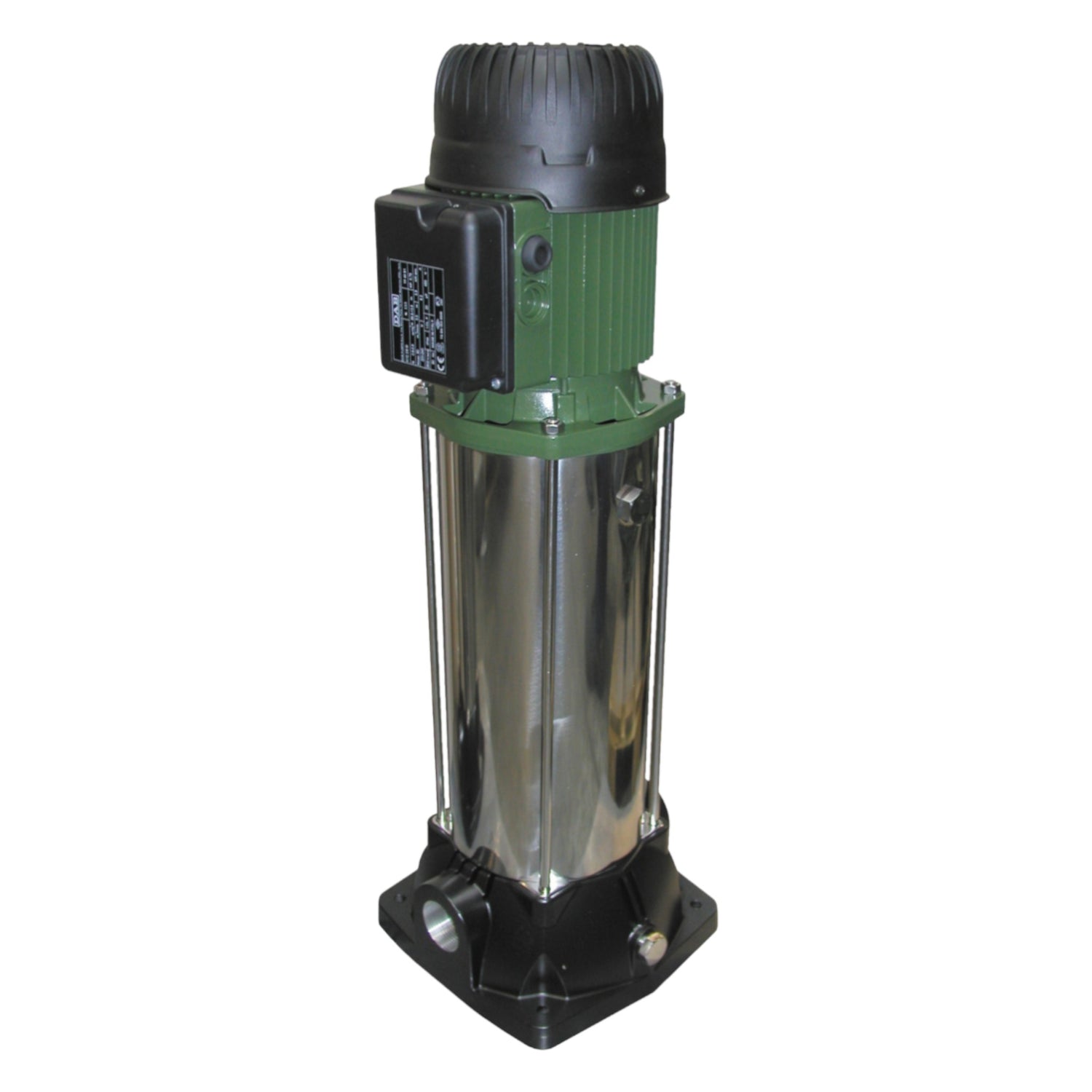
Unit price perThe DAB KVCX 45-120 M Multi-Stage Centrifugal Pump 240v is a DAB multi-stage centrifugal pump intended for pressurised clean-water transfer and compatible irrigation applications.
Selecting a pump requires matching the water source, required flow, delivery head, pipework and control arrangement to the installation rather than choosing on model name alone.
Key benefits
Pump installation & system design
Provide a suitable clean-water supply to the pump and install suction and delivery pipework to minimise unnecessary restriction and air ingress. Prime the pump where required by the model before operation.
System design should account for required flow and total head, including elevation and pipe/friction losses.
Selecting the correct pump
Confirm the required duty point before selecting a pump. Flow and pressure/head are linked, so maximum figures should never be treated as simultaneously available unless the manufacturer's pump curve shows that operating point.
Also consider water quality, suction conditions, pipe diameter, elevation, control method and how the irrigation system behaves as zones open and close.
Electrical installation & commissioning
Follow DAB installation instructions and applicable electrical requirements. Fixed electrical work should be carried out by a suitably competent person. Protect the pump and controls using the arrangements specified for the installation.
After commissioning, check for leaks, abnormal noise, cycling, loss of prime and correct operation across the expected irrigation demand.
Maintenance
Inspect strainers, water source, pipework and connections periodically. Investigate changes in flow, pressure, noise or cycling rather than continuing to run a pump that is operating abnormally.
DAB KVCX 45-120 M Multi-Stage Centrifugal Pump 240v product details
| Brand | DAB |
|---|---|
| Product type | Multi-stage centrifugal pump |
| Primary use | pressurised clean-water transfer and compatible irrigation applications |
| Stated supply | 240V |
Manufacturer technical data
Figures are from the DAB manufacturer technical documentation for the named model. Manufacturer figures are quoted at the stated flow points; maximum head and maximum flow do not occur together. For models with a different suffix or bundled control, verify the exact product code/nameplate before specifying an installation.
| Supply | 1 × 230 V, 50 Hz |
|---|---|
| Maximum input power (P1) | 2.83 kW |
| Nominal motor output (P2) | 1.8 kW |
| Nominal current | 13.4 A |
| Head at zero flow | 62.4 m |
| Head at 100 L/min | 51.4 m |
| Head at 200 L/min | 17.0 m |
| Suction / discharge | G 1¼ / G 1¼ |
| Maximum system operating pressure | 12 bar |
Manufacturer technical reference: DAB technical documentation.
DAB KVCX 45-120 M Multi-Stage Centrifugal Pump 240v FAQs
What is this pump intended for?
Pressurised clean-water transfer and compatible irrigation applications. What electrical supply is stated for this model?
The product title states 240V. Confirm the complete electrical requirements in the current DAB documentation before installation. How do I know whether this pump is large enough?
Determine the required flow and total head for the installation, then compare that duty point with the current DAB pump curve for the exact model. Can I choose a pump using maximum flow alone?
No. Pump flow changes with head and system resistance. Select against the required operating point rather than a single maximum figure. What pipe size should I use?
Size pipework for the required flow, run length and acceptable friction loss, while following the pump connection and installation requirements. Who should carry out the electrical installation?
Follow DAB instructions and applicable electrical requirements. Fixed electrical work should be completed by a suitably competent person. What should I check if pump performance drops?
Check the water source, intake or strainer, suction conditions where applicable, pipework, leaks and system demand before assuming the pump itself has failed.
£35.72
Unit price per£35.72
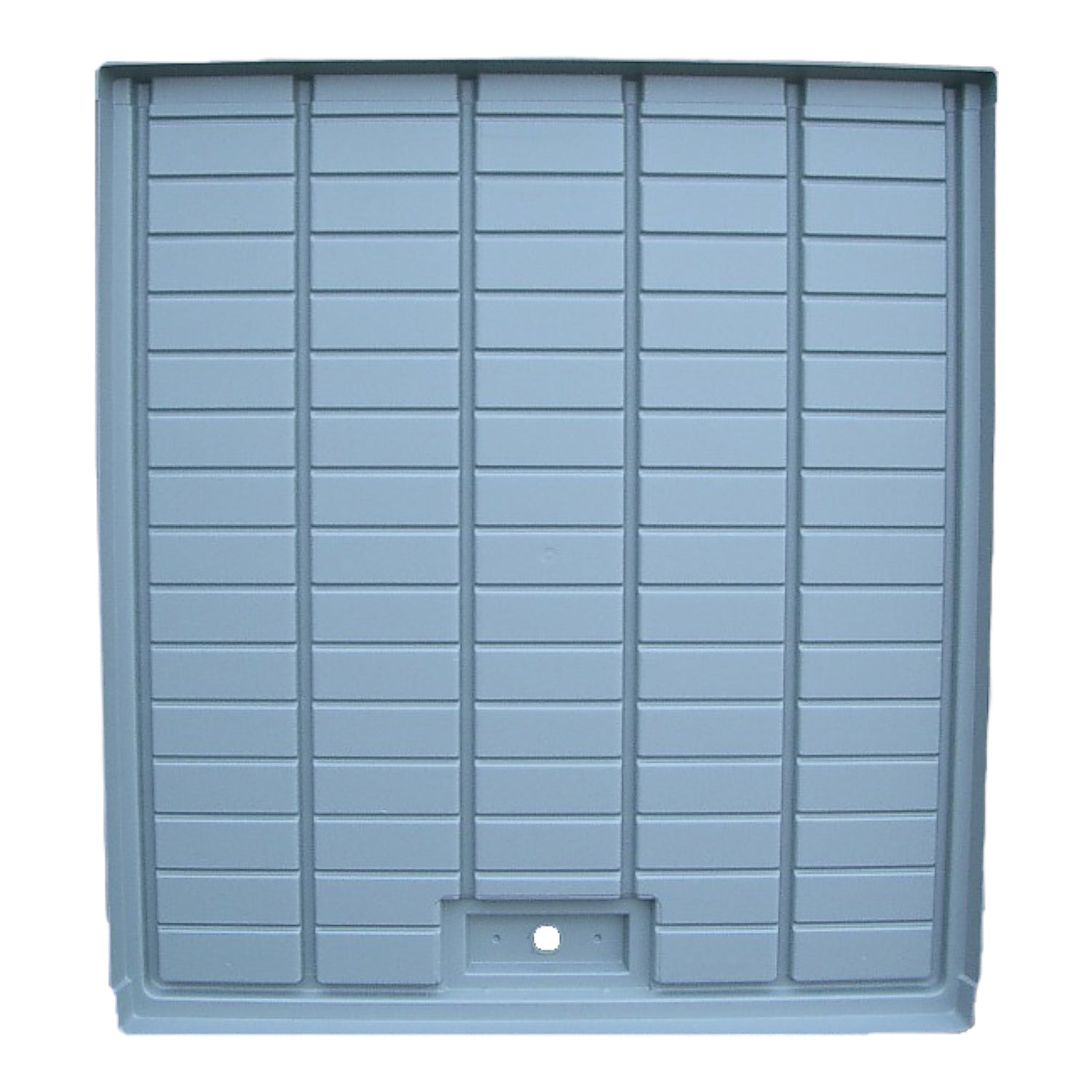
Unit price perThe Danish Irrigation Tray Grey 1100mm x 330mm is a narrow rectangular cultivation tray designed for bottom watering, irrigation and drainage management around container-grown plants. Its slim 33cm width makes it particularly useful where growing space is restricted or a long, narrow irrigation area is required.
Suitable for use at ground level or on an appropriately supported bench, the tray provides a common surface beneath multiple pots and containers. Plants can be watered from below, or the tray can collect excess irrigation solution draining from containers watered from above.
The moulded internal channels help water move across the tray towards the drainage point, allowing the tray to be incorporated into a suitable watering and drainage system. At 1100mm long and just 330mm wide, this is the narrowest format in the four-size Danish Irrigation Tray range.
Why choose the 1100mm x 330mm Danish Irrigation Tray?
Narrow irrigation tray for efficient use of space
The key advantage of this Danish tray is its 1100 x 330mm footprint. At only 33cm wide, it can be positioned in areas where the wider Danish trays would occupy too much space.
This makes it particularly useful for arranging plants in a single row or compact grouping. It can also suit narrow benches, perimeter growing areas and other layouts where maintaining access around the crop is important.
The tray provides approximately 0.36m² of surface area, allowing growers to create a relatively long irrigation zone without requiring a large overall footprint.
Bottom watering for container-grown plants
Suitable pots with drainage holes can be positioned on the tray and watered from below. Water or nutrient solution introduced into the tray can then be absorbed through the bottom of the containers and into the growing medium.
Bottom watering can be particularly useful when managing groups of similar plants because several containers can be supplied from the same irrigation area. The appropriate amount of water and watering duration will depend on the crop, container size and growing medium.
The tray can also be used in the opposite way, collecting drainage from plants that are irrigated individually from above.
Channelled base for water management
The tray has a moulded channelled internal surface. These channels help water move across the tray towards the drainage point rather than relying on a completely flat base.
Where required, the drainage point can be incorporated into a suitable run-off or recirculation arrangement. This allows collected irrigation solution to be directed away from the tray according to the design of the wider growing system.
Pumps, reservoirs, pipework and any additional irrigation or drainage fittings required for a particular installation should be selected separately to suit the system.
Suitable for professional growing areas
| Bottom watering | Provides a common watering surface beneath compatible pots and containers. |
|---|---|
| Run-off collection | Collects drainage from plants irrigated individually from above. |
| Narrow benches | The 330mm width is useful where available bench depth is limited. |
| Linear plant layouts | The long, narrow footprint is particularly suitable for arranging rows of containers. |
| Nursery production | Useful for managing groups of container-grown plants within a common irrigation area. |
| Propagation | Can form part of an appropriate watering system for young plants and propagation containers. |
Four Danish Irrigation Tray sizes available
The range includes four rectangular tray sizes, allowing the irrigation area to be selected according to the available growing space.
| 1100 x 330mm | This model - the narrowest tray in the range for compact and linear growing areas. |
|---|---|
| 1100 x 635mm | Wider mid-size option providing approximately 0.70m² of tray area. |
| 1100 x 1000mm | Large-format irrigation tray providing approximately 1.1m² of area. |
| 2040 x 1000mm | Extra-large format for substantially larger irrigation areas. |
Danish Irrigation Tray 1100mm x 330mm product details
| Product | Danish Irrigation Tray |
|---|---|
| Length | 1100mm |
| Width | 330mm |
| Approximate tray area | 0.36m² |
| Colour | Grey |
| Base design | Channelled irrigation and drainage surface |
| Positioning | Ground-level or table-height use with suitable support |
| Primary applications | Bottom watering, irrigation, drainage & run-off collection |
| Range | 4 sizes available |
Danish Irrigation Tray 1100mm x 330mm FAQs
What size is this Danish Irrigation Tray?
This model measures 1100mm long x 330mm wide, equivalent to 110 x 33cm. Why choose the 330mm wide version?
The 330mm model is the narrowest tray in the range. Its slim footprint makes it particularly useful for rows of plants, narrow benches and growing areas where space is restricted. Can plants be bottom watered with this tray?
Yes. Suitable pots with drainage holes can take up water or nutrient solution supplied through the tray. Can it collect irrigation run-off?
Yes. The tray can be positioned beneath top-watered containers to collect excess irrigation solution and drainage. What are the channels in the base for?
The moulded channels help water move across the tray towards the drainage area, assisting with irrigation and run-off management. Can the tray be connected to a drainage system?
Yes. The drainage point can be incorporated into a suitable irrigation or run-off system using appropriately selected fittings and pipework. Can it be used on a greenhouse or nursery bench?
Yes. Its narrow 330mm width can be particularly useful on suitable benches where available depth is limited. The tray should be adequately supported across its footprint. Can the tray be used at floor level?
Yes. It can also be used at ground level where the surface provides appropriate support and the required drainage arrangement can be accommodated. How much growing area does the tray provide?
The 1100 x 330mm footprint provides approximately 0.36m² of tray area. Are larger Danish Irrigation Trays available?
Yes. The range is available in 1100 x 330mm, 1100 x 635mm, 1100 x 1000mm and 2040 x 1000mm sizes.
£22.24
Unit price per£22.24
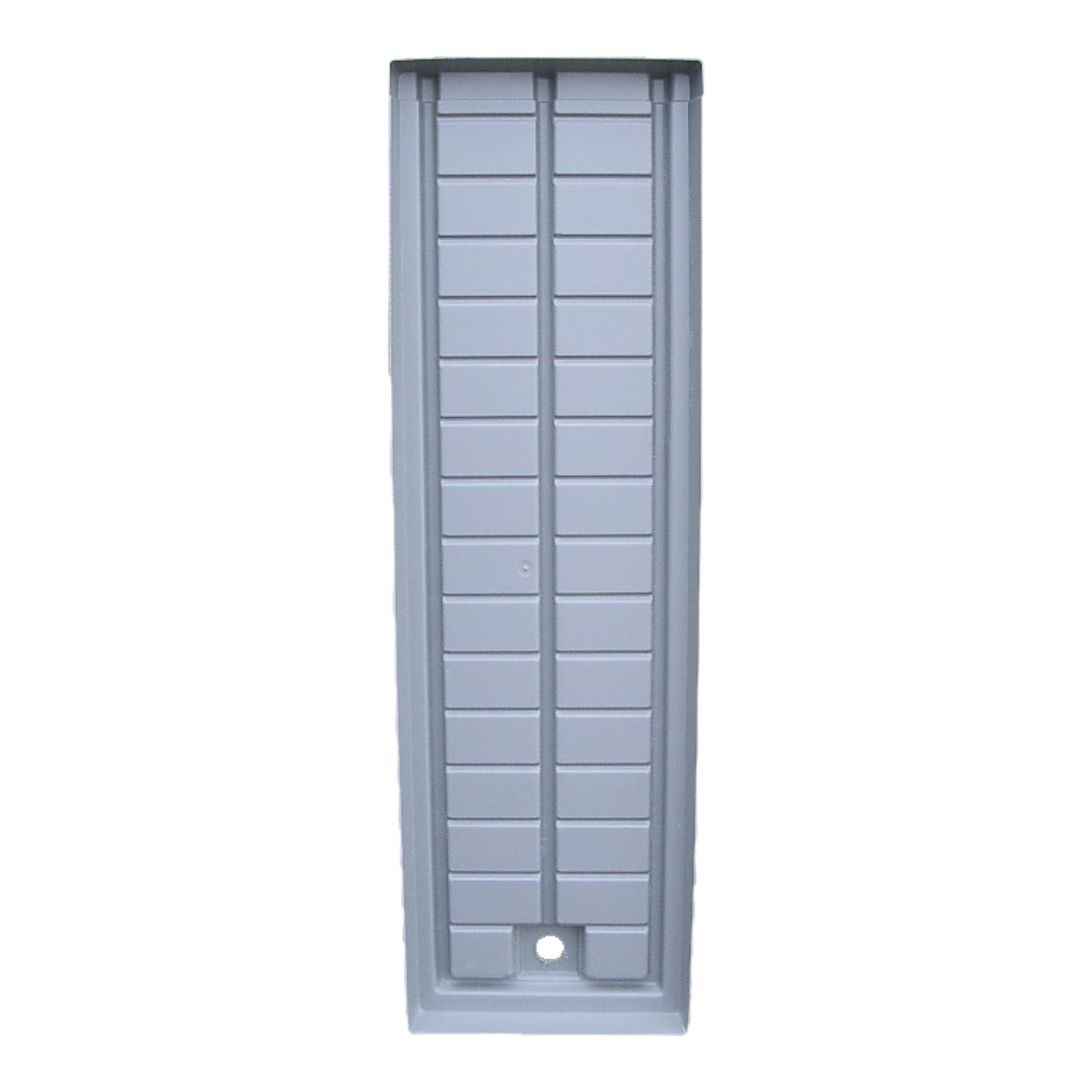
Unit price perThe Danish Irrigation Tray Grey 1100mm x 330mm is a narrow rectangular cultivation tray designed for bottom watering, irrigation and drainage management around container-grown plants. Its slim 33cm width makes it particularly useful where growing space is restricted or a long, narrow irrigation area is required.
Suitable for use at ground level or on an appropriately supported bench, the tray provides a common surface beneath multiple pots and containers. Plants can be watered from below, or the tray can collect excess irrigation solution draining from containers watered from above.
The moulded internal channels help water move across the tray towards the drainage point, allowing the tray to be incorporated into a suitable watering and drainage system. At 1100mm long and just 330mm wide, this is the narrowest format in the four-size Danish Irrigation Tray range.
Why choose the 1100mm x 330mm Danish Irrigation Tray?
Narrow irrigation tray for efficient use of space
The key advantage of this Danish tray is its 1100 x 330mm footprint. At only 33cm wide, it can be positioned in areas where the wider Danish trays would occupy too much space.
This makes it particularly useful for arranging plants in a single row or compact grouping. It can also suit narrow benches, perimeter growing areas and other layouts where maintaining access around the crop is important.
The tray provides approximately 0.36m² of surface area, allowing growers to create a relatively long irrigation zone without requiring a large overall footprint.
Bottom watering for container-grown plants
Suitable pots with drainage holes can be positioned on the tray and watered from below. Water or nutrient solution introduced into the tray can then be absorbed through the bottom of the containers and into the growing medium.
Bottom watering can be particularly useful when managing groups of similar plants because several containers can be supplied from the same irrigation area. The appropriate amount of water and watering duration will depend on the crop, container size and growing medium.
The tray can also be used in the opposite way, collecting drainage from plants that are irrigated individually from above.
Channelled base for water management
The tray has a moulded channelled internal surface. These channels help water move across the tray towards the drainage point rather than relying on a completely flat base.
Where required, the drainage point can be incorporated into a suitable run-off or recirculation arrangement. This allows collected irrigation solution to be directed away from the tray according to the design of the wider growing system.
Pumps, reservoirs, pipework and any additional irrigation or drainage fittings required for a particular installation should be selected separately to suit the system.
Suitable for professional growing areas
| Bottom watering | Provides a common watering surface beneath compatible pots and containers. |
|---|---|
| Run-off collection | Collects drainage from plants irrigated individually from above. |
| Narrow benches | The 330mm width is useful where available bench depth is limited. |
| Linear plant layouts | The long, narrow footprint is particularly suitable for arranging rows of containers. |
| Nursery production | Useful for managing groups of container-grown plants within a common irrigation area. |
| Propagation | Can form part of an appropriate watering system for young plants and propagation containers. |
Four Danish Irrigation Tray sizes available
The range includes four rectangular tray sizes, allowing the irrigation area to be selected according to the available growing space.
| 1100 x 330mm | This model - the narrowest tray in the range for compact and linear growing areas. |
|---|---|
| 1100 x 635mm | Wider mid-size option providing approximately 0.70m² of tray area. |
| 1100 x 1000mm | Large-format irrigation tray providing approximately 1.1m² of area. |
| 2040 x 1000mm | Extra-large format for substantially larger irrigation areas. |
Danish Irrigation Tray 1100mm x 330mm product details
| Product | Danish Irrigation Tray |
|---|---|
| Length | 1100mm |
| Width | 330mm |
| Approximate tray area | 0.36m² |
| Colour | Grey |
| Base design | Channelled irrigation and drainage surface |
| Positioning | Ground-level or table-height use with suitable support |
| Primary applications | Bottom watering, irrigation, drainage & run-off collection |
| Range | 4 sizes available |
Danish Irrigation Tray 1100mm x 330mm FAQs
What size is this Danish Irrigation Tray?
This model measures 1100mm long x 330mm wide, equivalent to 110 x 33cm. Why choose the 330mm wide version?
The 330mm model is the narrowest tray in the range. Its slim footprint makes it particularly useful for rows of plants, narrow benches and growing areas where space is restricted. Can plants be bottom watered with this tray?
Yes. Suitable pots with drainage holes can take up water or nutrient solution supplied through the tray. Can it collect irrigation run-off?
Yes. The tray can be positioned beneath top-watered containers to collect excess irrigation solution and drainage. What are the channels in the base for?
The moulded channels help water move across the tray towards the drainage area, assisting with irrigation and run-off management. Can the tray be connected to a drainage system?
Yes. The drainage point can be incorporated into a suitable irrigation or run-off system using appropriately selected fittings and pipework. Can it be used on a greenhouse or nursery bench?
Yes. Its narrow 330mm width can be particularly useful on suitable benches where available depth is limited. The tray should be adequately supported across its footprint. Can the tray be used at floor level?
Yes. It can also be used at ground level where the surface provides appropriate support and the required drainage arrangement can be accommodated. How much growing area does the tray provide?
The 1100 x 330mm footprint provides approximately 0.36m² of tray area. Are larger Danish Irrigation Trays available?
Yes. The range is available in 1100 x 330mm, 1100 x 635mm, 1100 x 1000mm and 2040 x 1000mm sizes.
£29.12
Unit price per£29.12
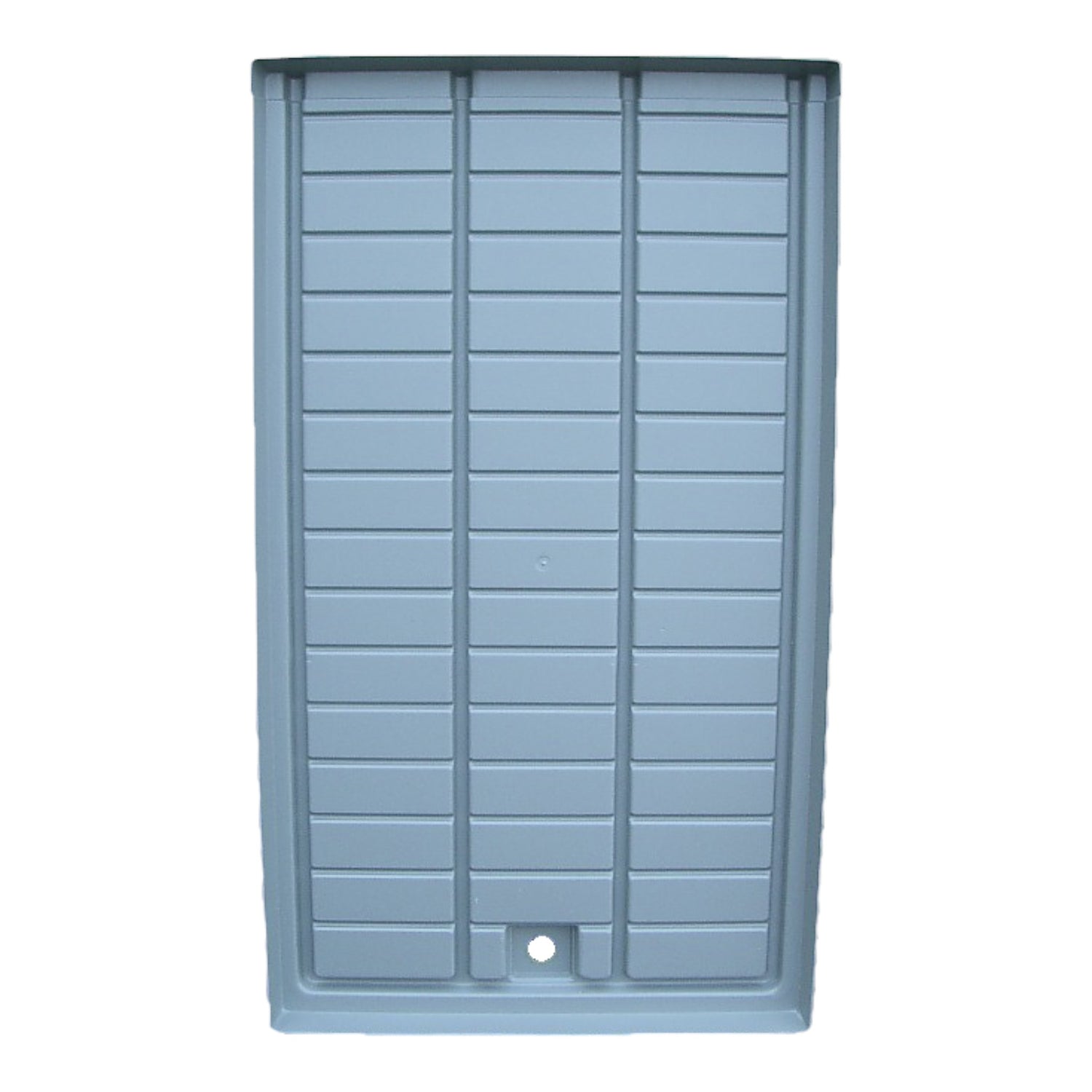
Unit price perThe Danish Irrigation Tray Grey 1100mm x 635mm is a professional cultivation tray designed for bottom watering, irrigation run-off collection and integration into plant watering systems. Its 1100 x 635mm footprint provides a practical growing area for groups of pots and containers at either ground or table height.
The moulded tray incorporates a channelled base that directs water towards the drainage point, making it suitable for both supplying water to plants from below and collecting excess irrigation solution. It can be incorporated into a suitable drainage arrangement where run-off needs to be directed away from the growing area.
Manufactured from HIPS plastic, these Danish-style irrigation trays are designed for repeated use in growing environments. The 1100 x 635mm model sits between the narrow 1100 x 330mm tray and the larger 1100 x 1000mm version, making it a useful mid-width option for professional nursery and greenhouse layouts.
Why choose a Danish Irrigation Tray?
Bottom watering for groups of plants
Danish irrigation trays provide a practical way of watering multiple container-grown plants from below. Suitable pots with drainage holes can be positioned on the tray and supplied with an appropriate amount of water or nutrient solution.
Moisture is then taken up through the bottom of the containers into the growing medium. For nurseries and larger growing areas, this can provide a more organised approach than individually watering every container.
The amount and duration of watering should always be matched to the crop, container size and growing medium. The tray itself provides the irrigation platform, allowing the grower to configure the wider watering and drainage system to suit the application.
Designed for irrigation & drainage systems
The internal surface is formed with a network of channels that helps move water across the tray towards the drainage area. This is useful both when supplying water to the tray and when collecting run-off from top-fed plants.
In a suitable installation, collected run-off can be directed to a reservoir or waste drainage arrangement. This makes the tray suitable for both simple manual watering setups and more developed irrigation systems.
Any pipework, fittings, reservoirs, pumps or drainage components required for a particular installation should be selected separately according to the intended system.
For nurseries, greenhouses & professional growing
The rectangular 1100 x 635mm format is particularly useful where several pots need to be organised within one irrigation zone. Containers can be arranged across the tray while water and drainage are managed through a common surface.
This can make the tray useful for young plants, propagation, herbs, ornamentals and other container-grown crops, provided the watering regime is appropriate for the plants being grown.
At approximately 0.70m², this size provides substantially more growing area than the narrow 1100 x 330mm model without requiring the full footprint of the 1100 x 1000mm tray.
Typical Danish irrigation tray applications
| Bottom watering | Suitable containers can take up water or nutrient solution through drainage holes in their bases. |
|---|---|
| Top-fed irrigation | The tray can collect drainage and run-off from pots irrigated individually from above. |
| Nursery production | Provides a common watering and drainage area for groups of container-grown plants. |
| Propagation | Useful as part of a suitable watering arrangement for young plants and propagation containers. |
| Greenhouse benches | Can be installed at table height where a suitable supporting structure is provided. |
| Ground-level growing | Can also form a contained irrigation and drainage area at floor level. |
Four Danish irrigation tray sizes available
The Danish Irrigation Tray range is available in four footprints, allowing growers to select a tray according to the available space and scale of the irrigation area.
| 1100 x 330mm | Narrow rectangular tray for smaller or restricted-width growing areas. |
|---|---|
| 1100 x 635mm | This model - a versatile mid-width irrigation tray. |
| 1100 x 1000mm | Large-format tray providing approximately 1.1m² of growing area. |
| 2040 x 1000mm | Extra-large tray for substantially larger irrigation areas. |
Danish Irrigation Tray 1100mm x 635mm product details
| Product | Danish Irrigation Tray |
|---|---|
| Length | 1100mm |
| Width | 635mm |
| Approximate tray area | 0.70m² |
| Material | HIPS plastic |
| Colour | Grey |
| Base design | Channelled irrigation and drainage surface |
| Positioning | Ground-level or table-height use with suitable support |
| Primary applications | Bottom watering, irrigation, drainage & run-off collection |
| Range | 4 sizes available |
Danish Irrigation Tray 1100mm x 635mm FAQs
What size is this Danish Irrigation Tray?
This model measures 1100mm x 635mm, equivalent to 110 x 63.5cm. What is a Danish irrigation tray used for?
It provides a common irrigation and drainage surface beneath groups of plants. It can be used for bottom watering or for collecting run-off from plants irrigated from above. Can plants be bottom watered with this tray?
Yes. Bottom watering is one of the main applications for Danish irrigation trays. Suitable pots can take up water through drainage holes in their bases. Can it collect irrigation run-off?
Yes. The tray can collect water or nutrient solution draining from containers, helping keep run-off within a defined irrigation area. What are the channels in the tray for?
The moulded channels help water move across the tray towards the drainage area, assisting with irrigation and run-off management. Can it be connected to a drainage system?
Yes. Danish trays are designed so they can be incorporated into suitable watering and drainage systems. The required fittings and wider system should be selected to suit the individual installation. Can the tray be used on a bench?
Yes. It can be used at table height when installed on a suitably sized and adequately supported bench or framework. Can it be used at ground level?
Yes. Ground-level use is also possible, provided the tray is correctly supported on a suitable surface and any required drainage arrangement is accommodated. What is the tray made from?
This Danish irrigation tray is manufactured from HIPS plastic, a material used for robust cultivation trays. Is this the only size available?
No. The range is available in four sizes: 1100 x 330mm, 1100 x 635mm, 1100 x 1000mm and 2040 x 1000mm.
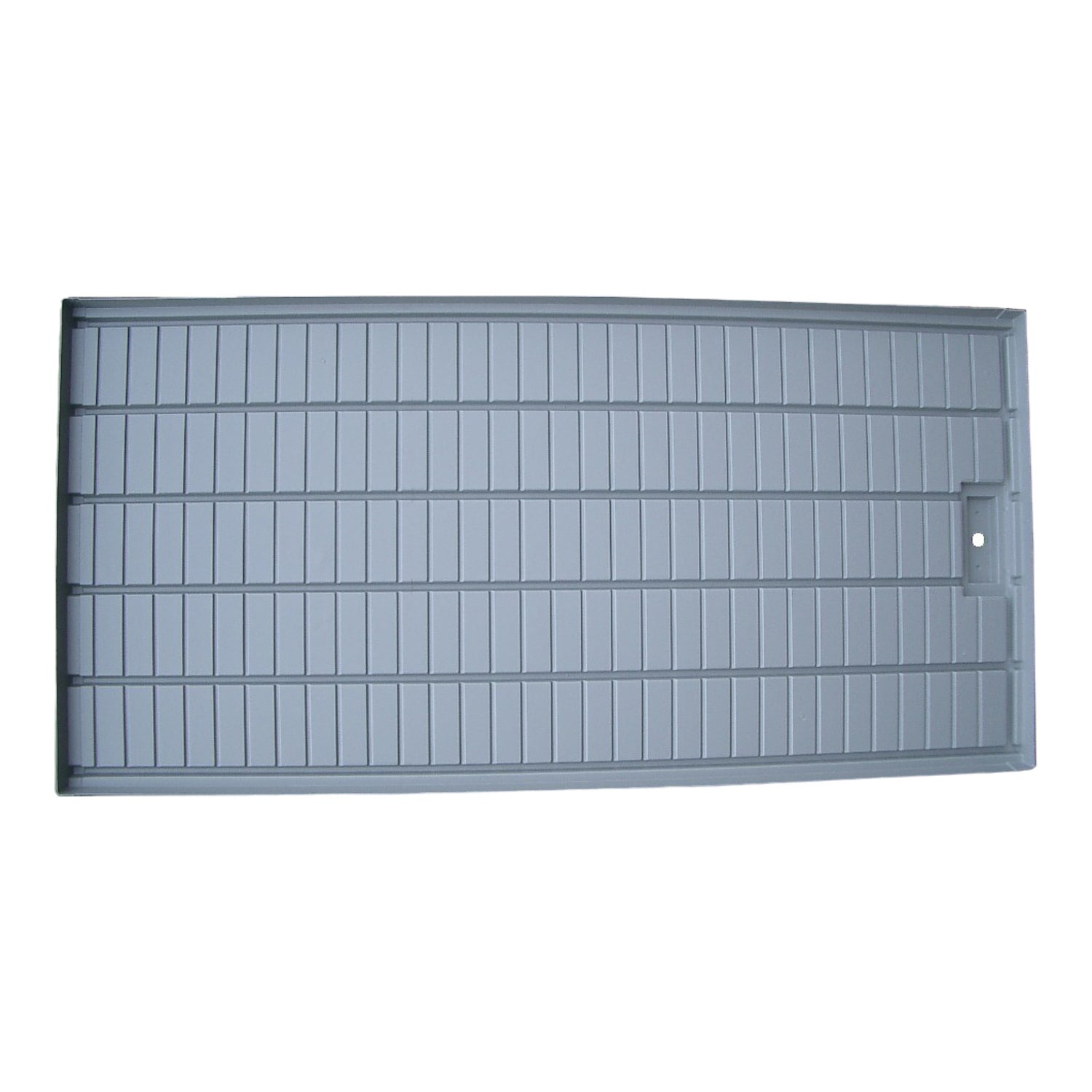
£71.56
Unit price per£71.56
Unit price perThe Danish Irrigation Tray Grey 2040mm x 1000mm - Extra Large Bottom Watering & Drainage Tray is designed for bottom watering, drainage and crop handling.
This product is intended for practical professional horticultural, nursery, greenhouse, landscaping or garden use according to its specific application.
Key benefits
Professional & garden use
Use this product for bottom watering, drainage and crop handling and choose equipment appropriate to the scale and conditions of the task. Inspect tools or equipment before use and avoid forcing them beyond their intended function.
Use & maintenance
Keep the product clean and inspect it periodically for wear, damage or contamination appropriate to its application. Store it in conditions that protect it from unnecessary weather, crushing or physical damage.
Choosing the right product
Check dimensions, capacity, connection type or intended application before ordering. Similar-looking horticultural products may not be interchangeable where technical compatibility matters.
Danish Irrigation Tray Grey 2040mm x 1000mm - Extra Large Bottom Watering & Drainage Tray product details
| Product type | Danish Irrigation Tray |
|---|---|
| Primary use | bottom watering, drainage and crop handling |
| Source designation | Danish Irrigation Tray Grey 2040mm x 1000mm - Extra Large Bottom Watering & Drainage Tray |
| Application | Professional horticulture, nursery, greenhouse, landscaping or garden use |
Danish Irrigation Tray Grey 2040mm x 1000mm - Extra Large Bottom Watering & Drainage Tray FAQs
What is this product used for?
Bottom watering, drainage and crop handling. Who is it suitable for?
Professional growers, nurseries, landscapers, garden centres or gardeners where the product matches the intended task. Are the dimensions and technical details retained?
Yes. The product title retains the relevant source dimensions or technical designation. How should it be maintained?
Keep it clean, inspect it for damage and follow maintenance appropriate to the product type. How should it be stored?
Store it clean and protected from unnecessary weather, contamination or physical damage. How do I check compatibility?
Check dimensions, connection type, capacity and intended application before ordering. Can it be used outside its intended application?
Use it only where its design and specification are suitable for the task. Should it be inspected before use?
Yes. Check condition and suitability before putting the product into service.
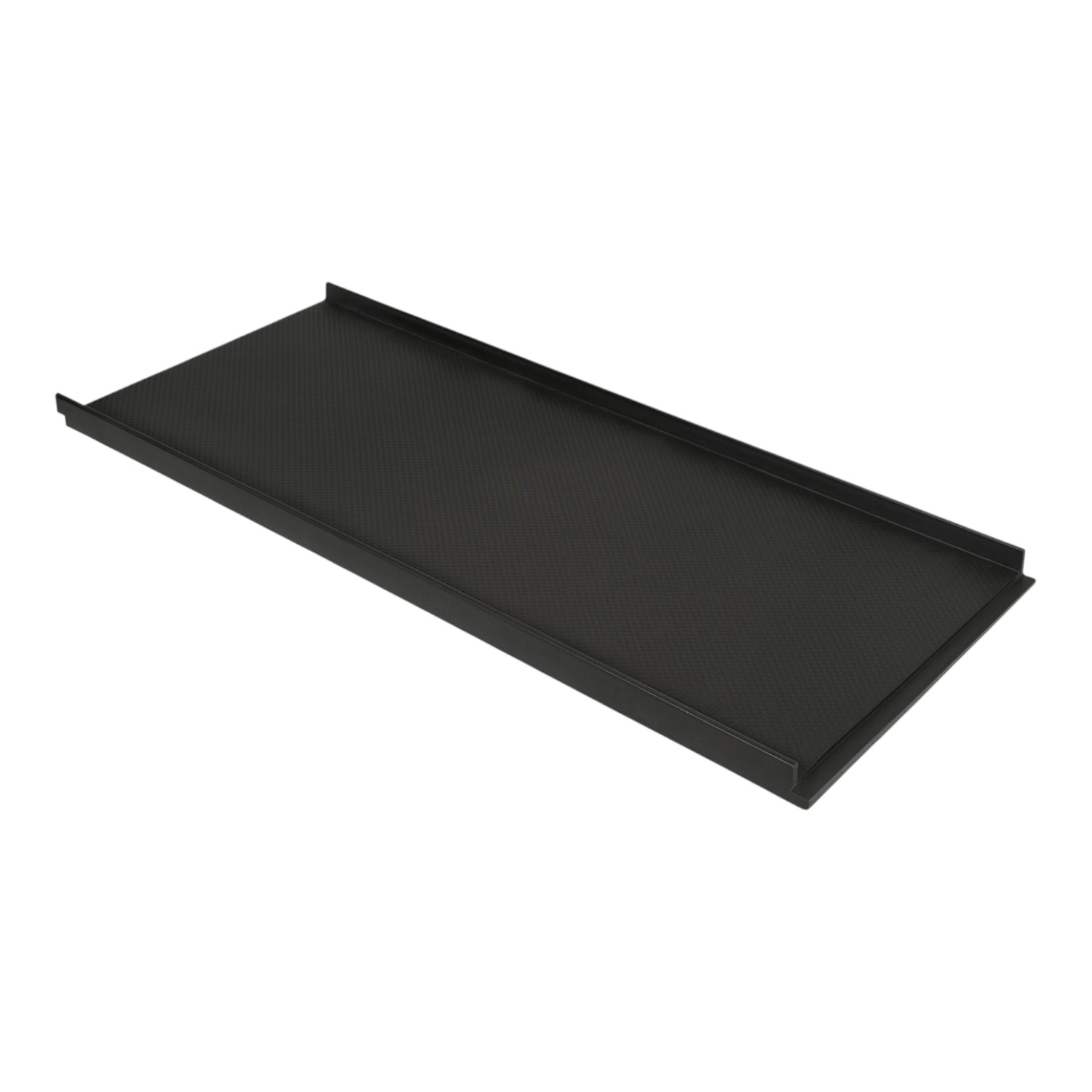
£30.00
Unit price per£30.00
Unit price perThe Danish Trolley Track - 1.2m (length) x 0.51m (internal width) is professional handling equipment designed for providing a guided track route for compatible Danish trolleys.
Growers Own handling equipment is aimed at the practical movement, organisation and display of plants and horticultural materials in working nursery, wholesale, landscaping and garden-centre environments.
Key benefits
Danish trolley track systems
Use track and ramp components only as part of a compatible trolley movement system. Set out the route so transitions are stable and aligned and so trolleys can be moved without abrupt changes in level.
Keep the track route clear of debris and inspect components for movement, damage or trip hazards during use.
Professional handling & maintenance
Inspect equipment before use and keep working routes clear. Do not exceed stated capacities or use components in configurations for which they were not designed. Clean equipment as appropriate to the working environment and address loose, worn or damaged components promptly.
Danish Trolley Track - 1.2m (length) x 0.51m (internal width) product details
| Brand | Growers Own |
|---|---|
| Product type | Danish Trolley Track |
| Primary use | providing a guided track route for compatible Danish trolleys |
| Dimensions | 1.2m length x 0.51m internal width |
Danish Trolley Track - 1.2m (length) x 0.51m (internal width) FAQs
What is this product designed for?
Providing a guided track route for compatible danish trolleys. Who is it suitable for?
It is intended for professional growers, nurseries, wholesalers, garden centres and landscapers where the equipment matches the handling task. What should be checked before use?
Inspect the main structure, working surfaces, wheels or connections as applicable and make sure the intended route or installation is suitable. Can stated load figures be exceeded?
No. Do not exceed the stated equipment capacity, and remember that safe practical loading can also depend on terrain, stability and operator handling. How should it be maintained?
Keep it clean as appropriate, inspect wear points regularly and remove damaged equipment from service until repaired or replaced. What are the stated track dimensions?
The stated dimensions are 1.2m length x 0.51m internal width.

The Danish Trolley Track Ramp Bottom is professional handling equipment designed for forming a transition onto or off a compatible Danish trolley track system.
Growers Own handling equipment is aimed at the practical movement, organisation and display of plants and horticultural materials in working nursery, wholesale, landscaping and garden-centre environments.
Key benefits
Danish trolley track systems
Use track and ramp components only as part of a compatible trolley movement system. Set out the route so transitions are stable and aligned and so trolleys can be moved without abrupt changes in level.
Keep the track route clear of debris and inspect components for movement, damage or trip hazards during use.
Professional handling & maintenance
Inspect equipment before use and keep working routes clear. Do not exceed stated capacities or use components in configurations for which they were not designed. Clean equipment as appropriate to the working environment and address loose, worn or damaged components promptly.
Danish Trolley Track Ramp Bottom product details
| Brand | Growers Own |
|---|---|
| Product type | Danish Trolley Track Ramp |
| Primary use | forming a transition onto or off a compatible Danish trolley track system |
Danish Trolley Track Ramp Bottom FAQs
What is this product designed for?
Forming a transition onto or off a compatible danish trolley track system. Who is it suitable for?
It is intended for professional growers, nurseries, wholesalers, garden centres and landscapers where the equipment matches the handling task. What should be checked before use?
Inspect the main structure, working surfaces, wheels or connections as applicable and make sure the intended route or installation is suitable. Can stated load figures be exceeded?
No. Do not exceed the stated equipment capacity, and remember that safe practical loading can also depend on terrain, stability and operator handling. How should it be maintained?
Keep it clean as appropriate, inspect wear points regularly and remove damaged equipment from service until repaired or replaced.

The Danish Trolley Track Ramp Top is professional handling equipment designed for forming a transition onto or off a compatible Danish trolley track system.
Growers Own handling equipment is aimed at the practical movement, organisation and display of plants and horticultural materials in working nursery, wholesale, landscaping and garden-centre environments.
Key benefits
Danish trolley track systems
Use track and ramp components only as part of a compatible trolley movement system. Set out the route so transitions are stable and aligned and so trolleys can be moved without abrupt changes in level.
Keep the track route clear of debris and inspect components for movement, damage or trip hazards during use.
Professional handling & maintenance
Inspect equipment before use and keep working routes clear. Do not exceed stated capacities or use components in configurations for which they were not designed. Clean equipment as appropriate to the working environment and address loose, worn or damaged components promptly.
Danish Trolley Track Ramp Top product details
| Brand | Growers Own |
|---|---|
| Product type | Danish Trolley Track Ramp |
| Primary use | forming a transition onto or off a compatible Danish trolley track system |
Danish Trolley Track Ramp Top FAQs
What is this product designed for?
Forming a transition onto or off a compatible danish trolley track system. Who is it suitable for?
It is intended for professional growers, nurseries, wholesalers, garden centres and landscapers where the equipment matches the handling task. What should be checked before use?
Inspect the main structure, working surfaces, wheels or connections as applicable and make sure the intended route or installation is suitable. Can stated load figures be exceeded?
No. Do not exceed the stated equipment capacity, and remember that safe practical loading can also depend on terrain, stability and operator handling. How should it be maintained?
Keep it clean as appropriate, inspect wear points regularly and remove damaged equipment from service until repaired or replaced.
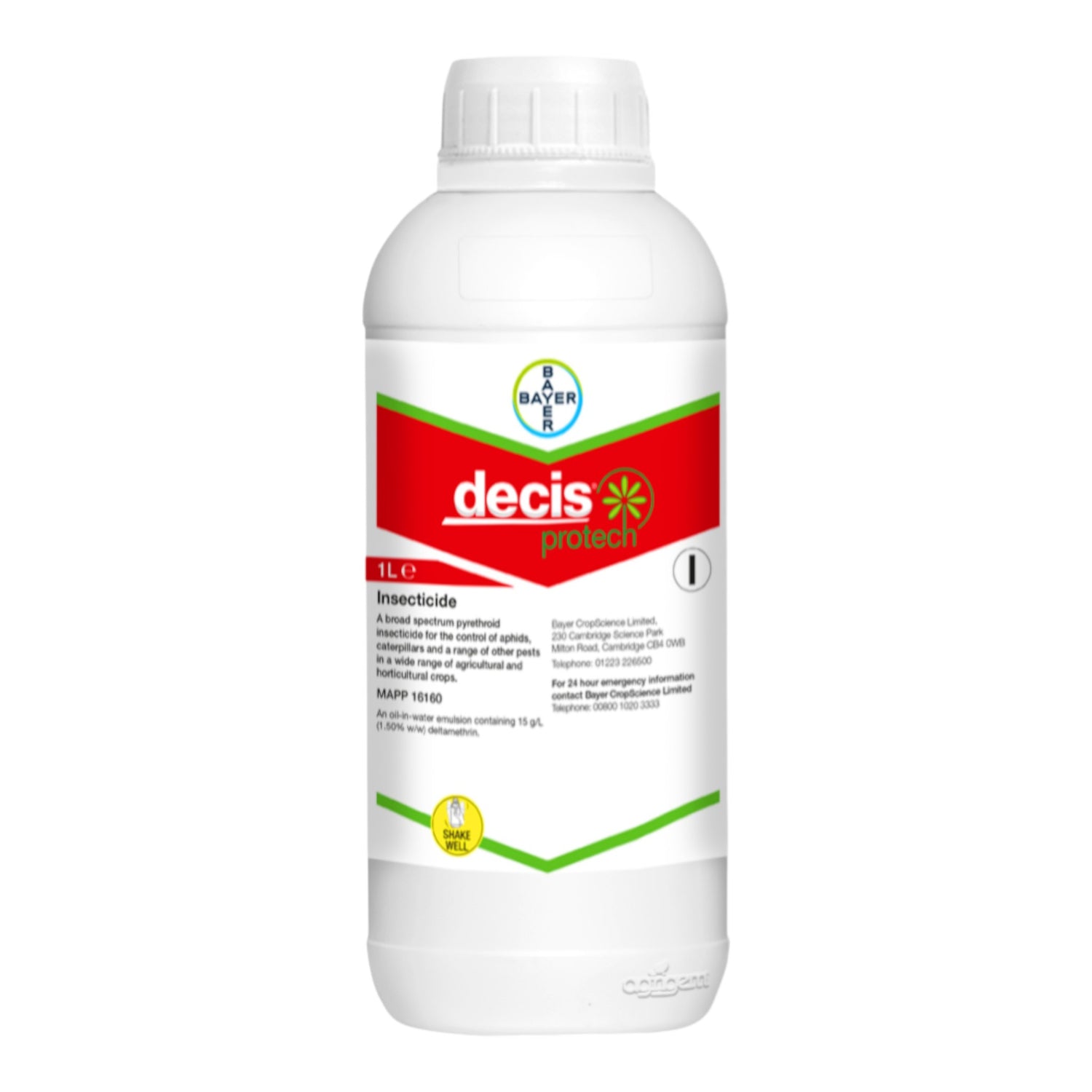
Decis Insecticide 1L is a insecticide containing deltamethrin for authorised crop-protection use.
Use plant protection products only in accordance with the current product label, authorisation and applicable UK requirements.
Authorised use comes first
The current label controls authorised crops or areas, targets, dose, timing, maximum applications, buffer zones, PPE and harvest or grazing restrictions. Do not transfer rates or claims from another product simply because it contains the same active substance.
Application & stewardship
Use correctly calibrated equipment, prevent spray drift and follow all environmental restrictions. Where resistance management applies, integrate treatment with cultural, biological and other appropriate controls.
PPE, storage & disposal
Follow the current label and Safety Data Sheet for PPE, handling, first aid, storage and disposal.
Product details
| Type | Insecticide |
|---|---|
| Pack size | 1L |
| Active substance | deltamethrin |
| User category | Professional |
Decis Insecticide 1L FAQs
What is the active substance?
deltamethrin What is the pack size?
1L Who can use it?
Professional; check the current label and legal requirements. Can it be used on any crop or target?
No. Use only as authorised on the current label or valid extension. Where is the application rate?
Use the current label for the exact crop, area and target. What PPE is required?
Follow the current label and Safety Data Sheet. Can it be tank mixed?
Only where current label and compatibility guidance permit. How should it be stored?
Securely in the original labelled container, following the label and SDS. What if authorisation changes?
The current authorisation and physical label take precedence over older website information.
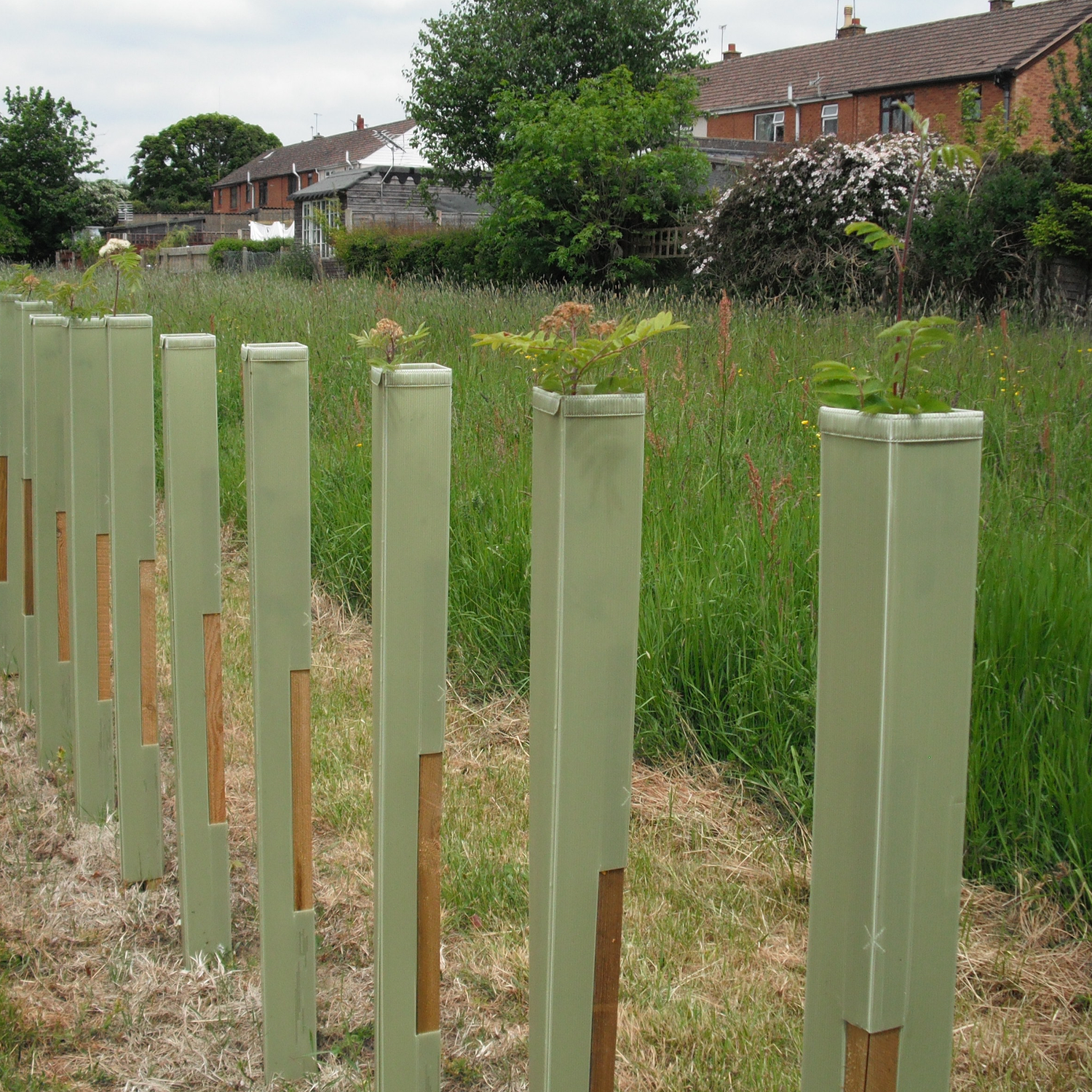
£91.47
Unit price per£91.47
Unit price perThe Defender Pro 120cm Tree & Shrub Shelter - GREEN (Box of 50) is a tree & shrub shelter designed for protecting newly planted trees and shrubs from browsing and physical damage during establishment.
It is suited to professional landscaping, nursery and establishment work where the product's size and format match the planting or site requirements.
Supplied as: box of 50.
Key benefits
Protecting young trees & shrubs
Install the shelter or guard so it is stable and correctly positioned around the young plant without rubbing or constricting the stem. Use suitable stakes or supports where the system requires them.
Inspect guards periodically as the plant grows and remove, adjust or replace them when they are damaged or no longer required.
Professional establishment & maintenance
Successful landscape establishment depends on more than the protection product alone. Check plant stability, watering, weed competition and general plant condition regularly during the establishment period.
Defender Pro 120cm Tree & Shrub Shelter - GREEN (Box of 50) product details
| Brand | Rainbow |
|---|---|
| Product type | Tree & shrub shelter |
| Primary use | protecting newly planted trees and shrubs from browsing and physical damage during establishment |
| Stated size | 120cm |
| Box quantity | 50 |
Defender Pro 120cm Tree & Shrub Shelter - GREEN (Box of 50) FAQs
What size is this product?
The stated size is 120cm. How many are supplied?
This product is supplied in a box of 50. What are tree shelters and guards used for?
They help protect young plants from browsing and physical damage while they establish. Should guards be checked after planting?
Yes. Check stability, plant growth and any contact with the stem, adjusting or removing the guard when appropriate. Do tree guards replace watering and weed control?
No. Young plants still need appropriate watering, weed management and establishment care.
£43.90
Unit price per£43.90
Unit price perThe Defender Pro 60cm Tree & Shrub Shelter - GREEN (Box of 50) is a tree & shrub shelter designed for protecting newly planted trees and shrubs from browsing and physical damage during establishment.
It is suited to professional landscaping, nursery and establishment work where the product's size and format match the planting or site requirements.
Supplied as: box of 50.
Key benefits
Protecting young trees & shrubs
Install the shelter or guard so it is stable and correctly positioned around the young plant without rubbing or constricting the stem. Use suitable stakes or supports where the system requires them.
Inspect guards periodically as the plant grows and remove, adjust or replace them when they are damaged or no longer required.
Professional establishment & maintenance
Successful landscape establishment depends on more than the protection product alone. Check plant stability, watering, weed competition and general plant condition regularly during the establishment period.
Defender Pro 60cm Tree & Shrub Shelter - GREEN (Box of 50) product details
| Brand | Rainbow |
|---|---|
| Product type | Tree & shrub shelter |
| Primary use | protecting newly planted trees and shrubs from browsing and physical damage during establishment |
| Stated size | 60cm |
| Box quantity | 50 |
Defender Pro 60cm Tree & Shrub Shelter - GREEN (Box of 50) FAQs
What size is this product?
The stated size is 60cm. How many are supplied?
This product is supplied in a box of 50. What are tree shelters and guards used for?
They help protect young plants from browsing and physical damage while they establish. Should guards be checked after planting?
Yes. Check stability, plant growth and any contact with the stem, adjusting or removing the guard when appropriate. Do tree guards replace watering and weed control?
No. Young plants still need appropriate watering, weed management and establishment care.
£64.63
Unit price per£64.63
Unit price perThe Defender Pro 75cm Tree & Shrub Shelter - GREEN (Box of 50) is a tree & shrub shelter designed for protecting newly planted trees and shrubs from browsing and physical damage during establishment.
It is suited to professional landscaping, nursery and establishment work where the product's size and format match the planting or site requirements.
Supplied as: box of 50.
Key benefits
Protecting young trees & shrubs
Install the shelter or guard so it is stable and correctly positioned around the young plant without rubbing or constricting the stem. Use suitable stakes or supports where the system requires them.
Inspect guards periodically as the plant grows and remove, adjust or replace them when they are damaged or no longer required.
Professional establishment & maintenance
Successful landscape establishment depends on more than the protection product alone. Check plant stability, watering, weed competition and general plant condition regularly during the establishment period.
Defender Pro 75cm Tree & Shrub Shelter - GREEN (Box of 50) product details
| Brand | Rainbow |
|---|---|
| Product type | Tree & shrub shelter |
| Primary use | protecting newly planted trees and shrubs from browsing and physical damage during establishment |
| Stated size | 75cm |
| Box quantity | 50 |
Defender Pro 75cm Tree & Shrub Shelter - GREEN (Box of 50) FAQs
What size is this product?
The stated size is 75cm. How many are supplied?
This product is supplied in a box of 50. What are tree shelters and guards used for?
They help protect young plants from browsing and physical damage while they establish. Should guards be checked after planting?
Yes. Check stability, plant growth and any contact with the stem, adjusting or removing the guard when appropriate. Do tree guards replace watering and weed control?
No. Young plants still need appropriate watering, weed management and establishment care.
Depitox 10L Selective Herbicide is a herbicide containing 2,4-D for authorised crop-protection use.
Use plant protection products only in accordance with the current product label, authorisation and applicable UK requirements.
Authorised use comes first
The current label controls authorised crops or areas, targets, dose, timing, maximum applications, buffer zones, PPE and harvest or grazing restrictions. Do not transfer rates or claims from another product simply because it contains the same active substance.
Application & stewardship
Use correctly calibrated equipment, prevent spray drift and follow all environmental restrictions. Where resistance management applies, integrate treatment with cultural, biological and other appropriate controls.
PPE, storage & disposal
Follow the current label and Safety Data Sheet for PPE, handling, first aid, storage and disposal.
Product details
| Type | Herbicide |
|---|---|
| Pack size | 10L |
| Active substance | 2,4-D |
| Concentration | 500g/L |
| MAPP | 17597 |
| User category | Professional |
Depitox 10L Selective Herbicide FAQs
What is the active substance?
2,4-D What is the pack size?
10L Who can use it?
Professional; check the current label and legal requirements. Can it be used on any crop or target?
No. Use only as authorised on the current label or valid extension. Where is the application rate?
Use the current label for the exact crop, area and target. What PPE is required?
Follow the current label and Safety Data Sheet. Can it be tank mixed?
Only where current label and compatibility guidance permit. How should it be stored?
Securely in the original labelled container, following the label and SDS. What if authorisation changes?
The current authorisation and physical label take precedence over older website information.
Depitox 5L Selective Herbicide is a herbicide containing 2,4-D for authorised crop-protection use.
Use plant protection products only in accordance with the current product label, authorisation and applicable UK requirements.
Authorised use comes first
The current label controls authorised crops or areas, targets, dose, timing, maximum applications, buffer zones, PPE and harvest or grazing restrictions. Do not transfer rates or claims from another product simply because it contains the same active substance.
Application & stewardship
Use correctly calibrated equipment, prevent spray drift and follow all environmental restrictions. Where resistance management applies, integrate treatment with cultural, biological and other appropriate controls.
PPE, storage & disposal
Follow the current label and Safety Data Sheet for PPE, handling, first aid, storage and disposal.
Product details
| Type | Herbicide |
|---|---|
| Pack size | 5L |
| Active substance | 2,4-D |
| Concentration | 500g/L |
| MAPP | 17597 |
| User category | Professional |
Depitox 5L Selective Herbicide FAQs
What is the active substance?
2,4-D What is the pack size?
5L Who can use it?
Professional; check the current label and legal requirements. Can it be used on any crop or target?
No. Use only as authorised on the current label or valid extension. Where is the application rate?
Use the current label for the exact crop, area and target. What PPE is required?
Follow the current label and Safety Data Sheet. Can it be tank mixed?
Only where current label and compatibility guidance permit. How should it be stored?
Securely in the original labelled container, following the label and SDS. What if authorisation changes?
The current authorisation and physical label take precedence over older website information.
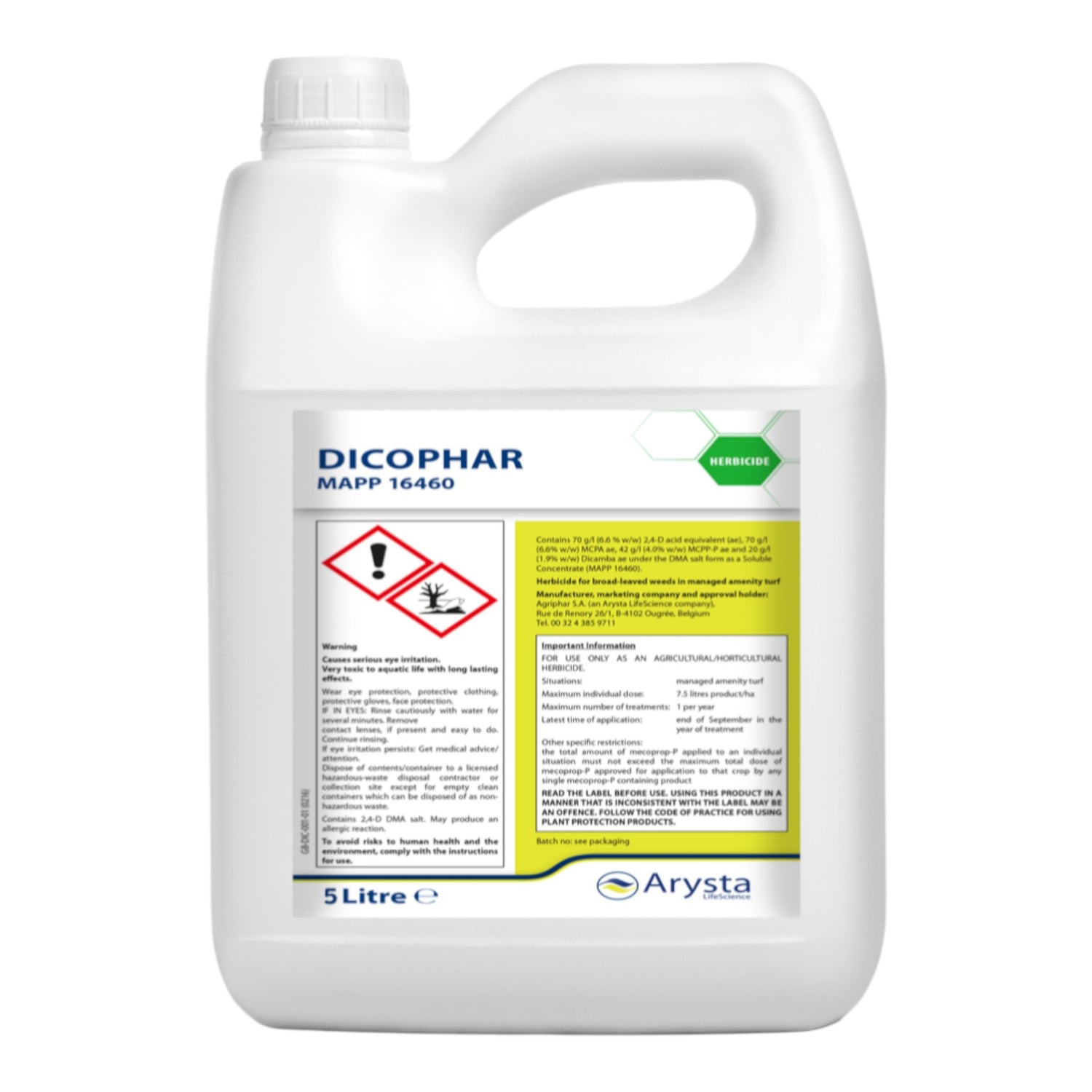
£70.56
Unit price per£70.56
Unit price perDichophar Enforcer 5L Selective Turf Herbicide is a herbicide containing 2,4-D + dicamba + MCPA + mecoprop-P for authorised crop-protection use.
Use plant protection products only in accordance with the current product label, authorisation and applicable UK requirements.
Authorised use comes first
The current label controls authorised crops or areas, targets, dose, timing, maximum applications, buffer zones, PPE and harvest or grazing restrictions. Do not transfer rates or claims from another product simply because it contains the same active substance.
Application & stewardship
Use correctly calibrated equipment, prevent spray drift and follow all environmental restrictions. Where resistance management applies, integrate treatment with cultural, biological and other appropriate controls.
PPE, storage & disposal
Follow the current label and Safety Data Sheet for PPE, handling, first aid, storage and disposal.
Product details
| Type | Herbicide |
|---|---|
| Pack size | 5L |
| Active substance | 2,4-D + dicamba + MCPA + mecoprop-P |
| Concentration | 70 + 20 + 70 + 42g/L |
| MAPP | 17274 |
| User category | Professional |
Dichophar Enforcer 5L Selective Turf Herbicide FAQs
What is the active substance?
2,4-D + dicamba + MCPA + mecoprop-P What is the pack size?
5L Who can use it?
Professional; check the current label and legal requirements. Can it be used on any crop or target?
No. Use only as authorised on the current label or valid extension. Where is the application rate?
Use the current label for the exact crop, area and target. What PPE is required?
Follow the current label and Safety Data Sheet. Can it be tank mixed?
Only where current label and compatibility guidance permit. How should it be stored?
Securely in the original labelled container, following the label and SDS. What if authorisation changes?
The current authorisation and physical label take precedence over older website information.

The DOSATRON D20GL Injector - 0.2–2.0% is designed for water-powered proportional dosing in compatible horticultural irrigation systems.
DOSATRON proportional dosing equipment uses irrigation-water flow to introduce a concentrate into the water stream. Correct selection, installation and calibration are essential where nutrient or treatment concentration matters to crop performance.
Key benefits
Proportional dosing in irrigation water
Set the injector according to the required concentration and the current DOSATRON instructions for the exact model. Do not assume settings from another injector model are interchangeable.
After adjustment, verify the delivered solution using an appropriate measurement method for the product being dosed rather than relying only on the scale setting.
Installation & hydraulic conditions
Install the unit in the correct flow direction and within the water-flow and pressure conditions specified for the exact DOSATRON model. Use suitable filtration and provide isolation or bypass arrangements where required by the installation.
Pipework should be supported so its weight is not transferred into the injector body.
Concentrate preparation
Prepare fertiliser or treatment concentrate according to the product instructions and the target final concentration. Ensure products are fully compatible with the dosing equipment and with any other materials entering the irrigation system.
Where concentrated fertilisers are mixed, consider solubility and chemical compatibility to avoid precipitation or blocked irrigation components.
Calibration & verification
Check the delivered concentration after commissioning and periodically during use. Water quality, concentrate condition, maintenance state and installation issues can affect practical dosing performance.
Maintenance
Follow the current DOSATRON maintenance instructions for seals, suction components and internal service parts. Flush equipment where appropriate after use and protect it from freezing or incompatible chemicals.
DOSATRON D20GL Injector - 0.2–2.0% product details
| Brand | DOSATRON |
|---|---|
| Product | DOSATRON D20GL Injector - 0.2–2.0% |
| Primary use | water-powered proportional dosing in compatible horticultural irrigation systems |
| Application | Professional proportional irrigation dosing |
| Stated dosing range | 0.2–2.0% |
DOSATRON D20GL Injector - 0.2–2.0% FAQs
What is this DOSATRON product used for?
Water-powered proportional dosing in compatible horticultural irrigation systems. Does a DOSATRON injector need electricity to dose?
These products are intended as water-powered proportional dosing equipment; confirm the exact model installation requirements before use. How do I set the dosing concentration?
Follow the current DOSATRON instructions for the exact model and verify the delivered solution after adjustment. Should the irrigation water be filtered?
Use filtration appropriate to the injector and downstream irrigation equipment. Can any fertiliser concentrate be used?
Confirm chemical compatibility, solubility and the DOSATRON material-compatibility requirements before dosing. Should dosing be checked after commissioning?
Yes. Verify the delivered concentration using an appropriate measurement method. Can different DOSATRON models use the same settings?
Do not assume so. Model ranges and adjustment systems can differ. What maintenance is required?
Follow DOSATRON guidance for seals, suction assemblies and service parts, and flush or protect the unit as appropriate. What should I consider when preparing concentrate?
Calculate the concentrate strength from the target final application rate and injector setting, and make sure the materials remain soluble and compatible.

The DOSATRON D3 GL2 Fertiliser Injector is designed for proportional fertiliser dosing in compatible horticultural irrigation systems.
DOSATRON proportional dosing equipment uses irrigation-water flow to introduce a concentrate into the water stream. Correct selection, installation and calibration are essential where nutrient or treatment concentration matters to crop performance.
Key benefits
Proportional dosing in irrigation water
Set the injector according to the required concentration and the current DOSATRON instructions for the exact model. Do not assume settings from another injector model are interchangeable.
After adjustment, verify the delivered solution using an appropriate measurement method for the product being dosed rather than relying only on the scale setting.
Installation & hydraulic conditions
Install the unit in the correct flow direction and within the water-flow and pressure conditions specified for the exact DOSATRON model. Use suitable filtration and provide isolation or bypass arrangements where required by the installation.
Pipework should be supported so its weight is not transferred into the injector body.
Concentrate preparation
Prepare fertiliser or treatment concentrate according to the product instructions and the target final concentration. Ensure products are fully compatible with the dosing equipment and with any other materials entering the irrigation system.
Where concentrated fertilisers are mixed, consider solubility and chemical compatibility to avoid precipitation or blocked irrigation components.
Calibration & verification
Check the delivered concentration after commissioning and periodically during use. Water quality, concentrate condition, maintenance state and installation issues can affect practical dosing performance.
Maintenance
Follow the current DOSATRON maintenance instructions for seals, suction components and internal service parts. Flush equipment where appropriate after use and protect it from freezing or incompatible chemicals.
DOSATRON D3 GL2 Fertiliser Injector product details
| Brand | DOSATRON |
|---|---|
| Product | DOSATRON D3 GL2 Fertiliser Injector |
| Primary use | proportional fertiliser dosing in compatible horticultural irrigation systems |
| Application | Professional proportional irrigation dosing |
DOSATRON D3 GL2 Fertiliser Injector FAQs
What is this DOSATRON product used for?
Proportional fertiliser dosing in compatible horticultural irrigation systems. Does a DOSATRON injector need electricity to dose?
These products are intended as water-powered proportional dosing equipment; confirm the exact model installation requirements before use. How do I set the dosing concentration?
Follow the current DOSATRON instructions for the exact model and verify the delivered solution after adjustment. Should the irrigation water be filtered?
Use filtration appropriate to the injector and downstream irrigation equipment. Can any fertiliser concentrate be used?
Confirm chemical compatibility, solubility and the DOSATRON material-compatibility requirements before dosing. Should dosing be checked after commissioning?
Yes. Verify the delivered concentration using an appropriate measurement method. Can different DOSATRON models use the same settings?
Do not assume so. Model ranges and adjustment systems can differ. What maintenance is required?
Follow DOSATRON guidance for seals, suction assemblies and service parts, and flush or protect the unit as appropriate. What should I consider when preparing concentrate?
Calculate the concentrate strength from the target final application rate and injector setting, and make sure the materials remain soluble and compatible.
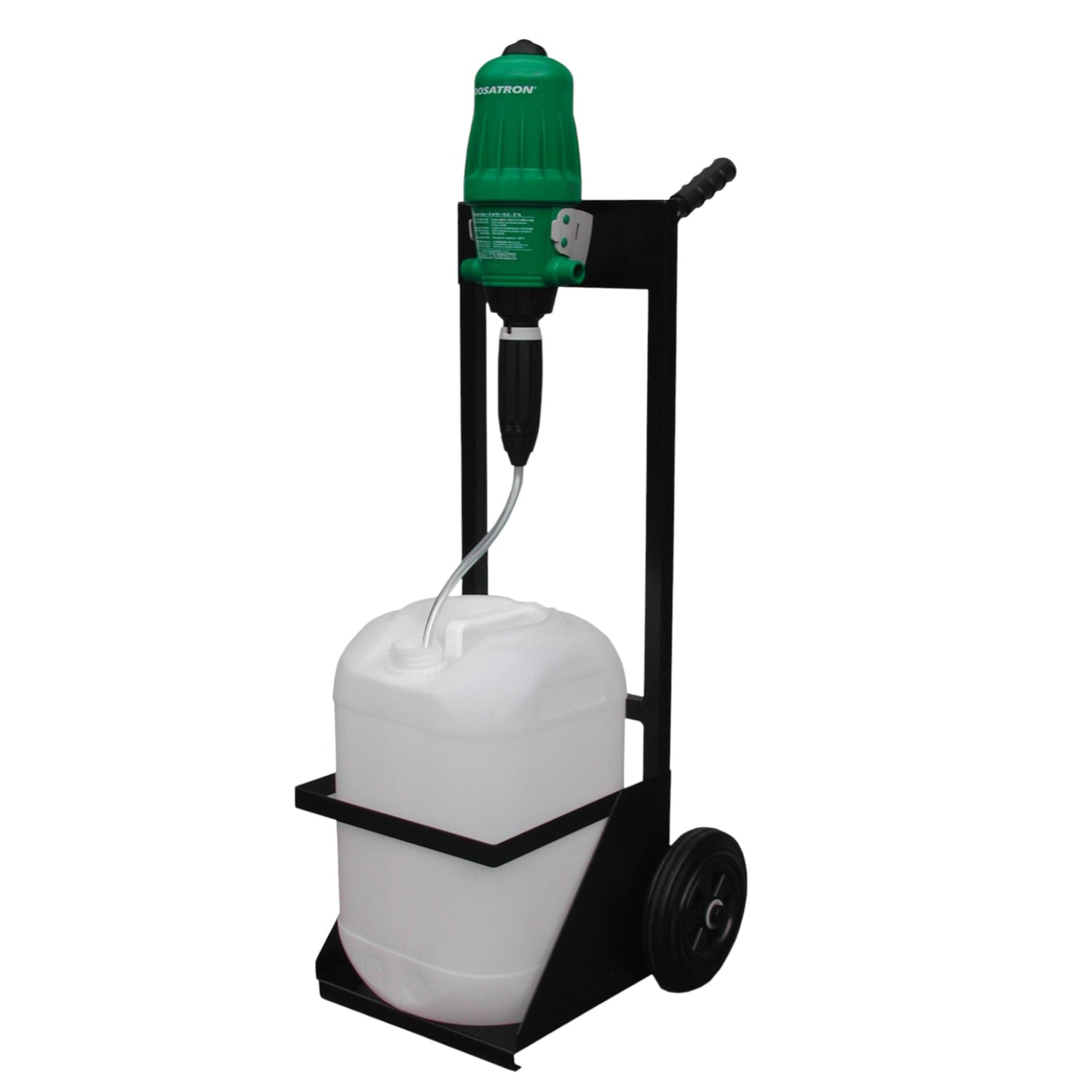
£806.67
Unit price per£806.67
Unit price perThe DOSATRON D3 GL2 Trolley System with 25L Barrel is designed for mobile proportional dosing using a D3 GL2 injector and 25L concentrate barrel.
DOSATRON proportional dosing equipment uses irrigation-water flow to introduce a concentrate into the water stream. Correct selection, installation and calibration are essential where nutrient or treatment concentration matters to crop performance.
Key benefits
Mobile dosing arrangement
The trolley format provides a practical way to position compatible dosing equipment and a concentrate container together. Keep the trolley stable, route suction and water connections without kinks and prevent the concentrate container from being contaminated during filling or movement.
Before moving the assembly, isolate it appropriately and secure hoses and components so they are not dragged or strained.
Installation & hydraulic conditions
Install the unit in the correct flow direction and within the water-flow and pressure conditions specified for the exact DOSATRON model. Use suitable filtration and provide isolation or bypass arrangements where required by the installation.
Pipework should be supported so its weight is not transferred into the injector body.
Concentrate preparation
Prepare fertiliser or treatment concentrate according to the product instructions and the target final concentration. Ensure products are fully compatible with the dosing equipment and with any other materials entering the irrigation system.
Where concentrated fertilisers are mixed, consider solubility and chemical compatibility to avoid precipitation or blocked irrigation components.
Calibration & verification
Check the delivered concentration after commissioning and periodically during use. Water quality, concentrate condition, maintenance state and installation issues can affect practical dosing performance.
Maintenance
Follow the current DOSATRON maintenance instructions for seals, suction components and internal service parts. Flush equipment where appropriate after use and protect it from freezing or incompatible chemicals.
DOSATRON D3 GL2 Trolley System with 25L Barrel product details
| Brand | DOSATRON |
|---|---|
| Product | DOSATRON D3 GL2 Trolley System with 25L Barrel |
| Primary use | mobile proportional dosing using a D3 GL2 injector and 25L concentrate barrel |
| Application | Professional proportional irrigation dosing |
| Concentrate container | 25L barrel |
DOSATRON D3 GL2 Trolley System with 25L Barrel FAQs
What is this DOSATRON product used for?
Mobile proportional dosing using a d3 gl2 injector and 25l concentrate barrel. Does a DOSATRON injector need electricity to dose?
These products are intended as water-powered proportional dosing equipment; confirm the exact model installation requirements before use. How do I set the dosing concentration?
Follow the current DOSATRON instructions for the exact model and verify the delivered solution after adjustment. Should the irrigation water be filtered?
Use filtration appropriate to the injector and downstream irrigation equipment. Can any fertiliser concentrate be used?
Confirm chemical compatibility, solubility and the DOSATRON material-compatibility requirements before dosing. Should dosing be checked after commissioning?
Yes. Verify the delivered concentration using an appropriate measurement method. Can different DOSATRON models use the same settings?
Do not assume so. Model ranges and adjustment systems can differ. What maintenance is required?
Follow DOSATRON guidance for seals, suction assemblies and service parts, and flush or protect the unit as appropriate. What should I consider when preparing concentrate?
Calculate the concentrate strength from the target final application rate and injector setting, and make sure the materials remain soluble and compatible.

The DOSATRON D3GL5 Greenline Dosing Pump is designed for water-powered proportional dosing in compatible horticultural irrigation systems.
DOSATRON proportional dosing equipment uses irrigation-water flow to introduce a concentrate into the water stream. Correct selection, installation and calibration are essential where nutrient or treatment concentration matters to crop performance.
Key benefits
Proportional dosing in irrigation water
Set the injector according to the required concentration and the current DOSATRON instructions for the exact model. Do not assume settings from another injector model are interchangeable.
After adjustment, verify the delivered solution using an appropriate measurement method for the product being dosed rather than relying only on the scale setting.
Installation & hydraulic conditions
Install the unit in the correct flow direction and within the water-flow and pressure conditions specified for the exact DOSATRON model. Use suitable filtration and provide isolation or bypass arrangements where required by the installation.
Pipework should be supported so its weight is not transferred into the injector body.
Concentrate preparation
Prepare fertiliser or treatment concentrate according to the product instructions and the target final concentration. Ensure products are fully compatible with the dosing equipment and with any other materials entering the irrigation system.
Where concentrated fertilisers are mixed, consider solubility and chemical compatibility to avoid precipitation or blocked irrigation components.
Calibration & verification
Check the delivered concentration after commissioning and periodically during use. Water quality, concentrate condition, maintenance state and installation issues can affect practical dosing performance.
Maintenance
Follow the current DOSATRON maintenance instructions for seals, suction components and internal service parts. Flush equipment where appropriate after use and protect it from freezing or incompatible chemicals.
DOSATRON D3GL5 Greenline Dosing Pump product details
| Brand | DOSATRON |
|---|---|
| Product | DOSATRON D3GL5 Greenline Dosing Pump |
| Primary use | water-powered proportional dosing in compatible horticultural irrigation systems |
| Application | Professional proportional irrigation dosing |
DOSATRON D3GL5 Greenline Dosing Pump FAQs
What is this DOSATRON product used for?
Water-powered proportional dosing in compatible horticultural irrigation systems. Does a DOSATRON injector need electricity to dose?
These products are intended as water-powered proportional dosing equipment; confirm the exact model installation requirements before use. How do I set the dosing concentration?
Follow the current DOSATRON instructions for the exact model and verify the delivered solution after adjustment. Should the irrigation water be filtered?
Use filtration appropriate to the injector and downstream irrigation equipment. Can any fertiliser concentrate be used?
Confirm chemical compatibility, solubility and the DOSATRON material-compatibility requirements before dosing. Should dosing be checked after commissioning?
Yes. Verify the delivered concentration using an appropriate measurement method. Can different DOSATRON models use the same settings?
Do not assume so. Model ranges and adjustment systems can differ. What maintenance is required?
Follow DOSATRON guidance for seals, suction assemblies and service parts, and flush or protect the unit as appropriate. What should I consider when preparing concentrate?
Calculate the concentrate strength from the target final application rate and injector setting, and make sure the materials remain soluble and compatible.

The DOSATRON D9GL2 Injector Unit is designed for water-powered proportional dosing in compatible horticultural irrigation systems.
DOSATRON proportional dosing equipment uses irrigation-water flow to introduce a concentrate into the water stream. Correct selection, installation and calibration are essential where nutrient or treatment concentration matters to crop performance.
Key benefits
Proportional dosing in irrigation water
Set the injector according to the required concentration and the current DOSATRON instructions for the exact model. Do not assume settings from another injector model are interchangeable.
After adjustment, verify the delivered solution using an appropriate measurement method for the product being dosed rather than relying only on the scale setting.
Installation & hydraulic conditions
Install the unit in the correct flow direction and within the water-flow and pressure conditions specified for the exact DOSATRON model. Use suitable filtration and provide isolation or bypass arrangements where required by the installation.
Pipework should be supported so its weight is not transferred into the injector body.
Concentrate preparation
Prepare fertiliser or treatment concentrate according to the product instructions and the target final concentration. Ensure products are fully compatible with the dosing equipment and with any other materials entering the irrigation system.
Where concentrated fertilisers are mixed, consider solubility and chemical compatibility to avoid precipitation or blocked irrigation components.
Calibration & verification
Check the delivered concentration after commissioning and periodically during use. Water quality, concentrate condition, maintenance state and installation issues can affect practical dosing performance.
Maintenance
Follow the current DOSATRON maintenance instructions for seals, suction components and internal service parts. Flush equipment where appropriate after use and protect it from freezing or incompatible chemicals.
DOSATRON D9GL2 Injector Unit product details
| Brand | DOSATRON |
|---|---|
| Product | DOSATRON D9GL2 Injector Unit |
| Primary use | water-powered proportional dosing in compatible horticultural irrigation systems |
| Application | Professional proportional irrigation dosing |
DOSATRON D9GL2 Injector Unit FAQs
What is this DOSATRON product used for?
Water-powered proportional dosing in compatible horticultural irrigation systems. Does a DOSATRON injector need electricity to dose?
These products are intended as water-powered proportional dosing equipment; confirm the exact model installation requirements before use. How do I set the dosing concentration?
Follow the current DOSATRON instructions for the exact model and verify the delivered solution after adjustment. Should the irrigation water be filtered?
Use filtration appropriate to the injector and downstream irrigation equipment. Can any fertiliser concentrate be used?
Confirm chemical compatibility, solubility and the DOSATRON material-compatibility requirements before dosing. Should dosing be checked after commissioning?
Yes. Verify the delivered concentration using an appropriate measurement method. Can different DOSATRON models use the same settings?
Do not assume so. Model ranges and adjustment systems can differ. What maintenance is required?
Follow DOSATRON guidance for seals, suction assemblies and service parts, and flush or protect the unit as appropriate. What should I consider when preparing concentrate?
Calculate the concentrate strength from the target final application rate and injector setting, and make sure the materials remain soluble and compatible.

The DOSATRON Trolley with 25L Barrel is designed for mobile support and concentrate-container arrangement for a compatible dosing injector.
DOSATRON proportional dosing equipment uses irrigation-water flow to introduce a concentrate into the water stream. Correct selection, installation and calibration are essential where nutrient or treatment concentration matters to crop performance.
Key benefits
Mobile dosing arrangement
The trolley format provides a practical way to position compatible dosing equipment and a concentrate container together. Keep the trolley stable, route suction and water connections without kinks and prevent the concentrate container from being contaminated during filling or movement.
Before moving the assembly, isolate it appropriately and secure hoses and components so they are not dragged or strained.
Installation & hydraulic conditions
Install the unit in the correct flow direction and within the water-flow and pressure conditions specified for the exact DOSATRON model. Use suitable filtration and provide isolation or bypass arrangements where required by the installation.
Pipework should be supported so its weight is not transferred into the injector body.
Concentrate preparation
Prepare fertiliser or treatment concentrate according to the product instructions and the target final concentration. Ensure products are fully compatible with the dosing equipment and with any other materials entering the irrigation system.
Where concentrated fertilisers are mixed, consider solubility and chemical compatibility to avoid precipitation or blocked irrigation components.
Calibration & verification
Check the delivered concentration after commissioning and periodically during use. Water quality, concentrate condition, maintenance state and installation issues can affect practical dosing performance.
Maintenance
Follow the current DOSATRON maintenance instructions for seals, suction components and internal service parts. Flush equipment where appropriate after use and protect it from freezing or incompatible chemicals.
DOSATRON Trolley with 25L Barrel product details
| Brand | DOSATRON |
|---|---|
| Product | DOSATRON Trolley with 25L Barrel |
| Primary use | mobile support and concentrate-container arrangement for a compatible dosing injector |
| Application | Professional proportional irrigation dosing |
| Concentrate container | 25L barrel |
DOSATRON Trolley with 25L Barrel FAQs
What is this DOSATRON product used for?
Mobile support and concentrate-container arrangement for a compatible dosing injector. Does a DOSATRON injector need electricity to dose?
These products are intended as water-powered proportional dosing equipment; confirm the exact model installation requirements before use. How do I set the dosing concentration?
Follow the current DOSATRON instructions for the exact model and verify the delivered solution after adjustment. Should the irrigation water be filtered?
Use filtration appropriate to the injector and downstream irrigation equipment. Can any fertiliser concentrate be used?
Confirm chemical compatibility, solubility and the DOSATRON material-compatibility requirements before dosing. Should dosing be checked after commissioning?
Yes. Verify the delivered concentration using an appropriate measurement method. Can different DOSATRON models use the same settings?
Do not assume so. Model ranges and adjustment systems can differ. What maintenance is required?
Follow DOSATRON guidance for seals, suction assemblies and service parts, and flush or protect the unit as appropriate. What should I consider when preparing concentrate?
Calculate the concentrate strength from the target final application rate and injector setting, and make sure the materials remain soluble and compatible.

The Dual Purpose Garden Rake is designed for levelling, cultivating and gathering suitable garden material.
This product is intended for practical professional horticultural, nursery, greenhouse, landscaping or garden use according to its specific application.
Key benefits
Professional & garden use
Use this product for levelling, cultivating and gathering suitable garden material and choose equipment appropriate to the scale and conditions of the task. Inspect tools or equipment before use and avoid forcing them beyond their intended function.
Use & maintenance
Keep the product clean and inspect it periodically for wear, damage or contamination appropriate to its application. Store it in conditions that protect it from unnecessary weather, crushing or physical damage.
Choosing the right product
Check dimensions, capacity, connection type or intended application before ordering. Similar-looking horticultural products may not be interchangeable where technical compatibility matters.
Dual Purpose Garden Rake product details
| Product type | Dual-Purpose Garden Rake |
|---|---|
| Primary use | levelling, cultivating and gathering suitable garden material |
| Source designation | Dual Purpose Garden Rake |
| Application | Professional horticulture, nursery, greenhouse, landscaping or garden use |
Dual Purpose Garden Rake FAQs
What is this product used for?
Levelling, cultivating and gathering suitable garden material. Who is it suitable for?
Professional growers, nurseries, landscapers, garden centres or gardeners where the product matches the intended task. Are the dimensions and technical details retained?
Yes. The product title retains the relevant source dimensions or technical designation. How should it be maintained?
Keep it clean, inspect it for damage and follow maintenance appropriate to the product type. How should it be stored?
Store it clean and protected from unnecessary weather, contamination or physical damage. How do I check compatibility?
Check dimensions, connection type, capacity and intended application before ordering. Can it be used outside its intended application?
Use it only where its design and specification are suitable for the task. Should it be inspected before use?
Yes. Check condition and suitability before putting the product into service.


£8.75
Unit price per£8.75
Unit price perThe DuPont Tyvek 500 Xpert Protective Coverall - Large is personal protective equipment intended for limited chemical/protective coverall use subject to the garment's current certification and manufacturer instructions.
PPE must be selected from a workplace risk assessment. The correct protection depends on the specific substance or hazard, concentration, exposure route, task, duration and the current certified performance of the complete PPE system.
Key considerations
Protective clothing selection
Select coveralls according to the substance, exposure type and task. A chemical-protective garment is not automatically suitable for every chemical or concentration. Check the current DuPont technical data, permeation information and garment certification for the intended use.
Choose the correct size so the garment allows movement without excessive strain at seams or closures. Inspect it before use and replace damaged or contaminated disposable garments according to site procedures.
Inspection before use
Check PPE for damage, contamination, deterioration and correct assembly before every use. Do not use damaged lenses, seals, straps, filters, closures or garment material where protective performance may be compromised.
Cleaning, storage & replacement
Follow the manufacturer's instructions for cleaning reusable PPE and for storing filters and masks away from contamination. Disposable items should not be reused unless the manufacturer specifically permits it and safe reuse can be assured.
Workplace controls
PPE is normally the final layer of protection rather than a substitute for elimination, substitution, engineering controls, ventilation or safe working procedures. Follow the relevant COSHH assessment and workplace controls for hazardous substances.
DuPont Tyvek 500 Xpert Protective Coverall - Large product details
| Brand | DuPont |
|---|---|
| Product type | Protective Coverall |
| Primary use | limited chemical/protective coverall use subject to the garment's current certification and manufacturer instructions |
| Selection requirement | Workplace risk assessment and current manufacturer instructions |
DuPont Tyvek 500 Xpert Protective Coverall - Large FAQs
How do I know if this PPE is suitable?
Use the workplace risk assessment and current manufacturer technical information for the exact hazard and task. Does one PPE product protect against every chemical or hazard?
No. Protection depends on the product's certification, hazard type, concentration, exposure route and conditions of use. Should PPE be inspected before use?
Yes. Check for damage, contamination, deterioration and correct assembly before every use. Can damaged PPE still be used briefly?
No. Replace or remove compromised PPE from service where protective performance may be affected. How should PPE be stored?
Follow manufacturer instructions and protect it from contamination, damage, excessive heat, sunlight or other harmful storage conditions. Does PPE replace ventilation or other controls?
No. PPE is normally used alongside appropriate engineering and procedural controls identified by the risk assessment. Where should I check certification and protection levels?
Use the current manufacturer documentation and markings for the exact product. Can disposable PPE always be reused?
No. Follow the manufacturer's instructions and workplace contamination procedures.


£8.75
Unit price per£8.75
Unit price perThe DuPont Tyvek 500 Xpert Protective Coverall - Medium is personal protective equipment intended for limited chemical/protective coverall use subject to the garment's current certification and manufacturer instructions.
PPE must be selected from a workplace risk assessment. The correct protection depends on the specific substance or hazard, concentration, exposure route, task, duration and the current certified performance of the complete PPE system.
Key considerations
Protective clothing selection
Select coveralls according to the substance, exposure type and task. A chemical-protective garment is not automatically suitable for every chemical or concentration. Check the current DuPont technical data, permeation information and garment certification for the intended use.
Choose the correct size so the garment allows movement without excessive strain at seams or closures. Inspect it before use and replace damaged or contaminated disposable garments according to site procedures.
Inspection before use
Check PPE for damage, contamination, deterioration and correct assembly before every use. Do not use damaged lenses, seals, straps, filters, closures or garment material where protective performance may be compromised.
Cleaning, storage & replacement
Follow the manufacturer's instructions for cleaning reusable PPE and for storing filters and masks away from contamination. Disposable items should not be reused unless the manufacturer specifically permits it and safe reuse can be assured.
Workplace controls
PPE is normally the final layer of protection rather than a substitute for elimination, substitution, engineering controls, ventilation or safe working procedures. Follow the relevant COSHH assessment and workplace controls for hazardous substances.
DuPont Tyvek 500 Xpert Protective Coverall - Medium product details
| Brand | DuPont |
|---|---|
| Product type | Protective Coverall |
| Primary use | limited chemical/protective coverall use subject to the garment's current certification and manufacturer instructions |
| Selection requirement | Workplace risk assessment and current manufacturer instructions |
DuPont Tyvek 500 Xpert Protective Coverall - Medium FAQs
How do I know if this PPE is suitable?
Use the workplace risk assessment and current manufacturer technical information for the exact hazard and task. Does one PPE product protect against every chemical or hazard?
No. Protection depends on the product's certification, hazard type, concentration, exposure route and conditions of use. Should PPE be inspected before use?
Yes. Check for damage, contamination, deterioration and correct assembly before every use. Can damaged PPE still be used briefly?
No. Replace or remove compromised PPE from service where protective performance may be affected. How should PPE be stored?
Follow manufacturer instructions and protect it from contamination, damage, excessive heat, sunlight or other harmful storage conditions. Does PPE replace ventilation or other controls?
No. PPE is normally used alongside appropriate engineering and procedural controls identified by the risk assessment. Where should I check certification and protection levels?
Use the current manufacturer documentation and markings for the exact product. Can disposable PPE always be reused?
No. Follow the manufacturer's instructions and workplace contamination procedures.


£8.75
Unit price per£8.75
Unit price perThe DuPont Tyvek 500 Xpert Protective Coverall - XL is personal protective equipment intended for limited chemical/protective coverall use subject to the garment's current certification and manufacturer instructions.
PPE must be selected from a workplace risk assessment. The correct protection depends on the specific substance or hazard, concentration, exposure route, task, duration and the current certified performance of the complete PPE system.
Key considerations
Protective clothing selection
Select coveralls according to the substance, exposure type and task. A chemical-protective garment is not automatically suitable for every chemical or concentration. Check the current DuPont technical data, permeation information and garment certification for the intended use.
Choose the correct size so the garment allows movement without excessive strain at seams or closures. Inspect it before use and replace damaged or contaminated disposable garments according to site procedures.
Inspection before use
Check PPE for damage, contamination, deterioration and correct assembly before every use. Do not use damaged lenses, seals, straps, filters, closures or garment material where protective performance may be compromised.
Cleaning, storage & replacement
Follow the manufacturer's instructions for cleaning reusable PPE and for storing filters and masks away from contamination. Disposable items should not be reused unless the manufacturer specifically permits it and safe reuse can be assured.
Workplace controls
PPE is normally the final layer of protection rather than a substitute for elimination, substitution, engineering controls, ventilation or safe working procedures. Follow the relevant COSHH assessment and workplace controls for hazardous substances.
DuPont Tyvek 500 Xpert Protective Coverall - XL product details
| Brand | DuPont |
|---|---|
| Product type | Protective Coverall |
| Primary use | limited chemical/protective coverall use subject to the garment's current certification and manufacturer instructions |
| Selection requirement | Workplace risk assessment and current manufacturer instructions |
DuPont Tyvek 500 Xpert Protective Coverall - XL FAQs
How do I know if this PPE is suitable?
Use the workplace risk assessment and current manufacturer technical information for the exact hazard and task. Does one PPE product protect against every chemical or hazard?
No. Protection depends on the product's certification, hazard type, concentration, exposure route and conditions of use. Should PPE be inspected before use?
Yes. Check for damage, contamination, deterioration and correct assembly before every use. Can damaged PPE still be used briefly?
No. Replace or remove compromised PPE from service where protective performance may be affected. How should PPE be stored?
Follow manufacturer instructions and protect it from contamination, damage, excessive heat, sunlight or other harmful storage conditions. Does PPE replace ventilation or other controls?
No. PPE is normally used alongside appropriate engineering and procedural controls identified by the risk assessment. Where should I check certification and protection levels?
Use the current manufacturer documentation and markings for the exact product. Can disposable PPE always be reused?
No. Follow the manufacturer's instructions and workplace contamination procedures.


£8.75
Unit price per£8.75
Unit price perThe DuPont Tyvek 500 Xpert Protective Coverall - XXL is personal protective equipment intended for limited chemical/protective coverall use subject to the garment's current certification and manufacturer instructions.
PPE must be selected from a workplace risk assessment. The correct protection depends on the specific substance or hazard, concentration, exposure route, task, duration and the current certified performance of the complete PPE system.
Key considerations
Protective clothing selection
Select coveralls according to the substance, exposure type and task. A chemical-protective garment is not automatically suitable for every chemical or concentration. Check the current DuPont technical data, permeation information and garment certification for the intended use.
Choose the correct size so the garment allows movement without excessive strain at seams or closures. Inspect it before use and replace damaged or contaminated disposable garments according to site procedures.
Inspection before use
Check PPE for damage, contamination, deterioration and correct assembly before every use. Do not use damaged lenses, seals, straps, filters, closures or garment material where protective performance may be compromised.
Cleaning, storage & replacement
Follow the manufacturer's instructions for cleaning reusable PPE and for storing filters and masks away from contamination. Disposable items should not be reused unless the manufacturer specifically permits it and safe reuse can be assured.
Workplace controls
PPE is normally the final layer of protection rather than a substitute for elimination, substitution, engineering controls, ventilation or safe working procedures. Follow the relevant COSHH assessment and workplace controls for hazardous substances.
DuPont Tyvek 500 Xpert Protective Coverall - XXL product details
| Brand | DuPont |
|---|---|
| Product type | Protective Coverall |
| Primary use | limited chemical/protective coverall use subject to the garment's current certification and manufacturer instructions |
| Selection requirement | Workplace risk assessment and current manufacturer instructions |
DuPont Tyvek 500 Xpert Protective Coverall - XXL FAQs
How do I know if this PPE is suitable?
Use the workplace risk assessment and current manufacturer technical information for the exact hazard and task. Does one PPE product protect against every chemical or hazard?
No. Protection depends on the product's certification, hazard type, concentration, exposure route and conditions of use. Should PPE be inspected before use?
Yes. Check for damage, contamination, deterioration and correct assembly before every use. Can damaged PPE still be used briefly?
No. Replace or remove compromised PPE from service where protective performance may be affected. How should PPE be stored?
Follow manufacturer instructions and protect it from contamination, damage, excessive heat, sunlight or other harmful storage conditions. Does PPE replace ventilation or other controls?
No. PPE is normally used alongside appropriate engineering and procedural controls identified by the risk assessment. Where should I check certification and protection levels?
Use the current manufacturer documentation and markings for the exact product. Can disposable PPE always be reused?
No. Follow the manufacturer's instructions and workplace contamination procedures.
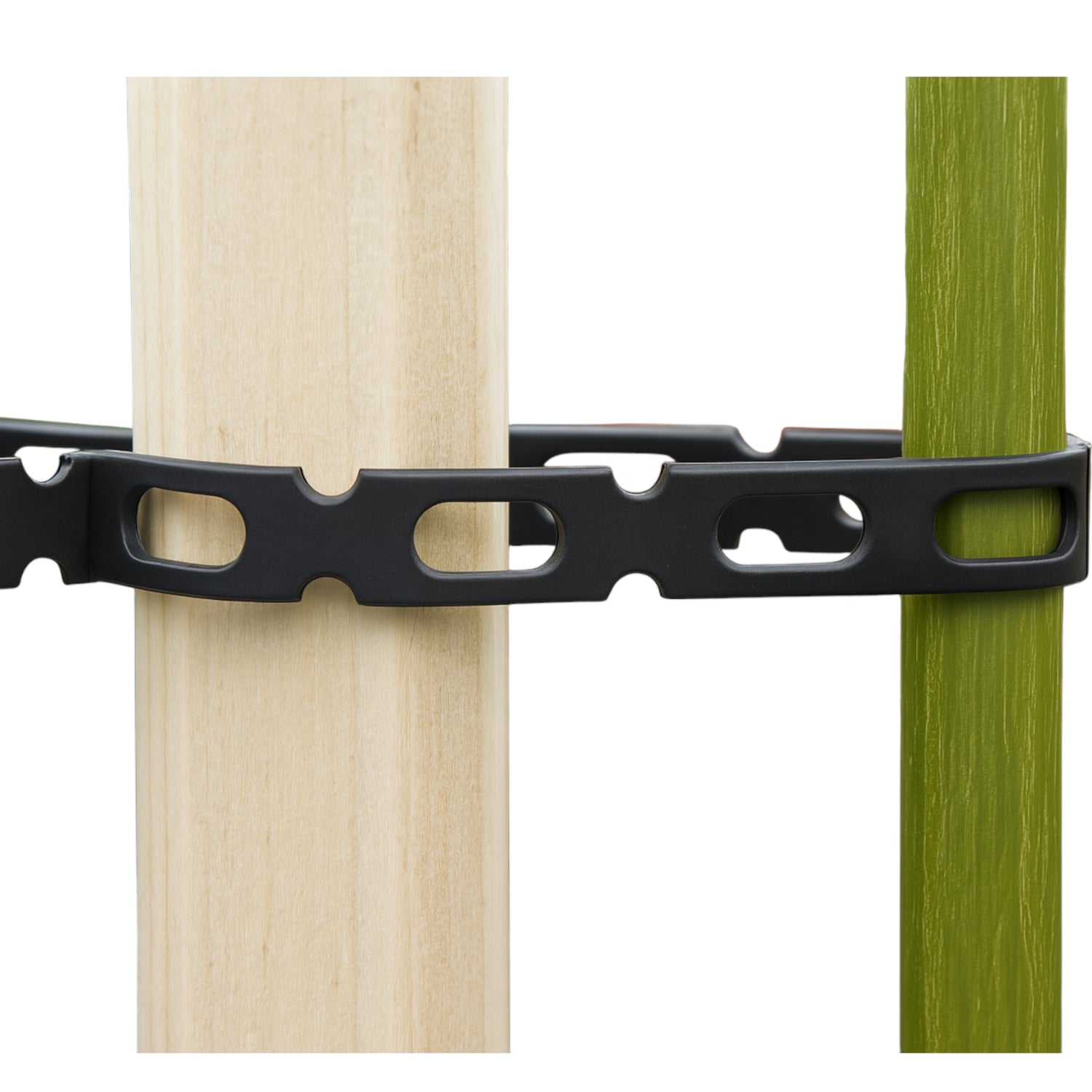
£122.22
Unit price per£122.22
Unit price perThe Eco Chain Lock 2.8cm x 30m Coil BLACK (Box of 5) is a adjustable chain-lock tree tie intended for securing trees and shrubs to suitable stakes or supports.
Correct tree and shrub support helps newly planted or container-grown stock establish while reducing excessive movement at the root zone. Supports should hold the plant securely without creating unnecessary pressure on the stem or trunk.
Supplied as: box of 5.
Key benefits
Tree & shrub support
Use this product for securing trees and shrubs to suitable stakes or supports. Select stakes, ties and support components according to the size of the plant, exposure of the site and the support system being used.
A correctly installed support should reduce damaging movement without holding the trunk completely rigid. Some natural movement helps the plant develop as it establishes.
Installation & ongoing checks
Position ties and support components so they do not rub, cut into or constrict the bark. Avoid over-tightening and inspect the installation regularly as the trunk or stems increase in diameter.
Adjust or remove supports once they are no longer required. Leaving a tie in place for too long can cause restriction or damage as the plant grows.
For nurseries, landscapers & tree planting
Tree-support products are useful for nursery stock, landscape planting, public-realm schemes and garden installations where newly planted trees or shrubs need temporary stabilisation.
Eco Chain Lock 2.8cm x 30m Coil BLACK (Box of 5) product details
| Product type | Adjustable chain-lock tree tie |
|---|---|
| Primary use | securing trees and shrubs to suitable stakes or supports |
| Stated size | 2.8cm x 30m |
| Colour | Black |
| Box quantity | 5 |
Eco Chain Lock 2.8cm x 30m Coil BLACK (Box of 5) FAQs
What size is this product?
The stated size is 2.8cm x 30m. How many are supplied?
This product is supplied in a box of 5. How tight should a tree tie be?
It should support the plant without constricting the trunk or rubbing the bark. Leave appropriate room for movement and growth. How often should tree ties be checked?
Inspect supports regularly, particularly during active growth, and loosen or reposition them before they become restrictive. How long should a tree remain staked?
Only for as long as support is genuinely required. Establishment time varies with plant size, species, root system and site exposure. Can the same support be used for every tree?
No. Match the tie, stake and support arrangement to the trunk size, plant form and site conditions.

£4.92
Unit price per£4.92
Unit price perEcofective Basket & Tub Feed 1.5L is a concentrated organic-based liquid plant feed developed specifically for plants growing in hanging baskets, tubs, pots and containers. Designed to support healthy growth and impressive flowering, it provides an easy way to maintain container displays throughout the growing season.
Container plants have a limited volume of compost from which to obtain nutrients. As plants establish, grow and begin flowering, the original nutrient charge in the growing medium is gradually depleted. Regular supplementary feeding therefore becomes particularly important for maintaining vigorous growth and colourful displays.
Ecofective Basket & Tub Feed provides a convenient concentrated feed for this purpose. The 1.5L bottle is designed for repeated use across patio containers, hanging baskets and other seasonal planting.
Why choose Ecofective Basket & Tub Feed?
Specialist feeding for baskets, tubs & containers
Hanging baskets and patio containers can produce spectacular displays, but the restricted amount of compost around their roots means plants depend heavily on regular watering and feeding.
During active growth, a densely planted basket may contain several vigorous plants all competing for the same supply of nutrients. Once flowering begins, nutritional demand can increase further as plants simultaneously maintain foliage, produce new shoots and develop flowers.
Ecofective Basket & Tub Feed is formulated specifically with this type of container planting in mind, providing supplementary nutrition that can be incorporated easily into the normal watering routine.
Where can Ecofective Basket & Tub Feed be used?
The concentrated liquid feed is ideal for a wide variety of container-grown ornamental plants, including those planted in:
It is particularly useful during the main growing and flowering season when established container plants may have exhausted much of the readily available nutrition originally supplied by their compost.
How to use Ecofective Basket & Tub Feed
Shake the bottle thoroughly before use. Basket & Tub Feed is a concentrated liquid plant food and should be diluted with water before application.
Measure the required amount into a watering can, add water and mix thoroughly. Apply the diluted solution around the compost and root zone as part of the plant's normal watering routine.
Follow the current instructions on the product packaging for the correct dilution rate and feeding frequency. Plant requirements can vary according to species, container size, growth rate, weather and stage of development.
Do not allow heavily planted baskets and containers to dry excessively between watering. Feeding is most effective when combined with a consistent watering programme and suitable drainage.
Maintaining productive summer displays
A healthy hanging basket or patio container needs more than occasional watering. As plants become established, regular deadheading, appropriate watering and continued nutrition all help maintain the display.
Removing spent flowers encourages many flowering plants to continue producing new blooms rather than directing energy towards seed production. At the same time, regular feeding helps replenish nutrients being used by vigorous plants.
Water requirements can rise dramatically during warm weather. Check baskets and containers frequently and adjust watering according to conditions rather than relying solely on a fixed schedule.
Supporting Greenfingers Charity
Ecofective Basket & Tub Feed also supports Greenfingers Charity, with 50p from the product donated to the charity.
Greenfingers Charity creates and improves therapeutic garden spaces for children and families who spend time in children's hospices. The partnership adds a charitable contribution to a practical garden-care product designed for colourful flowering displays.
Ecofective Basket & Tub Feed product details
| Brand | Ecofective |
|---|---|
| Product | Basket & Tub Feed |
| Pack size | 1.5L |
| Format | Concentrated liquid plant feed |
| Formulation | Organic-based |
| Suitable for | Hanging baskets, tubs, pots, window boxes and containers |
| Primary use | Supporting healthy growth and flowering in container-grown plants |
| Application | Dilute with water according to the current manufacturer's pack directions |
| Charity contribution | 50p donated to Greenfingers Charity |
| Outer case quantity | 6 x 1.5L bottles |
Ecofective Basket & Tub Feed FAQs
What is Ecofective Basket & Tub Feed?
It is a concentrated organic-based liquid plant feed designed specifically for plants growing in hanging baskets, tubs, pots and other containers. Why do hanging baskets need regular feeding?
Basket plants grow in a restricted volume of compost. As plants become larger and begin flowering, the nutrients originally contained in the compost are gradually used, making supplementary feeding increasingly important. Can I use Basket & Tub Feed in patio pots?
Yes. It is suitable for patio pots and other decorative containers as well as hanging baskets, tubs, window boxes and planters. Does the feed need to be diluted?
Yes. This is a concentrated liquid feed. Dilute it with water according to the current instructions on the product packaging before applying it to plants. Can it be used throughout the flowering season?
It is designed for regular container plant care and is particularly useful during periods of vigorous growth and flowering. Follow the manufacturer's current feeding schedule for application frequency. What is the Greenfingers Charity contribution?
50p from the product is donated to Greenfingers Charity, which creates therapeutic garden spaces for children and families spending time in children's hospices. How should I look after heavily planted hanging baskets?
Alongside regular feeding, check moisture levels frequently, particularly during hot or windy weather. Remove spent flowers where appropriate and make sure excess irrigation water can drain freely from the container. How many bottles are supplied per outer case?
This SKU is supplied in an outer case quantity of 6 x 1.5L bottles.


£4.35
Unit price per£4.35
Unit price perEcofective Bug Stoppa 1L is a pesticide-free, ready-to-use pest control spray for flowers, fruit, vegetables and ornamental plants. Working through a physical mode of action, it controls common garden pests including greenfly, blackfly, aphids, spider mites, mealybugs, scale insects and psyllids while also helping to control powdery mildew.
Designed for gardeners who want effective pest control without relying on conventional pesticides, Bug Stoppa uses a physical method of control. Thorough application directly onto affected plants helps control susceptible pests, while regular use can also help remove active powdery mildew spores from foliage.
The formula additionally contains plant nutrients, combining pest protection with nourishment to help support healthy flowers, fruit and vegetables.
Supplied in a convenient 1 litre ready-to-use trigger pouch, Bug Stoppa requires no mixing or dilution and can be applied directly to the upper and lower surfaces of plant leaves.
Why choose Ecofective Bug Stoppa?
What pests does Ecofective Bug Stoppa control?
Bug Stoppa is designed to control a broad range of common sap-feeding and plant-damaging pests. Ecofective specifically identifies:
Because the formulation relies on physical control, good contact and thorough coverage are important. Pest colonies frequently develop on sheltered parts of the plant, particularly the undersides of leaves, so both upper and lower leaf surfaces should be treated.
How does pesticide-free Bug Stoppa work?
Bug Stoppa uses a physical mode of action rather than relying on a conventional pesticide active ingredient. The formulation acts directly against susceptible pests when correctly applied.
Physical pest control makes thorough application particularly important. Spray coverage should reach the pests themselves rather than only treating the most visible upper surfaces of the plant.
This makes regular plant inspection useful. Check underneath leaves, around fresh shoots and other sheltered areas where small pests can establish before populations become obvious.
Also helps control powdery mildew
Bug Stoppa provides an additional benefit beyond insect and mite control. Ecofective states that regular use can help control powdery mildew by physically washing foliage and removing active mildew spores.
This combined action can be particularly useful where plants are experiencing pest pressure alongside powdery mildew, reducing the need for separate products for the listed applications.
For flowers, fruit & vegetables
Ecofective Bug Stoppa is suitable for use on edible and ornamental plants, giving it broad usefulness throughout the garden and growing area.
It can be used on suitable flowers, fruit and vegetable plants affected by the listed pests, both outdoors and under cover, in accordance with the manufacturer's instructions.
The formulation also provides plant nutrients, helping nourish treated plants alongside its pest-control action.
How to use Ecofective Bug Stoppa
Bug Stoppa is supplied ready to use and does not require dilution.
Always read and follow the current instructions supplied with the product before use.
Spot pest problems early
Regular inspection can make garden pest problems easier to manage. Aphids and other small pests often establish on new shoots or the undersides of leaves before damage becomes widespread.
Look for distorted new growth, sticky deposits, visible colonies, fine webbing or changes in leaf appearance. Early identification makes it easier to target affected areas thoroughly with Bug Stoppa.
Recheck treated plants regularly, particularly during periods of rapid plant growth or when conditions favour pest activity.
Flexible 1L trigger pouch
Ecofective supplies Bug Stoppa in a lightweight flexible pouch with an ergonomic thumb-pump trigger. The trigger is designed for straightforward one-handed application while the pouch reduces the amount of rigid packaging associated with a conventional spray bottle.
Ecofective states that its flexible pouch uses up to 55% less plastic than a traditional rigid bottle. The pack is also more compact and lightweight, helping reduce material use and waste.
Ecofective Bug Stoppa 1L product details
| Brand | Ecofective |
|---|---|
| Product | Bug Stoppa |
| Pack size | 1L |
| Format | Ready-to-use trigger pouch |
| Dilution required | No |
| Mode of action | Physical, pesticide-free pest control |
| Target pests | Greenfly, blackfly, aphids, spider mites, mealybugs, scale insects and psyllids |
| Powdery mildew | Regular use helps control powdery mildew by physically washing active spores from foliage |
| Suitable plants | Edible and ornamental plants, including flowers, fruit and vegetables |
| Plant nutrition | Contains nutrients to support healthy plant growth |
| Application | Apply thoroughly to upper and lower leaf surfaces |
| Reapplication | Weekly to maintain pest control |
| Packaging | Flexible trigger pouch using up to 55% less plastic than a traditional rigid bottle |
| Outer case quantity | 6 x 1L trigger pouches |
Ecofective Bug Stoppa FAQs
Which pests does Ecofective Bug Stoppa control?
Ecofective identifies greenfly, blackfly, aphids, spider mites, mealybugs, scale insects and psyllids among the pests controlled by Bug Stoppa. Is Bug Stoppa pesticide free?
Yes. Bug Stoppa works through a physical mode of action rather than conventional pesticide chemistry. Can Bug Stoppa be used on fruit and vegetables?
Yes. Ecofective specifies Bug Stoppa for use on edible and ornamental plants, including flowers, fruit and vegetables. Always follow the current instructions supplied with the product. Does Bug Stoppa control powdery mildew?
Regular use can help control powdery mildew by physically washing the foliage to remove active mildew spores. How often should Ecofective Bug Stoppa be applied?
Ecofective recommends reapplying Bug Stoppa weekly to maintain control of susceptible pests. Where should I spray Bug Stoppa on the plant?
Apply the product thoroughly to both upper and lower leaf surfaces. Good coverage is particularly important because Bug Stoppa works through physical contact with susceptible pests. Is Bug Stoppa safe around children, pets and bees?
Ecofective describes Bug Stoppa as child and pet safe and bee friendly when the product is used according to the manufacturer's instructions. How many Ecofective Bug Stoppa pouches are supplied per case?
The 1L ready-to-use trigger pouch is supplied in an outer case quantity of 6.


£4.35
Unit price per£4.35
Unit price perEcofective Disease Stoppa 1L is a pesticide-free, ready-to-use plant protection spray that creates a physical barrier over leaves and stems to help protect plants from disease spores. Suitable for edible and ornamental plants, it also contains nutrients to support healthier plant growth.
Disease Stoppa takes a physical approach to plant disease protection. When applied to the plant, the formulation creates an invisible protective barrier on foliage and stems, helping prevent disease spores from successfully affecting the treated plant.
The formula is supplied ready to use, so there is no measuring or dilution required. The 1 litre flexible pouch incorporates Ecofective's ergonomic thumb-pump trigger for straightforward one-handed application.
Why choose Ecofective Disease Stoppa?
How does Ecofective Disease Stoppa work?
Disease Stoppa works differently from a conventional pesticide or fungicide. Its physical mode of action creates an invisible barrier across the leaves and stems of the treated plant.
This protective coating helps provide a physical defence against disease spores. Because the treatment is applied to the plant surface, good and even coverage is important.
Disease Stoppa also contains plant nutrients, so the treatment combines physical disease protection with nourishment to help support healthy growth.
Preventative plant disease protection
Disease Stoppa is particularly useful as part of a preventative plant-care programme. The aim is to establish and maintain the protective barrier on susceptible foliage rather than waiting until disease pressure has become severe.
Regular inspection remains important. Check leaves, stems and new growth for early signs of plant stress or disease and maintain good growing conditions alongside treatment.
Removing badly affected or dead plant material where appropriate, maintaining suitable spacing and airflow, watering plants correctly and keeping growing areas clean can all complement a regular plant-protection routine.
For edible & ornamental plants
Ecofective specifies Disease Stoppa for use on both edible and ornamental plants, making it suitable for mixed gardens where disease protection may be required across different types of planting.
This can include suitable flowers, ornamental plants, fruit and vegetable crops where the current product instructions permit treatment.
Always follow the current instructions supplied with the product and apply according to the needs of the plants being treated.
How to use Ecofective Disease Stoppa
Disease Stoppa is supplied ready to use and does not require dilution.
Good coverage is important because Disease Stoppa works by creating a physical barrier on the plant. Always refer to the current product packaging for complete application and safety instructions before use.
Getting the best from Disease Stoppa
A physical barrier treatment depends on maintaining coverage as the plant develops. During periods of active growth, new leaves and stems are continually being produced, which is why Ecofective recommends more frequent treatment during the main growing season.
Application can then be reduced after the main growth period. This approach helps maintain protection while adapting treatment frequency to the changing rate of plant development.
If plants are producing significant amounts of fresh growth, inspect them regularly to ensure new foliage receives appropriate treatment in accordance with the manufacturer's directions.
Flexible 1L trigger pouch
Disease Stoppa is supplied in Ecofective's lightweight flexible pouch rather than a traditional rigid spray bottle. The format reduces the amount of plastic packaging required while retaining the convenience of a complete ready-to-use spray.
The integrated thumb-pump trigger is ergonomically designed for easy one-handed operation, allowing the spray to be applied directly to foliage and stems.
The pouch is also more compact than a conventional rigid bottle, reducing the volume of packaging associated with the product.
Ecofective Disease Stoppa 1L product details
| Brand | Ecofective |
|---|---|
| Product | Disease Stoppa |
| Pack size | 1L |
| Format | Ready-to-use trigger pouch |
| Dilution required | No |
| Mode of action | Physical, pesticide-free plant protection |
| How it works | Creates an invisible physical barrier on plant leaves and stems to help protect against disease spores |
| Suitable plants | Edible and ornamental plants |
| Plant nutrition | Contains nutrients to enhance and promote healthy plant growth |
| Application | Spray until the application is just starting to drip from the foliage |
| Application frequency | Every 4-6 days during the main growth season, reducing to every 2 weeks after the main growth period |
| Outer case quantity | 6 x 1L trigger pouches |
Ecofective Disease Stoppa FAQs
What is Ecofective Disease Stoppa?
Disease Stoppa is a pesticide-free, ready-to-use plant protection spray that creates a physical barrier on leaves and stems to help protect plants from disease spores. How does Disease Stoppa protect plants?
It works through a physical mode of action. The spray creates an invisible barrier across treated foliage and stems, helping protect the plant against disease spores. Can Disease Stoppa be used on vegetables and edible plants?
Yes. Ecofective specifies Disease Stoppa for use on edible as well as ornamental plants. Always follow the current instructions supplied with the product. Does Ecofective Disease Stoppa need diluting?
No. The 1L trigger pouch is supplied ready to use and should be applied directly according to Ecofective's instructions. How often should Disease Stoppa be applied?
Ecofective recommends application every 4-6 days during the main plant growth season. After the main period of growth, applications can be reduced to every two weeks. Does Disease Stoppa contain plant nutrients?
Yes. In addition to its physical protective action, the formulation contains nutrients intended to enhance and promote healthy plant growth. Is Disease Stoppa suitable for use around children and pets?
Ecofective describes Disease Stoppa as child and pet safe when used as directed. It is also described by the manufacturer as bee friendly. How many Disease Stoppa 1L pouches are supplied per case?
Ecofective Disease Stoppa 1L is supplied in an outer case quantity of 6 trigger pouches.


£4.35
Unit price per£4.35
Unit price perEcofective Natural Water Storing Granules 350g are biodegradable, starch-based hydrating granules designed to improve moisture retention around plant roots and reduce the need for frequent watering. Capable of storing up to 80 times their own weight in water, the granules swell to form a moisture-retaining gel within the growing medium and gradually release water where plants need it.
Particularly useful for hanging baskets, pots, tubs and containers, the granules help create a more consistent supply of moisture around the root system. This can be especially valuable during warm weather when container-grown plants can dry out quickly.
Ecofective's formula is made from a blend of natural plant materials and minerals and is biodegradable, non-toxic and odourless. The granules provide a straightforward way to improve the water-holding capacity of growing media without relying on conventional synthetic water-retaining crystals.
Why choose Ecofective Water Storing Granules?
How do water storing granules work?
Once mixed into the growing medium and watered, Ecofective Water Storing Granules absorb a large quantity of moisture and expand. The hydrated material forms a gel within the root zone, effectively creating small reserves of water throughout the compost.
As conditions around the roots become drier, moisture held within the gel becomes available within the surrounding growing medium. This helps maintain a more consistent moisture environment and can extend the period between watering.
Each gram of dry granules can store up to approximately 80 times its own weight in water, making a relatively small amount useful when preparing pots, baskets and containers.
Ideal for pots, tubs & hanging baskets
Container-grown plants are particularly vulnerable to drying because their roots are restricted to a relatively small volume of compost. Hanging baskets can be even more demanding during summer because their exposed position allows moisture to be lost rapidly.
Ecofective Natural Water Storing Granules are particularly suited to:
By increasing the amount of moisture that can be retained within the root zone, the granules can make container watering easier to manage during periods of active growth and warm weather.
How to use Ecofective Water Storing Granules
The granules are intended to be incorporated into the growing medium so that the hydrated material is distributed around the plant's root system.
When preparing a new pot, planter or hanging basket, distribute the granules through the compost in accordance with the application directions on the current product packaging. Once planted, water the growing medium thoroughly to allow the granules to begin absorbing moisture.
Allow sufficient room within containers for the growing medium and hydrated granules to expand. Do not simply place a concentrated layer of dry granules immediately beneath the plant.
Water storing granules reduce the frequency with which plants may need watering, but they do not eliminate the need to check plants regularly. Water requirements will still vary according to temperature, wind, plant size, container volume and the type of growing medium being used.
Useful for summer container planting
Summer containers can move from adequately moist to dry surprisingly quickly, particularly during hot or windy conditions. Large flowering displays also develop substantial root systems that can use available water rapidly.
Adding water-retaining granules when preparing the container increases the moisture reserve available within the compost. This can help reduce rapid drying and make the watering routine more manageable.
Good drainage should still be maintained. Water-retaining granules are intended to improve moisture availability rather than leave roots permanently saturated, so containers should continue to have suitable drainage holes.
Ecofective Natural Water Storing Granules product details
| Brand | Ecofective |
|---|---|
| Product | Natural Water Storing Granules |
| Pack size | 350g |
| Format | Hydrating granules |
| Water storage | Up to 80 times their own weight in water |
| Composition | Blend of natural plant materials and minerals |
| Biodegradable | Yes |
| Odourless | Yes |
| Non-toxic | Yes |
| Child and pet safe | Yes, when used as directed |
| Ideal for | Hanging baskets, plant pots, tubs and containers |
| Product code | ECF0048 |
| Outer case quantity | 6 x 350g pouches |
Ecofective Water Storing Granules FAQs
How much water can Ecofective Water Storing Granules hold?
The granules can store up to 80 times their own weight in water, forming a hydrated gel within the growing medium. Do water storing granules mean I no longer need to water my plants?
No. They are designed to reduce the need for frequent watering, not eliminate watering altogether. Plants should still be checked regularly, particularly during hot or windy weather. Are these granules suitable for hanging baskets?
Yes. Hanging baskets are one of their main applications because baskets can dry rapidly during warm weather. The granules help retain additional moisture within the compost around the roots. Are Ecofective Water Storing Granules biodegradable?
Yes. Ecofective describes the granules as biodegradable and made from a blend of natural plant materials and minerals. Are they the same as synthetic water crystals?
No. Ecofective's product uses starch-based hydrating granules made from natural plant materials and minerals and is described as biodegradable. Can I use water storing granules in pots and planters?
Yes. They are particularly useful in pots, tubs, planters and other containers where a limited volume of compost can dry more quickly than open ground. Do containers still need drainage holes?
Yes. Water storing granules improve moisture retention but do not replace proper drainage. Pots and containers should still allow excess water to drain away. How many packs are supplied in an outer case?
This SKU is supplied in an outer case quantity of 6 x 350g pouches.


£4.92
Unit price per£4.92
Unit price perEcofective Organic Seaweed 1.2L is a concentrated natural seaweed plant growth stimulant designed to give flowers, fruit, vegetables and ornamental plants an additional boost. This promotional pouch contains 50% extra compared with the standard 800ml pack, providing 1.2 litres of concentrate for use across the garden.
Developed for gardeners looking to support bigger crops and blooms, Organic Seaweed can be incorporated into an existing plant nutrition programme during periods of active growth, flowering and crop development.
Rather than functioning simply as another general-purpose fertiliser, seaweed is commonly used as a plant biostimulant and tonic. This makes Organic Seaweed a useful companion to regular plant feeding, helping support vigorous, healthy plant development throughout the growing season.
Why choose Ecofective Organic Seaweed?
1.2L promotional pouch with 50% extra free
This promotional format contains 1.2 litres of Ecofective Organic Seaweed. Compared with the standard 800ml pack, that provides an additional 400ml of concentrate, equivalent to 50% extra product.
The larger format is particularly useful during spring and summer when plants are growing rapidly and seaweed treatments may form a regular part of the garden-care programme.
Because Organic Seaweed can be used across a broad range of plant types, the larger pouch is also practical for mixed gardens where flowers, fruit, vegetables and ornamental plants are all being treated.
Why use seaweed on plants?
Seaweed-based products are widely used in horticulture as plant biostimulants. Their purpose is different from simply supplying a conventional NPK fertiliser. Instead, they are incorporated into growing programmes to complement plant nutrition and support overall plant performance.
Ecofective Organic Seaweed is designed as a natural plant growth stimulant, making it useful when plants are actively establishing, producing new growth, flowering or developing crops.
It can therefore be used alongside a suitable fertiliser where plants require additional primary nutrients, rather than requiring the grower to choose between a conventional feed and a seaweed treatment.
Seaweed tonic for flowers, fruit & vegetables
Organic Seaweed is intended for broad use throughout the garden and can be incorporated into the care programme for many different plant groups.
Its broad suitability makes it a convenient option for gardeners who want to introduce seaweed into a mixed planting programme without buying separate products for different crops.
How to use Ecofective Organic Seaweed
Shake the pouch thoroughly before use. Organic Seaweed is supplied as a concentrated liquid and should be diluted with water before application.
Measure the required quantity into a watering can, add water and mix thoroughly before applying as part of the normal plant-care routine.
Application requirements can vary according to plant type, season and growing conditions. Always follow the current dilution rate, application method and frequency printed on the product packaging.
Use alongside your regular plant nutrition programme
It is useful to distinguish between a seaweed growth stimulant and a complete plant fertiliser. Plants require essential mineral nutrients including nitrogen, phosphorus and potassium, together with secondary nutrients and trace elements.
Organic Seaweed is designed primarily as a growth stimulant and plant tonic. Where plants require significant additional nutrition, use it alongside an appropriate fertiliser rather than assuming that a seaweed treatment alone will meet every nutritional requirement.
This approach makes it easy to add the benefits of a seaweed-based biostimulant to an established feeding programme without unnecessarily replacing the plant food already suited to the crop.
Ecofective Organic Seaweed product details
| Brand | Ecofective |
|---|---|
| Product | Organic Seaweed |
| Pack size | 1.2L |
| Promotional size | 50% extra free compared with the standard 800ml pack |
| Extra product | 400ml additional concentrate |
| Format | Concentrated liquid |
| Product type | Natural seaweed plant growth stimulant and tonic |
| Suitable for | Flowers, fruit, vegetables and ornamental plants |
| Typical applications | Pots, containers, planters, beds and borders |
| Key purpose | Supports plant growth, productive crops and flowering |
| Application | Dilute and apply according to the current manufacturer's pack directions |
| Outer case quantity | 6 x 1.2L pouches |
Ecofective Organic Seaweed FAQs
What is Ecofective Organic Seaweed used for?
It is a natural seaweed-based growth stimulant designed to provide an additional tonic boost to plants and support bigger crops and blooms. How much is in the 50% extra free pouch?
This promotional pouch contains 1.2 litres, which is 400ml more than the standard 800ml pack. What plants can I use Organic Seaweed on?
It is suitable for a broad range of plants including flowers, fruit, vegetables and ornamental plants in containers or open ground. Can I use seaweed on flowering plants?
Yes. Organic Seaweed is suitable for flowering plants and is specifically intended to support plant performance, crops and blooms. Can Organic Seaweed be used on fruit and vegetables?
Yes. It can be incorporated into the growing programme for both fruit and vegetable crops as well as ornamental planting. Does seaweed replace my normal plant fertiliser?
Not necessarily. Organic Seaweed is primarily used as a plant growth stimulant and tonic. Where plants require additional essential nutrients, it can be used alongside an appropriate fertiliser. What is the difference between the 800ml and 1.2L Organic Seaweed?
The 1.2L pouch is the 50% extra promotional format and contains an additional 400ml compared with the standard 800ml pack. How many 1.2L pouches are supplied per outer case?
This SKU is supplied in an outer case quantity of 6 x 1.2L pouches.