
What size is this product?
The stated size is 2.5cm x 25m.

Commercial Products
Commercial Products
 Professional Growing Media
 Plant Nutrition
 Plant Health
 Sprayers & Protective Clothing
 Pots, Planters & Trays
 Propagation
 Baskets & Planters
 Fabrics & Netting
 Environment
 Plant Lighting
 Irrigation
 Plant Support & Tree Care
 Equipment
 Tools
 Plant Labels
 Packaging
 Lawn Care
 Clearance
Retail Products
Retail Products
 Growing Media
 Plant Nutrition
 Plant Health
 Pots, Planters & Tanks
 Propagation
 Baskets & Planters
 Fabrics & Netting
 Environment
 Plant Lighting
 Plant Support
 Equipment
 Tools
1993 products
1993 products
Sort by:
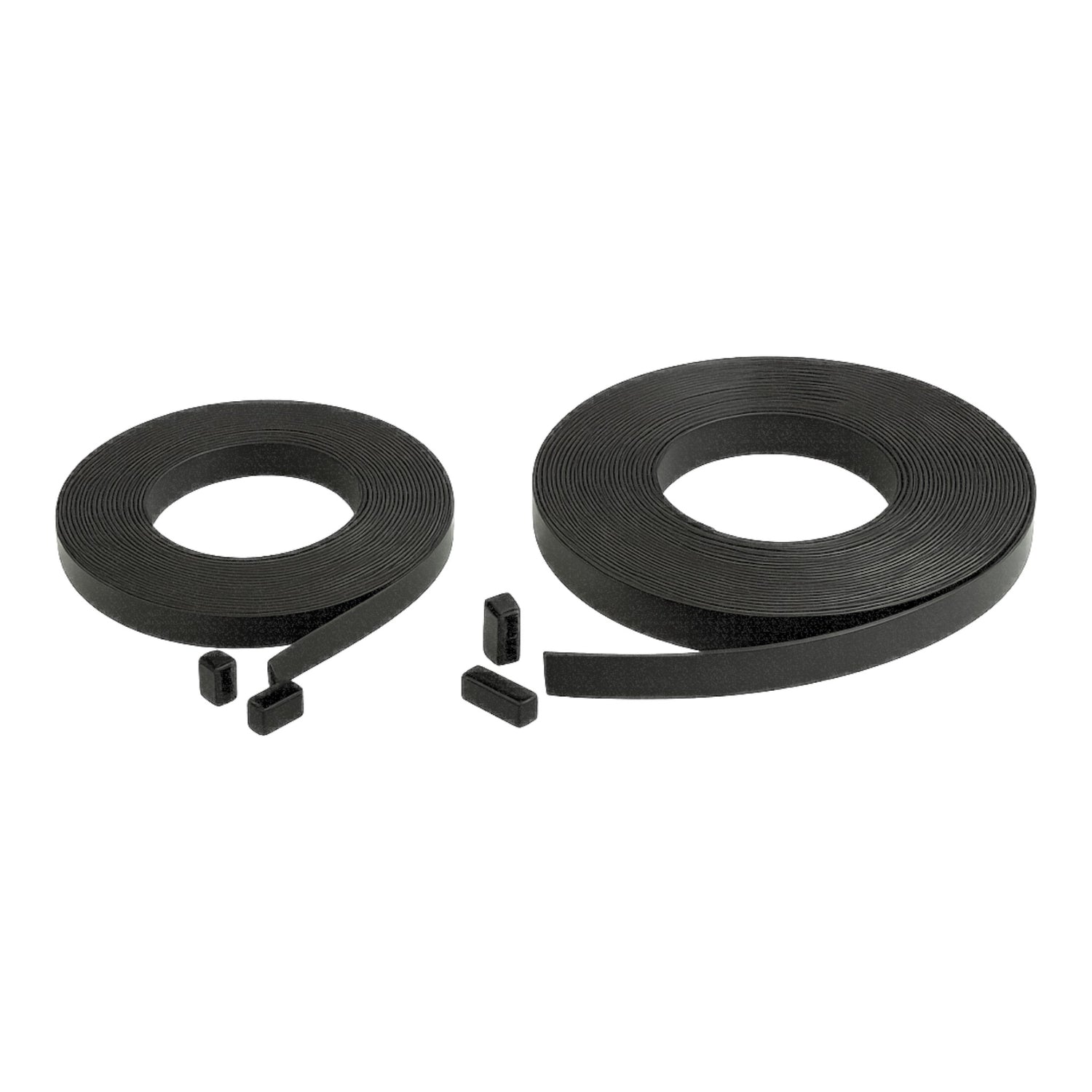
£107.56
Unit price per£107.56
Unit price perThe Soft Strapping 2.5cm x 25m Coil BLACK (Box of 5) is a tree support strapping intended for securing trees and shrubs to suitable stakes or supports.
Correct tree and shrub support helps newly planted or container-grown stock establish while reducing excessive movement at the root zone. Supports should hold the plant securely without creating unnecessary pressure on the stem or trunk.
Supplied as: box of 5.
Key benefits
Tree & shrub support
Use this product for securing trees and shrubs to suitable stakes or supports. Select stakes, ties and support components according to the size of the plant, exposure of the site and the support system being used.
A correctly installed support should reduce damaging movement without holding the trunk completely rigid. Some natural movement helps the plant develop as it establishes.
Installation & ongoing checks
Position ties and support components so they do not rub, cut into or constrict the bark. Avoid over-tightening and inspect the installation regularly as the trunk or stems increase in diameter.
Adjust or remove supports once they are no longer required. Leaving a tie in place for too long can cause restriction or damage as the plant grows.
For nurseries, landscapers & tree planting
Tree-support products are useful for nursery stock, landscape planting, public-realm schemes and garden installations where newly planted trees or shrubs need temporary stabilisation.
Soft Strapping 2.5cm x 25m Coil BLACK (Box of 5) product details
| Product type | Tree support strapping |
|---|---|
| Primary use | securing trees and shrubs to suitable stakes or supports |
| Stated size | 2.5cm x 25m |
| Colour | Black |
| Box quantity | 5 |
Soft Strapping 2.5cm x 25m Coil BLACK (Box of 5) FAQs
What size is this product?
The stated size is 2.5cm x 25m. How many are supplied?
This product is supplied in a box of 5. How tight should a tree tie be?
It should support the plant without constricting the trunk or rubbing the bark. Leave appropriate room for movement and growth. How often should tree ties be checked?
Inspect supports regularly, particularly during active growth, and loosen or reposition them before they become restrictive. How long should a tree remain staked?
Only for as long as support is genuinely required. Establishment time varies with plant size, species, root system and site exposure. Can the same support be used for every tree?
No. Match the tie, stake and support arrangement to the trunk size, plant form and site conditions.
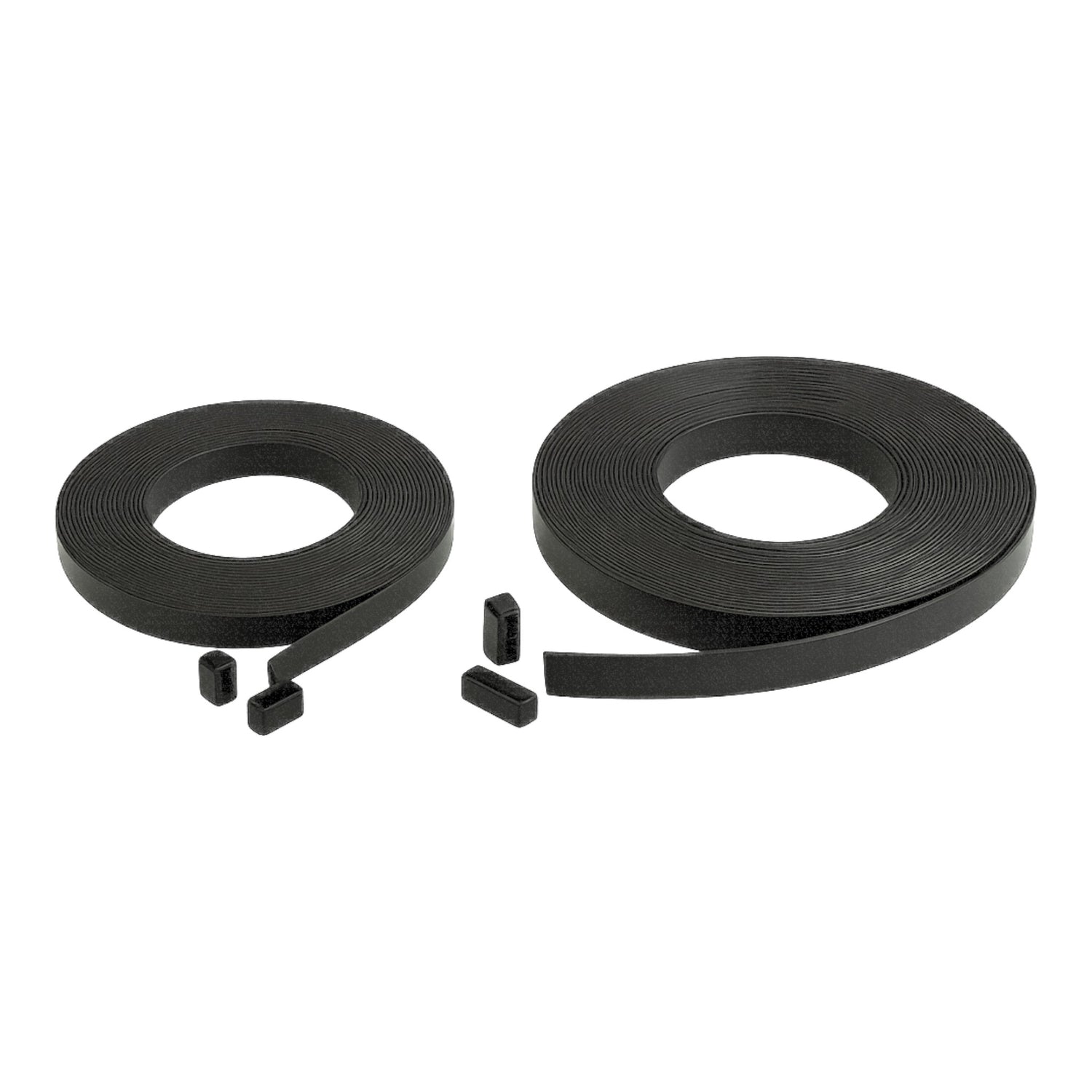
£130.44
Unit price per£130.44
Unit price perThe Soft Strapping 3.8cm x 25m Coil BLACK (Box of 5) is a tree support strapping intended for securing trees and shrubs to suitable stakes or supports.
Correct tree and shrub support helps newly planted or container-grown stock establish while reducing excessive movement at the root zone. Supports should hold the plant securely without creating unnecessary pressure on the stem or trunk.
Supplied as: box of 5.
Key benefits
Tree & shrub support
Use this product for securing trees and shrubs to suitable stakes or supports. Select stakes, ties and support components according to the size of the plant, exposure of the site and the support system being used.
A correctly installed support should reduce damaging movement without holding the trunk completely rigid. Some natural movement helps the plant develop as it establishes.
Installation & ongoing checks
Position ties and support components so they do not rub, cut into or constrict the bark. Avoid over-tightening and inspect the installation regularly as the trunk or stems increase in diameter.
Adjust or remove supports once they are no longer required. Leaving a tie in place for too long can cause restriction or damage as the plant grows.
For nurseries, landscapers & tree planting
Tree-support products are useful for nursery stock, landscape planting, public-realm schemes and garden installations where newly planted trees or shrubs need temporary stabilisation.
Soft Strapping 3.8cm x 25m Coil BLACK (Box of 5) product details
| Product type | Tree support strapping |
|---|---|
| Primary use | securing trees and shrubs to suitable stakes or supports |
| Stated size | 3.8cm x 25m |
| Colour | Black |
| Box quantity | 5 |
Soft Strapping 3.8cm x 25m Coil BLACK (Box of 5) FAQs
What size is this product?
The stated size is 3.8cm x 25m. How many are supplied?
This product is supplied in a box of 5. How tight should a tree tie be?
It should support the plant without constricting the trunk or rubbing the bark. Leave appropriate room for movement and growth. How often should tree ties be checked?
Inspect supports regularly, particularly during active growth, and loosen or reposition them before they become restrictive. How long should a tree remain staked?
Only for as long as support is genuinely required. Establishment time varies with plant size, species, root system and site exposure. Can the same support be used for every tree?
No. Match the tie, stake and support arrangement to the trunk size, plant form and site conditions.
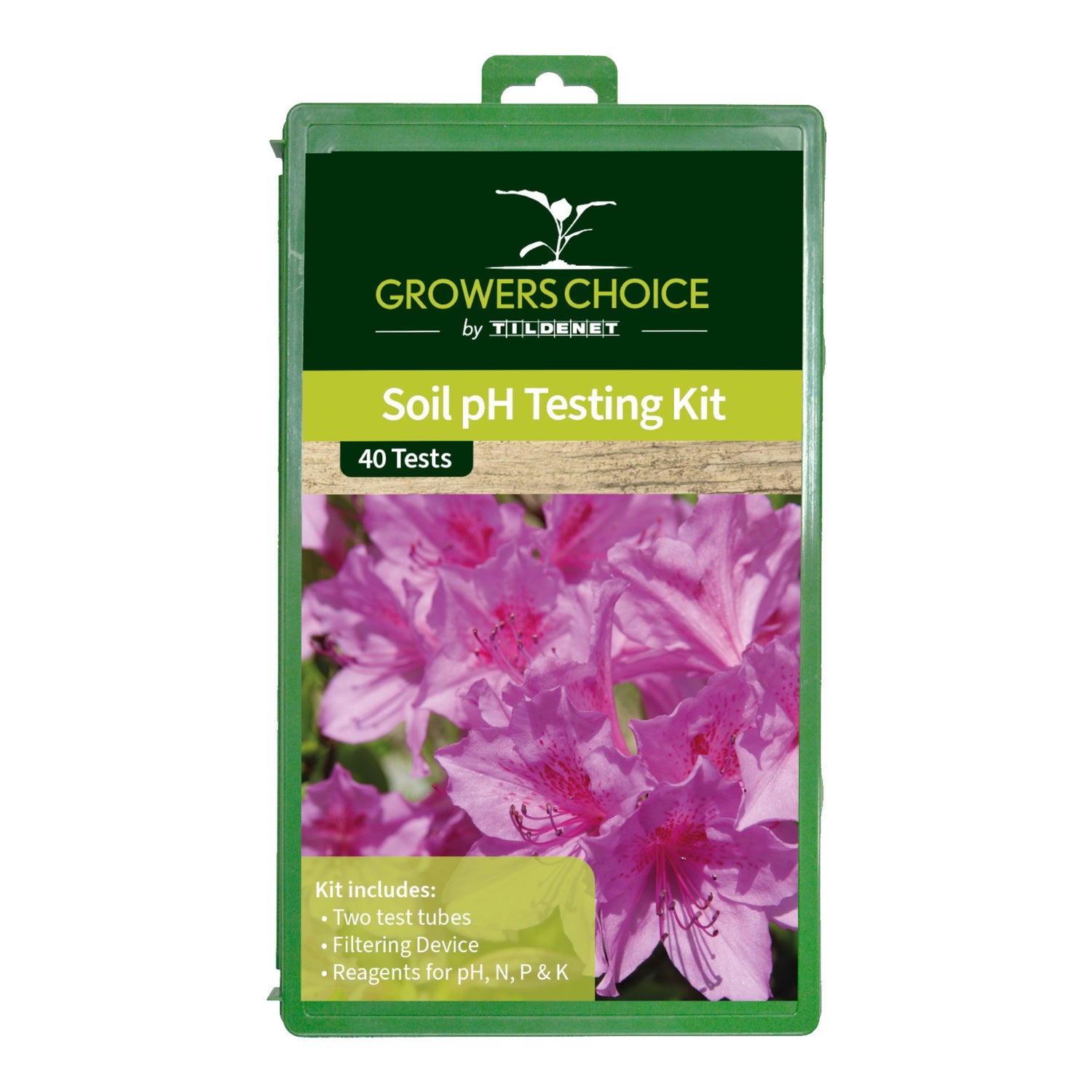
£26.62
Unit price per£26.62
Unit price perThe Soil Test Kit - pH, nitrogen, phosphorus and potash is a practical plant pot designed for container growing.
It is suited to routine horticultural work in nurseries, greenhouses, garden centres and gardens where a straightforward accessory is required.
Key benefits
How to use it
Use this product for container growing. Select the size and format to suit the plant, container or growing area and check its position periodically as plants develop.
For professional & garden use
This accessory can be used for individual plants and displays or incorporated into larger nursery, landscaping and retail programmes.
Soil Test Kit - pH, nitrogen, phosphorus and potash product details
| Supplier | Creation Horticulture |
|---|---|
| Product type | Plant pot |
| Primary use | container growing |
Soil Test Kit - pH, nitrogen, phosphorus and potash FAQs
What is this product used for?
It is designed for container growing. Who is it suitable for?
It is suitable for professional growers, nurseries, garden centres and gardeners where its size and function match the task. How do I choose the right size?
Check the stated dimensions against the plant, container or working area before ordering. Can it be reused?
Reuse depends on the product material, condition and hygiene requirements. Inspect and clean it as appropriate before reuse.
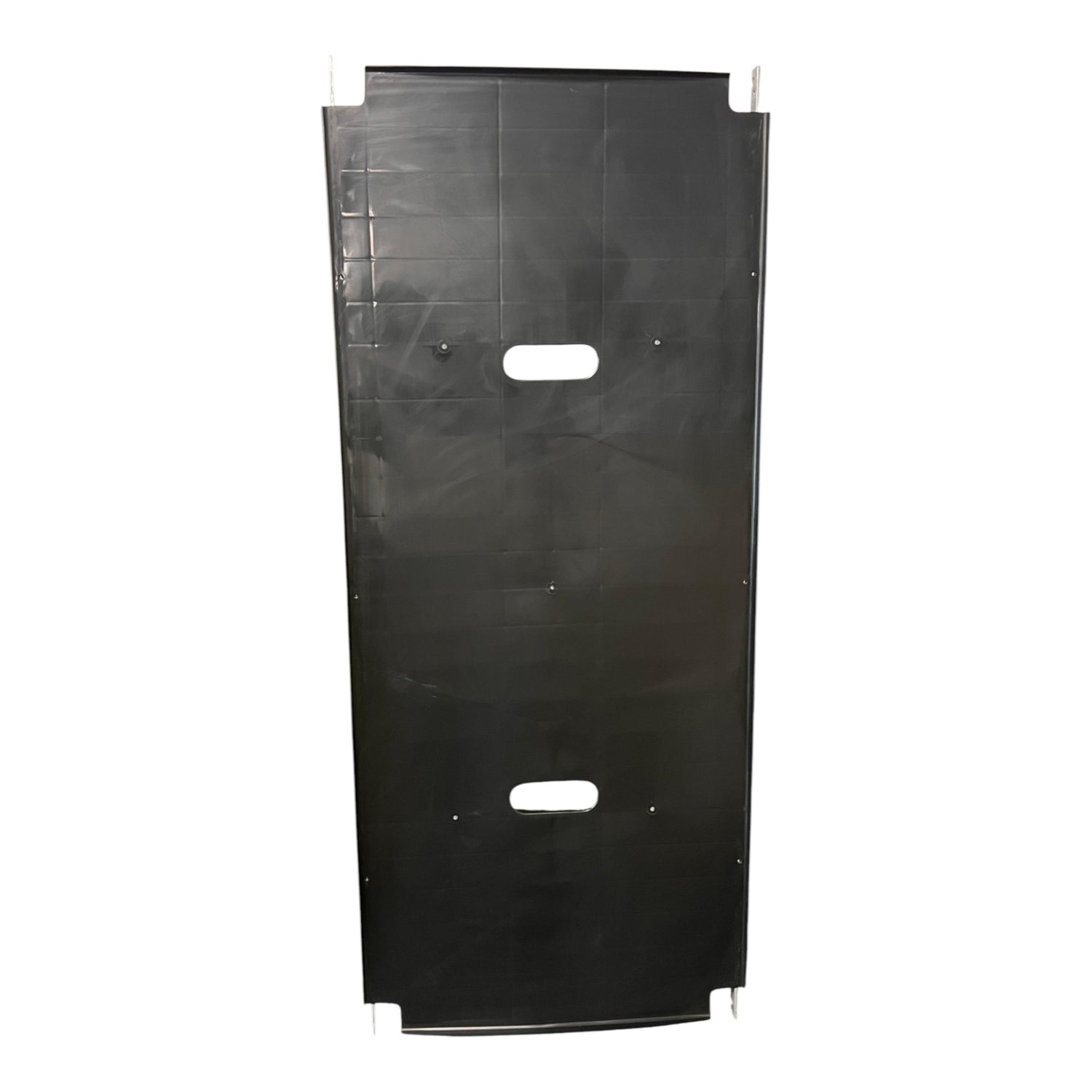
£32.00
Unit price per£32.00
Unit price perThe Spare Danish Trolley shelf Polypropylene 6.5mm is professional handling equipment designed for replacing or adding a compatible shelf on a Danish trolley.
Growers Own handling equipment is aimed at the practical movement, organisation and display of plants and horticultural materials in working nursery, wholesale, landscaping and garden-centre environments.
Key benefits
Replacement & additional shelving
Use this shelf only with a compatible Danish trolley format. Check the shelf dimensions, support points and trolley configuration before ordering.
Seat the shelf correctly before loading and distribute pots or goods evenly across the usable surface. Replace cracked, distorted or structurally damaged shelves.
Professional handling & maintenance
Inspect equipment before use and keep working routes clear. Do not exceed stated capacities or use components in configurations for which they were not designed. Clean equipment as appropriate to the working environment and address loose, worn or damaged components promptly.
Spare Danish Trolley shelf Polypropylene 6.5mm product details
| Brand | Growers Own |
|---|---|
| Product type | Replacement Danish Trolley Shelf |
| Primary use | replacing or adding a compatible shelf on a Danish trolley |
| Material | Polypropylene |
| Thickness | 6.5mm |
Spare Danish Trolley shelf Polypropylene 6.5mm FAQs
What is this product designed for?
Replacing or adding a compatible shelf on a danish trolley. Who is it suitable for?
It is intended for professional growers, nurseries, wholesalers, garden centres and landscapers where the equipment matches the handling task. What should be checked before use?
Inspect the main structure, working surfaces, wheels or connections as applicable and make sure the intended route or installation is suitable. Can stated load figures be exceeded?
No. Do not exceed the stated equipment capacity, and remember that safe practical loading can also depend on terrain, stability and operator handling. How should it be maintained?
Keep it clean as appropriate, inspect wear points regularly and remove damaged equipment from service until repaired or replaced. What material is stated?
The stated material is Polypropylene.


£19.75
Unit price per£19.75
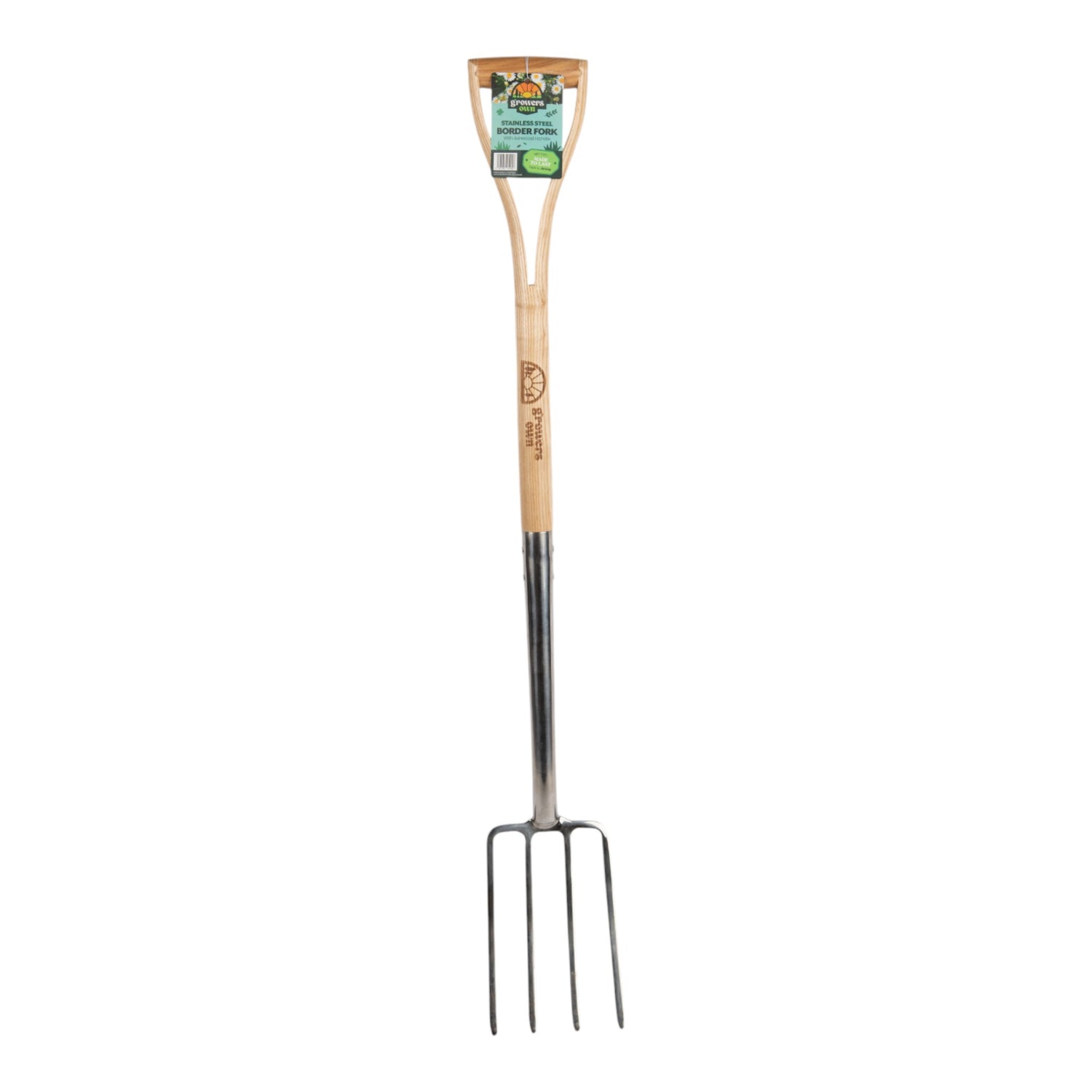
Unit price perThe Growers Own Stainless Steel Border Fork with Ashwood Handle is designed for cultivating, loosening and lifting soil in beds and borders where a full-size fork can be cumbersome.
It is a practical tool for growers, landscapers and gardeners who want dependable equipment for regular horticultural work. Using a tool designed for the specific job improves control and helps avoid unnecessary strain or damage.
The product specification identifies a stainless-steel working head or blade and an ashwood handle, combining a corrosion-resistant working surface with a traditional timber handle.
Key benefits
Compact cultivation in beds & borders
The compact border-fork format is useful around established planting where a full-size digging fork can be cumbersome. Use it to loosen soil, incorporate suitable amendments and lift material while avoiding important roots.
Care & maintenance
Remove soil, sap and plant debris after use and allow the tool to dry before storage. Check the working head or blade, handle, fasteners and joints for wear, looseness or damage.
Stainless steel is corrosion resistant, but it still benefits from being cleaned and dried rather than stored covered in wet soil or sap.
Keep the ashwood handle dry and inspect it periodically for splits, rough areas or looseness. Avoid leaving wooden-handled tools exposed outdoors for long periods.
Choosing the right tool for the job
This product is intended for cultivating, loosening and lifting soil in beds and borders where a full-size fork can be cumbersome. Where the material, soil condition or branch size makes the job difficult, switch to a more appropriate tool rather than applying excessive leverage or force.
Using the correct tool generally gives better results and reduces wear on both the equipment and the operator.
Stainless Steel Border Fork with Ashwood Handle product details
| Brand | Growers Own |
|---|---|
| Product type | Border fork |
| Primary use | cultivating, loosening and lifting soil in beds and borders where a full-size fork can be cumbersome |
| Working material | Stainless steel |
| Handle material | Ashwood |
Stainless Steel Border Fork with Ashwood Handle FAQs
What is this tool designed for?
Cultivating, loosening and lifting soil in beds and borders where a full-size fork can be cumbersome. Who is it suitable for?
Professional growers, landscapers and gardeners where the tool matches the task. How should it be cleaned?
Remove soil, sap or plant debris after use, dry it and store it in a suitable dry location. How should it be stored?
Store it dry and protected from prolonged weather exposure. Can I use it for heavier work than intended?
No. If the task requires excessive force or leverage, choose a heavier or more appropriate tool. Does stainless steel still need maintenance?
Yes. Clean and dry it after use and remove plant residues rather than leaving the working surface dirty or wet. How should the ashwood handle be cared for?
Keep it dry, inspect it for splits or looseness and avoid prolonged outdoor exposure when the tool is not in use.


£17.50
Unit price per£17.50
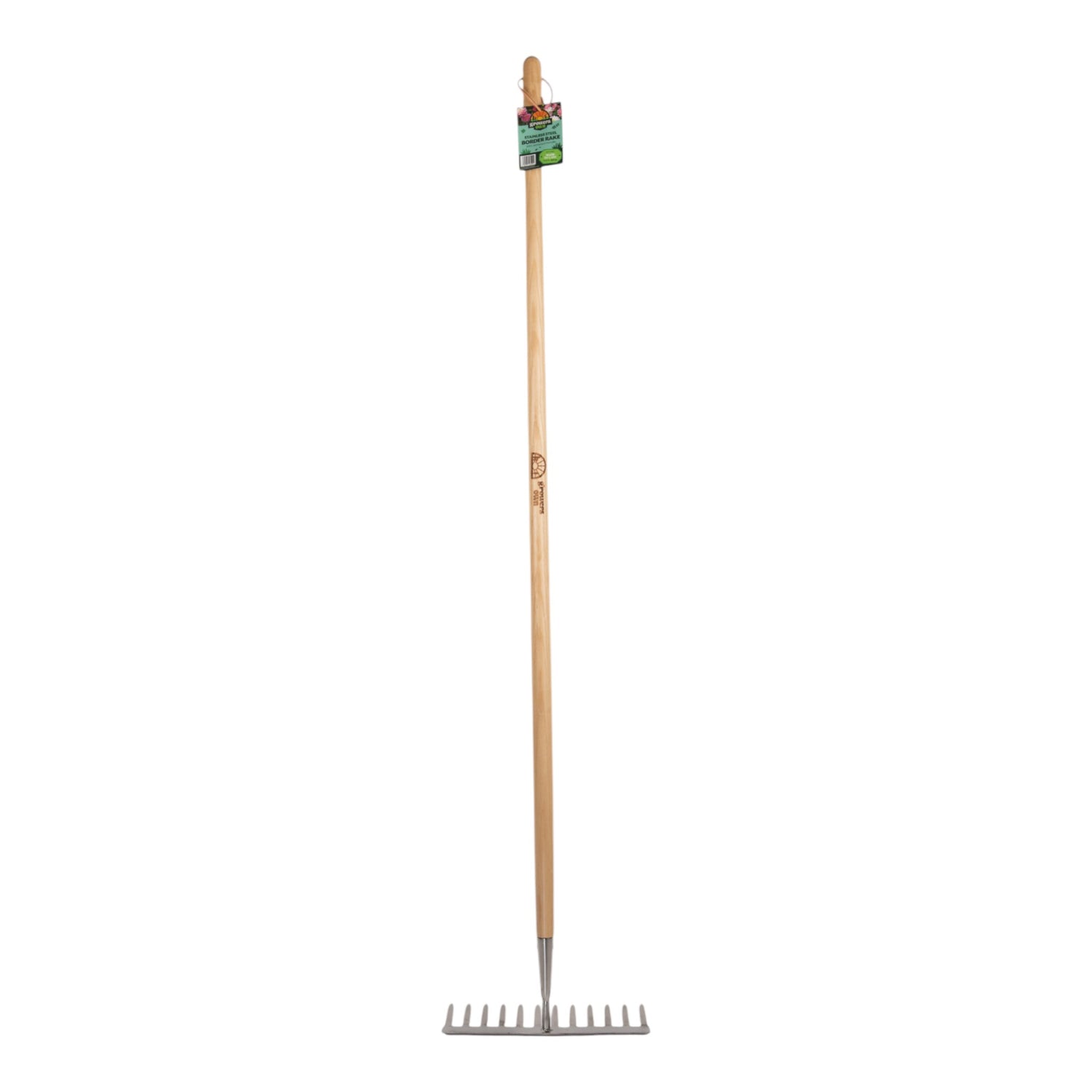
Unit price perThe Growers Own Stainless Steel Border Rake with Ashwood Handle is designed for levelling, cultivating and tidying soil in beds, borders and confined planting areas.
It is a practical tool for growers, landscapers and gardeners who want dependable equipment for regular horticultural work. Using a tool designed for the specific job improves control and helps avoid unnecessary strain or damage.
The product specification identifies a stainless-steel working head or blade and an ashwood handle, combining a corrosion-resistant working surface with a traditional timber handle.
Key benefits
Levelling & preparing border soil
Use the rake to break down loose surface soil, level prepared beds and gather small stones or debris. Its compact width is useful between plants and in tighter border areas.
Care & maintenance
Remove soil, sap and plant debris after use and allow the tool to dry before storage. Check the working head or blade, handle, fasteners and joints for wear, looseness or damage.
Stainless steel is corrosion resistant, but it still benefits from being cleaned and dried rather than stored covered in wet soil or sap.
Keep the ashwood handle dry and inspect it periodically for splits, rough areas or looseness. Avoid leaving wooden-handled tools exposed outdoors for long periods.
Choosing the right tool for the job
This product is intended for levelling, cultivating and tidying soil in beds, borders and confined planting areas. Where the material, soil condition or branch size makes the job difficult, switch to a more appropriate tool rather than applying excessive leverage or force.
Using the correct tool generally gives better results and reduces wear on both the equipment and the operator.
Stainless Steel Border Rake with Ashwood Handle product details
| Brand | Growers Own |
|---|---|
| Product type | Border rake |
| Primary use | levelling, cultivating and tidying soil in beds, borders and confined planting areas |
| Working material | Stainless steel |
| Handle material | Ashwood |
Stainless Steel Border Rake with Ashwood Handle FAQs
What is this tool designed for?
Levelling, cultivating and tidying soil in beds, borders and confined planting areas. Who is it suitable for?
Professional growers, landscapers and gardeners where the tool matches the task. How should it be cleaned?
Remove soil, sap or plant debris after use, dry it and store it in a suitable dry location. How should it be stored?
Store it dry and protected from prolonged weather exposure. Can I use it for heavier work than intended?
No. If the task requires excessive force or leverage, choose a heavier or more appropriate tool. Does stainless steel still need maintenance?
Yes. Clean and dry it after use and remove plant residues rather than leaving the working surface dirty or wet. How should the ashwood handle be cared for?
Keep it dry, inspect it for splits or looseness and avoid prolonged outdoor exposure when the tool is not in use.


£19.75
Unit price per£19.75
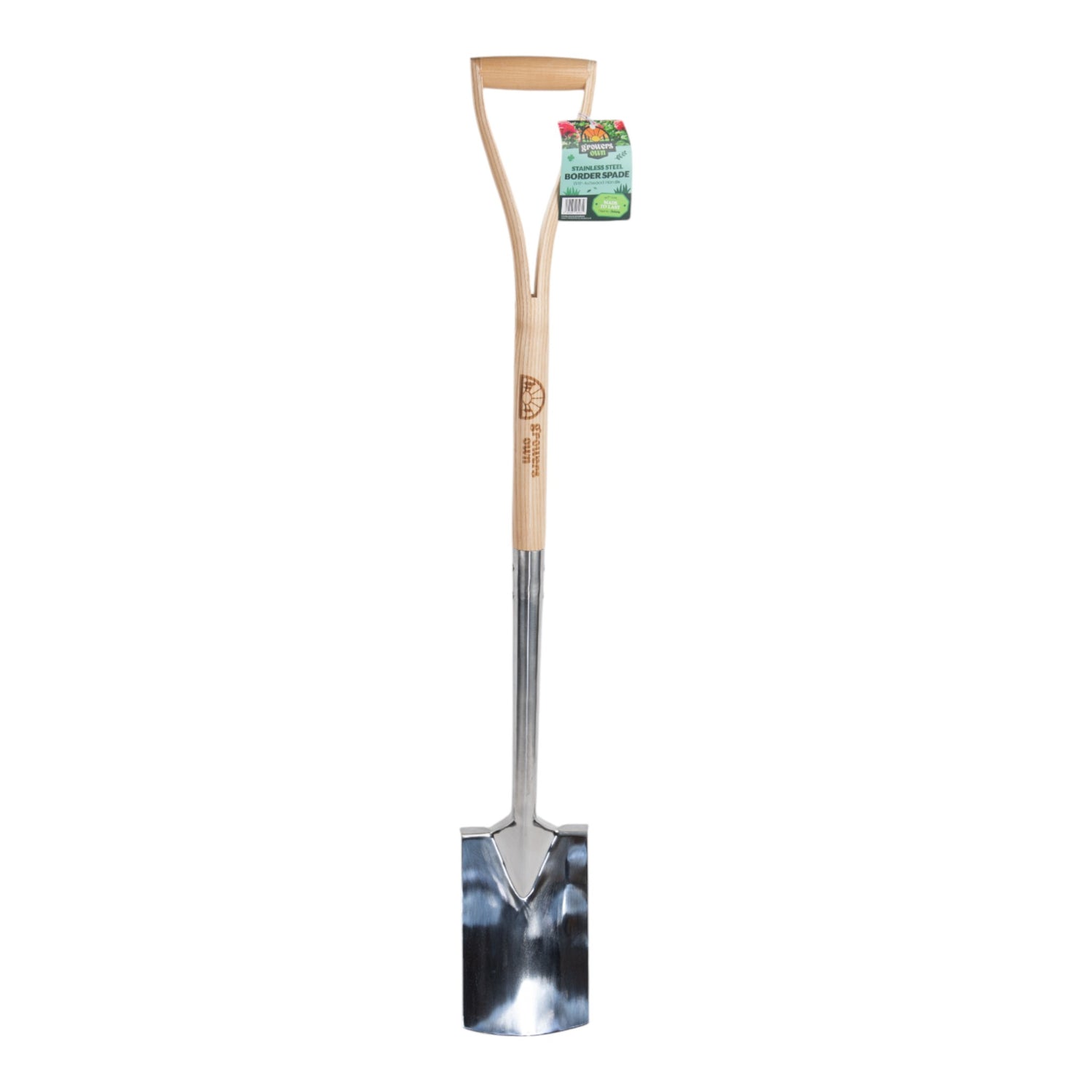
Unit price perThe Growers Own Stainless Steel Border Spade with Ashwood Handle is designed for digging, planting and working in beds and borders where a compact spade is useful.
It is a practical tool for growers, landscapers and gardeners who want dependable equipment for regular horticultural work. Using a tool designed for the specific job improves control and helps avoid unnecessary strain or damage.
The product specification identifies a stainless-steel working head or blade and an ashwood handle, combining a corrosion-resistant working surface with a traditional timber handle.
Key benefits
Digging in beds & borders
The compact border-spade format is useful for planting and soil preparation where space is restricted. Use controlled cuts into workable soil and avoid levering against immovable objects.
Care & maintenance
Remove soil, sap and plant debris after use and allow the tool to dry before storage. Check the working head or blade, handle, fasteners and joints for wear, looseness or damage.
Stainless steel is corrosion resistant, but it still benefits from being cleaned and dried rather than stored covered in wet soil or sap.
Keep the ashwood handle dry and inspect it periodically for splits, rough areas or looseness. Avoid leaving wooden-handled tools exposed outdoors for long periods.
Choosing the right tool for the job
This product is intended for digging, planting and working in beds and borders where a compact spade is useful. Where the material, soil condition or branch size makes the job difficult, switch to a more appropriate tool rather than applying excessive leverage or force.
Using the correct tool generally gives better results and reduces wear on both the equipment and the operator.
Stainless Steel Border Spade with Ashwood Handle product details
| Brand | Growers Own |
|---|---|
| Product type | Border spade |
| Primary use | digging, planting and working in beds and borders where a compact spade is useful |
| Working material | Stainless steel |
| Handle material | Ashwood |
Stainless Steel Border Spade with Ashwood Handle FAQs
What is this tool designed for?
Digging, planting and working in beds and borders where a compact spade is useful. Who is it suitable for?
Professional growers, landscapers and gardeners where the tool matches the task. How should it be cleaned?
Remove soil, sap or plant debris after use, dry it and store it in a suitable dry location. How should it be stored?
Store it dry and protected from prolonged weather exposure. Can I use it for heavier work than intended?
No. If the task requires excessive force or leverage, choose a heavier or more appropriate tool. Does stainless steel still need maintenance?
Yes. Clean and dry it after use and remove plant residues rather than leaving the working surface dirty or wet. How should the ashwood handle be cared for?
Keep it dry, inspect it for splits or looseness and avoid prolonged outdoor exposure when the tool is not in use.


£5.75
Unit price per£5.75
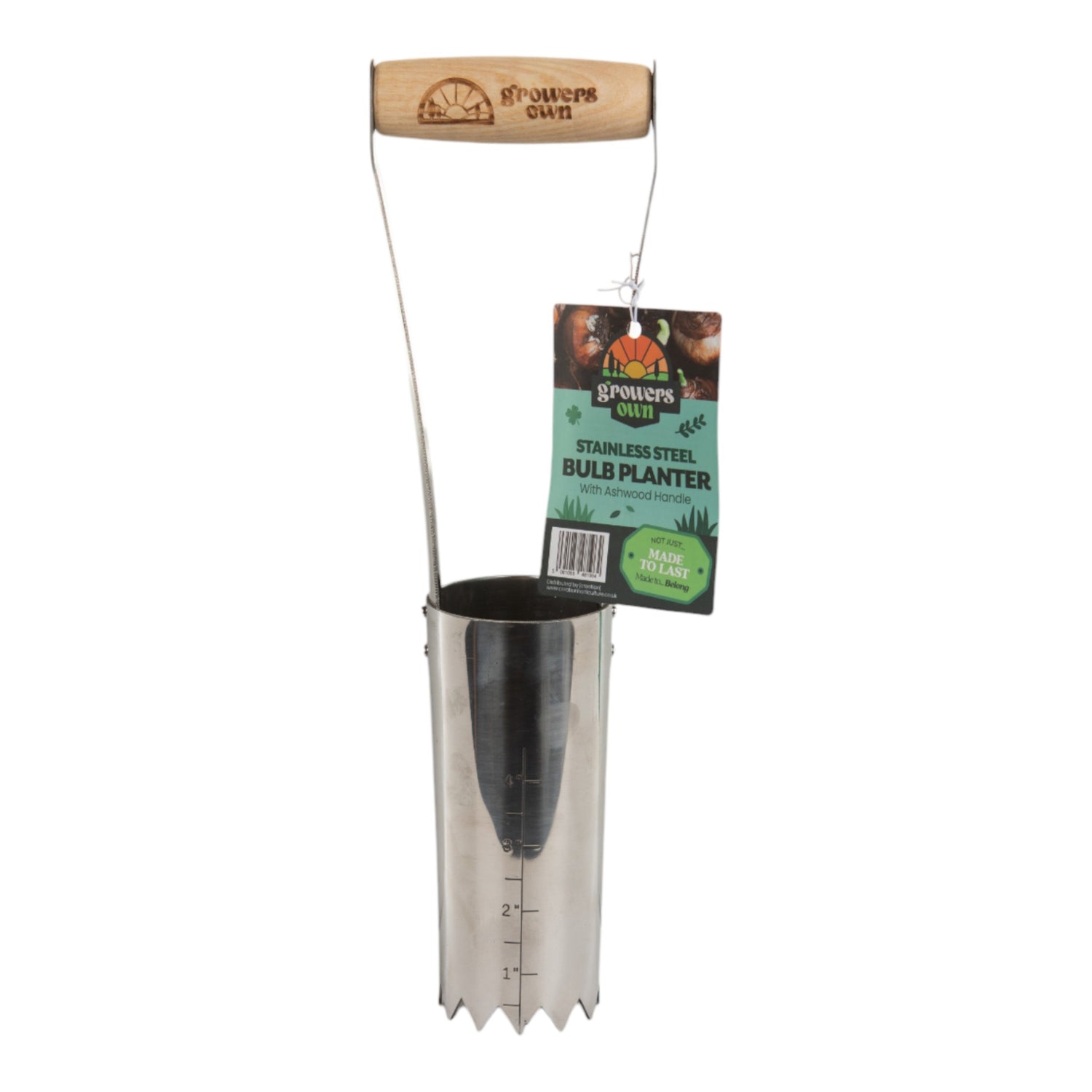
Unit price perThe Growers Own Stainless Steel Bulb Planter with Ashwood Handle is designed for making consistent planting holes for bulbs and similar planting work.
It is a practical tool for growers, landscapers and gardeners who want dependable equipment for regular horticultural work. Using a tool designed for the specific job improves control and helps avoid unnecessary strain or damage.
The product specification identifies a stainless-steel working head or blade and an ashwood handle, combining a corrosion-resistant working surface with a traditional timber handle.
Key benefits
Consistent bulb planting
A bulb planter creates individual planting holes with limited disturbance to surrounding soil. Planting depth varies by bulb species and size, so follow the guidance for the bulbs being planted.
Care & maintenance
Remove soil, sap and plant debris after use and allow the tool to dry before storage. Check the working head or blade, handle, fasteners and joints for wear, looseness or damage.
Stainless steel is corrosion resistant, but it still benefits from being cleaned and dried rather than stored covered in wet soil or sap.
Keep the ashwood handle dry and inspect it periodically for splits, rough areas or looseness. Avoid leaving wooden-handled tools exposed outdoors for long periods.
Choosing the right tool for the job
This product is intended for making consistent planting holes for bulbs and similar planting work. Where the material, soil condition or branch size makes the job difficult, switch to a more appropriate tool rather than applying excessive leverage or force.
Using the correct tool generally gives better results and reduces wear on both the equipment and the operator.
Stainless Steel Bulb Planter with Ashwood Handle product details
| Brand | Growers Own |
|---|---|
| Product type | Bulb planter |
| Primary use | making consistent planting holes for bulbs and similar planting work |
| Working material | Stainless steel |
| Handle material | Ashwood |
Stainless Steel Bulb Planter with Ashwood Handle FAQs
What is this tool designed for?
Making consistent planting holes for bulbs and similar planting work. Who is it suitable for?
Professional growers, landscapers and gardeners where the tool matches the task. How should it be cleaned?
Remove soil, sap or plant debris after use, dry it and store it in a suitable dry location. How should it be stored?
Store it dry and protected from prolonged weather exposure. Can I use it for heavier work than intended?
No. If the task requires excessive force or leverage, choose a heavier or more appropriate tool. Does stainless steel still need maintenance?
Yes. Clean and dry it after use and remove plant residues rather than leaving the working surface dirty or wet. How should the ashwood handle be cared for?
Keep it dry, inspect it for splits or looseness and avoid prolonged outdoor exposure when the tool is not in use.
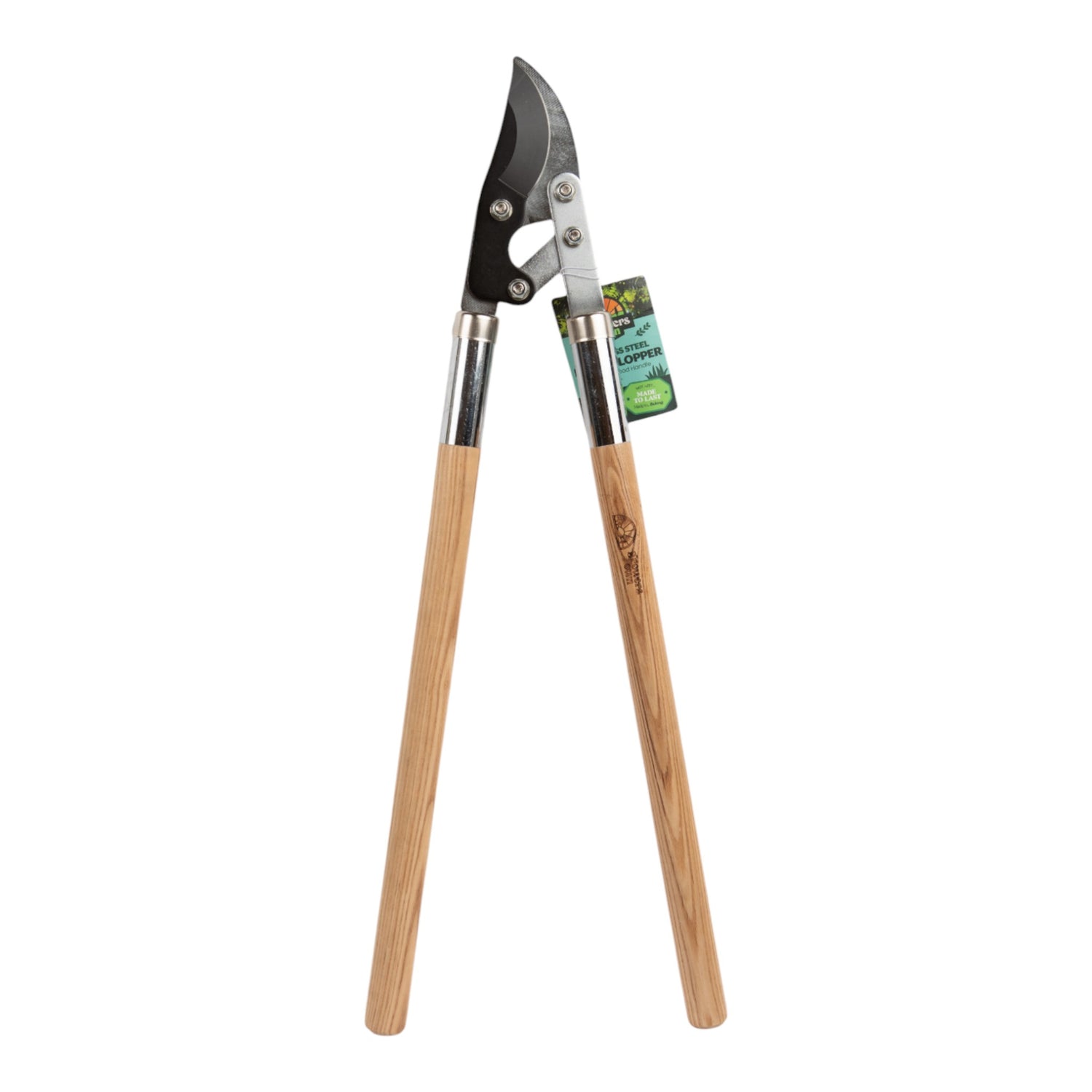


£13.50
Unit price per£13.50
Unit price perThe Growers Own Stainless Steel Bypass Lopper with Ashwood Handle is designed for two-handed pruning of larger live branches within the practical capacity of the tool.
It is a practical tool for growers, landscapers and gardeners who want dependable equipment for regular horticultural work. Using a tool designed for the specific job improves control and helps avoid unnecessary strain or damage.
The product specification identifies a stainless-steel working head or blade and an ashwood handle, combining a corrosion-resistant working surface with a traditional timber handle.
Key benefits
Two-handed pruning for larger growth
Bypass loppers provide extra leverage for live branches beyond comfortable secateur work. Use a stable stance, position the cutting head accurately and close the handles smoothly.
For branches beyond the practical capacity of the lopper, use a pruning saw rather than extending the handles or forcing the mechanism.
Care & maintenance
Remove soil, sap and plant debris after use and allow the tool to dry before storage. Check the working head or blade, handle, fasteners and joints for wear, looseness or damage.
Stainless steel is corrosion resistant, but it still benefits from being cleaned and dried rather than stored covered in wet soil or sap.
Keep the ashwood handle dry and inspect it periodically for splits, rough areas or looseness. Avoid leaving wooden-handled tools exposed outdoors for long periods.
Choosing the right tool for the job
This product is intended for two-handed pruning of larger live branches within the practical capacity of the tool. Where the material, soil condition or branch size makes the job difficult, switch to a more appropriate tool rather than applying excessive leverage or force.
Using the correct tool generally gives better results and reduces wear on both the equipment and the operator.
Stainless Steel Bypass Lopper with Ashwood Handle product details
| Brand | Growers Own |
|---|---|
| Product type | Bypass lopper |
| Primary use | two-handed pruning of larger live branches within the practical capacity of the tool |
| Working material | Stainless steel |
| Handle material | Ashwood |
Stainless Steel Bypass Lopper with Ashwood Handle FAQs
What is this tool designed for?
Two-handed pruning of larger live branches within the practical capacity of the tool. Who is it suitable for?
Professional growers, landscapers and gardeners where the tool matches the task. How should it be cleaned?
Remove soil, sap or plant debris after use, dry it and store it in a suitable dry location. How should it be stored?
Store it dry and protected from prolonged weather exposure. Can I use it for heavier work than intended?
No. If the task requires excessive force or leverage, choose a heavier or more appropriate tool. Does stainless steel still need maintenance?
Yes. Clean and dry it after use and remove plant residues rather than leaving the working surface dirty or wet. How should the ashwood handle be cared for?
Keep it dry, inspect it for splits or looseness and avoid prolonged outdoor exposure when the tool is not in use. How should the cutting edge be maintained?
Keep blades clean and sharp and inspect pivots and fasteners periodically. What if the material is too thick to cut comfortably?
Use a larger suitable pruning tool or saw rather than forcing the cut.
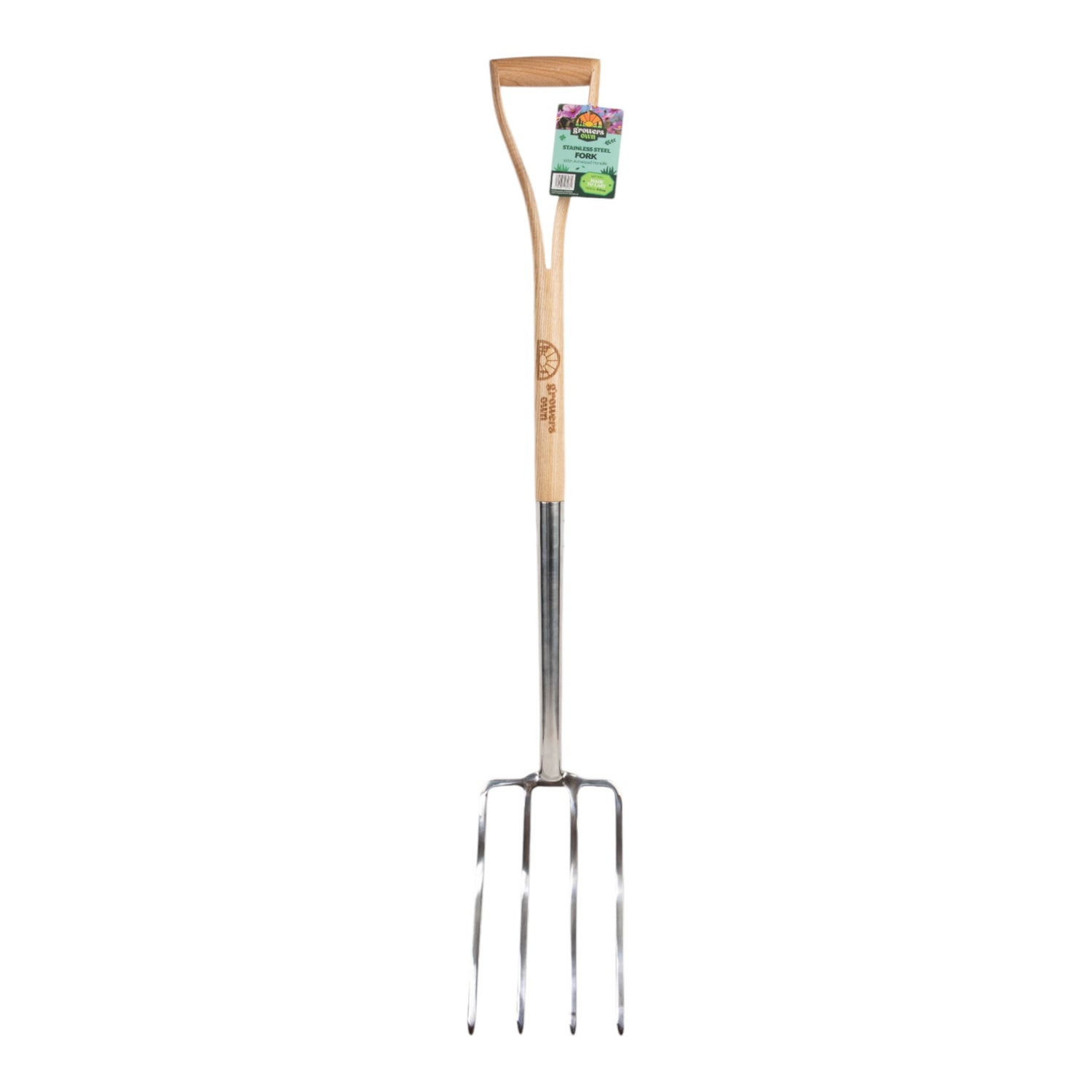
£19.75
Unit price per£19.75
Unit price perThe Growers Own Stainless Steel Digging Fork with Ashwood Handle is designed for digging, lifting, loosening and cultivating garden soil.
It is a practical tool for growers, landscapers and gardeners who want dependable equipment for regular horticultural work. Using a tool designed for the specific job improves control and helps avoid unnecessary strain or damage.
The product specification identifies a stainless-steel working head or blade and an ashwood handle, combining a corrosion-resistant working surface with a traditional timber handle.
Key benefits
Digging, lifting & cultivation
Use the fork to loosen compacted soil, lift and turn material and incorporate appropriate organic matter. Work progressively and avoid levering against immovable stones or roots.
Care & maintenance
Remove soil, sap and plant debris after use and allow the tool to dry before storage. Check the working head or blade, handle, fasteners and joints for wear, looseness or damage.
Stainless steel is corrosion resistant, but it still benefits from being cleaned and dried rather than stored covered in wet soil or sap.
Keep the ashwood handle dry and inspect it periodically for splits, rough areas or looseness. Avoid leaving wooden-handled tools exposed outdoors for long periods.
Choosing the right tool for the job
This product is intended for digging, lifting, loosening and cultivating garden soil. Where the material, soil condition or branch size makes the job difficult, switch to a more appropriate tool rather than applying excessive leverage or force.
Using the correct tool generally gives better results and reduces wear on both the equipment and the operator.
Stainless Steel Digging Fork with Ashwood Handle product details
| Brand | Growers Own |
|---|---|
| Product type | Digging fork |
| Primary use | digging, lifting, loosening and cultivating garden soil |
| Working material | Stainless steel |
| Handle material | Ashwood |
Stainless Steel Digging Fork with Ashwood Handle FAQs
What is this tool designed for?
Digging, lifting, loosening and cultivating garden soil. Who is it suitable for?
Professional growers, landscapers and gardeners where the tool matches the task. How should it be cleaned?
Remove soil, sap or plant debris after use, dry it and store it in a suitable dry location. How should it be stored?
Store it dry and protected from prolonged weather exposure. Can I use it for heavier work than intended?
No. If the task requires excessive force or leverage, choose a heavier or more appropriate tool. Does stainless steel still need maintenance?
Yes. Clean and dry it after use and remove plant residues rather than leaving the working surface dirty or wet. How should the ashwood handle be cared for?
Keep it dry, inspect it for splits or looseness and avoid prolonged outdoor exposure when the tool is not in use.
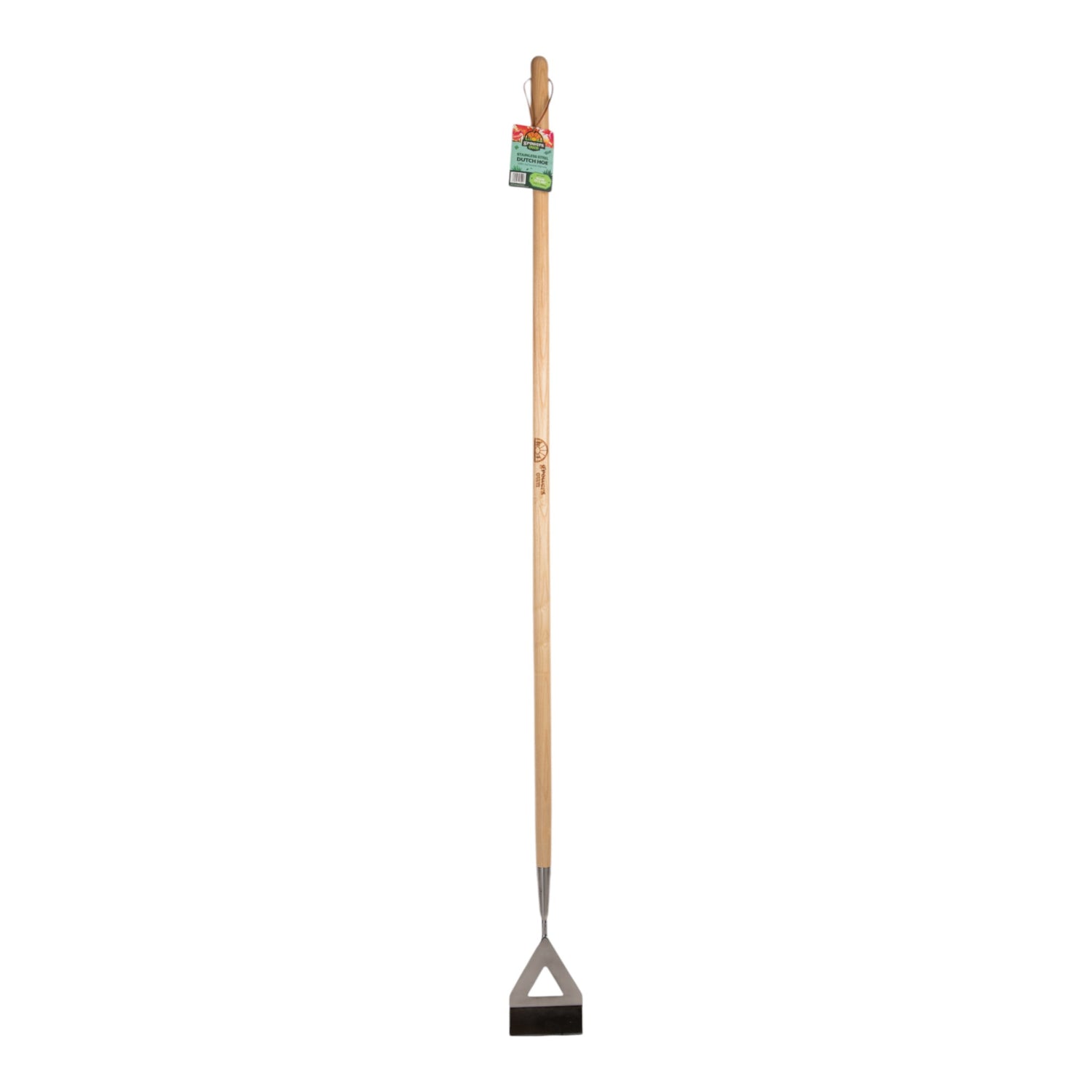


£14.50
Unit price per£14.50
Unit price perThe Growers Own Stainless Steel Dutch Hoe with Ashwood Handle is designed for shallow hoeing and weed control between plants and across prepared beds.
It is a practical tool for growers, landscapers and gardeners who want dependable equipment for regular horticultural work. Using a tool designed for the specific job improves control and helps avoid unnecessary strain or damage.
The product specification identifies a stainless-steel working head or blade and an ashwood handle, combining a corrosion-resistant working surface with a traditional timber handle.
Key benefits
Shallow weed control
A Dutch hoe is useful for severing small weeds close to the soil surface before they become established. Work through the upper layer of prepared soil rather than cultivating deeply around crop roots.
Care & maintenance
Remove soil, sap and plant debris after use and allow the tool to dry before storage. Check the working head or blade, handle, fasteners and joints for wear, looseness or damage.
Stainless steel is corrosion resistant, but it still benefits from being cleaned and dried rather than stored covered in wet soil or sap.
Keep the ashwood handle dry and inspect it periodically for splits, rough areas or looseness. Avoid leaving wooden-handled tools exposed outdoors for long periods.
Choosing the right tool for the job
This product is intended for shallow hoeing and weed control between plants and across prepared beds. Where the material, soil condition or branch size makes the job difficult, switch to a more appropriate tool rather than applying excessive leverage or force.
Using the correct tool generally gives better results and reduces wear on both the equipment and the operator.
Stainless Steel Dutch Hoe with Ashwood Handle product details
| Brand | Growers Own |
|---|---|
| Product type | Dutch hoe |
| Primary use | shallow hoeing and weed control between plants and across prepared beds |
| Working material | Stainless steel |
| Handle material | Ashwood |
Stainless Steel Dutch Hoe with Ashwood Handle FAQs
What is this tool designed for?
Shallow hoeing and weed control between plants and across prepared beds. Who is it suitable for?
Professional growers, landscapers and gardeners where the tool matches the task. How should it be cleaned?
Remove soil, sap or plant debris after use, dry it and store it in a suitable dry location. How should it be stored?
Store it dry and protected from prolonged weather exposure. Can I use it for heavier work than intended?
No. If the task requires excessive force or leverage, choose a heavier or more appropriate tool. Does stainless steel still need maintenance?
Yes. Clean and dry it after use and remove plant residues rather than leaving the working surface dirty or wet. How should the ashwood handle be cared for?
Keep it dry, inspect it for splits or looseness and avoid prolonged outdoor exposure when the tool is not in use.
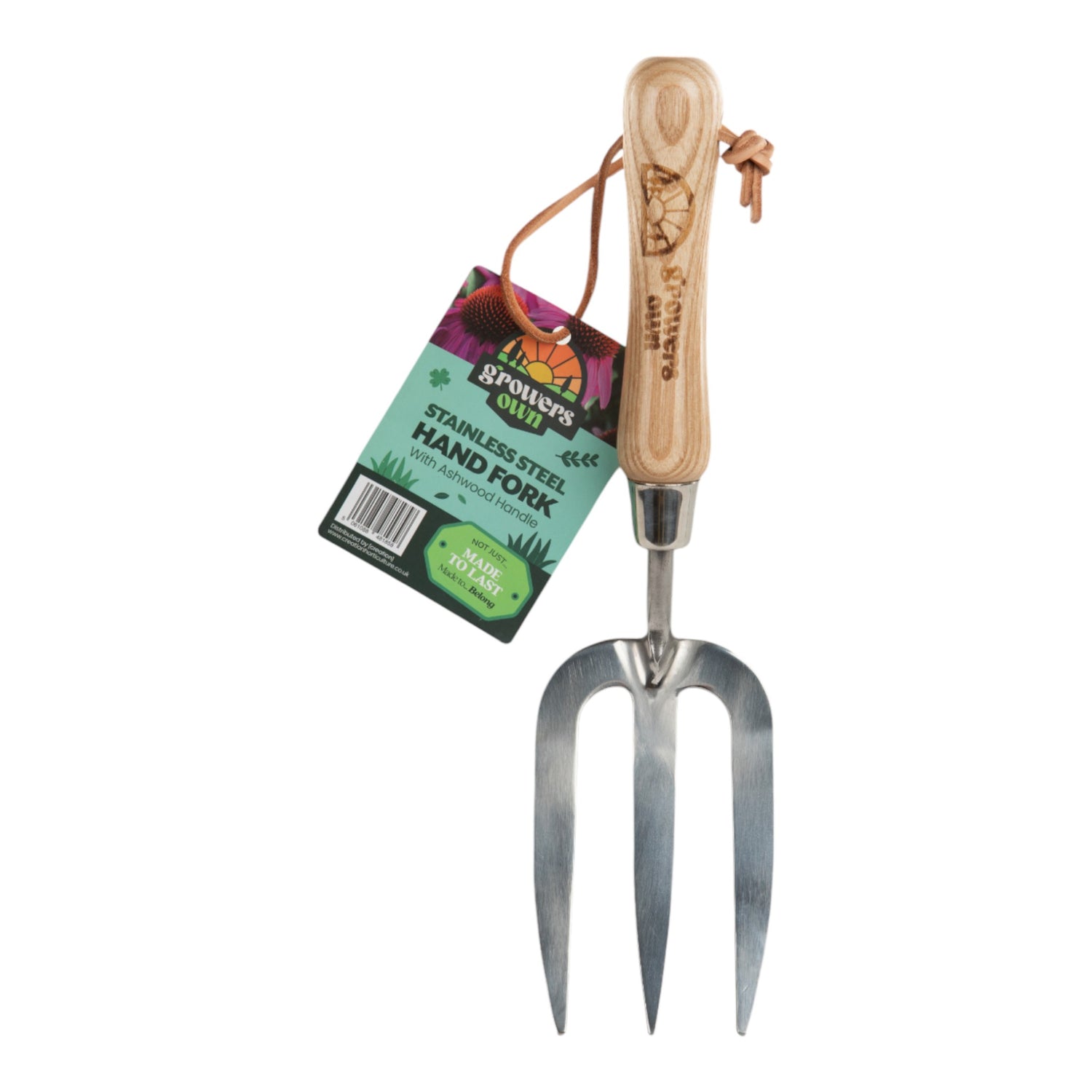


£4.50
Unit price per£4.50
Unit price perThe Growers Own Stainless Steel Hand Fork with Ashwood Handle is designed for loosening soil, cultivating around established plants and working in containers or raised beds.
It is a practical tool for growers, landscapers and gardeners who want dependable equipment for regular horticultural work. Using a tool designed for the specific job improves control and helps avoid unnecessary strain or damage.
The product specification identifies a stainless-steel working head or blade and an ashwood handle, combining a corrosion-resistant working surface with a traditional timber handle.
Key benefits
Loosening soil around plants
Use the fork to loosen the upper soil layer, break up small clods and cultivate around established plants. Work carefully around shallow roots and plant crowns.
Care & maintenance
Remove soil, sap and plant debris after use and allow the tool to dry before storage. Check the working head or blade, handle, fasteners and joints for wear, looseness or damage.
Stainless steel is corrosion resistant, but it still benefits from being cleaned and dried rather than stored covered in wet soil or sap.
Keep the ashwood handle dry and inspect it periodically for splits, rough areas or looseness. Avoid leaving wooden-handled tools exposed outdoors for long periods.
Choosing the right tool for the job
This product is intended for loosening soil, cultivating around established plants and working in containers or raised beds. Where the material, soil condition or branch size makes the job difficult, switch to a more appropriate tool rather than applying excessive leverage or force.
Using the correct tool generally gives better results and reduces wear on both the equipment and the operator.
Stainless Steel Hand Fork with Ashwood Handle product details
| Brand | Growers Own |
|---|---|
| Product type | Hand fork |
| Primary use | loosening soil, cultivating around established plants and working in containers or raised beds |
| Working material | Stainless steel |
| Handle material | Ashwood |
Stainless Steel Hand Fork with Ashwood Handle FAQs
What is this tool designed for?
Loosening soil, cultivating around established plants and working in containers or raised beds. Who is it suitable for?
Professional growers, landscapers and gardeners where the tool matches the task. How should it be cleaned?
Remove soil, sap or plant debris after use, dry it and store it in a suitable dry location. How should it be stored?
Store it dry and protected from prolonged weather exposure. Can I use it for heavier work than intended?
No. If the task requires excessive force or leverage, choose a heavier or more appropriate tool. Does stainless steel still need maintenance?
Yes. Clean and dry it after use and remove plant residues rather than leaving the working surface dirty or wet. How should the ashwood handle be cared for?
Keep it dry, inspect it for splits or looseness and avoid prolonged outdoor exposure when the tool is not in use.
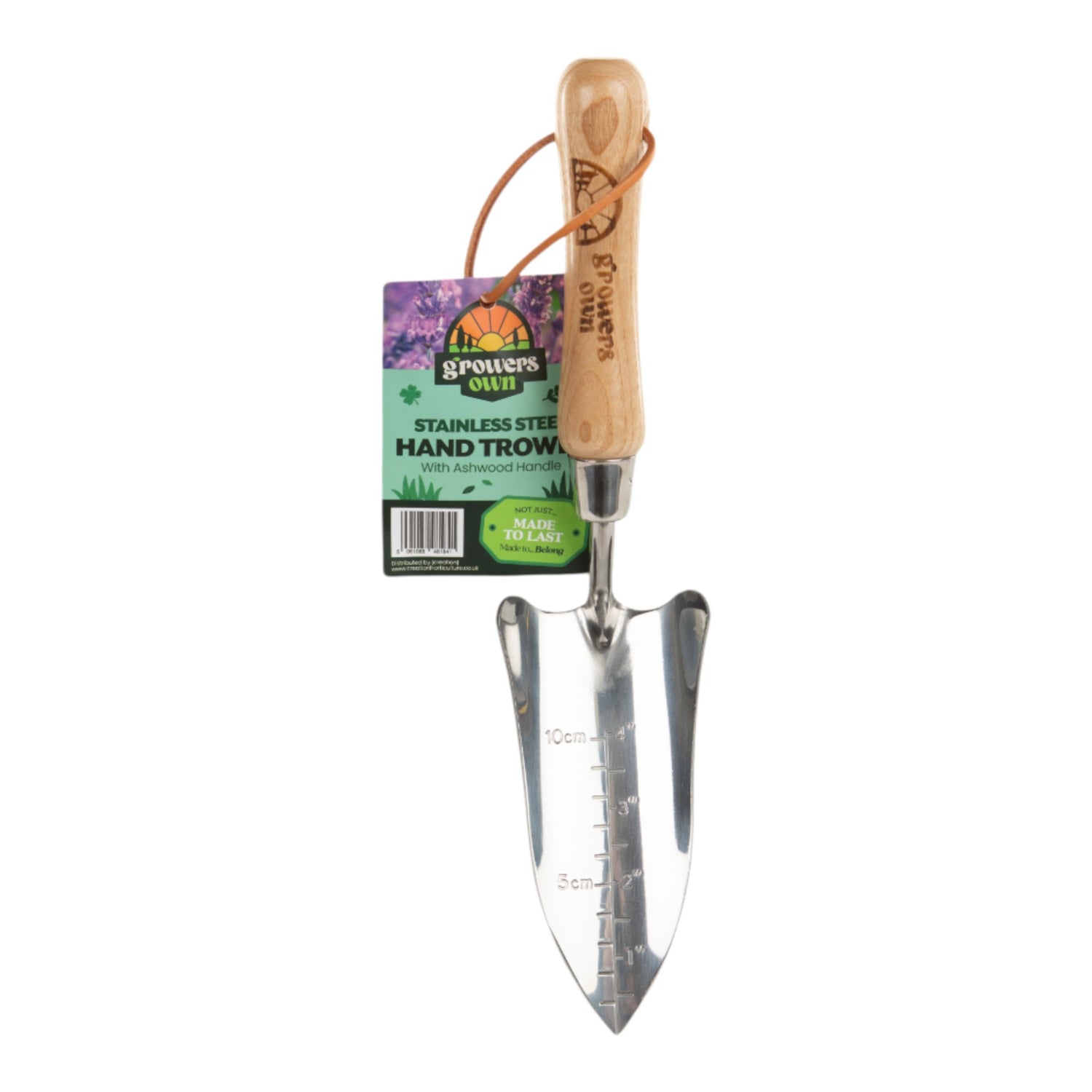


£4.50
Unit price per£4.50
Unit price perThe Growers Own Stainless Steel Hand Trowel with Ashwood Handle is designed for planting, potting, transplanting and close-up cultivation.
It is a practical tool for growers, landscapers and gardeners who want dependable equipment for regular horticultural work. Using a tool designed for the specific job improves control and helps avoid unnecessary strain or damage.
The product specification identifies a stainless-steel working head or blade and an ashwood handle, combining a corrosion-resistant working surface with a traditional timber handle.
Key benefits
Planting, potting & close cultivation
Use the trowel for planting smaller plants, transplanting, filling containers and working amendments into manageable areas. The long-handled version provides extra reach into beds and borders.
Care & maintenance
Remove soil, sap and plant debris after use and allow the tool to dry before storage. Check the working head or blade, handle, fasteners and joints for wear, looseness or damage.
Stainless steel is corrosion resistant, but it still benefits from being cleaned and dried rather than stored covered in wet soil or sap.
Keep the ashwood handle dry and inspect it periodically for splits, rough areas or looseness. Avoid leaving wooden-handled tools exposed outdoors for long periods.
Choosing the right tool for the job
This product is intended for planting, potting, transplanting and close-up cultivation. Where the material, soil condition or branch size makes the job difficult, switch to a more appropriate tool rather than applying excessive leverage or force.
Using the correct tool generally gives better results and reduces wear on both the equipment and the operator.
Stainless Steel Hand Trowel with Ashwood Handle product details
| Brand | Growers Own |
|---|---|
| Product type | Hand trowel |
| Primary use | planting, potting, transplanting and close-up cultivation |
| Working material | Stainless steel |
| Handle material | Ashwood |
Stainless Steel Hand Trowel with Ashwood Handle FAQs
What is this tool designed for?
Planting, potting, transplanting and close-up cultivation. Who is it suitable for?
Professional growers, landscapers and gardeners where the tool matches the task. How should it be cleaned?
Remove soil, sap or plant debris after use, dry it and store it in a suitable dry location. How should it be stored?
Store it dry and protected from prolonged weather exposure. Can I use it for heavier work than intended?
No. If the task requires excessive force or leverage, choose a heavier or more appropriate tool. Does stainless steel still need maintenance?
Yes. Clean and dry it after use and remove plant residues rather than leaving the working surface dirty or wet. How should the ashwood handle be cared for?
Keep it dry, inspect it for splits or looseness and avoid prolonged outdoor exposure when the tool is not in use.
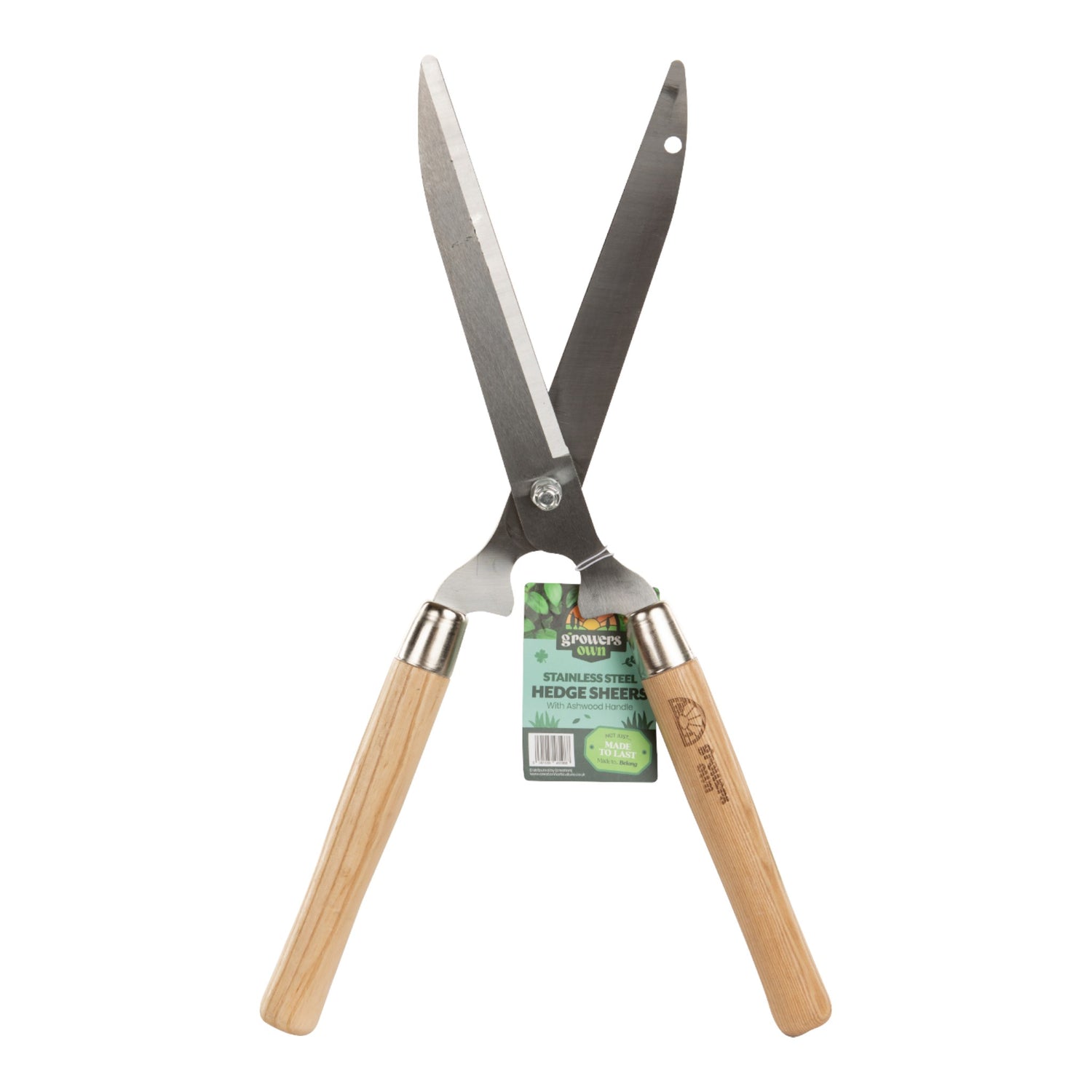


£9.25
Unit price per£9.25
Unit price perThe Growers Own Stainless Steel Hedge Shears with Ashwood Handle is designed for trimming and shaping suitable hedge growth and shrubs.
It is a practical tool for growers, landscapers and gardeners who want dependable equipment for regular horticultural work. Using a tool designed for the specific job improves control and helps avoid unnecessary strain or damage.
The product specification identifies a stainless-steel working head or blade and an ashwood handle, combining a corrosion-resistant working surface with a traditional timber handle.
Key benefits
Hedge trimming & shaping
Use the shears for suitable hedge growth and shrub shaping. Work with controlled strokes and check the line regularly. Cut individual woody stems with secateurs, loppers or a saw where appropriate.
Care & maintenance
Remove soil, sap and plant debris after use and allow the tool to dry before storage. Check the working head or blade, handle, fasteners and joints for wear, looseness or damage.
Stainless steel is corrosion resistant, but it still benefits from being cleaned and dried rather than stored covered in wet soil or sap.
Keep the ashwood handle dry and inspect it periodically for splits, rough areas or looseness. Avoid leaving wooden-handled tools exposed outdoors for long periods.
Choosing the right tool for the job
This product is intended for trimming and shaping suitable hedge growth and shrubs. Where the material, soil condition or branch size makes the job difficult, switch to a more appropriate tool rather than applying excessive leverage or force.
Using the correct tool generally gives better results and reduces wear on both the equipment and the operator.
Stainless Steel Hedge Shears with Ashwood Handle product details
| Brand | Growers Own |
|---|---|
| Product type | Hedge shears |
| Primary use | trimming and shaping suitable hedge growth and shrubs |
| Working material | Stainless steel |
| Handle material | Ashwood |
Stainless Steel Hedge Shears with Ashwood Handle FAQs
What is this tool designed for?
Trimming and shaping suitable hedge growth and shrubs. Who is it suitable for?
Professional growers, landscapers and gardeners where the tool matches the task. How should it be cleaned?
Remove soil, sap or plant debris after use, dry it and store it in a suitable dry location. How should it be stored?
Store it dry and protected from prolonged weather exposure. Can I use it for heavier work than intended?
No. If the task requires excessive force or leverage, choose a heavier or more appropriate tool. Does stainless steel still need maintenance?
Yes. Clean and dry it after use and remove plant residues rather than leaving the working surface dirty or wet. How should the ashwood handle be cared for?
Keep it dry, inspect it for splits or looseness and avoid prolonged outdoor exposure when the tool is not in use. How should the cutting edge be maintained?
Keep blades clean and sharp and inspect pivots and fasteners periodically. What if the material is too thick to cut comfortably?
Use a larger suitable pruning tool or saw rather than forcing the cut.
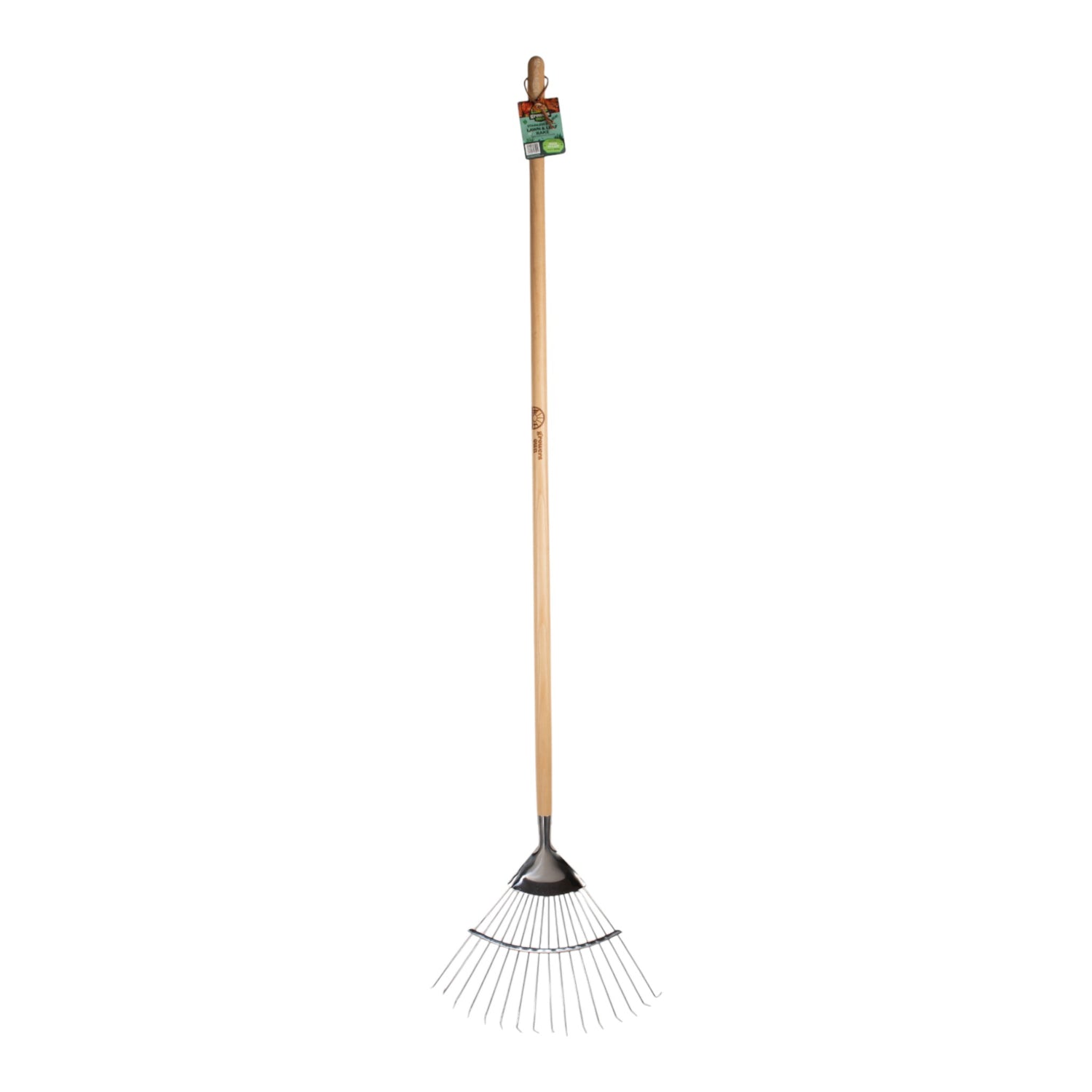


£19.75
Unit price per£19.75
Unit price perThe Growers Own Stainless Steel Lawn & Leaf Rake with Ashwood Handle is designed for collecting leaves, grass clippings and light garden debris.
It is a practical tool for growers, landscapers and gardeners who want dependable equipment for regular horticultural work. Using a tool designed for the specific job improves control and helps avoid unnecessary strain or damage.
The product specification identifies a stainless-steel working head or blade and an ashwood handle, combining a corrosion-resistant working surface with a traditional timber handle.
Key benefits
Leaves & light garden debris
Use the rake for gathering fallen leaves, grass clippings and other light material without unnecessarily digging into the soil surface.
Care & maintenance
Remove soil, sap and plant debris after use and allow the tool to dry before storage. Check the working head or blade, handle, fasteners and joints for wear, looseness or damage.
Stainless steel is corrosion resistant, but it still benefits from being cleaned and dried rather than stored covered in wet soil or sap.
Keep the ashwood handle dry and inspect it periodically for splits, rough areas or looseness. Avoid leaving wooden-handled tools exposed outdoors for long periods.
Choosing the right tool for the job
This product is intended for collecting leaves, grass clippings and light garden debris. Where the material, soil condition or branch size makes the job difficult, switch to a more appropriate tool rather than applying excessive leverage or force.
Using the correct tool generally gives better results and reduces wear on both the equipment and the operator.
Stainless Steel Lawn & Leaf Rake with Ashwood Handle product details
| Brand | Growers Own |
|---|---|
| Product type | Lawn & leaf rake |
| Primary use | collecting leaves, grass clippings and light garden debris |
| Working material | Stainless steel |
| Handle material | Ashwood |
Stainless Steel Lawn & Leaf Rake with Ashwood Handle FAQs
What is this tool designed for?
Collecting leaves, grass clippings and light garden debris. Who is it suitable for?
Professional growers, landscapers and gardeners where the tool matches the task. How should it be cleaned?
Remove soil, sap or plant debris after use, dry it and store it in a suitable dry location. How should it be stored?
Store it dry and protected from prolonged weather exposure. Can I use it for heavier work than intended?
No. If the task requires excessive force or leverage, choose a heavier or more appropriate tool. Does stainless steel still need maintenance?
Yes. Clean and dry it after use and remove plant residues rather than leaving the working surface dirty or wet. How should the ashwood handle be cared for?
Keep it dry, inspect it for splits or looseness and avoid prolonged outdoor exposure when the tool is not in use.
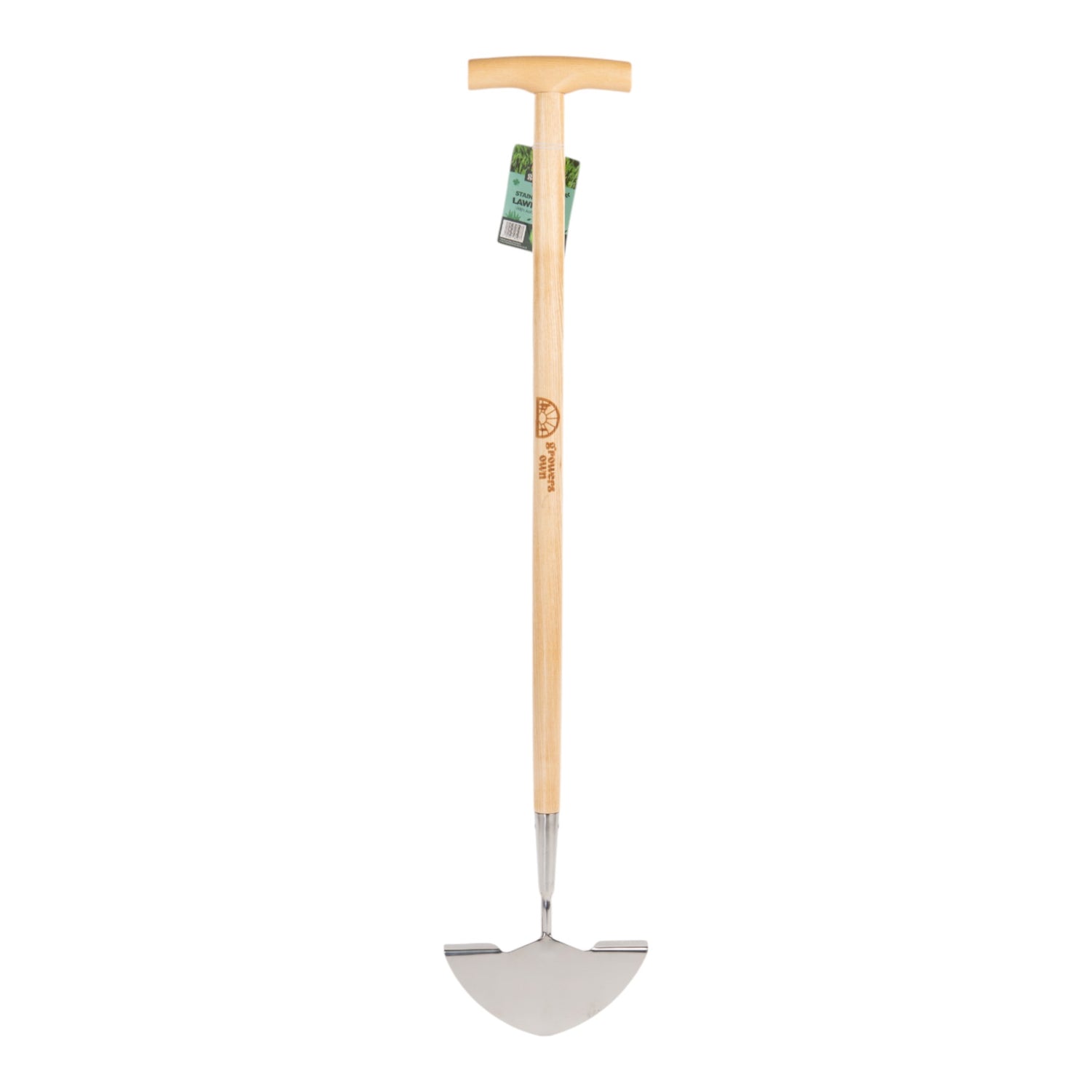

£14.50
Unit price per£14.50
Unit price perThe Growers Own Stainless Steel Lawn Edger with Ashwood Handle is designed for cutting and maintaining defined edges between lawns, borders and paths.
It is a practical tool for growers, landscapers and gardeners who want dependable equipment for regular horticultural work. Using a tool designed for the specific job improves control and helps avoid unnecessary strain or damage.
The product specification identifies a stainless-steel working head or blade and an ashwood handle, combining a corrosion-resistant working surface with a traditional timber handle.
Key benefits
Creating a defined lawn edge
Use the edger to cut a clear boundary between lawn and borders or paths. Mark the desired line first and work progressively along it for a consistent finish.
Care & maintenance
Remove soil, sap and plant debris after use and allow the tool to dry before storage. Check the working head or blade, handle, fasteners and joints for wear, looseness or damage.
Stainless steel is corrosion resistant, but it still benefits from being cleaned and dried rather than stored covered in wet soil or sap.
Keep the ashwood handle dry and inspect it periodically for splits, rough areas or looseness. Avoid leaving wooden-handled tools exposed outdoors for long periods.
Choosing the right tool for the job
This product is intended for cutting and maintaining defined edges between lawns, borders and paths. Where the material, soil condition or branch size makes the job difficult, switch to a more appropriate tool rather than applying excessive leverage or force.
Using the correct tool generally gives better results and reduces wear on both the equipment and the operator.
Stainless Steel Lawn Edger with Ashwood Handle product details
| Brand | Growers Own |
|---|---|
| Product type | Lawn edger |
| Primary use | cutting and maintaining defined edges between lawns, borders and paths |
| Working material | Stainless steel |
| Handle material | Ashwood |
Stainless Steel Lawn Edger with Ashwood Handle FAQs
What is this tool designed for?
Cutting and maintaining defined edges between lawns, borders and paths. Who is it suitable for?
Professional growers, landscapers and gardeners where the tool matches the task. How should it be cleaned?
Remove soil, sap or plant debris after use, dry it and store it in a suitable dry location. How should it be stored?
Store it dry and protected from prolonged weather exposure. Can I use it for heavier work than intended?
No. If the task requires excessive force or leverage, choose a heavier or more appropriate tool. Does stainless steel still need maintenance?
Yes. Clean and dry it after use and remove plant residues rather than leaving the working surface dirty or wet. How should the ashwood handle be cared for?
Keep it dry, inspect it for splits or looseness and avoid prolonged outdoor exposure when the tool is not in use.
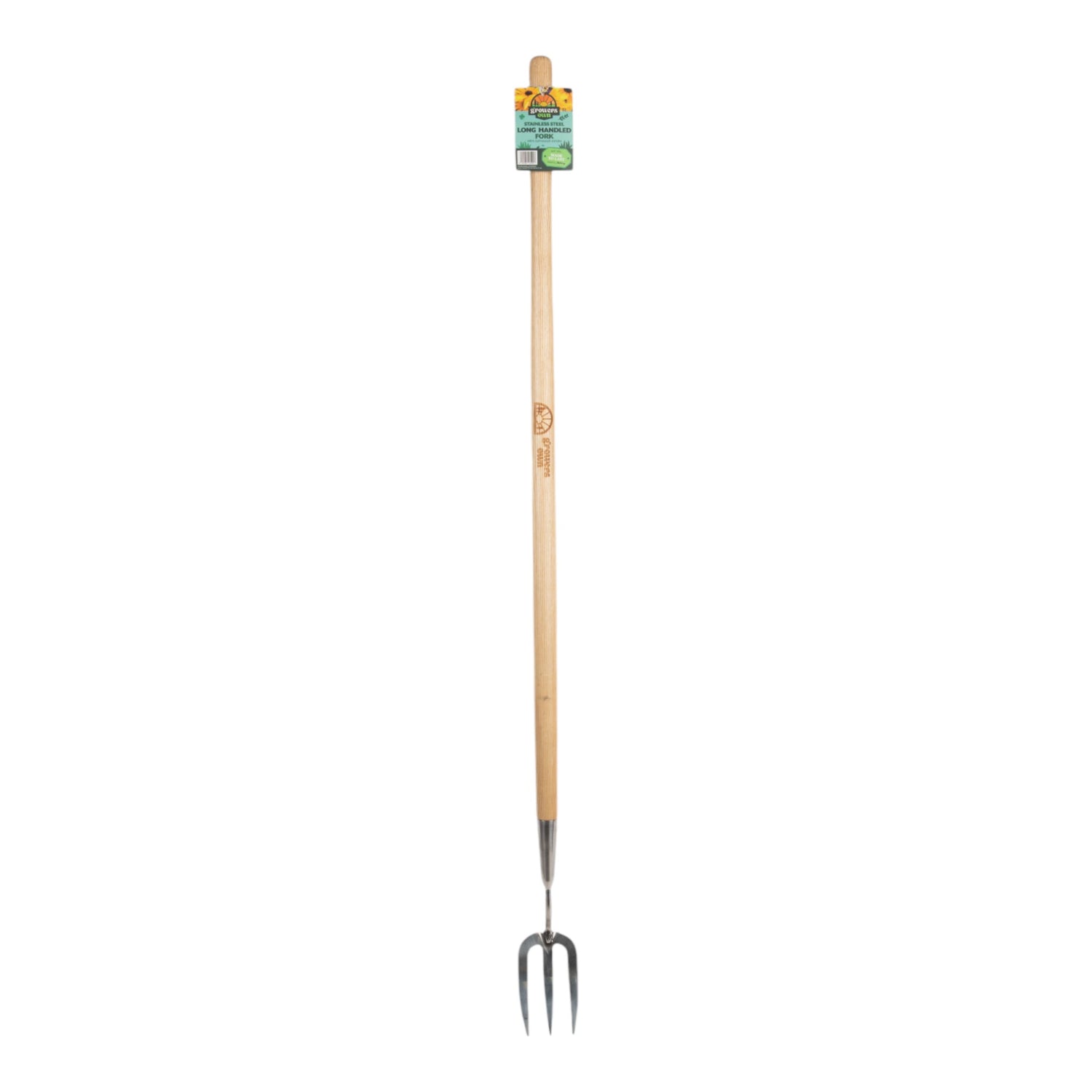


£9.25
Unit price per£9.25
Unit price perThe Growers Own Stainless Steel Long-Handled Fork with Ashwood Handle is designed for loosening and cultivating soil where extra reach is useful.
It is a practical tool for growers, landscapers and gardeners who want dependable equipment for regular horticultural work. Using a tool designed for the specific job improves control and helps avoid unnecessary strain or damage.
The product specification identifies a stainless-steel working head or blade and an ashwood handle, combining a corrosion-resistant working surface with a traditional timber handle.
Key benefits
Loosening soil around plants
Use the fork to loosen the upper soil layer, break up small clods and cultivate around established plants. Work carefully around shallow roots and plant crowns.
Care & maintenance
Remove soil, sap and plant debris after use and allow the tool to dry before storage. Check the working head or blade, handle, fasteners and joints for wear, looseness or damage.
Stainless steel is corrosion resistant, but it still benefits from being cleaned and dried rather than stored covered in wet soil or sap.
Keep the ashwood handle dry and inspect it periodically for splits, rough areas or looseness. Avoid leaving wooden-handled tools exposed outdoors for long periods.
Choosing the right tool for the job
This product is intended for loosening and cultivating soil where extra reach is useful. Where the material, soil condition or branch size makes the job difficult, switch to a more appropriate tool rather than applying excessive leverage or force.
Using the correct tool generally gives better results and reduces wear on both the equipment and the operator.
Stainless Steel Long-Handled Fork with Ashwood Handle product details
| Brand | Growers Own |
|---|---|
| Product type | Long-handled fork |
| Primary use | loosening and cultivating soil where extra reach is useful |
| Working material | Stainless steel |
| Handle material | Ashwood |
Stainless Steel Long-Handled Fork with Ashwood Handle FAQs
What is this tool designed for?
Loosening and cultivating soil where extra reach is useful. Who is it suitable for?
Professional growers, landscapers and gardeners where the tool matches the task. How should it be cleaned?
Remove soil, sap or plant debris after use, dry it and store it in a suitable dry location. How should it be stored?
Store it dry and protected from prolonged weather exposure. Can I use it for heavier work than intended?
No. If the task requires excessive force or leverage, choose a heavier or more appropriate tool. Does stainless steel still need maintenance?
Yes. Clean and dry it after use and remove plant residues rather than leaving the working surface dirty or wet. How should the ashwood handle be cared for?
Keep it dry, inspect it for splits or looseness and avoid prolonged outdoor exposure when the tool is not in use.
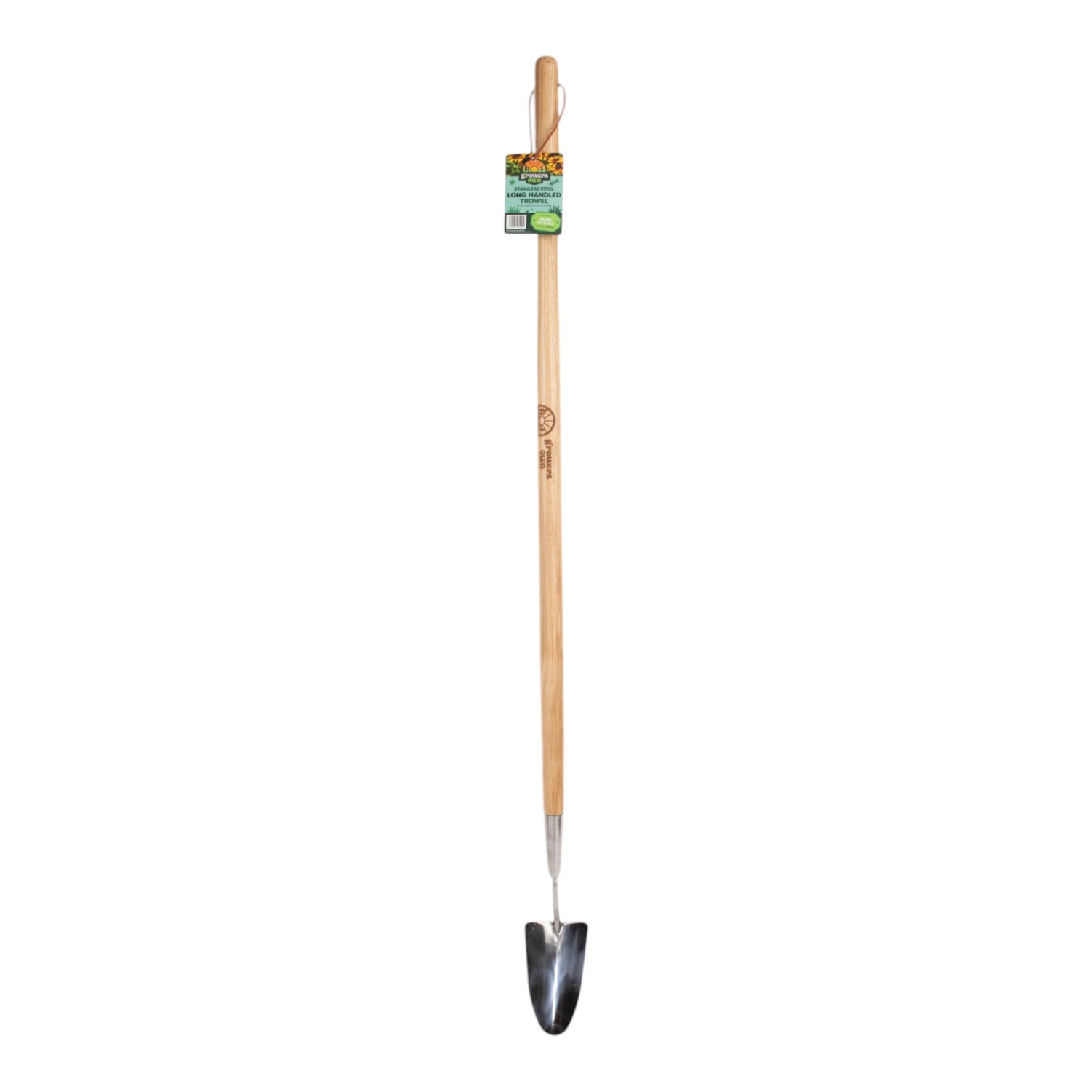


£9.25
Unit price per£9.25
Unit price perThe Growers Own Stainless Steel Long-Handled Trowel with Ashwood Handle is designed for planting and cultivation where extra reach helps reduce bending.
It is a practical tool for growers, landscapers and gardeners who want dependable equipment for regular horticultural work. Using a tool designed for the specific job improves control and helps avoid unnecessary strain or damage.
The product specification identifies a stainless-steel working head or blade and an ashwood handle, combining a corrosion-resistant working surface with a traditional timber handle.
Key benefits
Planting, potting & close cultivation
Use the trowel for planting smaller plants, transplanting, filling containers and working amendments into manageable areas. The long-handled version provides extra reach into beds and borders.
Care & maintenance
Remove soil, sap and plant debris after use and allow the tool to dry before storage. Check the working head or blade, handle, fasteners and joints for wear, looseness or damage.
Stainless steel is corrosion resistant, but it still benefits from being cleaned and dried rather than stored covered in wet soil or sap.
Keep the ashwood handle dry and inspect it periodically for splits, rough areas or looseness. Avoid leaving wooden-handled tools exposed outdoors for long periods.
Choosing the right tool for the job
This product is intended for planting and cultivation where extra reach helps reduce bending. Where the material, soil condition or branch size makes the job difficult, switch to a more appropriate tool rather than applying excessive leverage or force.
Using the correct tool generally gives better results and reduces wear on both the equipment and the operator.
Stainless Steel Long-Handled Trowel with Ashwood Handle product details
| Brand | Growers Own |
|---|---|
| Product type | Long-handled trowel |
| Primary use | planting and cultivation where extra reach helps reduce bending |
| Working material | Stainless steel |
| Handle material | Ashwood |
Stainless Steel Long-Handled Trowel with Ashwood Handle FAQs
What is this tool designed for?
Planting and cultivation where extra reach helps reduce bending. Who is it suitable for?
Professional growers, landscapers and gardeners where the tool matches the task. How should it be cleaned?
Remove soil, sap or plant debris after use, dry it and store it in a suitable dry location. How should it be stored?
Store it dry and protected from prolonged weather exposure. Can I use it for heavier work than intended?
No. If the task requires excessive force or leverage, choose a heavier or more appropriate tool. Does stainless steel still need maintenance?
Yes. Clean and dry it after use and remove plant residues rather than leaving the working surface dirty or wet. How should the ashwood handle be cared for?
Keep it dry, inspect it for splits or looseness and avoid prolonged outdoor exposure when the tool is not in use.
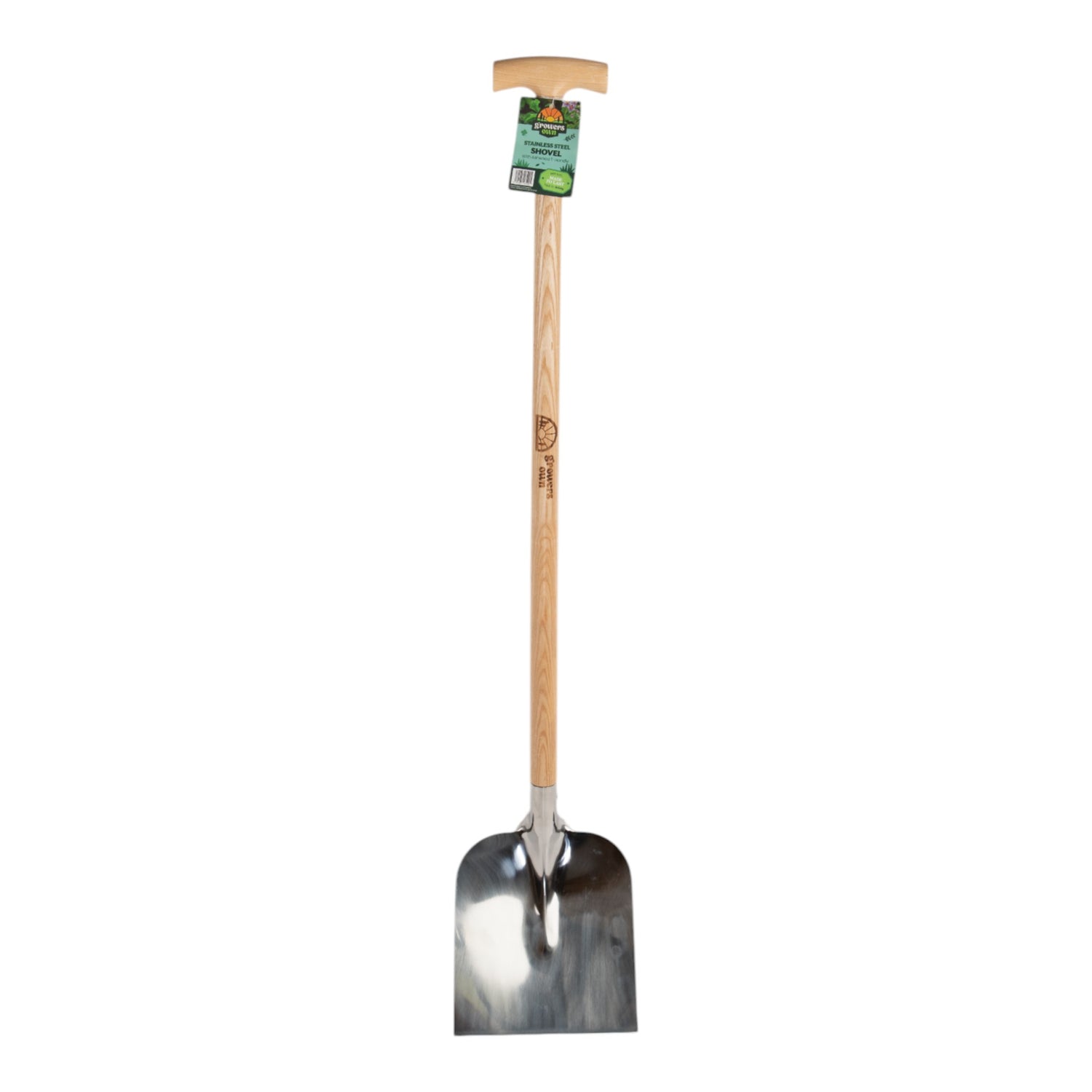

£19.75
Unit price per£19.75
Unit price perThe Growers Own Stainless Steel Shovel with Ashwood T-Handle is designed for moving soil, compost, mulch and other loose horticultural materials.
It is a practical tool for growers, landscapers and gardeners who want dependable equipment for regular horticultural work. Using a tool designed for the specific job improves control and helps avoid unnecessary strain or damage.
The product specification identifies a stainless-steel working head or blade and an ashwood handle, combining a corrosion-resistant working surface with a traditional timber handle.
Key benefits
Moving loose horticultural materials
Use the shovel for manageable quantities of compost, soil, mulch and similar loose materials. Avoid overloading the blade and keep loads controlled when lifting.
Care & maintenance
Remove soil, sap and plant debris after use and allow the tool to dry before storage. Check the working head or blade, handle, fasteners and joints for wear, looseness or damage.
Stainless steel is corrosion resistant, but it still benefits from being cleaned and dried rather than stored covered in wet soil or sap.
Keep the ashwood handle dry and inspect it periodically for splits, rough areas or looseness. Avoid leaving wooden-handled tools exposed outdoors for long periods.
Choosing the right tool for the job
This product is intended for moving soil, compost, mulch and other loose horticultural materials. Where the material, soil condition or branch size makes the job difficult, switch to a more appropriate tool rather than applying excessive leverage or force.
Using the correct tool generally gives better results and reduces wear on both the equipment and the operator.
Stainless Steel Shovel with Ashwood T-Handle product details
| Brand | Growers Own |
|---|---|
| Product type | Garden shovel |
| Primary use | moving soil, compost, mulch and other loose horticultural materials |
| Working material | Stainless steel |
| Handle material | Ashwood |
Stainless Steel Shovel with Ashwood T-Handle FAQs
What is this tool designed for?
Moving soil, compost, mulch and other loose horticultural materials. Who is it suitable for?
Professional growers, landscapers and gardeners where the tool matches the task. How should it be cleaned?
Remove soil, sap or plant debris after use, dry it and store it in a suitable dry location. How should it be stored?
Store it dry and protected from prolonged weather exposure. Can I use it for heavier work than intended?
No. If the task requires excessive force or leverage, choose a heavier or more appropriate tool. Does stainless steel still need maintenance?
Yes. Clean and dry it after use and remove plant residues rather than leaving the working surface dirty or wet. How should the ashwood handle be cared for?
Keep it dry, inspect it for splits or looseness and avoid prolonged outdoor exposure when the tool is not in use.
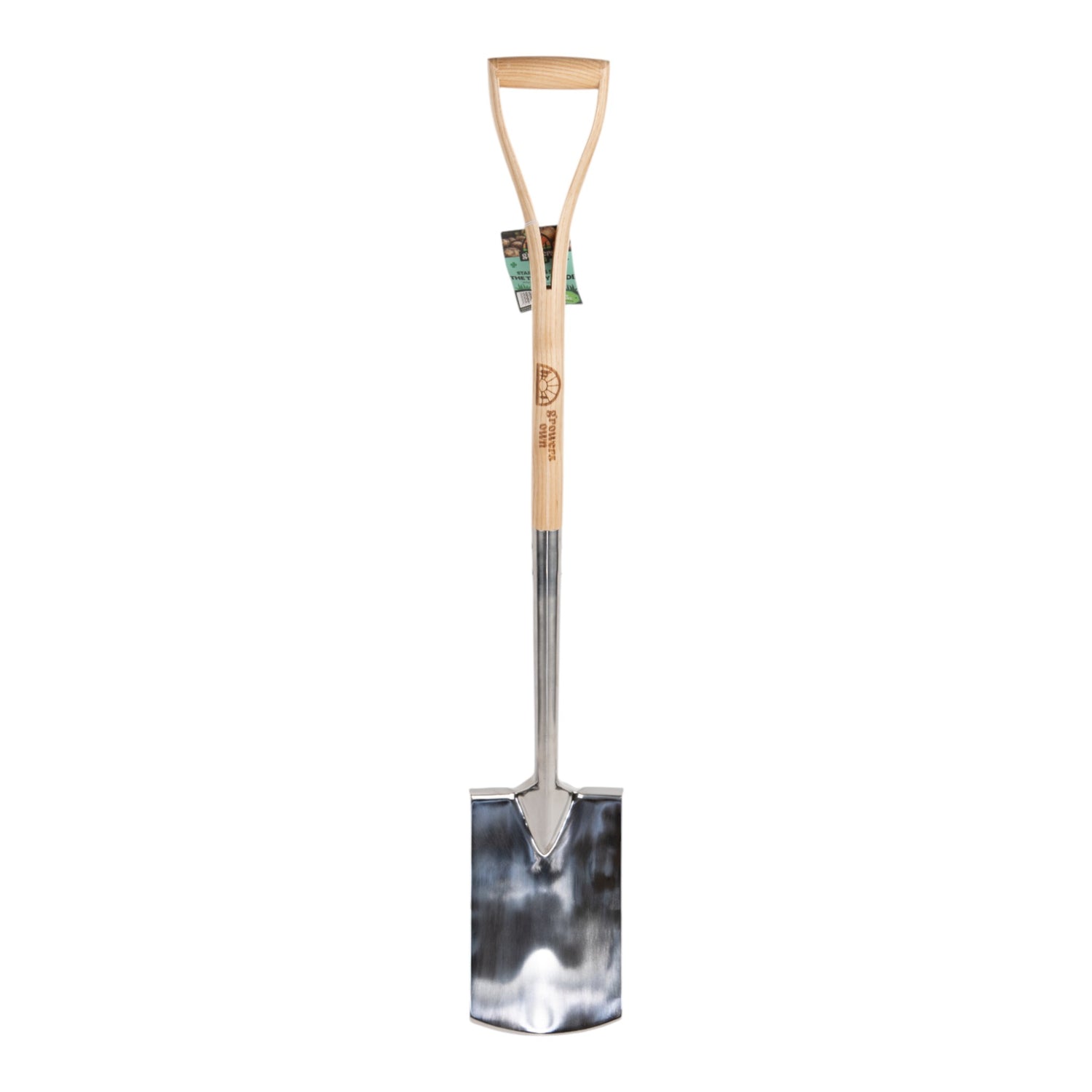


£19.75
Unit price per£19.75
Unit price perThe Growers Own Stainless Steel Terry Spade with Ashwood Handle is designed for general digging, planting and soil preparation.
It is a practical tool for growers, landscapers and gardeners who want dependable equipment for regular horticultural work. Using a tool designed for the specific job improves control and helps avoid unnecessary strain or damage.
The product specification identifies a stainless-steel working head or blade and an ashwood handle, combining a corrosion-resistant working surface with a traditional timber handle.
Key benefits
General digging & soil preparation
Use the spade for digging, planting holes and preparing beds. Work with manageable quantities of soil and loosen very compacted or stony ground progressively.
Care & maintenance
Remove soil, sap and plant debris after use and allow the tool to dry before storage. Check the working head or blade, handle, fasteners and joints for wear, looseness or damage.
Stainless steel is corrosion resistant, but it still benefits from being cleaned and dried rather than stored covered in wet soil or sap.
Keep the ashwood handle dry and inspect it periodically for splits, rough areas or looseness. Avoid leaving wooden-handled tools exposed outdoors for long periods.
Choosing the right tool for the job
This product is intended for general digging, planting and soil preparation. Where the material, soil condition or branch size makes the job difficult, switch to a more appropriate tool rather than applying excessive leverage or force.
Using the correct tool generally gives better results and reduces wear on both the equipment and the operator.
Stainless Steel Terry Spade with Ashwood Handle product details
| Brand | Growers Own |
|---|---|
| Product type | Garden spade |
| Primary use | general digging, planting and soil preparation |
| Working material | Stainless steel |
| Handle material | Ashwood |
Stainless Steel Terry Spade with Ashwood Handle FAQs
What is this tool designed for?
General digging, planting and soil preparation. Who is it suitable for?
Professional growers, landscapers and gardeners where the tool matches the task. How should it be cleaned?
Remove soil, sap or plant debris after use, dry it and store it in a suitable dry location. How should it be stored?
Store it dry and protected from prolonged weather exposure. Can I use it for heavier work than intended?
No. If the task requires excessive force or leverage, choose a heavier or more appropriate tool. Does stainless steel still need maintenance?
Yes. Clean and dry it after use and remove plant residues rather than leaving the working surface dirty or wet. How should the ashwood handle be cared for?
Keep it dry, inspect it for splits or looseness and avoid prolonged outdoor exposure when the tool is not in use.

£19.00
Unit price per£19.00
Unit price perThe Standard Duty Pot Labels with Hole 300m x 30mm WHITE (Box of 50) is a standard-duty pot label with hole designed for writing plant names, varieties, batch references, prices or other crop information.
Clear, consistent plant identification helps nurseries, garden centres and growers keep varieties, batches and retail information organised from production through to display.
Supplied as: Box of 50.
Key benefits
Plant identification in professional horticulture
Labels can carry variety names, sowing or potting dates, batch references, pricing, care information or other details needed by the growing or retail operation.
Using a consistent colour and label format can also help visually separate crop groups or production batches.
Using the label
Insert the label securely into the growing medium or compatible holder so the writing area remains visible without interfering with the plant. Position it where it can be read during crop handling and retail display.
Choose a suitable permanent, weather-resistant or removable marking method according to the label material, growing environment and length of time the information needs to remain legible.
Standard Duty Pot Labels with Hole 300m x 30mm WHITE (Box of 50) product details
| Product type | Standard-duty pot label with hole |
|---|---|
| Stated dimensions | 30mm |
| Colour | White |
| Selling quantity | Box of 50 |
Standard Duty Pot Labels with Hole 300m x 30mm WHITE (Box of 50) FAQs
What size is this label?
The stated size is 30mm. How many are supplied?
This product is supplied as a Box of 50. What colour is this version?
This version is White. What can I write on the label?
Typical information includes variety, crop batch, sowing or potting date, price and care information. Where should the label be positioned?
Place it where it remains visible and legible without interfering with plant growth or routine crop handling. What should I use to write on it?
Choose a marker appropriate to the label material and growing environment. Test compatibility where permanence or removability matters.

£26.78
Unit price per£26.78
Unit price perThe Standard Duty Pot Labels with Hole 400m x 30mm WHITE (Box of 50) is a standard-duty pot label with hole designed for writing plant names, varieties, batch references, prices or other crop information.
Clear, consistent plant identification helps nurseries, garden centres and growers keep varieties, batches and retail information organised from production through to display.
Supplied as: Box of 50.
Key benefits
Plant identification in professional horticulture
Labels can carry variety names, sowing or potting dates, batch references, pricing, care information or other details needed by the growing or retail operation.
Using a consistent colour and label format can also help visually separate crop groups or production batches.
Using the label
Insert the label securely into the growing medium or compatible holder so the writing area remains visible without interfering with the plant. Position it where it can be read during crop handling and retail display.
Choose a suitable permanent, weather-resistant or removable marking method according to the label material, growing environment and length of time the information needs to remain legible.
Standard Duty Pot Labels with Hole 400m x 30mm WHITE (Box of 50) product details
| Product type | Standard-duty pot label with hole |
|---|---|
| Stated dimensions | 30mm |
| Colour | White |
| Selling quantity | Box of 50 |
Standard Duty Pot Labels with Hole 400m x 30mm WHITE (Box of 50) FAQs
What size is this label?
The stated size is 30mm. How many are supplied?
This product is supplied as a Box of 50. What colour is this version?
This version is White. What can I write on the label?
Typical information includes variety, crop batch, sowing or potting date, price and care information. Where should the label be positioned?
Place it where it remains visible and legible without interfering with plant growth or routine crop handling. What should I use to write on it?
Choose a marker appropriate to the label material and growing environment. Test compatibility where permanence or removability matters.

£31.00
Unit price per£31.00
Unit price perThe Standard Duty Pot Labels with Hole 500m x 30mm WHITE (Box of 50) is a standard-duty pot label with hole designed for writing plant names, varieties, batch references, prices or other crop information.
Clear, consistent plant identification helps nurseries, garden centres and growers keep varieties, batches and retail information organised from production through to display.
Supplied as: Box of 50.
Key benefits
Plant identification in professional horticulture
Labels can carry variety names, sowing or potting dates, batch references, pricing, care information or other details needed by the growing or retail operation.
Using a consistent colour and label format can also help visually separate crop groups or production batches.
Using the label
Insert the label securely into the growing medium or compatible holder so the writing area remains visible without interfering with the plant. Position it where it can be read during crop handling and retail display.
Choose a suitable permanent, weather-resistant or removable marking method according to the label material, growing environment and length of time the information needs to remain legible.
Standard Duty Pot Labels with Hole 500m x 30mm WHITE (Box of 50) product details
| Product type | Standard-duty pot label with hole |
|---|---|
| Stated dimensions | 30mm |
| Colour | White |
| Selling quantity | Box of 50 |
Standard Duty Pot Labels with Hole 500m x 30mm WHITE (Box of 50) FAQs
What size is this label?
The stated size is 30mm. How many are supplied?
This product is supplied as a Box of 50. What colour is this version?
This version is White. What can I write on the label?
Typical information includes variety, crop batch, sowing or potting date, price and care information. Where should the label be positioned?
Place it where it remains visible and legible without interfering with plant growth or routine crop handling. What should I use to write on it?
Choose a marker appropriate to the label material and growing environment. Test compatibility where permanence or removability matters.

£37.11
Unit price per£37.11
Unit price perThe Standard Duty Pot Labels with Hole 600m x 30mm WHITE (Box of 50) is a standard-duty pot label with hole designed for writing plant names, varieties, batch references, prices or other crop information.
Clear, consistent plant identification helps nurseries, garden centres and growers keep varieties, batches and retail information organised from production through to display.
Supplied as: Box of 50.
Key benefits
Plant identification in professional horticulture
Labels can carry variety names, sowing or potting dates, batch references, pricing, care information or other details needed by the growing or retail operation.
Using a consistent colour and label format can also help visually separate crop groups or production batches.
Using the label
Insert the label securely into the growing medium or compatible holder so the writing area remains visible without interfering with the plant. Position it where it can be read during crop handling and retail display.
Choose a suitable permanent, weather-resistant or removable marking method according to the label material, growing environment and length of time the information needs to remain legible.
Standard Duty Pot Labels with Hole 600m x 30mm WHITE (Box of 50) product details
| Product type | Standard-duty pot label with hole |
|---|---|
| Stated dimensions | 30mm |
| Colour | White |
| Selling quantity | Box of 50 |
Standard Duty Pot Labels with Hole 600m x 30mm WHITE (Box of 50) FAQs
What size is this label?
The stated size is 30mm. How many are supplied?
This product is supplied as a Box of 50. What colour is this version?
This version is White. What can I write on the label?
Typical information includes variety, crop batch, sowing or potting date, price and care information. Where should the label be positioned?
Place it where it remains visible and legible without interfering with plant growth or routine crop handling. What should I use to write on it?
Choose a marker appropriate to the label material and growing environment. Test compatibility where permanence or removability matters.


£48.11
Unit price per£48.11
Unit price perThe Stick-In Trellis 55cm 21.6" Bamboo (Box of 50) is designed for supporting and displaying climbing or trailing container plants.
Plant-support products help growers keep crops organised, reduce uncontrolled movement and present plants cleanly through production and retail. The support should guide growth without constricting stems or damaging developing foliage.
Selling quantity: Pack/box of 50.
Key benefits
Supporting climbing & trailing plants
Insert the trellis securely into the growing medium and train stems progressively as they develop. Distribute growth across the framework rather than pulling several stems tightly to one point.
The support is particularly useful for container plants that benefit from an immediate retail-ready climbing structure.
Supporting healthy plant development
Plant supports should reduce damaging movement while still allowing normal growth. Avoid ties or clips that become tight around expanding stems, and reposition support points as the crop develops.
Installation & routine checks
Make sure stakes and support structures are stable before attaching plants. Check supports after strong wind, crop movement or handling and replace split, bent or damaged components.
Reuse & crop hygiene
Where supports are suitable for reuse, remove old plant material and clean them according to the nursery's crop-hygiene requirements before moving them between production batches.
Stick-In Trellis 55cm 21.6" Bamboo (Box of 50) product details
| Product type | Bamboo Stick-In Trellis |
|---|---|
| Primary use | supporting and displaying climbing or trailing container plants |
| Selling quantity | Pack/box of 50 |
| Application | Plant training and support |
Stick-In Trellis 55cm 21.6" Bamboo (Box of 50) FAQs
What is this product used for?
Supporting and displaying climbing or trailing container plants. What quantity am I buying?
The selling quantity is Pack/box of 50. When should plant supports be installed?
Ideally before the plant becomes difficult to gather or train without damaging stems and foliage. How tightly should plants be attached?
Securely enough to guide growth, but never so tightly that ties or clips constrict expanding stems. Should supports be checked during the growing season?
Yes. Inspect them regularly and reposition ties or clips as plants increase in size. Can supports be reused?
Where the product remains serviceable, reuse may be possible subject to appropriate cleaning and crop-hygiene procedures. How do I choose the right support size?
Consider the plant's mature height, growth habit, container size, expected weight and exposure to wind or handling. What should I check on bamboo before reuse?
Inspect for splitting, breakage or deterioration and remove damaged canes or trellis components from service.


£45.78
Unit price per£45.78
Unit price perThe Stick-In Trellis 83cm 32.5" Bamboo (Box of 50) is designed for supporting and displaying climbing or trailing container plants.
Plant-support products help growers keep crops organised, reduce uncontrolled movement and present plants cleanly through production and retail. The support should guide growth without constricting stems or damaging developing foliage.
Selling quantity: Pack/box of 50.
Key benefits
Supporting climbing & trailing plants
Insert the trellis securely into the growing medium and train stems progressively as they develop. Distribute growth across the framework rather than pulling several stems tightly to one point.
The support is particularly useful for container plants that benefit from an immediate retail-ready climbing structure.
Supporting healthy plant development
Plant supports should reduce damaging movement while still allowing normal growth. Avoid ties or clips that become tight around expanding stems, and reposition support points as the crop develops.
Installation & routine checks
Make sure stakes and support structures are stable before attaching plants. Check supports after strong wind, crop movement or handling and replace split, bent or damaged components.
Reuse & crop hygiene
Where supports are suitable for reuse, remove old plant material and clean them according to the nursery's crop-hygiene requirements before moving them between production batches.
Stick-In Trellis 83cm 32.5" Bamboo (Box of 50) product details
| Product type | Bamboo Stick-In Trellis |
|---|---|
| Primary use | supporting and displaying climbing or trailing container plants |
| Selling quantity | Pack/box of 50 |
| Application | Plant training and support |
Stick-In Trellis 83cm 32.5" Bamboo (Box of 50) FAQs
What is this product used for?
Supporting and displaying climbing or trailing container plants. What quantity am I buying?
The selling quantity is Pack/box of 50. When should plant supports be installed?
Ideally before the plant becomes difficult to gather or train without damaging stems and foliage. How tightly should plants be attached?
Securely enough to guide growth, but never so tightly that ties or clips constrict expanding stems. Should supports be checked during the growing season?
Yes. Inspect them regularly and reposition ties or clips as plants increase in size. Can supports be reused?
Where the product remains serviceable, reuse may be possible subject to appropriate cleaning and crop-hygiene procedures. How do I choose the right support size?
Consider the plant's mature height, growth habit, container size, expected weight and exposure to wind or handling. What should I check on bamboo before reuse?
Inspect for splitting, breakage or deterioration and remove damaged canes or trellis components from service.

The Strong Pallet Shrink Wrap Black is designed for stabilising and protecting suitable palletised loads during storage and dispatch in nursery, garden-centre, warehouse and dispatch environments.
Practical packaging consumables help keep picking, packing and despatch organised while protecting suitable goods through handling and transport.
Selling quantity: 1 unit/roll. Commercial logistics: 6 per box.
Key benefits
Stabilising palletised loads
Apply stretch/shrink wrap so suitable cartons or products are held together without crushing the load. Begin with a stable pallet arrangement and overlap wraps consistently as you work upwards.
Wrapping cannot correct an unstable pallet build. Heavy items should be positioned appropriately and loads should remain within the pallet footprint wherever practical.
Warehouse & dispatch practice
Match packaging to the product, route and expected handling. Clearly label consignments where necessary and keep packing benches organised so cutters, tape and loose materials do not create avoidable hazards.
Storage
Store packaging consumables clean and dry, away from conditions that may damage adhesives, cardboard or films. Rotate stock sensibly and protect rolls, cartons and bags from crushing or contamination before use.
Strong Pallet Shrink Wrap Black product details
| Product type | Pallet Shrink Wrap |
|---|---|
| Primary use | stabilising and protecting suitable palletised loads during storage and dispatch |
| Selling quantity | 1 unit/roll |
| Commercial logistics | 6 per box |
Strong Pallet Shrink Wrap Black FAQs
What is this product used for?
Stabilising and protecting suitable palletised loads during storage and dispatch. What quantity am I buying?
The selling quantity is 1 unit/roll. Is the commercial box or pallet quantity the selling unit?
No, where commercial logistics are shown separately they are warehouse/case information rather than the customer selling unit. How should packaging be stored?
Keep it clean and dry and protect it from crushing, contamination, excessive heat or other conditions that could affect performance. Can packaging replace proper product protection?
No. Select packaging and internal protection according to the product, route and expected handling conditions. Is this suitable for hazardous or regulated goods?
Do not assume so. Hazardous or regulated goods may require specialist approved packaging and handling procedures. How can packing waste be reduced?
Use appropriately sized packaging, avoid unnecessary material and follow local recycling or waste-segregation arrangements where applicable. What is the commercial logistics quantity?
The stated commercial logistics quantity is 6 per box.
The Super Fogger 3/8" WW - 13L/h is designed for fine-water distribution in compatible misting/fogging systems.
This component forms part of professional greenhouse, nursery and protected-crop irrigation installations where sprinklers, misters, suspended stands and low-pressure drainage components are selected as a complete compatible system.
Key benefits
Overhead water distribution
Use the fogger as part of a correctly designed overhead irrigation or misting layout. Spacing, mounting height, operating pressure and overlap between adjacent outlets all influence the distribution reaching the crop.
The stated nominal flow for this version is 13L/h. Do not select an outlet by flow alone; consider crop density, target application, irrigation duration and the performance of the complete zone.
Checking distribution uniformity
Commission the system under normal operating conditions and inspect the wetting pattern across representative positions. Catch-can or other output checks can help identify pressure differences, blocked nozzles or poor overlap.
Pressure, filtration & system design
Misting and sprinkler performance depends on appropriate pressure and clean water. Use filtration suitable for the water source and the smallest waterways in the system, and consider pressure loss through pipework, elevation and total zone flow.
Calculate total flow demand before expanding a zone; adding outlets without checking supply capacity can reduce performance across the installation.
Maintenance
Inspect nozzles, filters, LPD components, tube and connections for blockage, scale, wear or damage. Flush and clean the system as appropriate to water quality and crop-hygiene requirements.
Super Fogger 3/8" WW - 13L/h product details
| Product type | Fogger |
|---|---|
| Primary use | fine-water distribution in compatible misting/fogging systems |
| Stated nominal flow | 13L/h |
| Connection / variant | 3/8" WW |
| Application | Professional horticultural irrigation |
Super Fogger 3/8" WW - 13L/h FAQs
What is this product used for?
Fine-water distribution in compatible misting/fogging systems. What flow rate is stated?
The stated nominal flow for this version is 13L/h. Is it suitable for professional greenhouse irrigation?
Yes, where it is compatible with the rest of the irrigation assembly and the system is designed for the required flow and pressure. How do I check component compatibility?
Match connection type, tube size and modular fitting system rather than relying on appearance alone. Why is filtration important?
Small sprinkler, fogger and LPD waterways can be affected by debris, so suitable filtration helps maintain reliable operation. Should the system be tested after installation?
Yes. Run the zone under normal operating conditions and inspect output, connections and distribution. Can I keep adding outlets to an existing zone?
Only if the water supply, pipework and pressure can support the additional total flow demand. What maintenance is required?
Inspect and clean outlets and filters as appropriate, flush lines where required and replace damaged or persistently blocked components. Can mounting position affect performance?
Yes. Height, orientation, spacing and crop canopy can all affect how overhead water reaches the crop.
The Super Fogger Barbed - 13L/h is designed for fine-water distribution in compatible misting/fogging systems.
This component forms part of professional greenhouse, nursery and protected-crop irrigation installations where sprinklers, misters, suspended stands and low-pressure drainage components are selected as a complete compatible system.
Key benefits
Overhead water distribution
Use the fogger as part of a correctly designed overhead irrigation or misting layout. Spacing, mounting height, operating pressure and overlap between adjacent outlets all influence the distribution reaching the crop.
The stated nominal flow for this version is 13L/h. Do not select an outlet by flow alone; consider crop density, target application, irrigation duration and the performance of the complete zone.
Checking distribution uniformity
Commission the system under normal operating conditions and inspect the wetting pattern across representative positions. Catch-can or other output checks can help identify pressure differences, blocked nozzles or poor overlap.
Pressure, filtration & system design
Misting and sprinkler performance depends on appropriate pressure and clean water. Use filtration suitable for the water source and the smallest waterways in the system, and consider pressure loss through pipework, elevation and total zone flow.
Calculate total flow demand before expanding a zone; adding outlets without checking supply capacity can reduce performance across the installation.
Maintenance
Inspect nozzles, filters, LPD components, tube and connections for blockage, scale, wear or damage. Flush and clean the system as appropriate to water quality and crop-hygiene requirements.
Super Fogger Barbed - 13L/h product details
| Product type | Fogger |
|---|---|
| Primary use | fine-water distribution in compatible misting/fogging systems |
| Stated nominal flow | 13L/h |
| Connection / variant | Barbed |
| Application | Professional horticultural irrigation |
Super Fogger Barbed - 13L/h FAQs
What is this product used for?
Fine-water distribution in compatible misting/fogging systems. What flow rate is stated?
The stated nominal flow for this version is 13L/h. Is it suitable for professional greenhouse irrigation?
Yes, where it is compatible with the rest of the irrigation assembly and the system is designed for the required flow and pressure. How do I check component compatibility?
Match connection type, tube size and modular fitting system rather than relying on appearance alone. Why is filtration important?
Small sprinkler, fogger and LPD waterways can be affected by debris, so suitable filtration helps maintain reliable operation. Should the system be tested after installation?
Yes. Run the zone under normal operating conditions and inspect output, connections and distribution. Can I keep adding outlets to an existing zone?
Only if the water supply, pipework and pressure can support the additional total flow demand. What maintenance is required?
Inspect and clean outlets and filters as appropriate, flush lines where required and replace damaged or persistently blocked components. Can mounting position affect performance?
Yes. Height, orientation, spacing and crop canopy can all affect how overhead water reaches the crop.
The Super Fogger Female - 13L/h is designed for fine-water distribution in compatible misting/fogging systems.
This component forms part of professional greenhouse, nursery and protected-crop irrigation installations where sprinklers, misters, suspended stands and low-pressure drainage components are selected as a complete compatible system.
Key benefits
Overhead water distribution
Use the fogger as part of a correctly designed overhead irrigation or misting layout. Spacing, mounting height, operating pressure and overlap between adjacent outlets all influence the distribution reaching the crop.
The stated nominal flow for this version is 13L/h. Do not select an outlet by flow alone; consider crop density, target application, irrigation duration and the performance of the complete zone.
Checking distribution uniformity
Commission the system under normal operating conditions and inspect the wetting pattern across representative positions. Catch-can or other output checks can help identify pressure differences, blocked nozzles or poor overlap.
Pressure, filtration & system design
Misting and sprinkler performance depends on appropriate pressure and clean water. Use filtration suitable for the water source and the smallest waterways in the system, and consider pressure loss through pipework, elevation and total zone flow.
Calculate total flow demand before expanding a zone; adding outlets without checking supply capacity can reduce performance across the installation.
Maintenance
Inspect nozzles, filters, LPD components, tube and connections for blockage, scale, wear or damage. Flush and clean the system as appropriate to water quality and crop-hygiene requirements.
Super Fogger Female - 13L/h product details
| Product type | Fogger |
|---|---|
| Primary use | fine-water distribution in compatible misting/fogging systems |
| Stated nominal flow | 13L/h |
| Connection / variant | Female |
| Application | Professional horticultural irrigation |
Super Fogger Female - 13L/h FAQs
What is this product used for?
Fine-water distribution in compatible misting/fogging systems. What flow rate is stated?
The stated nominal flow for this version is 13L/h. Is it suitable for professional greenhouse irrigation?
Yes, where it is compatible with the rest of the irrigation assembly and the system is designed for the required flow and pressure. How do I check component compatibility?
Match connection type, tube size and modular fitting system rather than relying on appearance alone. Why is filtration important?
Small sprinkler, fogger and LPD waterways can be affected by debris, so suitable filtration helps maintain reliable operation. Should the system be tested after installation?
Yes. Run the zone under normal operating conditions and inspect output, connections and distribution. Can I keep adding outlets to an existing zone?
Only if the water supply, pipework and pressure can support the additional total flow demand. What maintenance is required?
Inspect and clean outlets and filters as appropriate, flush lines where required and replace damaged or persistently blocked components. Can mounting position affect performance?
Yes. Height, orientation, spacing and crop canopy can all affect how overhead water reaches the crop.
The Super LPD Bayonet - 3/8" is designed for low-pressure drainage control within a compatible modular irrigation assembly.
This component forms part of professional greenhouse, nursery and protected-crop irrigation installations where sprinklers, misters, suspended stands and low-pressure drainage components are selected as a complete compatible system.
Key benefits
Low-pressure drainage control
LPD components are used within compatible sprinkler or misting assemblies to influence drainage and start/stop behaviour as system pressure changes. Correct operation depends on the complete assembly, operating pressure and installation orientation.
Match the connection type carefully to the modular sprinkler components being used and keep small waterways clean.
Pressure, filtration & system design
Misting and sprinkler performance depends on appropriate pressure and clean water. Use filtration suitable for the water source and the smallest waterways in the system, and consider pressure loss through pipework, elevation and total zone flow.
Calculate total flow demand before expanding a zone; adding outlets without checking supply capacity can reduce performance across the installation.
Maintenance
Inspect nozzles, filters, LPD components, tube and connections for blockage, scale, wear or damage. Flush and clean the system as appropriate to water quality and crop-hygiene requirements.
Super LPD Bayonet - 3/8" product details
| Product type | LPD Component |
|---|---|
| Primary use | low-pressure drainage control within a compatible modular irrigation assembly |
| Connection / variant | 3/8" |
| Application | Professional horticultural irrigation |
Super LPD Bayonet - 3/8" FAQs
What is this product used for?
Low-pressure drainage control within a compatible modular irrigation assembly. Is it suitable for professional greenhouse irrigation?
Yes, where it is compatible with the rest of the irrigation assembly and the system is designed for the required flow and pressure. How do I check component compatibility?
Match connection type, tube size and modular fitting system rather than relying on appearance alone. Why is filtration important?
Small sprinkler, fogger and LPD waterways can be affected by debris, so suitable filtration helps maintain reliable operation. Should the system be tested after installation?
Yes. Run the zone under normal operating conditions and inspect output, connections and distribution. Can I keep adding outlets to an existing zone?
Only if the water supply, pipework and pressure can support the additional total flow demand. What maintenance is required?
Inspect and clean outlets and filters as appropriate, flush lines where required and replace damaged or persistently blocked components. Can mounting position affect performance?
Yes. Height, orientation, spacing and crop canopy can all affect how overhead water reaches the crop.
The Super LPD Bayonet - Barbed is designed for low-pressure drainage control within a compatible modular irrigation assembly.
This component forms part of professional greenhouse, nursery and protected-crop irrigation installations where sprinklers, misters, suspended stands and low-pressure drainage components are selected as a complete compatible system.
Key benefits
Low-pressure drainage control
LPD components are used within compatible sprinkler or misting assemblies to influence drainage and start/stop behaviour as system pressure changes. Correct operation depends on the complete assembly, operating pressure and installation orientation.
Match the connection type carefully to the modular sprinkler components being used and keep small waterways clean.
Pressure, filtration & system design
Misting and sprinkler performance depends on appropriate pressure and clean water. Use filtration suitable for the water source and the smallest waterways in the system, and consider pressure loss through pipework, elevation and total zone flow.
Calculate total flow demand before expanding a zone; adding outlets without checking supply capacity can reduce performance across the installation.
Maintenance
Inspect nozzles, filters, LPD components, tube and connections for blockage, scale, wear or damage. Flush and clean the system as appropriate to water quality and crop-hygiene requirements.
Super LPD Bayonet - Barbed product details
| Product type | LPD Component |
|---|---|
| Primary use | low-pressure drainage control within a compatible modular irrigation assembly |
| Connection / variant | Barbed |
| Application | Professional horticultural irrigation |
Super LPD Bayonet - Barbed FAQs
What is this product used for?
Low-pressure drainage control within a compatible modular irrigation assembly. Is it suitable for professional greenhouse irrigation?
Yes, where it is compatible with the rest of the irrigation assembly and the system is designed for the required flow and pressure. How do I check component compatibility?
Match connection type, tube size and modular fitting system rather than relying on appearance alone. Why is filtration important?
Small sprinkler, fogger and LPD waterways can be affected by debris, so suitable filtration helps maintain reliable operation. Should the system be tested after installation?
Yes. Run the zone under normal operating conditions and inspect output, connections and distribution. Can I keep adding outlets to an existing zone?
Only if the water supply, pipework and pressure can support the additional total flow demand. What maintenance is required?
Inspect and clean outlets and filters as appropriate, flush lines where required and replace damaged or persistently blocked components. Can mounting position affect performance?
Yes. Height, orientation, spacing and crop canopy can all affect how overhead water reaches the crop.
The Super LPD Bayonet - Bayonet is designed for low-pressure drainage control within a compatible modular irrigation assembly.
This component forms part of professional greenhouse, nursery and protected-crop irrigation installations where sprinklers, misters, suspended stands and low-pressure drainage components are selected as a complete compatible system.
Key benefits
Low-pressure drainage control
LPD components are used within compatible sprinkler or misting assemblies to influence drainage and start/stop behaviour as system pressure changes. Correct operation depends on the complete assembly, operating pressure and installation orientation.
Match the connection type carefully to the modular sprinkler components being used and keep small waterways clean.
Pressure, filtration & system design
Misting and sprinkler performance depends on appropriate pressure and clean water. Use filtration suitable for the water source and the smallest waterways in the system, and consider pressure loss through pipework, elevation and total zone flow.
Calculate total flow demand before expanding a zone; adding outlets without checking supply capacity can reduce performance across the installation.
Maintenance
Inspect nozzles, filters, LPD components, tube and connections for blockage, scale, wear or damage. Flush and clean the system as appropriate to water quality and crop-hygiene requirements.
Super LPD Bayonet - Bayonet product details
| Product type | LPD Component |
|---|---|
| Primary use | low-pressure drainage control within a compatible modular irrigation assembly |
| Connection / variant | Bayonet |
| Application | Professional horticultural irrigation |
Super LPD Bayonet - Bayonet FAQs
What is this product used for?
Low-pressure drainage control within a compatible modular irrigation assembly. Is it suitable for professional greenhouse irrigation?
Yes, where it is compatible with the rest of the irrigation assembly and the system is designed for the required flow and pressure. How do I check component compatibility?
Match connection type, tube size and modular fitting system rather than relying on appearance alone. Why is filtration important?
Small sprinkler, fogger and LPD waterways can be affected by debris, so suitable filtration helps maintain reliable operation. Should the system be tested after installation?
Yes. Run the zone under normal operating conditions and inspect output, connections and distribution. Can I keep adding outlets to an existing zone?
Only if the water supply, pipework and pressure can support the additional total flow demand. What maintenance is required?
Inspect and clean outlets and filters as appropriate, flush lines where required and replace damaged or persistently blocked components. Can mounting position affect performance?
Yes. Height, orientation, spacing and crop canopy can all affect how overhead water reaches the crop.
The Super LPD Bayonet - M11 is designed for low-pressure drainage control within a compatible modular irrigation assembly.
This component forms part of professional greenhouse, nursery and protected-crop irrigation installations where sprinklers, misters, suspended stands and low-pressure drainage components are selected as a complete compatible system.
Key benefits
Low-pressure drainage control
LPD components are used within compatible sprinkler or misting assemblies to influence drainage and start/stop behaviour as system pressure changes. Correct operation depends on the complete assembly, operating pressure and installation orientation.
Match the connection type carefully to the modular sprinkler components being used and keep small waterways clean.
Pressure, filtration & system design
Misting and sprinkler performance depends on appropriate pressure and clean water. Use filtration suitable for the water source and the smallest waterways in the system, and consider pressure loss through pipework, elevation and total zone flow.
Calculate total flow demand before expanding a zone; adding outlets without checking supply capacity can reduce performance across the installation.
Maintenance
Inspect nozzles, filters, LPD components, tube and connections for blockage, scale, wear or damage. Flush and clean the system as appropriate to water quality and crop-hygiene requirements.
Super LPD Bayonet - M11 product details
| Product type | LPD Component |
|---|---|
| Primary use | low-pressure drainage control within a compatible modular irrigation assembly |
| Connection / variant | M11 |
| Application | Professional horticultural irrigation |
Super LPD Bayonet - M11 FAQs
What is this product used for?
Low-pressure drainage control within a compatible modular irrigation assembly. Is it suitable for professional greenhouse irrigation?
Yes, where it is compatible with the rest of the irrigation assembly and the system is designed for the required flow and pressure. How do I check component compatibility?
Match connection type, tube size and modular fitting system rather than relying on appearance alone. Why is filtration important?
Small sprinkler, fogger and LPD waterways can be affected by debris, so suitable filtration helps maintain reliable operation. Should the system be tested after installation?
Yes. Run the zone under normal operating conditions and inspect output, connections and distribution. Can I keep adding outlets to an existing zone?
Only if the water supply, pipework and pressure can support the additional total flow demand. What maintenance is required?
Inspect and clean outlets and filters as appropriate, flush lines where required and replace damaged or persistently blocked components. Can mounting position affect performance?
Yes. Height, orientation, spacing and crop canopy can all affect how overhead water reaches the crop.
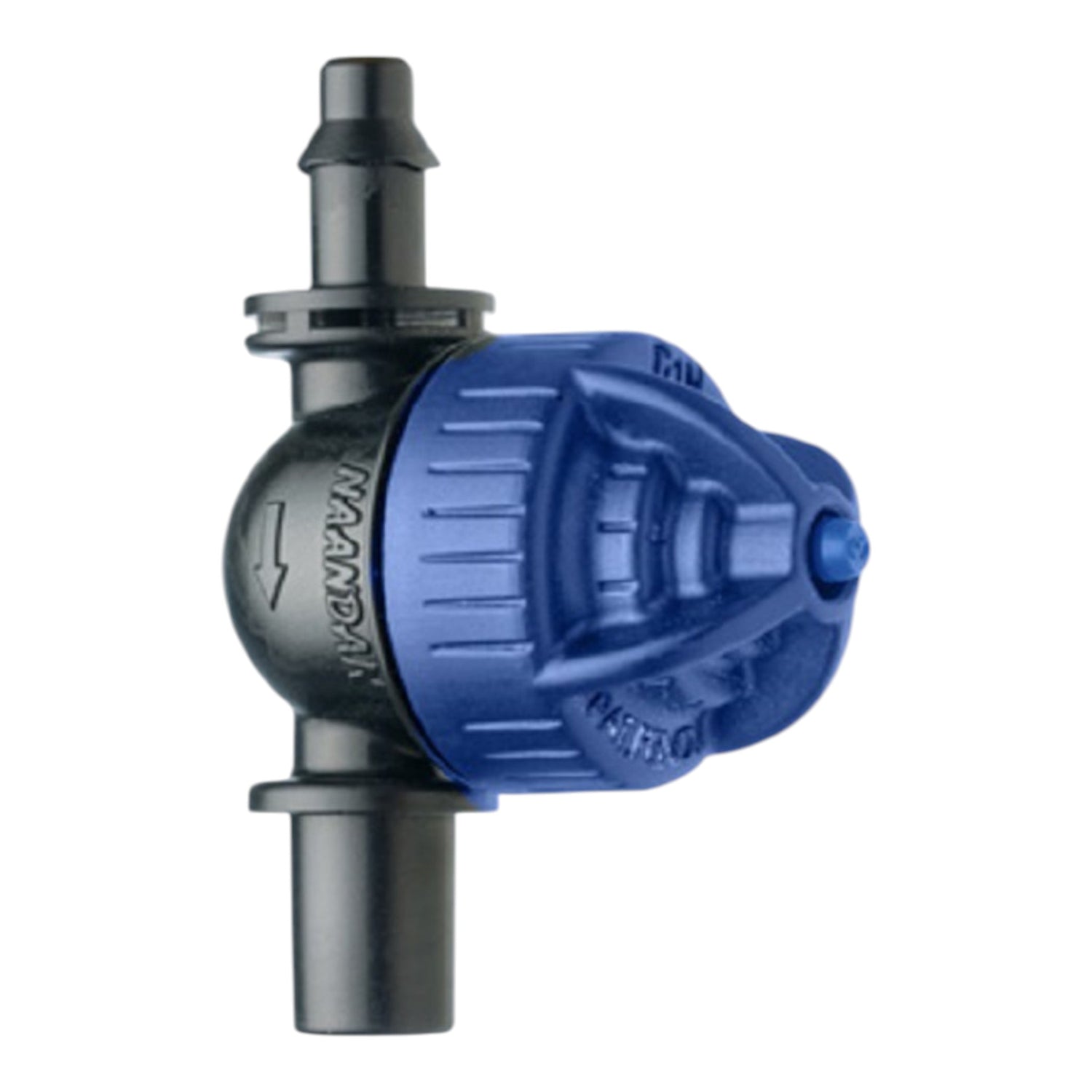
The Super LPD for Modular Sprinkler - 3/8" WW is designed for low-pressure drainage control within a compatible modular sprinkler assembly.
This component forms part of professional greenhouse, nursery and protected-crop irrigation installations where sprinklers, misters, suspended stands and low-pressure drainage components are selected as a complete compatible system.
Key benefits
Low-pressure drainage control
LPD components are used within compatible sprinkler or misting assemblies to influence drainage and start/stop behaviour as system pressure changes. Correct operation depends on the complete assembly, operating pressure and installation orientation.
Match the connection type carefully to the modular sprinkler components being used and keep small waterways clean.
Pressure, filtration & system design
Misting and sprinkler performance depends on appropriate pressure and clean water. Use filtration suitable for the water source and the smallest waterways in the system, and consider pressure loss through pipework, elevation and total zone flow.
Calculate total flow demand before expanding a zone; adding outlets without checking supply capacity can reduce performance across the installation.
Maintenance
Inspect nozzles, filters, LPD components, tube and connections for blockage, scale, wear or damage. Flush and clean the system as appropriate to water quality and crop-hygiene requirements.
Super LPD for Modular Sprinkler - 3/8" WW product details
| Product type | LPD Component |
|---|---|
| Primary use | low-pressure drainage control within a compatible modular sprinkler assembly |
| Connection / variant | 3/8" WW |
| Application | Professional horticultural irrigation |
Super LPD for Modular Sprinkler - 3/8" WW FAQs
What is this product used for?
Low-pressure drainage control within a compatible modular sprinkler assembly. Is it suitable for professional greenhouse irrigation?
Yes, where it is compatible with the rest of the irrigation assembly and the system is designed for the required flow and pressure. How do I check component compatibility?
Match connection type, tube size and modular fitting system rather than relying on appearance alone. Why is filtration important?
Small sprinkler, fogger and LPD waterways can be affected by debris, so suitable filtration helps maintain reliable operation. Should the system be tested after installation?
Yes. Run the zone under normal operating conditions and inspect output, connections and distribution. Can I keep adding outlets to an existing zone?
Only if the water supply, pipework and pressure can support the additional total flow demand. What maintenance is required?
Inspect and clean outlets and filters as appropriate, flush lines where required and replace damaged or persistently blocked components. Can mounting position affect performance?
Yes. Height, orientation, spacing and crop canopy can all affect how overhead water reaches the crop.
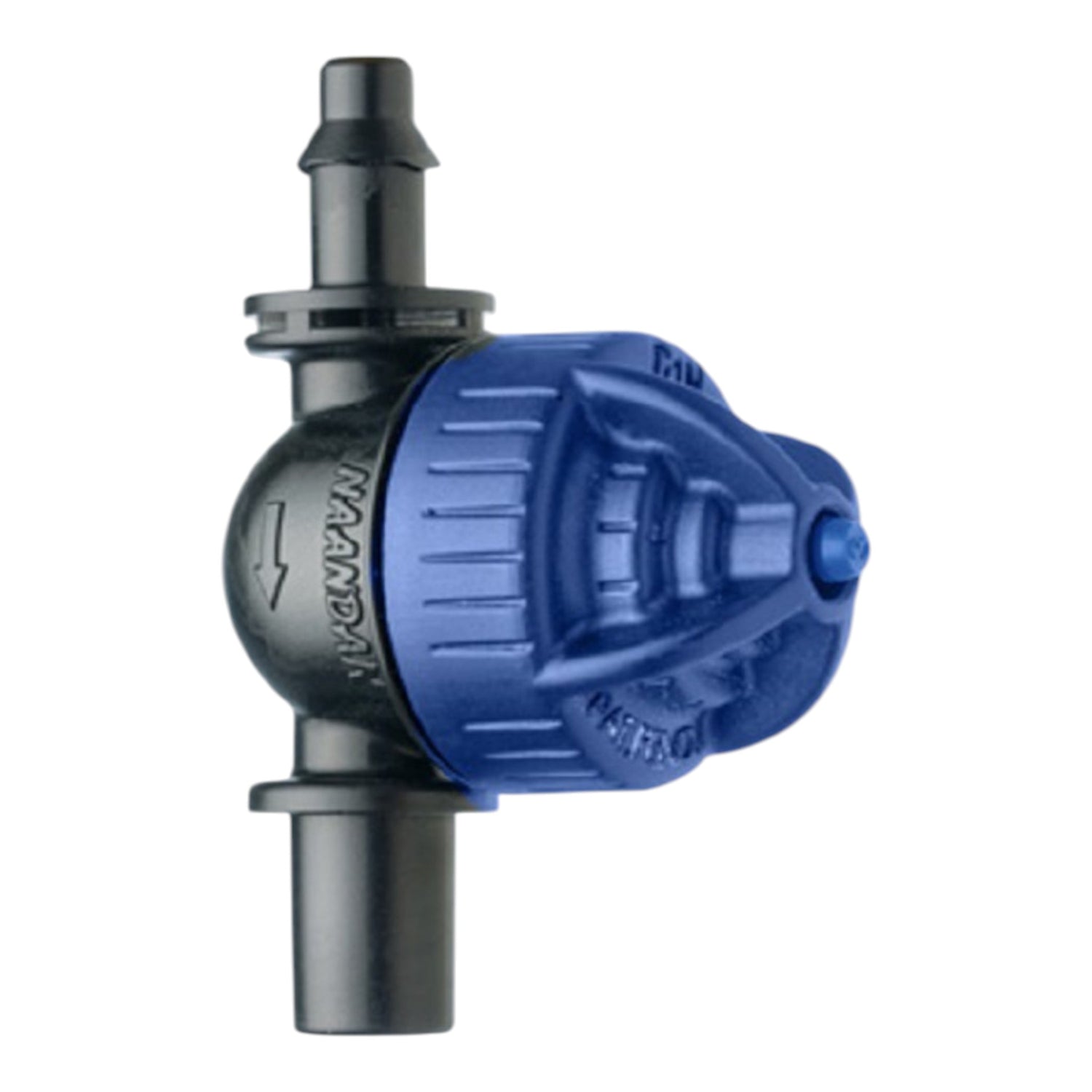
The Super LPD for Modular Sprinkler - Barbed is designed for low-pressure drainage control within a compatible modular sprinkler assembly.
This component forms part of professional greenhouse, nursery and protected-crop irrigation installations where sprinklers, misters, suspended stands and low-pressure drainage components are selected as a complete compatible system.
Key benefits
Low-pressure drainage control
LPD components are used within compatible sprinkler or misting assemblies to influence drainage and start/stop behaviour as system pressure changes. Correct operation depends on the complete assembly, operating pressure and installation orientation.
Match the connection type carefully to the modular sprinkler components being used and keep small waterways clean.
Pressure, filtration & system design
Misting and sprinkler performance depends on appropriate pressure and clean water. Use filtration suitable for the water source and the smallest waterways in the system, and consider pressure loss through pipework, elevation and total zone flow.
Calculate total flow demand before expanding a zone; adding outlets without checking supply capacity can reduce performance across the installation.
Maintenance
Inspect nozzles, filters, LPD components, tube and connections for blockage, scale, wear or damage. Flush and clean the system as appropriate to water quality and crop-hygiene requirements.
Super LPD for Modular Sprinkler - Barbed product details
| Product type | LPD Component |
|---|---|
| Primary use | low-pressure drainage control within a compatible modular sprinkler assembly |
| Connection / variant | Barbed |
| Application | Professional horticultural irrigation |
Super LPD for Modular Sprinkler - Barbed FAQs
What is this product used for?
Low-pressure drainage control within a compatible modular sprinkler assembly. Is it suitable for professional greenhouse irrigation?
Yes, where it is compatible with the rest of the irrigation assembly and the system is designed for the required flow and pressure. How do I check component compatibility?
Match connection type, tube size and modular fitting system rather than relying on appearance alone. Why is filtration important?
Small sprinkler, fogger and LPD waterways can be affected by debris, so suitable filtration helps maintain reliable operation. Should the system be tested after installation?
Yes. Run the zone under normal operating conditions and inspect output, connections and distribution. Can I keep adding outlets to an existing zone?
Only if the water supply, pipework and pressure can support the additional total flow demand. What maintenance is required?
Inspect and clean outlets and filters as appropriate, flush lines where required and replace damaged or persistently blocked components. Can mounting position affect performance?
Yes. Height, orientation, spacing and crop canopy can all affect how overhead water reaches the crop.
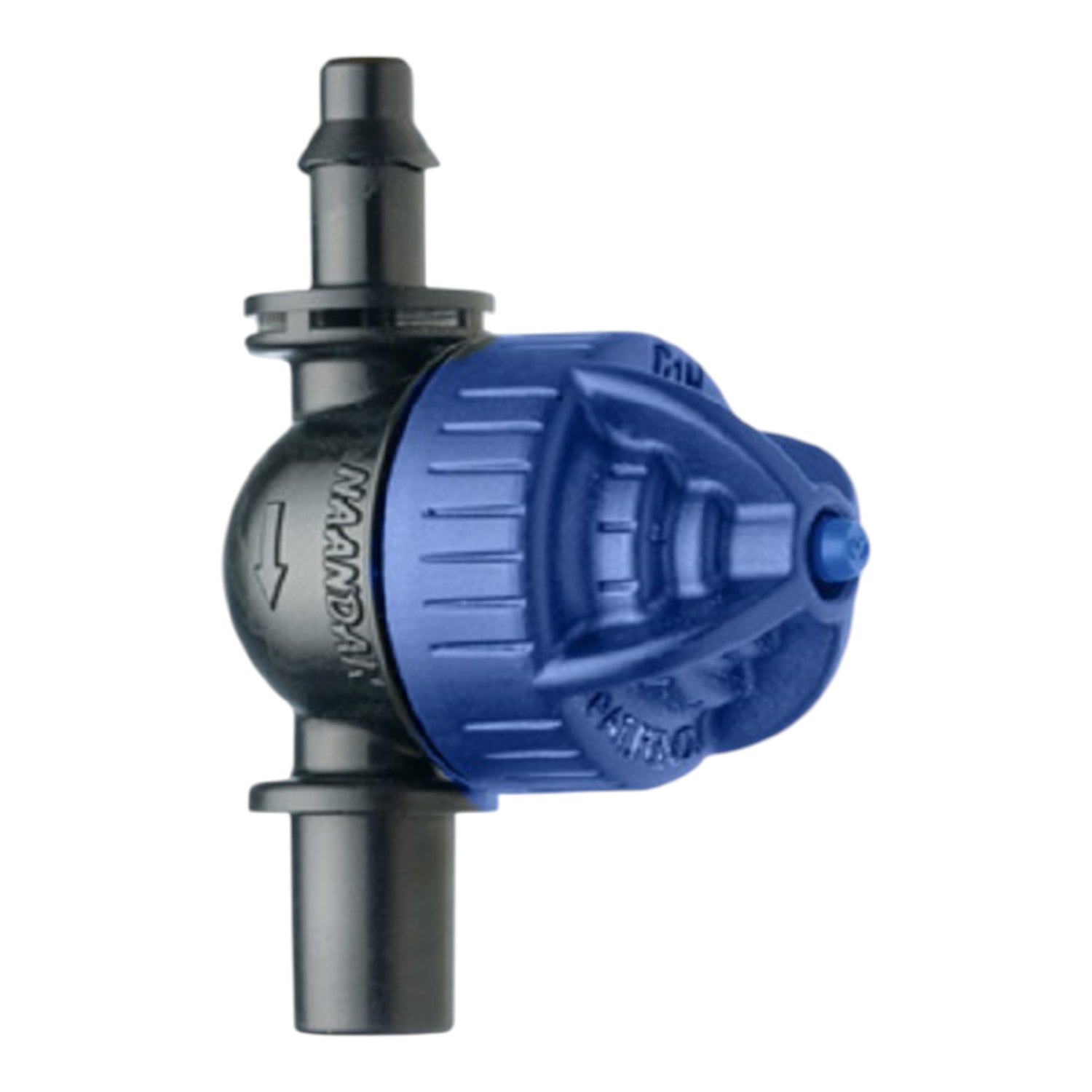
The Super LPD for Modular Sprinkler - Female is designed for low-pressure drainage control within a compatible modular sprinkler assembly.
This component forms part of professional greenhouse, nursery and protected-crop irrigation installations where sprinklers, misters, suspended stands and low-pressure drainage components are selected as a complete compatible system.
Key benefits
Low-pressure drainage control
LPD components are used within compatible sprinkler or misting assemblies to influence drainage and start/stop behaviour as system pressure changes. Correct operation depends on the complete assembly, operating pressure and installation orientation.
Match the connection type carefully to the modular sprinkler components being used and keep small waterways clean.
Pressure, filtration & system design
Misting and sprinkler performance depends on appropriate pressure and clean water. Use filtration suitable for the water source and the smallest waterways in the system, and consider pressure loss through pipework, elevation and total zone flow.
Calculate total flow demand before expanding a zone; adding outlets without checking supply capacity can reduce performance across the installation.
Maintenance
Inspect nozzles, filters, LPD components, tube and connections for blockage, scale, wear or damage. Flush and clean the system as appropriate to water quality and crop-hygiene requirements.
Super LPD for Modular Sprinkler - Female product details
| Product type | LPD Component |
|---|---|
| Primary use | low-pressure drainage control within a compatible modular sprinkler assembly |
| Connection / variant | Female |
| Application | Professional horticultural irrigation |
Super LPD for Modular Sprinkler - Female FAQs
What is this product used for?
Low-pressure drainage control within a compatible modular sprinkler assembly. Is it suitable for professional greenhouse irrigation?
Yes, where it is compatible with the rest of the irrigation assembly and the system is designed for the required flow and pressure. How do I check component compatibility?
Match connection type, tube size and modular fitting system rather than relying on appearance alone. Why is filtration important?
Small sprinkler, fogger and LPD waterways can be affected by debris, so suitable filtration helps maintain reliable operation. Should the system be tested after installation?
Yes. Run the zone under normal operating conditions and inspect output, connections and distribution. Can I keep adding outlets to an existing zone?
Only if the water supply, pipework and pressure can support the additional total flow demand. What maintenance is required?
Inspect and clean outlets and filters as appropriate, flush lines where required and replace damaged or persistently blocked components. Can mounting position affect performance?
Yes. Height, orientation, spacing and crop canopy can all affect how overhead water reaches the crop.
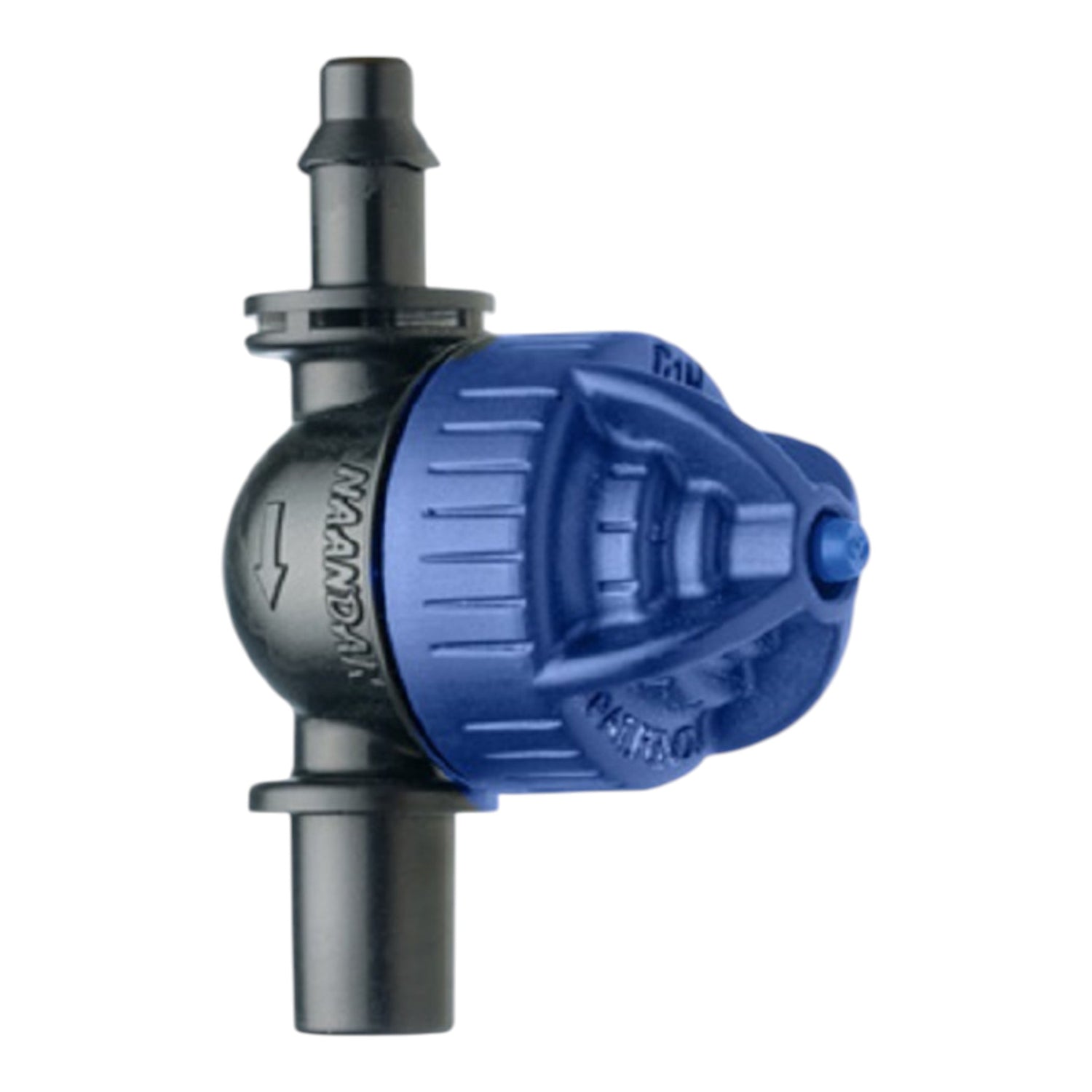
The Super LPD for Modular Sprinkler - M11 is designed for low-pressure drainage control within a compatible modular sprinkler assembly.
This component forms part of professional greenhouse, nursery and protected-crop irrigation installations where sprinklers, misters, suspended stands and low-pressure drainage components are selected as a complete compatible system.
Key benefits
Low-pressure drainage control
LPD components are used within compatible sprinkler or misting assemblies to influence drainage and start/stop behaviour as system pressure changes. Correct operation depends on the complete assembly, operating pressure and installation orientation.
Match the connection type carefully to the modular sprinkler components being used and keep small waterways clean.
Pressure, filtration & system design
Misting and sprinkler performance depends on appropriate pressure and clean water. Use filtration suitable for the water source and the smallest waterways in the system, and consider pressure loss through pipework, elevation and total zone flow.
Calculate total flow demand before expanding a zone; adding outlets without checking supply capacity can reduce performance across the installation.
Maintenance
Inspect nozzles, filters, LPD components, tube and connections for blockage, scale, wear or damage. Flush and clean the system as appropriate to water quality and crop-hygiene requirements.
Super LPD for Modular Sprinkler - M11 product details
| Product type | LPD Component |
|---|---|
| Primary use | low-pressure drainage control within a compatible modular sprinkler assembly |
| Connection / variant | M11 |
| Application | Professional horticultural irrigation |
Super LPD for Modular Sprinkler - M11 FAQs
What is this product used for?
Low-pressure drainage control within a compatible modular sprinkler assembly. Is it suitable for professional greenhouse irrigation?
Yes, where it is compatible with the rest of the irrigation assembly and the system is designed for the required flow and pressure. How do I check component compatibility?
Match connection type, tube size and modular fitting system rather than relying on appearance alone. Why is filtration important?
Small sprinkler, fogger and LPD waterways can be affected by debris, so suitable filtration helps maintain reliable operation. Should the system be tested after installation?
Yes. Run the zone under normal operating conditions and inspect output, connections and distribution. Can I keep adding outlets to an existing zone?
Only if the water supply, pipework and pressure can support the additional total flow demand. What maintenance is required?
Inspect and clean outlets and filters as appropriate, flush lines where required and replace damaged or persistently blocked components. Can mounting position affect performance?
Yes. Height, orientation, spacing and crop canopy can all affect how overhead water reaches the crop.
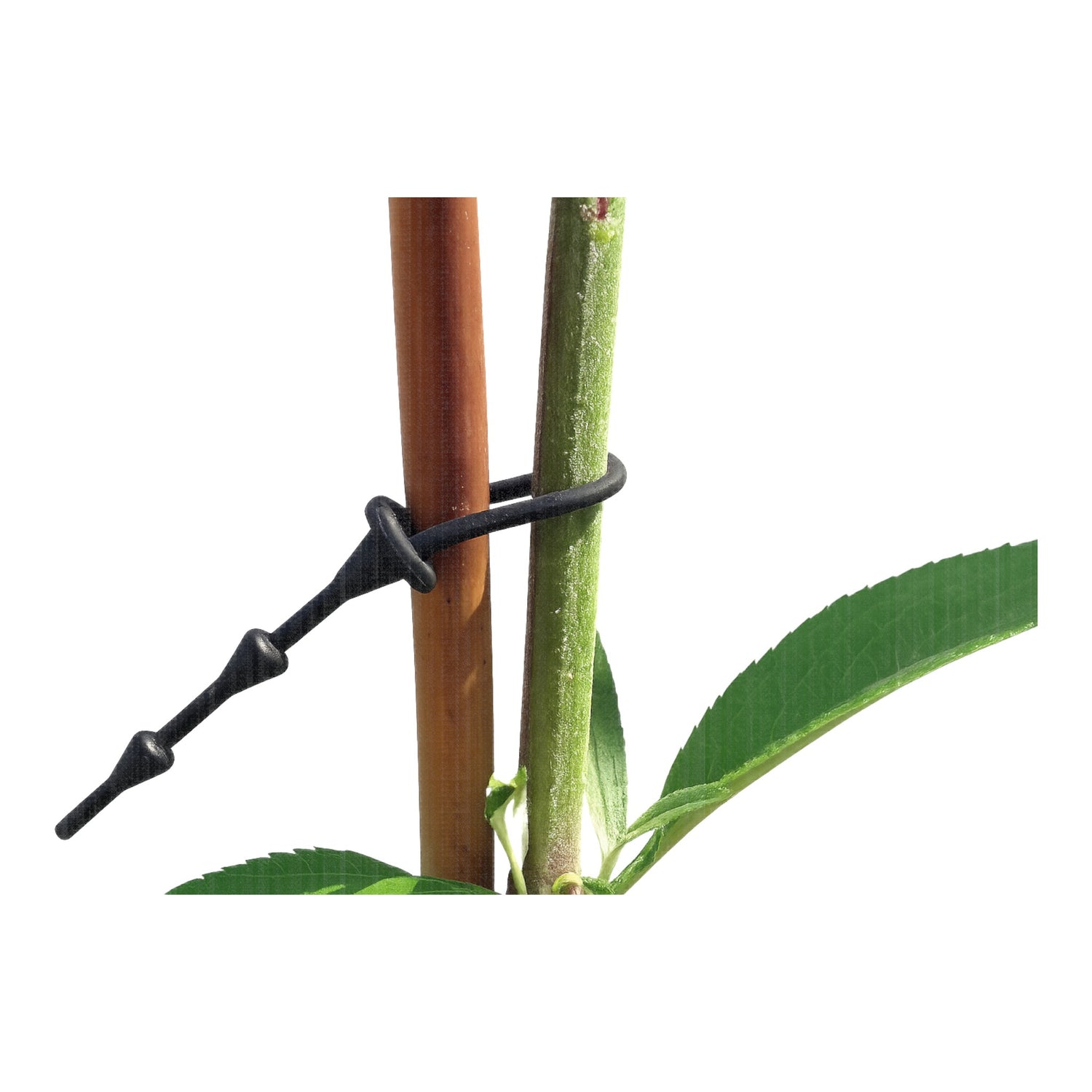
£28.67
Unit price per£28.67
Unit price perThe Super Soft Adjustable Shrub Tie 13cm 130mm Long BLACK (Box of 500) is a adjustable shrub and tree tie intended for supporting shrubs and young trees against suitable supports.
Correct tree and shrub support helps newly planted or container-grown stock establish while reducing excessive movement at the root zone. Supports should hold the plant securely without creating unnecessary pressure on the stem or trunk.
Supplied as: box of 500.
Key benefits
Tree & shrub support
Use this product for supporting shrubs and young trees against suitable supports. Select stakes, ties and support components according to the size of the plant, exposure of the site and the support system being used.
A correctly installed support should reduce damaging movement without holding the trunk completely rigid. Some natural movement helps the plant develop as it establishes.
Installation & ongoing checks
Position ties and support components so they do not rub, cut into or constrict the bark. Avoid over-tightening and inspect the installation regularly as the trunk or stems increase in diameter.
Adjust or remove supports once they are no longer required. Leaving a tie in place for too long can cause restriction or damage as the plant grows.
For nurseries, landscapers & tree planting
Tree-support products are useful for nursery stock, landscape planting, public-realm schemes and garden installations where newly planted trees or shrubs need temporary stabilisation.
Super Soft Adjustable Shrub Tie 13cm 130mm Long BLACK (Box of 500) product details
| Product type | Adjustable shrub and tree tie |
|---|---|
| Primary use | supporting shrubs and young trees against suitable supports |
| Stated size | 13cm |
| Colour | Black |
| Box quantity | 500 |
Super Soft Adjustable Shrub Tie 13cm 130mm Long BLACK (Box of 500) FAQs
What size is this product?
The stated size is 13cm. How many are supplied?
This product is supplied in a box of 500. How tight should a tree tie be?
It should support the plant without constricting the trunk or rubbing the bark. Leave appropriate room for movement and growth. How often should tree ties be checked?
Inspect supports regularly, particularly during active growth, and loosen or reposition them before they become restrictive. How long should a tree remain staked?
Only for as long as support is genuinely required. Establishment time varies with plant size, species, root system and site exposure. Can the same support be used for every tree?
No. Match the tie, stake and support arrangement to the trunk size, plant form and site conditions.
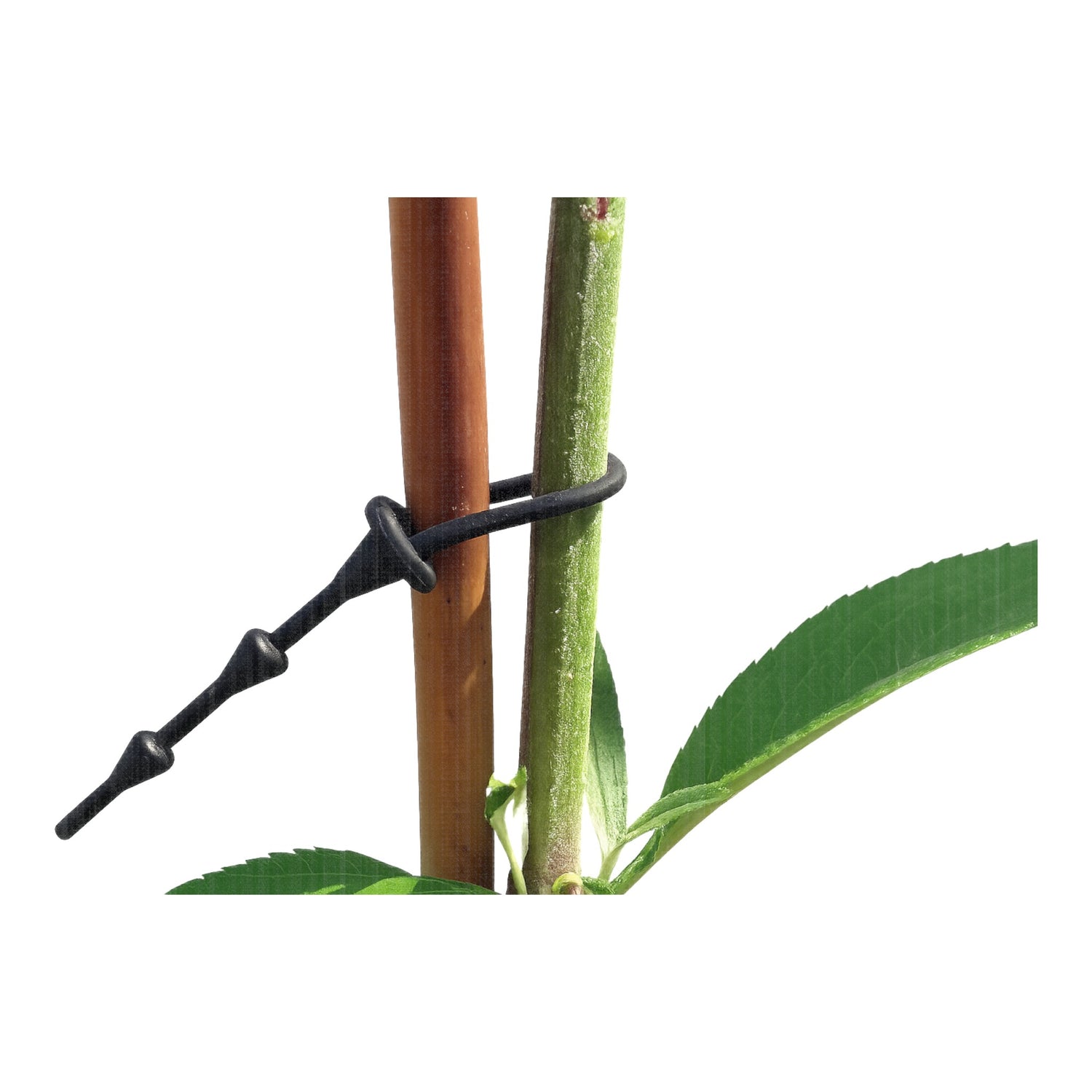
£28.67
Unit price per£28.67
Unit price perThe Super Soft Adjustable Shrub Tie 17cm 170mm Long BLACK (Box of 250) is a adjustable shrub and tree tie intended for supporting shrubs and young trees against suitable supports.
Correct tree and shrub support helps newly planted or container-grown stock establish while reducing excessive movement at the root zone. Supports should hold the plant securely without creating unnecessary pressure on the stem or trunk.
Supplied as: box of 250.
Key benefits
Tree & shrub support
Use this product for supporting shrubs and young trees against suitable supports. Select stakes, ties and support components according to the size of the plant, exposure of the site and the support system being used.
A correctly installed support should reduce damaging movement without holding the trunk completely rigid. Some natural movement helps the plant develop as it establishes.
Installation & ongoing checks
Position ties and support components so they do not rub, cut into or constrict the bark. Avoid over-tightening and inspect the installation regularly as the trunk or stems increase in diameter.
Adjust or remove supports once they are no longer required. Leaving a tie in place for too long can cause restriction or damage as the plant grows.
For nurseries, landscapers & tree planting
Tree-support products are useful for nursery stock, landscape planting, public-realm schemes and garden installations where newly planted trees or shrubs need temporary stabilisation.
Super Soft Adjustable Shrub Tie 17cm 170mm Long BLACK (Box of 250) product details
| Product type | Adjustable shrub and tree tie |
|---|---|
| Primary use | supporting shrubs and young trees against suitable supports |
| Stated size | 17cm |
| Colour | Black |
| Box quantity | 250 |
Super Soft Adjustable Shrub Tie 17cm 170mm Long BLACK (Box of 250) FAQs
What size is this product?
The stated size is 17cm. How many are supplied?
This product is supplied in a box of 250. How tight should a tree tie be?
It should support the plant without constricting the trunk or rubbing the bark. Leave appropriate room for movement and growth. How often should tree ties be checked?
Inspect supports regularly, particularly during active growth, and loosen or reposition them before they become restrictive. How long should a tree remain staked?
Only for as long as support is genuinely required. Establishment time varies with plant size, species, root system and site exposure. Can the same support be used for every tree?
No. Match the tie, stake and support arrangement to the trunk size, plant form and site conditions.
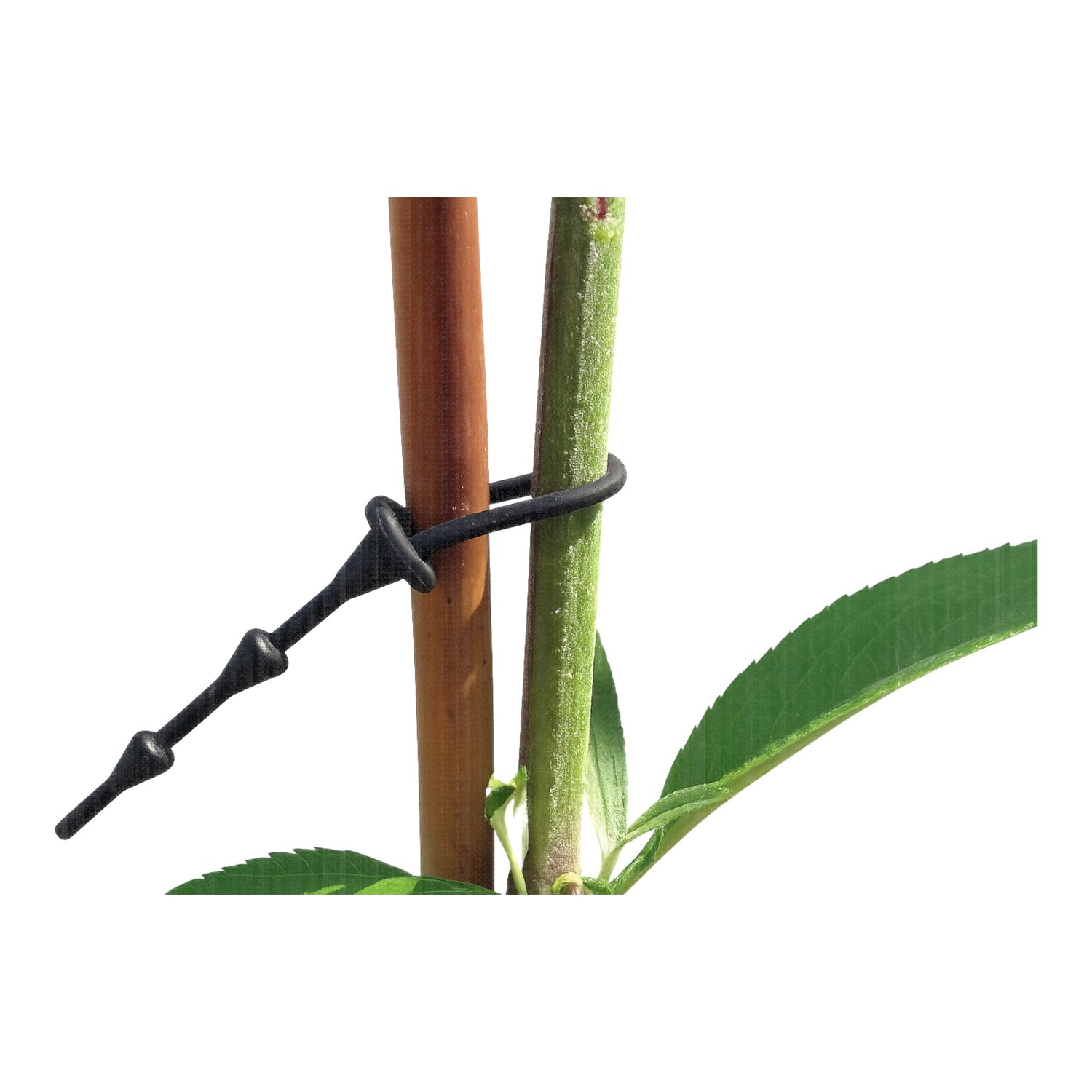
£19.00
Unit price per£19.00
Unit price perThe Super Soft Adjustable Shrub Tie 31cm 310mm Long BLACK (Box of 100) is a adjustable shrub and tree tie intended for supporting shrubs and young trees against suitable supports.
Correct tree and shrub support helps newly planted or container-grown stock establish while reducing excessive movement at the root zone. Supports should hold the plant securely without creating unnecessary pressure on the stem or trunk.
Supplied as: box of 100.
Key benefits
Tree & shrub support
Use this product for supporting shrubs and young trees against suitable supports. Select stakes, ties and support components according to the size of the plant, exposure of the site and the support system being used.
A correctly installed support should reduce damaging movement without holding the trunk completely rigid. Some natural movement helps the plant develop as it establishes.
Installation & ongoing checks
Position ties and support components so they do not rub, cut into or constrict the bark. Avoid over-tightening and inspect the installation regularly as the trunk or stems increase in diameter.
Adjust or remove supports once they are no longer required. Leaving a tie in place for too long can cause restriction or damage as the plant grows.
For nurseries, landscapers & tree planting
Tree-support products are useful for nursery stock, landscape planting, public-realm schemes and garden installations where newly planted trees or shrubs need temporary stabilisation.
Super Soft Adjustable Shrub Tie 31cm 310mm Long BLACK (Box of 100) product details
| Product type | Adjustable shrub and tree tie |
|---|---|
| Primary use | supporting shrubs and young trees against suitable supports |
| Stated size | 31cm |
| Colour | Black |
| Box quantity | 100 |
Super Soft Adjustable Shrub Tie 31cm 310mm Long BLACK (Box of 100) FAQs
What size is this product?
The stated size is 31cm. How many are supplied?
This product is supplied in a box of 100. How tight should a tree tie be?
It should support the plant without constricting the trunk or rubbing the bark. Leave appropriate room for movement and growth. How often should tree ties be checked?
Inspect supports regularly, particularly during active growth, and loosen or reposition them before they become restrictive. How long should a tree remain staked?
Only for as long as support is genuinely required. Establishment time varies with plant size, species, root system and site exposure. Can the same support be used for every tree?
No. Match the tie, stake and support arrangement to the trunk size, plant form and site conditions.
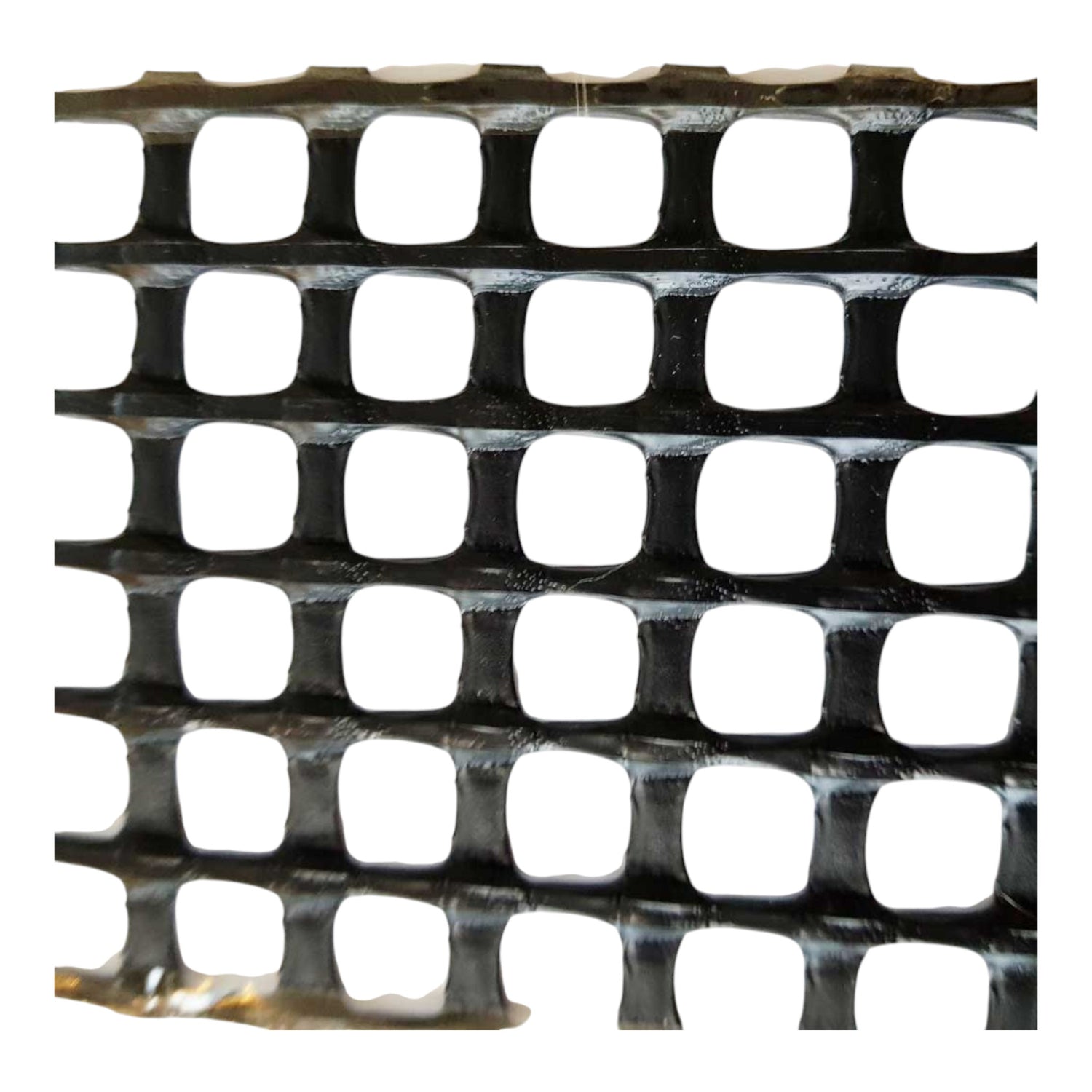
£300.00
Unit price per£300.00
Unit price perThe Super Strong Heavy Weight Square Meshes 715gsm 6mm - 1M x 25M is a practical horticultural mesh designed for crop support or protection according to the mesh format.
It is suited to routine horticultural work in nurseries, greenhouses, garden centres and gardens where a straightforward accessory is required.
Key benefits
How to use it
Use this product for crop support or protection according to the mesh format. Select the size and format to suit the plant, container or growing area and check its position periodically as plants develop.
For professional & garden use
This accessory can be used for individual plants and displays or incorporated into larger nursery, landscaping and retail programmes.
Super Strong Heavy Weight Square Meshes 715gsm 6mm - 1M x 25M product details
| Supplier | Creation Horticulture |
|---|---|
| Product type | Horticultural mesh |
| Stated size | 1M x 25M |
| Primary use | crop support or protection according to the mesh format |
Super Strong Heavy Weight Square Meshes 715gsm 6mm - 1M x 25M FAQs
What size is this product?
The stated size is 1M x 25M. What is this product used for?
It is designed for crop support or protection according to the mesh format. Who is it suitable for?
It is suitable for professional growers, nurseries, garden centres and gardeners where its size and function match the task. How do I choose the right size?
Check the stated dimensions against the plant, container or working area before ordering. Can it be reused?
Reuse depends on the product material, condition and hygiene requirements. Inspect and clean it as appropriate before reuse.

£8.16
Unit price per£8.16
Unit price perA highly concentrated vitamin plant tonic used by growers to support plants during transplanting, propagation and periods of environmental stress.
SuperThrive is a concentrated liquid vitamin and plant hormone solution designed to complement your normal feeding programme. A familiar name amongst professional and hobby growers, it is particularly useful when plants are going through stressful periods such as transplanting or changes in their growing environment.
The concentrated formula means only a very small quantity is required. For routine use, SuperThrive can be added to the nutrient or watering solution at approximately one drop per 4 litres, making this compact 120ml bottle go a surprisingly long way.
SuperThrive can be used with plants grown in soil, coco and hydroponic systems and can be incorporated alongside an existing nutrient programme rather than replacing the base feed.
Why use SuperThrive?
When is SuperThrive most useful?
SuperThrive is particularly popular when plants are being moved, transplanted or otherwise exposed to a sudden change in conditions. These are periods when plants can temporarily slow down while they adjust to their new environment.
It can also be incorporated into propagation and general plant care programmes. Because the solution is concentrated, growers can provide supplemental support without adding large quantities of another product to the nutrient solution.
SuperThrive is not a complete fertiliser. Plants still require the appropriate base nutrition for their stage of development. Think of SuperThrive as a concentrated plant tonic that works alongside that feeding programme rather than replacing it.
How to use SuperThrive
Shake the bottle before use. For routine plant care, add approximately 1 drop per 4 litres of water or nutrient solution and mix thoroughly before application.
For cuttings and seedlings, current application guidance recommends approximately 1 to 2 drops per 4 litres. The same low concentration can be used during vegetative growth.
SuperThrive can be added alongside your normal plant nutrients. Always dilute it into the water or prepared nutrient solution rather than applying the concentrate directly to plants or roots.
Because very little product is needed, measure carefully rather than assuming that a stronger concentration will give better results.
SuperThrive 120ml specifications
| Product | SuperThrive Original Vitamin Solution |
|---|---|
| Product type | Concentrated vitamin plant tonic / supplement |
| Size | 120ml (4 fl oz) |
| Form | Concentrated liquid |
| Routine application rate | Approximately 1 drop per 4 litres |
| Cuttings & seedlings | Approximately 1 to 2 drops per 4 litres |
| Vegetative growth | Approximately 1 to 2 drops per 4 litres |
| Suitable growing media | Soil, coco & hydroponics |
| Typical applications | Transplanting, propagation, plant stress & general plant care |
| Use with base nutrients | Yes |
SuperThrive FAQs
What is SuperThrive used for?
SuperThrive is a concentrated vitamin plant tonic commonly used to support plants during transplanting, propagation and other periods of environmental stress. It can also be incorporated into a general plant care programme.
Is SuperThrive a fertiliser?
SuperThrive is best treated as a supplemental plant tonic rather than a complete base fertiliser. Continue supplying plants with appropriate nutrition for their stage of growth.
How much SuperThrive should I use?
For routine use, approximately one drop per 4 litres of water or nutrient solution is sufficient. For cuttings, seedlings and vegetative plants, current guidance recommends approximately 1 to 2 drops per 4 litres.
Can SuperThrive be used when transplanting plants?
Yes. Transplanting is one of the situations in which SuperThrive is most commonly used, as the plant is adjusting to a change in its root environment and growing conditions.
Can SuperThrive be used for cuttings and seedlings?
Yes. SuperThrive can be incorporated into the care of cuttings and seedlings at a low concentration, with current guidance recommending approximately 1 to 2 drops per 4 litres.
Can SuperThrive be used in hydroponics?
Yes. SuperThrive is suitable for hydroponic systems as well as plants grown in coco and soil.
Can I use SuperThrive with my normal nutrients?
Yes. SuperThrive is designed to supplement plant care rather than replace a base nutrient, so it can be incorporated alongside an appropriate nutrient programme.
Does SuperThrive contain vitamin B1?
Yes. SuperThrive contains thiamine, commonly known as vitamin B1, as part of its concentrated vitamin formulation.
How long will a 120ml bottle of SuperThrive last?
SuperThrive is extremely concentrated. With routine applications requiring around one drop per 4 litres, a 120ml bottle can prepare a substantial volume of diluted solution and is well suited to growers who only need small quantities at each application.

£138.85
Unit price per£138.85
Unit price perA highly concentrated plant tonic in a larger 3.8 litre format, ideal for growers regularly using SUPERthrive for propagation, transplanting and plant stress.
SUPERthrive Original Vitamin Solution is a concentrated plant tonic and additive used by professional growers and home gardeners to complement their normal plant nutrition programme. It can be used throughout the growing cycle and is particularly useful around propagation, transplanting and periods of plant stress.
The 3.8L Gallon container is a practical choice for nurseries, commercial growers, landscapers and larger growing facilities where SUPERthrive is used across greater numbers of plants or larger volumes of water.
SUPERthrive can be incorporated into conventional watering programmes, hydroponic systems and foliar applications at the appropriate dilution. It is an additive rather than a complete fertiliser, so plants should continue to receive the appropriate base nutrition for their growing stage.
Why choose SUPERthrive 3.8L?
Who is SUPERthrive 3.8L suitable for?
The 3.8L size is particularly useful for growers who regularly incorporate SUPERthrive into their plant care programme. Nurseries, propagation facilities, landscapers and commercial growing operations can prepare larger volumes of diluted solution without relying on smaller bottles.
SUPERthrive can be used with plants at different stages of development, from propagation and young plants through vegetative growth and flowering. It is also commonly used when plants are being transplanted or recovering from stressful growing conditions.
It can be incorporated into soil, coco and hydroponic growing programmes, giving growers a versatile supplemental product that can sit alongside their existing nutrient regime.
How to use SUPERthrive
Always dilute SUPERthrive with water before application. The correct concentration depends on the plant and the intended use.
For general houseplant and outdoor plant care, use 1ml per 3 litres of water. The same published dilution can be used for seedlings, while seeds and bulbs can be soaked at 1ml per 3 litres before planting.
For hydroponic growing, use approximately 0.3 to 1.3ml per 3 litres when changing or topping up the solution. For transplanting, use 13ml per 10 litres.
For foliar application, dilute at 15ml per 10 litres and apply to both sides of the leaves for thorough coverage.
SUPERthrive 3.8L specifications
| Product | SUPERthrive Original Vitamin Solution |
|---|---|
| Product type | Plant tonic & nutrient additive |
| Size | 3.8 litres (1 US Gallon) |
| Form | Concentrated liquid |
| General use | 1ml per 3L of water |
| Seedlings | 1ml per 3L of water |
| Hydroponic use | 0.3 to 1.3ml per 3L |
| Transplanting | 13ml per 10L |
| Foliar application | 15ml per 10L |
| Suitable stages | Propagation, vegetative growth & flowering |
| Typical applications | General plant care, propagation, hydroponics, transplanting & plant stress |
| Complete fertiliser | No – use as an additive alongside appropriate plant nutrition |
| Outer case quantity | 4 |
SUPERthrive 3.8L FAQs
What is SUPERthrive used for?
SUPERthrive is a concentrated plant tonic and additive used for general plant care, propagation, transplanting and supporting plants during periods of stress. It is designed to complement an existing plant nutrition programme.
Is SUPERthrive a fertiliser?
No. SUPERthrive is an additive rather than a complete fertiliser. Plants should continue to receive an appropriate base nutrient or fertiliser for their growing stage.
Who is the 3.8L SUPERthrive size suitable for?
The 3.8L container is particularly useful for commercial growers, nurseries, landscapers and anyone regularly preparing larger volumes of diluted SUPERthrive solution.
How much SUPERthrive should I use?
For general plant care, use 1ml per 3 litres of water. Different application rates are recommended for hydroponics, transplanting and foliar spraying.
Can SUPERthrive be used when transplanting plants?
Yes. Transplanting is one of the established applications for SUPERthrive. The published transplanting dilution is 13ml per 10 litres of water.
Can SUPERthrive be used for seedlings?
Yes. The published application rate for seedlings is 1ml per 3 litres of water, with the growing medium kept appropriately moist.
Can SUPERthrive be used in hydroponics?
Yes. For hydroponic applications, use approximately 0.3 to 1.3ml per 3 litres when changing or topping up the solution.
Can SUPERthrive be used as a foliar spray?
Yes. For foliar application, dilute SUPERthrive at 15ml per 10 litres of water and apply to both sides of the leaves for thorough coverage.
Can SUPERthrive be used during flowering?
Yes. SUPERthrive can be incorporated into plant care during both vegetative growth and flowering.
Is 3.8L SUPERthrive the 1 Gallon size?
Yes. The SUPERthrive 3.8 litre container is the 1 US Gallon size.

£25.88
Unit price per£25.88
Unit price perA highly concentrated vitamin plant tonic for propagation, transplanting, routine plant care and helping plants recover from stressful growing conditions.
SUPERthrive Original Vitamin Solution is a concentrated plant tonic and additive used by both professional growers and home gardeners. It is designed to complement a normal feeding programme and can be used with plants throughout vegetative growth and flowering.
One of SUPERthrive's best-known applications is around transplanting and other periods of plant stress. It can also be incorporated into propagation, general watering, hydroponic nutrient solutions and foliar applications at the appropriate dilution.
This 480ml Pint bottle offers a useful size for regular growers who want more product than the smaller 120ml bottle without moving up to the larger Quart or commercial containers.
Why use SUPERthrive?
What is SUPERthrive suitable for?
SUPERthrive has a particularly broad range of horticultural applications. It can be used with houseplants and outdoor plants, seedlings and propagating material, established plants and plants being moved or transplanted.
Hydroponic growers can incorporate SUPERthrive into their nutrient solution at the appropriate dilution, while soil and container-grown plants can receive it through normal watering. It can also be diluted for foliar application.
SUPERthrive is not a complete fertiliser. It is an additive designed to complement the plant's existing nutrition, so continue using an appropriate base fertiliser or nutrient programme.
How to use SUPERthrive
Always dilute SUPERthrive with water before application. The correct concentration depends on the plant and how the product is being used.
For houseplants, general use and outdoor plants, use 1ml per 3 litres of water. The same dilution can be used for seedlings, while seeds and bulbs can be soaked at 1ml per 3 litres before planting.
For hydroponic growing, use approximately 0.3 to 1.3ml per 3 litres when changing or topping up the solution. For transplanting, use 13ml per 10 litres.
For foliar application, dilute at 15ml per 10 litres and apply for good coverage of both sides of the leaves.
SUPERthrive 480ml specifications
| Product | SUPERthrive Original Vitamin Solution |
|---|---|
| Product type | Plant tonic & nutrient additive |
| Size | 480ml (Pint) |
| Form | Concentrated liquid |
| General use | 1ml per 3L of water |
| Seedlings | 1ml per 3L of water |
| Hydroponic use | 0.3 to 1.3ml per 3L |
| Transplanting | 13ml per 10L |
| Foliar application | 15ml per 10L |
| Suitable stages | Propagation, vegetative growth & flowering |
| Typical applications | General plant care, propagation, hydroponics, transplanting & plant stress |
| Complete fertiliser | No – use as an additive alongside appropriate plant nutrition |
SUPERthrive 480ml FAQs
What is SUPERthrive used for?
SUPERthrive is a concentrated plant tonic and additive used for general plant care, propagation, transplanting and supporting plants during periods of stress. It can be incorporated into a normal feeding programme throughout the growing cycle.
Is SUPERthrive a fertiliser?
No. SUPERthrive is an additive rather than a complete fertiliser. Continue supplying plants with an appropriate base nutrient or fertiliser for their growing stage.
How much SUPERthrive should I use?
For general plant care, use 1ml per 3 litres of water. Different application rates are recommended for hydroponics, transplanting, foliar spraying and other specialist uses.
Can SUPERthrive be used when transplanting plants?
Yes. SUPERthrive is commonly used around transplanting. The published transplanting rate is 13ml per 10 litres of water.
Can SUPERthrive be used for seedlings?
Yes. The published rate for seedlings is 1ml per 3 litres of water, with the growing medium kept appropriately moist.
Can SUPERthrive be used for seeds and bulbs?
Yes. Seeds and bulbs can be soaked in a solution of 1ml per 3 litres before planting. Soaking time varies according to the size and type of seed or bulb.
Can SUPERthrive be used in hydroponics?
Yes. The published hydroponic application rate is approximately 0.3 to 1.3ml per 3 litres when changing or adding water.
Can SUPERthrive be used as a foliar spray?
Yes. For foliar application, use 15ml per 10 litres of water and apply to both sides of the leaves for thorough coverage.
Can SUPERthrive be used during flowering?
Yes. SUPERthrive can be used at different stages of the growing cycle, including vegetative growth and flowering.
Is the 480ml SUPERthrive bottle the Pint size?
Yes. The UK SUPERthrive range identifies the 480ml bottle as the Pint size.

£295.00
Unit price per£295.00
Unit price perA highly concentrated vitamin plant tonic in a commercial 9.4 litre size, ideal for growers, nurseries and landscapers using SuperThrive across larger numbers of plants.
SuperThrive Original Vitamin Solution is a concentrated liquid plant tonic used to support plants during transplanting, propagation and periods of environmental stress. This 9.4L container provides the same established SuperThrive formula in a much larger format for growers who use it regularly or prepare substantial volumes of watering and nutrient solution.
SuperThrive is designed to complement an existing feeding programme rather than replace the plant's normal base nutrition. Its concentrated formulation means relatively little is required for routine applications, making the 9.4L size particularly well suited to commercial horticulture, nurseries, landscaping and larger growing facilities.
It can be incorporated into plant care programmes across soil, coco and hydroponic growing, giving professional growers one versatile plant tonic for a wide range of crops and growing methods.
Why choose SuperThrive 9.4L?
Who is the 9.4L SuperThrive suitable for?
The 9.4L container is particularly useful where SuperThrive is being applied across large numbers of plants. Commercial nurseries, professional growers, landscapers and horticultural businesses can use the larger container without repeatedly replacing smaller bottles.
It is especially useful around transplanting, when young or established plants are being moved into a new growing environment. SuperThrive can also be incorporated into ongoing plant care where growers want a concentrated supplemental tonic alongside their normal feeding programme.
SuperThrive is not a replacement for a complete fertiliser or base nutrient. Plants should continue to receive appropriate nutrition for their crop, growing medium and stage of development.
How to use SuperThrive
Shake before use and dilute SuperThrive into water or the prepared nutrient solution. For routine plant care, a commonly recommended application rate is approximately 1 drop per 4 litres.
For cuttings and seedlings, approximately 1 to 2 drops per 4 litres can be used. A similar low concentration can be incorporated during vegetative growth.
SuperThrive can be used alongside an appropriate base nutrient programme in soil, coco and hydroponic growing. Mix thoroughly through the water or nutrient solution before application.
The formula is highly concentrated, so accurate measurement is important. Increasing the concentration unnecessarily is not a substitute for following an appropriate feeding and plant care programme.
SuperThrive 9.4L specifications
| Product | SuperThrive Original Vitamin Solution |
|---|---|
| Product type | Concentrated vitamin plant tonic / supplement |
| Size | 9.4 litres (2.5 US gallons) |
| Form | Concentrated liquid |
| Key formulation components | Vitamin B1 & kelp |
| Routine application rate | Approximately 1 drop per 4 litres |
| Cuttings & seedlings | Approximately 1 to 2 drops per 4 litres |
| Vegetative growth | Approximately 1 to 2 drops per 4 litres |
| Suitable growing media | Soil, coco & hydroponics |
| Typical applications | Transplanting, propagation, plant stress & general plant care |
| Use with base nutrients | Yes |
| Outer case quantity | 2 |
SuperThrive 9.4L FAQs
What is SuperThrive used for?
SuperThrive is a concentrated vitamin plant tonic used alongside normal plant nutrition. It is particularly useful during transplanting, propagation and other periods when plants are adjusting to stressful changes in their growing environment.
Is SuperThrive a fertiliser?
SuperThrive should be treated as a supplemental plant tonic rather than a complete base fertiliser. Plants still require an appropriate nutrient or fertiliser programme for their stage of development.
Who is the 9.4L SuperThrive size designed for?
The 9.4L size is particularly useful for commercial growers, plant nurseries, landscapers and larger growing facilities where SuperThrive is used regularly across substantial numbers of plants.
How much SuperThrive should I use?
For routine plant care, approximately one drop per 4 litres of water or nutrient solution is commonly recommended. Cuttings, seedlings and vegetative plants can typically receive approximately 1 to 2 drops per 4 litres.
Can SuperThrive help when transplanting plants?
Yes. Transplanting is one of the principal applications associated with SuperThrive. It can be incorporated into plant care when young or established plants are being moved and adapting to a new root environment.
Can SuperThrive be used for cuttings and seedlings?
Yes. SuperThrive can be used at low concentrations during propagation and when caring for young plants.
Can SuperThrive be used in hydroponics?
Yes. SuperThrive can be incorporated into hydroponic growing as well as soil and coco cultivation.
Can SuperThrive be used with normal plant nutrients?
Yes. SuperThrive is a supplemental product and can be incorporated alongside an appropriate base nutrient programme rather than replacing it.
Does SuperThrive contain vitamin B1?
Yes. The SuperThrive Original formulation contains thiamine, commonly known as vitamin B1, alongside kelp.
Is 9.4L the same as 2.5 gallons of SuperThrive?
Yes. The UK-listed 9.4 litre SuperThrive container is the 2.5 US gallon size.

£49.05
Unit price per£49.05
Unit price perA highly concentrated vitamin plant tonic for supporting healthy growth, transplanting, propagation and plants recovering from stress.
SUPERthrive Original Vitamin Solution is a concentrated plant tonic and additive used by growers across a wide range of plants and growing methods. Its vitamin-based formulation is designed to complement your normal feeding programme and can be used from propagation through vegetative growth and flowering.
SUPERthrive is particularly useful when plants are under additional pressure. Transplanting, propagation and changes in growing conditions can all place extra demands on a plant, while established plants may occasionally need additional support after periods of stress.
The 960ml bottle provides a useful middle ground between smaller hobby-sized bottles and the larger commercial containers, making it well suited to regular growers, nurseries and horticultural users who want to keep SUPERthrive as part of their ongoing plant care programme.
Why use SUPERthrive?
What is SUPERthrive suitable for?
SUPERthrive can be used across a broad range of indoor and outdoor plants. It is particularly useful during propagation and transplanting, when plants are establishing themselves or adapting to changes in their growing environment.
It can also be incorporated into hydroponic growing and general plant care programmes. Application rates vary considerably depending on whether SUPERthrive is being used for routine watering, seedlings, hydroponics, foliar spraying, transplanting or soaking bare-root plants.
SUPERthrive is an additive rather than a complete fertiliser. Continue to provide plants with an appropriate base nutrient or fertiliser programme alongside it.
How to use SUPERthrive
Always dilute SUPERthrive with water before application. The appropriate concentration depends on how and where it is being used.
For general houseplant and outdoor plant use, the published guidance is 1ml per 3 litres of water, applied weekly or monthly as required. Seedlings can also be treated at 1ml per 3 litres while keeping the growing medium appropriately moist.
For hydroponic applications, use approximately 0.3 to 1.3ml per 3 litres when changing or topping up the nutrient solution. For transplanting, the published rate is 13ml per 10 litres.
SUPERthrive is highly concentrated, so measure the required amount carefully and adjust the dilution to the intended application rather than using one concentration for every situation.
SUPERthrive 960ml specifications
| Product | SUPERthrive Original Vitamin Solution |
|---|---|
| Product type | Plant tonic & nutrient additive |
| Size | 960ml (Quart) |
| Form | Concentrated liquid |
| General use | 1ml per 3L of water |
| Seedlings | 1ml per 3L of water |
| Hydroponic use | 0.3 to 1.3ml per 3L |
| Transplanting | 13ml per 10L |
| Foliar application | 15ml per 10L |
| Suitable stages | Propagation, vegetative growth & flowering |
| Typical applications | General plant care, propagation, transplanting & plant stress |
| Complete fertiliser | No – use as an additive alongside appropriate plant nutrition |
| Outer case quantity | 12 |
SUPERthrive 960ml FAQs
What is SUPERthrive used for?
SUPERthrive is a concentrated plant tonic and additive used for general plant care, propagation, transplanting and supporting plants during periods of stress. It can be incorporated into a normal feeding programme throughout the growing cycle.
Is SUPERthrive a fertiliser?
No. SUPERthrive is an additive rather than a complete fertiliser. Plants still need an appropriate base nutrient or fertiliser to provide their primary nutrition.
How much SUPERthrive should I use?
The dosage depends on the application. For general houseplant and outdoor plant care, the published rate is 1ml per 3 litres of water. Different concentrations are recommended for hydroponics, transplanting, foliar spraying and other specialist applications.
Can SUPERthrive be used when transplanting?
Yes. SUPERthrive is commonly used when transplanting plants. The published transplanting dilution is 13ml per 10 litres of water.
Can SUPERthrive be used for seedlings?
Yes. The published guidance for seedlings is 1ml per 3 litres of water, with the growing medium kept appropriately moist.
Can SUPERthrive be used in hydroponics?
Yes. For hydroponic applications, the published guidance is approximately 0.3 to 1.3ml per 3 litres when changing or adding water.
Can SUPERthrive be used as a foliar spray?
Yes. The published foliar application rate is 15ml per 10 litres of water, applied to both sides of the leaves for good coverage.
Can SUPERthrive be used during flowering?
Yes. SUPERthrive can be used during both vegetative growth and flowering. Adjust the application to the plant, growing method and reason for using the product.
Can SUPERthrive replace my normal plant nutrients?
No. SUPERthrive is designed to supplement plant care rather than replace a complete feeding programme. Continue using the appropriate base nutrient or fertiliser for your plants.
Is the 960ml SUPERthrive bottle the Quart size?
Yes. The UK SUPERthrive range identifies this container as the 960ml Quart size.
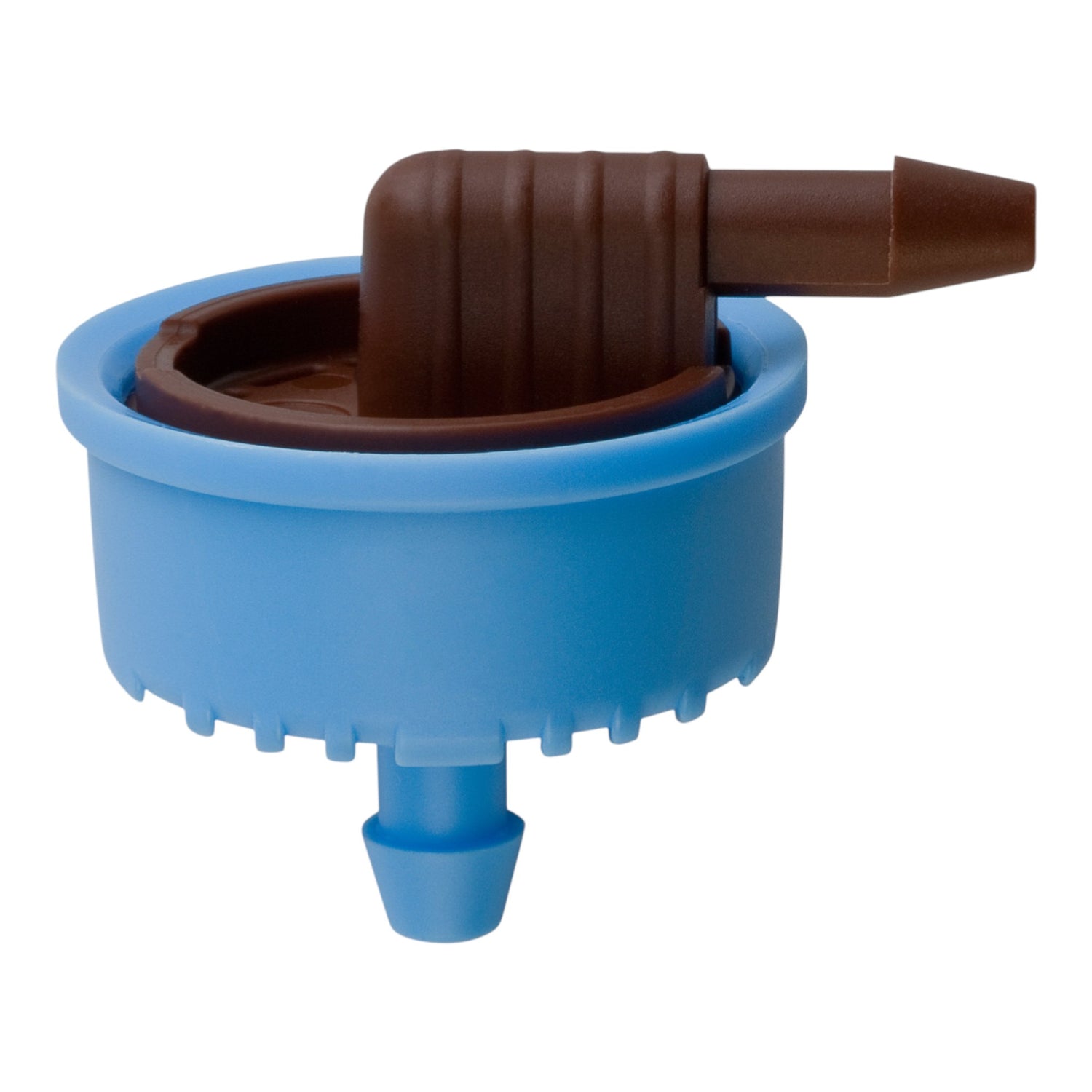
£0.42
Unit price per£0.42
Unit price perThe Supertif Non-Drain Dripper - 1.1L/h MOP Side Barbed Outlet is a professional irrigation dripper with a stated nominal flow of 1.1L/h and a side barbed outlet configuration.
It is intended for compatible nursery, greenhouse and container-crop irrigation systems where individual emitters are selected as part of the complete hydraulic design.
Key benefits
Selecting dripper flow rate
The stated nominal flow for this model is 1.1L/h. Select emitter flow according to crop water demand, container volume, substrate, irrigation frequency and the number of emitters serving each plant.
A higher nominal flow is not automatically better. Short irrigation events, small containers or low-retention substrates may require a different strategy from large nursery stock or longer irrigation zones.
Outlet configuration & installation
This version uses a side barbed outlet. Match the outlet to the intended microtube, stake or downstream connection and use compatible insertion tools where required. Do not force mismatched tube or fittings onto the emitter.
Route downstream tube without kinks and avoid side-loading the dripper connection. Secure stakes or outlets so water is delivered consistently to the intended root-zone position.
Non-drain irrigation behaviour
A non-drain dripper should be considered as part of the complete irrigation zone. Line drainage, elevation changes, start-up behaviour and pressure conditions can influence how quickly individual containers receive water at the beginning and end of an irrigation cycle.
Where highly uniform short pulses are required, verify actual system behaviour across representative positions rather than relying only on the emitter's nominal flow figure.
Pressure, filtration & uniformity
Emitter performance depends on suitable operating pressure and clean water. Use filtration appropriate to the water source and irrigation system and monitor pressure where necessary across longer or more complex zones.
Periodically collect and compare output from representative emitters. Differences can indicate blockage, pressure variation, damaged pipework or installation issues.
Maintenance
Flush irrigation lines according to water quality and system requirements. Inspect emitters and downstream components for blockage or damage and replace components that cannot be restored to reliable operation.
Supertif Non-Drain Dripper - 1.1L/h MOP Side Barbed Outlet product details
| Product | Supertif Non-Drain Dripper |
|---|---|
| Nominal flow | 1.1L/h |
| Outlet | Side Barbed Outlet |
| Variant | MOP |
| Application | Professional nursery, greenhouse and container irrigation |
Supertif Non-Drain Dripper - 1.1L/h MOP Side Barbed Outlet FAQs
What is the stated flow rate?
The stated nominal flow is 1.1L/h. What outlet does this version use?
This version is described as a side barbed outlet. What does non-drain mean for irrigation management?
It describes the dripper format, but actual line drainage and start/stop behaviour still depend on the complete installation, elevation and pressure conditions. Will every dripper deliver exactly the nominal flow in any system?
No. Actual delivery should be verified under the operating pressure and layout of the complete irrigation system. How do I choose the right flow rate?
Consider crop demand, container volume, substrate, irrigation frequency, zone duration and the number of emitters per plant. Is filtration important?
Yes. Suitable filtration and line maintenance help reduce emitter blockage and loss of irrigation uniformity. How can I check irrigation uniformity?
Collect and compare output from representative emitters across the zone and investigate meaningful differences. Can I use any microtube or stake with this dripper?
Confirm compatibility with the outlet configuration and downstream components before installation. What maintenance is required?
Flush lines as appropriate, inspect emitters for blockage or damage and maintain filters and upstream irrigation equipment.
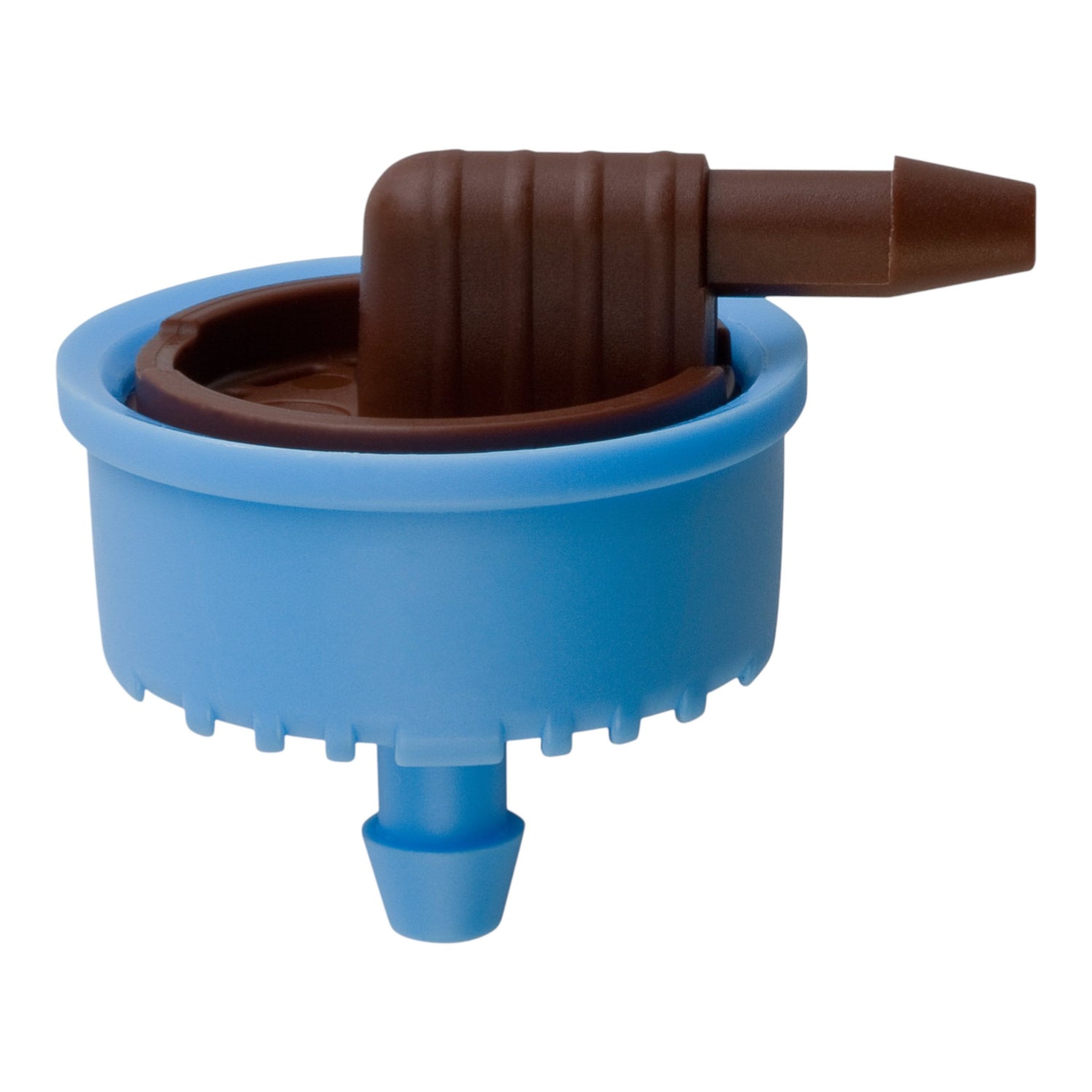
£0.42
Unit price per£0.42
Unit price perThe Supertif Non-Drain Dripper - 1.6L/h MOP Side Barbed Outlet is a professional irrigation dripper with a stated nominal flow of 1.6L/h and a side barbed outlet configuration.
It is intended for compatible nursery, greenhouse and container-crop irrigation systems where individual emitters are selected as part of the complete hydraulic design.
Key benefits
Selecting dripper flow rate
The stated nominal flow for this model is 1.6L/h. Select emitter flow according to crop water demand, container volume, substrate, irrigation frequency and the number of emitters serving each plant.
A higher nominal flow is not automatically better. Short irrigation events, small containers or low-retention substrates may require a different strategy from large nursery stock or longer irrigation zones.
Outlet configuration & installation
This version uses a side barbed outlet. Match the outlet to the intended microtube, stake or downstream connection and use compatible insertion tools where required. Do not force mismatched tube or fittings onto the emitter.
Route downstream tube without kinks and avoid side-loading the dripper connection. Secure stakes or outlets so water is delivered consistently to the intended root-zone position.
Non-drain irrigation behaviour
A non-drain dripper should be considered as part of the complete irrigation zone. Line drainage, elevation changes, start-up behaviour and pressure conditions can influence how quickly individual containers receive water at the beginning and end of an irrigation cycle.
Where highly uniform short pulses are required, verify actual system behaviour across representative positions rather than relying only on the emitter's nominal flow figure.
Pressure, filtration & uniformity
Emitter performance depends on suitable operating pressure and clean water. Use filtration appropriate to the water source and irrigation system and monitor pressure where necessary across longer or more complex zones.
Periodically collect and compare output from representative emitters. Differences can indicate blockage, pressure variation, damaged pipework or installation issues.
Maintenance
Flush irrigation lines according to water quality and system requirements. Inspect emitters and downstream components for blockage or damage and replace components that cannot be restored to reliable operation.
Supertif Non-Drain Dripper - 1.6L/h MOP Side Barbed Outlet product details
| Product | Supertif Non-Drain Dripper |
|---|---|
| Nominal flow | 1.6L/h |
| Outlet | Side Barbed Outlet |
| Variant | MOP |
| Application | Professional nursery, greenhouse and container irrigation |
Supertif Non-Drain Dripper - 1.6L/h MOP Side Barbed Outlet FAQs
What is the stated flow rate?
The stated nominal flow is 1.6L/h. What outlet does this version use?
This version is described as a side barbed outlet. What does non-drain mean for irrigation management?
It describes the dripper format, but actual line drainage and start/stop behaviour still depend on the complete installation, elevation and pressure conditions. Will every dripper deliver exactly the nominal flow in any system?
No. Actual delivery should be verified under the operating pressure and layout of the complete irrigation system. How do I choose the right flow rate?
Consider crop demand, container volume, substrate, irrigation frequency, zone duration and the number of emitters per plant. Is filtration important?
Yes. Suitable filtration and line maintenance help reduce emitter blockage and loss of irrigation uniformity. How can I check irrigation uniformity?
Collect and compare output from representative emitters across the zone and investigate meaningful differences. Can I use any microtube or stake with this dripper?
Confirm compatibility with the outlet configuration and downstream components before installation. What maintenance is required?
Flush lines as appropriate, inspect emitters for blockage or damage and maintain filters and upstream irrigation equipment.
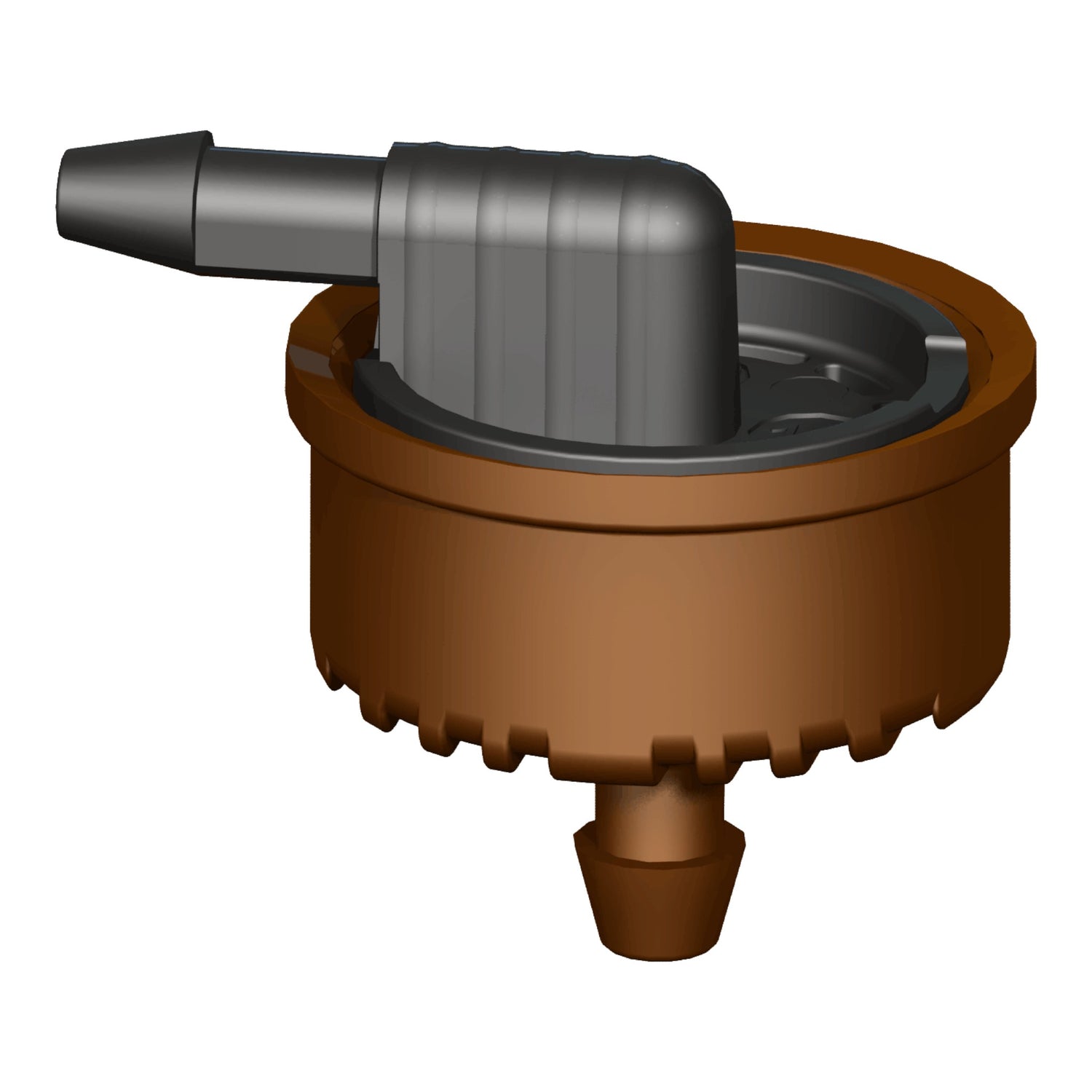
£0.42
Unit price per£0.42
Unit price perThe Supertif Non-Drain Dripper - 1.6L/h Side Barbed Outlet High is a professional irrigation dripper with a stated nominal flow of 1.6L/h and a side barbed outlet configuration.
It is intended for compatible nursery, greenhouse and container-crop irrigation systems where individual emitters are selected as part of the complete hydraulic design.
Key benefits
Selecting dripper flow rate
The stated nominal flow for this model is 1.6L/h. Select emitter flow according to crop water demand, container volume, substrate, irrigation frequency and the number of emitters serving each plant.
A higher nominal flow is not automatically better. Short irrigation events, small containers or low-retention substrates may require a different strategy from large nursery stock or longer irrigation zones.
Outlet configuration & installation
This version uses a side barbed outlet. Match the outlet to the intended microtube, stake or downstream connection and use compatible insertion tools where required. Do not force mismatched tube or fittings onto the emitter.
Route downstream tube without kinks and avoid side-loading the dripper connection. Secure stakes or outlets so water is delivered consistently to the intended root-zone position.
Non-drain irrigation behaviour
A non-drain dripper should be considered as part of the complete irrigation zone. Line drainage, elevation changes, start-up behaviour and pressure conditions can influence how quickly individual containers receive water at the beginning and end of an irrigation cycle.
Where highly uniform short pulses are required, verify actual system behaviour across representative positions rather than relying only on the emitter's nominal flow figure.
Pressure, filtration & uniformity
Emitter performance depends on suitable operating pressure and clean water. Use filtration appropriate to the water source and irrigation system and monitor pressure where necessary across longer or more complex zones.
Periodically collect and compare output from representative emitters. Differences can indicate blockage, pressure variation, damaged pipework or installation issues.
Maintenance
Flush irrigation lines according to water quality and system requirements. Inspect emitters and downstream components for blockage or damage and replace components that cannot be restored to reliable operation.
Supertif Non-Drain Dripper - 1.6L/h Side Barbed Outlet High product details
| Product | Supertif Non-Drain Dripper |
|---|---|
| Nominal flow | 1.6L/h |
| Outlet | Side Barbed Outlet |
| Additional designation | High |
| Application | Professional nursery, greenhouse and container irrigation |
Supertif Non-Drain Dripper - 1.6L/h Side Barbed Outlet High FAQs
What is the stated flow rate?
The stated nominal flow is 1.6L/h. What outlet does this version use?
This version is described as a side barbed outlet. What does non-drain mean for irrigation management?
It describes the dripper format, but actual line drainage and start/stop behaviour still depend on the complete installation, elevation and pressure conditions. Will every dripper deliver exactly the nominal flow in any system?
No. Actual delivery should be verified under the operating pressure and layout of the complete irrigation system. How do I choose the right flow rate?
Consider crop demand, container volume, substrate, irrigation frequency, zone duration and the number of emitters per plant. Is filtration important?
Yes. Suitable filtration and line maintenance help reduce emitter blockage and loss of irrigation uniformity. How can I check irrigation uniformity?
Collect and compare output from representative emitters across the zone and investigate meaningful differences. Can I use any microtube or stake with this dripper?
Confirm compatibility with the outlet configuration and downstream components before installation. What maintenance is required?
Flush lines as appropriate, inspect emitters for blockage or damage and maintain filters and upstream irrigation equipment.