
How much air does the Hailea ACO-2206 produce?
The ACO-2206 produces up to 10 litres of air per minute in total, equivalent to a maximum airflow of 600 litres per hour.

Commercial Products
Commercial Products
 Professional Growing Media
 Plant Nutrition
 Plant Health
 Sprayers & Protective Clothing
 Pots, Planters & Trays
 Propagation
 Baskets & Planters
 Fabrics & Netting
 Environment
 Plant Lighting
 Irrigation
 Plant Support & Tree Care
 Equipment
 Tools
 Plant Labels
 Packaging
 Lawn Care
 Clearance
Retail Products
Retail Products
 Growing Media
 Plant Nutrition
 Plant Health
 Pots, Planters & Tanks
 Propagation
 Baskets & Planters
 Fabrics & Netting
 Environment
 Plant Lighting
 Plant Support
 Equipment
 Tools
364 products
364 products
Sort by:

Compact 4 outlet air pump delivering up to 10L/min for reliable aeration of DWC systems, nutrient reservoirs and multiple air stones.
The Hailea ACO-2206 is a practical, economical air pump for growers who need to aerate several points from a single unit. Four built-in outlets provide a combined airflow of up to 10 litres per minute, allowing you to run multiple air stones without adding a separate air manifold.
Each outlet can deliver up to approximately 2.5 litres per minute, making the ACO-2206 particularly useful for smaller multi-pot DWC systems and nutrient reservoirs where air needs to be distributed between several diffusers.
Rubber feet help isolate vibration from the surface beneath the pump, while the low 8W power consumption makes it a straightforward option for continuous hydroponic aeration.
Why choose the Hailea ACO-2206 Air Pump?
Ideal for DWC and nutrient reservoir aeration
The ACO-2206 works particularly well in hydroponic systems where several air stones need to operate at the same time. Its four outlets can be connected to separate airline runs, allowing individual diffusers to be positioned in separate DWC pots or at different points within a nutrient reservoir.
Because the outlets are built directly into the pump, there is no need to add a separate four-way manifold. This keeps smaller aeration setups simple and reduces the number of connections between the pump and air stones.
The pump provides up to 10L/min in total, shared across its four outlets. Actual airflow at each air stone will vary according to airline length, water depth and the resistance created by the diffuser.
How to use the Hailea ACO-2206
Place the pump on a stable, dry surface above the water level of the reservoir. Connect compatible 4mm airline to the required outlets, then fit a suitable air stone or diffuser to the opposite end of each line.
Position the air stones in the nutrient solution and switch the pump on. For a four-pot DWC setup, one outlet can be used for each pot, providing a simple way to aerate the whole system from a single pump.
Keep airline runs reasonably short and avoid sharp bends or kinks that can restrict airflow. If the pump needs to sit below water level, fit suitable non-return valves to help prevent water travelling back towards the pump when it is switched off.
Air stones naturally become more restrictive as deposits build up, so inspect and clean or replace them periodically to maintain good airflow throughout the system.
Hailea ACO-2206 specifications
| Manufacturer | Hailea |
|---|---|
| Model | ACO-2206 |
| Product type | Multi-outlet air pump |
| Maximum airflow | 10L/min / 600L/hr |
| Airflow per outlet | Up to approximately 2.5L/min |
| Number of outlets | 4 |
| Outlet size | 4mm |
| Power consumption | 8W |
| Pressure | >0.02MPa |
| Voltage | 230V |
| Frequency | 50Hz |
| Dimensions | 188 x 100 x 120mm |
| Weight | 1.25kg |
| Typical applications | DWC systems, nutrient reservoirs, air stones & multi-point hydroponic aeration |
Hailea ACO-2206 Air Pump FAQs
How much air does the Hailea ACO-2206 produce?
The ACO-2206 produces up to 10 litres of air per minute in total, equivalent to a maximum airflow of 600 litres per hour.
How many outlets does the ACO-2206 have?
The Hailea ACO-2206 has four built-in air outlets, allowing four separate airline runs to be connected directly to the pump.
How much air does each ACO-2206 outlet produce?
Each outlet can deliver up to approximately 2.5 litres per minute, giving the pump a combined maximum airflow of 10L/min.
Can the Hailea ACO-2206 run four air stones?
Yes. Its four built-in outlets allow up to four compatible air stones or diffusers to be connected without adding a separate manifold.
Is the Hailea ACO-2206 suitable for DWC?
Yes. The four-outlet configuration makes it particularly useful for smaller multi-pot DWC systems, where individual airline runs can be used to aerate separate pots.
What size airline does the ACO-2206 use?
The ACO-2206 has 4mm air outlets for connection to compatible airline commonly used with hydroponic air stones and diffusers.
Does the ACO-2206 need an air manifold?
No. Four outlets are built directly into the pump, so a separate manifold is not normally required when running up to four airline feeds.
How much power does the Hailea ACO-2206 use?
The ACO-2206 has a rated power consumption of 8W, making it an economical option for continuous hydroponic aeration.

£3.79
Unit price per£3.79
Unit price perCompact single-outlet air pump delivering 1.6L/min for efficient aeration of smaller hydroponic reservoirs, DWC pots and air stones.
The Hailea ACO-2202 is a compact, economical air pump designed for smaller hydroponic systems where a single aeration point is all that is required. Producing 1.6 litres of air per minute, it provides a straightforward way to supply an air stone in a nutrient reservoir or individual DWC pot.
Its single outlet means there is no need for a separate air manifold when running one diffuser. Simply connect compatible airline and an air stone to create a simple, low-power aeration setup.
Hailea combines an advanced air-compression system with vibration damping and a multilevel muffler to maintain consistent airflow while keeping operating noise below 40dB. With power consumption of just 2W, the ACO-2202 is particularly economical for continuous use.
Why choose the Hailea ACO-2202 Air Pump?
Ideal for smaller DWC systems and nutrient reservoirs
The ACO-2202 is best suited to applications where one air stone provides the required aeration. This makes it a useful choice for individual DWC pots, smaller nutrient reservoirs, propagation systems and other compact hydroponic setups.
Its 1.6L/min output provides a simple alternative to using a larger multi-outlet pump when there is only one aeration point in the system. For installations requiring several separate air stones, one of Hailea's larger twin or multi-outlet pumps will provide a more practical solution.
How to use the Hailea ACO-2202
Position the air pump on a dry, stable surface above the water level of the reservoir. Connect compatible airline to the pump outlet, then attach a suitable air stone or diffuser to the other end.
Place the air stone into the nutrient solution and switch on the pump. Keep the airline free from sharp bends and kinks, as these can restrict airflow and reduce the performance of the diffuser.
Positioning the pump above the water level helps prevent water travelling back towards the unit when it is switched off. Where the installation requires the pump to sit below water level, a suitable non-return valve should be fitted to the airline.
Inspect the air stone periodically for mineral deposits and other blockages. Cleaning or replacing a restricted diffuser will help maintain consistent airflow and reduce unnecessary resistance against the pump.
Hailea ACO-2202 specifications
| Manufacturer | Hailea |
|---|---|
| Model | ACO-2202 |
| Product type | Single-outlet air pump |
| Maximum airflow | 1.6L/min / 96L/hr |
| Number of outlets | 1 |
| Power consumption | 2W |
| Noise level | <40dB |
| Pressure | >0.015MPa |
| Voltage | 220 – 240V |
| Frequency | 50/60Hz |
| Dimensions | 110 x 68 x 63mm |
| Weight | 0.27kg |
| Typical applications | Smaller DWC systems, nutrient reservoirs, propagation systems & single air stones |
Hailea ACO-2202 Air Pump FAQs
How much air does the Hailea ACO-2202 produce?
The ACO-2202 delivers up to 1.6 litres of air per minute, equivalent to approximately 96 litres per hour.
How many outlets does the ACO-2202 have?
The Hailea ACO-2202 has one air outlet, making it a compact choice for supplying a single airline and air stone.
Is the Hailea ACO-2202 suitable for hydroponics?
Yes. The ACO-2202 is suitable for smaller hydroponic nutrient reservoirs, individual DWC pots and other systems where a single aeration point is required.
Can the ACO-2202 run an air stone?
Yes. The single outlet can be connected to compatible airline and a suitable air stone or diffuser for aerating nutrient solution.
Is the airflow adjustable?
No. The ACO-2202 is a fixed-output model rated at up to 1.6L/min. It does not have the adjustable airflow control found on Hailea's adjustable ACO-96 series pumps.
How noisy is the Hailea ACO-2202?
Hailea rates the ACO-2202 at below 40dB. The pump uses a damping system and multilevel muffler to help reduce operating noise and vibration.
How much power does the ACO-2202 use?
The ACO-2202 is rated at just 2W, making it an economical option for continuous aeration in smaller systems.
What is the difference between the ACO-2202 and ACO-2204?
The ACO-2202 has one outlet and produces up to 1.6L/min. The larger ACO-2204 has two outlets and produces up to 4L/min in total, making it better suited to systems requiring two separate aeration lines.

£7.49
Unit price per£7.49
Unit price perWater awkward, deep and hard-to-reach growing areas with a telescopic spray lance that extends from 90 to 140cm and offers seven different spray patterns.
The Garden King Telescopic Spray Lance gives growers extra reach when hand watering plants, making it much easier to get water where it is needed without stretching across benches, squeezing between pots or reaching through dense foliage.
Its telescopic shaft measures approximately 90cm when retracted and extends to 140cm, providing up to half a metre of additional reach. This makes it particularly useful in deep grow spaces, propagation areas, nurseries, greenhouses and anywhere plants at the back of a growing area are difficult to access.
A seven-pattern spray head gives you a choice of Shower, Mist, Soaker, Cone, Centre, Flat and Jet settings, allowing the water pattern to be changed to suit different plants and watering jobs.
Why choose the Garden King Telescopic Spray Lance?
Reach plants without disturbing your growing area
As plants develop, getting a watering hose or can to the back of a densely packed growing area can become increasingly awkward. The Garden King Telescopic Spray Lance extends your reach so water can be directed towards plants without having to move pots or push through foliage.
This is particularly useful when watering plants positioned on deep benches, underneath growing equipment or towards the back of a grow room. The lance can also make routine watering more comfortable when working with raised beds, propagation benches and larger groups of containers.
The selectable spray head adds versatility. A gentler Mist or Shower pattern can be used where a softer application is preferred, while more concentrated settings such as Centre and Jet provide a narrower stream when greater reach or more targeted watering is required.
How to use the Garden King Telescopic Spray Lance
Connect the lance to a suitable watering hose and extend the telescopic shaft to the length required for your growing area. At full extension, the lance reaches approximately 140cm.
Select the required spray pattern at the head of the lance. Seven settings are available: Shower, Mist, Soaker, Cone, Centre, Flat and Jet. Choose the pattern that best suits the plants and area being watered.
Use the extended lance to position the spray closer to the target plant, particularly when watering containers at the back of a bench or other difficult-to-reach positions. Bringing the outlet closer to the plant gives you greater control over where the water is applied.
After use, shut off the water supply, release any remaining pressure and retract the lance for easier storage.
Garden King Telescopic Spray Lance specifications
| Brand | Garden King |
|---|---|
| Product type | Telescopic watering and spray lance |
| Retracted length | Approx. 90cm |
| Extended length | Approx. 140cm |
| Spray patterns | 7 |
| Spray settings | Shower, Mist, Soaker, Cone, Centre, Flat & Jet |
| Connection | Direct connection to watering hose |
| Typical applications | Grow rooms, greenhouses, nurseries, propagation areas, raised beds & container plants |
| Outer case quantity | 12 |
Garden King Telescopic Spray Lance FAQs
How long is the Garden King Telescopic Spray Lance?
The lance measures approximately 90cm when retracted and extends to approximately 140cm, giving you up to 50cm of additional reach when watering.
What spray patterns does the Garden King Spray Lance have?
The spray head offers seven patterns: Shower, Mist, Soaker, Cone, Centre, Flat and Jet. This allows the water pattern to be changed for different plants and watering tasks.
Is the Garden King Telescopic Spray Lance suitable for grow rooms?
Yes. The telescopic design is particularly useful in narrow or deep grow spaces where reaching plants behind other pots or equipment can otherwise be difficult.
Can I use the spray lance in a greenhouse?
Yes. Its extended reach makes it useful for watering plants on greenhouse benches, densely arranged containers and other areas that are difficult to reach comfortably with a standard hose.
Does the Garden King Spray Lance connect to a hose?
Yes. The lance is designed to connect directly to a watering hose, providing a simple way to extend your reach when hand watering.
Can the Garden King Spray Lance be used for misting?
Yes. Mist is one of the seven available spray patterns, alongside Shower, Soaker, Cone, Centre, Flat and Jet.
Why use a telescopic watering lance?
A telescopic lance allows water to be delivered closer to plants that would otherwise be difficult to reach. This is particularly helpful for deep benches, densely packed pots and larger growing areas where moving plants every time you water would be impractical.

£10.68
Unit price per£10.68
Unit price perReach plants at the back of beds, benches and grow spaces with an AquaKing watering lance that extends from 90 to 140cm.
The AquaKing Telescopic Spray Lance makes hand watering easier when plants are packed closely together or positioned beyond comfortable reach. Starting at approximately 90cm long and extending to 140cm, it gives you up to half a metre of additional reach without having to move pots or lean across growing benches.
This makes the lance particularly useful in narrow, deep growing spaces where getting a standard hose nozzle close to every plant can be difficult. The extended shaft allows the spray head to be positioned closer to the plants you want to water, giving you better access to the back of the growing area.
The lance connects to a garden hose using an Xcellent or Gardena-compatible coupling, making it a straightforward addition to an existing hand-watering setup.
Why choose the AquaKing Telescopic Spray Lance?
Water deep and difficult-to-reach growing areas
The real advantage of a telescopic watering lance becomes apparent once a growing area starts to fill out. Reaching containers at the back of a bench or behind established plants with an ordinary hose nozzle can mean moving pots, stretching across plants or watering from too far away.
Extending the AquaKing lance to as much as 140cm allows the spray head to reach further into the growing area while you remain at the front. This makes routine hand watering more practical in narrow and deep grow spaces, as well as on greenhouse and nursery benches.
It is also useful for raised beds and groups of container plants where additional reach helps you direct water where it is needed without repeatedly repositioning the hose.
How to use the AquaKing Telescopic Spray Lance
Connect the lance to a suitable garden hose using an Xcellent or Gardena-compatible coupling. With the water supply switched off, adjust the telescopic shaft to the reach required for the area you are watering.
The lance measures approximately 90cm in its standard position and can be extended to approximately 140cm. Use the additional reach to position the spray head closer to plants at the back of beds, benches or densely arranged container areas.
Keep the hose clear of plants and growing equipment as you move through the area. Working from the front of the crop and using the lance to provide the additional reach can reduce the amount of disturbance caused by repeatedly moving a hose between pots.
Once watering is complete, turn off the water supply, release the remaining water and retract the lance to make it easier to store.
AquaKing Telescopic Spray Lance specifications
| Brand | AquaKing |
|---|---|
| Product type | Telescopic watering and spray lance |
| Retracted length | Approx. 90cm |
| Maximum extended length | Approx. 140cm |
| Additional reach | Up to 50cm |
| Hose connection | Xcellent or Gardena-compatible coupling |
| Typical applications | Grow rooms, greenhouses, nurseries, growing benches, raised beds & container plants |
AquaKing Telescopic Spray Lance FAQs
How long is the AquaKing Telescopic Spray Lance?
The AquaKing Telescopic Spray Lance measures approximately 90cm in its standard position and extends to approximately 140cm, providing up to 50cm of additional reach.
What is a telescopic spray lance used for?
A telescopic spray lance makes it easier to water plants that are difficult to reach with a conventional hose nozzle. The longer shaft is particularly useful for deep growing areas, greenhouse benches and closely arranged containers.
Is the AquaKing Telescopic Spray Lance suitable for grow rooms?
Yes. The lance is particularly useful in narrow and deep grow spaces, allowing plants towards the back of the growing area to be reached without moving surrounding pots.
Can I use the AquaKing Spray Lance in a greenhouse?
Yes. Its extendable design makes it useful for greenhouse benches and groups of container plants where the extra reach makes routine hand watering easier.
What hose connection does the AquaKing Telescopic Spray Lance use?
The lance can be connected to a garden hose using an Xcellent or Gardena-compatible coupling.
How far does the AquaKing Telescopic Spray Lance extend?
It extends from approximately 90cm to 140cm, adding up to 50cm of reach when fully extended.
Why use a long watering lance instead of a standard hose nozzle?
The longer shaft lets you bring the water outlet closer to plants that would otherwise be difficult to reach. This is especially useful where plants are arranged several rows deep or access around the growing area is limited.

£15.00
Unit price per£15.00
Unit price perA versatile 5 litre pressure sprayer with adjustable lance, jet-to-mist nozzle and shoulder strap for controlled foliar feeding and plant treatments.
The AquaKing 5L Pressure Sprayer is a practical all-round sprayer for growers who need more capacity than a handheld spray bottle without stepping up to a larger, heavier unit. Its 5 litre tank makes it well suited to small and medium-sized growing areas, greenhouses, nurseries and gardens.
The tank is pressurised using the built-in hand pump, giving you a steady spray through the hose and application lance. An adjustable nozzle lets you alter the output from a concentrated jet through to a fine mist, making the sprayer useful for a range of horticultural applications.
A lockable spray trigger helps make longer applications more comfortable, while the adjustable shoulder strap leaves your hands free to control the lance as you work around plants.
Why choose the AquaKing 5L Pressure Sprayer?
Ideal for foliar feeding and plant treatments
The AquaKing 5L Pressure Sprayer is particularly useful for foliar applications where even coverage across leaves is important. Adjusting the nozzle towards a fine mist helps distribute liquid across the plant canopy, while the lance makes it easier to reach around and underneath foliage.
Its 5 litre capacity makes this model a good middle ground for growers who have outgrown small trigger bottles but do not need the additional capacity of the AquaKing 8L Pressure Sprayer. It is easy to move around smaller grow rooms and propagation areas while still holding enough solution for more substantial spraying jobs.
As well as foliar feeds, the sprayer can be used to apply compatible plant treatment products and for general horticultural spraying and watering tasks.
How to use the AquaKing 5L Pressure Sprayer
Add the required liquid to the tank, using the graduated markings to help measure the volume. Secure the pump assembly firmly, then operate the hand pump to build pressure inside the sprayer.
Use the trigger on the lance to begin spraying and adjust the nozzle until you achieve the required output. The nozzle can be changed from a concentrated jet through to a fine mist, allowing the spray to be adapted to the job.
For longer applications, the trigger can be locked to maintain continuous spraying. The shoulder strap allows the tank to be carried while leaving both hands available to position and control the lance.
When using foliar feeds or plant treatment products, always follow the dilution, application and safety instructions supplied with the product being applied.
After spraying, release the remaining pressure using the pressure-release valve. Empty the tank appropriately and rinse the tank, hose, lance and nozzle thoroughly with clean water to help prevent residues and blockages.
AquaKing 5L Pressure Sprayer specifications
| Brand | AquaKing |
|---|---|
| Product type | Manual pressure sprayer |
| Tank capacity | 5 litres |
| Spray adjustment | Adjustable from concentrated jet to fine mist |
| Application lance | Yes |
| Trigger lock | Yes |
| Pressure-release valve | Yes |
| Shoulder strap | Adjustable |
| Tank markings | Graduated volume scale |
| Height | Approx. 42cm |
| Diameter | Approx. 18cm |
| Weight | Approx. 1.3kg |
| Typical applications | Foliar feeding, plant treatments, general spraying & plant watering |
| Outer case quantity | 6 |
AquaKing 5L Pressure Sprayer FAQs
What is the capacity of the AquaKing Pressure Sprayer?
This AquaKing model has a 5 litre tank, giving it more working capacity than a small handheld sprayer while remaining convenient to carry around the growing area.
Can the AquaKing 5L Pressure Sprayer produce a fine mist?
Yes. The adjustable nozzle allows the spray to be changed from a concentrated jet through to a fine mist.
Is the AquaKing 5L Sprayer suitable for foliar feeding?
Yes. Its adjustable nozzle and application lance make it particularly useful for foliar feeding, including spraying around plant canopies and reaching the undersides of leaves.
Does the AquaKing 5L Pressure Sprayer have a shoulder strap?
Yes. The 5 litre model is supplied with an adjustable shoulder strap, making it easier to carry while spraying.
Can the spray trigger be locked on?
Yes. The AquaKing 5L Pressure Sprayer has a trigger lock for continuous spraying, which is particularly useful during longer applications.
Does the AquaKing 5L Sprayer have a pressure-release valve?
Yes. A pressure-release valve is fitted so the tank can be safely depressurised after spraying.
What is the difference between the AquaKing 5L and 8L Pressure Sprayers?
The main difference is tank capacity. The 5L model is more compact at approximately 42cm high, making it a convenient choice for small and medium-sized growing areas. The larger 8L version provides three additional litres of capacity for longer spraying sessions where fewer refills are preferred.
How should I clean the AquaKing 5L Pressure Sprayer?
Release the pressure and empty the tank after use, then rinse it thoroughly with clean water. Run clean water through the hose, lance and nozzle as well to help prevent dried residues and blockages before storing the sprayer depressurised.

Compact 2 litre handheld pressure sprayer with an adjustable nozzle for controlled plant spraying, misting and foliar applications.
The AquaKing 2L Pressure Sprayer is a handy choice for smaller spraying jobs where a full-size lance sprayer would be unnecessary. Its 2 litre capacity gives you useful working volume while keeping the sprayer compact enough to carry and operate by hand.
Pressure is built using the piston pump on top of the bottle. Once pressurised, the sprayer provides a continuous supply to the nozzle without requiring you to squeeze a conventional trigger bottle repeatedly.
The adjustable nozzle allows the spray intensity to be altered to suit the job, making the AquaKing 2L particularly useful for plant care, foliar feeding and general horticultural spraying around smaller growing areas.
Why choose the AquaKing 2L Pressure Sprayer?
Ideal for smaller plant spraying jobs
The AquaKing 2L sits neatly between a small trigger bottle and a larger shoulder-carried pressure sprayer. It provides enough capacity for treating groups of plants while remaining compact and easy to move around a grow room, greenhouse or propagation area.
It is particularly useful for foliar feeding and other compatible plant treatments where controlled coverage is required. The adjustable nozzle lets you alter the spray to suit the application rather than relying on a single fixed output.
For larger growing areas or applications that require an extended lance, the AquaKing 5L and 8L pressure sprayers provide greater capacity. For smaller jobs and regular plant care, the 2L model offers a more compact solution.
How to use the AquaKing 2L Pressure Sprayer
Add the required liquid to the bottle and securely refit the pump assembly. Use the piston on top of the sprayer to pressurise the container before spraying.
Adjust the nozzle to achieve the spray intensity required, then use the handle control to apply the solution to the target area. Repressurise the bottle with the pump as required during use.
When applying foliar feeds or plant treatment products, follow the dilution, application and safety instructions supplied with the product being used.
Once spraying is complete, release the pressure before opening the container. Empty the sprayer appropriately and rinse the bottle and nozzle thoroughly with clean water to help prevent residues building up between uses.
AquaKing 2L Pressure Sprayer specifications
| Brand | AquaKing |
|---|---|
| Product type | Handheld pressure sprayer |
| Capacity | 2 litres |
| Pressure system | Manual piston pump |
| Spray adjustment | Adjustable nozzle |
| Pressure control | Overpressure control valve |
| Typical applications | Plant spraying, foliar feeding, misting & general horticultural use |
| Outer case quantity | 15 |
AquaKing 2L Pressure Sprayer FAQs
What is the capacity of the AquaKing Pressure Sprayer?
This model has a 2 litre capacity, making it a compact option for smaller plant spraying jobs and regular horticultural use.
How does the AquaKing 2L Pressure Sprayer work?
The container is pressurised using the piston pump on top of the sprayer. Once sufficient pressure has been created, the liquid can be sprayed through the adjustable nozzle.
Does the AquaKing 2L Sprayer have an adjustable nozzle?
Yes. The spray intensity can be altered using the adjustable nozzle, allowing the output to be adapted to different plant care jobs.
Is the AquaKing 2L Sprayer suitable for foliar feeding?
Yes. Its compact size and adjustable nozzle make it useful for applying compatible foliar feeds to plants. Always follow the application and dilution instructions for the product being sprayed.
Does the AquaKing 2L Pressure Sprayer have a safety valve?
Yes. AquaKing specifies an overpressure control valve on its pressure sprayers to help prevent excessive pressure building inside the container.
What is the difference between the AquaKing 2L and 5L Pressure Sprayers?
The 2L model is a compact handheld pressure sprayer designed for smaller jobs. The 5L model provides greater capacity and uses a separate hose and application lance, making it better suited to larger growing areas and longer spraying sessions.
How should I clean the AquaKing 2L Pressure Sprayer?
Depressurise and empty the sprayer after use, then rinse the container and nozzle thoroughly with clean water. Keeping the nozzle free from dried residue will help maintain consistent spray performance.

£6.43
Unit price per£6.43
Unit price perThis 40mm x 40mm PVC Socket Union is a detachable solvent-weld pipe fitting designed to connect two sections of 40mm metric PVC pipe while allowing the pipework to be separated later for servicing, cleaning or system modification.
Unlike a conventional straight socket, the central union can be unscrewed to separate the two sides without cutting the surrounding pipework. This makes it particularly useful around pumps, filters, valves and other components that may need to be removed periodically.
Both ends accept 40mm metric PVC pipe and are designed to be permanently bonded using suitable PVC solvent cement. Once installed, the central union provides a convenient removable connection point within an otherwise permanent pipe system.
A practical choice for professional irrigation, nursery water systems, agriculture, aquaculture and other rigid PVC installations where reliable water distribution and future maintenance access are important.
Why use a 40mm PVC Socket Union?
Permanent pipework with a removable connection
A PVC union provides the reliability of solvent-weld pipework while creating a deliberate point at which the system can later be separated.
The two outer sockets are solvent welded permanently to the 40mm pipe. The central threaded union nut then secures the two halves of the fitting together around the union seal.
When maintenance is required, the water system can be isolated and the union disconnected. The equipment or relevant section of pipework can then be removed without disturbing the permanent solvent-weld joints.
Ideal for irrigation & water-management systems
Socket unions can be incorporated throughout rigid PVC pipe networks, but they are especially valuable next to equipment that is likely to need servicing during the life of the installation.
Make pumps, filters & valves easier to service
Planning service points into an irrigation system during installation can save considerable time later.
A pump or filter installed entirely between permanent solvent-weld joints may require pipework to be cut when the component eventually needs removing. Installing unions at suitable points creates intentional breaks in the system instead.
Once safely isolated and depressurised, the union can be opened and the component removed. After servicing or replacement, the union can simply be reassembled.
Installing a 40mm PVC Socket Union
40mm metric PVC pipe compatibility
This fitting is intended for a 40mm metric PVC pipe system. Compatible pipe with a 40mm outside diameter inserts into the plain sockets before being solvent welded into position.
Metric pressure pipe and fittings should not be assumed to fit similarly named imperial pipe or standard UK waste pipe. Always check the actual pipe system and outside diameter before installation.
For a reliable joint, use PVC preparation products and solvent cement suitable for the specific pipe and fittings being installed.
Where should a PVC union be positioned?
For serviceable equipment, unions are normally most useful when positioned so the component can be removed without dismantling the rest of the installation.
For example, installing appropriate unions either side of a pump or filter can allow the complete component to be removed after the water supply has been safely isolated. This is particularly valuable in professional irrigation systems where downtime needs to be kept to a minimum.
40mm PVC Socket Union product details
| Product type | PVC socket union |
|---|---|
| Size | 40mm x 40mm |
| Pipe system | Metric PVC |
| Connection | Plain socket x plain socket |
| Jointing method | Solvent weld / solvent cement |
| Compatible pipe size | 40mm outside diameter metric PVC pipe |
| Material | PVC |
| Union type | Detachable central screw union |
| Primary application | Irrigation and water-management pipework |
| Suitable for | Irrigation, pumps, filters, valves, water distribution, aquaculture and compatible rigid PVC systems |
40mm PVC Socket Union FAQs
What is a 40mm PVC union used for?
It connects two sections of compatible 40mm PVC pipe while creating a removable joint that can be opened later for maintenance or equipment replacement. Does this union fit 40mm PVC pipe?
Yes. The plain sockets are designed for compatible metric PVC pipe with a 40mm outside diameter. Are both ends solvent weld?
Yes. Both plain socket ends are designed to be bonded to compatible 40mm PVC pipe using suitable solvent cement. Can I disconnect it after the pipe has been glued?
Yes. The outer socket joints remain permanently bonded to the pipe, while the central union can be unscrewed to separate the two sides. Where is a union most useful in an irrigation system?
They are particularly useful next to pumps, filters, valves and other components that may need to be removed periodically for servicing or replacement. What is the difference between a socket union and a straight socket?
A conventional straight socket permanently joins two pipes. A union performs the same basic connection function but adds a detachable centre, allowing the pipework to be separated later. Is the 40mm measurement the pipe outside diameter?
Yes. Metric PVC pipe systems are commonly specified by the pipe's outside diameter, so compatible 40mm pipe has a nominal outside diameter of 40mm. Will standard UK 40mm waste pipe fit?
Do not assume so. Metric PVC pressure systems and standard waste-pipe systems can use different dimensions and fitting standards. Confirm the pipe type and actual dimensions before installation. Do I glue the threaded centre of the union?
No. The plain sockets are solvent welded to the pipe, while the central union must remain detachable so it can be opened for maintenance. Can this fitting be used around a pump?
Yes. Pump installations are a common use for unions because they allow the pump to be removed without cutting the surrounding rigid pipework. Can I reuse the union after disconnecting it?
Yes. Provided the union and its sealing components remain clean and undamaged, the central connection is designed to be disconnected and reassembled while the socket ends stay bonded to the pipe. What should I check before restarting the system?
Confirm that the union is correctly assembled, the seal is clean and properly seated, all solvent-weld joints have fully cured and the pipework is adequately supported. Check carefully for leaks when the system is restarted.
£9.57
Unit price per£9.57
Unit price perThis 50mm x 50mm PVC Socket Union is a detachable solvent-weld pipe fitting designed to connect two sections of 50mm metric PVC pipe while allowing the pipework to be separated later for servicing, cleaning or system modification.
Unlike a conventional straight socket, the central threaded union can be unscrewed to separate the two sides of the fitting without cutting the surrounding pipework. This makes it particularly useful around pumps, filters, valves and other components that may require periodic removal or maintenance.
Both ends accept 50mm metric PVC pressure pipe and are designed to be permanently bonded using suitable PVC solvent cement. Once installed, the central union provides the removable connection point.
A practical fitting for professional irrigation, water distribution, horticultural installations, aquaculture and other rigid PVC pipe systems where future access needs to be considered during installation.
Why use a 50mm PVC Socket Union?
Permanent pipe joints with a removable centre
The advantage of a union is that it combines two different types of connection in one fitting.
The outer sockets are solvent welded permanently to the 50mm PVC pipe. The central section uses a threaded union nut, allowing the two installed pipe sections to be disconnected without disturbing those solvent-welded joints.
This provides a convenient service point within an otherwise permanent rigid pipe installation and can save considerable time when equipment needs to be replaced or pipework altered.
Ideal for irrigation & water-management systems
Socket unions can be installed throughout rigid PVC pipe networks, but they are particularly useful immediately before or after components that are likely to require servicing.
Make pumps, filters & valves easier to service
Installing unions around serviceable equipment can make a substantial difference when maintenance is required.
If a pump, filter or valve is installed entirely between permanent solvent-weld joints, removing it later may require the pipe to be cut. Positioning suitable unions around the component creates deliberate separation points instead.
Once the system has been isolated and depressurised, the union can be unscrewed and the relevant section removed. After servicing, the fitting can be reassembled without replacing the surrounding pipework.
Installing a 50mm PVC Socket Union
50mm metric PVC compatibility
This is a metric 50mm fitting. Compatible 50mm PVC pressure pipe has an outside diameter of 50mm and fits inside the union's solvent-weld sockets.
Metric and imperial pipe sizes should not be assumed to be interchangeable simply because their nominal dimensions appear similar. Check the outside diameter and pipe system before installation.
For the strongest and most reliable joint, use PVC solvent cement and preparation products intended for the pipe and fittings being installed.
50mm PVC Socket Union product details
| Product type | PVC socket union |
|---|---|
| Size | 50mm x 50mm |
| Pipe system | Metric PVC |
| Connection | Plain socket x plain socket |
| Jointing method | Solvent weld / solvent cement |
| Compatible pipe size | 50mm outside diameter metric PVC pipe |
| Material | PVC |
| Union type | Detachable central screw union |
| Primary application | Irrigation and water-management pipework |
| Suitable for | Irrigation, pumps, filters, valves, water distribution, aquaculture and compatible rigid PVC systems |
50mm PVC Socket Union FAQs
What does a PVC union do?
A union joins two sections of pipe but includes a detachable centre connection. This allows the pipework to be separated later without cutting the permanently installed pipe. Does this union fit 50mm PVC pipe?
Yes. Both socket ends are designed for compatible metric PVC pipe with a 50mm outside diameter. Are both sides solvent weld?
Yes. This is a plain socket-to-socket union, with both ends designed to be bonded to compatible 50mm PVC pipe using suitable solvent cement. Can the union be disconnected after installation?
Yes. The socket joints remain permanently bonded to the pipe, while the central screw union can be separated for maintenance or equipment removal. Where should I install a union in an irrigation system?
Unions are particularly useful next to pumps, filters, valves and other components that may need to be removed for servicing or replacement. Do I need PVC solvent cement?
Yes. The two socket ends require a suitable PVC solvent-weld system. Follow the cleaner and solvent cement manufacturer's preparation, application and curing instructions. Can I use this instead of a standard 50mm straight socket?
Yes, where a detachable connection is useful. A standard socket creates a permanent connection, whereas a union adds the ability to separate the pipework later. Is 50mm the internal diameter of the pipe?
No. In a metric PVC pressure-pipe system, the compatible pipe is normally specified by its outside diameter. A 50mm pipe fits inside the corresponding 50mm socket fitting. Will 1.5-inch imperial PVC pipe fit this union?
Do not assume that imperial and metric PVC pipe are interchangeable. This fitting is intended for 50mm metric pipe, so check the actual pipe dimensions before installation. Can it be used in a commercial irrigation installation?
Yes. Detachable PVC unions are commonly used in irrigation and water-distribution systems where reliable pipe connections and future service access are required. Do I need to cut the pipe to service equipment after fitting a union?
Normally no. Once the system has been safely isolated and depressurised, the central union can be unscrewed to separate the pipe sections while the solvent-weld sockets remain installed. Should the union be glued together at the centre?
No. Only the plain socket connections to the PVC pipe are solvent welded. The central union is specifically designed to remain detachable.
£14.77
Unit price per£14.77
Unit price perThis 50mm x 50mm PVC Socket Union is a detachable solvent-weld pipe fitting designed to connect two sections of 50mm metric PVC pipe while allowing the pipework to be separated later for servicing, cleaning or system modification.
Unlike a conventional straight socket, the central threaded union can be unscrewed to separate the two sides of the fitting without cutting the surrounding pipework. This makes it particularly useful around pumps, filters, valves and other components that may require periodic removal or maintenance.
Both ends accept 50mm metric PVC pressure pipe and are designed to be permanently bonded using suitable PVC solvent cement. Once installed, the central union provides the removable connection point.
A practical fitting for professional irrigation, water distribution, horticultural installations, aquaculture and other rigid PVC pipe systems where future access needs to be considered during installation.
Why use a 50mm PVC Socket Union?
Permanent pipe joints with a removable centre
The advantage of a union is that it combines two different types of connection in one fitting.
The outer sockets are solvent welded permanently to the 50mm PVC pipe. The central section uses a threaded union nut, allowing the two installed pipe sections to be disconnected without disturbing those solvent-welded joints.
This provides a convenient service point within an otherwise permanent rigid pipe installation and can save considerable time when equipment needs to be replaced or pipework altered.
Ideal for irrigation & water-management systems
Socket unions can be installed throughout rigid PVC pipe networks, but they are particularly useful immediately before or after components that are likely to require servicing.
Make pumps, filters & valves easier to service
Installing unions around serviceable equipment can make a substantial difference when maintenance is required.
If a pump, filter or valve is installed entirely between permanent solvent-weld joints, removing it later may require the pipe to be cut. Positioning suitable unions around the component creates deliberate separation points instead.
Once the system has been isolated and depressurised, the union can be unscrewed and the relevant section removed. After servicing, the fitting can be reassembled without replacing the surrounding pipework.
Installing a 50mm PVC Socket Union
50mm metric PVC compatibility
This is a metric 50mm fitting. Compatible 50mm PVC pressure pipe has an outside diameter of 50mm and fits inside the union's solvent-weld sockets.
Metric and imperial pipe sizes should not be assumed to be interchangeable simply because their nominal dimensions appear similar. Check the outside diameter and pipe system before installation.
For the strongest and most reliable joint, use PVC solvent cement and preparation products intended for the pipe and fittings being installed.
50mm PVC Socket Union product details
| Product type | PVC socket union |
|---|---|
| Size | 50mm x 50mm |
| Pipe system | Metric PVC |
| Connection | Plain socket x plain socket |
| Jointing method | Solvent weld / solvent cement |
| Compatible pipe size | 50mm outside diameter metric PVC pipe |
| Material | PVC |
| Union type | Detachable central screw union |
| Primary application | Irrigation and water-management pipework |
| Suitable for | Irrigation, pumps, filters, valves, water distribution, aquaculture and compatible rigid PVC systems |
50mm PVC Socket Union FAQs
What does a PVC union do?
A union joins two sections of pipe but includes a detachable centre connection. This allows the pipework to be separated later without cutting the permanently installed pipe. Does this union fit 50mm PVC pipe?
Yes. Both socket ends are designed for compatible metric PVC pipe with a 50mm outside diameter. Are both sides solvent weld?
Yes. This is a plain socket-to-socket union, with both ends designed to be bonded to compatible 50mm PVC pipe using suitable solvent cement. Can the union be disconnected after installation?
Yes. The socket joints remain permanently bonded to the pipe, while the central screw union can be separated for maintenance or equipment removal. Where should I install a union in an irrigation system?
Unions are particularly useful next to pumps, filters, valves and other components that may need to be removed for servicing or replacement. Do I need PVC solvent cement?
Yes. The two socket ends require a suitable PVC solvent-weld system. Follow the cleaner and solvent cement manufacturer's preparation, application and curing instructions. Can I use this instead of a standard 50mm straight socket?
Yes, where a detachable connection is useful. A standard socket creates a permanent connection, whereas a union adds the ability to separate the pipework later. Is 50mm the internal diameter of the pipe?
No. In a metric PVC pressure-pipe system, the compatible pipe is normally specified by its outside diameter. A 50mm pipe fits inside the corresponding 50mm socket fitting. Will 1.5-inch imperial PVC pipe fit this union?
Do not assume that imperial and metric PVC pipe are interchangeable. This fitting is intended for 50mm metric pipe, so check the actual pipe dimensions before installation. Can it be used in a commercial irrigation installation?
Yes. Detachable PVC unions are commonly used in irrigation and water-distribution systems where reliable pipe connections and future service access are required. Do I need to cut the pipe to service equipment after fitting a union?
Normally no. Once the system has been safely isolated and depressurised, the central union can be unscrewed to separate the pipe sections while the solvent-weld sockets remain installed. Should the union be glued together at the centre?
No. Only the plain socket connections to the PVC pipe are solvent welded. The central union is specifically designed to remain detachable.

The Hunter X2 8 Station Controller is a Hunter irrigation controller designed for automated scheduling and control of compatible irrigation zones.
Professional irrigation control allows watering programmes to be divided into zones and scheduled according to crop, landscape, soil and environmental requirements.
Key benefits
Irrigation scheduling & zone control
Plan irrigation zones around areas with similar watering requirements. Programme run times and frequency according to the emitters, crop or landscape, soil/substrate and seasonal demand.
Electrical installation and field wiring should be carried out in accordance with Hunter instructions and applicable electrical requirements. Test each station after commissioning and check that valves operate as intended.
Managing irrigation effectively
Controller programming should reflect actual water demand rather than simply repeating the same schedule year-round. Review run times as weather, crop size and seasonal conditions change.
Inspect valves, sprinklers, drippers and pipework periodically because a controller cannot compensate for blocked emitters, leaks or poor irrigation uniformity.
Installation & compatibility
Confirm controller, module and accessory compatibility before installation. Follow Hunter documentation for wiring, power supply, enclosure location and commissioning. Do not assume modules from different controller families are interchangeable.
Hunter X2 8 Station Controller product details
| Brand | Hunter |
|---|---|
| Product type | Irrigation controller |
| Controller family | X2 |
| Stations | 8 |
| Primary use | automated scheduling and control of compatible irrigation zones |
Hunter X2 8 Station Controller FAQs
How many stations does this product support or add?
The product title states 8 stations. Which Hunter controller family is this associated with?
This product is identified with the X2 family. Check exact compatibility before installation. What does an irrigation controller do?
It automatically operates compatible irrigation zones according to programmed schedules. Should every irrigation zone use the same run time?
No. Group zones according to similar water requirements and adjust run time for the crop, emitter type, soil or substrate and exposure. Can a controller detect blocked drippers or leaks by itself?
Do not rely on the controller alone for system condition. Inspect irrigation zones physically and repair blocked emitters, leaks or failed valves. Who should install the controller?
Follow Hunter's installation requirements and applicable electrical rules. Use a suitably competent installer where mains power or fixed electrical work is involved.

The Hunter X2 6 Station Controller is a Hunter irrigation controller designed for automated scheduling and control of compatible irrigation zones.
Professional irrigation control allows watering programmes to be divided into zones and scheduled according to crop, landscape, soil and environmental requirements.
Key benefits
Irrigation scheduling & zone control
Plan irrigation zones around areas with similar watering requirements. Programme run times and frequency according to the emitters, crop or landscape, soil/substrate and seasonal demand.
Electrical installation and field wiring should be carried out in accordance with Hunter instructions and applicable electrical requirements. Test each station after commissioning and check that valves operate as intended.
Managing irrigation effectively
Controller programming should reflect actual water demand rather than simply repeating the same schedule year-round. Review run times as weather, crop size and seasonal conditions change.
Inspect valves, sprinklers, drippers and pipework periodically because a controller cannot compensate for blocked emitters, leaks or poor irrigation uniformity.
Installation & compatibility
Confirm controller, module and accessory compatibility before installation. Follow Hunter documentation for wiring, power supply, enclosure location and commissioning. Do not assume modules from different controller families are interchangeable.
Hunter X2 6 Station Controller product details
| Brand | Hunter |
|---|---|
| Product type | Irrigation controller |
| Controller family | X2 |
| Stations | 6 |
| Primary use | automated scheduling and control of compatible irrigation zones |
Hunter X2 6 Station Controller FAQs
How many stations does this product support or add?
The product title states 6 stations. Which Hunter controller family is this associated with?
This product is identified with the X2 family. Check exact compatibility before installation. What does an irrigation controller do?
It automatically operates compatible irrigation zones according to programmed schedules. Should every irrigation zone use the same run time?
No. Group zones according to similar water requirements and adjust run time for the crop, emitter type, soil or substrate and exposure. Can a controller detect blocked drippers or leaks by itself?
Do not rely on the controller alone for system condition. Inspect irrigation zones physically and repair blocked emitters, leaks or failed valves. Who should install the controller?
Follow Hunter's installation requirements and applicable electrical rules. Use a suitably competent installer where mains power or fixed electrical work is involved.

The Hunter X2 4 Station Controller is a Hunter irrigation controller designed for automated scheduling and control of compatible irrigation zones.
Professional irrigation control allows watering programmes to be divided into zones and scheduled according to crop, landscape, soil and environmental requirements.
Key benefits
Irrigation scheduling & zone control
Plan irrigation zones around areas with similar watering requirements. Programme run times and frequency according to the emitters, crop or landscape, soil/substrate and seasonal demand.
Electrical installation and field wiring should be carried out in accordance with Hunter instructions and applicable electrical requirements. Test each station after commissioning and check that valves operate as intended.
Managing irrigation effectively
Controller programming should reflect actual water demand rather than simply repeating the same schedule year-round. Review run times as weather, crop size and seasonal conditions change.
Inspect valves, sprinklers, drippers and pipework periodically because a controller cannot compensate for blocked emitters, leaks or poor irrigation uniformity.
Installation & compatibility
Confirm controller, module and accessory compatibility before installation. Follow Hunter documentation for wiring, power supply, enclosure location and commissioning. Do not assume modules from different controller families are interchangeable.
Hunter X2 4 Station Controller product details
| Brand | Hunter |
|---|---|
| Product type | Irrigation controller |
| Controller family | X2 |
| Stations | 4 |
| Primary use | automated scheduling and control of compatible irrigation zones |
Hunter X2 4 Station Controller FAQs
How many stations does this product support or add?
The product title states 4 stations. Which Hunter controller family is this associated with?
This product is identified with the X2 family. Check exact compatibility before installation. What does an irrigation controller do?
It automatically operates compatible irrigation zones according to programmed schedules. Should every irrigation zone use the same run time?
No. Group zones according to similar water requirements and adjust run time for the crop, emitter type, soil or substrate and exposure. Can a controller detect blocked drippers or leaks by itself?
Do not rely on the controller alone for system condition. Inspect irrigation zones physically and repair blocked emitters, leaks or failed valves. Who should install the controller?
Follow Hunter's installation requirements and applicable electrical rules. Use a suitably competent installer where mains power or fixed electrical work is involved.

The Hunter X2 14 Station Controller is a Hunter irrigation controller designed for automated scheduling and control of compatible irrigation zones.
Professional irrigation control allows watering programmes to be divided into zones and scheduled according to crop, landscape, soil and environmental requirements.
Key benefits
Irrigation scheduling & zone control
Plan irrigation zones around areas with similar watering requirements. Programme run times and frequency according to the emitters, crop or landscape, soil/substrate and seasonal demand.
Electrical installation and field wiring should be carried out in accordance with Hunter instructions and applicable electrical requirements. Test each station after commissioning and check that valves operate as intended.
Managing irrigation effectively
Controller programming should reflect actual water demand rather than simply repeating the same schedule year-round. Review run times as weather, crop size and seasonal conditions change.
Inspect valves, sprinklers, drippers and pipework periodically because a controller cannot compensate for blocked emitters, leaks or poor irrigation uniformity.
Installation & compatibility
Confirm controller, module and accessory compatibility before installation. Follow Hunter documentation for wiring, power supply, enclosure location and commissioning. Do not assume modules from different controller families are interchangeable.
Hunter X2 14 Station Controller product details
| Brand | Hunter |
|---|---|
| Product type | Irrigation controller |
| Controller family | X2 |
| Stations | 14 |
| Primary use | automated scheduling and control of compatible irrigation zones |
Hunter X2 14 Station Controller FAQs
How many stations does this product support or add?
The product title states 14 stations. Which Hunter controller family is this associated with?
This product is identified with the X2 family. Check exact compatibility before installation. What does an irrigation controller do?
It automatically operates compatible irrigation zones according to programmed schedules. Should every irrigation zone use the same run time?
No. Group zones according to similar water requirements and adjust run time for the crop, emitter type, soil or substrate and exposure. Can a controller detect blocked drippers or leaks by itself?
Do not rely on the controller alone for system condition. Inspect irrigation zones physically and repair blocked emitters, leaks or failed valves. Who should install the controller?
Follow Hunter's installation requirements and applicable electrical rules. Use a suitably competent installer where mains power or fixed electrical work is involved.

£130.15
Unit price per£130.15
Unit price perThe Hunter Wand Wi-Fi Module for Hydrawise Connectivity is a Hunter wi-fi connectivity module designed for adding compatible Hydrawise Wi-Fi connectivity to supported Hunter controllers.
Professional irrigation control allows watering programmes to be divided into zones and scheduled according to crop, landscape, soil and environmental requirements.
Key benefits
Adding connected irrigation control
Install the module only in a supported Hunter controller and follow Hunter's setup process for network connection and Hydrawise configuration.
Reliable Wi-Fi coverage at the controller location is important for connected features. Confirm network access before final commissioning.
Managing irrigation effectively
Controller programming should reflect actual water demand rather than simply repeating the same schedule year-round. Review run times as weather, crop size and seasonal conditions change.
Inspect valves, sprinklers, drippers and pipework periodically because a controller cannot compensate for blocked emitters, leaks or poor irrigation uniformity.
Installation & compatibility
Confirm controller, module and accessory compatibility before installation. Follow Hunter documentation for wiring, power supply, enclosure location and commissioning. Do not assume modules from different controller families are interchangeable.
Hunter Wand Wi-Fi Module for Hydrawise Connectivity product details
| Brand | Hunter |
|---|---|
| Product type | Wi-Fi connectivity module |
| Connectivity | Hydrawise |
| Primary use | adding compatible Hydrawise Wi-Fi connectivity to supported Hunter controllers |
Hunter Wand Wi-Fi Module for Hydrawise Connectivity FAQs
What does the WAND module add?
It adds compatible Wi-Fi/Hydrawise connectivity to supported Hunter controller models. Does it need Wi-Fi coverage?
Yes, connected features require suitable network coverage at the controller location. Will it work with every Hunter controller?
No. Confirm that the controller model supports the WAND module before ordering. What should I check before setup?
Confirm controller compatibility, Wi-Fi availability and the current Hunter setup requirements.

The Hunter PRO-C Expansion Module 9 Station is a Hunter controller expansion module designed for adding irrigation stations to a compatible Hunter controller.
Professional irrigation control allows watering programmes to be divided into zones and scheduled according to crop, landscape, soil and environmental requirements.
Key benefits
Expanding irrigation capacity
Use this module only with the compatible Hunter controller family. Isolate the controller as required by the manufacturer's instructions before installing or removing modules.
After installation, confirm the additional stations are recognised and test each connected irrigation zone before relying on the expanded programme.
Managing irrigation effectively
Controller programming should reflect actual water demand rather than simply repeating the same schedule year-round. Review run times as weather, crop size and seasonal conditions change.
Inspect valves, sprinklers, drippers and pipework periodically because a controller cannot compensate for blocked emitters, leaks or poor irrigation uniformity.
Installation & compatibility
Confirm controller, module and accessory compatibility before installation. Follow Hunter documentation for wiring, power supply, enclosure location and commissioning. Do not assume modules from different controller families are interchangeable.
Hunter PRO-C Expansion Module 9 Station product details
| Brand | Hunter |
|---|---|
| Product type | Controller expansion module |
| Controller family | PRO-C |
| Stations | 9 |
| Primary use | adding irrigation stations to a compatible Hunter controller |
Hunter PRO-C Expansion Module 9 Station FAQs
How many stations does this product support or add?
The product title states 9 stations. Which Hunter controller family is this associated with?
This product is identified with the PRO-C family. Check exact compatibility before installation. Can this module be fitted to any Hunter controller?
No. Expansion modules are controller-family specific; confirm exact compatibility before ordering or installation. What should I do after fitting an expansion module?
Confirm the controller recognises the new stations and test each connected zone. Do I need to isolate power before installation?
Follow Hunter's instructions for the specific controller and make the equipment safe before fitting or removing modules. Does adding stations increase water supply capacity?
No. Additional controller stations increase control capacity; hydraulic supply, pipework and zone design must still be adequate.

The Hunter PRO-C Expansion Module 3 Station is a Hunter controller expansion module designed for adding irrigation stations to a compatible Hunter controller.
Professional irrigation control allows watering programmes to be divided into zones and scheduled according to crop, landscape, soil and environmental requirements.
Key benefits
Expanding irrigation capacity
Use this module only with the compatible Hunter controller family. Isolate the controller as required by the manufacturer's instructions before installing or removing modules.
After installation, confirm the additional stations are recognised and test each connected irrigation zone before relying on the expanded programme.
Managing irrigation effectively
Controller programming should reflect actual water demand rather than simply repeating the same schedule year-round. Review run times as weather, crop size and seasonal conditions change.
Inspect valves, sprinklers, drippers and pipework periodically because a controller cannot compensate for blocked emitters, leaks or poor irrigation uniformity.
Installation & compatibility
Confirm controller, module and accessory compatibility before installation. Follow Hunter documentation for wiring, power supply, enclosure location and commissioning. Do not assume modules from different controller families are interchangeable.
Hunter PRO-C Expansion Module 3 Station product details
| Brand | Hunter |
|---|---|
| Product type | Controller expansion module |
| Controller family | PRO-C |
| Stations | 3 |
| Primary use | adding irrigation stations to a compatible Hunter controller |
Hunter PRO-C Expansion Module 3 Station FAQs
How many stations does this product support or add?
The product title states 3 stations. Which Hunter controller family is this associated with?
This product is identified with the PRO-C family. Check exact compatibility before installation. Can this module be fitted to any Hunter controller?
No. Expansion modules are controller-family specific; confirm exact compatibility before ordering or installation. What should I do after fitting an expansion module?
Confirm the controller recognises the new stations and test each connected zone. Do I need to isolate power before installation?
Follow Hunter's instructions for the specific controller and make the equipment safe before fitting or removing modules. Does adding stations increase water supply capacity?
No. Additional controller stations increase control capacity; hydraulic supply, pipework and zone design must still be adequate.

£262.42
Unit price per£262.42
Unit price perThe Hunter Hunter PRO-C Hydrawise Outdoor Controller is a Hunter irrigation controller designed for automated scheduling and control of compatible irrigation zones.
Professional irrigation control allows watering programmes to be divided into zones and scheduled according to crop, landscape, soil and environmental requirements.
Key benefits
Irrigation scheduling & zone control
Plan irrigation zones around areas with similar watering requirements. Programme run times and frequency according to the emitters, crop or landscape, soil/substrate and seasonal demand.
Electrical installation and field wiring should be carried out in accordance with Hunter instructions and applicable electrical requirements. Test each station after commissioning and check that valves operate as intended.
Managing irrigation effectively
Controller programming should reflect actual water demand rather than simply repeating the same schedule year-round. Review run times as weather, crop size and seasonal conditions change.
Inspect valves, sprinklers, drippers and pipework periodically because a controller cannot compensate for blocked emitters, leaks or poor irrigation uniformity.
Installation & compatibility
Confirm controller, module and accessory compatibility before installation. Follow Hunter documentation for wiring, power supply, enclosure location and commissioning. Do not assume modules from different controller families are interchangeable.
Hunter Hunter PRO-C Hydrawise Outdoor Controller product details
| Brand | Hunter |
|---|---|
| Product type | Irrigation controller |
| Controller family | PRO-C |
| Installation | Outdoor |
| Connectivity | Hydrawise |
| Primary use | automated scheduling and control of compatible irrigation zones |
Hunter Hunter PRO-C Hydrawise Outdoor Controller FAQs
Which Hunter controller family is this associated with?
This product is identified with the PRO-C family. Check exact compatibility before installation. What does an irrigation controller do?
It automatically operates compatible irrigation zones according to programmed schedules. Should every irrigation zone use the same run time?
No. Group zones according to similar water requirements and adjust run time for the crop, emitter type, soil or substrate and exposure. Can a controller detect blocked drippers or leaks by itself?
Do not rely on the controller alone for system condition. Inspect irrigation zones physically and repair blocked emitters, leaks or failed valves. Who should install the controller?
Follow Hunter's installation requirements and applicable electrical rules. Use a suitably competent installer where mains power or fixed electrical work is involved.
£0.00
Unit price per£0.00
Unit price perThe Hunter HCC Controller Plastic Wall Mount - 8 Station is a Hunter irrigation controller designed for automated scheduling and control of compatible irrigation zones.
Professional irrigation control allows watering programmes to be divided into zones and scheduled according to crop, landscape, soil and environmental requirements.
Key benefits
Irrigation scheduling & zone control
Plan irrigation zones around areas with similar watering requirements. Programme run times and frequency according to the emitters, crop or landscape, soil/substrate and seasonal demand.
Electrical installation and field wiring should be carried out in accordance with Hunter instructions and applicable electrical requirements. Test each station after commissioning and check that valves operate as intended.
Managing irrigation effectively
Controller programming should reflect actual water demand rather than simply repeating the same schedule year-round. Review run times as weather, crop size and seasonal conditions change.
Inspect valves, sprinklers, drippers and pipework periodically because a controller cannot compensate for blocked emitters, leaks or poor irrigation uniformity.
Installation & compatibility
Confirm controller, module and accessory compatibility before installation. Follow Hunter documentation for wiring, power supply, enclosure location and commissioning. Do not assume modules from different controller families are interchangeable.
Hunter HCC Controller Plastic Wall Mount - 8 Station product details
| Brand | Hunter |
|---|---|
| Product type | Irrigation controller |
| Controller family | HCC |
| Stations | 8 |
| Primary use | automated scheduling and control of compatible irrigation zones |
Hunter HCC Controller Plastic Wall Mount - 8 Station FAQs
How many stations does this product support or add?
The product title states 8 stations. Which Hunter controller family is this associated with?
This product is identified with the HCC family. Check exact compatibility before installation. What does an irrigation controller do?
It automatically operates compatible irrigation zones according to programmed schedules. Should every irrigation zone use the same run time?
No. Group zones according to similar water requirements and adjust run time for the crop, emitter type, soil or substrate and exposure. Can a controller detect blocked drippers or leaks by itself?
Do not rely on the controller alone for system condition. Inspect irrigation zones physically and repair blocked emitters, leaks or failed valves. Who should install the controller?
Follow Hunter's installation requirements and applicable electrical rules. Use a suitably competent installer where mains power or fixed electrical work is involved.

£371.36
Unit price per£371.36
Unit price perThe Hunter HC PRO 6 Station Outdoor Controller is a Hunter irrigation controller designed for automated scheduling and control of compatible irrigation zones.
Professional irrigation control allows watering programmes to be divided into zones and scheduled according to crop, landscape, soil and environmental requirements.
Key benefits
Irrigation scheduling & zone control
Plan irrigation zones around areas with similar watering requirements. Programme run times and frequency according to the emitters, crop or landscape, soil/substrate and seasonal demand.
Electrical installation and field wiring should be carried out in accordance with Hunter instructions and applicable electrical requirements. Test each station after commissioning and check that valves operate as intended.
Managing irrigation effectively
Controller programming should reflect actual water demand rather than simply repeating the same schedule year-round. Review run times as weather, crop size and seasonal conditions change.
Inspect valves, sprinklers, drippers and pipework periodically because a controller cannot compensate for blocked emitters, leaks or poor irrigation uniformity.
Installation & compatibility
Confirm controller, module and accessory compatibility before installation. Follow Hunter documentation for wiring, power supply, enclosure location and commissioning. Do not assume modules from different controller families are interchangeable.
Hunter HC PRO 6 Station Outdoor Controller product details
| Brand | Hunter |
|---|---|
| Product type | Irrigation controller |
| Controller family | HC PRO |
| Stations | 6 |
| Installation | Outdoor |
| Primary use | automated scheduling and control of compatible irrigation zones |
Hunter HC PRO 6 Station Outdoor Controller FAQs
How many stations does this product support or add?
The product title states 6 stations. Which Hunter controller family is this associated with?
This product is identified with the HC PRO family. Check exact compatibility before installation. What does an irrigation controller do?
It automatically operates compatible irrigation zones according to programmed schedules. Should every irrigation zone use the same run time?
No. Group zones according to similar water requirements and adjust run time for the crop, emitter type, soil or substrate and exposure. Can a controller detect blocked drippers or leaks by itself?
Do not rely on the controller alone for system condition. Inspect irrigation zones physically and repair blocked emitters, leaks or failed valves. Who should install the controller?
Follow Hunter's installation requirements and applicable electrical rules. Use a suitably competent installer where mains power or fixed electrical work is involved.

The Hunter HC PRO 24 Station Outdoor Controller is a Hunter irrigation controller designed for automated scheduling and control of compatible irrigation zones.
Professional irrigation control allows watering programmes to be divided into zones and scheduled according to crop, landscape, soil and environmental requirements.
Key benefits
Irrigation scheduling & zone control
Plan irrigation zones around areas with similar watering requirements. Programme run times and frequency according to the emitters, crop or landscape, soil/substrate and seasonal demand.
Electrical installation and field wiring should be carried out in accordance with Hunter instructions and applicable electrical requirements. Test each station after commissioning and check that valves operate as intended.
Managing irrigation effectively
Controller programming should reflect actual water demand rather than simply repeating the same schedule year-round. Review run times as weather, crop size and seasonal conditions change.
Inspect valves, sprinklers, drippers and pipework periodically because a controller cannot compensate for blocked emitters, leaks or poor irrigation uniformity.
Installation & compatibility
Confirm controller, module and accessory compatibility before installation. Follow Hunter documentation for wiring, power supply, enclosure location and commissioning. Do not assume modules from different controller families are interchangeable.
Hunter HC PRO 24 Station Outdoor Controller product details
| Brand | Hunter |
|---|---|
| Product type | Irrigation controller |
| Controller family | HC PRO |
| Stations | 24 |
| Installation | Outdoor |
| Primary use | automated scheduling and control of compatible irrigation zones |
Hunter HC PRO 24 Station Outdoor Controller FAQs
How many stations does this product support or add?
The product title states 24 stations. Which Hunter controller family is this associated with?
This product is identified with the HC PRO family. Check exact compatibility before installation. What does an irrigation controller do?
It automatically operates compatible irrigation zones according to programmed schedules. Should every irrigation zone use the same run time?
No. Group zones according to similar water requirements and adjust run time for the crop, emitter type, soil or substrate and exposure. Can a controller detect blocked drippers or leaks by itself?
Do not rely on the controller alone for system condition. Inspect irrigation zones physically and repair blocked emitters, leaks or failed valves. Who should install the controller?
Follow Hunter's installation requirements and applicable electrical rules. Use a suitably competent installer where mains power or fixed electrical work is involved.

£435.49
Unit price per£435.49
Unit price perThe Hunter HC PRO 12 Station Outdoor Controller is a Hunter irrigation controller designed for automated scheduling and control of compatible irrigation zones.
Professional irrigation control allows watering programmes to be divided into zones and scheduled according to crop, landscape, soil and environmental requirements.
Key benefits
Irrigation scheduling & zone control
Plan irrigation zones around areas with similar watering requirements. Programme run times and frequency according to the emitters, crop or landscape, soil/substrate and seasonal demand.
Electrical installation and field wiring should be carried out in accordance with Hunter instructions and applicable electrical requirements. Test each station after commissioning and check that valves operate as intended.
Managing irrigation effectively
Controller programming should reflect actual water demand rather than simply repeating the same schedule year-round. Review run times as weather, crop size and seasonal conditions change.
Inspect valves, sprinklers, drippers and pipework periodically because a controller cannot compensate for blocked emitters, leaks or poor irrigation uniformity.
Installation & compatibility
Confirm controller, module and accessory compatibility before installation. Follow Hunter documentation for wiring, power supply, enclosure location and commissioning. Do not assume modules from different controller families are interchangeable.
Hunter HC PRO 12 Station Outdoor Controller product details
| Brand | Hunter |
|---|---|
| Product type | Irrigation controller |
| Controller family | HC PRO |
| Stations | 12 |
| Installation | Outdoor |
| Primary use | automated scheduling and control of compatible irrigation zones |
Hunter HC PRO 12 Station Outdoor Controller FAQs
How many stations does this product support or add?
The product title states 12 stations. Which Hunter controller family is this associated with?
This product is identified with the HC PRO family. Check exact compatibility before installation. What does an irrigation controller do?
It automatically operates compatible irrigation zones according to programmed schedules. Should every irrigation zone use the same run time?
No. Group zones according to similar water requirements and adjust run time for the crop, emitter type, soil or substrate and exposure. Can a controller detect blocked drippers or leaks by itself?
Do not rely on the controller alone for system condition. Inspect irrigation zones physically and repair blocked emitters, leaks or failed valves. Who should install the controller?
Follow Hunter's installation requirements and applicable electrical rules. Use a suitably competent installer where mains power or fixed electrical work is involved.

£402.75
Unit price per£402.75
Unit price perThe Hunter HC Hydrawise 12 Station Indoor Controller is a Hunter irrigation controller designed for automated scheduling and control of compatible irrigation zones.
Professional irrigation control allows watering programmes to be divided into zones and scheduled according to crop, landscape, soil and environmental requirements.
Key benefits
Irrigation scheduling & zone control
Plan irrigation zones around areas with similar watering requirements. Programme run times and frequency according to the emitters, crop or landscape, soil/substrate and seasonal demand.
Electrical installation and field wiring should be carried out in accordance with Hunter instructions and applicable electrical requirements. Test each station after commissioning and check that valves operate as intended.
Managing irrigation effectively
Controller programming should reflect actual water demand rather than simply repeating the same schedule year-round. Review run times as weather, crop size and seasonal conditions change.
Inspect valves, sprinklers, drippers and pipework periodically because a controller cannot compensate for blocked emitters, leaks or poor irrigation uniformity.
Installation & compatibility
Confirm controller, module and accessory compatibility before installation. Follow Hunter documentation for wiring, power supply, enclosure location and commissioning. Do not assume modules from different controller families are interchangeable.
Hunter HC Hydrawise 12 Station Indoor Controller product details
| Brand | Hunter |
|---|---|
| Product type | Irrigation controller |
| Controller family | HC |
| Stations | 12 |
| Installation | Indoor |
| Connectivity | Hydrawise |
| Primary use | automated scheduling and control of compatible irrigation zones |
Hunter HC Hydrawise 12 Station Indoor Controller FAQs
How many stations does this product support or add?
The product title states 12 stations. Which Hunter controller family is this associated with?
This product is identified with the HC family. Check exact compatibility before installation. What does an irrigation controller do?
It automatically operates compatible irrigation zones according to programmed schedules. Should every irrigation zone use the same run time?
No. Group zones according to similar water requirements and adjust run time for the crop, emitter type, soil or substrate and exposure. Can a controller detect blocked drippers or leaks by itself?
Do not rely on the controller alone for system condition. Inspect irrigation zones physically and repair blocked emitters, leaks or failed valves. Who should install the controller?
Follow Hunter's installation requirements and applicable electrical rules. Use a suitably competent installer where mains power or fixed electrical work is involved.

The Hunter 8 Station Plug-in Module - ICC2 is a Hunter controller expansion module designed for adding irrigation stations to a compatible Hunter controller.
Professional irrigation control allows watering programmes to be divided into zones and scheduled according to crop, landscape, soil and environmental requirements.
Key benefits
Expanding irrigation capacity
Use this module only with the compatible Hunter controller family. Isolate the controller as required by the manufacturer's instructions before installing or removing modules.
After installation, confirm the additional stations are recognised and test each connected irrigation zone before relying on the expanded programme.
Managing irrigation effectively
Controller programming should reflect actual water demand rather than simply repeating the same schedule year-round. Review run times as weather, crop size and seasonal conditions change.
Inspect valves, sprinklers, drippers and pipework periodically because a controller cannot compensate for blocked emitters, leaks or poor irrigation uniformity.
Installation & compatibility
Confirm controller, module and accessory compatibility before installation. Follow Hunter documentation for wiring, power supply, enclosure location and commissioning. Do not assume modules from different controller families are interchangeable.
Hunter 8 Station Plug-in Module - ICC2 product details
| Brand | Hunter |
|---|---|
| Product type | Controller expansion module |
| Controller family | ICC2 |
| Stations | 8 |
| Primary use | adding irrigation stations to a compatible Hunter controller |
Hunter 8 Station Plug-in Module - ICC2 FAQs
How many stations does this product support or add?
The product title states 8 stations. Which Hunter controller family is this associated with?
This product is identified with the ICC2 family. Check exact compatibility before installation. Can this module be fitted to any Hunter controller?
No. Expansion modules are controller-family specific; confirm exact compatibility before ordering or installation. What should I do after fitting an expansion module?
Confirm the controller recognises the new stations and test each connected zone. Do I need to isolate power before installation?
Follow Hunter's instructions for the specific controller and make the equipment safe before fitting or removing modules. Does adding stations increase water supply capacity?
No. Additional controller stations increase control capacity; hydraulic supply, pipework and zone design must still be adequate.

The Hunter 4 Station Plug-in Module - ICC2 is a Hunter controller expansion module designed for adding irrigation stations to a compatible Hunter controller.
Professional irrigation control allows watering programmes to be divided into zones and scheduled according to crop, landscape, soil and environmental requirements.
Key benefits
Expanding irrigation capacity
Use this module only with the compatible Hunter controller family. Isolate the controller as required by the manufacturer's instructions before installing or removing modules.
After installation, confirm the additional stations are recognised and test each connected irrigation zone before relying on the expanded programme.
Managing irrigation effectively
Controller programming should reflect actual water demand rather than simply repeating the same schedule year-round. Review run times as weather, crop size and seasonal conditions change.
Inspect valves, sprinklers, drippers and pipework periodically because a controller cannot compensate for blocked emitters, leaks or poor irrigation uniformity.
Installation & compatibility
Confirm controller, module and accessory compatibility before installation. Follow Hunter documentation for wiring, power supply, enclosure location and commissioning. Do not assume modules from different controller families are interchangeable.
Hunter 4 Station Plug-in Module - ICC2 product details
| Brand | Hunter |
|---|---|
| Product type | Controller expansion module |
| Controller family | ICC2 |
| Stations | 4 |
| Primary use | adding irrigation stations to a compatible Hunter controller |
Hunter 4 Station Plug-in Module - ICC2 FAQs
How many stations does this product support or add?
The product title states 4 stations. Which Hunter controller family is this associated with?
This product is identified with the ICC2 family. Check exact compatibility before installation. Can this module be fitted to any Hunter controller?
No. Expansion modules are controller-family specific; confirm exact compatibility before ordering or installation. What should I do after fitting an expansion module?
Confirm the controller recognises the new stations and test each connected zone. Do I need to isolate power before installation?
Follow Hunter's instructions for the specific controller and make the equipment safe before fitting or removing modules. Does adding stations increase water supply capacity?
No. Additional controller stations increase control capacity; hydraulic supply, pipework and zone design must still be adequate.

The Hunter 22 Station Plug-in Module - ICC2 is a Hunter controller expansion module designed for adding irrigation stations to a compatible Hunter controller.
Professional irrigation control allows watering programmes to be divided into zones and scheduled according to crop, landscape, soil and environmental requirements.
Key benefits
Expanding irrigation capacity
Use this module only with the compatible Hunter controller family. Isolate the controller as required by the manufacturer's instructions before installing or removing modules.
After installation, confirm the additional stations are recognised and test each connected irrigation zone before relying on the expanded programme.
Managing irrigation effectively
Controller programming should reflect actual water demand rather than simply repeating the same schedule year-round. Review run times as weather, crop size and seasonal conditions change.
Inspect valves, sprinklers, drippers and pipework periodically because a controller cannot compensate for blocked emitters, leaks or poor irrigation uniformity.
Installation & compatibility
Confirm controller, module and accessory compatibility before installation. Follow Hunter documentation for wiring, power supply, enclosure location and commissioning. Do not assume modules from different controller families are interchangeable.
Hunter 22 Station Plug-in Module - ICC2 product details
| Brand | Hunter |
|---|---|
| Product type | Controller expansion module |
| Controller family | ICC2 |
| Stations | 22 |
| Primary use | adding irrigation stations to a compatible Hunter controller |
Hunter 22 Station Plug-in Module - ICC2 FAQs
How many stations does this product support or add?
The product title states 22 stations. Which Hunter controller family is this associated with?
This product is identified with the ICC2 family. Check exact compatibility before installation. Can this module be fitted to any Hunter controller?
No. Expansion modules are controller-family specific; confirm exact compatibility before ordering or installation. What should I do after fitting an expansion module?
Confirm the controller recognises the new stations and test each connected zone. Do I need to isolate power before installation?
Follow Hunter's instructions for the specific controller and make the equipment safe before fitting or removing modules. Does adding stations increase water supply capacity?
No. Additional controller stations increase control capacity; hydraulic supply, pipework and zone design must still be adequate.

The Irrigation Pipe Cutters is designed for cleanly cutting compatible irrigation pipe in professional nursery, greenhouse and horticultural irrigation systems.
Reliable irrigation depends on matching emitters, stakes, pipework and installation tools correctly so water is delivered consistently and connections remain secure.
Key benefits
Clean, repeatable irrigation installation
Use the correct installation tool for the pipe, dripper or fitting being installed. Purpose-designed cutters and punches help create cleaner connections than improvised blades or sharp objects, reducing the risk of distorted pipe and poor seals.
Support the pipe while working, keep hands clear of cutting or punching edges and inspect the finished connection before pressurising the irrigation system.
Commissioning after installation
Once fittings or emitters have been installed, flush the line where appropriate, pressurise the system gradually and check for leakage, restricted flow and secure connections before relying on it for crop irrigation.
Irrigation system management
Good components cannot compensate for poor system design. Size pipework, zones and water supply for the required flow and pressure, and use suitable filtration where emitters or small waterways are vulnerable to debris.
Flush and inspect irrigation systems as appropriate to water quality and crop hygiene requirements.
Maintenance & storage
Inspect components periodically for blockage, wear, leaks or physical damage. Keep installation tools clean and dry between jobs and replace damaged components rather than relying on temporary fixes in production systems.
Irrigation Pipe Cutters product details
| Product type | Irrigation Pipe Cutters |
|---|---|
| Primary use | cleanly cutting compatible irrigation pipe |
| Application | Professional horticultural irrigation |
Irrigation Pipe Cutters FAQs
What is this product used for?
Cleanly cutting compatible irrigation pipe. Is it suitable for professional irrigation systems?
Yes, where the component is compatible with the pipework, emitters and system configuration being used. What should I check before installation?
Confirm component and pipe compatibility, inspect the parts for damage and plan the connection so pipework is not kinked or under unnecessary tension. Should the system be tested after fitting?
Yes. Pressurise or run the irrigation zone and check for leaks, secure connections and expected water delivery. How can I maintain irrigation uniformity?
Inspect representative outlets, maintain filtration and flushing as required and investigate blocked or damaged components promptly. Can one irrigation run time suit every crop?
No. Irrigation duration and frequency depend on crop size, container volume, substrate, weather and emitter output. How should spare components or tools be stored?
Keep them clean, dry and organised so sealing surfaces, cutting edges and small waterways are protected from damage and contamination.
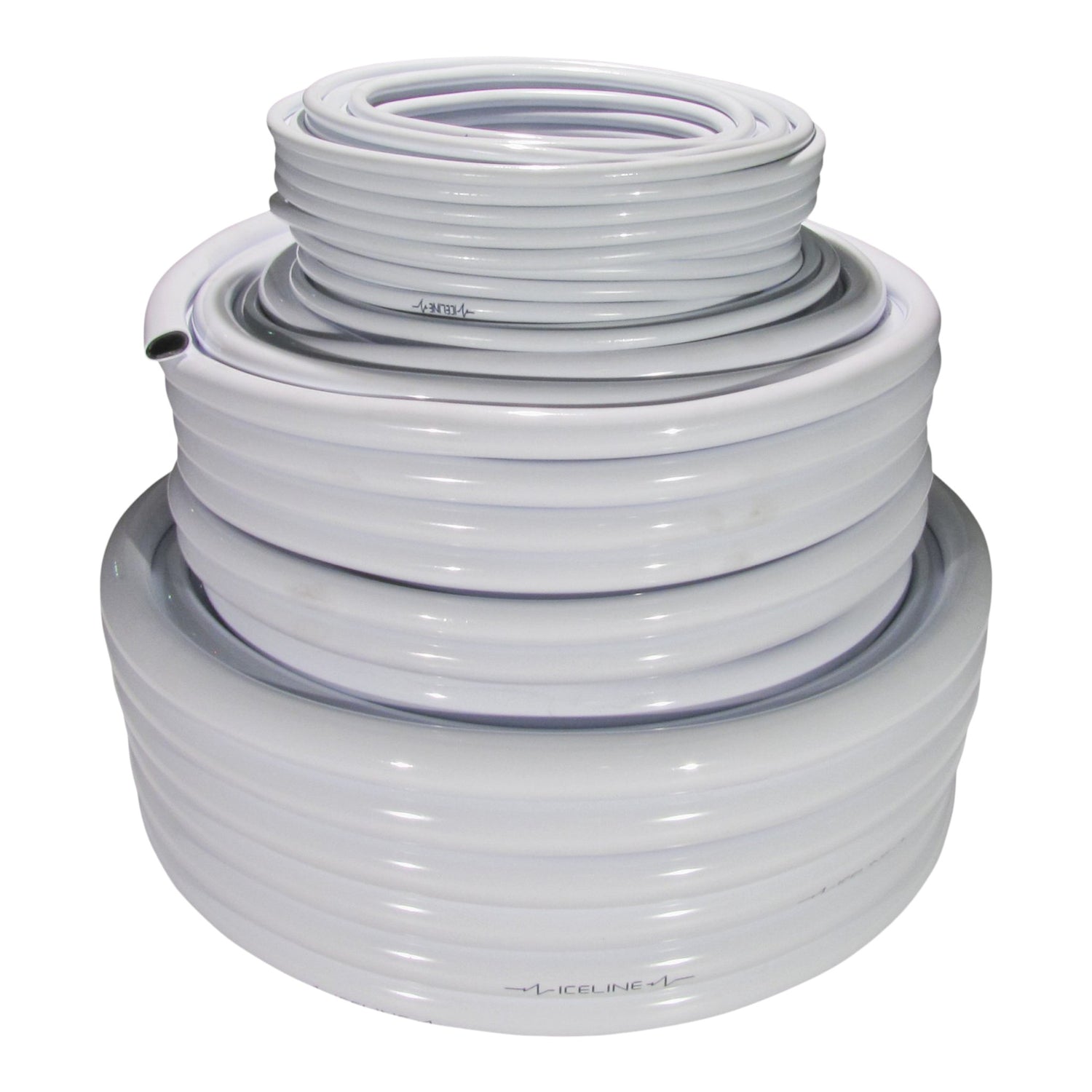
£10.25
Unit price per£10.25
Unit price perThe Cool Pipe Dual-Layer Temperature Control Hose - 4mm x 30m is a dual-layer hose intended for compatible horticultural temperature-control and water-circulation installations.
This 4mm version is supplied in a 30m length and is suited to professional greenhouse, nursery and controlled-environment installations where correctly specified pipework forms part of a wider heating or cooling system.
Key benefits
Temperature-control pipework in horticulture
Water-based heating and cooling systems rely on suitable pipe sizing, flow and layout to transfer energy effectively. Use the 4mm Cool Pipe only where its size and connection method match the design of the complete system.
Pipe diameter affects flow resistance and available water volume, so changing hose size within an existing installation should be considered as part of the hydraulic design rather than treated as a simple substitution.
Planning the installation
Route hose runs to avoid unnecessary restriction, crushing and tight bends. Support pipework where required and protect it from sharp edges, vehicle routes and other sources of physical damage.
Before cutting a 30m coil, plan the route and allow for connections, changes of direction and service access. Clean, square cuts generally make fitting assembly easier and more reliable.
Connections & commissioning
Use fittings specifically compatible with the hose and system. Insert pipe fully into connections and follow the fitting manufacturer's assembly requirements. Do not assume that nominal diameter alone guarantees compatibility between different fitting systems.
After installation, fill and commission the system in a controlled manner and inspect joints for leaks. Confirm circulation through the intended zones before relying on the installation for crop temperature management.
System performance
The hose itself does not determine heating or cooling capacity. Water temperature, flow rate, pump performance, run length, heat-transfer arrangement and environmental conditions all influence the performance of the complete system.
Where temperature control is important to crop quality, monitor the relevant air, root-zone or water temperatures and adjust the complete system rather than relying on fixed operating assumptions.
Maintenance
Inspect accessible hose runs and connections periodically for leakage, abrasion, kinking or physical damage. Investigate unexpected changes in flow or temperature performance and keep pumps, filters and controls maintained according to their own requirements.
Cool Pipe Dual-Layer Temperature Control Hose - 4mm x 30m product details
| Product | Cool Pipe Dual-Layer Temperature Control Hose |
|---|---|
| Stated size | 4mm |
| Length | 30m |
| Construction | Dual-layer |
| Application | Compatible horticultural temperature-control and circulation systems |
| Selling quantity | 1 x 30m coil/length |
Cool Pipe Dual-Layer Temperature Control Hose - 4mm x 30m FAQs
What size is this Cool Pipe?
This version is stated as 4mm. How much hose is supplied?
The supplied length is 30m. What is Cool Pipe used for?
It is intended for compatible horticultural temperature-control and water-circulation installations. Can I substitute one pipe diameter for another?
Not automatically. Pipe diameter affects flow and pressure loss, so the complete system design should be considered. Will any fitting with the same nominal size work?
Do not assume so. Confirm compatibility with the specific hose and fitting system before installation. How should the hose be routed?
Avoid crushing, sharp bends, abrasion and unnecessary restriction, and support or protect runs where required. Should the system be leak-tested?
Yes. Commission the installation carefully and inspect connections before relying on it for crop temperature control. Does the hose determine the system's heating or cooling output?
No. Output depends on the complete system, including water temperature, flow, pump performance, layout and environmental conditions. What maintenance is required?
Inspect hose and fittings for leaks, abrasion or kinks and maintain the pumps, filters and controls used in the wider system.
£43.15
Unit price per£43.15
Unit price perThe Cool Pipe Dual-Layer Temperature Control Hose - 25mm x 30m is a dual-layer hose intended for compatible horticultural temperature-control and water-circulation installations.
This 25mm version is supplied in a 30m length and is suited to professional greenhouse, nursery and controlled-environment installations where correctly specified pipework forms part of a wider heating or cooling system.
Key benefits
Temperature-control pipework in horticulture
Water-based heating and cooling systems rely on suitable pipe sizing, flow and layout to transfer energy effectively. Use the 25mm Cool Pipe only where its size and connection method match the design of the complete system.
Pipe diameter affects flow resistance and available water volume, so changing hose size within an existing installation should be considered as part of the hydraulic design rather than treated as a simple substitution.
Planning the installation
Route hose runs to avoid unnecessary restriction, crushing and tight bends. Support pipework where required and protect it from sharp edges, vehicle routes and other sources of physical damage.
Before cutting a 30m coil, plan the route and allow for connections, changes of direction and service access. Clean, square cuts generally make fitting assembly easier and more reliable.
Connections & commissioning
Use fittings specifically compatible with the hose and system. Insert pipe fully into connections and follow the fitting manufacturer's assembly requirements. Do not assume that nominal diameter alone guarantees compatibility between different fitting systems.
After installation, fill and commission the system in a controlled manner and inspect joints for leaks. Confirm circulation through the intended zones before relying on the installation for crop temperature management.
System performance
The hose itself does not determine heating or cooling capacity. Water temperature, flow rate, pump performance, run length, heat-transfer arrangement and environmental conditions all influence the performance of the complete system.
Where temperature control is important to crop quality, monitor the relevant air, root-zone or water temperatures and adjust the complete system rather than relying on fixed operating assumptions.
Maintenance
Inspect accessible hose runs and connections periodically for leakage, abrasion, kinking or physical damage. Investigate unexpected changes in flow or temperature performance and keep pumps, filters and controls maintained according to their own requirements.
Cool Pipe Dual-Layer Temperature Control Hose - 25mm x 30m product details
| Product | Cool Pipe Dual-Layer Temperature Control Hose |
|---|---|
| Stated size | 25mm |
| Length | 30m |
| Construction | Dual-layer |
| Application | Compatible horticultural temperature-control and circulation systems |
| Selling quantity | 1 x 30m coil/length |
Cool Pipe Dual-Layer Temperature Control Hose - 25mm x 30m FAQs
What size is this Cool Pipe?
This version is stated as 25mm. How much hose is supplied?
The supplied length is 30m. What is Cool Pipe used for?
It is intended for compatible horticultural temperature-control and water-circulation installations. Can I substitute one pipe diameter for another?
Not automatically. Pipe diameter affects flow and pressure loss, so the complete system design should be considered. Will any fitting with the same nominal size work?
Do not assume so. Confirm compatibility with the specific hose and fitting system before installation. How should the hose be routed?
Avoid crushing, sharp bends, abrasion and unnecessary restriction, and support or protect runs where required. Should the system be leak-tested?
Yes. Commission the installation carefully and inspect connections before relying on it for crop temperature control. Does the hose determine the system's heating or cooling output?
No. Output depends on the complete system, including water temperature, flow, pump performance, layout and environmental conditions. What maintenance is required?
Inspect hose and fittings for leaks, abrasion or kinks and maintain the pumps, filters and controls used in the wider system.
£35.70
Unit price per£35.70
Unit price perThe Cool Pipe Dual-Layer Temperature Control Hose - 19mm x 30m is a dual-layer hose intended for compatible horticultural temperature-control and water-circulation installations.
This 19mm version is supplied in a 30m length and is suited to professional greenhouse, nursery and controlled-environment installations where correctly specified pipework forms part of a wider heating or cooling system.
Key benefits
Temperature-control pipework in horticulture
Water-based heating and cooling systems rely on suitable pipe sizing, flow and layout to transfer energy effectively. Use the 19mm Cool Pipe only where its size and connection method match the design of the complete system.
Pipe diameter affects flow resistance and available water volume, so changing hose size within an existing installation should be considered as part of the hydraulic design rather than treated as a simple substitution.
Planning the installation
Route hose runs to avoid unnecessary restriction, crushing and tight bends. Support pipework where required and protect it from sharp edges, vehicle routes and other sources of physical damage.
Before cutting a 30m coil, plan the route and allow for connections, changes of direction and service access. Clean, square cuts generally make fitting assembly easier and more reliable.
Connections & commissioning
Use fittings specifically compatible with the hose and system. Insert pipe fully into connections and follow the fitting manufacturer's assembly requirements. Do not assume that nominal diameter alone guarantees compatibility between different fitting systems.
After installation, fill and commission the system in a controlled manner and inspect joints for leaks. Confirm circulation through the intended zones before relying on the installation for crop temperature management.
System performance
The hose itself does not determine heating or cooling capacity. Water temperature, flow rate, pump performance, run length, heat-transfer arrangement and environmental conditions all influence the performance of the complete system.
Where temperature control is important to crop quality, monitor the relevant air, root-zone or water temperatures and adjust the complete system rather than relying on fixed operating assumptions.
Maintenance
Inspect accessible hose runs and connections periodically for leakage, abrasion, kinking or physical damage. Investigate unexpected changes in flow or temperature performance and keep pumps, filters and controls maintained according to their own requirements.
Cool Pipe Dual-Layer Temperature Control Hose - 19mm x 30m product details
| Product | Cool Pipe Dual-Layer Temperature Control Hose |
|---|---|
| Stated size | 19mm |
| Length | 30m |
| Construction | Dual-layer |
| Application | Compatible horticultural temperature-control and circulation systems |
| Selling quantity | 1 x 30m coil/length |
Cool Pipe Dual-Layer Temperature Control Hose - 19mm x 30m FAQs
What size is this Cool Pipe?
This version is stated as 19mm. How much hose is supplied?
The supplied length is 30m. What is Cool Pipe used for?
It is intended for compatible horticultural temperature-control and water-circulation installations. Can I substitute one pipe diameter for another?
Not automatically. Pipe diameter affects flow and pressure loss, so the complete system design should be considered. Will any fitting with the same nominal size work?
Do not assume so. Confirm compatibility with the specific hose and fitting system before installation. How should the hose be routed?
Avoid crushing, sharp bends, abrasion and unnecessary restriction, and support or protect runs where required. Should the system be leak-tested?
Yes. Commission the installation carefully and inspect connections before relying on it for crop temperature control. Does the hose determine the system's heating or cooling output?
No. Output depends on the complete system, including water temperature, flow, pump performance, layout and environmental conditions. What maintenance is required?
Inspect hose and fittings for leaks, abrasion or kinks and maintain the pumps, filters and controls used in the wider system.
£21.50
Unit price per£21.50
Unit price perThe Cool Pipe Dual-Layer Temperature Control Hose - 13mm x 30m is a dual-layer hose intended for compatible horticultural temperature-control and water-circulation installations.
This 13mm version is supplied in a 30m length and is suited to professional greenhouse, nursery and controlled-environment installations where correctly specified pipework forms part of a wider heating or cooling system.
Key benefits
Temperature-control pipework in horticulture
Water-based heating and cooling systems rely on suitable pipe sizing, flow and layout to transfer energy effectively. Use the 13mm Cool Pipe only where its size and connection method match the design of the complete system.
Pipe diameter affects flow resistance and available water volume, so changing hose size within an existing installation should be considered as part of the hydraulic design rather than treated as a simple substitution.
Planning the installation
Route hose runs to avoid unnecessary restriction, crushing and tight bends. Support pipework where required and protect it from sharp edges, vehicle routes and other sources of physical damage.
Before cutting a 30m coil, plan the route and allow for connections, changes of direction and service access. Clean, square cuts generally make fitting assembly easier and more reliable.
Connections & commissioning
Use fittings specifically compatible with the hose and system. Insert pipe fully into connections and follow the fitting manufacturer's assembly requirements. Do not assume that nominal diameter alone guarantees compatibility between different fitting systems.
After installation, fill and commission the system in a controlled manner and inspect joints for leaks. Confirm circulation through the intended zones before relying on the installation for crop temperature management.
System performance
The hose itself does not determine heating or cooling capacity. Water temperature, flow rate, pump performance, run length, heat-transfer arrangement and environmental conditions all influence the performance of the complete system.
Where temperature control is important to crop quality, monitor the relevant air, root-zone or water temperatures and adjust the complete system rather than relying on fixed operating assumptions.
Maintenance
Inspect accessible hose runs and connections periodically for leakage, abrasion, kinking or physical damage. Investigate unexpected changes in flow or temperature performance and keep pumps, filters and controls maintained according to their own requirements.
Cool Pipe Dual-Layer Temperature Control Hose - 13mm x 30m product details
| Product | Cool Pipe Dual-Layer Temperature Control Hose |
|---|---|
| Stated size | 13mm |
| Length | 30m |
| Construction | Dual-layer |
| Application | Compatible horticultural temperature-control and circulation systems |
| Selling quantity | 1 x 30m coil/length |
Cool Pipe Dual-Layer Temperature Control Hose - 13mm x 30m FAQs
What size is this Cool Pipe?
This version is stated as 13mm. How much hose is supplied?
The supplied length is 30m. What is Cool Pipe used for?
It is intended for compatible horticultural temperature-control and water-circulation installations. Can I substitute one pipe diameter for another?
Not automatically. Pipe diameter affects flow and pressure loss, so the complete system design should be considered. Will any fitting with the same nominal size work?
Do not assume so. Confirm compatibility with the specific hose and fitting system before installation. How should the hose be routed?
Avoid crushing, sharp bends, abrasion and unnecessary restriction, and support or protect runs where required. Should the system be leak-tested?
Yes. Commission the installation carefully and inspect connections before relying on it for crop temperature control. Does the hose determine the system's heating or cooling output?
No. Output depends on the complete system, including water temperature, flow, pump performance, layout and environmental conditions. What maintenance is required?
Inspect hose and fittings for leaks, abrasion or kinks and maintain the pumps, filters and controls used in the wider system.
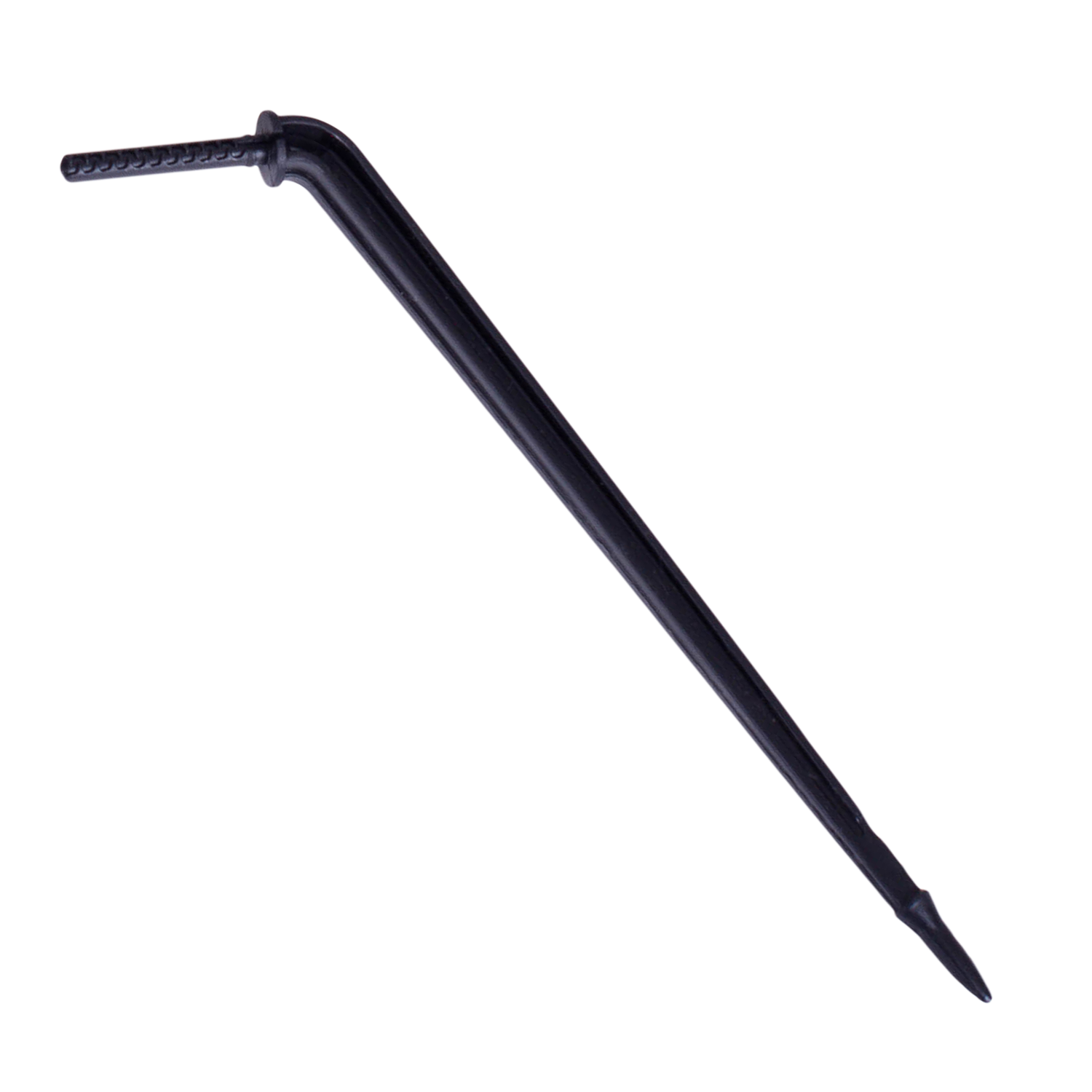
The Blue Fast-Flow Dripper Stake is designed for delivering irrigation water at the pot or plant position in professional nursery, greenhouse and horticultural irrigation systems.
Reliable irrigation depends on matching emitters, stakes, pipework and installation tools correctly so water is delivered consistently and connections remain secure.
Key benefits
Point irrigation at container level
Dripper stakes position the water outlet close to the crop root zone, helping keep individual container irrigation organised. Insert the stake securely without damaging important roots and route the connected microtube so it is not kinked or under tension.
Actual delivered water depends on the upstream dripper, pressure, pipework and system design. Where a flow figure is stated for the product, verify irrigation uniformity under the operating conditions of the complete system.
Checking irrigation uniformity
Periodically compare output across representative pots, particularly at the beginning and end of irrigation lines. Investigate blocked outlets, damaged tube, pressure differences or displaced stakes if crop moisture becomes uneven.
Irrigation system management
Good components cannot compensate for poor system design. Size pipework, zones and water supply for the required flow and pressure, and use suitable filtration where emitters or small waterways are vulnerable to debris.
Flush and inspect irrigation systems as appropriate to water quality and crop hygiene requirements.
Maintenance & storage
Inspect components periodically for blockage, wear, leaks or physical damage. Keep installation tools clean and dry between jobs and replace damaged components rather than relying on temporary fixes in production systems.
Blue Fast-Flow Dripper Stake product details
| Product type | Blue Fast-Flow Dripper Stake |
|---|---|
| Primary use | delivering irrigation water at the pot or plant position |
| Application | Professional horticultural irrigation |
Blue Fast-Flow Dripper Stake FAQs
What is this product used for?
Delivering irrigation water at the pot or plant position. Is it suitable for professional irrigation systems?
Yes, where the component is compatible with the pipework, emitters and system configuration being used. What should I check before installation?
Confirm component and pipe compatibility, inspect the parts for damage and plan the connection so pipework is not kinked or under unnecessary tension. Should the system be tested after fitting?
Yes. Pressurise or run the irrigation zone and check for leaks, secure connections and expected water delivery. How can I maintain irrigation uniformity?
Inspect representative outlets, maintain filtration and flushing as required and investigate blocked or damaged components promptly. Can one irrigation run time suit every crop?
No. Irrigation duration and frequency depend on crop size, container volume, substrate, weather and emitter output. How should spare components or tools be stored?
Keep them clean, dry and organised so sealing surfaces, cutting edges and small waterways are protected from damage and contamination. Where should the stake be positioned?
Place it securely in the container or root-zone area so water reaches the growing medium without the tube being kinked or strained.
The 2L/h Black Dripper Stake is designed for delivering irrigation water at the pot or plant position in professional nursery, greenhouse and horticultural irrigation systems.
Reliable irrigation depends on matching emitters, stakes, pipework and installation tools correctly so water is delivered consistently and connections remain secure.
Key benefits
Point irrigation at container level
Dripper stakes position the water outlet close to the crop root zone, helping keep individual container irrigation organised. Insert the stake securely without damaging important roots and route the connected microtube so it is not kinked or under tension.
Actual delivered water depends on the upstream dripper, pressure, pipework and system design. Where a flow figure is stated for the product, verify irrigation uniformity under the operating conditions of the complete system.
Checking irrigation uniformity
Periodically compare output across representative pots, particularly at the beginning and end of irrigation lines. Investigate blocked outlets, damaged tube, pressure differences or displaced stakes if crop moisture becomes uneven.
Irrigation system management
Good components cannot compensate for poor system design. Size pipework, zones and water supply for the required flow and pressure, and use suitable filtration where emitters or small waterways are vulnerable to debris.
Flush and inspect irrigation systems as appropriate to water quality and crop hygiene requirements.
Maintenance & storage
Inspect components periodically for blockage, wear, leaks or physical damage. Keep installation tools clean and dry between jobs and replace damaged components rather than relying on temporary fixes in production systems.
2L/h Black Dripper Stake product details
| Product type | 2L/h Black Dripper Stake |
|---|---|
| Primary use | delivering irrigation water at the pot or plant position |
| Application | Professional horticultural irrigation |
| Stated flow | 2L/h |
2L/h Black Dripper Stake FAQs
What is this product used for?
Delivering irrigation water at the pot or plant position. Is it suitable for professional irrigation systems?
Yes, where the component is compatible with the pipework, emitters and system configuration being used. What should I check before installation?
Confirm component and pipe compatibility, inspect the parts for damage and plan the connection so pipework is not kinked or under unnecessary tension. Should the system be tested after fitting?
Yes. Pressurise or run the irrigation zone and check for leaks, secure connections and expected water delivery. How can I maintain irrigation uniformity?
Inspect representative outlets, maintain filtration and flushing as required and investigate blocked or damaged components promptly. Can one irrigation run time suit every crop?
No. Irrigation duration and frequency depend on crop size, container volume, substrate, weather and emitter output. How should spare components or tools be stored?
Keep them clean, dry and organised so sealing surfaces, cutting edges and small waterways are protected from damage and contamination. Where should the stake be positioned?
Place it securely in the container or root-zone area so water reaches the growing medium without the tube being kinked or strained. Does 2L/h guarantee exactly 2 litres every hour in every installation?
It is the stated nominal flow. Actual delivery should be checked under the pressure and configuration of the complete irrigation system.

The Creation Pro 25mm Washer is a 25mm irrigation component designed for sealing a compatible Creation Pro 25mm fitting assembly.
Creation Pro fittings are intended for building and maintaining organised horticultural water-distribution pipework where compatible components are assembled correctly and checked under operating pressure.
Key benefits
Maintaining a reliable fitting seal
The washer forms part of a compatible Creation Pro fitting assembly and should be clean, correctly seated and free from damage before the joint is tightened. A distorted, contaminated or worn sealing component can contribute to leakage.
When servicing an existing fitting, inspect the mating surfaces as well as the washer rather than automatically tightening the joint further.
Installing 25mm irrigation fittings
Use clean, compatible 25mm pipe and cut ends squarely with an appropriate pipe cutter. Remove dirt and damaged material from the connection area and assemble all components in the correct order.
Route pipework to avoid unnecessary tension, sharp bends and unsupported weight at fittings. Where lines cross working areas, protect them from vehicle, trolley or foot traffic.
Commissioning & leak checks
After assembly, pressurise the irrigation system gradually and inspect every new joint. Check for visible leakage, pipe movement and correct downstream water delivery before putting the zone into routine crop use.
A leak should be investigated by safely depressurising and inspecting the joint; repeated overtightening can damage components rather than solve an assembly problem.
System design & maintenance
Pipe size and fittings are only part of irrigation design. Available pressure, total flow demand, run length, elevation and downstream emitters all influence system performance. Expansion of an existing system should take these factors into account.
Inspect fittings periodically and replace cracked, distorted or damaged components. Keep spare washers, nuts and fittings clean so sealing surfaces are not contaminated before installation.
Creation Pro 25mm Washer product details
| Range | Creation Pro |
|---|---|
| Product type | Sealing washer |
| Nominal size | 25mm |
| Primary use | sealing a compatible Creation Pro 25mm fitting assembly |
| Application | Professional horticultural irrigation |
Creation Pro 25mm Washer FAQs
What size is this fitting?
It is a 25mm Creation Pro irrigation component. What is it used for?
Sealing a compatible creation pro 25mm fitting assembly. Can it be used with any 25mm pipe?
Confirm pipe and fitting compatibility before installation; the same nominal diameter does not by itself guarantee that every product range uses the same connection system. How should irrigation pipe be prepared?
Cut it squarely with a suitable pipe cutter and make sure the connection area is clean and undamaged. Should the joint be tested after assembly?
Yes. Pressurise the system gradually and check the completed connection for leaks and movement. What should I do if a fitting leaks?
Depressurise the system and inspect pipe insertion, sealing components and fitting condition rather than simply applying more force. Can I add branches without checking system capacity?
No. Additional branches and outlets increase flow demand, so consider water supply, pressure, pipe sizing and the complete irrigation layout. How should spare fittings be stored?
Keep them clean and protected so threads, sealing surfaces and small components are not damaged or contaminated.

The Creation Pro 25mm Tee is a 25mm irrigation component designed for creating a branch connection in compatible 25mm irrigation pipework.
Creation Pro fittings are intended for building and maintaining organised horticultural water-distribution pipework where compatible components are assembled correctly and checked under operating pressure.
Key benefits
Creating a branch in the irrigation line
Use the tee to divide a compatible 25mm pipe run into a branch. When adding a branch, consider the additional downstream flow demand rather than assuming the existing supply and pipework can support any number of new outlets.
Plan the tee position so all three connected pipe sections are supported and can be serviced without excessive strain.
Installing 25mm irrigation fittings
Use clean, compatible 25mm pipe and cut ends squarely with an appropriate pipe cutter. Remove dirt and damaged material from the connection area and assemble all components in the correct order.
Route pipework to avoid unnecessary tension, sharp bends and unsupported weight at fittings. Where lines cross working areas, protect them from vehicle, trolley or foot traffic.
Commissioning & leak checks
After assembly, pressurise the irrigation system gradually and inspect every new joint. Check for visible leakage, pipe movement and correct downstream water delivery before putting the zone into routine crop use.
A leak should be investigated by safely depressurising and inspecting the joint; repeated overtightening can damage components rather than solve an assembly problem.
System design & maintenance
Pipe size and fittings are only part of irrigation design. Available pressure, total flow demand, run length, elevation and downstream emitters all influence system performance. Expansion of an existing system should take these factors into account.
Inspect fittings periodically and replace cracked, distorted or damaged components. Keep spare washers, nuts and fittings clean so sealing surfaces are not contaminated before installation.
Creation Pro 25mm Tee product details
| Range | Creation Pro |
|---|---|
| Product type | Tee fitting |
| Nominal size | 25mm |
| Primary use | creating a branch connection in compatible 25mm irrigation pipework |
| Application | Professional horticultural irrigation |
Creation Pro 25mm Tee FAQs
What size is this fitting?
It is a 25mm Creation Pro irrigation component. What is it used for?
Creating a branch connection in compatible 25mm irrigation pipework. Can it be used with any 25mm pipe?
Confirm pipe and fitting compatibility before installation; the same nominal diameter does not by itself guarantee that every product range uses the same connection system. How should irrigation pipe be prepared?
Cut it squarely with a suitable pipe cutter and make sure the connection area is clean and undamaged. Should the joint be tested after assembly?
Yes. Pressurise the system gradually and check the completed connection for leaks and movement. What should I do if a fitting leaks?
Depressurise the system and inspect pipe insertion, sealing components and fitting condition rather than simply applying more force. Can I add branches without checking system capacity?
No. Additional branches and outlets increase flow demand, so consider water supply, pressure, pipe sizing and the complete irrigation layout. How should spare fittings be stored?
Keep them clean and protected so threads, sealing surfaces and small components are not damaged or contaminated.

The Creation Pro 25mm Straight Connector is a 25mm irrigation component designed for joining two compatible 25mm irrigation pipe sections in a straight run.
Creation Pro fittings are intended for building and maintaining organised horticultural water-distribution pipework where compatible components are assembled correctly and checked under operating pressure.
Key benefits
Joining straight pipe runs
Use the straight connector where two compatible 25mm pipe sections need to continue on the same alignment. Cut pipe ends squarely, remove obvious damage or debris and insert the pipe fully into the fitting before securing the assembly.
A straight joint should not be used to compensate for poor pipe alignment or a forced bend; support the pipework so the connection is not under constant side load.
Installing 25mm irrigation fittings
Use clean, compatible 25mm pipe and cut ends squarely with an appropriate pipe cutter. Remove dirt and damaged material from the connection area and assemble all components in the correct order.
Route pipework to avoid unnecessary tension, sharp bends and unsupported weight at fittings. Where lines cross working areas, protect them from vehicle, trolley or foot traffic.
Commissioning & leak checks
After assembly, pressurise the irrigation system gradually and inspect every new joint. Check for visible leakage, pipe movement and correct downstream water delivery before putting the zone into routine crop use.
A leak should be investigated by safely depressurising and inspecting the joint; repeated overtightening can damage components rather than solve an assembly problem.
System design & maintenance
Pipe size and fittings are only part of irrigation design. Available pressure, total flow demand, run length, elevation and downstream emitters all influence system performance. Expansion of an existing system should take these factors into account.
Inspect fittings periodically and replace cracked, distorted or damaged components. Keep spare washers, nuts and fittings clean so sealing surfaces are not contaminated before installation.
Creation Pro 25mm Straight Connector product details
| Range | Creation Pro |
|---|---|
| Product type | Straight connector |
| Nominal size | 25mm |
| Primary use | joining two compatible 25mm irrigation pipe sections in a straight run |
| Application | Professional horticultural irrigation |
Creation Pro 25mm Straight Connector FAQs
What size is this fitting?
It is a 25mm Creation Pro irrigation component. What is it used for?
Joining two compatible 25mm irrigation pipe sections in a straight run. Can it be used with any 25mm pipe?
Confirm pipe and fitting compatibility before installation; the same nominal diameter does not by itself guarantee that every product range uses the same connection system. How should irrigation pipe be prepared?
Cut it squarely with a suitable pipe cutter and make sure the connection area is clean and undamaged. Should the joint be tested after assembly?
Yes. Pressurise the system gradually and check the completed connection for leaks and movement. What should I do if a fitting leaks?
Depressurise the system and inspect pipe insertion, sealing components and fitting condition rather than simply applying more force. Can I add branches without checking system capacity?
No. Additional branches and outlets increase flow demand, so consider water supply, pressure, pipe sizing and the complete irrigation layout. How should spare fittings be stored?
Keep them clean and protected so threads, sealing surfaces and small components are not damaged or contaminated.

The Creation Pro 25mm Nut is a 25mm irrigation component designed for securing a compatible Creation Pro 25mm fitting assembly.
Creation Pro fittings are intended for building and maintaining organised horticultural water-distribution pipework where compatible components are assembled correctly and checked under operating pressure.
Key benefits
Securing a compatible fitting assembly
The nut is used as part of a compatible Creation Pro 25mm fitting. Start threads or retaining features squarely and tighten the assembly according to the fitting design rather than using excessive force.
If a joint leaks, depressurise it and inspect pipe insertion, sealing components and fitting condition instead of simply overtightening the nut.
Installing 25mm irrigation fittings
Use clean, compatible 25mm pipe and cut ends squarely with an appropriate pipe cutter. Remove dirt and damaged material from the connection area and assemble all components in the correct order.
Route pipework to avoid unnecessary tension, sharp bends and unsupported weight at fittings. Where lines cross working areas, protect them from vehicle, trolley or foot traffic.
Commissioning & leak checks
After assembly, pressurise the irrigation system gradually and inspect every new joint. Check for visible leakage, pipe movement and correct downstream water delivery before putting the zone into routine crop use.
A leak should be investigated by safely depressurising and inspecting the joint; repeated overtightening can damage components rather than solve an assembly problem.
System design & maintenance
Pipe size and fittings are only part of irrigation design. Available pressure, total flow demand, run length, elevation and downstream emitters all influence system performance. Expansion of an existing system should take these factors into account.
Inspect fittings periodically and replace cracked, distorted or damaged components. Keep spare washers, nuts and fittings clean so sealing surfaces are not contaminated before installation.
Creation Pro 25mm Nut product details
| Range | Creation Pro |
|---|---|
| Product type | Compression/retaining nut |
| Nominal size | 25mm |
| Primary use | securing a compatible Creation Pro 25mm fitting assembly |
| Application | Professional horticultural irrigation |
Creation Pro 25mm Nut FAQs
What size is this fitting?
It is a 25mm Creation Pro irrigation component. What is it used for?
Securing a compatible creation pro 25mm fitting assembly. Can it be used with any 25mm pipe?
Confirm pipe and fitting compatibility before installation; the same nominal diameter does not by itself guarantee that every product range uses the same connection system. How should irrigation pipe be prepared?
Cut it squarely with a suitable pipe cutter and make sure the connection area is clean and undamaged. Should the joint be tested after assembly?
Yes. Pressurise the system gradually and check the completed connection for leaks and movement. What should I do if a fitting leaks?
Depressurise the system and inspect pipe insertion, sealing components and fitting condition rather than simply applying more force. Can I add branches without checking system capacity?
No. Additional branches and outlets increase flow demand, so consider water supply, pressure, pipe sizing and the complete irrigation layout. How should spare fittings be stored?
Keep them clean and protected so threads, sealing surfaces and small components are not damaged or contaminated.

The Creation Pro 25mm Elbow is a 25mm irrigation component designed for creating a 90-degree change of direction in compatible 25mm irrigation pipework.
Creation Pro fittings are intended for building and maintaining organised horticultural water-distribution pipework where compatible components are assembled correctly and checked under operating pressure.
Key benefits
Changing pipe direction cleanly
Use the elbow to route compatible 25mm pipework through a right-angle change of direction without forcing the pipe into an excessively tight bend. This can help create tidier irrigation layouts around benches, beds and fixed structures.
Allow enough pipe length on both sides of the elbow so the connection can seat fully without tension.
Installing 25mm irrigation fittings
Use clean, compatible 25mm pipe and cut ends squarely with an appropriate pipe cutter. Remove dirt and damaged material from the connection area and assemble all components in the correct order.
Route pipework to avoid unnecessary tension, sharp bends and unsupported weight at fittings. Where lines cross working areas, protect them from vehicle, trolley or foot traffic.
Commissioning & leak checks
After assembly, pressurise the irrigation system gradually and inspect every new joint. Check for visible leakage, pipe movement and correct downstream water delivery before putting the zone into routine crop use.
A leak should be investigated by safely depressurising and inspecting the joint; repeated overtightening can damage components rather than solve an assembly problem.
System design & maintenance
Pipe size and fittings are only part of irrigation design. Available pressure, total flow demand, run length, elevation and downstream emitters all influence system performance. Expansion of an existing system should take these factors into account.
Inspect fittings periodically and replace cracked, distorted or damaged components. Keep spare washers, nuts and fittings clean so sealing surfaces are not contaminated before installation.
Creation Pro 25mm Elbow product details
| Range | Creation Pro |
|---|---|
| Product type | Elbow fitting |
| Nominal size | 25mm |
| Primary use | creating a 90-degree change of direction in compatible 25mm irrigation pipework |
| Application | Professional horticultural irrigation |
Creation Pro 25mm Elbow FAQs
What size is this fitting?
It is a 25mm Creation Pro irrigation component. What is it used for?
Creating a 90-degree change of direction in compatible 25mm irrigation pipework. Can it be used with any 25mm pipe?
Confirm pipe and fitting compatibility before installation; the same nominal diameter does not by itself guarantee that every product range uses the same connection system. How should irrigation pipe be prepared?
Cut it squarely with a suitable pipe cutter and make sure the connection area is clean and undamaged. Should the joint be tested after assembly?
Yes. Pressurise the system gradually and check the completed connection for leaks and movement. What should I do if a fitting leaks?
Depressurise the system and inspect pipe insertion, sealing components and fitting condition rather than simply applying more force. Can I add branches without checking system capacity?
No. Additional branches and outlets increase flow demand, so consider water supply, pressure, pipe sizing and the complete irrigation layout. How should spare fittings be stored?
Keep them clean and protected so threads, sealing surfaces and small components are not damaged or contaminated.
The Irrigation Back-Plate Elbow is designed for forming a compatible right-angle irrigation connection in professional nursery, greenhouse and horticultural irrigation systems.
Reliable irrigation depends on matching emitters, stakes, pipework and installation tools correctly so water is delivered consistently and connections remain secure.
Key benefits
Building reliable irrigation connections
Use the fitting only with compatible pipework and connection sizes. Cut pipe squarely where required, seat the fitting fully and avoid side-loading connections with tight bends or unsupported pipe.
After installation, pressurise the system and inspect the joint for leakage before putting the irrigation zone into routine service.
Irrigation system management
Good components cannot compensate for poor system design. Size pipework, zones and water supply for the required flow and pressure, and use suitable filtration where emitters or small waterways are vulnerable to debris.
Flush and inspect irrigation systems as appropriate to water quality and crop hygiene requirements.
Maintenance & storage
Inspect components periodically for blockage, wear, leaks or physical damage. Keep installation tools clean and dry between jobs and replace damaged components rather than relying on temporary fixes in production systems.
Irrigation Back-Plate Elbow product details
| Product type | Irrigation Back-Plate Elbow |
|---|---|
| Primary use | forming a compatible right-angle irrigation connection |
| Application | Professional horticultural irrigation |
Irrigation Back-Plate Elbow FAQs
What is this product used for?
Forming a compatible right-angle irrigation connection. Is it suitable for professional irrigation systems?
Yes, where the component is compatible with the pipework, emitters and system configuration being used. What should I check before installation?
Confirm component and pipe compatibility, inspect the parts for damage and plan the connection so pipework is not kinked or under unnecessary tension. Should the system be tested after fitting?
Yes. Pressurise or run the irrigation zone and check for leaks, secure connections and expected water delivery. How can I maintain irrigation uniformity?
Inspect representative outlets, maintain filtration and flushing as required and investigate blocked or damaged components promptly. Can one irrigation run time suit every crop?
No. Irrigation duration and frequency depend on crop size, container volume, substrate, weather and emitter output. How should spare components or tools be stored?
Keep them clean, dry and organised so sealing surfaces, cutting edges and small waterways are protected from damage and contamination.
£0.44
Unit price per£0.44
Unit price perThe Ottima 360 - On Stake - In Line Adjustable 0-40lph is a practical horticultural accessory designed for general horticultural work.
It is suited to routine horticultural work in nurseries, greenhouses, garden centres and gardens where a straightforward accessory is required.
Key benefits
How to use it
Use this product for general horticultural work. Select the size and format to suit the plant, container or growing area and check its position periodically as plants develop.
For professional & garden use
This accessory can be used for individual plants and displays or incorporated into larger nursery, landscaping and retail programmes.
Ottima 360 - On Stake - In Line Adjustable 0-40lph product details
| Supplier | Creation Horticulture |
|---|---|
| Product type | Horticultural accessory |
| Primary use | general horticultural work |
Ottima 360 - On Stake - In Line Adjustable 0-40lph FAQs
What is this product used for?
It is designed for general horticultural work. Who is it suitable for?
It is suitable for professional growers, nurseries, garden centres and gardeners where its size and function match the task. How do I choose the right size?
Check the stated dimensions against the plant, container or working area before ordering. Can it be reused?
Reuse depends on the product material, condition and hygiene requirements. Inspect and clean it as appropriate before reuse.
£0.44
Unit price per£0.44
Unit price perThe Ottima 360 - On Stake - End Line Adjustable 0-40lph is a practical horticultural accessory designed for general horticultural work.
It is suited to routine horticultural work in nurseries, greenhouses, garden centres and gardens where a straightforward accessory is required.
Key benefits
How to use it
Use this product for general horticultural work. Select the size and format to suit the plant, container or growing area and check its position periodically as plants develop.
For professional & garden use
This accessory can be used for individual plants and displays or incorporated into larger nursery, landscaping and retail programmes.
Ottima 360 - On Stake - End Line Adjustable 0-40lph product details
| Supplier | Creation Horticulture |
|---|---|
| Product type | Horticultural accessory |
| Primary use | general horticultural work |
Ottima 360 - On Stake - End Line Adjustable 0-40lph FAQs
What is this product used for?
It is designed for general horticultural work. Who is it suitable for?
It is suitable for professional growers, nurseries, garden centres and gardeners where its size and function match the task. How do I choose the right size?
Check the stated dimensions against the plant, container or working area before ordering. Can it be reused?
Reuse depends on the product material, condition and hygiene requirements. Inspect and clean it as appropriate before reuse.
The Maxima - On stake - End Line 0-90lph is a practical horticultural accessory designed for general horticultural work.
It is suited to routine horticultural work in nurseries, greenhouses, garden centres and gardens where a straightforward accessory is required.
Key benefits
How to use it
Use this product for general horticultural work. Select the size and format to suit the plant, container or growing area and check its position periodically as plants develop.
For professional & garden use
This accessory can be used for individual plants and displays or incorporated into larger nursery, landscaping and retail programmes.
Maxima - On stake - End Line 0-90lph product details
| Supplier | Creation Horticulture |
|---|---|
| Product type | Horticultural accessory |
| Primary use | general horticultural work |
Maxima - On stake - End Line 0-90lph FAQs
What is this product used for?
It is designed for general horticultural work. Who is it suitable for?
It is suitable for professional growers, nurseries, garden centres and gardeners where its size and function match the task. How do I choose the right size?
Check the stated dimensions against the plant, container or working area before ordering. Can it be reused?
Reuse depends on the product material, condition and hygiene requirements. Inspect and clean it as appropriate before reuse.
The Arrow-S Dripper Stake is designed for delivering irrigation water at the pot or plant position in professional nursery, greenhouse and horticultural irrigation systems.
Reliable irrigation depends on matching emitters, stakes, pipework and installation tools correctly so water is delivered consistently and connections remain secure.
Key benefits
Point irrigation at container level
Dripper stakes position the water outlet close to the crop root zone, helping keep individual container irrigation organised. Insert the stake securely without damaging important roots and route the connected microtube so it is not kinked or under tension.
Actual delivered water depends on the upstream dripper, pressure, pipework and system design. Where a flow figure is stated for the product, verify irrigation uniformity under the operating conditions of the complete system.
Checking irrigation uniformity
Periodically compare output across representative pots, particularly at the beginning and end of irrigation lines. Investigate blocked outlets, damaged tube, pressure differences or displaced stakes if crop moisture becomes uneven.
Irrigation system management
Good components cannot compensate for poor system design. Size pipework, zones and water supply for the required flow and pressure, and use suitable filtration where emitters or small waterways are vulnerable to debris.
Flush and inspect irrigation systems as appropriate to water quality and crop hygiene requirements.
Maintenance & storage
Inspect components periodically for blockage, wear, leaks or physical damage. Keep installation tools clean and dry between jobs and replace damaged components rather than relying on temporary fixes in production systems.
Arrow-S Dripper Stake product details
| Product type | Arrow-S Dripper Stake |
|---|---|
| Primary use | delivering irrigation water at the pot or plant position |
| Application | Professional horticultural irrigation |
Arrow-S Dripper Stake FAQs
What is this product used for?
Delivering irrigation water at the pot or plant position. Is it suitable for professional irrigation systems?
Yes, where the component is compatible with the pipework, emitters and system configuration being used. What should I check before installation?
Confirm component and pipe compatibility, inspect the parts for damage and plan the connection so pipework is not kinked or under unnecessary tension. Should the system be tested after fitting?
Yes. Pressurise or run the irrigation zone and check for leaks, secure connections and expected water delivery. How can I maintain irrigation uniformity?
Inspect representative outlets, maintain filtration and flushing as required and investigate blocked or damaged components promptly. Can one irrigation run time suit every crop?
No. Irrigation duration and frequency depend on crop size, container volume, substrate, weather and emitter output. How should spare components or tools be stored?
Keep them clean, dry and organised so sealing surfaces, cutting edges and small waterways are protected from damage and contamination. Where should the stake be positioned?
Place it securely in the container or root-zone area so water reaches the growing medium without the tube being kinked or strained.
The Arrow Dripper Stake is designed for delivering irrigation water at the pot or plant position in professional nursery, greenhouse and horticultural irrigation systems.
Reliable irrigation depends on matching emitters, stakes, pipework and installation tools correctly so water is delivered consistently and connections remain secure.
Key benefits
Point irrigation at container level
Dripper stakes position the water outlet close to the crop root zone, helping keep individual container irrigation organised. Insert the stake securely without damaging important roots and route the connected microtube so it is not kinked or under tension.
Actual delivered water depends on the upstream dripper, pressure, pipework and system design. Where a flow figure is stated for the product, verify irrigation uniformity under the operating conditions of the complete system.
Checking irrigation uniformity
Periodically compare output across representative pots, particularly at the beginning and end of irrigation lines. Investigate blocked outlets, damaged tube, pressure differences or displaced stakes if crop moisture becomes uneven.
Irrigation system management
Good components cannot compensate for poor system design. Size pipework, zones and water supply for the required flow and pressure, and use suitable filtration where emitters or small waterways are vulnerable to debris.
Flush and inspect irrigation systems as appropriate to water quality and crop hygiene requirements.
Maintenance & storage
Inspect components periodically for blockage, wear, leaks or physical damage. Keep installation tools clean and dry between jobs and replace damaged components rather than relying on temporary fixes in production systems.
Arrow Dripper Stake product details
| Product type | Arrow Dripper Stake |
|---|---|
| Primary use | delivering irrigation water at the pot or plant position |
| Application | Professional horticultural irrigation |
Arrow Dripper Stake FAQs
What is this product used for?
Delivering irrigation water at the pot or plant position. Is it suitable for professional irrigation systems?
Yes, where the component is compatible with the pipework, emitters and system configuration being used. What should I check before installation?
Confirm component and pipe compatibility, inspect the parts for damage and plan the connection so pipework is not kinked or under unnecessary tension. Should the system be tested after fitting?
Yes. Pressurise or run the irrigation zone and check for leaks, secure connections and expected water delivery. How can I maintain irrigation uniformity?
Inspect representative outlets, maintain filtration and flushing as required and investigate blocked or damaged components promptly. Can one irrigation run time suit every crop?
No. Irrigation duration and frequency depend on crop size, container volume, substrate, weather and emitter output. How should spare components or tools be stored?
Keep them clean, dry and organised so sealing surfaces, cutting edges and small waterways are protected from damage and contamination. Where should the stake be positioned?
Place it securely in the container or root-zone area so water reaches the growing medium without the tube being kinked or strained.
The 45° Dripper Stake is designed for directing irrigation water into a container or root-zone position in professional nursery, greenhouse and horticultural irrigation systems.
Reliable irrigation depends on matching emitters, stakes, pipework and installation tools correctly so water is delivered consistently and connections remain secure.
Key benefits
Point irrigation at container level
Dripper stakes position the water outlet close to the crop root zone, helping keep individual container irrigation organised. Insert the stake securely without damaging important roots and route the connected microtube so it is not kinked or under tension.
Actual delivered water depends on the upstream dripper, pressure, pipework and system design. Where a flow figure is stated for the product, verify irrigation uniformity under the operating conditions of the complete system.
Checking irrigation uniformity
Periodically compare output across representative pots, particularly at the beginning and end of irrigation lines. Investigate blocked outlets, damaged tube, pressure differences or displaced stakes if crop moisture becomes uneven.
Irrigation system management
Good components cannot compensate for poor system design. Size pipework, zones and water supply for the required flow and pressure, and use suitable filtration where emitters or small waterways are vulnerable to debris.
Flush and inspect irrigation systems as appropriate to water quality and crop hygiene requirements.
Maintenance & storage
Inspect components periodically for blockage, wear, leaks or physical damage. Keep installation tools clean and dry between jobs and replace damaged components rather than relying on temporary fixes in production systems.
45° Dripper Stake product details
| Product type | 45° Dripper Stake |
|---|---|
| Primary use | directing irrigation water into a container or root-zone position |
| Application | Professional horticultural irrigation |
45° Dripper Stake FAQs
What is this product used for?
Directing irrigation water into a container or root-zone position. Is it suitable for professional irrigation systems?
Yes, where the component is compatible with the pipework, emitters and system configuration being used. What should I check before installation?
Confirm component and pipe compatibility, inspect the parts for damage and plan the connection so pipework is not kinked or under unnecessary tension. Should the system be tested after fitting?
Yes. Pressurise or run the irrigation zone and check for leaks, secure connections and expected water delivery. How can I maintain irrigation uniformity?
Inspect representative outlets, maintain filtration and flushing as required and investigate blocked or damaged components promptly. Can one irrigation run time suit every crop?
No. Irrigation duration and frequency depend on crop size, container volume, substrate, weather and emitter output. How should spare components or tools be stored?
Keep them clean, dry and organised so sealing surfaces, cutting edges and small waterways are protected from damage and contamination. Where should the stake be positioned?
Place it securely in the container or root-zone area so water reaches the growing medium without the tube being kinked or strained.
The Prevo Blue Dripper Stake is designed for delivering irrigation water at the pot or plant position in professional nursery, greenhouse and horticultural irrigation systems.
Reliable irrigation depends on matching emitters, stakes, pipework and installation tools correctly so water is delivered consistently and connections remain secure.
Key benefits
Point irrigation at container level
Dripper stakes position the water outlet close to the crop root zone, helping keep individual container irrigation organised. Insert the stake securely without damaging important roots and route the connected microtube so it is not kinked or under tension.
Actual delivered water depends on the upstream dripper, pressure, pipework and system design. Where a flow figure is stated for the product, verify irrigation uniformity under the operating conditions of the complete system.
Checking irrigation uniformity
Periodically compare output across representative pots, particularly at the beginning and end of irrigation lines. Investigate blocked outlets, damaged tube, pressure differences or displaced stakes if crop moisture becomes uneven.
Irrigation system management
Good components cannot compensate for poor system design. Size pipework, zones and water supply for the required flow and pressure, and use suitable filtration where emitters or small waterways are vulnerable to debris.
Flush and inspect irrigation systems as appropriate to water quality and crop hygiene requirements.
Maintenance & storage
Inspect components periodically for blockage, wear, leaks or physical damage. Keep installation tools clean and dry between jobs and replace damaged components rather than relying on temporary fixes in production systems.
Prevo Blue Dripper Stake product details
| Product type | Prevo Blue Dripper Stake |
|---|---|
| Primary use | delivering irrigation water at the pot or plant position |
| Application | Professional horticultural irrigation |
Prevo Blue Dripper Stake FAQs
What is this product used for?
Delivering irrigation water at the pot or plant position. Is it suitable for professional irrigation systems?
Yes, where the component is compatible with the pipework, emitters and system configuration being used. What should I check before installation?
Confirm component and pipe compatibility, inspect the parts for damage and plan the connection so pipework is not kinked or under unnecessary tension. Should the system be tested after fitting?
Yes. Pressurise or run the irrigation zone and check for leaks, secure connections and expected water delivery. How can I maintain irrigation uniformity?
Inspect representative outlets, maintain filtration and flushing as required and investigate blocked or damaged components promptly. Can one irrigation run time suit every crop?
No. Irrigation duration and frequency depend on crop size, container volume, substrate, weather and emitter output. How should spare components or tools be stored?
Keep them clean, dry and organised so sealing surfaces, cutting edges and small waterways are protected from damage and contamination. Where should the stake be positioned?
Place it securely in the container or root-zone area so water reaches the growing medium without the tube being kinked or strained.
£4.92
Unit price per£4.92
Unit price perThe Rivulis Sprinklers Rondo Mist Complete Inverted Stand 47 L/h , Black Nozzle is designed for overhead misting in compatible professional irrigation systems.
This product is intended for practical professional horticultural, nursery, greenhouse, landscaping or garden use according to its specific application.
Key benefits
Overhead irrigation
Position the sprinkler or mister to suit the intended wetting pattern, crop area and available pressure. Check distribution under normal operating conditions and adjust spacing or positioning where coverage is uneven.
Use & maintenance
Keep the product clean and inspect it periodically for wear, damage or contamination appropriate to its application. Store it in conditions that protect it from unnecessary weather, crushing or physical damage.
Choosing the right product
Check dimensions, capacity, connection type or intended application before ordering. Similar-looking horticultural products may not be interchangeable where technical compatibility matters.
Rivulis Sprinklers Rondo Mist Complete Inverted Stand 47 L/h , Black Nozzle product details
| Product type | Rondo Mist Complete Inverted Stand |
|---|---|
| Primary use | overhead misting in compatible professional irrigation systems |
| Source designation | Rivulis Sprinklers Rondo Mist Complete Inverted Stand 47 L/h , Black Nozzle |
| Application | Professional horticulture, nursery, greenhouse, landscaping or garden use |
Rivulis Sprinklers Rondo Mist Complete Inverted Stand 47 L/h , Black Nozzle FAQs
What is this product used for?
Overhead misting in compatible professional irrigation systems. Who is it suitable for?
Professional growers, nurseries, landscapers, garden centres or gardeners where the product matches the intended task. Are the dimensions and technical details retained?
Yes. The product title retains the relevant source dimensions or technical designation. How should it be maintained?
Keep it clean, inspect it for damage and follow maintenance appropriate to the product type. How should it be stored?
Store it clean and protected from unnecessary weather, contamination or physical damage. How do I check compatibility?
Check dimensions, connection type, capacity and intended application before ordering. Can it be used outside its intended application?
Use it only where its design and specification are suitable for the task. Should it be inspected before use?
Yes. Check condition and suitability before putting the product into service.
The Supertif Straight Insertion Tool is designed for installing compatible Supertif drippers and fittings in professional nursery, greenhouse and horticultural irrigation systems.
Reliable irrigation depends on matching emitters, stakes, pipework and installation tools correctly so water is delivered consistently and connections remain secure.
Key benefits
Clean, repeatable irrigation installation
Use the correct installation tool for the pipe, dripper or fitting being installed. Purpose-designed cutters and punches help create cleaner connections than improvised blades or sharp objects, reducing the risk of distorted pipe and poor seals.
Support the pipe while working, keep hands clear of cutting or punching edges and inspect the finished connection before pressurising the irrigation system.
Commissioning after installation
Once fittings or emitters have been installed, flush the line where appropriate, pressurise the system gradually and check for leakage, restricted flow and secure connections before relying on it for crop irrigation.
Irrigation system management
Good components cannot compensate for poor system design. Size pipework, zones and water supply for the required flow and pressure, and use suitable filtration where emitters or small waterways are vulnerable to debris.
Flush and inspect irrigation systems as appropriate to water quality and crop hygiene requirements.
Maintenance & storage
Inspect components periodically for blockage, wear, leaks or physical damage. Keep installation tools clean and dry between jobs and replace damaged components rather than relying on temporary fixes in production systems.
Supertif Straight Insertion Tool product details
| Product type | Supertif Straight Insertion Tool |
|---|---|
| Primary use | installing compatible Supertif drippers and fittings |
| Application | Professional horticultural irrigation |
Supertif Straight Insertion Tool FAQs
What is this product used for?
Installing compatible supertif drippers and fittings. Is it suitable for professional irrigation systems?
Yes, where the component is compatible with the pipework, emitters and system configuration being used. What should I check before installation?
Confirm component and pipe compatibility, inspect the parts for damage and plan the connection so pipework is not kinked or under unnecessary tension. Should the system be tested after fitting?
Yes. Pressurise or run the irrigation zone and check for leaks, secure connections and expected water delivery. How can I maintain irrigation uniformity?
Inspect representative outlets, maintain filtration and flushing as required and investigate blocked or damaged components promptly. Can one irrigation run time suit every crop?
No. Irrigation duration and frequency depend on crop size, container volume, substrate, weather and emitter output. How should spare components or tools be stored?
Keep them clean, dry and organised so sealing surfaces, cutting edges and small waterways are protected from damage and contamination.
The Supertif Side-Barb Insertion Tool is designed for installing compatible Supertif drippers and fittings in professional nursery, greenhouse and horticultural irrigation systems.
Reliable irrigation depends on matching emitters, stakes, pipework and installation tools correctly so water is delivered consistently and connections remain secure.
Key benefits
Clean, repeatable irrigation installation
Use the correct installation tool for the pipe, dripper or fitting being installed. Purpose-designed cutters and punches help create cleaner connections than improvised blades or sharp objects, reducing the risk of distorted pipe and poor seals.
Support the pipe while working, keep hands clear of cutting or punching edges and inspect the finished connection before pressurising the irrigation system.
Commissioning after installation
Once fittings or emitters have been installed, flush the line where appropriate, pressurise the system gradually and check for leakage, restricted flow and secure connections before relying on it for crop irrigation.
Irrigation system management
Good components cannot compensate for poor system design. Size pipework, zones and water supply for the required flow and pressure, and use suitable filtration where emitters or small waterways are vulnerable to debris.
Flush and inspect irrigation systems as appropriate to water quality and crop hygiene requirements.
Maintenance & storage
Inspect components periodically for blockage, wear, leaks or physical damage. Keep installation tools clean and dry between jobs and replace damaged components rather than relying on temporary fixes in production systems.
Supertif Side-Barb Insertion Tool product details
| Product type | Supertif Side-Barb Insertion Tool |
|---|---|
| Primary use | installing compatible Supertif drippers and fittings |
| Application | Professional horticultural irrigation |
Supertif Side-Barb Insertion Tool FAQs
What is this product used for?
Installing compatible supertif drippers and fittings. Is it suitable for professional irrigation systems?
Yes, where the component is compatible with the pipework, emitters and system configuration being used. What should I check before installation?
Confirm component and pipe compatibility, inspect the parts for damage and plan the connection so pipework is not kinked or under unnecessary tension. Should the system be tested after fitting?
Yes. Pressurise or run the irrigation zone and check for leaks, secure connections and expected water delivery. How can I maintain irrigation uniformity?
Inspect representative outlets, maintain filtration and flushing as required and investigate blocked or damaged components promptly. Can one irrigation run time suit every crop?
No. Irrigation duration and frequency depend on crop size, container volume, substrate, weather and emitter output. How should spare components or tools be stored?
Keep them clean, dry and organised so sealing surfaces, cutting edges and small waterways are protected from damage and contamination.
The 4mm Irrigation Hole Punch with Adaptor is designed for creating correctly sized take-off holes in compatible irrigation pipe in professional nursery, greenhouse and horticultural irrigation systems.
Reliable irrigation depends on matching emitters, stakes, pipework and installation tools correctly so water is delivered consistently and connections remain secure.
Key benefits
Clean, repeatable irrigation installation
Use the correct installation tool for the pipe, dripper or fitting being installed. Purpose-designed cutters and punches help create cleaner connections than improvised blades or sharp objects, reducing the risk of distorted pipe and poor seals.
Support the pipe while working, keep hands clear of cutting or punching edges and inspect the finished connection before pressurising the irrigation system.
Commissioning after installation
Once fittings or emitters have been installed, flush the line where appropriate, pressurise the system gradually and check for leakage, restricted flow and secure connections before relying on it for crop irrigation.
Irrigation system management
Good components cannot compensate for poor system design. Size pipework, zones and water supply for the required flow and pressure, and use suitable filtration where emitters or small waterways are vulnerable to debris.
Flush and inspect irrigation systems as appropriate to water quality and crop hygiene requirements.
Maintenance & storage
Inspect components periodically for blockage, wear, leaks or physical damage. Keep installation tools clean and dry between jobs and replace damaged components rather than relying on temporary fixes in production systems.
4mm Irrigation Hole Punch with Adaptor product details
| Product type | 4mm Irrigation Hole Punch with Adaptor |
|---|---|
| Primary use | creating correctly sized take-off holes in compatible irrigation pipe |
| Application | Professional horticultural irrigation |
| Punch size | 4mm |
4mm Irrigation Hole Punch with Adaptor FAQs
What is this product used for?
Creating correctly sized take-off holes in compatible irrigation pipe. Is it suitable for professional irrigation systems?
Yes, where the component is compatible with the pipework, emitters and system configuration being used. What should I check before installation?
Confirm component and pipe compatibility, inspect the parts for damage and plan the connection so pipework is not kinked or under unnecessary tension. Should the system be tested after fitting?
Yes. Pressurise or run the irrigation zone and check for leaks, secure connections and expected water delivery. How can I maintain irrigation uniformity?
Inspect representative outlets, maintain filtration and flushing as required and investigate blocked or damaged components promptly. Can one irrigation run time suit every crop?
No. Irrigation duration and frequency depend on crop size, container volume, substrate, weather and emitter output. How should spare components or tools be stored?
Keep them clean, dry and organised so sealing surfaces, cutting edges and small waterways are protected from damage and contamination.
The 3mm Irrigation Hole Punch with Adaptor is designed for creating correctly sized take-off holes in compatible irrigation pipe in professional nursery, greenhouse and horticultural irrigation systems.
Reliable irrigation depends on matching emitters, stakes, pipework and installation tools correctly so water is delivered consistently and connections remain secure.
Key benefits
Clean, repeatable irrigation installation
Use the correct installation tool for the pipe, dripper or fitting being installed. Purpose-designed cutters and punches help create cleaner connections than improvised blades or sharp objects, reducing the risk of distorted pipe and poor seals.
Support the pipe while working, keep hands clear of cutting or punching edges and inspect the finished connection before pressurising the irrigation system.
Commissioning after installation
Once fittings or emitters have been installed, flush the line where appropriate, pressurise the system gradually and check for leakage, restricted flow and secure connections before relying on it for crop irrigation.
Irrigation system management
Good components cannot compensate for poor system design. Size pipework, zones and water supply for the required flow and pressure, and use suitable filtration where emitters or small waterways are vulnerable to debris.
Flush and inspect irrigation systems as appropriate to water quality and crop hygiene requirements.
Maintenance & storage
Inspect components periodically for blockage, wear, leaks or physical damage. Keep installation tools clean and dry between jobs and replace damaged components rather than relying on temporary fixes in production systems.
3mm Irrigation Hole Punch with Adaptor product details
| Product type | 3mm Irrigation Hole Punch with Adaptor |
|---|---|
| Primary use | creating correctly sized take-off holes in compatible irrigation pipe |
| Application | Professional horticultural irrigation |
| Punch size | 3mm |
3mm Irrigation Hole Punch with Adaptor FAQs
What is this product used for?
Creating correctly sized take-off holes in compatible irrigation pipe. Is it suitable for professional irrigation systems?
Yes, where the component is compatible with the pipework, emitters and system configuration being used. What should I check before installation?
Confirm component and pipe compatibility, inspect the parts for damage and plan the connection so pipework is not kinked or under unnecessary tension. Should the system be tested after fitting?
Yes. Pressurise or run the irrigation zone and check for leaks, secure connections and expected water delivery. How can I maintain irrigation uniformity?
Inspect representative outlets, maintain filtration and flushing as required and investigate blocked or damaged components promptly. Can one irrigation run time suit every crop?
No. Irrigation duration and frequency depend on crop size, container volume, substrate, weather and emitter output. How should spare components or tools be stored?
Keep them clean, dry and organised so sealing surfaces, cutting edges and small waterways are protected from damage and contamination.
The Irrigation collection provides complete water management solutions for professional horticulture and landscaping. Efficient irrigation supports plant health, reduces water waste and improves operational control across growing environments.
Supplied through specialist horticultural distributors, this category supports system design, installation and maintenance for nurseries and landscapers. It is essential for modern, efficient plant production.