
What size is this product?
The stated dimensions are 3.2M x 100M.

Commercial Products
Commercial Products
 Professional Growing Media
 Plant Nutrition
 Plant Health
 Sprayers & Protective Clothing
 Pots, Planters & Trays
 Propagation
 Baskets & Planters
 Fabrics & Netting
 Environment
 Plant Lighting
 Irrigation
 Plant Support & Tree Care
 Equipment
 Tools
 Plant Labels
 Packaging
 Lawn Care
 Clearance
Retail Products
Retail Products
 Growing Media
 Plant Nutrition
 Plant Health
 Pots, Planters & Tanks
 Propagation
 Baskets & Planters
 Fabrics & Netting
 Environment
 Plant Lighting
 Plant Support
 Equipment
 Tools

57 products
57 products
Sort by:

Growers Own Frost Fleece 30gsm 3.2M x 100M is designed for providing a lightweight protective layer over suitable crops and planting areas.
Part of the Growers Own practical horticultural range, this product helps growers, landscapers and gardeners manage planting areas and crop protection with an appropriately selected size and format.
Key benefits
Laying frost fleece
Drape the fleece loosely over the crop or support it with suitable hoops, allowing space for growth. Secure edges so the material cannot blow onto delicate plants. Check crops beneath covers regularly.
Crop protection and ventilation
Fleece can moderate exposure to cold conditions, but protection depends on fabric grade, fit, weather and plant sensitivity. Check the forecast and crop regularly; no specific frost-temperature rating is claimed for this product.
Product specifications
| Brand | Growers Own |
|---|---|
| Product type | Horticultural frost fleece |
| Primary application | providing a lightweight protective layer over suitable crops and planting areas |
| Fabric weight | 30gsm |
| Dimensions | 3.2M x 100M |
Frequently asked questions
What size is this product?
The stated dimensions are 3.2M x 100M. What fabric weight is specified?
The stated material weight is 30gsm. This is not a verified frost-temperature rating. Can frost fleece be placed directly over plants?
It can be laid loosely over suitable plants, or supported on hoops to avoid contact with delicate growth. How should the edges be secured?
Use suitable pegs, weights or fixings to prevent the fleece lifting in wind. Can plants overheat under fleece?
Yes, conditions beneath covers can change in sunshine. Inspect and ventilate or remove as needed.

£6.64
Unit price per£6.64
Unit price perClover Potato & Vegetable Grow Bag 60L is a specially formulated cropping bag containing natural plant foods, developed for growing potatoes and a wide range of fruit and vegetable crops. The generous 60 litre bag provides a ready-to-use growing medium and growing container in one, making productive home growing straightforward even where traditional vegetable beds are not available.
Clover's Potato & Vegetable Bag is designed specifically for edible crop production rather than being a general-purpose compost simply packed into a growing bag. Its specialist formulation provides a convenient growing environment for gardeners looking to produce potatoes and other vegetables in a contained space.
It is ideal for use in gardens, patios, allotments, greenhouses and other suitable growing areas, providing an accessible way to grow fresh produce without preparing a permanent vegetable bed.
Supplied in a substantial 60 litre bag, it offers plenty of growing medium for developing roots and is delivered to Creation Horticulture in pallet quantities of 60 bags per pallet.
Why choose Clover Potato & Vegetable Grow Bag?
Growing potatoes in a 60L crop bag
Growing potatoes in a dedicated crop bag is a useful alternative to planting them directly into the ground. It allows crops to be grown in a controlled volume of growing medium and is particularly useful where garden space is limited or the existing soil is unsuitable.
Before planting, loosen the growing medium throughout the bag rather than leaving it heavily compressed. Position the bag in its intended growing location and ensure that excess irrigation water is able to drain appropriately.
Plant suitable seed potatoes according to the variety and seasonal planting guidance. Avoid overcrowding the bag, as each plant needs sufficient growing medium, moisture and nutrition to develop effectively.
As the crop develops, regularly check moisture levels and maintain appropriate watering. Potatoes grown in containers cannot access moisture from the surrounding ground, so their water supply depends entirely on the growing medium within the bag.
More than just a potato growing bag
Although potatoes are the headline crop, Clover describes this product as suitable for a wide range of fruit and vegetables, making it a versatile addition to a seasonal edible-growing range.
Crop choice should take account of the available growing volume, mature plant size, spacing requirements and the conditions in which the bag will be positioned.
This flexibility makes the bag particularly useful for gardeners who want to experiment with growing their own produce without committing permanent garden space to vegetable beds.
Ideal for patios, small gardens & container growing
One of the biggest advantages of a self-contained vegetable growing bag is that productive crops can be grown in places where digging a conventional vegetable plot is impractical.
The bag can be positioned in a suitable sunny growing location, making it useful for patios, paved gardens and other areas where access to open soil is limited.
Always consider the mature size and requirements of the chosen crop when positioning the bag. Many productive vegetable crops perform best with good light, consistent moisture and protection from unnecessarily exposed conditions.
Watering crops grown in bags
Consistent watering is important for vegetables grown in containers. The relatively confined root zone means moisture levels can change more rapidly than they would in open ground, particularly during warm or windy weather.
Check the growing medium regularly and water according to the needs of the crop rather than relying on a fixed schedule. The aim is to maintain appropriate moisture without leaving the growing medium continuously saturated.
As plants become larger, their water demand will normally increase. Productive crops may therefore need more frequent attention later in the season than they required immediately after planting.
Natural plant foods for crop establishment
Clover Potato & Vegetable Grow Bag is carefully formulated with natural plant foods, providing a growing medium designed around the needs of productive edible crops.
As plants mature, their nutritional requirements will vary considerably depending on crop type, growth rate and length of the growing season. Where supplementary feeding becomes necessary, choose a fertiliser appropriate for the crop and follow the fertiliser manufacturer's application instructions.
This is particularly important for longer-season and heavy-cropping plants whose nutritional demand can increase substantially as they mature.
About Clover
Clover is a specialist manufacturer of growing media for both professional horticulture and the retail gardening market. Its range includes retail composts and specialist growing media alongside professional substrates developed for commercial plant production.
This horticultural background allows Clover to offer growing media for specific applications rather than relying solely on general-purpose formulations. The Potato & Vegetable Bag is part of that specialist approach, providing a dedicated cropping medium for edible fruit and vegetable production.
For garden centres and horticultural retailers, Clover provides a broad growing media range covering general gardening, specialist crops and professional horticultural applications.
Clover packaging update
Clover is currently rolling out updated branded packaging across selected products. During this transition, stock may be supplied in the previous packaging design, the newer design, or a mixture of both when ordering multiple bags.
The packaging appearance does not change the product inside. Customers will receive the same Clover Potato & Vegetable Grow Bag formulation regardless of which current packaging design is supplied.
Clover Potato & Vegetable Grow Bag product details
| Brand | Clover |
|---|---|
| Product | Potato & Vegetable Bag |
| Product type | Specialist fruit and vegetable cropping bag |
| Bag size | 60L |
| Nutrition | Contains natural plant foods |
| Primary crop | Potatoes |
| Additional uses | Suitable for a wide range of fruit and vegetable crops |
| Typical locations | Gardens, patios, allotments, greenhouses and other suitable growing areas |
| Pallet quantity | 60 x 60L bags |
| Total nominal volume per pallet | 3,600L |
Clover Potato & Vegetable Grow Bag FAQs
What size is the Clover Potato & Vegetable Grow Bag?
Each bag contains 60 litres of specialist growing medium, providing a substantial growing volume for suitable fruit and vegetable crops. Is this grow bag specifically designed for potatoes?
Potatoes are one of its main applications, but Clover describes the product as suitable for a wide range of fruit and vegetables. Does the Clover Potato & Vegetable Bag contain plant food?
Yes. Clover's official product information describes it as a carefully formulated cropping bag containing natural plant foods. Can I grow vegetables on a patio with this bag?
Yes. A self-contained crop bag is particularly useful where there is no suitable vegetable bed. Position it in a location appropriate for the crop and ensure plants receive suitable light, water and care. Do I need a separate pot or planter?
No. The crop bag itself acts as the growing container, making it a convenient option for seasonal vegetable production. Should I loosen the compost before planting?
Yes. Loosening and distributing the growing medium before planting helps create a more even root zone rather than leaving the contents compressed from transport and storage. Will vegetables need additional feeding later in the season?
This depends on the crop and length of the growing period. Longer-season and heavy-cropping plants may require supplementary nutrition as they mature. Use a feed suitable for the crop and follow its manufacturer's directions. Why might the Clover bag I receive look different from the photograph?
Clover is transitioning selected products to updated packaging. Either current packaging design may therefore be supplied during the changeover, while the product formulation remains the same. Is this a general-purpose compost?
No. Clover markets this as a specially formulated cropping bag for fruit and vegetable production rather than as its standard multi-purpose compost. How many Clover Potato & Vegetable Bags are supplied per pallet?
A full Creation Horticulture pallet contains 60 x 60L bags, providing a total nominal growing media volume of 3,600 litres.

£4.91
Unit price per£4.91
Unit price perClover Rose, Tree & Shrub Planting Compost 40L is a specialist growing medium formulated for roses, trees, shrubs and other substantial garden plants. Suitable for both container growing and in-ground planting, it provides a supportive root environment for establishing plants and encouraging strong, healthy development.
Roses, trees and shrubs are longer-term plants, so successful establishment is particularly important. Creating suitable conditions around the root system helps newly planted specimens develop into the surrounding soil and establish the root structure required to support future growth.
Clover Rose, Tree & Shrub Planting Compost can be used when planting into the garden as well as for suitable plants grown in larger containers, making it a useful specialist compost for a wide range of permanent and semi-permanent planting projects.
Supplied in a convenient 40 litre bag, Creation Horticulture supplies 100 x 40L bags per full pallet.
Why choose Clover Rose, Tree & Shrub Planting Compost?
What can Clover Rose, Tree & Shrub Compost be used for?
This specialist compost is designed for larger, longer-lived plants and can be used across a range of garden and landscaping applications, including:
Plants with specialist soil or pH requirements should be matched with an appropriate growing medium. Acid-loving shrubs such as rhododendrons, azaleas and camellias, for example, are generally better suited to an ericaceous compost.
Planting roses, trees & shrubs in the garden
Good planting technique is just as important as the growing medium. Before planting, prepare an area wide enough to accommodate the root system comfortably and loosen surrounding soil where necessary.
Position the plant at the appropriate depth for the species and planting situation. Clover Rose, Tree & Shrub Planting Compost can then be incorporated with the excavated soil around the root system rather than creating a completely isolated pocket of compost.
Firm the backfilled soil and compost carefully around the roots to remove large air pockets, then water thoroughly after planting.
Newly planted trees and shrubs should be monitored particularly carefully during their establishment period. Their root systems have not yet spread extensively into the surrounding ground, so they can be vulnerable to dry conditions even when mature specimens nearby appear unaffected.
Supporting strong root establishment
The first stages after planting are critical for roses, trees and shrubs. The plant must begin producing new roots beyond its original root ball before it can make full use of moisture and nutrients within the surrounding soil.
A suitable planting compost helps create favourable conditions immediately around the developing root system while the plant establishes.
Maintaining appropriate moisture is particularly important during this period. Avoid allowing newly planted root balls to dry completely, but equally avoid keeping poorly drained ground permanently saturated.
Growing roses, trees & shrubs in containers
Many roses, compact trees and ornamental shrubs can be grown successfully in containers, provided the container is large enough for the developing root system and the chosen plant is suitable for container cultivation.
Use a container with adequate drainage and allow sufficient room for future root growth. Position the plant at the correct depth, fill carefully around the root ball with fresh compost and water thoroughly after planting.
Larger container plants rely entirely on the limited growing medium within the pot for water and nutrition, so irrigation and feeding should be monitored throughout the growing season.
As woody plants mature, they may require repotting into a larger container or other root-management work to maintain long-term plant health.
Specialist compost for roses
Roses are vigorous, long-lived plants capable of producing substantial annual growth and flowering. Establishing a healthy root system provides the foundation for this performance.
Clover Rose, Tree & Shrub Planting Compost is suitable for establishing roses in beds, borders and appropriate containers, providing a dedicated planting medium rather than relying solely on a general-purpose compost.
After establishment, roses should be managed according to their individual requirements for feeding, pruning, watering and general care.
Watering & aftercare after planting
Newly planted roses, trees and shrubs require regular monitoring while their roots establish. Water thoroughly after planting so that the soil and compost settle around the root system.
During dry weather, check the root zone rather than relying only on the appearance of the soil surface. A brief shower may wet the upper soil without supplying sufficient water to the deeper root ball.
Applying a suitable surface mulch around established planting can also help reduce moisture loss and suppress competing weeds. Keep mulch clear of direct contact with woody stems and tree trunks.
Planting compost vs multi-purpose compost
Multi-purpose compost is designed for versatility across a broad range of everyday gardening jobs. Clover Rose, Tree & Shrub Planting Compost is more specifically targeted towards larger and longer-lived plants being established in the ground or suitable containers.
This makes the specialist planting compost a logical choice for new rose beds, shrub borders, young trees and landscape planting where successful establishment is the priority.
About Clover
Clover manufactures growing media for both professional horticulture and the retail gardening market. Its range includes versatile everyday composts alongside specialist formulations developed for particular plants and growing applications.
Rose, Tree & Shrub Planting Compost is designed specifically around the requirements of substantial, longer-term garden plants, providing customers with a more targeted alternative to a standard multi-purpose growing medium.
40L planting compost for garden centres & landscapers
The 40L format provides a practical retail and professional pack size for individual planting jobs as well as larger garden and landscaping projects.
Creation Horticulture supplies 100 x 40L bags per full pallet, giving a total nominal growing-media volume of 4,000 litres per pallet.
Clover packaging update
Clover is currently rolling out updated branded packaging across selected products. During this transition, customers may receive the previous packaging design, the newer design, or a mixture of both when ordering multiple bags.
This is a packaging change only. Customers will receive the same Clover Rose, Tree & Shrub Planting Compost regardless of which current packaging design is supplied.
Clover Rose, Tree & Shrub Planting Compost 40L product details
| Brand | Clover |
|---|---|
| Product | Rose, Tree & Shrub Planting Compost |
| Bag size | 40L |
| Product type | Specialist planting compost |
| Designed for | Roses, trees, shrubs and suitable larger garden plants |
| In-ground planting | Yes |
| Container growing | Suitable for appropriate plants and sufficiently sized containers |
| Typical applications | Beds, borders, rose planting, shrubs, young trees, landscaping and larger containers |
| Pallet quantity | 100 x 40L bags |
| Total nominal volume per pallet | 4,000L |
Clover Rose, Tree & Shrub Planting Compost FAQs
What is Clover Rose, Tree & Shrub Compost used for?
It is a specialist planting compost designed for establishing roses, trees, shrubs and other suitable substantial plants in garden soil or containers. Can I use it when planting roses in the ground?
Yes. In-ground rose planting is one of the intended applications. Prepare the planting area properly and incorporate the planting compost with the surrounding soil around the root system. Can this compost be used for trees?
Yes. It is suitable for establishing appropriate young trees and ornamental specimens. Correct planting depth, watering and any necessary staking remain important for successful establishment. Can I grow shrubs in containers with this compost?
Yes, suitable shrubs can be grown in containers using this compost. Choose a sufficiently large pot with adequate drainage and monitor watering and feeding as the plant develops. Is this suitable for rhododendrons and azaleas?
Acid-loving plants such as rhododendrons and azaleas have specialist root-zone requirements and are generally better matched with Clover Ericaceous Compost. Should I replace all the soil in the planting hole with compost?
When planting into the garden, the aim is to encourage roots to establish into the surrounding ground. Planting compost can be incorporated with the excavated soil rather than creating an isolated pocket consisting entirely of compost. Do newly planted trees and shrubs need regular watering?
Yes. Newly planted specimens have a limited root system and should be monitored carefully during establishment, particularly during dry or warm weather. Why might the Clover bag I receive look different from the product image?
Clover is transitioning selected products to updated branded packaging. Either current packaging design may therefore be supplied during the changeover while the compost remains the same product. How many Clover Rose, Tree & Shrub Compost 40L bags are supplied per pallet?
A full Creation Horticulture pallet contains 100 x 40L bags, providing a total nominal growing-media volume of 4,000 litres.
£4.89
Unit price per£4.89
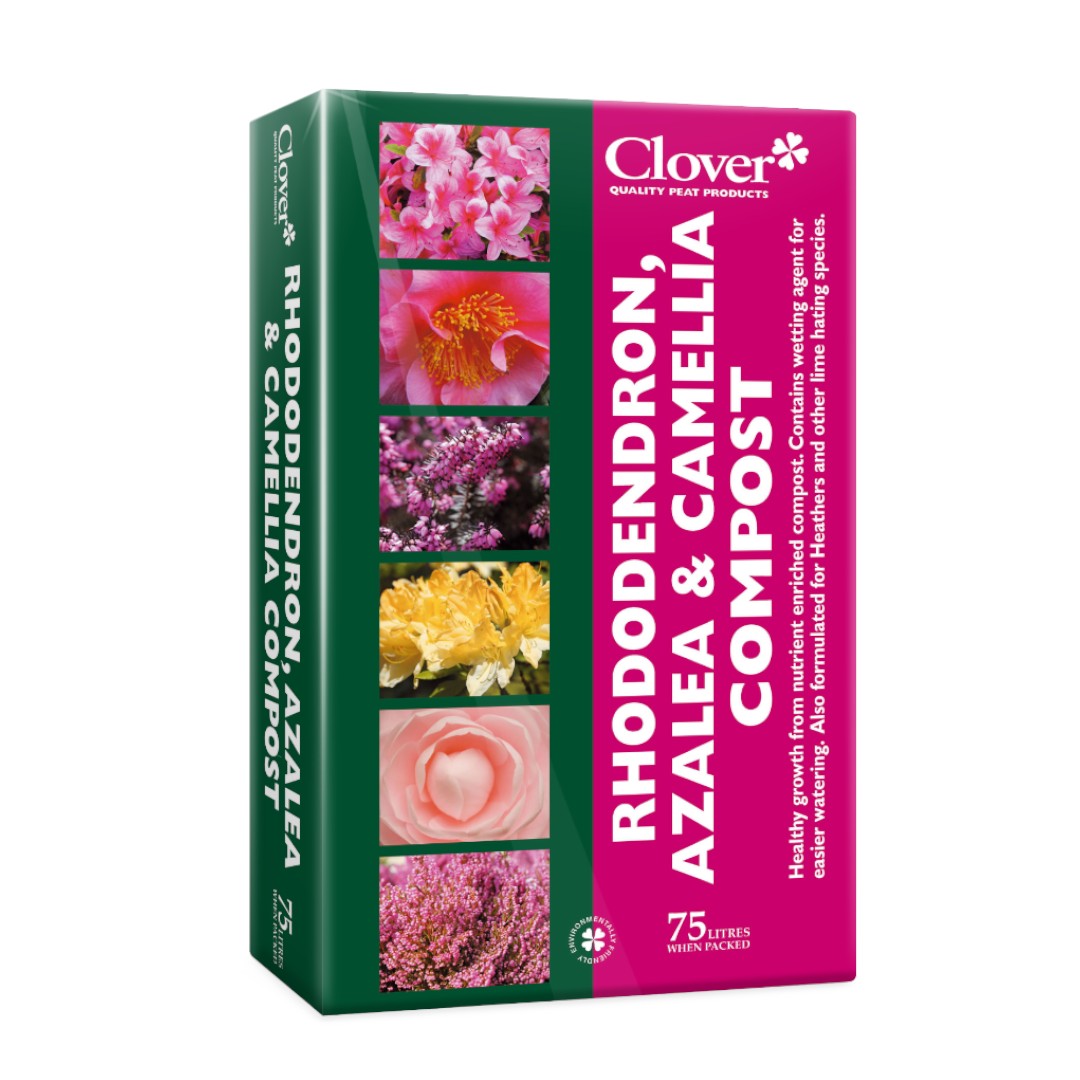
Unit price perClover Ericaceous Compost 40L is a specialist growing medium formulated for lime-hating and acid-loving plants including rhododendrons, azaleas, camellias and heathers. Its carefully adjusted pH, essential plant nutrients, trace elements and incorporated wetting agent provide the specialised root environment these plants require for healthy growth.
Ericaceous plants have different root-zone requirements from many common garden plants. When grown in unsuitable alkaline conditions, their ability to access important nutrients can be restricted. Using a dedicated ericaceous compost provides a growing medium formulated specifically around these requirements.
Clover combines an appropriately adjusted acidic growing environment with essential nutrients, trace elements and a wetting agent, making this a practical choice for potting and growing a wide range of lime-sensitive ornamental plants.
Supplied in a convenient 40 litre bag, Creation Horticulture supplies 100 x 40L bags per full pallet.
Why choose Clover Ericaceous Compost?
Which plants need ericaceous compost?
Ericaceous compost is designed for plants that naturally prefer acidic growing conditions and do not perform well in lime-rich or alkaline media.
Clover specifically identifies its Ericaceous Compost as suitable for:
If you are unsure whether a particular plant requires ericaceous compost, check its preferred soil conditions before planting rather than assuming that a standard multi-purpose compost will be suitable.
Why do acid-loving plants need specialist compost?
Soil and compost pH influences how readily plants can access particular nutrients. Acid-loving plants are adapted to lower-pH growing conditions and can struggle when planted into unsuitable alkaline soil or compost.
One of the most recognisable signs of unsuitable conditions in acid-loving plants is yellowing foliage while the leaf veins remain comparatively green. Although several factors can cause poor plant colour, high-pH conditions can restrict the availability of nutrients such as iron.
Clover Ericaceous Compost is therefore pH adjusted specifically for lime-hating plants, providing a more appropriate root-zone environment than conventional general-purpose compost.
Essential nutrients & trace elements
Clover's formulation contains both essential plant nutrients and trace elements. This is particularly important for ericaceous plants because their ability to take up certain nutrients is closely linked to the conditions surrounding their roots.
Using a correctly formulated ericaceous growing medium provides plants with a suitable foundation for establishment, foliage development, root growth and flowering.
Plants kept in containers for long periods may eventually require supplementary feeding. When additional nutrition is needed, choose a fertiliser specifically suitable for acid-loving or ericaceous plants and follow the manufacturer's application instructions.
Built-in wetting agent for moisture management
Clover Ericaceous Compost incorporates a wetting agent to help water penetrate and distribute through the growing medium.
This supports more consistent moisture around the root zone, particularly in container-grown plants where the roots are entirely dependent on the limited volume of compost within the pot.
The wetting agent does not eliminate the need for careful watering. Check compost moisture regularly and adjust irrigation according to plant size, container volume, weather and growing conditions. Containers should always have adequate drainage.
Growing ericaceous plants in pots & containers
Growing acid-loving plants in containers can be particularly useful where the natural garden soil is unsuitable. Rather than attempting to alter a large area of alkaline soil, the plant can be maintained in a container filled with an appropriate ericaceous growing medium.
Choose a container large enough for the developing root system and make sure it has adequate drainage. Position the plant at the appropriate depth, carefully fill around the root ball with fresh Clover Ericaceous Compost and water thoroughly after potting.
As the plant grows, monitor both moisture and nutrition. Long-lived shrubs may eventually need potting-on into a larger container or replacement of some of the existing growing medium.
Watering acid-loving plants
Maintaining the correct compost is only part of caring for lime-sensitive plants. Water quality can also matter, particularly for plants kept in containers for many years.
In hard-water areas, repeated watering with lime-rich tap water can gradually influence the growing conditions within a container. Rainwater is therefore commonly used for ericaceous container plants where practical.
Whatever water source is used, avoid allowing plants to remain permanently waterlogged. Aim for appropriate, consistent moisture while allowing excess water to drain freely.
Ericaceous Compost vs Multi Purpose Compost
The important difference is the environment each compost is designed to provide.
Clover Multi Purpose Compost is formulated as a versatile growing medium for a broad range of everyday plants and gardening applications.
Clover Ericaceous Compost is specifically pH adjusted for lime-hating plants and contains the nutrients, trace elements and wetting agent required as part of that specialist formulation.
For rhododendrons, azaleas, camellias, heathers and other plants known to require acidic conditions, the dedicated ericaceous formulation is the appropriate choice.
About Clover specialist composts
Clover produces growing media for both professional horticulture and the retail gardening market. Alongside its general-purpose composts, Clover manufactures specialist formulations for plants and applications with more specific growing requirements.
Ericaceous Compost is formulated around one of the most important differences between plant groups: root-zone pH. By providing a dedicated medium for lime-hating plants, gardeners can establish these species in conditions better matched to their natural requirements.
40L Ericaceous Compost for garden centres & professional users
The 40L bag provides a convenient retail format for customers purchasing specialist compost for rhododendrons, azaleas, camellias, heathers and other acid-loving plants.
Creation Horticulture supplies 100 x 40L bags per full pallet, providing a total nominal growing-media volume of 4,000 litres per pallet.
Clover packaging update
Clover is currently rolling out updated branded packaging across selected products. During this transition, customers may receive the previous packaging design, the newer design, or a mixture of both when ordering multiple bags.
This is a packaging change only. Customers will receive the same Clover Ericaceous Compost regardless of which current packaging design is supplied.
Clover Ericaceous Compost 40L product details
| Brand | Clover |
|---|---|
| Product | Ericaceous Compost |
| Bag size | 40L |
| Product type | Specialist compost for lime-hating and acid-loving plants |
| pH | Adjusted for lime-hating plants |
| Plant nutrition | Contains essential plant nutrients and trace elements |
| Wetting agent | Yes |
| Suitable for rhododendrons | Yes |
| Suitable for azaleas | Yes |
| Suitable for camellias | Yes |
| Suitable for heathers | Yes |
| Pallet quantity | 100 x 40L bags |
| Total nominal volume per pallet | 4,000L |
Clover Ericaceous Compost 40L FAQs
What is ericaceous compost?
Ericaceous compost is a specialist growing medium formulated for lime-hating plants that prefer acidic root-zone conditions. Clover adjusts the compost pH specifically for these plants. Which plants can I grow in Clover Ericaceous Compost?
Clover specifically recommends it for rhododendrons, azaleas, camellias, heathers and other lime-hating species. Why can't I just use ordinary multi-purpose compost?
Acid-loving plants have different root-zone requirements. Clover Ericaceous Compost is specifically pH adjusted for lime-hating species, whereas standard multi-purpose compost is designed for a much broader range of plants. Does Clover Ericaceous Compost contain nutrients?
Yes. The formulation contains essential plant nutrients together with trace elements required as part of a balanced specialist growing medium. Does it contain a wetting agent?
Yes. Clover incorporates a wetting agent to help water penetrate and distribute through the compost more effectively. Can I use ericaceous compost if my garden soil is alkaline?
Growing acid-loving plants in containers filled with ericaceous compost is a practical option where the natural garden soil is unsuitable. This gives greater control over the growing medium surrounding the roots. Should I use rainwater for ericaceous plants?
Rainwater can be particularly useful for container-grown acid-loving plants in hard-water areas, where repeated use of lime-rich tap water may gradually influence growing conditions. Why might the Clover bag I receive look different from the product image?
Clover is transitioning selected products to updated branded packaging. Either current packaging design may therefore be supplied during the changeover. How many Clover Ericaceous Compost 40L bags are supplied per pallet?
A full Creation Horticulture pallet contains 100 x 40L bags, providing a total nominal growing-media volume of 4,000 litres.

£5.36
Unit price per£5.36
Unit price perClover John Innes No.1 Compost 25L is a traditionally formulated loam-based compost designed for sensitive subjects, pricking out seedlings and growing young bedding plants. It provides the first stage in the numbered John Innes potting range, offering young plants a structured growing medium with a nutrient level appropriate to early development.
Once seedlings have developed sufficiently to be handled, or rooted young plants are ready to move into individual pots, they need a growing medium that supports continued root and shoot development without the stronger nutrient levels intended for established plants.
Clover John Innes No.1 is formulated specifically for this stage. Its traditional loam-based composition gives the growing medium useful body and stability while providing an excellent transition between seed sowing and the later potting-on stages.
Supplied in a 25 litre bag, Creation Horticulture supplies 80 x 25L bags per full pallet.
Why choose Clover John Innes No.1 Compost?
What is John Innes No.1 used for?
Clover describes its John Innes No.1 as a traditionally formulated compost for sensitive subjects, pricking out seedlings and bedding plants.
Typical uses include:
It is particularly useful when a plant has progressed beyond germination but is not yet established enough to require the stronger nutrient levels found in John Innes No.2 or No.3.
What does John Innes No.1 mean?
John Innes refers to a traditional system of loam-based growing media formulated for different stages of plant development. The numbered potting composts use progressively higher nutrient levels as plants become larger and more established.
John Innes No.1 is the first of the numbered potting composts. It is designed for young plants, including seedlings that have reached the pricking-out stage and rooted cuttings ready for potting-up.
This makes it different from John Innes Seed Compost, which is specifically formulated for the earlier seed-sowing and germination stage.
Which Clover John Innes compost should I use?
| John Innes Seed | Specifically formulated for seed sowing. |
|---|---|
| John Innes No.1 | For sensitive subjects, pricking out seedlings and young bedding plants. |
| John Innes No.2 | For potting-on established bedding plants and vegetable plants. |
| John Innes No.3 | For final potting of mature plants, including tomatoes, chrysanthemums, tubs, baskets and shrubs. |
Using the range progressively allows the nutrient strength and growing environment to be matched more closely to the plant's stage of development.
Ideal for pricking out seedlings
Pricking out is the process of moving young seedlings from their original seed tray or container once they are large enough to handle. This gives individual plants additional space for their roots and reduces competition as they develop.
Fill clean pots, modules or trays with Clover John Innes No.1 and level the compost without heavily compacting it. Carefully lift the seedling while disturbing its developing roots as little as possible.
Make a suitable planting hole, position the seedling and gently firm the compost around the roots. Water carefully after transplanting to settle the growing medium around the plant.
Potting-on rooted cuttings
John Innes No.1 can also be used when suitable cuttings have developed an established root system and are ready to move from their propagation medium into individual pots.
Choose a clean container appropriate to the size of the young root system. Position the rooted cutting carefully and fill around the roots with fresh compost, gently firming it into place.
Water after potting and allow excess moisture to drain. Young plants should then be kept under environmental conditions appropriate to the individual species while they establish in their new containers.
John Innes No.1 for young bedding plants
Bedding plants are specifically identified by Clover as an application for John Innes No.1. Young bedding plants are commonly moved through several container sizes as they develop, and No.1 provides a traditional growing medium for this early potting stage.
Once plants become larger and more established, they may be moved into a growing medium suited to their next stage, such as John Innes No.2, or planted into their final position where appropriate.
Watering young plants in John Innes No.1
Newly transplanted seedlings and young plants should be watered carefully after potting to settle the compost around the roots.
Thereafter, check the compost regularly and water according to the requirements of the plant rather than following a rigid schedule. Small pots can dry relatively quickly, while excessive watering can leave the root zone short of air.
Containers should have suitable drainage and should not be left permanently waterlogged.
About Clover John Innes composts
Clover produces a complete range of traditional John Innes growing media covering seed sowing and the progressive potting stages of plant development.
The No.1 formulation provides the first numbered potting stage, followed by No.2 for more established plants and No.3 for final potting and mature specimens. This makes it straightforward to select a traditional loam-based compost suited to the plant's current stage of growth.
25L John Innes No.1 for nurseries & garden centres
The 25L format is practical for home propagation while also providing a manageable retail bag for nurseries, garden centres and professional growers supplying traditional John Innes composts.
Creation Horticulture supplies 80 x 25L bags per full pallet, providing a total nominal growing-media volume of 2,000 litres per pallet.
Clover packaging update
Clover is currently rolling out updated branded packaging across selected products. During this transition, customers may receive the previous packaging design, the newer design, or a mixture of both when ordering multiple bags.
This is a packaging change only. Customers will receive the same Clover John Innes No.1 Compost regardless of which current packaging design is supplied.
Clover John Innes No.1 Compost 25L product details
| Brand | Clover |
|---|---|
| Product | John Innes No.1 Compost |
| Bag size | 25L |
| Product type | Traditional loam-based potting compost |
| Growth stage | Young plants and seedlings ready for pricking out or potting-up |
| Primary use | Pricking out seedlings and potting young plants |
| Suitable for | Sensitive subjects, seedlings, young bedding plants and suitable rooted cuttings |
| Pallet quantity | 80 x 25L bags |
| Total nominal volume per pallet | 2,000L |
Clover John Innes No.1 Compost 25L FAQs
What is Clover John Innes No.1 used for?
It is formulated for sensitive subjects, pricking out seedlings and young bedding plants. It can also be used for potting-up suitable young plants and rooted cuttings. Is John Innes No.1 suitable for sowing seeds?
For initial seed sowing, Clover produces a dedicated John Innes Seed Compost. No.1 is the next numbered stage and is particularly suited to seedlings once they are ready to be pricked out. Can I use John Innes No.1 for rooted cuttings?
Yes. Once a cutting has formed a suitable root system, John Innes No.1 can be used for the first potting-up stage. What is the difference between John Innes No.1 and No.2?
No.1 is the lower-nutrient numbered formulation for young and sensitive plants. No.2 contains a higher nutrient level and is intended for more established plants at the next potting-on stage. When should I move a plant from John Innes No.1 to No.2?
Move on when the plant has become well established in its current container and requires additional root space and the stronger nutritional support appropriate to its next stage of development. Is John Innes No.1 suitable for bedding plants?
Yes. Bedding plants are specifically identified by Clover as a suitable application for its John Innes No.1 Compost. Why is John Innes No.1 loam based?
Loam is a characteristic component of traditional John Innes formulations and gives the growing medium useful body, weight and structure around developing roots. Why might the Clover bag I receive look different from the product image?
Clover is transitioning selected products to updated branded packaging, so either current packaging design may be supplied during the changeover. How many Clover John Innes No.1 25L bags are supplied per pallet?
A full Creation Horticulture pallet contains 80 x 25L bags, providing a total nominal volume of 2,000 litres.

£2.64
Unit price per£2.64
Unit price perClover Bulb Compost 10L is a specialist growing medium specifically formulated for a wide range of indoor and outdoor container-grown bulbs. Ideal for seasonal bulb planting in pots and decorative containers, it provides a convenient ready-to-use compost for creating colourful displays throughout the garden and home.
Growing bulbs in containers makes it possible to create concentrated seasonal displays that can be positioned around patios, entrances, balconies and other areas where colour is wanted. Clover Bulb Compost provides a dedicated growing medium for this purpose rather than relying on a general-purpose compost.
The compact 10 litre bag is particularly convenient for planting individual pots and smaller bulb displays. Creation Horticulture supplies 250 x 10L bags per full pallet.
Why choose Clover Bulb Compost?
Specially formulated for container-grown bulbs
Clover identifies Bulb Compost as a high-quality compost specifically formulated for a wide range of indoor and outdoor container-grown bulbs.
It can be used when planting many popular ornamental bulbs into suitable pots and containers, including:
Always consider the requirements of the individual bulb variety, particularly planting depth, spacing, temperature and whether the bulb is intended for indoor or outdoor cultivation.
How to use Clover Bulb Compost
Select a suitable container with adequate drainage and partially fill it with fresh Clover Bulb Compost. Position the bulbs according to the recommended planting depth and spacing for the individual variety before filling around and above them with additional compost.
Gently firm the compost without heavily compacting it, then water after planting. Outdoor containers should be positioned according to the light and temperature requirements of the bulbs being grown.
Planting depth varies considerably between bulb species, so follow the instructions supplied with the bulbs rather than using one depth for every variety.
Growing bulbs in pots & containers
Container growing is an excellent way to make use of bulbs where permanent planting space is limited. Pots can also be moved into prominent positions as plants approach flowering, making it easier to create changing seasonal displays.
When selecting a container, allow sufficient depth for the chosen bulbs and their developing roots. Suitable drainage is important because bulbs generally perform poorly when left sitting in persistently saturated compost.
Containers exposed to rain should therefore have clear drainage holes, while indoor decorative pots should be managed carefully to prevent excess water accumulating around the bulbs.
Watering container-grown bulbs
Water after planting to settle the compost around the bulbs. Thereafter, moisture requirements will depend on the bulb species, container size, location, temperature and stage of growth.
The aim is generally to maintain appropriate moisture without leaving the compost continuously waterlogged. Outdoor pots can receive substantial natural rainfall during autumn and winter, so always check the compost before adding more water.
As active growth increases, particularly during warmer spring conditions, containers may require more frequent checking.
Create layered bulb displays
Larger containers can be planted with bulbs at different depths to create a succession of flowers from the same pot. This style of layered bulb planting is often used to combine varieties that flower at different points in the season.
When creating a layered display, choose compatible bulbs and position each type at an appropriate depth. Avoid simply applying the same planting depth to every variety.
The result can be a compact container display that provides successive periods of colour without requiring a large garden bed or border.
Indoor & outdoor bulb growing
Clover Bulb Compost is specifically formulated for both indoor and outdoor container-grown bulbs, giving it useful versatility for seasonal planting.
Outdoor applications include patio pots, entrance containers and balcony displays, while suitable bulbs can also be grown indoors in containers where their individual growing requirements can be provided.
Some bulbs sold for indoor flowering have particular temperature or preparation requirements, so always follow the instructions supplied with the bulbs themselves.
Convenient 10L bag for seasonal planting
Bulb planting is often a relatively small, seasonal job, making the 10 litre bag particularly practical. It provides a manageable amount of specialist compost without requiring customers to purchase a much larger bag of growing medium.
The smaller format is easy to carry and store and is particularly useful for customers planting a few patio pots, indoor containers or individual seasonal displays.
About Clover specialist composts
Clover manufactures a broad range of growing media for professional horticulture and the retail gardening market. Alongside its multi-purpose products, the range includes specialist composts designed around particular plants and growing applications.
Bulb Compost provides the dedicated option for customers planting bulbs in containers, complementing Clover's specialist media for propagation, ericaceous plants, tubs and baskets, roses, trees and shrubs, and traditional John Innes growing.
Clover Bulb Compost for garden centres & nurseries
The compact 10L pack is well suited to seasonal retail displays alongside spring and autumn bulb ranges. It gives customers a specialist compost in a manageable quantity that can be purchased alongside the bulbs themselves.
Creation Horticulture supplies 250 x 10L bags per full pallet, providing a total nominal growing-media volume of 2,500 litres per pallet.
Clover Bulb Compost 10L product details
| Brand | Clover |
|---|---|
| Product | Bulb Compost |
| Bag size | 10L |
| Product type | Specialist bulb growing medium |
| Primary application | Container-grown bulbs |
| Growing locations | Indoor and outdoor containers |
| Suitable for | A wide range of suitable ornamental bulbs, including tulips, daffodils and hyacinths |
| Pallet quantity | 250 x 10L bags |
| Total nominal volume per pallet | 2,500L |
Clover Bulb Compost 10L FAQs
What is Clover Bulb Compost used for?
It is specifically formulated for growing a wide range of bulbs in indoor and outdoor containers. Can I use Clover Bulb Compost for tulips?
Yes. Tulips are well suited to container growing. Always plant them at the depth and spacing recommended for the particular variety. Is it suitable for daffodils and hyacinths?
Yes. Clover Bulb Compost can be used for suitable container-grown daffodils, narcissi, hyacinths and many other ornamental bulbs. Can Clover Bulb Compost be used indoors?
Yes. Clover specifically describes the product as suitable for a wide range of both indoor and outdoor container-grown bulbs. Follow the individual bulb's requirements for indoor cultivation. Does a bulb container need drainage holes?
Good drainage is important for most container-grown bulbs. Outdoor containers in particular should allow excess water to escape rather than leaving bulbs sitting in persistently saturated compost. Can I plant different bulbs together in the same container?
Yes, compatible bulbs can be combined to create layered or successive displays. Each variety should still be planted at an appropriate depth and spacing. Why choose specialist Bulb Compost instead of Multi Purpose Compost?
Clover Bulb Compost is specifically formulated for container-grown bulbs, whereas Multi Purpose Compost is designed as a general growing medium for a much broader range of applications. How many Clover Bulb Compost 10L bags are supplied per pallet?
A full Creation Horticulture pallet contains 250 x 10L bags, providing a total nominal volume of 2,500 litres.
£12.73
Unit price per£12.73
Unit price perVan der Knaap Peat-Reduced Nursery Stock 70L is a professional peat-reduced growing medium developed for container-grown shrubs, trees and herbaceous perennials.
A nursery stock growing medium for container production and growing-on of established young plants.
Supplied in a 70L bag, with 39 bags per full pallet.
Key benefits
Where to use this growing medium
A nursery stock growing medium for container production and growing-on of established young plants. Select the formulation to match the crop, container volume and intended production period.
Van der Knaap develops peat-reduced and peat-free growing media for professional horticulture. These categories are distinct: peat-reduced is not peat-free.
Irrigation & root-zone management
Longer production cycles need regular monitoring of nutrition, moisture and substrate structure.
Fill containers consistently without unnecessary compaction. Monitor moisture through the root zone and adjust watering according to crop size, weather, pot volume and the substrate's behaviour.
Feeding & crop management
Set nutrient inputs according to crop demand, irrigation water and the growing-medium analysis. The exact nutrient charge, pH and EC for this formulation should be checked on the current product specification before establishing a crop-specific feeding programme.
Commercial supply & handling
Supplied individually in 70L bags. A full pallet contains 39 bags. Store unopened bags appropriately and protect opened substrate from contamination.
Van der Knaap Peat-Reduced Nursery Stock 70L product details
| Manufacturer | Van der Knaap |
|---|---|
| Range | Peat-Reduced |
| Growing-medium type | Nursery Stock |
| Bag volume | 70L |
| Selling quantity | 1 bag |
| Pallet quantity | 39 bags |
| Primary use | container-grown shrubs, trees and herbaceous perennials |
Van der Knaap Peat-Reduced Nursery Stock 70L FAQs
What is this blend intended for?
A nursery stock growing medium for container production and growing-on of established young plants. What is the difference between peat-free and peat-reduced?
Peat-free growing media contain no peat. Peat-reduced growing media still contain some peat, alongside other substrate components. How should I manage watering?
Longer production cycles need regular monitoring of nutrition, moisture and substrate structure. Can I use it for shrubs and perennials?
Yes. It is intended for nursery stock, including suitable container-grown shrubs and perennials. Is this supplied by the bag or pallet?
It is sold as one 70L bag. A full pallet contains 39 bags. Will I need to adjust feeding?
Possibly. Monitor crop response and the growing medium and adjust nutrition to the crop, water quality and production stage rather than assuming one feeding programme suits every blend.
The Sale collection offers professional horticultural products at reduced prices, providing excellent value for commercial growers, landscapers and garden supply businesses. This section includes surplus stock, seasonal clearances and promotional lines across a range of horticultural categories.
For trade customers sourcing through a gardening wholesaler, this collection presents opportunities to reduce operational costs without compromising on product quality. It is particularly useful for landscapers and plant nurseries managing large projects or replenishing consumables at scale.