
What does a 250mm to 200mm duct reducer do?
It provides a transition between compatible 250mm and 200mm round ventilation components, allowing different nominal duct sizes to be connected.

Commercial Products
Commercial Products
 Professional Growing Media
 Plant Nutrition
 Plant Health
 Sprayers & Protective Clothing
 Pots, Planters & Trays
 Propagation
 Baskets & Planters
 Fabrics & Netting
 Environment
 Plant Lighting
 Irrigation
 Plant Support & Tree Care
 Equipment
 Tools
 Plant Labels
 Packaging
 Lawn Care
 Clearance
Retail Products
Retail Products
 Growing Media
 Plant Nutrition
 Plant Health
 Pots, Planters & Tanks
 Propagation
 Baskets & Planters
 Fabrics & Netting
 Environment
 Plant Lighting
 Plant Support
 Equipment
 Tools

£3.91
Unit price perEstimated delivery between November 01 and November 03.
The 250mm to 200mm Galvanised Steel Reducer is a rigid round ventilation adapter designed to connect 250mm ducting or ventilation equipment to a 200mm duct system.
Also known as a duct reducer, duct adapter or size converter, this fitting provides a neat transition between two different round ventilation diameters without the need to improvise a connection using compressed flexible ducting.
The reducer transitions from a 250mm nominal connection to a 200mm nominal connection, making it useful when fans, carbon filters, silencers or sections of ductwork have different connection sizes.
Manufactured from galvanised steel, the fitting provides a strong and rigid connection suitable for extraction and intake systems in grow rooms, horticultural environments, workshops, warehouses and general ventilation installations.
Ventilation components are available with many different connection diameters. A reducer allows two otherwise incompatible nominal duct sizes to be incorporated into the same system.
This 250mm to 200mm reducer provides the transition required where one side of the installation uses 250mm round ducting and the adjoining section uses 200mm.
Common applications include adapting ducting to a differently sized fan, connecting a carbon filter or silencer with a different flange diameter, or changing duct diameter at a particular point within a ventilation run.
Although commonly called a reducer, the fitting itself is not limited to one physical orientation. It simply connects a nominal 250mm round connection to a 200mm round connection.
Depending on the direction of airflow, it can therefore function as a reduction from 250mm to 200mm or as a transition from 200mm up to 250mm.
The effect on the ventilation system will depend on the direction of airflow, fan characteristics and resistance of the complete installation.
Indoor growing systems often combine extraction fans, carbon filters, silencers and ducting from different product ranges. Connection diameters do not always match, particularly when an existing ventilation system is being upgraded or modified.
A metal reducer provides a straightforward way to connect suitable 250mm and 200mm components while maintaining a secure, purpose-made airflow path.
It can be particularly useful when replacing an extraction fan, changing filter size or integrating existing ductwork with new ventilation equipment.
Reducing a ventilation system from 250mm to 200mm decreases the available cross-sectional area through which the air can travel. This can increase air velocity and introduce additional resistance into the system.
The effect is particularly important in high-airflow installations. A ventilation system that has been designed around 250mm ducting may not deliver the same airflow if a significant part of the duct run is reduced to 200mm.
When selecting fans and ducting, consider the resistance of the complete installation, including reducers, bends, carbon filters, silencers and the total length of ductwork.
Identify the 250mm and 200mm sides of the installation and check that the adjoining ducting or ventilation equipment uses a compatible connection arrangement.
Connect each side of the reducer to the corresponding nominal duct size. Flexible ducting can typically be secured using appropriately sized duct clamps or clips.
Where minimising air leakage is important, seal the connections using suitable HVAC foil tape or another appropriate ventilation-system sealing method.
Support the surrounding ductwork correctly so that the reducer is not carrying unnecessary weight from long sections of ducting or heavy ventilation equipment.
A reducer is an extremely useful component when different connection sizes need to be joined, but it should not automatically be used to make an undersized duct system compatible with a larger fan.
Long runs of smaller-diameter ducting can create considerably more resistance than an appropriately sized larger duct. Where possible, maintain the larger duct diameter through as much of the system as practical and introduce a size transition only where required.
This is particularly important with high-capacity extraction systems where unnecessary restrictions can significantly reduce delivered airflow.
The 250mm to 200mm reducer can be used when connecting compatible components such as:
Nominal diameter alone does not always confirm that two components will connect directly. Check the actual fitting dimensions and male or female connection arrangement of adjoining equipment before installation.
| Product | Round Ventilation Duct Reducer |
|---|---|
| Large connection | 250mm nominal diameter |
| Small connection | 200mm nominal diameter |
| Size transition | 250mm to 200mm |
| Material | Galvanised steel |
| Shape | Round |
| Fitting type | Duct reducer / ventilation adapter |
| Number of connections | 2 |
| Primary use | Connecting compatible 250mm and 200mm round ventilation components |
| Airflow application | Extraction & intake ventilation systems |
| Suitable applications | Grow rooms, horticultural environments, workshops, warehouses & general ventilation installations |
It provides a transition between compatible 250mm and 200mm round ventilation components, allowing different nominal duct sizes to be connected.
It is manufactured from galvanised steel, providing a strong and rigid connection within a ventilation system.
The fitting physically connects the two nominal diameters and can therefore be installed in either orientation where appropriate. The airflow implications of increasing or decreasing duct size should still be considered.
Yes. Compatible 250mm and 200mm flexible ducting can be connected using appropriately sized clamps or clips.
Yes, provided the adjoining rigid duct components have compatible dimensions and connection arrangements.
Yes. It can be used where a compatible extraction fan connection and the adjoining ductwork are different nominal sizes.
Yes. A reducer can be used to connect a compatible carbon filter to differently sized ducting or ventilation equipment, provided the complete system is correctly designed.
A reduction in duct diameter introduces additional resistance and reduces the available cross-sectional area. The actual effect on airflow depends on the fan and the resistance of the complete ventilation system.
That depends on the required airflow and fan specification. For higher-airflow systems, maintaining the larger duct diameter for as much of the run as practical can help minimise unnecessary resistance.
Where minimising air leakage is important, connections should be secured and sealed using suitable duct clamps, HVAC foil tape or another appropriate ventilation sealing method.
Yes. It can be incorporated into compatible intake and supply-air systems as well as extraction systems.
Yes. It is useful when connecting differently sized fans, filters, silencers and ductwork within grow room and indoor horticultural ventilation systems.
In ventilation systems, both terms are commonly used for fittings that connect two different duct diameters. This fitting transitions between nominal 250mm and 200mm round connections.
Yes. Nominal duct diameter does not always describe the exact physical diameter or male/female connection arrangement, so adjoining components should be checked before installation.
£3.91
Unit price perBack in Stock
Sign up to be the first to know when it's back in stock.
The 250mm to 200mm Galvanised Steel Reducer is a rigid round ventilation adapter designed to connect 250mm ducting or ventilation equipment to a 200mm duct system.
Also known as a duct reducer, duct adapter or size converter, this fitting provides a neat transition between two different round ventilation diameters without the need to improvise a connection using compressed flexible ducting.
The reducer transitions from a 250mm nominal connection to a 200mm nominal connection, making it useful when fans, carbon filters, silencers or sections of ductwork have different connection sizes.
Manufactured from galvanised steel, the fitting provides a strong and rigid connection suitable for extraction and intake systems in grow rooms, horticultural environments, workshops, warehouses and general ventilation installations.
Ventilation components are available with many different connection diameters. A reducer allows two otherwise incompatible nominal duct sizes to be incorporated into the same system.
This 250mm to 200mm reducer provides the transition required where one side of the installation uses 250mm round ducting and the adjoining section uses 200mm.
Common applications include adapting ducting to a differently sized fan, connecting a carbon filter or silencer with a different flange diameter, or changing duct diameter at a particular point within a ventilation run.
Although commonly called a reducer, the fitting itself is not limited to one physical orientation. It simply connects a nominal 250mm round connection to a 200mm round connection.
Depending on the direction of airflow, it can therefore function as a reduction from 250mm to 200mm or as a transition from 200mm up to 250mm.
The effect on the ventilation system will depend on the direction of airflow, fan characteristics and resistance of the complete installation.
Indoor growing systems often combine extraction fans, carbon filters, silencers and ducting from different product ranges. Connection diameters do not always match, particularly when an existing ventilation system is being upgraded or modified.
A metal reducer provides a straightforward way to connect suitable 250mm and 200mm components while maintaining a secure, purpose-made airflow path.
It can be particularly useful when replacing an extraction fan, changing filter size or integrating existing ductwork with new ventilation equipment.
Reducing a ventilation system from 250mm to 200mm decreases the available cross-sectional area through which the air can travel. This can increase air velocity and introduce additional resistance into the system.
The effect is particularly important in high-airflow installations. A ventilation system that has been designed around 250mm ducting may not deliver the same airflow if a significant part of the duct run is reduced to 200mm.
When selecting fans and ducting, consider the resistance of the complete installation, including reducers, bends, carbon filters, silencers and the total length of ductwork.
Identify the 250mm and 200mm sides of the installation and check that the adjoining ducting or ventilation equipment uses a compatible connection arrangement.
Connect each side of the reducer to the corresponding nominal duct size. Flexible ducting can typically be secured using appropriately sized duct clamps or clips.
Where minimising air leakage is important, seal the connections using suitable HVAC foil tape or another appropriate ventilation-system sealing method.
Support the surrounding ductwork correctly so that the reducer is not carrying unnecessary weight from long sections of ducting or heavy ventilation equipment.
A reducer is an extremely useful component when different connection sizes need to be joined, but it should not automatically be used to make an undersized duct system compatible with a larger fan.
Long runs of smaller-diameter ducting can create considerably more resistance than an appropriately sized larger duct. Where possible, maintain the larger duct diameter through as much of the system as practical and introduce a size transition only where required.
This is particularly important with high-capacity extraction systems where unnecessary restrictions can significantly reduce delivered airflow.
The 250mm to 200mm reducer can be used when connecting compatible components such as:
Nominal diameter alone does not always confirm that two components will connect directly. Check the actual fitting dimensions and male or female connection arrangement of adjoining equipment before installation.
| Product | Round Ventilation Duct Reducer |
|---|---|
| Large connection | 250mm nominal diameter |
| Small connection | 200mm nominal diameter |
| Size transition | 250mm to 200mm |
| Material | Galvanised steel |
| Shape | Round |
| Fitting type | Duct reducer / ventilation adapter |
| Number of connections | 2 |
| Primary use | Connecting compatible 250mm and 200mm round ventilation components |
| Airflow application | Extraction & intake ventilation systems |
| Suitable applications | Grow rooms, horticultural environments, workshops, warehouses & general ventilation installations |
It provides a transition between compatible 250mm and 200mm round ventilation components, allowing different nominal duct sizes to be connected.
It is manufactured from galvanised steel, providing a strong and rigid connection within a ventilation system.
The fitting physically connects the two nominal diameters and can therefore be installed in either orientation where appropriate. The airflow implications of increasing or decreasing duct size should still be considered.
Yes. Compatible 250mm and 200mm flexible ducting can be connected using appropriately sized clamps or clips.
Yes, provided the adjoining rigid duct components have compatible dimensions and connection arrangements.
Yes. It can be used where a compatible extraction fan connection and the adjoining ductwork are different nominal sizes.
Yes. A reducer can be used to connect a compatible carbon filter to differently sized ducting or ventilation equipment, provided the complete system is correctly designed.
A reduction in duct diameter introduces additional resistance and reduces the available cross-sectional area. The actual effect on airflow depends on the fan and the resistance of the complete ventilation system.
That depends on the required airflow and fan specification. For higher-airflow systems, maintaining the larger duct diameter for as much of the run as practical can help minimise unnecessary resistance.
Where minimising air leakage is important, connections should be secured and sealed using suitable duct clamps, HVAC foil tape or another appropriate ventilation sealing method.
Yes. It can be incorporated into compatible intake and supply-air systems as well as extraction systems.
Yes. It is useful when connecting differently sized fans, filters, silencers and ductwork within grow room and indoor horticultural ventilation systems.
In ventilation systems, both terms are commonly used for fittings that connect two different duct diameters. This fitting transitions between nominal 250mm and 200mm round connections.
Yes. Nominal duct diameter does not always describe the exact physical diameter or male/female connection arrangement, so adjoining components should be checked before installation.
Pay with
Your transaction is protected with advanced security measures to keep your information confidential
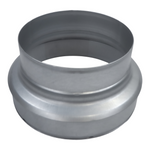
250mm to 200mm Galvanised Steel Reducer - Round Ventilation Ducting Adapter
£3.91
Unit price per£3.91
Unit price per