
What size is this valve?
The stated valve size is 0.75".

Commercial Products
Commercial Products
 Professional Growing Media
 Plant Nutrition
 Plant Health
 Sprayers & Protective Clothing
 Pots, Planters & Trays
 Propagation
 Baskets & Planters
 Fabrics & Netting
 Environment
 Plant Lighting
 Irrigation
 Plant Support & Tree Care
 Equipment
 Tools
 Plant Labels
 Packaging
 Lawn Care
 Clearance
Retail Products
Retail Products
 Growing Media
 Plant Nutrition
 Plant Health
 Pots, Planters & Tanks
 Propagation
 Baskets & Planters
 Fabrics & Netting
 Environment
 Plant Lighting
 Plant Support
 Equipment
 Tools

258 products
258 products
Sort by:
£30.84
Unit price per£30.84
Unit price perThe 0.75" Solenoid Irrigation Valve - 24V AC - Without Flow Control is designed for automated control of compatible professional irrigation zones.
Solenoid and pressure-regulating valves allow irrigation sections to be opened, closed or controlled as part of a correctly designed nursery, greenhouse, landscape or horticultural water system.
Key benefits
Automated irrigation-zone control
Use the valve to control a compatible irrigation zone from the appropriate controller or switching system. Size the valve and pipework for the required zone flow and available pressure, and install it in the correct flow direction.
Where flow control is provided, use it for appropriate adjustment and commissioning rather than as a substitute for correct hydraulic design.
Electrical compatibility
The stated electrical designation for this version is 24V AC. Confirm controller output, solenoid type and wiring requirements before connection. Do not apply an assumed voltage simply because another valve in the same irrigation system uses it.
Electrical installation in wet horticultural environments should use suitable connections and protection and should be carried out in accordance with the applicable installation requirements.
Installation & commissioning
Flush upstream pipework before final commissioning where appropriate. Install the valve with adequate access for service, support connected pipework and avoid transferring pipe strain into the valve body.
Pressurise the system gradually, check for leakage and confirm that the valve opens and closes correctly under normal controller operation.
Flow, pressure & filtration
Valve performance depends on the complete hydraulic system. Available pressure, flow demand, pipe size, elevation and downstream equipment all influence operation. Use filtration appropriate to the water source and the irrigation components being protected.
Maintenance & fault finding
If a valve fails to open, close or regulate correctly, isolate the system safely and check controller output, wiring, solenoid condition, debris, diaphragm or internal components as appropriate to the valve design. Replace damaged parts rather than forcing manual operation.
0.75" Solenoid Irrigation Valve - 24V AC - Without Flow Control product details
| Product type | Solenoid Irrigation Valve |
|---|---|
| Valve size | 0.75" |
| Flow control | No |
| Electrical designation | 24V AC |
| Application | Professional irrigation-zone control |
0.75" Solenoid Irrigation Valve - 24V AC - Without Flow Control FAQs
What size is this valve?
The stated valve size is 0.75". What is a solenoid irrigation valve used for?
It opens and closes an irrigation zone in response to a compatible electrical controller or switching system. Can I connect it to any irrigation controller?
No. Confirm the required solenoid voltage/type and controller output before connection. Does valve size alone determine how much water the zone can supply?
No. Available pressure, pipe sizing, valve characteristics, elevation and downstream flow demand all affect system performance. Should pipework be flushed before commissioning?
Yes where appropriate, to reduce the risk of installation debris entering the valve or downstream irrigation equipment. Is filtration important?
Yes. Suitable filtration can reduce debris-related problems in valves and downstream emitters. How should the valve be installed?
Follow the correct flow direction, support connected pipework and leave adequate access for servicing. What should I check if the valve will not open or close?
Safely check controller output, wiring, solenoid operation, water supply and internal contamination or damage as appropriate. Should the valve be leak-tested after installation?
Yes. Pressurise the system gradually and inspect the valve and connections before routine operation.
The 0.75" Solenoid Irrigation Valve - 24V AC is designed for automated control of compatible professional irrigation zones.
Solenoid and pressure-regulating valves allow irrigation sections to be opened, closed or controlled as part of a correctly designed nursery, greenhouse, landscape or horticultural water system.
Key benefits
Automated irrigation-zone control
Use the valve to control a compatible irrigation zone from the appropriate controller or switching system. Size the valve and pipework for the required zone flow and available pressure, and install it in the correct flow direction.
Where flow control is provided, use it for appropriate adjustment and commissioning rather than as a substitute for correct hydraulic design.
Electrical compatibility
The stated electrical designation for this version is 24V AC. Confirm controller output, solenoid type and wiring requirements before connection. Do not apply an assumed voltage simply because another valve in the same irrigation system uses it.
Electrical installation in wet horticultural environments should use suitable connections and protection and should be carried out in accordance with the applicable installation requirements.
Installation & commissioning
Flush upstream pipework before final commissioning where appropriate. Install the valve with adequate access for service, support connected pipework and avoid transferring pipe strain into the valve body.
Pressurise the system gradually, check for leakage and confirm that the valve opens and closes correctly under normal controller operation.
Flow, pressure & filtration
Valve performance depends on the complete hydraulic system. Available pressure, flow demand, pipe size, elevation and downstream equipment all influence operation. Use filtration appropriate to the water source and the irrigation components being protected.
Maintenance & fault finding
If a valve fails to open, close or regulate correctly, isolate the system safely and check controller output, wiring, solenoid condition, debris, diaphragm or internal components as appropriate to the valve design. Replace damaged parts rather than forcing manual operation.
0.75" Solenoid Irrigation Valve - 24V AC product details
| Product type | Solenoid Irrigation Valve |
|---|---|
| Valve size | 0.75" |
| Flow control | Not stated |
| Electrical designation | 24V AC |
| Application | Professional irrigation-zone control |
0.75" Solenoid Irrigation Valve - 24V AC FAQs
What size is this valve?
The stated valve size is 0.75". What is a solenoid irrigation valve used for?
It opens and closes an irrigation zone in response to a compatible electrical controller or switching system. Can I connect it to any irrigation controller?
No. Confirm the required solenoid voltage/type and controller output before connection. Does valve size alone determine how much water the zone can supply?
No. Available pressure, pipe sizing, valve characteristics, elevation and downstream flow demand all affect system performance. Should pipework be flushed before commissioning?
Yes where appropriate, to reduce the risk of installation debris entering the valve or downstream irrigation equipment. Is filtration important?
Yes. Suitable filtration can reduce debris-related problems in valves and downstream emitters. How should the valve be installed?
Follow the correct flow direction, support connected pipework and leave adequate access for servicing. What should I check if the valve will not open or close?
Safely check controller output, wiring, solenoid operation, water supply and internal contamination or damage as appropriate. Should the valve be leak-tested after installation?
Yes. Pressurise the system gradually and inspect the valve and connections before routine operation.
£0.00
Unit price per£0.00
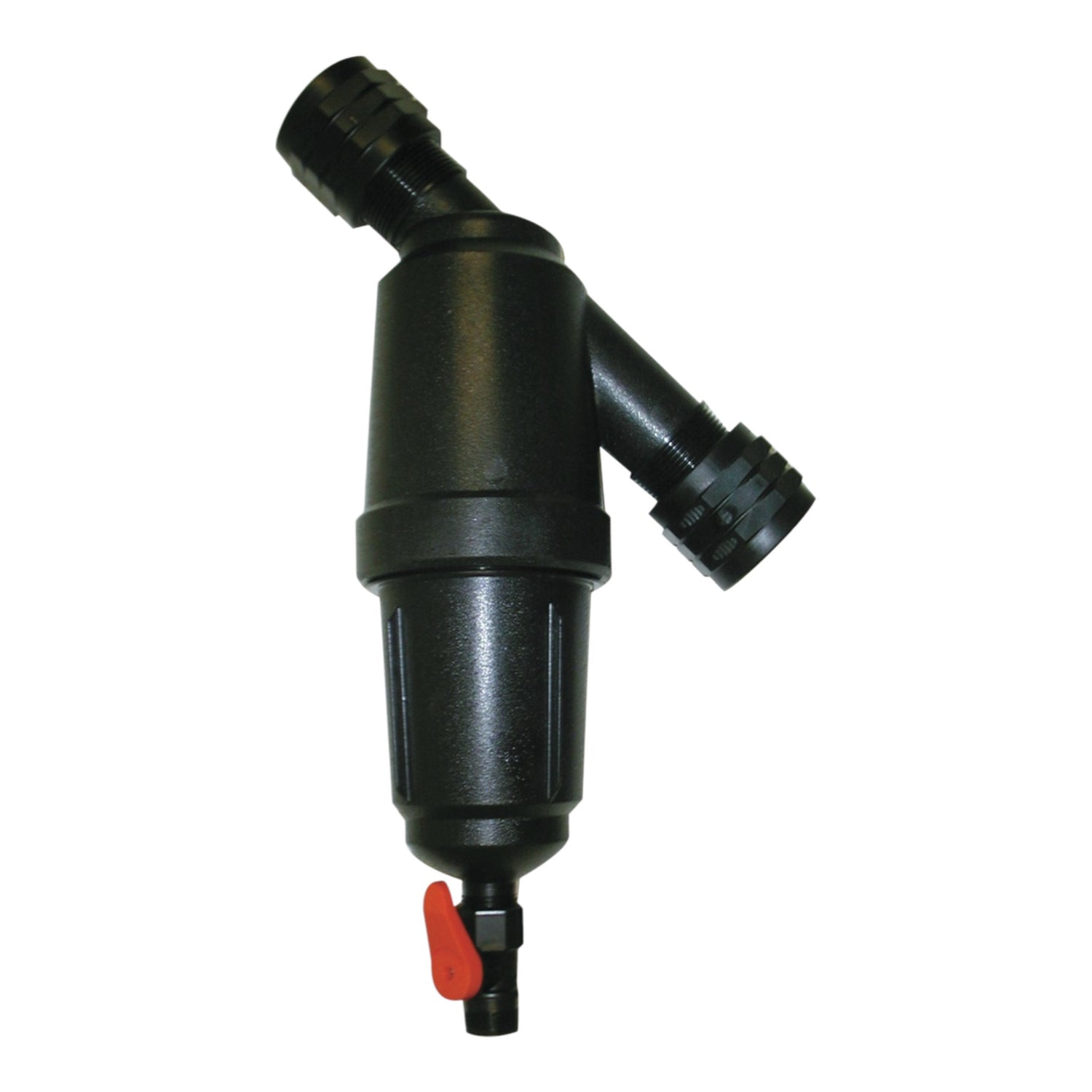
Unit price perThe 1.5" Irrigation Y Filter - 75 Mesh / 200 micron is a irrigation filter for compatible professional horticultural irrigation systems.
The stated filtration grade is 75 mesh / 200 micron. Filtration helps protect drippers, sprinklers, foggers and valves from suspended debris that can reduce flow or cause blockage.
Key benefits
Why irrigation filtration matters
Small emitter waterways are vulnerable to suspended particles. A correctly selected filter reduces the amount of debris reaching downstream equipment, helping maintain irrigation uniformity and reducing avoidable blockage.
The stated grade for this version is 75 mesh / 200 micron. Select filtration according to the water source and the requirements of the most restrictive downstream component.
Choosing filter grade
Mesh and micron figures describe filtration fineness in different ways. A finer filter is not automatically better if it creates excessive pressure loss or requires impractical cleaning frequency. Follow the irrigation-equipment requirements and account for water quality and expected flow.
Installation & pressure loss
Install the filter in the correct flow direction and orientation for the filter body. Allow access for inspection and cleaning. Pipework should be supported so its weight does not strain the filter connections.
As debris accumulates, pressure loss across the filter can increase. Monitor the system and clean the element before restriction begins to affect downstream irrigation performance.
Cleaning & maintenance
Depressurise the system before opening a filter housing. Remove the element carefully and clean it using a method appropriate to the element material and the contamination present. Inspect seals, screens and housing components before reassembly.
Replace damaged or permanently blocked elements rather than operating with compromised filtration.
Water quality & system management
Filtration is one part of irrigation maintenance. Source-water quality, line flushing, storage tanks and chemical or biological contamination can all influence system reliability. Maintain the complete water system rather than relying on the filter alone.
1.5" Irrigation Y Filter - 75 Mesh / 200 micron product details
| Product type | Y Filter |
|---|---|
| Stated size | 1.5" |
| Filtration grade | 75 mesh |
| Equivalent stated filtration | 200 micron |
| Colour | White |
| Application | Professional horticultural irrigation |
1.5" Irrigation Y Filter - 75 Mesh / 200 micron FAQs
What filtration grade is stated?
This version is stated as 75 mesh / 200 micron. What is the filter used for?
It helps remove suspended debris before water reaches downstream irrigation equipment such as drippers, sprinklers, foggers and valves. How do I choose the right filtration grade?
Follow the requirements of the downstream irrigation equipment and consider water quality, flow demand and acceptable pressure loss. Does a finer filter always improve the system?
No. Excessively fine filtration can increase pressure loss and cleaning frequency if it is not appropriate to the water source and equipment. When should the filter be cleaned?
Inspect and clean it before accumulated debris causes unacceptable pressure loss or reduced downstream performance. Should the system be depressurised before opening the filter?
Yes. Safely isolate and depressurise the system before opening a filter housing. Can a damaged element be reused?
No. Replace damaged, distorted or persistently blocked filtration elements. Does filtration remove the need to flush irrigation lines?
No. Filtration and line flushing perform different roles and both may be required as part of system maintenance. How can I tell if the filter is restricting flow?
A growing pressure difference across the filter or reduced downstream performance can indicate that cleaning or inspection is required.
£0.00
Unit price per£0.00
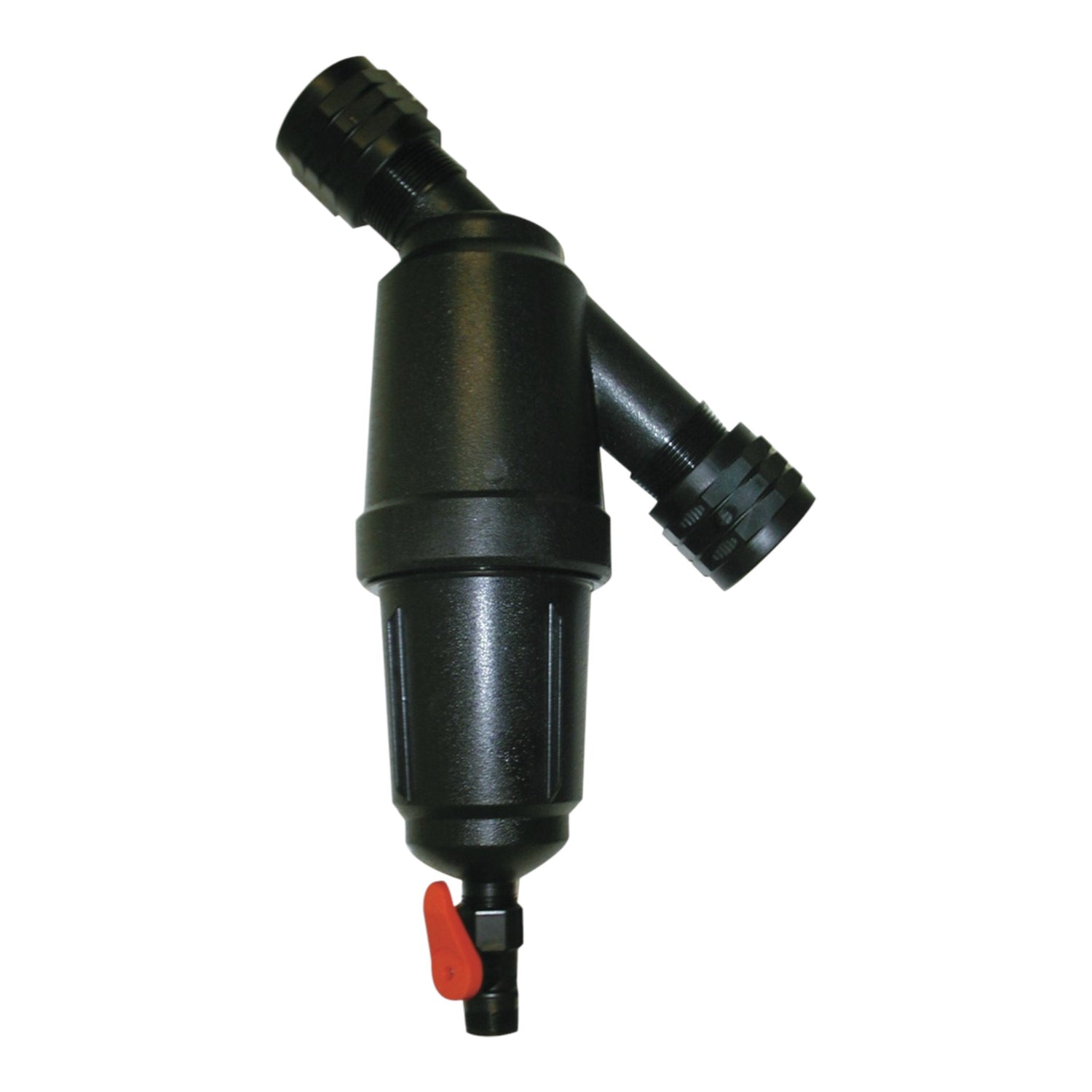
Unit price perThe 1.5" Irrigation Y Filter - 155 Mesh / 100 micron is a irrigation filter for compatible professional horticultural irrigation systems.
The stated filtration grade is 155 mesh / 100 micron. Filtration helps protect drippers, sprinklers, foggers and valves from suspended debris that can reduce flow or cause blockage.
Key benefits
Why irrigation filtration matters
Small emitter waterways are vulnerable to suspended particles. A correctly selected filter reduces the amount of debris reaching downstream equipment, helping maintain irrigation uniformity and reducing avoidable blockage.
The stated grade for this version is 155 mesh / 100 micron. Select filtration according to the water source and the requirements of the most restrictive downstream component.
Choosing filter grade
Mesh and micron figures describe filtration fineness in different ways. A finer filter is not automatically better if it creates excessive pressure loss or requires impractical cleaning frequency. Follow the irrigation-equipment requirements and account for water quality and expected flow.
Installation & pressure loss
Install the filter in the correct flow direction and orientation for the filter body. Allow access for inspection and cleaning. Pipework should be supported so its weight does not strain the filter connections.
As debris accumulates, pressure loss across the filter can increase. Monitor the system and clean the element before restriction begins to affect downstream irrigation performance.
Cleaning & maintenance
Depressurise the system before opening a filter housing. Remove the element carefully and clean it using a method appropriate to the element material and the contamination present. Inspect seals, screens and housing components before reassembly.
Replace damaged or permanently blocked elements rather than operating with compromised filtration.
Water quality & system management
Filtration is one part of irrigation maintenance. Source-water quality, line flushing, storage tanks and chemical or biological contamination can all influence system reliability. Maintain the complete water system rather than relying on the filter alone.
1.5" Irrigation Y Filter - 155 Mesh / 100 micron product details
| Product type | Y Filter |
|---|---|
| Stated size | 1.5" |
| Filtration grade | 155 mesh |
| Equivalent stated filtration | 100 micron |
| Colour | Yellow |
| Application | Professional horticultural irrigation |
1.5" Irrigation Y Filter - 155 Mesh / 100 micron FAQs
What filtration grade is stated?
This version is stated as 155 mesh / 100 micron. What is the filter used for?
It helps remove suspended debris before water reaches downstream irrigation equipment such as drippers, sprinklers, foggers and valves. How do I choose the right filtration grade?
Follow the requirements of the downstream irrigation equipment and consider water quality, flow demand and acceptable pressure loss. Does a finer filter always improve the system?
No. Excessively fine filtration can increase pressure loss and cleaning frequency if it is not appropriate to the water source and equipment. When should the filter be cleaned?
Inspect and clean it before accumulated debris causes unacceptable pressure loss or reduced downstream performance. Should the system be depressurised before opening the filter?
Yes. Safely isolate and depressurise the system before opening a filter housing. Can a damaged element be reused?
No. Replace damaged, distorted or persistently blocked filtration elements. Does filtration remove the need to flush irrigation lines?
No. Filtration and line flushing perform different roles and both may be required as part of system maintenance. How can I tell if the filter is restricting flow?
A growing pressure difference across the filter or reduced downstream performance can indicate that cleaning or inspection is required.
£0.00
Unit price per£0.00
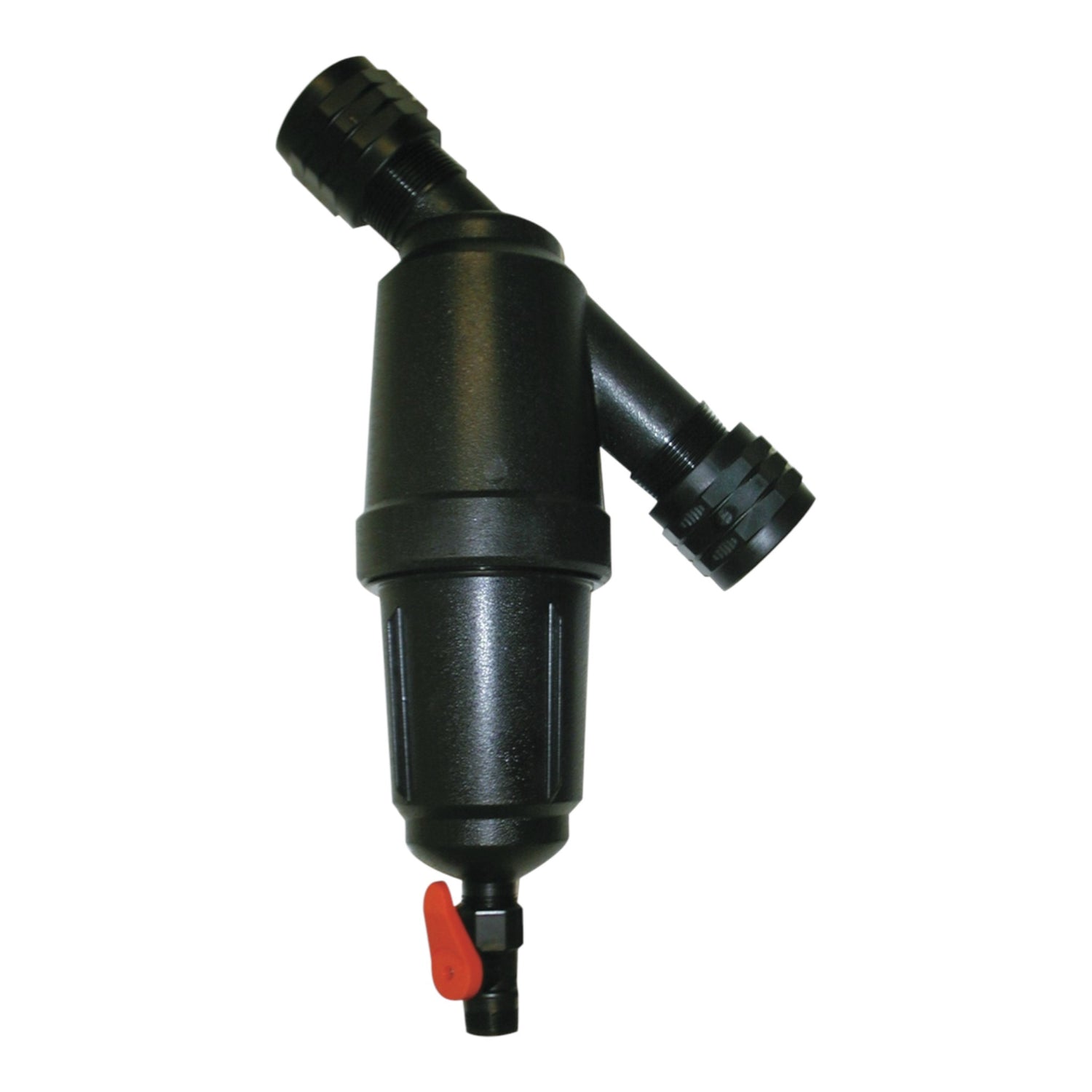
Unit price perThe 1.5" Irrigation Filter Element - 75 Mesh / 200 micron is a replacement filtration element for compatible professional horticultural irrigation systems.
The stated filtration grade is 75 mesh / 200 micron. Filtration helps protect drippers, sprinklers, foggers and valves from suspended debris that can reduce flow or cause blockage.
Key benefits
Why irrigation filtration matters
Small emitter waterways are vulnerable to suspended particles. A correctly selected filter reduces the amount of debris reaching downstream equipment, helping maintain irrigation uniformity and reducing avoidable blockage.
The stated grade for this version is 75 mesh / 200 micron. Select filtration according to the water source and the requirements of the most restrictive downstream component.
Choosing filter grade
Mesh and micron figures describe filtration fineness in different ways. A finer filter is not automatically better if it creates excessive pressure loss or requires impractical cleaning frequency. Follow the irrigation-equipment requirements and account for water quality and expected flow.
Installation & pressure loss
Install the filter in the correct flow direction and orientation for the filter body. Allow access for inspection and cleaning. Pipework should be supported so its weight does not strain the filter connections.
As debris accumulates, pressure loss across the filter can increase. Monitor the system and clean the element before restriction begins to affect downstream irrigation performance.
Cleaning & maintenance
Depressurise the system before opening a filter housing. Remove the element carefully and clean it using a method appropriate to the element material and the contamination present. Inspect seals, screens and housing components before reassembly.
Replace damaged or permanently blocked elements rather than operating with compromised filtration.
Water quality & system management
Filtration is one part of irrigation maintenance. Source-water quality, line flushing, storage tanks and chemical or biological contamination can all influence system reliability. Maintain the complete water system rather than relying on the filter alone.
1.5" Irrigation Filter Element - 75 Mesh / 200 micron product details
| Product type | Replacement filter element |
|---|---|
| Stated size | 1.5" |
| Filtration grade | 75 mesh |
| Equivalent stated filtration | 200 micron |
| Colour | White |
| Application | Professional horticultural irrigation |
1.5" Irrigation Filter Element - 75 Mesh / 200 micron FAQs
What filtration grade is stated?
This version is stated as 75 mesh / 200 micron. What is the filter used for?
It helps remove suspended debris before water reaches downstream irrigation equipment such as drippers, sprinklers, foggers and valves. How do I choose the right filtration grade?
Follow the requirements of the downstream irrigation equipment and consider water quality, flow demand and acceptable pressure loss. Does a finer filter always improve the system?
No. Excessively fine filtration can increase pressure loss and cleaning frequency if it is not appropriate to the water source and equipment. When should the filter be cleaned?
Inspect and clean it before accumulated debris causes unacceptable pressure loss or reduced downstream performance. Should the system be depressurised before opening the filter?
Yes. Safely isolate and depressurise the system before opening a filter housing. Can a damaged element be reused?
No. Replace damaged, distorted or persistently blocked filtration elements. Does filtration remove the need to flush irrigation lines?
No. Filtration and line flushing perform different roles and both may be required as part of system maintenance. How can I tell if the filter is restricting flow?
A growing pressure difference across the filter or reduced downstream performance can indicate that cleaning or inspection is required.
£0.00
Unit price per£0.00
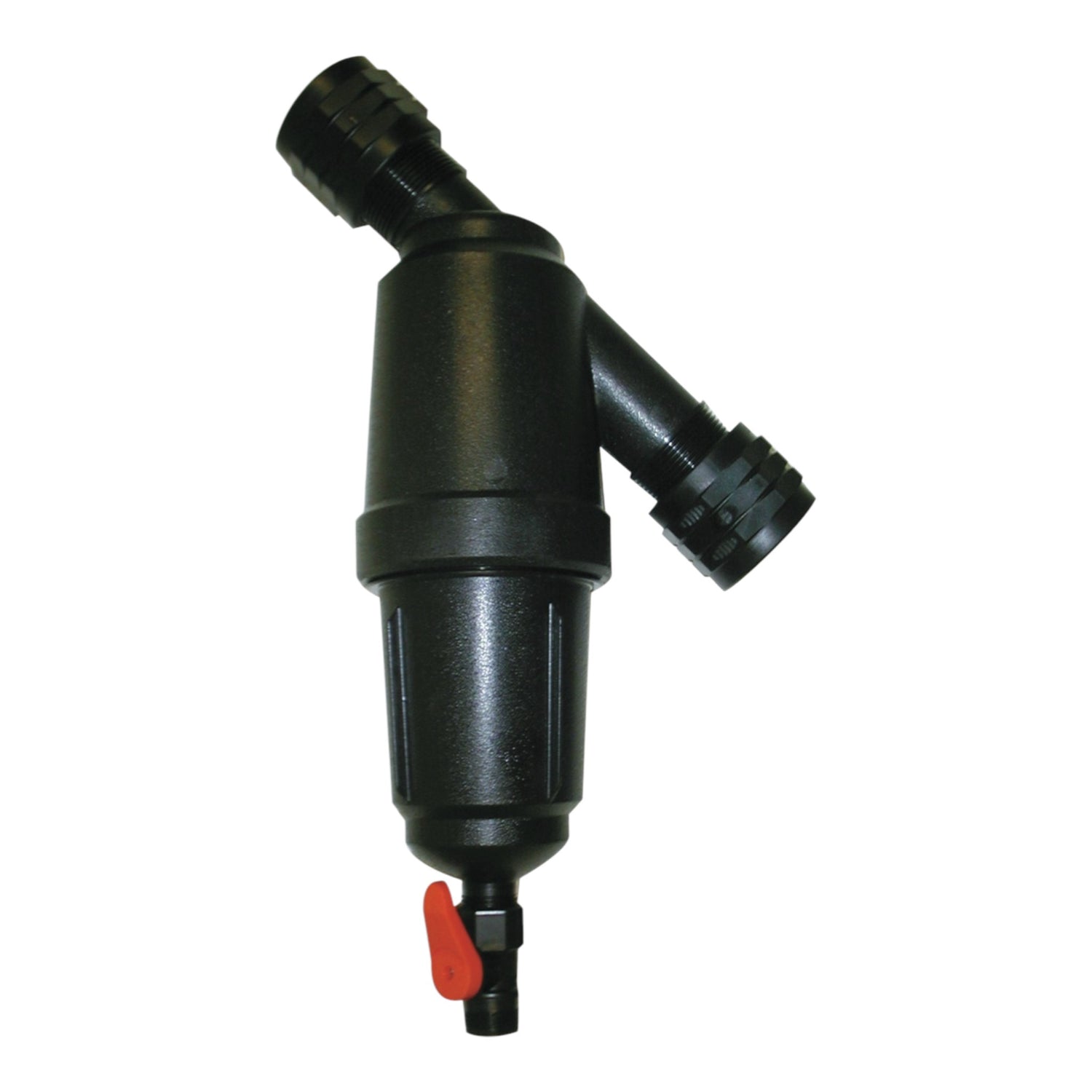
Unit price perThe 1.5" Irrigation Filter Element - 155 Mesh / 100 micron is a replacement filtration element for compatible professional horticultural irrigation systems.
The stated filtration grade is 155 mesh / 100 micron. Filtration helps protect drippers, sprinklers, foggers and valves from suspended debris that can reduce flow or cause blockage.
Key benefits
Why irrigation filtration matters
Small emitter waterways are vulnerable to suspended particles. A correctly selected filter reduces the amount of debris reaching downstream equipment, helping maintain irrigation uniformity and reducing avoidable blockage.
The stated grade for this version is 155 mesh / 100 micron. Select filtration according to the water source and the requirements of the most restrictive downstream component.
Choosing filter grade
Mesh and micron figures describe filtration fineness in different ways. A finer filter is not automatically better if it creates excessive pressure loss or requires impractical cleaning frequency. Follow the irrigation-equipment requirements and account for water quality and expected flow.
Installation & pressure loss
Install the filter in the correct flow direction and orientation for the filter body. Allow access for inspection and cleaning. Pipework should be supported so its weight does not strain the filter connections.
As debris accumulates, pressure loss across the filter can increase. Monitor the system and clean the element before restriction begins to affect downstream irrigation performance.
Cleaning & maintenance
Depressurise the system before opening a filter housing. Remove the element carefully and clean it using a method appropriate to the element material and the contamination present. Inspect seals, screens and housing components before reassembly.
Replace damaged or permanently blocked elements rather than operating with compromised filtration.
Water quality & system management
Filtration is one part of irrigation maintenance. Source-water quality, line flushing, storage tanks and chemical or biological contamination can all influence system reliability. Maintain the complete water system rather than relying on the filter alone.
1.5" Irrigation Filter Element - 155 Mesh / 100 micron product details
| Product type | Replacement filter element |
|---|---|
| Stated size | 1.5" |
| Filtration grade | 155 mesh |
| Equivalent stated filtration | 100 micron |
| Colour | Yellow |
| Application | Professional horticultural irrigation |
1.5" Irrigation Filter Element - 155 Mesh / 100 micron FAQs
What filtration grade is stated?
This version is stated as 155 mesh / 100 micron. What is the filter used for?
It helps remove suspended debris before water reaches downstream irrigation equipment such as drippers, sprinklers, foggers and valves. How do I choose the right filtration grade?
Follow the requirements of the downstream irrigation equipment and consider water quality, flow demand and acceptable pressure loss. Does a finer filter always improve the system?
No. Excessively fine filtration can increase pressure loss and cleaning frequency if it is not appropriate to the water source and equipment. When should the filter be cleaned?
Inspect and clean it before accumulated debris causes unacceptable pressure loss or reduced downstream performance. Should the system be depressurised before opening the filter?
Yes. Safely isolate and depressurise the system before opening a filter housing. Can a damaged element be reused?
No. Replace damaged, distorted or persistently blocked filtration elements. Does filtration remove the need to flush irrigation lines?
No. Filtration and line flushing perform different roles and both may be required as part of system maintenance. How can I tell if the filter is restricting flow?
A growing pressure difference across the filter or reduced downstream performance can indicate that cleaning or inspection is required.
£0.00
Unit price per£0.00
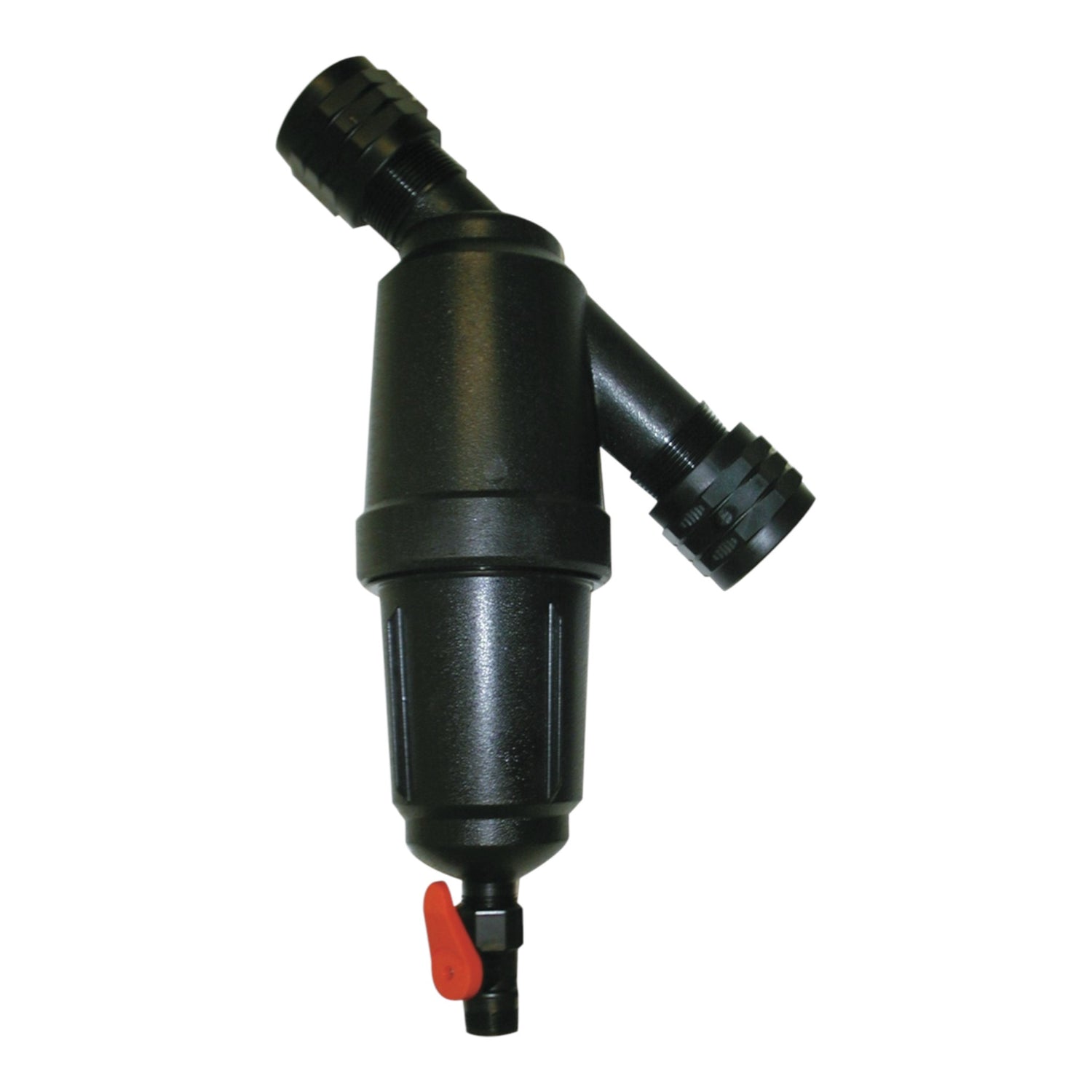
Unit price perThe 1" Irrigation Pressure Filter - 75 Mesh / 200 micron is a irrigation filter for compatible professional horticultural irrigation systems.
The stated filtration grade is 75 mesh / 200 micron. Filtration helps protect drippers, sprinklers, foggers and valves from suspended debris that can reduce flow or cause blockage.
Key benefits
Why irrigation filtration matters
Small emitter waterways are vulnerable to suspended particles. A correctly selected filter reduces the amount of debris reaching downstream equipment, helping maintain irrigation uniformity and reducing avoidable blockage.
The stated grade for this version is 75 mesh / 200 micron. Select filtration according to the water source and the requirements of the most restrictive downstream component.
Choosing filter grade
Mesh and micron figures describe filtration fineness in different ways. A finer filter is not automatically better if it creates excessive pressure loss or requires impractical cleaning frequency. Follow the irrigation-equipment requirements and account for water quality and expected flow.
Installation & pressure loss
Install the filter in the correct flow direction and orientation for the filter body. Allow access for inspection and cleaning. Pipework should be supported so its weight does not strain the filter connections.
As debris accumulates, pressure loss across the filter can increase. Monitor the system and clean the element before restriction begins to affect downstream irrigation performance.
Cleaning & maintenance
Depressurise the system before opening a filter housing. Remove the element carefully and clean it using a method appropriate to the element material and the contamination present. Inspect seals, screens and housing components before reassembly.
Replace damaged or permanently blocked elements rather than operating with compromised filtration.
Water quality & system management
Filtration is one part of irrigation maintenance. Source-water quality, line flushing, storage tanks and chemical or biological contamination can all influence system reliability. Maintain the complete water system rather than relying on the filter alone.
1" Irrigation Pressure Filter - 75 Mesh / 200 micron product details
| Product type | Pressure Filter |
|---|---|
| Stated size | 1" |
| Filtration grade | 75 mesh |
| Equivalent stated filtration | 200 micron |
| Colour | White |
| Application | Professional horticultural irrigation |
1" Irrigation Pressure Filter - 75 Mesh / 200 micron FAQs
What filtration grade is stated?
This version is stated as 75 mesh / 200 micron. What is the filter used for?
It helps remove suspended debris before water reaches downstream irrigation equipment such as drippers, sprinklers, foggers and valves. How do I choose the right filtration grade?
Follow the requirements of the downstream irrigation equipment and consider water quality, flow demand and acceptable pressure loss. Does a finer filter always improve the system?
No. Excessively fine filtration can increase pressure loss and cleaning frequency if it is not appropriate to the water source and equipment. When should the filter be cleaned?
Inspect and clean it before accumulated debris causes unacceptable pressure loss or reduced downstream performance. Should the system be depressurised before opening the filter?
Yes. Safely isolate and depressurise the system before opening a filter housing. Can a damaged element be reused?
No. Replace damaged, distorted or persistently blocked filtration elements. Does filtration remove the need to flush irrigation lines?
No. Filtration and line flushing perform different roles and both may be required as part of system maintenance. How can I tell if the filter is restricting flow?
A growing pressure difference across the filter or reduced downstream performance can indicate that cleaning or inspection is required.
£0.00
Unit price per£0.00
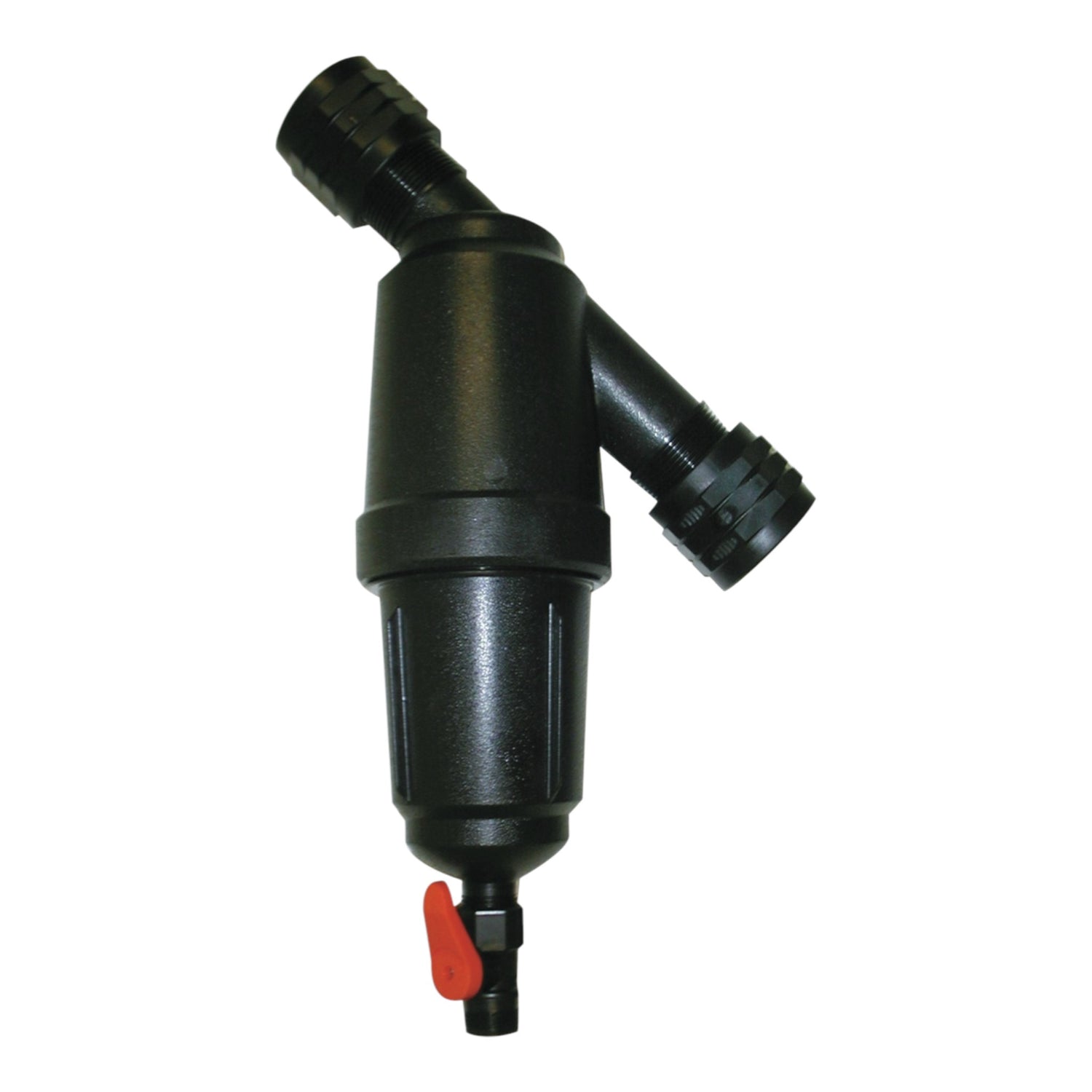
Unit price perThe 1" Irrigation Pressure Filter - 155 Mesh / 100 micron is a irrigation filter for compatible professional horticultural irrigation systems.
The stated filtration grade is 155 mesh / 100 micron. Filtration helps protect drippers, sprinklers, foggers and valves from suspended debris that can reduce flow or cause blockage.
Key benefits
Why irrigation filtration matters
Small emitter waterways are vulnerable to suspended particles. A correctly selected filter reduces the amount of debris reaching downstream equipment, helping maintain irrigation uniformity and reducing avoidable blockage.
The stated grade for this version is 155 mesh / 100 micron. Select filtration according to the water source and the requirements of the most restrictive downstream component.
Choosing filter grade
Mesh and micron figures describe filtration fineness in different ways. A finer filter is not automatically better if it creates excessive pressure loss or requires impractical cleaning frequency. Follow the irrigation-equipment requirements and account for water quality and expected flow.
Installation & pressure loss
Install the filter in the correct flow direction and orientation for the filter body. Allow access for inspection and cleaning. Pipework should be supported so its weight does not strain the filter connections.
As debris accumulates, pressure loss across the filter can increase. Monitor the system and clean the element before restriction begins to affect downstream irrigation performance.
Cleaning & maintenance
Depressurise the system before opening a filter housing. Remove the element carefully and clean it using a method appropriate to the element material and the contamination present. Inspect seals, screens and housing components before reassembly.
Replace damaged or permanently blocked elements rather than operating with compromised filtration.
Water quality & system management
Filtration is one part of irrigation maintenance. Source-water quality, line flushing, storage tanks and chemical or biological contamination can all influence system reliability. Maintain the complete water system rather than relying on the filter alone.
1" Irrigation Pressure Filter - 155 Mesh / 100 micron product details
| Product type | Pressure Filter |
|---|---|
| Stated size | 1" |
| Filtration grade | 155 mesh |
| Equivalent stated filtration | 100 micron |
| Colour | Yellow |
| Application | Professional horticultural irrigation |
1" Irrigation Pressure Filter - 155 Mesh / 100 micron FAQs
What filtration grade is stated?
This version is stated as 155 mesh / 100 micron. What is the filter used for?
It helps remove suspended debris before water reaches downstream irrigation equipment such as drippers, sprinklers, foggers and valves. How do I choose the right filtration grade?
Follow the requirements of the downstream irrigation equipment and consider water quality, flow demand and acceptable pressure loss. Does a finer filter always improve the system?
No. Excessively fine filtration can increase pressure loss and cleaning frequency if it is not appropriate to the water source and equipment. When should the filter be cleaned?
Inspect and clean it before accumulated debris causes unacceptable pressure loss or reduced downstream performance. Should the system be depressurised before opening the filter?
Yes. Safely isolate and depressurise the system before opening a filter housing. Can a damaged element be reused?
No. Replace damaged, distorted or persistently blocked filtration elements. Does filtration remove the need to flush irrigation lines?
No. Filtration and line flushing perform different roles and both may be required as part of system maintenance. How can I tell if the filter is restricting flow?
A growing pressure difference across the filter or reduced downstream performance can indicate that cleaning or inspection is required.
£0.00
Unit price per£0.00
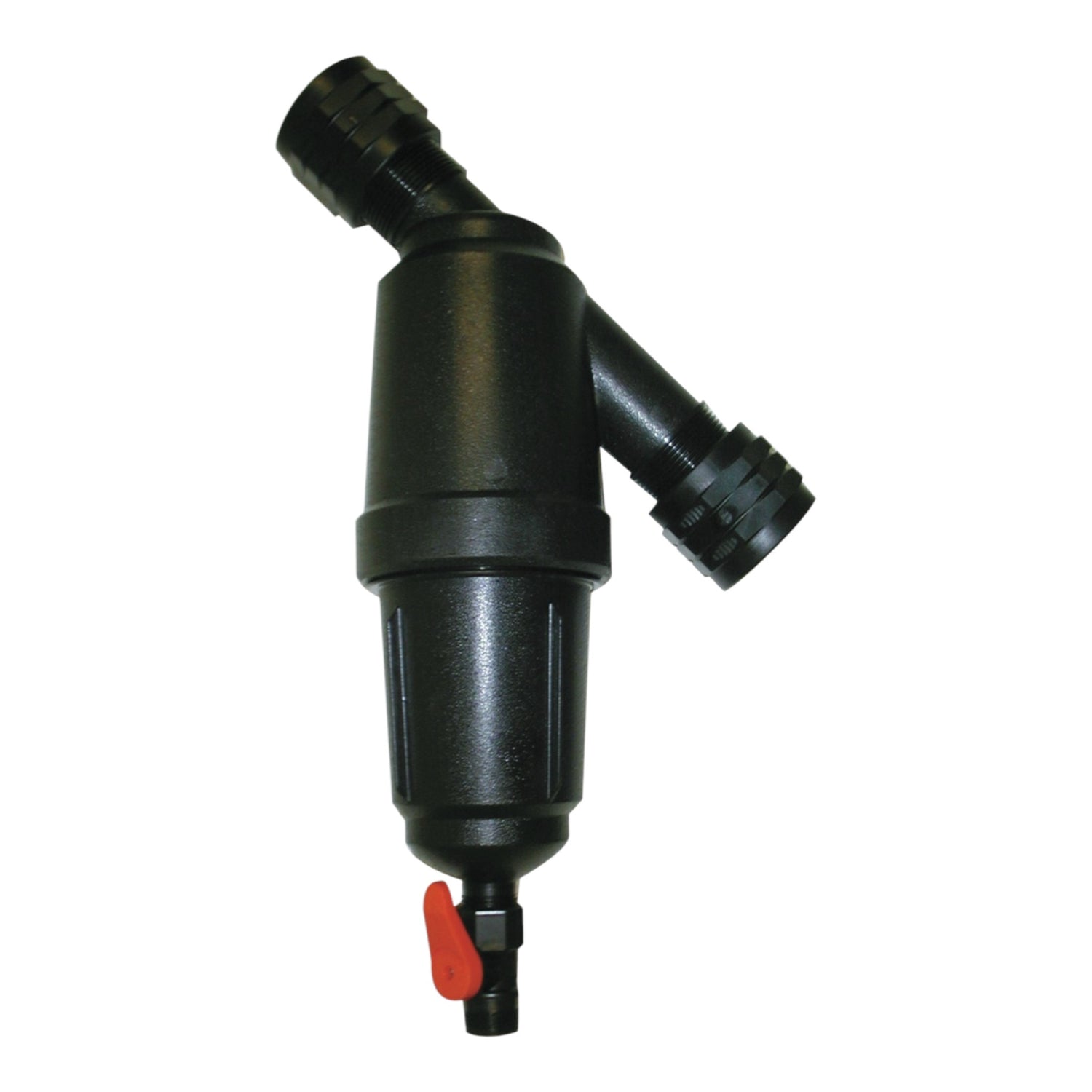
Unit price perThe 1" Irrigation Filter Element - 155 Mesh / 100 micron is a replacement filtration element for compatible professional horticultural irrigation systems.
The stated filtration grade is 155 mesh / 100 micron. Filtration helps protect drippers, sprinklers, foggers and valves from suspended debris that can reduce flow or cause blockage.
Key benefits
Why irrigation filtration matters
Small emitter waterways are vulnerable to suspended particles. A correctly selected filter reduces the amount of debris reaching downstream equipment, helping maintain irrigation uniformity and reducing avoidable blockage.
The stated grade for this version is 155 mesh / 100 micron. Select filtration according to the water source and the requirements of the most restrictive downstream component.
Choosing filter grade
Mesh and micron figures describe filtration fineness in different ways. A finer filter is not automatically better if it creates excessive pressure loss or requires impractical cleaning frequency. Follow the irrigation-equipment requirements and account for water quality and expected flow.
Installation & pressure loss
Install the filter in the correct flow direction and orientation for the filter body. Allow access for inspection and cleaning. Pipework should be supported so its weight does not strain the filter connections.
As debris accumulates, pressure loss across the filter can increase. Monitor the system and clean the element before restriction begins to affect downstream irrigation performance.
Cleaning & maintenance
Depressurise the system before opening a filter housing. Remove the element carefully and clean it using a method appropriate to the element material and the contamination present. Inspect seals, screens and housing components before reassembly.
Replace damaged or permanently blocked elements rather than operating with compromised filtration.
Water quality & system management
Filtration is one part of irrigation maintenance. Source-water quality, line flushing, storage tanks and chemical or biological contamination can all influence system reliability. Maintain the complete water system rather than relying on the filter alone.
1" Irrigation Filter Element - 155 Mesh / 100 micron product details
| Product type | Replacement filter element |
|---|---|
| Stated size | 1" |
| Filtration grade | 155 mesh |
| Equivalent stated filtration | 100 micron |
| Colour | Yellow |
| Application | Professional horticultural irrigation |
1" Irrigation Filter Element - 155 Mesh / 100 micron FAQs
What filtration grade is stated?
This version is stated as 155 mesh / 100 micron. What is the filter used for?
It helps remove suspended debris before water reaches downstream irrigation equipment such as drippers, sprinklers, foggers and valves. How do I choose the right filtration grade?
Follow the requirements of the downstream irrigation equipment and consider water quality, flow demand and acceptable pressure loss. Does a finer filter always improve the system?
No. Excessively fine filtration can increase pressure loss and cleaning frequency if it is not appropriate to the water source and equipment. When should the filter be cleaned?
Inspect and clean it before accumulated debris causes unacceptable pressure loss or reduced downstream performance. Should the system be depressurised before opening the filter?
Yes. Safely isolate and depressurise the system before opening a filter housing. Can a damaged element be reused?
No. Replace damaged, distorted or persistently blocked filtration elements. Does filtration remove the need to flush irrigation lines?
No. Filtration and line flushing perform different roles and both may be required as part of system maintenance. How can I tell if the filter is restricting flow?
A growing pressure difference across the filter or reduced downstream performance can indicate that cleaning or inspection is required.
£0.00
Unit price per£0.00
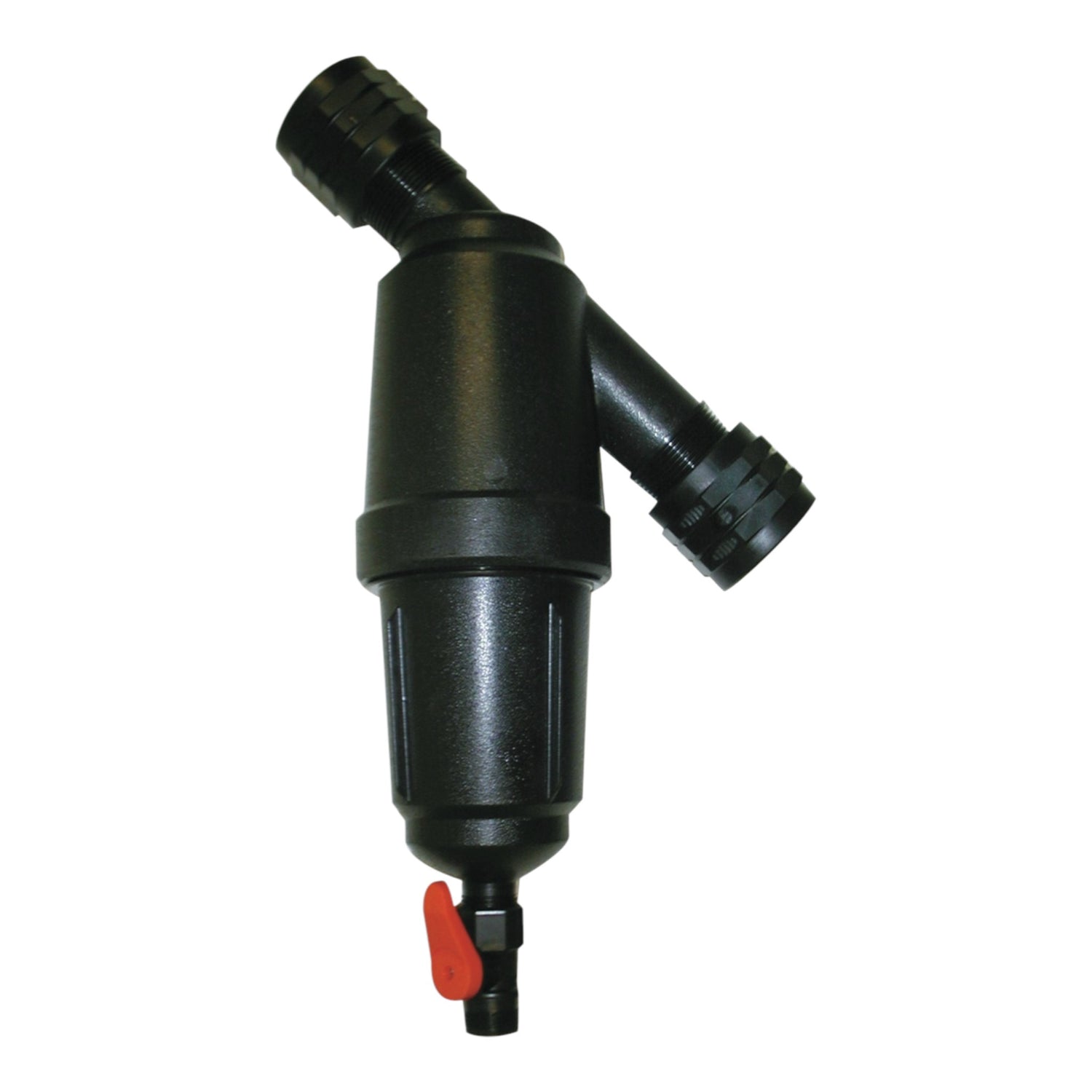
Unit price perThe 1" Irrigation Pressure Filter - 155 Mesh / 100 micron is a irrigation filter for compatible professional horticultural irrigation systems.
The stated filtration grade is 155 mesh / 100 micron. Filtration helps protect drippers, sprinklers, foggers and valves from suspended debris that can reduce flow or cause blockage.
Key benefits
Why irrigation filtration matters
Small emitter waterways are vulnerable to suspended particles. A correctly selected filter reduces the amount of debris reaching downstream equipment, helping maintain irrigation uniformity and reducing avoidable blockage.
The stated grade for this version is 155 mesh / 100 micron. Select filtration according to the water source and the requirements of the most restrictive downstream component.
Choosing filter grade
Mesh and micron figures describe filtration fineness in different ways. A finer filter is not automatically better if it creates excessive pressure loss or requires impractical cleaning frequency. Follow the irrigation-equipment requirements and account for water quality and expected flow.
Installation & pressure loss
Install the filter in the correct flow direction and orientation for the filter body. Allow access for inspection and cleaning. Pipework should be supported so its weight does not strain the filter connections.
As debris accumulates, pressure loss across the filter can increase. Monitor the system and clean the element before restriction begins to affect downstream irrigation performance.
Cleaning & maintenance
Depressurise the system before opening a filter housing. Remove the element carefully and clean it using a method appropriate to the element material and the contamination present. Inspect seals, screens and housing components before reassembly.
Replace damaged or permanently blocked elements rather than operating with compromised filtration.
Water quality & system management
Filtration is one part of irrigation maintenance. Source-water quality, line flushing, storage tanks and chemical or biological contamination can all influence system reliability. Maintain the complete water system rather than relying on the filter alone.
1" Irrigation Pressure Filter - 155 Mesh / 100 micron product details
| Product type | Pressure Filter |
|---|---|
| Stated size | 1" |
| Filtration grade | 155 mesh |
| Equivalent stated filtration | 100 micron |
| Colour | Yellow |
| Application | Professional horticultural irrigation |
1" Irrigation Pressure Filter - 155 Mesh / 100 micron FAQs
What filtration grade is stated?
This version is stated as 155 mesh / 100 micron. What is the filter used for?
It helps remove suspended debris before water reaches downstream irrigation equipment such as drippers, sprinklers, foggers and valves. How do I choose the right filtration grade?
Follow the requirements of the downstream irrigation equipment and consider water quality, flow demand and acceptable pressure loss. Does a finer filter always improve the system?
No. Excessively fine filtration can increase pressure loss and cleaning frequency if it is not appropriate to the water source and equipment. When should the filter be cleaned?
Inspect and clean it before accumulated debris causes unacceptable pressure loss or reduced downstream performance. Should the system be depressurised before opening the filter?
Yes. Safely isolate and depressurise the system before opening a filter housing. Can a damaged element be reused?
No. Replace damaged, distorted or persistently blocked filtration elements. Does filtration remove the need to flush irrigation lines?
No. Filtration and line flushing perform different roles and both may be required as part of system maintenance. How can I tell if the filter is restricting flow?
A growing pressure difference across the filter or reduced downstream performance can indicate that cleaning or inspection is required.
£0.00
Unit price per£0.00
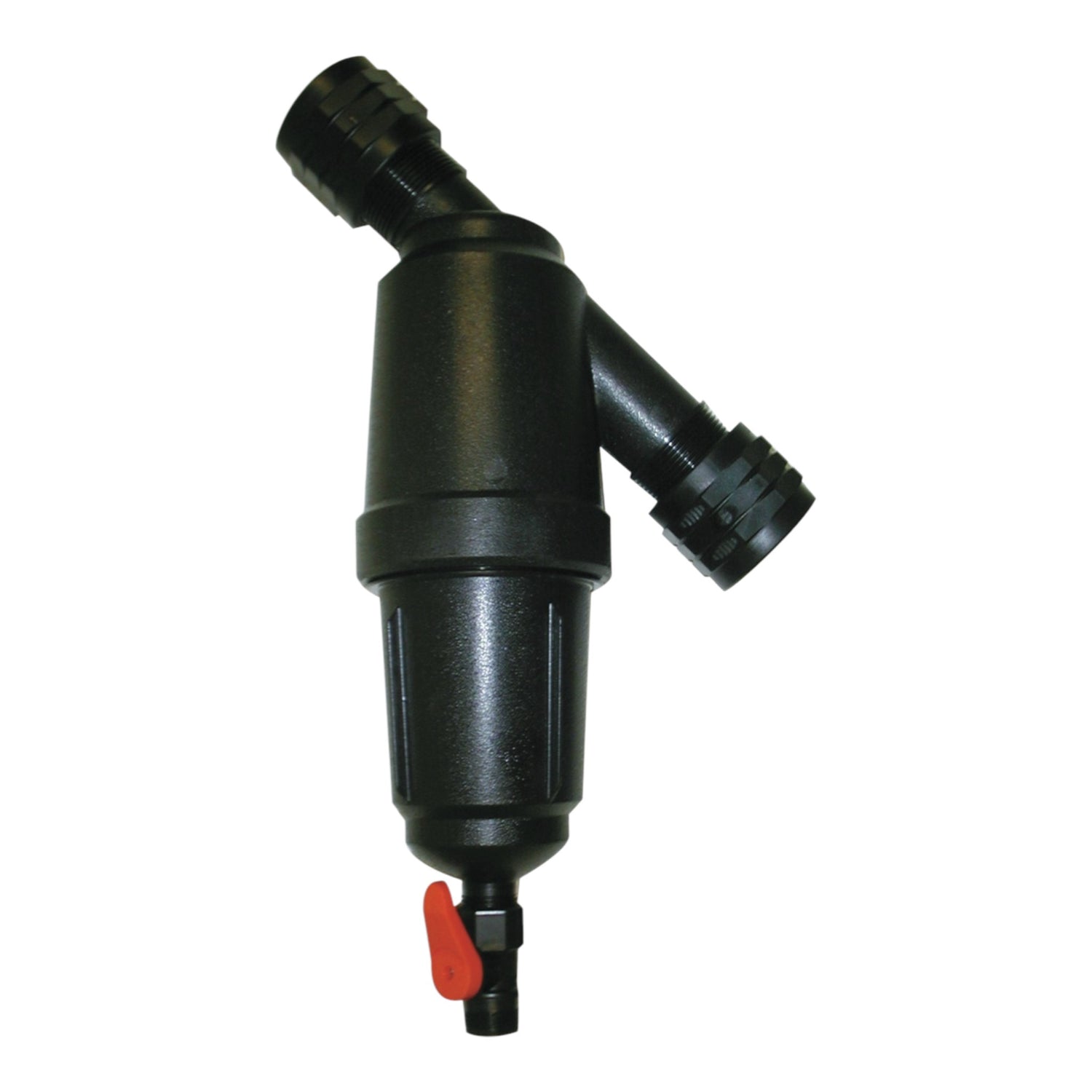
Unit price perThe 0.75" Irrigation Pressure Filter - 75 Mesh / 200 micron is a irrigation filter for compatible professional horticultural irrigation systems.
The stated filtration grade is 75 mesh / 200 micron. Filtration helps protect drippers, sprinklers, foggers and valves from suspended debris that can reduce flow or cause blockage.
Key benefits
Why irrigation filtration matters
Small emitter waterways are vulnerable to suspended particles. A correctly selected filter reduces the amount of debris reaching downstream equipment, helping maintain irrigation uniformity and reducing avoidable blockage.
The stated grade for this version is 75 mesh / 200 micron. Select filtration according to the water source and the requirements of the most restrictive downstream component.
Choosing filter grade
Mesh and micron figures describe filtration fineness in different ways. A finer filter is not automatically better if it creates excessive pressure loss or requires impractical cleaning frequency. Follow the irrigation-equipment requirements and account for water quality and expected flow.
Installation & pressure loss
Install the filter in the correct flow direction and orientation for the filter body. Allow access for inspection and cleaning. Pipework should be supported so its weight does not strain the filter connections.
As debris accumulates, pressure loss across the filter can increase. Monitor the system and clean the element before restriction begins to affect downstream irrigation performance.
Cleaning & maintenance
Depressurise the system before opening a filter housing. Remove the element carefully and clean it using a method appropriate to the element material and the contamination present. Inspect seals, screens and housing components before reassembly.
Replace damaged or permanently blocked elements rather than operating with compromised filtration.
Water quality & system management
Filtration is one part of irrigation maintenance. Source-water quality, line flushing, storage tanks and chemical or biological contamination can all influence system reliability. Maintain the complete water system rather than relying on the filter alone.
0.75" Irrigation Pressure Filter - 75 Mesh / 200 micron product details
| Product type | Pressure Filter |
|---|---|
| Stated size | 0.75" |
| Filtration grade | 75 mesh |
| Equivalent stated filtration | 200 micron |
| Colour | White |
| Application | Professional horticultural irrigation |
0.75" Irrigation Pressure Filter - 75 Mesh / 200 micron FAQs
What filtration grade is stated?
This version is stated as 75 mesh / 200 micron. What is the filter used for?
It helps remove suspended debris before water reaches downstream irrigation equipment such as drippers, sprinklers, foggers and valves. How do I choose the right filtration grade?
Follow the requirements of the downstream irrigation equipment and consider water quality, flow demand and acceptable pressure loss. Does a finer filter always improve the system?
No. Excessively fine filtration can increase pressure loss and cleaning frequency if it is not appropriate to the water source and equipment. When should the filter be cleaned?
Inspect and clean it before accumulated debris causes unacceptable pressure loss or reduced downstream performance. Should the system be depressurised before opening the filter?
Yes. Safely isolate and depressurise the system before opening a filter housing. Can a damaged element be reused?
No. Replace damaged, distorted or persistently blocked filtration elements. Does filtration remove the need to flush irrigation lines?
No. Filtration and line flushing perform different roles and both may be required as part of system maintenance. How can I tell if the filter is restricting flow?
A growing pressure difference across the filter or reduced downstream performance can indicate that cleaning or inspection is required.
£0.00
Unit price per£0.00
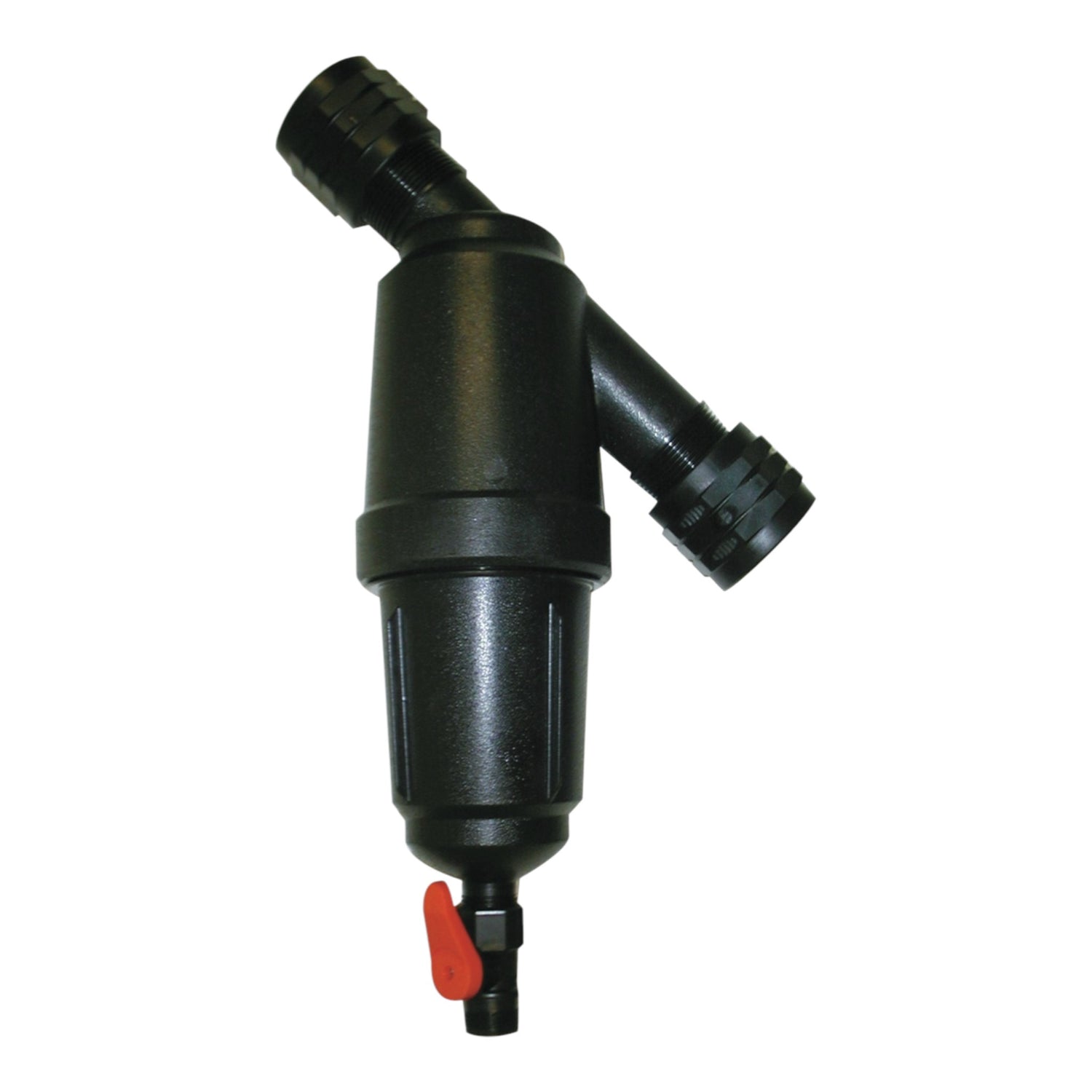
Unit price perThe 0.75" Irrigation Pressure Filter - 155 Mesh / 100 micron is a irrigation filter for compatible professional horticultural irrigation systems.
The stated filtration grade is 155 mesh / 100 micron. Filtration helps protect drippers, sprinklers, foggers and valves from suspended debris that can reduce flow or cause blockage.
Key benefits
Why irrigation filtration matters
Small emitter waterways are vulnerable to suspended particles. A correctly selected filter reduces the amount of debris reaching downstream equipment, helping maintain irrigation uniformity and reducing avoidable blockage.
The stated grade for this version is 155 mesh / 100 micron. Select filtration according to the water source and the requirements of the most restrictive downstream component.
Choosing filter grade
Mesh and micron figures describe filtration fineness in different ways. A finer filter is not automatically better if it creates excessive pressure loss or requires impractical cleaning frequency. Follow the irrigation-equipment requirements and account for water quality and expected flow.
Installation & pressure loss
Install the filter in the correct flow direction and orientation for the filter body. Allow access for inspection and cleaning. Pipework should be supported so its weight does not strain the filter connections.
As debris accumulates, pressure loss across the filter can increase. Monitor the system and clean the element before restriction begins to affect downstream irrigation performance.
Cleaning & maintenance
Depressurise the system before opening a filter housing. Remove the element carefully and clean it using a method appropriate to the element material and the contamination present. Inspect seals, screens and housing components before reassembly.
Replace damaged or permanently blocked elements rather than operating with compromised filtration.
Water quality & system management
Filtration is one part of irrigation maintenance. Source-water quality, line flushing, storage tanks and chemical or biological contamination can all influence system reliability. Maintain the complete water system rather than relying on the filter alone.
0.75" Irrigation Pressure Filter - 155 Mesh / 100 micron product details
| Product type | Pressure Filter |
|---|---|
| Stated size | 0.75" |
| Filtration grade | 155 mesh |
| Equivalent stated filtration | 100 micron |
| Colour | Yellow |
| Application | Professional horticultural irrigation |
0.75" Irrigation Pressure Filter - 155 Mesh / 100 micron FAQs
What filtration grade is stated?
This version is stated as 155 mesh / 100 micron. What is the filter used for?
It helps remove suspended debris before water reaches downstream irrigation equipment such as drippers, sprinklers, foggers and valves. How do I choose the right filtration grade?
Follow the requirements of the downstream irrigation equipment and consider water quality, flow demand and acceptable pressure loss. Does a finer filter always improve the system?
No. Excessively fine filtration can increase pressure loss and cleaning frequency if it is not appropriate to the water source and equipment. When should the filter be cleaned?
Inspect and clean it before accumulated debris causes unacceptable pressure loss or reduced downstream performance. Should the system be depressurised before opening the filter?
Yes. Safely isolate and depressurise the system before opening a filter housing. Can a damaged element be reused?
No. Replace damaged, distorted or persistently blocked filtration elements. Does filtration remove the need to flush irrigation lines?
No. Filtration and line flushing perform different roles and both may be required as part of system maintenance. How can I tell if the filter is restricting flow?
A growing pressure difference across the filter or reduced downstream performance can indicate that cleaning or inspection is required.
£0.00
Unit price per£0.00
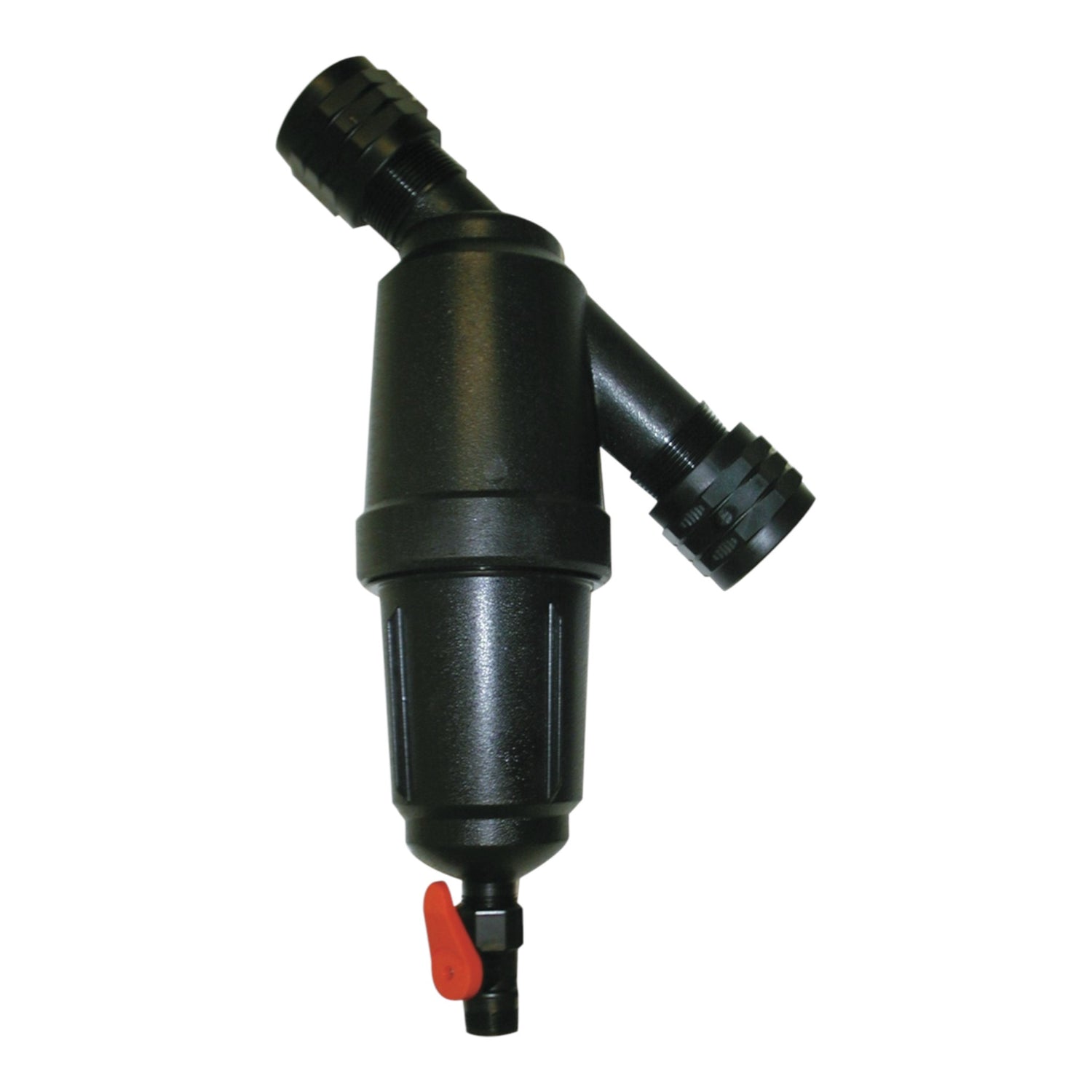
Unit price perThe 0.75" Irrigation Filter Element - 75 Mesh / 200 micron - Stainless Steel is a replacement filtration element for compatible professional horticultural irrigation systems.
The stated filtration grade is 75 mesh / 200 micron. Filtration helps protect drippers, sprinklers, foggers and valves from suspended debris that can reduce flow or cause blockage.
Key benefits
Why irrigation filtration matters
Small emitter waterways are vulnerable to suspended particles. A correctly selected filter reduces the amount of debris reaching downstream equipment, helping maintain irrigation uniformity and reducing avoidable blockage.
The stated grade for this version is 75 mesh / 200 micron. Select filtration according to the water source and the requirements of the most restrictive downstream component.
Choosing filter grade
Mesh and micron figures describe filtration fineness in different ways. A finer filter is not automatically better if it creates excessive pressure loss or requires impractical cleaning frequency. Follow the irrigation-equipment requirements and account for water quality and expected flow.
Installation & pressure loss
Install the filter in the correct flow direction and orientation for the filter body. Allow access for inspection and cleaning. Pipework should be supported so its weight does not strain the filter connections.
As debris accumulates, pressure loss across the filter can increase. Monitor the system and clean the element before restriction begins to affect downstream irrigation performance.
Cleaning & maintenance
Depressurise the system before opening a filter housing. Remove the element carefully and clean it using a method appropriate to the element material and the contamination present. Inspect seals, screens and housing components before reassembly.
Replace damaged or permanently blocked elements rather than operating with compromised filtration.
Water quality & system management
Filtration is one part of irrigation maintenance. Source-water quality, line flushing, storage tanks and chemical or biological contamination can all influence system reliability. Maintain the complete water system rather than relying on the filter alone.
0.75" Irrigation Filter Element - 75 Mesh / 200 micron - Stainless Steel product details
| Product type | Replacement filter element |
|---|---|
| Stated size | 0.75" |
| Filtration grade | 75 mesh |
| Equivalent stated filtration | 200 micron |
| Colour | White |
| Element material | Stainless steel |
| Application | Professional horticultural irrigation |
0.75" Irrigation Filter Element - 75 Mesh / 200 micron - Stainless Steel FAQs
What filtration grade is stated?
This version is stated as 75 mesh / 200 micron. What is the filter used for?
It helps remove suspended debris before water reaches downstream irrigation equipment such as drippers, sprinklers, foggers and valves. How do I choose the right filtration grade?
Follow the requirements of the downstream irrigation equipment and consider water quality, flow demand and acceptable pressure loss. Does a finer filter always improve the system?
No. Excessively fine filtration can increase pressure loss and cleaning frequency if it is not appropriate to the water source and equipment. When should the filter be cleaned?
Inspect and clean it before accumulated debris causes unacceptable pressure loss or reduced downstream performance. Should the system be depressurised before opening the filter?
Yes. Safely isolate and depressurise the system before opening a filter housing. Can a damaged element be reused?
No. Replace damaged, distorted or persistently blocked filtration elements. Does filtration remove the need to flush irrigation lines?
No. Filtration and line flushing perform different roles and both may be required as part of system maintenance. How can I tell if the filter is restricting flow?
A growing pressure difference across the filter or reduced downstream performance can indicate that cleaning or inspection is required.
£0.00
Unit price per£0.00
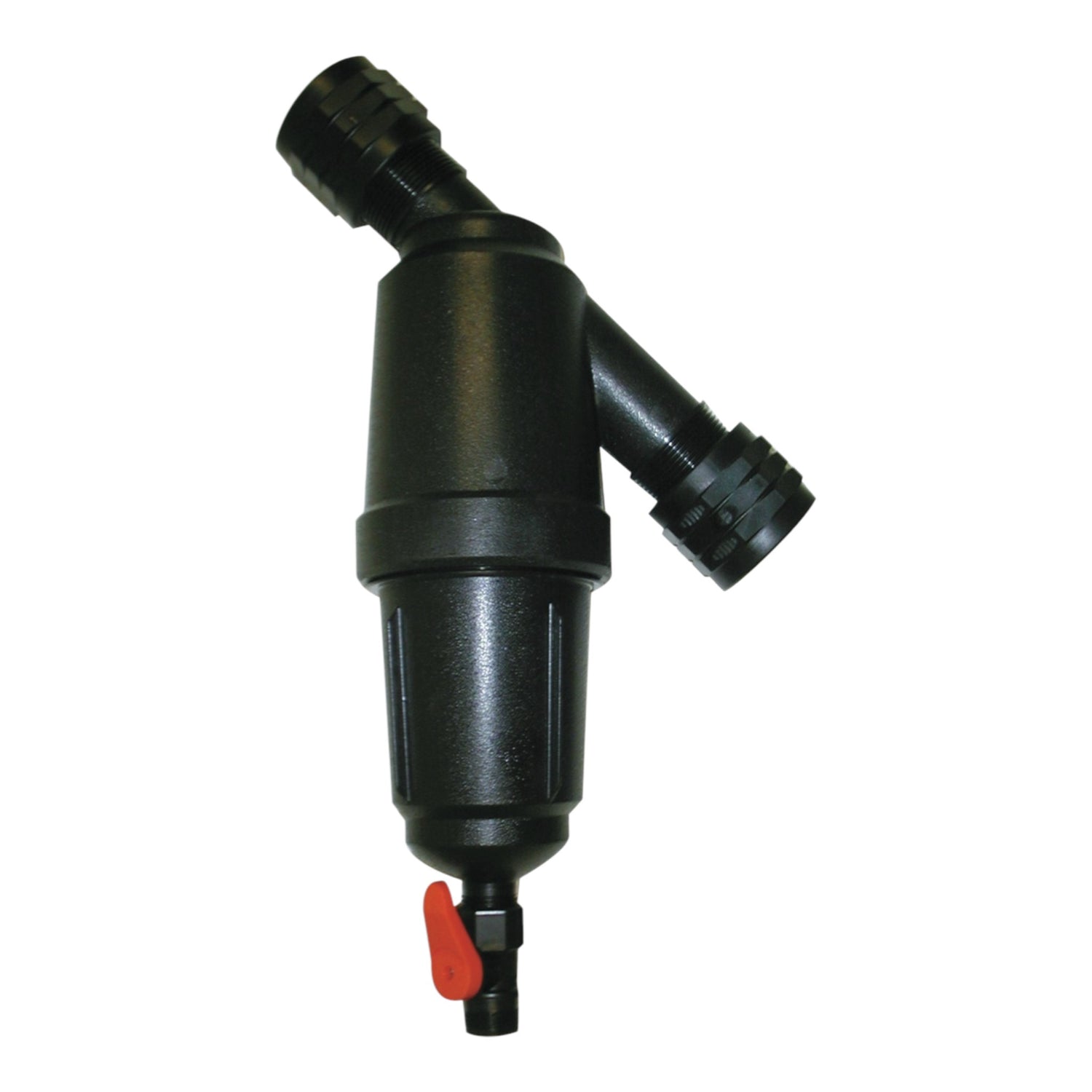
Unit price perThe 0.75" Irrigation Filter Element - 155 Mesh / 100 micron is a replacement filtration element for compatible professional horticultural irrigation systems.
The stated filtration grade is 155 mesh / 100 micron. Filtration helps protect drippers, sprinklers, foggers and valves from suspended debris that can reduce flow or cause blockage.
Key benefits
Why irrigation filtration matters
Small emitter waterways are vulnerable to suspended particles. A correctly selected filter reduces the amount of debris reaching downstream equipment, helping maintain irrigation uniformity and reducing avoidable blockage.
The stated grade for this version is 155 mesh / 100 micron. Select filtration according to the water source and the requirements of the most restrictive downstream component.
Choosing filter grade
Mesh and micron figures describe filtration fineness in different ways. A finer filter is not automatically better if it creates excessive pressure loss or requires impractical cleaning frequency. Follow the irrigation-equipment requirements and account for water quality and expected flow.
Installation & pressure loss
Install the filter in the correct flow direction and orientation for the filter body. Allow access for inspection and cleaning. Pipework should be supported so its weight does not strain the filter connections.
As debris accumulates, pressure loss across the filter can increase. Monitor the system and clean the element before restriction begins to affect downstream irrigation performance.
Cleaning & maintenance
Depressurise the system before opening a filter housing. Remove the element carefully and clean it using a method appropriate to the element material and the contamination present. Inspect seals, screens and housing components before reassembly.
Replace damaged or permanently blocked elements rather than operating with compromised filtration.
Water quality & system management
Filtration is one part of irrigation maintenance. Source-water quality, line flushing, storage tanks and chemical or biological contamination can all influence system reliability. Maintain the complete water system rather than relying on the filter alone.
0.75" Irrigation Filter Element - 155 Mesh / 100 micron product details
| Product type | Replacement filter element |
|---|---|
| Stated size | 0.75" |
| Filtration grade | 155 mesh |
| Equivalent stated filtration | 100 micron |
| Colour | Yellow |
| Application | Professional horticultural irrigation |
0.75" Irrigation Filter Element - 155 Mesh / 100 micron FAQs
What filtration grade is stated?
This version is stated as 155 mesh / 100 micron. What is the filter used for?
It helps remove suspended debris before water reaches downstream irrigation equipment such as drippers, sprinklers, foggers and valves. How do I choose the right filtration grade?
Follow the requirements of the downstream irrigation equipment and consider water quality, flow demand and acceptable pressure loss. Does a finer filter always improve the system?
No. Excessively fine filtration can increase pressure loss and cleaning frequency if it is not appropriate to the water source and equipment. When should the filter be cleaned?
Inspect and clean it before accumulated debris causes unacceptable pressure loss or reduced downstream performance. Should the system be depressurised before opening the filter?
Yes. Safely isolate and depressurise the system before opening a filter housing. Can a damaged element be reused?
No. Replace damaged, distorted or persistently blocked filtration elements. Does filtration remove the need to flush irrigation lines?
No. Filtration and line flushing perform different roles and both may be required as part of system maintenance. How can I tell if the filter is restricting flow?
A growing pressure difference across the filter or reduced downstream performance can indicate that cleaning or inspection is required.
£0.00
Unit price per£0.00
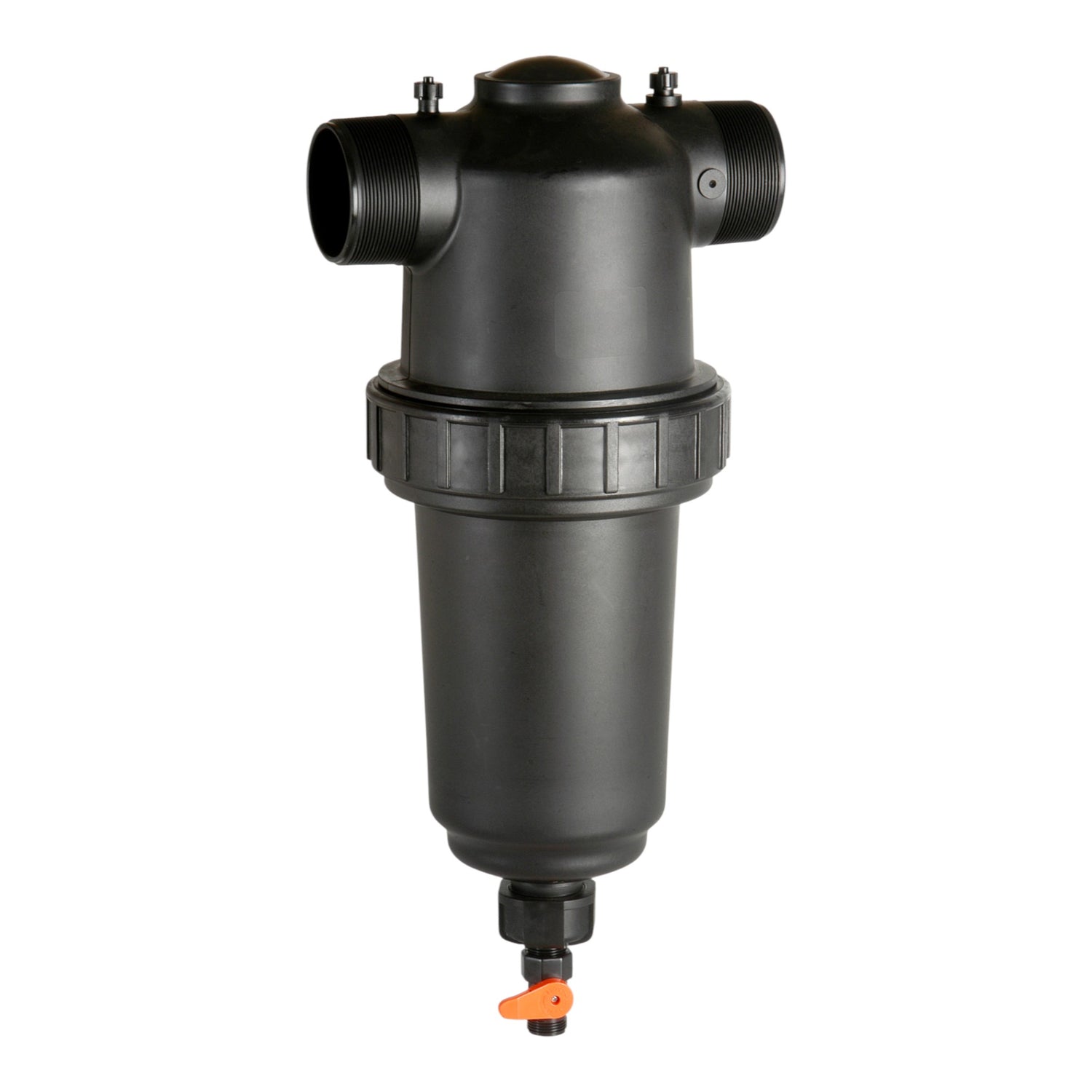
Unit price perThe 3" Irrigation Pressure Filter - 75 Mesh / 200 micron is a irrigation filter for compatible professional horticultural irrigation systems.
The stated filtration grade is 75 mesh / 200 micron. Filtration helps protect drippers, sprinklers, foggers and valves from suspended debris that can reduce flow or cause blockage.
Key benefits
Why irrigation filtration matters
Small emitter waterways are vulnerable to suspended particles. A correctly selected filter reduces the amount of debris reaching downstream equipment, helping maintain irrigation uniformity and reducing avoidable blockage.
The stated grade for this version is 75 mesh / 200 micron. Select filtration according to the water source and the requirements of the most restrictive downstream component.
Choosing filter grade
Mesh and micron figures describe filtration fineness in different ways. A finer filter is not automatically better if it creates excessive pressure loss or requires impractical cleaning frequency. Follow the irrigation-equipment requirements and account for water quality and expected flow.
Installation & pressure loss
Install the filter in the correct flow direction and orientation for the filter body. Allow access for inspection and cleaning. Pipework should be supported so its weight does not strain the filter connections.
As debris accumulates, pressure loss across the filter can increase. Monitor the system and clean the element before restriction begins to affect downstream irrigation performance.
Cleaning & maintenance
Depressurise the system before opening a filter housing. Remove the element carefully and clean it using a method appropriate to the element material and the contamination present. Inspect seals, screens and housing components before reassembly.
Replace damaged or permanently blocked elements rather than operating with compromised filtration.
Water quality & system management
Filtration is one part of irrigation maintenance. Source-water quality, line flushing, storage tanks and chemical or biological contamination can all influence system reliability. Maintain the complete water system rather than relying on the filter alone.
3" Irrigation Pressure Filter - 75 Mesh / 200 micron product details
| Product type | Pressure Filter |
|---|---|
| Stated size | 3" |
| Filtration grade | 75 mesh |
| Equivalent stated filtration | 200 micron |
| Colour | Grey |
| Application | Professional horticultural irrigation |
3" Irrigation Pressure Filter - 75 Mesh / 200 micron FAQs
What filtration grade is stated?
This version is stated as 75 mesh / 200 micron. What is the filter used for?
It helps remove suspended debris before water reaches downstream irrigation equipment such as drippers, sprinklers, foggers and valves. How do I choose the right filtration grade?
Follow the requirements of the downstream irrigation equipment and consider water quality, flow demand and acceptable pressure loss. Does a finer filter always improve the system?
No. Excessively fine filtration can increase pressure loss and cleaning frequency if it is not appropriate to the water source and equipment. When should the filter be cleaned?
Inspect and clean it before accumulated debris causes unacceptable pressure loss or reduced downstream performance. Should the system be depressurised before opening the filter?
Yes. Safely isolate and depressurise the system before opening a filter housing. Can a damaged element be reused?
No. Replace damaged, distorted or persistently blocked filtration elements. Does filtration remove the need to flush irrigation lines?
No. Filtration and line flushing perform different roles and both may be required as part of system maintenance. How can I tell if the filter is restricting flow?
A growing pressure difference across the filter or reduced downstream performance can indicate that cleaning or inspection is required.
£0.00
Unit price per£0.00
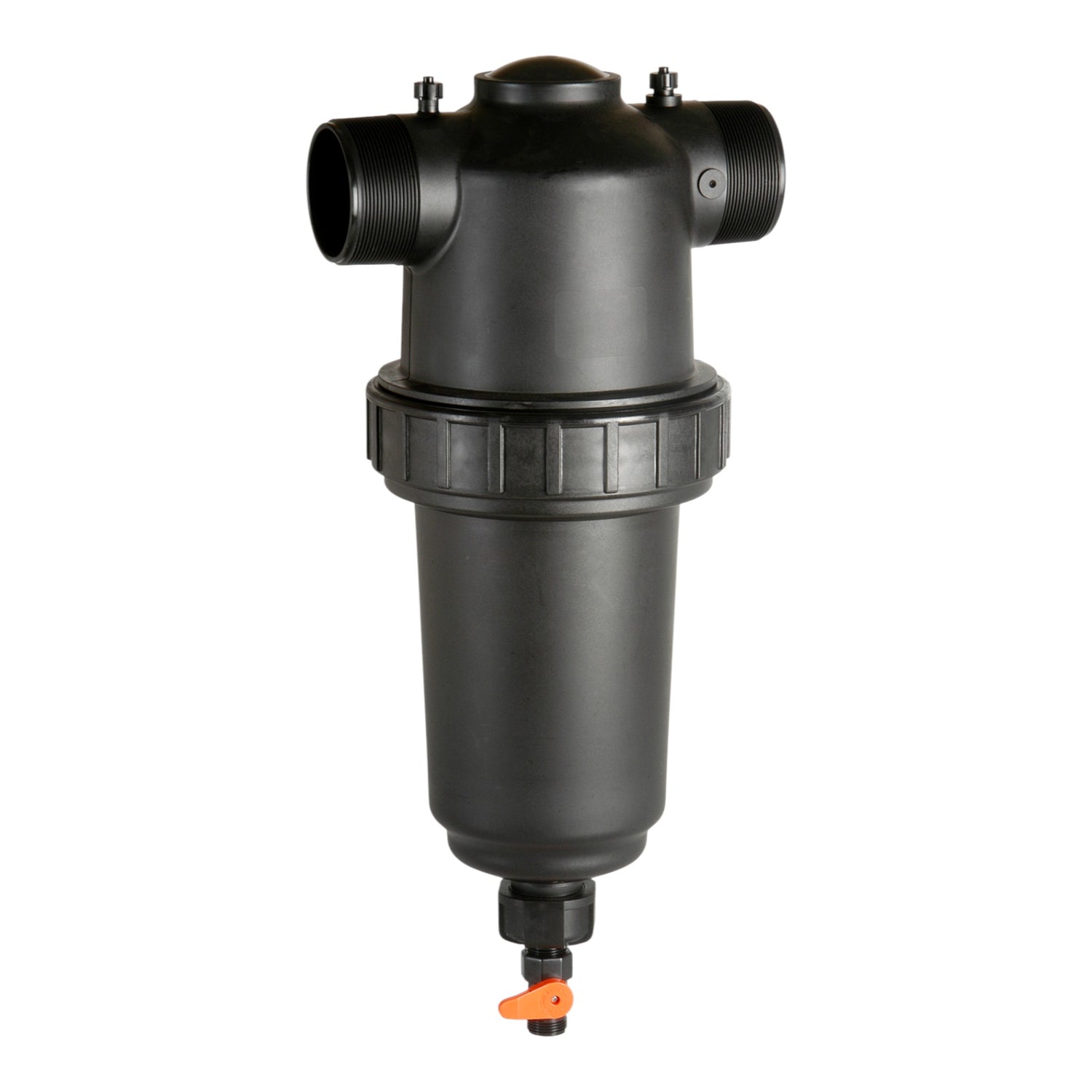
Unit price perThe 3" Irrigation Pressure Filter - 155 Mesh / 100 micron is a irrigation filter for compatible professional horticultural irrigation systems.
The stated filtration grade is 155 mesh / 100 micron. Filtration helps protect drippers, sprinklers, foggers and valves from suspended debris that can reduce flow or cause blockage.
Key benefits
Why irrigation filtration matters
Small emitter waterways are vulnerable to suspended particles. A correctly selected filter reduces the amount of debris reaching downstream equipment, helping maintain irrigation uniformity and reducing avoidable blockage.
The stated grade for this version is 155 mesh / 100 micron. Select filtration according to the water source and the requirements of the most restrictive downstream component.
Choosing filter grade
Mesh and micron figures describe filtration fineness in different ways. A finer filter is not automatically better if it creates excessive pressure loss or requires impractical cleaning frequency. Follow the irrigation-equipment requirements and account for water quality and expected flow.
Installation & pressure loss
Install the filter in the correct flow direction and orientation for the filter body. Allow access for inspection and cleaning. Pipework should be supported so its weight does not strain the filter connections.
As debris accumulates, pressure loss across the filter can increase. Monitor the system and clean the element before restriction begins to affect downstream irrigation performance.
Cleaning & maintenance
Depressurise the system before opening a filter housing. Remove the element carefully and clean it using a method appropriate to the element material and the contamination present. Inspect seals, screens and housing components before reassembly.
Replace damaged or permanently blocked elements rather than operating with compromised filtration.
Water quality & system management
Filtration is one part of irrigation maintenance. Source-water quality, line flushing, storage tanks and chemical or biological contamination can all influence system reliability. Maintain the complete water system rather than relying on the filter alone.
3" Irrigation Pressure Filter - 155 Mesh / 100 micron product details
| Product type | Pressure Filter |
|---|---|
| Stated size | 3" |
| Filtration grade | 155 mesh |
| Equivalent stated filtration | 100 micron |
| Colour | Yellow |
| Application | Professional horticultural irrigation |
3" Irrigation Pressure Filter - 155 Mesh / 100 micron FAQs
What filtration grade is stated?
This version is stated as 155 mesh / 100 micron. What is the filter used for?
It helps remove suspended debris before water reaches downstream irrigation equipment such as drippers, sprinklers, foggers and valves. How do I choose the right filtration grade?
Follow the requirements of the downstream irrigation equipment and consider water quality, flow demand and acceptable pressure loss. Does a finer filter always improve the system?
No. Excessively fine filtration can increase pressure loss and cleaning frequency if it is not appropriate to the water source and equipment. When should the filter be cleaned?
Inspect and clean it before accumulated debris causes unacceptable pressure loss or reduced downstream performance. Should the system be depressurised before opening the filter?
Yes. Safely isolate and depressurise the system before opening a filter housing. Can a damaged element be reused?
No. Replace damaged, distorted or persistently blocked filtration elements. Does filtration remove the need to flush irrigation lines?
No. Filtration and line flushing perform different roles and both may be required as part of system maintenance. How can I tell if the filter is restricting flow?
A growing pressure difference across the filter or reduced downstream performance can indicate that cleaning or inspection is required.
£0.00
Unit price per£0.00
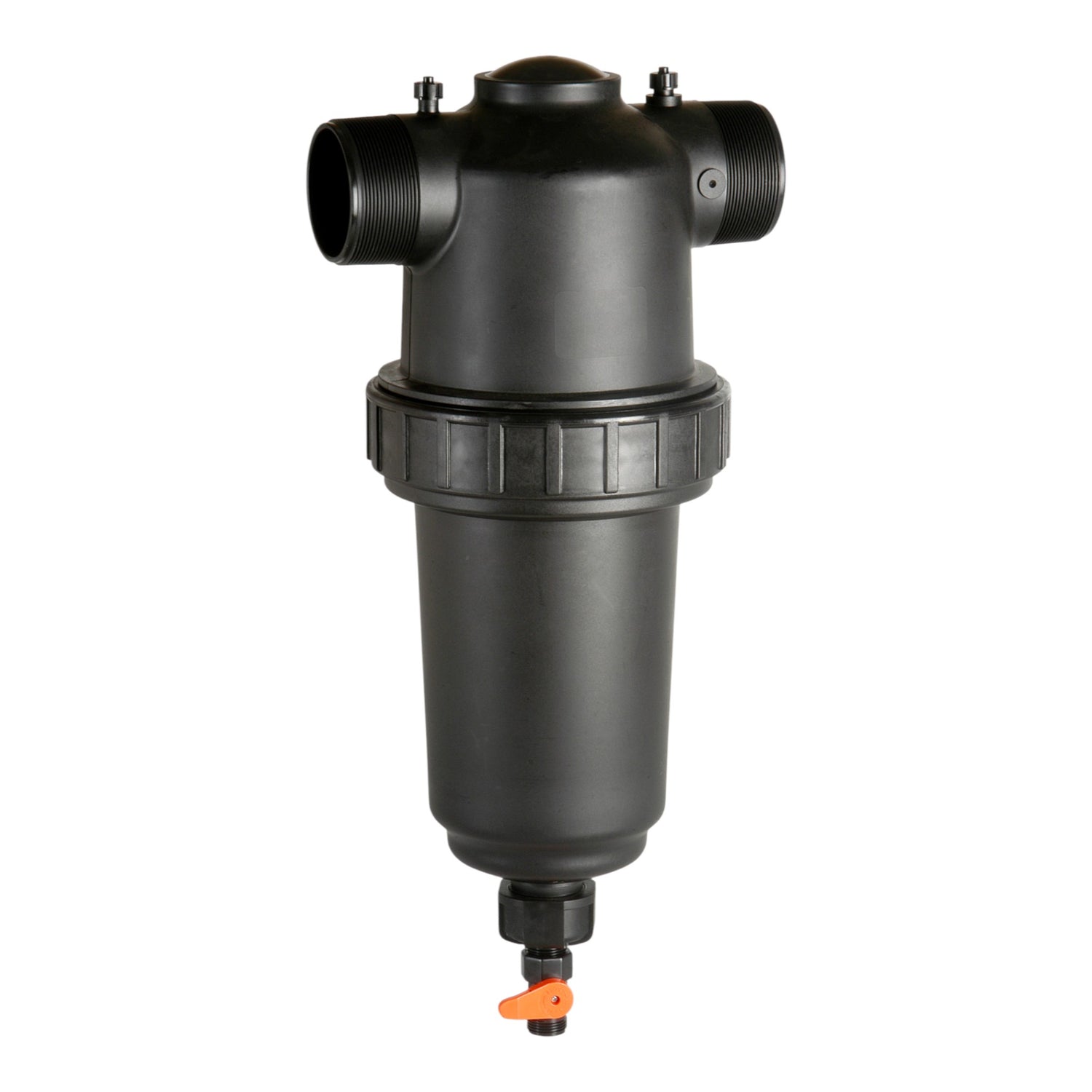
Unit price perThe 2" Irrigation Pressure Filter - 75 Mesh / 200 micron is a irrigation filter for compatible professional horticultural irrigation systems.
The stated filtration grade is 75 mesh / 200 micron. Filtration helps protect drippers, sprinklers, foggers and valves from suspended debris that can reduce flow or cause blockage.
Key benefits
Why irrigation filtration matters
Small emitter waterways are vulnerable to suspended particles. A correctly selected filter reduces the amount of debris reaching downstream equipment, helping maintain irrigation uniformity and reducing avoidable blockage.
The stated grade for this version is 75 mesh / 200 micron. Select filtration according to the water source and the requirements of the most restrictive downstream component.
Choosing filter grade
Mesh and micron figures describe filtration fineness in different ways. A finer filter is not automatically better if it creates excessive pressure loss or requires impractical cleaning frequency. Follow the irrigation-equipment requirements and account for water quality and expected flow.
Installation & pressure loss
Install the filter in the correct flow direction and orientation for the filter body. Allow access for inspection and cleaning. Pipework should be supported so its weight does not strain the filter connections.
As debris accumulates, pressure loss across the filter can increase. Monitor the system and clean the element before restriction begins to affect downstream irrigation performance.
Cleaning & maintenance
Depressurise the system before opening a filter housing. Remove the element carefully and clean it using a method appropriate to the element material and the contamination present. Inspect seals, screens and housing components before reassembly.
Replace damaged or permanently blocked elements rather than operating with compromised filtration.
Water quality & system management
Filtration is one part of irrigation maintenance. Source-water quality, line flushing, storage tanks and chemical or biological contamination can all influence system reliability. Maintain the complete water system rather than relying on the filter alone.
2" Irrigation Pressure Filter - 75 Mesh / 200 micron product details
| Product type | Pressure Filter |
|---|---|
| Stated size | 2" |
| Filtration grade | 75 mesh |
| Equivalent stated filtration | 200 micron |
| Colour | White |
| Application | Professional horticultural irrigation |
2" Irrigation Pressure Filter - 75 Mesh / 200 micron FAQs
What filtration grade is stated?
This version is stated as 75 mesh / 200 micron. What is the filter used for?
It helps remove suspended debris before water reaches downstream irrigation equipment such as drippers, sprinklers, foggers and valves. How do I choose the right filtration grade?
Follow the requirements of the downstream irrigation equipment and consider water quality, flow demand and acceptable pressure loss. Does a finer filter always improve the system?
No. Excessively fine filtration can increase pressure loss and cleaning frequency if it is not appropriate to the water source and equipment. When should the filter be cleaned?
Inspect and clean it before accumulated debris causes unacceptable pressure loss or reduced downstream performance. Should the system be depressurised before opening the filter?
Yes. Safely isolate and depressurise the system before opening a filter housing. Can a damaged element be reused?
No. Replace damaged, distorted or persistently blocked filtration elements. Does filtration remove the need to flush irrigation lines?
No. Filtration and line flushing perform different roles and both may be required as part of system maintenance. How can I tell if the filter is restricting flow?
A growing pressure difference across the filter or reduced downstream performance can indicate that cleaning or inspection is required.
£0.00
Unit price per£0.00
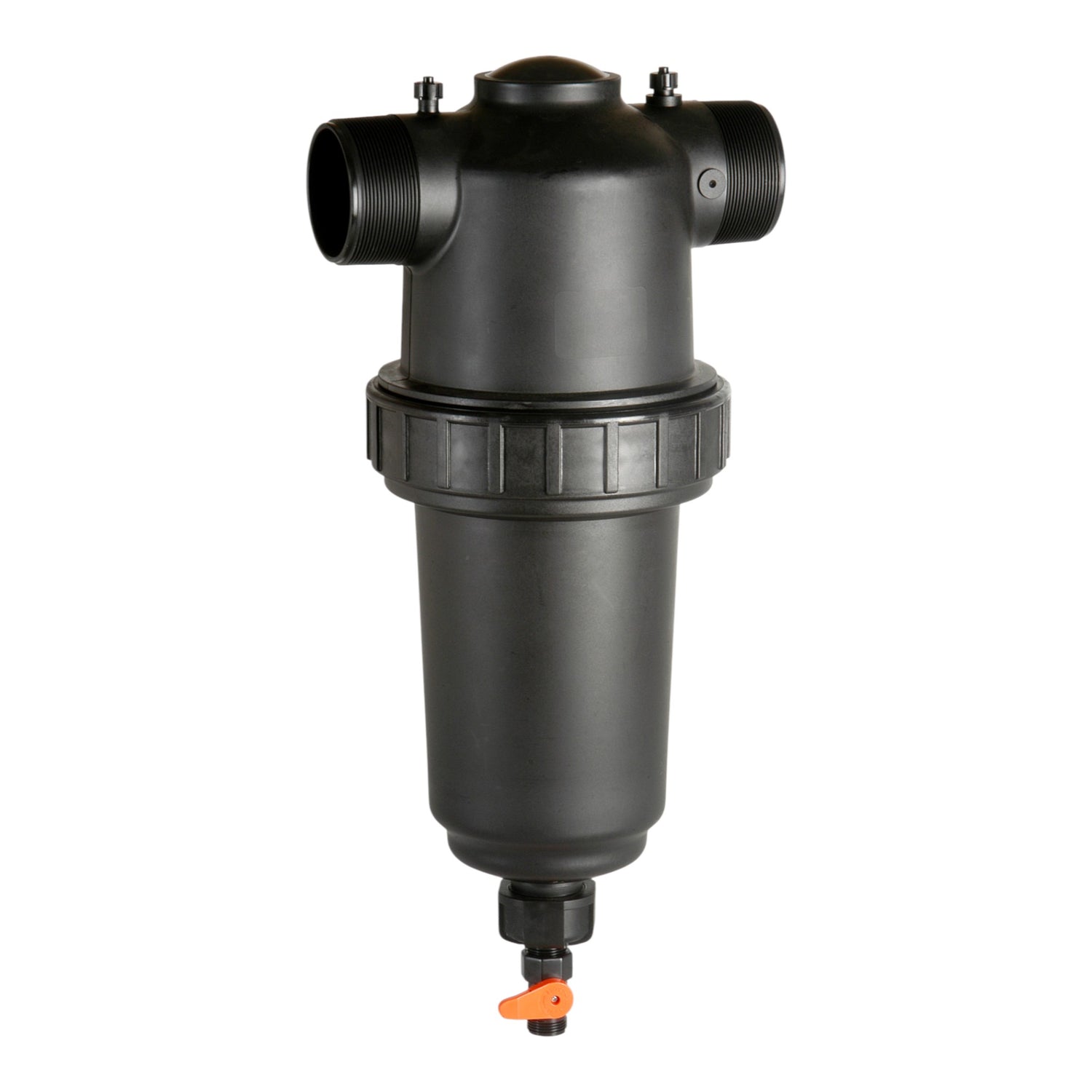
Unit price perThe 2" Irrigation Pressure Filter - 155 Mesh / 100 micron is a irrigation filter for compatible professional horticultural irrigation systems.
The stated filtration grade is 155 mesh / 100 micron. Filtration helps protect drippers, sprinklers, foggers and valves from suspended debris that can reduce flow or cause blockage.
Key benefits
Why irrigation filtration matters
Small emitter waterways are vulnerable to suspended particles. A correctly selected filter reduces the amount of debris reaching downstream equipment, helping maintain irrigation uniformity and reducing avoidable blockage.
The stated grade for this version is 155 mesh / 100 micron. Select filtration according to the water source and the requirements of the most restrictive downstream component.
Choosing filter grade
Mesh and micron figures describe filtration fineness in different ways. A finer filter is not automatically better if it creates excessive pressure loss or requires impractical cleaning frequency. Follow the irrigation-equipment requirements and account for water quality and expected flow.
Installation & pressure loss
Install the filter in the correct flow direction and orientation for the filter body. Allow access for inspection and cleaning. Pipework should be supported so its weight does not strain the filter connections.
As debris accumulates, pressure loss across the filter can increase. Monitor the system and clean the element before restriction begins to affect downstream irrigation performance.
Cleaning & maintenance
Depressurise the system before opening a filter housing. Remove the element carefully and clean it using a method appropriate to the element material and the contamination present. Inspect seals, screens and housing components before reassembly.
Replace damaged or permanently blocked elements rather than operating with compromised filtration.
Water quality & system management
Filtration is one part of irrigation maintenance. Source-water quality, line flushing, storage tanks and chemical or biological contamination can all influence system reliability. Maintain the complete water system rather than relying on the filter alone.
2" Irrigation Pressure Filter - 155 Mesh / 100 micron product details
| Product type | Pressure Filter |
|---|---|
| Stated size | 2" |
| Filtration grade | 155 mesh |
| Equivalent stated filtration | 100 micron |
| Colour | Yellow |
| Application | Professional horticultural irrigation |
2" Irrigation Pressure Filter - 155 Mesh / 100 micron FAQs
What filtration grade is stated?
This version is stated as 155 mesh / 100 micron. What is the filter used for?
It helps remove suspended debris before water reaches downstream irrigation equipment such as drippers, sprinklers, foggers and valves. How do I choose the right filtration grade?
Follow the requirements of the downstream irrigation equipment and consider water quality, flow demand and acceptable pressure loss. Does a finer filter always improve the system?
No. Excessively fine filtration can increase pressure loss and cleaning frequency if it is not appropriate to the water source and equipment. When should the filter be cleaned?
Inspect and clean it before accumulated debris causes unacceptable pressure loss or reduced downstream performance. Should the system be depressurised before opening the filter?
Yes. Safely isolate and depressurise the system before opening a filter housing. Can a damaged element be reused?
No. Replace damaged, distorted or persistently blocked filtration elements. Does filtration remove the need to flush irrigation lines?
No. Filtration and line flushing perform different roles and both may be required as part of system maintenance. How can I tell if the filter is restricting flow?
A growing pressure difference across the filter or reduced downstream performance can indicate that cleaning or inspection is required.
£259.31
Unit price per£259.31
Unit price perThe 2" Pressure-Regulating Solenoid Valve - 0.8–6 bar - 24V AC is designed for automated control of compatible professional irrigation zones.
Solenoid and pressure-regulating valves allow irrigation sections to be opened, closed or controlled as part of a correctly designed nursery, greenhouse, landscape or horticultural water system.
Key benefits
Pressure regulation within irrigation zones
This valve is stated with a pressure-regulation range of 0.8–6 bar. Set and verify downstream pressure according to the requirements of the irrigation equipment and zone rather than assuming one pressure is suitable for every emitter or sprinkler.
Pressure regulation cannot compensate for an undersized water supply, excessive flow demand or unsuitable pipe sizing.
Electrical compatibility
The stated electrical designation for this version is 24V AC. Confirm controller output, solenoid type and wiring requirements before connection. Do not apply an assumed voltage simply because another valve in the same irrigation system uses it.
Electrical installation in wet horticultural environments should use suitable connections and protection and should be carried out in accordance with the applicable installation requirements.
Installation & commissioning
Flush upstream pipework before final commissioning where appropriate. Install the valve with adequate access for service, support connected pipework and avoid transferring pipe strain into the valve body.
Pressurise the system gradually, check for leakage and confirm that the valve opens and closes correctly under normal controller operation.
Flow, pressure & filtration
Valve performance depends on the complete hydraulic system. Available pressure, flow demand, pipe size, elevation and downstream equipment all influence operation. Use filtration appropriate to the water source and the irrigation components being protected.
Maintenance & fault finding
If a valve fails to open, close or regulate correctly, isolate the system safely and check controller output, wiring, solenoid condition, debris, diaphragm or internal components as appropriate to the valve design. Replace damaged parts rather than forcing manual operation.
2" Pressure-Regulating Solenoid Valve - 0.8–6 bar - 24V AC product details
| Product type | Pressure-Regulating Solenoid Valve |
|---|---|
| Valve size | 2" |
| Electrical designation | 24V AC |
| Pressure-regulation range | 0.8–6 bar |
| Application | Professional irrigation-zone control |
2" Pressure-Regulating Solenoid Valve - 0.8–6 bar - 24V AC FAQs
What size is this valve?
The stated valve size is 2". What is a solenoid irrigation valve used for?
It opens and closes an irrigation zone in response to a compatible electrical controller or switching system. What pressure range is stated?
The stated pressure-regulation range is 0.8–6 bar. Can I connect it to any irrigation controller?
No. Confirm the required solenoid voltage/type and controller output before connection. Does valve size alone determine how much water the zone can supply?
No. Available pressure, pipe sizing, valve characteristics, elevation and downstream flow demand all affect system performance. Should pipework be flushed before commissioning?
Yes where appropriate, to reduce the risk of installation debris entering the valve or downstream irrigation equipment. Is filtration important?
Yes. Suitable filtration can reduce debris-related problems in valves and downstream emitters. How should the valve be installed?
Follow the correct flow direction, support connected pipework and leave adequate access for servicing. What should I check if the valve will not open or close?
Safely check controller output, wiring, solenoid operation, water supply and internal contamination or damage as appropriate. Should the valve be leak-tested after installation?
Yes. Pressurise the system gradually and inspect the valve and connections before routine operation.
£285.16
Unit price per£285.16
Unit price perThe 2" Pressure-Regulating Control Valve - 0.8–6 bar - 24V AC is designed for automated control of compatible professional irrigation zones.
Solenoid and pressure-regulating valves allow irrigation sections to be opened, closed or controlled as part of a correctly designed nursery, greenhouse, landscape or horticultural water system.
Key benefits
Pressure regulation within irrigation zones
This valve is stated with a pressure-regulation range of 0.8–6 bar. Set and verify downstream pressure according to the requirements of the irrigation equipment and zone rather than assuming one pressure is suitable for every emitter or sprinkler.
Pressure regulation cannot compensate for an undersized water supply, excessive flow demand or unsuitable pipe sizing.
Electrical compatibility
Confirm controller output, solenoid type and wiring requirements before connection. Do not apply an assumed voltage simply because another valve in the same irrigation system uses it.
Electrical installation in wet horticultural environments should use suitable connections and protection and should be carried out in accordance with the applicable installation requirements.
Installation & commissioning
Flush upstream pipework before final commissioning where appropriate. Install the valve with adequate access for service, support connected pipework and avoid transferring pipe strain into the valve body.
Pressurise the system gradually, check for leakage and confirm that the valve opens and closes correctly under normal controller operation.
Flow, pressure & filtration
Valve performance depends on the complete hydraulic system. Available pressure, flow demand, pipe size, elevation and downstream equipment all influence operation. Use filtration appropriate to the water source and the irrigation components being protected.
Maintenance & fault finding
If a valve fails to open, close or regulate correctly, isolate the system safely and check controller output, wiring, solenoid condition, debris, diaphragm or internal components as appropriate to the valve design. Replace damaged parts rather than forcing manual operation.
2" Pressure-Regulating Control Valve - 0.8–6 bar - 24V AC product details
| Product type | Pressure-Regulating Control Valve |
|---|---|
| Valve size | 2" |
| Pressure-regulation range | 0.8–6 bar |
| Application | Professional irrigation-zone control |
2" Pressure-Regulating Control Valve - 0.8–6 bar - 24V AC FAQs
What size is this valve?
The stated valve size is 2". What is a solenoid irrigation valve used for?
It opens and closes an irrigation zone in response to a compatible electrical controller or switching system. What pressure range is stated?
The stated pressure-regulation range is 0.8–6 bar. Can I connect it to any irrigation controller?
No. Confirm the required solenoid voltage/type and controller output before connection. Does valve size alone determine how much water the zone can supply?
No. Available pressure, pipe sizing, valve characteristics, elevation and downstream flow demand all affect system performance. Should pipework be flushed before commissioning?
Yes where appropriate, to reduce the risk of installation debris entering the valve or downstream irrigation equipment. Is filtration important?
Yes. Suitable filtration can reduce debris-related problems in valves and downstream emitters. How should the valve be installed?
Follow the correct flow direction, support connected pipework and leave adequate access for servicing. What should I check if the valve will not open or close?
Safely check controller output, wiring, solenoid operation, water supply and internal contamination or damage as appropriate. Should the valve be leak-tested after installation?
Yes. Pressurise the system gradually and inspect the valve and connections before routine operation.
£227.02
Unit price per£227.02
Unit price perThe 1.5" Pressure-Regulating Solenoid Valve - 0.8–6 bar - 24V AC is designed for automated control of compatible professional irrigation zones.
Solenoid and pressure-regulating valves allow irrigation sections to be opened, closed or controlled as part of a correctly designed nursery, greenhouse, landscape or horticultural water system.
Key benefits
Pressure regulation within irrigation zones
This valve is stated with a pressure-regulation range of 0.8–6 bar. Set and verify downstream pressure according to the requirements of the irrigation equipment and zone rather than assuming one pressure is suitable for every emitter or sprinkler.
Pressure regulation cannot compensate for an undersized water supply, excessive flow demand or unsuitable pipe sizing.
Electrical compatibility
The stated electrical designation for this version is 24V AC. Confirm controller output, solenoid type and wiring requirements before connection. Do not apply an assumed voltage simply because another valve in the same irrigation system uses it.
Electrical installation in wet horticultural environments should use suitable connections and protection and should be carried out in accordance with the applicable installation requirements.
Installation & commissioning
Flush upstream pipework before final commissioning where appropriate. Install the valve with adequate access for service, support connected pipework and avoid transferring pipe strain into the valve body.
Pressurise the system gradually, check for leakage and confirm that the valve opens and closes correctly under normal controller operation.
Flow, pressure & filtration
Valve performance depends on the complete hydraulic system. Available pressure, flow demand, pipe size, elevation and downstream equipment all influence operation. Use filtration appropriate to the water source and the irrigation components being protected.
Maintenance & fault finding
If a valve fails to open, close or regulate correctly, isolate the system safely and check controller output, wiring, solenoid condition, debris, diaphragm or internal components as appropriate to the valve design. Replace damaged parts rather than forcing manual operation.
1.5" Pressure-Regulating Solenoid Valve - 0.8–6 bar - 24V AC product details
| Product type | Pressure-Regulating Solenoid Valve |
|---|---|
| Valve size | 1.5" |
| Electrical designation | 24V AC |
| Pressure-regulation range | 0.8–6 bar |
| Application | Professional irrigation-zone control |
1.5" Pressure-Regulating Solenoid Valve - 0.8–6 bar - 24V AC FAQs
What size is this valve?
The stated valve size is 1.5". What is a solenoid irrigation valve used for?
It opens and closes an irrigation zone in response to a compatible electrical controller or switching system. What pressure range is stated?
The stated pressure-regulation range is 0.8–6 bar. Can I connect it to any irrigation controller?
No. Confirm the required solenoid voltage/type and controller output before connection. Does valve size alone determine how much water the zone can supply?
No. Available pressure, pipe sizing, valve characteristics, elevation and downstream flow demand all affect system performance. Should pipework be flushed before commissioning?
Yes where appropriate, to reduce the risk of installation debris entering the valve or downstream irrigation equipment. Is filtration important?
Yes. Suitable filtration can reduce debris-related problems in valves and downstream emitters. How should the valve be installed?
Follow the correct flow direction, support connected pipework and leave adequate access for servicing. What should I check if the valve will not open or close?
Safely check controller output, wiring, solenoid operation, water supply and internal contamination or damage as appropriate. Should the valve be leak-tested after installation?
Yes. Pressurise the system gradually and inspect the valve and connections before routine operation.
£242.24
Unit price per£242.24
Unit price perThe 1.5" Pressure-Regulating Control Valve - 0.8–6 bar - 24V AC is designed for automated control of compatible professional irrigation zones.
Solenoid and pressure-regulating valves allow irrigation sections to be opened, closed or controlled as part of a correctly designed nursery, greenhouse, landscape or horticultural water system.
Key benefits
Pressure regulation within irrigation zones
This valve is stated with a pressure-regulation range of 0.8–6 bar. Set and verify downstream pressure according to the requirements of the irrigation equipment and zone rather than assuming one pressure is suitable for every emitter or sprinkler.
Pressure regulation cannot compensate for an undersized water supply, excessive flow demand or unsuitable pipe sizing.
Electrical compatibility
Confirm controller output, solenoid type and wiring requirements before connection. Do not apply an assumed voltage simply because another valve in the same irrigation system uses it.
Electrical installation in wet horticultural environments should use suitable connections and protection and should be carried out in accordance with the applicable installation requirements.
Installation & commissioning
Flush upstream pipework before final commissioning where appropriate. Install the valve with adequate access for service, support connected pipework and avoid transferring pipe strain into the valve body.
Pressurise the system gradually, check for leakage and confirm that the valve opens and closes correctly under normal controller operation.
Flow, pressure & filtration
Valve performance depends on the complete hydraulic system. Available pressure, flow demand, pipe size, elevation and downstream equipment all influence operation. Use filtration appropriate to the water source and the irrigation components being protected.
Maintenance & fault finding
If a valve fails to open, close or regulate correctly, isolate the system safely and check controller output, wiring, solenoid condition, debris, diaphragm or internal components as appropriate to the valve design. Replace damaged parts rather than forcing manual operation.
1.5" Pressure-Regulating Control Valve - 0.8–6 bar - 24V AC product details
| Product type | Pressure-Regulating Control Valve |
|---|---|
| Valve size | 1.5" |
| Pressure-regulation range | 0.8–6 bar |
| Application | Professional irrigation-zone control |
1.5" Pressure-Regulating Control Valve - 0.8–6 bar - 24V AC FAQs
What size is this valve?
The stated valve size is 1.5". What is a solenoid irrigation valve used for?
It opens and closes an irrigation zone in response to a compatible electrical controller or switching system. What pressure range is stated?
The stated pressure-regulation range is 0.8–6 bar. Can I connect it to any irrigation controller?
No. Confirm the required solenoid voltage/type and controller output before connection. Does valve size alone determine how much water the zone can supply?
No. Available pressure, pipe sizing, valve characteristics, elevation and downstream flow demand all affect system performance. Should pipework be flushed before commissioning?
Yes where appropriate, to reduce the risk of installation debris entering the valve or downstream irrigation equipment. Is filtration important?
Yes. Suitable filtration can reduce debris-related problems in valves and downstream emitters. How should the valve be installed?
Follow the correct flow direction, support connected pipework and leave adequate access for servicing. What should I check if the valve will not open or close?
Safely check controller output, wiring, solenoid operation, water supply and internal contamination or damage as appropriate. Should the valve be leak-tested after installation?
Yes. Pressurise the system gradually and inspect the valve and connections before routine operation.

£70.78
Unit price per£70.78
Unit price perThe 16cm Metal Support Hooks for PVC Pipe and Accessories (Pack of 100) is designed for supporting compatible PVC pipe and accessories in professional horticultural, nursery, landscaping or warehouse applications.
Use the material according to the site, crop and installation requirements, and match fixing methods to the expected load and exposure.
Key benefits
Practical installation & handling
Use the product only for a compatible application and avoid overloading or forcing fixings. Position components so they do not create sharp projections or avoidable hazards in working areas.
Installation & site conditions
Plan fixing points, overlaps and support before installation. Outdoor materials may be exposed to wind, UV, rain and mechanical damage, so inspect them periodically and repair or replace damaged sections.
Storage & reuse
Store unused material clean and dry and protect rolls, fabrics and fixings from crushing or contamination. Reuse only where the product remains serviceable and appropriate hygiene requirements can be met.
16cm Metal Support Hooks for PVC Pipe and Accessories (Pack of 100) product details
| Product type | PVC Pipe Support Hooks |
|---|---|
| Primary use | supporting compatible PVC pipe and accessories |
| Source designation | 16cm Metal Support Hooks for PVC Pipe and Accessories (Pack of 100) |
| Application | Professional horticulture, landscaping or warehouse use |
16cm Metal Support Hooks for PVC Pipe and Accessories (Pack of 100) FAQs
What is this product used for?
Supporting compatible pvc pipe and accessories. Are the dimensions in the title the supplied size?
Yes. The dimensions and pack information shown are retained from the source product specification. How should it be installed?
Use fixing and support methods appropriate to the material, site and expected load or exposure. Can outdoor conditions affect the product?
Yes. Wind, weather, UV exposure and physical contact can affect materials over time. Should the installation be inspected?
Yes. Check fixings and material condition periodically and repair or replace damaged sections. How should unused material be stored?
Keep it clean, dry and protected from crushing, contamination and unnecessary weather exposure. Can it be reused?
Where it remains serviceable, reuse may be possible subject to the application and appropriate hygiene requirements. Does the product replace good site or crop management?
No. It should be used as one part of an appropriate horticultural, landscape or packing system.
The 2.5mm Galvanised Wire 5kg (approx 130M) is a practical horticultural wire designed for plant training and support.
It is suited to routine horticultural work in nurseries, greenhouses, garden centres and gardens where a straightforward accessory is required.
Key benefits
How to use it
Use this product for plant training and support. Select the size and format to suit the plant, container or growing area and check its position periodically as plants develop.
When supporting stems, avoid fastening so tightly that growth is restricted. Check ties and supports during the season and adjust them as stems thicken.
For professional & garden use
This accessory can be used for individual plants and displays or incorporated into larger nursery, landscaping and retail programmes.
2.5mm Galvanised Wire 5kg (approx 130M) product details
| Supplier | Creation Horticulture |
|---|---|
| Product type | Horticultural wire |
| Stated size | 2.5mm |
| Primary use | plant training and support |
2.5mm Galvanised Wire 5kg (approx 130M) FAQs
What size is this product?
The stated size is 2.5mm. What is this product used for?
It is designed for plant training and support. Can it be used on young plants?
Yes, where the size and support method are appropriate. Leave enough room for stems to expand and check the support as the plant grows. How tightly should plants be secured?
Secure plants firmly enough for support but not so tightly that stems are pinched or restricted. Should supports be checked during the season?
Yes. Adjust ties, clips and supports as plants grow and replace anything that has become damaged or restrictive.
The 2.5mm Galvanised Wire 25kg (approx 650M) is a practical horticultural wire designed for plant training and support.
It is suited to routine horticultural work in nurseries, greenhouses, garden centres and gardens where a straightforward accessory is required.
Key benefits
How to use it
Use this product for plant training and support. Select the size and format to suit the plant, container or growing area and check its position periodically as plants develop.
When supporting stems, avoid fastening so tightly that growth is restricted. Check ties and supports during the season and adjust them as stems thicken.
For professional & garden use
This accessory can be used for individual plants and displays or incorporated into larger nursery, landscaping and retail programmes.
2.5mm Galvanised Wire 25kg (approx 650M) product details
| Supplier | Creation Horticulture |
|---|---|
| Product type | Horticultural wire |
| Stated size | 2.5mm |
| Primary use | plant training and support |
2.5mm Galvanised Wire 25kg (approx 650M) FAQs
What size is this product?
The stated size is 2.5mm. What is this product used for?
It is designed for plant training and support. Can it be used on young plants?
Yes, where the size and support method are appropriate. Leave enough room for stems to expand and check the support as the plant grows. How tightly should plants be secured?
Secure plants firmly enough for support but not so tightly that stems are pinched or restricted. Should supports be checked during the season?
Yes. Adjust ties, clips and supports as plants grow and replace anything that has become damaged or restrictive.
The PVC 50mm x 2" Hose Adaptor is designed for connecting compatible PVC pipework to a hose connection in compatible professional irrigation and water-distribution installations.
Match PVC fittings by pipe diameter, thread size and connection type so the joint can be assembled without forcing incompatible components.
Key benefits
Building serviceable PVC connections
Use only with compatible PVC pipe and the stated thread or hose interface. Cut pipe squarely, deburr it and dry-fit the layout before permanent assembly.
For threaded joints, use a sealing method appropriate to the fitting and system and avoid excessive tightening that could damage plastic threads.
Installation & commissioning
Support pipework so fittings do not carry avoidable bending loads. Plan unions and service points where equipment may need to be removed later.
After the applicable assembly or curing process, commission gradually and inspect joints for leakage before routine operation.
Compatibility & maintenance
Confirm that pipe, fittings, adhesive and operating conditions are compatible with the intended system. Nominal dimensions alone do not establish pressure suitability.
Inspect accessible joints periodically and investigate leakage rather than relying on repeated tightening or temporary external sealing.
PVC 50mm x 2" Hose Adaptor product details
| Product type | PVC Hose Adaptor |
|---|---|
| Primary use | connecting compatible PVC pipework to a hose connection |
| Stated size / pack | 50mm x 2" |
| Application | Compatible PVC irrigation and water-distribution systems |
PVC 50mm x 2" Hose Adaptor FAQs
What is this product used for?
Connecting compatible pvc pipework to a hose connection. What size or pack is this version?
The stated size/pack is 50mm x 2". How do I check compatibility?
Confirm pipe diameter, thread or hose interface, material and complete-system requirements before assembly. Should PVC pipe be cut squarely?
Yes. Clean square cuts and deburring help fittings seat correctly. Can I pressure-test immediately after assembly?
Follow the applicable fitting or adhesive manufacturer's curing and commissioning instructions. Can threaded plastic fittings be overtightened?
Yes. Excessive force can damage threads or fitting bodies. Should pipework be supported?
Yes. Support runs so fittings and unions are not subjected to unnecessary bending or weight. What should I do if a joint leaks?
Safely isolate the system and inspect the joint, sealing method and component condition.
The PVC 40mm x 1.5" Hose Adaptor is designed for connecting compatible PVC pipework to a hose connection in compatible professional irrigation and water-distribution installations.
Match PVC fittings by pipe diameter, thread size and connection type so the joint can be assembled without forcing incompatible components.
Key benefits
Building serviceable PVC connections
Use only with compatible PVC pipe and the stated thread or hose interface. Cut pipe squarely, deburr it and dry-fit the layout before permanent assembly.
For threaded joints, use a sealing method appropriate to the fitting and system and avoid excessive tightening that could damage plastic threads.
Installation & commissioning
Support pipework so fittings do not carry avoidable bending loads. Plan unions and service points where equipment may need to be removed later.
After the applicable assembly or curing process, commission gradually and inspect joints for leakage before routine operation.
Compatibility & maintenance
Confirm that pipe, fittings, adhesive and operating conditions are compatible with the intended system. Nominal dimensions alone do not establish pressure suitability.
Inspect accessible joints periodically and investigate leakage rather than relying on repeated tightening or temporary external sealing.
PVC 40mm x 1.5" Hose Adaptor product details
| Product type | PVC Hose Adaptor |
|---|---|
| Primary use | connecting compatible PVC pipework to a hose connection |
| Stated size / pack | 40mm x 1.5" |
| Application | Compatible PVC irrigation and water-distribution systems |
PVC 40mm x 1.5" Hose Adaptor FAQs
What is this product used for?
Connecting compatible pvc pipework to a hose connection. What size or pack is this version?
The stated size/pack is 40mm x 1.5". How do I check compatibility?
Confirm pipe diameter, thread or hose interface, material and complete-system requirements before assembly. Should PVC pipe be cut squarely?
Yes. Clean square cuts and deburring help fittings seat correctly. Can I pressure-test immediately after assembly?
Follow the applicable fitting or adhesive manufacturer's curing and commissioning instructions. Can threaded plastic fittings be overtightened?
Yes. Excessive force can damage threads or fitting bodies. Should pipework be supported?
Yes. Support runs so fittings and unions are not subjected to unnecessary bending or weight. What should I do if a joint leaks?
Safely isolate the system and inspect the joint, sealing method and component condition.
The PVC 32mm x 1.25" Hose Adaptor is designed for connecting compatible PVC pipework to a hose connection in compatible professional irrigation and water-distribution installations.
Match PVC fittings by pipe diameter, thread size and connection type so the joint can be assembled without forcing incompatible components.
Key benefits
Building serviceable PVC connections
Use only with compatible PVC pipe and the stated thread or hose interface. Cut pipe squarely, deburr it and dry-fit the layout before permanent assembly.
For threaded joints, use a sealing method appropriate to the fitting and system and avoid excessive tightening that could damage plastic threads.
Installation & commissioning
Support pipework so fittings do not carry avoidable bending loads. Plan unions and service points where equipment may need to be removed later.
After the applicable assembly or curing process, commission gradually and inspect joints for leakage before routine operation.
Compatibility & maintenance
Confirm that pipe, fittings, adhesive and operating conditions are compatible with the intended system. Nominal dimensions alone do not establish pressure suitability.
Inspect accessible joints periodically and investigate leakage rather than relying on repeated tightening or temporary external sealing.
PVC 32mm x 1.25" Hose Adaptor product details
| Product type | PVC Hose Adaptor |
|---|---|
| Primary use | connecting compatible PVC pipework to a hose connection |
| Stated size / pack | 32mm x 1.25" |
| Application | Compatible PVC irrigation and water-distribution systems |
PVC 32mm x 1.25" Hose Adaptor FAQs
What is this product used for?
Connecting compatible pvc pipework to a hose connection. What size or pack is this version?
The stated size/pack is 32mm x 1.25". How do I check compatibility?
Confirm pipe diameter, thread or hose interface, material and complete-system requirements before assembly. Should PVC pipe be cut squarely?
Yes. Clean square cuts and deburring help fittings seat correctly. Can I pressure-test immediately after assembly?
Follow the applicable fitting or adhesive manufacturer's curing and commissioning instructions. Can threaded plastic fittings be overtightened?
Yes. Excessive force can damage threads or fitting bodies. Should pipework be supported?
Yes. Support runs so fittings and unions are not subjected to unnecessary bending or weight. What should I do if a joint leaks?
Safely isolate the system and inspect the joint, sealing method and component condition.
The PVC 20mm x 3/4" Hose Adaptor is designed for connecting compatible PVC pipework to a hose connection in compatible professional irrigation and water-distribution installations.
Match PVC fittings by pipe diameter, thread size and connection type so the joint can be assembled without forcing incompatible components.
Key benefits
Building serviceable PVC connections
Use only with compatible PVC pipe and the stated thread or hose interface. Cut pipe squarely, deburr it and dry-fit the layout before permanent assembly.
For threaded joints, use a sealing method appropriate to the fitting and system and avoid excessive tightening that could damage plastic threads.
Installation & commissioning
Support pipework so fittings do not carry avoidable bending loads. Plan unions and service points where equipment may need to be removed later.
After the applicable assembly or curing process, commission gradually and inspect joints for leakage before routine operation.
Compatibility & maintenance
Confirm that pipe, fittings, adhesive and operating conditions are compatible with the intended system. Nominal dimensions alone do not establish pressure suitability.
Inspect accessible joints periodically and investigate leakage rather than relying on repeated tightening or temporary external sealing.
PVC 20mm x 3/4" Hose Adaptor product details
| Product type | PVC Hose Adaptor |
|---|---|
| Primary use | connecting compatible PVC pipework to a hose connection |
| Stated size / pack | 20mm x 3/4" |
| Application | Compatible PVC irrigation and water-distribution systems |
PVC 20mm x 3/4" Hose Adaptor FAQs
What is this product used for?
Connecting compatible pvc pipework to a hose connection. What size or pack is this version?
The stated size/pack is 20mm x 3/4". How do I check compatibility?
Confirm pipe diameter, thread or hose interface, material and complete-system requirements before assembly. Should PVC pipe be cut squarely?
Yes. Clean square cuts and deburring help fittings seat correctly. Can I pressure-test immediately after assembly?
Follow the applicable fitting or adhesive manufacturer's curing and commissioning instructions. Can threaded plastic fittings be overtightened?
Yes. Excessive force can damage threads or fitting bodies. Should pipework be supported?
Yes. Support runs so fittings and unions are not subjected to unnecessary bending or weight. What should I do if a joint leaks?
Safely isolate the system and inspect the joint, sealing method and component condition.
The PVC 63mm x 2" Female Threaded Union is designed for creating a demountable connection between compatible PVC pipework and a female-threaded interface in compatible professional irrigation and water-distribution installations.
Match PVC fittings by pipe diameter, thread size and connection type so the joint can be assembled without forcing incompatible components.
Key benefits
Building serviceable PVC connections
Use only with compatible PVC pipe and the stated thread or hose interface. Cut pipe squarely, deburr it and dry-fit the layout before permanent assembly.
For threaded joints, use a sealing method appropriate to the fitting and system and avoid excessive tightening that could damage plastic threads.
Installation & commissioning
Support pipework so fittings do not carry avoidable bending loads. Plan unions and service points where equipment may need to be removed later.
After the applicable assembly or curing process, commission gradually and inspect joints for leakage before routine operation.
Compatibility & maintenance
Confirm that pipe, fittings, adhesive and operating conditions are compatible with the intended system. Nominal dimensions alone do not establish pressure suitability.
Inspect accessible joints periodically and investigate leakage rather than relying on repeated tightening or temporary external sealing.
PVC 63mm x 2" Female Threaded Union product details
| Product type | PVC Female Threaded Union |
|---|---|
| Primary use | creating a demountable connection between compatible PVC pipework and a female-threaded interface |
| Stated size / pack | 63mm x 2" |
| Application | Compatible PVC irrigation and water-distribution systems |
PVC 63mm x 2" Female Threaded Union FAQs
What is this product used for?
Creating a demountable connection between compatible pvc pipework and a female-threaded interface. What size or pack is this version?
The stated size/pack is 63mm x 2". How do I check compatibility?
Confirm pipe diameter, thread or hose interface, material and complete-system requirements before assembly. Should PVC pipe be cut squarely?
Yes. Clean square cuts and deburring help fittings seat correctly. Can I pressure-test immediately after assembly?
Follow the applicable fitting or adhesive manufacturer's curing and commissioning instructions. Can threaded plastic fittings be overtightened?
Yes. Excessive force can damage threads or fitting bodies. Should pipework be supported?
Yes. Support runs so fittings and unions are not subjected to unnecessary bending or weight. What should I do if a joint leaks?
Safely isolate the system and inspect the joint, sealing method and component condition.
The PVC 50mm x 1.5" Female Threaded Union is designed for creating a demountable connection between compatible PVC pipework and a female-threaded interface in compatible professional irrigation and water-distribution installations.
Match PVC fittings by pipe diameter, thread size and connection type so the joint can be assembled without forcing incompatible components.
Key benefits
Building serviceable PVC connections
Use only with compatible PVC pipe and the stated thread or hose interface. Cut pipe squarely, deburr it and dry-fit the layout before permanent assembly.
For threaded joints, use a sealing method appropriate to the fitting and system and avoid excessive tightening that could damage plastic threads.
Installation & commissioning
Support pipework so fittings do not carry avoidable bending loads. Plan unions and service points where equipment may need to be removed later.
After the applicable assembly or curing process, commission gradually and inspect joints for leakage before routine operation.
Compatibility & maintenance
Confirm that pipe, fittings, adhesive and operating conditions are compatible with the intended system. Nominal dimensions alone do not establish pressure suitability.
Inspect accessible joints periodically and investigate leakage rather than relying on repeated tightening or temporary external sealing.
PVC 50mm x 1.5" Female Threaded Union product details
| Product type | PVC Female Threaded Union |
|---|---|
| Primary use | creating a demountable connection between compatible PVC pipework and a female-threaded interface |
| Stated size / pack | 50mm x 1.5" |
| Application | Compatible PVC irrigation and water-distribution systems |
PVC 50mm x 1.5" Female Threaded Union FAQs
What is this product used for?
Creating a demountable connection between compatible pvc pipework and a female-threaded interface. What size or pack is this version?
The stated size/pack is 50mm x 1.5". How do I check compatibility?
Confirm pipe diameter, thread or hose interface, material and complete-system requirements before assembly. Should PVC pipe be cut squarely?
Yes. Clean square cuts and deburring help fittings seat correctly. Can I pressure-test immediately after assembly?
Follow the applicable fitting or adhesive manufacturer's curing and commissioning instructions. Can threaded plastic fittings be overtightened?
Yes. Excessive force can damage threads or fitting bodies. Should pipework be supported?
Yes. Support runs so fittings and unions are not subjected to unnecessary bending or weight. What should I do if a joint leaks?
Safely isolate the system and inspect the joint, sealing method and component condition.
The PVC 40mm x 1.25" Female Threaded Union is designed for creating a demountable connection between compatible PVC pipework and a female-threaded interface in compatible professional irrigation and water-distribution installations.
Match PVC fittings by pipe diameter, thread size and connection type so the joint can be assembled without forcing incompatible components.
Key benefits
Building serviceable PVC connections
Use only with compatible PVC pipe and the stated thread or hose interface. Cut pipe squarely, deburr it and dry-fit the layout before permanent assembly.
For threaded joints, use a sealing method appropriate to the fitting and system and avoid excessive tightening that could damage plastic threads.
Installation & commissioning
Support pipework so fittings do not carry avoidable bending loads. Plan unions and service points where equipment may need to be removed later.
After the applicable assembly or curing process, commission gradually and inspect joints for leakage before routine operation.
Compatibility & maintenance
Confirm that pipe, fittings, adhesive and operating conditions are compatible with the intended system. Nominal dimensions alone do not establish pressure suitability.
Inspect accessible joints periodically and investigate leakage rather than relying on repeated tightening or temporary external sealing.
PVC 40mm x 1.25" Female Threaded Union product details
| Product type | PVC Female Threaded Union |
|---|---|
| Primary use | creating a demountable connection between compatible PVC pipework and a female-threaded interface |
| Stated size / pack | 40mm x 1.25" |
| Application | Compatible PVC irrigation and water-distribution systems |
PVC 40mm x 1.25" Female Threaded Union FAQs
What is this product used for?
Creating a demountable connection between compatible pvc pipework and a female-threaded interface. What size or pack is this version?
The stated size/pack is 40mm x 1.25". How do I check compatibility?
Confirm pipe diameter, thread or hose interface, material and complete-system requirements before assembly. Should PVC pipe be cut squarely?
Yes. Clean square cuts and deburring help fittings seat correctly. Can I pressure-test immediately after assembly?
Follow the applicable fitting or adhesive manufacturer's curing and commissioning instructions. Can threaded plastic fittings be overtightened?
Yes. Excessive force can damage threads or fitting bodies. Should pipework be supported?
Yes. Support runs so fittings and unions are not subjected to unnecessary bending or weight. What should I do if a joint leaks?
Safely isolate the system and inspect the joint, sealing method and component condition.
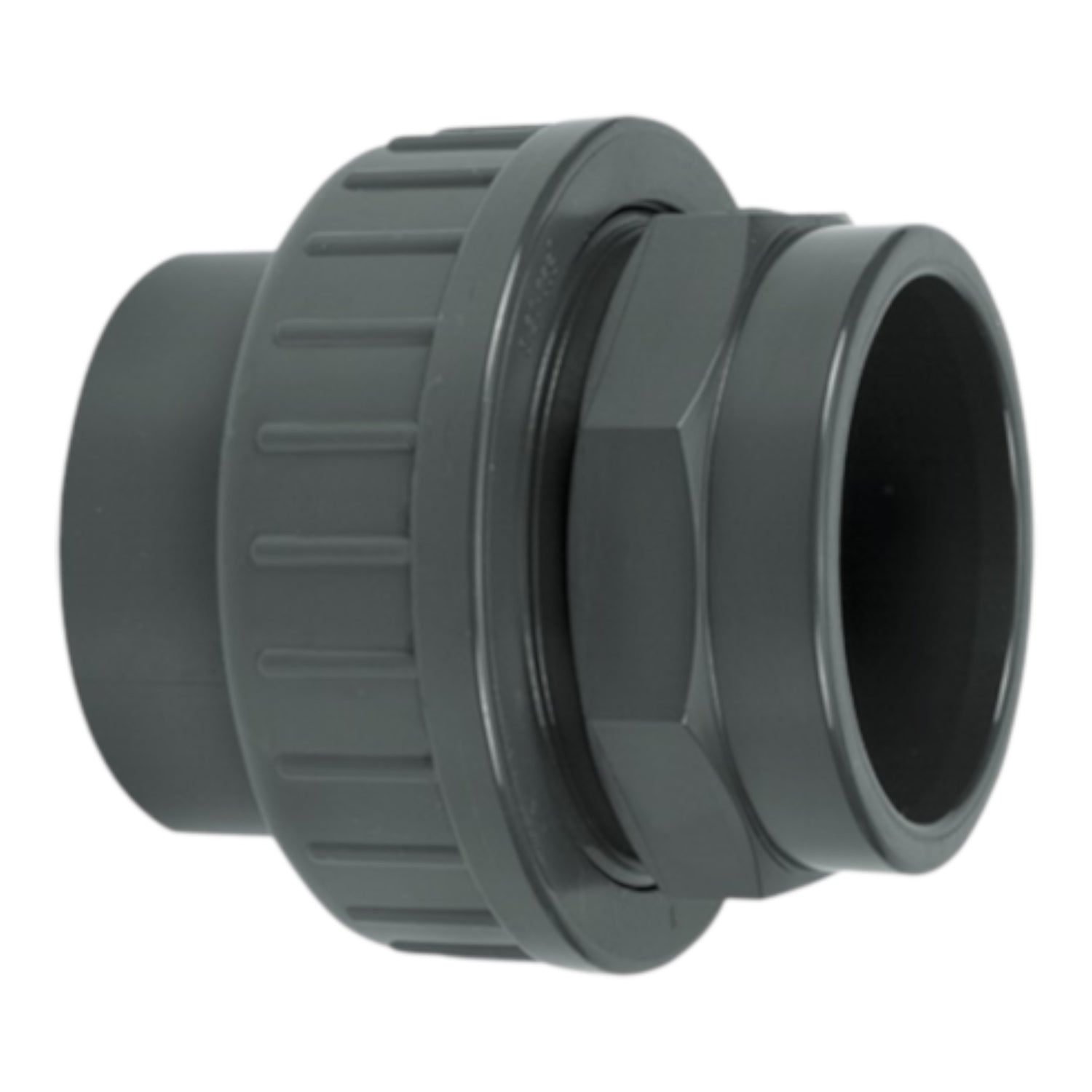
The PVC 32mm x 1" Female Threaded Union is designed for creating a demountable connection between compatible PVC pipework and a female-threaded interface in compatible professional irrigation and water-distribution installations.
Match PVC fittings by pipe diameter, thread size and connection type so the joint can be assembled without forcing incompatible components.
Key benefits
Building serviceable PVC connections
Use only with compatible PVC pipe and the stated thread or hose interface. Cut pipe squarely, deburr it and dry-fit the layout before permanent assembly.
For threaded joints, use a sealing method appropriate to the fitting and system and avoid excessive tightening that could damage plastic threads.
Installation & commissioning
Support pipework so fittings do not carry avoidable bending loads. Plan unions and service points where equipment may need to be removed later.
After the applicable assembly or curing process, commission gradually and inspect joints for leakage before routine operation.
Compatibility & maintenance
Confirm that pipe, fittings, adhesive and operating conditions are compatible with the intended system. Nominal dimensions alone do not establish pressure suitability.
Inspect accessible joints periodically and investigate leakage rather than relying on repeated tightening or temporary external sealing.
PVC 32mm x 1" Female Threaded Union product details
| Product type | PVC Female Threaded Union |
|---|---|
| Primary use | creating a demountable connection between compatible PVC pipework and a female-threaded interface |
| Stated size / pack | 32mm x 1" |
| Application | Compatible PVC irrigation and water-distribution systems |
PVC 32mm x 1" Female Threaded Union FAQs
What is this product used for?
Creating a demountable connection between compatible pvc pipework and a female-threaded interface. What size or pack is this version?
The stated size/pack is 32mm x 1". How do I check compatibility?
Confirm pipe diameter, thread or hose interface, material and complete-system requirements before assembly. Should PVC pipe be cut squarely?
Yes. Clean square cuts and deburring help fittings seat correctly. Can I pressure-test immediately after assembly?
Follow the applicable fitting or adhesive manufacturer's curing and commissioning instructions. Can threaded plastic fittings be overtightened?
Yes. Excessive force can damage threads or fitting bodies. Should pipework be supported?
Yes. Support runs so fittings and unions are not subjected to unnecessary bending or weight. What should I do if a joint leaks?
Safely isolate the system and inspect the joint, sealing method and component condition.
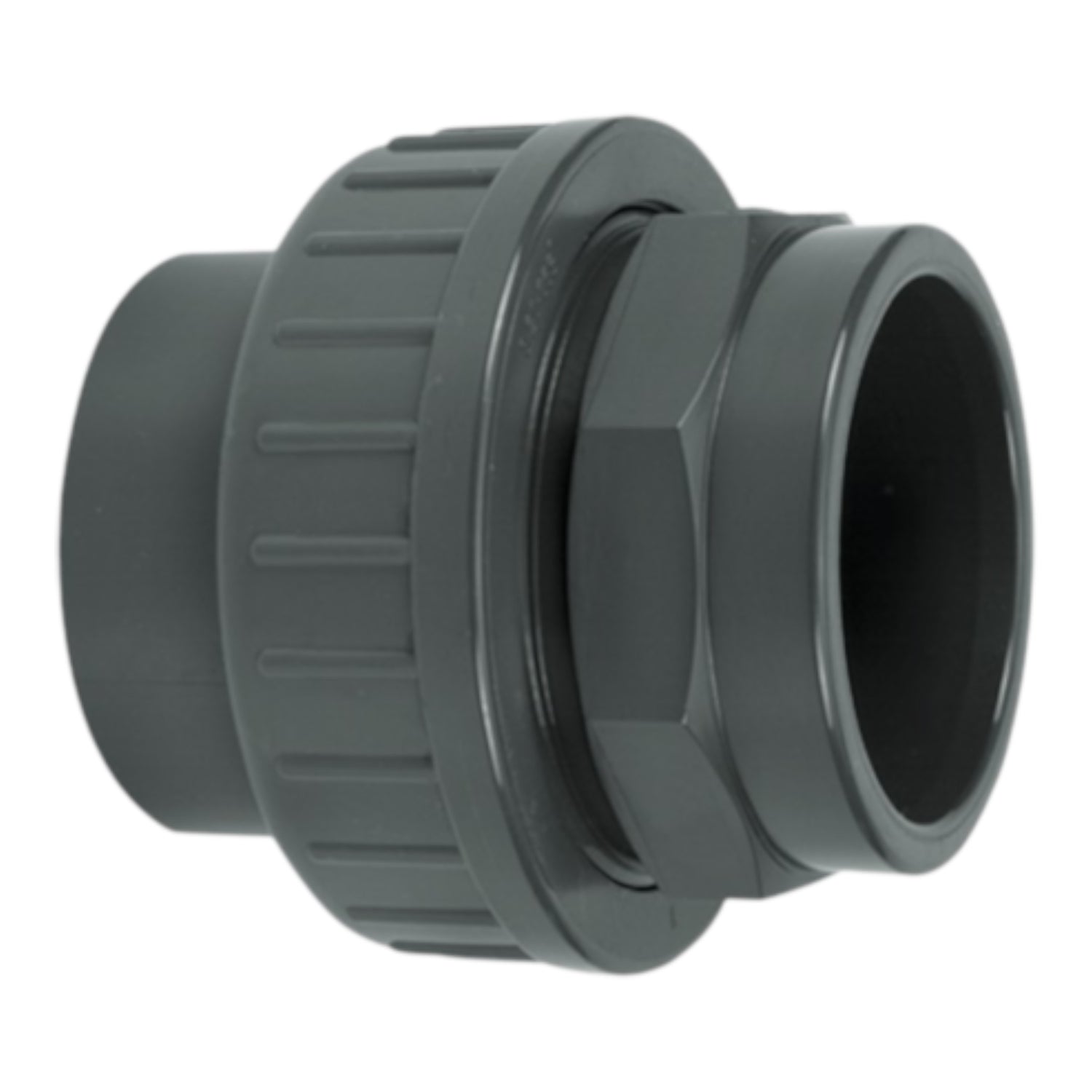
The PVC 20mm x 1/2" Female Threaded Union is designed for creating a demountable connection between compatible PVC pipework and a female-threaded interface in compatible professional irrigation and water-distribution installations.
Match PVC fittings by pipe diameter, thread size and connection type so the joint can be assembled without forcing incompatible components.
Key benefits
Building serviceable PVC connections
Use only with compatible PVC pipe and the stated thread or hose interface. Cut pipe squarely, deburr it and dry-fit the layout before permanent assembly.
For threaded joints, use a sealing method appropriate to the fitting and system and avoid excessive tightening that could damage plastic threads.
Installation & commissioning
Support pipework so fittings do not carry avoidable bending loads. Plan unions and service points where equipment may need to be removed later.
After the applicable assembly or curing process, commission gradually and inspect joints for leakage before routine operation.
Compatibility & maintenance
Confirm that pipe, fittings, adhesive and operating conditions are compatible with the intended system. Nominal dimensions alone do not establish pressure suitability.
Inspect accessible joints periodically and investigate leakage rather than relying on repeated tightening or temporary external sealing.
PVC 20mm x 1/2" Female Threaded Union product details
| Product type | PVC Female Threaded Union |
|---|---|
| Primary use | creating a demountable connection between compatible PVC pipework and a female-threaded interface |
| Stated size / pack | 20mm x 1/2" |
| Application | Compatible PVC irrigation and water-distribution systems |
PVC 20mm x 1/2" Female Threaded Union FAQs
What is this product used for?
Creating a demountable connection between compatible pvc pipework and a female-threaded interface. What size or pack is this version?
The stated size/pack is 20mm x 1/2". How do I check compatibility?
Confirm pipe diameter, thread or hose interface, material and complete-system requirements before assembly. Should PVC pipe be cut squarely?
Yes. Clean square cuts and deburring help fittings seat correctly. Can I pressure-test immediately after assembly?
Follow the applicable fitting or adhesive manufacturer's curing and commissioning instructions. Can threaded plastic fittings be overtightened?
Yes. Excessive force can damage threads or fitting bodies. Should pipework be supported?
Yes. Support runs so fittings and unions are not subjected to unnecessary bending or weight. What should I do if a joint leaks?
Safely isolate the system and inspect the joint, sealing method and component condition.
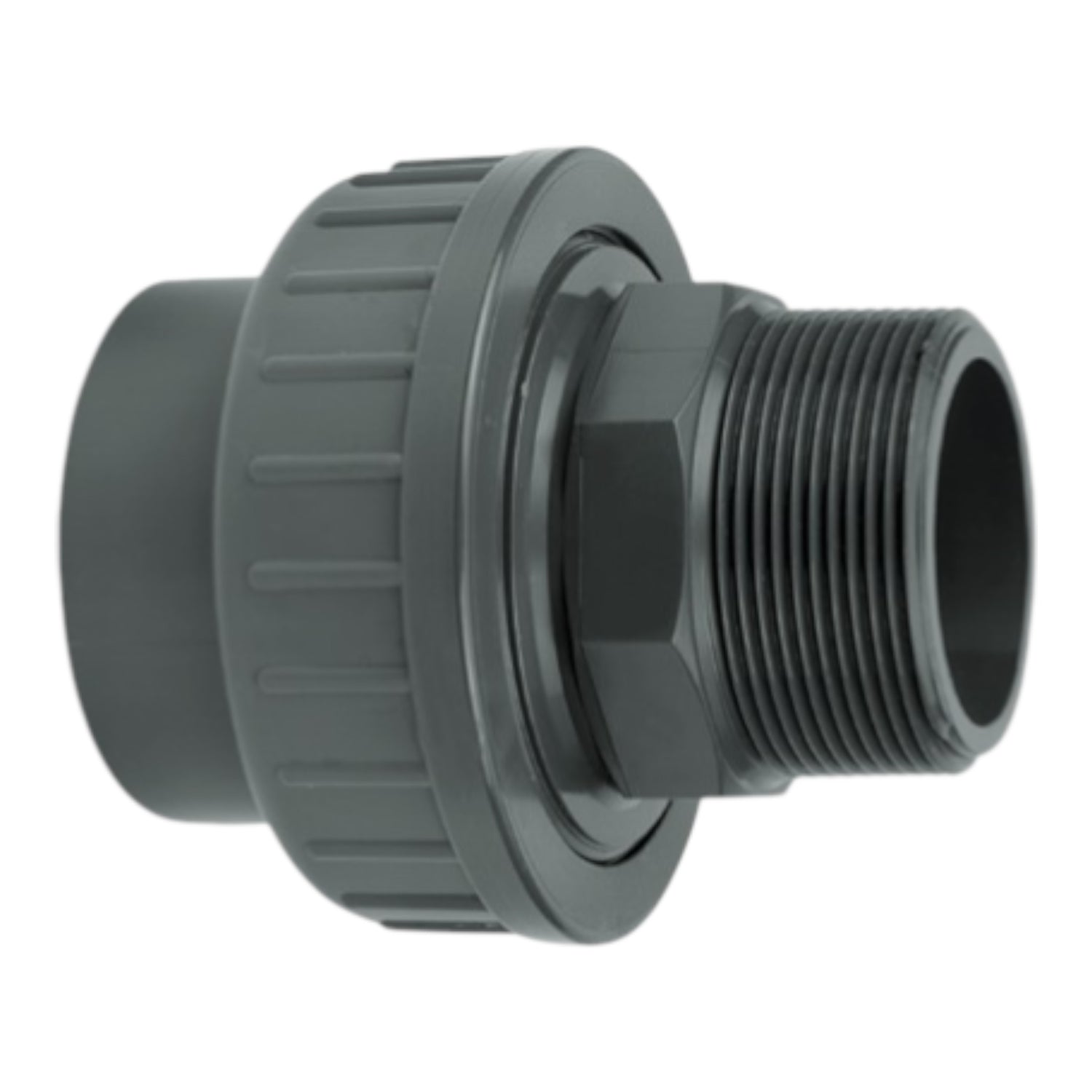
The PVC 63mm x 2" Male Threaded Union is designed for creating a demountable connection between compatible PVC pipework and a male-threaded interface in compatible professional irrigation and water-distribution installations.
Match PVC fittings by pipe diameter, thread size and connection type so the joint can be assembled without forcing incompatible components.
Key benefits
Building serviceable PVC connections
Use only with compatible PVC pipe and the stated thread or hose interface. Cut pipe squarely, deburr it and dry-fit the layout before permanent assembly.
For threaded joints, use a sealing method appropriate to the fitting and system and avoid excessive tightening that could damage plastic threads.
Installation & commissioning
Support pipework so fittings do not carry avoidable bending loads. Plan unions and service points where equipment may need to be removed later.
After the applicable assembly or curing process, commission gradually and inspect joints for leakage before routine operation.
Compatibility & maintenance
Confirm that pipe, fittings, adhesive and operating conditions are compatible with the intended system. Nominal dimensions alone do not establish pressure suitability.
Inspect accessible joints periodically and investigate leakage rather than relying on repeated tightening or temporary external sealing.
PVC 63mm x 2" Male Threaded Union product details
| Product type | PVC Male Threaded Union |
|---|---|
| Primary use | creating a demountable connection between compatible PVC pipework and a male-threaded interface |
| Stated size / pack | 63mm x 2" |
| Application | Compatible PVC irrigation and water-distribution systems |
PVC 63mm x 2" Male Threaded Union FAQs
What is this product used for?
Creating a demountable connection between compatible pvc pipework and a male-threaded interface. What size or pack is this version?
The stated size/pack is 63mm x 2". How do I check compatibility?
Confirm pipe diameter, thread or hose interface, material and complete-system requirements before assembly. Should PVC pipe be cut squarely?
Yes. Clean square cuts and deburring help fittings seat correctly. Can I pressure-test immediately after assembly?
Follow the applicable fitting or adhesive manufacturer's curing and commissioning instructions. Can threaded plastic fittings be overtightened?
Yes. Excessive force can damage threads or fitting bodies. Should pipework be supported?
Yes. Support runs so fittings and unions are not subjected to unnecessary bending or weight. What should I do if a joint leaks?
Safely isolate the system and inspect the joint, sealing method and component condition.
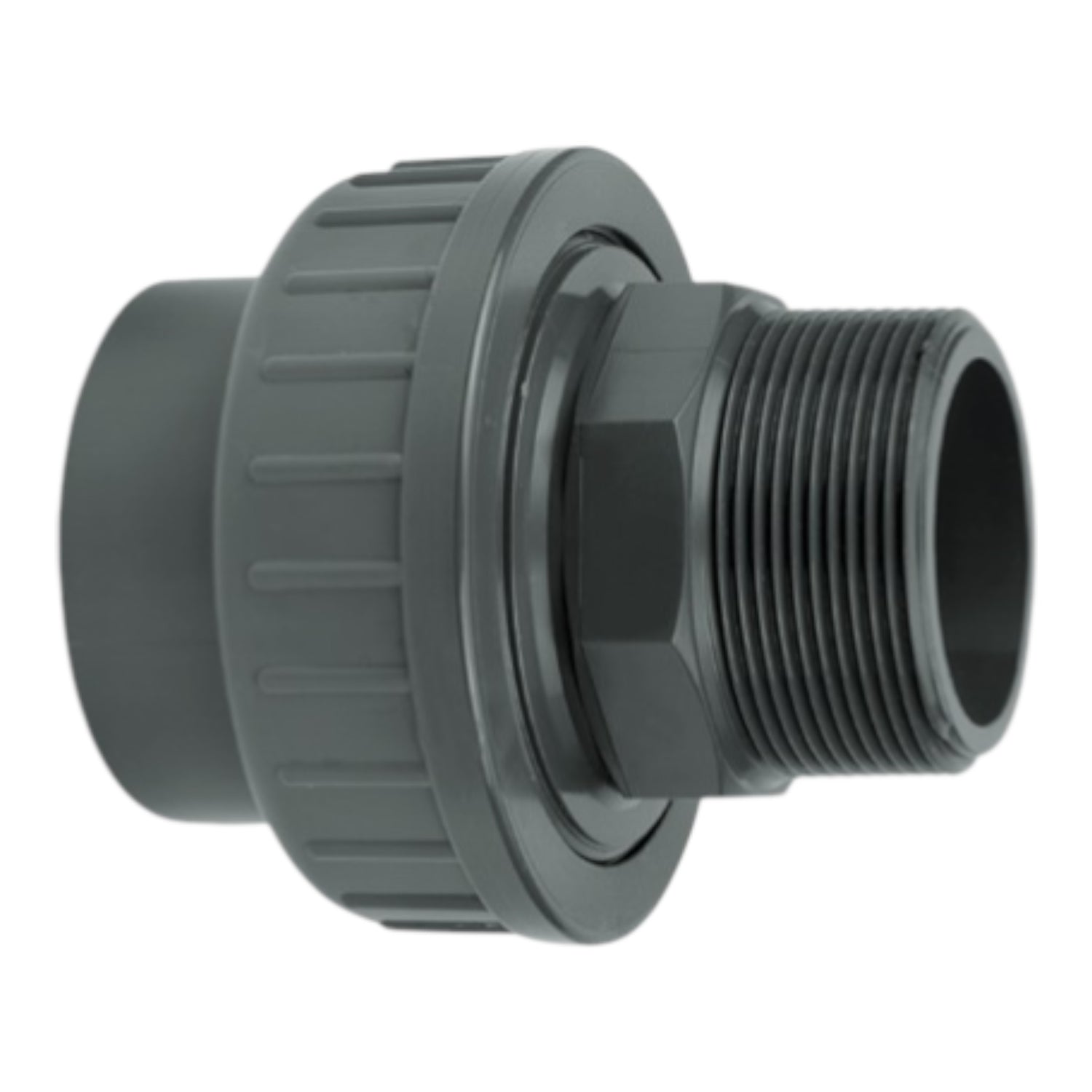
The PVC 50mm x 1.5" Male Threaded Union is designed for creating a demountable connection between compatible PVC pipework and a male-threaded interface in compatible professional irrigation and water-distribution installations.
Match PVC fittings by pipe diameter, thread size and connection type so the joint can be assembled without forcing incompatible components.
Key benefits
Building serviceable PVC connections
Use only with compatible PVC pipe and the stated thread or hose interface. Cut pipe squarely, deburr it and dry-fit the layout before permanent assembly.
For threaded joints, use a sealing method appropriate to the fitting and system and avoid excessive tightening that could damage plastic threads.
Installation & commissioning
Support pipework so fittings do not carry avoidable bending loads. Plan unions and service points where equipment may need to be removed later.
After the applicable assembly or curing process, commission gradually and inspect joints for leakage before routine operation.
Compatibility & maintenance
Confirm that pipe, fittings, adhesive and operating conditions are compatible with the intended system. Nominal dimensions alone do not establish pressure suitability.
Inspect accessible joints periodically and investigate leakage rather than relying on repeated tightening or temporary external sealing.
PVC 50mm x 1.5" Male Threaded Union product details
| Product type | PVC Male Threaded Union |
|---|---|
| Primary use | creating a demountable connection between compatible PVC pipework and a male-threaded interface |
| Stated size / pack | 50mm x 1.5" |
| Application | Compatible PVC irrigation and water-distribution systems |
PVC 50mm x 1.5" Male Threaded Union FAQs
What is this product used for?
Creating a demountable connection between compatible pvc pipework and a male-threaded interface. What size or pack is this version?
The stated size/pack is 50mm x 1.5". How do I check compatibility?
Confirm pipe diameter, thread or hose interface, material and complete-system requirements before assembly. Should PVC pipe be cut squarely?
Yes. Clean square cuts and deburring help fittings seat correctly. Can I pressure-test immediately after assembly?
Follow the applicable fitting or adhesive manufacturer's curing and commissioning instructions. Can threaded plastic fittings be overtightened?
Yes. Excessive force can damage threads or fitting bodies. Should pipework be supported?
Yes. Support runs so fittings and unions are not subjected to unnecessary bending or weight. What should I do if a joint leaks?
Safely isolate the system and inspect the joint, sealing method and component condition.
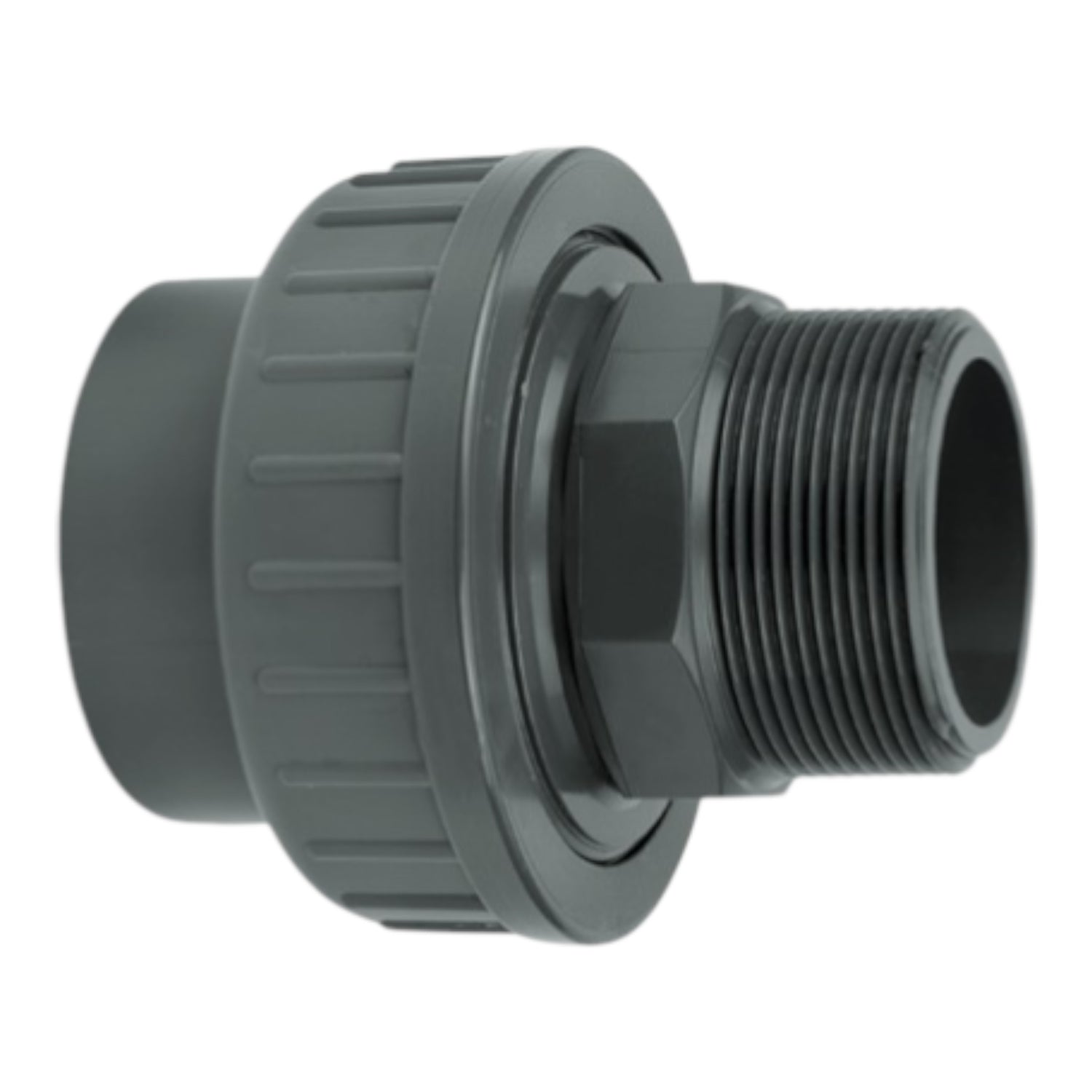
The PVC 40mm x 1.25" Male Threaded Union is designed for creating a demountable connection between compatible PVC pipework and a male-threaded interface in compatible professional irrigation and water-distribution installations.
Match PVC fittings by pipe diameter, thread size and connection type so the joint can be assembled without forcing incompatible components.
Key benefits
Building serviceable PVC connections
Use only with compatible PVC pipe and the stated thread or hose interface. Cut pipe squarely, deburr it and dry-fit the layout before permanent assembly.
For threaded joints, use a sealing method appropriate to the fitting and system and avoid excessive tightening that could damage plastic threads.
Installation & commissioning
Support pipework so fittings do not carry avoidable bending loads. Plan unions and service points where equipment may need to be removed later.
After the applicable assembly or curing process, commission gradually and inspect joints for leakage before routine operation.
Compatibility & maintenance
Confirm that pipe, fittings, adhesive and operating conditions are compatible with the intended system. Nominal dimensions alone do not establish pressure suitability.
Inspect accessible joints periodically and investigate leakage rather than relying on repeated tightening or temporary external sealing.
PVC 40mm x 1.25" Male Threaded Union product details
| Product type | PVC Male Threaded Union |
|---|---|
| Primary use | creating a demountable connection between compatible PVC pipework and a male-threaded interface |
| Stated size / pack | 40mm x 1.25" |
| Application | Compatible PVC irrigation and water-distribution systems |
PVC 40mm x 1.25" Male Threaded Union FAQs
What is this product used for?
Creating a demountable connection between compatible pvc pipework and a male-threaded interface. What size or pack is this version?
The stated size/pack is 40mm x 1.25". How do I check compatibility?
Confirm pipe diameter, thread or hose interface, material and complete-system requirements before assembly. Should PVC pipe be cut squarely?
Yes. Clean square cuts and deburring help fittings seat correctly. Can I pressure-test immediately after assembly?
Follow the applicable fitting or adhesive manufacturer's curing and commissioning instructions. Can threaded plastic fittings be overtightened?
Yes. Excessive force can damage threads or fitting bodies. Should pipework be supported?
Yes. Support runs so fittings and unions are not subjected to unnecessary bending or weight. What should I do if a joint leaks?
Safely isolate the system and inspect the joint, sealing method and component condition.
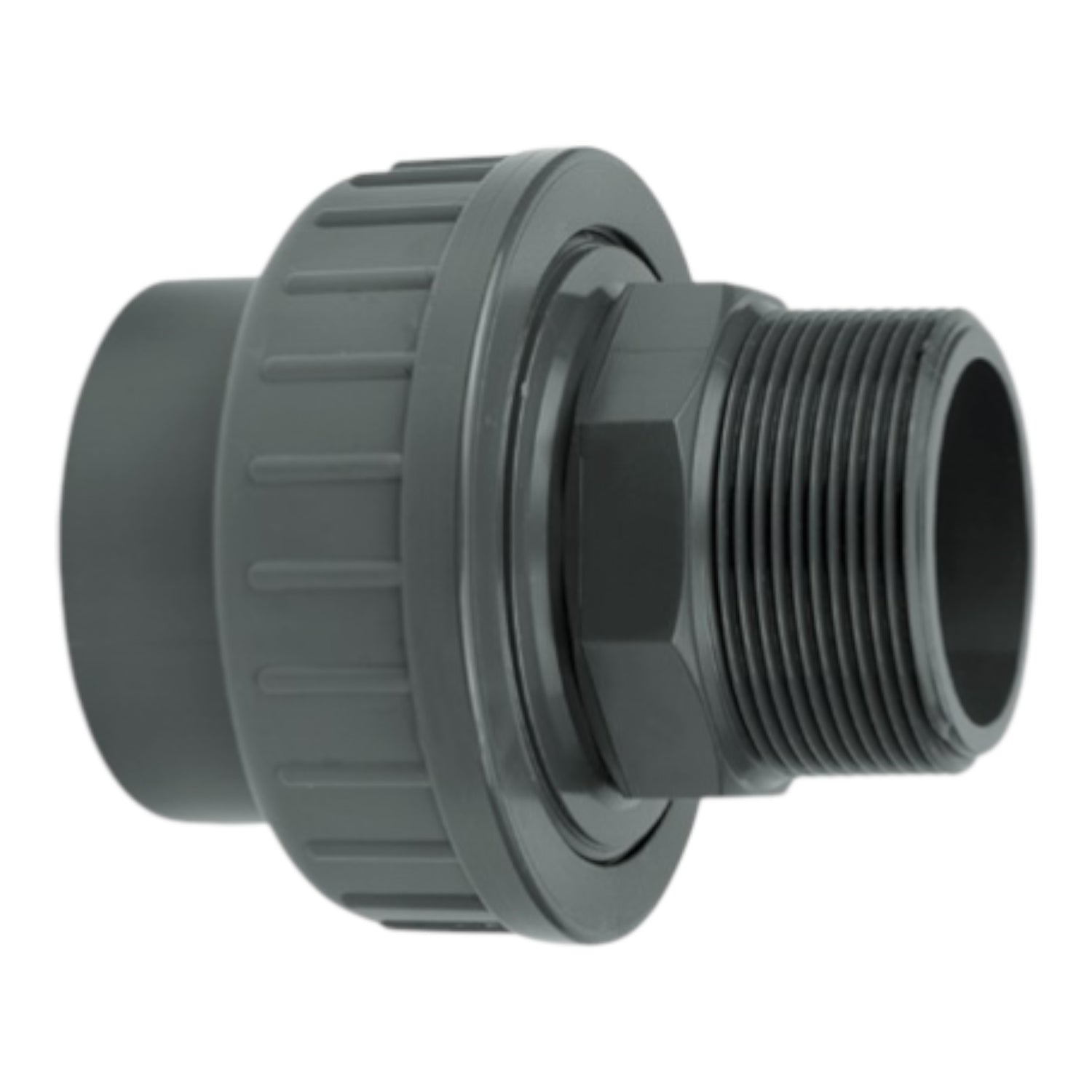
The PVC 32mm x 1" Male Threaded Union is designed for creating a demountable connection between compatible PVC pipework and a male-threaded interface in compatible professional irrigation and water-distribution installations.
Match PVC fittings by pipe diameter, thread size and connection type so the joint can be assembled without forcing incompatible components.
Key benefits
Building serviceable PVC connections
Use only with compatible PVC pipe and the stated thread or hose interface. Cut pipe squarely, deburr it and dry-fit the layout before permanent assembly.
For threaded joints, use a sealing method appropriate to the fitting and system and avoid excessive tightening that could damage plastic threads.
Installation & commissioning
Support pipework so fittings do not carry avoidable bending loads. Plan unions and service points where equipment may need to be removed later.
After the applicable assembly or curing process, commission gradually and inspect joints for leakage before routine operation.
Compatibility & maintenance
Confirm that pipe, fittings, adhesive and operating conditions are compatible with the intended system. Nominal dimensions alone do not establish pressure suitability.
Inspect accessible joints periodically and investigate leakage rather than relying on repeated tightening or temporary external sealing.
PVC 32mm x 1" Male Threaded Union product details
| Product type | PVC Male Threaded Union |
|---|---|
| Primary use | creating a demountable connection between compatible PVC pipework and a male-threaded interface |
| Stated size / pack | 32mm x 1" |
| Application | Compatible PVC irrigation and water-distribution systems |
PVC 32mm x 1" Male Threaded Union FAQs
What is this product used for?
Creating a demountable connection between compatible pvc pipework and a male-threaded interface. What size or pack is this version?
The stated size/pack is 32mm x 1". How do I check compatibility?
Confirm pipe diameter, thread or hose interface, material and complete-system requirements before assembly. Should PVC pipe be cut squarely?
Yes. Clean square cuts and deburring help fittings seat correctly. Can I pressure-test immediately after assembly?
Follow the applicable fitting or adhesive manufacturer's curing and commissioning instructions. Can threaded plastic fittings be overtightened?
Yes. Excessive force can damage threads or fitting bodies. Should pipework be supported?
Yes. Support runs so fittings and unions are not subjected to unnecessary bending or weight. What should I do if a joint leaks?
Safely isolate the system and inspect the joint, sealing method and component condition.
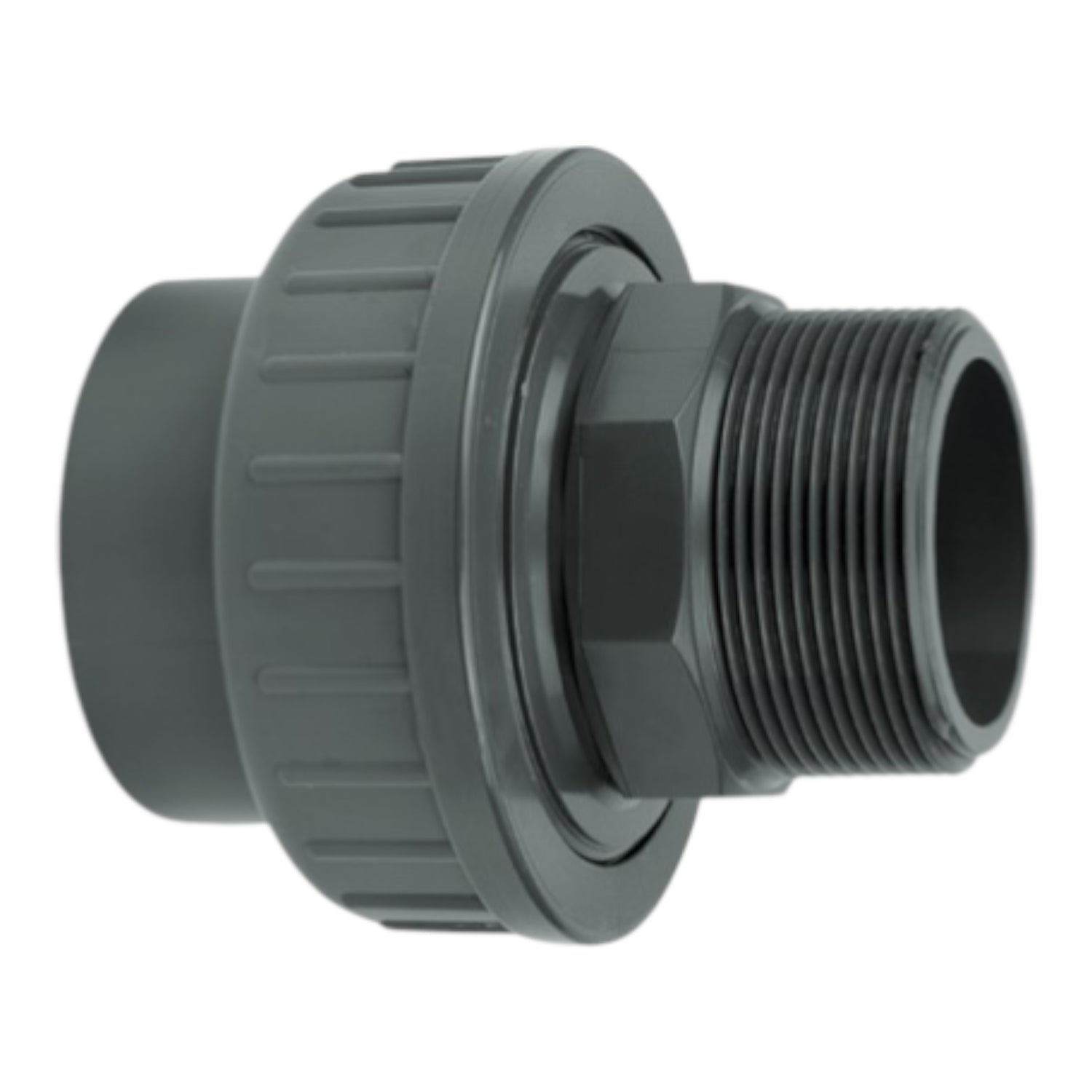
The PVC 20mm x 1/2" Male Threaded Union is designed for creating a demountable connection between compatible PVC pipework and a male-threaded interface in compatible professional irrigation and water-distribution installations.
Match PVC fittings by pipe diameter, thread size and connection type so the joint can be assembled without forcing incompatible components.
Key benefits
Building serviceable PVC connections
Use only with compatible PVC pipe and the stated thread or hose interface. Cut pipe squarely, deburr it and dry-fit the layout before permanent assembly.
For threaded joints, use a sealing method appropriate to the fitting and system and avoid excessive tightening that could damage plastic threads.
Installation & commissioning
Support pipework so fittings do not carry avoidable bending loads. Plan unions and service points where equipment may need to be removed later.
After the applicable assembly or curing process, commission gradually and inspect joints for leakage before routine operation.
Compatibility & maintenance
Confirm that pipe, fittings, adhesive and operating conditions are compatible with the intended system. Nominal dimensions alone do not establish pressure suitability.
Inspect accessible joints periodically and investigate leakage rather than relying on repeated tightening or temporary external sealing.
PVC 20mm x 1/2" Male Threaded Union product details
| Product type | PVC Male Threaded Union |
|---|---|
| Primary use | creating a demountable connection between compatible PVC pipework and a male-threaded interface |
| Stated size / pack | 20mm x 1/2" |
| Application | Compatible PVC irrigation and water-distribution systems |
PVC 20mm x 1/2" Male Threaded Union FAQs
What is this product used for?
Creating a demountable connection between compatible pvc pipework and a male-threaded interface. What size or pack is this version?
The stated size/pack is 20mm x 1/2". How do I check compatibility?
Confirm pipe diameter, thread or hose interface, material and complete-system requirements before assembly. Should PVC pipe be cut squarely?
Yes. Clean square cuts and deburring help fittings seat correctly. Can I pressure-test immediately after assembly?
Follow the applicable fitting or adhesive manufacturer's curing and commissioning instructions. Can threaded plastic fittings be overtightened?
Yes. Excessive force can damage threads or fitting bodies. Should pipework be supported?
Yes. Support runs so fittings and unions are not subjected to unnecessary bending or weight. What should I do if a joint leaks?
Safely isolate the system and inspect the joint, sealing method and component condition.
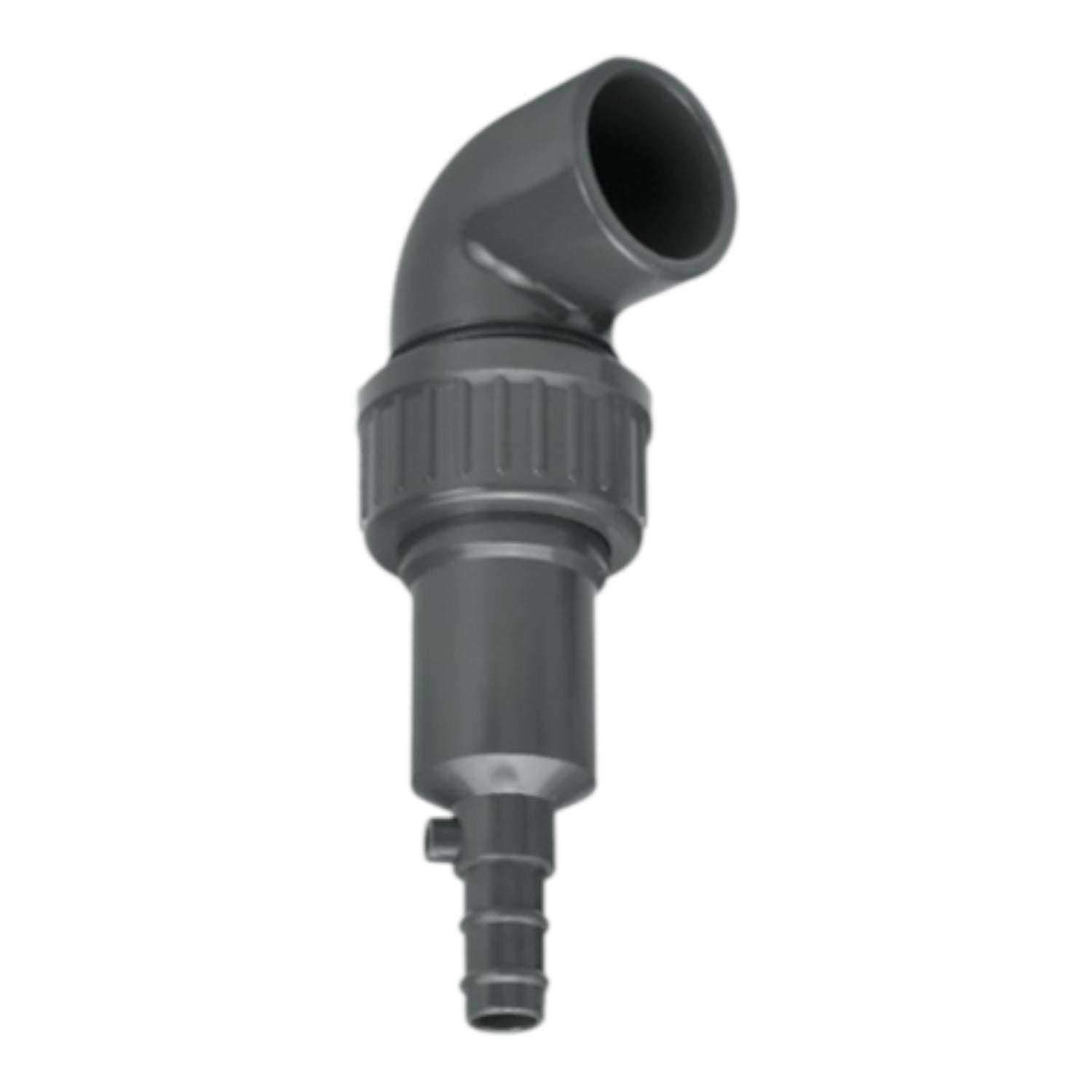
The PVC 32mm x 20mm x 32mm Drain Valve is designed for creating a drain point in compatible PVC pipework in professional PVC irrigation and water-distribution systems.
Correct fitting selection helps create serviceable pipe layouts without forcing incompatible diameters, threads or connection types.
Key benefits
Creating branches & service points
Plan branch or drain positions before assembly so connected pipework can be supported and accessed. Adding branches can increase total downstream flow demand, so consider the hydraulic effect on the complete irrigation zone.
Preparing PVC pipe & fittings
Cut pipe squarely, remove burrs and clean the joint area before assembly. Dry-fit the layout first where practical to confirm alignment and component selection.
For solvent-weld joints, use cleaner and adhesive compatible with the PVC system and follow the manufacturer's application and curing instructions. For threaded joints, use an appropriate sealing method and avoid excessive tightening.
Installation & commissioning
Support pipework so fittings do not carry avoidable bending loads. After the applicable curing or assembly process, commission the system gradually and inspect joints for leakage before routine crop use.
Pressure & compatibility
Nominal dimensions identify connection sizes but do not by themselves establish pressure rating or compatibility with every PVC system. Confirm the requirements of the complete installation before use.
Maintenance
Inspect accessible pipework and fittings periodically for leakage, movement, cracking or mechanical damage. Isolate and repair faults properly rather than relying on temporary external sealing.
PVC 32mm x 20mm x 32mm Drain Valve product details
| Product type | PVC Drain Valve |
|---|---|
| Primary use | creating a drain point in compatible PVC pipework |
| Source dimensions / designation | 32mm x 20mm x 32mm Drain Valve |
| Application | Professional PVC irrigation and water-distribution systems |
PVC 32mm x 20mm x 32mm Drain Valve FAQs
What is this fitting used for?
Creating a drain point in compatible pvc pipework. How do I check the correct size?
Match every stated pipe diameter, thread and connection type to the components in the intended system. Should PVC pipe be cut squarely?
Yes. Square, deburred cuts help fittings seat correctly and support reliable joint preparation. Can I force a fitting onto a slightly different pipe size?
No. Use components specifically compatible with the stated dimensions and connection system. Should pipework be supported?
Yes. Support runs so fittings are not carrying unnecessary pipe or water weight. Can threaded PVC fittings be overtightened?
Yes. Excessive tightening can damage plastic threads or fitting bodies. When can a solvent-weld system be pressurised?
Follow the adhesive manufacturer's current curing and commissioning instructions rather than assuming a universal time. What should I do if a PVC joint leaks?
Safely isolate the system and inspect the joint, fitting and assembly method; repair it correctly rather than relying on a temporary external seal.
The PVC 63mm Four Way Tee Cross is designed for creating a four-way junction in compatible PVC pipework in professional PVC irrigation and water-distribution systems.
Correct fitting selection helps create serviceable pipe layouts without forcing incompatible diameters, threads or connection types.
Key benefits
Creating branches & service points
Plan branch or drain positions before assembly so connected pipework can be supported and accessed. Adding branches can increase total downstream flow demand, so consider the hydraulic effect on the complete irrigation zone.
Preparing PVC pipe & fittings
Cut pipe squarely, remove burrs and clean the joint area before assembly. Dry-fit the layout first where practical to confirm alignment and component selection.
For solvent-weld joints, use cleaner and adhesive compatible with the PVC system and follow the manufacturer's application and curing instructions. For threaded joints, use an appropriate sealing method and avoid excessive tightening.
Installation & commissioning
Support pipework so fittings do not carry avoidable bending loads. After the applicable curing or assembly process, commission the system gradually and inspect joints for leakage before routine crop use.
Pressure & compatibility
Nominal dimensions identify connection sizes but do not by themselves establish pressure rating or compatibility with every PVC system. Confirm the requirements of the complete installation before use.
Maintenance
Inspect accessible pipework and fittings periodically for leakage, movement, cracking or mechanical damage. Isolate and repair faults properly rather than relying on temporary external sealing.
PVC 63mm Four Way Tee Cross product details
| Product type | PVC Four-Way Tee Cross |
|---|---|
| Primary use | creating a four-way junction in compatible PVC pipework |
| Source dimensions / designation | 63mm Four Way Tee Cross |
| Application | Professional PVC irrigation and water-distribution systems |
PVC 63mm Four Way Tee Cross FAQs
What is this fitting used for?
Creating a four-way junction in compatible pvc pipework. How do I check the correct size?
Match every stated pipe diameter, thread and connection type to the components in the intended system. Should PVC pipe be cut squarely?
Yes. Square, deburred cuts help fittings seat correctly and support reliable joint preparation. Can I force a fitting onto a slightly different pipe size?
No. Use components specifically compatible with the stated dimensions and connection system. Should pipework be supported?
Yes. Support runs so fittings are not carrying unnecessary pipe or water weight. Can threaded PVC fittings be overtightened?
Yes. Excessive tightening can damage plastic threads or fitting bodies. When can a solvent-weld system be pressurised?
Follow the adhesive manufacturer's current curing and commissioning instructions rather than assuming a universal time. What should I do if a PVC joint leaks?
Safely isolate the system and inspect the joint, fitting and assembly method; repair it correctly rather than relying on a temporary external seal.
The PVC 50mm Four Way Tee Cross is designed for creating a four-way junction in compatible PVC pipework in professional PVC irrigation and water-distribution systems.
Correct fitting selection helps create serviceable pipe layouts without forcing incompatible diameters, threads or connection types.
Key benefits
Creating branches & service points
Plan branch or drain positions before assembly so connected pipework can be supported and accessed. Adding branches can increase total downstream flow demand, so consider the hydraulic effect on the complete irrigation zone.
Preparing PVC pipe & fittings
Cut pipe squarely, remove burrs and clean the joint area before assembly. Dry-fit the layout first where practical to confirm alignment and component selection.
For solvent-weld joints, use cleaner and adhesive compatible with the PVC system and follow the manufacturer's application and curing instructions. For threaded joints, use an appropriate sealing method and avoid excessive tightening.
Installation & commissioning
Support pipework so fittings do not carry avoidable bending loads. After the applicable curing or assembly process, commission the system gradually and inspect joints for leakage before routine crop use.
Pressure & compatibility
Nominal dimensions identify connection sizes but do not by themselves establish pressure rating or compatibility with every PVC system. Confirm the requirements of the complete installation before use.
Maintenance
Inspect accessible pipework and fittings periodically for leakage, movement, cracking or mechanical damage. Isolate and repair faults properly rather than relying on temporary external sealing.
PVC 50mm Four Way Tee Cross product details
| Product type | PVC Four-Way Tee Cross |
|---|---|
| Primary use | creating a four-way junction in compatible PVC pipework |
| Source dimensions / designation | 50mm Four Way Tee Cross |
| Application | Professional PVC irrigation and water-distribution systems |
PVC 50mm Four Way Tee Cross FAQs
What is this fitting used for?
Creating a four-way junction in compatible pvc pipework. How do I check the correct size?
Match every stated pipe diameter, thread and connection type to the components in the intended system. Should PVC pipe be cut squarely?
Yes. Square, deburred cuts help fittings seat correctly and support reliable joint preparation. Can I force a fitting onto a slightly different pipe size?
No. Use components specifically compatible with the stated dimensions and connection system. Should pipework be supported?
Yes. Support runs so fittings are not carrying unnecessary pipe or water weight. Can threaded PVC fittings be overtightened?
Yes. Excessive tightening can damage plastic threads or fitting bodies. When can a solvent-weld system be pressurised?
Follow the adhesive manufacturer's current curing and commissioning instructions rather than assuming a universal time. What should I do if a PVC joint leaks?
Safely isolate the system and inspect the joint, fitting and assembly method; repair it correctly rather than relying on a temporary external seal.
The PVC 40mm Four Way Tee Cross is designed for creating a four-way junction in compatible PVC pipework in professional PVC irrigation and water-distribution systems.
Correct fitting selection helps create serviceable pipe layouts without forcing incompatible diameters, threads or connection types.
Key benefits
Creating branches & service points
Plan branch or drain positions before assembly so connected pipework can be supported and accessed. Adding branches can increase total downstream flow demand, so consider the hydraulic effect on the complete irrigation zone.
Preparing PVC pipe & fittings
Cut pipe squarely, remove burrs and clean the joint area before assembly. Dry-fit the layout first where practical to confirm alignment and component selection.
For solvent-weld joints, use cleaner and adhesive compatible with the PVC system and follow the manufacturer's application and curing instructions. For threaded joints, use an appropriate sealing method and avoid excessive tightening.
Installation & commissioning
Support pipework so fittings do not carry avoidable bending loads. After the applicable curing or assembly process, commission the system gradually and inspect joints for leakage before routine crop use.
Pressure & compatibility
Nominal dimensions identify connection sizes but do not by themselves establish pressure rating or compatibility with every PVC system. Confirm the requirements of the complete installation before use.
Maintenance
Inspect accessible pipework and fittings periodically for leakage, movement, cracking or mechanical damage. Isolate and repair faults properly rather than relying on temporary external sealing.
PVC 40mm Four Way Tee Cross product details
| Product type | PVC Four-Way Tee Cross |
|---|---|
| Primary use | creating a four-way junction in compatible PVC pipework |
| Source dimensions / designation | 40mm Four Way Tee Cross |
| Application | Professional PVC irrigation and water-distribution systems |
PVC 40mm Four Way Tee Cross FAQs
What is this fitting used for?
Creating a four-way junction in compatible pvc pipework. How do I check the correct size?
Match every stated pipe diameter, thread and connection type to the components in the intended system. Should PVC pipe be cut squarely?
Yes. Square, deburred cuts help fittings seat correctly and support reliable joint preparation. Can I force a fitting onto a slightly different pipe size?
No. Use components specifically compatible with the stated dimensions and connection system. Should pipework be supported?
Yes. Support runs so fittings are not carrying unnecessary pipe or water weight. Can threaded PVC fittings be overtightened?
Yes. Excessive tightening can damage plastic threads or fitting bodies. When can a solvent-weld system be pressurised?
Follow the adhesive manufacturer's current curing and commissioning instructions rather than assuming a universal time. What should I do if a PVC joint leaks?
Safely isolate the system and inspect the joint, fitting and assembly method; repair it correctly rather than relying on a temporary external seal.
The PVC 32mm Four Way Tee Cross is designed for creating a four-way junction in compatible PVC pipework in professional PVC irrigation and water-distribution systems.
Correct fitting selection helps create serviceable pipe layouts without forcing incompatible diameters, threads or connection types.
Key benefits
Creating branches & service points
Plan branch or drain positions before assembly so connected pipework can be supported and accessed. Adding branches can increase total downstream flow demand, so consider the hydraulic effect on the complete irrigation zone.
Preparing PVC pipe & fittings
Cut pipe squarely, remove burrs and clean the joint area before assembly. Dry-fit the layout first where practical to confirm alignment and component selection.
For solvent-weld joints, use cleaner and adhesive compatible with the PVC system and follow the manufacturer's application and curing instructions. For threaded joints, use an appropriate sealing method and avoid excessive tightening.
Installation & commissioning
Support pipework so fittings do not carry avoidable bending loads. After the applicable curing or assembly process, commission the system gradually and inspect joints for leakage before routine crop use.
Pressure & compatibility
Nominal dimensions identify connection sizes but do not by themselves establish pressure rating or compatibility with every PVC system. Confirm the requirements of the complete installation before use.
Maintenance
Inspect accessible pipework and fittings periodically for leakage, movement, cracking or mechanical damage. Isolate and repair faults properly rather than relying on temporary external sealing.
PVC 32mm Four Way Tee Cross product details
| Product type | PVC Four-Way Tee Cross |
|---|---|
| Primary use | creating a four-way junction in compatible PVC pipework |
| Source dimensions / designation | 32mm Four Way Tee Cross |
| Application | Professional PVC irrigation and water-distribution systems |
PVC 32mm Four Way Tee Cross FAQs
What is this fitting used for?
Creating a four-way junction in compatible pvc pipework. How do I check the correct size?
Match every stated pipe diameter, thread and connection type to the components in the intended system. Should PVC pipe be cut squarely?
Yes. Square, deburred cuts help fittings seat correctly and support reliable joint preparation. Can I force a fitting onto a slightly different pipe size?
No. Use components specifically compatible with the stated dimensions and connection system. Should pipework be supported?
Yes. Support runs so fittings are not carrying unnecessary pipe or water weight. Can threaded PVC fittings be overtightened?
Yes. Excessive tightening can damage plastic threads or fitting bodies. When can a solvent-weld system be pressurised?
Follow the adhesive manufacturer's current curing and commissioning instructions rather than assuming a universal time. What should I do if a PVC joint leaks?
Safely isolate the system and inspect the joint, fitting and assembly method; repair it correctly rather than relying on a temporary external seal.
The PVC 20mm Four Way Tee Cross is designed for creating a four-way junction in compatible PVC pipework in professional PVC irrigation and water-distribution systems.
Correct fitting selection helps create serviceable pipe layouts without forcing incompatible diameters, threads or connection types.
Key benefits
Creating branches & service points
Plan branch or drain positions before assembly so connected pipework can be supported and accessed. Adding branches can increase total downstream flow demand, so consider the hydraulic effect on the complete irrigation zone.
Preparing PVC pipe & fittings
Cut pipe squarely, remove burrs and clean the joint area before assembly. Dry-fit the layout first where practical to confirm alignment and component selection.
For solvent-weld joints, use cleaner and adhesive compatible with the PVC system and follow the manufacturer's application and curing instructions. For threaded joints, use an appropriate sealing method and avoid excessive tightening.
Installation & commissioning
Support pipework so fittings do not carry avoidable bending loads. After the applicable curing or assembly process, commission the system gradually and inspect joints for leakage before routine crop use.
Pressure & compatibility
Nominal dimensions identify connection sizes but do not by themselves establish pressure rating or compatibility with every PVC system. Confirm the requirements of the complete installation before use.
Maintenance
Inspect accessible pipework and fittings periodically for leakage, movement, cracking or mechanical damage. Isolate and repair faults properly rather than relying on temporary external sealing.
PVC 20mm Four Way Tee Cross product details
| Product type | PVC Four-Way Tee Cross |
|---|---|
| Primary use | creating a four-way junction in compatible PVC pipework |
| Source dimensions / designation | 20mm Four Way Tee Cross |
| Application | Professional PVC irrigation and water-distribution systems |
PVC 20mm Four Way Tee Cross FAQs
What is this fitting used for?
Creating a four-way junction in compatible pvc pipework. How do I check the correct size?
Match every stated pipe diameter, thread and connection type to the components in the intended system. Should PVC pipe be cut squarely?
Yes. Square, deburred cuts help fittings seat correctly and support reliable joint preparation. Can I force a fitting onto a slightly different pipe size?
No. Use components specifically compatible with the stated dimensions and connection system. Should pipework be supported?
Yes. Support runs so fittings are not carrying unnecessary pipe or water weight. Can threaded PVC fittings be overtightened?
Yes. Excessive tightening can damage plastic threads or fitting bodies. When can a solvent-weld system be pressurised?
Follow the adhesive manufacturer's current curing and commissioning instructions rather than assuming a universal time. What should I do if a PVC joint leaks?
Safely isolate the system and inspect the joint, fitting and assembly method; repair it correctly rather than relying on a temporary external seal.
The PVC 63mm x 63mm 45° Elbow is designed for changing pipe direction by 45 degrees in professional PVC irrigation and water-distribution systems.
Correct fitting selection helps create serviceable pipe layouts without forcing incompatible diameters, threads or connection types.
Key benefits
Changing pipe direction
Use the elbow to create the stated change of direction without forcing straight pipe into an excessively tight bend. Align both pipe runs before permanent assembly so the fitting is not left under continuous side load.
Preparing PVC pipe & fittings
Cut pipe squarely, remove burrs and clean the joint area before assembly. Dry-fit the layout first where practical to confirm alignment and component selection.
For solvent-weld joints, use cleaner and adhesive compatible with the PVC system and follow the manufacturer's application and curing instructions. For threaded joints, use an appropriate sealing method and avoid excessive tightening.
Installation & commissioning
Support pipework so fittings do not carry avoidable bending loads. After the applicable curing or assembly process, commission the system gradually and inspect joints for leakage before routine crop use.
Pressure & compatibility
Nominal dimensions identify connection sizes but do not by themselves establish pressure rating or compatibility with every PVC system. Confirm the requirements of the complete installation before use.
Maintenance
Inspect accessible pipework and fittings periodically for leakage, movement, cracking or mechanical damage. Isolate and repair faults properly rather than relying on temporary external sealing.
PVC 63mm x 63mm 45° Elbow product details
| Product type | PVC 45° Elbow |
|---|---|
| Primary use | changing pipe direction by 45 degrees |
| Source dimensions / designation | 63mm x 63mm 45° Elbow |
| Application | Professional PVC irrigation and water-distribution systems |
PVC 63mm x 63mm 45° Elbow FAQs
What is this fitting used for?
Changing pipe direction by 45 degrees. How do I check the correct size?
Match every stated pipe diameter, thread and connection type to the components in the intended system. Should PVC pipe be cut squarely?
Yes. Square, deburred cuts help fittings seat correctly and support reliable joint preparation. Can I force a fitting onto a slightly different pipe size?
No. Use components specifically compatible with the stated dimensions and connection system. Should pipework be supported?
Yes. Support runs so fittings are not carrying unnecessary pipe or water weight. Can threaded PVC fittings be overtightened?
Yes. Excessive tightening can damage plastic threads or fitting bodies. When can a solvent-weld system be pressurised?
Follow the adhesive manufacturer's current curing and commissioning instructions rather than assuming a universal time. What should I do if a PVC joint leaks?
Safely isolate the system and inspect the joint, fitting and assembly method; repair it correctly rather than relying on a temporary external seal.
The PVC 50mm x 50mm 45° Elbow is designed for changing pipe direction by 45 degrees in professional PVC irrigation and water-distribution systems.
Correct fitting selection helps create serviceable pipe layouts without forcing incompatible diameters, threads or connection types.
Key benefits
Changing pipe direction
Use the elbow to create the stated change of direction without forcing straight pipe into an excessively tight bend. Align both pipe runs before permanent assembly so the fitting is not left under continuous side load.
Preparing PVC pipe & fittings
Cut pipe squarely, remove burrs and clean the joint area before assembly. Dry-fit the layout first where practical to confirm alignment and component selection.
For solvent-weld joints, use cleaner and adhesive compatible with the PVC system and follow the manufacturer's application and curing instructions. For threaded joints, use an appropriate sealing method and avoid excessive tightening.
Installation & commissioning
Support pipework so fittings do not carry avoidable bending loads. After the applicable curing or assembly process, commission the system gradually and inspect joints for leakage before routine crop use.
Pressure & compatibility
Nominal dimensions identify connection sizes but do not by themselves establish pressure rating or compatibility with every PVC system. Confirm the requirements of the complete installation before use.
Maintenance
Inspect accessible pipework and fittings periodically for leakage, movement, cracking or mechanical damage. Isolate and repair faults properly rather than relying on temporary external sealing.
PVC 50mm x 50mm 45° Elbow product details
| Product type | PVC 45° Elbow |
|---|---|
| Primary use | changing pipe direction by 45 degrees |
| Source dimensions / designation | 50mm x 50mm 45° Elbow |
| Application | Professional PVC irrigation and water-distribution systems |
PVC 50mm x 50mm 45° Elbow FAQs
What is this fitting used for?
Changing pipe direction by 45 degrees. How do I check the correct size?
Match every stated pipe diameter, thread and connection type to the components in the intended system. Should PVC pipe be cut squarely?
Yes. Square, deburred cuts help fittings seat correctly and support reliable joint preparation. Can I force a fitting onto a slightly different pipe size?
No. Use components specifically compatible with the stated dimensions and connection system. Should pipework be supported?
Yes. Support runs so fittings are not carrying unnecessary pipe or water weight. Can threaded PVC fittings be overtightened?
Yes. Excessive tightening can damage plastic threads or fitting bodies. When can a solvent-weld system be pressurised?
Follow the adhesive manufacturer's current curing and commissioning instructions rather than assuming a universal time. What should I do if a PVC joint leaks?
Safely isolate the system and inspect the joint, fitting and assembly method; repair it correctly rather than relying on a temporary external seal.
The PVC 40mm x 40mm 45° Elbow is designed for changing pipe direction by 45 degrees in professional PVC irrigation and water-distribution systems.
Correct fitting selection helps create serviceable pipe layouts without forcing incompatible diameters, threads or connection types.
Key benefits
Changing pipe direction
Use the elbow to create the stated change of direction without forcing straight pipe into an excessively tight bend. Align both pipe runs before permanent assembly so the fitting is not left under continuous side load.
Preparing PVC pipe & fittings
Cut pipe squarely, remove burrs and clean the joint area before assembly. Dry-fit the layout first where practical to confirm alignment and component selection.
For solvent-weld joints, use cleaner and adhesive compatible with the PVC system and follow the manufacturer's application and curing instructions. For threaded joints, use an appropriate sealing method and avoid excessive tightening.
Installation & commissioning
Support pipework so fittings do not carry avoidable bending loads. After the applicable curing or assembly process, commission the system gradually and inspect joints for leakage before routine crop use.
Pressure & compatibility
Nominal dimensions identify connection sizes but do not by themselves establish pressure rating or compatibility with every PVC system. Confirm the requirements of the complete installation before use.
Maintenance
Inspect accessible pipework and fittings periodically for leakage, movement, cracking or mechanical damage. Isolate and repair faults properly rather than relying on temporary external sealing.
PVC 40mm x 40mm 45° Elbow product details
| Product type | PVC 45° Elbow |
|---|---|
| Primary use | changing pipe direction by 45 degrees |
| Source dimensions / designation | 40mm x 40mm 45° Elbow |
| Application | Professional PVC irrigation and water-distribution systems |
PVC 40mm x 40mm 45° Elbow FAQs
What is this fitting used for?
Changing pipe direction by 45 degrees. How do I check the correct size?
Match every stated pipe diameter, thread and connection type to the components in the intended system. Should PVC pipe be cut squarely?
Yes. Square, deburred cuts help fittings seat correctly and support reliable joint preparation. Can I force a fitting onto a slightly different pipe size?
No. Use components specifically compatible with the stated dimensions and connection system. Should pipework be supported?
Yes. Support runs so fittings are not carrying unnecessary pipe or water weight. Can threaded PVC fittings be overtightened?
Yes. Excessive tightening can damage plastic threads or fitting bodies. When can a solvent-weld system be pressurised?
Follow the adhesive manufacturer's current curing and commissioning instructions rather than assuming a universal time. What should I do if a PVC joint leaks?
Safely isolate the system and inspect the joint, fitting and assembly method; repair it correctly rather than relying on a temporary external seal.

The PVC 32mm x 32mm 45° Elbow is designed for changing pipe direction by 45 degrees in professional PVC irrigation and water-distribution systems.
Correct fitting selection helps create serviceable pipe layouts without forcing incompatible diameters, threads or connection types.
Key benefits
Changing pipe direction
Use the elbow to create the stated change of direction without forcing straight pipe into an excessively tight bend. Align both pipe runs before permanent assembly so the fitting is not left under continuous side load.
Preparing PVC pipe & fittings
Cut pipe squarely, remove burrs and clean the joint area before assembly. Dry-fit the layout first where practical to confirm alignment and component selection.
For solvent-weld joints, use cleaner and adhesive compatible with the PVC system and follow the manufacturer's application and curing instructions. For threaded joints, use an appropriate sealing method and avoid excessive tightening.
Installation & commissioning
Support pipework so fittings do not carry avoidable bending loads. After the applicable curing or assembly process, commission the system gradually and inspect joints for leakage before routine crop use.
Pressure & compatibility
Nominal dimensions identify connection sizes but do not by themselves establish pressure rating or compatibility with every PVC system. Confirm the requirements of the complete installation before use.
Maintenance
Inspect accessible pipework and fittings periodically for leakage, movement, cracking or mechanical damage. Isolate and repair faults properly rather than relying on temporary external sealing.
PVC 32mm x 32mm 45° Elbow product details
| Product type | PVC 45° Elbow |
|---|---|
| Primary use | changing pipe direction by 45 degrees |
| Source dimensions / designation | 32mm x 32mm 45° Elbow |
| Application | Professional PVC irrigation and water-distribution systems |
PVC 32mm x 32mm 45° Elbow FAQs
What is this fitting used for?
Changing pipe direction by 45 degrees. How do I check the correct size?
Match every stated pipe diameter, thread and connection type to the components in the intended system. Should PVC pipe be cut squarely?
Yes. Square, deburred cuts help fittings seat correctly and support reliable joint preparation. Can I force a fitting onto a slightly different pipe size?
No. Use components specifically compatible with the stated dimensions and connection system. Should pipework be supported?
Yes. Support runs so fittings are not carrying unnecessary pipe or water weight. Can threaded PVC fittings be overtightened?
Yes. Excessive tightening can damage plastic threads or fitting bodies. When can a solvent-weld system be pressurised?
Follow the adhesive manufacturer's current curing and commissioning instructions rather than assuming a universal time. What should I do if a PVC joint leaks?
Safely isolate the system and inspect the joint, fitting and assembly method; repair it correctly rather than relying on a temporary external seal.

The PVC 20mm x 20mm 45° Elbow is designed for changing pipe direction by 45 degrees in professional PVC irrigation and water-distribution systems.
Correct fitting selection helps create serviceable pipe layouts without forcing incompatible diameters, threads or connection types.
Key benefits
Changing pipe direction
Use the elbow to create the stated change of direction without forcing straight pipe into an excessively tight bend. Align both pipe runs before permanent assembly so the fitting is not left under continuous side load.
Preparing PVC pipe & fittings
Cut pipe squarely, remove burrs and clean the joint area before assembly. Dry-fit the layout first where practical to confirm alignment and component selection.
For solvent-weld joints, use cleaner and adhesive compatible with the PVC system and follow the manufacturer's application and curing instructions. For threaded joints, use an appropriate sealing method and avoid excessive tightening.
Installation & commissioning
Support pipework so fittings do not carry avoidable bending loads. After the applicable curing or assembly process, commission the system gradually and inspect joints for leakage before routine crop use.
Pressure & compatibility
Nominal dimensions identify connection sizes but do not by themselves establish pressure rating or compatibility with every PVC system. Confirm the requirements of the complete installation before use.
Maintenance
Inspect accessible pipework and fittings periodically for leakage, movement, cracking or mechanical damage. Isolate and repair faults properly rather than relying on temporary external sealing.
PVC 20mm x 20mm 45° Elbow product details
| Product type | PVC 45° Elbow |
|---|---|
| Primary use | changing pipe direction by 45 degrees |
| Source dimensions / designation | 20mm x 20mm 45° Elbow |
| Application | Professional PVC irrigation and water-distribution systems |
PVC 20mm x 20mm 45° Elbow FAQs
What is this fitting used for?
Changing pipe direction by 45 degrees. How do I check the correct size?
Match every stated pipe diameter, thread and connection type to the components in the intended system. Should PVC pipe be cut squarely?
Yes. Square, deburred cuts help fittings seat correctly and support reliable joint preparation. Can I force a fitting onto a slightly different pipe size?
No. Use components specifically compatible with the stated dimensions and connection system. Should pipework be supported?
Yes. Support runs so fittings are not carrying unnecessary pipe or water weight. Can threaded PVC fittings be overtightened?
Yes. Excessive tightening can damage plastic threads or fitting bodies. When can a solvent-weld system be pressurised?
Follow the adhesive manufacturer's current curing and commissioning instructions rather than assuming a universal time. What should I do if a PVC joint leaks?
Safely isolate the system and inspect the joint, fitting and assembly method; repair it correctly rather than relying on a temporary external seal.
The Irrigation Fittings collection provides secure, reliable connections for professional irrigation systems. Designed for compatibility and durability, these fittings are used extensively across nurseries, landscaped sites and commercial growing facilities.
As part of a professional garden supplies and irrigation offering, these fittings support leak-free operation and system integrity. They are essential components for landscapers and growers managing complex irrigation networks.