
How does Growers Own Total Weedkiller work?
Glyphosate is absorbed through green foliage and transported throughout the plant towards its growing points and roots, providing systemic rather than contact-only weed control.

Commercial Products
Commercial Products
 Professional Growing Media
 Plant Nutrition
 Plant Health
 Sprayers & Protective Clothing
 Pots, Planters & Trays
 Propagation
 Baskets & Planters
 Fabrics & Netting
 Environment
 Plant Lighting
 Irrigation
 Plant Support & Tree Care
 Equipment
 Tools
 Plant Labels
 Packaging
 Lawn Care
 Clearance
Retail Products
Retail Products
 Growing Media
 Plant Nutrition
 Plant Health
 Pots, Planters & Tanks
 Propagation
 Baskets & Planters
 Fabrics & Netting
 Environment
 Plant Lighting
 Plant Support
 Equipment
 Tools

3 products
3 products
Sort by:


£9.50
Unit price per£9.50
Unit price perGrowers Own Total Weedkiller is an extra-strength systemic glyphosate concentrate for controlling annual, perennial and deep-rooted weeds on paths, patios, driveways, gravel and other suitable outdoor areas.
Containing 90g/L glyphosate, the concentrated formula is absorbed through green foliage before being transported through the plant towards the roots. This systemic action controls the whole weed rather than simply scorching the visible leaves.
The 1 litre bottle makes up to 10 litres of spray solution when used at the specified hand-sprayer dilution and can treat up to approximately 400m².
Suitable for common unwanted vegetation including grasses, nettles, docks, bindweed, willowherb, dandelions and other annual and perennial weeds.
Why choose Growers Own Total Weedkiller?
Systemic weed control from leaf to root
Growers Own Total Weedkiller is a systemic herbicide. Rather than working only where the spray touches the plant, glyphosate is absorbed primarily through actively growing green foliage and translocated throughout the weed.
This allows the active ingredient to reach growing points and underground plant tissue, making systemic treatment particularly useful for established perennial weeds that may otherwise regenerate from their roots.
Because the product is non-selective, spray should be directed carefully onto unwanted vegetation. Contact with the green leaves and stems of wanted plants should be avoided.
What weeds can it control?
Growers Own Total Weedkiller is designed for the control of a broad range of annual and deep-rooted perennial weeds.
Established perennial weeds can take longer to respond than small annual weeds because the active ingredient must move throughout a larger plant and root system.
Mixing & application
For hand-held sprayer application, use 100ml of concentrate in 1 litre of water to treat approximately 40m². A full 1 litre bottle can therefore make up to 10 litres of spray solution and provide up to approximately 400m² of coverage when applied at this rate.
Apply to actively growing weeds, wetting the foliage as directed on the product label while avoiding excessive run-off. Good coverage of healthy green foliage allows the systemic active ingredient to enter the plant effectively.
Mix only the quantity required for the intended treatment and always follow the instructions and application restrictions printed on the product label.
Getting the best results
Glyphosate performs best when weeds are actively growing and have sufficient healthy green leaf area to absorb the spray.
Avoid application in windy conditions where spray could drift onto wanted vegetation. Weather conditions before and after treatment can also influence uptake, so always follow the product label regarding suitable application conditions.
Visible effects are not necessarily immediate. Systemic herbicides need time to move through the plant, and established perennial weeds can take longer to show complete effects than small annual weeds.
Where can Growers Own Total Weedkiller be used?
Typical applications include weed control on suitable outdoor areas such as:
Do not use this product as a selective lawn weedkiller. Glyphosate will damage or kill susceptible grasses and other wanted vegetation contacted by the spray.
Important use & safety information
This is a plant protection product and should always be used strictly according to its current label.
Always read the label and product information before use and follow all current statutory conditions of use.
Growers Own Total Weedkiller product details
| Brand | Growers Own |
|---|---|
| Product type | Systemic total weedkiller concentrate |
| Pack size | 1L |
| Active ingredient | Glyphosate |
| Glyphosate concentration | 90g/L |
| Action | Systemic |
| Hand-sprayer dilution | 100ml concentrate per 1L water |
| Coverage at stated sprayer rate | Approximately 40m² per 1L diluted spray |
| Maximum solution from 1L bottle | Up to 10L at the stated hand-sprayer dilution |
| Maximum coverage | Up to approximately 400m² when used as directed |
| Application equipment | Suitable hand-held or knapsack sprayer |
| Target weeds | Annual, perennial and deep-rooted unwanted vegetation |
| Lawn use | No - this is a non-selective total weedkiller |
Growers Own Total Weedkiller FAQs
How does Growers Own Total Weedkiller work?
Glyphosate is absorbed through green foliage and transported throughout the plant towards its growing points and roots, providing systemic rather than contact-only weed control. How much area does a 1L bottle cover?
At the specified hand-sprayer rate, a 1L bottle can make up to 10L of spray solution and treat up to approximately 400m². What is the dilution rate?
For hand-held sprayer application, the stated rate is 100ml of concentrate in 1 litre of water, treating approximately 40m². Always check and follow the product label before application. Can it kill perennial weeds?
Yes. The systemic action makes it suitable for susceptible perennial and deep-rooted weeds as well as annual weeds. Established plants may take longer to show complete effects. Can I use it on my lawn?
No. Glyphosate is non-selective and can kill lawn grasses as well as weeds. It should not be used as a selective lawn weedkiller. When is the best time to spray weeds?
Apply when target weeds are actively growing and have healthy green foliage available to absorb the spray. Follow the label regarding weather and application conditions. Will it damage plants that I want to keep?
Yes, it can. Glyphosate is a non-selective herbicide, so spray must be kept off the green leaves and stems of wanted plants. Can I use it on patios and driveways?
It is suitable for controlling weeds on appropriate outdoor areas including paths, patios, driveways and gravel areas when used according to the product label. Why do glyphosate weeds not die immediately?
This is a systemic treatment rather than a rapid contact scorch. The active ingredient must be absorbed and transported through the plant, so visible symptoms can take time to develop. Can I apply it with a knapsack sprayer?
Yes. The concentrate is suitable for appropriate hand-held and knapsack spraying equipment, subject to the application instructions on the product label. Can I spray when it is windy?
No. Avoid windy conditions because spray drift can carry a non-selective herbicide onto nearby plants that you do not want to damage. What should I do with the sprayer after application?
Clean application equipment thoroughly after use according to the label instructions. Residual weedkiller left in spraying equipment could damage wanted plants during subsequent use. What safety instructions should I follow?
Always follow the current product label, including its instructions for application, protective measures, storage, re-entry and disposal. Keep children and pets away from treated areas until dry.


The Growers Own 2-in-1 pH & Moisture Meter is designed for indicative pH and moisture checks in suitable soil or growing media.
Reliable pH management depends on representative sampling, correct meter use and appropriate calibration or checking procedures for the instrument type.
Key benefits
Getting useful pH readings
Follow the instrument instructions for sampling, rinsing and measurement. For liquid pH meters, use appropriate calibration solutions and do not allow residues from one sample to contaminate the next.
For probe-style soil meters, readings are indicative and can be influenced by moisture, substrate composition and probe contact. Where precise nutrient-management decisions depend on pH, confirm results using an appropriate analytical method.
Probe care & checking
Keep sensing surfaces clean and follow the manufacturer's storage requirements. Do not scrape or force probes into hard material. If readings become slow, unstable or implausible, clean and check the instrument before relying on the result.
Good working practice
Keep equipment and materials clean and clearly identified. Follow the instructions for any fertiliser, additive or treatment being prepared and use appropriate PPE where required by the product label or workplace assessment.
Storage & maintenance
Store the product clean, dry and protected from damage. Electronic meters should be maintained according to their manufacturer instructions; measuring equipment should be replaced if markings or condition no longer allow reliable use.
Growers Own 2-in-1 pH & Moisture Meter product details
| Product | Growers Own 2-in-1 pH & Moisture Meter |
|---|---|
| Product type | Soil pH & Moisture Meter |
| Primary use | indicative pH and moisture checks in suitable soil or growing media |
Growers Own 2-in-1 pH & Moisture Meter FAQs
What is this product used for?
Indicative ph and moisture checks in suitable soil or growing media. How should it be used?
Follow the product instructions and use it only for compatible horticultural applications. How should it be stored?
Keep it clean, dry and protected from physical damage or contamination. Should equipment be cleaned between uses?
Yes where appropriate, particularly when moving between different solutions or materials. Can one measurement represent every part of a crop or growing area?
Not necessarily. Use representative sampling where conditions may vary. When should the product be replaced?
Replace damaged equipment or material that can no longer be used reliably for its intended purpose. Does this replace crop-specific guidance?
No. Use measurements or growing-media components alongside the requirements of the crop and production system. What should I do if a reading or result looks wrong?
Repeat the measurement or check the equipment and method before making significant adjustments.
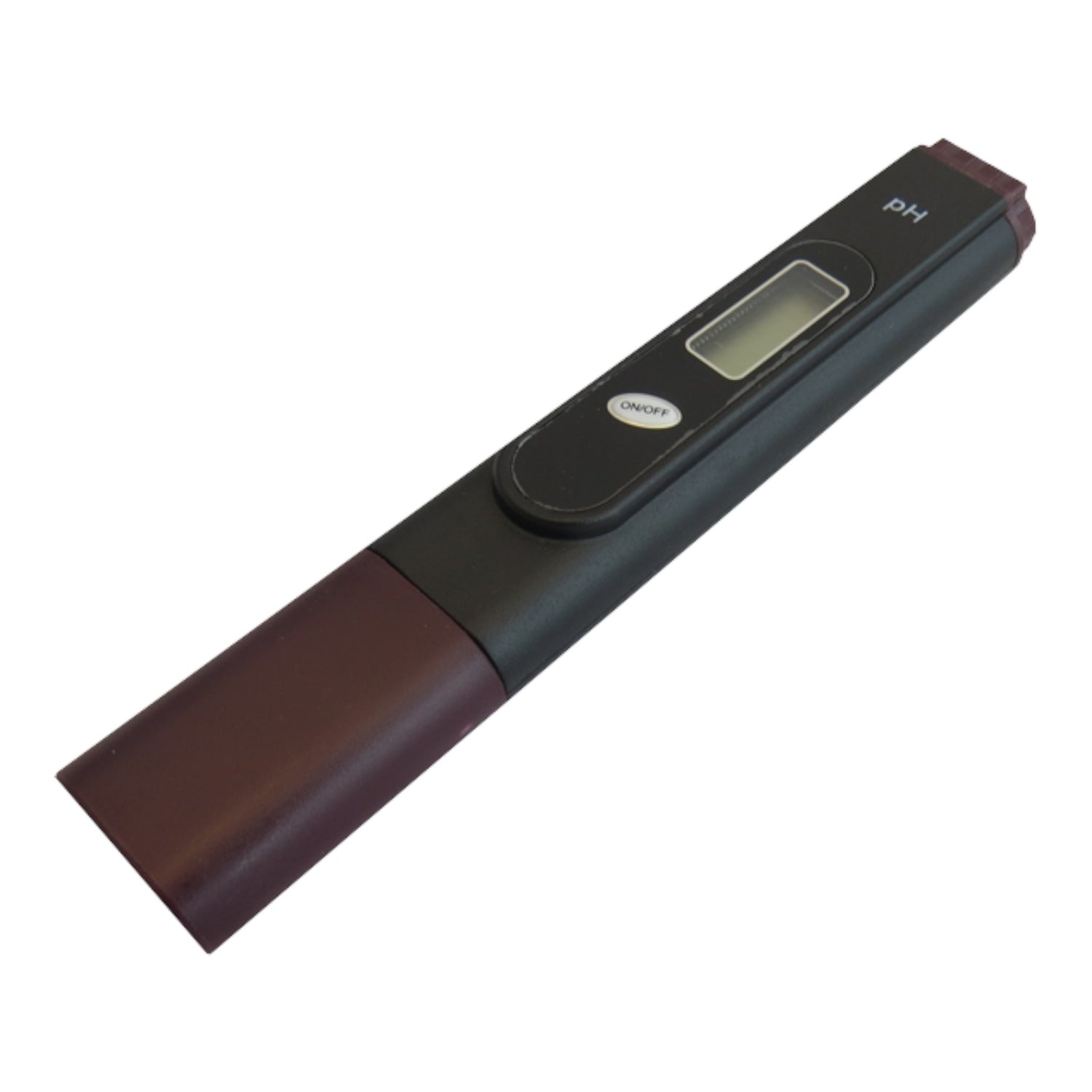
The Growers Own Digital pH Meter is designed for checking the pH of compatible liquid feeds and irrigation water.
Reliable pH management depends on representative sampling, correct meter use and appropriate calibration or checking procedures for the instrument type.
Key benefits
Getting useful pH readings
Follow the instrument instructions for sampling, rinsing and measurement. For liquid pH meters, use appropriate calibration solutions and do not allow residues from one sample to contaminate the next.
For probe-style soil meters, readings are indicative and can be influenced by moisture, substrate composition and probe contact. Where precise nutrient-management decisions depend on pH, confirm results using an appropriate analytical method.
Probe care & checking
Keep sensing surfaces clean and follow the manufacturer's storage requirements. Do not scrape or force probes into hard material. If readings become slow, unstable or implausible, clean and check the instrument before relying on the result.
Good working practice
Keep equipment and materials clean and clearly identified. Follow the instructions for any fertiliser, additive or treatment being prepared and use appropriate PPE where required by the product label or workplace assessment.
Storage & maintenance
Store the product clean, dry and protected from damage. Electronic meters should be maintained according to their manufacturer instructions; measuring equipment should be replaced if markings or condition no longer allow reliable use.
Growers Own Digital pH Meter product details
| Product | Growers Own Digital pH Meter |
|---|---|
| Product type | Digital pH Meter |
| Primary use | checking the pH of compatible liquid feeds and irrigation water |
Growers Own Digital pH Meter FAQs
What is this product used for?
Checking the ph of compatible liquid feeds and irrigation water. How should it be used?
Follow the product instructions and use it only for compatible horticultural applications. How should it be stored?
Keep it clean, dry and protected from physical damage or contamination. Should equipment be cleaned between uses?
Yes where appropriate, particularly when moving between different solutions or materials. Can one measurement represent every part of a crop or growing area?
Not necessarily. Use representative sampling where conditions may vary. When should the product be replaced?
Replace damaged equipment or material that can no longer be used reliably for its intended purpose. Does this replace crop-specific guidance?
No. Use measurements or growing-media components alongside the requirements of the crop and production system. What should I do if a reading or result looks wrong?
Repeat the measurement or check the equipment and method before making significant adjustments.