
What is this product used for?
Measuring suitable horticultural liquids and concentrates.

Commercial Products
Commercial Products
 Professional Growing Media
 Plant Nutrition
 Plant Health
 Sprayers & Protective Clothing
 Pots, Planters & Trays
 Propagation
 Baskets & Planters
 Fabrics & Netting
 Environment
 Plant Lighting
 Irrigation
 Plant Support & Tree Care
 Equipment
 Tools
 Plant Labels
 Packaging
 Lawn Care
 Clearance
Retail Products
Retail Products
 Growing Media
 Plant Nutrition
 Plant Health
 Pots, Planters & Tanks
 Propagation
 Baskets & Planters
 Fabrics & Netting
 Environment
 Plant Lighting
 Plant Support
 Equipment
 Tools
139 products
139 products
Sort by:
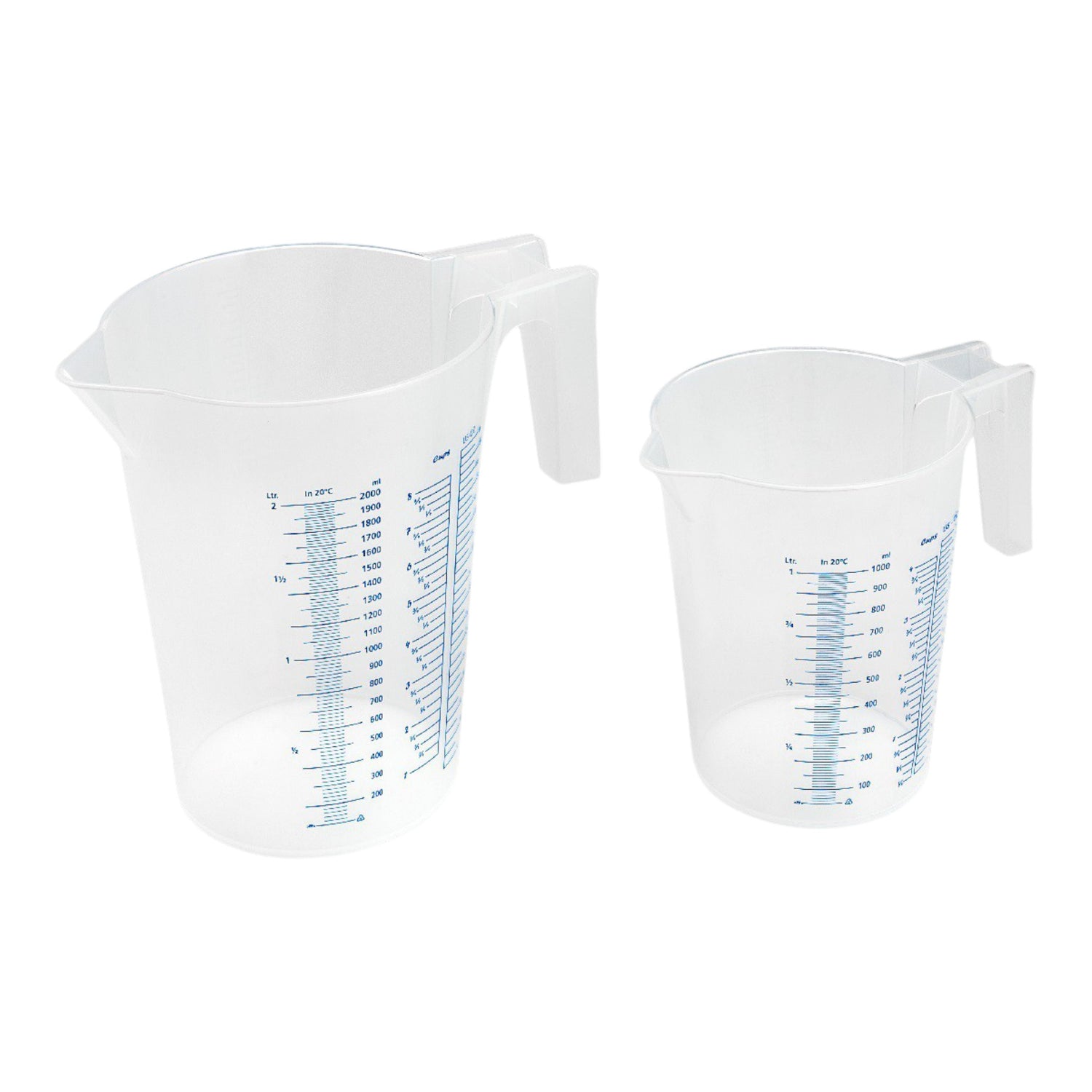
The 500ml Measuring Jug is designed for measuring suitable horticultural liquids and concentrates.
Accurate measuring helps improve repeatability when preparing feeds, additives or other suitable horticultural liquids.
Key benefits
Repeatable liquid measurement
Place the jug on a level surface and read the graduation at eye level where practical. Use a jug size appropriate to the volume being measured so small additions are not estimated from an unnecessarily large vessel.
Rinse between incompatible products to avoid cross-contamination and use separate measuring equipment where product instructions or site procedures require it.
Good working practice
Keep equipment and materials clean and clearly identified. Follow the instructions for any fertiliser, additive or treatment being prepared and use appropriate PPE where required by the product label or workplace assessment.
Storage & maintenance
Store the product clean, dry and protected from damage. Electronic meters should be maintained according to their manufacturer instructions; measuring equipment should be replaced if markings or condition no longer allow reliable use.
500ml Measuring Jug product details
| Product | 500ml Measuring Jug |
|---|---|
| Product type | Measuring Jug |
| Primary use | measuring suitable horticultural liquids and concentrates |
| Stated size / capacity | 500ml |
500ml Measuring Jug FAQs
What is this product used for?
Measuring suitable horticultural liquids and concentrates. How should it be used?
Follow the product instructions and use it only for compatible horticultural applications. How should it be stored?
Keep it clean, dry and protected from physical damage or contamination. Should equipment be cleaned between uses?
Yes where appropriate, particularly when moving between different solutions or materials. Can one measurement represent every part of a crop or growing area?
Not necessarily. Use representative sampling where conditions may vary. When should the product be replaced?
Replace damaged equipment or material that can no longer be used reliably for its intended purpose. Does this replace crop-specific guidance?
No. Use measurements or growing-media components alongside the requirements of the crop and production system. What should I do if a reading or result looks wrong?
Repeat the measurement or check the equipment and method before making significant adjustments.
The 2L Measuring Jug is designed for measuring suitable horticultural liquids and concentrates.
Accurate measuring helps improve repeatability when preparing feeds, additives or other suitable horticultural liquids.
Key benefits
Repeatable liquid measurement
Place the jug on a level surface and read the graduation at eye level where practical. Use a jug size appropriate to the volume being measured so small additions are not estimated from an unnecessarily large vessel.
Rinse between incompatible products to avoid cross-contamination and use separate measuring equipment where product instructions or site procedures require it.
Good working practice
Keep equipment and materials clean and clearly identified. Follow the instructions for any fertiliser, additive or treatment being prepared and use appropriate PPE where required by the product label or workplace assessment.
Storage & maintenance
Store the product clean, dry and protected from damage. Electronic meters should be maintained according to their manufacturer instructions; measuring equipment should be replaced if markings or condition no longer allow reliable use.
2L Measuring Jug product details
| Product | 2L Measuring Jug |
|---|---|
| Product type | Measuring Jug |
| Primary use | measuring suitable horticultural liquids and concentrates |
| Stated size / capacity | 2L |
2L Measuring Jug FAQs
What is this product used for?
Measuring suitable horticultural liquids and concentrates. How should it be used?
Follow the product instructions and use it only for compatible horticultural applications. How should it be stored?
Keep it clean, dry and protected from physical damage or contamination. Should equipment be cleaned between uses?
Yes where appropriate, particularly when moving between different solutions or materials. Can one measurement represent every part of a crop or growing area?
Not necessarily. Use representative sampling where conditions may vary. When should the product be replaced?
Replace damaged equipment or material that can no longer be used reliably for its intended purpose. Does this replace crop-specific guidance?
No. Use measurements or growing-media components alongside the requirements of the crop and production system. What should I do if a reading or result looks wrong?
Repeat the measurement or check the equipment and method before making significant adjustments.
The 1L Measuring Jug is designed for measuring suitable horticultural liquids and concentrates.
Accurate measuring helps improve repeatability when preparing feeds, additives or other suitable horticultural liquids.
Key benefits
Repeatable liquid measurement
Place the jug on a level surface and read the graduation at eye level where practical. Use a jug size appropriate to the volume being measured so small additions are not estimated from an unnecessarily large vessel.
Rinse between incompatible products to avoid cross-contamination and use separate measuring equipment where product instructions or site procedures require it.
Good working practice
Keep equipment and materials clean and clearly identified. Follow the instructions for any fertiliser, additive or treatment being prepared and use appropriate PPE where required by the product label or workplace assessment.
Storage & maintenance
Store the product clean, dry and protected from damage. Electronic meters should be maintained according to their manufacturer instructions; measuring equipment should be replaced if markings or condition no longer allow reliable use.
1L Measuring Jug product details
| Product | 1L Measuring Jug |
|---|---|
| Product type | Measuring Jug |
| Primary use | measuring suitable horticultural liquids and concentrates |
| Stated size / capacity | 1L |
1L Measuring Jug FAQs
What is this product used for?
Measuring suitable horticultural liquids and concentrates. How should it be used?
Follow the product instructions and use it only for compatible horticultural applications. How should it be stored?
Keep it clean, dry and protected from physical damage or contamination. Should equipment be cleaned between uses?
Yes where appropriate, particularly when moving between different solutions or materials. Can one measurement represent every part of a crop or growing area?
Not necessarily. Use representative sampling where conditions may vary. When should the product be replaced?
Replace damaged equipment or material that can no longer be used reliably for its intended purpose. Does this replace crop-specific guidance?
No. Use measurements or growing-media components alongside the requirements of the crop and production system. What should I do if a reading or result looks wrong?
Repeat the measurement or check the equipment and method before making significant adjustments.

£1.50
Unit price per£1.50
Unit price perSpring-loaded plant trimming scissors with a comfortable soft grip for quick, controlled horticultural cutting.
ChopChop Spring-Loaded Plant Trimming Scissors are a handy pair of horticultural scissors designed for regular trimming work. Their spring-loaded action helps the handles reopen after each cut, making repetitive snipping quicker and more comfortable than working with conventional non-sprung scissors.
A soft-grip handle provides comfortable control while working, making ChopChop scissors a practical tool for growers carrying out detailed plant maintenance and trimming. Compact and straightforward to use, they are well suited to grow rooms, greenhouses, propagation areas, nurseries and general horticultural work.
Why choose ChopChop Spring Scissors?
What are ChopChop Spring Scissors suitable for?
ChopChop Spring Scissors are designed for plant trimming and other suitable light horticultural cutting jobs. Their spring-loaded mechanism is particularly useful where growers are making repeated cuts, as the scissors reopen between snips and are ready for the next cut.
They are a useful addition to the tool kit for routine plant maintenance in nurseries, greenhouses, propagation areas and indoor growing environments. For thicker or woody stems, use appropriately sized secateurs or pruning tools rather than forcing trimming scissors through material they are not designed to cut.
How to use ChopChop Spring Scissors
Hold the scissors comfortably using the soft-grip handles and position the blades around the plant material to be trimmed. Close the handles to make the cut, then allow the spring-loaded mechanism to reopen the scissors ready for the next snip.
Keep the blades clean during use, particularly when working with plant material that leaves sticky or resinous residue. Regular cleaning helps keep the cutting surfaces in good condition and the spring mechanism operating smoothly.
Product details
| Brand | ChopChop |
|---|---|
| Product | Spring-Loaded Plant Trimming Scissors |
| Product type | Horticultural trimming scissors |
| Mechanism | Spring-loaded |
| Handle | Soft grip |
| Typical applications | Plant trimming & general horticultural cutting |
| Outer case quantity | 12 |
ChopChop Spring Scissors FAQs
What are ChopChop Spring Scissors used for?
ChopChop Spring Scissors are designed for plant trimming and suitable light horticultural cutting tasks. Their compact design and spring-loaded action make them particularly useful for repetitive trimming work.
Are ChopChop scissors spring-loaded?
Yes. ChopChop scissors have a spring-loaded mechanism that helps reopen the handles after each cut, allowing you to move quickly onto the next snip.
Do ChopChop Spring Scissors have soft-grip handles?
Yes. They feature soft-grip handles designed to provide comfortable control during plant trimming and other suitable horticultural cutting jobs.
Why use spring-loaded scissors for plant trimming?
Spring-loaded scissors reopen after each cut, reducing the amount of repetitive hand movement needed when carrying out a larger number of trimming jobs.
Can ChopChop scissors cut thick branches?
These scissors are intended for trimming and light horticultural cutting rather than heavy pruning. For thicker or woody branches and stems, use appropriately sized secateurs or pruning tools.
How should I clean plant trimming scissors?
Remove plant material and residue from the blades after use and clean them using a method appropriate for the tool. Keeping the cutting surfaces clean helps maintain smooth operation and good cutting performance.
How many ChopChop Spring Scissors are in an outer box?
The outer box contains 12 pairs of ChopChop Spring Scissors. This quantity is provided for logistical and stock-planning purposes and does not mean the product must be purchased by the full box.

£1.75
Unit price per£1.75
Unit price perChopChop Curved Spring Scissors are compact plant trimming scissors designed for accurate, controlled cutting during routine plant maintenance. The curved blade profile helps with detailed trimming around plant material, while the spring-loaded action automatically reopens the handles after each cut for quicker repetitive work.
Designed specifically as a horticultural trimming tool, these lightweight scissors combine a fine cutting profile with comfortable soft-grip handles. They are ideal for growers who need greater control than larger secateurs can provide when carrying out detailed trimming, tidying and other light cutting jobs.
The curved blade distinguishes this version from conventional straight trimming scissors and is particularly useful where the cutting angle needs to follow the shape of the plant material being worked on.
Why choose ChopChop Curved Spring Scissors?
Why use curved trimming scissors?
Curved trimming scissors offer a different cutting profile to straight-bladed snips. The curve allows the cutting edge to approach plant material from a slightly different angle, making it easier to work closely around leaves, stems and other plant growth where detailed control is required.
This makes the ChopChop Curved Spring Scissors a useful tool for precision trimming, plant tidying and other light horticultural cutting jobs where full-size secateurs would be unnecessarily large.
Spring-loaded for repetitive trimming
Each time the handles are squeezed together, the blades make the cut before the spring mechanism helps return the scissors to their open position.
This is particularly useful during repetitive trimming sessions. Rather than repeatedly opening the scissors manually, the sprung action prepares the blades for the next cut, helping create a quick and natural cutting rhythm.
Suitable for detailed horticultural cutting
ChopChop Curved Spring Scissors are useful for a variety of light plant maintenance tasks, including:
These are precision trimming scissors rather than heavy-duty secateurs. Thick, hard or woody branches should be cut using an appropriately sized pair of secateurs or pruning tool.
Keeping your trimming scissors clean
Plant sap and other residue can gradually accumulate on trimming blades, particularly during extended periods of use. Wipe the blades regularly and remove plant debris before it builds up around the cutting surfaces and spring mechanism.
After cleaning, allow the scissors to dry before storage. Keeping the blades clean and storing the tool in a dry location will help maintain smooth cutting performance.
ChopChop Curved Spring Scissors product details
| Brand | ChopChop |
|---|---|
| Product | Curved Spring Scissors |
| Product type | Plant trimming scissors |
| Blade profile | Curved |
| Mechanism | Spring-loaded |
| Handle | Soft grip |
| Typical applications | Plant trimming, detailed pruning & general light horticultural cutting |
| Outer case quantity | 12 pairs |
ChopChop Curved Spring Scissors FAQs
What are ChopChop Curved Spring Scissors used for?
They are designed for precision plant trimming and other light horticultural cutting tasks where a compact pair of scissors provides better control than larger pruning tools. What is the advantage of the curved blades?
The curved profile provides a useful cutting angle when working closely around plant material and makes the scissors particularly suitable for detailed trimming work. Are these scissors spring-loaded?
Yes. The spring mechanism helps reopen the handles after each cut, ready for the next snip. Do the ChopChop scissors have soft-grip handles?
Yes. They feature soft-grip handles designed to provide comfortable control during plant trimming and general horticultural work. Can I use them instead of secateurs?
For fine trimming and soft plant material, these scissors provide excellent control. Thick, hard or woody stems should be tackled with appropriately sized secateurs rather than forcing precision scissors through them. Are curved scissors better than straight scissors?
Neither style is universally better. Curved blades are useful for working around the contours of plant material, while straight blades can be preferable for some direct cutting tasks. Many regular growers keep both styles available. How should I clean the scissors?
Remove plant debris and residue from the blades after use, clean them using a method suitable for the tool and allow them to dry before storage. Regular cleaning helps maintain smooth cutting performance. How many ChopChop Curved Scissors are in an outer box?
The outer case contains 12 pairs. This is the trade outer quantity and does not mean the product has to be purchased by the full case.


£115.00
Unit price per£115.00
Unit price perBotanixx Propagation Tent PRO 10 - 120 x 40 x 200cm is a 10-tier professional propagation station measuring 120 x 40 x 200cm.
It provides an organised vertical footprint for trays, seedlings, cuttings and young plants.
Key benefits
Professional propagation & growing
Use the equipment as part of a managed growing environment. Match light, temperature, humidity, airflow and irrigation to crop and growth stage.
Installation & management
Follow current Botanixx installation and operating instructions. Inspect electrical equipment and connections before use and protect them from inappropriate moisture exposure.
Botanixx Propagation Tent PRO 10 - 120 x 40 x 200cm product details
| Brand | Botanixx |
|---|---|
| Product type | 10-tier propagation station |
| Dimensions | 120 x 40 x 200cm |
Botanixx Propagation Tent PRO 10 - 120 x 40 x 200cm FAQs
How many tiers does it have?
Ten. What are the stated dimensions?
120 x 40 x 200cm. What can it be used for?
Organising compatible propagation trays, seedlings, cuttings and young plants. Does it control the environment automatically?
No assumption should be made; temperature, humidity, airflow, light and moisture still need active management. How should lighting be arranged?
Use compatible propagation lighting positioned for the crop on each tier. What should be monitored?
Temperature, humidity, light, airflow, root-zone moisture and crop hygiene.


The Hot Stuff 2000W Oil Filled Radiator is designed for providing local electric radiant/convection heating in suitable indoor working or horticultural spaces.
Heating and circulation equipment should be selected as part of the wider environmental strategy, taking account of space volume, heat loss, ventilation, crop requirements and safe electrical installation.
Key benefits
Local electric heating
Use electric heating to supplement the wider temperature-control strategy where the unit and electrical installation are suitable for the environment. Heating demand depends on structure size, insulation, external temperature, ventilation and the target internal temperature.
Do not cover heaters or obstruct required airflow and clearance around the unit.
Positioning & environmental control
Keep equipment clear of irrigation water, standing water and unsafe moisture exposure. Allow the clearances required by the manufacturer and position units where airflow or heat can distribute effectively.
Use appropriate thermostatic or environmental controls where required rather than relying solely on manual switching for temperature-sensitive crops.
Electrical safety
Use only with a suitable electrical supply and protection for the installation environment. Cables, plugs and connections should be protected from water and mechanical damage. Isolate equipment before cleaning or maintenance.
Cleaning & maintenance
Inspect guards, fan inlets, heating surfaces, cables and controls periodically. Remove dust and debris according to the manufacturer's instructions and take damaged electrical equipment out of service until properly repaired or replaced.
Hot Stuff 2000W Oil Filled Radiator product details
| Brand | Hot Stuff |
|---|---|
| Product type | Hot Stuff Oil-Filled Radiator |
| Primary use | providing local electric radiant/convection heating in suitable indoor working or horticultural spaces |
| Stated power | 2000W |
Hot Stuff 2000W Oil Filled Radiator FAQs
What is this product designed for?
Providing local electric radiant/convection heating in suitable indoor working or horticultural spaces. Does a circulation fan replace ventilation?
Heating equipment does not replace appropriate ventilation or humidity management. How do I choose the right equipment size?
Consider structure volume, heat loss, crop requirements, ventilation and the performance of the complete environmental-control system. Where should the unit be positioned?
Position it for effective air or heat distribution while maintaining required clearances and protection from irrigation water. Can it be used in wet conditions?
Only within the environmental and electrical conditions specified by the manufacturer; protect electrical equipment from irrigation water and unsafe moisture. Should environmental controls be used?
Where temperature or climate needs to be maintained accurately, suitable thermostatic or environmental control is recommended. How should it be maintained?
Inspect and clean the unit according to the manufacturer's instructions and keep air passages or heating surfaces free from excessive debris. What should I do if the cable or unit is damaged?
Take damaged electrical equipment out of service until it has been properly inspected, repaired or replaced.

£295.00
Unit price per£295.00
Unit price perProfessional 3m x 3m white grow tent with a heavy-duty 25mm steel frame, excellent PAR reflectivity and clear floor space.
The BudBox Pro Titan 3 White Grow Tent measures 300 x 300 x 200cm, providing a substantial 9m² growing area for larger indoor growing installations. Built around a strong 25mm steel frame with all-metal connectors, it provides the space and support needed for professional lighting, ventilation, irrigation and growing equipment.
The Pro White interior offers industry-leading PAR reflectivity, helping make effective use of light throughout the growing area. BudBox has also designed the Titan range without intrusive vertical or ground poles, leaving valuable floor space clear for pots, trays and growing systems.
Why choose the BudBox Pro Titan 3?
What is the BudBox Titan 3 suitable for?
With a 300 x 300cm footprint, the BudBox Pro Titan 3 is designed for larger indoor growing environments where generous floor space and flexible equipment positioning are important. The unobstructed internal area provides room for pots, trays and larger growing systems without floor poles getting in the way.
A wide choice of ventilation ports, irrigation access points and roof hanging bars also gives growers flexibility when planning lighting, extraction, circulation and irrigation equipment. At 200cm high, the tent provides useful vertical growing and equipment space while retaining a standard 2m grow tent height.
Ventilation, access and equipment features
The Titan 3 has been designed with multiple access and ventilation points to make a large grow tent easier to configure and manage. Its oversized and double-cuffed ventilation ports provide flexibility when routing ducting, while screened passive vents support natural air intake.
Six roof hanging bars, silicone pads and hanging straps provide mounting options for equipment above the growing area. An uplift irrigation bar and four irrigation ports also make it easier to integrate irrigation equipment without unnecessarily obstructing the floor.
Product details
| Brand | BudBox |
|---|---|
| Range | BudBox Pro |
| Model | Titan 3 |
| Product type | Professional grow tent |
| Dimensions | 300 x 300 x 200cm |
| Footprint | 3m x 3m |
| Growing area | 9m² |
| Interior | Pro White reflective lining |
| Frame | 25mm steel poles |
| Frame connectors | All-metal push/click connectors |
| Main doors | 2 front main doors |
| Access doors | 1 front access door & 2 rear access doors |
| 340mm ports | 6 |
| 275mm ports | 8 |
| 100mm ports | 4 |
| Irrigation ports | 4 |
| Passive vents | 6 micro-mesh screened vents |
| Roof hanging bars | 6 |
| Hanging straps | 6 |
| Viewing window | Night vision viewing window |
| Drip tray | Included |
BudBox Pro Titan 3 FAQs
What size is the BudBox Pro Titan 3?
The BudBox Pro Titan 3 measures 300 x 300 x 200cm, giving it a 3m x 3m footprint and approximately 9m² of growing area.
Does the BudBox Titan 3 have a white reflective interior?
Yes. This version of the Titan 3 uses BudBox's Pro White interior, which is designed to provide high PAR reflectivity and effective light distribution throughout the growing area.
What size frame does the BudBox Titan 3 use?
The Titan 3 uses strong 25mm steel frame poles with all-metal push-and-click connectors, providing a robust structure for a large grow tent and its equipment.
How many ventilation ports does the BudBox Titan 3 have?
The Titan 3 has six 340mm ports, eight 275mm ports and four 100mm ports. It also includes four irrigation ports and six micro-mesh screened passive vents.
Does the BudBox Titan 3 have roof hanging bars?
Yes. Six roof hanging bars are supplied, along with silicone pads and six hanging straps for mounting suitable equipment within the tent.
Is there a centre pole inside the BudBox Titan 3?
The Titan design provides clear internal floor space without intrusive vertical or ground poles, making it easier to position pots, growing systems and equipment within the 3m x 3m area.
Does the BudBox Titan 3 include a drip tray?
Yes. A drip tray is included with the BudBox Pro Titan 3.

£1,250.00
Unit price per£1,250.00
Unit price perBudBox's largest standard Pro grow tent, with a huge 9m x 4.5m footprint, 2.4m height and reflective Silver/Mylar interior.
The BudBox Pro Titan 9 Silver/Mylar Grow Tent measures an impressive 900 x 450 x 240cm, providing approximately 40.5m² of floor space for large indoor growing installations. At 2.4m high, it also offers generous vertical clearance for plants, lighting, ventilation and other growing equipment.
Designed for demanding grow rooms, the Titan 9 combines a heavy-duty 25mm steel frame with all-metal connectors, 32 roof hanging bars and extensive access and ventilation options. This version features BudBox's reflective Silver/Mylar lining, creating an enclosed growing environment designed to make effective use of artificial lighting.
Why choose the BudBox Pro Titan 9?
What is the BudBox Titan 9 suitable for?
The BudBox Pro Titan 9 is built for growers who need considerably more space than a conventional grow tent can provide. Its 900 x 450cm footprint creates approximately 40.5m² of usable floor area, making it particularly well suited to large indoor growing installations and professional grow rooms.
The additional 240cm height gives growers greater freedom when planning the vertical layout of the growing environment. Lighting, extraction, circulation equipment and other suitable hardware can be positioned overhead while retaining useful clearance above the crop.
Multiple access doors around the Titan 9 are especially valuable on a tent of this size, allowing different areas to be reached without relying solely on the main entrance.
Ventilation, access and equipment features
The Titan 9 provides extensive ventilation options for a large indoor growing environment. It includes 10 x 340mm ports, 12 x 275mm ports and 5 x 102mm ports, alongside 12 micro-mesh screened passive vents. BudBox also uses double-cuff and 20% oversized vents to make ducting installation and adjustment easier.
Access is provided through two front main doors, one additional front access door, four side access doors and one rear access door. Five night vision viewing windows provide additional opportunities to inspect the growing area without opening the tent.
Overhead, 32 roof hanging bars are supplied with 64 silicone pads and 32 hanging straps. Six irrigation ports and two uplift irrigation bars provide further flexibility when integrating irrigation systems into the grow room layout.
Product details
| Brand | BudBox |
|---|---|
| Range | BudBox Pro |
| Model | Titan 9 |
| Product type | Large professional grow tent |
| Dimensions | 900 x 450 x 240cm |
| Footprint | 9m x 4.5m |
| Floor area | Approximately 40.5m² |
| Interior | Silver/Mylar reflective lining |
| Frame | 25mm steel poles |
| Frame connectors | All-metal push/click connectors |
| Front main doors | 2 |
| Front access doors | 1 |
| Side access doors | 4 |
| Rear access doors | 1 |
| 340mm ports | 10 |
| 275mm ports | 12 |
| 102mm ports | 5 |
| Irrigation ports | 6 |
| Uplift irrigation bars | 2 |
| Passive vents | 12 micro-mesh screened vents |
| Roof hanging bars | 32 |
| Roof hanging straps | 32 |
| Silicone roof bar pads | 64 |
| Viewing windows | 5 night vision viewing windows |
| Drip tray | Included |
BudBox Pro Titan 9 FAQs
What size is the BudBox Pro Titan 9?
The BudBox Pro Titan 9 measures 900 x 450 x 240cm, giving it a 9m x 4.5m footprint and approximately 40.5m² of floor space.
Is the BudBox Titan 9 available with a Silver/Mylar interior?
Yes. This version of the BudBox Pro Titan 9 features a reflective Silver/Mylar interior. BudBox also manufactures the Titan 9 with its Pro White interior.
How tall is the BudBox Titan 9?
The Titan 9 is 240cm or 2.4m high, providing generous vertical space for plants and suitable lighting, ventilation and growing equipment.
How many doors does the BudBox Titan 9 have?
The Titan 9 has eight doors in total: two front main doors, one front access door, four side access doors and one rear access door.
How many ventilation ports does the BudBox Titan 9 have?
The Titan 9 has 10 x 340mm ports, 12 x 275mm ports and 5 x 102mm ports. It also includes 12 micro-mesh screened passive vents and six dedicated irrigation ports.
How many roof hanging bars does the BudBox Titan 9 have?
The Titan 9 includes 32 roof hanging bars, 64 silicone pads and 32 hanging straps, providing extensive options for positioning suitable equipment above the growing area.
Does the BudBox Titan 9 include a drip tray?
Yes. A drip tray is included with the BudBox Pro Titan 9.
What is the difference between the Silver/Mylar and Pro White Titan 9?
Both versions use the same Titan 9 dimensions and core tent design. The key difference is the internal reflective lining. This model uses Silver/Mylar, while the alternative version uses BudBox's Pro White reflective interior.

Compact 10ml measuring syringe for accurate dosing of small quantities of liquid plant nutrients, additives and boosters.
This 10ml Nutrient Measuring Syringe provides a simple way to measure small volumes of liquid when preparing plant feeds and nutrient solutions. Its compact capacity is particularly useful when working with concentrated nutrients and additives where accurate, low-volume dosing matters.
Easy to keep alongside your nutrients and mixing equipment, the syringe allows growers to draw up the required quantity before dispensing it into water or a nutrient reservoir. It is a useful everyday measuring tool for grow rooms, propagation areas, greenhouses and general horticultural use.
Why choose a 10ml Nutrient Measuring Syringe?
What is a 10ml Measuring Syringe suitable for?
A 10ml measuring syringe is particularly useful when working with concentrated plant nutrients, root stimulants, boosters and other compatible liquid additives that are used in relatively small quantities.
Its smaller capacity provides good control for low-volume measurements and can be more convenient than using a larger syringe, measuring cup or jug. This makes it a useful choice for hydroponic growing, propagation, greenhouse production and general horticultural feeding.
How to use a 10ml Nutrient Measuring Syringe
Place the syringe tip into the liquid and slowly draw back the plunger until the required quantity is shown on the graduated barrel. Remove the syringe from the container and dispense the measured liquid into the appropriate mixing vessel, water or nutrient reservoir.
Always follow the dosage instructions supplied with the nutrient or additive being measured. Take care to avoid cross-contamination between concentrated products and clean or replace measuring equipment as appropriate between different liquids.
Product details
| Product | Nutrient Measuring Syringe |
|---|---|
| Product type | Liquid measuring syringe |
| Capacity | 10ml |
| Scale | Graduated barrel |
| Typical applications | Measuring liquid plant nutrients, feeds, additives & boosters |
| Pack quantity | 100 |
10ml Nutrient Measuring Syringe FAQs
What is a 10ml syringe used for in horticulture?
A 10ml measuring syringe is useful for measuring and dispensing small quantities of suitable liquid plant nutrients, feeds, supplements and additives when preparing nutrient solutions.
Can I use a 10ml syringe for measuring plant nutrients?
Yes. The compact 10ml capacity is particularly useful when nutrients or additives need to be measured in relatively small quantities before being added to water or a nutrient reservoir.
Is a 10ml syringe suitable for concentrated nutrients?
A 10ml syringe can be particularly convenient for concentrated liquid nutrients and additives with low application rates, as smaller volumes can be measured more easily than with a large measuring jug.
Should I choose a 10ml, 20ml or 60ml nutrient syringe?
Choose the size that best matches the quantities you regularly measure. A 10ml syringe is useful for smaller doses, while 20ml and 60ml syringes provide greater capacity when larger quantities of liquid need to be measured.
Can I use the same syringe for different nutrients?
Take care to avoid cross-contamination between concentrated products. Clean the syringe appropriately between compatible liquids or use separate measuring equipment where necessary.
Can a 10ml syringe be used for pH adjustment liquids?
Only use measuring equipment that is compatible with the liquid being handled. Concentrated acids and alkalis can require chemical-resistant equipment, so check the instructions for the specific pH adjustment product before use.
How many 10ml syringes are in a pack?
The pack quantity is 100 syringes. This figure is provided for logistical and stock-planning purposes and does not mean the product must be purchased by the full pack.
Compact 20ml measuring syringe for accurately measuring and dispensing liquid plant nutrients, additives and boosters.
This 20ml Nutrient Measuring Syringe offers a simple, controlled way to measure smaller quantities of liquid when preparing feeds and nutrient solutions. Its compact capacity is particularly useful when working with concentrated nutrients and additives where only a relatively small volume is required.
A useful addition to any nutrient mixing station, the syringe allows growers to draw up a measured quantity of suitable liquid before dispensing it into water or a reservoir. It is a straightforward piece of measuring equipment for grow rooms, propagation areas, greenhouses and general horticultural use.
Why choose a 20ml Nutrient Measuring Syringe?
What is a 20ml Measuring Syringe suitable for?
A 20ml measuring syringe is particularly useful when preparing plant feeds and nutrient solutions that require relatively small quantities of liquid nutrients, supplements or compatible additives.
The smaller capacity gives growers good control when measuring low-volume doses and can be more convenient than using a larger measuring jug for these quantities. It is suitable for hydroponic growing, greenhouse production, propagation and general horticultural feeding applications.
How to use a 20ml Nutrient Measuring Syringe
Place the syringe tip into the liquid and slowly draw back the plunger until the required quantity is shown on the graduated barrel. Remove the syringe and dispense the measured liquid into the appropriate mixing vessel, water or nutrient reservoir.
Always follow the manufacturer's recommended dosage for the nutrient or additive being measured. Take care to avoid cross-contamination between concentrated products and clean or replace measuring equipment as appropriate between different liquids.
Product details
| Product | Nutrient Measuring Syringe |
|---|---|
| Product type | Liquid measuring syringe |
| Capacity | 20ml |
| Scale | Graduated barrel |
| Typical applications | Measuring liquid plant nutrients, feeds, additives & boosters |
| Pack quantity | 50 |
20ml Nutrient Measuring Syringe FAQs
What is a 20ml syringe used for in horticulture?
A 20ml measuring syringe provides a convenient way to measure and dispense smaller quantities of suitable liquid plant nutrients, feeds, supplements and additives.
Can I use a 20ml syringe for measuring plant nutrients?
Yes. A graduated 20ml syringe is particularly useful when a liquid nutrient or additive needs to be measured in relatively small quantities before being added to water or a nutrient reservoir.
Why use a syringe for measuring nutrients?
A syringe gives you greater control when measuring small volumes of liquid and can be more convenient than trying to measure the same quantity with a larger jug or container.
Should I use a 20ml or 60ml nutrient syringe?
A 20ml syringe is particularly convenient for smaller doses and concentrated products, while a 60ml syringe provides more capacity when larger quantities need to be measured. The best size depends on the dosage and volume you regularly work with.
Can I use the same syringe for different nutrients?
Take care to avoid transferring concentrated products from one container to another. Clean the syringe appropriately between compatible products or use separate measuring equipment where cross-contamination could be an issue.
Can a 20ml syringe be used to measure pH adjustment products?
Only use measuring equipment that is compatible with the product being handled. Concentrated acids and alkalis can require chemical-resistant equipment, so check the instructions and compatibility information for the specific pH adjustment product before use.
How many 20ml syringes are in a pack?
The pack quantity is 50 syringes. This figure is provided for logistical and stock-planning purposes and does not mean the product must be purchased by the full pack.
Handy 60ml measuring syringe for accurately measuring and dispensing liquid plant nutrients, additives and boosters.
This 60ml Nutrient Measuring Syringe provides a simple way to measure smaller volumes of liquid when preparing nutrient solutions and carrying out routine plant feeding. The graduated barrel allows growers to draw up the required quantity rather than relying on less precise pouring from a bottle or container.
Compact and straightforward to use, a measuring syringe is a useful addition to grow rooms, propagation areas, greenhouses and nutrient mixing stations. Its 60ml capacity provides plenty of measuring range for everyday horticultural dosing while remaining convenient for smaller quantities of concentrated liquid products.
Why choose a 60ml Nutrient Measuring Syringe?
What is a 60ml Measuring Syringe suitable for?
A 60ml measuring syringe is particularly useful for growers who regularly need to measure liquid plant nutrients, feeds, supplements and compatible additives before adding them to water or a nutrient reservoir.
It can be used across hydroponic growing, greenhouse production, propagation and general horticulture wherever controlled measurement of a suitable liquid is required. The 60ml capacity is especially practical for quantities that are inconvenient to measure accurately with a larger jug or measuring container.
How to use a 60ml Nutrient Measuring Syringe
Place the syringe tip into the liquid and slowly draw back the plunger until the required quantity is shown on the graduated barrel. Remove the syringe from the container and dispense the measured liquid into the appropriate mixing vessel or nutrient reservoir.
When measuring different products, avoid cross-contaminating the original containers. Clean the syringe appropriately between compatible products and always follow the instructions and recommended application rate supplied with the nutrient, fertiliser or additive being measured.
Product details
| Product | Nutrient Measuring Syringe |
|---|---|
| Product type | Liquid measuring syringe |
| Capacity | 60ml |
| Scale | Graduated barrel |
| Typical applications | Measuring liquid plant nutrients, feeds, additives & boosters |
| Pack quantity | 16 |
60ml Nutrient Measuring Syringe FAQs
What is a 60ml syringe used for in horticulture?
A 60ml syringe can be used to measure and dispense suitable liquid plant nutrients, feeds, additives and boosters when preparing nutrient solutions.
Can I use a 60ml syringe for measuring plant nutrients?
Yes. A graduated syringe provides a convenient way to measure smaller quantities of liquid plant nutrients before adding them to water or a nutrient reservoir.
Why use a syringe instead of a measuring jug?
A syringe can provide greater control when measuring relatively small quantities of liquid, while a measuring jug or beaker may be more convenient for larger volumes.
Can I use the same syringe for different nutrients?
Care should be taken to avoid cross-contamination between concentrated products. Clean the syringe appropriately between compatible liquids, or use separate measuring equipment where necessary.
Can a 60ml syringe be used for pH adjustment liquids?
Check the compatibility of the syringe before using it with concentrated acids, alkalis or pH adjustment products. Some syringe components may not be suitable for strongly caustic liquids, so purpose-appropriate measuring equipment should be used.
How many 60ml syringes are in a pack?
The pack quantity is 16 syringes. This quantity is provided for logistical and stock-planning purposes and does not necessarily mean the product must be purchased by the full pack.


£17.25
Unit price per£17.25
Unit price per£4.50
Unit price per£4.50
Unit price perStraight replacement blade for the ChopChop 16" Bowl Trimmer, designed to replace the original blade when worn or damaged.
The ChopChop 16" Bowl Trimmer Straight Replacement Blade is the dedicated spare blade for the ChopChop 16" Bowl Trimmer. It allows growers to replace the straight cutting blade without replacing the complete trimming unit, helping keep existing equipment working effectively through repeated harvests.
A useful spare for any grower regularly using a ChopChop Bowl Trimmer, it can be kept on hand ready for routine maintenance or fitted when the existing blade becomes worn or damaged. For commercial growing environments where trimming equipment sees frequent use, keeping essential replacement parts in stock can also help minimise downtime during busy harvesting periods.
Why choose the ChopChop 16" Straight Replacement Blade?
Which trimmer does the ChopChop 16" Straight Blade fit?
This straight replacement blade is designed for the ChopChop 16" Bowl Trimmer. It replaces the corresponding straight cutting blade within the 16-inch trimming unit.
It is a practical spare for commercial growers, nurseries and home growers who already use the ChopChop 16" Bowl Trimmer and want to maintain their trimming equipment rather than replacing the complete unit when the blade reaches the end of its useful working life.
How to replace the ChopChop 16" Bowl Trimmer blade
Make sure the ChopChop Bowl Trimmer is completely stationary before carrying out any maintenance. Open the trimmer and carefully remove the existing straight blade, taking care to avoid contact with the cutting edge.
Fit the replacement straight blade securely in the correct position and make sure the trimmer is properly reassembled before use. The blade should be handled carefully throughout installation, removal and cleaning as the cutting edge can cause injury.
Product details
| Brand | ChopChop |
|---|---|
| Product | 16" Bowl Trimmer Straight Replacement Blade |
| Product type | Bowl trimmer replacement blade |
| Component | Straight blade |
| Compatibility | ChopChop 16" Bowl Trimmer |
| Application | Replacement of the straight cutting blade |
ChopChop 16" Bowl Trimmer Straight Blade FAQs
Which bowl trimmer does this replacement blade fit?
This straight replacement blade is designed for the ChopChop 16" Bowl Trimmer.
Is this the complete ChopChop 16" Bowl Trimmer?
No. This product is the straight replacement blade for the ChopChop 16" Bowl Trimmer. The complete bowl trimmer is sold separately.
When should I replace my ChopChop Bowl Trimmer blade?
Replace the blade when the existing cutting edge becomes worn or damaged and trimming performance begins to deteriorate. Growers using their bowl trimmer frequently may also find it useful to keep a spare blade available so maintenance does not interrupt harvesting work.
Why replace the blade instead of the complete bowl trimmer?
The blade is a replaceable component, so a worn or damaged blade does not mean the complete ChopChop Bowl Trimmer needs to be replaced. Fitting the appropriate replacement blade helps extend the useful working life of the existing trimmer.
Is this a straight or wire replacement blade?
This product is the straight replacement blade for the ChopChop 16" Bowl Trimmer.
How do I change the blade on a ChopChop 16" Bowl Trimmer?
Make sure the trimmer is completely stationary before opening it. Carefully remove the existing straight blade and fit the replacement blade securely in the correct position. Reassemble the trimmer fully before use and take care to avoid contact with the cutting edge while handling the blade.
Is it worth keeping a spare ChopChop trimmer blade?
For growers who use their ChopChop Bowl Trimmer regularly, keeping a replacement blade available can be useful. It allows a worn or damaged blade to be replaced promptly and helps reduce downtime during busy harvesting periods.


16-inch bowl trimmer designed to speed up plant trimming while delivering clean, consistent cuts with less mess.
The ChopChop 16" Bowl Trimmer offers growers a quicker alternative to trimming larger quantities of harvested plant material entirely by hand. Designed to combine the cutting action of multiple scissors into one practical trimming tool, it helps reduce the time and repetitive work involved in preparing a harvest.
Its 16-inch format makes it a practical option for growers who want to increase trimming efficiency without moving up to a larger commercial trimming machine. The controlled cutting action is designed to produce clean results while minimising unnecessary damage to the plant material and reducing the amount of mess left behind.
Why choose the ChopChop 16" Bowl Trimmer?
What is the ChopChop 16" Bowl Trimmer suitable for?
The ChopChop 16" Bowl Trimmer is designed for growers who need to remove unwanted leafy material from suitable harvested plants more efficiently than working solely with individual trimming scissors.
It can be particularly useful where harvest volumes make hand trimming slow or repetitive, providing a more efficient way to work through plant material while maintaining a controlled trimming process.
How to use the ChopChop 16" Bowl Trimmer
Prepare the harvested plant material before placing a suitable amount into the trimmer. Avoid overfilling the bowl, as allowing the material room to move during operation helps the trimming mechanism work effectively.
Operate the trimmer using its handle and check the material regularly rather than continuing for longer than necessary. Once the desired level of trimming has been achieved, remove the finished material and clear away the collected trimmings.
Clean the trimmer after use to prevent plant residue building up around the working components. Always keep hands and fingers clear of the cutting mechanism and ensure the trimmer is stationary before opening, cleaning or carrying out any maintenance.
Product details
| Brand | ChopChop |
|---|---|
| Product | 16" Bowl Trimmer |
| Product type | Plant bowl trimmer |
| Size | 16" |
| Operation | Manual |
| Cutting capacity | Cutting action equivalent to 30 scissors |
| Typical application | Trimming suitable harvested plant material |
ChopChop 16" Bowl Trimmer FAQs
What does a bowl trimmer do?
A bowl trimmer helps growers remove unwanted leafy material from suitable harvested plants. Instead of trimming every piece individually with scissors, plant material is processed within the bowl trimmer to make the job quicker and less repetitive.
How big is the ChopChop Bowl Trimmer?
This model is the 16-inch ChopChop Bowl Trimmer. Larger 19-inch and 24-inch ChopChop models are also available for growers who require a different size.
Is the ChopChop 16" Bowl Trimmer manually operated?
Yes. The ChopChop 16" Bowl Trimmer is manually operated, giving the grower direct control over the trimming process without requiring an electrically powered trimming machine.
Is a bowl trimmer faster than trimming by hand?
A bowl trimmer is designed to reduce the amount of individual scissor work required when processing a harvest. The ChopChop model is described as combining the cutting action of 30 scissors in one cutter, making it particularly useful when there is more material to work through.
Does the ChopChop Bowl Trimmer reduce mess?
Yes. The enclosed bowl-style design helps keep removed plant material contained during trimming, reducing the amount of loose material around the working area and making clean-up easier.
How do I clean the ChopChop 16" Bowl Trimmer?
Remove loose plant material after use and clean accessible working surfaces before residue has a chance to build up. Make sure the cutting mechanism is completely stationary before opening or cleaning the trimmer, and keep hands away from cutting components.
Who is the ChopChop 16" Bowl Trimmer suitable for?
It is a practical option for hobby and professional growers who want to process harvested plant material more efficiently and reduce the repetitive work associated with trimming entirely by hand.

Soft, flexible 10m plant tie for supporting stems, fruiting plants and young trees without damaging delicate growth.
Garden King Soft Twist Plant Tie provides reliable support where plants need a little extra help staying upright or growing in the right direction. Strong yet flexible, the soft tie can be secured around stems and supports without the harsh contact associated with rigid garden wire.
Supplied as a practical 10m length, it can be cut to suit each plant, making it useful for everything from supporting individual stems to securing heavier fruiting plants and young trees. It is quick to tie and easy to work with, whether you are maintaining crops in a greenhouse, training plants in a nursery or supporting plants around the garden.
Why choose Garden King Soft Twist Plant Tie?
What is Garden King Soft Twist Plant Tie suitable for?
Garden King Soft Twist Plant Tie is suitable for supporting and training plants where stems need securing to stakes, canes, frames or other suitable supports. Its soft, flexible construction makes it particularly useful where a rigid tie could put unnecessary pressure on plant growth.
It is a practical choice for supporting heavy fruiting plants, young trees and other plants that need additional stability as they develop. The 10m length also gives commercial growers, nurseries and home gardeners the flexibility to cut individual ties to suit different plants and support arrangements.
How to use Garden King Soft Twist Plant Tie
Cut a suitable length of soft tie and loosely secure the plant stem to its stake, cane or support. Leave enough room for natural stem movement and growth rather than pulling the tie tightly against the plant.
Position ties where the plant needs support and check them periodically as the plant develops. Adjust or reposition the tie as required to accommodate new growth and maintain effective support.
Product details
| Brand | Garden King |
|---|---|
| Product | Soft Twist Plant Tie |
| Product type | Soft plant support tie |
| Length | 10m |
| Design | Soft & flexible |
| Typical applications | Supporting & training plants, fruiting crops & young trees |
| Outer case quantity | 100 |
Garden King Soft Twist Plant Tie FAQs
What is Garden King Soft Twist Plant Tie used for?
Garden King Soft Twist Plant Tie is used for supporting and training plants by securing stems to stakes, canes and other suitable supports. It is particularly useful for plants that need extra stability as they grow.
How long is the Garden King Soft Plant Tie?
The Garden King Soft Twist Plant Tie is supplied in a 10m length, allowing individual pieces to be cut to suit different plants and support jobs.
Is Garden King Soft Tie suitable for fruiting plants?
Yes. The soft tie is particularly useful for supporting heavy fruiting plants where developing crops can place additional weight on stems and branches.
Can Garden King Soft Tie be used for young trees?
Yes. Garden King Soft Twist Plant Tie can be used to provide additional support for young trees as well as other plants that need securing to an appropriate stake or support.
Will soft plant tie damage stems?
Garden King Soft Twist Plant Tie is designed to provide support without damaging plant stems. It should be fitted with enough room for natural movement and growth rather than being pulled tightly against the plant.
Can I cut the 10m Garden King Soft Tie to length?
Yes. The 10m length can be cut into individual ties to suit the plants and supports you are working with, reducing waste and giving you more flexibility than fixed-length plant ties.
What is the difference between soft plant tie and twist tie wire?
Soft plant tie is designed to provide a softer point of contact around stems and is particularly useful for supporting plants where gentle handling is important. Garden King Twist Tie Wire is a separate wire-core support product for tying and securing stems.
How many Garden King Soft Ties are in an outer box?
An outer box contains 100 Garden King Soft Twist Plant Ties. The outer case quantity is provided for trade stock planning and does not mean the product has to be purchased by the full box.

Versatile 100m natural garden twine for tying, training and supporting plants around the garden, greenhouse or growing area.
Garden King Natural Garden Twine is a useful everyday addition to any grower's toolkit. Supplied in a generous 100m length, it gives you plenty of twine for routine plant support, tying and general garden jobs throughout the growing season.
Use it to tie plants to canes and stakes, help train developing growth or tackle everyday tying jobs around the nursery, greenhouse, allotment or garden. The natural brown appearance also sits discreetly amongst plants and traditional garden supports.
Why choose Garden King Natural Garden Twine?
What is Garden King Natural Garden Twine suitable for?
Garden King Natural Garden Twine is a practical choice for tying and supporting plants as they grow. Cut it to the required length for securing stems and branches to canes, stakes, frames and other suitable plant supports.
Its 100m length makes it useful for home gardeners as well as growers working across larger numbers of plants. Keep it close by in the greenhouse, propagation area, nursery, allotment or garden for the many small tying jobs that crop up during day-to-day plant care.
How to use Garden King Natural Garden Twine
Cut off the length of twine required and tie the plant loosely to its support. Avoid pulling the twine tightly against stems, leaving enough room for natural movement and continued plant growth.
Check plant ties periodically as stems and branches develop. Loosen, reposition or replace the twine where necessary so that the support continues to do its job without restricting new growth.
Product details
| Brand | Garden King |
|---|---|
| Product | Natural Garden Twine |
| Product type | Garden tying twine |
| Length | 100m |
| Colour | Natural brown |
| Typical applications | Plant tying, training, supporting & general garden use |
| Outer case quantity | 120 |
Garden King Natural Garden Twine FAQs
What is Garden King Natural Garden Twine used for?
Garden twine is useful for tying, training and supporting plants as well as a wide range of everyday garden and greenhouse jobs. It can be cut to suit the individual task.
How long is Garden King Natural Garden Twine?
Each ball contains 100m of natural garden twine, providing plenty of material for repeated tying and plant support jobs.
Can I use garden twine to tie plants to stakes?
Yes. Garden King Natural Garden Twine can be used to secure plants to canes, stakes and other suitable supports. Leave a little room around the stem rather than tying it too tightly.
Can natural garden twine be used for training plants?
Yes. Cut the twine to the required length and use it to help guide and support developing growth against an appropriate plant support or framework.
Should garden twine be tied tightly around plant stems?
No. Plant ties should provide support without restricting the stem. Leave sufficient room for movement and growth, then inspect the ties periodically as the plant develops.
Is Garden King Natural Garden Twine only for plants?
No. Although it is particularly useful for plant support and training, the 100m twine can also be used for suitable general tying jobs around the garden, greenhouse and growing area.
How many Garden King Natural Garden Twines are in an outer box?
An outer box contains 120 balls of Garden King Natural Garden Twine. The outer case quantity is provided for trade stock planning and does not mean the product has to be purchased by the full box.

£1.29
Unit price per£1.29
Unit price perVersatile 1.4mm green coated garden wire on a 50m roll for tying, fixing, training and supporting plants.
Garden King Green Coated Garden Wire is a practical choice for everyday plant support work in gardens, greenhouses and nurseries. The 1.4mm diameter makes it a useful option for routine tying and training where a finer garden wire is preferred, while the 50m roll provides plenty to work with throughout the growing season.
Cut individual lengths as required for securing suitable stems and branches to canes, stakes, frames and other plant supports. Its green coated finish blends discreetly amongst foliage, helping plant ties remain less noticeable once they are in position.
Why choose Garden King Green Coated Garden Wire?
What is 1.4mm green garden wire suitable for?
Garden King Green Coated Garden Wire is designed for tying, fixing, training and supporting. Its 1.4mm diameter makes it particularly useful for everyday plant support jobs where a relatively fine wire is appropriate.
It can be used around nurseries, greenhouses, allotments and gardens for securing suitable plants to canes, stakes, frames and other supports. The wire is also useful for general horticultural fixing tasks where a cut-to-length coated wire is needed.
How to use Garden King Green Coated Garden Wire
Use suitable wire cutters to remove the required length from the roll. Position the wire around the plant and its support, then secure it without pulling the wire tightly against living stems or branches.
Leave enough space for natural movement and continued plant growth. As stems and branches develop, inspect the ties periodically and loosen, reposition or replace them where necessary.
Product details
| Brand | Garden King |
|---|---|
| Product | Green Coated Garden Wire |
| Product type | Coated garden & plant support wire |
| Wire diameter | 1.4mm |
| Roll length | 50m |
| Finish | Green coated |
| Typical applications | Tying, fixing, training & supporting plants |
| Outer case quantity | 40 |
Garden King Green Coated Garden Wire FAQs
What is Garden King Green Coated Garden Wire used for?
It is designed for tying, fixing, training and supporting plants, making it useful for a wide range of everyday horticultural support jobs.
How thick is Garden King Green Garden Wire?
This version has a wire diameter of 1.4mm, making it the finer option in the Garden King garden wire range.
How much garden wire is supplied on the roll?
Each roll contains 50m of Garden King Green Coated Garden Wire. Individual lengths can be cut from the roll as required.
Can 1.4mm garden wire be used for training plants?
Yes. Training is one of the intended uses of this Garden King wire. It can be used to help guide and secure suitable plant growth against canes, stakes, frames and other supports.
Why is garden wire coated green?
The green finish makes the wire less visually prominent amongst stems, leaves and other planting, which is particularly useful where plant ties need to remain discreet.
What is the difference between 1.4mm and 1.8mm garden wire?
The 1.4mm wire is the finer of the two sizes, making it a useful choice for routine tying and plant training. The 1.8mm version has a greater diameter and is the more substantial option where a heavier garden wire is preferred.
Should garden wire be tied tightly around plant stems?
No. When using garden wire around living growth, allow enough space for the stem or branch to move and increase in diameter. Check ties periodically and adjust them as the plant develops.
How many Garden King Green Coated Garden Wire rolls are in an outer box?
An outer box contains 40 rolls. The outer case quantity is provided for trade stock planning and does not mean the product has to be purchased by the full box.

£7.83
Unit price per£7.83
Unit price perLarge Medusa Baseline Booster Tray designed to collect and manage plant runoff while helping maintain effective drainage across uneven grow-room floors.
The Medusa Baseline Large Booster Run Off Tray provides a practical way to manage excess water and nutrient solution beneath larger growing containers. With a 38 x 43cm internal growing area, the Large tray can accommodate RootMASS fabric pots up to 78 litres.
The Booster version raises the tray to help compensate for uneven floors and improve the flow of runoff through the drainage system. This makes it particularly useful when building larger multi-pot run-to-waste installations where reliable drainage between growing positions matters.
Baseline trays can be connected together using flexible drainage pipe and compatible irrigation fittings, allowing runoff to be directed away by gravity or incorporated into a Medusa runoff removal system.
Why choose the Medusa Baseline Large Booster Tray?
What is the Medusa Baseline Large Booster Tray suitable for?
This Large Booster Tray is designed for hydroponic and horticultural growing setups where runoff needs to be collected beneath individual pots and directed away from the growing area.
Its larger 38 x 43cm internal area makes it particularly suitable for substantial growing containers, including RootMASS fabric pots up to 78L. The Booster configuration is useful where floor levels make gravity drainage more difficult, as the additional elevation helps create a more effective runoff route.
How to use the Medusa Baseline Large Booster Tray
Position one tray beneath each growing container and connect the required drainage fittings and flexible pipework. The tray includes a 25mm connection hole together with three 75mm openings that provide different options for routing pipework, including beneath the trays.
On a suitable level floor, runoff can be carried away using gravity. Where the installation is uneven or runoff needs to be actively removed, the Baseline system can be configured with a compatible runoff removal Brain to pump excess solution towards a drain or collection tank.
Product details
| Brand / range | Medusa Baseline |
|---|---|
| Product | Large Booster Run Off Tray |
| Product type | Hydroponic runoff / drainage tray |
| Internal growing area | 38 x 43cm |
| Tray depth | 30mm |
| Maximum RootMASS pot size | Up to 78L |
| Drainage connection hole | 25mm |
| Pipe routing holes | 3 x 75mm |
| Version | Booster |
| Typical applications | Run-to-waste irrigation, runoff collection & multi-pot growing systems |
Medusa Baseline Large Booster Tray FAQs
What is a Medusa Baseline Booster Tray?
It is a raised runoff tray designed to sit beneath a growing container, collect excess irrigation solution and help direct that runoff into connected drainage pipework.
What size is the Large Medusa Baseline Booster Tray?
The Large version provides a 38 x 43cm internal growing area and is designed for larger plant containers.
What size pot fits the Large Medusa Baseline Tray?
The Large tray can accommodate RootMASS fabric pots up to 78 litres.
What is the difference between a standard Baseline Tray and a Booster Tray?
The Booster version provides additional elevation, helping compensate for uneven floors and improving runoff flow where additional fall is required within the drainage layout.
Can several Medusa Baseline trays be connected together?
Yes. Baseline trays are designed as modular components and can be linked with suitable flexible pipework and irrigation fittings to manage runoff from multiple growing positions.
Can the Large Booster Tray be used for run-to-waste irrigation?
Yes. Runoff can be carried away from the trays towards an appropriate waste or collection point, making them well suited to run-to-waste growing systems.
Do I need a Medusa Baseline Brain?
Not necessarily. On a suitable level installation, runoff can be removed by gravity. A compatible Baseline Brain can be used where excess solution needs to be actively pumped away.
Does this product include a plant pot?
No. This product is the Medusa Baseline Large Booster Tray. Pots, drainage fittings, pipework and other system components are supplied separately.

£115.00
Unit price per£115.00
Unit price perProfessional 3-in-1 handheld meter for measuring pH, EC and temperature from a single replaceable probe.
The Bluelab OnePen brings three of the most important nutrient solution measurements together in one compact meter. Instead of switching between separate pH and conductivity pens, growers can measure pH, electrical conductivity and temperature with one handheld device.
A bright backlit display can show pH and EC readings simultaneously, making routine reservoir and nutrient checks quicker and easier. The OnePen also offers automatic temperature compensation, multiple conductivity measurement scales and a probe health indicator to help growers stay on top of meter maintenance.
Built-in Bluetooth connectivity allows the OnePen to connect with Edenic by Bluelab, adding digital recording, real-time data sharing and access to measurement history for growers who want more than a simple spot-check meter.
Why choose the Bluelab OnePen?
What does the Bluelab OnePen measure?
The Bluelab OnePen measures pH, electrical conductivity and temperature in nutrient solutions. Together, these readings give growers a clearer picture of the conditions around the root zone and help with day-to-day nutrient management.
Conductivity can be displayed as EC, mS/cm, CF, ppm 500 (TDS) or ppm 700, while temperature can be displayed in either °C or °F. This makes the OnePen suitable for growers working with different nutrient programmes and conductivity scales.
Designed for nutrient solution monitoring
The OnePen is suitable for checking hydroponic nutrient solutions, reservoirs, runoff and source water. Its combination of pH, EC and temperature measurement makes it particularly useful where growers would otherwise need separate meters to monitor their solution.
The compact handheld format works equally well for regular grow-room checks and professional crop management, while Edenic connectivity gives commercial growers and data-focused users the option to record and manage measurements digitally.
How to use the Bluelab OnePen
Before first use, hydrate the pH bulb in Bluelab KCl Storage Solution for 24 hours and complete the required pH calibration using fresh pH 7.0 and pH 4.0 calibration solutions.
Switch the OnePen on and select the required measurement mode. Available modes include EC/pH, pH/temperature and EC/temperature. Place the probe into the nutrient solution and allow the readings to stabilise.
After use, rinse the probe with fresh tap water and keep the storage-cap sponge moist with Bluelab KCl Storage Solution. Regular cleaning and calibration will help maintain dependable measurements and extend the useful life of the replaceable probe.
Product details
| Brand | Bluelab |
|---|---|
| Product | OnePen |
| Product type | 3-in-1 handheld pH, EC & temperature meter |
| Measurements | pH, conductivity (EC) & temperature |
| pH range | 0.0 – 14.0 pH |
| pH resolution | 0.01 pH |
| pH accuracy | ±0.05 at 25°C |
| EC range | 0 – 10 EC / mS/cm |
| EC resolution | 0.01 |
| EC accuracy | ±0.1 at 25°C |
| Conductivity units | EC, mS/cm, CF, ppm 500 (TDS) & ppm 700 |
| Temperature range | 0 – 50°C / 32 – 122°F |
| Temperature resolution | 0.1°C / 0.1°F |
| Temperature accuracy | ±1°C / ±1°F |
| Temperature compensation | Automatic |
| Probe | Replaceable combined pH, conductivity & temperature probe |
| pH probe type | Double-junction |
| Conductivity electrodes | Titanium |
| Waterproof rating | IP68 |
| Connectivity | Bluetooth with Edenic by Bluelab |
| Power | 2 x AAA alkaline batteries |
What's included?
| Meter | 1 x Bluelab OnePen with replaceable pH, conductivity & temperature probe |
|---|---|
| Cleaning accessory | 1 x Bluelab Sensor Cleaning Brush |
| Calibration solution | 1 x Bluelab pH 7.0 Calibration Solution sachet |
| Calibration solution | 1 x Bluelab pH 4.0 Calibration Solution sachet |
| Storage solution | 1 x Bluelab KCl Storage Solution sachet |
Bluelab OnePen FAQs
What does the Bluelab OnePen measure?
The Bluelab OnePen measures pH, electrical conductivity and temperature, combining three important nutrient solution measurements in one handheld meter.
Can the Bluelab OnePen measure pH and EC at the same time?
Yes. The OnePen can display pH and conductivity readings simultaneously, allowing growers to check both measurements without switching between separate meters.
What is the maximum EC reading of the Bluelab OnePen?
The OnePen has a conductivity measurement range of 0 to 10 EC. It can also display conductivity as mS/cm, CF, ppm 500 (TDS) or ppm 700.
Does the Bluelab OnePen measure temperature?
Yes. It measures solution temperature from 0 to 50°C, or 32 to 122°F, with selectable Celsius and Fahrenheit units.
Is the Bluelab OnePen waterproof?
Yes. The OnePen has an IP68 dust and waterproof rating.
Does the Bluelab OnePen have a replaceable probe?
Yes. The combined pH, conductivity and temperature probe is replaceable, allowing the sensing element to be renewed without replacing the complete meter.
Does the Bluelab OnePen connect to a phone?
Yes. Built-in Bluetooth allows the OnePen to connect to Edenic by Bluelab for real-time data sharing, measurement history and software updates.
Does the Bluelab OnePen need calibrating?
Yes. The pH probe uses two-point calibration with pH 7.0 and pH 4.0 calibration solutions. The EC sensor is factory calibrated but can also be recalibrated when required using 2.77 EC calibration solution.
How should I store the Bluelab OnePen?
Rinse the probe with fresh tap water after use and keep the sponge inside the storage cap moist with Bluelab KCl Storage Solution. The pH bulb should not be allowed to dry out.
How often should I clean the Bluelab OnePen probe?
Bluelab recommends gently cleaning both the EC electrodes and pH bulb every 30 days, followed by pH calibration and an EC performance check.


£130.00
Unit price per£130.00
Unit price perCreate a dedicated multi-level propagation area for seedlings and cuttings with the 120 x 40 x 200cm Garden HighPro ProBox Propagator XL.
The Garden HighPro ProBox Propagator XL turns a relatively narrow footprint into a highly usable propagation space. At 120cm wide, 40cm deep and 200cm tall, its tiered design makes much better use of vertical space than a conventional single-level grow tent.
Designed specifically for propagation, the ProBox XL provides separate levels for trays of seedlings, cuttings and young plants. This makes it particularly useful for nurseries, propagation rooms and growers who want to produce larger numbers of young plants without sacrificing valuable floor space.
The outer cover is manufactured from strong 420D nylon, while the inside uses Garden HighPro's plant-friendly Mylar with 97% reflectivity. A stable frame, reinforced construction and lightproof zips create a purpose-built enclosed environment for propagation lighting and environmental control.
Why choose the Garden HighPro ProBox Propagator XL?
What is the ProBox Propagator XL suitable for?
The ProBox Propagator XL is designed around the early stages of plant production. Its tiered layout is ideal for seed trays, propagation trays, rooted cuttings and young plants that benefit from a dedicated environment before being moved into larger growing areas.
The 40cm depth is particularly useful where floor space is limited. Rather than using a deep conventional grow tent, the ProBox XL creates a wide but relatively shallow propagation station that can sit neatly against a wall while using its 200cm height to provide multiple growing levels.
This makes it suitable for both enthusiastic home growers and commercial propagation environments where efficient use of available space matters.
Setting up the Garden HighPro ProBox Propagator XL
Assemble the frame before fitting the propagation levels and outer cover. Once the structure is complete, position the tent on a level surface with enough clearance at the front to open both doors comfortably.
Propagation lighting can then be arranged above the required levels, with power cables routed through the dedicated cable ports. The tent also incorporates ventilation openings, allowing air movement and extraction equipment to be added to suit the propagation environment.
Arrange propagation trays so that young plants have suitable clearance beneath the lighting above each level. As seedlings and cuttings develop, adjust the growing arrangement to maintain appropriate spacing and airflow.
The large front access makes routine watering, inspection and tray handling straightforward, while the enclosed reflective interior helps keep the propagation area separate from the surrounding room.
Garden HighPro ProBox Propagator XL specifications
| Brand | Garden HighPro |
|---|---|
| Range | ProBox Propagator |
| Model | XL |
| Product type | Multi-level propagation tent |
| Dimensions | 120 x 40 x 200cm |
| Footprint | 0.48m² |
| Outer material | 420D nylon |
| Interior | Plant-friendly reflective Mylar |
| Reflectivity | 97% |
| Front access | 2 doors, each approximately 55 x 190cm |
| Air inlet windows | 2 x 30 x 20cm |
| Ventilation ports | 3 x 135mm |
| Cable ports | 4 x 80mm |
| Frame tube diameter | 16mm |
| Typical applications | Seedlings, cuttings, propagation trays & young plant production |
Garden HighPro ProBox Propagator XL FAQs
What size is the Garden HighPro ProBox Propagator XL?
The ProBox Propagator XL measures 120cm wide x 40cm deep x 200cm high. Its narrow 40cm depth makes it particularly useful for creating a large propagation area against a wall without taking up the floor space of a conventional deep grow tent.
What is the ProBox Propagator XL designed for?
It is designed specifically for propagating seedlings, cuttings and young plants. The multi-level layout allows several propagation trays to be arranged vertically within one enclosed growing space.
Does the ProBox Propagator XL have a reflective interior?
Yes. Garden HighPro uses a plant-friendly Mylar interior rated at 97% reflectivity, helping make efficient use of propagation lighting inside the tent.
What material is the ProBox Propagator XL made from?
The outer cover is made from strong 420D nylon, with a reflective Mylar lining inside and a stable framed structure supporting the tent.
Can I install propagation lights inside the ProBox XL?
Yes. The tiered layout is designed to accommodate propagation lighting above the growing levels, while dedicated cable ports allow electrical leads to be routed neatly into the tent.
Does the ProBox Propagator XL have ventilation ports?
Yes. The XL model includes three 135mm ventilation ports, along with two air inlet windows and four 80mm cable ports.
How many front doors does the ProBox Propagator XL have?
The XL has two large front doors, each measuring approximately 55 x 190cm. This provides convenient access across the width of the propagation area for watering, inspection and moving trays.
Is the ProBox Propagator XL suitable for commercial propagation?
Yes. Its multi-level layout, 120cm width and narrow footprint make it a practical option for nurseries and commercial growers that need to increase propagation capacity while making efficient use of available floor space.

£2.85
Unit price per£2.85
Unit price perMake clean, controlled cuts when taking plant cuttings with this handy pack of 10 Garden King Surgical Cloning Scalpels.
Garden King Surgical Cloning Scalpels are precision cutting tools designed for plant propagation. Their fine, sharp blades make it easier to create a clean cut through a stem when preparing cuttings for rooting.
A scalpel gives you considerably more control than trying to take delicate cuttings with a bulky pair of garden scissors. This makes them particularly useful at the propagation bench, where accurate cuts and careful handling of plant material matter.
Supplied as a pack of 10 individually packaged scalpels, they are a useful addition to propagation rooms, nurseries and grow rooms where cuttings are taken regularly.
Why choose Garden King Cloning Scalpels?
Clean cuts for successful plant propagation
When taking a cutting, the quality of the cut matters. A sharp scalpel allows the stem to be cut cleanly and accurately rather than squeezed between two scissor blades, helping to reduce unnecessary crushing and damage around the cut surface.
The slim design also gives you greater control when selecting exactly where to make the cut. This is useful when working around nodes, removing unwanted lower growth from a cutting or preparing plant material before it is placed into a propagation plug or growing medium.
Garden King Cloning Scalpels are suitable for hobby growers taking occasional cuttings as well as nurseries and commercial propagation environments where precise plant preparation forms part of the everyday workflow.
How to use a cloning scalpel
Select healthy plant material suitable for propagation and prepare a clean working area before opening a scalpel. Handle the cutting tool carefully and avoid touching the blade or allowing it to contact dirty surfaces before use.
Support the stem securely and make a clean, controlled cut rather than repeatedly sawing through the plant tissue. The scalpel can also be used for careful preparation of the cutting before it is inserted into the chosen propagation medium.
Keep propagation tools and the working surface clean throughout the process to reduce the chance of transferring contaminants between cuttings.
Scalpels are extremely sharp. Handle them with care, keep them away from children and dispose of used scalpels responsibly in an appropriate sharps container.
Garden King Surgical Cloning Scalpel specifications
| Brand | Garden King |
|---|---|
| Product type | Surgical cloning scalpel |
| Pack quantity | 10 scalpels |
| Packaging | Individually packaged scalpels |
| Design | Disposable |
| Typical applications | Taking plant cuttings, cloning & propagation work |
| Outer case quantity | 50 packs |
Garden King Cloning Scalpel FAQs
What is a cloning scalpel used for?
A cloning scalpel is used to make clean, precise cuts when taking and preparing plant cuttings for propagation. Its fine blade gives the grower good control over where the stem is cut.
How many Garden King Cloning Scalpels are in a pack?
Each retail pack contains 10 Garden King Surgical Cloning Scalpels.
Why use a scalpel instead of scissors for plant cuttings?
A sharp scalpel makes a precise slicing cut through the stem. Scissors bring two blades together and can compress softer plant tissue as they cut, so a scalpel is often preferred when preparing propagation material.
Are the Garden King Cloning Scalpels individually packaged?
Yes. The pack contains 10 individually packaged scalpels, making it convenient to keep unused scalpels protected until they are required.
Can cloning scalpels be used to prepare plant cuttings?
Yes. As well as taking the initial cutting, the fine blade can be useful for carefully preparing plant material before placing the cutting into a propagation plug or other suitable growing medium.
Are cloning scalpels disposable?
Yes. These Garden King cloning scalpels are disposable cutting tools. Used scalpels should be handled carefully and placed in an appropriate sharps container for safe disposal.
How should I handle a cloning scalpel safely?
Always hold the scalpel by its handle, keep your fingers away from the cutting edge and cut away from yourself wherever possible. Keep scalpels out of reach of children and dispose of used tools safely in an appropriate sharps container.

£2.50
Unit price per£2.50
Unit price perThe Garden King Fan Speed Controller is a simple plug-in variable speed controller for compatible AC extraction and intake fans, giving growers manual control over ventilation without complicated wiring or installation.
Designed for indoor growing and ventilation applications, the controller sits directly between a suitable mains socket and fan. Simply plug the controller into the socket, connect the fan and use the rotary dial to adjust airflow to the required level.
With a maximum specified fan load of 1.3A / 300W, the Garden King controller is suitable for a range of compatible AC inline fans. Reducing fan speed can be particularly useful when full extraction is unnecessary, allowing airflow and ventilation noise to be adjusted to suit the environment.
This is a straightforward manual fan controller. It does not use a temperature or humidity sensor and does not automatically change fan speed, making it ideal where simple, inexpensive manual airflow adjustment is required.
Why choose the Garden King Fan Speed Controller?
Simple plug-in fan speed control
The Garden King controller is designed to make manual ventilation adjustment as straightforward as possible.
Connect the controller to a suitable mains socket, plug a compatible fan into the controller and use the rotary dial to increase or decrease fan output.
There is no separate thermostat, temperature probe or control cable to install. This makes it particularly useful for straightforward ventilation systems where automatic environmental control is unnecessary.
Fine-tune grow room airflow
An extraction fan running permanently at full output can sometimes move considerably more air than a growing environment requires. This may increase noise, remove heat too quickly or make it more difficult to maintain the desired environmental conditions.
Adding manual speed control allows the grower to reduce fan output until the required balance between extraction, temperature and air exchange is achieved.
The controller can also be used with a compatible intake fan where manual control of incoming airflow is required.
Fan compatibility & maximum load
The Garden King Fan Speed Controller is specified for compatible fans with a maximum load of 1.3A / 300W. Always check the electrical specifications of the fan before connecting it.
It is commonly used with compatible AC inline ventilation fans, including suitable RVK-type fans. However, not every fan motor is designed to operate correctly with this type of manual speed controller.
The controller is also not recommended for some very small or low-powered AC fans where only a small part of the controller's adjustment range may be usable. If fan compatibility is uncertain, check the fan manufacturer's speed-control requirements before use.
Will this fan controller make an AC fan hum?
Some AC fan motors can produce an audible hum or buzz when their speed is reduced using a basic electronic fan controller. This is a characteristic of the interaction between certain motor designs and this type of speed control rather than necessarily a fault with the controller.
Lowering fan speed can still reduce the sound generated by moving air, but this controller should not be described as a silent fan controller.
Where eliminating motor hum is particularly important, a compatible transformer, variac or frequency-based controller may be a more appropriate option.
Manual control without unnecessary complexity
Not every ventilation system requires an automatic climate controller. For smaller grow tents and straightforward extraction systems, a manual controller can provide all the adjustment required at a considerably lower cost.
Once the required fan speed has been established, the dial can simply be left at that setting. Adjustments can then be made manually as environmental conditions or ventilation requirements change.
How to use the Garden King Fan Speed Controller
Manual fan controller or automatic climate controller?
| Garden King Fan Speed Controller | Simple manual rotary control for setting the speed of one compatible AC fan. |
|---|---|
| Temperature Fan Controller | Uses a temperature sensor to automatically change ventilation according to environmental conditions. |
| Frequency / Transformer Controller | More sophisticated fan-control technology, often selected where smoother AC motor operation and reduced motor hum are priorities. |
| EC Fan Controller | Designed specifically to control compatible electronically commutated fans through their dedicated control interface. |
Garden King Fan Speed Controller product details
| Brand | Garden King |
|---|---|
| Product | Fan Speed Controller |
| Product type | Manual plug-in variable fan speed controller |
| Control | Rotary variable-speed dial |
| Maximum specified load | 1.3A |
| Maximum specified power | 300W |
| Installation | Plug-in, no wiring required |
| Fan application | Compatible AC intake or extraction fans |
| Automatic temperature control | No |
| Temperature probe | No |
| Suitable environments | Grow rooms, grow tents & compatible indoor ventilation systems |
| Outer case quantity | 48 units |
Garden King Fan Speed Controller FAQs
What does the Garden King Fan Speed Controller do?
It provides manual variable-speed control for a compatible AC ventilation fan, allowing airflow to be increased or reduced using the rotary dial. What is the maximum load of the Garden King Fan Speed Controller?
The controller is specified for a maximum fan load of 1.3A or 300W. Always check the connected fan's electrical specifications before use. Does the Garden King Fan Controller need wiring?
No. It is a plug-in controller designed to connect directly between a suitable UK mains socket and compatible fan. Can I use it with an extraction fan?
Yes, provided the extraction fan is compatible with this type of speed control and remains within the controller's 1.3A / 300W maximum load. Can it control an intake fan?
Yes. It can be used with a compatible intake or extraction fan within its electrical rating. Can I use this controller with an RVK fan?
It is suitable for a range of compatible RVK-type fans, but fan size alone does not confirm compatibility. Check the fan's electrical load and speed-control requirements before connection. Is it suitable for a 4-inch RVK fan?
This controller is not recommended for some small or low-powered RVK-type fans because only a limited portion of the adjustment range may be usable. Check the exact fan model before purchasing. Will this fan speed controller make my fan hum?
Some AC motors can produce an audible hum when their speed is reduced using this type of electronic controller. If silent motor operation is essential, consider a compatible transformer, variac or frequency-based controller. Does it automatically control temperature?
No. This is a manual speed controller and does not include a thermostat or temperature probe. Can reducing fan speed reduce noise?
Reducing airflow can lower the noise produced by moving air and ducting, although some compatible AC motors may produce electrical hum when electronically speed controlled. Can reducing fan speed save electricity?
A compatible fan operating at reduced output may consume less power than when running continuously at full output, although the exact reduction depends on the fan and control method. Can I use this with an EC fan?
EC fans normally use a dedicated low-voltage or digital speed-control interface. Use the controller specified by the EC fan manufacturer rather than assuming a mains-side AC controller is suitable. Is this suitable for grow tents?
Yes. It provides a simple way to manually adjust compatible ventilation fans in grow tents, grow rooms and other indoor growing environments. How many Garden King Fan Speed Controllers are in an outer case?
An outer case contains 48 units.

£27.50
Unit price per£27.50
Unit price per203mm (8") x 10m Mute Silent Ducting is an acoustically insulated flexible ventilation duct designed to help reduce the noise transmitted through extraction and intake systems.
Ventilation fans create more than just motor noise. Air movement, turbulence and vibration can all travel through standard ducting, making an otherwise effective extraction system noticeably louder. Acoustic ducting helps tackle this by surrounding the inner airflow path with an insulating layer that absorbs and reduces transmitted sound.
With a 203mm (8") internal duct diameter and 10m length, this ducting is particularly suited to medium and high-airflow ventilation systems used in grow rooms, indoor horticulture, workshops and other environments where reducing ventilation noise is important.
Its flexible construction also makes installation considerably easier than rigid ductwork where the ventilation route needs to negotiate equipment, corners or structural obstacles.
Why choose 203mm acoustic silent ducting?
How does acoustic ducting reduce noise?
A ventilation system can transmit sound along the same route used to move air. Fan noise and turbulence can travel through ordinary thin-walled ducting and emerge from the opposite end of the system.
Acoustic ducting is constructed differently. An inner flexible airflow duct is surrounded by sound-absorbing insulation and an outer protective layer. The insulation helps absorb some of the sound energy travelling through the duct rather than allowing it to transmit as readily along the ventilation run.
This makes insulated ducting particularly useful immediately before or after an extraction fan, between a fan and carbon filter, or along sections of ductwork where ventilation noise would otherwise be noticeable.
Reducing grow room extraction noise
For the quietest practical ventilation system, noise control should be considered throughout the complete installation rather than relying on one component alone.
Acoustic ducting can help reduce noise transmitted through the ductwork, while fan speed control, acoustic silencers, correctly sized ducting and vibration isolation can address other sources of sound.
Using adequately sized ducting is particularly important. Forcing a large volume of air through undersized ductwork increases air velocity and turbulence, which can make the ventilation system considerably noisier.
Ideal for grow rooms & indoor horticulture
Extraction is essential in many indoor growing environments, but larger fans can create significant noise when operating continuously.
203mm acoustic ducting provides a practical option for installations where 8-inch ventilation equipment is required but keeping the system quieter is also a priority.
It can be used with compatible extraction fans, carbon filters, silencers and other 203mm ventilation components to create a complete air-management system.
Installing 203mm silent ducting
Route the ducting as directly as practical between the ventilation components. Avoid unnecessary tight bends, excessive compression and long sections of heavily sagging duct, as these can increase resistance and turbulence.
When connecting the ducting to a fan, filter, silencer or metal fitting, secure the inner duct correctly to the connection and use a suitable duct clamp or clip. The outer insulated section can then be positioned neatly around the joint.
Where minimising air leakage is important, suitable HVAC foil tape can be used as part of the connection and sealing process.
Support longer duct runs at suitable intervals rather than allowing the weight of the ducting to hang directly from the fan, filter or other ventilation equipment.
Get the best airflow from flexible ducting
Flexible ducting works best when it is installed with unnecessary compression kept to a minimum. Extending the duct sufficiently helps reduce deep internal folds that can increase resistance to airflow.
Keep the route as short and straight as the installation allows. Every bend, restriction and additional length of duct contributes to the resistance the extraction fan must overcome.
Where a sharp 90-degree direction change is required, a compatible rigid metal elbow may provide a cleaner airflow route than forcing flexible ducting around an extremely tight corner.
Compatible 203mm / 8" ventilation equipment
The ducting is intended for compatible nominal 203mm (8") round ventilation systems and can be used alongside appropriately sized components such as:
Always check the actual connection diameter of adjoining equipment before installation, particularly where equipment is described using both metric and imperial sizes.
203mm (8") x 10m Mute Silent Ducting product details
| Product type | Acoustic insulated flexible ventilation ducting |
|---|---|
| Nominal diameter | 203mm / 8" |
| Length | 10m |
| Duct type | Flexible |
| Construction | Insulated acoustic ducting |
| Primary purpose | Ventilation with reduced transmission of fan and airflow noise |
| Suitable airflow | Extraction & intake |
| Compatible system size | Nominal 203mm / 8" round ventilation systems |
| Suitable applications | Grow rooms, indoor horticulture, workshops & general ventilation installations |
203mm (8") Mute Silent Ducting FAQs
What is silent ducting?
Silent or acoustic ducting is flexible ventilation duct surrounded by an insulating layer designed to help absorb and reduce noise transmitted through the duct system. What size is this acoustic ducting?
It has a nominal internal duct diameter of 203mm, equivalent to approximately 8 inches, and is supplied in a 10m length. Will acoustic ducting make my extraction fan silent?
No. It is designed to reduce noise transmitted through the ductwork, but it cannot eliminate all fan, airflow or vibration noise. A quieter system may also require suitable fan control, vibration isolation and acoustic silencers. Is acoustic ducting quieter than standard flexible ducting?
Its insulated construction is specifically intended to reduce sound transmission through the duct compared with basic uninsulated flexible ventilation ducting. Can I use this with an 8-inch extraction fan?
Yes, provided the fan has a compatible nominal 203mm / 8" connection. Can I connect it to a carbon filter?
Yes. It can be used with a compatible 203mm / 8" carbon filter as part of an extraction system. Can silent ducting be used with an acoustic silencer?
Yes. Acoustic ducting and a compatible ventilation silencer can be used together as part of a system designed to reduce transmitted ventilation noise. Can I cut the 10m ducting to shorter lengths?
Yes. Flexible ducting can be cut to the length required for the installation using suitable tools, taking care to deal correctly with the internal reinforcement and insulation. Can this ducting be used for intake air?
Yes. It can be incorporated into compatible air-intake systems as well as extraction installations. Does acoustic ducting reduce airflow?
All ductwork creates some resistance. Flexible ducting should be installed without unnecessary compression, excessive length or tight bends to help minimise additional pressure loss. Should flexible ducting be fully stretched out?
It should generally be extended sufficiently to avoid excessive internal corrugation while using only the length needed for the installation. Unnecessary excess duct should not be left heavily compressed. Can I bend the ducting around corners?
Yes, its flexible construction allows direction changes. Avoid very tight bends that crush the internal duct, as these can increase airflow resistance and noise. How should I attach acoustic ducting to a fan?
Secure the inner duct to the compatible fan connection using a suitable duct clamp or clip, then arrange the insulation and outer covering neatly around the connection. Is 203mm acoustic ducting suitable for grow rooms?
Yes. It is particularly useful for indoor horticultural ventilation systems where 203mm extraction equipment is required and reducing fan and airflow noise is desirable. What else can I do to make a ventilation system quieter?
Use correctly sized ducting, minimise unnecessary bends, isolate fan vibration, avoid excessive air velocity and consider compatible fan-speed control and acoustic silencers where appropriate.
£12.92
Unit price per£12.92
Unit price per152mm (6") x 5m Mute Silent Ducting is an acoustically insulated flexible ventilation duct designed to help reduce the transmission of fan and airflow noise through extraction and intake systems.
Ventilation systems can transmit a surprising amount of sound through standard ducting. Noise from the fan itself, together with turbulence and fast-moving air, can travel along the duct run and become audible at the inlet or outlet.
This acoustic ducting uses an insulated construction around the flexible inner airflow duct to help absorb transmitted sound. It provides a practical upgrade from standard uninsulated flexible ducting where quieter ventilation is required.
With a 152mm (6") nominal internal diameter and 5m length, it is particularly well suited to grow rooms, indoor horticulture, workshops and other ventilation installations using compatible 6-inch fans, carbon filters and duct fittings.
Why choose 152mm acoustic silent ducting?
How does acoustic ducting work?
Standard flexible ducting provides an airflow route but offers relatively little acoustic isolation. Sound generated by the extraction fan and moving air can therefore travel along the duct run.
Acoustic ducting adds a layer of sound-absorbing insulation around the inner flexible duct. This helps reduce the amount of sound transmitted through and along the ventilation run.
It is particularly useful on sections immediately before or after an extraction fan, between a carbon filter and fan, or wherever ventilation noise needs to be reduced.
Acoustic ducting should be considered a noise-reduction component rather than a complete silencing solution. Fan vibration, motor noise, airflow velocity and other parts of the installation can also contribute to the overall sound level.
Quieter 6-inch grow room ventilation
150mm and 152mm-class extraction systems are widely used where considerably more airflow is required than smaller ventilation systems can provide. As fan capacity increases, however, ventilation noise can become more noticeable.
Using acoustic ducting helps reduce sound transmitted along the ductwork while retaining the flexibility required to route the ventilation system around a grow room or indoor horticultural space.
It can be combined with compatible fans, carbon filters, acoustic silencers and fan-speed controllers as part of a complete ventilation and noise-management system.
How to make an extraction system quieter
Acoustic ducting works best as part of a correctly designed ventilation system. Noise can originate from the fan motor, fan vibration, turbulent airflow and air moving rapidly through undersized or restrictive ductwork.
For a quieter installation, use appropriately sized ducting, keep the ventilation route as direct as practical and avoid crushing the duct around tight corners.
Fan-speed control, vibration isolation and compatible acoustic silencers can also be considered where further noise reduction is required.
Maintaining airflow through flexible ducting
Flexible ducting should be installed carefully to avoid creating unnecessary resistance. Leaving large amounts of duct compressed together creates deeper internal corrugations and can make the airflow path more restrictive.
Extend the duct sufficiently for the required run, remove unnecessary excess length and avoid excessively tight bends. The straighter and smoother the route, the easier it is for the fan to move air through the system.
Where a sharp direction change is unavoidable, using an appropriately sized rigid metal elbow can provide a cleaner turn than forcing the flexible duct through an extremely tight bend.
Installing 152mm acoustic ducting
Measure the required ventilation route and cut the ducting to the appropriate length. Take care when cutting through the flexible inner duct, reinforcement and surrounding insulation.
When connecting to a fan, carbon filter, silencer or rigid fitting, secure the inner duct to the compatible connection using an appropriately sized duct clamp or clip.
Arrange the insulation and outer covering neatly around the joint. Where minimising air leakage is important, suitable HVAC foil tape can also be used as part of the sealing process.
Longer runs should be adequately supported so that the weight of the insulated ducting is not left hanging directly from the fan, filter or other ventilation equipment.
Compatible 152mm / 6" ventilation equipment
This ducting is designed for nominal 152mm (6") ventilation installations and can be used with appropriately sized components including:
Always check the actual connection diameter of the equipment being installed. Metric and imperial ventilation sizes are commonly used together in product descriptions, but actual connection dimensions can vary slightly between manufacturers.
152mm (6") x 5m Mute Silent Ducting product details
| Product type | Acoustic insulated flexible ventilation ducting |
|---|---|
| Nominal diameter | 152mm / 6" |
| Length | 5m |
| Duct type | Flexible |
| Construction | Insulated acoustic ducting |
| Primary purpose | Ventilation with reduced transmission of fan and airflow noise |
| Suitable airflow | Extraction & intake |
| Compatible system size | Nominal 152mm / 6" round ventilation systems |
| Suitable applications | Grow rooms, indoor horticulture, workshops & general ventilation installations |
152mm (6") Mute Silent Ducting FAQs
What is acoustic ducting?
Acoustic ducting is flexible ventilation ducting surrounded by an insulating layer designed to help reduce sound transmitted through the ventilation system. What size is this silent ducting?
It has a nominal internal duct diameter of 152mm, approximately 6 inches, and is supplied in a 5m length. Is this suitable for a 6-inch extraction fan?
Yes, provided the fan has a compatible nominal 152mm / 6" connection. Will acoustic ducting completely silence my fan?
No. It helps reduce noise transmitted through the ductwork but cannot eliminate every source of sound from a ventilation system. Is acoustic ducting quieter than normal flexible ducting?
Its insulated construction is specifically intended to reduce sound transmission compared with basic uninsulated flexible ventilation ducting. Can I use this ducting with a carbon filter?
Yes. It can connect compatible 152mm / 6" carbon filters and extraction equipment. Can acoustic ducting be used with a silencer?
Yes. Acoustic ducting and a compatible ventilation silencer can be used together where further reduction of transmitted ventilation noise is required. Can I cut the 5m length?
Yes. The ducting can be cut to suit the installation using appropriate tools, taking care when cutting the inner reinforcement and insulation. Can this ducting be used for intake ventilation?
Yes. It can be incorporated into compatible air-intake systems as well as extraction installations. Does flexible acoustic ducting affect airflow?
All ductwork creates some resistance. Keeping flexible duct reasonably extended and avoiding excessive length, compression and tight bends helps minimise additional pressure loss. Should I stretch acoustic ducting out during installation?
Extend it sufficiently for the required run rather than leaving unnecessary sections heavily compressed. This helps create a less restrictive internal airflow path. Can I bend this ducting around corners?
Yes. Its flexible construction allows it to follow changes in direction, but extremely tight bends that crush the inner duct should be avoided. How do I secure acoustic ducting?
The inner duct can be secured to compatible ventilation connections using an appropriately sized duct clamp or clip, with suitable HVAC foil tape used where additional sealing is required. Is 152mm silent ducting suitable for grow rooms?
Yes. It is particularly useful for indoor horticultural installations where 6-inch extraction equipment is used and reducing ventilation noise is desirable. What else can reduce grow room fan noise?
Correctly sized ducting, smooth airflow routes, fan-speed control, vibration isolation and compatible acoustic silencers can all contribute to a quieter ventilation installation.
£25.99
Unit price per£25.99
Unit price per152mm (6") x 10m Mute Silent Ducting is an acoustically insulated flexible ventilation duct designed to help reduce the transmission of fan and airflow noise through extraction and intake systems.
Ventilation systems can transmit a considerable amount of sound through standard ducting. Noise generated by the fan, together with turbulence and fast-moving air, can travel along the duct run and become audible at the inlet or outlet.
This acoustic ducting uses an insulated construction around the flexible inner airflow duct to help absorb transmitted sound. It provides a practical upgrade from standard uninsulated flexible ducting where quieter ventilation is required.
With a 152mm (6") nominal internal diameter and generous 10m length, it is particularly useful for larger installations, longer duct runs or projects requiring several shorter sections of acoustic ducting.
Why choose 152mm acoustic silent ducting?
How does acoustic ducting reduce ventilation noise?
Standard flexible ducting provides an effective route for moving air but offers relatively little acoustic isolation. Sound produced by an extraction fan and turbulent airflow can therefore travel along the same route.
Acoustic ducting adds a layer of sound-absorbing insulation around the inner flexible duct. This helps reduce the amount of noise transmitted through and along the ventilation system.
It can be particularly effective on duct sections immediately before or after an extraction fan, between a carbon filter and fan, or along longer duct runs where ventilation noise would otherwise be noticeable.
Acoustic ducting should be regarded as a noise-reduction component rather than a complete silencing solution. Fan vibration, motor noise, airflow velocity and other components can also contribute to the overall sound produced by an extraction system.
Quieter 6-inch grow room ventilation
152mm-class ventilation equipment is widely used in indoor horticulture where substantial airflow is required for managing heat, humidity and air exchange.
As extraction capacity increases, fan and airflow noise can become more noticeable. Acoustic ducting helps reduce sound transmitted through the ductwork while retaining the flexibility required to route the system around the growing environment.
The 10m length makes this version particularly useful for larger grow rooms, longer extraction routes and installations where the fan or exhaust point is positioned some distance from the growing area.
Building a quieter extraction system
The best results are achieved by considering noise throughout the complete ventilation installation. Sound can originate from the fan motor, vibration, turbulent airflow and air travelling at high velocity through restrictive ductwork.
Acoustic ducting addresses sound transmitted through the duct run, while correctly sized fans and ducting help prevent excessive airflow velocity and resistance.
Where additional noise reduction is required, acoustic ducting can be combined with compatible ventilation silencers, suitable fan-speed control and vibration-isolating mounting methods.
Maintaining airflow through a 10m duct run
Longer duct runs create more resistance than short runs, so installation becomes particularly important when using a substantial length of flexible ducting.
Use only the length required and extend the flexible inner duct sufficiently to avoid unnecessary compression. Excessive internal corrugation, tight bends and crushed sections all increase resistance to airflow.
Keep the route as straight as the installation allows. Where a substantial direction change is required, an appropriately sized rigid metal elbow can provide a cleaner airflow route than forcing the flexible duct around an extremely tight corner.
When planning a long extraction run, remember that carbon filters, silencers, bends, reducers and other fittings also contribute to the total resistance the fan must overcome.
Installing 152mm acoustic ducting
Measure the required route before cutting the duct. The 10m length can be used as a longer continuous run or divided into shorter sections depending on the ventilation layout.
When connecting the ducting to a fan, carbon filter, silencer or rigid fitting, secure the inner duct to the compatible connection using an appropriately sized duct clamp or clip.
Arrange the insulation and outer covering neatly around the joint. Where minimising air leakage is important, suitable HVAC foil tape can also be used as part of the connection and sealing process.
Longer insulated duct runs should be supported at suitable intervals. Avoid allowing the entire weight of the duct to hang directly from an extraction fan, carbon filter or other ventilation component.
Compatible 152mm / 6" ventilation equipment
This ducting is designed for nominal 152mm (6") ventilation installations and can be used alongside appropriately sized components including:
Always check the actual connection diameter of adjoining equipment before installation. Metric and imperial ventilation sizes are frequently used together in product descriptions, but exact connection dimensions can vary slightly between manufacturers.
152mm (6") x 10m Mute Silent Ducting product details
| Product type | Acoustic insulated flexible ventilation ducting |
|---|---|
| Nominal diameter | 152mm / 6" |
| Length | 10m |
| Duct type | Flexible |
| Construction | Insulated acoustic ducting |
| Primary purpose | Ventilation with reduced transmission of fan and airflow noise |
| Suitable airflow | Extraction & intake |
| Compatible system size | Nominal 152mm / 6" round ventilation systems |
| Suitable applications | Grow rooms, indoor horticulture, workshops & general ventilation installations |
152mm (6") Mute Silent Ducting FAQs
What is acoustic ducting?
Acoustic ducting is flexible ventilation ducting surrounded by an insulating layer designed to help reduce sound transmitted through the ventilation system. What size is this silent ducting?
It has a nominal internal duct diameter of 152mm, approximately 6 inches, and is supplied in a 10m length. Is this suitable for a 6-inch extraction fan?
Yes, provided the fan has a compatible nominal 152mm / 6" connection. Will acoustic ducting completely silence my extraction fan?
No. It helps reduce noise transmitted through the ductwork, but fan motor noise, vibration and airflow can still be audible. Is acoustic ducting quieter than standard flexible ducting?
Its insulated construction is specifically intended to reduce sound transmission compared with basic uninsulated flexible ventilation ducting. Can I use it with a carbon filter?
Yes. It can be used with a compatible 152mm / 6" carbon filter as part of an extraction system. Can acoustic ducting be used with a ventilation silencer?
Yes. Acoustic ducting and a compatible silencer can be used together where additional reduction of transmitted ventilation noise is required. Can the 10m duct be cut into shorter lengths?
Yes. The ducting can be cut to suit the installation using suitable tools, taking care when cutting the flexible inner duct, reinforcement and insulation. Can I use this ducting for air intake?
Yes. It can be incorporated into compatible intake systems as well as extraction installations. Does a 10m duct run reduce airflow?
Longer duct runs introduce more resistance than shorter runs. The actual effect depends on the fan, installation, bends and other components, so unnecessary excess ducting should be avoided. Should acoustic ducting be stretched out?
It should be extended sufficiently for the required run rather than left heavily compressed. This helps reduce excessive internal corrugation and unnecessary airflow resistance. Can I bend the ducting around corners?
Yes. Its flexible construction allows changes in direction, but very tight bends that crush the inner duct should be avoided. How should acoustic ducting be secured?
The inner duct can be secured to compatible ventilation connections using appropriately sized duct clamps or clips, with suitable HVAC foil tape used where additional sealing is required. Is 152mm silent ducting suitable for grow rooms?
Yes. It is particularly useful for indoor horticultural installations where 6-inch extraction equipment is used and reducing ventilation noise is desirable. What else can I do to reduce grow room extraction noise?
Use correctly sized ducting, minimise unnecessary bends, isolate fan vibration and consider compatible fan-speed control and acoustic silencers where appropriate.
£19.25
Unit price per£19.25
Unit price per102mm (4") x 10m Mute Silent Ducting is an acoustically insulated flexible ventilation duct designed to help reduce fan and airflow noise transmitted through extraction and intake systems.
Ventilation is essential for controlling temperature, humidity and air quality, but conventional flexible ducting can transmit noise generated by extraction fans and fast-moving air. This insulated ducting provides a practical solution for installations where quieter ventilation is required.
The flexible inner airflow duct is surrounded by an acoustic insulation layer that helps absorb transmitted sound. This makes it particularly useful in grow rooms, grow tents and other indoor horticultural environments where extraction equipment may operate for extended periods.
Supplied as a generous 10 metre length, this 102mm version can be used as a continuous duct run or cut into shorter sections to suit the ventilation layout. It is designed for use with compatible 4-inch extraction fans, carbon filters and ventilation fittings.
Why choose 102mm acoustic silent ducting?
How does acoustic ducting help reduce noise?
An extraction system can produce noise from the fan motor, vibration and the movement of air through filters, ducting and fittings. Some of this sound can travel along ordinary ductwork and become noticeable at the intake or exhaust end of the system.
Acoustic ducting surrounds the flexible inner air passage with insulation. This layer helps absorb sound transmitted through the duct rather than allowing it to travel as freely along the ventilation route.
It can be particularly useful on duct runs immediately before or after an extraction fan, between compatible ventilation components and along exhaust routes where reducing transmitted ventilation noise is desirable.
Acoustic ducting is designed to reduce transmitted noise rather than make a ventilation system completely silent. Fan design, airflow velocity, vibration, duct routing and the overall extraction system will all affect the final noise level.
Quieter grow room and grow tent ventilation
In an indoor growing environment, extraction systems may run for long periods to manage heat and humidity and maintain a regular exchange of air. This can make ventilation noise one of the most noticeable parts of the environmental control system.
Acoustic ducting is a straightforward way of addressing noise transmitted through the ductwork without changing the basic operation of the extraction system.
The 102mm / 4" diameter is particularly suited to compatible smaller ventilation installations, while the 10m length provides additional flexibility for longer routes or installations requiring several individual sections of duct.
Getting the best airflow from flexible ducting
Correct installation is important because every length of ducting and every bend adds resistance to the ventilation system. The more resistance the fan has to overcome, the lower its effective airflow can become.
Extend flexible ducting sufficiently for the required route rather than leaving large sections heavily compressed. This reduces unnecessary internal corrugation and creates a smoother path for moving air.
Keep the route as direct as practical and avoid crushing the duct or introducing unnecessary tight bends. Where a major change in direction is required, a smooth bend generally provides a better airflow path than sharply folding the flexible duct.
A 10m roll does not need to be used in its entirety. If the installation only requires a shorter route, cutting the duct to the appropriate length can help avoid unnecessary resistance.
Installing 102mm Mute Silent Ducting
Plan the ventilation route before installation and determine how much ducting is actually required. The 10m roll can then be cut into the appropriate lengths for the system.
When connecting the duct to a compatible fan, carbon filter or rigid fitting, secure the inner flexible duct around the connection using an appropriately sized duct clamp or clip.
Arrange the insulation and outer covering neatly around the completed connection. Suitable HVAC foil tape can also be used where additional sealing is required.
Longer sections should be adequately supported. Avoid allowing the full weight of a long insulated duct run to hang directly from the extraction fan, carbon filter or another ventilation component.
Compatible 102mm / 4" ventilation equipment
This ducting can be incorporated into appropriately sized ventilation systems using components such as:
Always check the actual connection diameter of adjoining equipment before installation. Nominal metric and imperial ventilation sizes are commonly used together, but exact connection dimensions can vary slightly between products.
102mm (4") x 10m Mute Silent Ducting product details
| Product type | Acoustic insulated flexible ventilation ducting |
|---|---|
| Nominal diameter | 102mm / 4" |
| Length | 10m |
| Duct type | Flexible |
| Construction | Insulated acoustic ducting |
| Primary purpose | Ventilation with reduced transmission of fan and airflow noise |
| Suitable airflow | Extraction & intake |
| Compatible system size | Nominal 102mm / 4" round ventilation systems |
| Suitable applications | Grow tents, grow rooms, propagation areas, indoor horticulture & general ventilation installations |
102mm (4") Mute Silent Ducting FAQs
What is acoustic ducting?
Acoustic ducting is flexible ventilation ducting surrounded by insulation designed to help reduce sound transmitted through the ductwork. What size is this ducting?
This version has a nominal diameter of 102mm, approximately 4 inches, and is supplied in a 10m length. Is it suitable for a 4-inch extraction fan?
Yes, provided the extraction fan has a compatible nominal 102mm / 4" duct connection. Can I use this with a 4-inch carbon filter?
Yes. It can be connected to compatible 102mm / 4" carbon filters as part of an appropriately designed extraction system. Is acoustic ducting suitable for grow tents?
Yes. It is particularly useful where reducing the amount of ventilation noise transmitted through grow tent ducting is important. Will it make my extraction fan silent?
No. Acoustic ducting helps reduce sound transmitted through the ductwork, but it cannot eliminate fan motor noise, vibration or all airflow noise. Is acoustic ducting quieter than standard flexible ducting?
Its insulated construction is specifically intended to reduce transmitted ventilation sound compared with basic uninsulated flexible ducting. Can I cut the 10m roll into shorter lengths?
Yes. The duct can be cut to suit the individual ventilation layout, making a 10m roll useful for either a longer route or several shorter sections. Can this ducting be used for intake air?
Yes. It can be used in compatible air-intake installations as well as extraction systems. Can it be used with a ventilation silencer?
Yes. Acoustic ducting can be combined with a compatible silencer where additional control of transmitted ventilation noise is required. Does flexible ducting affect airflow?
All ductwork creates some airflow resistance. Excessive length, tight bends and heavily compressed flexible ducting can increase that resistance, so a direct and properly extended installation is preferable. Should I use the full 10 metres?
Only if the installation requires it. Using the shortest practical duct route generally helps minimise airflow resistance. Can the ducting be bent around obstacles?
Yes. The flexible construction allows it to be routed around equipment, although sharp bends and crushed sections should be avoided. How should the ducting be attached to ventilation equipment?
The inner duct should be secured to the compatible connection using an appropriately sized duct clamp or clip. Suitable HVAC foil tape can be used where additional sealing is required. How else can I reduce extraction-system noise?
Good duct routing, vibration isolation, appropriately sized fans, suitable fan-speed control and compatible ventilation silencers can all help reduce overall system noise.
£21.80
Unit price per£21.80
Unit price per254mm (10") x 5m Mute Silent Ducting is an acoustically insulated flexible ventilation duct designed to help reduce fan and airflow noise in powerful extraction and intake systems.
High-capacity ventilation equipment can generate significant noise from the fan itself and from fast-moving air travelling through the ductwork. This insulated ducting provides a practical solution where quieter ventilation is required without sacrificing the flexibility of conventional flexible duct.
The flexible inner airflow duct is surrounded by an acoustic insulation layer that helps absorb sound transmitted along the ventilation system. It is particularly useful in grow rooms and indoor horticultural environments where extraction equipment may operate for extended periods.
Supplied in a 5 metre length with a nominal 254mm / 10" diameter, it is suitable for compatible 10-inch fans, carbon filters and ventilation fittings and can be cut to the required length during installation.
Why choose 254mm acoustic silent ducting?
How does acoustic ducting reduce ventilation noise?
Noise from an extraction system does not only come directly from the fan. Fan noise, vibration and turbulent airflow can travel along ordinary ductwork, allowing sound to become noticeable elsewhere in the installation.
Acoustic ducting surrounds the flexible inner air passage with an insulating layer designed to absorb transmitted sound. This helps reduce the amount of fan and airflow noise travelling through the duct run.
It can be particularly effective when used immediately before or after an extraction fan, between a fan and carbon filter, or along duct runs where ventilation noise needs to be controlled.
Acoustic ducting is intended to reduce transmitted noise rather than make an extraction system completely silent. Fan type, speed, vibration, airflow velocity and installation quality will all influence the final sound level.
Ideal for 10-inch grow room ventilation systems
Larger grow rooms and indoor horticultural environments often require powerful ventilation to remove excess heat and humidity and maintain regular air exchange. As fan capacity increases, controlling ventilation noise becomes increasingly important.
The 254mm / 10" diameter makes this ducting suitable for compatible high-volume extraction and intake equipment, while its insulated construction helps reduce the sound transmitted through the ductwork.
It can be used as part of a complete ventilation system incorporating an inline fan, carbon filter, metal duct fittings, reducers and other appropriately sized components.
Getting the best airflow from flexible ducting
Good duct installation is important for maintaining the performance of an extraction fan. Every length of ducting, bend and fitting introduces some resistance to airflow.
Extend the duct sufficiently rather than leaving unnecessary sections heavily compressed. This provides a smoother internal airflow path and helps reduce avoidable resistance.
Keep the ventilation route as short and direct as practical and avoid crushing the duct or creating unnecessarily tight bends. Gradual changes in direction are preferable to sharp turns.
The supplied 5m length does not need to be used in full. Cutting it to the length actually required can help create a cleaner and more efficient installation.
Installing 254mm Mute Silent Ducting
Before installation, check that the fan, carbon filter and other fittings are compatible with the nominal 254mm / 10" duct size.
Fit the flexible inner duct securely around the ventilation connection and fasten it using a suitably sized duct clamp or fixing. HVAC foil tape can also be used where additional sealing is required.
Arrange the acoustic insulation and outer covering neatly around the completed connection so that the insulating layer remains as continuous as practical.
Longer sections should be supported appropriately along the route. Avoid allowing the full weight of the ducting to hang directly from an extraction fan, carbon filter or other ventilation component.
Compatible ventilation equipment
254mm acoustic ducting can be incorporated into appropriately sized ventilation systems using components such as:
Always check the actual connection diameter of individual components before installation, as dimensions can vary slightly between different ventilation equipment manufacturers.
254mm (10") x 5m Mute Silent Ducting product details
| Product type | Acoustic insulated flexible ventilation ducting |
|---|---|
| Nominal diameter | 254mm / 10" |
| Length | 5m |
| Duct type | Flexible |
| Construction | Insulated acoustic ducting |
| Primary purpose | Ventilation with reduced transmission of fan and airflow noise |
| Suitable airflow | Extraction & intake |
| Compatible system size | Nominal 254mm / 10" round ventilation systems |
| Suitable applications | Grow rooms, indoor horticulture & other compatible ventilation installations |
254mm (10") Mute Silent Ducting FAQs
What is acoustic ducting?
Acoustic ducting is flexible ventilation duct surrounded by insulation designed to help reduce sound transmitted through a ventilation system. What size is this ducting?
This version has a nominal diameter of 254mm, equivalent to 10 inches, and is supplied in a 5 metre length. Is this suitable for a 10-inch extraction fan?
Yes, provided the fan has a compatible nominal 254mm / 10" connection. Always check the fan connection dimensions before installation. Can I connect it to a 10-inch carbon filter?
Yes. It can be used with a compatible 254mm / 10" carbon filter as part of a correctly sized extraction system. Does acoustic ducting make a fan silent?
No. It helps reduce noise transmitted through the ductwork but cannot completely eliminate fan motor noise, vibration or airflow noise. Is acoustic ducting quieter than standard flexible ducting?
Its insulated construction is specifically intended to reduce transmitted ventilation noise compared with basic uninsulated flexible ducting. Can it be used for both extraction and intake?
Yes. The ducting can be incorporated into compatible extraction or fresh-air intake systems. Can the 5m duct be cut into shorter sections?
Yes. It can be cut to suit the required installation, allowing one length to be divided into several sections if necessary. Should I use the entire 5m length?
Only if required. Keeping duct runs reasonably short and direct generally helps reduce resistance and maintain ventilation performance. Does long ducting reduce fan airflow?
Every duct run introduces resistance. Longer routes, tight bends and additional fittings can increase this resistance and reduce the effective airflow delivered by the system. Do bends in flexible ducting affect airflow?
Yes. Sharp bends increase resistance, so gradual changes in direction are preferable wherever the installation allows. Should acoustic ducting be stretched out?
It should be extended sufficiently for the installation rather than left heavily compressed, helping provide a smoother path for airflow. Where should acoustic ducting be positioned?
It can be used throughout a compatible ventilation route. Sections close to powerful extraction fans can be particularly useful for reducing sound transmitted into the duct system. Does 10-inch acoustic ducting need supporting?
Long runs should be adequately supported so the weight of the duct is not carried entirely by the fan, filter or connecting fittings. How else can I make a grow room extraction system quieter?
Good duct routing, correctly sized ventilation equipment, vibration isolation, suitable fan-speed control and ventilation silencers can all help reduce overall system noise.

£3.35
Unit price per£3.35
Unit price perThe 315mm (12.5") Fast Clamp provides a strong, secure and vibration-reducing connection between compatible circular ventilation components such as inline fans, filters and rigid duct fittings.
Rather than joining two pieces of ventilation equipment with a short section of flexible ducting, a Fast Clamp fits around the adjoining circular spigots to create a neat mechanical connection. This makes it particularly useful when installing fans directly alongside filters, silencers and other compatible ventilation equipment.
The galvanised steel outer band provides a strong connection, while the cushioned inner lining helps isolate vibration between connected components. Reducing the direct transfer of fan vibration into adjoining ductwork can help reduce structure-borne noise within a ventilation system.
The clamp can also be released when equipment needs to be removed, making it a practical choice for installations where fans or other components may require periodic inspection, cleaning or servicing.
Why use a 315mm Fast Clamp?
Connecting fans, filters and ventilation equipment
Fast Clamps are particularly useful where two compatible pieces of circular ventilation equipment need to be connected directly together. Typical examples include joining an inline extraction fan to a filter or connecting a fan to compatible rigid circular ductwork.
The cushioned lining sits between the metal clamp and the connected components, helping provide a secure fit while reducing the direct transmission of vibration from operating equipment into the rest of the ventilation system.
This makes Fast Clamps useful in propagation facilities, nurseries, growing areas, controlled environments and general ventilation installations where both secure connections and vibration management are important.
How to install a 315mm Fast Clamp
Position the two compatible 315mm circular components together so that their connection points are correctly aligned. Open or loosen the Fast Clamp sufficiently to position it evenly around the joint.
Make sure the cushioned inner lining sits correctly around the connection before tightening the clamp. Tighten the fixings evenly until the components are held securely in position.
Avoid excessive tightening beyond what is required to produce a secure connection. Fans, filters and other heavy ventilation equipment should always be independently supported rather than relying on the Fast Clamp to carry their weight.
315mm (12.5") Fast Clamp product details
| Product type | Anti-vibration ventilation Fast Clamp |
|---|---|
| Nominal connection size | 315mm / 12.5" |
| Outer construction | Galvanised steel |
| Inner construction | Cushioned anti-vibration lining |
| Primary purpose | Connecting compatible circular ventilation components |
| Vibration control | Inner lining helps reduce vibration transfer between connected components |
| Typical connections | Fans, filters, rigid circular ductwork & compatible ventilation fittings |
| Maintenance | Removable connection allows compatible equipment to be disconnected for servicing or cleaning |
| Suitable applications | Controlled environment, propagation, nursery, growing area & general ventilation systems |
315mm (12.5") Fast Clamp FAQs
What is a ventilation Fast Clamp?
A Fast Clamp is a metal connector designed to securely join compatible circular ventilation components while its cushioned inner lining helps isolate vibration between them. What size is this Fast Clamp?
This model is designed for compatible ventilation components with a nominal 315mm / 12.5" circular connection. Can I use it to connect a fan to a filter?
Yes. Connecting compatible fans and filters is one of the common applications for this type of Fast Clamp. Can it connect a fan directly to rigid ducting?
Yes, provided the components have compatible nominal 315mm circular connections suitable for this type of clamp. Does a Fast Clamp reduce vibration?
Yes. The cushioned inner lining helps isolate vibration rather than allowing it to transfer directly from an operating fan into adjoining ductwork or equipment. Can reducing vibration make a ventilation system quieter?
It can help. Mechanical vibration transferred from a fan into ductwork can contribute to system noise, so isolating the connection can reduce this source of transmitted noise. Is the clamp made from metal?
Yes. The outer clamp is manufactured from galvanised steel and incorporates a cushioned inner lining. Can I remove the clamp again?
Yes. Fast Clamps are designed to provide a removable mechanical connection, making them useful where equipment may need to be disconnected for inspection, cleaning or servicing. Is a Fast Clamp better than joining equipment with ducting?
Where two compatible rigid circular components are positioned directly together, a Fast Clamp can provide a neater and more compact connection than using a short section of flexible ducting between them. Can I use this with 315mm ducting?
It is designed for compatible nominal 315mm circular ventilation connections. Always check the actual connection arrangement of the equipment being joined before installation. Does the Fast Clamp support the weight of a fan or filter?
No. Fans, filters and other substantial ventilation equipment should be properly and independently supported. The clamp is intended to secure the connection rather than act as the equipment's primary support. Where can 315mm Fast Clamps be used?
They are suitable for compatible circular ventilation systems in controlled environments, propagation facilities, nurseries, growing areas and other commercial or general ventilation applications.
£2.95
Unit price per£2.95
Unit price perThe 250mm (10") Fast Clamp provides a strong, secure and vibration-reducing connection between compatible circular ventilation components such as inline fans, filters and rigid duct fittings.
Rather than joining two pieces of ventilation equipment with a short section of flexible ducting, a Fast Clamp fits around the adjoining circular spigots to create a neat mechanical connection. This makes it particularly useful when installing fans directly alongside filters, silencers and other compatible ventilation equipment.
The galvanised steel outer band provides a strong connection, while the cushioned inner lining helps isolate vibration between connected components. Reducing the direct transfer of fan vibration into adjoining ductwork can help reduce structure-borne noise within a ventilation system.
The clamp can also be released when equipment needs to be removed, making it a practical choice for installations where fans or other components may require periodic inspection, cleaning or servicing.
Why use a 250mm Fast Clamp?
Connecting fans, filters and ventilation equipment
Fast Clamps are particularly useful where two compatible pieces of circular ventilation equipment need to be connected directly together. Typical examples include joining an inline extraction fan to a filter or connecting a fan to compatible rigid circular ductwork.
The cushioned lining sits between the metal clamp and the connected components, helping provide a secure fit while reducing the direct transmission of vibration from operating equipment into the rest of the ventilation system.
This makes Fast Clamps useful in propagation facilities, nurseries, growing areas, controlled environments and general ventilation installations where both secure connections and vibration management are important.
How to install a 250mm Fast Clamp
Position the two compatible 250mm circular components together so that their connection points are correctly aligned. Open or loosen the Fast Clamp sufficiently to position it evenly around the joint.
Make sure the cushioned inner lining sits correctly around the connection before tightening the clamp. Tighten the fixings evenly until the components are held securely in position.
Avoid excessive tightening beyond what is required to produce a secure connection. Fans, filters and other heavy ventilation equipment should be independently supported rather than relying on the Fast Clamp to carry their weight.
250mm (10") Fast Clamp product details
| Product type | Anti-vibration ventilation Fast Clamp |
|---|---|
| Nominal connection size | 250mm / 10" |
| Outer construction | Galvanised steel |
| Inner construction | Cushioned anti-vibration lining |
| Primary purpose | Connecting compatible circular ventilation components |
| Vibration control | Inner lining helps reduce vibration transfer between connected components |
| Typical connections | Fans, filters, rigid circular ductwork & compatible ventilation fittings |
| Maintenance | Removable connection allows compatible equipment to be disconnected for servicing or cleaning |
| Suitable applications | Controlled environment, propagation, nursery, growing area & general ventilation systems |
250mm (10") Fast Clamp FAQs
What is a ventilation Fast Clamp?
A Fast Clamp is a metal connector designed to securely join compatible circular ventilation components while its cushioned inner lining helps isolate vibration between them. What size is this Fast Clamp?
This model is designed for compatible ventilation components with a nominal 250mm / 10" circular connection. Can I use it to connect a fan to a filter?
Yes. Connecting compatible fans and filters is one of the common applications for this type of Fast Clamp. Can it connect a fan directly to rigid ducting?
Yes, provided the components have compatible nominal 250mm circular connections suitable for this type of clamp. Does a Fast Clamp reduce vibration?
Yes. The cushioned inner lining helps isolate vibration rather than allowing it to transfer directly from an operating fan into adjoining ductwork or equipment. Can reducing vibration make a ventilation system quieter?
It can help. Mechanical vibration transferred from a fan into ductwork can contribute to system noise, so isolating the connection can reduce this source of transmitted noise. Is the Fast Clamp made from metal?
Yes. The outer clamp is manufactured from galvanised steel and incorporates a cushioned inner lining. Can the Fast Clamp be removed again?
Yes. The mechanical connection can be released, making it useful where equipment needs to be disconnected for inspection, cleaning or servicing. Is a Fast Clamp suitable for a direct fan-to-filter connection?
Yes, where the fan and filter have compatible 250mm circular connections and are correctly supported. Can I use this with 250mm ducting?
It is designed for compatible nominal 250mm circular ventilation connections. Check the actual connection arrangement of the components being joined before installation. Does the Fast Clamp support the weight of a fan or filter?
No. Fans, filters and other substantial ventilation equipment should be properly and independently supported. The Fast Clamp secures the connection rather than acting as the primary equipment support. Where can a 250mm Fast Clamp be used?
It is suitable for compatible circular ventilation systems in controlled environments, propagation facilities, nurseries, growing areas and other commercial or general ventilation applications.
£2.75
Unit price per£2.75
Unit price perThe 200mm (8") Fast Clamp provides a strong, secure and vibration-reducing connection between compatible circular ventilation components such as inline fans, filters and rigid duct fittings.
Rather than joining two pieces of ventilation equipment with a short section of flexible ducting, a Fast Clamp fits around adjoining circular spigots to create a neat mechanical connection. This makes it particularly useful when installing fans directly alongside filters, silencers and other compatible ventilation equipment.
The metal outer band provides a strong connection, while the cushioned inner lining helps isolate vibration between connected components. Reducing the direct transfer of fan vibration into adjoining ductwork can help reduce structure-borne noise within a ventilation system.
The clamp can also be released when equipment needs to be removed, making it a practical choice for installations where fans, filters or other components require periodic inspection, cleaning or servicing.
Why use a 200mm Fast Clamp?
Connecting fans, filters and ventilation equipment
Fast Clamps are particularly useful where two compatible pieces of circular ventilation equipment need to be connected directly together. A common application is joining an inline extraction fan to a compatible filter, although they can also be used with suitable rigid circular ducting and other ventilation components.
The cushioned inner lining sits between the outer clamp and the connected components. This helps create a secure connection while reducing the direct transmission of vibration from operating equipment into adjoining parts of the ventilation system.
This makes the 200mm Fast Clamp useful in propagation facilities, nurseries, growing areas, controlled environments and general ventilation installations where both secure connections and vibration management are important.
How to install a 200mm Fast Clamp
Position the two compatible 200mm circular components together so that their connection points are correctly aligned. Open or loosen the Fast Clamp sufficiently to position it evenly around the joint.
Make sure the cushioned inner lining sits correctly around the connection before tightening the clamp. Tighten the fixings evenly until the components are held securely in position.
Avoid excessive tightening beyond what is required to produce a secure connection. Fans, filters and other substantial ventilation equipment should be independently supported rather than relying on the Fast Clamp to carry their weight.
200mm (8") Fast Clamp product details
| Product type | Anti-vibration ventilation Fast Clamp |
|---|---|
| Nominal connection size | 200mm / 8" |
| Outer construction | Metal clamping band |
| Inner construction | Cushioned anti-vibration lining |
| Primary purpose | Connecting compatible circular ventilation components |
| Vibration control | Inner lining helps reduce vibration transfer between connected components |
| Typical connections | Fans, filters, rigid circular ductwork & compatible ventilation fittings |
| Maintenance | Removable connection allows compatible equipment to be disconnected for servicing or cleaning |
| Suitable applications | Controlled environment, propagation, nursery, growing area & general ventilation systems |
200mm (8") Fast Clamp FAQs
What is a ventilation Fast Clamp?
A Fast Clamp is a mechanical connector designed to securely join compatible circular ventilation components while its cushioned inner lining helps isolate vibration between them. What size is this Fast Clamp?
This model is designed for compatible ventilation components with a nominal 200mm / 8" circular connection. Can I use it to connect a fan to a filter?
Yes. Connecting compatible fans and filters is one of the common applications for this type of Fast Clamp. Can it connect a fan directly to rigid ducting?
Yes, provided the components have compatible nominal 200mm circular connections suitable for this type of clamp. Does a Fast Clamp reduce vibration?
Yes. The cushioned inner lining helps isolate vibration rather than allowing it to transfer directly from an operating fan into adjoining ductwork or equipment. Can reducing vibration make a ventilation system quieter?
It can help. Mechanical vibration transferred from a fan into ductwork can contribute to system noise, so isolating the connection can help reduce this source of transmitted noise. Is the Fast Clamp made from metal?
Yes. The Fast Clamp uses a strong metal outer clamping band together with a cushioned inner lining. Can the Fast Clamp be removed again?
Yes. The mechanical connection can be released, making it useful where equipment needs to be disconnected for inspection, cleaning or servicing. Is a Fast Clamp suitable for a direct fan-to-filter connection?
Yes, where the fan and filter have compatible 200mm circular connections and both components are correctly supported. Can I use this with 200mm ventilation equipment?
It is intended for compatible nominal 200mm circular connections. Check the connection size and arrangement of the components being joined before installation. Does the Fast Clamp support the weight of a fan or filter?
No. Fans, filters and other substantial ventilation equipment should be properly and independently supported. The Fast Clamp secures the connection rather than acting as the primary equipment support. Why use a Fast Clamp instead of flexible ducting between components?
Where two compatible circular components are positioned directly together, a Fast Clamp provides a compact mechanical connection while also helping isolate vibration between the components. Where can a 200mm Fast Clamp be used?
It is suitable for compatible circular ventilation systems in controlled environments, propagation facilities, nurseries, growing areas and other commercial or general ventilation applications.
£1.99
Unit price per£1.99
Unit price perThe 150mm (6") Fast Clamp provides a strong, secure and vibration-reducing connection between compatible circular ventilation components such as inline fans, filters and rigid duct fittings.
Rather than joining two pieces of ventilation equipment with a short section of flexible ducting, a Fast Clamp fits around adjoining circular spigots to create a neat mechanical connection. This makes it particularly useful when installing fans directly alongside filters, silencers and other compatible ventilation equipment.
The strong metal outer band provides a secure connection, while the cushioned inner lining helps isolate vibration between connected components. Reducing the direct transfer of fan vibration into adjoining equipment and ductwork can help reduce structure-borne noise within the ventilation system.
The clamp can also be released when equipment needs to be removed, making it a practical choice for installations where fans, filters or other components require periodic inspection, cleaning or servicing.
Why use a 150mm Fast Clamp?
Connecting fans, filters and ventilation equipment
Fast Clamps are particularly useful where two compatible pieces of circular ventilation equipment need to be connected directly together. A common application is joining an inline extraction fan to a compatible filter, although they can also be used with suitable silencers, rigid circular ductwork and other ventilation fittings.
The cushioned inner lining sits between the outer clamp and the connected components. This helps create a secure fit while reducing the direct transmission of vibration from operating equipment into adjoining parts of the ventilation system.
This makes the 150mm Fast Clamp useful in propagation facilities, nurseries, growing areas, controlled environments and general ventilation installations where secure connections and vibration management are important.
How to install a 150mm Fast Clamp
Position the two compatible 150mm circular components together so their connection points are correctly aligned. Open or loosen the Fast Clamp sufficiently to position it evenly around the joint.
Make sure the cushioned inner lining sits correctly around the connection before tightening the clamp. Tighten the fixings evenly until the components are held securely in position.
Avoid excessive tightening beyond what is required to produce a secure connection. Fans, filters and other substantial ventilation equipment should be independently supported rather than relying on the Fast Clamp to carry their weight.
150mm (6") Fast Clamp product details
| Product type | Anti-vibration ventilation Fast Clamp |
|---|---|
| Nominal connection size | 150mm / 6" |
| Outer construction | Metal clamping band |
| Inner construction | Cushioned anti-vibration lining |
| Primary purpose | Connecting compatible circular ventilation components |
| Vibration control | Inner lining helps reduce vibration transfer between connected components |
| Typical connections | Fans, filters, silencers, rigid circular ductwork & compatible ventilation fittings |
| Maintenance | Removable connection allows compatible equipment to be disconnected for servicing or cleaning |
| Suitable applications | Controlled environment, propagation, nursery, growing area & general ventilation systems |
150mm (6") Fast Clamp FAQs
What is a ventilation Fast Clamp?
A Fast Clamp is a mechanical connector designed to securely join compatible circular ventilation components while its cushioned inner lining helps isolate vibration between them. What size is this Fast Clamp?
This model is designed for compatible ventilation components with a nominal 150mm / 6" circular connection. Can I use it to connect a 6-inch fan to a filter?
Yes. Connecting compatible fans and filters is one of the common applications for a 150mm Fast Clamp. Can it connect a fan directly to rigid ducting?
Yes, provided the components have compatible nominal 150mm circular connections suitable for this type of clamp. Can a Fast Clamp connect a fan to a silencer?
Yes. It can be used between compatible 150mm circular fan and silencer connections where the equipment is correctly aligned and independently supported. Does a Fast Clamp reduce vibration?
Yes. The cushioned inner lining helps isolate vibration rather than allowing it to transfer directly from an operating fan into adjoining ductwork or equipment. Can reducing vibration make a ventilation system quieter?
It can help. Mechanical vibration transferred from a fan into ductwork can contribute to system noise, so isolating the connection can help reduce this source of transmitted noise. Is the Fast Clamp made from metal?
Yes. The Fast Clamp uses a strong metal outer clamping band together with a cushioned inner lining. Can the Fast Clamp be removed again?
Yes. The mechanical connection can be released, making it useful where equipment needs to be disconnected for inspection, cleaning or servicing. Is a Fast Clamp suitable for a direct fan-to-filter connection?
Yes, where the fan and filter have compatible 150mm circular connections and both components are correctly supported. Does the Fast Clamp support the weight of a fan or filter?
No. Fans, filters and other substantial ventilation equipment should be properly and independently supported. The Fast Clamp secures the connection rather than acting as the primary equipment support. Why use a Fast Clamp instead of flexible ducting between components?
Where two compatible circular components are positioned directly together, a Fast Clamp provides a compact mechanical connection while also helping isolate vibration between the components. Where can a 150mm Fast Clamp be used?
It is suitable for compatible circular ventilation systems in controlled environments, propagation facilities, nurseries, growing areas and other commercial or general ventilation applications.
£1.45
Unit price per£1.45
Unit price perThe 100mm (4") Fast Clamp provides a strong, secure and vibration-reducing connection between compatible circular ventilation components such as inline fans, filters and rigid duct fittings.
Rather than joining two pieces of ventilation equipment with a short section of flexible ducting, a Fast Clamp fits around adjoining circular spigots to create a neat mechanical connection. This makes it particularly useful when installing fans directly alongside filters, silencers and other compatible ventilation equipment.
The strong metal outer band provides a secure connection, while the cushioned inner lining helps isolate vibration between connected components. Reducing the direct transfer of fan vibration into adjoining equipment and ductwork can help reduce structure-borne noise within the ventilation system.
The clamp can also be released when equipment needs to be removed, making it a practical choice for installations where fans, filters or other components require periodic inspection, cleaning or servicing.
Why use a 100mm Fast Clamp?
Connecting fans, filters and ventilation equipment
Fast Clamps are particularly useful where two compatible pieces of circular ventilation equipment need to be connected directly together. A common application is joining an inline extraction fan to a compatible filter, although they can also be used with suitable silencers, rigid circular ductwork and other ventilation fittings.
The cushioned inner lining sits between the outer clamp and the connected components. This helps create a secure fit while reducing the direct transmission of vibration from operating equipment into adjoining parts of the ventilation system.
This makes the 100mm Fast Clamp useful in propagation areas, nurseries, growing areas, controlled environments and general ventilation installations where secure connections and vibration management are important.
How to install a 100mm Fast Clamp
Position the two compatible 100mm circular components together so their connection points are correctly aligned. Open or loosen the Fast Clamp sufficiently to position it evenly around the joint.
Make sure the cushioned inner lining sits correctly around the connection before tightening the clamp. Tighten the fixings evenly until the components are held securely in position.
Avoid excessive tightening beyond what is required to produce a secure connection. Fans, filters and other substantial ventilation equipment should be independently supported rather than relying on the Fast Clamp to carry their weight.
100mm (4") Fast Clamp product details
| Product type | Anti-vibration ventilation Fast Clamp |
|---|---|
| Nominal connection size | 100mm / 4" |
| Outer construction | Metal clamping band |
| Inner construction | Cushioned anti-vibration lining |
| Primary purpose | Connecting compatible circular ventilation components |
| Vibration control | Inner lining helps reduce vibration transfer between connected components |
| Typical connections | Fans, filters, silencers, rigid circular ductwork & compatible ventilation fittings |
| Maintenance | Removable connection allows compatible equipment to be disconnected for servicing or cleaning |
| Suitable applications | Controlled environment, propagation, nursery, growing area & general ventilation systems |
100mm (4") Fast Clamp FAQs
What is a ventilation Fast Clamp?
A Fast Clamp is a mechanical connector designed to securely join compatible circular ventilation components while its cushioned inner lining helps isolate vibration between them. What size is this Fast Clamp?
This model is designed for compatible ventilation components with a nominal 100mm / 4" circular connection. Can I use it to connect a 4-inch fan to a filter?
Yes. Connecting compatible fans and filters is one of the common applications for a 100mm Fast Clamp. Can it connect a fan directly to rigid ducting?
Yes, provided the components have compatible nominal 100mm circular connections suitable for this type of clamp. Can a Fast Clamp connect a fan to a silencer?
Yes. It can be used between compatible 100mm circular fan and silencer connections where the equipment is correctly aligned and independently supported. Does a Fast Clamp reduce vibration?
Yes. The cushioned inner lining helps isolate vibration rather than allowing it to transfer directly from an operating fan into adjoining ductwork or equipment. Can reducing vibration make a ventilation system quieter?
It can help. Mechanical vibration transferred from a fan into ductwork can contribute to system noise, so isolating the connection can help reduce this source of transmitted noise. Is the Fast Clamp made from metal?
Yes. The Fast Clamp uses a strong metal outer clamping band together with a cushioned inner lining. Can the Fast Clamp be removed again?
Yes. The mechanical connection can be released, making it useful where equipment needs to be disconnected for inspection, cleaning or servicing. Is a Fast Clamp suitable for a direct fan-to-filter connection?
Yes, where the fan and filter have compatible 100mm circular connections and both components are correctly supported. Does the Fast Clamp support the weight of a fan or filter?
No. Fans, filters and other substantial ventilation equipment should be properly and independently supported. The Fast Clamp secures the connection rather than acting as the primary equipment support. Why use a Fast Clamp instead of flexible ducting between components?
Where two compatible circular components are positioned directly together, a Fast Clamp provides a compact mechanical connection while also helping isolate vibration between the components. Where can a 100mm Fast Clamp be used?
It is suitable for compatible circular ventilation systems in controlled environments, propagation facilities, nurseries, growing areas and other commercial or general ventilation applications.


£265.00
Unit price per£265.00
Unit price perThe K-Line+ 12.5" Silent EC Fan combines powerful 3200m³/h airflow with an acoustically treated cylindrical housing and energy-efficient EC fan technology, providing high-capacity ventilation with reduced operating noise.
Designed for demanding extraction and air-movement applications, this larger K-Line+ model delivers a maximum airflow of 3200m³/h through a 12.5" duct connection. It is particularly well suited to larger controlled horticultural environments where substantial airflow is required but fan noise needs to be kept under control.
Unlike a conventional inline fan installed inside a separate silencer, the K-Line+ combines the fan and acoustic treatment within one compact cylindrical assembly. This helps reduce the amount of additional ventilation equipment required while keeping installation straightforward.
At the centre of the unit is an electronically commutated EC fan. EC technology combines efficient motor operation with variable-speed capability, allowing airflow to be matched more closely to the requirements of the ventilation system rather than continually operating at maximum output.
Why choose the K-Line+ 12.5" Silent EC Fan?
High airflow without a conventional bare fan housing
High-capacity ventilation fans can generate noise from several sources, including the motor, impeller, moving air and vibration transferred into the connected ductwork.
The K-Line+ is designed specifically as a silenced inline fan. The fan assembly sits within the larger cylindrical acoustic housing rather than using the compact exposed casing typically found on a conventional inline fan.
This construction helps reduce fan noise at source while maintaining a straight-through ventilation path. For installations where noise control is important, it can be combined with acoustic ducting, vibration-isolating connectors and correctly supported duct runs to further reduce noise transmission through the ventilation system.
As with any high-output ventilation fan, the K-Line+ should not be considered completely silent. Airflow noise will still depend on fan speed, duct diameter, restrictions and the design of the complete ventilation system.
Efficient EC fan technology
EC stands for electronically commutated. An EC fan uses integrated electronic motor control rather than the simpler motor technology found in many traditional AC ventilation fans.
One of the major advantages is efficient variable-speed operation. Instead of treating the fan simply as an on/off device, a compatible control system can reduce airflow when full extraction capacity is unnecessary and increase it as ventilation demand rises.
This makes EC ventilation particularly useful in controlled environments where airflow requirements change with temperature, humidity, lighting load, crop development and seasonal conditions.
3200m³/h maximum airflow
With a rated maximum airflow of 3200 cubic metres per hour, this 12.5" K-Line+ is intended for applications requiring substantial air exchange.
The quoted figure represents the fan's maximum nominal airflow. Actual airflow through an installed ventilation system will normally be lower because every component introduces resistance.
Carbon filters, long duct runs, bends, reducers, silencers, intake restrictions and compressed flexible ducting can all reduce the volume of air delivered by the complete system.
When specifying ventilation, the fan should therefore be selected according to the resistance and required operating airflow of the complete installation rather than simply matching the room volume to the fan's maximum free-air rating.
12.5" high-capacity duct connection
The K-Line+ 3200m³/h model is designed around a 12.5" nominal duct connection, placing it firmly in the high-airflow end of an environmental ventilation system.
Keeping the ductwork at the correct diameter helps minimise unnecessary static pressure and air velocity. Reducing immediately into substantially smaller ducting can restrict airflow and increase turbulence and noise.
For best performance, use appropriately sized ducting and fittings, keep the route as short and direct as practical, and avoid unnecessary tight bends.
Building a quieter ventilation system
A silenced fan can significantly improve the acoustic performance of a ventilation system, but the complete installation determines the final noise level.
Correct system design can reduce turbulence, restriction and vibration while allowing the EC fan to deliver the required airflow at the lowest practical operating speed.
Using the K-Line+ with a carbon filter
The K-Line+ can be incorporated into a filtered extraction system using a suitably sized carbon filter and compatible ductwork.
The filter must be capable of handling the required airflow. An undersized filter can create excessive resistance, reducing extraction performance and potentially increasing airflow noise.
Remember that the fan's 3200m³/h rating is its maximum nominal airflow rather than a guarantee of 3200m³/h through a filter and complete duct system. Filter resistance should be considered when sizing the installation.
K-Line+ 12.5" Silent EC Fan product details
| Brand | K-Line+ |
|---|---|
| Product type | Silenced inline EC ventilation fan |
| Nominal size | 12.5" |
| Maximum airflow | 3200m³/h |
| Motor technology | EC - electronically commutated |
| Speed capability | Variable-speed EC fan |
| Construction | Cylindrical silenced inline fan assembly |
| Installation type | Inline ventilation |
| Typical application | High-capacity extraction, intake & controlled-environment ventilation |
| Pallet quantity | 12 fans |
K-Line+ 12.5" Silent EC Fan FAQs
What is the airflow of the K-Line+ 12.5" Silent EC Fan?
The 12.5" K-Line+ is rated at a maximum airflow of 3200m³/h, making it suitable for high-capacity ventilation applications. Is the K-Line+ 3200m³/h fan completely silent?
No high-output ventilation fan is completely silent. The K-Line+ uses a silenced construction designed to reduce operating noise, but the final sound level will also depend on fan speed, ductwork, filters, airflow restrictions and installation method. What does EC mean on the K-Line+ fan?
EC means electronically commutated. EC motors use integrated electronics to provide efficient operation and variable-speed capability. Can the K-Line+ EC fan be speed controlled?
EC fan technology is designed for variable-speed operation. The control method used must be electrically compatible with the specific fan and its control interface. What size ducting should I use with the 12.5" K-Line+?
Use ducting and fittings matched to the fan's nominal 12.5" connection wherever practical. Maintaining the correct diameter helps reduce unnecessary restriction, turbulence and airflow noise. Can the K-Line+ be used with acoustic ducting?
Yes. Acoustic insulated ducting can be used as part of a low-noise ventilation installation and can help reduce noise transmitted along the duct run. Can the K-Line+ be connected to a carbon filter?
Yes. A suitable carbon filter can be incorporated into the extraction system, but it should be correctly sized for the required airflow and its resistance should be considered when specifying the fan. Will I get exactly 3200m³/h through a carbon filter?
Not normally. The 3200m³/h figure is the fan's maximum nominal airflow. Filters, ducting, bends and other restrictions create resistance and reduce the airflow delivered by the complete installed system. Do bends in ducting reduce airflow?
Yes. Bends increase resistance and turbulence, particularly when they are tight or numerous. Keeping the duct route short and direct helps preserve airflow and reduce noise. Why use a larger 12.5" ventilation connection?
A larger duct diameter allows substantial volumes of air to be moved without forcing the same airflow through a much smaller cross-sectional area. Correctly sized ducting can therefore help reduce restriction and excessive air velocity. Can I reduce the K-Line+ into smaller ducting?
A suitable reducer can be used where necessary, but reducing duct diameter increases system resistance and may reduce airflow while increasing turbulence and noise. Keep the full fan diameter for as much of the system as practical. Can the K-Line+ be used as an intake fan?
It can form part of an intake or extraction ventilation system where its airflow, direction, duct size and control requirements are appropriate for the installation. How can I make a K-Line+ installation quieter?
Use correctly sized ducting, minimise sharp bends and restrictions, consider acoustic ducting, isolate vibration where practical and operate the EC fan at the lowest speed that still provides the required environmental airflow. Is the 3200m³/h K-Line+ suitable for larger controlled environments?
Yes. Its high maximum airflow makes it particularly suited to larger controlled horticultural environments and ventilation systems where a smaller inline fan cannot provide sufficient air movement. How many K-Line+ 12.5" fans are on a pallet?
The pallet quantity for this SKU is 12 fans.

£195.00
Unit price per£195.00
Unit price perThe K-Line+ 10" Silent EC Fan combines powerful 2300m³/h airflow with an acoustically treated cylindrical housing and energy-efficient EC fan technology, providing high-capacity ventilation with reduced operating noise.
Designed for demanding extraction and air-movement applications, this K-Line+ model delivers a maximum airflow of 2300m³/h through a 10" duct connection. It provides substantial ventilation capacity for larger controlled horticultural environments while keeping fan noise under control.
The K-Line+ combines the fan and acoustic treatment within one compact inline assembly. This reduces the need to install a conventional exposed inline fan inside a separate acoustic enclosure and provides a clean, straightforward solution for high-airflow ventilation systems.
At the centre of the unit is an electronically commutated EC fan. EC technology provides efficient motor operation together with variable-speed capability, allowing airflow to be adjusted to suit the ventilation demand rather than continually operating at maximum output.
Why choose the K-Line+ 10" Silent EC Fan?
High airflow with reduced fan noise
High-output ventilation can generate significant noise from the fan motor, impeller, airflow turbulence and vibration transmitted into connected ductwork.
The K-Line+ is designed specifically as a silenced inline fan. Its fan assembly is contained within a larger cylindrical acoustic housing rather than relying on the compact exposed casing found on many conventional inline fans.
This construction helps reduce fan noise at source while maintaining the straight-through airflow path required for an efficient ducted ventilation system.
For installations where acoustic performance is particularly important, the fan can be combined with insulated acoustic ducting, vibration-reducing connectors and correctly supported ductwork to further reduce noise transmission.
No high-capacity ventilation fan is completely silent. The final sound level will depend on fan speed, airflow, ducting, filters, bends, restrictions and the way the complete ventilation system is installed.
Efficient EC fan technology
EC stands for electronically commutated. EC motors use integrated electronic control to provide efficient operation and effective variable-speed performance.
This is particularly useful in controlled horticultural environments because maximum extraction is not necessarily required continuously. Ventilation demand can change throughout the day as temperature, humidity, lighting load and external conditions change.
With an appropriate compatible control method, the K-Line+ can be operated at a reduced speed when ventilation demand is lower and increased when additional airflow is required.
Running the fan only as hard as necessary can also help reduce airflow noise compared with operating a high-capacity ventilation system continuously at full output.
2300m³/h maximum airflow
The 10" K-Line+ provides a maximum nominal airflow of 2300 cubic metres per hour, giving it the capacity required for substantial extraction and air-exchange systems.
Maximum fan airflow should not be confused with the airflow that will necessarily be achieved once the fan is installed. Every component within a ventilation system introduces resistance.
Carbon filters, long duct runs, bends, reducers, silencers, intake restrictions and compressed flexible ducting can all reduce actual airflow.
When specifying a ventilation system, consider both the required air-exchange rate and the resistance created by the complete installation.
10" high-airflow duct connection
This K-Line+ model is designed around a 10" nominal duct connection, making it suitable for ventilation systems where substantial volumes of air need to be moved efficiently.
Maintaining the correct duct diameter helps minimise unnecessary static pressure and excessive air velocity. Reducing immediately into significantly smaller ductwork can restrict the system, lower airflow and increase turbulence and noise.
For best performance, use correctly sized ducting and fittings, keep the duct route as short and direct as practical and minimise unnecessary tight bends.
Suitable for filtered extraction systems
The K-Line+ can be incorporated into a filtered extraction system using an appropriately sized carbon filter and compatible ductwork.
Filter capacity is important. An undersized filter can create excessive resistance, significantly reducing airflow through the installation and potentially increasing fan and airflow noise.
The fan's 2300m³/h figure is its maximum nominal airflow. Actual airflow through a carbon filter and complete duct system will normally be lower, so the resistance of the filter and ductwork should be considered when sizing the system.
Getting the best performance from the K-Line+
A well-designed ventilation system reduces unnecessary resistance and allows the fan to provide the required environmental airflow at the lowest practical operating speed.
K-Line+ 10" Silent EC Fan product details
| Brand | K-Line+ |
|---|---|
| Product type | Silenced inline EC ventilation fan |
| Nominal size | 10" |
| Maximum airflow | 2300m³/h |
| Motor technology | EC - electronically commutated |
| Speed capability | Variable-speed EC fan |
| Construction | Cylindrical silenced inline fan assembly |
| Installation type | Inline ventilation |
| Typical applications | Extraction, intake, filtered ventilation & controlled-environment air movement |
| Pallet quantity | 15 fans |
K-Line+ 10" Silent EC Fan FAQs
What is the airflow of the K-Line+ 10" Silent EC Fan?
The 10" K-Line+ is rated at a maximum airflow of 2300m³/h. Is the K-Line+ 2300m³/h fan completely silent?
No. The K-Line+ uses an acoustically treated construction to reduce operating noise, but any high-output ventilation system will still produce some fan and airflow noise. What does EC mean?
EC stands for electronically commutated. This motor technology provides efficient operation and allows effective variable-speed control when used with an appropriate compatible controller. Can the K-Line+ 10" EC fan be speed controlled?
Yes. EC fan technology supports variable-speed operation, although the controller and control method must be compatible with the fan. What size ducting should I use with this K-Line+ fan?
Use ducting and fittings matched to the fan's nominal 10" connection wherever practical. Correctly sized ductwork helps minimise restriction, turbulence and excessive airflow noise. Can I use acoustic ducting with the K-Line+?
Yes. Acoustic insulated ducting can complement the fan's silenced construction by helping reduce noise transmitted along the ventilation system. Can the K-Line+ be connected to a carbon filter?
Yes. The fan can form part of a filtered extraction system when used with an appropriately sized carbon filter and compatible ductwork. Will a carbon filter reduce the 2300m³/h airflow?
Yes. A carbon filter creates resistance, so actual installed airflow will be lower than the fan's maximum nominal airflow. The amount of reduction depends on the filter and the rest of the ventilation system. Do duct bends reduce airflow?
Yes. Bends increase resistance and turbulence. Keeping the duct route as straight and direct as practical helps preserve airflow and reduce unnecessary noise. Can I reduce the fan into smaller ducting?
A suitable reducer can be used where necessary, but reducing the duct diameter increases resistance and can reduce airflow while increasing air velocity and noise. Can the K-Line+ 2300m³/h fan be used for intake?
Yes. It can form part of either an intake or extraction system where the required airflow, duct sizing and installation design are appropriate. How can I reduce ventilation noise further?
Use correctly sized ducting, minimise bends and restrictions, consider acoustic ducting, isolate vibration where practical and use compatible EC speed control so the fan does not operate faster than necessary. Is 2300m³/h the actual airflow after installation?
Not necessarily. 2300m³/h is the maximum nominal fan airflow. Filters, duct length, bends, reducers and other restrictions will affect the actual airflow delivered by the installed system. Is this fan suitable for larger controlled horticultural environments?
Yes. Its combination of 2300m³/h maximum airflow, 10" connection, EC technology and silenced construction makes it well suited to larger controlled environments requiring substantial ventilation. How many K-Line+ 10" 2300m³/h fans are on a pallet?
The pallet quantity for this SKU is 15 fans.


£10.00
Unit price per£10.00
Unit price perThe Krystal Dual Fan Speed Controller is a thermostatic ventilation controller designed to manage an intake fan and extraction fan together, automatically adjusting ventilation according to the measured temperature.
With two independently adjustable fan-speed controls, the Krystal controller allows the balance between intake and extraction airflow to be set while its remote temperature sensor monitors the environment. Set the required target temperature and the controller automatically manages the connected fans to help maintain a more stable environment.
Two UK power outlets are built directly into the controller, providing dedicated connections for the intake and extraction fans. Each outlet can control a compatible fan with a maximum power of 320W.
A digital temperature display and LED indicators provide an immediate view of target and current temperatures, making the Krystal Dual Fan Speed Controller a straightforward solution for automated ventilation without the complexity of a larger environmental-control system.
Why choose the Krystal Dual Fan Speed Controller?
Automatic temperature-based ventilation
Temperature can change substantially as lighting, external weather and other environmental conditions change. A ventilation system running at one fixed speed cannot respond automatically to those variations.
The Krystal Dual Fan Speed Controller uses its temperature sensor to continuously monitor the environment. Once the required target temperature has been selected, the controller adjusts the connected fans accordingly.
This allows ventilation to respond to environmental demand rather than requiring repeated manual adjustment of the fans.
The result is a more controlled approach to air exchange, particularly where extraction is the primary method used to remove excess heat.
Control intake & extraction together
The controller provides two mains power outlets, allowing both sides of a balanced ventilation system to be managed from the same unit.
Extraction fan
The extraction fan removes warm air from the controlled environment and provides the primary air exchange.
Intake fan
The intake fan supplies replacement air as the extraction system removes air from the environment.
Using both fans through one controller allows their operation to be coordinated while still giving the user control over the balance between intake and extraction airflow.
Adjustable airflow & negative pressure
Intake and extraction systems do not necessarily need to operate at identical airflow rates. In many filtered extraction systems, slightly greater extraction than intake is desirable to maintain negative pressure.
The Krystal controller provides separate adjustment for the two connected fans, allowing the intake/extraction balance to be tuned for the installation.
Actual pressure balance will depend on the fans themselves as well as carbon filters, duct length, bends, intake restrictions and other components in the ventilation system.
Fan-speed settings should therefore be adjusted according to the behaviour of the complete installed system rather than simply setting both controls to identical positions.
Reduce unnecessary ventilation noise
A ventilation fan normally produces more motor and airflow noise as its speed increases. Running both intake and extraction fans at maximum output continuously can therefore create considerably more noise than necessary.
By allowing fan speeds to be adjusted and ventilation to respond to temperature, the Krystal controller can help avoid unnecessarily high airflow when environmental demand is lower.
For further noise reduction, combine correctly controlled fan speeds with appropriately sized ducting, smooth airflow routes, vibration isolation and acoustic ducting where required.
Temperature sensor for accurate control
The supplied temperature sensor should be positioned in a representative part of the controlled environment so the controller receives a useful indication of the temperature experienced by the crop.
Avoid positioning the sensor directly beside heaters, lighting equipment, air intakes or extraction points, as these can produce localised temperatures that do not represent the wider environment.
Keeping the sensor away from direct radiant heat and strong airflow will generally provide a more representative measurement for automatic fan control.
Fan compatibility
The Krystal Dual Fan Speed Controller is intended for compatible mains-powered AC ventilation fans that can be controlled using this type of fan-speed controller.
Each outlet supports a fan with a maximum specified power of 320W. Always check the fan manufacturer's electrical and speed-control requirements before connecting equipment.
This is not an EC signal controller. EC fans that require a dedicated 0-10V, PWM, digital or manufacturer-specific low-voltage control signal should be used with the appropriate EC fan controller instead.
Setting up the Krystal Dual Fan Speed Controller
Fans should remain within the controller's specified electrical rating, and the ventilation system should be correctly sized for the environment being controlled.
Krystal Dual Fan Speed Controller product details
| Brand | Krystal Ventilation |
|---|---|
| Product type | Dual thermostatic fan speed controller |
| Primary function | Automatic temperature-based intake & extraction fan control |
| Fan outputs | 2 |
| Maximum fan power | 320W per outlet |
| Fan configuration | Intake & extraction |
| Fan-speed adjustment | Separate intake & extraction adjustment |
| Temperature control | Automatic thermostatic control |
| Temperature sensor | Included |
| Display | Digital temperature display |
| Status indication | LED indicators |
| Suitable fan type | Compatible mains-powered AC ventilation fans |
| EC control signal | No |
| Outer case quantity | 16 controllers |
Krystal Dual Fan Speed Controller FAQs
What does the Krystal Dual Fan Speed Controller do?
It controls an intake fan and extraction fan from one unit, using a temperature sensor and adjustable fan-speed controls to help maintain the selected environmental temperature. How many fans can the Krystal controller operate?
The controller has two power outlets, allowing one compatible intake fan and one compatible extraction fan to be connected. What is the maximum fan power?
Each of the two fan outlets can control a compatible fan with a maximum power of 320W. Does the Krystal controller automatically respond to temperature?
Yes. Set the required target temperature and the controller uses its supplied temperature sensor to adjust ventilation accordingly. Can I adjust the intake and extraction fans separately?
Yes. The intake and extraction fan speeds can be adjusted to establish the required balance between incoming and outgoing airflow. Can the Krystal controller help maintain negative pressure?
Yes. By setting the extraction airflow higher than the intake airflow, the controller can be used as part of a ventilation system designed to maintain negative pressure. The actual pressure achieved will depend on the complete installation. Does the controller include a temperature sensor?
Yes. A temperature sensor is included so the controller can monitor the environment and adjust fan operation in response to temperature. Does it display the current temperature?
Yes. The controller features a digital display and LED indicators for monitoring target and current temperature information. Can I use only an extraction fan?
The controller is designed around dual-fan control, but the ventilation requirements of the installation determine whether active intake is necessary. Where only one fan is connected, always ensure the equipment and controller are being used appropriately. Will controlling fan speed reduce noise?
Reducing unnecessary fan speed can reduce motor and airflow noise. Overall noise will also depend on the fans, ducting, filters, vibration and airflow restrictions. Can I use the Krystal controller with a carbon-filter extraction system?
Yes. It can control compatible extraction and intake fans used within a filtered ventilation system, provided the fans are suitable for speed control and remain within the controller's electrical rating. Can this controller operate EC fans?
This controller is intended for compatible mains-powered AC fans. EC fans requiring 0-10V, PWM or another dedicated low-voltage speed-control signal should use the appropriate EC controller specified for the fan. Where should I place the temperature sensor?
Place the sensor in a representative area away from direct heat sources, strong intake or extraction airflow and other localised conditions that could distort the temperature reading. Why control both intake and extraction fans?
Controlling both fans allows total ventilation and the balance between incoming and outgoing air to be adjusted together. This can provide more stable temperature and pressure control than operating two fans independently. How many Krystal Dual Fan Speed Controllers are in an outer case?
The outer case quantity for this SKU is 16 controllers.

£62.90
Unit price per£62.90
Unit price perThe Krystal 8" Carbon Filter 200mm x 600mm is a high-capacity 1125m³/h air filter filled with 100% RC412 Australian virgin activated carbon for effective odour control in filtered extraction systems.
Designed for higher-airflow ventilation applications, this model combines a 200mm / 8" connection, 600mm filter body and 1125m³/h airflow rating.
Krystal Carbon Filters use 100% RC412 Australian virgin activated carbon. The highly porous carbon provides an enormous internal surface area onto which unwanted gaseous odour compounds can adsorb as extracted air passes through the filter.
The filter is constructed around a lightweight aluminium housing with an open-area mesh outer surface. This provides a large air-entry area while helping keep the complete filter manageable for suspended ventilation installations.
Why choose the Krystal 8" Carbon Filter?
100% RC412 Australian virgin activated carbon
Krystal specifies 100% RC412 Australian virgin activated carbon for this carbon filter range.
Activated carbon contains an extremely porous internal structure. These microscopic pores create a very large surface area capable of attracting and retaining suitable gaseous compounds from the air.
As contaminated air is drawn through the filter, odour-causing compounds adhere to the surface of the RC412 carbon through adsorption. The treated air then continues through the extraction system.
This process makes activated carbon particularly effective for treating odour-bearing extraction air and is fundamentally different from ordinary dust or particulate filtration.
1125m³/h airflow capacity
The Krystal 200mm x 600mm Carbon Filter is rated at 1125 cubic metres per hour.
The extraction fan needs enough performance to overcome resistance from the carbon filter, ducting and other ventilation components while remaining appropriately matched to the filter's airflow capacity.
Carbon filters naturally introduce resistance, so actual installed fan airflow will normally be lower than the fan's unrestricted maximum rating.
At the same time, excessive airflow can reduce contact time between the air and activated carbon. Correctly matching the fan and filter therefore supports both ventilation performance and effective odour adsorption.
200mm connection with 600mm filter body
The filter uses a 200mm / 8" nominal connection, allowing it to integrate with appropriately sized fans, ducting and fittings.
Keeping the ventilation system at the full 200mm diameter wherever practical helps minimise unnecessary resistance and excessive air velocity.
Its 600mm body provides a substantial carbon bed while retaining practical dimensions for installation in larger controlled environments.
Installing the Krystal 8" Carbon Filter
In a typical filtered extraction system, environmental air is drawn through the outer mesh and activated carbon bed before reaching the extraction fan.
Connections should be secure and reasonably airtight. Air entering the system downstream of the carbon filter can bypass filtration and reduce overall odour-control performance.
Maintaining effective RC412 carbon filtration
Activated carbon has a finite adsorption capacity. As air is processed, unwanted compounds progressively occupy available adsorption sites within the carbon.
Filter life varies according to operating hours, airflow, contaminant concentration and environmental conditions.
Keeping excessive dust away from the filter and maintaining appropriate airflow helps preserve effective operation.
If unwanted odours begin passing through despite correct ventilation operation and secure connections, the carbon filter may be approaching the end of its useful service life.
Krystal 8" Carbon Filter product details
| Brand | Krystal Ventilation |
|---|---|
| Product type | Activated carbon air filter |
| Nominal connection | 8" / 200mm |
| Filter length | 600mm |
| Rated airflow | 1125m³/h |
| Carbon type | 100% RC412 Australian virgin activated carbon |
| Housing | Lightweight aluminium |
| Outer construction | Open-area mesh |
| Filtration method | Activated carbon adsorption |
| Primary function | Odour removal from extracted air |
Krystal 8" 200mm x 600mm Carbon Filter FAQs
What size is this Krystal carbon filter?
This model has a 200mm / 8" connection and a 600mm filter body. What is the airflow rating?
The Krystal 200mm x 600mm Carbon Filter is rated at 1125m³/h. What carbon does this filter use?
It is produced using 100% RC412 Australian virgin activated carbon. Why is RC412 activated carbon used for air filtration?
Its highly porous structure provides a very large internal surface area onto which suitable gaseous odour compounds can adsorb as air passes through the carbon bed. What size ducting should I use?
The filter has a nominal 200mm / 8" connection, so matching 200mm ducting and fittings should be used wherever practical. What extraction fan should I use?
Select a compatible fan according to the filter's 1125m³/h rating, required environmental airflow and resistance from the complete ventilation system. Will the carbon filter reduce fan airflow?
Yes. The carbon bed creates resistance, so actual installed fan airflow will normally be lower than the fan's unrestricted maximum airflow. Can I use a variable-speed fan?
Yes. A suitable variable-speed fan allows airflow to be adjusted to match the requirements of the filter and ventilation system. Should the filter be installed before the fan?
A common configuration draws air through the carbon filter first and then through the extraction fan so the air is treated before entering the exhaust ductwork. Is the Krystal carbon filter made with an aluminium housing?
Yes. Krystal specifies a lightweight aluminium housing for the range. What does the open-area mesh do?
It provides a large surface through which air can enter the cylindrical filter before passing through the activated carbon bed. Can I reduce this filter to smaller ducting?
A reducer can be used where necessary, but reducing duct diameter increases airflow resistance and can reduce overall ventilation performance. How long does the RC412 carbon last?
Service life depends on operating hours, airflow, contaminant concentration and environmental conditions, so an exact universal lifespan cannot be given. How do I know when the filter needs replacing?
If unwanted odours begin passing through despite correct airflow and secure ventilation connections, the activated carbon may be reaching the end of its effective adsorption capacity. Is this suitable for a larger filtered extraction system?
Yes. Its 200mm connection, 600mm filter body and 1125m³/h airflow rating make it suitable for higher-capacity controlled horticultural extraction systems.

£16.95
Unit price per£16.95
Unit price perThe Krystal 5" Carbon Filter 125mm x 300mm is a compact 500m³/h air filter filled with 100% RC412 Australian virgin activated carbon for effective odour control in filtered extraction systems.
Combining a 125mm / 5" connection, 300mm filter body and 500m³/h airflow rating, this model provides effective carbon filtration in a relatively compact format. It is particularly useful where available installation space is limited but dependable odour filtration is still required.
Krystal Carbon Filters use 100% RC412 Australian virgin activated carbon. Its highly porous structure creates an enormous internal surface area, allowing odour-causing gaseous compounds to adsorb onto the carbon as extracted air passes through the filter.
A lightweight aluminium housing helps keep installation weight manageable, while the open-area mesh allows air to enter across the cylindrical filter surface before passing through the activated carbon bed.
Why choose the Krystal 5" Carbon Filter?
100% RC412 Australian virgin activated carbon
The quality of the activated carbon is central to the performance of an odour-control filter. Krystal uses 100% RC412 Australian virgin activated carbon throughout this filter range.
Activated carbon is processed to create an extremely porous internal structure. These microscopic pores give the carbon an exceptionally large internal surface area relative to its physical size.
As extracted air passes through the carbon bed, suitable gaseous odour compounds adhere to the carbon surface through a process known as adsorption.
This makes activated carbon filtration fundamentally different from ordinary particulate filtration. Its primary purpose here is the removal of unwanted gaseous odour compounds from the extraction airstream.
500m³/h airflow capacity
This Krystal Carbon Filter is rated at 500 cubic metres per hour.
Fan and filter sizing should always be considered together. The carbon bed creates resistance, so a fan will not normally deliver its unrestricted maximum airflow once connected to the filter and ductwork.
Duct length, bends, reducers and other ventilation components add further resistance. Equally, forcing excessive airflow through a carbon filter can reduce the contact time between contaminated air and the activated carbon.
Correctly matching the fan, filter and ductwork helps provide effective ventilation while maintaining suitable conditions for carbon filtration.
Installing the Krystal 125mm Carbon Filter
A typical extraction arrangement draws air through the carbon filter before it reaches the extraction fan. The treated air then passes through the fan and into the exhaust ductwork.
Carbon filter life & replacement
Activated carbon has a finite adsorption capacity. During operation, odour compounds gradually occupy the available adsorption sites within the RC412 carbon.
Filter life depends on operating hours, airflow, contaminant concentration and environmental conditions, so there is no single replacement interval suitable for every installation.
If unwanted odours begin passing through despite correct airflow and secure ventilation connections, the carbon may be approaching the end of its effective service life.
Krystal 5" Carbon Filter product details
| Brand | Krystal Ventilation |
|---|---|
| Product type | Activated carbon air filter |
| Nominal connection | 5" / 125mm |
| Filter length | 300mm |
| Rated airflow | 500m³/h |
| Carbon type | 100% RC412 Australian virgin activated carbon |
| Housing | Lightweight aluminium |
| Outer construction | Open-area mesh |
| Filtration method | Activated carbon adsorption |
| Primary function | Odour removal from extracted air |
Krystal 5" 125mm x 300mm Carbon Filter FAQs
What size is this Krystal carbon filter?
This model has a 125mm / 5" connection and a 300mm filter body. What is the airflow rating?
The Krystal 125mm x 300mm Carbon Filter is rated at 500m³/h. What activated carbon does this Krystal filter use?
It is produced using 100% RC412 Australian virgin activated carbon. What does RC412 activated carbon do?
Its porous structure provides a very large internal surface area onto which suitable gaseous odour compounds can adsorb as extracted air passes through the carbon bed. What size ducting should I use?
The filter has a nominal 125mm / 5" connection, so matching 125mm ducting and fittings should be used wherever practical. What extraction fan should I use?
Select a compatible fan according to the filter's 500m³/h airflow rating, the required ventilation rate and resistance from the complete duct system. Will the carbon filter reduce fan airflow?
Yes. The carbon bed creates airflow resistance, so installed fan performance will normally be lower than its unrestricted maximum airflow rating. Can I use a variable-speed fan?
Yes. A suitable variable-speed fan allows airflow to be adjusted to the requirements of the filter and ventilation system. Should the carbon filter go before the extraction fan?
A common configuration draws air through the carbon filter first and then through the extraction fan, treating the air before it enters the exhaust ductwork. Why is fan and filter matching important?
The fan must provide enough airflow after system resistance is considered without forcing air through the carbon filter unnecessarily quickly. Is the housing aluminium?
Yes. Krystal specifies a lightweight aluminium housing for its carbon filter range. What is the purpose of the open-area mesh?
The mesh provides a large open surface through which air can enter the cylindrical carbon filter before passing through the activated carbon bed. How long will the carbon filter last?
Service life varies according to airflow, operating hours, contaminant concentration and environmental conditions, so there is no single lifespan applicable to every installation. How do I know when it needs replacing?
If unwanted odours begin passing through despite suitable airflow and secure connections, the activated carbon may be reaching the end of its useful adsorption capacity.


£92.50
Unit price per£92.50
Unit price perThe U-GO 8" 200mm EC Extraction Fan delivers up to 1230m³/h of airflow using an efficient 9-pole digital EC brushless motor, with a detachable digital thermostatic controller included as standard for variable-speed and temperature-responsive ventilation control.
Designed for powerful but controllable air movement, the U-GO combines a 200mm / 8" connection with 1230m³/h maximum airflow. Its EC motor technology provides efficient variable-speed operation while producing the static pressure required to work effectively within real ventilation systems containing ducting, bends and carbon filters.
Unlike a basic fixed-speed extraction fan, the U-GO is supplied with its own detachable digital controller. This provides fully variable fan-speed control together with thermostatic temperature control, allowing ventilation to respond more closely to changing environmental conditions.
The fan is built around a sturdy steel housing with ABEC 7 ball bearings and is also compatible with external 0-10V control via RJ9 or RJ11 connection, providing additional options when integrating it into a more advanced environmental-control system.
Why choose the U-GO 8" EC Extraction Fan?
9-pole digital EC brushless motor
At the centre of the U-GO is a 9-pole digital EC brushless motor. EC stands for electronically commutated, combining a brushless motor design with electronic control.
This technology is particularly well suited to environmental ventilation because fan speed can be varied efficiently rather than relying solely on full-power operation.
U-GO states a fan efficiency of 7.85 CFM per watt, with the design intended to provide both strong linear airflow and static-pressure performance.
Static pressure becomes particularly important once a fan is connected to real ventilation equipment. Carbon filters, ducting, bends and other components all resist airflow, so a fan's ability to maintain useful airflow against resistance matters as much as its unrestricted maximum airflow figure.
Digital thermostatic controller included
Every U-GO fan is supplied with a detachable digital controller, giving the user direct control over fan operation without needing to purchase a separate basic speed controller.
The controller provides fully variable speed adjustment and thermostatic temperature control. This allows ventilation to be configured around the required environment rather than simply running the extraction fan at maximum speed continuously.
When environmental demand is lower, reducing fan speed can decrease unnecessary airflow, electrical consumption and ventilation noise. As additional cooling or air exchange becomes necessary, fan output can be increased.
This makes the U-GO particularly useful where ventilation requirements vary as lighting load, external temperature and other environmental conditions change.
1230m³/h high-airflow ventilation
The 8" U-GO provides a maximum airflow of 1230 cubic metres per hour, making it suitable for substantial intake or extraction applications.
Maximum airflow figures describe fan performance under defined conditions and should not be confused with the airflow that will necessarily be achieved after installation.
Carbon filters, long duct runs, tight bends, reducers, silencers and compressed flexible ducting all introduce resistance and can reduce actual system airflow.
Keeping the ventilation route short, correctly sized and as direct as practical helps the U-GO make better use of its available airflow and static-pressure capability.
0-10V environmental controller compatibility
In addition to its supplied digital controller, the U-GO supports 0-10V external control via RJ9 or RJ11 connection.
A 0-10V control signal allows compatible environmental-control equipment to regulate EC fan speed without controlling the fan by simply reducing its mains supply.
This provides scope for integrating the fan into more advanced ventilation strategies where compatible equipment is being used.
Always confirm the connection, control signal and cable requirements of the external controller before connecting third-party environmental-control equipment.
Ideal for carbon-filtered extraction
The U-GO's combination of high airflow and static-pressure performance makes it well suited to carbon-filtered extraction systems.
A carbon filter naturally creates resistance as air is pulled through the activated carbon bed. The fan therefore needs enough pressure capability to maintain the required ventilation rate once the filter is installed.
For best results, match the fan with a carbon filter of suitable airflow capacity and connection diameter. A variable-speed EC fan is particularly useful because airflow can then be adjusted to suit both the filter and the environmental requirement.
Getting the best performance from the U-GO 200mm Fan
Correct ventilation design allows the fan to provide the required air exchange at the lowest practical operating speed, helping balance environmental control, energy use and noise.
U-GO 8" 200mm EC Fan product details
| Brand | U-GO |
|---|---|
| Product type | Digital EC inline extraction fan |
| Nominal connection | 8" / 200mm |
| Maximum airflow | 1230m³/h |
| Motor technology | 9-pole digital EC brushless motor |
| Stated fan efficiency | 7.85 CFM per watt |
| Speed control | Fully variable |
| Digital controller | Included |
| Temperature control | Thermostatic control via supplied digital controller |
| External control | 0-10V compatible |
| Control connection | RJ9 or RJ11 |
| Housing | Steel |
| Bearings | ABEC 7 ball bearings |
| Typical applications | Extraction, intake, carbon-filtered ventilation & controlled-environment air movement |
U-GO 8" 200mm EC Extraction Fan FAQs
What is the airflow of the U-GO 8" fan?
The 200mm / 8" U-GO EC Fan has a maximum airflow rating of 1230m³/h. Does the U-GO fan include a controller?
Yes. A detachable digital thermostatic fan controller is included with the fan as standard. Can I vary the speed of the U-GO fan?
Yes. The supplied controller provides fully variable fan-speed control, allowing airflow to be adjusted to the requirements of the ventilation system. Does the controller respond to temperature?
Yes. The supplied digital controller provides thermostatic temperature control as well as variable fan-speed adjustment. What does EC mean?
EC stands for electronically commutated. The U-GO uses a 9-pole digital EC brushless motor designed for efficient and controllable fan operation. How efficient is the U-GO EC fan?
U-GO states fan efficiency at 7.85 CFM per watt for this EC fan range. Can I use an external 0-10V controller?
Yes. The U-GO is compatible with 0-10V control via an appropriate RJ9 or RJ11 connection. Always check the requirements of the external controller and cable before connection. Can I connect the U-GO to a carbon filter?
Yes. Its airflow and static-pressure capability make it suitable for carbon-filtered extraction when paired with an appropriately sized filter. What size carbon filter should I use?
Ideally use a 200mm / 8" carbon filter with airflow capacity appropriate to the fan and required ventilation rate. Filter resistance should also be considered when sizing the complete system. Will a carbon filter reduce the fan's 1230m³/h airflow?
Yes. A carbon filter creates resistance, so actual installed airflow will normally be lower than the fan's unrestricted maximum airflow rating. What size ducting does the U-GO 8" fan require?
The fan has a nominal 200mm / 8" connection, so matching 200mm ducting and fittings should be used wherever practical. Can I reduce the U-GO fan into smaller ducting?
A reducer can be used where necessary, but reducing duct diameter increases system resistance and air velocity and can reduce overall airflow. What are ABEC 7 ball bearings?
The U-GO motor assembly uses ABEC 7 ball bearings, providing a precision bearing system for smooth fan operation. Can the U-GO be used as an intake fan?
Yes. The fan can be incorporated into appropriately designed intake or extraction ventilation systems. How can I get the best airflow from the U-GO fan?
Use correctly sized 200mm ducting, minimise tight bends and restrictions, avoid compressed flexible ducting and ensure filters and other ventilation components are appropriately sized for the required airflow.


£119.00
Unit price per£119.00
Unit price perThe U-GO 10" 250mm EC Extraction Fan delivers up to 1840m³/h of airflow using a 9-pole digital EC brushless motor, with a detachable digital thermostatic controller included for fully variable fan-speed and temperature-responsive ventilation control.
Designed for high-capacity ventilation systems, the U-GO combines a 250mm / 10" connection with 1840m³/h maximum airflow. Its EC motor technology provides efficient variable-speed operation together with strong static-pressure performance for installations containing carbon filters, ducting and other airflow restrictions.
A detachable digital controller is included, providing both variable fan-speed adjustment and thermostatic control. This allows ventilation to be matched more closely to changing environmental conditions instead of operating the fan continuously at maximum output.
The fan features a sturdy steel housing and ABEC 7 ball bearings. It is also compatible with external 0-10V control via RJ9 or RJ11 connection, providing additional flexibility for integration with suitable environmental-control equipment.
Why choose the U-GO 10" EC Extraction Fan?
9-pole digital EC brushless motor
The U-GO uses a 9-pole digital EC brushless motor. EC, or electronically commutated, technology combines a brushless motor with electronic control to provide efficient variable-speed operation.
Variable-speed capability is particularly useful in controlled environments because maximum ventilation is not required continuously. Temperature and air-exchange requirements can change considerably throughout the day.
U-GO states a fan efficiency of 7.85 CFM per watt, with the fan designed to provide strong linear airflow together with useful static-pressure performance.
Static pressure is especially important once a fan is installed in a real ventilation system. Carbon filters, long duct runs, bends and other components all create resistance that the fan must overcome to maintain airflow.
Digital thermostatic controller included
The U-GO 250mm EC Fan is supplied with its own detachable digital controller, allowing fan speed and temperature-responsive ventilation to be managed without purchasing a separate basic speed controller.
Fully variable speed control allows the airflow to be reduced when maximum extraction is unnecessary and increased as ventilation demand rises.
Thermostatic control adds another level of automation by allowing ventilation to respond to environmental temperature.
Operating the fan only as hard as necessary can help reduce unnecessary energy consumption, airflow noise and excessive air exchange while maintaining the required environmental conditions.
1840m³/h high-capacity airflow
With a maximum airflow of 1840 cubic metres per hour, this 10" U-GO is designed for larger ventilation applications requiring substantial air movement.
Maximum airflow is not the same as the airflow that will necessarily be achieved once the fan is installed. Every component added to the system introduces some degree of resistance.
Carbon filters, silencers, duct length, bends, reducers and compressed flexible ducting can all lower the actual airflow delivered by the complete installation.
Keeping ductwork correctly sized, reasonably straight and free from unnecessary restrictions allows the fan to make better use of its available airflow and pressure capability.
250mm / 10" ventilation connection
The fan uses a nominal 250mm / 10" connection for integration with compatible high-airflow ducting, carbon filters and ventilation fittings.
Maintaining the 250mm diameter throughout as much of the system as practical helps minimise unnecessary static pressure and excessive air velocity.
Reducing immediately into substantially smaller ducting can restrict airflow and increase turbulence and noise, limiting the performance available from a high-capacity fan.
0-10V environmental controller compatibility
In addition to the supplied digital controller, the U-GO supports 0-10V external control via RJ9 or RJ11 connection.
A compatible 0-10V controller can regulate the EC fan through a low-voltage control signal rather than attempting to regulate fan speed by altering its mains power supply.
This provides additional options for integrating the U-GO into compatible environmental-control systems where centralised or automated fan-speed control is required.
Always confirm controller compatibility, cable configuration and control-signal requirements before connecting third-party equipment.
Excellent choice for carbon-filtered extraction
High-capacity carbon filters create significant resistance as air is drawn through the activated carbon bed. The extraction fan therefore needs both sufficient airflow and useful static-pressure capability.
The U-GO's combination of 1840m³/h maximum airflow, EC speed control and strong static-pressure performance makes it well suited to larger filtered extraction systems.
Ideally, use a carbon filter with a matching 250mm connection and an airflow rating appropriate to the fan's operating airflow.
Because the U-GO is fully variable, its output can be adjusted to match the carbon filter and environmental requirement rather than simply operating continuously at maximum speed.
Getting the best performance from the U-GO 250mm Fan
A properly designed ventilation system allows the fan to provide the required air exchange at the lowest practical operating speed, helping balance airflow, environmental stability, energy use and noise.
U-GO 10" 250mm EC Fan product details
| Brand | U-GO |
|---|---|
| Product type | Digital EC inline extraction fan |
| Nominal connection | 10" / 250mm |
| Maximum airflow | 1840m³/h |
| Motor technology | 9-pole digital EC brushless motor |
| Stated fan efficiency | 7.85 CFM per watt |
| Speed control | Fully variable |
| Digital controller | Included |
| Temperature control | Thermostatic control via supplied digital controller |
| External control | 0-10V compatible |
| Control connection | RJ9 or RJ11 |
| Housing | Steel |
| Bearings | ABEC 7 ball bearings |
| Typical applications | Extraction, intake, carbon-filtered ventilation & controlled-environment air movement |
U-GO 10" 250mm EC Extraction Fan FAQs
What is the airflow of the U-GO 10" fan?
The 250mm / 10" U-GO EC Fan has a maximum airflow rating of 1840m³/h. Does the U-GO 250mm fan include a controller?
Yes. A detachable digital thermostatic controller is included with the fan. Can I vary the fan speed?
Yes. The supplied digital controller provides fully variable fan-speed adjustment, allowing airflow to be matched to the requirements of the environment. Does the controller automatically respond to temperature?
Yes. The supplied controller provides thermostatic temperature control as well as variable fan-speed adjustment. What does EC mean?
EC stands for electronically commutated. The U-GO uses a 9-pole digital EC brushless motor designed for efficient, variable-speed ventilation. How efficient is the U-GO fan?
U-GO states a fan efficiency of 7.85 CFM per watt for this EC fan design. Can the U-GO be controlled by a 0-10V controller?
Yes. The fan supports 0-10V control via an appropriate RJ9 or RJ11 connection. Compatibility and cable configuration should be confirmed before connecting third-party control equipment. Can I use the U-GO 10" fan with a carbon filter?
Yes. Its airflow and static-pressure capability make it suitable for filtered extraction when paired with an appropriately sized carbon filter. What size carbon filter should I use?
A 250mm / 10" filter provides the most straightforward connection. Its airflow capacity should also be suitable for the actual operating airflow of the fan. Will a carbon filter reduce the 1840m³/h airflow?
Yes. Carbon filters create airflow resistance, so actual installed airflow will normally be lower than the fan's unrestricted maximum airflow rating. What size ducting does the U-GO 250mm fan require?
The fan has a nominal 250mm / 10" connection, so matching 250mm ducting and fittings should be used wherever practical. Can I reduce the fan into smaller ducting?
A reducer can be used where necessary, but reducing duct diameter increases resistance and air velocity and can reduce the airflow available from the system. Why is static pressure important?
Static-pressure capability helps the fan maintain useful airflow when resistance is added by carbon filters, ducting, bends and other ventilation components. What are ABEC 7 ball bearings?
The U-GO motor assembly uses ABEC 7 ball bearings, providing a precision bearing system for smooth fan operation. Can the U-GO 250mm fan be used for intake as well as extraction?
Yes. The fan can be incorporated into appropriately designed intake or extraction ventilation systems.


£65.50
Unit price per£65.50
Unit price perThe U-GO Carbon Filter 8" 200mm x 600mm is a premium activated carbon air filter engineered around carefully selected Pro Grade 4/8 carbon, with an emphasis on high airflow, low restriction and dependable odour filtration.
U-GO takes a particularly selective approach to the carbon used inside its filters. Because activated carbon is a natural material and its quality can vary between production batches, U-GO states that it selects only the premium 20% of the carbon produced for use within its filtration range.
The carbon is independently batch tested, de-dusted and selected to provide the particle characteristics required for effective airflow. U-GO uses Pro Grade 4/8 carbon, with material that fails its quality and air-stream testing rejected rather than used within the filter.
The result is a 200mm carbon filter designed to combine effective odour adsorption with reduced airflow restriction, helping a correctly matched extraction fan maintain useful ventilation performance once the filter is installed.
Why choose the U-GO 8" Carbon Filter?
Premium selected Pro Grade 4/8 carbon
Not all activated carbon performs identically. Carbon is a natural material, so particle size, dust content and adsorption performance can vary between batches.
U-GO's approach is to grade the carbon before it reaches the finished filter. The brand states that it purchases only the premium 20% of available carbon, with the material independently batch tested, de-dusted and selected before use.
The filters use Pro Grade 4/8 carbon. Selecting a suitable carbon particle size is important because the carbon bed needs to provide a large adsorptive surface without creating excessive resistance to airflow.
Carbon that is too fine or excessively dusty can increase resistance. U-GO's carbon specification is intended to provide a balance between effective adsorption and the free movement of air through the filter.
Batch tested for carbon quality
U-GO states that its carbon is independently batch tested rather than assuming every batch of natural activated carbon will perform to the same standard.
The selection process includes assessment of carbon particle characteristics and air-stream performance, with a stated minimum 20% butane adsorption requirement.
Material that is too small, excessively dusty or does not meet the required testing standard is rejected rather than being used in the finished U-GO filter.
This quality-control approach is intended to provide more consistent filtration performance from one production batch to another.
How activated carbon removes odours
Activated carbon contains a huge network of microscopic pores. These pores give the carbon an extremely large internal surface area relative to its physical size.
As odour-bearing air passes through the carbon bed, suitable gaseous compounds adhere to the carbon surface through a process known as adsorption.
The effectiveness of the process depends on carbon quality, the amount of carbon available, airflow, contact time and the concentration of compounds being treated.
Carbon filtration is therefore different from simply trapping visible dust. Its main role is treating gaseous odour compounds carried within the extraction airstream.
Designed for high airflow with low restriction
Every carbon filter introduces some resistance because the air must travel through a bed of activated carbon before reaching the extraction fan.
U-GO places particular emphasis on reducing unnecessary restriction. Its selected Pro Grade 4/8 carbon is intended to provide the particle characteristics required for good airflow without compromising the filter's ability to adsorb odour compounds.
This matters because the airflow quoted for an extraction fan is generally its maximum performance under defined conditions. Once a carbon filter, ducting, bends and other components are added, the actual airflow delivered by the system will be lower.
A lower-restriction filter helps preserve more of the fan's available airflow while still providing the carbon bed required for odour filtration.
200mm / 8" connection with 600mm body
This U-GO Carbon Filter has a nominal 200mm / 8" connection and a 600mm filter body.
Using matching 200mm ducting, fans and fittings wherever practical helps maintain an efficient airflow path through the ventilation system.
Reducing the duct diameter increases air velocity and system resistance, so unnecessary reductions should be avoided where maximum airflow performance is required.
Installing the U-GO Carbon Filter
In a typical filtered extraction system, air is drawn through the carbon filter before entering the extraction fan. The treated air then travels through the exhaust ductwork.
Fan and filter performance should be considered together. The fan needs sufficient pressure capability to overcome the resistance of the filter and duct system while remaining appropriately matched to the filter.
Carbon filter service life
Activated carbon has a finite adsorption capacity. As the filter processes contaminated air, compounds gradually occupy more of the available adsorption sites within the carbon.
U-GO's selected carbon and low-restriction filter design are intended to support effective filtration and a longer expected operating life, but actual service life will always depend on the installation.
Operating hours, airflow, environmental conditions and the concentration of compounds being removed can all affect how quickly a carbon filter becomes saturated.
If unwanted odours begin passing through despite correct ventilation operation and secure connections, the carbon filter may be approaching the end of its effective service life.
U-GO 8" 200mm x 600mm Carbon Filter product details
| Brand | U-GO |
|---|---|
| Product type | Activated carbon air filter |
| Nominal connection | 8" / 200mm |
| Filter length | 600mm |
| Carbon grade | Pro Grade 4/8 activated carbon |
| Carbon selection | Premium 20% selected carbon |
| Carbon preparation | Batch tested, selected & de-dusted |
| Stated carbon test requirement | Minimum 20% butane adsorption |
| Filtration method | Activated carbon adsorption |
| Primary function | Odour filtration from extracted air |
| Design priority | High airflow with reduced filter restriction |
| Recommended nominal duct size | 200mm / 8" |
U-GO 8" 200mm x 600mm Carbon Filter FAQs
What size is this U-GO Carbon Filter?
This model has a nominal 200mm / 8" connection and a 600mm filter body. What type of carbon does U-GO use?
U-GO specifies selected Pro Grade 4/8 activated carbon for its carbon filter range. What does Pro Grade 4/8 carbon mean?
It refers to the selected particle grade used within the filter. Carbon particle characteristics affect both adsorption and the resistance created as air passes through the carbon bed. Why does U-GO select only part of each carbon supply?
Activated carbon is a natural material and its characteristics can vary between batches. U-GO states that it selects the premium 20% of carbon produced for use in its filters. Is U-GO carbon batch tested?
Yes. U-GO states that its carbon is independently batch tested, de-dusted and selected before being used in its filters. What is the 20% butane adsorption specification?
U-GO specifies a minimum 20% butane adsorption requirement as part of its carbon quality testing, with material that fails its required standard rejected. Why does carbon particle size matter?
Particle characteristics influence both the available carbon surface and resistance to airflow. U-GO selects its Pro Grade 4/8 carbon to provide a balance between filtration and airflow. Does U-GO de-dust its carbon?
Yes. De-dusting forms part of the stated U-GO carbon selection process and helps reduce unnecessary fine carbon material within the filter. What size ducting should I use?
This model has a nominal 200mm / 8" connection, so matching 200mm ducting and fittings should be used wherever practical. Can I use this with a 200mm extraction fan?
Yes. It is designed for integration into a 200mm ventilation system. Fan performance should also be matched to the airflow requirements and resistance of the complete installation. Will a carbon filter reduce fan airflow?
Yes. All carbon beds introduce some resistance. U-GO's carbon selection and filter design place particular emphasis on maintaining airflow while still providing effective carbon filtration. Can I reduce the filter into smaller ducting?
A suitable reducer can be used where required, but reducing duct diameter increases system resistance and may reduce available airflow. How does the U-GO Carbon Filter remove odours?
Odour-bearing air passes through the activated carbon bed, where suitable gaseous compounds adsorb onto the enormous internal surface area of the carbon. How long does a U-GO Carbon Filter last?
Actual service life depends on operating hours, airflow, contaminant concentration and environmental conditions, so a single replacement interval cannot accurately apply to every installation. How do I know when the carbon filter needs replacing?
If unwanted odours begin passing through despite suitable airflow, secure connections and correct ventilation operation, the activated carbon may be approaching the end of its effective adsorption capacity.
£121.50
Unit price per£121.50
Unit price perThe U-GO Carbon Filter 12.5" 315mm x 600mm is a large-diameter activated carbon air filter built around carefully selected Pro Grade 4/8 carbon, combining effective odour adsorption with high airflow and low restriction.
Activated carbon is a natural material, which means its quality, particle characteristics and adsorption performance can vary from batch to batch. U-GO takes a selective approach to the carbon used inside its filters, stating that it purchases only the premium 20% of carbon produced.
The carbon is independently batch tested, de-dusted and selected before use. U-GO specifies Pro Grade 4/8 activated carbon, with material that is excessively fine, dusty or fails its required air-stream testing rejected rather than used within the finished filter.
With a substantial 315mm / 12.5" connection and 600mm filter body, this model is designed for high-airflow extraction systems where effective odour control needs to be combined with minimal unnecessary airflow restriction.
Why choose the U-GO 12.5" Carbon Filter?
Premium selected Pro Grade 4/8 carbon
Carbon quality has a major influence on the performance of an activated carbon filter. Natural carbon can vary in particle size, dust content and adsorption capability, so U-GO places particular emphasis on selecting the material used inside its filters.
U-GO states that it purchases only the premium 20% of carbon produced. The selected carbon is independently batch tested, de-dusted and checked before being used within the finished filter.
The U-GO range uses Pro Grade 4/8 activated carbon. Particle characteristics are important because the carbon bed needs to provide extensive adsorptive surface area while still allowing large volumes of air to travel through efficiently.
Carbon that is excessively fine or dusty can create unnecessary resistance. U-GO's selected 4/8 grade is intended to achieve an effective balance between odour filtration and airflow.
Independently batch tested carbon
U-GO states that its activated carbon is independently batch tested rather than assuming every batch of natural carbon will perform to the same standard.
The selection process assesses the carbon for characteristics required for effective air filtration, with U-GO specifying a minimum 20% butane adsorption requirement.
Carbon that is too small, excessively dusty or does not meet the required air-stream testing standard is rejected rather than being used within the finished filter.
This quality-control approach is intended to provide more consistent filtration and airflow performance throughout the U-GO carbon filter range.
How activated carbon removes unwanted odours
Activated carbon contains an enormous network of microscopic pores. These create a very large internal surface area relative to the physical volume of carbon inside the filter.
As odour-bearing air passes through the carbon bed, suitable gaseous compounds adhere to the carbon surface through a process known as adsorption.
Carbon quality, airflow, contact time, environmental conditions and contaminant concentration all influence the effectiveness of this process.
The U-GO filter is therefore primarily designed to treat gaseous odour compounds carried within extracted air rather than simply acting as a dust or particulate filter.
Designed for high airflow with low restriction
Airflow resistance becomes particularly important in a large 315mm ventilation system. Even a powerful extraction fan can lose significant airflow when resistance is introduced by a carbon filter, long duct runs, bends, silencers and other components.
U-GO's use of selected Pro Grade 4/8 carbon is intended to provide effective adsorption without unnecessarily restricting the movement of air through the carbon bed.
The filter's large 315mm / 12.5" connection also allows it to form part of a high-volume ventilation system without immediately forcing the airflow through a smaller-diameter connection.
Maintaining the 315mm diameter through as much of the ventilation system as practical helps minimise additional resistance and allows the extraction equipment to operate more efficiently.
315mm / 12.5" connection with 600mm body
This U-GO Carbon Filter combines a nominal 315mm / 12.5" connection with a 600mm filter body.
The large diameter makes it particularly suited to high-airflow ventilation installations where smaller duct sizes would create excessive air velocity and resistance.
Using matching 315mm ducting, fans and fittings wherever practical provides the most direct airflow path through the system.
If reducers are required, they should be considered carefully because a significant reduction in duct diameter can increase resistance, turbulence and airflow noise while reducing overall system performance.
Installing the U-GO 315mm Carbon Filter
In a typical filtered extraction system, environmental air is drawn through the carbon filter before entering the extraction fan. The treated air then continues through the exhaust ductwork.
Fan and filter performance should be considered together. A high-capacity extraction fan needs sufficient static-pressure capability to overcome resistance from the carbon bed and the remainder of the duct system while maintaining the required airflow.
Carbon filter life & replacement
Activated carbon has a finite adsorption capacity. As contaminated air passes through the filter, gaseous compounds progressively occupy the available adsorption sites within the carbon.
U-GO's selected carbon and low-restriction design are intended to provide effective filtration and a longer expected operating life, but actual service life depends heavily on operating conditions.
Operating hours, airflow, environmental conditions and the concentration of odour compounds being treated can all affect how quickly the activated carbon becomes saturated.
If unwanted odours begin passing through despite suitable airflow, correct installation and secure connections, the carbon may be approaching the end of its effective adsorption capacity.
U-GO 12.5" 315mm x 600mm Carbon Filter product details
| Brand | U-GO |
|---|---|
| Product type | Activated carbon air filter |
| Nominal connection | 12.5" / 315mm |
| Filter length | 600mm |
| Carbon grade | Pro Grade 4/8 activated carbon |
| Carbon selection | Premium 20% selected carbon |
| Carbon preparation | Batch tested, selected & de-dusted |
| Stated carbon test requirement | Minimum 20% butane adsorption |
| Filtration method | Activated carbon adsorption |
| Primary function | Odour filtration from extracted air |
| Design priority | High-airflow filtration with reduced restriction |
| Recommended nominal duct size | 315mm / 12.5" |
U-GO 12.5" 315mm x 600mm Carbon Filter FAQs
What size is this U-GO Carbon Filter?
This model has a nominal 315mm / 12.5" connection and a 600mm filter body. What type of activated carbon does U-GO use?
U-GO specifies selected Pro Grade 4/8 activated carbon for its carbon filter range. What does Pro Grade 4/8 carbon mean?
It refers to the selected particle grade used inside the filter. Carbon particle characteristics influence both adsorption performance and resistance to airflow through the carbon bed. Why does U-GO select only part of its carbon supply?
Activated carbon is a natural material and its characteristics can vary between batches. U-GO states that it selects only the premium 20% of carbon produced for use within its filters. Is U-GO activated carbon batch tested?
Yes. U-GO states that its carbon is independently batch tested, de-dusted and selected before being used in its filters. What is the minimum 20% butane adsorption specification?
U-GO specifies a minimum 20% butane adsorption requirement as part of its carbon quality testing, with material that fails the required standard rejected. Why does activated carbon particle size matter?
Particle characteristics influence both adsorption and airflow through the carbon bed. Excessively fine or dusty carbon can create unnecessary airflow resistance. Does U-GO de-dust its carbon?
Yes. De-dusting forms part of U-GO's stated carbon selection and preparation process. What size ducting should I use?
This filter has a nominal 315mm / 12.5" connection, so matching 315mm ducting and fittings should be used wherever practical. Can I use this filter with a 315mm extraction fan?
Yes. It is designed for integration into a 315mm ventilation system. The fan and filter should also be appropriately matched for the required airflow and resistance of the complete system. Will a carbon filter reduce extraction airflow?
Yes. Every carbon filter creates some resistance. U-GO's selected carbon grade is intended to maintain strong airflow while providing effective activated carbon filtration. Can I reduce the 315mm connection into smaller ducting?
A suitable reducer can be used where necessary, but reducing duct diameter increases air velocity and system resistance and can reduce overall airflow. How does the U-GO Carbon Filter remove unwanted odours?
Odour-bearing air passes through the activated carbon bed, where suitable gaseous compounds adsorb onto the enormous internal surface area of the carbon. How long does a U-GO Carbon Filter last?
Service life depends on operating hours, airflow, contaminant concentration and environmental conditions, so there is no single replacement interval suitable for every installation. How do I know when the carbon filter needs replacing?
If unwanted odours begin passing through despite correct ventilation operation and secure connections, the activated carbon may be approaching the end of its effective adsorption capacity.
£97.50
Unit price per£97.50
Unit price perThe U-GO Carbon Filter 10" 250mm x 600mm is a high-capacity activated carbon air filter built around carefully selected Pro Grade 4/8 carbon, combining effective odour adsorption with strong airflow and low restriction.
Activated carbon is a natural material, so its quality, particle characteristics and adsorption performance can vary from batch to batch. U-GO takes a selective approach to the carbon used within its filters, stating that it purchases only the premium 20% of carbon produced.
The carbon is independently batch tested, de-dusted and selected before use. U-GO specifies Pro Grade 4/8 activated carbon, with material that is excessively fine, dusty or fails its required air-stream testing rejected rather than used within the finished filter.
With a 250mm / 10" connection and 600mm filter body, this model is designed for larger extraction systems where effective odour filtration needs to be combined with efficient movement of air.
Why choose the U-GO 10" Carbon Filter?
Premium selected Pro Grade 4/8 activated carbon
Carbon quality has a major influence on the performance of an activated carbon filter. Natural carbon can vary in particle size, dust content and adsorption capability, which is why U-GO places particular emphasis on selecting the material used within its filters.
U-GO states that it purchases only the premium 20% of carbon produced. The selected carbon is independently batch tested, de-dusted and checked before being used within the finished filter.
The filter uses Pro Grade 4/8 activated carbon. Particle characteristics are important because the carbon bed needs to provide extensive adsorptive surface area while still allowing substantial volumes of air to pass through efficiently.
Carbon that is excessively fine or dusty can create unnecessary airflow resistance. U-GO's selected 4/8 grade is intended to provide an effective balance between odour filtration and airflow.
Independently batch tested carbon
U-GO states that its activated carbon is independently batch tested rather than assuming every batch of natural carbon will provide identical performance.
The selection process assesses the carbon for characteristics required for effective air filtration, with U-GO specifying a minimum 20% butane adsorption requirement.
Carbon that is too small, excessively dusty or does not meet the required air-stream testing standard is rejected rather than being used within the finished filter.
This quality-control process is intended to provide more consistent filtration and airflow performance throughout the U-GO carbon filter range.
How activated carbon removes unwanted odours
Activated carbon contains an enormous network of microscopic pores. This creates a very large internal surface area relative to the physical volume of carbon within the filter.
As odour-bearing air passes through the carbon bed, suitable gaseous compounds adhere to the carbon surface through a process known as adsorption.
Carbon quality, airflow, contact time, environmental conditions and contaminant concentration all influence the effectiveness of this process.
The U-GO filter is therefore primarily designed to treat suitable gaseous odour compounds carried within extracted air rather than simply acting as a dust or particulate filter.
Designed for high airflow with low restriction
Every carbon filter introduces some airflow resistance because the extraction fan must draw air through a packed carbon bed.
U-GO's use of selected Pro Grade 4/8 carbon is intended to provide the particle characteristics required for effective adsorption without creating unnecessary restriction.
This is particularly important in larger 250mm ventilation systems, where maintaining duct diameter and minimising system resistance helps preserve the airflow available from the extraction fan.
Actual airflow will depend on the complete installation. Carbon filtration, duct length, bends, silencers, reducers and other ventilation components can all increase static pressure and reduce the airflow delivered by the fan.
250mm / 10" connection with 600mm filter body
This U-GO Carbon Filter combines a nominal 250mm / 10" connection with a 600mm filter body.
The large connection diameter makes it suitable for substantial ventilation systems while the 600mm body provides significant activated carbon filtration capacity.
Using matching 250mm fans, ducting and ventilation fittings wherever practical helps maintain a consistent airflow path through the system.
Where reducers are required, remember that reducing duct diameter increases air velocity and resistance and may reduce overall system airflow.
Installing the U-GO 250mm Carbon Filter
In a typical filtered extraction arrangement, environmental air is drawn through the carbon filter before entering the extraction fan. The treated air then continues through the exhaust ductwork.
Fan and filter performance should be considered together. The extraction fan needs sufficient airflow and static-pressure capability to overcome resistance from the carbon filter and duct system while maintaining the required ventilation rate.
Carbon filter life & replacement
Activated carbon has a finite adsorption capacity. As contaminated air passes through the filter, gaseous compounds progressively occupy the available adsorption sites within the carbon.
U-GO's selected carbon and low-restriction design are intended to provide effective filtration and a longer expected operating life, but actual service life depends on the installation and operating conditions.
Operating hours, airflow, contaminant concentration and environmental conditions can all influence how quickly the activated carbon becomes saturated.
If unwanted odours begin passing through despite suitable airflow, correct installation and secure connections, the carbon may be approaching the end of its effective adsorption capacity.
U-GO 10" 250mm x 600mm Carbon Filter product details
| Brand | U-GO |
|---|---|
| Product type | Activated carbon air filter |
| Nominal connection | 10" / 250mm |
| Filter length | 600mm |
| Carbon grade | Pro Grade 4/8 activated carbon |
| Carbon selection | Premium 20% selected carbon |
| Carbon preparation | Batch tested, selected & de-dusted |
| Stated carbon test requirement | Minimum 20% butane adsorption |
| Filtration method | Activated carbon adsorption |
| Primary function | Odour filtration from extracted air |
| Design priority | High-airflow filtration with reduced restriction |
| Recommended nominal duct size | 250mm / 10" |
U-GO 10" 250mm x 600mm Carbon Filter FAQs
What size is this U-GO Carbon Filter?
This model has a nominal 250mm / 10" connection and a 600mm filter body. What type of activated carbon does U-GO use?
U-GO specifies selected Pro Grade 4/8 activated carbon for its carbon filter range. What does Pro Grade 4/8 carbon mean?
It refers to the selected particle grade used within the filter. Particle characteristics influence both adsorption performance and resistance to airflow through the carbon bed. Why does U-GO select only part of its carbon supply?
Activated carbon is a natural material and its characteristics can vary between batches. U-GO states that it selects only the premium 20% of carbon produced for use within its filters. Is U-GO activated carbon batch tested?
Yes. U-GO states that its carbon is independently batch tested, de-dusted and selected before use. What is the minimum 20% butane adsorption specification?
U-GO specifies a minimum 20% butane adsorption requirement as part of its carbon quality testing, with material that fails the required standard rejected. Why does activated carbon particle size matter?
Particle characteristics affect both adsorption and airflow. Excessively fine or dusty carbon can create additional resistance through the filter. Does U-GO de-dust its activated carbon?
Yes. De-dusting forms part of U-GO's stated carbon selection and preparation process. What size ducting should I use?
This filter has a nominal 250mm / 10" connection, so matching 250mm ducting and fittings should be used wherever practical. Can I use this with a 250mm extraction fan?
Yes. It is designed for integration into a 250mm ventilation system. The fan should also be appropriately matched to the filter and resistance of the complete installation. Will the carbon filter reduce extraction airflow?
Yes. Every carbon filter creates some resistance. U-GO's selected carbon grade and low-restriction design are intended to maintain strong airflow while providing effective filtration. Can I reduce the 250mm connection into smaller ducting?
A suitable reducer can be used where necessary, but reducing duct diameter increases air velocity and resistance and can reduce overall airflow. How does activated carbon remove unwanted odours?
Odour-bearing air passes through the activated carbon bed, where suitable gaseous compounds adsorb onto the enormous internal surface area of the carbon. How long does a U-GO Carbon Filter last?
Service life depends on operating hours, airflow, contaminant concentration and environmental conditions, so there is no single replacement interval suitable for every installation. How do I know when the carbon filter needs replacing?
If unwanted odours begin passing through despite correct ventilation operation and secure connections, the activated carbon may be approaching the end of its effective adsorption capacity.


£4.95
Unit price per£4.95
Unit price perThis 5m black UK power lead provides a straightforward replacement or extended-length mains connection for compatible electrical equipment fitted with an IEC C14 power inlet.
Commonly referred to as a kettle lead, IEC lead or computer-style power lead, the cable connects a standard UK 3-pin mains socket to a compatible IEC C14 appliance inlet using an IEC C13 female connector.
The generous 5 metre cable length provides considerably more flexibility than a standard short equipment lead, making it useful where electrical equipment needs to be positioned further away from the available mains socket.
It is particularly useful as a replacement for lost or damaged power cables on compatible ballasts, controllers, environmental equipment and other electrical devices that use a standard IEC C14 inlet.
Why choose the 5m UK IEC power lead?
UK plug to IEC C13 connection
The equipment end of this cable uses the familiar IEC C13 female connector. This connects to a matching IEC C14 male inlet fitted to the electrical equipment.
IEC C13/C14 connections are commonly found on computers, monitors, controllers, power supplies and many other electrical devices. They are also used by compatible lighting ballasts and horticultural equipment.
Before ordering, check the inlet on your equipment. A standard IEC C13 connector has a different profile from other IEC connectors such as C15 and C19, so physical compatibility should always be confirmed rather than relying on the general term "kettle lead".
5 metre cable for flexible equipment positioning
The extended 5m length is particularly useful in larger installations where equipment positioning is dictated by ventilation, lighting, irrigation or working-space requirements rather than the position of the nearest mains socket.
Additional cable length can help achieve a cleaner installation without placing unnecessary tension on the plug or equipment connector.
Route the cable carefully and avoid creating trip hazards, crushing the cable beneath equipment or running it across sharp edges. Any excess cable should be managed neatly without placing strain on either connector.
Replacement power lead for compatible equipment
Detachable IEC power cables are convenient because a damaged or misplaced lead can often be replaced without replacing the equipment itself.
This 5m lead can be used as a replacement where the equipment requires a UK mains plug to IEC C13 connection.
Always check the equipment manufacturer's electrical requirements and connector type before use. The physical connector fitting correctly does not by itself confirm that a cable is suitable for every appliance or electrical load.
Using an IEC power lead safely
Electrical power leads should be inspected periodically, particularly in busy working environments where cables may be moved, disconnected or routed around other equipment.
5m UK Power Lead product details
| Product type | UK mains power lead |
|---|---|
| Cable length | 5m |
| Colour | Black |
| Mains connection | UK 3-pin plug |
| Equipment connection | IEC C13 female connector |
| Compatible equipment inlet | IEC C14 |
| Common description | Kettle lead / IEC power lead |
| Typical use | Replacement or extended-length mains connection for compatible electrical equipment |
| Outer case quantity | 25 leads |
5m UK IEC Power Lead FAQs
How long is this power lead?
The cable is 5 metres long, providing considerably more reach than a typical short equipment power lead. What connector is on the equipment end?
The equipment end uses an IEC C13 female connector, designed to connect to a compatible IEC C14 appliance inlet. Is this a UK power lead?
Yes. The mains end is fitted with a UK 3-pin plug. Is this what people call a kettle lead?
IEC C13 power cables are commonly referred to as kettle leads in the UK. Technically, however, IEC C13 is a specific connector type, so checking the equipment inlet is more reliable than relying on the informal name. What equipment does an IEC C13 lead fit?
It fits compatible electrical equipment equipped with an IEC C14 inlet. This connector format is widely used on electrical and electronic equipment. Can this be used as a replacement ballast power cable?
Yes, where the ballast uses a compatible IEC C14 power inlet and its electrical requirements are suitable for the lead. Will this fit every ballast?
No. Ballasts and other equipment can use different power connections, so check the connector and electrical requirements before ordering. Why choose a 5m power lead?
The additional cable length gives greater flexibility when equipment needs to be positioned further away from the available mains socket. Is IEC C13 the same as IEC C14?
No. They are the two mating sides of the connection. The C13 is the female connector on the power lead, while the C14 is the corresponding inlet normally fitted to the equipment. Is IEC C13 the same as IEC C15?
No. C13 and C15 are different IEC connector types. Always check the inlet fitted to your equipment before selecting a replacement power cable. Can I use the lead if the cable insulation is damaged?
No. A power lead with damaged insulation, exposed conductors, damaged pins or a damaged connector should not be used. Can the cable be used around water?
Electrical plugs and connections should be kept protected from water and excessive moisture. Installation should always follow the requirements of the equipment and the electrical environment. How many leads are in an outer case?
The outer case quantity for this product is 25 leads.

£2.95
Unit price per£2.95
Unit price perThis 2m black UK power lead provides a straightforward replacement mains connection for compatible electrical equipment fitted with an IEC C14 power inlet.
Commonly referred to as a kettle lead, IEC lead or computer power lead, the cable connects a standard UK 3-pin mains socket to compatible equipment using an IEC C13 female connector.
The practical 2 metre cable length provides useful reach without the excess cable associated with longer leads, making it well suited to lighting installations, controllers and other compatible electrical equipment.
It is particularly useful as a replacement for lost or damaged ballast power cables where the equipment uses a standard IEC C14 inlet.
Why choose the 2m UK IEC power lead?
UK plug to IEC C13 connection
The equipment end of the lead uses an IEC C13 female connector. This mates with the corresponding IEC C14 inlet commonly fitted to electrical equipment.
This connector format is widely used across computers, monitors, power supplies, controllers and compatible lighting equipment, including some ballasts.
Always check the inlet fitted to your equipment before ordering. IEC connectors are available in several different formats and a similar-looking connector does not necessarily mean the lead is suitable for the equipment.
Practical 2 metre cable length
At 2 metres long, this cable provides a useful balance between reach and cable management. It is long enough for many equipment installations without leaving large amounts of unnecessary cable to manage.
The additional reach can also help avoid placing unnecessary tension on either the mains plug or the equipment connector.
Route the cable carefully so that it is protected from sharp edges, crushing and excessive tension, and avoid positioning it where it could create a trip hazard.
Replacement power lead for compatible equipment
Equipment using a detachable IEC power connection can normally have the lead replaced independently if the original cable becomes lost or damaged.
This 2m cable provides a replacement UK mains connection for compatible equipment requiring an IEC C13 connector.
Always confirm both the connector type and the electrical requirements of the equipment before use. A connector physically fitting the appliance does not by itself confirm suitability for every electrical load or application.
Power lead installation & safety
2m UK Power Lead product details
| Product type | UK mains power lead |
|---|---|
| Cable length | 2m |
| Colour | Black |
| Mains connection | UK 3-pin plug |
| Equipment connection | IEC C13 female connector |
| Compatible equipment inlet | IEC C14 |
| Common description | Kettle lead / IEC power lead |
| Typical use | Replacement mains connection for compatible electrical equipment and lighting ballasts |
| Outer case quantity | 50 leads |
2m UK IEC Power Lead FAQs
How long is this power lead?
The cable is 2 metres long, providing practical reach for connecting compatible equipment to a nearby mains socket. What connector is on the equipment end?
The equipment end uses an IEC C13 female connector, designed to mate with a compatible IEC C14 inlet. Does it have a UK plug?
Yes. The mains end is fitted with a UK 3-pin plug. Is this commonly called a kettle lead?
Yes. IEC C13 power cables are commonly described as kettle leads in the UK, although IEC C13 is the more precise connector description. What equipment does an IEC C13 power lead fit?
It connects to compatible electrical equipment fitted with an IEC C14 inlet. Can I use it as a replacement ballast power cable?
Yes, where the ballast uses a compatible IEC C14 inlet and the power lead is suitable for the ballast's electrical requirements. Will it fit every lighting ballast?
No. Different ballasts can use different power connections, so check the equipment connector before ordering. What is the difference between IEC C13 and C14?
The C13 is the cable-mounted connector on this power lead. It connects to the corresponding C14 inlet fitted to compatible equipment. Why choose a 2m power lead?
A 2m cable provides useful reach while remaining relatively easy to route and manage around electrical equipment. Can this replace a lost IEC power cable?
Yes, provided the original equipment uses the same compatible IEC connection and the replacement lead meets its electrical requirements. Can I use a damaged power lead?
No. Do not use a lead if the cable insulation, mains plug or equipment connector shows signs of damage. Should the connections be kept dry?
Yes. Electrical plugs and connections should be protected from water and excessive moisture and installed appropriately for the operating environment. How many 2m power leads are in an outer case?
The outer case quantity for this product is 50 leads.

£2.50
Unit price per£2.50
Unit price perThe Loadstar 300W Dual Spectrum CFL is a high-output compact fluorescent plant lamp designed to provide a mixed light spectrum suitable for use across vegetative growth and flowering.
Rather than using a spectrum focused primarily on one stage of plant development, the dual spectrum output combines light suited to both vegetative and flowering growth. This makes the lamp a practical option where one CFL is required for use throughout the crop cycle.
The lamp uses a large E40 screw fitting and incorporates its operating electronics within the lamp assembly, so it does not require the separate HID ballast used with conventional HPS or metal halide lamps.
At 300W, this is one of the higher-powered CFL options in the Loadstar range and is suited to propagation, vegetative growth, supplementary lighting and smaller-scale full-cycle plant lighting where CFL technology is preferred.
Why choose the Loadstar 300W Dual Spectrum CFL?
Dual spectrum light for growth & flowering
Plant lighting requirements change as a crop develops. Blue-weighted light is commonly associated with compact vegetative development, while increased red light is particularly useful during flowering and fruiting.
A dual spectrum CFL combines these requirements into one lamp rather than concentrating almost entirely on either a blue growth spectrum or a red flowering spectrum.
This makes the Loadstar 300W Dual Spectrum CFL particularly convenient where the same lamp is intended to remain in use as plants move from propagation and vegetative development into flowering.
It can also be used as supplementary lighting alongside another suitable primary light source where additional mixed-spectrum light is required.
Self-ballasted CFL technology
The Loadstar 300W is a compact fluorescent lamp with integrated operating electronics. Unlike a conventional HPS or metal halide lamp, it does not require a separate external HID ballast to operate.
This simplifies the lighting arrangement considerably. When fitted to an electrically suitable E40 CFL lamp holder or compatible reflector, the lamp can operate from the appropriate mains-powered holder without a separate ballast positioned elsewhere in the installation.
This distinction is important when selecting equipment. An E40 fitting describes the physical lamp base, but does not mean that every E40 lamp and holder combination is automatically compatible. Always use a holder designed for the electrical requirements and weight of the lamp.
Where can a 300W CFL be used?
The 300W output gives this Loadstar lamp considerably more lighting capacity than smaller propagation CFLs, making it useful across several types of plant-lighting application.
Positioning a 300W CFL lamp
CFL lamps generally produce less intense radiant heat than traditional HID lamps, allowing them to be used effectively in applications where managing heat is important.
However, a 300W CFL still produces heat and requires suitable clearance and airflow. Lamp-to-canopy distance should therefore be determined by observing plant response, light coverage and temperature rather than assuming the lamp can be positioned extremely close to foliage.
When used with a reflector, position the lamp to achieve an even spread across the intended plant area. When used as supplementary lighting, the lamp can be positioned to increase illumination in areas that receive less light from the primary fixture.
Installation & lamp handling
Loadstar 300W Dual Spectrum CFL product details
| Brand | Loadstar |
|---|---|
| Product type | Compact fluorescent plant lamp |
| Power | 300W |
| Spectrum | Dual spectrum |
| Lamp fitting | E40 screw fitting |
| Ballast arrangement | Self-ballasted / integrated operating electronics |
| Suitable crop stages | Propagation, vegetative growth and flowering |
| Typical applications | Full-cycle and supplementary plant lighting |
| Outer case quantity | 10 lamps |
Loadstar 300W Dual Spectrum CFL FAQs
What does dual spectrum mean on a CFL lamp?
Dual spectrum means the lamp combines light suited to vegetative development with light suited to flowering, allowing one lamp to be used across different stages of plant growth. Does the Loadstar 300W CFL need a separate ballast?
No separate HID ballast is required. The CFL incorporates its operating electronics into the lamp assembly and should be fitted to a suitable E40 CFL lamp holder. What lamp fitting does the 300W Loadstar CFL use?
It uses an E40 large Edison screw fitting. Check that the lamp holder is designed for a high-output CFL of this type before installation. Can I use the same lamp for vegetative growth and flowering?
Yes. That is the main advantage of the dual spectrum version. Its mixed output allows the same lamp to remain in use as plants progress from vegetative development into flowering. How is this different from the Loadstar Blue Spectrum CFL?
A blue-spectrum CFL is primarily intended for propagation and vegetative development. The dual spectrum version provides a broader balance suited to both vegetative and flowering stages. Can this lamp be used for supplementary plant lighting?
Yes. A CFL can be positioned to supplement an existing lighting system, particularly where additional light is required around the edges or lower-intensity areas of the main lighting footprint. Can I use the 300W CFL with a reflector?
Yes, provided the reflector has a suitable E40 lamp holder and is designed to accommodate the physical size, weight and electrical requirements of the lamp. Can it be used with a hanging E40 CFL lamp holder?
Yes, where the holder is electrically suitable for the lamp and provides secure mechanical support. The lamp should never be suspended by the electrical cable itself. Does a 300W CFL still produce heat?
Yes. Although CFL technology generally produces less intense radiant heat than traditional HID lighting, a 300W lamp still generates significant heat and requires suitable clearance and airflow. How close should a 300W CFL be to plants?
There is no single correct distance for every installation. Positioning depends on the reflector or holder, plant stage, environmental temperature and plant response. Adjust the height to achieve useful light coverage without causing heat or light stress. How should a used CFL lamp be disposed of?
Fluorescent lamps require appropriate disposal because they contain materials that should not be placed in normal household or commercial general waste. Use an appropriate lamp recycling or WEEE disposal route. How many Loadstar 300W Dual Spectrum CFL lamps are in an outer case?
The outer case quantity is 10 lamps.

£43.75
Unit price per£43.75
Unit price perThe Philips MASTER GreenPower Xtra 1000W EL DE is a professional double-ended high-pressure sodium (HPS) lamp developed for high-output horticultural lighting, delivering an initial photon flux of approximately 2150µmol/s.
Designed for use with suitable high-frequency electronic control gear, the GreenPower Xtra combines very high plant-light output with strong output maintenance over its operating life. Philips developed the Xtra generation specifically to improve growth-light performance and maintenance in professional crop-production environments.
The lamp uses a K12x30s double-ended base and operates horizontally in compatible 1000W DE fixtures. Its clear tubular construction minimises obstruction between the arc tube and reflector, while the double-ended design allows accurate positioning within compatible optical systems.
With a 2000K colour temperature and the characteristic red-rich output of horticultural HPS technology, the lamp is particularly suited to high-intensity flowering and fruiting applications as well as commercial supplementary lighting.
Why choose the Philips MASTER GreenPower Xtra 1000W?
2150µmol/s high-output horticultural lighting
For plant lighting, photon output is a much more useful performance measure than simply comparing lamps by visible brightness. The Philips MASTER GreenPower Xtra produces an initial photon flux of approximately 2150µmol/s, placing it firmly within professional high-intensity horticultural lighting.
This high photon output allows suitable fixtures to deliver substantial photosynthetically active light over the crop area. Actual PPFD at canopy level will depend on the fixture, reflector, mounting height, spacing, room geometry and overall lighting layout.
For commercial installations, fixture spacing and mounting height should therefore be determined from an appropriate lighting plan rather than lamp wattage alone.
Designed for strong light-output maintenance
Initial output is only part of the performance of a professional horticultural lamp. As discharge lamps accumulate operating hours, their output gradually declines.
Philips designed the GreenPower Xtra range to provide strong growth-light maintenance over its service period. Published Philips horticultural data specifies an initial photon flux of approximately 2150µmol/s and a maintained value of approximately 2040µmol/s after 10,000 operating hours.
This high level of output retention is particularly valuable in professional crop production, where declining lamp performance can gradually reduce the amount of light reaching the crop even though the lamps continue to operate normally.
2000K HPS spectrum for flowering & fruiting crops
The MASTER GreenPower Xtra has a nominal colour temperature of 2000K, producing the warm, red-rich spectral profile characteristic of horticultural high-pressure sodium lighting.
HPS remains particularly effective for flowering and fruiting crops and is also widely used as high-intensity supplementary lighting in professional greenhouse production.
Where spectral balance is an important part of the crop strategy, the HPS output can also be considered alongside natural daylight or other artificial lighting technologies within the overall lighting design.
Double-ended K12x30s lamp design
Unlike a conventional single-ended HPS lamp, the GreenPower Xtra is supported and electrically connected at both ends using a K12x30s double-ended base.
This construction allows the lamp to sit horizontally within a compatible reflector and removes the need for the internal return-frame arrangement associated with many traditional single-ended HID lamps.
The lamp must only be used in a fixture specifically designed for the correct double-ended lamp format and electrical operating requirements. It is not interchangeable with a conventional E40 screw-fit HPS lamp.
Requires compatible electronic control gear
The MASTER GreenPower Xtra 1000W EL is designed for operation with compatible high-frequency electronic control gear. The lamp cannot be connected directly to the mains supply.
Correct matching between the lamp, electronic ballast and fixture is essential. The ballast must provide the electrical operating characteristics required by this specific lamp type.
Do not assume that any ballast labelled simply as 1000W is suitable. Compatibility should be confirmed against the ballast or fixture manufacturer's specifications before installation.
Operating position & heat management
Philips specifies this lamp for parallel or horizontal operation. It should therefore be installed in a compatible fixture that maintains the correct lamp orientation.
A 1000W HPS system produces substantial radiant and convective heat. Appropriate fixture clearance, air movement and environmental control are essential when designing the installation.
The lamp and fixture become extremely hot during operation. Allow adequate cooling time before handling, servicing or replacing the lamp.
Philips MASTER GreenPower Xtra 1000W EL DE product details
| Brand | Philips |
|---|---|
| Product range | MASTER GreenPower Xtra |
| Lamp technology | High-pressure sodium (HPS) |
| Nominal lamp class | 1000W |
| Published power consumption | 1020W |
| Initial photon flux | Approximately 2150µmol/s |
| Maintained photon flux | Approximately 2040µmol/s at 10,000 operating hours |
| Colour temperature | 2000K |
| Cap / base | K12x30s double-ended |
| Bulb shape | T40 clear tubular |
| Operating position | Parallel / horizontal |
| Dimmable | Yes, with compatible control gear and within manufacturer operating requirements |
| Control gear | Compatible high-frequency electronic ballast required |
| Rated operating life | 10,000 hours |
| Typical application | High-intensity professional horticultural and greenhouse crop lighting |
Philips MASTER GreenPower Xtra 1000W FAQs
What is the light output of the Philips GreenPower Xtra 1000W?
Philips specifies an initial horticultural photon flux of approximately 2150µmol/s, making it a very high-output HPS lamp for professional crop lighting. How well does the GreenPower Xtra maintain its output?
Published Philips horticultural data gives an initial output of approximately 2150µmol/s and around 2040µmol/s after 10,000 operating hours, demonstrating strong photon-output maintenance over its rated life. Is this a double-ended HPS lamp?
Yes. It uses a K12x30s double-ended base and must be installed in a compatible double-ended horticultural fixture. Will this lamp fit an E40 reflector?
No. An E40 reflector uses a large screw-type lamp holder. This Philips lamp uses a K12x30s double-ended fitting and requires the appropriate DE fixture. Does the lamp need a ballast?
Yes. The lamp requires compatible high-frequency electronic control gear and must not be connected directly to the mains supply. Can I use any 1000W electronic ballast?
Not automatically. Ballast compatibility depends on the electrical operating requirements of the lamp. Confirm that the specific ballast or fixture is approved for this type of Philips 1000W EL double-ended lamp. What does 2000K mean for plant lighting?
2000K describes the lamp's warm colour temperature. The resulting HPS spectrum is strongly weighted towards yellow, orange and red wavelengths and is widely used for flowering, fruiting and supplementary greenhouse lighting. Can the Philips GreenPower Xtra 1000W be dimmed?
Philips lists the lamp as dimmable. Dimming must be carried out using compatible electronic control gear and within the operating limits specified for the lamp and ballast combination. Why is photon flux measured in µmol/s rather than lumens?
Lumens describe light according to human visual sensitivity. Photon flux expressed in µmol/s is more relevant to horticultural lighting because it quantifies the photosynthetically active photons produced by the light source. Can the lamp be mounted vertically?
Philips specifies parallel or horizontal operation for this lamp. It should be installed in a compatible fixture that maintains the required operating position. When should a horticultural HPS lamp be replaced?
A discharge lamp can continue operating after its useful plant-light output has begun to decline. Professional installations commonly manage replacement according to operating hours and measured light performance rather than waiting for the lamp to fail completely. How should a used Philips HPS lamp be disposed of?
HID lamps contain materials including mercury and require appropriate lamp recycling rather than disposal with general waste. If a lamp breaks, follow Philips' handling guidance and use an appropriate recycling or hazardous-lamp waste route.

£6.85
Unit price per£6.85
Unit price perThe Loadstar Pro 600W Dual Spectrum HPS Lamp is a cost-effective high-intensity discharge lamp designed to provide useful light for both vegetative growth and flowering from a single 600W bulb.
Unlike a conventional flowering-focused HPS lamp, the Loadstar Pro uses a dual-spectrum output that supplements the characteristic red and orange HPS spectrum with additional blue light. This gives plants a broader spectrum and allows the same lamp to be used throughout the main growth and flowering stages.
The Loadstar Pro is designed for use with compatible 600W HID lighting equipment and is suitable as a replacement lamp for existing 600W HPS systems or as part of a new 600W lighting installation.
It provides a straightforward option for growers who want the proven intensity of 600W HID lighting without changing between separate vegetative and flowering lamps.
Why choose the Loadstar Pro 600W Dual Spectrum Lamp?
Dual spectrum for growth & flowering
Standard high-pressure sodium lamps are particularly strong in the warmer red and orange areas of the spectrum. This makes HPS technology particularly useful during flowering and fruiting, but a conventional HPS spectrum is less balanced towards blue wavelengths.
A dual-spectrum HPS lamp introduces additional blue light while retaining the strong warm-spectrum characteristics of HPS. The result is a more versatile lamp that can support vegetative development as well as flowering and fruiting.
For growers who prefer to run one type of HID lamp throughout the crop cycle, this avoids the need to swap between a separate metal halide growth lamp and HPS flowering lamp.
Suitable applications
Using the Loadstar Pro 600W lamp
The Loadstar Pro must be operated with a suitable 600W HID ballast and compatible reflector or lamp holder. The ballast regulates the electrical supply required to start and operate the HID lamp correctly.
Always switch off and isolate the lighting system before fitting, removing or inspecting the lamp. Allow the lamp and reflector to cool fully before handling, as HID lamps and surrounding lighting equipment can become extremely hot during operation.
Ensure the lamp is securely fitted and use only equipment rated for the lamp type and wattage. HID lamps should not be connected directly to the mains without the appropriate ballast.
Replacing older HPS lamps
HID lamps gradually lose useful light output as they age, even when the lamp continues to illuminate normally. This means an older lamp can appear to be working while providing less effective light than when it was new.
Replacing ageing lamps is therefore an important part of maintaining an established HID lighting installation. The Loadstar Pro provides a cost-effective replacement for compatible 600W systems while retaining dual-spectrum operation across both vegetative and flowering stages.
Loadstar Pro 600W product details
| Brand | Loadstar |
|---|---|
| Range | Loadstar Pro |
| Product type | Dual-spectrum HPS lamp |
| Lamp technology | High Pressure Sodium (HPS) |
| Power | 600W |
| Spectrum | Dual spectrum |
| Suitable crop stages | Vegetative growth, flowering & fruiting |
| Ballast required | Yes - compatible 600W HID ballast required |
| Typical use | Plant lighting, controlled-environment horticulture & replacement lamp for compatible 600W HPS systems |
| Outer case quantity | 25 lamps |
Loadstar Pro 600W Dual Spectrum Lamp FAQs
What type of lamp is the Loadstar Pro 600W?
It is a 600W dual-spectrum High Pressure Sodium (HPS) lamp designed for plant lighting applications. What does dual spectrum mean?
A dual-spectrum HPS lamp supplements the strong red and orange output associated with HPS technology with additional blue light, producing a more versatile spectrum for different stages of plant development. Can I use the Loadstar Pro 600W for vegetative growth?
Yes. The additional blue component of its dual-spectrum output makes the lamp suitable for vegetative growth as well as later crop stages. Can I use it for flowering and fruiting?
Yes. The Loadstar Pro retains the strong warm-spectrum output associated with HPS lighting and is suitable for flowering and fruiting crops. Can I use the same lamp throughout the crop cycle?
Yes. One of the main advantages of a dual-spectrum HPS lamp is its ability to provide useful light for both vegetative and flowering stages without changing between separate growth and bloom lamps. Does the Loadstar Pro 600W need a ballast?
Yes. This is an HID lamp and requires a compatible 600W ballast to start and regulate the lamp correctly. Can I connect this 600W HPS bulb directly to the mains?
No. A suitable HID ballast and compatible lighting equipment are required. Never connect an HID lamp directly to a mains electrical supply. Will it work with a 600W digital ballast?
It is designed for compatible 600W HPS lighting systems. Always confirm that the individual ballast is rated for the lamp type and 600W operating power before use. Can it replace an existing 600W HPS lamp?
Yes, provided the existing ballast, reflector and lamp holder are compatible with this type of 600W HPS lamp. Is this a metal halide lamp?
No. The Loadstar Pro is a dual-spectrum HPS lamp. Its spectrum contains an additional blue component for improved versatility, but it is not a metal halide lamp. Does an HPS lamp lose output as it gets older?
Yes. HID lamps gradually lose useful light output with operating time, so an older lamp can continue illuminating while producing less effective plant light than it did when new. Does a 600W HPS lamp produce heat?
Yes. HID lighting produces substantial heat during operation. Appropriate ventilation, clearance and temperature management should be considered when designing the lighting installation. Is the Loadstar Pro supplied as a complete lighting system?
No. This product is the 600W dual-spectrum lamp. A compatible ballast, reflector, lamp holder and associated electrical equipment are required to form a complete lighting system. How many Loadstar Pro 600W lamps are in an outer case?
The outer case quantity for this SKU is 25 lamps.