
What is acoustic ducting?
Acoustic ducting is flexible ventilation ducting surrounded by an insulating layer designed to help reduce sound transmitted through the ventilation system.

Commercial Products
Commercial Products
 Professional Growing Media
 Plant Nutrition
 Plant Health
 Sprayers & Protective Clothing
 Pots, Planters & Trays
 Propagation
 Baskets & Planters
 Fabrics & Netting
 Environment
 Plant Lighting
 Irrigation
 Plant Support & Tree Care
 Equipment
 Tools
Tools
 Plant Labels
 Packaging
 Lawn Care
 Clearance
Retail Products
Retail Products
 Growing Media
 Plant Nutrition
 Plant Health
 Pots, Planters & Tanks
 Propagation
 Baskets & Planters
 Fabrics & Netting
 Environment
 Plant Lighting
 Plant Support
 Equipment
 Tools
Tools

115 products
115 products
Sort by:

£25.99
Unit price per£25.99
Unit price per152mm (6") x 10m Mute Silent Ducting is an acoustically insulated flexible ventilation duct designed to help reduce the transmission of fan and airflow noise through extraction and intake systems.
Ventilation systems can transmit a considerable amount of sound through standard ducting. Noise generated by the fan, together with turbulence and fast-moving air, can travel along the duct run and become audible at the inlet or outlet.
This acoustic ducting uses an insulated construction around the flexible inner airflow duct to help absorb transmitted sound. It provides a practical upgrade from standard uninsulated flexible ducting where quieter ventilation is required.
With a 152mm (6") nominal internal diameter and generous 10m length, it is particularly useful for larger installations, longer duct runs or projects requiring several shorter sections of acoustic ducting.
Why choose 152mm acoustic silent ducting?
How does acoustic ducting reduce ventilation noise?
Standard flexible ducting provides an effective route for moving air but offers relatively little acoustic isolation. Sound produced by an extraction fan and turbulent airflow can therefore travel along the same route.
Acoustic ducting adds a layer of sound-absorbing insulation around the inner flexible duct. This helps reduce the amount of noise transmitted through and along the ventilation system.
It can be particularly effective on duct sections immediately before or after an extraction fan, between a carbon filter and fan, or along longer duct runs where ventilation noise would otherwise be noticeable.
Acoustic ducting should be regarded as a noise-reduction component rather than a complete silencing solution. Fan vibration, motor noise, airflow velocity and other components can also contribute to the overall sound produced by an extraction system.
Quieter 6-inch grow room ventilation
152mm-class ventilation equipment is widely used in indoor horticulture where substantial airflow is required for managing heat, humidity and air exchange.
As extraction capacity increases, fan and airflow noise can become more noticeable. Acoustic ducting helps reduce sound transmitted through the ductwork while retaining the flexibility required to route the system around the growing environment.
The 10m length makes this version particularly useful for larger grow rooms, longer extraction routes and installations where the fan or exhaust point is positioned some distance from the growing area.
Building a quieter extraction system
The best results are achieved by considering noise throughout the complete ventilation installation. Sound can originate from the fan motor, vibration, turbulent airflow and air travelling at high velocity through restrictive ductwork.
Acoustic ducting addresses sound transmitted through the duct run, while correctly sized fans and ducting help prevent excessive airflow velocity and resistance.
Where additional noise reduction is required, acoustic ducting can be combined with compatible ventilation silencers, suitable fan-speed control and vibration-isolating mounting methods.
Maintaining airflow through a 10m duct run
Longer duct runs create more resistance than short runs, so installation becomes particularly important when using a substantial length of flexible ducting.
Use only the length required and extend the flexible inner duct sufficiently to avoid unnecessary compression. Excessive internal corrugation, tight bends and crushed sections all increase resistance to airflow.
Keep the route as straight as the installation allows. Where a substantial direction change is required, an appropriately sized rigid metal elbow can provide a cleaner airflow route than forcing the flexible duct around an extremely tight corner.
When planning a long extraction run, remember that carbon filters, silencers, bends, reducers and other fittings also contribute to the total resistance the fan must overcome.
Installing 152mm acoustic ducting
Measure the required route before cutting the duct. The 10m length can be used as a longer continuous run or divided into shorter sections depending on the ventilation layout.
When connecting the ducting to a fan, carbon filter, silencer or rigid fitting, secure the inner duct to the compatible connection using an appropriately sized duct clamp or clip.
Arrange the insulation and outer covering neatly around the joint. Where minimising air leakage is important, suitable HVAC foil tape can also be used as part of the connection and sealing process.
Longer insulated duct runs should be supported at suitable intervals. Avoid allowing the entire weight of the duct to hang directly from an extraction fan, carbon filter or other ventilation component.
Compatible 152mm / 6" ventilation equipment
This ducting is designed for nominal 152mm (6") ventilation installations and can be used alongside appropriately sized components including:
Always check the actual connection diameter of adjoining equipment before installation. Metric and imperial ventilation sizes are frequently used together in product descriptions, but exact connection dimensions can vary slightly between manufacturers.
152mm (6") x 10m Mute Silent Ducting product details
| Product type | Acoustic insulated flexible ventilation ducting |
|---|---|
| Nominal diameter | 152mm / 6" |
| Length | 10m |
| Duct type | Flexible |
| Construction | Insulated acoustic ducting |
| Primary purpose | Ventilation with reduced transmission of fan and airflow noise |
| Suitable airflow | Extraction & intake |
| Compatible system size | Nominal 152mm / 6" round ventilation systems |
| Suitable applications | Grow rooms, indoor horticulture, workshops & general ventilation installations |
152mm (6") Mute Silent Ducting FAQs
What is acoustic ducting?
Acoustic ducting is flexible ventilation ducting surrounded by an insulating layer designed to help reduce sound transmitted through the ventilation system. What size is this silent ducting?
It has a nominal internal duct diameter of 152mm, approximately 6 inches, and is supplied in a 10m length. Is this suitable for a 6-inch extraction fan?
Yes, provided the fan has a compatible nominal 152mm / 6" connection. Will acoustic ducting completely silence my extraction fan?
No. It helps reduce noise transmitted through the ductwork, but fan motor noise, vibration and airflow can still be audible. Is acoustic ducting quieter than standard flexible ducting?
Its insulated construction is specifically intended to reduce sound transmission compared with basic uninsulated flexible ventilation ducting. Can I use it with a carbon filter?
Yes. It can be used with a compatible 152mm / 6" carbon filter as part of an extraction system. Can acoustic ducting be used with a ventilation silencer?
Yes. Acoustic ducting and a compatible silencer can be used together where additional reduction of transmitted ventilation noise is required. Can the 10m duct be cut into shorter lengths?
Yes. The ducting can be cut to suit the installation using suitable tools, taking care when cutting the flexible inner duct, reinforcement and insulation. Can I use this ducting for air intake?
Yes. It can be incorporated into compatible intake systems as well as extraction installations. Does a 10m duct run reduce airflow?
Longer duct runs introduce more resistance than shorter runs. The actual effect depends on the fan, installation, bends and other components, so unnecessary excess ducting should be avoided. Should acoustic ducting be stretched out?
It should be extended sufficiently for the required run rather than left heavily compressed. This helps reduce excessive internal corrugation and unnecessary airflow resistance. Can I bend the ducting around corners?
Yes. Its flexible construction allows changes in direction, but very tight bends that crush the inner duct should be avoided. How should acoustic ducting be secured?
The inner duct can be secured to compatible ventilation connections using appropriately sized duct clamps or clips, with suitable HVAC foil tape used where additional sealing is required. Is 152mm silent ducting suitable for grow rooms?
Yes. It is particularly useful for indoor horticultural installations where 6-inch extraction equipment is used and reducing ventilation noise is desirable. What else can I do to reduce grow room extraction noise?
Use correctly sized ducting, minimise unnecessary bends, isolate fan vibration and consider compatible fan-speed control and acoustic silencers where appropriate.
£27.50
Unit price per£27.50
Unit price per203mm (8") x 10m Mute Silent Ducting is an acoustically insulated flexible ventilation duct designed to help reduce the noise transmitted through extraction and intake systems.
Ventilation fans create more than just motor noise. Air movement, turbulence and vibration can all travel through standard ducting, making an otherwise effective extraction system noticeably louder. Acoustic ducting helps tackle this by surrounding the inner airflow path with an insulating layer that absorbs and reduces transmitted sound.
With a 203mm (8") internal duct diameter and 10m length, this ducting is particularly suited to medium and high-airflow ventilation systems used in grow rooms, indoor horticulture, workshops and other environments where reducing ventilation noise is important.
Its flexible construction also makes installation considerably easier than rigid ductwork where the ventilation route needs to negotiate equipment, corners or structural obstacles.
Why choose 203mm acoustic silent ducting?
How does acoustic ducting reduce noise?
A ventilation system can transmit sound along the same route used to move air. Fan noise and turbulence can travel through ordinary thin-walled ducting and emerge from the opposite end of the system.
Acoustic ducting is constructed differently. An inner flexible airflow duct is surrounded by sound-absorbing insulation and an outer protective layer. The insulation helps absorb some of the sound energy travelling through the duct rather than allowing it to transmit as readily along the ventilation run.
This makes insulated ducting particularly useful immediately before or after an extraction fan, between a fan and carbon filter, or along sections of ductwork where ventilation noise would otherwise be noticeable.
Reducing grow room extraction noise
For the quietest practical ventilation system, noise control should be considered throughout the complete installation rather than relying on one component alone.
Acoustic ducting can help reduce noise transmitted through the ductwork, while fan speed control, acoustic silencers, correctly sized ducting and vibration isolation can address other sources of sound.
Using adequately sized ducting is particularly important. Forcing a large volume of air through undersized ductwork increases air velocity and turbulence, which can make the ventilation system considerably noisier.
Ideal for grow rooms & indoor horticulture
Extraction is essential in many indoor growing environments, but larger fans can create significant noise when operating continuously.
203mm acoustic ducting provides a practical option for installations where 8-inch ventilation equipment is required but keeping the system quieter is also a priority.
It can be used with compatible extraction fans, carbon filters, silencers and other 203mm ventilation components to create a complete air-management system.
Installing 203mm silent ducting
Route the ducting as directly as practical between the ventilation components. Avoid unnecessary tight bends, excessive compression and long sections of heavily sagging duct, as these can increase resistance and turbulence.
When connecting the ducting to a fan, filter, silencer or metal fitting, secure the inner duct correctly to the connection and use a suitable duct clamp or clip. The outer insulated section can then be positioned neatly around the joint.
Where minimising air leakage is important, suitable HVAC foil tape can be used as part of the connection and sealing process.
Support longer duct runs at suitable intervals rather than allowing the weight of the ducting to hang directly from the fan, filter or other ventilation equipment.
Get the best airflow from flexible ducting
Flexible ducting works best when it is installed with unnecessary compression kept to a minimum. Extending the duct sufficiently helps reduce deep internal folds that can increase resistance to airflow.
Keep the route as short and straight as the installation allows. Every bend, restriction and additional length of duct contributes to the resistance the extraction fan must overcome.
Where a sharp 90-degree direction change is required, a compatible rigid metal elbow may provide a cleaner airflow route than forcing flexible ducting around an extremely tight corner.
Compatible 203mm / 8" ventilation equipment
The ducting is intended for compatible nominal 203mm (8") round ventilation systems and can be used alongside appropriately sized components such as:
Always check the actual connection diameter of adjoining equipment before installation, particularly where equipment is described using both metric and imperial sizes.
203mm (8") x 10m Mute Silent Ducting product details
| Product type | Acoustic insulated flexible ventilation ducting |
|---|---|
| Nominal diameter | 203mm / 8" |
| Length | 10m |
| Duct type | Flexible |
| Construction | Insulated acoustic ducting |
| Primary purpose | Ventilation with reduced transmission of fan and airflow noise |
| Suitable airflow | Extraction & intake |
| Compatible system size | Nominal 203mm / 8" round ventilation systems |
| Suitable applications | Grow rooms, indoor horticulture, workshops & general ventilation installations |
203mm (8") Mute Silent Ducting FAQs
What is silent ducting?
Silent or acoustic ducting is flexible ventilation duct surrounded by an insulating layer designed to help absorb and reduce noise transmitted through the duct system. What size is this acoustic ducting?
It has a nominal internal duct diameter of 203mm, equivalent to approximately 8 inches, and is supplied in a 10m length. Will acoustic ducting make my extraction fan silent?
No. It is designed to reduce noise transmitted through the ductwork, but it cannot eliminate all fan, airflow or vibration noise. A quieter system may also require suitable fan control, vibration isolation and acoustic silencers. Is acoustic ducting quieter than standard flexible ducting?
Its insulated construction is specifically intended to reduce sound transmission through the duct compared with basic uninsulated flexible ventilation ducting. Can I use this with an 8-inch extraction fan?
Yes, provided the fan has a compatible nominal 203mm / 8" connection. Can I connect it to a carbon filter?
Yes. It can be used with a compatible 203mm / 8" carbon filter as part of an extraction system. Can silent ducting be used with an acoustic silencer?
Yes. Acoustic ducting and a compatible ventilation silencer can be used together as part of a system designed to reduce transmitted ventilation noise. Can I cut the 10m ducting to shorter lengths?
Yes. Flexible ducting can be cut to the length required for the installation using suitable tools, taking care to deal correctly with the internal reinforcement and insulation. Can this ducting be used for intake air?
Yes. It can be incorporated into compatible air-intake systems as well as extraction installations. Does acoustic ducting reduce airflow?
All ductwork creates some resistance. Flexible ducting should be installed without unnecessary compression, excessive length or tight bends to help minimise additional pressure loss. Should flexible ducting be fully stretched out?
It should generally be extended sufficiently to avoid excessive internal corrugation while using only the length needed for the installation. Unnecessary excess duct should not be left heavily compressed. Can I bend the ducting around corners?
Yes, its flexible construction allows direction changes. Avoid very tight bends that crush the internal duct, as these can increase airflow resistance and noise. How should I attach acoustic ducting to a fan?
Secure the inner duct to the compatible fan connection using a suitable duct clamp or clip, then arrange the insulation and outer covering neatly around the connection. Is 203mm acoustic ducting suitable for grow rooms?
Yes. It is particularly useful for indoor horticultural ventilation systems where 203mm extraction equipment is required and reducing fan and airflow noise is desirable. What else can I do to make a ventilation system quieter?
Use correctly sized ducting, minimise unnecessary bends, isolate fan vibration, avoid excessive air velocity and consider compatible fan-speed control and acoustic silencers where appropriate.
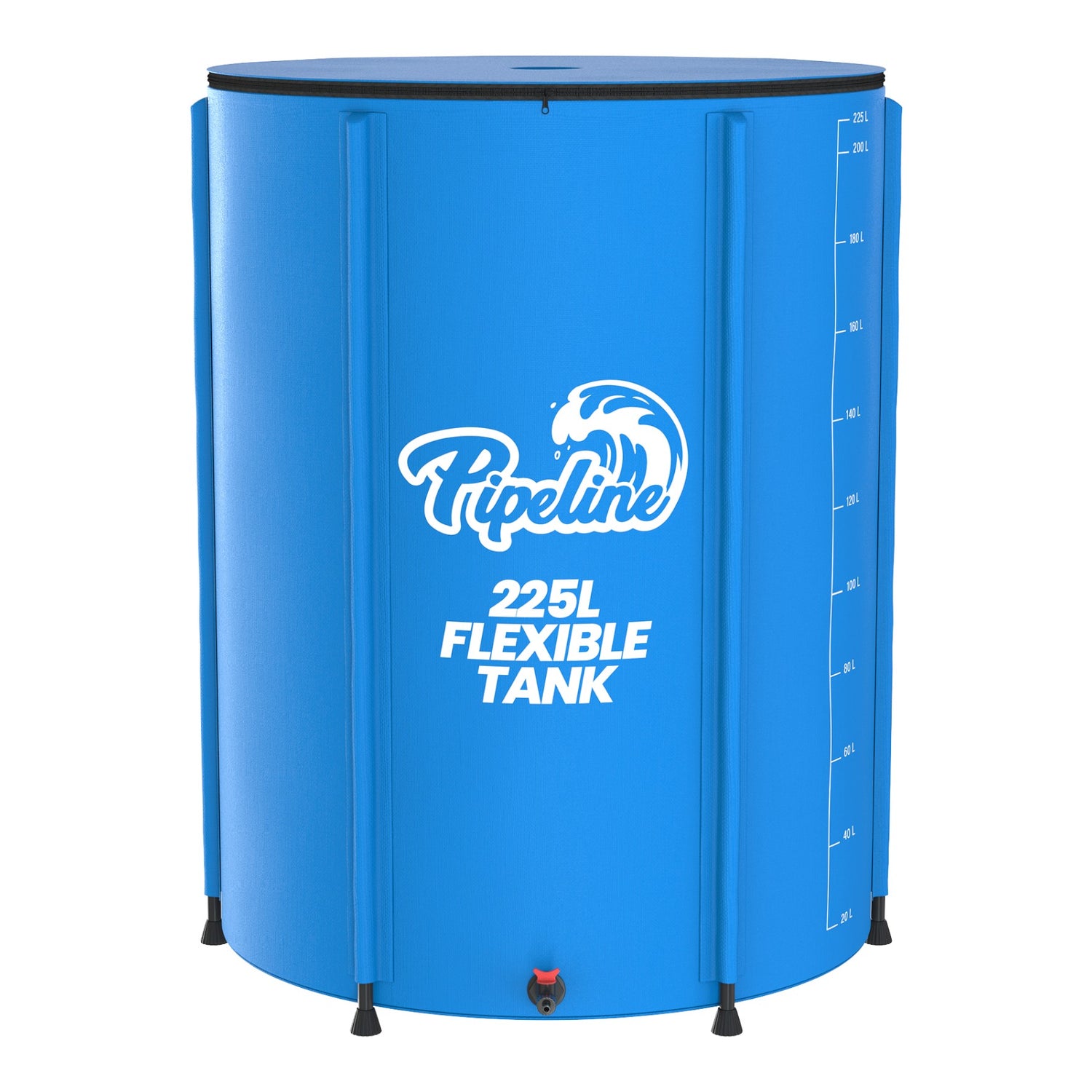
Pipeline Flexible Rain Barrel 225L
The Pipeline Flexible Rain Barrels provide a simple and efficient way to collect and store rainwater, helping you save money and reduce water waste in the garden. Available in 7 convenient sizes, these innovative rain barrels can be set up in minutes and fold flat for effortless transport and compact storage when not in use. Ideal for gardeners with limited space, they offer all the benefits of a traditional water butt without the bulk of rigid plastic tanks.
Crafted from durable, weather-resistant materials, Pipeline Flexible Rain Barrels are designed to withstand outdoor conditions season after season. Their lightweight yet robust construction makes them easy to handle, while still delivering reliable water storage for irrigation, cleaning, or emergency use. A practical and space-saving alternative, these flexible tanks are a must-have solution for modern, sustainable gardening.

£31.50
Unit price per£31.50
Unit price perA highly concentrated 4-14-4 root stimulator combining mineral nutrition, biostimulants and bio-minerals to support rapid root development, stronger early growth and increased plant resilience.
Atami Rootbastic is a premium concentrated root stimulator developed specifically for the crucial early stages of crop development. Its unusually high concentration of phosphorus, combined with additional mineral nutrition, trace elements and biostimulant components, provides targeted support while plants establish their root systems.
Rootbastic stands apart from many conventional rooting additives because it has a substantial NPK analysis of 4-14-4 W/W. Atami highlights phosphorus as particularly important within the formula because of its role in energy transport and storage and its contribution to essential cellular structures during active plant development.
Alongside its mineral nutrition, Rootbastic contains a concentrated combination of biostimulants and bio-minerals. Atami identifies improved root development, greater resistance to root disease and increased resilience to environmental stress among the principal benefits of the product.
Rootbastic is designed for a short, intensive programme during early crop development. Application begins at only 0.1ml/L and gradually increases to 0.3ml/L, making the 500ml bottle extremely concentrated and economical in use.
Why choose Atami Rootbastic?
When should Atami Rootbastic be used?
Rootbastic is intended for the early rooting and growth stages when the plant is actively establishing its root system. Atami describes the product as being highly effective during the first three weeks of the growth cycle.
Rather than viewing Rootbastic as an all-cycle additive, it is best treated as a concentrated early-stage treatment. The application rate increases progressively as the root system develops, beginning at 0.1ml/L before increasing to 0.2ml/L and finally 0.3ml/L.
This progressive approach provides increasing levels of Rootbastic as the young plant becomes established without immediately introducing the maximum concentration.
Rootbastic is suitable for cultivation in soil, coco coir and hydroponic systems. It can be incorporated into a wider crop nutrition programme during the period when strong root establishment is the priority.
How to use Atami Rootbastic
Shake well before use. Add Rootbastic to the normal nutrient solution during the early rooting and growth phase.
Begin at 0.1ml/L during the first stage of the programme. Increase to 0.2ml/L during the second stage and then to 0.3ml/L during the third stage as root development progresses.
At the initial 0.1ml/L rate, use 1ml for 10L, 5ml for 50L, 10ml for 100L, 50ml for 500L and 100ml for a 1,000L reservoir.
At 0.2ml/L, use 2ml for 10L, 10ml for 50L, 20ml for 100L, 100ml for 500L and 200ml for a 1,000L reservoir.
At the maximum 0.3ml/L rate, use 3ml for 10L, 15ml for 50L, 30ml for 100L, 150ml for 500L and 300ml for a 1,000L reservoir.
Rootbastic increases the EC of the base nutrient solution. EC should therefore be monitored after Rootbastic has been incorporated and the overall nutrient strength adjusted according to the crop, growing medium and stage of development.
Why is phosphorus important during root development?
Rootbastic contains considerably more phosphorus than many conventional root stimulators. Atami highlights phosphorus because it plays a fundamental role in the transport and storage of energy within plants.
Energy captured through photosynthesis is stored and transferred through compounds such as ATP, allowing energy to be moved to areas of active development. Phosphorus is also an important component of cellular structures and DNA.
Rootbastic combines this phosphorus-rich mineral nutrition with trace elements, biostimulants and bio-minerals to create a concentrated formula aimed specifically at the establishment of a healthy root system.
Establishing an extensive root system early in the crop cycle gives the plant a larger foundation through which water and mineral nutrition can subsequently be absorbed as above-ground growth increases.
Atami Rootbastic 500ml product details
| Product | Atami Rootbastic |
|---|---|
| Product type | Highly concentrated root stimulator & root booster |
| Product size | 500ml |
| Format | Liquid concentrate |
| NPK | 4-14-4 W/W |
| Formula | Mineral nutrition, biostimulants & bio-minerals |
| Application stage | Early rooting & growth phase |
| Initial application rate | 0.1ml/L |
| Intermediate application rate | 0.2ml/L |
| Maximum application rate | 0.3ml/L |
| Standard programme | 0.1ml/L → 0.2ml/L → 0.3ml/L during the first three stages of early growth |
| 10L solution | 1–3ml depending on development stage |
| 50L solution | 5–15ml depending on development stage |
| 100L solution | 10–30ml depending on development stage |
| 500L solution | 50–150ml depending on development stage |
| 1,000L solution | 100–300ml depending on development stage |
| Approximate solution from 500ml | 5,000L at 0.1ml/L, 2,500L at 0.2ml/L or approximately 1,667L at 0.3ml/L |
| Effect on EC | Increases the EC of the base nutrient solution |
| Soil | Suitable |
| Coco coir | Suitable |
| Hydroponics | Suitable |
| Available Atami sizes | 50ml, 100ml, 250ml, 500ml & 1250ml |
| Outer case quantity | 12 x 500ml bottles |
Atami Rootbastic 500ml FAQs
What is Atami Rootbastic?
Atami Rootbastic is a highly concentrated liquid root stimulator formulated to support rapid root development during the early stages of crop growth. It combines mineral nutrition with biostimulants and bio-minerals.
What does Atami Rootbastic do?
Rootbastic is designed to stimulate strong early root development and support plant establishment. Atami also identifies increased resistance to root disease and improved resilience to environmental stress among its benefits.
What is the NPK of Atami Rootbastic?
Atami Rootbastic has an NPK analysis of 4-14-4 W/W, giving it a particularly high phosphorus concentration for a root stimulator.
Why does Rootbastic contain so much phosphorus?
Phosphorus plays an important role in plant energy transfer and storage and is also involved in essential cellular structures. Rootbastic uses a phosphorus-rich formula to provide targeted nutritional support during intensive early root development.
When should I use Atami Rootbastic?
Rootbastic is designed for the early rooting and growth phase while the plant is establishing its root system. It is an intensive early-stage product rather than an additive intended for continuous use throughout the entire crop cycle.
How much Atami Rootbastic should I use per litre?
Start at 0.1ml/L during the first stage of the programme, increase to 0.2ml/L during the second stage and then use 0.3ml/L during the third stage of early growth.
Can Atami Rootbastic be used throughout the whole crop cycle?
Rootbastic is primarily designed for early root establishment. Once the intensive rooting programme is complete, crop nutrition should progress according to the plant's next stage of development rather than continuing Rootbastic unnecessarily throughout the entire cycle.
Can Atami Rootbastic be used in coco?
Yes. Rootbastic is suitable for coco coir cultivation and can be incorporated into an appropriate coco nutrient programme during early crop development.
Can Atami Rootbastic be used in hydroponics?
Yes. Rootbastic is suitable for hydroponic cultivation as well as coco and soil-based growing programmes.
Can Atami Rootbastic be used in soil?
Yes. Rootbastic can be used with soil-grown plants during early establishment when additional support for root development is required.
Does Rootbastic increase EC?
Yes. Atami specifically states that Rootbastic increases the EC of the base nutrient solution. Overall EC should therefore be checked after Rootbastic has been added rather than treating it as an EC-neutral additive.
Can I use Rootbastic alongside my base nutrients?
Yes. Rootbastic is a concentrated early-stage supplement rather than a complete standalone crop nutrition programme. Its NPK contribution and effect on EC should be taken into account when combining it with the base nutrient.
Do I need to shake Atami Rootbastic before use?
Yes. Atami instructs growers to shake Rootbastic well before use to ensure the concentrated liquid is properly mixed before measuring.
Can Rootbastic help support root health?
Yes. In addition to stimulating root development, Atami identifies increased resistance to root diseases and environmental stresses among the benefits associated with Rootbastic.
How many 500ml bottles are in a full case of Atami Rootbastic?
A full outer case contains 12 x 500ml bottles. Individual 500ml bottles can still be ordered separately.
£35.00
Unit price per£35.00
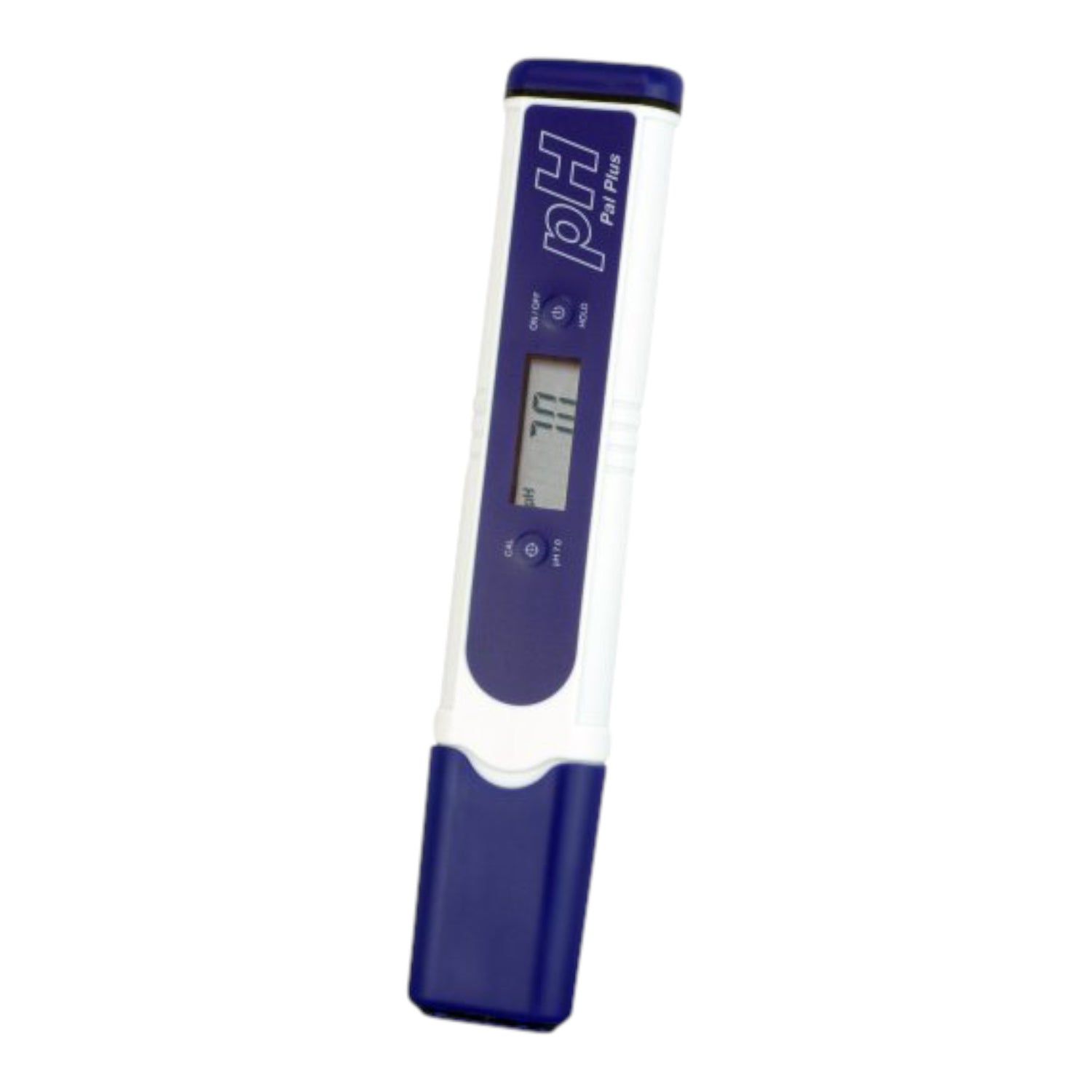
Unit price perETI pH Pal Plus Meter – Straightforward pH Testing You Can Trust
When you’re managing feeds or checking irrigation water, knowing your pH is spot-on matters. The ETI pH Pal Plus Meter makes pH testing fast, simple and reliable — no fluff, no fuss.
You just dip, press, and read. The clear digital display gives instant results, and automatic calibration keeps readings on target. Compact and sturdy, it fits neatly into a pocket or tray and holds up to daily use in nurseries, greenhouses, and propagation areas.
Whether you’re mixing nutrient solutions or checking water quality in situ, the ETI pH Pal Plus saves you time and ensures your growing conditions stay optimised.
Why growers trust the ETI pH Pal Plus:
Product details:
Weight: ~ 70 g Dimensions: 15 × 32 × 170 mm Batteries: 4 × 1.5 V LR44 (≈ 150hr life) Range / Accuracy: 0–14 pH, 0.1 resolution, ±0.2 pH Units per case: 1

£36.50
Unit price per£36.50
Unit price perHigh-output 30L/min air pump supplied with a 6-way manifold for powerful, reliable aeration across DWC systems, nutrient reservoirs and multiple air stones.
The Hailea ACO-9810 is a high-output diaphragm air pump designed for hydroponic systems that need considerably more aeration than a standard multi-outlet aquarium-style pump. Delivering up to 30 litres of air per minute, equivalent to 1,800 litres per hour, it provides a strong central air supply for larger reservoirs and multi-pot growing systems.
The ACO-9810 is supplied with a 6-way manifold, allowing its main air supply to be divided between several separate airline runs. This makes it particularly useful for DWC and RDWC systems where multiple pots or air stones need to be aerated from a single pump.
Hailea uses a double air chamber, oil-free diaphragm system together with vibration and sound-reducing features. The result is substantial airflow and pressure while maintaining a rated operating noise level below 40dB.
Why choose the Hailea ACO-9810 Air Pump?
High-output aeration for DWC, RDWC and nutrient reservoirs
The ACO-9810 is a strong choice when one central air pump needs to supply several aeration points. The supplied 6-way manifold allows separate airline runs to feed individual DWC pots, air stones or diffusers positioned throughout a larger nutrient reservoir.
Its 30L/min capacity also makes it useful for applications where smaller multi-outlet pumps do not provide enough airflow. Alongside hydroponic nutrient aeration, it can be used for propagation systems and other horticultural setups requiring a dependable continuous air supply.
The 30L/min rating is the maximum total airflow from the pump. When several manifold outlets are used, this airflow is shared between the connected lines rather than each outlet independently producing 30L/min.
How to use the Hailea ACO-9810
Place the pump on a firm, stable surface above the water level of your reservoir. Connect the supplied manifold to the main pump outlet using the connecting hose, then attach compatible airline to the manifold outlets you intend to use.
Connect suitable air stones or diffusers to the opposite ends of the airline and position them in the nutrient solution. Keep airline runs as direct as practical and avoid sharp bends or kinks that could restrict airflow.
Airflow from the pump is divided between the connected manifold outlets. Airline length, water depth and the resistance created by individual air stones will all influence the amount of air reaching each diffuser.
Inspect the manifold, airline and air stones periodically. Mineral deposits and other blockages in an air stone can increase resistance and reduce aeration, so cleaning or replacing restricted diffusers will help maintain consistent performance.
Hailea ACO-9810 specifications
| Manufacturer | Hailea |
|---|---|
| Model | ACO-9810 |
| Product type | High-output diaphragm air pump |
| Maximum airflow | 30L/min / 1,800L/hr |
| Pressure | >0.025MPa |
| Power consumption | 25W |
| Noise level | <40dB |
| Voltage | 220 – 240V |
| Frequency | 50/60Hz |
| Dimensions | 208 x 160 x 166mm |
| Weight | 4kg |
| Air distribution | 6-way manifold supplied |
| Manifold airline size | For standard 4mm internal diameter airline |
| Pump design | Oil-free diaphragm with double air chamber |
| Typical applications | DWC, RDWC, nutrient reservoirs, hydroponic systems & multi-air-stone aeration |
Hailea ACO-9810 Air Pump FAQs
How much air does the Hailea ACO-9810 produce?
The ACO-9810 delivers up to 30 litres of air per minute, equivalent to a maximum airflow of 1,800 litres per hour.
How many outlets does the Hailea ACO-9810 have?
The pump has a main high-output air connection and is supplied with a 6-way manifold, allowing the airflow to be distributed between up to six separate airline runs.
Does the ACO-9810 come with a manifold?
Yes. The Hailea ACO-9810 is supplied with a 6-way manifold for distributing its air supply between multiple air stones or diffusers.
Is the Hailea ACO-9810 suitable for DWC and RDWC?
Yes. Its 30L/min maximum airflow and multi-way distribution make it particularly useful for DWC and RDWC systems where several pots or air stones require continuous aeration.
Does each manifold outlet deliver 30L/min?
No. The 30L/min figure is the maximum total airflow produced by the pump. That airflow is shared between the manifold outlets being used.
What size airline does the ACO-9810 manifold use?
The supplied manifold has outlets designed for standard 4mm internal diameter airline commonly used with hydroponic air stones and diffusers.
How noisy is the Hailea ACO-9810?
Hailea rates the ACO-9810 at below 40dB. Its double damping and sound-reducing design helps control vibration and operating noise despite its high airflow.
How much power does the ACO-9810 use?
The Hailea ACO-9810 has a rated power consumption of 25W.
What is the difference between the ACO-9810 and ACO-9820?
The ACO-9810 delivers up to 30L/min and is supplied with a 6-way manifold. The larger ACO-9820 delivers up to 60L/min and is supplied with a 10-way manifold, providing greater capacity for larger reservoirs and systems with more aeration points.

£36.95
Unit price per£36.95
Unit price perA concentrated 0-4-12 PK bloom booster with a 1:3 phosphorus-to-potassium ratio, designed to support strong flower development without adding extra nitrogen.
Advanced Nutrients Hammerhead is a specialist flowering supplement developed for the European market. Its 0-4-12 analysis provides a deliberately potassium-led PK profile, giving a 1:3 phosphorus-to-potassium ratio rather than the much closer ratios found in many conventional PK boosters.
The formulation contains no added nitrogen, allowing growers to increase phosphorus and potassium during flowering without unnecessarily increasing nitrogen supplied by the base nutrient.
Advanced Nutrients uses potassium citrate within Hammerhead rather than relying on sulphate of potash. The product is designed to complement a complete base nutrient programme and is especially suited to growers looking for a targeted PK supplement during active flowering.
Why choose Advanced Nutrients Hammerhead?
What is Advanced Nutrients Hammerhead suitable for?
Hammerhead is primarily designed for flowering crops that need additional phosphorus and potassium alongside a complete base nutrient programme.
The current Advanced Nutrients feeding chart introduces Hammerhead at 2ml/L during established vegetative development and again from the developing flowering phase through active and later flowering. Rather than tying this to fixed calendar weeks, Creation recommends following crop development and the wider feeding programme.
Hammerhead has been specifically designed to pair with the Advanced Nutrients Sensi Terra base nutrient range. Advanced Nutrients also confirms compatibility with its pH Perfect base nutrients, its other non-pH Perfect base nutrients and supplements, and compatible programmes using nutrients from other manufacturers.
How to use Advanced Nutrients Hammerhead
Shake the container thoroughly before use. Prepare the normal base nutrient solution first, mixing each component thoroughly into the water.
Add Hammerhead at 2ml per litre when it is required within the feeding programme. During flowering, the manufacturer's current schedule uses Hammerhead from the developing bloom phase through active and later flowering, then stops application for the final flush.
For 10L of nutrient solution, use 20ml. For 50L, use 100ml. For a 100L reservoir, use 200ml.
Hammerhead is a PK supplement rather than a complete nutrient. Continue using the appropriate base nutrient to supply the wider macro and micronutrient profile required by the crop.
Advanced Nutrients Hammerhead 5L product details
| Product | Advanced Nutrients Hammerhead |
|---|---|
| Product type | PK flowering / bloom booster |
| Product size | 5L |
| Format | Liquid concentrate |
| NPK | 0-4-12 |
| PK ratio | 1:3 phosphorus to potassium |
| Nitrogen | No added nitrogen |
| Potassium source highlighted by manufacturer | Potassium citrate |
| Application rate | 2ml/L |
| 10L solution | 20ml |
| 50L solution | 100ml |
| 100L solution | 200ml |
| Approximate solution from 5L | 2,500L at 2ml/L |
| Application stage | Established vegetative growth & developing to later flowering, according to the wider feeding programme |
| Final flush | Do not apply during final flush |
| Recommended pairing | Advanced Nutrients Sensi Terra Series |
| Compatibility | Advanced Nutrients pH Perfect & non-pH Perfect base nutrients, plus compatible third-party nutrient programmes |
| Market | Europe |
| Outer case quantity | 4 |
Advanced Nutrients Hammerhead FAQs
What is Advanced Nutrients Hammerhead?
Hammerhead is a concentrated 0-4-12 PK flowering supplement designed to provide additional phosphorus and potassium alongside a complete base nutrient programme.
What is the NPK of Hammerhead?
The current European Advanced Nutrients Hammerhead formulation has an NPK analysis of 0-4-12.
What is the PK ratio of Hammerhead?
Hammerhead provides a 1:3 phosphorus-to-potassium ratio, meaning it supplies three times as much potassium as phosphorus based on its stated nutrient analysis.
Does Hammerhead contain nitrogen?
Hammerhead has no added nitrogen. This allows phosphorus and potassium to be supplemented without adding further nitrogen to the feeding programme.
Is Hammerhead a complete base nutrient?
No. Hammerhead is a concentrated PK supplement and should be used alongside an appropriate complete base nutrient.
How much Hammerhead should I use per litre?
Advanced Nutrients recommends Hammerhead at 2ml per litre within its current European feeding programme.
How much Hammerhead do I need for 10 litres?
At 2ml/L, use 20ml of Hammerhead for 10 litres of nutrient solution.
How much Hammerhead do I need for 50 litres?
Use 100ml of Hammerhead for 50 litres of nutrient solution at the recommended rate.
How much Hammerhead do I need for a 100L reservoir?
Use 200ml of Hammerhead for a 100L reservoir at 2ml/L.
How much nutrient solution will 5L of Hammerhead make?
At 2ml/L, a 5L container provides enough concentrate to prepare approximately 2,500 litres of nutrient solution.
When should I use Hammerhead?
The current Advanced Nutrients programme uses Hammerhead during established vegetative development and again from the developing flowering phase through active and later flowering. It is not used during the final flush.
Can Hammerhead be used with Sensi Terra?
Yes. Advanced Nutrients specifically designed the current European Hammerhead formulation to pair with the Sensi Terra base nutrient range.
Can Hammerhead be used with pH Perfect nutrients?
Yes. Advanced Nutrients states that Hammerhead is compatible with its pH Perfect base nutrients as well as its non-pH Perfect nutrient programmes.
Can Hammerhead be used with other nutrient brands?
Yes. Advanced Nutrients states that Hammerhead is compatible with compatible base nutrients and supplements from other manufacturers.
What type of potassium is used in Hammerhead?
Advanced Nutrients highlights potassium citrate in the current Hammerhead formulation rather than sulphate of potash.

£39.75
Unit price per£39.75
Unit price perA straightforward organic nutrient starter kit combining base feeds, a flowering booster and beneficial microbes into one easy-to-follow growing programme.
The Advanced Nutrients Organic Grow Your Own Kit brings together a carefully selected feeding programme for growers who want to cultivate with organic inputs without building a nutrient schedule from scratch.
Inside the kit are OG Organics Iguana Juice Grow and Bloom for phase-specific base nutrition, OG Organics Big Bud for flowering support and Voodoo Juice Plus microbial tablets for the root zone. An accompanying feeding chart brings the products together into a clear programme from vegetative development through flowering.
Advanced Nutrients has developed the OG Organics range around naturally derived nutrition and natural chelation, helping make essential nutrients and micronutrients available to the crop while maintaining an organic-focused feeding approach.
What's included in the Organic Grow Your Own Kit?
Why choose the Advanced Nutrients Organic Grow Your Own Kit?
The biggest advantage of the kit is simplicity. Rather than choosing individual base nutrients, flowering additives and microbial products separately, growers get the core products needed to follow a structured organic nutrient programme in one box.
Iguana Juice Grow and Bloom provide the nutritional foundation for the vegetative and flowering stages. OG Organics Big Bud adds targeted support during active flowering, while Voodoo Juice Plus introduces beneficial microorganisms to support a healthy and active root zone.
Advanced Nutrients lists the European Organic Grow Your Own Kit for both vegetative and flowering stages, indoor and outdoor cultivation, regular watering and watering systems. It is also suitable for hydroponic cultivation and coco coir.
How to use the Organic Grow Your Own Kit
Follow the feeding chart supplied with the kit and adjust the programme to suit the development and response of the crop. Shake liquid nutrients thoroughly before measuring and add each liquid product separately to water, mixing thoroughly as you prepare the nutrient solution.
Vegetative growth
Use OG Organics Iguana Juice Grow as the phase-specific base nutrient during vegetative development. The feeding programme builds the concentration progressively as established plants develop.
Flowering
Move from Iguana Juice Grow to OG Organics Iguana Juice Bloom as the crop enters its flowering phase. Bloom provides the phase-specific base nutrition for flowering development.
OG Organics Big Bud is introduced during active flowering at 2ml/L, complementing the Bloom base nutrient during flower development.
Root-zone support
Voodoo Juice Plus provides the microbial element of the programme. Follow the supplied feeding chart for tablet application so the beneficial microorganisms are introduced at the appropriate crop stages.
The supplied Advanced Nutrients feeding chart should remain the primary reference when using the complete kit, particularly because the individual products have different application stages and rates.
Advanced Nutrients Organic Grow Your Own Kit details
| Product | Advanced Nutrients Organic Grow Your Own Kit |
|---|---|
| Product type | Organic nutrient starter kit |
| Market version | European Market |
| Iguana Juice Grow | 250ml |
| Iguana Juice Bloom | 1L |
| OG Organics Big Bud | 500ml |
| Voodoo Juice Plus | 10 tablets |
| Feeding chart | Included |
| Base nutrition | OG Organics Iguana Juice Grow & Bloom |
| Flowering supplement | OG Organics Big Bud |
| Root-zone supplement | Voodoo Juice Plus microbial tablets |
| Application stages | Vegetative growth & flowering |
| Growing environment | Indoor & outdoor |
| Growing media | Hydroponic growing media & coco coir |
| Suitable applications | Regular watering & watering systems |
Advanced Nutrients Organic Grow Your Own Kit FAQs
What is included in the Advanced Nutrients Organic Grow Your Own Kit?
The kit contains OG Organics Iguana Juice Grow, OG Organics Iguana Juice Bloom, OG Organics Big Bud and Voodoo Juice Plus microbial tablets, together with a feeding chart for the complete programme.
Is the Organic Grow Your Own Kit suitable for beginners?
Yes. One of the main advantages of the kit is that the core base nutrients, flowering supplement and microbial root-zone product are supplied together with a feeding chart, removing much of the guesswork involved in building a programme from separate products.
What does Iguana Juice Grow do?
OG Organics Iguana Juice Grow provides the base nutrition used during vegetative development. It is replaced by the corresponding Iguana Juice Bloom formulation when the crop moves into flowering.
What does Iguana Juice Bloom do?
OG Organics Iguana Juice Bloom provides the base nutrient component for the flowering phase, supplying phase-specific organic nutrition as plants move away from vegetative growth.
What is OG Organics Big Bud used for?
OG Organics Big Bud is the flowering booster included in the kit. It is used alongside the flowering base nutrient during active flower development rather than replacing Iguana Juice Bloom.
What are the Voodoo Juice Plus tablets for?
Voodoo Juice Plus tablets provide beneficial microorganisms for the root zone. They are designed to support root development, nutrient availability and nutrient uptake as part of the complete programme.
Can the Advanced Nutrients Organic Grow Your Own Kit be used in coco?
Yes. Advanced Nutrients lists the European Organic Grow Your Own Kit as coco coir safe.
Can the Organic Grow Your Own Kit be used in hydroponics?
Yes. Advanced Nutrients lists the kit as suitable for hydroponic cultivation as well as regular watering and watering systems.
Can I use the Organic Grow Your Own Kit outdoors?
Yes. The kit is listed for both indoor and outdoor cultivation.
Does the kit cover both vegetative growth and flowering?
Yes. Iguana Juice Grow provides the vegetative base feed before the programme changes to Iguana Juice Bloom for flowering. Big Bud provides additional flowering support, while Voodoo Juice Plus supplies the microbial component of the programme.
Do I use Iguana Juice Grow and Bloom at the same time?
They are phase-specific base nutrients. Use Iguana Juice Grow during vegetative development, then move to Iguana Juice Bloom as the crop transitions into flowering.
Is Big Bud the base flowering nutrient in this kit?
No. Iguana Juice Bloom is the flowering base nutrient. OG Organics Big Bud is a flowering supplement that works alongside the base feed during the appropriate stage of flower development.

£43.75
Unit price per£43.75
Unit price perThe Philips MASTER GreenPower Xtra 1000W EL DE is a professional double-ended high-pressure sodium (HPS) lamp developed for high-output horticultural lighting, delivering an initial photon flux of approximately 2150µmol/s.
Designed for use with suitable high-frequency electronic control gear, the GreenPower Xtra combines very high plant-light output with strong output maintenance over its operating life. Philips developed the Xtra generation specifically to improve growth-light performance and maintenance in professional crop-production environments.
The lamp uses a K12x30s double-ended base and operates horizontally in compatible 1000W DE fixtures. Its clear tubular construction minimises obstruction between the arc tube and reflector, while the double-ended design allows accurate positioning within compatible optical systems.
With a 2000K colour temperature and the characteristic red-rich output of horticultural HPS technology, the lamp is particularly suited to high-intensity flowering and fruiting applications as well as commercial supplementary lighting.
Why choose the Philips MASTER GreenPower Xtra 1000W?
2150µmol/s high-output horticultural lighting
For plant lighting, photon output is a much more useful performance measure than simply comparing lamps by visible brightness. The Philips MASTER GreenPower Xtra produces an initial photon flux of approximately 2150µmol/s, placing it firmly within professional high-intensity horticultural lighting.
This high photon output allows suitable fixtures to deliver substantial photosynthetically active light over the crop area. Actual PPFD at canopy level will depend on the fixture, reflector, mounting height, spacing, room geometry and overall lighting layout.
For commercial installations, fixture spacing and mounting height should therefore be determined from an appropriate lighting plan rather than lamp wattage alone.
Designed for strong light-output maintenance
Initial output is only part of the performance of a professional horticultural lamp. As discharge lamps accumulate operating hours, their output gradually declines.
Philips designed the GreenPower Xtra range to provide strong growth-light maintenance over its service period. Published Philips horticultural data specifies an initial photon flux of approximately 2150µmol/s and a maintained value of approximately 2040µmol/s after 10,000 operating hours.
This high level of output retention is particularly valuable in professional crop production, where declining lamp performance can gradually reduce the amount of light reaching the crop even though the lamps continue to operate normally.
2000K HPS spectrum for flowering & fruiting crops
The MASTER GreenPower Xtra has a nominal colour temperature of 2000K, producing the warm, red-rich spectral profile characteristic of horticultural high-pressure sodium lighting.
HPS remains particularly effective for flowering and fruiting crops and is also widely used as high-intensity supplementary lighting in professional greenhouse production.
Where spectral balance is an important part of the crop strategy, the HPS output can also be considered alongside natural daylight or other artificial lighting technologies within the overall lighting design.
Double-ended K12x30s lamp design
Unlike a conventional single-ended HPS lamp, the GreenPower Xtra is supported and electrically connected at both ends using a K12x30s double-ended base.
This construction allows the lamp to sit horizontally within a compatible reflector and removes the need for the internal return-frame arrangement associated with many traditional single-ended HID lamps.
The lamp must only be used in a fixture specifically designed for the correct double-ended lamp format and electrical operating requirements. It is not interchangeable with a conventional E40 screw-fit HPS lamp.
Requires compatible electronic control gear
The MASTER GreenPower Xtra 1000W EL is designed for operation with compatible high-frequency electronic control gear. The lamp cannot be connected directly to the mains supply.
Correct matching between the lamp, electronic ballast and fixture is essential. The ballast must provide the electrical operating characteristics required by this specific lamp type.
Do not assume that any ballast labelled simply as 1000W is suitable. Compatibility should be confirmed against the ballast or fixture manufacturer's specifications before installation.
Operating position & heat management
Philips specifies this lamp for parallel or horizontal operation. It should therefore be installed in a compatible fixture that maintains the correct lamp orientation.
A 1000W HPS system produces substantial radiant and convective heat. Appropriate fixture clearance, air movement and environmental control are essential when designing the installation.
The lamp and fixture become extremely hot during operation. Allow adequate cooling time before handling, servicing or replacing the lamp.
Philips MASTER GreenPower Xtra 1000W EL DE product details
| Brand | Philips |
|---|---|
| Product range | MASTER GreenPower Xtra |
| Lamp technology | High-pressure sodium (HPS) |
| Nominal lamp class | 1000W |
| Published power consumption | 1020W |
| Initial photon flux | Approximately 2150µmol/s |
| Maintained photon flux | Approximately 2040µmol/s at 10,000 operating hours |
| Colour temperature | 2000K |
| Cap / base | K12x30s double-ended |
| Bulb shape | T40 clear tubular |
| Operating position | Parallel / horizontal |
| Dimmable | Yes, with compatible control gear and within manufacturer operating requirements |
| Control gear | Compatible high-frequency electronic ballast required |
| Rated operating life | 10,000 hours |
| Typical application | High-intensity professional horticultural and greenhouse crop lighting |
Philips MASTER GreenPower Xtra 1000W FAQs
What is the light output of the Philips GreenPower Xtra 1000W?
Philips specifies an initial horticultural photon flux of approximately 2150µmol/s, making it a very high-output HPS lamp for professional crop lighting. How well does the GreenPower Xtra maintain its output?
Published Philips horticultural data gives an initial output of approximately 2150µmol/s and around 2040µmol/s after 10,000 operating hours, demonstrating strong photon-output maintenance over its rated life. Is this a double-ended HPS lamp?
Yes. It uses a K12x30s double-ended base and must be installed in a compatible double-ended horticultural fixture. Will this lamp fit an E40 reflector?
No. An E40 reflector uses a large screw-type lamp holder. This Philips lamp uses a K12x30s double-ended fitting and requires the appropriate DE fixture. Does the lamp need a ballast?
Yes. The lamp requires compatible high-frequency electronic control gear and must not be connected directly to the mains supply. Can I use any 1000W electronic ballast?
Not automatically. Ballast compatibility depends on the electrical operating requirements of the lamp. Confirm that the specific ballast or fixture is approved for this type of Philips 1000W EL double-ended lamp. What does 2000K mean for plant lighting?
2000K describes the lamp's warm colour temperature. The resulting HPS spectrum is strongly weighted towards yellow, orange and red wavelengths and is widely used for flowering, fruiting and supplementary greenhouse lighting. Can the Philips GreenPower Xtra 1000W be dimmed?
Philips lists the lamp as dimmable. Dimming must be carried out using compatible electronic control gear and within the operating limits specified for the lamp and ballast combination. Why is photon flux measured in µmol/s rather than lumens?
Lumens describe light according to human visual sensitivity. Photon flux expressed in µmol/s is more relevant to horticultural lighting because it quantifies the photosynthetically active photons produced by the light source. Can the lamp be mounted vertically?
Philips specifies parallel or horizontal operation for this lamp. It should be installed in a compatible fixture that maintains the required operating position. When should a horticultural HPS lamp be replaced?
A discharge lamp can continue operating after its useful plant-light output has begun to decline. Professional installations commonly manage replacement according to operating hours and measured light performance rather than waiting for the lamp to fail completely. How should a used Philips HPS lamp be disposed of?
HID lamps contain materials including mercury and require appropriate lamp recycling rather than disposal with general waste. If a lamp breaks, follow Philips' handling guidance and use an appropriate recycling or hazardous-lamp waste route.
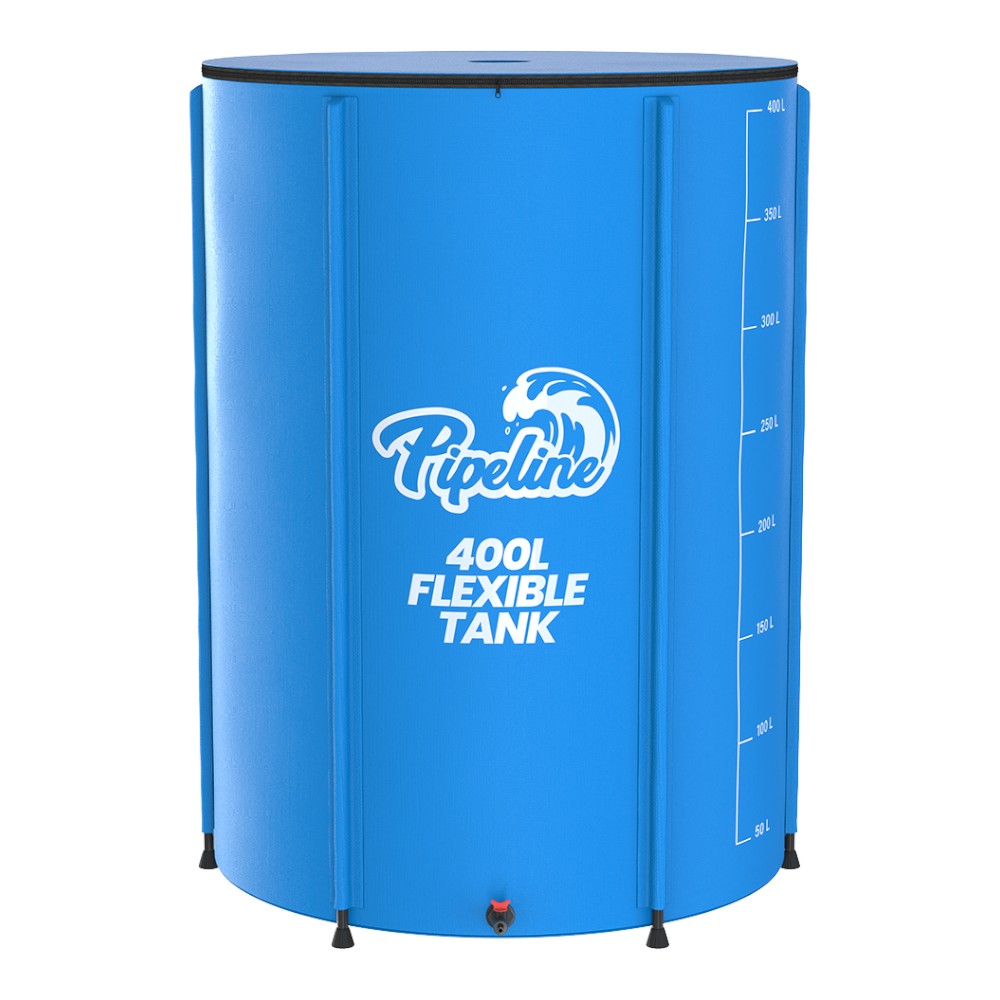
Pipeline Flexible Rain Barrels 400L
The Pipeline Flexible Rain Barrels provide a simple and efficient way to collect and store rainwater, helping you save money and reduce water waste in the garden. Available in 7 convenient sizes, these innovative rain barrels can be set up in minutes and fold flat for effortless transport and compact storage when not in use. Ideal for gardeners with limited space, they offer all the benefits of a traditional water butt without the bulk of rigid plastic tanks.
Crafted from durable, weather-resistant materials, Pipeline Flexible Rain Barrels are designed to withstand outdoor conditions season after season. Their lightweight yet robust construction makes them easy to handle, while still delivering reliable water storage for irrigation, cleaning, or emergency use. A practical and space-saving alternative, these flexible tanks are a must-have solution for modern, sustainable gardening.

£45.00
Unit price per£45.00
Unit price perGenuine Bluelab replacement probe for restoring pH, EC and temperature measurement on the Bluelab OnePen without replacing the complete meter.
The Bluelab OnePen Replacement Probe is the dedicated replacement sensor for the Bluelab OnePen. It combines pH, electrical conductivity and temperature sensing in a single replaceable module, allowing you to renew the measuring end of your OnePen while continuing to use the existing meter body.
Like the original OnePen probe, the replacement uses a double-junction pH sensor alongside titanium conductivity electrodes. Once fitted, it restores the OnePen's ability to measure pH, EC and temperature from the same handheld meter.
Replacing the probe is particularly useful when an older sensor is becoming difficult to calibrate, giving unstable readings or has reached the end of its working life. It provides a more economical and sustainable alternative to replacing the complete OnePen.
Why choose the Bluelab OnePen Replacement Probe?
Which meter does the OnePen Replacement Probe fit?
This replacement probe is specifically designed for the Bluelab OnePen. It replaces the original combined pH, conductivity and temperature probe fitted to the meter.
It is not a universal Bluelab probe and should not be confused with Bluelab's separate pH probes, conductivity probes or other replacement sensors.
How to replace a Bluelab OnePen probe
Remove the OnePen storage cap, turn the meter upside down to help keep the batteries in position and unscrew the threaded collar holding the existing probe in place. Carefully remove the old probe from the meter body.
Remove the protective cap from the new replacement probe. Align the arrow on the top of the probe with the corresponding notch in the OnePen body, then push the probe fully into position.
Refit the threaded collar and tighten it securely. The new pH probe should then be correctly hydrated and calibrated before measurements are taken.
Looking after your new OnePen probe
Proper care can significantly affect the working life of a pH probe. Keep the pH sensor hydrated using Bluelab KCl Storage Solution and rinse the probe with fresh tap water after measurements to prevent nutrient salts being left on the sensor during storage.
Bluelab recommends regular cleaning and pH calibration. The OnePen's probe health indicator can also help identify when calibration performance is beginning to deteriorate and replacement may eventually be required.
Product details
| Brand | Bluelab |
|---|---|
| Product | OnePen Replacement Probe |
| Product type | Replacement multi-parameter sensor probe |
| Measurements | pH, conductivity (EC) & temperature |
| Compatibility | Bluelab OnePen |
| pH sensor | Double-junction pH probe |
| EC sensor | Titanium conductivity electrodes |
| Temperature measurement | Integrated |
| Waterproof rating | IP68 |
| Replacement type | User-replaceable probe module |
| Typical probe life | Approximately 18 months with appropriate care and maintenance |
Bluelab OnePen Replacement Probe FAQs
What does the Bluelab OnePen Replacement Probe measure?
The replacement probe incorporates sensors for pH, electrical conductivity and temperature, replacing all three measuring functions of the original OnePen probe.
Is this the correct replacement probe for the Bluelab OnePen?
Yes. This is the genuine Bluelab replacement probe specifically designed for the Bluelab OnePen.
Do I need to replace my whole OnePen when the probe wears out?
No. The OnePen has been designed with a replaceable probe, so the pH, EC and temperature sensor module can be renewed while retaining the existing meter body.
How long does a Bluelab OnePen Replacement Probe last?
Bluelab states that the average lifespan of a OnePen Replacement Probe is approximately 18 months. Probe life varies with use, storage and maintenance, and good care can help maximise its working life.
When should I replace my Bluelab OnePen probe?
Replacement may be required when the probe can no longer be successfully calibrated after cleaning and hydration, when its glassware is damaged or when measurements remain unreliable despite correct maintenance.
Does the replacement probe measure EC as well as pH?
Yes. The OnePen Replacement Probe incorporates titanium conductivity electrodes for EC measurement alongside its pH and temperature sensors.
Does a new OnePen probe need calibrating?
Yes. The pH sensor should be correctly hydrated and calibrated before use. The OnePen uses two-point pH calibration to establish accurate pH measurement.
How should I store the OnePen Replacement Probe?
Keep the storage-cap sponge moist with Bluelab KCl Storage Solution so the pH sensor remains hydrated. Do not store the pH probe in RO, distilled or de-ionised water.
Can I use any Bluelab replacement probe with the OnePen?
No. The OnePen requires the dedicated Bluelab OnePen Replacement Probe. Other Bluelab pH and conductivity probes are designed for different meters and connections.
£47.50
Unit price per£47.50
Unit price per254mm (10") x 10m Mute Silent Ducting is an acoustically insulated flexible ventilation duct designed to help reduce fan and airflow noise in high-capacity extraction and intake systems.
Powerful ventilation equipment can generate considerable noise from both the fan and the movement of air through the ductwork. This insulated ducting provides a practical way to reduce sound transmission while retaining the flexibility and straightforward installation of conventional flexible duct.
The flexible inner airflow duct is surrounded by an acoustic insulation layer that helps absorb sound travelling along the ventilation system. This makes it particularly useful in grow rooms and indoor horticultural environments where extraction equipment may operate for extended periods.
Supplied in a generous 10 metre length with a nominal 254mm / 10" diameter, the duct can be used as one extended run or cut into shorter sections to suit the installation.
Why choose 254mm acoustic silent ducting?
How does acoustic ducting reduce ventilation noise?
Ventilation noise does not only originate directly from an extraction fan. Fan sound, vibration and turbulent airflow can travel through ordinary ductwork and become audible at other points in the ventilation route.
Acoustic ducting surrounds the flexible inner air passage with an insulating layer designed to absorb transmitted sound. This helps reduce the amount of fan and airflow noise travelling along the duct run.
It can be particularly useful immediately before or after an extraction fan, between a fan and carbon filter, or along longer ventilation routes where transmitted sound needs to be controlled.
Acoustic ducting is designed to reduce ventilation noise rather than make an extraction system completely silent. Fan design, fan speed, airflow velocity, vibration, duct routing and installation quality will all influence the final noise level.
Designed for high-capacity grow room ventilation
Larger grow rooms and controlled horticultural environments can require substantial air movement to manage heat, humidity and general air exchange. As ventilation capacity increases, controlling the associated noise becomes increasingly important.
The 254mm / 10" diameter is suitable for compatible high-volume extraction equipment, while the insulated construction helps reduce sound transmitted through the ducting.
It can be incorporated into complete ventilation systems using compatible inline fans, carbon filters, metal duct fittings, reducers, bends and other appropriately sized components.
Maintaining good airflow through flexible ducting
Correct installation is important because every length of duct, bend and fitting introduces resistance to airflow. This becomes especially relevant with longer ventilation runs.
Extend the duct sufficiently rather than leaving unnecessary sections heavily compressed. A more fully extended inner duct provides a smoother airflow path and can help reduce avoidable turbulence and resistance.
Keep the route as short and direct as the installation allows. Avoid crushing the duct and minimise tight bends, with gradual changes in direction preferable wherever possible.
Although this product provides 10 metres of ducting, there is no requirement to use the full length. Cutting each section to the amount actually required can help create a cleaner and more efficient ventilation installation.
Installing 254mm Mute Silent Ducting
Check that the fan, carbon filter and other ventilation fittings have compatible nominal 254mm / 10" connections before installation.
Fit the flexible inner duct securely over the ventilation connection and fasten it using an appropriately sized duct clamp or suitable fixing. HVAC foil tape can be used where additional sealing is required.
Arrange the acoustic insulation and outer covering neatly around the completed joint so that the insulating layer remains as continuous as practical.
Long duct runs should be supported at suitable intervals. Avoid allowing the full weight of a long section of ducting to hang directly from the extraction fan, carbon filter or another ventilation component.
Compatible ventilation equipment
Always check the actual connection dimensions of individual components before installation, as nominal sizes and connection details can vary between ventilation equipment manufacturers.
254mm (10") x 10m Mute Silent Ducting product details
| Product type | Acoustic insulated flexible ventilation ducting |
|---|---|
| Nominal diameter | 254mm / 10" |
| Length | 10m |
| Duct type | Flexible |
| Construction | Insulated acoustic ducting |
| Primary purpose | Ventilation with reduced transmission of fan and airflow noise |
| Suitable airflow | Extraction & intake |
| Compatible system size | Nominal 254mm / 10" round ventilation systems |
| Suitable applications | Grow rooms, indoor horticulture & other compatible ventilation installations |
254mm (10") Mute Silent Ducting FAQs
What is acoustic ducting?
Acoustic ducting is flexible ventilation duct surrounded by insulation designed to help reduce sound transmitted through a ventilation system. What size is this ducting?
This version has a nominal diameter of 254mm, equivalent to 10 inches, and is supplied in a 10 metre length. Is this suitable for a 10-inch extraction fan?
Yes, provided the fan has a compatible nominal 254mm / 10" connection. Check the fan connection dimensions before installation. Can it be connected to a 10-inch carbon filter?
Yes. It can be used with a compatible 254mm / 10" carbon filter as part of an appropriately sized extraction system. Does acoustic ducting make an extraction fan silent?
No. Acoustic ducting helps reduce noise transmitted through the ductwork, but it cannot completely eliminate fan motor noise, vibration or the sound created by moving air. Is acoustic ducting quieter than standard flexible ducting?
Its insulated construction is specifically intended to reduce transmitted ventilation noise compared with basic uninsulated flexible ducting. Can this ducting be used for intake as well as extraction?
Yes. It can be incorporated into compatible fresh-air intake systems as well as extraction systems. Can I cut the 10m duct into shorter lengths?
Yes. The ducting can be cut to suit the installation, making the 10m version useful when several individual duct sections are required. Do I need to use the entire 10 metre length?
No. Use only the amount required. Keeping ventilation routes reasonably short and direct generally helps minimise unnecessary resistance. Does a longer duct run reduce airflow?
Longer duct runs introduce additional resistance. Bends, fittings and compressed flexible duct can add further resistance, so ventilation systems should be planned with the total duct route in mind. Do bends in the duct affect extraction performance?
Yes. Tight bends can increase airflow resistance, so smooth and gradual changes in direction are preferable where the installation allows. Should flexible acoustic ducting be fully extended?
It should be extended sufficiently for the required run rather than left unnecessarily compressed. This helps provide a smoother internal path for airflow. Where is the best place to use acoustic ducting?
It can be used throughout a compatible ventilation route. Sections immediately around powerful extraction fans can be particularly useful where reducing transmitted fan noise is a priority. Does a 10m run need supporting?
Yes. Longer duct runs should be supported appropriately rather than allowing their weight to hang entirely from the fan, filter or connecting fittings. How can I make a grow room extraction system quieter?
Acoustic ducting can form part of a quieter installation alongside sensible duct routing, correctly sized fans and filters, vibration isolation, suitable fan-speed control and ventilation silencers.

£49.99
Unit price per£49.99
Unit price perA concentrated 1-3-8 mid-flowering bloom booster developed with a potassium-led PK profile for Kush genetics.
Advanced Nutrients Kushie Kush is a specialised flowering supplement developed around the nutritional characteristics of Kush genetics. Rather than following the very high-phosphorus approach used by many conventional bloom boosters, Kushie Kush has a distinctive 1-3-8 NPK profile with a greater emphasis on potassium.
Designed for the period when established flowers are actively developing, Kushie Kush complements the normal flowering base nutrient rather than replacing it. Its concentrated 2ml/L application rate also makes the 4L size particularly practical for larger reservoirs and regular feeding programmes.
Kushie Kush can be incorporated into Advanced Nutrients pH Perfect and non-pH Perfect feeding programmes, as well as compatible programmes using base nutrients and supplements from other manufacturers.
Why choose Advanced Nutrients Kushie Kush?
What is Kushie Kush suitable for?
Kushie Kush is intended for growers working with Kush and Kush-lineage genetics who want a flowering supplement developed specifically around these plants rather than a general-purpose PK booster.
Use it during the middle part of flowering, once flowers are established and actively developing. It is not intended for propagation or vegetative growth, and it is withdrawn as the crop progresses into late flowering and finishing.
Kushie Kush is suitable for indoor and outdoor cultivation, regular watering and hydroponic watering systems. It can also be used in continuous liquid-feed systems including aeroponics, drip irrigation and emitters, nutrient film technique (NFT), flood and drain and deep water culture (DWC).
How to use Advanced Nutrients Kushie Kush
Shake the container thoroughly before use. Prepare the normal flowering nutrient solution using the appropriate base nutrient, mixing each product thoroughly into the water as it is added.
Add Kushie Kush at 2ml per litre during the mid-flowering phase. Introduce it once flowers are established and continue through the main period of active flower development before withdrawing it as the crop moves into late flowering and finishing.
For a 10L nutrient solution, use 20ml. For 50L, use 100ml. For a 100L reservoir, use 200ml.
Do not use Kushie Kush as a replacement for the flowering base nutrient. It is a concentrated flowering supplement designed to work alongside the normal feeding programme.
Advanced Nutrients Kushie Kush 4L product details
| Product | Advanced Nutrients Kushie Kush |
|---|---|
| Product type | Specialist flowering / bloom booster |
| Product size | 4L |
| Format | Liquid concentrate |
| NPK | 1-3-8 |
| Target genetics | Kush & Kush-lineage genetics |
| Application stage | Mid flowering |
| Application rate | 2ml/L |
| 10L solution | 20ml |
| 50L solution | 100ml |
| 100L solution | 200ml |
| Approximate solution from 4L | 2,000L at 2ml/L |
| Nutrient programme | Use alongside a suitable flowering base nutrient |
| Compatibility | Advanced Nutrients pH Perfect & non-pH Perfect programmes, plus compatible third-party base nutrients & supplements |
| Growing environment | Indoor & outdoor |
| Suitable systems | Regular watering, aeroponics, drip irrigation, NFT, flood & drain & DWC |
| Outer case quantity | 4 |
Advanced Nutrients Kushie Kush FAQs
What is Advanced Nutrients Kushie Kush?
Kushie Kush is a concentrated 1-3-8 flowering supplement developed specifically around the nutritional requirements of Kush genetics. It is used alongside a flowering base nutrient during active flower development.
What is the NPK of Kushie Kush?
Advanced Nutrients Kushie Kush has an NPK analysis of 1-3-8, giving it a potassium-led nutrient profile with considerably more potassium than phosphorus.
Is Kushie Kush a base nutrient?
No. Kushie Kush is a flowering supplement and should be used alongside the crop's normal flowering base nutrient rather than in place of it.
How much Kushie Kush should I use per litre?
Use Kushie Kush at 2ml per litre of nutrient solution during the appropriate mid-flowering stage.
How much Kushie Kush do I need for 10 litres?
At the 2ml/L application rate, use 20ml of Kushie Kush for 10 litres of nutrient solution.
How much Kushie Kush do I need for 50 litres?
Use 100ml of Kushie Kush for 50 litres of nutrient solution at the 2ml/L application rate.
How much Kushie Kush do I need for a 100L reservoir?
Use 200ml of Kushie Kush for a 100L reservoir at the recommended 2ml/L rate.
How much nutrient solution will 4L of Kushie Kush make?
At 2ml/L, a 4L container provides enough concentrate to prepare approximately 2,000 litres of nutrient solution.
When should I use Kushie Kush?
Use Kushie Kush during mid flowering, once flowers are established and actively developing. Withdraw it again as the crop moves into late flowering and finishing.
Can Kushie Kush be used with pH Perfect nutrients?
Yes. Kushie Kush is compatible with Advanced Nutrients pH Perfect base nutrients as well as non-pH Perfect nutrient programmes.
Can Kushie Kush be used with other nutrient brands?
Yes. Kushie Kush can be incorporated into compatible feeding programmes using base nutrients and supplements from other manufacturers.
Can Kushie Kush be used in hydroponics?
Yes. Kushie Kush is suitable for hydroponic applications including aeroponics, drip irrigation, NFT, flood and drain and deep water culture.
Is Kushie Kush a general-purpose PK booster?
Kushie Kush is more specialised than a conventional general-purpose PK booster. Its 1-3-8 nutrient profile was developed specifically around Kush genetics, with a stronger emphasis on potassium than phosphorus.

£50.00
Unit price per£50.00
Unit price per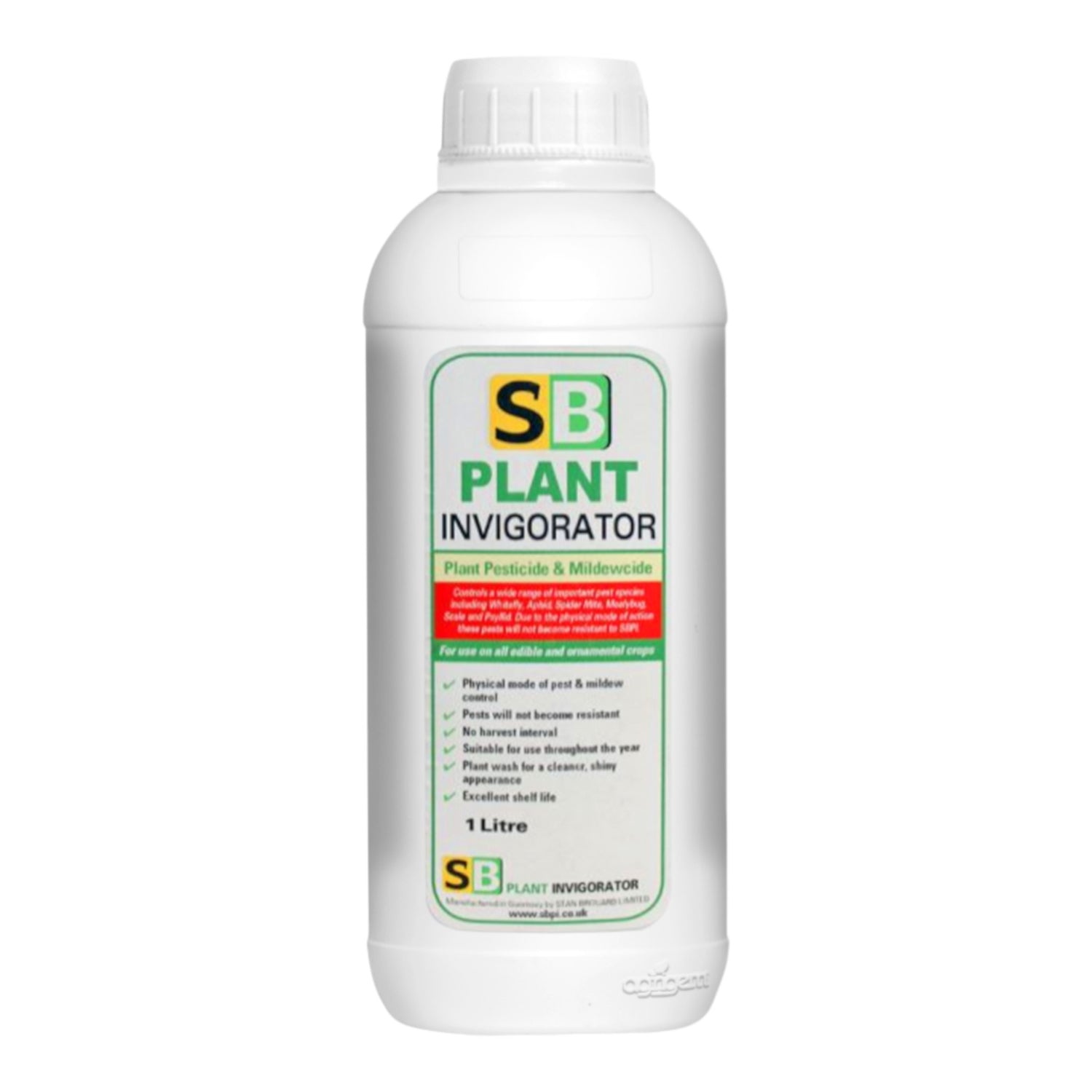
£51.74
Unit price per£51.74
Unit price perSB Plant Invigorator – Clean, Contact-Based Pest Control for Edibles and Ornamentals
If you need to knock back common pests without risking your crop – or the environment – SB Plant Invigorator is a smart tool to have on hand. It works on contact, tackling aphids, whitefly and spider mites quickly and safely, without leaving any harmful residue behind.
There’s no harvest delay, no risk to pollinators, and no lingering chemicals to worry about. Once it’s done its job, it’s gone – no residue, no build-up, just clean, effective pest control you can rely on.
Whether you’re misting rows of ornamentals under glass or spot-treating edibles in the field, SB Plant Invigorator fits naturally into integrated pest management programmes. It’s safe, simple, and perfectly suited for growers who want results without resorting to harsh chemistry.
Use it regularly and it earns its keep – plants stay cleaner, pests stay off, and you avoid the knock-on effects that come with heavier products.
Why growers trust SB Plant Invigorator:
Product details:
Pack size: 1L Units per case: 10 Formulation: non-chemical, contact-based liquid concentrate