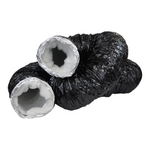
What is silent ducting?
Silent or acoustic ducting is flexible ventilation duct surrounded by an insulating layer designed to help absorb and reduce noise transmitted through the duct system.

Commercial Products
Commercial Products
 Professional Growing Media
 Plant Nutrition
 Plant Health
 Sprayers & Protective Clothing
 Pots, Planters & Trays
 Propagation
 Baskets & Planters
 Fabrics & Netting
 Environment
 Plant Lighting
 Irrigation
 Plant Support & Tree Care
 Equipment
 Tools
Tools
 Plant Labels
 Packaging
 Lawn Care
 Clearance
Retail Products
Retail Products
 Growing Media
 Plant Nutrition
 Plant Health
 Pots, Planters & Tanks
 Propagation
 Baskets & Planters
 Fabrics & Netting
 Environment
 Plant Lighting
 Plant Support
 Equipment
 Tools
Tools

£27.50
Unit price perEstimated delivery between October 03 and October 05.
203mm (8") x 10m Mute Silent Ducting is an acoustically insulated flexible ventilation duct designed to help reduce the noise transmitted through extraction and intake systems.
Ventilation fans create more than just motor noise. Air movement, turbulence and vibration can all travel through standard ducting, making an otherwise effective extraction system noticeably louder. Acoustic ducting helps tackle this by surrounding the inner airflow path with an insulating layer that absorbs and reduces transmitted sound.
With a 203mm (8") internal duct diameter and 10m length, this ducting is particularly suited to medium and high-airflow ventilation systems used in grow rooms, indoor horticulture, workshops and other environments where reducing ventilation noise is important.
Its flexible construction also makes installation considerably easier than rigid ductwork where the ventilation route needs to negotiate equipment, corners or structural obstacles.
A ventilation system can transmit sound along the same route used to move air. Fan noise and turbulence can travel through ordinary thin-walled ducting and emerge from the opposite end of the system.
Acoustic ducting is constructed differently. An inner flexible airflow duct is surrounded by sound-absorbing insulation and an outer protective layer. The insulation helps absorb some of the sound energy travelling through the duct rather than allowing it to transmit as readily along the ventilation run.
This makes insulated ducting particularly useful immediately before or after an extraction fan, between a fan and carbon filter, or along sections of ductwork where ventilation noise would otherwise be noticeable.
For the quietest practical ventilation system, noise control should be considered throughout the complete installation rather than relying on one component alone.
Acoustic ducting can help reduce noise transmitted through the ductwork, while fan speed control, acoustic silencers, correctly sized ducting and vibration isolation can address other sources of sound.
Using adequately sized ducting is particularly important. Forcing a large volume of air through undersized ductwork increases air velocity and turbulence, which can make the ventilation system considerably noisier.
Extraction is essential in many indoor growing environments, but larger fans can create significant noise when operating continuously.
203mm acoustic ducting provides a practical option for installations where 8-inch ventilation equipment is required but keeping the system quieter is also a priority.
It can be used with compatible extraction fans, carbon filters, silencers and other 203mm ventilation components to create a complete air-management system.
Route the ducting as directly as practical between the ventilation components. Avoid unnecessary tight bends, excessive compression and long sections of heavily sagging duct, as these can increase resistance and turbulence.
When connecting the ducting to a fan, filter, silencer or metal fitting, secure the inner duct correctly to the connection and use a suitable duct clamp or clip. The outer insulated section can then be positioned neatly around the joint.
Where minimising air leakage is important, suitable HVAC foil tape can be used as part of the connection and sealing process.
Support longer duct runs at suitable intervals rather than allowing the weight of the ducting to hang directly from the fan, filter or other ventilation equipment.
Flexible ducting works best when it is installed with unnecessary compression kept to a minimum. Extending the duct sufficiently helps reduce deep internal folds that can increase resistance to airflow.
Keep the route as short and straight as the installation allows. Every bend, restriction and additional length of duct contributes to the resistance the extraction fan must overcome.
Where a sharp 90-degree direction change is required, a compatible rigid metal elbow may provide a cleaner airflow route than forcing flexible ducting around an extremely tight corner.
The ducting is intended for compatible nominal 203mm (8") round ventilation systems and can be used alongside appropriately sized components such as:
Always check the actual connection diameter of adjoining equipment before installation, particularly where equipment is described using both metric and imperial sizes.
| Product type | Acoustic insulated flexible ventilation ducting |
|---|---|
| Nominal diameter | 203mm / 8" |
| Length | 10m |
| Duct type | Flexible |
| Construction | Insulated acoustic ducting |
| Primary purpose | Ventilation with reduced transmission of fan and airflow noise |
| Suitable airflow | Extraction & intake |
| Compatible system size | Nominal 203mm / 8" round ventilation systems |
| Suitable applications | Grow rooms, indoor horticulture, workshops & general ventilation installations |
Silent or acoustic ducting is flexible ventilation duct surrounded by an insulating layer designed to help absorb and reduce noise transmitted through the duct system.
It has a nominal internal duct diameter of 203mm, equivalent to approximately 8 inches, and is supplied in a 10m length.
No. It is designed to reduce noise transmitted through the ductwork, but it cannot eliminate all fan, airflow or vibration noise. A quieter system may also require suitable fan control, vibration isolation and acoustic silencers.
Its insulated construction is specifically intended to reduce sound transmission through the duct compared with basic uninsulated flexible ventilation ducting.
Yes, provided the fan has a compatible nominal 203mm / 8" connection.
Yes. It can be used with a compatible 203mm / 8" carbon filter as part of an extraction system.
Yes. Acoustic ducting and a compatible ventilation silencer can be used together as part of a system designed to reduce transmitted ventilation noise.
Yes. Flexible ducting can be cut to the length required for the installation using suitable tools, taking care to deal correctly with the internal reinforcement and insulation.
Yes. It can be incorporated into compatible air-intake systems as well as extraction installations.
All ductwork creates some resistance. Flexible ducting should be installed without unnecessary compression, excessive length or tight bends to help minimise additional pressure loss.
It should generally be extended sufficiently to avoid excessive internal corrugation while using only the length needed for the installation. Unnecessary excess duct should not be left heavily compressed.
Yes, its flexible construction allows direction changes. Avoid very tight bends that crush the internal duct, as these can increase airflow resistance and noise.
Secure the inner duct to the compatible fan connection using a suitable duct clamp or clip, then arrange the insulation and outer covering neatly around the connection.
Yes. It is particularly useful for indoor horticultural ventilation systems where 203mm extraction equipment is required and reducing fan and airflow noise is desirable.
Use correctly sized ducting, minimise unnecessary bends, isolate fan vibration, avoid excessive air velocity and consider compatible fan-speed control and acoustic silencers where appropriate.
£27.50
Unit price per203mm (8") x 10m Mute Silent Ducting is an acoustically insulated flexible ventilation duct designed to help reduce the noise transmitted through extraction and intake systems.
Ventilation fans create more than just motor noise. Air movement, turbulence and vibration can all travel through standard ducting, making an otherwise effective extraction system noticeably louder. Acoustic ducting helps tackle this by surrounding the inner airflow path with an insulating layer that absorbs and reduces transmitted sound.
With a 203mm (8") internal duct diameter and 10m length, this ducting is particularly suited to medium and high-airflow ventilation systems used in grow rooms, indoor horticulture, workshops and other environments where reducing ventilation noise is important.
Its flexible construction also makes installation considerably easier than rigid ductwork where the ventilation route needs to negotiate equipment, corners or structural obstacles.
A ventilation system can transmit sound along the same route used to move air. Fan noise and turbulence can travel through ordinary thin-walled ducting and emerge from the opposite end of the system.
Acoustic ducting is constructed differently. An inner flexible airflow duct is surrounded by sound-absorbing insulation and an outer protective layer. The insulation helps absorb some of the sound energy travelling through the duct rather than allowing it to transmit as readily along the ventilation run.
This makes insulated ducting particularly useful immediately before or after an extraction fan, between a fan and carbon filter, or along sections of ductwork where ventilation noise would otherwise be noticeable.
For the quietest practical ventilation system, noise control should be considered throughout the complete installation rather than relying on one component alone.
Acoustic ducting can help reduce noise transmitted through the ductwork, while fan speed control, acoustic silencers, correctly sized ducting and vibration isolation can address other sources of sound.
Using adequately sized ducting is particularly important. Forcing a large volume of air through undersized ductwork increases air velocity and turbulence, which can make the ventilation system considerably noisier.
Extraction is essential in many indoor growing environments, but larger fans can create significant noise when operating continuously.
203mm acoustic ducting provides a practical option for installations where 8-inch ventilation equipment is required but keeping the system quieter is also a priority.
It can be used with compatible extraction fans, carbon filters, silencers and other 203mm ventilation components to create a complete air-management system.
Route the ducting as directly as practical between the ventilation components. Avoid unnecessary tight bends, excessive compression and long sections of heavily sagging duct, as these can increase resistance and turbulence.
When connecting the ducting to a fan, filter, silencer or metal fitting, secure the inner duct correctly to the connection and use a suitable duct clamp or clip. The outer insulated section can then be positioned neatly around the joint.
Where minimising air leakage is important, suitable HVAC foil tape can be used as part of the connection and sealing process.
Support longer duct runs at suitable intervals rather than allowing the weight of the ducting to hang directly from the fan, filter or other ventilation equipment.
Flexible ducting works best when it is installed with unnecessary compression kept to a minimum. Extending the duct sufficiently helps reduce deep internal folds that can increase resistance to airflow.
Keep the route as short and straight as the installation allows. Every bend, restriction and additional length of duct contributes to the resistance the extraction fan must overcome.
Where a sharp 90-degree direction change is required, a compatible rigid metal elbow may provide a cleaner airflow route than forcing flexible ducting around an extremely tight corner.
The ducting is intended for compatible nominal 203mm (8") round ventilation systems and can be used alongside appropriately sized components such as:
Always check the actual connection diameter of adjoining equipment before installation, particularly where equipment is described using both metric and imperial sizes.
| Product type | Acoustic insulated flexible ventilation ducting |
|---|---|
| Nominal diameter | 203mm / 8" |
| Length | 10m |
| Duct type | Flexible |
| Construction | Insulated acoustic ducting |
| Primary purpose | Ventilation with reduced transmission of fan and airflow noise |
| Suitable airflow | Extraction & intake |
| Compatible system size | Nominal 203mm / 8" round ventilation systems |
| Suitable applications | Grow rooms, indoor horticulture, workshops & general ventilation installations |
Silent or acoustic ducting is flexible ventilation duct surrounded by an insulating layer designed to help absorb and reduce noise transmitted through the duct system.
It has a nominal internal duct diameter of 203mm, equivalent to approximately 8 inches, and is supplied in a 10m length.
No. It is designed to reduce noise transmitted through the ductwork, but it cannot eliminate all fan, airflow or vibration noise. A quieter system may also require suitable fan control, vibration isolation and acoustic silencers.
Its insulated construction is specifically intended to reduce sound transmission through the duct compared with basic uninsulated flexible ventilation ducting.
Yes, provided the fan has a compatible nominal 203mm / 8" connection.
Yes. It can be used with a compatible 203mm / 8" carbon filter as part of an extraction system.
Yes. Acoustic ducting and a compatible ventilation silencer can be used together as part of a system designed to reduce transmitted ventilation noise.
Yes. Flexible ducting can be cut to the length required for the installation using suitable tools, taking care to deal correctly with the internal reinforcement and insulation.
Yes. It can be incorporated into compatible air-intake systems as well as extraction installations.
All ductwork creates some resistance. Flexible ducting should be installed without unnecessary compression, excessive length or tight bends to help minimise additional pressure loss.
It should generally be extended sufficiently to avoid excessive internal corrugation while using only the length needed for the installation. Unnecessary excess duct should not be left heavily compressed.
Yes, its flexible construction allows direction changes. Avoid very tight bends that crush the internal duct, as these can increase airflow resistance and noise.
Secure the inner duct to the compatible fan connection using a suitable duct clamp or clip, then arrange the insulation and outer covering neatly around the connection.
Yes. It is particularly useful for indoor horticultural ventilation systems where 203mm extraction equipment is required and reducing fan and airflow noise is desirable.
Use correctly sized ducting, minimise unnecessary bends, isolate fan vibration, avoid excessive air velocity and consider compatible fan-speed control and acoustic silencers where appropriate.
Pay with
Your transaction is protected with advanced security measures to keep your information confidential